




Abstract
Insight into consumer value forms the basis for successful tourism management. The means-end structures of consumer value in tourism are mainly investigated by qualitative, in-depth laddering interviews while structured, quantitative laddering is less common. This study develops quantitative laddering by digitalizing the Association Pattern Technique (APT) in order to increase its interactive customization. The feasibility of digitally customized APT is piloted by investigating 956 nature-based tourists visiting Finnish national parks. The evaluation of the method is based on epistemological laddering criteria and usability. The results demonstrate greater contextuality, increased sample relevance, delivery of complete chains, and decreased risks of misunderstandings compared to conventional APT. Hence, digitalized APT holds potential for examining the structure of consumer value and its larger sample size also reveals less apparent means-end chains and universal values. However, its wider adoption into managerial processes would benefit from the development of specific software.
Keywords
Introduction
This study develops a new, digitally customized quantitative laddering instrument for means-end value research, pilots it in a nature-based tourism context and evaluates its potential for tourism research and management. Consumer value drives marketing and consumer behavior by describing why consumers purchase products, “. . .what they want and believe that they get from buying and using a seller’s product” (Woodruff 1997, 140)—in the case of tourism, the true value comes from what tourists pursue and appreciate when traveling. Consumers construct value hierarchically in a means-end way by connecting concrete product and service attributes to desired personal consequences and, ultimately, to their universal values (Gutman 1982; Woodruff and Gardial 1996). Understanding this dynamic process where product attributes function as means to achieving the higher order personal ends of consumers provides deeper consumer insight than discretely scrutinizing individual elements or groups of elements. This has been substantiated in tourism by means-end investigations, for example, on destination choice (Pike 2012), religious tourism (Kim and Kim 2019; Kim, Kim, and King 2016), travel motivation (Ho, Lin, and Huang 2014; Jiang, Scott, and Ding 2015), indigenous tourism (Wu et al. 2020), health tourism (Boga and Weiermair 2011), and hotel business (Orsingher, Marzocchi, and Valentini 2011).
Means-end chains are examined by laddering. This is a sequential data collection method initiated by the identification of personally relevant attributes (“what”) followed by an elaboration on an understanding of their meanings (“how”) and a connection to the all-encompassing universal values (“why”) (Reynolds and Phillips 2009). The mainstream method, qualitative laddering interviews, is characterized by induction, an unstructured format and interactivity which are used to achieve an in-depth elicitation of emergent topics. In contrast, quantitative laddering is deductive and uses structured questionnaires (Veludo-de-Oliveira, Ikeda, and Campomar 2006). These methodological differences have raised concerns regarding the validity and quality of quantitative laddering (Diedericks, Erasmus, and Donoghue 2020; Phillips and Reynolds 2009). The aim of the current research was to narrow the gap between labor-intensive laddering interviews and more economic and large-scale laddering surveys by developing the latter. This has been achieved by incorporating customization into Hofstede’s Association Pattern Technique, APT (Hofstede et al. 1998); a technique that has hitherto been a structured quantitative laddering method. This new, dynamic process is defined as digitally customized APT. Its development and piloting contribute methodologically to quantitative means-end value research in tourism by customizing APT laddering while still retaining its economies of scale. The new instrument is evaluated by considering both the epistemological laddering criteria and its managerial applicability and potential.
Traditionally, most means-end value studies in tourism have applied qualitative laddering interviews, however, during the 2010s, quantitative laddering surveys have also started to emerge. Nevertheless, this is the first time, to the authors’ knowledge, that quantitative APT has been applied in an interactive and customized format instead of as a standard, non-customized survey. Hence, the current research directly addresses the proposal of Diedericks and colleagues (2020), titled “Now is the time to embrace interactive electronic applications of Association Pattern Technique”, to improve the APT method. The usefulness and potential of customized APT is empirically tested in nature-based tourism, a sector that has previously been subject only to qualitative means-end investigations (Goldenberg et al. 2000; Hill et al. 2009; Ho et al. 2015; Klenosky et al. 1998; Weeden 2011). Tourism in general has been considered “a paradigmatic realm for researching value” (Gallarza, Arteaga, and Gil-Saura 2019, 256) due to its experiential character that generates a variety of value types and means-end chains. This idiosyncrasy is particularly apparent in the examined nature-based context comprised of independent, unfacilitated visits to Finnish national parks. The empirical investigation represents a two-phase sequential exploratory mixed-method strategy (Creswell and Creswell 2018) that consists of a qualitative laddering pre-study followed by a quantitative laddering survey applying digitally customized APT.
Theoretical Background
Consumer Value and the Means-End Theory
Consumer value describes why consumers purchase products and services or acquire new experiences by depicting their situation-specific judgments (Vinson, Scott, and Lamont 1977; Woodruff 1997; Woodruff and Gardial 1996). Initially, consumer value represented consumers’ utilitarian perceptions of the benefits of consumption compared to the resulting costs (Zeithaml 1988), but increased emphasis on experientiality has added emotions to the rational “get versus give” view; in addition to serving utilitarian purposes, consumption is increasingly considered a quest for personal experiences and enjoyment (Holbrook and Hirschman 1982; Pine and Gilmore 1998; Sánchez-Fernández and Iniesta-Bonillo 2007). This experientiality of consumption is particularly evident in tourism, an industry that is based on seeking memorable experiences (e.g., Oh, Fiore, and Jeoung 2007; Sotiriadis and Gursoy 2016). The specific nature-based context of this study, consisting of independent visits to public national parks, is concordant with that statement: personal experiences constitute the foundation of its perceived consumer value (Sorakunnas 2020).
While consumer value in the singular refers to consumers’ situation-specific evaluations of individual objects of consumption (Woodruff 1997), values in plural is more abstract. It represents consumers’ enduring beliefs and desired end-states that guide their behavior by providing the overall criteria and standards for decision-making (Kim 2020; Rokeach 1973; Schwartz 1992). Being more stable motivational constructs, values transcend single use-situations and depict what is important for the individual in life, thus providing deeper insight into their motivations, beliefs, attitudes, and behavior (Kamakura and Novak 1992). Values are universal in the sense that all consumers share the same values, but simultaneously, they are deeply personal as each individual prioritizes values according to his or her own, unique value system (Rokeach 1973; Schwartz 2012). Values-based tourism research has applied the Rokeach Value Survey (Rokeach 1973), the List of Values (Kahle and Kennedy 1988), and the Schwartz Value Survey (1992, 2012) (Kim 2020), but due to the universality of values, these classifications are very similar with only minor disparities in the titles and numbers of categories. To distinguish the plural and singular forms of value, the former will hereafter be referred to as universal values and the latter as consumer value or briefly as value.
A hierarchical framework integrating deeply held universal values with the situation-specific evaluation of product attributes was initially envisaged by Vinson, Scott, and Lamont (1977). Gutman (1982) formulated this framework into a means-end chain theory that describes the routes from concrete product attributes via personal consequences to universal values. These routes are called means-end chains as the objects consumed represent the means to realizing consumers’ desired ends. The theory postulates that universal values guide consumers’ choices; all actions have consequences and consumers are capable of associating their actions with the expected consequences. Hence, consumer behavior is goal-oriented (Gutman 1982). Examining means-end chains from the bottom-up discloses the meanings of individual attributes whereas top-down approaches reveal the roles of universal values (Olson and Reynolds 1983, 2001; Woodruff and Gardial 1996). Although the chains are hierarchical constructs, their horizontal scrutiny also determines the relative importance of elements on each hierarchical level. Thus, the means-end theory provides a feasible framework for examining the construction of consumer value in tourism. Olson and Reynolds (1983) extended Gutman’s model in order to distinguish finer gradations by dividing attributes into concrete and abstract, consequences into functional and psychosocial, and values into instrumental and terminal. Later they considered this six-level hierarchy too complicated and instead, proposed a four-level hierarchy with a distinction between functional and psychosocial consequences as a standard (Olson and Reynolds 2001) (Figure 1).
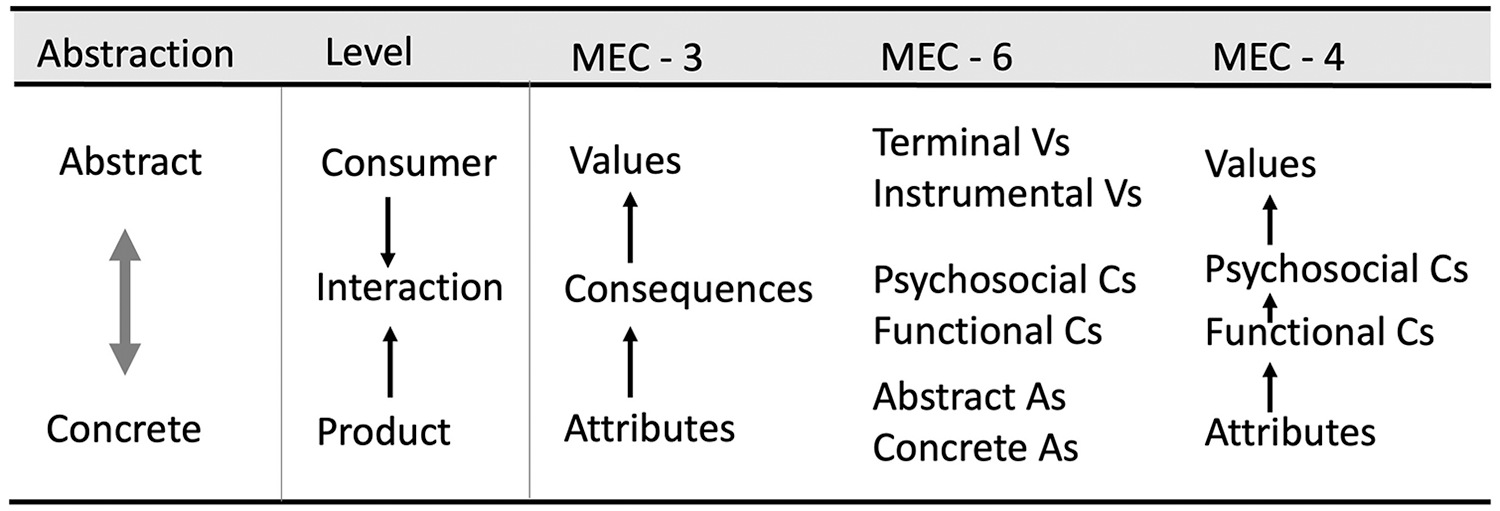
Three-level (Gutman 1982), six-level (Olson and Reynolds 1983), and four-level (Olson and Reynolds 2001) means-end hierarchies.
Attributes are concrete and observable characteristics of products and services (Gutman 1982). In the case of national parks, attributes are the destination-specific pull factors (Uysal, Li, and Sirakaya-Turk 2009) that consist of the natural, managerial, and social context of the parks as well as visitors’ own activities within them (Clark and Stankey 1979; Driver and Brown 1978). These attributes represent the lowest hierarchical level that offers the means to achieving visitors’ desired ends. On the attribute-level, consumers’ perceived value is based on anticipation and expectations that arise from available beforehand information or previous personal consumption experiences. This pre-consumption value is conceptualized as desired value (Woodruff 1997), expected value (Komppula 2005), marketing value (Woodall 2003), and customer value (Gallarza, Gil-Saura, and Holbrook 2011).
Consequences result from the actual use of products that involves person–product interaction. The relationship between positive consequences and attributes is clear: “. . .people receive benefits whereas products have attributes.” (Gutman 1982, 60). This juxtaposes consequences with consumer value (Gallarza, Gil-Saura, and Holbrook 2011), which is also referred to as received value (Woodruff 1997), experienced value (Komppula 2005), and derived value (Woodall 2003) with the aim of emphasizing that personal consequences result from the consumption of an offering. In the case of national parks, a suspension bridge made of cable and wooden planks (tangible attributes) offers an easy and safe crossing of a river (consequence) or the unbroken silence available (an intangible attribute) can induce calm in stressed minds (consequence). However, in order for the consequences to be realized, consumers need to interact with the attributes. Hence, received/experienced/derived consumer value is only potential until an offering is actually consumed; one has to use the bridge to cross the river and appreciate the silence to convert expectations into experiences. This dynamic and interactionist perspective (Holbrook 1999) shifts the focus from the objects to the process, from products to their consumption, and from attributes to personal consequences and goals.
In means-end hierarchies, consequences have an intermediate role by functioning as ends in attribute—consequence linkages, but simultaneously also as means in consequence—universal values linkages (Woodruff and Gardial 1996). Due to this dual role, a further distinction between functional and psychosocial consequences has been recommended to offer a more detailed understanding of how consumers construct value (Diedericks, Erasmus, and Donoghue 2020; Olson and Reynolds 1983, 2001; Reynolds and Phillips 2009; Figure 1, right column). However, three-level hierarchies still dominate means-end research while very few four-level frameworks can be found (e.g., Kwon, Cha, and Lee 2015 as well as Schauerte 2009 represent the latter).
On the highest level of abstraction, universal values represent consumers’ ultimate reasons for consumption; reasons that transcend single use-situations (Gutman 1982; Vriens and Hofstede 2000) and refer to their desired end-states of existence (Rokeach 1973). The synonymous terms “goals” and “purposes” (Olson and Reynolds 2001; Woodruff 1997) as well as “terminal” or “end” values (Rokeach 1973) emphasize the nature of these reasons. Referring to the previous example, the universal values endorsing the use of the suspension bridge would reflect security whereas a person choosing to wade across would prioritize stimulation and achievement (cf. Schwartz 2012).
Laddering to Examine Tourists’ Means-End Chains
Tourists’ means-end chains are investigated by laddering (Reynolds and Phillips 2009; Veludo-de-Oliveira, Ikeda, and Campomar 2006). This initially qualitative, in-depth and unstructured interview technique reveals consumers’ cognitive structures by associating product attributes with personal consequences—that is, perceived consumer value—and universal values (Reynolds and Gutman 1988). The laddering interview is a bottom-up research method that begins by inductive identification of the relevant attributes (e.g., “What were the most important factors you considered when selecting this holiday destination?”) and then connects the emerging attributes one by one to higher abstraction levels by elicitation questions that encourage introspection (e.g., “How does that make you feel?” or “Why is that important you?”) (Reynolds and Phillips 2009; Veludo-de-Oliveira, Ikeda, and Campomar 2006). Hence, the topics to be laddered are freely chosen by the respondents and therefore, laddering interviewers require considerable skill in order to successfully manage the evolving process (Veludo-de-Oliveira, Ikeda, and Campomar 2006) and to facilitate the interviewees’ progression. They need to be encouraged to ascend, rung by rung, the ladder of abstraction until finally reaching the universal values. In addition to interviews, soft laddering paper-and-pencil surveys have been piloted, where the determination of items as well as their coupling is unprompted (Goldenberg et al. 2000).
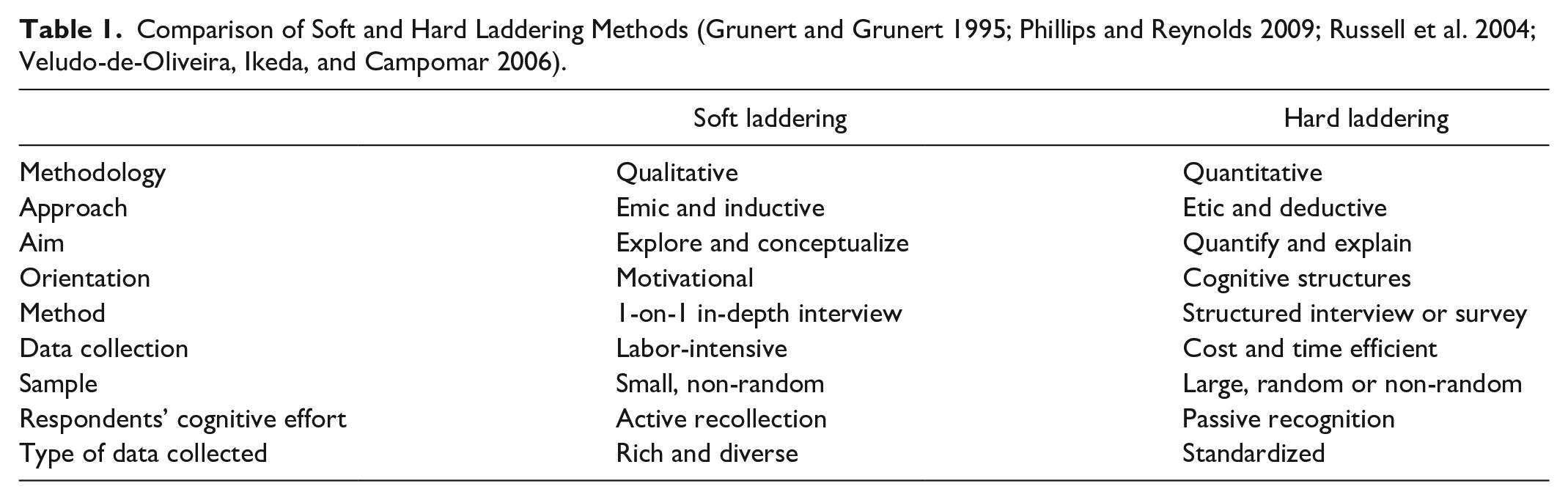
Originally, laddering was strictly a qualitative method, but Grunert and Grunert (1995) introduced the concepts of soft and hard laddering to distinguish the emerging quantitative laddering from the mainstream qualitative method. Quantitative, hard laddering is conducted using either structured interviews or self-administered questionnaires. It offers the advantages of standardized data and the generalizability of results, and, when conducted as a survey, also larger sample sizes, avoidance of interviewer bias, and savings in time and costs. At the same time, however, the respondents are forced to make connections between predetermined alternatives that do not necessarily correspond to their own views. This restricts the respondents’ freedom of expression, decreases personal involvement, and cognitive effort and increases the risk of misunderstandings. Thus, hard laddering threatens the fundamental laddering assumption regarding inductivity (Phillips and Reynolds 2009) and therefore, the determination of elements should be based on a meticulous review of the literature or a qualitative pre-study (Hofstede et al. 1998; Vriens and Hofstede 2000). Moreover, the survey design should promote considered and contextual responses (Grunert and Grunert 1995; Phillips and Reynolds 2009). The characteristics of both laddering methods are presented in Table 1. At present, the majority of laddering studies are still qualitative with approximately one in five studies applying quantitative laddering (Borgardt 2020; Reynolds and Phillips 2009).
Comparison of Soft and Hard Laddering Methods (Grunert and Grunert 1995; Phillips and Reynolds 2009; Russell et al. 2004; Veludo-de-Oliveira, Ikeda, and Campomar 2006).
The feasibility of means-end laddering research in revealing tourists’ thinking, preferences and decision-making has been acknowledged (McDonald, Thyne, and McMorland 2008; McIntosh and Thyne 2005). Most tourism studies have applied soft laddering, but during the past decade, hard laddering approaches have also started to emerge (Table 2). The sample sizes of soft laddering have remained low reflecting their qualitative nature, but also most of the quantitative laddering investigations have been relatively small-scale compared to the potential of hard laddering.
Soft and Hard Laddering Investigations in Tourism Research (
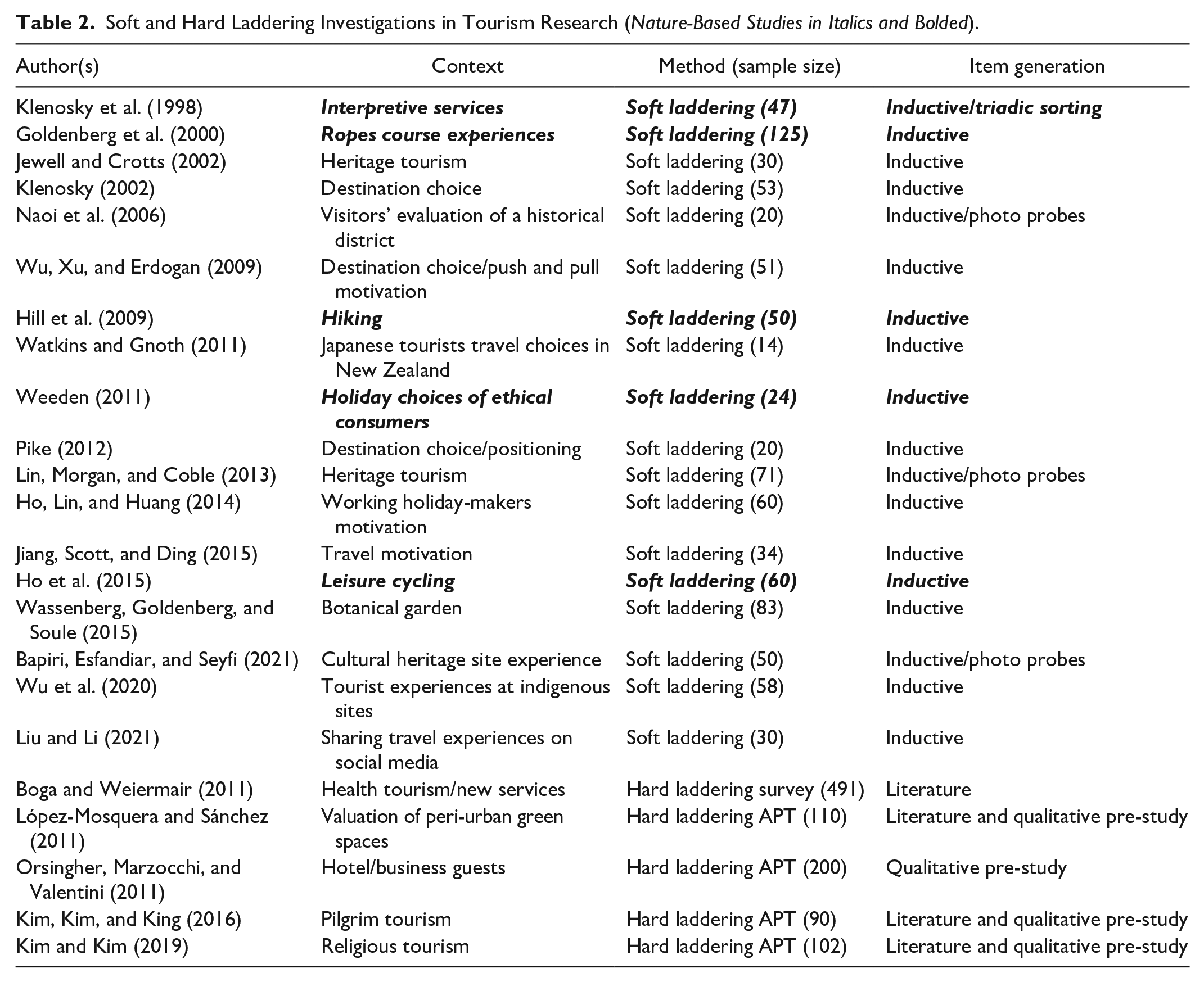
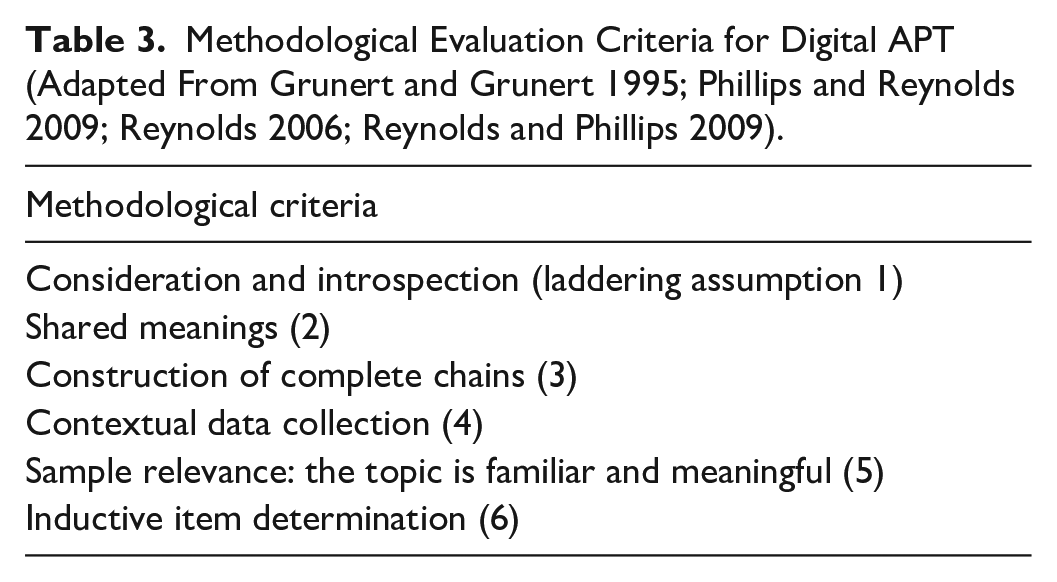
The common method for inductive item generation in qualitative laddering is to ask each respondent to name the most meaningful attributes or reasons or motives (e.g., Ho, Lin, and Huang 2014; Wu et al. 2020). In triadic sorting, the respondent selects one alternative from a list of three and then supplies the reasons for this selection (Klenosky et al. 1998; Reynolds and Gutman 1988). Additionally, triadic sorting of photographs has been used for item identification (e.g., Bapiri, Esfandiar, and Seyfi 2021; Lin, Morgan, and Coble 2013) as well as grouping of photographs (Naoi et al. 2006). Conversely, quantitative laddering, being deductive, depends on the literature and/or a pre-study to provide the items to be laddered. The validity of laddering rests on six epistemological conditions: (1) respondents engage in careful consideration and introspection during the elicitation process, (2) the emic concepts are understood similarly by the researcher and respondents (shared meanings), (3) all hierarchical steps are completed, (4) the data collection is contextual, (5) respondents are familiar with the topic and find it personally meaningful (sample relevance), and (6) the topics to be laddered are freely determined by the respondents (Grunert and Grunert 1995; Phillips and Reynolds 2009; Reynolds 2006; Reynolds and Phillips 2009).
Most authors listed in Table 2 considered the main limitation of soft laddering to be its small sample size leading to a lack of generalizability (e.g., Ho et al. 2015; Pike 2012; Wu et al. 2020). Therefore, the soft approach was recommended as an initial, exploratory research step to identify relevant concepts and develop quantitative instruments (Ho, Lin, and Huang 2014; Jiang, Scott, and Ding 2015). In turn, the hard laddering limitations mentioned were sample biases and exclusion of relevant segments (Boga and Weiermair 2011; López-Mosquera and Sánchez 2011; Orsingher, Marzocchi, and Valentini 2011) as well as a lack of contextuality (Kim, Kim, and King 2016), but the authors did not reflect on the central issue of the validity of hard laddering.
The “hardest” of hard laddering approaches is the Association Pattern Technique (APT) (Phillips and Reynolds 2009). It is premised on the conditional independence of attribute—consequence and consequence—values linkages, which permits their separate collection (Hofstede et al. 1998; Vriens and Hofstede 2000). In APT laddering, the respondents indicate connections by checking the appropriate boxes in attribute—consequence and consequence—values matrices, which, when combined, result in three-level means-end chains (Diedericks, Erasmus, and Donoghue 2020; Phillips and Reynolds 2009). The method is suitable for investigating the construction of consumer value, developing marketing strategies and new products as well as gaining insight into consumers’ motivational structures (Diedericks, Erasmus, and Donoghue 2020). In particular, APT’s ability to identify consumer—product relationships within large samples is considered useful in market segmentation and product positioning (Hofstede, Steenkamp, and Wedel 1999; Reynolds 2006). In tourism research, APT has been applied to reveal tourists’ construction of value (Kim, Kim, and King 2016; Kim and Kim 2019; López-Mosquera and Sánchez 2011) as well as their satisfaction (Orsingher, Marzocchi, and Valentini 2011).
The conventional Association Pattern Technique is fully standardized: respondents indicate their inter-element linkages on non-customized matrices that display all items included in the study to all respondents (Hofstede et al. 1998; Vriens and Hofstede 2000). Initially, APT surveys were administered on paper and completed with a pencil or pen, but the development of computers has introduced computerized laddering where the respondents execute the non-customized laddering task on a computer screen (Langbroek and De Beuckelaer 2007; Russell et al. 2004). In this study, APT was selected as the quantitative laddering technique to be digitally customized for three reasons: its established position in means-end research, the independence of its matrices that allows their interactive customization and its suitability for forking, which means the indication of more than one association per item (Russell et al. 2004). Additionally, considering the rigid and standardized nature of conventional APT (“Among the ‘hardest’ of ‘hard’ laddering approaches,” Phillips and Reynolds 2009, 87), the introduction of interactive customization offers considerable promise as regards survey responsiveness and user-friendliness. These factors support customizing quantitative APT in order to take it a step closer to qualitative laddering interviews while still retaining its economies of scale and the generalizability of results.
Material and Methods
Study Design and Context
Considering that laddering is originally a qualitative, unstructured and in-depth interview technique, standardized, quantitative laddering understandably raises concerns regarding the fundamental laddering assumptions (Phillips and Reynolds 2009). These concerns were addressed with a two-phase sequential exploratory mixed-method strategy (Creswell and Creswell 2018) that provided a robust basis for the development, piloting and evaluation of digitally customized APT. The qualitative laddering pre-study explored and conceptualized the topic, familiarized the researchers with the layman lexicon and guided the construction of a valid hard laddering instrument. The subsequent quantitative phase operationalized and quantified the inductively determined elements capitalizing on the advantages of a larger sample size and generalizability, avoidance of interviewer bias and the anonymous disclosure of personal information. The novelty of this research—the digital customization of APT—was pursued in order to improve the method so as to better meet the methodological laddering assumptions. This was evaluated based on the methodological criteria presented in Table 3. In addition, the practicality and potential of digital APT were assessed from the managerial perspective. Finally, digitally customized APT was compared to conventional, non-customized APT, both paper and pencil and computerized.
Methodological Evaluation Criteria for Digital APT (Adapted From Grunert and Grunert 1995; Phillips and Reynolds 2009; Reynolds 2006; Reynolds and Phillips 2009).
Until now, the means-end research of nature-based tourism has been limited to certain activities or services (cf. Table 2; Goldenberg et al. 2000; Hill et al. 2009; Ho et al. 2015; Klenosky et al. 1998; Weeden 2011) whereas this study focuses on general nature-based tourism. Independent and unfacilitated visits to public national parks were selected as the empirical context, because this consumer- and context-driven setting is unbiased by commercial offerings; the natural surroundings foreground the visitors’ personal involvement and self-imposed interaction with park attributes. This, consequently, discloses their own, unguided construction of value (Sorakunnas 2020); the setting portrays their “what-how-why” means-end chains more genuinely than consuming planned and staged company offerings focusing on predetermined elements, such as the scenery, the wildlife, or specific thrill. Thus, the context was expected to give rise to a broader spectrum of means-end chains than examining a narrowly defined range of activities or pre-arranged services.
Nine of Finland’s 40 national parks were purposively selected to represent the two main types of parks. Large wilderness parks north of the Arctic Circle, far away from major cities were labeled “Wild.” Their remote location, large size, relatively low visitor density, long trails, and within park accommodation possibilities make them ideal for multiday excursions. In contrast, the “Urban” parks were small and popular parks located in the vicinity of cities. They offer short trails and campfire facilities, but no accommodation apart from camping and are therefore favored by day visitors resulting in a high number of visits in comparison to the park size (Figure 2). Both park types (six “Urban” parks and three “Wild” parks) were examined to capture the diversity of visitors’ means-end chains.
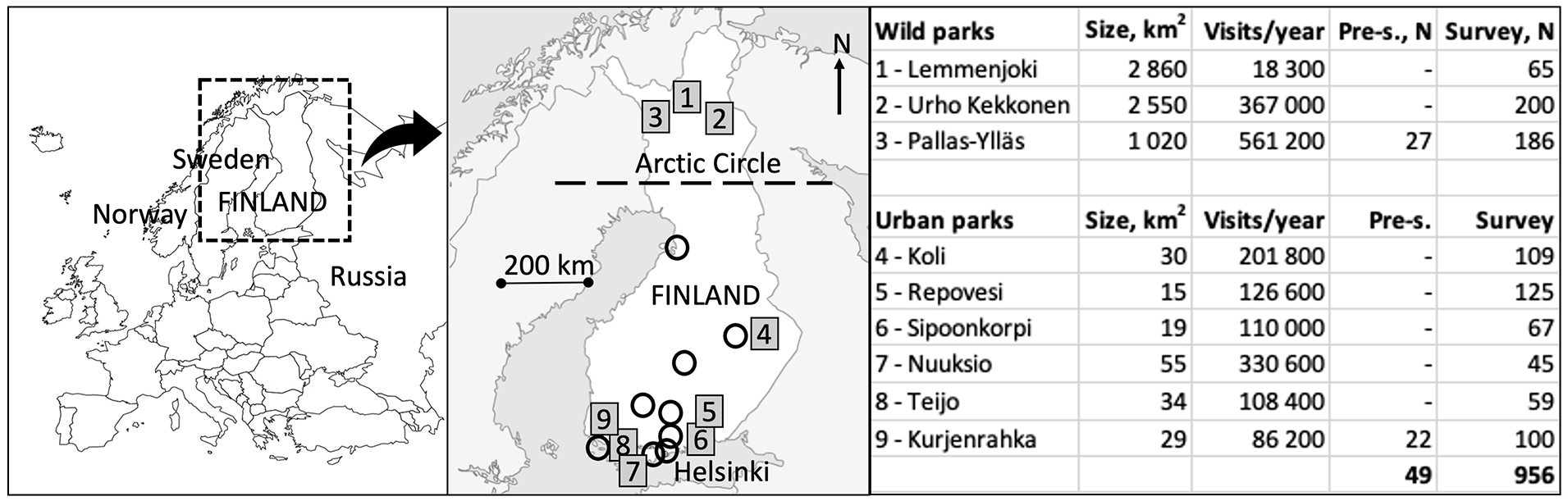
Locations and the types of case parks. The open circles indicate Finland’s nine largest cities (population >100,000) (Metsähallitus 2020).
Laddering the Means-End Structures
Soft laddering pre-study
The inductive pre-study conceptualized the topic by identifying the relevant elements and tentative means-end structures for the quantitative survey as well as familiarized the authors with the layman terminology (Vriens and Hofstede 2000; cf. Ho, Lin, and Huang 2014; Jiang, Scott, and Ding 2015). The pre-study was conducted in two purposively selected parks in September-October 2019; one was a remote, large wilderness park (Figure 2, number 3) and the other a small, better-equipped urban park (Figure 2, number 9). Domestic visitors constituted the target population. Their visitor profiles were first determined on-site by observation and the interviewees were then purposively selected to represent different genders, group compositions, and ages so as to capture a variety of means-end chains (Table 4). When assessed in reference to the Finnish national park monitoring study (Konu et al. 2021), the data provides a good representation of national park visitors well in terms of gender distribution and mean age. Moreover, the national monitoring study shows that the urban parks are mainly visited on day trips and have a higher percentage of unaccompanied visits. The interviews were initiated by asking “What made you come to this park today?” to inductively determine the relevant attributes. Each of these was then elaborated by open questions such as: “How does that make you feel?” or “What does it mean to you to. . .?” to facilitate deeper introspection that associated the attributes to higher abstraction levels (Reynolds and Gutman 1988; Veludo-de-Oliveira, Ikeda, and Campomar 2006).
Participant Profiles.
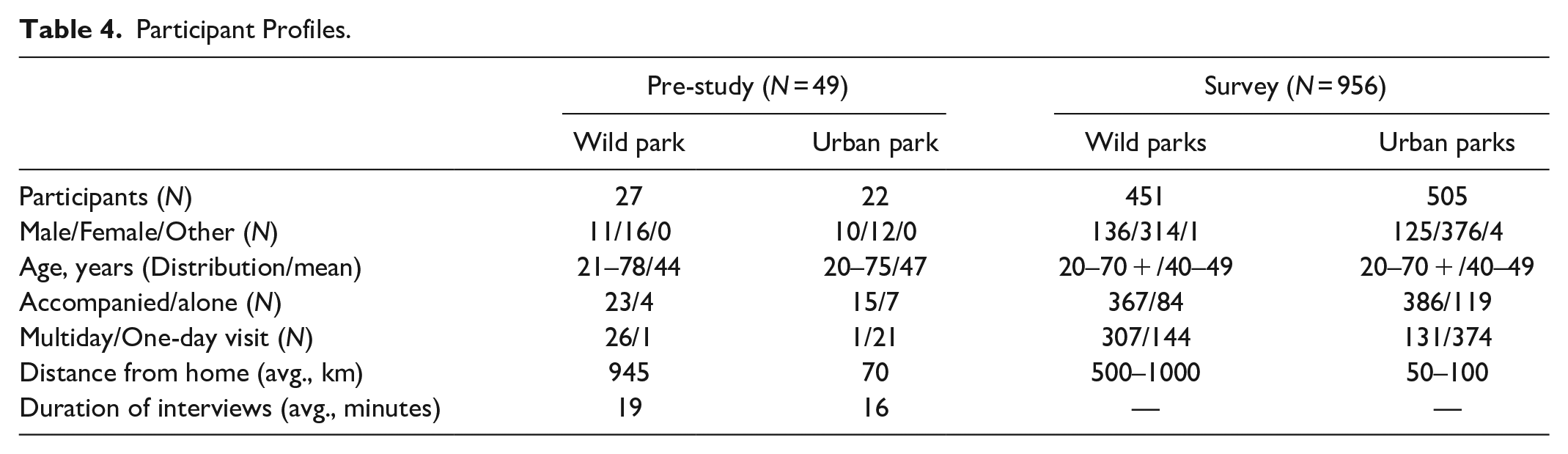
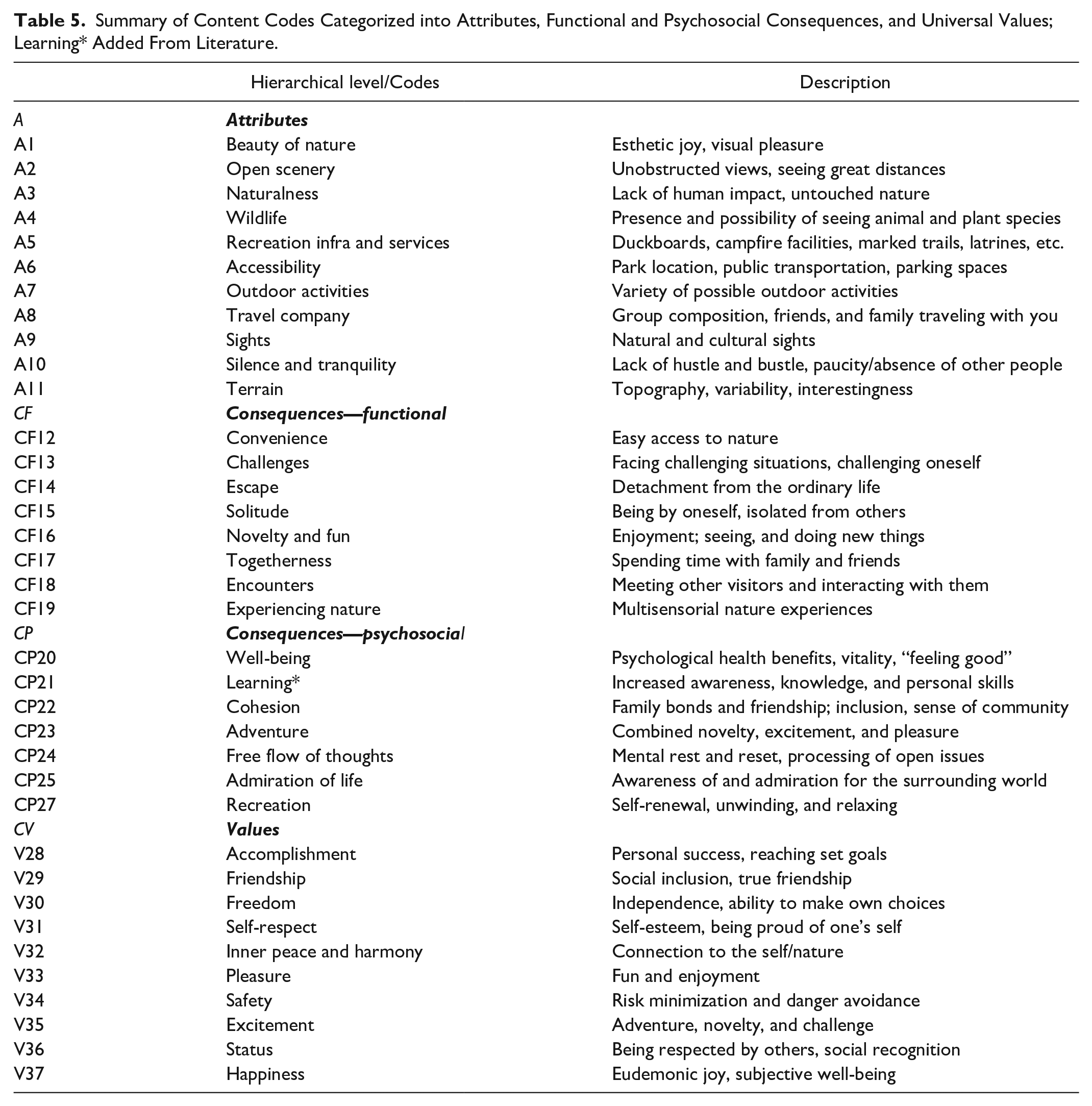
A total of 49 unstructured laddering interviews were conducted until saturation was reached; the same topics were repeated in different interviews and no additional aspects surfaced (Eriksson and Kovalainen 2016). Participation was voluntary, anonymous and based on informed consent (Brinkman 2013). All interviews were conducted, transcribed, and content analyzed by the first author. In the analysis, the items were first categorized into attributes, functional and psychosocial consequences, and universal values based on their character and sequence. The coding was open and data-driven grouping similar concepts together taking into account both manifest and latent meanings (Schreier 2012) (Table 5). Thirteen transcripts underwent double-coding by another researcher reaching a 95% level of agreement (intersubjectivity, Schreier 2012, 167).
Summary of Content Codes Categorized into Attributes, Functional and Psychosocial Consequences, and Universal Values; Learning* Added From Literature.
Survey piloting the digitally customized Association Pattern Technique
The novelty of the current research lies in replacing traditional, non-customized APT with a digital solution that interactively customized the rows of the matrices according to the respondents’ preceding selections. It was executed using a standard web-based survey and reporting tool designed for general online surveys (https://webropol.co.uk). Hence, its use did not require any programming or database solutions. Although the software lacked specific APT-functions, its matrix queries were usable for the laddering task as they allowed customization. This novel, digital, and dynamic process will hereinafter be referred to as digitally customized APT to distinguish it from non-customized APT. First, the respondents were asked to select the three most important attributes from a randomized list of 11 attributes determined in the inductive pre-study (Table 5 and Figure 3/Step 1). Only these selected attributes were displayed in the subsequent matrix of attributes—functional consequences (Step 2, shaded cells). In Step 2 the respondents were asked to connect each of the attributes to 1–3 functional consequences. They then connected each of the selected functional consequences in turn to 1–3 psychosocial consequences in the following consequence-consequence matrix (Step 3, shaded cells). Finally, the respondents connected each of the selected psychosocial consequences to one universal end value (Step 4, shaded cells). Hence, they proceeded from personally relevant attributes step by step to the higher, more abstract levels. Screen shots of the actual laddering task are presented as a Supplemental Appendix 1. An alternative laddering procedure would have been to select one attribute at a time and complete its means-end chain through Steps 2–4 before proceeding to the next attribute. This was, however, considered too repetitive for the respondents and likely to increase their fatigue. To facilitate shared meanings, each attribute and consequence in the matrices was equipped with a description, either directly after each attribute or as an on-demand pop-up window for the consequences and values (Supplemental Appendix 1). The list of attributes included a “None of these” option followed by a “What, then” open field to avoid forced selection of irrelevant attributes (Diedericks, Erasmus, and Donoghue 2020; Reynolds 2006). Equally, each matrix included a “None of these” alternative for the consequences and values.
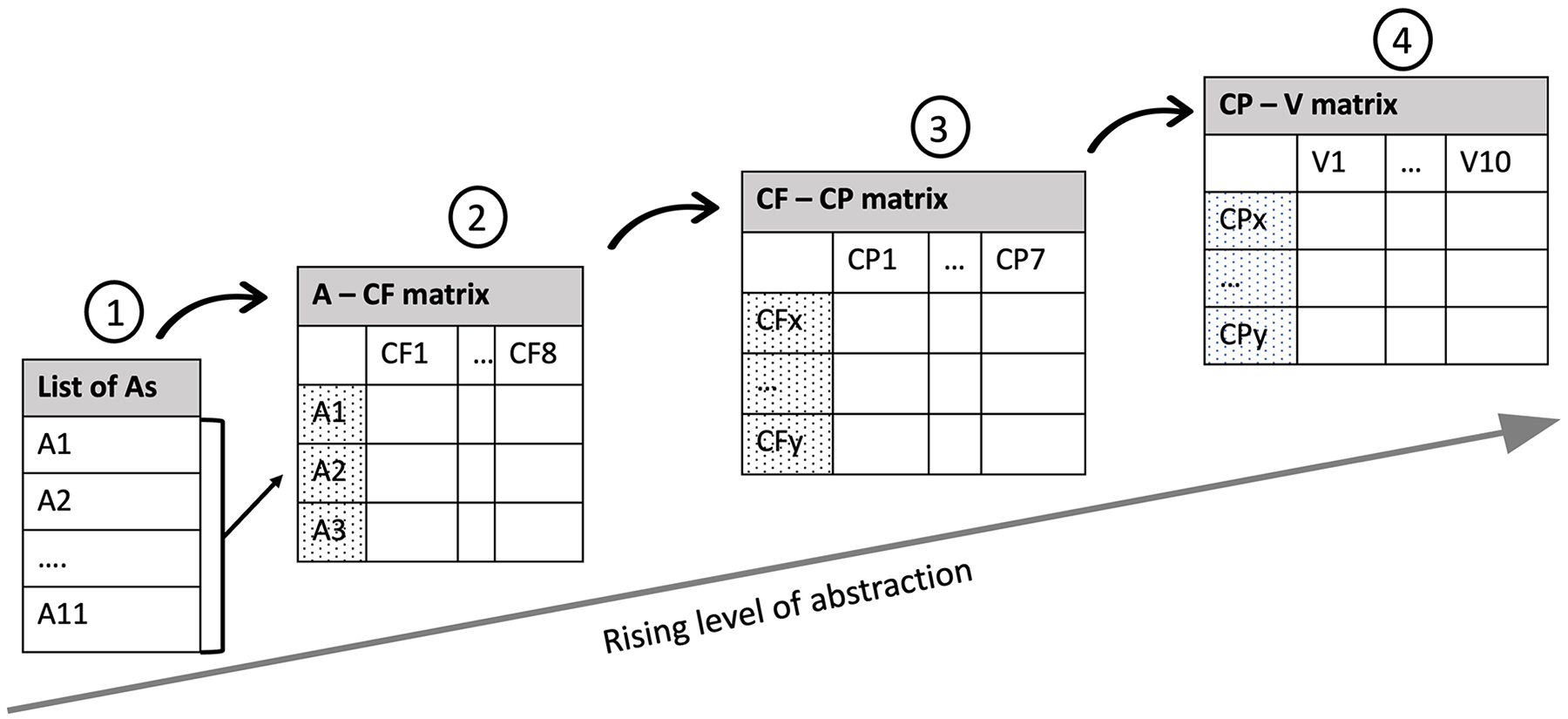
Digitalized and interactive Association Pattern Technique. Dotted cells indicate the customized elements.
To emphasize contextuality, the respondents selected one national park and were asked to recollect their most recent visit throughout the survey. After the laddering task, the respondents provided background information on frequency of visits, basic socio-demographic variables as well as group composition, visit duration, and time of year. The instrument was tested with a convenience sample of 28 domestic national park visitors. As a result of the feedback received, the survey structure was retained, but pop-up descriptions were added to all elements to improve their consistent comprehension. In addition, the matrix structure was technically refined to display all columns simultaneously on different screen types (See Supplemental Appendix 1). The final version underwent two additional pilot tests with 10 and 12 respondents before large-scale administration. No new elements emerged in the open fields during the testing phases. The total response time varied from 10 to 15 minutes, which the test group participants did not consider too burdensome.
The accessible target population consisted of people registered in the Facebook groups of individual parks, which are maintained by the official park management authority (Metsähallitus/Parks and Wildlife Finland) in order to inform visitors about current park-specific issues. It was assumed that those actively following a particular park on social media would also have visited it physically. This was verified at the beginning of the survey by a screening question and those who had not visited the park in question were omitted. The targeted social media administration of the survey was conducted by posting a survey link on the Facebook pages of nine case parks in September 2020 and a reminder ten days later. Technically this represented non-probability online river sampling, the recruiting of respondents in social media by inviting them to follow a survey link. The method is suitable for reaching a specific, non-demographic subpopulation for exploratory research (Lehdonvirta et al. 2021). The maximum number of responses was limited to 100, 150, or 200 per park depending on its annual visitation (<100,000, 100,000–200,000, and >200,000) (Figure 2). Participation was anonymous, but those willing to provided their e-mails in a separate database to take part in a small incentive lottery.
All the connections from all the responses were summarized in the Implication Matrices (Supplemental Appendix 2), which displayed how many times each element led to another element (Reynolds and Gutman 1988). APT is premised on the conditional independence of the elements (Hofstede et al. 1998) and therefore the Implication Matrices included only direct connections between adjacent levels. The row sums indicated how many times each element was the source of a connection (out-degrees) and the column sums indicated their relevance as targets (in-degrees). Based on these, centrality and prestige indices are often calculated to reflect the importance of individual elements in the entire means-end structure (Pieters, Baumgartner, and Allen 1995). However, to emphasize a level-specific scrutiny, the current study used the explanatory power index instead (Schauerte 2009). This depicts an element’s relative importance on its respective level, not in comparison to all the elements in the four-level structure; for example, the explanatory power of functional consequence X is calculated by dividing the sum of its in- and out-degrees by the total sum of the in- and out-degrees of all the functional consequences.

The presentation of the dominant means-end chains with Hierarchical Value Maps (HVM) requires data reduction to highlight the most important connections. This is achieved with a cut-off procedure that determines the minimum number of times a connection needs to appear in the Implication Matrix in order to be represented on the HVM (Pieters, Baumgartner, and Allen 1995). The cut-off level, being a threshold value, is crucial in the analysis of means-end data and therefore, a top-down cut-off strategy was applied (Leppard, Russell, and Cox 2004). The strategy is based on ranking the connections between two adjacent hierarchical levels in a descending order of frequency and including only those exceeding the chosen cut-off level in the analysis; for instance, a Top5 cut-off would include only the five most frequent connections between the attributes, functional consequences, psychosocial consequences, and end values. The determination of the cut-off level depends on the aim of the research, and thus data may be added stepwise by lowering the cut-off level until a desired representation is achieved. Correspondingly, data may be reduced by raising the cut-off level. This dynamic, data-driven procedure was considered more systematic, objective, and transparent than its alternative, the heuristic determination a single cut-off value for the entire data. The heuristic method is better suited to small, qualitative data sets with recommendations to include roughly two-thirds of all connections in the HVM (Grunert and Grunert 1995; Reynolds and Gutman 1988) and “accounting for a large percentage of the total number of goal connections made by the respondents with a small number of distinct relations between goals.” (Pieters, Baumgartner, and Allen 1995, 239). Hence, it entails a considerable degree of subjectivity and risk of investigator bias that are avoided with the top-down cut-off procedure.
Results
Soft Laddering Interviews
The inductive soft laddering interviews identified 11 attributes, 8 functional consequences, 7 psychosocial consequences, and 10 universal values that are presented in Table 5. These findings were concordant with previous means-end research on nature-based tourism (Goldenberg et al. 2000; Hill et al. 2009; Ho et al. 2015; Klenosky et al. 1998; Weeden 2011) and only one consequence, learning (Klenosky et al. 1998), was added from the literature. Some interviewees expressed end values implicitly, which is typical for soft laddering (Diedericks, Erasmus, and Donoghue 2020; McDonald, Thyne, and McMorland 2008) and therefore, eliciting questions and interpretation underpinned by established classifications (Kahle and Kennedy 1988; Rokeach 1973; Schwartz 2012) were required to reach the highest level of abstraction. The aim of the pre-study was to identify the relevant elements and to outline their relationships for the construction of a valid survey instrument; thus, no further qualitative analysis was made on this material.
Digitally Customized APT Survey
Respondents to the APT survey selected, in total, 2,833 national park attributes from the list generated in the pre-study. They established 6,325 connections from attributes to functional consequences, and a further 8,429 connections to psychosocial consequences as well as 4,202 to universal values; this produced a total of 18,956 inter-element ladders. Applying the Top10 cut-off level, that is, including the 10 most frequent connections between each level in the analysis, revealed the most prominent means-end chain, Recreation (Figure 4, solid arrows). Recreation was a network of emotional relationships between intangible park attributes and their emotional consequences leading to happiness, pleasure and inner peace. It dominated value formation with a level-specific explanatory power of 0.612–0.748. The other chain detected in the Top10 cut-off level rested on challenges and achievements, and was thus labeled Accomplishment (Figure 4, dashed arrows). This hedonic chain, initiated by the terrain attribute, was distinct from the eudemonic Recreation chain despite sharing some elements (terrain, experiencing nature, and well-being). The explanatory power of Accomplishment was considerably lower, from 0.134 to 0.410 per hierarchical level including overlaps with Recreation.
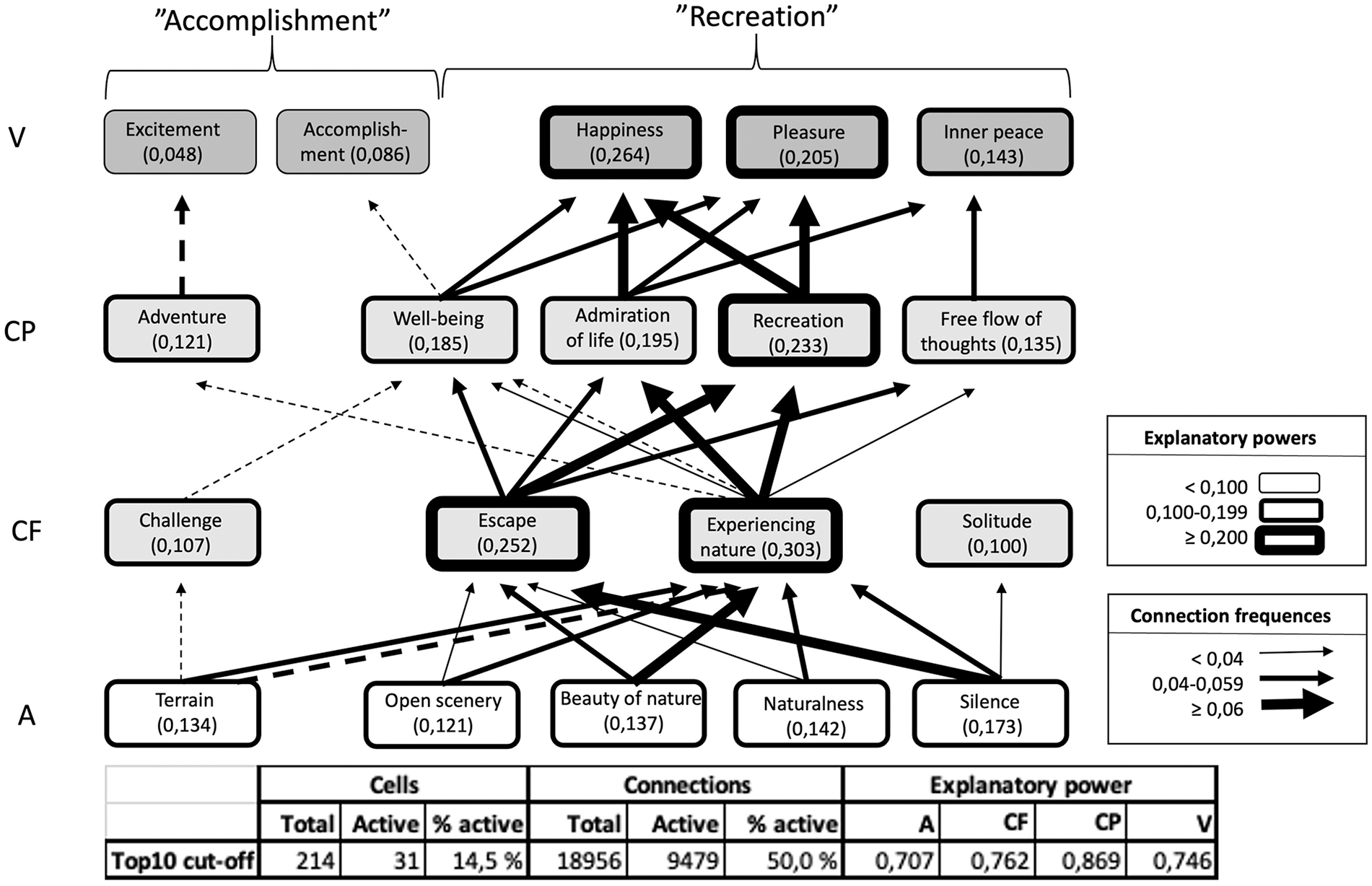
Top10 Hierarchical Value Map of the two most dominant main means-end chains, Recreation (solid arrows) and Accomplishment (dashed arrows). Explanatory powers of the elements in brackets.
Lowering the cut-off level to Top15—that is, including the next five most frequent inter-level connections—revealed two less prominent means-end chains, Togetherness and Convenience. Togetherness describes spending time with friends and family and its explanatory powers were 0.039–0.097. Convenience characterizes easy access to the destination as well as its infrastructure and services that facilitate the visits. It constituted an incomplete utilitarian chain that merged into Recreation at the level of psychosocial consequences. Its explanatory power was 0.122 on the attribute level and 0.087 on the functional consequences level. In summary, the combined explanatory power of these four chains comprising the 15 most frequent inter-level connections was 0.881 for the attributes, 0.947/0.938 for the consequences and 0.978 for universal values (Figure 5).
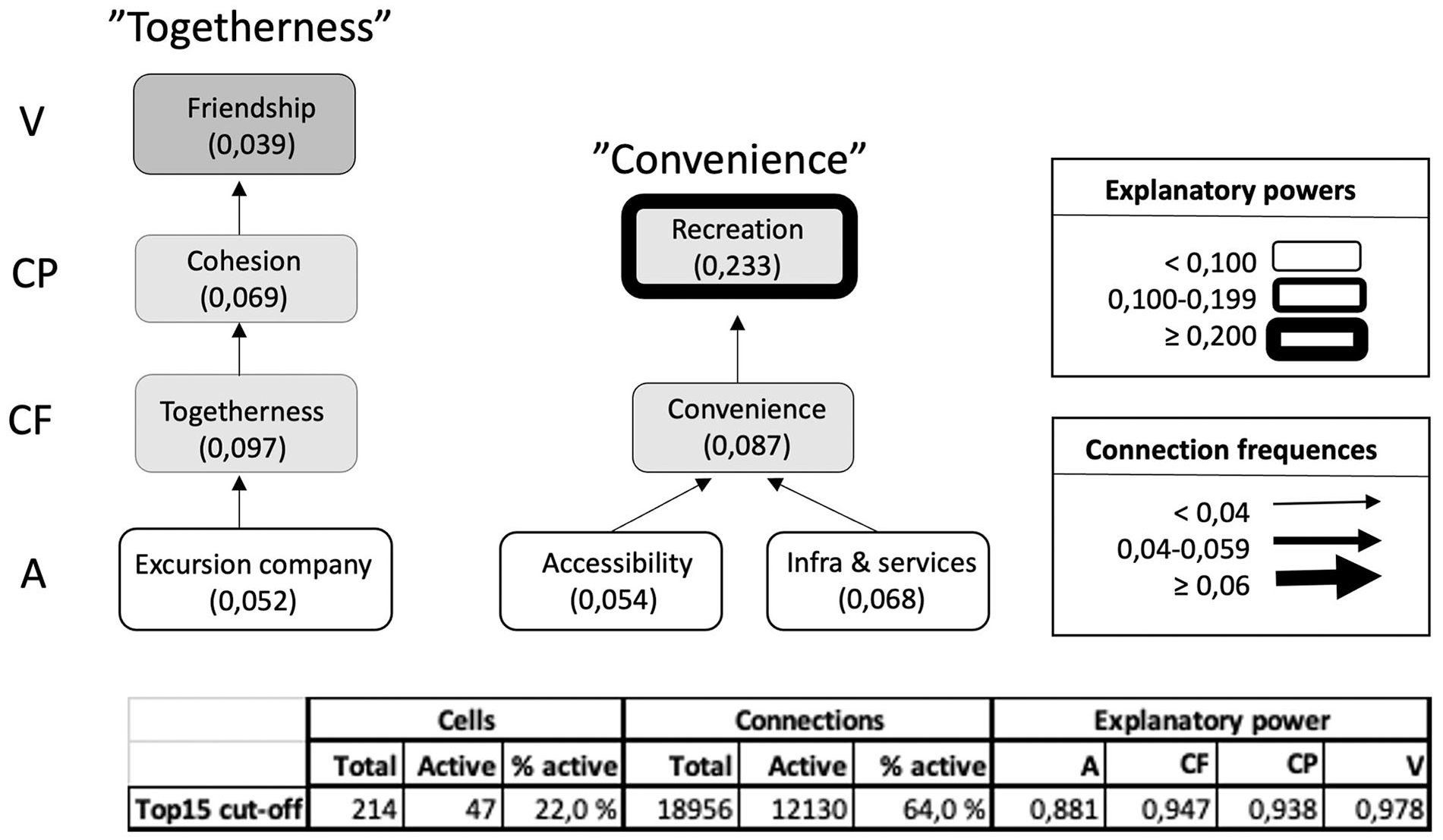
Additional Togetherness and Convenience means-end chains at the Top15 cut-off level. Abbreviations explained in Figure 4.
The order of universal values was identical in both destination types at the Top15 cut-off level. The four most important universal values—happiness, pleasure, inner peace, and freedom—represented the Recreation chain and jointly accounted for 0.710 (Wild parks) and 0.743 (Urban parks) of the explanatory power. The following three values were accomplishment, self-respect and excitement, the end values of the Accomplishment chain. Their combined explanatory powers were 0.230 (Wild) and 0.196 (Urban) while Friendship represented 0.039 (Wild) and 0.040 (Urban). The Convenience chain did not reach the level of end values as it merged into Recreation at the level of psychosocial consequences and status was marginal (Figure 6). The detected universal values matched the listing of Schwartz (2012), which was complemented with happiness from Rokeach’s (1973) terminal values.
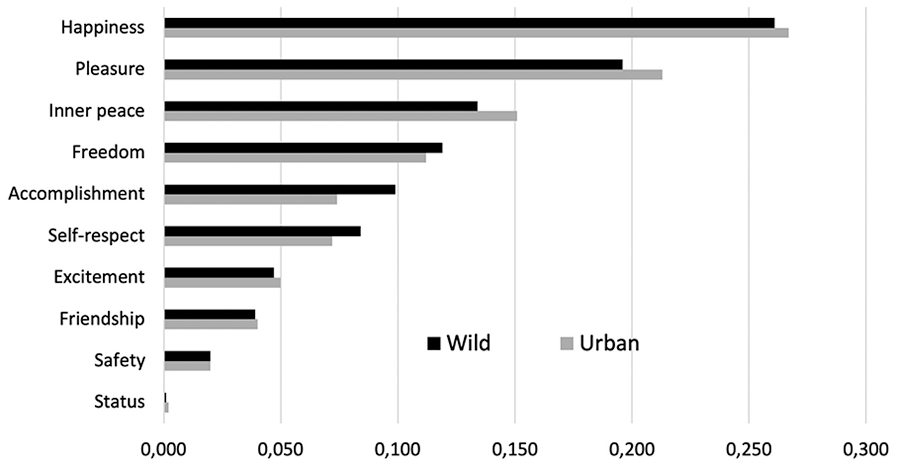
Visitors’ universal values in the order of importance in Wild and Urban parks and their explanatory powers (Top15 cut-off level).
Discussion
This study developed a new, digitally customized APT instrument for quantitative laddering and piloted it in a nature-based tourism context. The evaluation of the new instrument is conducted based on the methodological laddering assumptions as well as its managerial potential and practicality (Table 3).
Methodological evaluation
The main difference between digitalized versus standard APT is the interactive customization of the APT process, which excluded redundant alternatives from the laddering task. This reduced the complexity of the laddering task and focused the survey only on personally relevant elements. The increased clarity and consistency promoted greater consideration as regards the responses and decreased human errors when establishing the connections (laddering assumption 1; Reynolds and Phillips 2009). It was also reflected in low respondent fatigue with only 22.2% interrupting the survey despite the inclusion of a third “functional consequence – psychosocial consequence” matrix and allowing forking, the selection of up to three consequences per element, both of which increased the number of chains to be completed. The measured dropout rate was lower than the average for general invitation web surveys (30%) despite the use of matrix questions that are known to increase respondent burden and the risk of premature terminations (Crawford, Couper, and Lamias 2001; Galesic 2006).
The pop-up descriptions added to each element permitted instant elaboration of concepts when necessary, thus contributing to shared meanings and validity (laddering assumption 2; Grunert and Grunert 1995). Unlike written descriptions, the on-demand pop-ups did not add text to the matrices, which would have decreased their readability (Supplemental Appendix 1). The digital matrices were constructed to prompt respondents not to skip levels, which promoted introspection and resulted in complete, four-level chains (laddering assumption 3; Phillips and Reynolds 2009). Interactivity was also utilized to emphasize contextuality (laddering assumption 4; Grunert and Grunert 1995; Reynolds 2006) by automatically supplying every second laddering question with the name of the park selected by the respondent at the beginning of the survey (e.g., “Which factors did you appreciate the most on your previous visit to National Park X?,” Supplemental Appendix 1). These reminders contributed to answering on the basis of a single park and the most recent visit to it, which was important, because the respondents made several park visits per year (54% made 1–5 visits and 39% six or more). The electronic administration of the survey via social media contributed to sample relevance by reaching respondents who were active national park visitors familiar with park attributes and their personal consequences. This personal knowledge constitutes a prerequisite for conducting laddering tasks (laddering assumption 5; Phillips and Reynolds 2009). The sample relevance was further ensured with a screening question that automatically excluded those respondents, who had not visited any of the case parks (13 respondents/1.34%).
On the whole, these advancements improved the capability of digitally customized APT to fulfill the laddering assumptions, but nevertheless, the method was still based on recognition instead of active recollection; the respondents had to operate with predefined and hierarchically arranged elements. This fundamental feature of APT emphasizes the inductive pre-study’s significance in capturing the relevant elements and their reciprocal relations to be quantitatively laddered (laddering assumption 6; Hofstede et al. 1998; Vriens and Hofstede 2000). The validity of customized APT, its success in encompassing the relevant elements, was evidenced by the low percentage of “None of these” selections in the survey (between 0.4% and 1.9% per level). Moreover, two thirds of the open responses (22/35 responses) to the subsequent “What, then” question regarding the attributes were covered by extant categories. The remaining one third (13 responses) were random items with only one attribute—low radiation from telecom access points—being repeated several times.
Managerial applicability
The practical feasibility of digitally customized APT was assessed on the grounds of the usefulness of data, access to the target population, operational properties, respondent friendliness, and software requirements. The empirical trial proved the capability of digitalized APT in disclosing tourists’ construction of value. Examining national park visitors, it revealed the attribute-level origins of the commonly known benefits of escape, challenge, social interaction, and experiencing nature (Sorakunnas 2020) and connected these to visitors’ higher order goals and universal values. The prominent means-end chains included similar elements to the previous qualitative means-end research in nature-based tourism (Goldenberg et al. 2000; Hill et al. 2009; Ho et al. 2015; Klenosky et al. 1998; Weeden 2011), but due to this study’s more generalized scope and considerably larger sample size, its attributes, consequences and values were more diverse and quantitatively expressed. Moreover, this investigation revealed the often hidden universal values in a quantified and comprehensible order of importance (Figure 6), which is particularly useful for managerial purposes as values guide tourists’ decision-making and explain the reasons underlying their observable behavior (McIntosh and Thyne 2005). The richness of generated means-end data would have permitted more detailed analyses disclosing fine-grained relationships, but these were beyond the scope of this study. Nonetheless, the dominant chains and identified universal values already advocate for a shift in attention from separate elements to their actual meaning for the visitors; knowledge of key attributes, the “what,” is a good starting point for successful tourism management. However, an integrated understanding also comprising of the “how” and “why” levels offers much more managerial potential (cf. the interactionist perspective to value construction; Holbrook 1999). Digitally customized APT is a promising instrument for mapping these causalities and gaining insight into tourists’ construction of value that lays the foundation for successful customer segmentation, destination positioning, service development, and external marketing communication.
On the operational level, the targeted social media administration of the survey and online river sampling facilitated obtaining a sufficiently large sample of the desired subpopulation (Lehdonvirta et al. 2021); 956 national park visitors from across Finland responded within a two-week period, but the survey could just as easily have been administered globally. As a non-probability method, online river sampling is prone to a topical self-selection bias caused by people responding because they are interested in and familiar with the topic (Lehdonvirta et al. 2021). Moreover, although not evidenced in this study (Table 4), the digital laddering task may appeal more to the digitally proficient generation than those less familiar with modern technology. Given the exploratory nature of this investigation, the possibility of the sampling biases mentioned did not threaten the methodological aim of this study, that is, developing and testing digitally customized APT. On the other hand, however, the topical self-selection did support reaching the right people familiar with the topic. Nevertheless, the rising popularity of on-line surveys is challenging respondent motivation; despite this survey’s distribution being linked to over 100,000 registered national park enthusiasts together with one reminder and a small lottery incentive, the response rate remained low (0.9%).
In addition to reaching the right subpopulation, digitality allowed for an easy adjustment of the instrument during its testing phases and real-time follow-up of the survey execution. If, for example, the response rate for a given park had lagged behind, it would have been possible to send a targeted reminder to its visitors. The automatic entry of the survey results provided a considerable saving as regards both time and costs as well as eliminated manual errors. The format would also allow complementing verbal descriptions in the laddering tasks with pictures, sounds, or videos. From the respondents’ perspective, the digital execution offered easy participation independent of place and time as well as an effortless return of the survey. The increased respondent-friendliness facilitates higher response rates. In addition, sharing of the survey with peers via social media and e-mail would be easy, a feature useful in snowball sampling, for example.
In the absence of software specifically designed for digital APT, this survey was conducted by customizing the matrix functions of a standard web-based survey and reporting tool. This performed well in the data collection, but was laborious in the analysis phase necessitating the following: The Implication Matrices had to be constructed manually on Excel, the in- and out-degrees, explanatory powers as well as cut-off levels had to be calculated manually, and the Hierarchical Value Maps had to be drawn individually with PowerPoint. Nevertheless, this pilot demonstrated the capability of even a standard web-based survey tool to execute digitally customized APT laddering, thereby lowering the threshold for similar future research undertakings. The wider implementation of digitally customized APT in tourism research and management would, however, benefit from the development of tailor-made software. The software would contribute to a more flexible instrument construction by automatically organizing the entered attributes, consequences and values into matrices, allowing the adding of item descriptions and files for further information. In particular, the automated calculation of the Implication Matrices and key figures as well as the possibility of experimenting with different cut-off levels and subsets of the data would facilitate data analysis. System-generated Hierarchical Value Maps would be welcomed for illustration and reporting as well as viewing the data exclusively from the perspective of a single element or means-end chain. Modern graphic tools could even convert the thus far static HVMs into dynamic means-end presentations based on modifications of the cut-off level to highlight the dominant chains and elements as well as their respective significance.
Digitally Customized APT Compared to Other Laddering Techniques
The comparison of digitally customized APT with non-customized forms revealed methodological benefits; the customization of the laddering process improves the quality of data, thus arguing for the replacement of conventional APT with customized APT whenever possible. Moreover, the digital survey format contributed to several operational benefits for the researcher as well as provided practical benefits for the respondents; both of which provide strong support for replacing paper and pencil APT with computerized, albeit non-customized laddering. In surveys, especially with large samples, the printing and mailing of questionnaires as well as the manual entry of responses become burdensome and hamper the use of quantitative APT laddering to its full potential.
Despite this study being the first endeavor to digitally customize the APT process, a somewhat similar experiment has been made with mapping tourists’ mental representations in choice situations using the online Causal Network Elicitation Technique (CNET). This is also a computerized laddering method, but there are fundamental differences between CNET and digitally customized APT. Firstly, CNET is fully inductive, it uses an open format and relies entirely on the spontaneous and unaided recall of items. The CNET survey tool automatically interprets and categorizes the respondents’ open answers, which requires sophisticated programming using string recognition algorithms and extensive databases (Dellaert, Arentze, and Horeni 2014; Dellaert et al. 2017; Horeni et al. 2014). By contrast, recognition-based APT is from the programming point of view less demanding as the elements to be laddered are presented to the respondents, not construed by the software. Secondly, CNET elicits only “attribute – benefit connections” omitting the highest level of universal values as well as the “functional consequences-psychosocial consequences” connections that provide a more elaborate understanding of visitors’ value structures (Diedericks, Erasmus, and Donoghue 2020; Reynolds 2006; Reynolds and Phillips 2009). Understandably, the mapping of four-level means-end hierarchies with CNET would be an even more challenging task for the automatic text recognition algorithms and databases (cf. Horeni et al. 2014). Hence, resting on recognition instead of recall, digitally customized APT not only offers a straightforward tool to uncovering the means-end chains but also generates a more fine-grained and complete hierarchical value structure than CNET.
The “None of these” –> “What, then” option in the digitally customized APT process overlapped with the inductive CNET logic, but due to software limitations, further laddering from these newly emerged elements was not possible. Once such technology becomes available and reliable, it might be possible to freely elicit the attributes, consequences, and values from the respondents using open field answering as has been experimented with CNET (Horeni et al. 2014). However, such a process would no longer represent APT, which is a recognition-based association of designated elements. Instead, it would methodologically approach soft laddering and CNET, both of which are characterized by induction. Therefore, for this study’s purpose—to develop and test digitally customized APT—the current implementation where digital means were used to introduce customization into the hard laddering task while still maintaining its quantitative character, was appropriate. However, future software developments of unprompted digital laddering may open new research possibilities that blur the boundaries between soft and hard laddering. It should, however, be emphasized that such alternatives are technically far more challenging, because the algorithms and databases need to be tailored to each case separately whereas digitally customized APT is relatively easy to conduct with existing survey tools.
Conclusions
This research developed, tested, and evaluated a new, digital, and interactively customized version of the Association Pattern Technique (Hofstede et al. 1998) for quantitative means-end research in tourism. The pilot investigation comprising 956 visitors to nine Finnish national parks indicated that the digital customization of laddering matrices offers methodological benefits compared to non-customized APT while the electronic format per se yields practical benefits both for the researcher and the respondents. The empirical results demonstrated the instrument’s feasibility and potential for tourism research and management by disclosing the construction of consumer value as well as the universal values of the examined nature-based tourists. Hence, this methodological study offers insight and impetus for future laddering research.
Interactively customized APT fulfilled several methodological laddering assumptions better than traditional APT with fixed matrices (Grunert and Grunert 1995; Phillips and Reynolds 2009; Reynolds and Phillips 2009); it contributed to producing considered responses and a reduction in misunderstandings, as well as delivering complete means-end chains while also supporting a more contextualized data collection and a relevant sample composition. In addition, the electronic survey execution, when compared to traditional paper and pencil APT, provided practical benefits related to survey construction and administration as well as participation. Therefore, the authors argue for an upgrading of non-customized APT to a digital and interactive form as envisaged by Diedericks, Erasmus, and Donoghue (2020). Furthermore, the practical advantages of digital laddering support the replacing of paper and pencil surveys with computerized, albeit non-customized APT whenever possible.
Despite several methodological advantages, customized APT is still based on passive recognition of items instead of their active recollection. Consequently, its validity relies on the inductive or otherwise well-justified and thorough a priori determination of the elements to be laddered (Hofstede et al. 1998). Future software developments may allow an unprompted determination of all elements throughout the laddering task, thereby blurring the boundary between digitally customized APT and inductive soft laddering; this would inevitably change the nature of APT laddering and even risk its original benefits. Thus, mixed-method approaches consisting of a qualitative laddering pre-study or a thorough literature review followed by quantitative, digitalized APT are still recommended (cf. Vriens and Hofstede 2000).
The new instrument proved effective in examining the clientele’s construction of value in tourism. In the examined nature-based context, it concretely disclosed the visitors’ prominent means-end chains as well as the relationships between individual elements. Of particular managerial significance is the disclosure of the universal values, which often remain concealed, but guide tourists’ behavior and decision-making. These end values, together with insight into tourists’ stepwise construction of value, help to lay the foundation for efficient tourism management, for example customer segmentation, destination positioning, service development, and external marketing communication—regardless of the tourism sector or type.
The empirical results are confined to similar, independent and unfacilitated nature-based settings, but they should inspire all nature-based tourism researchers and practitioners to consider consumer value as an integrated construct with several “attribute – consequence – values” avenues that can be examined with digitally customized APT. Due to its theoretical means-end foundation, this upgraded version of APT is transferable to other tourism contexts and also beyond them to virtually any consumption setting. While demonstrating the potential of customized APT, this study has simultaneously attempted to indicate the benefits of tailor-made APT software in facilitating future research projects. Once such software becomes available, digitally customized APT should be validated in relation to non-customized APT—both paper & pencil and computerized—in the same manner as non-customized APT has been validated with soft laddering interviews (Langbroek and De Beuckelaer 2007; Russell et al. 2004). Finally, when conducting actual empirical research using online river sampling, the non-probability nature of the sample needs to be taken into account.
COVID-19 Statement
This means-end research focused on the general construction of consumer value in nature-based tourism aiming to make a methodological contribution to quantitative laddering. The new instrument was tested on domestic visitors to Finnish national parks, whose access was unaffected by the COVID-19 pandemic. In fact, to the contrary, the COVID-induced restrictions on foreign travel as well as indoor activities resulted in the popularity of Finnish national parks reaching a record high in 2020 and 2021. The authors state that this increase did not affect the methodological contribution nor managerial implications discussed.
Supplemental Material
sj-pdf-1-jtr-10.1177_00472875221077976 – Supplemental material for Digitally Customized and Interactive Laddering: A New Way for Examining Tourists’ Value Structures
Supplemental material, sj-pdf-1-jtr-10.1177_00472875221077976 for Digitally Customized and Interactive Laddering: A New Way for Examining Tourists’ Value Structures by Esko Sorakunnas and Henna Konu in Journal of Travel Research
Supplemental Material
sj-pdf-2-jtr-10.1177_00472875221077976 – Supplemental material for Digitally Customized and Interactive Laddering: A New Way for Examining Tourists’ Value Structures
Supplemental material, sj-pdf-2-jtr-10.1177_00472875221077976 for Digitally Customized and Interactive Laddering: A New Way for Examining Tourists’ Value Structures by Esko Sorakunnas and Henna Konu in Journal of Travel Research
Footnotes
Acknowledgements
We would like to thank Professor Raija Komppula from the Tourism Marketing and Management Research Group at the University of Eastern Finland for her valuable comments.
Declaration of Conflicting Interests
The author(s) declared no potential conflicts of interest with respect to the research, authorship, and/or publication of this article.
Funding
The author(s) disclosed receipt of the following financial support for the research, authorship, and/or publication of this article: This research was supported by the Finnish Foundation for Economic Education [grant number 190370] and Natural Resources Institute Finland (Luke) [grant number 41007-00216400].

Supplemental Material
Supplemental material for this article is available online.
Author Biographies
References
Supplementary Material
Please find the following supplemental material available below.
For Open Access articles published under a Creative Commons License, all supplemental material carries the same license as the article it is associated with.
For non-Open Access articles published, all supplemental material carries a non-exclusive license, and permission requests for re-use of supplemental material or any part of supplemental material shall be sent directly to the copyright owner as specified in the copyright notice associated with the article.
