



Abstract
Customer journeys in tourism are becoming more complex, often including multiple touch points that can influence expectations, experiences, and travel behaviors. The management of these different interactions is further complicated if tourist destinations face natural or man-made crises (e.g., financial crises, COVID-19). The current research takes a comprehensive look at how negative word-of-mouth (WOM) shapes pre-consumption expectations that drive actual tourist experiences and subsequent satisfaction behaviors. Using partial least squares structural equation modeling (PLS-SEM), findings from 188 tourists confirm the influence of uncontrollable, negative WOM on destination image. Yet an actual, positive experience negates these negative pre-trip influences. Tourism managers are rewarded with satisfied and loyal tourists in response to creating positive experiences even at crisis impacted destinations.
Introduction
Tourism destinations and businesses increasingly focus on designing and managing strong customer experiences (Lunardo and Ponsignon 2020). In fact, over 72.0% of businesses incorporate customer experience optimization in their strategic positioning (Kranzbühler, Kleijnen, and Verlegh 2019; Lemon and Verhoef 2016). This trend acknowledges that businesses and customers engage via multiple touch points (i.e., moments of customer interaction and contact with a firm) throughout the duration of the experience (Becker and Jaakkola 2020). These individual touch points together yield a customer journey across various channels, such as online channels including social media or mobile applications, that can lead to satisfying or dissatisfying post-purchase outcomes (Kranzbühler, Kleijnen, and Verlegh 2019).
Customer satisfaction, as a critical component in assessing travel experiences, remains a focus of destination marketing organizations (DMOs) to succeed in an increasingly competitive tourism industry (Ribeiro et al. 2018). In managing these tourist experiences, limited research has examined the impact of negative information in shaping pre-travel consumption and, consequently, post-consumption satisfaction and loyalty tendencies (e.g., Nam et al. 2020). Yet unfavorable information about destinations in general and crisis impacted destinations specifically influence the actual experience; crises can range from natural disasters to financial crisis, pandemics, and regional conflicts (Ghaderi, Som, and Henderson 2012). While sharing of negative information is often associated with traditional media such as TV and print, word-of-mouth (WOM) is another common tool. Indeed, previous findings identified both positive and negative WOM as drivers of beliefs and knowledge formation about a destination (Reza Jalilvand et al. 2012). Still, DMOs primarily focus on positive WOMs influence in promoting destinations rather than on uncontrollable, negative WOM by travelers (Reza Jalilvand et al. 2012).
Prior research confirmed the detrimental and long-term impact of crises on countries as well as corresponding tourism industries, leading to a continuous investigation of these effects over decades (Khalid, Okafor, and Shafiullah 2020). One prominent example remains the global financial crisis starting in 2007 and its significant, long-lasting impact on countries like Greece, Croatia, and Italy (Dogru and Bulut 2018). Across various types of crises, being prepared and monitoring market trends can assist in minimizing risks, staying competitive, and surviving future crises (Khalid, Okafor, and Shafiullah 2020). Therefore, understanding the impact of negative information related to a financial crisis or financial elements of a crisis can assist in responding to its long-term effects by managing tourist experiences. To date, the majority of studies have focused on internal firm perspectives when managing negative WOM associated with a crisis (e.g., Zheng, Liu, and Davison 2018). Limited research has explored the effects of negative WOM within the destination management context. Additionally, while gender moderated effects in prior destination image studies (Assaker et al. 2015; Huang and van der Veen 2019), the crisis impacted destination context remains largely unexplored.
In light of the current global economic situation in response to COVID-19, the importance of assessing uncontrollable sources of negative information and providing insights on how DMOs can proactively manage these addresses timely concerns. Considering the pandemic’s current stage, it can be challenging to fully understand and examine its prolonged economic impact on the tourism industry at this time (Xiang, Fesenmaier, and Werthner 2020). Subsequently, adding new insights on handling crises in general can benefit tourism marketers and corresponding regions in dealing with new crises by learning from previous catastrophes (Assaker and O’Connor 2020; Avraham 2015). The current study context of the global financial crisis of 2007 mirrors the economic and financial ramifications of the current pandemic, both spanning across numerous countries (Lederer 2021; The World Bank 2020). Therefore, using the global financial crisis as a proxy for the current pandemic allows us to draw insights from actual tourist experiences at a crisis impacted destination rather than relying on anticipated experiences as travel restrictions and limited mobility of tourists rendered required data inaccessible (Lim 2021; Xiang, Fesenmaier, and Werthner 2020).
By positioning this research within the customer journey framework, the study aims to examine multiple interactions between tourists and companies across the different consumption stages. Rather than evaluating the objective financial situation of a destination, the current research assesses tourists’ subjective perceptions of the travel experience and, subsequently, of the destination. Specifically, the assessment focuses on the influence of negative WOM targeting a destination impacted by a crisis on pre-consumption expectations. Moreover, the influence of these expectations on the actual experience, namely disconfirmation, and succeeding post-consumption outcomes is further investigated. The global financial crisis from offers a suitable study context considering that the current global pandemic displays comparable financial hardship and economic ramifications (Lederer 2021; The World Bank 2020).
The contributions of this study hinge on introducing a crisis context to customer journeys in tourism. More specifically, the assessment of various touch points representative of the pre-, during, and post-consumption stages of the customer journey offer compelling insights in light of crisis impacted destinations. Contributions offer guidance to DMOs who face negative, uncontrollable information such as negative WOM during or after a crisis. In combating these negative influences, DMOs need to focus on creating positive internal touch points in the form of successful tourist experiences which negate these negative pre-consumption influences. Subsequently, tourists will express satisfaction and loyalty toward the business as well as the destination in general during post-consumption, which could lead to the next pre-consumption phase.
Theoretical Background
Customer Journey in Tourism
Tourism is becoming more complex and interactive through the integration of multiple touch points allowing consumers to engage with a company through different channels and media, particularly prior to a consumption journey (Lemon and Verhoef 2016). Touch points can be internal (e.g., the hotel a tourist is staying in) or external (e.g., reviews about the hotel) based on the company’s level of control over these touch points (Becker and Jaakkola 2020; Kranzbühler, Kleijnen, and Verlegh 2019). External touch points remain outside of a firm’s control such as customer goals, peer influences, and independent information sources (Lemon and Verhoef 2016). In contrast, internal touch points exist within a firm’s immediate reach and control including company employees, check-in policies, and promotional materials (Becker and Jaakkola 2020; Yachin 2018). According to the customer journey framework, this culmination of experiences is a dynamic process that spans across all three consumption stages (i.e., before, during, and after the service purchase), and needs to be carefully managed to ensure a coherent image and positive holistic journey over time (e.g., Becker and Jaakkola 2020; Siebert et al. 2020; Yachin 2018).
The pre-consumption stage includes all activities, influences, and searches prior to the actual experience (Lemon and Verhoef 2016). Thereafter, the actual purchase or consumption involves the service delivery making it the shortest stage (Lemon and Verhoef 2016). Attitudes, behaviors, and perceptions in response to immediate or prior purchases reflect the post-consumption phase; this often feeds into a loyalty loop of consumer loyalty or alternative consideration (Becker and Jaakkola 2020; Siebert et al. 2020). Within the context of tourism, Chon (1990) proposed a traveler buying behavior framework exploring travel experiences. These experiences include stages of primary destination image construction, actual experience, and post-trip evaluation.
In the digital era, information source and media touch points represent essential components across all consumption stages of the customer journey (Lemon and Verhoef 2016). Customers utilize media touch points to receive firm information via company-controlled “paid” compared to customer- or peer-driven “earned” encounters (Klein et al. 2020). Paid media include company driven marketing activities, while earned media reflect external sources such as WOM or consumer reviews (Klein et al. 2020). These earned touch points occur either online or offline.
Lemon and Verhoef (2016) suggested that the pre-consumption stage has received less attention across literatures than the actual service delivery stage. Consequently, this study explores the role of negative WOM as an external, earned media touch point as part of the pre-consumption stage of a travel experience. Specifically, destination image, disconfirmation, satisfaction, and loyalty are examined along the travel experience at a crisis impacted destination.
Expectancy Disconfirmation Model
One of the most commonly studied frameworks assessing consumer post-trip evaluations is the expectancy disconfirmation model (Oliver 1980). The divergence between expectations and actual experience where the disconfirmation of the actual experience compared to expectations leads to positive or negative outcomes remains the core focus of the theoretical premise (Bigné, Andreu, and Gnoth 2005; del Bosque and San Martín 2008; Oliver 1980). Specifically, satisfaction as a post-consumption outcome behavior remains a core concept grounded in the expectancy disconfirmation model (Bigné, Andreu, and Gnoth 2005; Narangajavana Kaosiri et al. 2019). Prior research has acknowledged the importance of considering cognitive and affective components within the disconfirmation framework driving satisfaction and subsequent intentions (del Bosque and San Martín 2008; Narangajavana Kaosiri et al. 2019). However, while research has partially addressed the interplay of disconfirmation and affective, as well as, cognitive elements leading to satisfaction and loyalty, conclusive findings remain sparse (Bigné, Andreu, and Gnoth 2005). Specifically, considering that customer journeys can consist of positive and negative travel experiences (Siebert et al. 2020), incorporating the perspective of tourism companies managing negative touch points seems essential.
The Role of Negative Touch Points
Limited studies have examined the negative influences of touch points and have predominantly focused on these influences when controlled by a company (Lemon and Verhoef 2016; Rapp et al. 2015). Yet, companies do not always remain in control of every touch point and corresponding outcomes; potential negative ramifications can be especially difficult to manage in these situations (Lemon and Verhoef 2016). One of these uncontrollable influences is WOM and specifically negative WOM. External information including WOM from family, friends, and social media sources (e.g., media, newspaper) can influence consumer perceptions and image creations during the pre-consumption stage of the customer journey (Lemon and Verhoef 2016). In addition, findings show that extreme crises negatively impact customer experiences (Assaker and O’Connor 2020; Lemon and Verhoef 2016). Thus, research is needed to examine how negative WOM focusing on crises impacts customer experiences as an uncontrollable, external touch point within the customer journey, and if negative effects prevail throughout the entire journey. As mentioned by Becker and Jaakkola (2020), the current literature remains unclear about potential additive effects of various external and internal touch points. This research addresses these concerns by incorporating external and internal touch points to examine the overall effect on satisfaction and destination loyalty across various consumption stages within the context of a crisis (Figure 1).
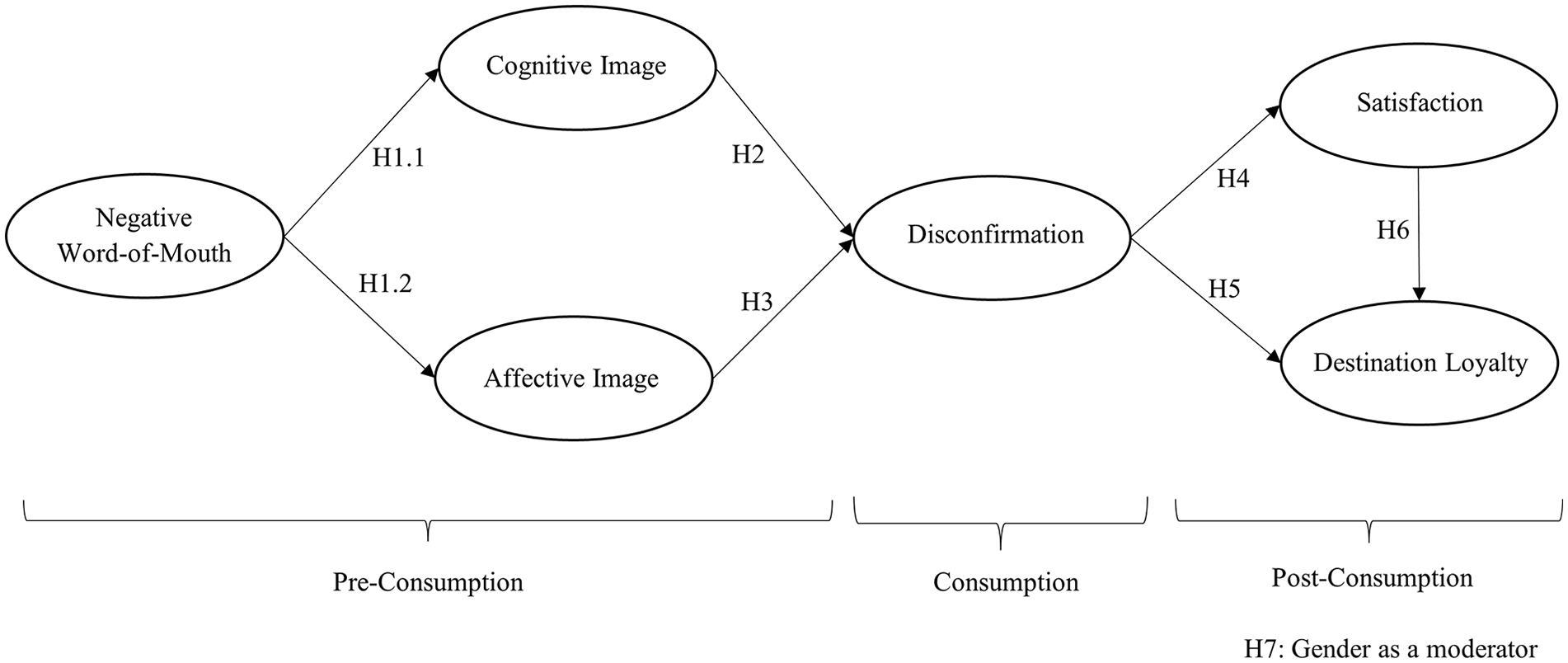
Conceptual model.
Hypotheses Development
Negative Word-of-Mouth During Pre-Consumption
WOM, defined as information exchange among consumers, influences customer attitudes and behaviors as an informal information source during a traveler’s decision process (Hernández-Méndez, Muñoz-Leiva, and Sánchez-Fernández 2015; Nam et al. 2020). Sun, Ryan, and Pan (2015) explored the role of blogging on destination image and concluded that it increased tourist awareness and motivation to travel to a specific destination. In line with this finding, discussion has centered around the influence of social media on the decision-making process and consumer experience (e.g., Power and Phillips-Wren 2011). Specifically, in the absence of personal experience, consumers seek external information sources such as family and friends as part of their pre-purchase search process (Scholl-Grissemann, Peters, and Teichmann 2020). Negative WOM utilized by customers as an earned media represents an external touch point in influencing tourists’ experiences during the pre-consumption stage (Klein et al. 2020; Lemon and Verhoef 2016). Moreover, negative WOM, such as unfavorable comments about a destination, greatly influences destination image suggesting a stronger impact of negative information than positive information (Nam et al. 2020; Reza Jalilvand et al. 2012). Consequently, the interplay of new communication mechanisms, such as negative WOM, and their influence on destination image continues to increase in importance due to the destination’s role in shaping tourists’ decisions and experiences (Choi, Lehto, and Morrison 2007).
Destination image, the sum of beliefs, knowledge, emotional thoughts, and expectations about a destination, plays an influential role in the buying decision process (Chon 1990; Foroudi et al. 2018). From a more defined perspective, destination image encompasses cognitive image and affective image to capture both beliefs and emotional responses toward a destination (Kim, Lehto, and Kandampully 2019). Cognitive image consists of an individual’s beliefs and opinions about a destination that are shaped by tangible physical attributes including natural scenery, facilities for activities, and entertainment options (Lin et al. 2007; Stylidis, Shani, and Belhassen 2017). In contrast, affective image represents a person’s emotional response toward a destination, which further influences the evaluation and choice of a destination (Stylidis, Shani, and Belhassen 2017). Consistent with previous research (e.g., del Bosque and San Martín 2008; Lin et al. 2007; Tan and Wu 2016; Wang and Hsu 2010), the current study continues the operationalization of two destination image components and incorporates both cognitive image and affective image.
As information generated from WOM can be positive or negative, Tasci, Gartner, and Cavusgil (2007) acknowledged that the negative image portrayed by media or family and friends can negatively influence tourists’ destination preferences. While companies can implement communication strategies to assist with positive image restoration, events outside of a firm’s control make it challenging to fix the tarnished destination image (Avraham 2015). For example, events including natural catastrophes, terror attacks, or financial crises are autonomous image formation agents that can construct a negative brand bias associated with the tourism destination (Tasci, Gartner, and Cavusgil 2007). Therefore, understanding the impact of negative information is crucial in preparing tourism destinations and businesses with efficient strategies in responding to crises. One of these events is the global financial crisis in Greece and the corresponding negative coverage in international media that led to an uproar in other European countries (Bickes, Otten, and Weymann 2014). With the wide media coverage, the topic remains popular among individuals as well. Negative WOM about a crisis associated with a travel destination generated from personal and impersonal sources can further influence cognitive image and affective image. Based on the above discussion, we propose the following hypotheses:
Hypothesis 1.1: Negative word-of-mouth has a negative influence on cognitive image.
Hypothesis 1.2: Negative word-of-mouth has a negative influence on affective image.
Cognitive Image/Affective Image and Actual Consumption
The mental representations or images related to a destination shape expectations and anticipations of the experience prior to the visit (Chon 1990; del Bosque and San Martín 2008). As previously discussed, destination image is often conceptualized as two-dimensional consisting of cognitive image and affective image. The image formation process outlines how cognitive and affective image influence the anticipation of a traveler’s experience prior to the actual visit; thus, the subsequent evaluation of the experience is affected also by cognitive image and affective image (Chon 1990; Reza Jalilvand et al. 2012). Previous studies further established the influence of cognitive and affective image on tourists’ pre-consumption, actual experiences, and post-consumption evaluations (Foroudi et al. 2018; Reza Jalilvand et al. 2012; Tasci et al. 2021). Stylidis, Woosnam, and Ivkov (2020) posited that both destination images are shaped by local residents at the destination, which differs by visitor segment based on emotional solidarity.
Considering the customer journey framework, various touch points impact a traveler’s overall experience, specifically destination image (Lemon and Verhoef 2016). Based on the expectancy disconfirmation model, disconfirmation results from comparing expectations and actual experiences, where expectations represent an individual’s beliefs of an object or event (Oliver 1980; Nam et al. 2020). In tourism, cognitive image and affective image are compared to the actual travel experience in influencing the outcome (Chon 1990; Foroudi et al. 2018). Prior research has established the influence of cognition and affect (e.g., Bigné, Andreu, and Gnoth 2005; Loureiro 2010) and, more specifically, cognitive as well as affective image (del Bosque and San Martín 2008; San Martín and del Bosque 2008) on tourist expectation and subsequent experiences tied to a destination. However, according to Afshardoost and Eshaghi (2020, 1) meta-analytical results, the influence of destination image varies “in terms of direction, magnitude, and statistical significance due to variety of the research context, research approach, research strategy, sampling method, and methods for measuring different components of destination image.” Consequently, further research is necessary to clarify the effect of cognitive and affective image on the disconfirmation of travel experiences, especially within a crisis context (Afshardoost and Eshaghi 2020). Accordingly, we hypothesize that:
Hypothesis 2: Cognitive image has a positive influence on disconfirmation.
Hypothesis 3: Affective image has a positive influence on disconfirmation.
Disconfirmation and Post-Consumption Behaviors
Within the proposed model, disconfirmation represents the consumption phase of the travel experience in line with the previously discussed expectancy disconfirmation model (Oliver 1980). From a tourist’s perspective, satisfaction is a “pleasurable fulfillment” resulting from the outperformance of the actual experience in a destination compared to the pre-trip expectation through disconfirmation (Deng and Pierskalla 2011; Oliver 1980, 1999). According to Pestana, Parreira, and Moutinho (2020), individuals rate satisfaction on a continuum ranging from dissatisfaction to satisfaction in an attempt to explore tourists’ fulfillment of needs and desires as part of their travel experience. This view of satisfaction reflects its cognitive nature (standard and feedback) and its affective nature (feeling of pleasure) that simultaneously contribute to the overall level of satisfaction (del Bosque and San Martín 2008). Another important influence has been social factors, such as communications of others that can impact perceived realities associated with a destination and subsequent satisfaction (Narangajavana Kaosiri et al. 2019). Importantly, satisfaction can be examined after each tourist experience allowing for a comprehensive assessment within a customer journey (Ribeiro et al. 2018).
Prior findings confirmed the influence of actual experiences (i.e., disconfirmation) on tourists’ level of satisfaction associated with a service (Narangajavana Kaosiri et al. 2019). Indeed, Petrick (2004) identified disconfirmation as one of the best predictors of satisfaction within tourism research. Disconfirmation also impacts the experience evaluation and positively affects satisfaction by generating positive judgments and feelings of pleasure (Bigné, Andreu, and Gnoth 2005). Furthermore, del Bosque and San Martín (2008) proposed that tourists generally judge their experiences more positively if an experience exceeded expectations (e.g., exaggerating their evaluation). Therefore, disconfirmation of an experience is suggested to lead to higher levels of satisfaction. In the current study, we therefore postulate that:
Hypothesis 4: Disconfirmation has a positive influence on satisfaction.
Destination loyalty remains an important success indicator in tourism as it reflects a positive attitude toward a destination and a commitment toward the tourism service or destination (Li et al. 2020; Ribeiro et al. 2018; Tasci et al. 2021). Often defined as the willingness to recommend or revisit a destination, destination loyalty incorporates behavioral and attitudinal facets post consumption (Ribeiro et al. 2018; Stylidis et al. 2020). So, the success of a travel destination is largely dependent on tourists’ behavioral intentions including intentions to revisit and willingness to recommend the destination to others (Ahrholdt, Gudergan, and Ringle 2017). Stylidis et al. (2020) further posited that intentions to revisit promote the competitiveness of a destination as a sign of success. Multiple studies have incorporated intentions to recommend as a measure of destination loyalty (e.g., Cossío-Silva, Revilla-Camacho, and Vega-Vázquez 2019). Satisfied tourists express destination loyalty by recommending the destination to friends and family members (Stylidis et al. 2020; Sun, Chi, and Xu 2013). These recommendations from family and friends act as a credible information source and, subsequently, assist other tourists in selecting a suitable destination (Yoon and Uysal 2005).
With regard to disconfirmation, Bigné, Andreu, and Gnoth (2005) argued that perceived disconfirmation and pleasure, which are satisfaction-mediated factors, also directly impact destination loyalty. As disconfirmation reflects the positive or negative evaluation of the actual experience, this performance evaluation subsequently affects attitudes and future behaviors (Baloglu et al. 2004). Enjoyable experiences and positive performances lead to positive communications about the experience and future intention to repeat the visit (Baloglu et al. 2004; Bigné, Andreu, and Gnoth 2005). Hence, we propose:
Hypothesis 5: Disconfirmation has a positive influence on destination loyalty.
Satisfaction as a Mediator
Satisfaction is one of the most significant indicators of tourism experiences as it leads to loyalty (Ahrholdt, Gudergan, and Ringle 2017; Lee, Kyle, and Scott 2012). Empirical evidence suggests that tourists’ satisfaction drives destination loyalty due to its impact on destination choice and revisit intentions (Ribeiro et al. 2018; Stylidis, Woosnam, and Ivkov 2020). Satisfied tourists are more likely to return to the same destination and are more willing to share their positive travel experience with others (Lee, Kyle, and Scott 2012). Therefore, prior research established a strong relationship between satisfaction and destination loyalty (Ribeiro et al. 2018).
Satisfaction mediating properties on behavioral and attitudinal outcomes, such as loyalty, have also been established within the marketing and tourism literature (e.g., del Bosque and San Martín 2008; Deng and Pierskalla 2011). Ribeiro et al. (2018) discussed the well-established positioning of satisfaction as a mediator between various factors and loyalty. Additional empirical research supported the mediating effect of overall satisfaction on the relationship between destination performance and destination loyalty (Baloglu et al. 2004; Deng and Pierskalla 2011). As satisfaction develops from the disconfirmation of a tourist’s actual experience compared to the expectations, it mediates the effect of disconfirmation on destination loyalty indicating immediate post-consumption responses (Loureiro 2010). As a result, we hypothesize that:
Hypothesis 6: Satisfaction mediates the influence of disconfirmation on destination loyalty.
Gender as a Moderator
Gender has been found to be a strong moderator within previous tourism and destination image research. Ribeiro et al. (2018) revealed that gender is one of the most influential drivers in selecting a tourist destination and often determines future purchase behaviors. Generally speaking, previous research positions female tourists as more emotional, socially oriented, interactive, and sensitive to social interdependence than male travelers (Hwang, Han, and Kim 2015; Ribeiro et al. 2018). Moreover, female tourists tend to be more susceptible to external information during the overall decision-making process (Ribeiro et al. 2018). Šegota, Chen, and Golja (2021) confirmed that these differences also prevail in WOM assessments.
Huang and van der Veen (2019) identified that gender can explain differences in the image formation of tourism destinations and behavioral intentions. Focusing on loyalty perceptions, Assaker et al. (2015) found that male tourists develop less destination loyalty yet express strong destination image toward Australia. Meng and Uysal (2008) looked at gendered differences within nature-based tourism settings, revealing significant differences in travel attributes and values between male and female tourists. Finally, Ribeiro et al. (2018) concluded that gender moderates the effect from satisfaction toward loyalty whereby the effect was stronger for male tourists. The aforementioned discussion leads to the following hypothesis:
Hypothesis 7: Modeled relationships are moderated by gender (male vs. female tourists).
Methodology
Study Context
The study was conducted on the Greek island of Crete. Tourism has been and remains a key component of the Greek economy contributing an estimated 15.10 billion Euros to the country’s GDP in 2018 alone despite financial challenges (Luty 2020; Thompson 2017). These challenges emerged from the financial crisis in 2007 that caused severe instability across markets and gradually escalated into a global crisis (Abboushi 2011). By 2009, Greece’s economy and overall financial standing drastically declined (Amadeo and Boyle 2020). The country continued to deal with the impact of the global financial crisis until 2018 with the ending of the European Union bailout program (Amadeo and Boyle 2020). In fact, Greece emerged as one of the worst impacted European countries during this crisis which threatened the viability of the Eurozone and associated trade worldwide (Abboushi 2011; Thompson 2017).
Despite being a popular tourist destination, media across Europe has often portrayed Greece in a negative image focusing on their financial difficulties and the need for a European bailout (Papathanassopoulos 2015). Thus, tourists intending to visit Crete are exposed to negative information about the impact of the global financial crisis in Greece. Considering the suggested long-term effects of crises, the continued impact of these negative communications is especially of interest in the present study given the current global situation (Dogru and Bulut 2018; Khalid, Okafor, and Shafiullah 2020). As mentioned earlier, the COVID-19 pandemic has a significant financial impact on countries around the world (The World Bank 2020). Greece, specifically, has spiraled into another economic and financial crisis similar to the financial distress faced during the global financial crisis of 2007–2018 (Hazakis 2021). Exploring how people perceive a destination based on communications about associated crises is important in understanding tourists’ experiences related to crisis impacted destinations.
Data Collection and Measurements
The study site was Crete. The destination remains a favorite vacation place for British tourists who represent 40.0% of the total inbound tourist market of Crete (SETE 2020; Stylos and Bellou 2019). With regard to tourist characteristics, Crete is a popular destination for families with children (42.0%), couples (38.0%), and singles (20.0%) (Marti and Puertas, 2017). Traditionally, younger tourists (18–45 = 71.0%) tend to seek out the destination more than older tourists (46+ = 29.0%) (Andriotis 2011; Bellou and Andronikidis 2009). The vast majority of tourists vacation in Crete between eight and nine days (Nikolopoulou 2019).
Data collection included British tourists in various resorts on Crete from September to October 2016. A systematic sampling technique was implemented by approaching every fifth British tourist during the check-out of these resorts. Previously trained hotel employees explained the purpose of the study and answered potential questions. Data collection took place seven days a week during that one-month period. The sampling approach focused on English language native tourists to avoid language barrier and potential cultural bias imposed by administering the paper-pencil survey in English (Ford, West, and Sargeant 2015).
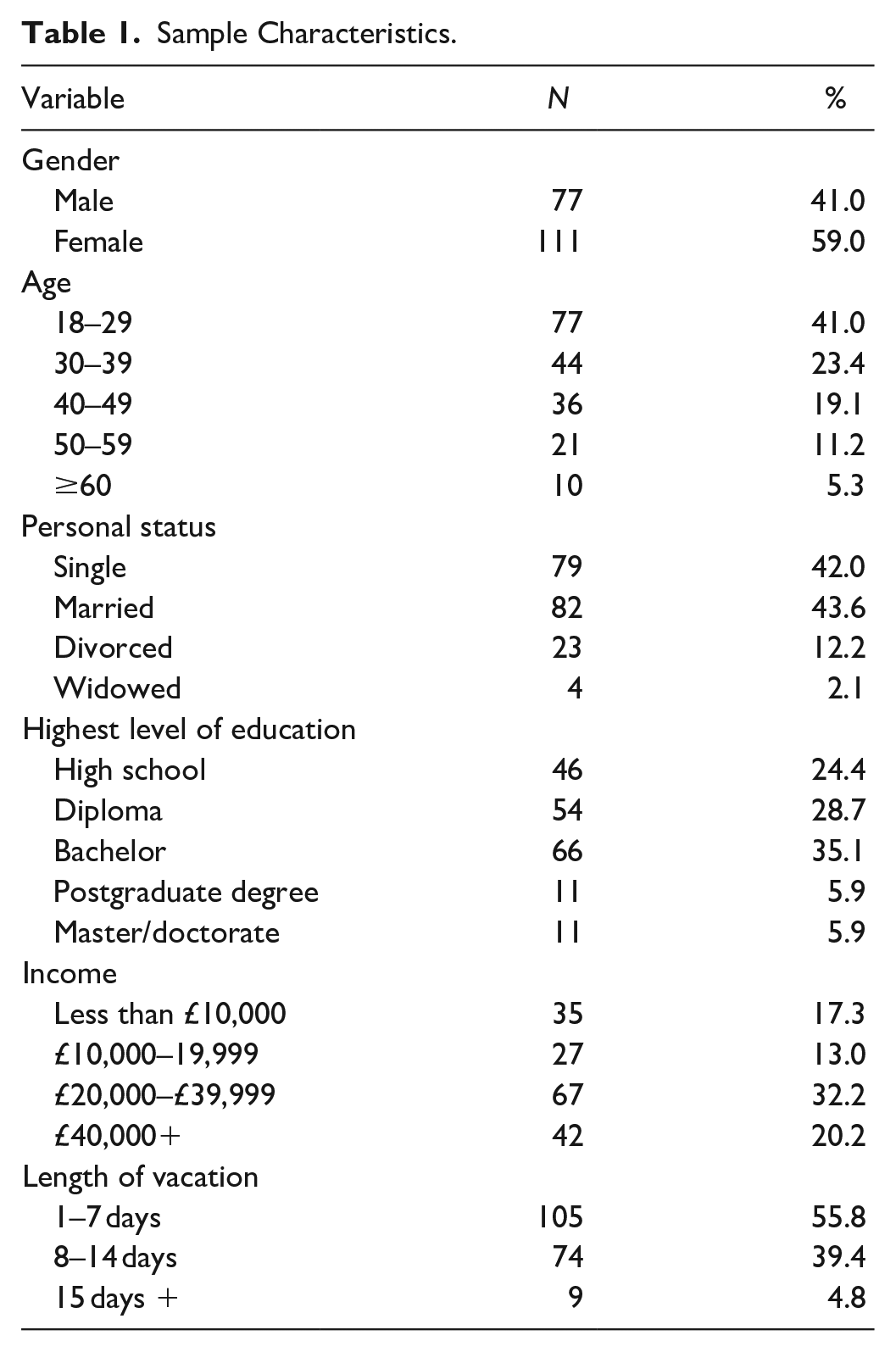
Upon completing the data collection, a total of 208 surveys were collected. Once the data was assessed for incomplete responses and failed attention checks, 188 valid responses remained. As summarized in Table 1, the sample contained slightly more female (59.0%) than male (41.0%) participants. Most respondents were 18–29 years of age (41.0%), followed by 30–39 years of age (23.4%). The majority of the tourists were either married (43.6%) or single (42.0%). With regard to their current vacation stay, the most common trip length was seven days (55.8%). Therefore, the current sample represents common characteristics of the usual British tourist vacationing in Crete.
Sample Characteristics.
The paper-pencil survey included various measures representing the constructs of interest reported in the literature and adapted for the specific context of the study. Drawing on previous conceptualizations, six cognitive image items and four affective image items assessed each corresponding construct (e.g., Lin et al. 2007; Papadimitriou, Apostolopoulou, and Kaplanidou 2015; Wang and Hsu 2010). Negative WOM encompassed three items that were adapted from previous WOM and information source scales (Hernández-Méndez, Muñoz-Leiva, and Sánchez-Fernández 2015; Tan and Wu 2016). To more accurately reflect the crisis scope of the current study, an experienced tourism professor in crisis research served as an expert and assisted in the reformulation of the items to accurately capture the context of the financial crisis. Items were pre-tested prior to the inclusion in the final survey. Disconfirmation included three items to measure if the current travel experience is in line with prior expectations tied to the destination (del Bosque and San Martín 2008; Loureiro 2010; Nam et al. 2020). Two items assessed the extent to which participants were satisfied with the experience at the travel destination (Narangajavana Kaosiri et al. 2019; So et al. 2016). Destination loyalty consisted of five items reflecting future intentions and recommendations behaviors consistent with previous conceptualizations (del Bosque and San Martín 2008; Lee, Kyle, and Scott 2012). All measures utilized 5-point Likert scales ranging from 1 (strongly disagree) to 5 (strongly agree) or 5-point semantic differential scales. The survey concluded with demographic questions. Please see Table 2 for items and corresponding scale assessment.
Measurement Model Results.
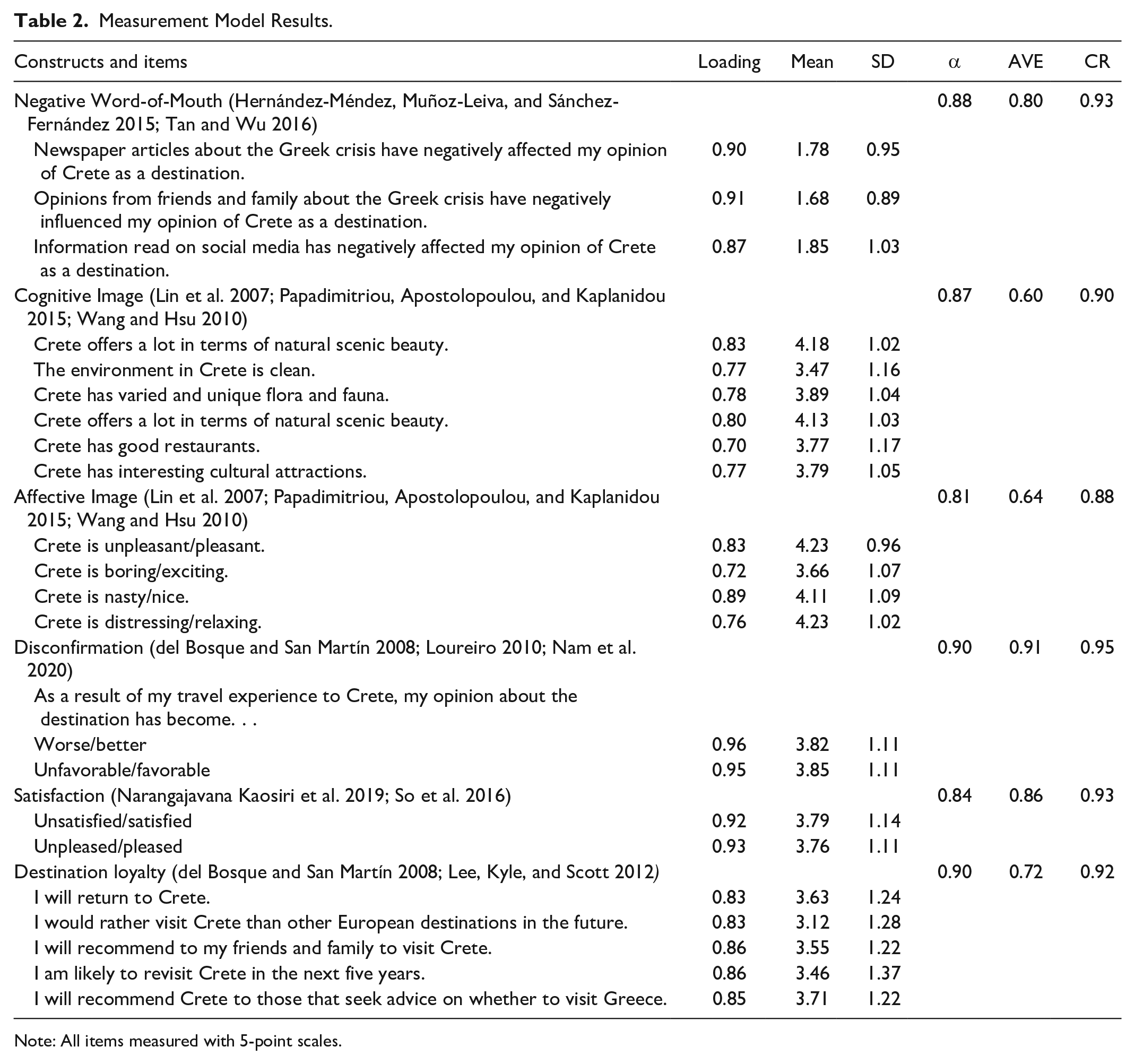
Note: All items measured with 5-point scales.
As the collected data are of self-reported nature, common method bias (CMB) could pose a threat to the findings’ validity. Therefore, a Harman’s single-factor test was performed to determine whether the data variance was explained by one single factor (Podsakoff et al. 2003). With the first factor accounting for less than 50.0% of the total variance (i.e., 39.7%), results suggest that CMB did not likely affect the findings of the research.
Partial least squares structural equation modeling (PLS-SEM) was the method of analysis. PLS-SEM is a suitable approach considering the relatively small sample size of the current study (Ahrholdt, Gudergan, and Ringle 2017) and the inclusion of two-item constructs (Ahrholdt, Gudergan, and Ringle 2017; Tan and Wu 2016). Furthermore, the method allows for assessment of multigroup analysis (PLS-MGA) (Hair et al. 2019; Taheri et al. 2020) and specific indirect effects for mediation analysis (Taheri et al. 2021). SmartPLS3 (Ringle, Becker, and Wence 2015) was used to perform the analyses.
Results
Measurement Model Assessment
The analysis first focuses on quality assessment of the measurement model by evaluating internal consistency, indicator reliability, convergent validity, and discriminant validity of the reflective constructs (Hair et al. 2019). Based on Cronbach’s alpha and composite reliability (CR) values ranging between 0.81 and 0.91, all values exceed the common cutoff of 0.70 confirming internal consistency reliability (see Table 2). Indicator reliability draws on average variance extracted (AVE) and supports convergent validity with values exceeding 0.50 for all constructs (Hair et al. 2019). In addition, all indicator loadings are highly significant (p < .001) and load on their corresponding construct. Lastly, skewness and kurtosis values for all scale items were within the acceptable range (±2.00) indicating normal data distribution (Taheri et al. 2020).
Discriminant validity assessment relies on Fornell-Larcker Criterion (Fornell and Larcker 1981) and the recently established Heterotrait-Monotrait Ratio (Hair et al. 2019). All squared construct correlations are smaller than the corresponding AVEs providing support for discriminant validity according to Fornell-Larcker criterion (Fornell and Larcker 1981). These results are further supported by the Heterotrait-Monotrait Ratio (HTMT) analysis, as all HTMT values are below the conservative threshold of 0.85 (Henseler, Ringle, and Sarstedt 2015), and confidence intervals for each construct combination relationship do not include 1 (Table 3). Overall, measurement model results provide support for reliability and validity.
Discriminant Validity Results.
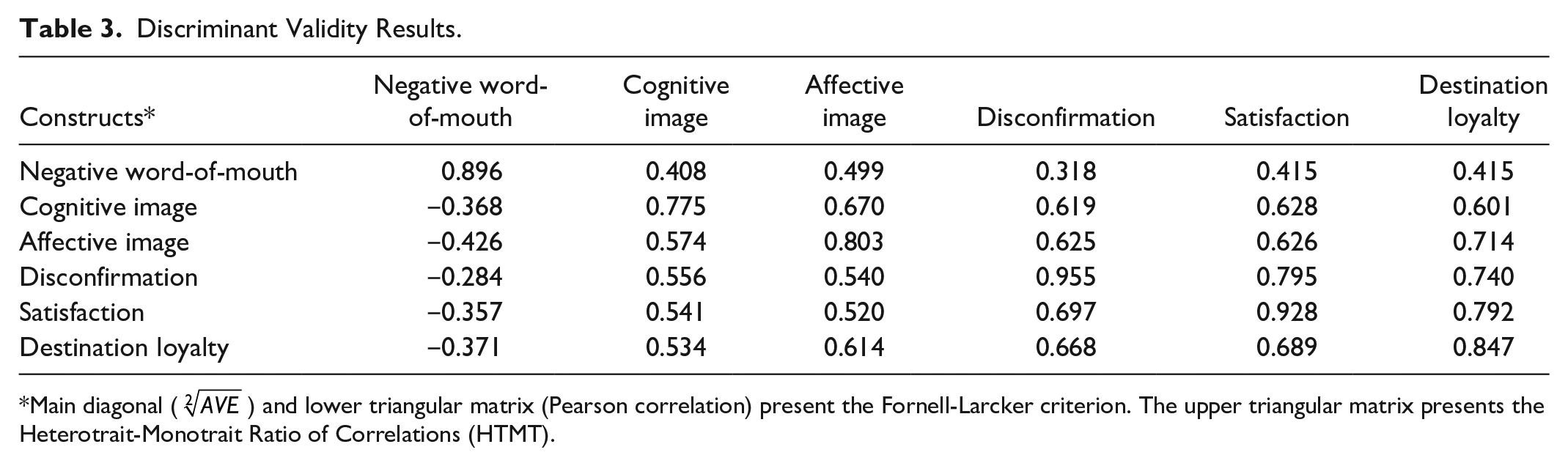
Main diagonal (
Structural Model Assessment
Hypotheses tests involve one-tailed tests with 0.05 significance level and 5,000 bootstrap subsamples. An overview of path coefficients, t-values, p-values, R2, and Q2 values follows in Figure 2. All path coefficients express significant relationships (lowest p-value < .001) and of expected direction.
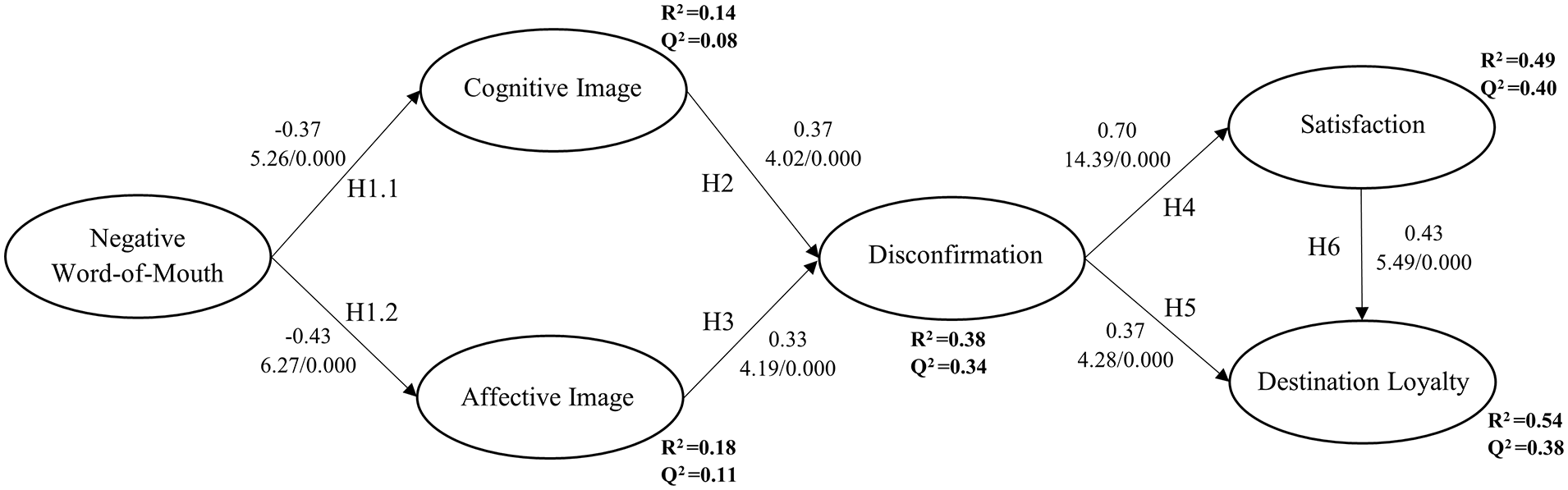
Estimated path model.
The structural model evaluation first involves potential collinearity issues. Results show that all VIF values of the predictor variables are below the conservative threshold of 3.00 with values ranging from 1.00 to 1.90 suggesting the absence of multicollinearity issues (Hair et al. 2019). All R2 values are greater than 0.14 and thus exceed the suggested threshold of 0.02 supporting good predictive accuracy (Krey et al. 2019). Furthermore, Stone-Geisser’s Q2 values for endogenous variables surpass the cutoff value of zero indicating predictive relevance of the model (Hair et al. 2019). Lastly, assessing f2 to measure the magnitude of the effect sizes shows that most variables reflect medium effect sizes (0.12–0.94) based on Cohen’s (1988) guidelines where values of 0.02, 0.15, and 0.35 represent small, medium, and large effects respectively (Krey et al. 2019).
With regard to hypotheses assessment, all structural relationships express significance and importance through magnitude of their standardized values (Table 4). Specifically, findings support all proposed hypotheses. Negative WOM exerts a significant negative effect on cognitive image (β = −0.37, p-value = .000) and affective image (β = −0.43, p-value = .000), supporting H1.1 and H1.2. In turn, both cognitive image (β = 0.37, p-value = .000) and affective image (β = 0.33, p-value = .000) positively impact disconfirmation consistent with H2 and H3; the effect is slightly stronger for cognitive image. In line with H4, disconfirmation drives satisfaction (β = 0.70, p-value = .000). Similarly, disconfirmation positively influences destination loyalty (β = 0.37, p-value = .000) as proposed in H5. Results also uphold the proposed mediating effect of satisfaction (H6; indirect effect β = 0.30, p-value = .000). Lastly, bootstrapping analysis results of the specific indirect effects including t-values and the confidence interval (CI) are listed in Table 5. The results indicate that negative WOM does not indirectly influence destination loyalty through cognitive image and disconfirmation (95% [−0.13, 0.02]) or through affective image and disconfirmation (95% [−0.20, 0.05]). Instead, the addition of satisfaction leads to significant indirect effects from negative WOM through affective image, disconfirmation and satisfaction (95% [–0.27, −0.04]). Overall, results confirm the impact of disconfirmation on satisfaction and destination loyalty despite negative WOM related crisis information about the destination.
Structural Model Results.
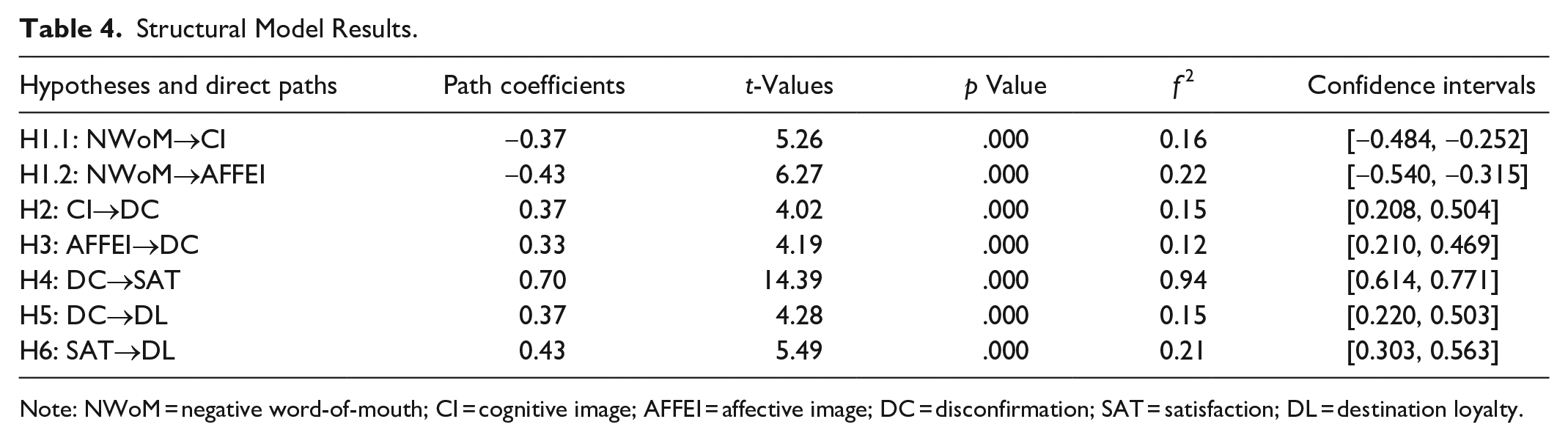
Note: NWoM = negative word-of-mouth; CI = cognitive image; AFFEI = affective image; DC = disconfirmation; SAT = satisfaction; DL = destination loyalty.
Specific Indirect Effects.
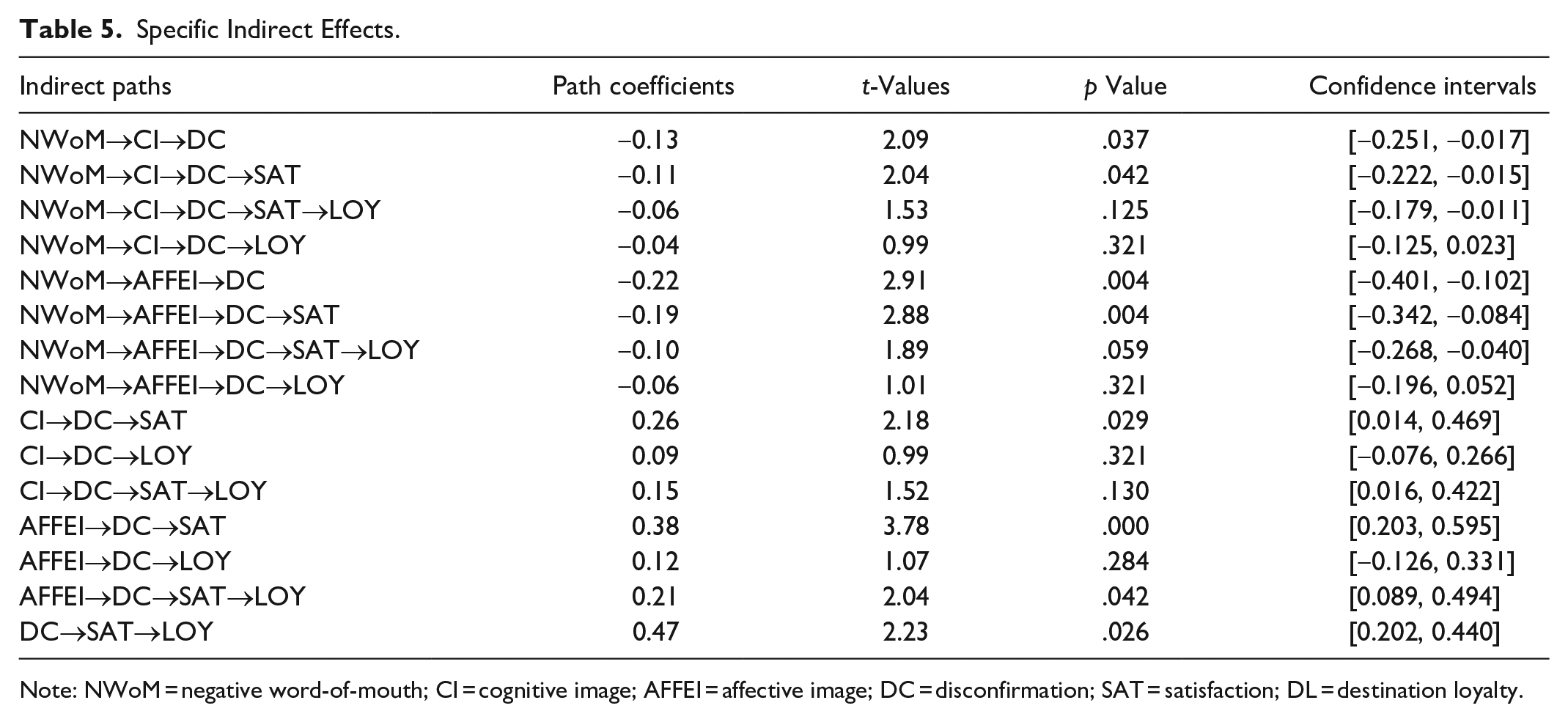
Note: NWoM = negative word-of-mouth; CI = cognitive image; AFFEI = affective image; DC = disconfirmation; SAT = satisfaction; DL = destination loyalty.
The final step of the PLS-SEM analysis involved predictive validity assessment of the PLS path model applying PLSPredict with 10 folds and 10 replications (Sarstedt et al. 2016). The root mean squared error (RMSE) values of the endogenous constructs in the model express overall smaller values for the PLS-SEM method in comparison to the linear regression (LM) approach. In addition, all Q2 values exceed zero providing further support for the model’s out-of-sample predictive power.
Multigroup Analysis
PLS-MGA was administered to assess the moderating effect of gender (male = 77, female = 111) on the previously discussed model (Hair et al. 2019; Taheri et al. 2020). Prior to performing PLS-MGA, metric invariance was tested applying the measurement invariance of composite models (MICOM) procedure (Henseler, Ringle, and Sarstedt 2016; Taheri et al. 2020). MICOM examines configural invariance, compositional invariance, and equal composite mean values and variances. Results of measurement invariance assessment indicate that full measurement invariance is achieved for gender. Therefore, PLS-MGA can be applied to examine potential gender differences.
The PLS-MGA results do not support significant differences between gender across all path coefficients. Contrary to H7, gender does not moderate the proposed relationships in the model. Male and female tourists do not express different expectations or outcomes related to travel experiences at a crisis impacted destination.
Discussion and Conclusion
This study explored the influence of negative WOM as an external, earned media touch point in the pre-consumption stage of travel experiences. Furthermore, destination image, disconfirmation, satisfaction, and loyalty were assessed along the travel experience by estimating a structural model using PLS-SEM. The unique crisis context of this research offers insights into the proposed and tested relationships among these key constructs beyond some of the previous literature (e.g., del Bosque and San Martín 2008; Loureiro 2010; Reza Jalilvand et al. 2012). Specifically, these new findings on crises influencing tourist responses prepares DMOs to successfully manage future disasters or long-term effects of crises, such as the aftermath of the current global pandemic, by learning from previous catastrophes (Assaker and O’Connor 2020; Avraham 2015).
With regard to negative WOM about a crisis destination in the pre-consumption stage of the travel experience, findings confirm its adverse impact on cognitive and affective destination image of tourists. These contributions provide further insights into the influence of negative WOM on consumer evaluations and judgments as prior findings remain inconclusive (Ishida, Slevitch, and Siamionava 2016). Despite negative WOM’s influence on destination image, these effects do not negatively impact the actual tourist experience as confirmed by the current study. Therefore, cognitive and affective image continue to positively influence disconfirmation. These findings relate to prior research by del Bosque and San Martín (2008) who confirm cognitive and affective image’s influence on tourists’ expectations of destinations, mediating the path to disconfirmation.
The current research also takes an extensive look at the customer journey in tourism and corresponding factors that influence the consumption and post-consumption phases. Specifically, the disconfirmation framework provides a theoretical underpinning to assess how negative WOM tied to a crisis destination impacts a traveler’s actual experience. In turn, this experience further influences subsequent post-consumption behaviors. Previous studies have explored the effects of media coverage on the global financial crisis (e.g., Papathanassopoulos 2015); however, the impact on destination image, actual travel experience, and tourists’ attitudes or intentions has remained unexplored.
As supported in the present study, positive experiences translate to a satisfactory post-purchase assessment that is accompanied by loyalty intentions. Furthermore, the mediating effect of satisfaction on destination loyalty follows previous research (e.g., del Bosque and San Martín 2008; Deng and Pierskalla 2011; Marques et al. 2021), supporting the importance of creating satisfying and pleasant experiences to foster revisit intentions. Satisfaction, as a comprehensive assessment of a tourist journey (Ribeiro et al. 2018), impacts tourists’ behavioral intentions to recommend or revisit. Ultimately, while increased importance should be placed on opinions from friends and family, the wider social network, and online media when it comes to the creation of positive or negative images, the primary focus remains the actual experience at the crisis destination.
Finally, a multigroup analysis assesses potential gender differences within the destination crisis context. The results show no differences between male and female tourists across pre-, post-, or actual consumption experiences tied to a crisis destination.
Theoretical Contributions
The current study leads to various theoretical contributions. First, we apply the customer journey framework to the tourism context by focusing on holistic consumption experiences across the three distinct phases: pre-consumption, consumption, and post-consumption. Most importantly, the specific crisis context provides a novel approach to identifying various intersections of engagement between tourists and companies, namely touch points.
Second, specifically by integrating negative WOM and actual tourist experiences, this research acknowledges the varying level of control companies have to counter information tarnished by crises. Also, while online WOM such as reviews (cf. Yang, Park, and Hu 2018) and traditional WOM including print or family sources are predominantly examined separately, this study assesses the impact of negative online and offline WOM from both mass media and personal perspectives. Considering the enormous importance of WOM, this study contributes to the literature on the negative effect of media coverage and personal opinions on the recovery of tourism destinations after a crisis. Specifically, WOM is positioned as an external, prepaid touch point that influences tourists’ image formations about destinations prior to actual tourist experiences. In light of COVID-19, the current study provides insights on the impact of negative WOM compared to actual experiences in diminishing the unfavorable image regarding destinations suffering from crisis hardships.
Third, while disconfirmation measures the evaluation of the actual experience, satisfaction provides the immediate post-consumption assessment. This research extends knowledge on satisfaction and confirms a mediating effect of satisfaction on the relationship between disconfirmation and destination loyalty. Therefore, findings highlight the importance of managing each touch point in the customer journey to capitalize its full potential. Administering specific indirect effects allows a deeper assessment of satisfactions importance among the proposed relationships beyond previous research (e.g., del Bosque and San Martín 2008; Deng and Pierskalla 2011). As no indirect effects are confirmed between WOM and loyalty, the necessity of satisfaction as a precursor to destination loyalty is solidified.
In addition, this study confirms the significant impact of disconfirmation on satisfaction and destination loyalty. Our findings contradict an earlier study by del Bosque and San Martín (2008) who failed to support the relationship between disconfirmation and satisfaction within a Spanish tourism context. Considering our research, it is evident that the crisis and negative information sources contribute to the importance of disconfirmation as part of the consumption image formation process. In this particular setting, images were unfavorable due to negative WOM pre-trip exposure. As a result, tourists may have expressed more positive perceptions of the actual experience than during a usual vacation.
Finally, we extend knowledge on gender differences within the context of crisis impacted destinations and identifies crises as an equalizing force in eliminating gender differences. These findings are novel considering that previous research (e.g., Huang and van der Veen 2019; Hwang, Han, and Kim 2015; Ribeiro et al. 2018) has supported a moderating effect of gender within destination loyalty studies. However, most of the prior empirical findings remained outside of a crisis scope which could be one explanatory factory of the current implications. This suggests that crisis situations equalize potential gender influences in travel behaviors. Consequently, we contribute to the literature on gender differences in the travel industry by revealing that destination loyalty or satisfaction post tourists’ travel experiences as well as negative WOM and destination image formation remain free of gender influences within the context of crisis impacted destinations.
Managerial Implications
Previous research provided insights on positive effects of WOM or other personal information on tourist experiences. However, while marketers keep investing resources in promoting destinations, uncontrollable, negative information can influence the pre-trip image and actual tourist experiences. Most importantly, tourist destinations can be further impacted by natural and man-made crises adding another level of uncertainty DMOs have to manage (Avraham 2015; Lim 2021; Xiang, Fesenmaier, and Werthner 2020). Therefore, companies should consider the non-commercial information from both public and personal sources in influencing visitors’ attitudes and destination choices. Our findings show that DMOs need to focus particularly on strengthening media coverage and building a strong social media presence to ensure that tourism “unrelated” news does not impact the actual decision to travel to the tourism destination.
Moreover, visitors’ pre-trip expectations, negative or positive, play a critical role in evaluating the actual experience. As DMOs have no control over these external touch points in the pre-consumption stage, to meet or exceed existing expectations and change future expectations of tourists relies on the performance of internal touch points controlled by companies. Thus, companies need to carefully monitor their interactions with customers before, during, and after consumptions in creating long-lasting, positive customer journeys. For DMOs, tourism and hospitality businesses, this offers opportunities in terms of overcoming challenges with regard to negative WOM. While negative WOM can represent information related to the destination in general, companies can still change a tourist’s evaluation of the actual experience. Exceeding expectations can help create a positive image, satisfy tourists, and, consequently, foster intentions to return and recommend the destination. Lastly, since the COVID-19 pandemic is replicating the financial recession from the 2007 global financial crisis, managers can learn from the crisis insights and apply strategic responses combating negative WOM related to crisis impacted destinations in the future.
Limitations and Future Research
As with any study, the current research reflects some limitations. The crisis scope and data of the present research represent tourist behaviors in Greece influenced by the global financial crisis from 2007 to 2018. As such, data collection and analysis were completed prior to COVID-19’s global impact. While these findings contribute to the general knowledge of dealing with crisis situations, further research is recommended to validate the current model once the prolonged economic impact of COVID-19 on the tourist industry can be empirically assessed (Xiang, Fesenmaier, and Werthner 2020). Replicating the study during or after the COVID-19 pandemic might reveal differences associated with travel behavior, as would be the case with any crisis. Therefore, the robustness of the present study should be expanded by incorporating additional crises such as natural disasters and terrorism as well as timings of these crisis (i.e., beginning, during, or right after a crisis). Differentiation between natural and man-made crises would provide further insights on how negative information impacts tourism. Another limitation is the focus on British visitors during the data collection in addition to the relatively small sample size. These factors contribute to limited generalizability of the current findings beyond the scope of this study. Therefore, additional research should incorporate more diverse samples to identify potential deviations across cultures in responding to negative information and adjusting behavioral destination preferences.
Furthermore, theoretical limitations relate to the current model not including motivational considerations beyond negative WOM that influence the selection of a crisis impacted travel destination in the first place. Future studies can expand the model by exploring if push and pull motivations, such as intrinsic desires and local attractiveness (Hsu, Cai, and Li 2010; Yoon and Uysal 2005), explain pre-purchase decision-making processes within the context of crisis destinations. Another approach could be the inclusion of emotional solidarity between residents and tourists in explaining destination loyalty (Stylidis, Woosnam, and Ivkov 2020). The crisis context could further amplify the affective bond between these parties, especially if multiple touch points over time encompass the customer journey before, during, and after the crisis. These findings would offer implications on how to draw customers to a destination impacted by a crisis and influence the decision-making process; a valuable extension of the current model in light of the current global pandemic once travel restrictions are lifted (Lederer 2021; Xiang, Fesenmaier, and Werthner 2020).
Considering destination loyalty, previous findings suggest behavioral, attitudinal, or composite assessment (Tasci et al. 2021). Future research could expand the current model’s loyalty conceptualization by incorporating a longitudinal perspective focusing on past loyalty behavior in addition to current loyalty. Loyalty development also differs between international and domestic tourists due to ethnocentrism or traditionalism (Tasci et al. 2021). Future studies should assess the current model with a domestic visitor sample to further generalize current findings. Also, comparing first-time with repeat visitors could provide interesting insights considering the response to negative WOM and crisis responses.
While the current study focuses on negative WOM as a source of information, additional information technology should be considered to broaden the scope of future research. For example, offering replacement vacations for high-risk countries via immersive technologies, such as augmented or virtual reality (AR/VR) devices. These new technologies would allow consumers to “travel” to high-risk or remote locations without having to leave the comfort of their homes. For DMOs, AR technologies could provide an additional touch point within the customer journey that can positively impact tourists’ preferences and decision-making behaviors in the pre-consumption stage. Further research is needed to evaluate the impact of these technologies within the customer journey framework for tourists.
The current research offers novel findings on how to approach crisis communication from external, uncontrollable sources. Considering the current global COVID-19 pandemic and the associated financial crisis that offers similarities to the global financial crisis in Greece, it becomes apparent that successful DOMs need to be able to manage and adapt to a changing tourism environment. The current research suggests that tourists still visit a destination when WOM about the destination is negative, even following a crisis. DMOs approaching customer journeys in tourism post the current pandemic and any future crisis that might bring upon additional change can utilize these insights. Managers should focus on delivering a positive experience at the destination no matter what information customers might be exposed to during the pre-consumption phase.
Footnotes
Declaration of Conflicting Interests
The author(s) declared no potential conflicts of interest with respect to the research, authorship, and/or publication of this article.
Funding
The author(s) received no financial support for the research, authorship, and/or publication of this article.
