



Abstract
Originality is an important goal of research. However, relatively little is known about the characteristics and motivations of individual researchers or about the facilitating or hindering factors that, in combination, can lead to original research outputs. This is a gap this study aims to fill. Interviews with 20 highly original academics (identified by their peers) active in the field of tourism identify four shared main traits among such researchers—nonconformism, commitment, self-confidence, and interdisciplinarity—and the importance of situational factors. The findings also show that there is no single optimum way of “becoming original” and, therefore, efforts to “replicate” originality may constrain rather than enable originality. From a managerial perspective, this suggests that it is easier to remove barriers than to positively facilitate original research.
Introduction
Originality, broadly understood as anything leading to new significant knowledge, has long been considered a primary goal of research (Merton 1973), yet lack of originality is also contended to characterize many social science disciplines (Alvesson and Sandberg 2013). In part, this is due to how contemporary academic assessment procedures encourage production or productivity instead of truly original or “box-breaking” ideas (Alvesson and Sandberg 2014) and this is a cause for concern in the peer review system in tourism (Rodríguez, Makkonen, and Williams 2019). Originality can be defined as the production of new findings and theories or more broadly as using a new approach, theory, method, or data; studying a new topic; doing research in an understudied area; or producing new findings (Guetzkow, Lamont, and Mallard 2004, p. 190). However, originality poses many challenges in terms of (1) consensus on a precise definition (as this is subject to disciplinary understandings), (2) measurement (there are multiple levels from entirely new or highly original to incremental as stated by Rodríguez, Makkonen, and Williams 2019), and (3) lack of clear guidelines on how to achieve it (Kock, Assaf, and Tsionas 2020). However, some authors do emerge as highly original researchers.
This raises the question of what characterizes the individuals who produce original ideas that lead to original publications and what facilitates this within particular research contexts. This article proposes that originality is shaped by multiscaled factors ranging from the contextual (sociocultural, policy and research environments), disciplinary and relational (specificities of tourism, academic networks), to individual factors (motivations and personality traits). While specific aspects of originality have been considered in tourism, for example, networks (Benckendorff and Zehrer 2016), research impact (Brauer, Dymitrow, and Tribe 2019), academic journals (Cheng et al. 2011), and peer review assessment (Rodríguez, Makkonen, and Williams 2019), there has not been a substantial study of the enabling or constraining factors.
Responding to the above research gap, this article will focus on the stories of researchers who have achieved what are considered highly original or “box-breaking” research outputs in tourism. The specific questions addressed are:
What are the characteristics and motivations of highly original individuals in tourism?
How do these individuals understand originality?
What are the key enabling/constraining factors leading to highly original outputs?
Although these questions have generic resonance, tourism provides an interesting testing ground because its distinctive characteristics pose challenges to the understanding and production of originality, such as a strong multidisciplinary or interdisciplinary approach to research (Crouch and Perdue 2015) that requires going beyond a single disciplinary boundary to reach out across specific fields to make connections and interpret phenomena in a broader sense (Rodríguez, Makkonen, and Williams 2019; Tribe and Liburd 2016). This raises the issue of where that originality comes from. A polarized interpretation would counterpose the following: (1) tourism is a borrower and applier of ideas (theories and methods) from other disciplines versus (2) it endogenously generates originality from what is studied. This is something of a false dichotomy, as the first argument—tourism is a “borrower” of theories and methods—requires their adaptation to the field of tourism studies, and the process of adaptation is a process of creativity and, hence, of generating originality. In relation to the second (endogenous) perspective, there are arguments about the distinctiveness of tourism activities (Cohen 2004), such as displacement or the simultaneity of production and consumption, which make tourism either unique or facing issues common to the study of other consumer-orientated services.
Tourism also reflects broader institutional and environmental changes in the social sciences. These include the growth in total production of scientific papers, a considerable increase in the number of tourism journals (Cheng et al. 2011; McKercher 2005), and the adoption of metric-driven targets and performance assessment methods across universities. There is also increasing diversification of tourism as a field of study, in terms of both the topics studied (Schofer 2004; Enders and Musselin 2008) and the utilized methodologies (Tribe and Airey 2007).
The remainder of the article is organized as follows. First, a brief literature review is presented contemplating the most relevant nested factors influencing the “pathways” leading to highly original outcomes. Second, the methodology is outlined: given the complexity of the issues addressed, a qualitative approach was adopted with in-depth semistructured interviews undertaken with 20 highly original authors. Third, the most significant implications of the analysis of these interviews are discussed. Finally, the conclusions reflect on the main findings, limitations, and suggestions for further research.
Literature Review: Factors Influencing Highly Original Research
Research and the production of highly original scientific outputs are undertaken by individuals with particular cognitive abilities, personalities, motivations, risk-taking propensity/willingness, research identities and specializations (Leahey 2006; Alvesson and Sandberg 2014), which contribute to having distinctive personal understandings of originality. These individuals are embedded in a variety of contexts, constituting the externalities that shape the direction and achievement of highly original outcomes: geographical, political, cultural, institutional, disciplinary, and relational (see Figure 1). There is a dynamic interrelationship among these environmental and individual factors that determines and shapes the production of original work, which is a highly uncertain process (Hackett 2005). These factors will be briefly introduced in the remainder of this literature review.
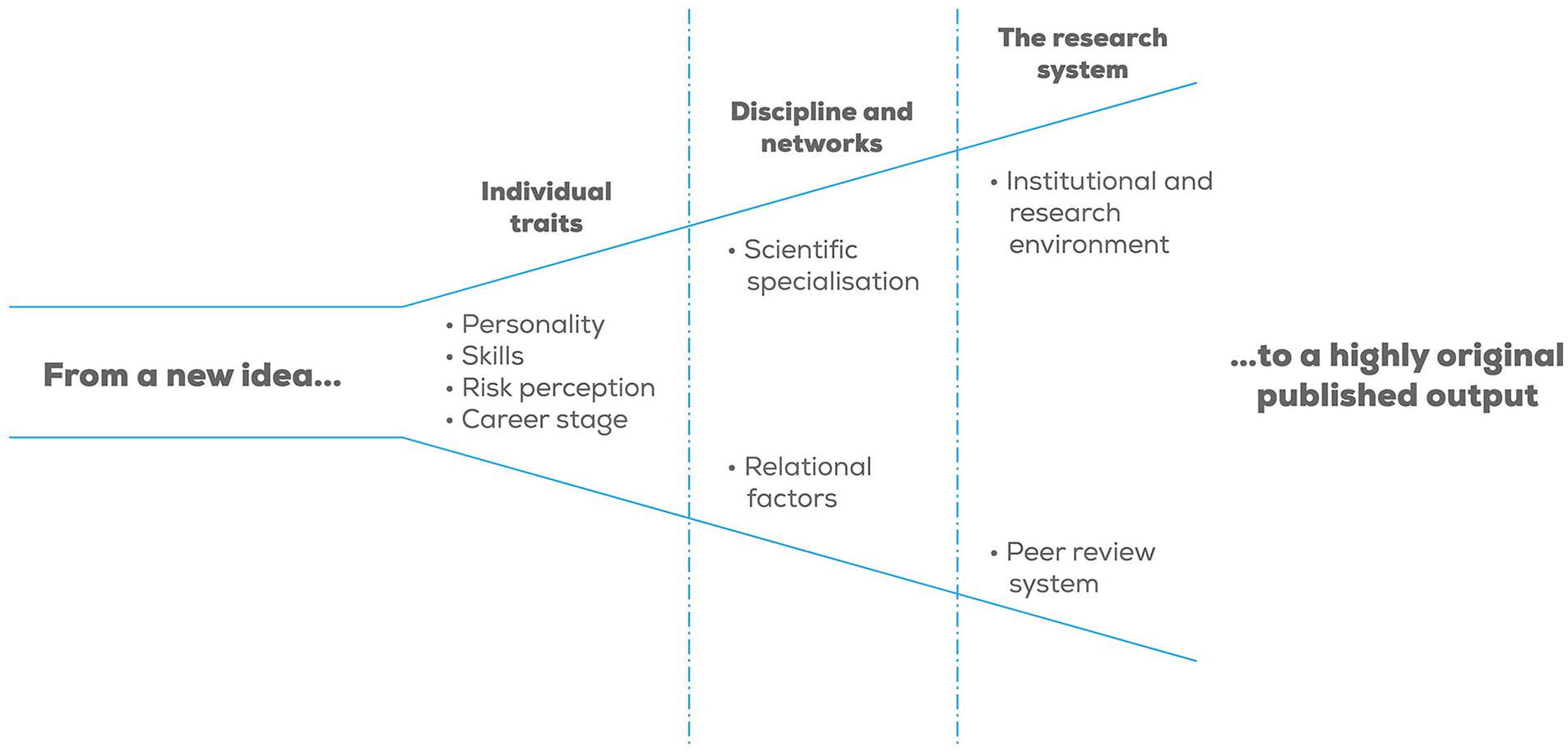
Key factors influencing the pathways leading to highly original outcomes (based on the authors’ synthesis of the existing literature).
Individual Traits
Personality and skills
Personality has an important influence on original achievements. The personality traits of the most original scientists demonstrate three main dimensions (Feist 1998): being open to experiences and more flexible in thought (cognitive dimension); being more driven, ambitious, and achievement-oriented with a preference for challenging and difficult tasks, competitive, and enjoying demanding work (motivational dimension); and being self-confident, autonomous, and sometimes even introverted (social dimension). Sawyer (2014, p. 373) added that highly original scientists have a strong intrinsic motivation or persistence to work, sometimes for years on a problem, being self-driven, excited by the work itself, enthusiastic, attracted by the challenge of the problem, and having a sense of belief and commitment to an idea. Adding to the cognitive dimension, Simonton (2004) highlights that highly original scientists have the intellectual and dispositional capacity to generate unusual associations and analogies while, in some ways, their cognitive processes are more illogical than logical. This also relates to Styhre’s notion (2004) of how knowledge has both intellectual and intuitive dimensions: both are essential to originality as intuition comes into play where the limits of intellect are encountered. Highly original thinkers can think globally as well as locally, “distinguishing the forest from the trees” and thereby recognizing the truly important questions.
Although not strictly about personality, Sternberg (1997), taking a broader view of the skills required to be effective in terms of originality, highlighted the importance of the confluence of three intellectual skills: being (1) synthetic, seeing problems in new ways and escaping the bounds of conventional thinking; (2) analytic, recognizing the ideas that are worth pursuing; and (3) practical–contextual, knowing how to persuade others of the value of the ideas.
Willingness to take risks, age, and career stage
Willingness to take risks, and especially to engage with uncertainty, is also important to originality. Producing original work inherently involves greater uncertainty, as it means stepping outside and challenging existing bodies of knowledge, with a greater chance of being rejected by peer reviewers. Age, gender, education, and nationality are all known to be related to risk tolerance in general, although we do not know how this plays out in academia, as the willingness to take risks is domain-specific (Dohmen et al. 2011; Koppman and Leahey 2019).
Age is generally inversely related to the willingness to take risks in most domains, including employment (Dohmen et al. 2011). The age of a researcher tends to be linked to his or her career stage, but the picture is made more complex by the different contexts of different career stages. Hackett (2005) argues that senior scientists can be seen as more risk averse than junior colleagues, having more to lose and less incentive to engage in high-risk activities from a career-advancement perspective. Alternatively, he argues that they may be better placed to take on riskier projects as they have more secure careers than junior colleagues, while additional routine publications only have incremental value for established reputations. Senior scientists may also have the career security and resources to embark on longer-term explorations, whereas early career researchers are urgently seeking to build up their CVs. The established expertise of senior researchers, even if sometimes based on a body of largely incremental research, may decrease the risk of gatekeeper rejection when engaging in more unconventional research (Koppman and Leahey 2019). However, there is a need to guard against simple dichotomies. Many scientists have a mixed portfolio of projects, some being more speculative and original while others are more incremental (Hackett 2005).
Discipline and Networks
Expert knowledge and scientific specialization
Knowledge is a basic requirement to create something new in a particular domain, and arguably a deep immersion in the field is necessary to produce original outputs (Weisberg 2010). Sternberg (2006) noted, “one needs to know enough about a field to move it forward.” This might require an investment of substantial time, including exceeding a critical threshold according to some commentators, for example, Hayes’s (1989) “ten-year rule,” although short cuts are possible. As a prerequisite to creating recognized new knowledge, individuals must become socialized into the field and internalize the domain (Sawyer 2014) to engage effectively with their peers. This inevitably leads to the production of knowledge in highly specialized research contexts. Therefore, individuals mostly elect to specialize as a deliberate career strategy, thereby establishing distinct identities that fit into specific communities, increasing their visibility with anticipated benefits for career progression (Leahey 2007).
However, narrow specialization can develop rigid mindsets and failure to perceive connections to related areas of knowledge, thereby constraining creativity. These are more likely to produce “boxed-in” research (Alvesson and Sandberg 2014) that generates relatively fewer novel and influential ideas, and more incremental research. This has been underlined in increasing calls for interdisciplinary approaches to address persistent problems or puzzling phenomena (Grove 2017). Scholars who are committed to interdisciplinarity have been shown to experiment more with unconventional methods with high potential for original outputs (Koppman and Leahey 2019). However, this is hindered by an innate conservatism in the peer-review system with many evaluators being locked into narrowly specialized fields of knowledge, engendering competing understandings of research agendas and originality (Mäkinen 2019).
Relational factors (collaborative networks)
Scientific discovery happens largely through intensive social interaction, in contrast to isolated bursts of insight by a few “great” individuals (Sawyer 2014, p. 378). For example, research groups are an elemental form of scientific collaboration and knowledge production (Hackett 2005). A typical research group includes members with different levels of experience (professors, postdoctoral and predoctoral students) and diverse knowledge backgrounds. These groups benefit from a clear identity within their research field but they also encounter tensions between maintaining a consistent focus and approach and making risky novel choices in the pursuit of originality (Hackett 2005) that can undermine this. In other words, tension between alignment with the identity of the group and having the freedom to establish new research directions. Collaboration in pursuit of originality often, and perhaps usually, extends beyond the group members, as there are distinct advantages in building bridges to colleagues in other leading research groups, with different accumulated knowledge and approaches: this helps prevent knowledge lock-in (Martin 2010). In tourism, despite being a multidisciplinary field, scholars tend to collaborate with colleagues with similar disciplinary backgrounds, potentially creating “disciplinary enclaves” (Benckendorff and Zehrer 2016; Cai et al. 2021), which can be detrimental to originality. This is echoed in a different way in Airey et al’s. (2015, p. 48) call for “more engagement with elite research outside our tourism academic bubble.”
The Research System
Institutional and research environments
Supportive and rewarding academic environments can encourage originality. These are characterized by a combination of appropriate leadership, material (funding, personnel, and infrastructure for research) and nonmaterial (especially time and culture) resources, recruitment diversity, strong communication and social integration (e.g., joint team publications, seminars, and other informal activities), and autonomy and flexibility (Hollingsworth and Gear 2013). A focus on longer-term, rather than shorter-term, goals is also more conducive to original research, but this is often at odds with most institutional assessment time frames. Moreover, scholars at top-tier universities may be more likely to take risks to produce original research outputs, because they sometimes benefit from reputational trust from gatekeepers, such as journal editors (Koppman and Leahey 2019).
Mobility also plays a key role in knowledge accumulation and dissemination, network engagement, and originality (Horta and Yonezawa 2013). Even in an increasingly digitalized world, corporeal mobility remains important in the transfer of knowledge, whether between institutions, disciplines, or countries (Williams 2006). Mobile scientists carry with them difficult-to-transfer tacit knowledge that is important in producing new ideas (Stuen, Mushfiq Mobarak, and Maskus 2012). Copresence and interactions increase the social capital of mobile scientists among their peers at the destination organizations, which facilitates trust. Experience of working in different environments is also likely to lead to individuals’ possessing greater diversity of knowledge, perspectives, assumptions and creative techniques (Franzoni, Scellato, and Stephan 2014). National academic systems and disciplines differ in their openness to such mobility. There are both barriers to (e.g., immigration policy, lack of study leave and travel grants) and facilitators (e.g., financial support through scholarship, integration of visitors) of mobility that contribute to original research (Orazbayev 2017).
The peer review system
In most countries, there is no direct link from policy concerns to science research, but rather a reliance on the peer review system to evaluate proposals and allocate scarce research resources. These national research council assessments are informed by policy concerns to different extents, but they are also supposed to prioritize originality. Yet, paradoxically the review system can deter risk-taking, highly original proposals. New ideas must pass through what is often a multilevel filter of acknowledged peers and panels in the field, and this encourages applicants to be cautious if not conservative, and to avoid what may be perceived as risky (untested) new ideas or methods in their proposals (Chubin and Hackett 1990). The peer review system can also encourage productivity rather than research risk-taking (Foster, Rzhetsky, and Evans 2015): for example, the assessment criteria for evaluating research performance in some countries may pressurize researchers to publish regularly in A category journals and, in some cases, to demonstrate the nonacademic impacts of their research. Rewards associated with these performance reviews effectively commodify academic labour (Alvesson and Sandberg 2014; Brauer, Dymitrow, and Tribe 2019) and arguably reduce originality.
The impacts of the peer review system on originality assessment in tourism journals have been studied by Rodríguez, Makkonen, and Williams (2019), who, summarizing the views of editors of top tourism journals, conclude that originality within the field commonly stems from the application of existing theories from other disciplines, whereas originality in the sense of being truly new to the world is rare. The interviewed editors further noted that the “publish or perish” pressures related to academic performance assessments have led to an influx of incremental “gap-filling” articles at the expense of well-developed original ones. However, the editors also acknowledge that this trend is probably not confined to tourism but also plagues other fields.
To summarize, based on the literature review, originality is framed by a multilevel context. The literature has served to identify several features at the macro, meso, and micro scales that facilitate or deter individuals from producing original research. However, many of these features are contradictory, and the determinants of originality remain elusive. They are examined in the tourism field in the remainder of this article.
Methodology
Originality and its drivers is an intangible and subjective topic that lends itself to analysis via in-depth interviews. In order to identify the highly original individuals, we co-opted the support of key informants with experience in evaluating original contributions, that is, the editors of some of the highest-ranked tourism journals: Annals of Tourism Research, Current Issues in Tourism, Journal of Sustainable Tourism, Journal of Travel Research, Tourism Economics, and Tourism Geographies. They represent a mixture of general and disciplinary journals. This is in line with the previous sampling of editors and editorial board members of journals in a study of the key gatekeepers of originality (Rodríguez, Makkonen, and Williams 2019). In this article, we used snowball sampling, asking six editors of these journals to identify a maximum of four academics they considered had published highly original research: this ceiling aimed to minimize the risk of encapsulated networks. The response to this initial enquiry was a first wave of 14 names. When interviewed, these researchers were again asked to provide four names. This resulted in a second wave of interviews that was concluded after having reached discourse saturation with 20 interviews as indicated by limited significant new insights. Figure 2 illustrates this dynamic. It only includes the first time a name was mentioned. For example, Interviewee number 2 (I2) provided four names that are not in the figure since they had already been mentioned by editors E1, E2, and E3. The number of nominations is not in itself a decisive consideration as our qualitative research design does not aim for representativeness but, instead, relies on the quality and rigor of the interviews. The figure only shows the final list of interviewees because a few nominated academics declined the interview invitation or could not be located.
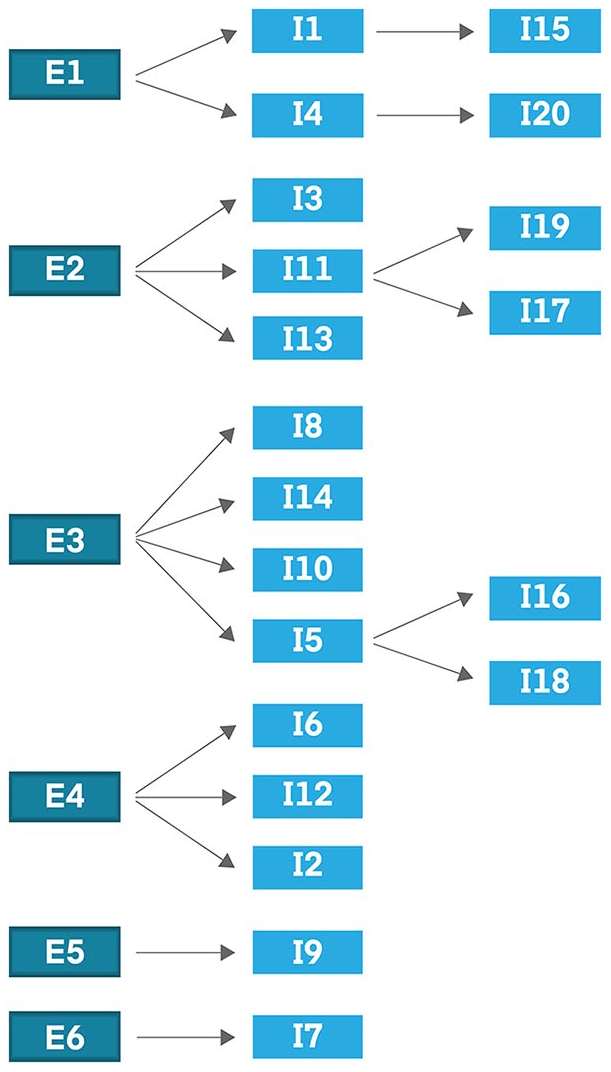
Snowball sampling dynamic to identify highly original tourism researchers.
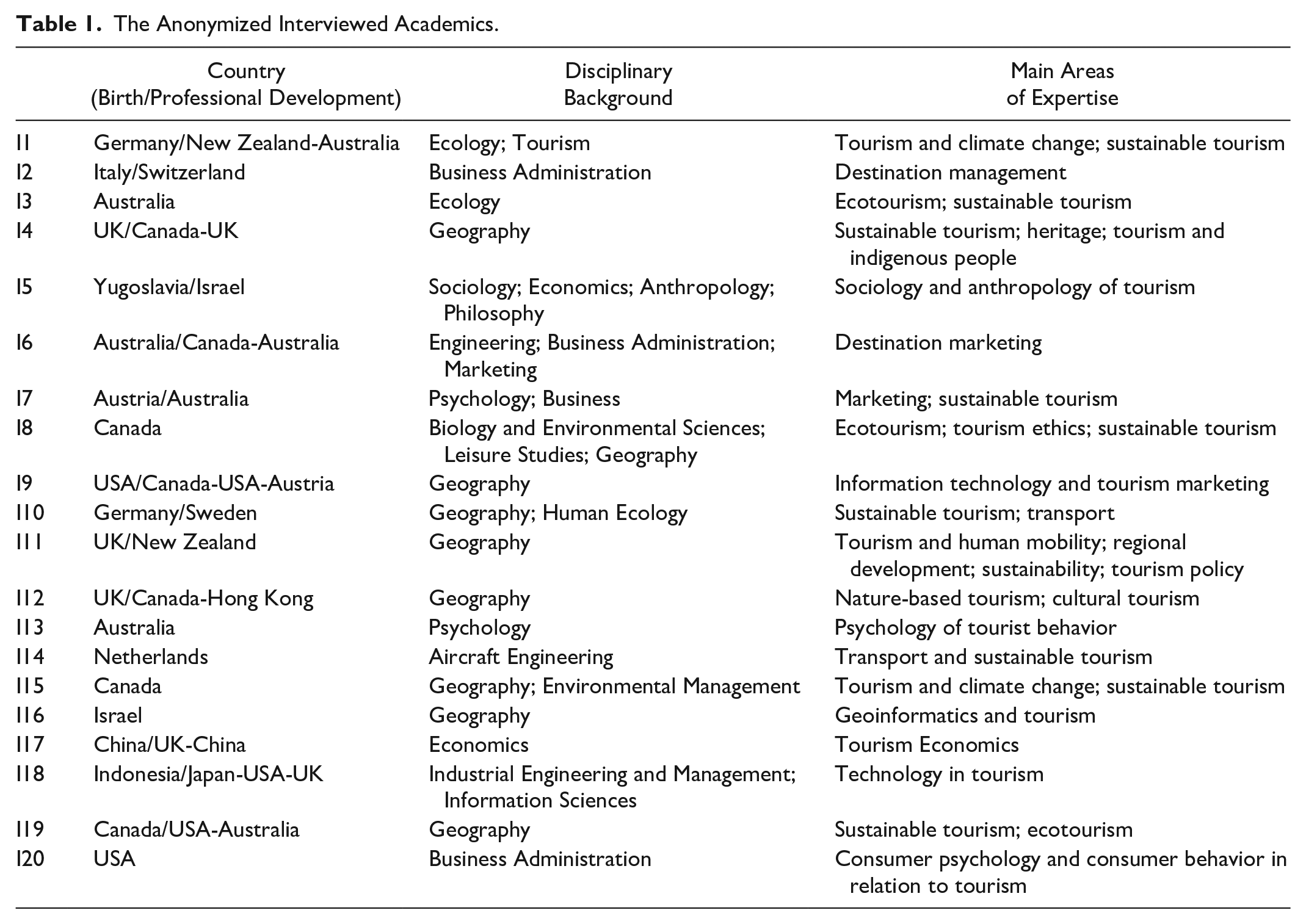
The final list of interviewees (anonymized in Table 1) does not aim to be comprehensive but draws from the range of those considered to be original researchers.
The Anonymized Interviewed Academics.
The research was structured following the stages of qualitative studies using interviews suggested by Brinkmann (2013) and Minichiello, Aroni, and Hays (2008): (1) preparation (contextualizing the interview process within a literature review, decision of the interview strategy, and selection of the sample); (2) interviewing (data collection through conversation with the interviewees); (3) analysis (transformation of the information collected into textual data through transcription and data coding and analysis); and (4) reporting (writing the research findings).
Face-to-face in-depth semistructured interviews were used when possible but, given the geographic dispersion of the sample and the onset of the COVID-19 pandemic, most relied on digital means. The interview script was pretested with the first two interviewees followed by minor modifications but retaining a stable structure thereafter. The interview duration ranged between 60 and 75 minutes. The first interview was conducted in February and the last in July 2020. The interviews adopted a narrative structure for the interviewees to elaborate a discourse starting with the identification of their most original contribution, and the story behind this from ideation to publication. As for the definition of original contribution, given the lack of consensus about the meaning of originality, we kept the definition relatively loose to allow the respondents to utilize their own understanding when selecting their work and interpreting their journeys to originality. This seemed more appropriate than asking them to fit their experiences to an imposed definition. Additionally, informed by the literature review, the interview framework was organized around key topics: background and personality, career stage and risk taking, expert knowledge and specialization, collaborative networks, and risks and barriers encountered. The interviews were recorded, fully transcribed, and analyzed, with common thematic categories being created including the most illustrative quotes identified from each interview. Some illustrative extracts have been used in the analysis to support the themes and understand the interviewees’ discourses. Then ideas were associated to discover patterns and themes (Braun and Clarke 2006), and this was repeated until the key discursive regularities had been identified; these are discussed in the Results section. The rigor of the research and the trustworthiness of the interpretations was reviewed throughout by all research team members. For example, via internal checking of the descriptive accuracy of each interview both during and after transcription. Coding strategies were also cross-checked among the research team to foster intercoder reliability including retaining memos of the coding and its modifications and common cocreation of meaning and understanding of the emerging themes (Miles and Huberman 1994).
Insights: Multilevel Perspectives on Originality
Insights on Original Work
There was broad consensus among the interviewees that originality in tourism research relates to novelty: an original researcher is a pioneer, the first to contribute significant insights into a topic or the first to utilize a method or a technology in the field. Often that contribution is the result of a creative adaptation in tourism of theories, methods, or concepts originally developed in other fields. However, beyond this broad level of understanding, the concept of originality was elusive.
When approaching originality, the interviewees focus their attention on different aspects of the process of reaching an original final outcome. Some reflect on the “eureka” moment or initial step of discovery and how this happens: Originality is about neurons connecting differently. Making connections which usually are not made. Originality is when somehow people’s brain connects and something totally unexpected comes out. Something that is not obvious. It is original because it changes the paradigms, the most fundamental assumption of how we all use something. (I7)
From this perspective, originality can start as something serendipitous and not necessarily connected to a previous knowledge trajectory. There can be a mix of personal and situational factors and a disposition for the researcher to see the world differently: I just think about something which is fascinating, and it is like a spark. And out of that spark something happens. Originality is that you watch the news and you hear something and that connects with that conversation you had, and you mulled it up in your brain and you go: “Wow, isn’t that cool?” It is serendipity. It could be anyone I meet in the street, it could be something I hear on the news or it could be a PhD, a postdoc or a senior colleague. All the above. (I7)
These sparks seem to emerge in moments of work disconnection, for example, when walking or traveling, as this interviewee explains: “I get new ideas when my brain is relaxed but alert, for example when hiking” (I6). There is a useful distinction between genuine discoveries akin to “wow, I’ve never thought of it like that” compared to important, interesting, rigorous, and practical work that generates standard questions and standard answers.
Other interviewees refer to their original outcomes as an extended process of incremental research whereby the researcher progressively incorporates new information and knowledge inputs (from all life spheres and networks) that continuously redefine their mental schemes and accumulate over time. The incremental advances lead to outcomes that represent the culmination of knowledge and sometimes of an entire career working on the topic: “That was basically always the question that compelled me for the last 28 years” (I20).
Sometimes the ideas are latent in the head of the researcher, fermenting gradually and organically (and perhaps less serendipitously) for long periods of time, even for several years, until reaching sufficient intellectual maturity and clarity to allow their successful development: There were three or four other papers that were just going like this, raising emerging issues, and then finally amalgamation occurred, I think, organically. . . . It took a long time, it didn't just suddenly happen. This was an incremental process of carrying that convergence to a logical conclusion of amalgamation and that took about 10 years. (I11)
Some researchers distinguish shades or degrees of originality when describing their portfolio of work. This may include different levels of originality ranging from smaller pieces with compelling points, to more molar or significant long-term or long-running trajectories of work around a conceptual contribution and unusually novel work. The latter tends to result from careful observation of the tourism world blended with conversations and the influence of other original academics at different career stages.
The way originality is approached or conceived intersects with the researchers’ individual traits, disciplinary backgrounds, and ability to lean across boundaries, networks, and the research system.
Individual Traits
Personality and skills
The interviewees share several personality characteristics. Almost all describe themselves as introverts, observers of things that go unnoticed by others (“I keep my eyes open and maybe see the world a little bit differently than everybody else and I have an enquiring mind” [I11]). They tend to be intuitive, creative, curious, pragmatic, open-minded (e.g., about linking seemingly unrelated ideas), and have considerable self-esteem and confidence in themselves and their ideas: “I am competent, I know how to do this.” They are also fearless, or relatively immune to negative comments, which makes them willing to take risks, sometimes overlooking negative risks or not allowing uncertainty to undermine their work:“I wouldn't let myself be intimidated by perceptions that maybe my ideas were politically incorrect or against the tide, being controversial or being plain stupid. . . . I really had a strong belief in my ideas that they weren't stupid or outlandish, that there was something there. So whether that's an instinct or a gut feeling, I don't know” (I10).
Several describe themselves as rebels that “don’t want to be told what to do” and as disturbers: “If there was a movement in one direction, my instinct was to go in the opposite direction. In part because I have always been suspicious of crowd mentalities and conventional wisdom but also maybe just to be a little bit of a disturber” (I10). These personality traits alone do not make the individual original but they are important facilitators. They also need to have the following:
Distinctive ways of seeing the world: they are constantly questioning why things happen, do not take for granted conventional explanations, criticise existing discourses, and try to discover what is hidden under the surface of the apparent, even if this implies going against the tide or challenging established knowledge: “We went out of the mainstream in research and publication. . . . We started to be very sceptical about a lot of concepts and about many things that we were teaching for 15 to 20 years” (I20). Many interviewees are extremely prolific in working across a range of different topics which for them are somehow interconnected. Even if they are highly specialized in a main sub-field, they research this from many different perspectives. This represents not so much a research strategy as a worldview or a way of seeing the world. This inquiring observation eventually becomes a personal and habitual way of doing research that is based on a dynamic interaction between the observed reality, and the social interactions of the researcher with his or her daily life, and with concepts, theories, and methodological tools from different fields of knowledge.
Career constancy around research activity: research is at the center of the individual’s life and other elements (family, leisure time, holidays, etc.) all gravitate around that center:
I have a favorite cartoon, which is [a couple] along a beach. And [one] is saying: “You’re thinking about research, aren’t you?” You know, it’s very true. That’s what we like doing. (I18) If you're not curious, but you're just doing it because you work from 9 to 5, that doesn't work. It’s always, for almost all researchers, also a kind of hobby. I mean, you are curious, you want to know, you want to create a model and if it doesn't work, then you go home and if it's in the middle of the night, you get an idea and you go back to your computer and you say, okay, now I've solved the issue. (I13)
In terms of career goals, almost all the interviewees acknowledge not having well-defined pragmatic aims. Instead, they have more idealistic primary motivations such as curiosity satisfaction, learning and experiencing new challenges, making significant scientific contributions that bring personal happiness and coherence with being an “authentic self,” or creating a “better world.” These constitute internal guiding principles that guide and drive their research.
Willingness to take risks, age, and career stage
When asked if there were stages in their career in which it was easier to produce highly original research, the interviewees explained that, at some career stages, original findings can result from challenging established knowledge while, at others, they could be more the result of relational thinking. To some extent, and different degrees, both components are always present but, despite this complexity, the interviewees position themselves around two contrasting lines of thinking:
1. There are no consistent stages in the life of a researcher during which it is easier to develop highly original work. The interviewees mention examples of tourism researchers who have produced original contributions continually over a five-decade career. For this group of interviewees, the factors associated with the research context (including professional or familiar circumstances) are secondary and more relevant is the personality of the individual and determination to explore novel fields:
If you take care of yourself, there’s no reason why you can’t be doing really-creative things into your 80s and 90s. (I10)
2. Alternatively, depending on when their more original work was produced (earlier or later in their careers), the interviewees identify two crucial moments that favor the production of original contributions. The first is early in their careers, typically soon after their PhD studies, when the researcher is somehow still naive and questions the established knowledge with a critical spirit; sometimes this early ideation bears fruit in a publication later in their career. However, this can be a difficult moment since the academic environment tends to pressurize early career researchers to prioritize the production of the quantity of papers over fewer but highly original outputs. It is also challenging because the researcher may still not have a permanent academic position, making them less willing to take risks. In these circumstances, it is considered important to work in an environment that encourages originality, with the support of an influential senior colleague. The potential for originality in the PhD research can also be constrained by funding requirements or departmental expectations. However, innovative strands and perspectives might emerge during the PhD; initially, these may appear secondary to their main aims but end up being highly original. These emergent topics are often developed after completing the PhD and can produce the first wave of highly original contributions:
When you are starting your career, you can ask some really simple questions. . . . Much of what we talk about in tourism, we accept as being true without ever testing it. And sometimes it takes somebody who's very naive to say, I don't understand and scratch the surface to see if there's any substance below. . . . Now, to do that, you've got to do it very carefully. Because you really have to build a case to challenge the dogma and to argue something new. (I1)
The second critical moment is at a mature stage, when they are more secure and more willing to take risks, and where the original contributions may result from their accumulated work and reflection: “you care less about what people think when you are an established professor” (I13). Contributions at this stage are the result of knowledge intensity and the capacity to establish connections between fields, theories, concepts, and methods at different scales of analysis. Originality is derived from expert use of systemic/relational ways of thinking that, although previously practiced at an earlier stage, have been improved over time: The other option that I mentioned is somebody who's at a later stage in their career like me, who's got a whole lot of experience and it's just this melange of stuff. . . . And sometimes just those flashes of inspiration come. (I11)
Discipline and Networks
Expert knowledge and scientific specialization
A common denominator is the identification of tourism as an interdisciplinary field offering the necessary flexibility and freedom from their disciplinary constraints (“a field with no disciplinary straitjackets” [I10]) to think systemically and originally. Their eclectic discourses emphasize the need to avoid over-strong associations with specific disciplines, theories, or methods, and the importance of interdisciplinary training and perspectives that enable seeing the “big picture,” the linkages and the gaps. The interviewees consider that having a global perspective facilitates the production of original ideas: I think if you are limited to the boundaries of your discipline, you are trapped, like in a prison cell. But if you communicate with other disciplines, you have to acknowledge that they view the world differently. And I think if you are able to zoom in and out of these different rooms that view the world differently, you know, cool stuff happens. . . . I think the ability to ignore disciplines is the superpower. (I14)
More specifically, an interdisciplinary background or training facilitates three key factors: (1) understanding of the theoretical frameworks and methodologies of different disciplines; (2) the transference of concepts, theories, and methods between fields and connections between scales, for example, local problems and global processes; and (3) positioning the researcher as a key mediator/interlocutor in multidisciplinary teams. However, the materialization of original ideas into actual research projects may still need complementary knowledge from colleagues/research students with particular expertise and updated research methods and skills that highlight the role of collaboration.
Relational factors (collaborative networks)
Some interviewees recurrently define themselves as “lone wolf” academics: A lone wolf doesn't mean you shut yourself off from other ideas or anything, it just means that you just kind of put the responsibility of your actions into yourself and you don't have any fear about publishing by yourself or within a team to express your opinions, or to deviate from the team, if necessary. (I10)
This nuanced view of the lone wolf as being influenced by the ideas of others is important since a common characteristic of all interviewees is that they have read abundantly and widely across many disciplines. There are a few individuals who more directly identify with the lone wolf metaphor, acknowledging that this can make team working more difficult. However, most have a nuanced view, stating that even if they are the originators of an idea, they may still need collaborators to execute it: I had the idea, and then I had to find people with expertise to help me realize it. Profs in Psychology and Economics, colleagues with greater statistical skills, etc. I think that's always very important that if you're a lone wolf, you still have to occasionally engage the pack [of wolves] or other lone wolves. (I6)
Interestingly, in the early years working alone seemed inevitable for many interviewees since the internet did not exist and communication with other tourism academics had to be by landlines or mail. But many were still “lone wolves” by inclination, not because of technological necessity.
The interviewees usually refer to two types of networks. The first involves strong ties to a small number of colleagues—also identified as highly original—with whom they often work and with whom they share an affective relationship based on trust: The important thing is the language and the interaction you have with them. Get along with them. And not just in an academic sense. I think the social relationship is also very important. Because a lot of academic work is based on trust. (I9)
In a few instances, that other is their partner or spouse, and one interviewee explained there was “unity of opposites” between “pie in the sky thinking” and “somebody that can kind of bring me back down to earth” (I6). More commonly, it often includes, in the early stages, the connection with a PhD supervisor who made a strong impression and encouraged them not to be afraid of thinking originally. This was usually someone who mirrored what they aspired to be: a very creative, self-sustaining original thinker.
The second type of network is constituted of weak ties, more likely to be occasional, temporarily built around doctoral students or exceptional collaborations to secure technical assistance in specific projects. These ties were sometimes cemented by social activities such as eating or drinking together.
Networks provide not only practical help but also emotional support and encouragement to continue doing research because they provide a stimulating environment to exchange ideas with colleagues and students.
In summary, for the interviewees, networks or relational working links with others is a relevant contextual factor influencing originality, even though not essential or a core element.
The Research System
Institutional and research environments
Almost all the interviewees identified a series of characteristics in the research environment that favor or challenge original research. Three main characteristics are referred to: the academic context, internationalization, and funding.
There is a common acknowledgement that highly original research is favored by flexible academic contexts or environments that provide freedom to choose what to research and how to do that research, the necessary time both to think and actually do the research, and a lower level of administrative workload as a corollary of that: Being an academic is like 99% administration and 1% inspiration. You spend a lot of your time just doing paperwork (“administrivia,” I would call it) and I always resisted that because I always felt that the primary purpose of being an academic was to think creatively and in some cases in a controversial, counterintuitive way. (I10)
Further to their own experiences, some interviewees emphasized the negative effects of a “neoliberal audit culture” (I5), contributing to academic environments that promote internal competitions that infuriate and frustrate scholars as well as metrics-based productivity that makes authors focus excessively on what is more likely to be cited: This generation, we are killing originality because we are forcing early career researchers (ECRs) to publish really quickly, really early on, and to me that’s conducive for these people using formulaic approaches. . . . Originality is a luxury. And I think that today’s ECRs just don’t have that luxury. (I7)
There is tension between, on one hand, academic structures that regulate working environments populated by individuals with very diverse profiles and, on the other, the existence of highly motivated and “different” individuals who require favorable contexts to produce their original research.
International experience of having worked in other countries or continents is important but there are diverse views around this. There are interviewees who do not see international experience as having any significant influence in developing original research, even if they have had such experiences. However, most do consider that international experience has a role. As a minimum, they see this as a research stimulus if this allows in situ observation of the reality analyzed, that is, obtaining deeper contextual understanding via presence or copresence. Somewhat greater weight is attached to this by those who believe that it is useful to obtain a better understanding of how results and insights from one analytical context can help explain their research in other contexts, facilitating a broader perspective. Even more strongly, there are those who think that working abroad, if for a long enough period, can help to develop perspectives that incorporate the endogenous values of the analyzed society. Finally, some interviewees intuitively link international work and traveling with the opportunity to establish networks with scholars with diverse backgrounds.
The influence of funding on the production of original research also reveals three different positions but these are interrelated and overlapping. For some interviewees, funding is not essential to original research. Economic resources are seen to determine the methodological design (type and volume of data to be collected and type of analysis) but not the originality of the ideas behind the research aims. Funding does facilitate bringing onboard research assistants but some still “enjoy getting their hands dirty” (I19) and see this as offering additional insights. A much stronger reservation about funding is expressed by another group of respondents. They consider that funding constrains originality because many but not all research calls involve limiting specifications and foci that can constrain the freedom of the researchers to develop their ideas. Moreover, the administrative workload associated with the management of a funded research project reduces the available time for the actual research. Finally, there is the contrary position, expressed by some interviewees, that funding facilitates more ambitious empirical work. It is argued or assumed that the interaction of the researcher with a bigger data sample can indirectly stimulate creativity and lead to more original research questions and analytical strategies.
The peer review system
Finally, there is the issue of publishing original findings and possible barriers to this. All the interviewees are successful researchers with stocks of credibility, so none reported experiencing sustained problems in getting their research published. However, it is common to find comments that their most original contributions raised significant doubts and opposition among the reviewers. Their criticism is not directed at the journals or editors but at the reviewers as being unreceptive to novel methodological and theoretical approaches.
The publishing system is so conservative, that the same thing still happens to me. I work with people and I say, you've got to trust me, this is a really cool piece of work, but it won't be easy to publish. . . . And sadly I think that will not change because the vast originality is when people think differently, and thinking differently is not the norm. So our reviewers, 99% of them don't think differently, they think very conventional. (I14)
Several interviewees expressed a critical attitude toward some reviewers’ being too dogmatic but, at the same time, they also manifested understanding that sometimes it is not easy to distinguish truly original work from inconsistent speculation: Sometimes even really top journals, it's a tough task for the editors too: Is it innovative or original? Or is it junk? You have to ask yourself too: “Is it that, just a crazy paper?! Or it’s just an original one that nobody recognizes how good it is?!” (I1)
In response to these challenges, publishing a paper for some becomes strategic: starting with being knowledgeable about the views and preferences of the journal editor, who ultimately with his or her conscious or unconscious sensitivity to certain topics has the power to manage the evaluation process as well as make the final decision about acceptance. As one interviewee acknowledged, Science is no longer about a good idea, or a brilliant breakthrough, it’s also 50% about strategy. If you don’t know the rules, if you don’t play by the rules of the game you don’t make it. And then it’s experience. Most PhD students can’t have that, which makes it much harder for a PhD student to be actually published in one of the better journals, because that is really experience-based. (I4)
One interviewee interestingly warned about the dangers of having a publishing strategy to satisfice the publication pressures because “this kills originality because it forces you into a formula because you believe the formula is going to get you published” (I14).
Conclusion
This study aimed to advance the understanding of the enabling or constraining factors of originality in tourism studies. It discusses originality as a multiscale process, providing a synthesis that goes beyond the current fragmented discussion of originality determinants in tourism. With this aim in mind, we used a novel strategy in tourism studies, analyzing the perceptions of highly original researchers in tourism. We have identified an array of factors that facilitate or obstruct original research in tourism and these are summarized in Figure 3. In short: highly original academics have interdisciplinary backgrounds—variously interpreted—and an (open) unorthodox way of looking at the world. They are also self-confident and highly motivated, engaged in (international) networks and supported by an encouraging research environment.
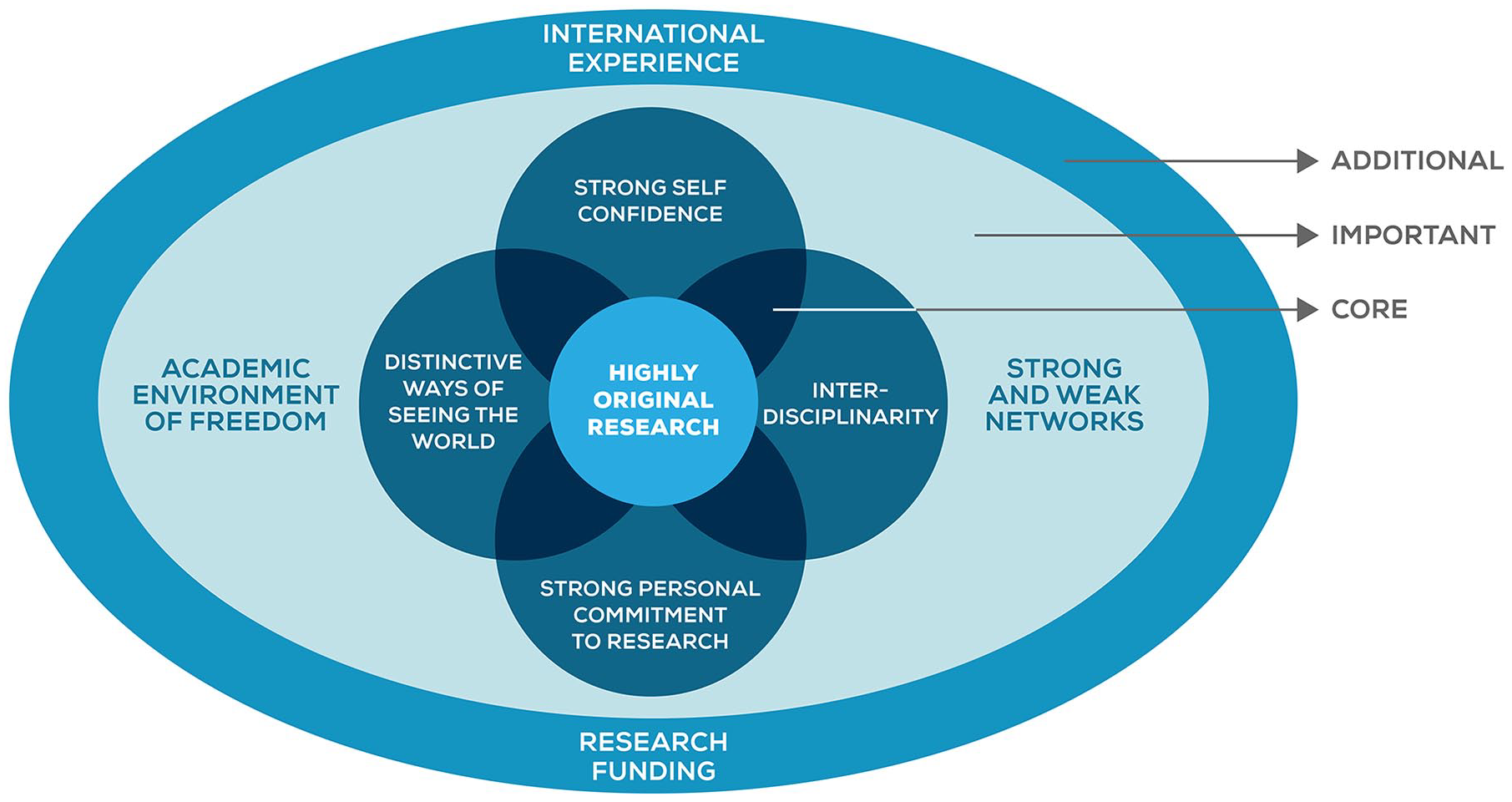
Influencing factors to highly original research.
The model situates new knowledge creation in a broader multiscale context. At the scale of the individual, four elements stand out as necessary characteristics for highly original research which only partly overlap with the personality traits identified by Feist (1998), who put more emphasis on ambition and asocial attitudes. These are (1) an unorthodox or different way of seeing the world (cognitive dimension); (2) a strong commitment and passion for research that spills over into many arenas of life, becoming a “research lifestyle” for some (motivational dimension); (3) very strong self-confidence (social dimension); and (4) an interdisciplinary perspective (cf. Koppman and Leahey 2019). The first three are strongly related to the individual’s personality. Although these elements interact in different ways, as seen in the interviewees’ narratives, a picture emerges of the highly original academic. To some extent based on their self-confidence, experience (academic and/or practice), and intellectual skills, they are nonconformist and unafraid of doubting others’ ideas, being wrong, taking risks, and embracing the risk of failure. They have profuse and challenging new ideas, some of which conform to the notion of the “Big Bang” moment, but others ferment incrementally but cumulatively in their heads for many years. Inspiration comes from many different sources: for example, from supervisors as role models and discussants, conversations with close colleagues sometimes from other disciplines, or reading widely across disciplines. Indeed, originality in tourism research is shaped by the researchers’ capacity to make insightful connections between fields that have been viewed and interpreted independently; while inter-disciplinarity has become a common mantra in social science research, the interviewees seem to have been ahead of the curve in tourism in this respect. They also draw on many different contexts, for example, when disconnecting from work and or being exposed to personal experiences, perhaps in travel or leisure.
Therefore, another common feature of highly original thinkers relates to motivation: they see real-life problems as opportunities for original “solutions” to improve the world, in some way. Moreover, common in the attraction of all these academics to tourism from other disciplines is a predisposition to interdisciplinarity, perceiving tourism as a liberating space offering freedom they could not find within their own relatively narrow disciplinary boundaries. These are all individual “factors” that, to a significant degree, cannot be influenced by educational or research policies.
However, these four core individual characteristics and motivations are only likely to result in original research in certain favorable contexts, which can be promoted by universities and national governments. Specifically, these enabling contextual factors favor building strong and weak networks of peers to materialize the original ideas into actual research projects, and an institutional environment offering the necessary openness, freedom, and time—or autonomy and flexibility (Hollingsworth and Gear 2013)—to produce original ideas. In contrast, our results also pinpoint that while project funding can solve resource issues related to some research, it does not necessarily support disruptive ideas. Indeed, funding can be a double-edged sword as it can constrain the research focus or approach, both in terms of how applications are tailored and the flexibility to pursue unexpected opportunities during the implementation, not to mention the associated time-consuming administrative burdens. There are exceptions where such funding “buys” time for the researcher in terms of fellowships to pursue broad agendas, or allows the assembling of large teams, but interestingly this was rarely emphasized by our interviewees, despite the increasing focus on building large research teams in many national academic systems. International experience was also perceived by many to be important since it amplifies the core element of “different ways of seeing reality.” In contrast, key constraining factors include academic systems that pressurize researchers to produce more crudely measured outputs (see, e.g., Brauer, Dymitrow, and Tribe 2019), lack of time to develop research ideas, lack of openness in networks, and conservative peer reviewers. Personality characteristics are keys to how individuals unlock these constraints.
The narratives provide a nuanced picture of originality that, by definition (e.g., Guetzkow, Lamont, and Mallard 2004) is highly complex. Here we aimed at disentangling the concept of originality from the perspective of original researchers, which is novel to tourism studies. Based on the interviews, originality starts with the ability to develop alternative ways of seeing the world which produces different research stimuli compared to less original researchers. This has implications in the researcher asking different questions to produce different findings and/or conclusions. It is important to stress that originality is not a “dichotomous variable” (there is or there is no originality). There can be different degrees of originality (Rodríguez, Makkonen, and Williams 2019): research can be radically original in its totality or, more commonly, can be original in some aspects of the formulation of aims, concepts, methodological developments, or even the practical applications. But the recognition of originality is subject to the interpretation of social actors and is situational. It is also temporal: originality may only be recognized with hindsight by academia, while what is original today may not be considered original tomorrow.
Originality, both pathways and understanding, is highly personal. It is possible to identify some recurrent strands in the individual accounts that suggest particular themes such as the importance of the lone wolf versus the research pack, the problem solvers versus the inner directed, and the earlier versus later original thinkers. In short, originality seems to come especially from the knower, while singletons and multiples are both important, sometimes even for the same individual. But the picture is complex and nuanced. The personality traits of each individual researcher are expressed in a complex social context of interactions whether communicational (with friends, colleagues, family), institutional, or cultural. Thus, the journey to originality is highly situational: it depends not just on individual characteristics, but also on the institutional setting as well as networks. These vary not only between countries (and universities, etc.) but also over time. ECRs today face very different conditions to the older cohort interviewed in this study.
The complexity of the factors involved makes it impossible to prescribe a linear journey, or sets of journeys, to produce new ideas or to reconstruct logically the process of discovery. Reflecting on the more general literature on knowledge and creativity (Styhre 2004; Simonton 2004) and based on the analysis of our interviewees’ narratives, the creation of knowledge can be highly intuitive and new ideas can be a leap of insight that cannot be captured in specific instructions. The origin and sources of the “sparks of originality or Eureka moments” cannot be easily traced back in time and can be serendipitous. Also, new ideas need to be clarified in an iterative process of going back and forth, making it difficult to reconstruct the process of scientific discoveries (Whewell 1967). However, we do contend that the conjunction of factors can produce situations which are generally more or less favorable for the emergence of originality but, in contrast to Kock, Assaf, and Tsionas (2020), our results indicate that these cannot be codified as a prescriptive formula to be followed by either individuals or organizations.
We cannot identify routes that lead to originality but we can show how some individuals have navigated their contrasting journeys to originality. This tells us that individuals have to craft their own journeys. Our research underlines the importance of commitment to originality, something that editors have noted to be lacking (Rodríguez, Makkonen, and Williams 2019) yet is probably universal in its importance.
This study has implications for the research system in general since managerial or institutional efforts to “produce” or direct highly original researchers may be constrained, and such enforced managerialism could be a barrier to originality given the emphasis placed on academic freedom to pursue original research ideas. However, while these narratives do not provide blueprints for future researchers, or simple typologies that allow original individuals to be identified, they can help identify the barriers that litter and facilitators that pave the path to becoming highly original researchers.
Research Limitations and Future Research Avenues
This research has two main limitations. First, the development of an original scientific personality has its roots in the family background and the formative years of the individual including the education received. The cultural capital embedded in the family, in the form of beliefs and values, is also key to forging curiosity (Bernstein 1990; Bryant, Zvonkovic, and Reynolds 2006). Individuals educated within a “banking concept of education” (Freire 1970), characterized by receiving, memorizing, and repeating, are less likely than individuals educated in stimulating, participatory, and discovery learning contexts to be innovative (Henderson 2004). Capturing this full-lifetime frame requires exploring key psychological/biographical features from early childhood and was beyond the scope of the study.
Second, regarding the methodology, the most significant limitation has been the attempt to understand the key influencing factors from the subjective discourses of the protagonists, recognizing the necessarily selective nature of these accounts. As many of the interviewees themselves explicitly recognized, this exercise in self-reflection is framed by needing to justify and make sense of their lives. Regardless of potential inconsistencies between discourse and practice, our aim is to provide insights into originality through analyzing their discourses.
Finally, the contribution of this qualitative research with little previous knowledge in the field of tourism also lies in identifying a number of avenues for future research. As the results are drawn from a very specific group of researchers, it would be interesting to survey how do others, and different cohorts (junior and senior researchers) in the field of tourism perceive originality and the factors that obstruct or facilitate it. This would enable us to further disentangle the individual from the situational factors. Future research could also consider how original work evolves through engagement with criticism, which is potentially a facilitator but also a potential obstacle. Furthermore, future research could consider the experiences of authors over time at different stages of their career cycle, for example, early versus late career—because if institutional or environmental factors are important, then different contextual realities are likely to have influenced researchers at different career stages in tourism. To bring more insights into the understanding of where originality comes from—endogenously or exogenously—could be interesting to include in future research researchers already born within the tourism discipline (T-generation) as well as researchers from other disciplinary backgrounds. The interviews, not surprisingly, were mostly drawn from a more senior cohort of academics, whose careers originated in and unfolded in many ways in a significantly different academic context to the present. Increases in the scale of universities, changes in funding regimes, technological development, and increased international cooperation have raised the importance of research centers within universities and research groups that spill across organizational borders. The next cohort of highly original researchers may well have different stories to narrate.
Footnotes
Declaration of Conflicting Interests
The author(s) declared no potential conflicts of interest with respect to the research, authorship, and/or publication of this article.
Funding
The author(s) received no financial support for the research, authorship, and/or publication of this article.
