




Abstract
Taking a strategic-relational approach we critique a range of event tourism funding policies and practices that seek to create regional and/or national event strategies. A multiple case study method combining document analysis and key informant interviews within selected regions provides insights into the political nature of event funding, the equity of its distribution, and the decision processes involved.
Programs were found to operate in a sensitive and complex context due to intertwined power relationships between policy and agency embedded within governments.
We conclude that to bring about broader benefits and legacies a paradigm shift is needed to rebalance economic and social outcomes within funder objectives and governance structures. This needs to include innovation in evaluation and wider more meaningful stakeholder engagement. The study shows that without fundamental change in policy, national and regional funding programs are likely to continue to operate within their existing narrow remit.
Introduction
An increasing number of national, state and regional governments have developed formal event tourism funding policies (Getz 2008; Stokes and Jago 2007; Tomljenovic and Weber 2004). These usually entail a bidding process for a limited pot of money allocated to select events that bring maximum benefit (e.g., tourist spend, inward investment, image enhancement, participation). Despite ostensibly similar aims, these policies differ widely in their approach with varying degrees of success. Although several case studies have been published (e.g., Garcia 2017; Nuccio and Ponzini 2017; Lee 2015; Tomljenovic and Weber 2004) a broader comparison of policies across different world regions is lacking (Getz 2008; Getz and Page 2016a).
We use the strategic-relational approach, developed from new institutionalism (Jessop 2001; Pastras and Bramwell 2013), to critique funding policies and practices across a sample of countries. Through this critique, our aim is to more fully understand the political nature of event tourism funding, the equity of distribution, and the decision processes involved. The study also explores the usefulness of the strategic-relational approach, used by Pastras and Bramwell (2013), in understanding the complex relationships and differing agendas of the organizations brought together in such event tourism strategies. This approach enables critique of the structures that guide and implement policy and their strategic-selectivity that “privileges some actors, some identities, some strategies, some spatial temporal horizons, [and] some actions over others” (Jessop 2005, p. 48). We therefore aim to shine a light on the aspects of event tourism funding policy that are often hidden and in so doing identify alternative, more open ways of prioritizing and allocating support in this area.
Context
Event tourism has proliferated in most developed countries, with festivalization continuing despite austerity, recession, market saturation, and increasing environmental challenges (Jones 2012). The bandwagon effect appears to be largely driven by policy makers’ belief in the economic, and more specifically tourism, benefits that events bring (Wood 2017; Pugh and Wood 2004). However, most nonmega events have been created with different ends in mind, often as a celebration of culture and the bringing together of communities (Finkel 2009; Quinn 2010).
Large-scale sports events appeal to policy makers through their potential as tourist attractions and image changers (Grix and Houlihan 2014; Grix and Lee 2013) whereas cultural events are seen as less universally appealing. Cultural events that do receive support therefore tend to be those with the most certain socioeconomic outcomes, thus leading to an increasingly formulaic approach to festival programming and design (Finkel 2009; Grodach and Loukaitou-Sideris 2007). This instrumental approach is likely to disadvantage smaller events and those that do not fit with the policy maker’s view of “art,” “culture,” and more commonly “spectacle.” This is echoed by Jenkins’ (2009) research in Ontario where funding was found to have been redirected by state government to “the marketing of culture to tourists” (p. 341).
The changing emphasis to greater private sector funding can also exacerbate this effect (Méndez-Carbajo and Stanziola 2008), creating tensions between legitimacy and efficiency in tourism public-private sector collaborations (Zapata and Hall 2012). Andersson and Getz (2009, p. 849) suggest that local government intervention is needed to create “a portfolio of local events more effective in attracting and satisfying visitors.” However, interventionism that favors the objectives of destination management organizations (DMOs) may also neglect festivals of local value. Andersson and Getz (2009) conclude that it is the underlying ideology and political processes, rather than rational planning, which will have more influence on producing balanced portfolios of events.
The use of event tourism as an instrument of soft power is also of concern where selected organizations have been delegated authority to make decisions concerning major events calendars and funding. This relative autonomy from government can lead to “the emergence of secrecy and lack of accountability of such agencies” (Getz 2009, p. 595).
Despite these concerns, analysis of tourism destination politics in the academic literature remains scarce (Pike 2017; Bramwell and Lane 2011) and the relationship between public policy and events not yet fully explored (Antchak 2017). M. Hall and Rusher (2004, p. 229) also argue that “there remains relatively little analysis on the political context of events and the means by which events come to be developed and hosted within communities.” Although many major cities and regions actively plan and implement event tourism portfolios, the topic in academia is still underexplored (Ziakas 2014; Getz and Page 2016a), with further investigation and comparative analysis of diverse event portfolio strategies in different urban contexts needed (Antchak 2017).
This article addresses these aspects from a new institutionalism perspective providing structure to a critique of the relationships of the different agencies involved (Falaster, Zanin, and Guerrazzi 2017). The differences in practice, history, individuals, and collectives lends itself well to a strategic-relational approach (Jessop 1990) emphasizing the “paths” taken, interactions between actors within differing political contexts, and the formal arrangements and informal cultural practices, alongside a view of the agency of those involved (Dalonso et al. 2014). Actors in regional or national tourism strategies often have competing agendas, objectives, and modes of operation (Bramwell and Lane 2011) This is particularly true within event tourism where complexity has emerged as a result of neoliberal governance, in the countries included here, and power devolution to a variety of agencies including DMOs, local government, cultural, sports, and other tourism bodies. However, they are now tasked with working together to develop coherent, successful, and “fair” event funding policies to enhance the tourism strategies for their region (Dalonso et al. 2014).
The Strategic-Relational Approach to Event Tourism Strategies
The complexities of a policy-level approach to event funding and the potential tension between culture and tourism suggests the need for a theoretical model that considers the multiple relationships between DMOs, tourism and culture departments, private sector, central government, and the local community (Falaster, Zanin, and Guerrazzi 2017). Pastras and Bramwell (2013), drawing on Jessop’s (1990, 2008) work, convincingly propose “new institutionalism” as a framework for understanding tourism policy, and argue that this also holds true for event tourism. Within this context a strategic-relational approach (SRA) seems most appropriate and has been used by Dalonso et al. (2013 and 2014) to develop their “intertwining” model of events and public policy.
Key elements of the SRA are the historical policy context, the consideration of how “paths” have been created and shaped and the level of dependence on those paths. A changing view of leisure and recreation has also affected the funding and format of events and festivals with a shift from spontaneous sometimes disruptive celebrations of the past (Gotham 2002) to more formalized approaches claiming to be for social good (Coalter 1990). This shift from “ritual to regeneration” (Foley, McGillivray, and McPherson 2012, p. 27), via tourism, is a consequence perhaps of neoliberal state policies and an increasing focus on economic, or at least measurable, value from an event portfolio (Wood 2017; Ziakas and Costa 2011a).
Interplay between agencies with often competing goals driven by market economies and competitiveness has created an environment where events and festivals have become a tourism commodity to be exploited. Cities and regions compete within a global tourism market vying with each other to attract investment into, what they portray through events as, a culturally diverse and vibrant area (Hassan, Mean, and Tims 2007). Events therefore, it can be argued, have been hijacked by a capitalist ideology that seeks to placate rather than to change (Rojek 2013). Rojek’s (2013) critique, although based on the mega-event, highlights the need to review the value and purpose of event tourism within the changing political landscape and to be more sceptical of their promised worth to communities and society (Wood 2017).
Dalonso et al.’s (2014) intertwining model encapsulates some of the relational elements in event tourism, drawing on new institutionalism. They recognize the multiple actors and stakeholders at the local, regional, and national level and how the intertwining relationships between these affects the occurrence and success of event support and funding over time. Jessop (2005) also argues for relativity, relationality, and contingency as the core concepts of SRA, highlighting reflexivity in the development of structure and agency through a complex coevolution that is driven by spatio-temporal relationality (see Figure 1).
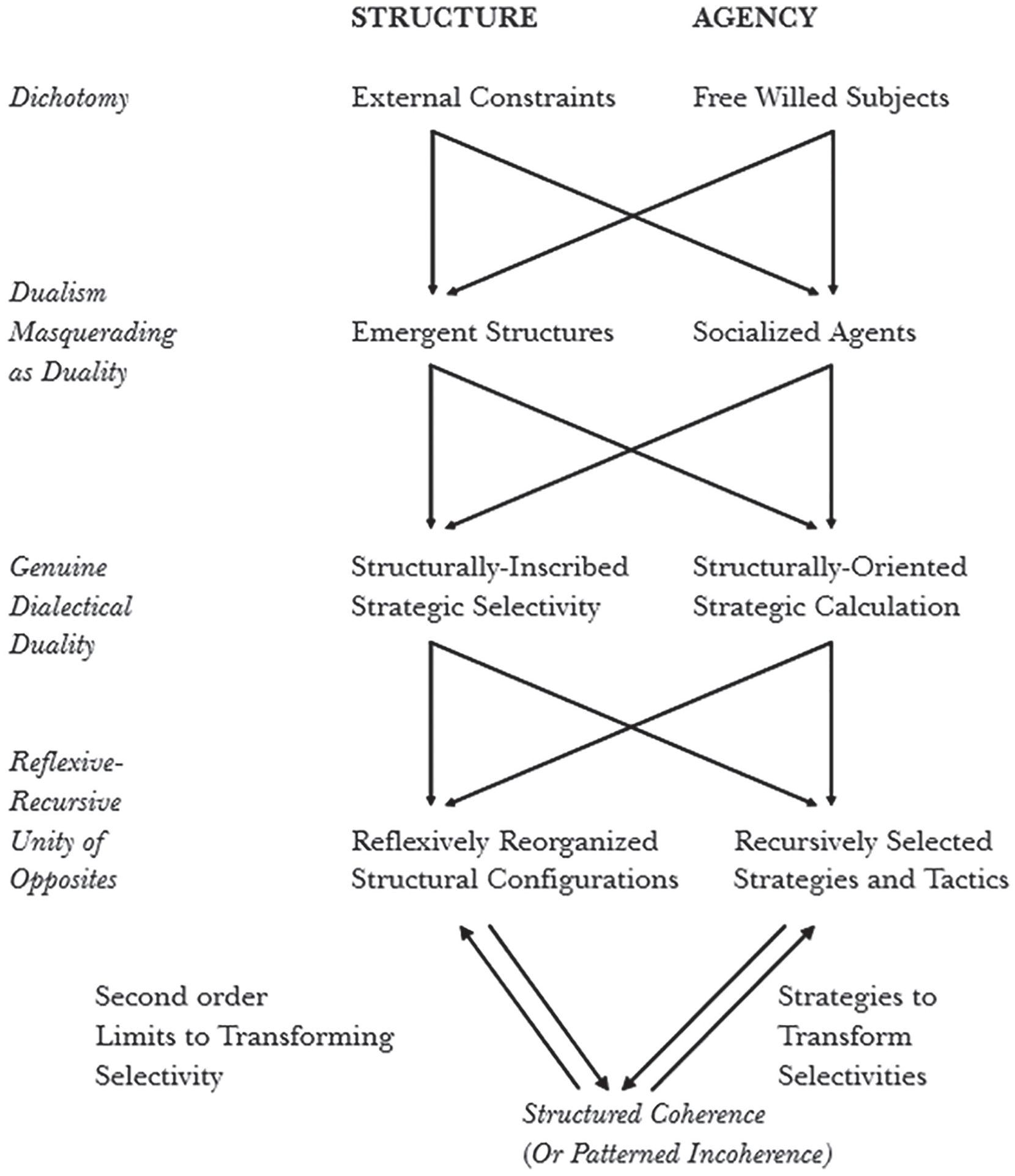
A strategic relational approach to structure and agency.
As the focus of this article is event tourism funding policies, it is germane to highlight the potential for inequity resulting from what Jessop (1990) terms “structural selectivity.” He argues that state structures "offer unequal chances to different forces within and outside that state to act for different political purposes" (Jessop 1990, p. 367). The state therefore has the potential to privilege some economic or political strategies over others. The exercise of power is largely based on the interaction among these strategies with capital, or the state, seen as social relation (based on Marx’s concept of capital and Gramsci’s and Poulantzas’s concepts of the state as a social relation).
New institutionalism emphasizes the role of individuals in making strategic choices but importantly also recognizes that the environment or context is strategically selective (Jessop 2008), constraining individual subjective actions. Although Pastras and Bramwell (2013) adopted this perspective to critique a mega-event tourism policy (the Athens Olympics), it has not yet been applied to regional event tourism policies more generally. Such an approach is needed to better understand the institutional influences and intertwining relationships involved.
The complexity of the relationships created around events is often tied to their use as tools to further other policy areas (e.g., well-being, inclusion, culture, sport, tourism). Smith (2012) summarizes this in three main policy principles, namely, policy related to events, events as public policy, and policy formulated to complement events. For example, cultural and tourism policy often informs events policy although we also see mega-events as the driver behind tourism strategies and cultural renaissance (Stokes 2008).
Lauermann (2014) also demonstrates how urban policy more generally affects and is affected by event tourism strategies, notably mega-events. He argues that such events necessitate an entrepreneurial approach which draws upon global expertise and that “imitating and innovating policy are both part of the entrepreneurial strategies of mega events” (p. 2650). Similarly, Smith and Fox (2007) and Richards (2017a) illustrate the importance of embedding event tourism policy within a broader urban regeneration policy. Nicodemus (2013) also advocates for ‘fuzzy vibrancy’ in creative placemaking and cultural policy with the need to bring a range of stakeholders including urban planners together to achieve this. Devine, Boyd, and Boyle (2010) further highlight this in their study of the multiple and complex inter-organizational relationships found within sports tourism policy.
It has been argued that in creating regional and national tourism policies, local business and resident involvement can become lost as towns and cities, which have traditionally competed for tourists, are expected to form “alliances” (Halkier 2014). This potentially combines competing and conflicting groups to the detriment of any event tourism policy (Kimbu and Ngoasong 2013). Innovations can emerge, but it is only when NGOs, businesses, and other private sector organizations are included in the policy-making process that implementation is likely to be successful (Rodríguez, Williams, and Hall 2014). Similarly, Ezedeuji (2015) advocates a strategic approach for event-based rural tourism, which involves incorporating local values and the community ownership of events with government, not-for-profits, and the private sector as partners providing business training and finance. This, he argues, will create a marketable brand identity while preserving the unique culture and heritage of sub-Saharan Africa.
Despite the broader policy implications of event tourism strategies there is much evidence to suggest a lack of, or at least difference in, strategic approach (Thomas and Wood 2003; Stokes 2008). One explanation for this is the need to react to event opportunities, suggesting that the inclusive participatory approach advocated in more general tourism strategies may not be appropriate when planning event tourism portfolios (Stokes 2008).
The perceived need for entrepreneurialism among those engaged in event tourism highlights the importance of considering the subjective decisions of individual actors (Pastras and Bramwell 2013) as this “may engender individualism more than collectivism, or at best, consultation with a smaller network of select stakeholders to shape strategies” (Stokes 2008, p. 261). Therefore, accepted tourism strategic approaches may not apply within an event tourism policy context as this requires greater flexibility and responsiveness depending on location, timing, and structure. The strategic decisions and constraints of the environment could therefore be seen as dominating the strategic choices made by the individuals involved (Jessop 2008).
Stokes (2008) provides a useful categorization of event tourism strategy development using an agency framework resulting in three approaches—Corporate, market-led; Synergistic; and Community, destination-led. Within these, we see the tension between community engagement and inclusion, and the demands of the market. The approach is both determined by and determines the organizational structure, processes, focus, and decision criteria.
Other studies have explored the relational element of event and tourism organizations involved in event tourism. For example, Stokes and Jago (2007) suggest that three formats exist – separate; merged and mixed (merged and separate). In their study a more coherent event tourism strategy resulted if this was controlled by a merged organization (event and tourism combined within an institution) or mixed arrangements (formal intra- and interorganizational linkages). Although, separate event organization and tourism bodies create less strategic coherence, it could be that they are potentially more flexible and more successfully able to meet the differing needs of stakeholder groups such as the local community, artists, and cultural development agencies.
Getz (2009) has called for the development of a comprehensive policy for planned tourism events, arguing that “public policy pertaining to festivals and other planned events is generally fractionalized . . . not comprehensive . . . and fails to integrate events effectively with all the relevant policy domains” (62). There are clearly tensions which hinder the development of the event tourism sector, notably, festivals are often excluded from the dialogue between tourism and business (Maughan 2009) and disconnected from the cultural policy arena as they fall under the control of tourism policy (Quinn 2009; Garcia 2004).
One way to counteract such a tension between tourism and cultural agendas is therefore to ensure multiple voices are heard (Lee 2015). However, the benefits are longer lasting and wider reaching if the public, private, and third sectors work in partnership, merged or mixed structures (Stokes and Jago 2007) and culture is repositioned more centrally in cross-sectoral agendas (Liu 2015; Garcia 2017).
The main themes emerging from this overview of tourism events funding policy relate to equity of funding decisions, who is party to and has influence on the decision, and the criteria on which decisions are made. These are discussed briefly below in relation to structure and agency and again within the analysis of the case studies.
Inclusivity and Equity in Funding
It would be natural to assume that equity in decision making and inclusivity of opportunity are desirable in any event tourism funding policy. However, the reality is far more complex. Policies may deliberately exclude certain organizations, types of events, geographical areas and, equally, approaches will seek to encourage the “preferred” types of event and organization (Finkel 2009; Quinn 2010; Horne 2015; C. M. Hall 2006). The structures developed over time create strategic selectivity and limit the agency of those involved. This is partly a consequence of the limited funding available but is largely due to the remit of the funding agency and the agendas of the organizations and individuals involved. This not only relates to public funds, as inequities have also been found in the private sector funding of culture (Méndez-Carbajo and Stanziola 2008).
Several authors argue that festivals, notably arts festivals, are suffering an inequity in public sector support with some being favored over others (Finkel 2009; Quinn 2010). Their research indicates that policy agendas can favor a particular type of festival, an easily consumed spectacle perhaps, which disadvantages more innovative programming leading to a homogenization of content and approach. This might lead to the perception of a “dumbing down” of cultural content, “cultural substance being diminished as it becomes cultural spectacle” (Harvey 1989). This is often due to both the type of organizations involved in funding decisions and the formal and informal relationships between them (Stokes and Jago 2007). While “there are, undoubtedly, some exceptions where the policy ambitions of individual arts festivals are closely interwoven into the broader policy frameworks operating in a city at large, in general, there is an urgent need to create new policy frameworks” (Quinn 2010, p. 266). Furthermore, the sports mega-event often takes precedence over all other tourism event types (Horne 2015; C. M. Hall 2006) pulling resources in, therefore reducing funding availability to other event organizations. Others argue that such events are a catalyst for cultural events and that their legacy is often cultural rather than sports participation or tourism (Lander and Crowe 2010; Garcia 2004, 2008).
In addition to the potential exclusion of certain art forms and grassroots sports events, there is evidence to suggest that destination marketing policies often neglect host community involvement with representations of place created to suit the needs of a few interested parties (Pike 2017). Events policy within tourism is likely to magnify this feeling of noninclusivity. For example, when events are parachuted in or created without community consultation or, perhaps worse still, seen as being appropriated for tourism purposes. This appears more likely to occur in policies led by a market-driven corporate approach (Stokes 2008) and when organizations and projects have competing power relations that constrain effective tourism strategies (Kimbu and Ngoasong 2013).
The size and bidding experience of organizations can also create inequalities in funding success. For example, smaller, one-off requests are more likely to fail a rigorous process of scrutiny whereas larger, stable organizations that regularly bid for funds and therefore have a good track record will be advantaged (Hazledine 2011). These organizations are often from outside the region, and therefore the benefits to local communities are diminished (Whitson and Horne 2006).
To resolve inequalities in access to the decision-making process and prospective benefits from events, Antchak (2017) calls for greater direct participation. Such involvement of community groups, individuals, and the private sector increases collaboration between different actors and the distribution of tangible and intangible resources (Presenza and Sheehan 2013). Similarly, Getz (2009) introduces a principle of social equity into event tourism strategy, requiring full integration of residents and other stakeholder groups in the organizational process.
It would seem then that event funding can only be equitable and sustainable if cultural policy is considered alongside tourism policy (Quinn 2009), if all stakeholders, especially the local community, are involved (Antchak 2017; Getz 2009), if support is provided to smaller less experienced organizations in bidding for funds (Hazledine 2011), and if destination marketing and tourism agendas are not pursued at the expense of other community benefits (Pike 2017; Fazito, Scott, and Russell 2016). These caveats may not sit well with market-driven tourism policy makers.
Power and Influence in Funding
Power, influence, and decision making in event tourism funding policy is determined by the program structures and environmental context (Pastras and Bramwell 2013; Dalonso et al. 2014). As others have found, this is often a tourism-led policy involving DMOs, government tourism departments, and to some extent the private sector (Getz and Page 2016b). This is then made more complex, but perhaps more effective, when cultural agencies and/or sports bodies are involved.
Pike’s (2017) review of DMOs emphasizes the highly political and often less than constructive nature of destination marketing organizations, which are often composed of private-public partnerships. Similarly, Kerr’s (2003) study of the politics and power of tourism in Scotland heavily criticized the DMOs. Denmark, often lauded as leading in national event tourism strategies, has been hampered since the 1980s by the governance style of Regional Tourism Boards (RTBs), which feature “geographic localism and short-term interests” in decision making (Halkier 2014, p. 1664). Others have commented on the “collaborative thuggery” often inherent in multistakeholder decision processes where the destination brand strategy is shaped to suit the needs of a few individuals (Nardi, Marzano, and Mendieta 2016).
Fazito, Scott, and Russell’s (2016) study of tourism discourses and policy in Brazil also highlights the power inherent in “discourse coalitions.” In their Foucauldian inspired framework, meanings (in this case tourism and development) become narrative and are cemented in storylines that are then given legitimacy through the power of particular agencies. These are supported by other actors creating a discourse coalition resulting in policy outcomes and action and “winners.” This process of policy development again highlights the potential for certain groups’ voices to be privileged through strategic-selectivity and through relational path development over time (Jessop 2005).
Decision makers’ desire for social legitimacy also constrains funding decisions. For example, festivals often create a tension between legitimacy in the eyes of customers and the need for market success. Chaney and Marshall (2013) suggest that profits and commercialization require differentiation, but that society often demands conformity (society can be customers but also sponsors, funders, government supporters). They argue that a highly institutionalized environment will seek social legitimacy over distinctiveness and that a little-institutionalized environment will be enabled to seek distinctiveness before social legitimacy.
Tension between public and private sector actors can also create power relationships that affect decision making. This can be the latent coercion applied to event managers by tourism organizations in that “funding manipulates the event managers to make certain changes to their event that are not congruent with the core focus” (Kelly and Fairley 2018, p. 342). Events may also be encouraged to leverage tourism benefits for the region but without gain to their own organization. However, the reverse is often true for mega-events where the event organization (e.g., IOC, FIFA) drives the tourism funding strategy (Horne 2015).
It appears therefore that event tourism policy and strategy decisions are highly contingent on structures and power but are also influenced by the environmental context and the goals of those involved. The strategic-relational approach therefore provides a useful lens through which this complexity can be explored (Jessop 2008).
Material and Methods
Event tourism funding programs proved to be a sensitive research context. This was unsurprising given the high-level policy and power relationships surrounding event tourism funds, which in many cases are headed by government ministers. As such, the research was viewed with suspicion, making academic critique challenging.
To mitigate these issues, analysis of program information and documentation was combined with supplemental interview data to explore the “strategically selective context” alongside the, undoubtedly carefully crafted, narratives of some of the main actors involved.
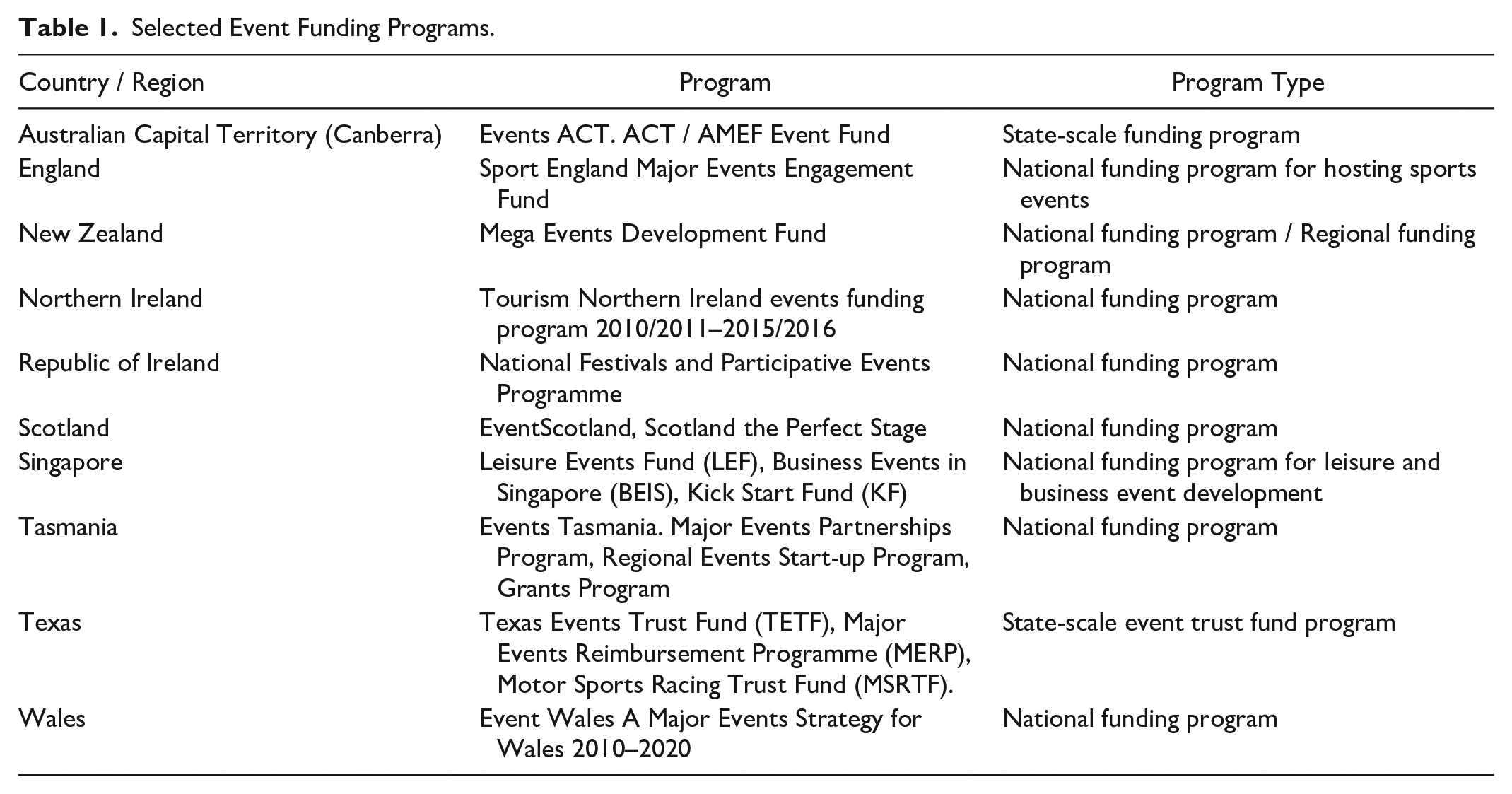
Purposive sampling identified funds across different governmental levels and geographic contexts. This approach benefitted from unique access to one national program, afforded to the authors through a separate event tourism study. This opportunity sparked the authors’ curiosity to critically examine similar programs and helped identify several comparator funds; others were added from interview information in a snowball-sampling manner, and extensive documentary and online searches completed the sample (see Table 1).
Selected Event Funding Programs.
However, interviewee recruitment proved extremely difficult because of the political sensitivities outlined. From the outset, the research was not intended to constitute a global audit; rather, program insight and broader evidence scoping offered a unique lens to examine structure and agency within different geopolitical contexts.
It is a limitation, that this approach only identified examples where English is the native or an official language. The cases (see Table 1) also exhibit a geographical and administration bias toward nations within the United Kingdom. However, among these geopolitically similar examples, differences can be found in their approach, validating their inclusion.
In total, 10 programs were selected. Local funds, that is, city-scale or smaller, were excluded, as the purpose was to understand strategic government programs, that is, national, state, or regional. A further justification for this is that national funding structures, application processes, and regulatory requirements are often replicated at the subgovernment level. However, it should be noted that Events ACT, although regional in remit, is primarily focused around Canberra, Australia, as a capital city.
For each program, publicly available information was collated in a case report, primarily from government and funding websites. Key information included applicant documents, organizational structure and governance, contact details, lists of previously funded events, and case study/media reports. The reports were organized under seven headings (see Figure 2). These cross-case criteria were intended to reveal the structural, operational, and process elements of each program.
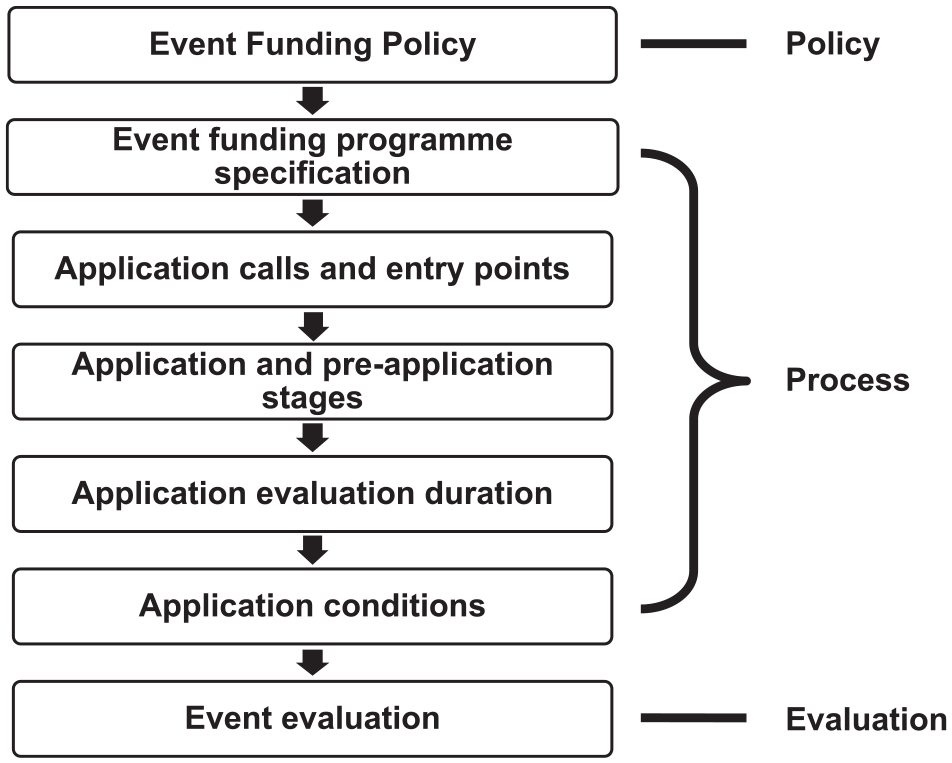
Overview of event funding program structures.
Supplemental interviews were then conducted to complement the documentary review and provide primary insight. To obtain an informed strategic view on policy and process, representatives with high-level roles, for example, director of events and head of investment/event development from each program were invited to participate in an interview. Although this narrowed the pool of potential interviewees in an already sensitive context, it was considered necessary to ensure that insights were only obtained from individuals with strategic oversight and decision-making power or “agency.” From the 10 cases, four representatives from Events ACT, EventScotland, Event Wales, and Sport England agreed to participate. Although small, the sample was considered appropriate for conceptually examining a politically sensitive context, when combined with extensive documentary evidence.
Semi-structured interviews lasting between 45 and 60 minutes were conducted in September 2018. The interview schedule mirrored the cross-case comparison themes (see Figure 2), enabling verification and discussion of the structural, operational, and process information within the secondary data. Participants were invited to review their case report before the interview and “member-check” their transcript for accuracy post-interview. To protect their identity, it was agreed that quotes would only be associated with their organization and not their specific role.
Analysis was conducted in two stages: first, case reports and associated documentation were mapped to the policy, process, evaluation framework structure inherent within all the case funds (Figure 2). The documents were then examined in detail to identify information relating to the strategic-relational themes of “agency” and “structure” within the framework. Coding was conducted independently by the authors and cross-checked to compare interpretation and intercoder reliability. Analysis of both documentation and interview transcripts focused on developing conceptual interpretations from the empirical evidence, framed by the theoretical ideas from the SRA (Bryman 2004; Decrop 2004). The interpretations that follow are therefore based on several sources of evidence and the views of several influential actors (Pastras and Bramwell 2013).
Findings and Discussion
A Strategic Relational Perspective on Event Funding Policy
To examine the structure and power relations within the sample programs, the findings are presented from a strategic-relational perspective through the lenses of agency and structure. This follows a policy–process–evaluation chronology mirroring the structures inherent within the case programs (see Figure 2).
Agency within event funding policy
Understanding the policy context underpinning event funding programs represents the starting point for examining the rationale for their introduction. The political use of events undoubtedly influences funding criteria and is often centered, at a regional or national level, on image building. For example, events became a major focus of Northern Ireland’s post-conflict tourism strategy albeit with mixed results (Devine, Boluk, and Devine 2017). The propensity for events as a way of projecting a desirable image through media coverage to the wider world can be a key funding determinant; however, such media focus can backfire when events expose underlying regional tensions. Use of mega-events in particular as soft power (Nye 2008; Grix and Houlihan 2014) is a diplomatic strategy followed by several large and developing states (e.g., Beijing Olympics; South Africa World Cup) (Rowe 2012). For these governments, the successful bidding and delivery of a sports mega-event “signals and boosts a shift from regionally based emerging power to embedded global power” (Grix and Lee 2013, p. 536) and for political parties to showcase their legitimacy as global leaders (Tomlinson 2010; Rowe 2012).
The importance of destination image as a policy driver is apparent from the interviews with EventScotland and Event Wales, and notably the notion of enhancing destination image internationally for political gain. This power relationship is laid bare in the following quote relating to EventScotland’s vision: The driving vision is “Scotland the Perfect stage,” which is the national events strategy, importantly it’s not VisitScotland or EventScotland strategy, It’s Scottish Government strategy, which is uniquely different to most event organizations in the world. (EventScotland interviewee)
The political importance of a national strategy, overseen and managed by the central government was also articulated by Event Wales, who stated that following the publication of EventScotland’s strategy in 2002, Ministers “were keen to develop one for Wales.” Although Welsh Government funding for events existed prior to their national strategy, the programs lacked political oversight through fragmentation of delivery and misalignment to a common vision.
The historical contexts of these examples highlight the importance of event funding as a political leveraging tool for enhancing destination image. Furthermore, it demonstrates that development initially followed a “path shaping” (Jessop 2005) process of reflection, horizon scanning, and imitation. Based on an Australian funding model, considered world leading at the time, the EventScotland program was developed after a failed bid to host the 2008 European Football Championships. These examples provide a linear illustration of the “event bandwagon” effect (Wood 2017), where political agency underpins national strategies, with EventScotland pursuing a model developed by Australia and in turn Event Wales following EventScotland.
These actions also acknowledge perceived political advantages of developing a national program, and the implications of falling behind other nations or regions. Drawing on Dalonso et al.’s (2014) model, these findings suggest that funding programs are not only intertwined at the intra-governmental level in terms of political stakeholder agency, but also at intergovernmental level through inspiration and imitation. However, notably, in contrast to Lauerman’s (2014) entrepreneurial premise, inspiration replaces innovation in these examples, resulting in imitation with minimal innovation. Formal, intertwining through intergovernmental agency was also identified among the cases, evidenced by the memorandum of understanding, between EventScotland and New Zealand Mega Events, to share knowledge and best practice.
Policy objectives also appear homogenous and static across the schemes. For example, Event Wales has retained the same overarching objectives to invest in events for economic impact and international profile for 10 years with no foreseeable plans to change: There is now, slightly more emphasis around the softer benefits around social impact, access, participation, and community engagement, but overall we drafted a strategy in broad policy terms, so it could be flexed to take account of different policy environments, but the focus remains the same and is relevant to today. (Event Wales interviewee)
Similar consistency was found for Events ACT, when asked: Do you think you will fund similar events in the future? I think it will remain largely the same. I think the only thing we might do is look at whether we portion off some of the funding to focus on new events. (Events ACT interviewee)
Objective inertia highlights two interrelated aspects: First, it exposes the long-term strength of political agency in directing programs toward economic development, potentially at the expense of community and social outcomes, by maintaining economic outputs as core objectives. Second, while overarching objectives provide flexibility for event fund administrators in terms of the operation and management of their funding portfolios, inclusion of politically neutral objectives also provides some security against changing political environments, which could threaten funding allocations. This need for stability and consistent political support was articulated by EventScotland: You also need good support from the board and political support. We have been fortunate to receive long-term cross-party support for the event sector and sustainable economic growth agenda. (EventScotland interviewee)
Funding continuity was identified as a key challenge over the next decade, with interviewees raising budgetary concerns, primarily relating to overreliance on public funding to support events, often against a backdrop of budget reductions. Themes included implementing efficiency savings and the need to work with a greater number of partners, for example, local authorities where support may not be financial but through in-kind services. Financial innovation was also discussed as a development goal for EventScotland, including trialing new approaches to risk management and event funding, beyond grant funding, such as underwriting and profit sharing. Financial models involving venture capital investment and “venture philanthropy” may guard against uncertainty in public sector funding but may also favor events that are palatable to private sector investors (Quinn 2010). This could lead to a negative influence on integrity and programming. However, it is increasingly likely that public investment will be based on an ability to draw down private money through sponsorship, investment, or donation (Wood 2017; Mermiri 2011). Judging success on the amount of private sector “match funding” received also offers an alternative metric for evaluating events (Lin, Stein, and Goldblatt 2011).
Policy consistency and political support for national programs has undoubtedly been beneficial, providing security of resourcing and enabling longer-term planning and implementation. Indeed, there is a greater focus on identifying changes, which may disrupt policy implementation than enacting any significant changes to policy. This is summed up by Event Wales as follows: We evolve and tweak the direction, but the overall thrust of the policy remains the same, the policy drivers remain the same, it’s not really limitations of policy, but rather it’s looking at the challenges in delivering that strategy and policy. (Event Wales interviewee)
Contextualized within institutional practices, these programs originated from “path-shaping” actions, driven by political agency to compete with other regions and nations on a world stage. Once established, they broadly conform to a pattern of “path-dependency,” tied to the strategically selective context of tourism and economic development, most evident from the top-down power structures and ministerial control within programs. This also contrasts with the autonomy of some national programs identified by Getz (2009), as agency restricts opportunity for path-shaping to occur at delivery level as actors are preoccupied with policy implementation. Where agency for change was found, it could be viewed as “path refinement,” restricted to peripheral or incremental changes to encompass new events, social impacts, and community engagement. While interviewees regarded current approaches as fit for purpose, budgetary constraints, social impacts, and community engagement represent future challenges, requiring faster and greater path-shaping action.
Structure within event funding policy
Political intertwining also extends to program governance structures, where structural selectivity processes implement, maintain, and emphasize funding policy. Funding teams are typically small, with a lead figure managing about 10 people. Positioned within semiautonomous departments, most are embedded within tourism or economic development functions, with ministers often presiding over final funding decisions.
External stakeholders and structures also influence structural selectivity, with programs often chasing the same or similar events. Actors described the availability of event “shopping lists”; notably, these were more readily available for sporting events than cultural events. The close partnership between Event Wales and UK Sport quoted below exposes structural differences between sports and arts/cultural event opportunities.
At any given time, we can consult UK Sport and they can provide a list of probably over 100 events which are looking for a host destination. Nothing like that exists for the arts or cultural sector to our knowledge. (Event Wales interviewee)
This highlights the potential for policy and structural inequality to occur simply through “convenience,” supporting assertions by C. M. Hall (2006) and Horne (2015) that sports mega-events can take precedence over other event types. Although the models operate defined funding calls, most also exhibit flexibility to react to new opportunities. For Events ACT this manifested itself as a form of policy and structural opportunism, capitalizing on national sporting successes by bidding to host future tournaments. All interviewees emphasized that they strive for a balanced event portfolio to address potential policy and structural inequality. Research by Ziakas and Costa (2011b) and Ziakas (2014) advocates for this approach, and in these examples, portfolio balance was found to be influenced by awareness of inequalities such as geographic spread and public perception. For EventScotland, this question of social legitimacy (Chaney and Marshall 2013) can only be answered by an increased focus on “painting a narrative picture” to justify public expenditure. This perspective aligns with the connection made by Chien et al. (2012) between event publicity and resident commitment, where resident support is “conceptualized as a social dilemma” (451), contingent on perceived personal and collective benefits accruing from an event.
Similarly, Event Wales articulated that their fund was perceived as a major events sporting unit owing to events such as the Champions League Final or Volvo Ocean Race “grabbing all the media attention,” despite supporting an equal number of sports and cultural events in recent years. The implications of such perceptions are that they may discourage nonsporting events from applying reducing public support and therefore social legitimacy for event funding.
Programs also vary in their approach to addressing portfolio balance. Events ACT do not weight or filter events but rely on receiving a variety of applications that “always seem to result in a balance between sport and cultural events.” In contrast, EventScotland enforces a spend ratio of no more than 60:40 in terms of sport or culture or vice versa per annum. These findings demonstrate inherent structural selectivity, notably through ministerial control of funding decisions and integration within government tourism functions, where economic returns are often prioritized. Social legitimacy, through awareness of public perception, also appears central to issues of inequality such as geographic dispersion and portfolio balance.
A Strategic Relational Perspective on Event Funding Processes
Power and influence also determine assessment criteria, in turn affecting the equity and fairness of funding distribution. It is therefore important to consider how applications are assessed, the expectation on event outcomes or impacts, and the emphasis on benefits to whom.
Agency within event funding application processes
Application processes attempt to balance robust assessment while minimizing the administrative burden for applicant and funder. This is particularly important considering the small size of many funding teams. As a result, agency is typically concentrated among a few individuals responsible for assessing and submitting applications for ministerial approval. To aid the process, several funds recruit independent panels with members drawn from external organizations and government departments associated with the arts, sport, culture, and recreation. This approach broadens the decision-making profile but does not alter the path-dependent assessment criteria used, or the potential for ministers to veto decisions.
Agency within governance was also explored. Here, internal and external audits are typically used to assess fund activities. Annual reviews are also commonplace; however, these are generally limited to path-dependent, incremental process changes, mirroring the policy consistency previously identified.
Structure within event funding application processes
Structural selectivity
Except for the Sport England fund that solely funds sporting events, all the programs separate business events from tourism and cultural event funding programs. Interviewees revealed that business events were considered separate entities managed by business focused teams, and therefore did not align with the sporting and cultural programs typically managed by or closely associated with national tourism agencies. Within these contexts, business events, although separately funded and managed, appear marginalized, suggesting that business tourism is a low priority for national tourism organizations in these examples. This finding supports the view that events policy is often fractionalized and not integrated within all the relevant policy domains (Getz 2009, p. 62).
Time sovereignty
Although the programs consistently segregate business events, they diverge in their structures and application processes. Time sovereignty, through application calls and entry points, was found to be a function of program characteristics, with a number of variations across the schemes. TNI, New Zealand, and the RoI operate schemes with one call per year, whereas Singapore has a single open call with no specified entry points, and Sport England operate four calls per year. Among the schemes, Scotland stands out for operating a complex system of call and entry points. For example, its National Events funding program has three, Beacon Events Program, two, and Clan and Winter Festivals, one.
The adoption of different application cycles was attributed to resourcing and timing contexts. For example, it can be beneficial for complex schemes receiving many applications to have different entry points, to reduce the administrative burden compared with a single call. Conversely, an open call for a single scheme with no set entry points can disperse applications to similar effect. Timing and number of calls was not considered an issue by the interviewees, as noted by Event Wales’s more personal approach: We don’t go in for formal bidding rounds, we like to have an initial discussion if someone comes up with an event proposal, we’ll sit down and have a conversation with them to get a feel for whether it is something we think we should support, and if it will meet the funding criteria. (Event Wales interviewee)
Online application systems are used by all funds for efficiency. However, applications for the Singapore scheme are only issued following discussion with a fund representative. The remaining cases encourage early discussion and/or attendance at information workshops. Scotland’s Beacon Events program also requires applicants to complete a pre-application template prior to a possible submission. In addition, Events ACT, highlighted the benefits of technology through widespread use of the “SmartyGrants” system across regional government for collating applications.
Call communication was also found to be an important facet of structural selectivity, with the programs taking different approaches. A key aspect is their perceived reputation, which influences how the programs are publicized. Both Event Wales and EventScotland were found to place significant stock on their profile: It tends to be word of mouth, we like to think we have a presence and most people are aware of our existence. We don’t go out like EventScotland; they announce their bidding rounds because that’s their funding model, but we don’t do that. Also, being part of the national tourism agency helps. There are tourism forums and people in the tourism industry that are aware of the funding we provide. (Event Wales interviewee) We have been quite successful in embedding “Scotland the Perfect Stage” into people’s psyche, so when people speak in Scotland and internationally about events, they use that as the vision for the program we deliver. (EventScotland interviewee)
Use of proven communication networks was also emphasized by Events ACT after external advertising had failed to reach new potential applicants. These channels typically include program websites, social media, mailing lists, external industry contacts, and other government databases such as arts, sports, and recreation. None of the interviewees felt that the processes potentially excluded applicants, citing the openness of the programs and the volume and variety of applications received as evidence. However, oversubscription and variety does not necessarily imply the absence of exclusion or inequality, particularly considering concerns around public perception of the programs. Nevertheless, the outreach activities conducted by most schemes indicate that applications are received from organizations unfamiliar with the application processes.
Preapplication support varies by program but represents an important aspect of structural selectivity for managing equality, diminishing the advantage of process familiarity between new and previous applicants. Applications for the Singapore scheme and Scotland’s Beacon Events program are only issued following preapplication discussion. Others such as TNI, Auckland Major Events Fund (AMEF), and Sport England hold preapplication workshops or offer opportunities to discuss potential applications. For Events ACT, public meetings are used to help manage expectations and guide applicants to the most appropriate fund, while minimizing the burden on applicants at an early stage. For Event Wales, outreach addresses competency and capacity issues that may hinder applications, for example, supporting smaller national governing bodies to host international-scale events.
Eligibility
Applicants are required to be legally constituted organizations or businesses within the respective fund territories. TNI, Scotland, New Zealand, and RoI schemes also require a track record of event delivery. All schemes adopt similar criteria requesting, as a minimum, a funding business case. Larger funds (e.g., the New Zealand Mega Events Fund) require further documentation such as marketing plans, risk assessments, economic and feasibility studies, endorsements, and hosting agreements. Sport England funding is also tied to governance criteria and physical activity outreach objectives of National Governing Bodies. It is also restricted to short-term outcomes.
Repeat funding and long-term support also represent structural themes. Interviewees articulated the importance of balancing one-off, inaugural, and repeat events, emphasizing that anyone can apply providing they meet the criteria. Conversely, funders also routinely assess track record and experience, aspects that favor repeat events, or previously funded organizations. This may lead to what Hazledine (2011) argues happens in a front-loading system where the same organizations are funded each year and that such recurrently funded organizations become “enfeebled and complacent.” Interviewees discussed balancing support for potential growth events with assessment of long-term viability without public funding. Contracts are also used to ensure grants do not support core functions or prop-up unsustainable events. Furthermore, repeat funding is typically restricted to new business case objectives. Reviewing repeat and new events was raised by Events ACT as a future objective. However, repeat events are often structurally more desirable to funders as they provide calendar continuity and economic outcomes typically greater than one-off events (Wood 2005). The benefits though can often be overpromised and largely economic with events utilized as a neoliberal entrepreneurial tool where social inclusion is frequently used as a synonym for individual employability (Vanwynsberghe, Surborg, and Wyly 2013).
Temporal and economic selectivity
Event timing and portfolio balance are further structural considerations, with TNI, EventScotland, New Zealand, and RoI encouraging events that take place outside of peak times. Although all schemes focus on economic impact, the RoI adopts a stronger instrumental approach, incentivizing applicants to develop events outside of the peak and shoulder periods (June to September). The scheme specifies lower bed night seasons and reduced private sector funding contributions as an incentive for developing events that extend the tourism season. Such strategies underline the political agency and structural selectivity focus on events as tourism attractions and drivers of economic development. The Texas Events Trust Funds also adopts an economic selectivity approach, whereby local and state government contribute financially according to the estimated increase in tax receipts generated from the event. In this approach, the fund works with the applicant (city or county) to establish the amount of incremental tax gains likely to result from the event. Values are derived from expected attendance data, spend criteria, and verified post-event by attendance data.
However, direct interventions such as temporal and economic selectivity can have longer-term implications, as warned by Moscardo (2007, p. 30), who found that the need to demonstrate economic benefits in order to gain and maintain government event funding may have directly resulted in changes in the nature of the event. In turn these changes resulted in limited community involvement and thus detracted from longer term positive regional development outcomes.
Furthermore, smaller community-focused events are more vulnerable to pressure to secure grants (i.e., leverage tourism benefits) diverting them from their core purpose. In this context, objectives shift from “running an event in celebration of a core activity to marketing a destination for tourism gain” (Kelly and Fairley 2018, p. 342). The application of economic criteria to assess success or failure at the funding stage can thus lead to a vicious cycle, where the need to emphasize economic return leads to a distancing of the community from the event and less effective community and regional development.
Strengthening the links between applicant-predicted and funder-expected outcomes was found to be a focus of the TNI, EventScotland, and New Zealand funding schemes. While these schemes do not offer incentives, they stipulate minimum expected outcomes for aspects such as event revenue, visitor numbers, return on investment, minimum ticket sales, and the number of out-of-state visitors. The ACT AMEF scheme also stipulates that applicants may be required to conduct an enhanced feasibility study before receiving funding, providing additional accountability.
Despite all the funds employing similar assessment criteria, targeted interventions, as used by the RoI, illustrate how structural selectivity influences event timing, applications, and economic development.
Geographic selectivity
Even when benefits to host communities are argued for via leveraging the benefits of a major event, these are often used politically to appease local communities. In reality, a very small amount of overall expenditure is directed to leveraging and the benefits often limited to already privileged geographical areas (Smith 2014). The leveraging model is not questioned here but, it is argued, that events need to strategically develop a greater geographical reach and dissemination of benefits to areas unlikely to be able to host events themselves (Smith 2009). We therefore might expect to see the wider dispersal of leveraged benefits beyond the event location included in the assessment criteria of funding applications.
Geographic selectivity was found to be a concern, with several programs operating funding streams tiered to different spatial scales. For example, the National and Beacon programs operated by EventScotland are regional in focus to counterbalance the International Events Programme, which gravitates toward Glasgow and Edinburgh. The following accounts by EventScotland and Event Wales interviewees demonstrate the power of public perception to influence structural selectivity decisions: We took a view in 2003 when the organization was established, that we wouldn’t fund events in Glasgow or Edinburgh through these programs because we wanted to address seasonality and geography, as well as the genre niche spread across the country. That approach has never been challenged because we were fearful the whole funding pie would go to the two big, economic and demographic areas. (EventScotland interviewee)
A similar perspective was presented for Event Wales: We also try to achieve a geographical balance, because we are criticized for taking everything to Cardiff, so we have a similar challenge to which the Scots face in Glasgow or Edinburgh in terms of hosting events outside main cities. (Event Wales interviewee)
In addition to operating different geographical funds, EventScotland also has a target to work with every local authority in Scotland every four years, further demonstrating the need for path-shaping action to address geographical selectivity.
A Strategic Relational Perspective on Event Funding Evaluation
Policies for evaluating success also affect who applies and what gets funded. This includes the requirements for evaluation and outcome expectations. It is also important to explore compliance, feedback, and communication and how this influences future policy and processes.
Agency within event funding evaluation
Postevent evaluation may be an extra cost for funded organizations demanding expertise that they may not necessarily have. If undertaken internally it has the potential to be biased, and if undertaken by external agencies or funding bodies it adds to the process complexity and potentially creates bureaucracy, which is off-putting to smaller organizations. Evaluation timing is also questioned, as longer-term impacts and wider legacies are rarely assessed owing to funding cycles (Thomas and Wood 2003; Wood 2017). Similarly, intangible, but often more valuable, outcomes will be the most difficult to assess and are often assumed rather than measured (ibid.).
For Events ACT, this difficulty was expressed in relation to their mixed objective program, which promotes tourism and nontourism aspects such as civic pride: It is often easier to measure quantitative aspects around visitation etc. than a one-off event in the city which attracts 10-12,000 people and builds civic pride. Measuring the quantitative and qualitative impacts is one of the biggest challenges we have with this fund. (Events ACT interviewee)
This statement acknowledges the difficulties associated with capturing intangible impacts, particularly using short-term methods such as postevent surveys prevalent within event evaluations. Furthermore, it reinforces political agency toward economic and tourism impacts as accessible and tangible measures of success, perpetuating inequalities between events with economic and noneconomic outcomes. Even for tourism-oriented funds operated by EventScotland, social impact was described as “an area which is not fully understood i.e. how we make lasting change to people’s wellbeing and confidence?” As discussed earlier in this article, to address future challenges around social impacts, community engagement and public perception, funds will need to take greater path-shaping action. In EventScotland’s case, a research project linked to event volunteering was proposed as a starting point.
However, for greater change to occur, a shift in political agency to broader objectives is required to weaken the nexus between economic impact and funder Key Performance Indicators (KPIs): The key reporting data is around how many visitors we attract; how much they are spending and what international overseas media exposure Wales and the Wales brand get out of supporting the event. Those are the internal KPIs we use to justify our annual budget and investment in events. (Event Wales interviewee)
Despite the close economic association between outputs and funding, interviewees considered success and evaluation broadly, encompassing indicators from financial auditing to visitor and stakeholder evaluations and impact studies. This point was emphasized in relation to EventScotland, “there are no single indices; different measures are required for different events” (EventScotland interviewee). In reality, variations mostly relate to event scale, with larger events unsurprisingly requiring more comprehensive evaluations. EventScotland and Event Wales also consider metrics such as international television broadcast figures important for enhancing destination image. Measuring “transformational change” was also discussed as an area of interest for EventScotland, although even here, monitoring primarily relates to destination or community economic development rather than noneconomic outcomes.
Financial auditing represents the cornerstone of evaluation for the programs, with funders focusing foremost on accountability and adherence to financial rules governing public expenditure. Pre- and postevent evaluation are also typically financially focused with funders requiring ticket sales and visitation figures as a basis for economic impact calculations. For larger events, independent assessment of financial accounting and impact is generally required, for smaller events compliance typically requires submission of internal accounting documents. Other requirements were found to focus on pre- and postevent management such as correct branding usage and thanking sponsors, ministers, and volunteers. Early evaluation planning was also expected, with organizers commonly required to engage with the funder prior to the event to plan promotion and evaluation activities.
Structure within event funding evaluation
One argument is that event funding should be evaluated through a performance-based system focused on post-performance rather than supply-side investment; that is, success leads to greater funding rather than funding in advance of success (Hazledine 2011). The reward for success is therefore a “topping up” of revenue (Lin, Stein, and Goldblatt 2011). As an economist, Hazledine (2011) saw the systems for arts funding (in New Zealand) as a poor use of public finance and argued for change. His premise is that the system should only reward positive spill-overs (“externalities”) as these are, in his view, the only legitimate reason for taxpayer support of the arts. In moving funding from the supply side to outputs, or “success,” the funds support and encourage the consumption of art rather than the production of it. Although applied to arts more generally, this approach could equally be argued for in events. As such, events do not need to be profit making but they do need to show “success.” Hazledine (2011) does however add a caveat that “arts festivals don’t fit” because of their transience and limited opportunity for revenue.
Such a demand- rather than supply-led approach may create a more balanced portfolio strategy that values internal demands and takes account of sociocultural peculiarities (Antchak 2017). Although intuitively appealing, this model is dependent on events having a revenue stream and therefore neglects most free events where revenue is mainly through sponsorship and grants. It is also based on short-term visitor and stakeholder expenditure, ignoring long-term and noneconomic impacts, which may not be quantifiable or monetizable. The distinction between revenue, investment, and outcomes becomes less clear in such cases.
Within the structural context of national funding programs, several funds (TETF, TNI, RoI, Singapore, and New Zealand) adopt similar approaches to that advocated by Hazledine (2011), withholding payment until deliverables have been verified postevent. Others such as EventScotland use an instalment schedule with the final payment released on the delivery of the postevent report. This is possible because of the use of strict criteria whereby public funding is limited to additionalities and not core activities.
However, it is important to differentiate between evaluation compliance and success. Structurally, evaluation and reporting are integral requirements of all the schemes. Evaluation is typically composed of three components: financial auditing, that is, ensuring funding has been used for the intended purpose; outcome verification, that is, assessment against agreed KPIs such as visitor numbers; and external impact evaluation, for example, economic impact. To minimize administration for organizers and funders, the depth and independence of assessment is generally proportional to event scale and investment. Financial accountability is at the forefront of evaluation requirements, providing justification for the investment and demonstrating compliance with funding terms. Broader deliverables such as KPI expectations and externalities are then assessed. Furthermore, all the schemes include verification as part of the process. TNI, Scotland, and New Zealand require applicants to provide postevent evaluation reports and utilize economic impact assessment toolkits such as eventIMPACTS (www.eventimpacts.com). For larger events, independent verification is required, such as the submission of third-party audited accounts (Singapore and RoI), or external impact assessments.
In all cases, reporting is limited to short-term postevent evaluations to promptly justify the funding investment. This highlights a structural divergence between program-centered evaluation to justify funding and a broader societal need to understand the positive and negative effects of events for host communities. As such, instrumental economic focus within evaluations reinforced by agency and structure restricts the scope of external assessment that takes place. However, that is not to say that structure and agency restrict the delivery of successful events; rather success is defined within the narrow metrics used. Many programs also require organizers to work closely with funders in the lead up to the event to maximize benefits. EventScotland stipulates a minimum of three months, and in the case of the New Zealand Mega Events Fund, applications are split into two calls, where applicants successful in the first stage apply for the second stage the following year. This is necessary to ensure that there is sufficient time to scrutinize applications and plan the delivery of the event in conjunction with the New Zealand Major Events team.
Conclusions
The aim of our research was to more fully understand the political nature of event tourism funding, the equity of distribution, and the decision processes involved addressing the potentially structurally and strategically selective nature of current practice. Employing a strategic-relational approach (Pastras and Bramwell 2013) allowed a focus on aspects of policy that are often hidden. The approach recognizes the sensitivity of the context of national and regional event tourism funding programs created by the complex and intertwined power relationships between policy and agency, which is embedded within governments (Jessop 2005). Through the use of SRA, we are able to conclude that agency and structure intertwine in this context, with each shaping and being shaped by the other, and the implications of this are discussed below. While it is acknowledged that this insight is undoubtedly carefully crafted by the respondents, the study provides a window into the policy environment of national and regional event tourism funders not readily accessible to academic critique.
Overall the sampled programs broadly conform to a pattern of “path-dependency,” tied to the strategically selective context of tourism and economic development. This was evidenced by static policies and politically neutral objectives buffering against political change. Top–down power structures, often with ministers approving funding applications, also appear to restrict opportunities for “path shaping” at delivery level, as actors are preoccupied with policy implementation. Where agency for policy or fund change existed, it was restricted to “path refining” through minor or incremental changes. Furthermore, policy histories were found to be intertwined at intragovernmental level, with governments cloning formats and chasing similar events to other regions with scarce evidence of path-shaping innovation.
Event evaluation was also found to be structurally constrained by narrow definitions of success related to fund KPIs and economic outcomes. Although several funds had begun to address broader aspects such as social and environmental impacts, capturing noneconomic outcomes remains a challenge. Evaluation requirements were also found to be generally short-term, restricting the development of broader legacy outcomes. Although a portfolio approach, as argued by Ziakas and Costa (2011b) and Ziakas (2014) was valued, within the current policy architecture, even balanced portfolios remain restricted to applicants able to satisfy primarily economic criteria.
Figure 3 summarizes the structurally and strategically selective nature of current practice and the negative consequences of such path dependency. It also highlights our recommended alternative open model which would allow for greater contextualization and innovation in event tourism policy.
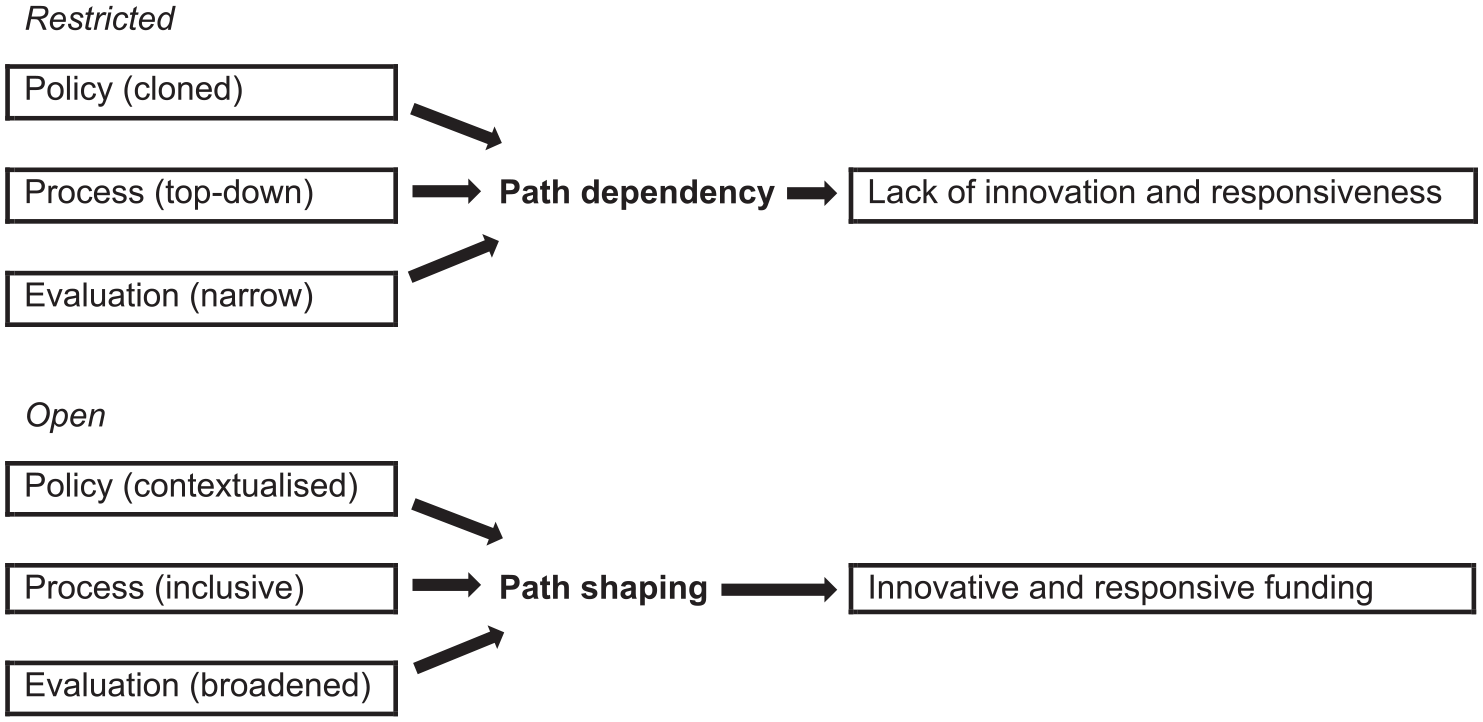
Structure and agency in event tourism funding policy.
Practice and Policy Recommendations
Although change will be hard to effect without top–down buy-in to new ways of doing things, there are still lessons to be learnt for those involved in event tourism at delivery level (event organizers, promoters, and local tourism businesses). These are, first, to learn the rules of the current game—that is, understand the processes and potential biases at play and to look for ways to fit with or circumvent these. For example, an ostensibly cultural event may have a better chance of funding success though an emphasis of its attractiveness to inbound tourists rather than, say, community cohesion. It may be possible to define “inbound” to better support the case being made. This might include bringing local suburban residents into the town center, attracting local residents to a new venue or extending the reach to local audiences who traditionally do not attend the venue or type of event. The second lesson is to understand the importance of influencing and lobbying for policy changes that would create greater inclusivity and transparency while allowing for creative freedom—a harder task but one to consider over the longer term.
Our findings do, however, speak more to policy makers. It seems clear that current event tourism funding policies are privileging some and disadvantaging others, creating potentially unbalanced portfolios that do not cater for the needs of local communities. Our suggested “open model” (Figure 3) will require buy-in from multiple agencies often with conflicting goals and, in some cases, ideological changes at a high level (Andersson and Getz 2009). This is a big ask especially as “many relevant policies are made in other policy domains and the relevant actors are diverse and have varied interests and priorities” (Bramwell and Lane 2011, p. 412). However, recognizing the paths, the complex interplay of actors and the inherent selectivity of these is a start to making positive changes.
We therefore recommend, first, that policy makers create contextualized rather than cloned policies that acknowledge regional distinctiveness, resident host well-being, local values, and community ownership (Ezeuduji 2015). Too many of these policies appear to have been parachuted in from other countries with the view that “if it worked there it’ll work here,” showing little consideration for local conditions. Second, the design and implementation of the funding process ought to include a role for all the actors who have an interest, rather than being dictated from above. Lastly, for the process to be inclusive and to avoid structural selectivity, evaluation requirements need to be broadened to include, for example, softer measurements of social and community impacts and a consideration of environmental damage. These three policy changes will enable a path shaping approach, allowing those involved to break away from the inflexible paths well-trodden (path dependency). In turn this should create far greater scope for innovation and responsiveness.
To conclude, what appears to be needed to bring about broader social benefits and legacies is a paradigm shift to innovatively rebalance economic and social outcomes within fund KPIs and governance structures. This is summed up by Antchak (2017, p. 294) as entailing “a comprehensive revision of event strategies and approaches. This could include the development of new portfolio evaluation matrices, the revalidation and revision of the outcomes, and better stakeholder communication and integration.” As this study has shown, without fundamental change, funding programs are likely to continue to operate within their existing narrow remit. This finding also supports a growing body of evidence that isolated tourism interventions are inadequate, and that resident and tourism benefits require narrow policies to be abandoned in favor of broad and diversified economic and socioeconomic development strategy (Du, Lew, and Ng 2016; Cárdenas-Garcia, Sánchez-Rivero, and Pulido-Fernández 2015).
Further research should take the funding applicants’ and other stakeholders’ view of the consequences of current policies and processes. This would consider the perspectives of fund recipients, both successful and unsuccessful, and the host communities in terms of their experience and ability to understand and influence the policies that affect them in this area. A similar strategic-relational approach would benefit further studies seeking to critique the contextually dependent and intertwining relationships inherent within other policy areas related to tourism, such as arts, culture, and sports. It could also be useful in exploring the use of such policies in soft power and the appropriation of tourism and events for political purposes (Grix and Lee 2013).
Footnotes
Declaration of Conflicting Interests
The author(s) declared no potential conflicts of interest with respect to the research, authorship, and/or publication of this article.
Funding
The author(s) received no financial support for the research, authorship, and/or publication of this article.
