




Abstract
Many studies have confirmed the importance of market segmentation both theoretically and empirically. Surprisingly though, no study has so far addressed the issue from the perspective of leisure constraints. Since different consumers face different barriers, we look at participation in leisure activities as an outcome of the negotiation process that winter sports resort tourists go through, to balance between related motives and constraints. This empirical study reports the findings on the applicability of constraining factors in segmenting the tourists who visit winter sports resorts. Utilizing data from 1,391 tourists of winter sports resorts in Greece, five segments were formed based on their constraint, demographic, and behavioral profile. Our findings indicate that such segmentation sheds light on factors that could potentially limit the full utilization of the market. To maximize utilization, we suggest customizing marketing to the profile of each distinct winter sports resort tourist segment that emerged.
Introduction
Smith (1956) introduced market segmentation as a means for classifying consumers in subgroups. His intention was to offer businesses a tool for understanding subgroups’ needs and wants and for developing tailored products and services (Wedel and Kamakura 1998). Today, marketers use segmentation as the main approach for recognizing target groups and understanding their characteristics, needs, and priorities (Kuo, Akbaria, and Subroto 2012). In the tourism marketing literature, segmentation has been widely acknowledged as an important tool (e.g. Chen 2003; Dolnicar 2008; Kolb 2006; Lilien and Rangaswamy 2002; Mazanec 1984), since it is critical both for organizations (i.e., Bloom 2004; Chen 2003) and destinations (e.g. Brent Ritchie and Crouch 2003; Tkaczynski, Rundle-Thiele, and Beaumont 2010; Hennessey, Yun, and Macdonald 2012). As Dolnicar et al. (2012) indicate, segmentation helps tourism businesses and destinations to identify groups of tourists who share common characteristics and develop marketing strategies accordingly. Although, as Kotler, Bowen, and Makens (2010) indicate, there is no perfect way to segment a market, the most frequently used criteria are geographic, demographic, psychographic, and behavioral (Choi, Murray, and Kwan 2011; Konu, Laukkanen, and Komppula 2011).
In the winter sports industry in particular, the number of segmentation studies focusing on tourists who visit winter sports resorts is rather limited. For example, some segmentation studies have been based on frequency of visits/usage (Perdue 2004; Tsiotsou 2006), overall trip expenditure (Mills, Couturier, and Snepenger 1986), lifestyle (Füller and Matzler 2008; Matzler, Pechlaner, and Hattenberger 2004), motivation (Alexandris et al. 2009), benefit (Won and Hwang 2009), and attributes of chosen ski destinations (Konu, Laukkanen, and Komppula 2011). The present study aims to offer further insight into segmentation criteria, through the use of constraint factors. Constraints are used to delineate the basic needs that winter sports resort tourists have to pursue leisure activities, given the different degrees of freedom that may apply. Although constraints are different for different groups and activities (Hung and Petrick 2010), suggesting that constraints can be used as the basis for segmentation, we know of no prior studies that use a systematic constraint typology as a theoretical or practical segmentation tool within the tourism literature.
Constraint factors have previously been used in segmentation studies of leisure activities, but mainly to discriminate between participants and nonparticipants (i.e., Gilbert and Hudson 2000), visitors from nonvisitors (Kattiyapornpong and Miller 2009), and heavy from light users (i.e. Jun, Kyle, and Mowen 2009). The ski-related literature examines constraints mostly to enhance the understanding of the key segmentation criteria, rather than as a segmentation basis per se (i.e., Williams and Fidgeon 2000). Furthermore, according to Jackson (1983), constraints may apply differently to participants in different leisure activities.
Consequently, the present study sets out to examine constraint factors as the key segmentation criterion for engagement in winter sports as, according to Jackson, Crawford, and Godbey (1993, p. 4), “participation depends not on the absence of constraints but on negotiation through them. Such negotiation may modify rather than foreclose participation.” Likewise, Hubbard and Mannell (2001) argue that participation in leisure activities is dependent upon the strength of constraints, the ability to negotiate those constraints, and the motives that urge individuals to participate in a specific leisure activity. This explains why, as reported by previous researchers, constraints are applicable to participants, as well as to activities or locations (i.e. Jackson and Scott 1999). In fact, as Kay and Jackson (1991) note, the people who were most conscious of being constrained were those with the highest level of participation. To examine the constraining factors, we used the widely accepted theoretical model of “Negotiation of Leisure Constraints” (Crawford, Jackson, and Godbey 1991), since its subdimensions, namely, intrapersonal, interpersonal, and structural constraints, are meaningful for active winter sports resort tourists. Moreover, to create a profile of the emerging clusters, we use demographic (i.e., income and age) and behavioral data (i.e., frequency of visits and days of stay) to design appropriate positioning strategies for marketing managers to target audiences.
Literature Review
Ski Segmentation
The segmentation of tourism markets plays a critical role in marketing tourism products and services (Bieger and Laesser 2002; Dolnicar 2008; Mazanec 1984; Uzama 2012), suggesting that the tourism sector has acknowledged the importance of focusing on the heterogeneity of tourists. Tourists come from different locations, have different life settings, and travel in different ways (Konu, Laukkanen, and Komppula 2011). They choose destinations, transportation, activities, and accommodation according to their personalities, lifestyles, and motives (Gonzalez and Bello 2002).
Existing studies on ski tourist segmentation are rather limited. For example, Mills, Couturier, and Snepenger (1986) segmented Texans who prefer skiing outside of Texas between heavy and light spenders, based on actual expenditure. Perdue (2004) grouped guests into local and destination skiers and examined key differences between these groups. Matzler, Pechlaner, and Hattenberger (2004) formed six different segments of Alpine skiing tourists according to their lifestyles and defined the characteristics of each segment. These segments were named “pleasure seekers,” “work oriented,” “couch potato,” “family oriented,” “committed helper,” “inconspicuous,” and “culture interested.” Tsiotsou (2006) classified ski resort tourists according to the frequency of visit and came out with two groups of tourists, namely, weekly and monthly tourists respectively, concluding that these groups differ in terms of their ski experience and their satisfaction and income level. Füller and Matzler (2008) identified five different customer types when segmenting customers visiting winter sports resorts based on product and service attributes (“nonfamily/diversion,” “family,” “sporty/life-conscious,” “demanding,” and “settled/intellectual”) and examined differences in satisfaction factors between these lifestyle segments.
Alexandris et al. (2009) segmented recreational skiers according to their motivations and defined profiles for each group by investigating their involvement levels. Cluster analysis categorized these dimensions into four segments: “novice,” “multiple-interest,” “naturalist,” and “enthusiast.” Won and Hwang (2009) used benefits to categorize Korean college skiers and snowboarders and suggested four categories of skiers/snowboarders based on similarities in their preferences for four choice factors: “fun and safety,” “ski variety,” “cost-conscious,” and “time conscious.” Recently, Konu, Laukkanen, and Komppula (2011) clustered Finnish ski resort tourists according to ski destination choice attributes. In addition, clusters were compared in order to ascertain possible differences in personal (gender and age) and situation-specific (type of tourist and traveling companion) characteristics between customer segments. Six different customer segments were identified using the factor-cluster method: “passive tourists,” “cross-country skiers,” “want-it-all,” “all-but-downhill skiing,” “sports seekers,” and “relaxation seekers.” Following a qualitative approach, Stemerding, Oppewal, Beckers, and Timmermans (1996), in their leisure market segmentation study, used a Repertory Grid Approach. Basically through phone contacts, they excluded individuals with little or no leisure activity and moved on with face-to-face interviews with people who were frequently active in leisure activities in the Tilburge region in the Netherlands. Their findings suggest that leisure preference and constraints are likely to vary across socioeconomic groups.
Consequently, although perceived constraints are important for explaining consumers’ decision-making processes, which stem from the trade-off between expected benefits from the experience and related costs in overcoming associated constraints (Kim, Crompton, and Botha 2000), most of previous studies incorporating such segmentation schemes have focused exclusively on structural constraints (time and money). The present study differs in that it anticipates the use of multiple constraint factors as discriminating criteria in the eyes of tourists to winter sports resorts.
Constraints in Winter Sports Tourism
Constraint factors have received only rather superficial attention in the ski-related literature but the evidence from the leisure literature is extensive (Hudson et al. 2010), suggesting that constraint factors may also offer a meaningful segmentation basis for winter sports resort tourists. Constraints have been conceptualized as factors that limit an individual’s participation in leisure activities, use of leisure services, and satisfaction with and enjoyment of current activities (Shaw, Bonen, and McCabe 1991). Nevertheless, several researchers have clearly shown that constraints do not necessarily influence tourists’ decision to participate in a leisure activity (Hubbard and Mannell 2001; Jackson, Crawford, and Godbey 1993). The explanation for this lies in the “balance proposition.” As Jackson, Crawford, and Godbey (1993) indicate, the relative strength of constraints and the interactions between constraints that accompany participation in a certain activity, along with the motives that urge the individual to participate in this activity, make the difference in one’s final decision.
A fundamental theoretical work for examining constraints is the “Negotiation of Leisure Constraints” hierarchical model, introduced by Crawford, Jackson, and Godbey (1991). In particular, those researchers argue that participants in a leisure activity have successfully managed a hierarchical series of constraints, unlike nonparticipants who failed to overcome the barriers experienced. This model recognizes three distinct categories of constraints, namely, structural, intrapersonal, and interpersonal. Structural constraints are the most significant according to most previous studies (Nyaupane, Morais, and Graefe 2003), and are basically time, distance, money, and quality. Time is an a priori constraint for participation in leisure activities. As Godbey (2005, p. 185) indicates, “Without time constraints, no leisure exists.” Intrapersonal constraints, which are rather unstable (Nyaupane and Andereck 2008), relate to personality traits and characteristics, values, and skills. Finally, interpersonal constraints stem from social interaction among individuals, such as conflicting schedules, obligations, and preferences.
Various applications using constraints are available in the tourism context. These include event tourism (Kim and Chalip 2004), cruise tourism (Hung and Petrick 2010), nature-based tourism (Fredman and Heberlein 2005), and sport tourism (Hinch et al. 2005). Furthermore, most of previous works on ski tourism use constraints primarily to investigate activity participation effects on the demand for leisure and sports by identifying “participating” and “nonparticipating” groups of tourists (Andronikidis et al. 2006; Gilbert and Hudson 2000; Williams and Dossa 1995; Williams and Lattey 1994). In contrast with this, in the present study constraint factors offer the basis for decoding the level of tourist participation in winter sports rather than the decision to participate or not. As a result, the contribution of constraints is to support a systematic segmentation approach, through the adoption of an already well-established constraint typology, to build tourist profiles.
Winter Sports Resorts in Greece
In Greece, the winter sports industry provides approximately 500,000 lift tickets per year, with an annual turnover of 50 million ( Greek Ski Tourism Club 2010), coming mostly from domestic visitors (Boniface and Cooper 2005). The industry, although rather small, is steadily developing as the number of winter sport resort visitors—including skiers, snowboarders, and accompanying persons—has approximately doubled in recent years (Kouthouris et al. 2005). The winter sports industry in Greece consists of 12 major winter sports resorts and 3 minor ones, dispersed around Greece. In particular, the distance between winter sports resorts and the closest urban area ranges between 12 and 67 kilometers, suggesting that the vast majority of potential winter sports resort tourists have at least one winter sports resort within easy reach. With the exception of the winter sports resort of Parnassus, they are all simple ski hill operations, with facilities limited to chalets offering snacks and beverages, restaurants, and rental services. Regarding accommodation, this is usually offered by independent small businesses in the villages nearby. Thus, the benefit of enhancing accommodation for visitors to winter sports resorts derives only from those who pay an extended visit. In any case, the number of visitors who stay overnight is limited (Masmanidis, Vassiliadis, and Mylonakis 2006).
Methodology
Instruments
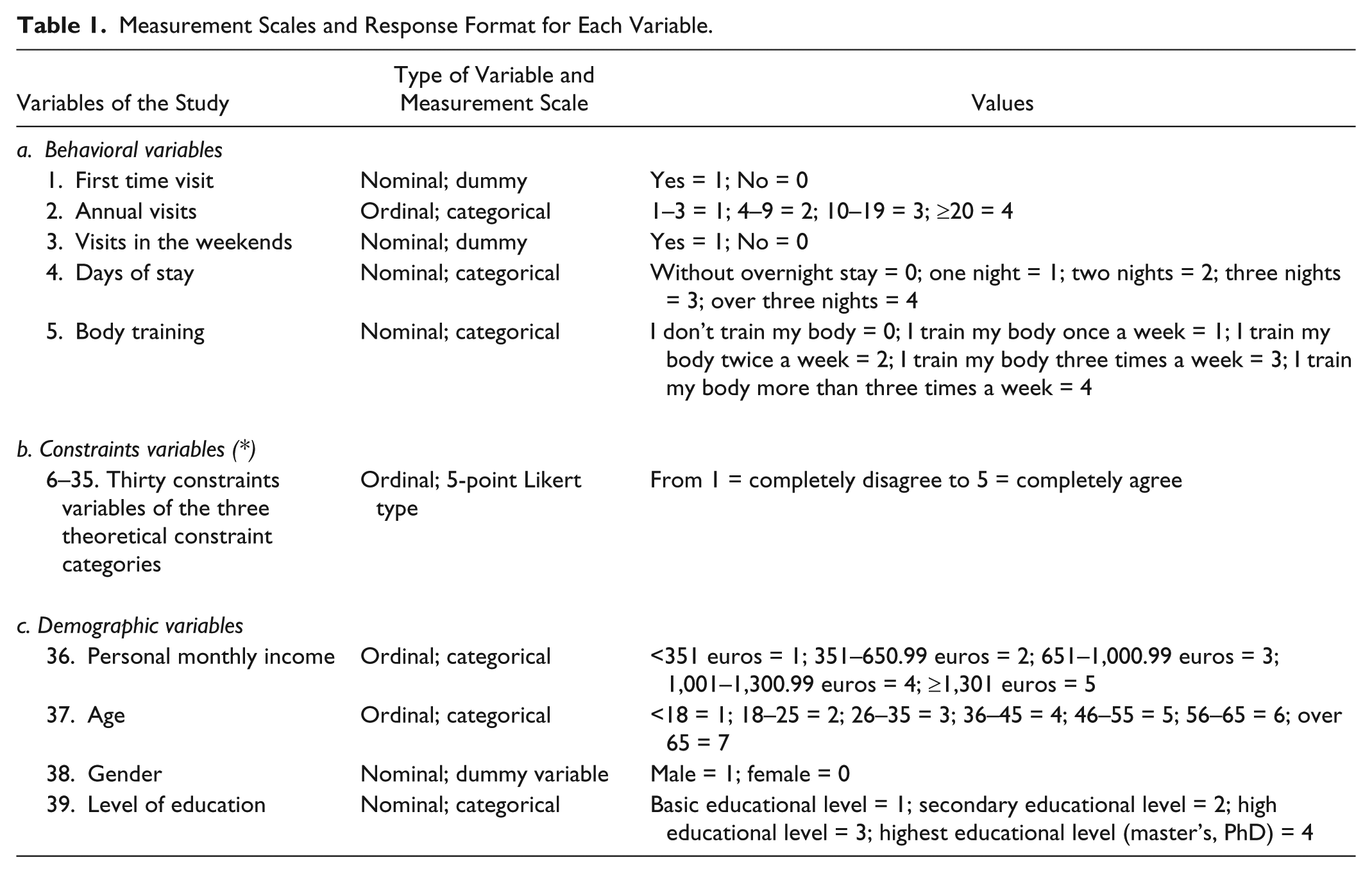
The present study used a self-administered questionnaire, consisting of a total of 39 items, organized in three sections. The order of the sections follows the funnel approach (from broader to more specific questions) to reduce uncertainty and increase respondents’ confidence (Bickart 1993). The first section includes five items, to obtain general information about respondents’ behavioral patterns related to their previous visits to winter sports resorts (i.e., how often they visited winter sports resorts). The second section incorporated 30 items developed by Gilbert and Hudson (2000), which relate to the theoretical work introduced by Crawford, Jackson, and Godbey (1991). A five-point Likert-type scale was used, with scores ranging from 1, completely disagree, to 5, completely agree. The third section included four items to reflect respondents’ demographic profile. All questionnaire items and response formats are illustrated in Table 1.
Measurement Scales and Response Format for Each Variable.
Sample and Procedures
The researchers formed six teams (comprising of six students and one junior researcher) and trained them to handle the administration of questionnaires. Data collection took place in all the winter sports resorts that operate in Greece. Potential respondents were informed on the scope of the study and anonymity and confidentiality were ensured. Questionnaires were coded to reflect only the location of the winter sports resort and respondents were given the option to drop completed questionnaires in a box or hand them back to the students. In an effort to reduce situational pressure on potential respondents, the procedure was standardized for all winter sports resorts. Questionnaires were distributed at cafeterias in winter sports resorts between 2:00
The students asked every other tourist (skiers, snowboarders, and accompanying persons included) to participate in the study and hand out a total of 200 questionnaires per winter sports resort (amounting to a total of 2,400 individuals), with mean response per winter sports resort ranging from 109 to 123 questionnaires. We collected 1,391 usable questionnaires (an overall response rate of 57.96%).
The present study adopted procedures designed to ensure high-quality data, which is essential in any segmentation research. First, clustering variables included in the questionnaire reflected a solid theoretical model, namely, the Leisure Constraint Model developed by Crawford, Jackson, and Geoffrey (1991). Second, a standard procedure in administering the questionnaire was introduced to deal with potential respondent fatigue (Johnson, Lehmann, and Horne 1990). Third, data were collected in 2010, and thus reflect the current market situation (Dolnicar and Lazarevski 2009). Fourth, data were collected specifically for the purpose of segmentation (Dolnicar and Lazarevski 2009). Fifth, all variables included were carefully developed in prestudies (Aldenderfer and Blashfield 1984; Everitt 1979). Sixth, the study incorporates procedures for controlling response bias, either response set or response style (Baumgartner and Steenkamp 2006; Diamantopoulos, Reynolds, and Simintiras 2006; Greenleaf 1992). In particular, the literature on response styles refers to multicultural studies, whereas this is a single nation study (only Greek tourists participated, since, as mentioned above, the tourism in winter sports resorts is basically domestic). In addition, as suggested by Hanges and Dickson (2004), the respondents’ style could reflect responses to a meaningful construct rather than a response bias when the questionnaire includes a relatively small number of constructs, which is the case for this study, which employs only the three dimensions of the Leisure Constraint Model.
Nevertheless, since most data quality problems cannot be resolved after data collection (Baumgartner and Steenkamp 2006), this study integrated specific pre–data collection techniques. Specifically, these involved (1) reversing the scale of questions (Tibbles, Waalen, and Hains 1998); (2) scrambling the order of questions (Ruble and Stout 1991); and (3) reducing situational pressure (Paulhus 1991). In addition to these measures, all data were collected in similar settings and all respondents enjoyed access to standardized information about the study. Also, the study used a post–data collection technique similar to the procedure suggested by Dolnicar and Grün (2008), calculating three corrected data sets, each reflecting corrections for Extreme Response Style only, Acquiescence Response Style only, and both of them, respectively. Next, frequency counts of responses were computed from each data set of the 12 winter sports resorts (responses from specific winter sports resorts were identified using a nominal dummy variable: 1 = yes and 0 = no) for each of the 30 answer categories (constraint items), and chi-squared tests were used to assess differences in frequency distributions. The results indicate no statistically significant differences, suggesting that response styles have not biased the data.
Last but not least, the questionnaire was pilot tested with two researchers and eight respondents to evaluate content validity, and the wording in one item was changed.
Statistical Analysis
A three-phase format incorporating different statistical analyses was used. The use of exploratory factor analysis (EFA) with the use of principal components analysis (PCA) and K-means is very common in the tourism literature, when trying to identify a segmentation pattern for tourists (Hu and Yu 2007; Lee and Sparks 2007; Park and Yoon 2009; Petrick 2005). In the present study, we also incorporated parallel analysis (PA) to further delineate factors that emerged from PCA, hierarchical cluster analysis to identify the best cluster solution and cross-tabulations to further describe the emerging segments.
The first phase, which evaluated the theoretical properties of the leisure constraints construct, included first EFA with the use of PCA, varimax rotation. Next, we performed PA (Horn 1965), using the Monte Carlo simulation software proposed by Watkins (2000), to limit the number of factors to those that really make sense. The internal consistency of the three theoretical dimensions of constraints was evaluated with the use of Cronbach’s (1951) alpha reliability measure.
In the second phase, K-means cluster analysis was used to classify winter sports resort tourists according to their constraint pattern. Specifically, in line with the steps followed by Konu, Laukkanen, and Komppula (2011) in their statistical analysis, we computed sum variables based on the four factors that emerged from PCA. Next, a hierarchical clustering procedure was applied to determine the number of clusters and K-means, afterwards utilizing the hierarchical solution as a starting point (Punji and Stewart 1983; Sharma and Kumar 2006). For hierarchical clustering, Ward’s method (1963) was selected. Finally, the centroids (seeds) for K-means clustering were taken as input from the cluster hierarchical solution. In determining the number of clusters, we considered (1) the icicle plot and dendrogram (Norusis 2012), (2) the solutions calculated with different numbers of clusters, and (3) the relative usefulness of clustering results for management (Dolnicar 2002; Mooi and Sarstedt 2011; Sharma and Kumar 2006).
The third phase included cross-tabulations and chi-square tests. We used the demographic, behavioral, and attitudinal variables that appear in Table 1 to profile each segment.
Results
Exploratory Factor Analysis and Parallel Analysis
PCA factor analysis was performed to identify the underlying dimensions among 30 visitor constraint variables. To test the suitability of the data for factor analysis, two measures were used. The Kaiser–Meyer–Olkin measure of sampling adequacy (KMO test) criterion was equal to 0.894 exceeding the recommended value of 0.6 (Kaiser 1970, 1974), and the Bartlett’s test of sphericity about factorability structure of the correlation matrix was 12816.602 (435 df; p < 0.001) and it reached the statistical significance of Bartlett’s test (Bartlett 1954; Tabachnick and Fidell 2001). Based on the Eigenvalue criterion, PCA revealed nine factors. The large number of factors prompted us to incorporate PA, in order to reduce the number of factors (Watkins 2000). As apparent from Table 2, only four factors (representing 21 items) had Eigenvalues greater than the criterion values from PA.
PA versus EFA (PCA) Results.
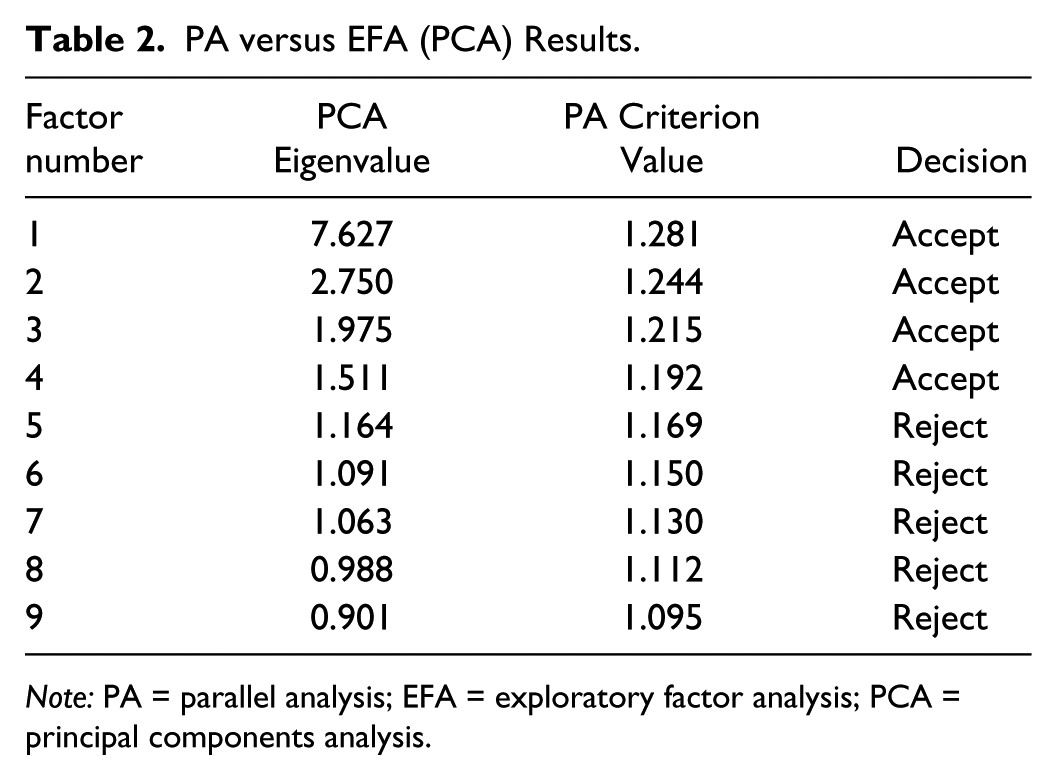
Note: PA = parallel analysis; EFA = exploratory factor analysis; PCA = principal components analysis.
Intrapersonal constraints include nine items (accounting for 27.756% of variance explained), financial cost constraints include five items (accounting for 11.499% of variance explained), friends and family constraints include three items (accounting for 7.918% of variance explained), and winter sports constraints include four items (accounting for 6.703% of variance explained). The overall variance explained is almost 54%, which is acceptable (Hair et al. 1998; Streiner 1994), as are Cronbach’s alphas for all factors that emerged, ranging between 0.69 and 0.86 (see Table 3).
Exploratory Factor Analysis (Principal Components Analysis) Four-Factor Solution.
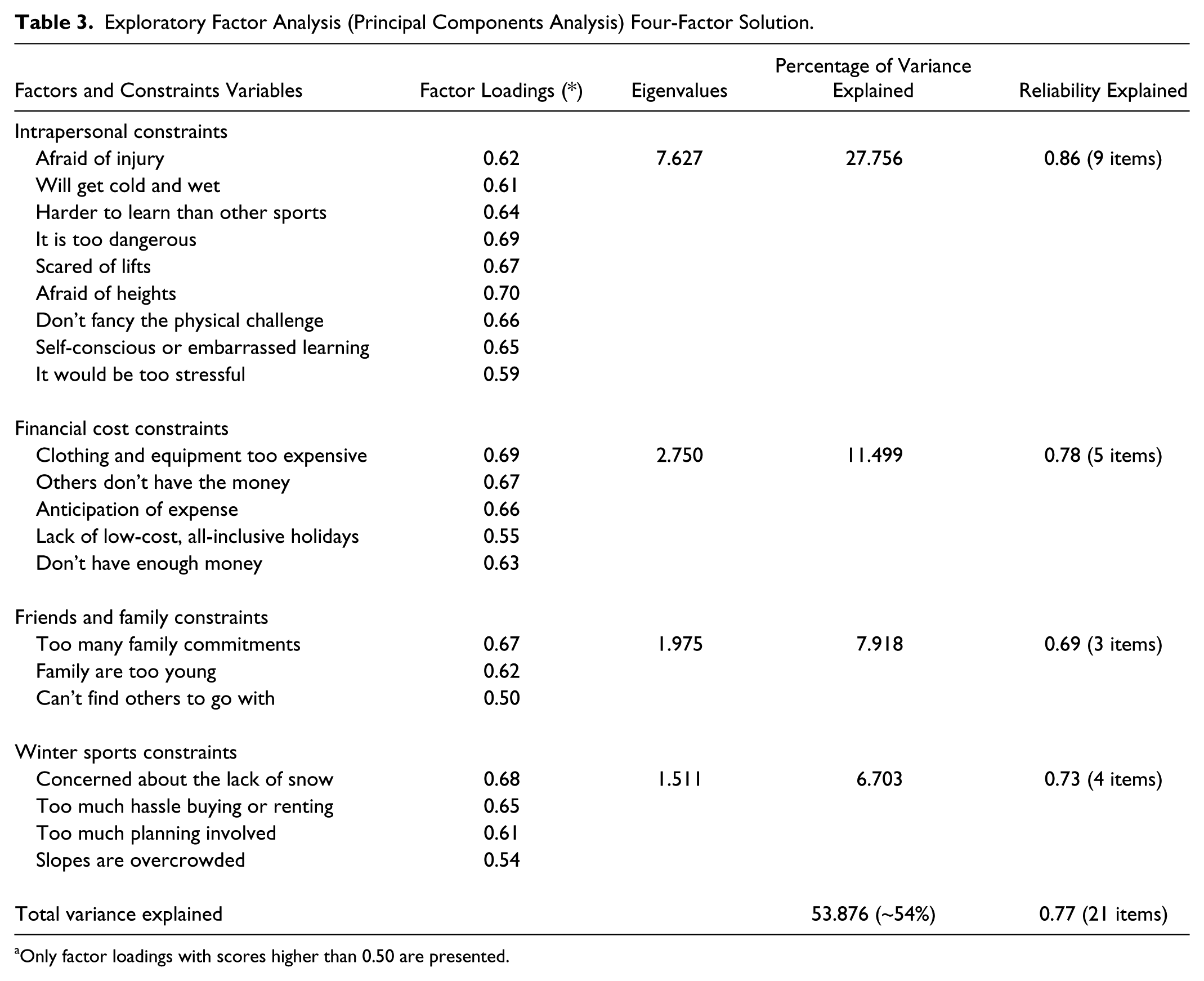
Only factor loadings with scores higher than 0.50 are presented.
As Konu, Laukkanen, and Komppula (2011) indicate, mean values can be useful for the description of the five clusters. As the mean score is 2.5 (the median of the 5-point Likert scale used), mean values above 2.5 indicate important constraint items for the winter sports resort groups. The five clusters that emerged appear in Table 4.
Visitor Segments.
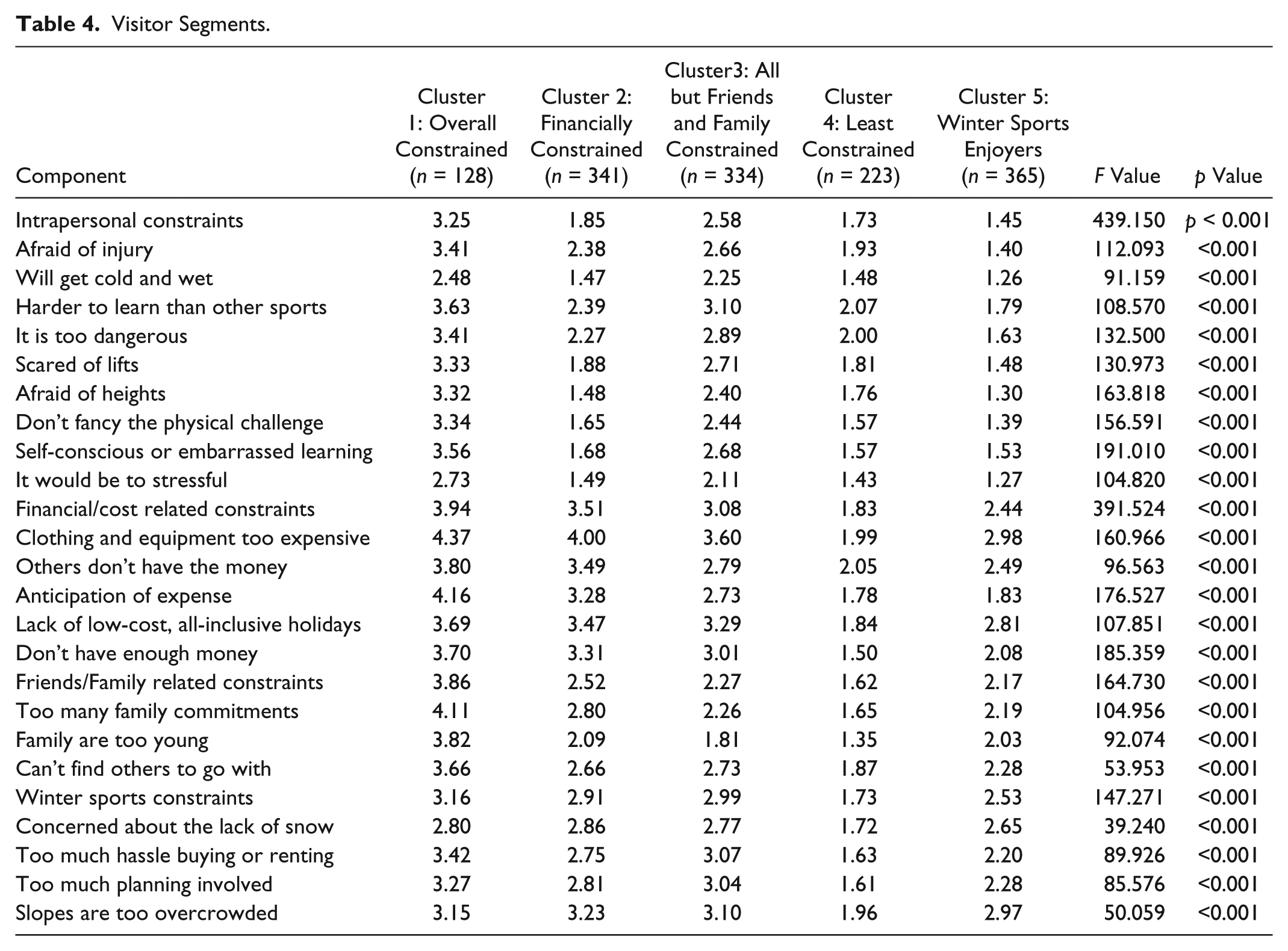
The first cluster can be called overall constrained tourists, because they score over 2.5 on all of the four constraint categories. In addition, tourists forming this group score higher than all other groups in all constraint categories, suggesting that this segment gathers most of the tourists who have greater difficulty in negotiating the four types of constraints identified. The second cluster corresponds to winter sports resort tourists who are mostly financially /cost-related constrained. Tourists in this group are mostly intimidated by financial constraints, but at the same time feel able to negotiate rather effectively with intrapersonal constraints. The third cluster consists of winter sports resort tourists that are all but friends/family constrained. Tourists in this group have mean scores greater than 2.5 in all constraint categories, except for constraints that relate to friends and family. The fourth cluster includes tourists that manage to negotiate better with all four types of constraints, and can thus be described as least constrained winter sports resort tourists. The fifth group that emerged consists of winter sports resort tourists that can negotiate effectively, more than any other group, with intrapersonal constraints and can be hence called winter sports enjoyers.
The next phase included cross-tabulations and chi-square tests for the five clusters, after taking demographic and behavioral characteristics of participants into consideration. Previous evidence suggests that age, gender, income, and level of education are important variables for describing segments (Bieger and Laesser 2002; Ekinci and Chen 2002; Kazeminia, Del Chiappa, and Jafari 2013; Lima, Eusébio, and Kastenholz 2012; Park and Yoon 2009; Perdue 2004). In addition, considering that behavioral characteristics of ski visitors are critical for tourist organizations and destinations (Konu, Laukkanen, and Komppula 2011), we also incorporated the number of visits per year, the days of stay, the time of visit (during the weekend), and the previous visits. As can be seen in Table 5, the most profitable segments, based on actual behavior of winter sports resort tourists, seem to be the winter sports enjoyers and the least constrained winter sports resort tourists, as they have visit more often and stay longer.
Cross-Tabulations and Chi-Square Tests per Segment.
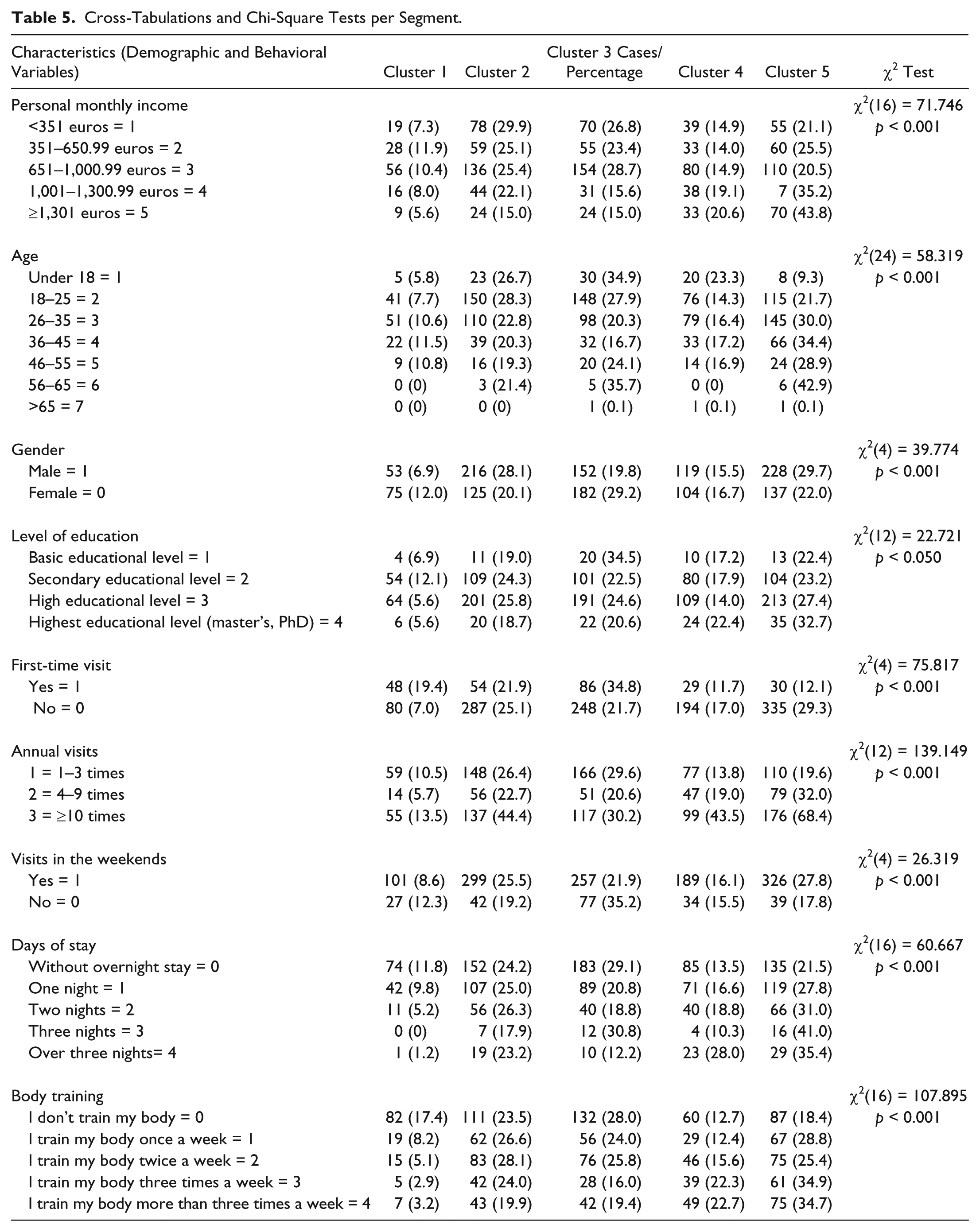
In particular, winter sports enjoyers negotiate very well with intrapersonal constraints (mean = 1.45) and fairly well with the rest of constraints. These individuals include more men than other segments, with higher education, over the age of 35, and income greater than 1,000 euros. More than 90% of them have visited a ski center in the past, and approximately 70% of them visit a ski center more than three times a year. They are most likely to stay at least one night. A similar segment, in terms of gender and level of education composition, is the financially/cost-related constrained. Individuals belonging in this segment are younger (up to 35 years old) and with lower income (up to 1,000 euros) than winter sports enjoyers. This is probably the reason that they are more likely to pay fewer visits per year and to stay fewer days (approximately 45% of them do not stay overnight), despite the fact that they manage intrapersonal constraints pretty well (mean = 1.85). Another segment that is quite similar to winter sports enjoyers is the least constrained winter sports resort tourists. As mentioned above, individuals forming this segment negotiate all constraints better than all the rest. They are roughly equally distributed between genders, with higher education and rather high income compared to other segments (with the exception of winter sports enjoyers) and more than 60% stays at least for one night at a ski destination. Still, only one-third of them visit a ski center at least 3 times per year. The all-but friends/family constrained segment is composed of winter sports resort tourists who are mostly younger than 35 years of age and with an income up to 1,000 euros (more than 80% in both cases), with slightly more women than men. Individuals in this segment are more likely—compared to individuals belonging to other segments—to visit a ski center during the week (Monday to Friday), probably because they do not have any family obligations yet, because they are young. Another explanation for this behavior could be the fact that women belonging to this segment are those who manage to make the necessary arrangements for their family to visit ski centers. Half of them visit a ski center more than 3 times per year but less than half of them (approximately 45%) will leave without staying a night. Finally, the least interesting segment, in terms of managerial decision making, is the overall constrained winter sports resort tourists who have the greatest difficulty in negotiating all types of constraint examined. This segment is the smallest (approximately 9% of the sample), consisting mostly of young men with a low income, and is the least likely to have visited a ski center in the past or to stay overnight.
Discussion and Conclusions
The existing literature on segmentation of winter sports resorts emphasizes demographic, psychological, and behavioral factors (Matzler, Pechlaner, and Hattenberger 2004; Perdue 2004; Tsiotsou 2006). Likewise, constraint factors have mainly been used to identify differences between participants and nonparticipants, visitors and nonvisitors, and heavy and light users (Hung and Petrick 2010; Jun, Kyle, and Mowen 2009; Kattiyapornpong and Miller 2009; Williams and Dossa 1995) or understand the influence of constraints on individual’s decisions not to participate (Haukeland 1990; Smith 1987). Recognizing the lack of use of constraint factors for understanding the behavior of active winter sports resort tourists, the present study identifies segments based on leisure constraints. Given its novelty, the benefits of the present study are both theoretical and practical.
From a theoretical point of view, the constraint-based segmentation approach to winter sports resorts adopted provides a wider understanding of tourists’ decision-making processes. In addition, it incorporates a systematic approach to segmenting the existing market and thus enriches the information gathered, helping to profile the emerging segments more effectively. Practically, the derived constraint-based segments identified from cluster analyses were further analyzed to examine how tourists with a particular constraint-related background differ with regard to other descriptive characteristics.
From a constraint perspective, our findings are in line with previous studies in tourism research (Alexandris et al. 2009; Fredman and Heberlein 2005; Hinch et al. 2005; Hudson et al. 2010), providing partial support for the “Negotiation of Leisure Constraint” model in the winter sports resort market (Crawford, Jackson, and Godbey 1991). We identify four categories of constraints, namely, intrapersonal, family and friends related, financial cost, and winter sports constraints. The limiting role of intrapersonal characteristics in leisure activities is not new. By the same token, someone is more likely to visit a winter sports resort if his/her friends enjoy doing so. In the economic crisis, the role of money has increased, while time availability has been reduced, explaining their importance in the eyes of winter sports resort tourists in their decision to participate in tourism activities.
Segmentation based on the tourist’s reliance on constraints confirmed the existence of five segments, namely overall constrained tourists, financially/cost-related constrained, friends and family constrained, least constrained, and winter sports enjoyers. Like earlier researchers, we found that demographic characteristics are related to the intensity of constraints as perceived by different individuals (Jackson 2005; Jackson and Henderson 1995; Kattiyapornpong and Miller 2009; Scott and Munson 1994). Our findings also indicate that behavioral characteristics of winter sports resort tourists can add to the description of the final segments. Furthermore, the fact that overall constrained participants are more constrained by intrapersonal constraints offers support for the existence of a hierarchy of constraints (Crawford, Jackson, and Godbey 1991; Kazeminia, Del Chiappa, and Jafari 2013); unless they negotiate these constraints, they cannot move up the hierarchy to increase participation.
Paradoxically, our evidence suggests that winter sports enjoyers, although not the most capable in negotiating constraints, are the ones with the greatest participation in ski activities. Such a finding confirms the “balance proposition,” which claims that the actual impact of constraints on the decision to participate depends not only on the relative strength and interaction of constraints but also on the motives one has to participate (Hubbard and Mannell 2001; Jackson, Crawford, and Godbey 1993). In our case, winter sports enjoyers are the people who seem to have negotiated intrapersonal factors better than individuals belonging to the other segments. Thus, given that they have overcome self-related issues with regards to skiing, they are the most likely to visit and stay. Moreover, winter sports enjoyers have greater difficulty in negotiating with winter sports constraints, which provides confirmation of the finding of Kay and Jackson (1991), who suggest that people motivated to seek the benefits of leisure are likely to be more sensitive to factors that inhibit their access.
Our findings also show that tourists who are more constrained by time and scheduling issues tend to be the least motivated. One reason for this may be that previous experience of time conflicts may be an antecedent to motivation, affecting both their preferences and desire to engage in leisure activities (Henderson, Stalnaker, and Taylor 1988; Raymore, Godbey, and Crawford 1994). Alternatively, the lack of time could be used as a socially acceptable excuse for those who feel that low motivation reflects negatively on the image they have of themselves or wish to convey to others (Mannell and Iwasaki 2005).
In a growing winter sports industry, as in the case of Greece, the goal for every resort is to maximize the number of tourists attracted and to increase the frequency and level of participation, as according to Joppe, Elliot, and Durand (2013), winter sports resort tourists tend to be day visitors rather than stay overnight. In this direction, our results suggest that the use of leisure constraint analysis may be a practical basis for market segmentation. Managers could focus on the different constraint patterns of the tourist segments to build strategies and policies to communicate the positioning of winter sports resort services effectively (Hubbard and Mannell 2001) in relation to specific benefits, such as economic (winter sports benefit), stress free (intrapersonal benefit), easy ticketing (winter sports benefit), user-friendly (friends and family–related benefit), and ease of access (structural benefit). In addition, interpersonal benefits may involve the interaction within social groups and the related atmosphere and activities that tourists could enjoy in winter sports resorts (Jackson and Rucks 1995).
Given that the available resources of winter sports resorts are not unlimited, it is critical for managers to exploit them in the most efficient manner. Thus, targeting the overall constrained winter sports resort tourists should be the lowest priority, as they are the smallest segment, the least likely to visit and stay, and they are more likely not to have visited a winter sports resort before, indicating that it is the least valuable market segment. In contrast with this, the most significant segments identified were winter sports enjoyers and least constrained winter sports resort tourists, based on their number of visits and length of stay, suggesting that managers should focus on their attraction and satisfaction first.
Concerning winter sports enjoyers, who negotiate better than the rest intrapersonal constraints, managers should focus on increasing their enjoyment, by improving the winter sports experience. Winter sports resorts should show their appreciation for return visits and longer stays through loyalty cards that offer the chance to participate in a greater number of winter sports activities, such as snowboarding and ski mobiles. Maintaining slopes and lifts in good condition could increase the attractiveness of a winter sports resort as enhancing the feeling of security among these tourists will reduce their intrapersonal constraints. Regarding the least constrained winter sports resort tourists, emphasis should be placed on initiatives that further increase their willingness to visit and stay, such as loyalty cards offering rewarding plans and customized packages combining unique services for them.
The all but friends and family constrained winter sports resort tourists value team-based activities that are not necessarily related to core ski activities. In this direction, facilities that allow in-house game playing and movie watching would help families keep their children happier while inside, and daily trips in snow banks and group outdoor activities would improve the sharing experience among friends. At the same time, designing packages for friends or families could further attract them to visit and stay. Finally, the financially/cost-constrained winter sports resort tourists are those that would appreciate reduced costs on core activities. Given that most tourists in this segment visit on weekends, one way to keep them happy without reducing the revenues of the resort, would be to offer low-cost Monday-to-Thursday packages to extend their length of stay and frequency of visit, and/or relate increased usage to cost saving, and/or leverage core product offerings to communicate “value for money” (i.e., packages could offer free lunches and coffees to accompany skiing or free skiing activities to accompany staying).
Obviously, managers should first gain a clear understanding of each segment’s ability or inability to negotiate effectively with each category of constraints, before they build appropriate strategies that will make winter sports resort tourists more willing to visit and stay.
Limitations and Suggestions for Further Research
The main limitation of this study is that it uses data from only one country. Given that evidence came from 12 winter sports resorts in Greece, the results are useful in this context, but they should be further validated with samples from other winter sports resorts abroad, to make it possible to generalize. In addition, given the differences identified by Hudson et al. (2010) between Chinese Canadians and Anglo-Canadians, the examination of cultural traits seems to be vital. Also, as in other contexts, comparisons between distinct groups of winter sports tourists, such as locals versus nonlocals, day travelers versus visitors, and skiers versus snowboarders are worth pursuing. To conclude, it should be borne in mind that, although market segmentation is an important step toward effective marketing planning, it is not a panacea. Since the success of a destination depends strongly on a thorough analysis of tourist motivation and on customer satisfaction and loyalty (Yoon and Uysal 2005), future research should focus on identifying constraint profiles in other contexts, bearing in mind that different leisure activities are impacted differently by different constraints (Jackson 1993).
Footnotes
Declaration of Conflicting Interests
The author(s) declared no potential conflicts of interest with respect to the research, authorship, and/or publication of this article.
Funding
The author(s) received no financial support for the research, authorship, and/or publication of this article.