



Abstract
Keywords
Introduction
Substance use is a persistent public health issue among young adults in America (Czeisler et al., 2020; Degenhardt et al., 2016; Lee et al., 2015; Stone et al., 2012; Volkow et al., 2021). Increases in American college student substance use have been attributed to the COVID-19 pandemic (Firkey et al., 2022; Grineski et al., 2021; Oh et al., 2021; Patrick et al., 2022; Wang et al., 2020). Current epidemiological evidence suggests college students altered their substance use behaviors due to pandemic-driven regulatory policies, such as enforced lockdowns, social distancing, and gathering protocols. Overall, alcohol consumption (Charles et al., 2021; Clay & Parker, 2020; Coakley et al., 2021; Graupensperger et al., 2021a; Jackson et al., 2021; Jaffe et al., 2021; Lardier et al., 2022; Mohr et al., 2021; Rodriguez et al., 2020; Ryerson et al., 2021; Salerno et al., 2021; White et al., 2020), conventional tobacco and electronic cigarette use (Bista et al., 2023; McLeish et al., 2023; Merianos et al., 2022; Nagawa et al., 2023; Sarich et al., 2022; Sokolovsky et al., 2021; Villanueva-Blasco et al., 2023; Yingst et al., 2021), and some other recreational drug use (Graupensperger et al., 2021b; Horigian et al., 2021; Patrick et al., 2022; Starks et al., 2020; Wang et al., 2022) have been identified as coping strategies throughout the pandemic (Dumas et al., 2020; Martínez-Cao et al., 2021; Taylor et al., 2021). Analyzing data from 1,958 college students at a public university in Ohio, Lechner et al. (2020) note elevated psychological distress, such as anxiety and depressive symptoms, correlated with an increased frequency and quantity of alcohol consumption among college students throughout the pandemic. Moreover, alcohol use behavior considerably increased among residential college students following unanticipated campus closures and obligatory academic transitions to remote learning methods. As college students became less connected socially, their substance use behaviors increased (Lechner et al., 2020).
Fruehwirth et al. (2021) noted decreases in alcohol use during the pandemic among college students - drinking in the past 30 days decreased (54.2% to 46.0%), and the prevalence of binge drinking in the past 30 days decreased (35.5% to 24.6%). The authors assert these decreases were primarily driven by reductions in the social events, group gatherings, and social opportunities on campus (Fruehwirth et al., 2021). Similarly, Sokolovsky et al. (2021) noted the frequency of tobacco smoking and e-cigarette vaping decreased among some college students during the pandemic, largely as a result of public health emergency management and campus closure operations (Sokolovsky et al., 2021).
As noted above, the COVID-19 pandemic was associated with changes to substance use behaviors among college students, largely driven by shifts in socialization resulting from associated policies and practices. Based on the currently published literature, it is apparent (a) alcohol, tobacco and drug use among college students is a pertinent public health issue (Arria et al., 2017; Barry, 2007; Barry & Merianos, 2018; Kollath-Cattano et al., 2020; Russell et al., 2022; Spindle et al., 2017); (b) substance use is strongly influenced by social factors (Corbin et al., 2011; Neighbors et al., 2007; Rubio et al., 2023); and (c) use of one substance influences the use of others (Barry et al., 2016; Kirby & Barry, 2012). Social network analysis, consequently, provides a theory and set of methods to explore college students’ substance use behaviors during the pandemic.
Social Network Analysis
Social Network Analysis (SNA) is useful for examining various social and behavioral health patterns, including substance use behavior among college students (Cox et al., 2019; DiGuiseppi et al., 2018; Jacobs et al., 2016; Jacobs et al., 2017; Kenney et al., 2018; Meisel et al., 2018; Patterson & Goodson, 2019; Russell et al., 2021a, 2021b). SNA is a unique set of analytic tools exploring social relationships and interaction patterns among people and the characteristics of their networks (Scott et al., 2005). Egocentric social network analysis, a specific approach to SNA, concentrates on individuals and their immediate surrounding social structures and relationships (Burgette et al., 2021; Perry et al., 2018), as opposed to a complete network with a defined set of members and ties. Meisel et al. (2015) used egocentric social network analysis to examine the prevalence of excessive alcohol consumption, frequencies of other substance use, and individuals’ perceptions of co-occurring addictive behavior (e.g., tobacco smoking, cannabis use, and gambling activity) among young adult college students’ network members, noting distinctive clustering of addictive behavior among college student networks (Meisel et al., 2015). Similarly, Russell et al. (2020, 2021a) used egocentric network analysis to investigate strategies for measuring social norms, peer perceptions, and perceived peer influence concerning excessive alcohol consumption within students’ social networks, finding personally identified peers demonstrated considerably more decisive influence regarding personal alcohol drinking in comparison to perceptions of ‘typical students’ alcohol use across the campus. The authors affirm that egocentric social network approaches described more significant variability in conjunction with peer influence on college students’ personal alcohol use compared to global campus perceptions (Russell et al., 2020, 2021b). By applying egocentric network analysis, health behavior researchers can investigate the intricate relationship between network variables and substance use behavior outcomes among college students.
Study Purpose
Overall, the purpose of this investigation was to use egocentric social network analysis to explore pandemic-driven changes in substance use behaviors among American college student respondents. Specifically, this study explored associations between individual (e.g., alcohol consumption) and network-level factors (e.g., the composition of a college student's personal network that used alcohol) on self-reported changes in student substance use behaviors 18 months into the COVID-19 pandemic.
Methods
Participants
In the academic term of Fall 2021, a Qualtrics electronic survey assessed self-reported changes in health behaviors across the course of the COVID-19 pandemic (i.e., over the preceding 18 months specific to this campus). Participants were currently enrolled college students (n = 355) attending a large public university in the Southwest. The study timeline specifically coincided with the preceding 18 months since the first emergence of the pandemic events across this campus. As the disease-specific symptoms unfolded rapidly and all at once attracted attention to the mass media, university officials promptly adopted policies on mandatory lockdown measures and further restrictions of social gatherings on campus, including a larger share of academic courses being transitioned to the online format, synchronously and asynchronously. Completing the survey questionnaire was voluntary, the data de-identified, and all responses anonymous. In the recruitment email, currently enrolled college students were briefed about the overall purpose of the research, provided a short description of the questionnaire, and informed respondents were entirely free to skip individual questions and/or cease participation for any reason. Approval from the university's Institutional Review Board and Office of Human Research Protection Program was obtained prior to data collection and statistical analysis.
Procedures
The authors prepared a college health questionnaire matrix utilizing the CDC's Q-Bank, a resource geared toward question design, performance, and evaluation research for improving surveys (Centers for Disease Control and Prevention, 2022). The survey measured college student's demographic profiles, COVID-19-related information (e.g., vaccination status), substance use, mental health, and changes to health behavior outcomes due to COVID-19 (e.g., whether alcohol use has increased since the onset of the pandemic), and egocentric networks using existing scales and protocols. After disseminating the web-based survey questionnaire through the campus-wide mass email distribution platform, college student recipients were provided a sufficient period (approximately four weeks) for completion of their survey responses.
Measures
Demographic Characteristics
Respondents were asked to identify their sex, which was assessed with the following question: “What was your sex at birth?” Response options included: “male,” “female,” and “other/non-binary.” Race and ethnicity profiles of individual students were measured with the following question: “How would you describe your race?” Response options included: “White or Caucasian,” “Black or African American,” “Hispanic or Latino,” “Asian,” and “Biracial/Multiracial/Mixed/Other/Unknown” with the option to select all that applied. Coronavirus disease diagnosis was assessed with the following question: “Have you ever tested positive for COVID (SARS-CoV-2)?” Response options included: “Yes” and “No.” Health status perceptions were determined with the following question: “This question is about your overall health. What would you say your health in general is?” Response options included: “Excellent,” “Very Good,” “Good,” “Fair,” and “Poor.” COVID-19-associated vaccination status was identified with the following question: “What is your vaccination status?” Response options included: “I am partially vaccinated,” “I am fully vaccinated,” “I cannot receive the vaccine,” and “I do not want the vaccine.” The living situation was assessed with the following question: “During most of the last 18 months, how would you describe your living situation?” Response options included: “I live alone (1),” “I live with roommate(s) that are not relatives (2),” and “I live with other members of my family/relatives (3).”
Mental Health
Respondent's depression was assessed with the following question: “In the past 18 months, I felt down, depressed, or hopeless:” Response options included: “Not at all,” “Some days,” “Most days,” “Nearly every day,” “Every day,” and “Prefer not to answer.” Respondent's loneliness was assessed with the following question: “In the past 18 months, I felt lonely or isolated:” Response options included: “Not at all,” “Some days,” “Most days,” “Nearly every day,” “Every day,” and “Prefer not to answer.”
Substance Use Behaviors
Alcohol Consumption
Alcohol use was assessed depending on whether there was a behavioral change in participants’ alcohol drinking patterns in the past 18 months. Respondents were asked to indicate their experience regarding drinking alcohol with the following question: “In the past 18 months, my alcohol consumption has: …….?” Response options included: “Significantly Increased” (5), “Slightly Increased” (4), “Not Changed” (3), “Slightly Decreased” (2), “Significantly Decreased” (1), “Does Not Apply To Me,” and “Prefer Not To Answer.”
Smoking Behavior
Conventional tobacco cigarette smoking and electronic cigarette use (vaping) were assessed according to whether there was a behavioral change in participants’ tobacco consumption or vaping behavior patterns in the past 18 months. Respondents were asked to reflect on their experience regarding tobacco cigarette smoking and electronic cigarette or vaping exposures with the following question: “In the past 18 months, my cigarette smoking/tobacco/electronic cigarette/vaping devices use has: …….?” Response options included: “Significantly Increased” (5), “Slightly Increased” (4), “Not Changed” (3), “Slightly Decreased” (2), “Significantly Decreased” (1), “Does Not Apply To Me,” and “Prefer Not To Answer.”
Recreational Drug Use
Recreational drug use was assessed based on whether there was a behavioral change in participants’ recreational drug consumption patterns in the past 18 months. Respondents were asked to correspond their experience regarding participation in recreational drug use with the following question: “In the past 18 months, my recreational drug use has: …….?” Response options included: “Significantly Increased” (5), “Slightly Increased” (4), “Not Changed” (3), “Slightly Decreased” (2), “Significantly Decreased” (1), “Does Not Apply To Me,” and “Prefer Not To Answer.”
Egocentric Networks
To establish data concerning individual college students’ interpersonal ties with their adjacent social environment, each respondent (i.e., ego) was asked three types of questions, including name generator, name interpreter questions, and edge interpreter (i.e., alter-alter tie questions) (Perry et al., 2018). The name generator question asked the ego to “Please indicate the initials of the three people at your university you feel support you the most.” When each ego's network was specified through the name generator, the ego then provided necessary information about each person (i.e., alter) they recommended (i.e., name interpreter questions). Specifically, egos were asked to report on each alter's alcohol consumption, tobacco smoking and vaping behavior, and participation in recreational drug use in the past 18 months during the pandemic. The ego's perceptions of changes to the identified alter's substance use is reported in Tables 1–3. Respondents indicated their perception of the nominated alters’ alcohol consumption with the following question: “Answer to the best of your knowledge in reference to (Person X): Consumes alcohol: …….?” Response options included: “Never/No,” “Rarely,” “Occasionally,” “Often,” and “Always.” Respondents indicated alters’ tobacco and vaping behavior via: “Answer to the best of your knowledge in reference to (Person X): Uses e-cigs/tobacco/vape: …….?” Response options included: “Never/No,” “Rarely,” “Occasionally,” “Often,” and “Always.” Respondents indicated alters’ recreational drug use via: “Answer to the best of your knowledge in reference to (Person X): Participates in recreational drug use: …….?” Response options included: “Never/No,” “Rarely,” “Occasionally,” “Often,” and “Always.” Respondents were asked to disclose their alters’ depression status with the following question: “Answer to the best of your knowledge in reference to (Person X): Shows signs of depression (i.e., unrelenting sadness, anxiousness, helplessness, guilt, worthlessness): …….?” Response options included: “Never/No,” “Rarely,” “Occasionally,” “Often,” and “Always.” Likewise, respondents indicated alters’ loneliness: “Answer to the best of your knowledge in reference to (Person X): Shows signs of loneliness (i.e., unrelenting feelings of being alone, separated or divided from others, an inability to connect on a deeper level): …….?” Response options included: “Never/No,” “Rarely,” “Occasionally,” “Often,” and “Always.” Response selections of all egocentric networks variables were characterized using a 5-point scale: Never/No (0), Rarely (1), Occasionally (2), Often (3), and Always (4). Regarding the edge-interpreter/alter-alter tie assessment question, we evaluated Network Density with the following question: “To the best of your knowledge, check all of the following that apply for Person X: Knows person Y …….; Knows person Z …….?” Response options included: “Yes” and “No.” As noted in the question stem, egos are reporting, to the best of their knowledge, their perception of the alters substance use.
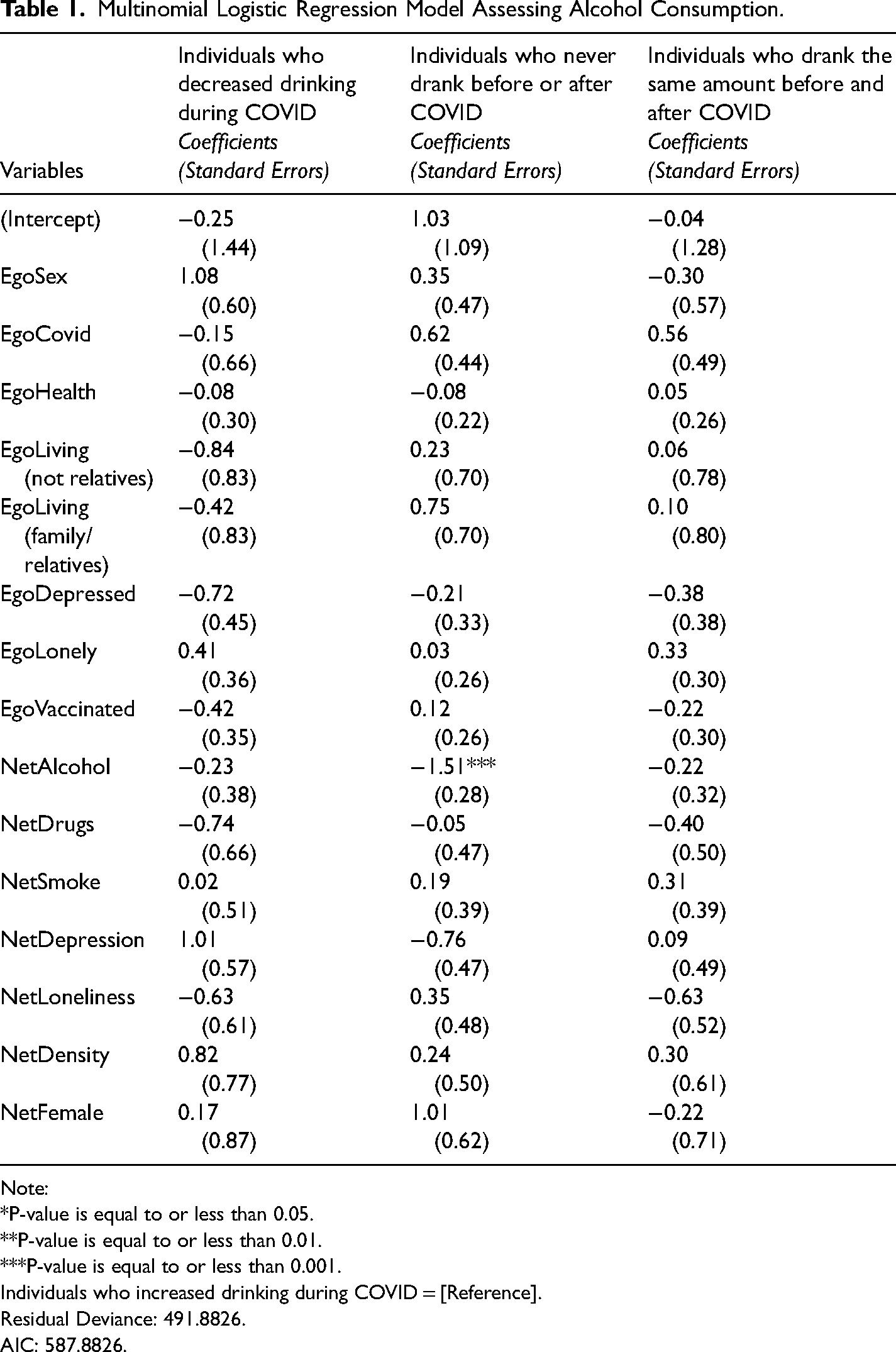
Multinomial Logistic Regression Model Assessing Alcohol Consumption.
Note:
P-value is equal to or less than 0.05.
P-value is equal to or less than 0.01.
P-value is equal to or less than 0.001.
Individuals who increased drinking during COVID = [Reference].
Residual Deviance: 491.8826.
AIC: 587.8826.
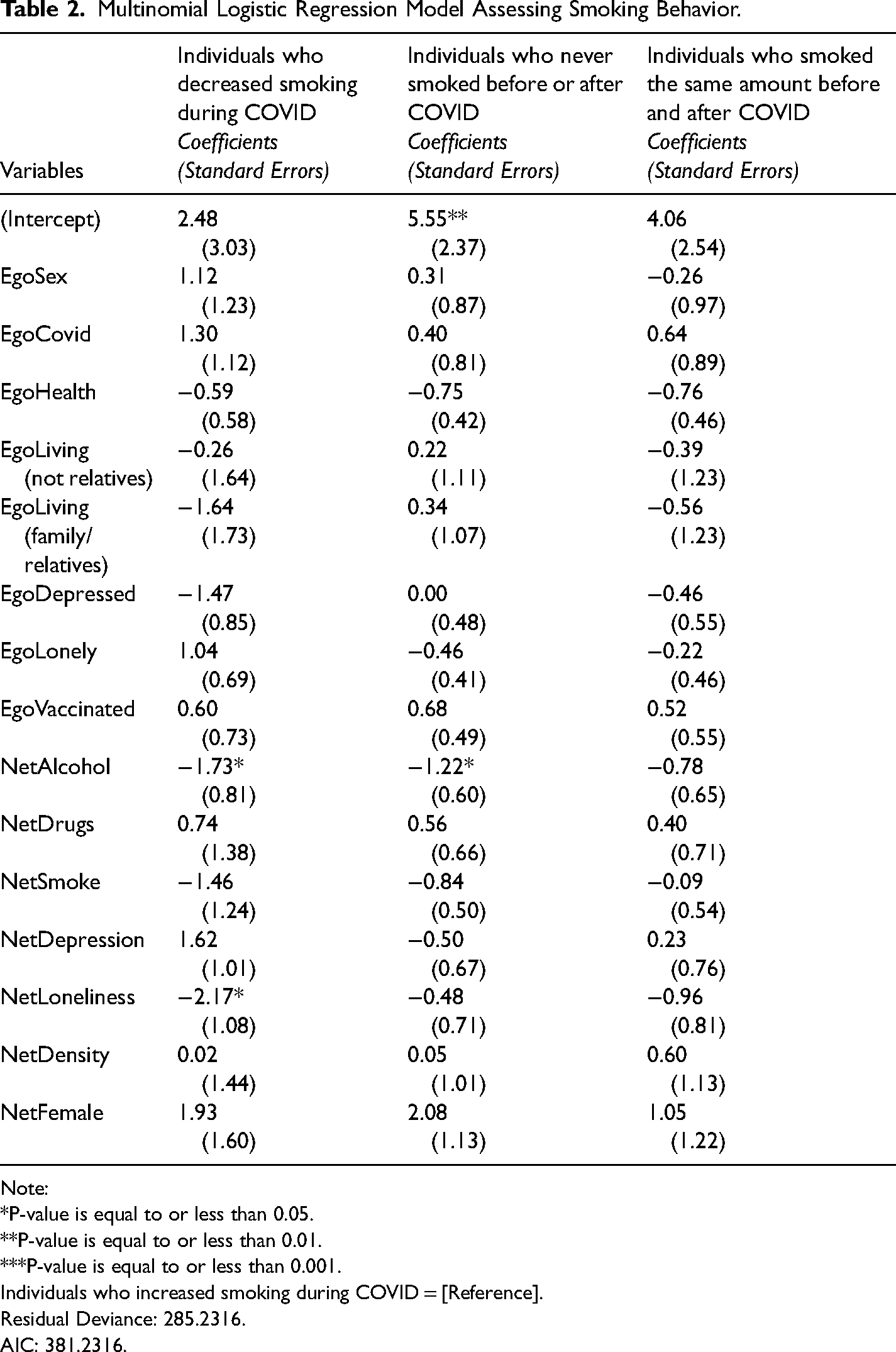
Multinomial Logistic Regression Model Assessing Smoking Behavior.
Note:
P-value is equal to or less than 0.05.
P-value is equal to or less than 0.01.
P-value is equal to or less than 0.001.
Individuals who increased smoking during COVID = [Reference].
Residual Deviance: 285.2316.
AIC: 381.2316.
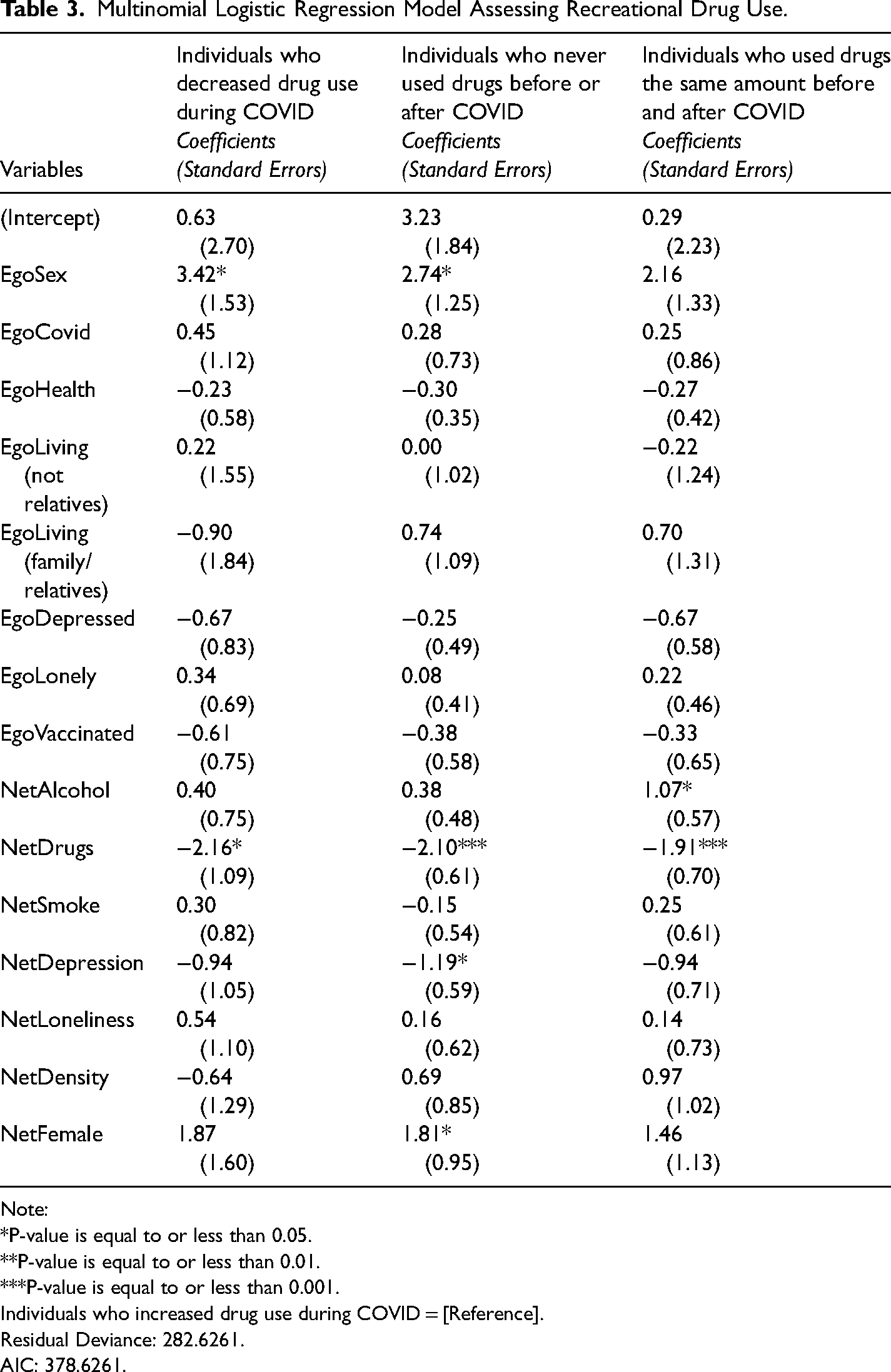
Multinomial Logistic Regression Model Assessing Recreational Drug Use.
Note:
P-value is equal to or less than 0.05.
P-value is equal to or less than 0.01.
P-value is equal to or less than 0.001.
Individuals who increased drug use during COVID = [Reference].
Residual Deviance: 282.6261.
AIC: 378.6261.
Once egocentric networks data were collected, aggregate compositional and structural network-level measures were calculated. We calculated network density, which is the degree of connectedness among alters in a social network (i.e., the number of actual connections among network members relative to the total number of possible connections, with potential scores ranging from 0 to 1) (Valente, 2010). Network composition describes a characteristic present within the network by measuring the proportion or means of that characteristic across an egocentric network. For this study, we calculated compositional variables based on compositional measures for continuous alter attributes, which were recorded as mean. Therefore, we calculated mean scores across network members on alcohol, smoking, drugs, depression, and loneliness. A higher composition score demonstrates an ego's greater exposure and susceptibility to that characteristic.
Analysis
An egocentric network analysis was conducted to measure how personal network factors are associated with changes in substance use at the individual level. Descriptive statistics of the sample were conducted using the STATA software package (See Table 4) (StataCorp, 2021). We examined changes in substance use behaviors among survey respondents across the last 18 months during the pandemic. Multinomial logistic regression model analyses using the R statistical computing software (See Table 1) (The R Foundation, 2022) assessed individual-level and network-level factors relative to changes in college students’ pandemic-driven substance use behavior patterns. In order to assess the relationship between egocentric network variables and pandemic-related changes in substance use behaviors, three distinct models were computed for this investigation (e.g., alcohol consumption, tobacco/vape smoking, and recreational drug use). Covariates included in each multinomial regression model included: respondents’ sex, perceived health status, whether they had been vaccinated for COVID, and if they had tested positive for COVID at the time of survey completion, living situation, depression, and loneliness. Network-level independent variables, focused on the three egos identified by each respondent, included: network density, network compositional variables based on mean scores across network members on alcohol consumption, smoking, drug use, depression, loneliness, and network composition based on the proportion of network members that were female. For the purpose of conducting multinomial regression, each substance use-related dependent variables were coded into the following four categories: college student who decreased drinking/smoking/drug use during COVID (−1), college student who never drank/smoked/used drugs before or after COVID (0), college student who drank/smoked/used drugs the same amount before and after COVID (1), and college student who increased drinking/smoking/drug use during COVID (2). Note: this coding is only applicable to the regressions reported in Tables 1–3; respondents indicating ‘does not apply to me’ or ‘prefer not to answer’ were excluded from our regression analyses. Herein, each regression model was analyzed with respect to those individuals who increased their substance use (i.e., people who self-reported increasing their drinking/smoking/drug use during COVID) as the reference group.
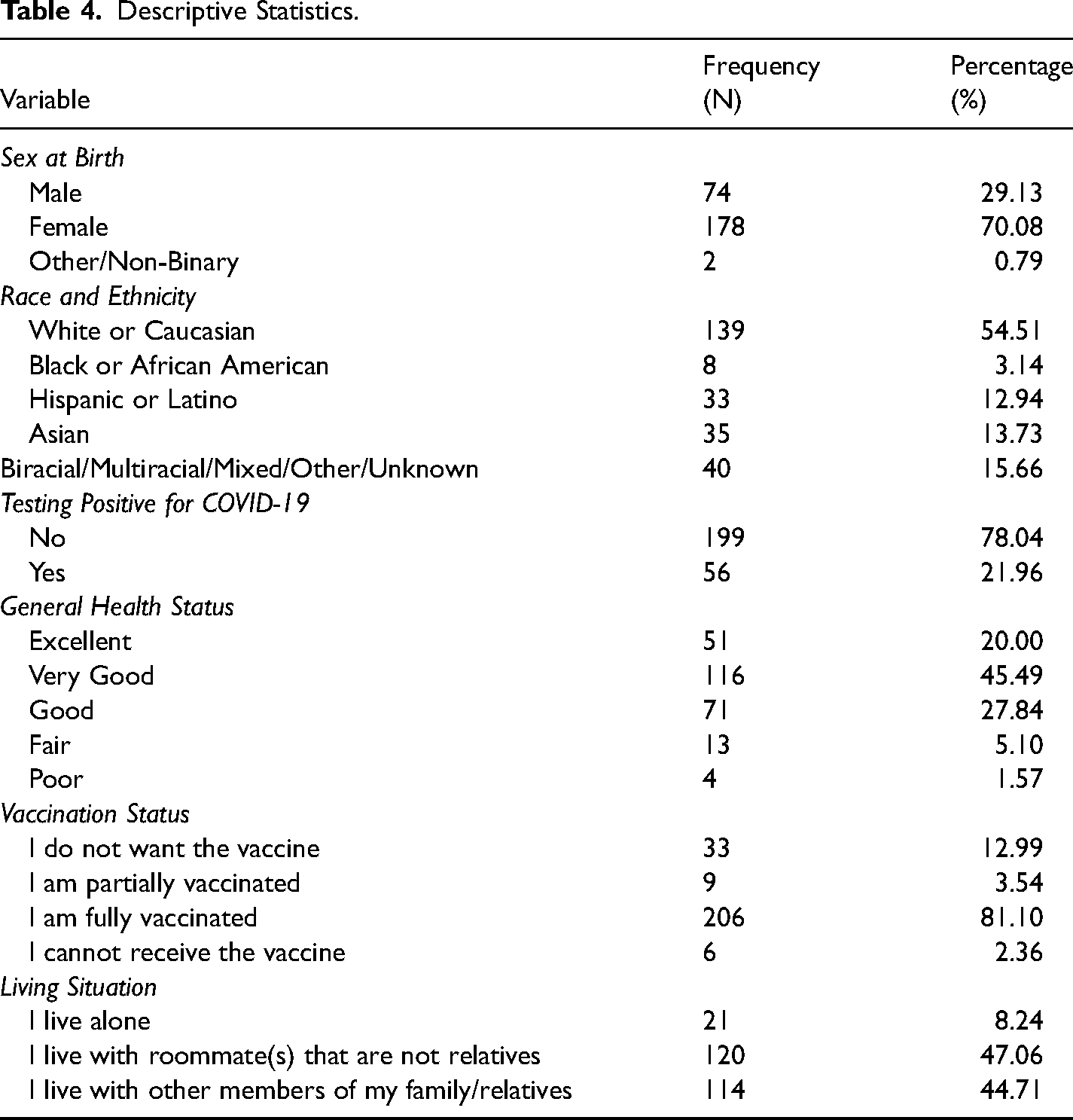
Descriptive Statistics.
Results
Descriptive Statistics
The final sample size for the survey of online respondents comprised 355 college students. The majority of the sample reported female sex at birth (70.08%, n = 178). Approximately half of the study population self-identified as White/Caucasian (54.51%, n = 139), followed by Asian (13.73%, n = 35), Hispanic/Latino (12.94%, n = 33), and Black/African American (3.14%, n = 8). A majority of the sample had not received a positive COVID-19 test (78.04%, n = 199), and approximately half of respondents described their overall health as Very Good (45.49%, n = 116), followed by Good (27.84%, n = 71), Excellent (20.00%, n = 51), Fair (5.10%, n = 13), and Poor (1.57%, n = 4). Eight out of every ten respondents acknowledged being fully vaccinated (81.10%, n = 206), followed by not wanting to get vaccinated (12.99%, n = 33), partially vaccinated (3.54%, n = 9), and cannot get vaccinated (2.36%, n = 6). Regarding living arrangements, most of the sample participants reported living with roommates who are not relatives (47.06%, n = 120), followed by living with other members of my family/relatives (44.71%, n = 114), and living alone (8.24%, n = 21).
Please see Table 4 for results associated with all demographic sample characteristics.
In regards to personal self-reported changes in substance use behaviors during the pandemic, the majority of student participants indicated their substance use behaviors had not changed across the past 18 months. Among college student respondents that had altered their personal substance use behaviors during the pandemic, a greater proportion reported increasing their consumption of alcohol, tobacco, and other drugs, as opposed to decreasing consumption. Specifically, more than half of respondents (56%) indicated their alcohol consumption had increased, while 4 out of every ten respondents indicated their recreational drug use increased. Figure 1 outlines the changes to substance use behaviors respondents personally reported across the last 18 months of the pandemic.
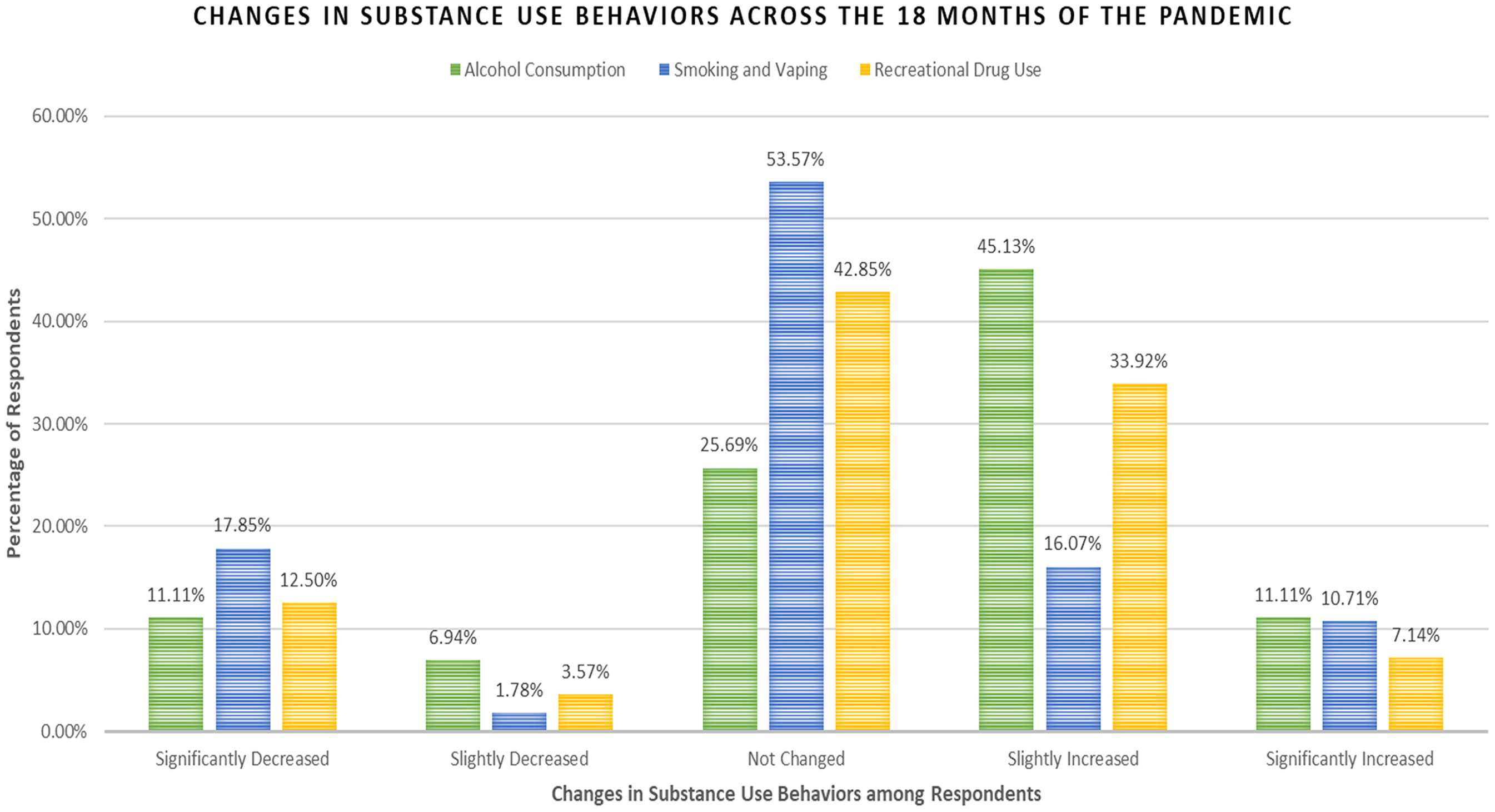
Self-reported personal changes in substance use behaviors over the last 18 months of the pandemic.
Multinomial Logistic Regression Models
Ego Alcohol Model
Individuals who did not drink before or after COVID perceived a lower net composition of alcohol use among their peers (β = -1.51, p = 1.27E-07) as compared to those who increased their drinking during COVID.
Ego Smoking Model
Individuals who decreased smoking during COVID perceived (a) lower net composition of alcohol use among their peers (β = -1.73, p = 0.03); and (b) a lower network composition of loneliness (β = -2.17, p = 0.04) as compared to those who increased their smoking during COVID. Individuals who never smoked before or after COVID perceived a lower net composition of alcohol among their peers (β = -1.22, p = 0.04) as compared to those who increased their smoking during COVID.
Ego Drug Model
Compared to respondents who increased use of recreational drugs, persons who decreased drug use during COVID (β = -2.16, p = 0.04) or used drugs the same amount before and after COVID (β = -1.91, p = 0.00) perceived less recreational drug use among peers. Individuals who never used drugs before or after COVID (a) perceived lower net composition of recreational drug use among their peers (β = -2.10, p = 0.00); and (b) perceived fewer indicators of depression among their peers (β = -1.19, p = 0.04), as compared to those who increased their drug use during COVID.
Discussion
The present study analyzed whether self-reported personal changes in substance use behaviors among American college students’ during the COVID pandemic was associated with the perceptions of the substance use among their closest social connections (alters).
Alcohol Consumption
College students who self-reported increasing their personal drinking in the last 18 months of the pandemic perceived greater levels of alcohol consumption in their social network compared to all other groups (i.e., these groups perceived their peers consumed less alcohol). Given consistent research supports the relationship between network members’ drinking and college students’ drinking (Cox et al., 2019; DiGuiseppi et al., 2018; Reid & Carey, 2018), we were not surprised by this finding. Prior to the pandemic, college students’ alcohol use patterns were often fostered through social activities and social engagement among network members (DeMartini et al., 2013; DiGuiseppi et al., 2018; Meisel et al., 2015; Reid & Carey, 2018; Russell et al., 2021b). Given the decrease in social engagement and activities occurring during the pandemic, it is likely any increases in alcohol consumption might be better explained by increased stress, coping, and boredom (Doering et al., 2023; Jackson et al., 2021; Mohr et al., 2021).
Smoking Behavior
College students who smoked less during COVID or never smoked before or after COVID, perceived less alcohol use among their peers, compared to those who increased their smoking during the pandemic. Changes in personal smoking behaviors were associated with increased perceptions of alcohol use and loneliness among network members, such that respondents (egos) were more likely to increase their smoking if they perceived a higher prevalence of alcohol use and indicators of loneliness among the alters in a respondent's network. This finding aligns with previous work suggesting social network ties can influence existing patterns of substance use, resulting in changes in smoking behavior (Aysola et al., 2022; Huang et al., 2014; Kelly et al., 2023). Moreover, loneliness and smoking have been previously linked together (Dyal & Valente, 2015; Smith et al., 2023). Similarly, smoking behaviors have a greater propensity to co-occur among network members and egos alike (Phua, 2011; Pokhrel et al., 2016). That said, changes in smoking behaviors among egos (respondents) were not associated with the perceived smoking behaviors of network members (alters). While alcohol consumption was generally found to increase during the pandemic for most respondents, smoking rates did not escalate similarly, which might be why we did not see a connection between personal smoking and the smoking among network members (Denlinger-Apte et al., 2022; Sokolovsky et al., 2021). Lastly, changes in respondent smoking behaviors during the pandemic was not associated with self-reported depressive symptoms. This is counterintuitive given depression and anxiety are often associated with tobacco smoking among young adults (Fluharty et al., 2017; Jamal et al., 2012).
Recreational Drug Use
Respondents who indicated their recreational drug use increased during the assessed 18 month period were more likely to perceive greater levels of substance use among peers in their social network, compared to all other groups. Changes in respondent recreational drugs use during the pandemic was significantly associated with perceived drug use among alters, such that respondents (egos) reported increased drug use if they perceived their network alters had higher levels of recreational drug use. This was expected because social network predictors have been identified to be related to various recreational drug use behaviors among young adults and their network members (Barnett et al., 2022; Cassidy et al., 2018; Meisel et al., 2021). There was also an association between perceived depressive symptoms among network members (alters) and recreational drug use among two groups, such that drug use increased as the network depression scores increased. This association was only present when comparing respondents who increased their recreational drug use during the pandemic to those who never used recreational drugs before or after the pandemic. Previous social network research consistently supports interrelationships between social network factors (e.g., social support), recreational drug use, and depressive symptoms among diverse study participants (Latkin et al., 2017; Worley et al., 2014; Yang et al., 2015).
In sum, while there was not a clear pattern present in our data, changes in respondent substance use behaviors were generally influenced by perceptions of the behaviors among close personal ties. An additional noteworthy finding was that network density was not associated with any changes in substance use behaviors among our respondents (egos), which is counter to prior literature exploring ego substances use (Rice et al., 2005; Russell et al., 2023; Thorlindsson et al., 2007). It is possible our decision to restrict egos to only nominating three alters may have influenced these findings, as previous investigations have allowed for the nomination of five alters (Tucker et al., 2014). Nonetheless, this is an interesting finding and worthy of future investigations seeking to parcel out the influence of substance use exposure and whether it is moderated by the strength and type of relationship between the ego and alter (Janulis et al., 2019).
Limitations
While this study was innovative in its use of egocentric social network analysis to assess whether changes in their personal substance use during the COVID-19 pandemic was associated with what they perceived to be the substance use behaviors of their peers, there are noteworthy limitations to consider. First, the survey was administered during the Fall 2021 academic semester, which could have resulted in selection and or sampling bias and prevented the ability to assess changes across time. Second, the survey investigated a sample of college students’ retrospective experience 18 months into the pandemic and data are subject to recall bias. Third, the survey was conducted at one large state/public university in the southwestern United States, which limits our generalizability to all U.S. college student populations. Furthermore, a significant portion of this convenience sample was female (70%), which did not represent the overall student body from which the sample came. Given male college students are more likely to use alcohol and drugs, compared to their female counterparts, the overrepresentation of females in our sample could have influenced the overall findings. Fourth, participants’ age categories and the year in school were not incorporated into the COVID survey. Fifth, the impact of campus closures, changes in household living arrangements, and shifts in parental practices during the pandemic may have influenced our findings (Dumas et al., 2020; Fruehwirth et al., 2021; White et al., 2020). Finally, in the investigation outlined herein, egos were reporting – to the best of their knowledge – perceptions of the behaviors of their nominated peers (alters). It is quite possible that the perceptions held by these egos do not accurately reflect the actual behaviors of their peers. That said, previous research exploring the cannabis and alcohol use behaviors among young adults noted “egos were very accurate in their perceptions of the frequency of alters’ cannabis and alcohol use” (Mason et al., 2019). Moreover, perception of substance use among others has been found to influence one's own use of alcohol, tobacco, and other drugs (Bertholet et al., 2013).
Conclusions
The COVID-19 pandemic presented a long-term disruption to traditional social networks, given social distancing and remote learning protocols for college students in higher education. Historically, supportive social networks play a critical role in alleviating substance use behavior-related consequences among adolescent and young adult individuals, including college students (Charles et al., 2021; East et al., 2021; Galea et al., 2004; Henneberger et al., 2021; Montes et al., 2023; Montgomery et al., 2020; Seo & Huang, 2012). This retrospective assessment of changes in substance use behaviors during the pandemic noted the important influence of substance use among network members, such that respondents (egos) generally increased their substance use as network (alter) substance use and mental health symptoms increased. Given this population's increased risk for substance use, understanding how social networks positively and negatively impact personal behaviors, especially when social norms and contexts are disrupted, is an important endeavor. This study adds additional credence to the important connection and interplay between substance use and perceptions, such that respondents increasing their alcohol or drug use perceived greater higher levels of substance use occurring in their social network. Future research should investigate how the factors contributing to network-level relationships change over time and potential pathways social networks characteristics might be leveraged to improve college students’ substance use behavior outcomes at higher education institutions.
Footnotes
Declaration of Conflicting Interests
The authors declared no potential conflicts of interest with respect to the research, authorship, and/or publication of this article.
Funding
The authors received no financial support for the research, authorship, and/or publication of this article.
