




Abstract
Youth are particularly vulnerable to adverse outcomes from substance use, and there is limited evaluated drug education targeting youth in Canada or the United States of America (US). This scoping review identified and synthesized existing literature on evaluated harm reduction substance use education programs for school-aged youth in Canada and the US. Following the methodological framework outlined by Arksey and O’Malley, a database search identified relevant articles published between 2012 and 2025 through MEDLINE, Scopus, APA PsycInfo, ERIC, Academic Search Complete, Social Work Abstracts, and Embase. Of 1912 unique citations, 20 studies met our inclusion criteria; of these, 18 programs were implemented in the US and two in Canada with various target populations: high school (n = 4), middle school (n = 6), elementary school (n = 2), at-risk youth (n = 3) and other (n = 5). Most programs focused on reducing substance use frequency (n = 16) and used quantitative evaluation methods (n = 16). The results highlighted a shortage of evaluated harm reduction programs for school-aged youth in Canada and the US. These findings will support the development and evaluation of a drug education strategy incorporating harm reduction principles for school-aged youth.
Youth substance use is a prominent public health concern in Canada and the United States (US) and is associated with adverse health, social and occupational outcomes (Hall et al., 2020; Nath et al., 2022). Among American students in grades 8–12 in 2022, 32% consumed alcohol, 19% used cannabis, and 23% had vaped in the past 12 months (Miech et al., 2023). In Canada, 21% of grade 7–12 students reported engaging in high-risk drinking (i.e., consuming five or more drinks on one occasion) in the past year; further, alcohol, cannabis, and nicotine initiation occurred remarkably early, with an average age of initiation of 14 (Health Canada, 2024). These findings are alarming, as early initiation and rapid escalation of substance use behaviours are predictive of future substance use problems and the development of a substance use disorder (Health Canada, 2008; Trujillo et al., 2019).
Cannabis is the second most commonly used substance among Canadian and American youth, after alcohol (Health Canada, 2024; Miech et al., 2023). Recreational cannabis use became legal in Canada in 2018 and 24 states in the US as of February 1, 2025 (Cannabis Act, 2018; National Conference of State Legislatures, 2025). A primary objective of legalization put forth by the Government of Canada was to protect youth by restricting youth access to cannabis and raising awareness of the risks associated with cannabis use (Cannabis Act, 2018). However, past-year cannabis use among Canadian grade 7–12 students did not decrease in the year following legalization, remaining at 18% (Health Canada, 2020). Findings from the US indicate similar trends in youth cannabis use in legal and non-legal states, suggesting that legalization did not decrease youth consumption (Miech et al., 2023). Further, recent findings suggest that high-risk cannabis use behaviours are rising (Hammond et al., 2020; Health Canada, 2024), and rates of emergency department visits for cannabis poisoning among youth under 18 increased by 20% between 2015 and 2019 (Callaghan et al., 2023). Concerningly, 48% of Canadian youth perceive little to no risk of harm from occasional cannabis use (Health Canada, 2024). Together, these findings highlight the importance of addressing youth cannabis use and its associated risks in substance use education programming in Canada and the US.
The high rates of substance use among Canadian and American youth are concerning as youth are particularly vulnerable to adverse outcomes associated with substance use (Hall et al., 2020). Youth substance use is associated with significant cognitive deficits (e.g., executive functioning and neuro-cognitive problems; Brown et al., 2000; Hall et al., 2020); social problems (e.g., lower income, unemployment, and lower life satisfaction), mental health challenges (e.g., anxiety, depression, psychosis, and suicidal ideation; Conway et al., 2018; Hall et al., 2020; Jacobus & Tapert, 2014), poor academic outcomes (Bugbee et al., 2019; Hall, 2015), increased feelings of apathy, and decreased motivation (George & Vaccarino, 2015). Even more alarming is the prevalence of high-risk substance use behaviours among youth (e.g., hazardous drinking, driving under the influence, polysubstance use, and early initiation; Donnan et al., 2022; Zuckerman et al., 2019).
Given the health risks associated with youth substance use, educating youth about substances and safer substance use and equipping them with the appropriate tools to make safe and informed choices is critical. However, drug education directed toward youth populations often follows an abstinence-based approach (Drug Abuse Resistance Education [D.A.R.E.], 1983), which involves messaging on avoiding substance use entirely (Lenton & Single, 1998). Research has highlighted the ineffectiveness of abstinence-based approaches, as youth are not receptive to these strategies (Bishop et al., 2022; Porath-Waller et al., 2013; Slemon et al., 2019; Watson et al., 2019), which have a narrow focus on preventing or avoiding use (Jenkins et al., 2017; Midford, 2010). The D.A.R.E. program is an abstinence-focused prevention program that has been widely implemented across Canada and the US; however, it has been deemed ineffective at minimizing substance use harms (Bishop et al., 2022; Singh et al., 2011; Tremblay et al., 2020; West & O’Neal, 2004).
Midford (2010) reviewed the nature of prevention programs and questioned whether it would be more beneficial if the purpose were to prevent substance use or prevent harm. This presents the question of whether substance use education programs should focus on primary or secondary prevention. Primary prevention prioritizes delaying or avoiding the onset of substance use and has historically been the favoured approach to addressing youth substance use (Latimore et al., 2023). Meanwhile, secondary prevention aims to reduce the negative impacts of substance use. Considering the prevalence of youth substance use (Health Canada, 2024; Miech et al., 2023) and the limited efficacy of abstinence-based prevention programs (Singh et al., 2011; Tremblay et al., 2020), substance use education programs may better serve youth by focusing on harm reduction (Bishop et al., 2022; Canadian Students for Sensible Drug Policy, 2021). Harm reduction prioritizes safety and minimizing risk of harm while recognizing that substance use is a reality for some youth (Downey et al., 2024; Lee et al., 2011). As such, harm reduction approaches employ both primary and secondary prevention strategies to delay and reduce substance use initiation and minimize harm should substance use occur (Latimore et al., 2023).
The Canadian Centre on Substance Use and Addiction created Low-Risk Guidelines (LRG) for alcohol (Butt et al., 2011; Paradis et al., 2023), cannabis (Fischer et al., 2022), and nicotine (Selby et al., 2021), each directed toward people currently using or considering using these substances. The guidelines were created to support people's substance use decisions and ensure they are equipped with accurate and current information on the harms associated with these substances and recommendations on minimizing associated risks. These harm reduction guidelines are valuable as existing evidence-based substance use resources are limited (Bishop et al., 2022; Howe et al., 2023; Watson et al., 2019) or follow an abstinence-based approach, which research has identified as ineffective (Bishop et al., 2022; Slemon et al., 2019; West & O’Neal, 2004). Harm reduction approaches have also been applied to substance use education efforts, yielding positive outcomes regarding youth substance use behaviours (D’Amico et al., 2012; McKay et al., 2014; Midford et al., 2014; Poulin & Nicholson, 2005; Wagner et al., 2014).
In a recent study examining educator perspectives on youth substance use education, many educators expressed support for both harm reduction and abstinence approaches (Downey et al., 2024). This finding is reasonable, as harm reduction and abstinence are not mutually exclusive; harm reduction does not intend to promote substance use but instead presents abstinence as the best way to avoid substance use harms (Fischer et al., 2022; Lee et al., 2011). However, harm reduction also offers supplementary principles and strategies to mitigate harm and equip youth with the tools to navigate situations involving substances. By offering multiple avenues to reducing the adverse effects of substance use, the harm reduction approach is accessible and inclusive for all students (Hathaway et al., 2011). To this point, recent studies have highlighted the importance of comprehensive substance use education programs that incorporate multiple outcomes beyond primary prevention, such as increasing substance use knowledge, promoting decision-making skills and reducing substance-related harms (Bishop et al., 2022; Canadian Students for Sensible Drug Policy, 2021; Downey et al., 2024)
Harm reduction drug education programs such as the School Health and Alcohol Harm Reduction Project (McKay et al., 2014), the Drug Education in Victorian Schools (DEVS) programme (Midford et al., 2014) and School Counselors’ Ideas for Drug Use Abatement (Poulin & Nicholson, 2005) have been implemented in school settings and have demonstrated success in fostering safer attitudes toward substance use and decreasing associated harms. Program outcomes included increasing youth substance use knowledge, dispelling substance use myths, identifying and avoiding substance-related harms, considering peer and social influences and practicing decision-making and assertiveness in situations involving substance use. Despite the recent legalization of cannabis in Canada and other jurisdictions throughout the US, there remains a significant gap in cannabis education (Watson et al., 2019). Harm reduction programs that have seen success in altering substance use behaviours among youth may not reflect the status of cannabis as a legalized substance (Poulin & Nicholson, 2005) or are not implemented in North America (McKay et al., 2014; Midford et al., 2014).
With the legalization of cannabis in numerous jurisdictions and the increase in access to cannabis, youth substance use education must reflect cannabis’ classification as a regulated substance. Previous research highlighted notable gaps in youths’ knowledge of cannabis and the associated adverse consequences (George & Vaccarino, 2015). Additionally, according to McKiernan and Fleming (2017), youth perceived driving under the influence of cannabis as less risky than driving under the influence of alcohol. Youth describe receiving minimal cannabis education at school and home, and their limited knowledge of cannabis was inaccurate, often coming from peers and social media (Bishop et al., 2022). Further, educators have reported that students are largely unaware of substance use harms, identifying an urgent need for evidence-based, harm-reduction substance use education in schools (Downey et al., 2024). Addressing these gaps and offering current, evidence-based cannabis and overall drug education to youth is essential in promoting safer decision-making and minimizing potential harm associated with cannabis and other substances.
The documented lack of youth knowledge regarding substance use harms (Bishop et al., 2022; George & Vaccarino, 2015; McKiernan & Fleming, 2017) emphasizes the importance of increasing youth's substance use health literacy. Health literacy refers to a person's ability to obtain, understand and apply information to inform decisions and behaviours regarding their health (Degan et al., 2019). In the context of substance use, a person's health literacy influences their ability to understand the risks of substance use and make decisions accordingly (Kinnunen et al., 2022). In school-aged children, higher health literacy is associated with lower rates of substance use and higher-risk substance behaviours such as binge drinking (Brandt et al., 2019; Fleary & Joseph, 2024). Conversely, lower health literacy is linked to lower academic attainment, higher-risk substance use and higher rates of hospitalization and mortality (Paakkari et al., 2019; Rolova et al., 2021). Health literacy is relevant to both primary and secondary prevention approaches, as substance use knowledge, risk awareness, and decision-making skills may help to both delay substance use initiation and decrease riskier substance use behaviours (Bishop et al., 2022).
A scoping review explored cannabis education resources in Canada (Howe et al., 2023). However, this review was limited in that of all 60 items identified, only three programs were formally evaluated. While understanding the resources available to the youth and the general public is beneficial, there is value in ensuring resources are evaluated and effective in their intended outcomes (Spiegelman, 2016). Exploring evidence-informed programs, which are evaluated to ensure primary outcomes are met, is important for educators and policymakers to understand where to allocate resources to maximize the likelihood of positive outcomes.
Objective and purpose
The Cannabis Health Evaluation and Research Partnership (CHERP) team is an interdisciplinary team of researchers at Memorial University of Newfoundland. Following cannabis legalization in Canada, the CHERP team conducted research to inform a substance use education strategy, using qualitative focus groups with youth and young adults (Bishop et al., 2022) and a quantitative survey with educators (Downey et al., 2024); this research highlighted the need for youth cannabis education (Howe et al., 2023) that is evidenced-based, accessible, interactive, and harm reduction focused. In response to the need for youth substance use education, the CHERP team developed a drug education strategy called Drug Education Centred on Youth Decision Empowerment (DECYDE) that addresses these needs by providing evidence-based harm reduction, substance use education and resources for youth, educators and guardians. However, a scoping review of available education programs was necessary to inform this strategy. Given the broad gap in knowledge on available harm reduction programs, this scoping review aimed to identify existing literature on harm reduction substance use education programs directed toward school-aged youth that were formally evaluated.
Research question
The following research question was explored: What evaluated, evidence-based substance use harm reduction education programs for school-aged youth aged 9 to 18 or in grades 4–12 with a cannabis component are identified in the literature?
Methods
We conducted a scoping review using the methodological framework outlined by Arksey and O’Malley (2005) and recommendations outlined by Levac et al. (2010) to develop the review. Our scoping review examined programs delivered in Canada and the US, as these countries have similar rates of youth substance use (Health Canada, 2024; Miech et al., 2023). Further, recreational cannabis is legal in Canada and in many US States; this climate of legalization may impact substance use education strategies, with programming shifting toward promoting substance use awareness and safety and away from traditional abstinence approaches (Rosenbaum, 2016).
Item selection
Items were included in this review if: 1) the article was peer-reviewed; 2) the education program was delivered to youth who were either a) aged 9 to 18 or b) in Grades 4 to 12; 3) the education program contained a cannabis component or topic; 4) the education program was formally evaluated; 5) the education program contained a minimum of two harm reduction components (Table 1); and 6) the education program was developed or offered in Canada or the US. We included programs delivered to youth aged 9 to 18 or in grades 4 to 12, as this was the target age group for our team's drug education strategy, DECYDE. The age of initiation for alcohol, cannabis and nicotine is, on average, 14 (Health Canada, 2024), and early interventions have been identified as important in reducing substance use intentions and behaviours (Andrews et al., 2003; Lloyd et al., 2000). In the current study, harm reduction programs were defined as those that incorporated at least two harm reduction principles. Within harm reduction programs, abstinence is one method of reducing substance-related harms; however, strategies are also provided to help those who use substances to minimize negative consequences (Lee et al., 2011). In this scoping review, we included programs with at least two harm reduction principles, ensuring the programs incorporated at least one element beyond abstinence.
Harm reduction principles criteria for inclusion.
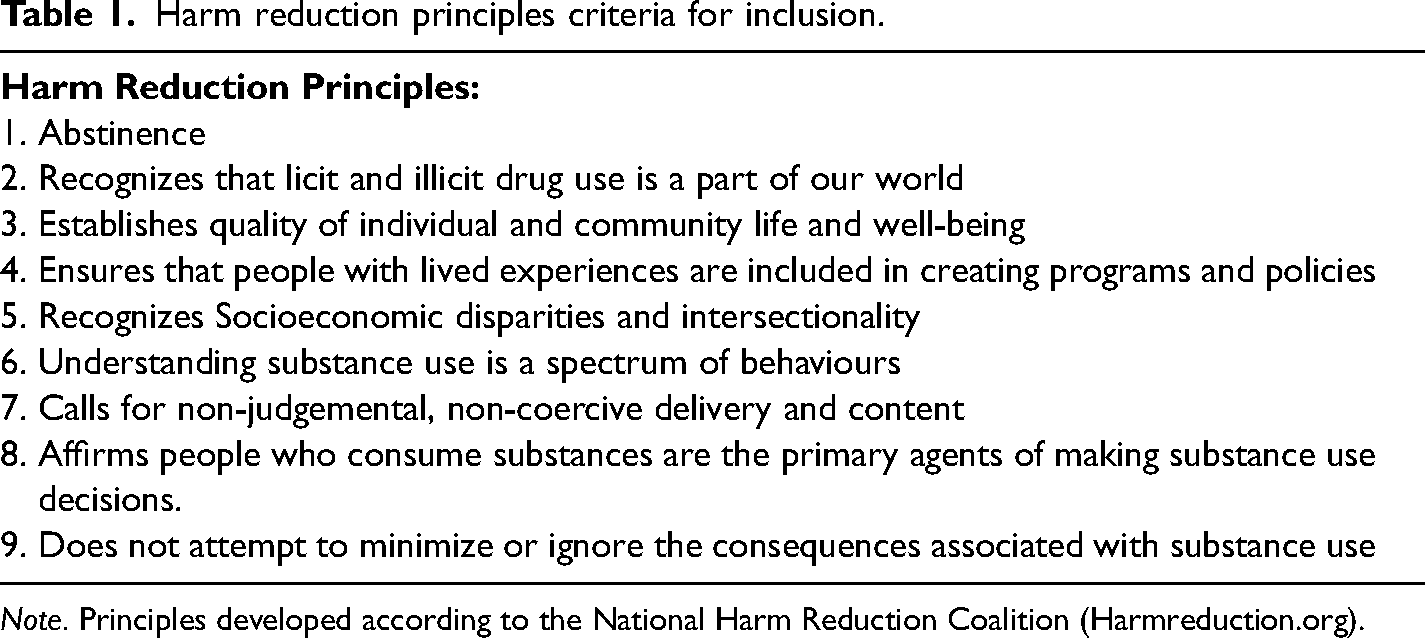
Note. Principles developed according to the National Harm Reduction Coalition (Harmreduction.org).
Identifying relevant resources
In consultation with a health science librarian (E.A.K.), comprehensive search strategies were developed and run in Ovid MEDLINE; Embase via Embase.com and Ovid, APA PsycInfo via EBSCO and Ovid, ERIC via EBSCO and ProQuest, Academic Search Complete via EBSCO, Social Work Abstracts via EBSCO and Ovid, and Scopus. The databases listed with multiple platforms reflect changes in database access between the second and third searches – a full description of which database platform was used for each search is described in Supplementary Material 1, along with all search strategies for the three searches. Academic Search Complete could not be searched during the third search as the team lost access to this database. The geography concept for the first two searches was adapted from CADTH's Broad Canada filter and University of Alabama at Birmingham's US filter (Canada's Drug Agency, n.d.; University of Alabama at Birmingham, n.d.). For the third search, the geography concept terms were expanded to increase comprehensiveness. With the exception of the aforementioned changes to the database platforms and the geography concept, the terms within the third search remained unchanged from the second search. The initial MEDLINE search strategy was peer-reviewed by another health sciences librarian using the PRESS tool before translating to other databases (McGowan et al., 2016). We utilized Covidence (Covidence Systematic Review Software, n.d.), a screening and data extraction tool, to review items through two stages: title and abstract screening and full-text screening. Abstracts and full texts were viewed by the primary author and co-author (E.C.R. and M.K.D.). Any full-text articles deemed ineligible by both reviewers were removed, and any inconsistencies were consulted and resolved by both reviewers.
Charting, summarizing, and reporting the data
Two reviewers (E.C.R. and M.K.D.) independently extracted data using the agreed-upon categories, including 1) Program, 2) Participants, 3) Setting, 4) Intervention, 5) Outcomes, and 6) Measures. Any uncertainties or confusion related to the data extraction were resolved through discussion by E.C.R. and M.K.D. in consultation with the research team following an iterative process to ensure that inclusion and exclusion criteria were followed consistently throughout the review.
Results
The search occurred in three stages. An initial database search on July 21st, 2022, yielded 310 unique articles after 200 duplicates were removed. After screening the results from the initial search and finding a lack of programs focusing primarily on harm reduction, a second, broader search was conducted to also retrieve articles discussing primary prevention programs which incorporated harm reduction principles. This second search was run on December 16th, 2022, and an additional 2,750 studies were retrieved, of which 1,100 were unique. For currency purposes, a third search was run on January 29, 2025. The third search retrieved 3,547 articles, of which 497 were unique after duplicates were removed. Together, the three searches identified 1907 unique articles. Five additional articles were manually identified by reviewing reference lists, giving a total of 1912 unique articles. Following title and abstract screening, 1,767 items were excluded, leaving 145 articles that underwent full-text review. A further 125 articles were excluded (16 wrong setting, 32 wrong outcomes, six adult population, 31 wrong intervention, seven wrong study design, 17 full text not available, 13 not a program, one not an evaluated program, two no harm reduction elements in program), leaving 20 articles included in the current review. The flow of articles throughout all stages of this scoping review is illustrated in this PRISMA diagram (Figure 1).
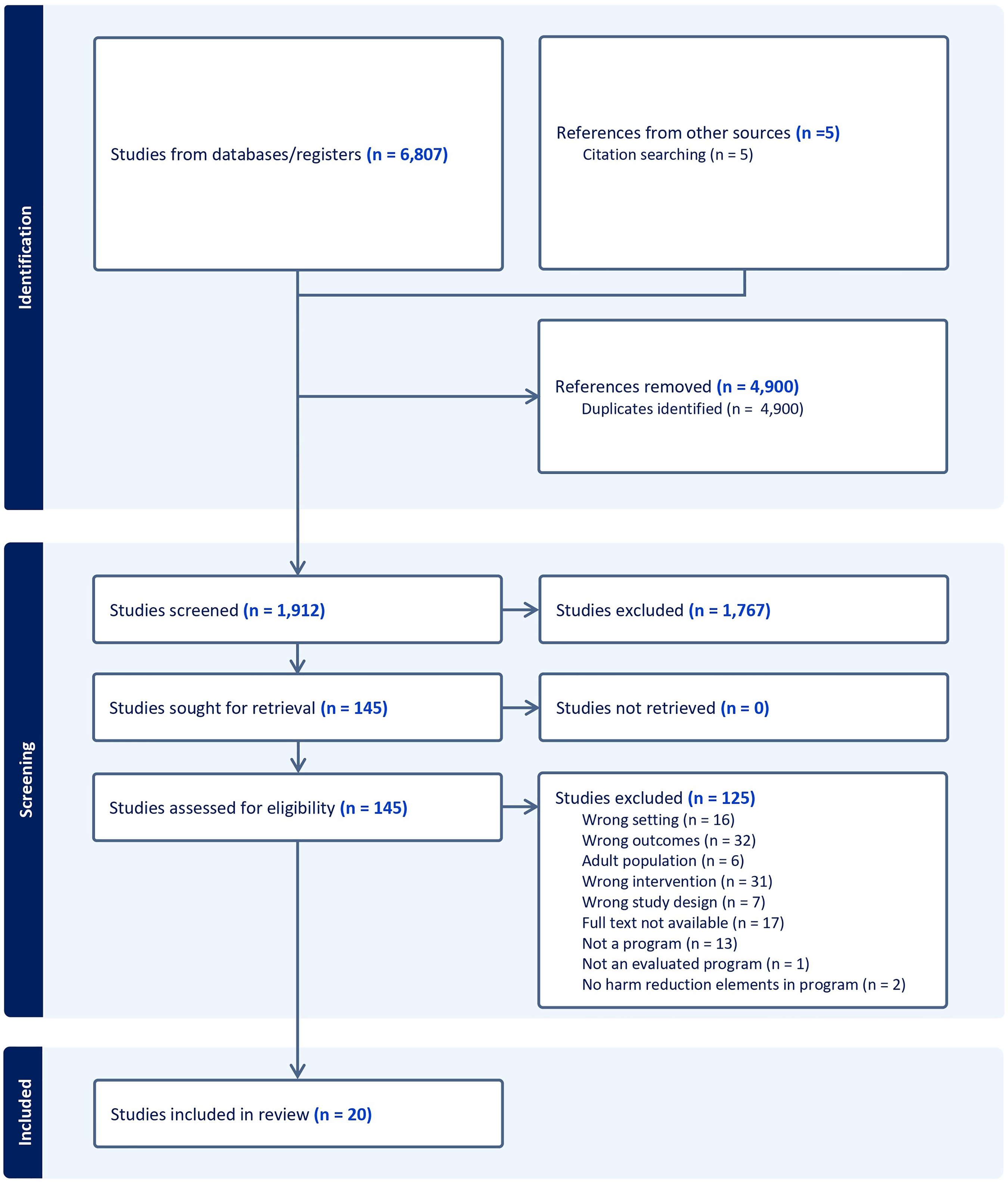
PRISMA flow chart of literature search review and inclusion process.
Program characteristics
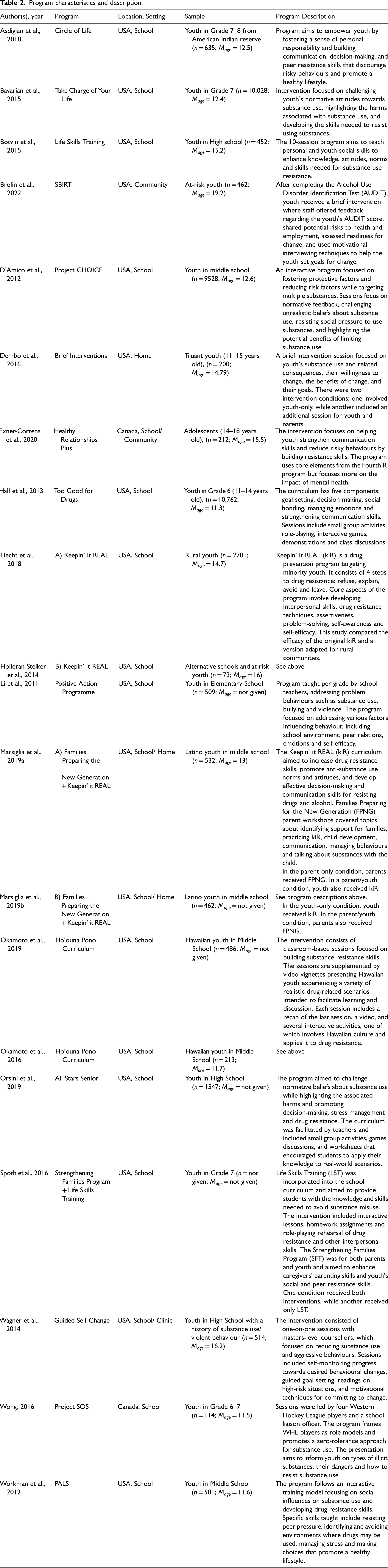
Of the 20 programs identified, two were implemented in Canada and 18 in the US (Table 2). Regarding the program's delivery setting, 13 were school-based, one was family/home-based, one was community-based, and five programs had joint delivery settings: school and community (n = 2), school and home (n = 2) and school and clinic (n = 1). Two programs targeted elementary school-aged youth, six targeted middle school-aged youth, four targeted high-school-aged youth, three specifically targeted at-risk youth (i.e., homeless, truant youth), and five fell into the other category (i.e., Hawaiian youth, Native American).
Program characteristics and description.
Program outcome evaluation
The primary outcomes of the programs are listed in Table 3. Most programs (n = 17) identified outcomes regarding multiple substances, while two focused solely on cannabis. One study only evaluated alcohol-related outcomes; however, it was included in the review as the program curriculum included cannabis (D’Amico & Edelen, 2007). Almost all programs evaluated substance use frequency as an outcome (n = 16). Programs also assessed substance use initiation/lifetime substance use (n = 4), risky substance use (n = 4), substance use knowledge (n = 1), substance use acceptance (n = 1) and substance use intentions (n = 1).
Program evaluation.
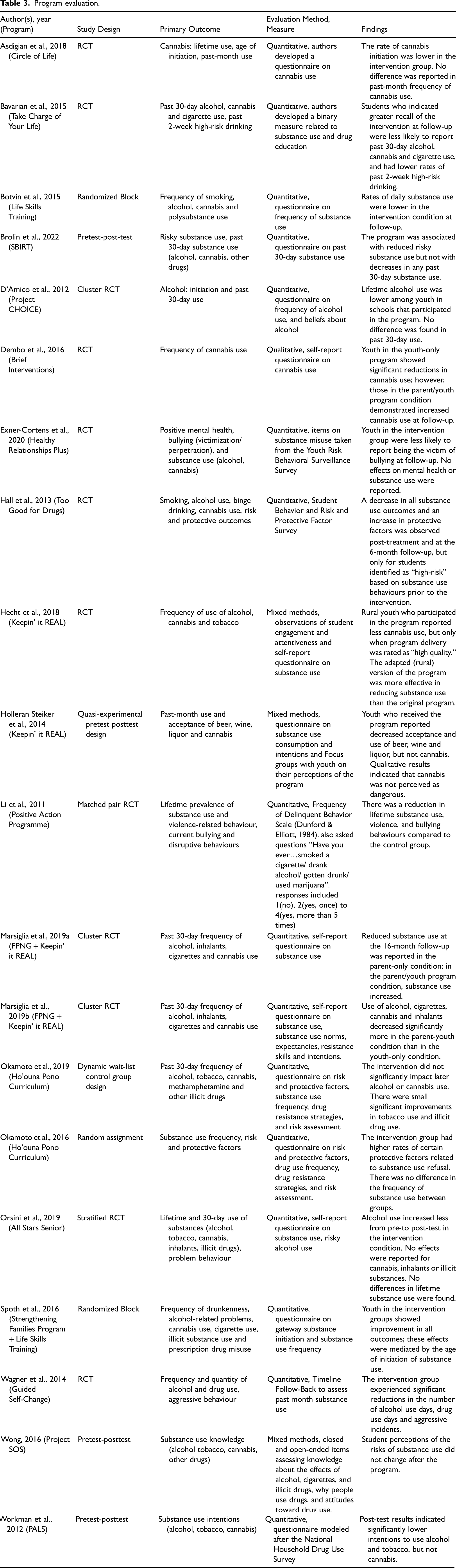
Sixteen studies used a quantitative approach to program evaluation, and four used a mixed-method approach. The evaluation methods used included (Table 3): Randomized Control Trial (RCT) design (n = 12), Randomized Block design (n = 2), Pretest-Posttest design (n = 3), Quasi-Experimental Pretest-Posttest design (n = 1), Dynamic wait-list control group design (n = 1); and Random Assignment (n = 1). To evaluate the outcomes, most of the programs (n = 17) used a self-report measure. Three programs used a self-report measure coupled with an observation on student engagement (n = 1), focus groups on perceptions of the program (n = 1), or qualitative responses on substance use knowledge and attitudes (n = 1).
Program findings are summarized in Table 3. Of the 16 programs evaluating substance use frequency, four reported a decrease in frequency of use for all substances assessed. More often, programs reported mixed findings (n = 7), where the frequency of use either decreased for some substances but not others or only for specific subgroups of the intervention group (e.g., students identified as “high-risk” at baseline). The remaining programs (n = 5) did not see an improvement in substance use frequency; however, several studies reported other positive outcomes, such as lower rates of substance use initiation or risky substance use. Three of four articles evaluating substance use initiation found that the program had a protective effect on this outcome. Of the studies that assessed risky substance use (n = 4), all reported significant decreases in this behaviour. The program that evaluated substance use knowledge did not find a meaningful difference in knowledge in the post-test. The study that examined substance use acceptance found a decrease in alcohol acceptance post-intervention but not cannabis acceptance. Similarly, in the study examining substance use intentions, post-test results indicated lower intentions to use alcohol and tobacco but not cannabis.
Discussion
This scoping review captured literature on what is known about evaluated harm reduction substance use education programs for school-aged youth, which contain a cannabis component. From the 20 included studies, several gaps were identified. There was a gap in Canadian programming, with the majority implemented in the US. Further, most program outcomes involved avoiding or reducing substance use. Just four programs had outcomes related to risky substance use and one program evaluated substance use knowledge. Only one program focused on improving youth's substance use knowledge (Wong, 2016), which is a critical component of substance use health literacy and is essential to assessing risk and making health-promoting choices (Higgins et al., 2009). None of the programs included substance-related consequences as an outcome variable. These findings illustrate the need for more comprehensive substance use education programs that evaluate their effectiveness in multiple domains, including substance use health literacy and secondary prevention objectives that prioritize reducing substance-related harms (Bishop et al., 2022; Canadian Students for Sensible Drug Policy, 2021; Downey et al., 2024).
While this scoping review explored programs containing at least two harm-reduction principles (Table 1), most program outcomes focused on avoiding or reducing substance use. While these goals are one component of harm reduction education, they do not represent its full scope, which also includes promoting substance use knowledge, decision-making skills and reducing harm for those who do use substances (Canadian Students for Sensible Drug Policy, 2021); these outcomes were rarely evaluated in the identified programs. Instead, program outcomes often focused on primary prevention (e.g., avoiding or delaying substance use). Despite the popularity of abstinence-based messaging and education, research supporting the efficacy of these programs in deterring youth substance use is limited (Watson et al., 2019; West & O'Neal, 2004). It is important to note that a key principle of harm reduction is presenting abstinence as the safest option (Fischer et al., 2022; Paradis et al., 2023; Selby et al., 2021); however, by incorporating both primary and secondary prevention strategies, harm reduction principles hold more realistic and measurable goals and outcomes, focusing on increasing knowledge, developing skills and reducing harm rather than only cessation of substance use.
While study findings were mixed, many programs had positive outcomes regarding youth substance use. Several studies reported lower rates of youth substance use frequency post-intervention (e.g., Botvin et al., 2015; Hall et al., 2013; Li et al., 2011). This finding is valuable, as a higher frequency of substance use is associated with more negative health outcomes in youth (Chung et al., 2012; Hall et al., 2020). Several studies found that program participation was associated with lower rates of substance use initiation (Asdigian et al., 2018; D’Amico et al., 2012; Li et al., 2011); however, two studies also evaluated past 30-day substance use, finding no differences after the program (Asdigian et al., 2018; D’Amico et al., 2012). This finding suggests that substance use education programming that successfully deters youth substance use initiation may not be equally effective in promoting safer substance use; it is critical that programs also incorporate strategies to reduce substance-related harms among youth already using substances (Canadian Students for Sensible Drug Policy, 2021; Watson et al., 2019). Interestingly, several programs reported improvements in youth outcomes for alcohol but not cannabis (Holleran Steiker et al., 2014; Orsini et al., 2019; Workman et al., 2012). This result may be related to frequently reported youth perceptions that cannabis is natural and safe (Bishop et al., 2022; George & Vaccarino, 2015), underscoring the importance of targeting substance use knowledge in youth substance use education programming.
Evaluating program outcomes and identifying gaps
This scoping review included only evaluated programs. Another previously published scoping review explored all cannabis education resources (Howe et al., 2023), and only two of their 60 identified resources overlap as those were the only evaluated resources (Exner-Cortens et al., 2020; Wong, 2016). The current review identified programs evaluated in Canada and the US since 2010 (Exner-Cortens et al., 2020; Wong, 2016), offering a more comprehensive understanding of available drug education resources for youth. Program evaluation is pivotal in shaping and adjusting public policies and important in government funding allocation. Substantial resources have been misdirected into implementing school-based drug education programs that are ineffective (Brown, 2001). Conducting thorough program evaluations is essential to help ensure resources are allocated effectively and that programs address specific needs in the community, yield positive results, properly educate youth, and reduce harm.
Almost all studies identified in this scoping review used self-report measures to evaluate program outcomes. Studies have highlighted the limitations of self-report measures with youth (Teye & Peaslee, 2015) and for assessing mental health and behavioural challenges (Broberg et al., 2001). Only one program in our review measured factors other than youths’ substance use behaviours; instead, this program measured knowledge and factors influencing attitudes (Wong, 2016). Measuring factors beyond cessation or reduction in substance use behaviours, such as level of substance use knowledge and engagement in higher-risk substance use, is essential to gain a complete understanding of program effectiveness. The World Health Organization European Working Group on Health Promotion Evaluation (1998; Moon, 2000) identified four key principles for evaluating health promotion initiatives: 1) active participation with stakeholders, 2) using multiple methods to evaluate program effectiveness; 3) enhancing capacity by highlighting the role of evaluations in addressing health promotion concerns; and 4) recognizing the complexity of health promotion interventions and their long-term impact. Developing and implementing comprehensive evaluation strategies are critical for ensuring interventions are effective in achieving their intended outcomes and relevant to communities and stakeholders, improvement areas can be identified, resource allocation is optimized, and the intervention is sustainable.
The results indicated a major gap in evaluated harm reduction education programs for school-aged youth implemented in Canada, with just two such programs identified. Youth qualitative work post-legalization highlighted a need for cannabis education that is evidence-based, implemented early, and follows a harm reduction approach (Bishop et al., 2022). The current review revealed only two programs targeted toward elementary school-aged youth. This finding highlights a critical gap, as early interventions in youth substance use education are crucial in preventing and mitigating substance use harms (Lloyd et al., 2000). Educators and students alike have identified that substance use is an issue for elementary school students (Bishop et al., 2022; Downey et al., 2024). Further, greater substance use intentions in elementary school students have been related to higher rates of substance use initiation in middle school (Andrews et al., 2003); as such, implementing substance use education in early school years is essential as it is influential in shaping youths’ behaviours and attitudes (Lloyd et al., 2000). Critically, none of the programs in this scoping review were delivered in jurisdictions where recreational cannabis was legal at the time. Research has indicated that cannabis legalization may influence youth cannabis perceptions and behaviours (Mennis et al., 2023; Nguyen et al., 2023), identifying the need for updated studies evaluating substance use education programs conducted in the context of cannabis legalization.
Limitations and future directions
The current review has several limitations. First, we focused on substance use education programs in Canada and the US, which limits our awareness of programs implemented in other countries. Moreover, we included programs developed before cannabis legalization in Canada and other jurisdictions in the US, potentially leading to content that does not reflect the current status of cannabis legalization and may focus on pre-legalization attitudes. Although our initial interest was in harm reduction substance use education programs, we widened the scope of the review to include programs incorporating several harm reduction principles; while meeting this criterion, most programs included in this review focused on avoiding or reducing substance use, neglecting other harm reduction principles like improving substance use health literacy and reducing substance-related harms. Our study included programs delivered to youth aged 9 to 18 or in grades 4 to 12, in line with our team's drug education strategy, DECYDE. As such, we did not include studies evaluating programs delivered to younger students.
Future research should explore the quality and rigour of the programs to provide a clearer understanding of their efficacy. There is also a need to conduct program evaluations and develop accurate assessment tools for youth beyond self-report measures. Emphasizing the importance of rigorous, evidence-based drug education development and evaluation is critical for promoting youth health.
Conclusion
The findings of our scoping review highlighted a limited number of evaluated harm reduction programs in Canada and the US that may be effective in reducing youth substance use and educating youth on substance-related harms. With the legalization of cannabis in many jurisdictions, few programs exist that provide evidence-based harm reduction education for youth. Knowledge gained from this scoping review will support developing and evaluating a drug education strategy that incorporates harm reduction principles for school-aged youth.
Supplemental Material
sj-docx-1-dre-10.1177_00472379251335744 - Supplemental material for Mapping the Landscape: A Scoping Review of Evaluated Substance Use Harm Reduction Programs for Youth
Supplemental material, sj-docx-1-dre-10.1177_00472379251335744 for Mapping the Landscape: A Scoping Review of Evaluated Substance Use Harm Reduction Programs for Youth by Emily C.L. Rowe, Molly K. Downey, Nick Harris, Eden A. Kinzel, Jennifer Donnan and Lisa Bishop in Journal of Drug Education
Footnotes
Author contributions
Consent to participate
Not applicable.
Consent for publication
Not applicable.
Data availability
All relevant data are within the manuscript and its Supplementary File.
Declaration of conflicting interests
The authors declared no potential conflicts of interest with respect to the research, authorship, and/or publication of this article.
Ethical considerations
This study did not require ethics approval.
Funding
E.C.L.R received financial support from the Canadian Graduate Scholarship – Masters and NL
SUPPORT.

Supplemental material
Supplemental material for this article is available online.
References
Supplementary Material
Please find the following supplemental material available below.
For Open Access articles published under a Creative Commons License, all supplemental material carries the same license as the article it is associated with.
For non-Open Access articles published, all supplemental material carries a non-exclusive license, and permission requests for re-use of supplemental material or any part of supplemental material shall be sent directly to the copyright owner as specified in the copyright notice associated with the article.
