



Abstract
Children’s snack consumption prevalence has increased, with generally known detrimental health consequences. This study critically examines how schools in northern Thailand contribute to promoting unhealthy snack consumption among children, using a political economy framework. A qualitative approach was employed, including 16 children aged 7 to 12 and 12 key informants related to children’s unhealthy snack intake in a rural northern Thai community. Data were gathered through participant observation, and in-depth interviews. Content analysis was performed using both deductive and inductive coding to identify patterns related to school-driven promotion of unhealthy snacks. Three themes were found: (1) unequal resource distribution, (2) profit motives, and (3) power dynamics and control. These highlight how inequalities and profit-driven agendas shape school food environments and unhealthy snack consumption among school children. Schools have succumbed to financial pressures by promoting unhealthy snacks to students for financial gain, despite this practice contradicting Thailand’s health-promoting school policy. To address this, nutrition-focused income alternatives should be promoted with empowering schools through budget subsidiarity. Stronger enforcement and community collaboration are essential also to creating healthier and more equitable school food environments.
Introduction
The World Health Organization (WHO) and the United Nations Children’s Fund (UNICEF) have reported that dietary patterns in many low- and middle-income countries are shifting toward higher consumption of unhealthy commercially prepared food products, resulting in increased intake of energy-dense, nutrient-poor foods high in sugar, sodium, and saturated and/or trans fatty acids. Unhealthy snack foods include 4 categories: (1) sugar-based confections, such as candies, chocolates, and fruit-based sweets; (2) frozen sweet treats, including ice cream and similar products; (3) baked or fried sweet foods such as cakes, pastries, and sweet biscuits; and (4) savory snacks, including chips, fried dough, and instant noodles. In this study, unhealthy snacks are defined as commercially produced foods that provide high energy with limited nutritional value, classified into 4 categories. 1 Unhealthy snack consumption among children is a growing global public health concern, contributing to rising rates of obesity, chronic diseases, and other long-term adverse health outcomes. Widespread unhealthy snack consumption among children is associated with abnormal metabolic parameters such as overweight, obesity, dyslipidemia, and type 2 diabetes.2-5 In addition, sugary and acidic snacks contribute to oral health problems such as tooth decay, enamel erosion, and gum disease.6-8 Furthermore, higher unhealthy snack consumption has also been linked to poorer sleep quality among school-aged children.9,10
Evidence from both high-income and low- and middle-income countries have demonstrated widespread availability of unhealthy snacking among children. In high-income contexts such as the United Kingdom, unhealthy snacks accounts for nearly 70% of total energy intake among adolescents aged 11 to 18 years. 11 In Canada, approximately 80% of children aged 2 to 12 years consumed unhealthy snacks more than once daily, contributing roughly 27% of energy intake among younger children. 12 Similar patterns have been observed in low- and middle-income countries. For example, approximately 70% of Brazilian children aged 7 to 9 years from public schools consume unhealthy snacks daily, with 40% consuming the snacks more than 3 times per day. 13 Similarly, Indonesian school-aged children frequently encountered less healthful snack foods, with more than 75% of rural students consuming unhealthy snacks 4 to 6 times per week. 14 Over 80% of Indian school children reported that less healthful snacks were virtually always available for purchase at canteens, with nearly half purchasing unhealthy snacks at school more than 3 times per week. 15 Likewise, in Ecuador, ultra-processed foods and beverages sold on-campus school bars run by independent vendors separately from school meal programs have become a source of nutrition in schools. 16
In Thailand, children aged 6 to 14 years exhibit the highest prevalence of unhealthy snack consumption, with nearly 90% consuming at least once a day. 17 Over 80% of school-aged children consume unhealthy snacks between meals at least once daily, with a higher prevalence observed in rural areas compared to urban areas. 18 Remarkably, among the 13 health regions in Thailand, children in Health Region 1 (upper northern region) display one of the highest prevalences of unhealthy snack consumption.18,19 Empirical studies conducted in northern Thailand further illustrate this trend. For example, a study of children aged 6 to 12 years in an elementary school found that approximately 35% consumed unhealthy, sugar-rich snacks at least 4 times per week between meals. 20 Similarly, research in rural northern areas reported a high prevalence of unhealthy food consumption among children aged 10 to 14, including baked or fried sugary snacks, sweet confections, and deep-fried salty foods. 21 The higher prevalence of unhealthy snack consumption in rural northern Thailand can be partly explained by underlying socioeconomic and structural conditions. Evidence shows that rural areas in northern Thailand frequently encountering issues such as poverty and restricted access to nutritious foods, which in turn makes unhealthy options more readily available. 22 Prioritizing cost over nutritional quality, increasing living expenses and economic difficulties in lower-income families in northern Thailand impede healthy eating, resulting in a higher intake of unhealthy foods. 23 At the institutional level, particularly in schools in northern Thailand, limited local capacity to supply fruits and vegetables and financial constraints have reduced menu diversity and increased reliance on centralized markets, facilitating access to affordable unhealthy foods. 24 These patterns demonstrate how broader economic constraints, food system dynamics, and institutional structures shape children’s dietary practices in northern Thailand. The upper northern region apparently emerges as a critical area for studying unhealthy snack consumption among children. Consequently, this study focuses on a province in this region, which is characterized by the lowest socioeconomic status (SES) in the area. 25
Schools are central social institutions in children’s daily lives and play a critical role in shaping dietary behaviors. In Thailand, school food environments are shaped by government-supported lunch and milk programs, the appointment of trained health teachers and student health leaders, community participation, and national guidelines that restrict the sale of snacks high in sugar, salt, and fat such as packaged snacks and sugary drinks.26-28 The National Education Act B.E. 2542 (1999) and its Second Amendment B.E. 2545 (2002) allow schools to generate and retain income from services, 29 creating opportunities for external partnerships, including with the food industry. Evidence from Thailand indicates that food industry sponsorships, promotions, and giveaways in school settings are associated with children’s food preferences, purchasing, and consumption behaviors.30,31 Although packaged food and beverage companies in Thailand have introduced policies to limit marketing to children under 12 years of age, these commitments do not extend to all marketing channels. Furthermore, industry pledges to improve access to healthier and more affordable foods for children and rural populations lack clear definitions of both “healthy” products and “affordability.” 32 Additionally, the Health Promoting School framework further supports school health through a self-assessment. However, the shift from external evaluation to self-reporting has reduced regular monitoring and technical support, weakening accountability and posing challenges to the sustainability of effective school health programs. 33 Examining unhealthy snack consumption within school settings is therefore necessary to capture the interaction between school food environments, institutional policies, and students’ eating behaviors.
Health outcomes are influenced not only by medical care but also by political, economic, and structural determinants. 34 Although power dynamics, social values, and economic processes significantly shape health policy, they are often overlooked in public health analysis. Recognizing their importance, the WHO has begun integrating political economy analysis into its technical workstreams. 35 Political economy examines how the distribution of political and economic resources shapes societal outcomes such as growth, policy, inequality, and health. It refers to the interplay of political, economic, and social forces and the distribution of power and resources among individuals and groups.36,37 An increased number of studies highlight the significance of the underlying political economy factors shaping food systems, particularly in the context of school food environments, has gained attention in recent years. Community initiatives, particularly those targeting children, have been supported by food industry actors, with schools receiving assistance for educational activities, physical activity projects, and events. However, policy responses to unhealthy diets, especially those involving unhealthy foods, remain insufficient within school settings.38,39 These gaps can be understood as a product of broader socioeconomic forces that shape the structure of educational institutions. Against this backdrop, this study aimed to critically investigate how schools promote unhealthy snack consumption among children in northern Thailand.
Methods
Study Design
This study employed a qualitative research design, utilizing participant observation and semi-structured interviews to explore how schools promote unhealthy snack consumption among children in Northern Thailand. This approach allowed for an in-depth understanding of participants’ experiences and the school environment. This study adhered to the Standards for Reporting Qualitative Research (SRQR) guidelines. 40
Participants
Twenty-eight participants were recruited using purposive sampling to capture a range of perspectives relevant to the research objective. Participants were deliberately selected based on their direct involvement in, or knowledge of, snack consumption practices within school environments. Specifically, the sample comprised students, parents or guardians, teachers, and school vendors, as these groups play distinct roles in shaping children’s snack consumption. A total of 16 school-aged children were recruited from 2 public schools and 1 private school located in a rural community in a province in northern Thailand. Eligible students were those who reported consuming unhealthy snacks 3 to 5 times per week. In addition, 12 adults were purposively selected, including 6 parents or guardians, 4 teachers, and 2 school vendors (1 school staff member and 1 contracted vendor). These adult participants were chosen due to their close relationships with the children and their direct involvement in decisions and practices related to unhealthy snack consumption within school settings. Participants were excluded if they had any illness or health condition that limited their ability to participate. Those who expressed discomfort or declined to continue providing information were also excluded. Participants who withdrew or requested to discontinue their participation at any stage of the study were excluded from further involvement. This purposive sampling strategy enabled the collection of rich, context-specific data from participants best positioned to inform the study’s aims.
Data Collection
This study adopted the qualitative research approach, allowing the researchers to investigate complex and multifaceted aspects of how schools promote unhealthy snack consumption among children in northern Thailand. The data were gathered over 8 months utilizing participant observation and in-depth interviews. The researchers reached out to the Provincial Health Office, local government officials, and school directors to gain permission for data collection. All information on school settings was generated through participant observation and in-depth interviews. No administrative or secondary data sources were used.
Participant observation complemented interviews by capturing naturally occurring behaviors, enabling triangulation and the identification of discrepancies between reported and observed snack-related practices. Data were collected using detailed field notes and a structured observation checklist. Field notes captured descriptive accounts of behaviors, interactions, and environmental contexts related to snack consumption, while the checklist systematically recorded predefined behaviors and events to ensure consistency across observations.
To ensure relevance across participant groups, the topic guide was adapted for different stakeholders. Questions for children were simplified and made age-appropriate, while questions for adults focused more on school practices, policies, and broader contextual factors. To further support children’s expression, participatory techniques such as drawing, the use of images or video prompts, and accompanied visits to school snack shops were employed during interviews. Each interview with children aged 7 to 12 years lasted approximately 20 to 40 min and 60 min with adult participants. The interview was conducted individually. Children and their parents or guardians were questioned confidentially at their residences, either after-school periods or on weekends. Four teachers and 2 school vendors were interviewed in a secluded place at the schools during their spare time.
Data collection continued until saturation was achieved. Saturation was reached when repeated patterns and consistent findings were observed across all participant groups including students, parents or guardians, teachers, and school vendors, after which no further data were collected.
Data Analysis
Data were analyzed using qualitative content analysis. All interview audio recordings were transcribed verbatim, and field notes from participant observation were compiled. Transcripts and field notes were imported into RQDA (an R-based qualitative data analysis package) for data management and coding. The data were read in full to gain familiarity and then coded line-by-line using a combination of deductive and inductive approaches. Deductive codes were informed by the research questions and existing literature, while inductive codes emerged from the data. Codes were subsequently grouped into broader themes representing recurring patterns and key concepts related to unhealthy snack consumption in school settings. Analysis was conducted collaboratively by the research team. Codes and themes were discussed and refined through regular meetings to ensure consistency and credibility, and discrepancies in interpretation were resolved through consensus. Trustworthiness was enhanced through triangulation. Data triangulation was achieved by collecting information from multiple participant groups (students, parents, teachers, and staff/vendors). Methodological triangulation was conducted by comparing findings from participant observation and semi-structured interviews, allowing cross-verification of reported and observed practices and strengthening the credibility of the findings.
Positionality and Reflexivity
The research team consisted of individuals with backgrounds in public health and education, with prior experience working in school-based nutrition programs in Thailand. The researchers’ motivation for undertaking this study stemmed from a commitment to improving child health and understanding the social and environmental factors influencing snack consumption in schools. Throughout the research process, the team maintained reflexive awareness of their own perspectives and potential biases, regularly discussing how their backgrounds and assumptions might shape data collection, analysis, and interpretation. This reflexivity helped ensure that findings were grounded in participants’ experiences and the school context.
Rigor and Trustworthiness
To ensure the rigor and trustworthiness of this qualitative study, several strategies were employed. Credibility was enhanced through data triangulation, comparing findings from participant observation and interviews. Dependability was addressed by maintaining a detailed audit trail of data collection and analysis procedures. Confirmability was supported by involving multiple researchers in coding and theme development, reducing individual bias. Transferability was facilitated by providing rich, detailed descriptions of the research context and participants, allowing readers to assess the applicability of findings to other settings.
Ethical Considerations
This study was conducted according to the international guidelines of human research protection, such as the Declaration of Helsinki, the Belmont Report, and the CIOMS Guidelines. Informed consent was obtained from all subjects involved in the study. For child assent process, the study was explained to all participants aged 7 to 12 years in language appropriate for their age and understanding. Children were informed about the purpose of the research, what their involvement would entail, and their right to decline or withdraw at any time without consequence. Two sets of documents were prepared: a Participant Information Sheet and Informed Consent Form for legal guardians, which included a designated signature section, and a Participant Information Sheet and Informed Consent Form for the minors, which also included a space for the child’s signature. Prior to each interview, written informed consent was acquired from all participants aged 7 to 12 years and their legal guardians, as well as from competent adults (aged 18 years or above). All participants were informed that their participation was entirely voluntary and that they could withdraw at any time without consequence. They did not receive compensation for their time. This approach was adopted to avoid any undue influence on participation and to ensure voluntary informed consent, in accordance with ethical guidelines for research involving minors.
Results
The results were organized into 3 analytically derived sections: participant information, school settings and snack shop contexts, and power, exploitation, and inequality within the school system. These sections represented themes that emerged through qualitative content analysis of participant observation and in-depth interview data. The first 2 sections establish the participant and school contexts of snack consumption, while the third section critically examines the influence of power dynamics and systemic inequalities on children’s unhealthy snack consumption.
Participant Information
A total of 28 participants were interviewed, including 16 children aged 7 to 12 years and 12 adults involved in children’s snack consumption, comprising guardians, teachers, and school vendors. Children attended both public and private schools, with slightly more than half enrolled in private schools, and reported spending 40 to 80 Thai baht per week on snacks (approximately 1.2-2.5 US dollars), indicating that snack purchases were a routine part of their school experience. Children varied in who primarily cared for them at home. Guardians had diverse educational backgrounds, most having completed high school or technical school, and the majority were not employed full-time, suggesting that most participants likely belonged to lower-middle or middle socioeconomic households. Other participants included public school teachers serving as student health advisors, private school teachers involved in operating school snack shops, and contracted or employed vendors responsible for managing snack sales and daily student engagement in public schools. Participant information is summarized in Table 1. Pseudonyms were assigned to the key informants in the interview quotations to safeguard their identities. Specifically, “C1” refers to Child 1; “G1” represents Guardian 1; “T1” denotes Teacher 1; and “P1” identifies Participant 1 belonging to other participants involved in children’s unhealthy snack consumption.
Participant Information (n = 28).

School Settings and Snack Shop Contexts
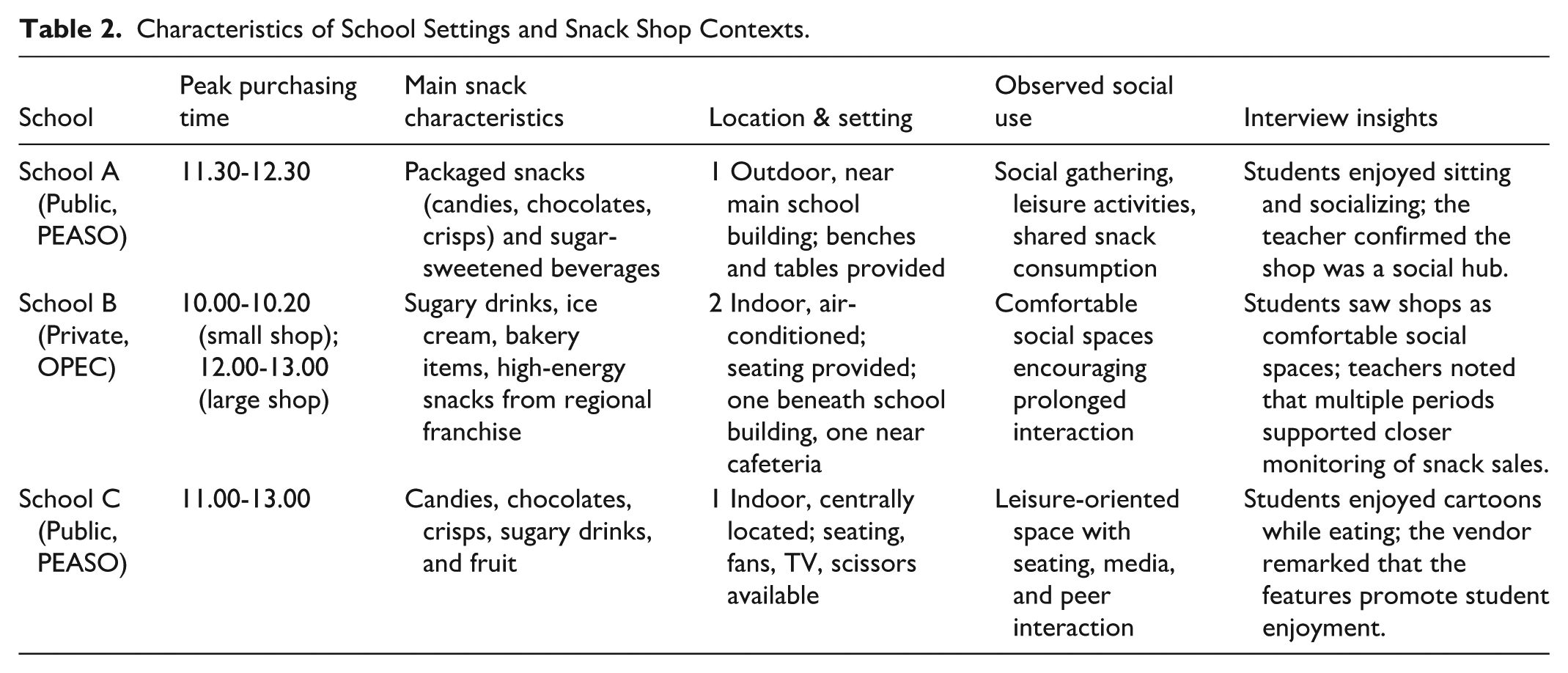
The study was conducted in 3 schools in northern Thailand: 2 public schools under the Primary Educational Service Area Office (PEASO) and 1 private school administered by the Office of the Private Education Commission (OPEC). Observations focused on snack shop layout, operating hours, food offerings, and patterns of student engagement. Complementary interviews provided additional context, helping to interpret observed practices. An overview of the school settings and snack shop contexts is presented in Table 2.
Characteristics of School Settings and Snack Shop Contexts.
School A (Public School, PEASO)
School A is a small public school with approximately 120 students. Participant observation identified a single snack shop operated by school staff and located outdoors near the main school building. The shop sold predominantly packaged snacks, including candies, chocolates, crisps, and sugar-sweetened beverages. Its operating hours were limited to 2 daily periods, with the lunch break (11.30-12.30) observed as the busiest time. The snack shop area functioned as more than a commercial space. Benches and tables nearby facilitated student congregation, and the area was routinely used for social interaction, leisure, and informal physical activities. Observations indicated that snack consumption was closely embedded within students’ social routines, reinforcing the snack shop’s role as a central social node within the school environment. Interviews with students confirmed this, with several noting that the benches are the best place to sit and chat with friends after buying snacks. Teachers also remarked that the shop was where students naturally gather during breaks, helping them relax and interact.
School B (Private School, OPEC)
School B is a large private institution with approximately 1000 students and 2 snack shops operated by teachers and school staff. Both shops sold similar products, sugary drinks, ice cream, bakery items, and high-energy snacks such as candies, chocolates, and crisps, sourced from a well-known regional franchise. The first shop, located beneath a school building, was small and operated during short break periods, with peak purchasing observed between 10.00 and 10.20. The second shop was larger, nearby to the school cafeteria, and operated across multiple time slots on weekdays and Saturdays. Observations identified the lunchtime period (12.00-13.00) as the busiest. Observations revealed both shops were situated indoors and air-conditioned, with seating provided. These comfortable settings encouraged students to remain in the space after purchasing snacks, engaging in conversation and shared consumption. Interviewed students described the shops as comfortable spaces where they can sit and talk with friends, while teachers explained that the multiple operating periods were intended to reduce crowding and enable closer supervision of snack sales and product availability.
School C (Public School, PEASO)
School C is a large public school with approximately 1300 students. A centrally located indoor snack shop operated under a 1-year contractual agreement with a vendor selected through a competitive bidding process. The shop sold candies, chocolates, crisps, sugary drinks, and fruit. Observations demonstrated that the late morning period (11.00-13.00) was the most crowded. The snack shop was designed to accommodate high student volume, with ample seating, fans, and additional amenities such as scissors for opening snack packages. A television broadcasting cartoons during snack times contributed to a recreational atmosphere. These features encouraged prolonged student presence and social interaction, positioning the snack shop as a multifunctional space combining food consumption, leisure, and peer engagement. Students mentioned that they liked to watch cartoons while eating, highlighting the recreational role of the space. The vendor noted that these features were intentionally included to encourage orderly use of the shop and enhance students’ enjoyment of their break time.
Power, Exploitation, and Inequality Within the School System
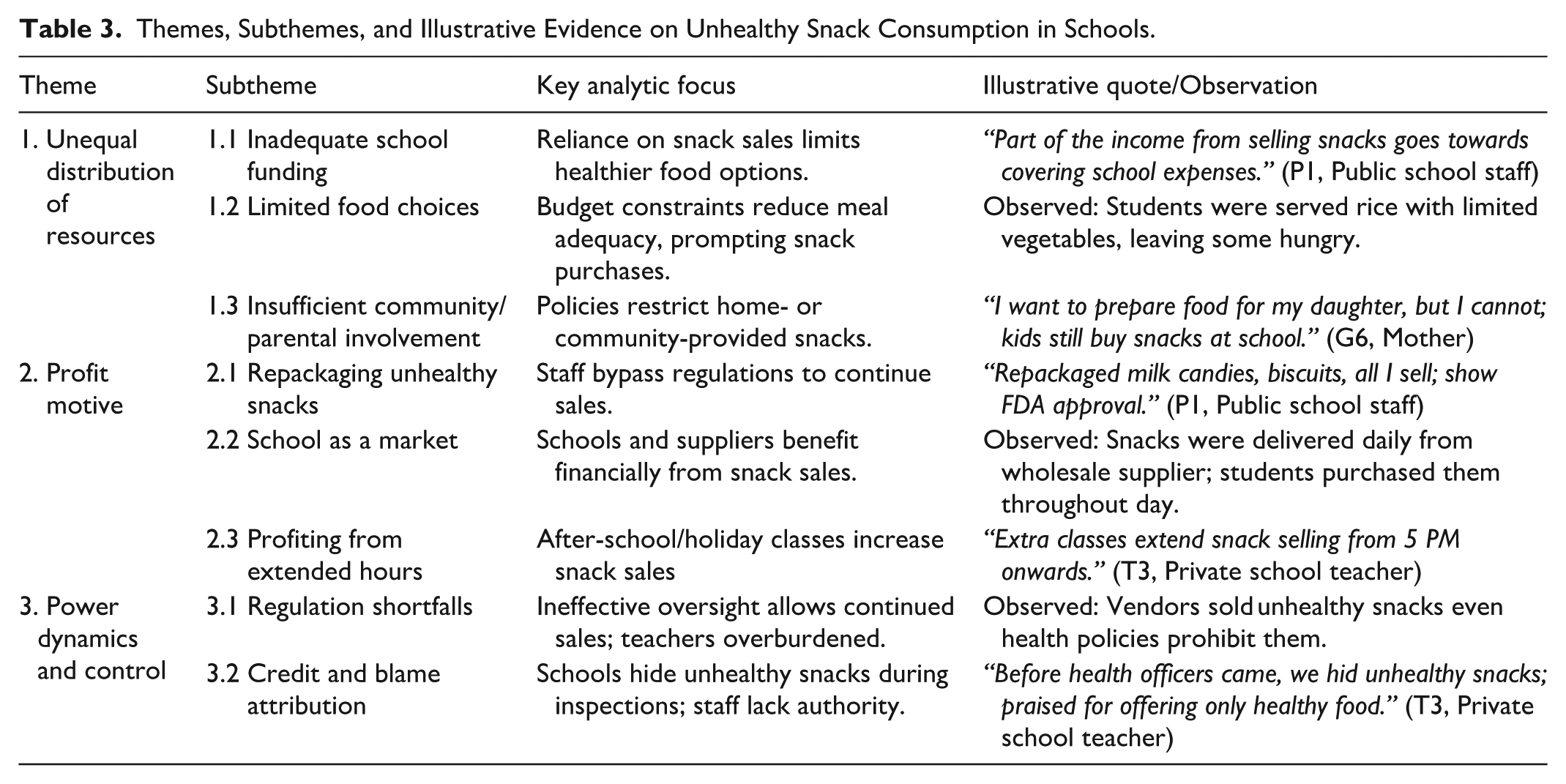
This section examines factors contributing to unhealthy snack consumption of children with an analysis to demonstrate how schools played a significant role in shaping children’s dietary choices, particularly by providing easy access to unhealthy snacks, thereby inducing students’ consumption patterns and reinforcing detrimental eating habits. Furthermore, the findings indicate that schools are often driven by economic motives, where financial considerations can take precedence over student health. These practices not only perpetuate unhealthy dietary behaviors but also exacerbate inequalities, particularly when those in positions of power exploit their authority for profit or personal gain. The findings are summarized into 3 major themes presented in Table 3: unequal distribution of resources, profit motives, and power dynamics and control. These themes emerged from the triangulated analysis of participant observation and in-depth interview data, which revealed how schools shaped children’s dietary practices.
Themes, Subthemes, and Illustrative Evidence on Unhealthy Snack Consumption in Schools.
Theme 1: Unequal Distribution of Resources
Unequal distribution of resources emerged as a recurring pattern across schools and was reflected in inadequate school funding, limited food choices within the school environment, and restricted community and parental involvement. Analysis of interview data, supported by observations of school food environments, indicated that 3 schools relied heavily on snack sales as a key source of operational income. This reliance shaped food availability on school grounds, encouraged the circulation of unhealthy snacks, and limited opportunities to provide healthier alternatives. Inadequate government subsidies for school meals further reduced food variety, while institutional restrictions on community food sales and food brought from home constrained access to healthier options for students.
Inadequate School Funding
Across interviews, school staff and vendors consistently described financial constraints that positioned snack sales as a central mechanism for sustaining school operations. These accounts aligned with observations of snack shops functioning as permanent and well-integrated features of the school environment, often operating during multiple breaks and serving as reliable sources of revenue. Participants explained that income generated from unhealthy snack sales was routinely used to cover essential expenses, reinforcing schools’ dependence on this funding model.
For example, in public school A, a staff member emphasized the long-term reliance on snack sales to support daily operations:
“Part of the income from selling snacks goes towards covering the school’s electricity and other expenses.” (P1, Public school staff)
In contrast, in public school C, a contracted vendor described how the school’s bidding process prioritized financial returns, shaping vendor selection and the products permitted for sale:
“Based on my expected annual profit, I decide how much to offer when snacks are auctioned.” (P2, Public school contracted vendor)
Beyond operational costs, both staff and students commonly believed that profits from snack sales were reinvested in school development. This belief appeared to legitimize unhealthy snack consumption among students and contributed to teacher support for continued sales. A teacher from a private school described this dynamic from different perspectives:
“The income from selling snacks covers school management, including teachers’ salaries, building new facilities, and other expenses.” (T3, Private school teacher)
In addition to school-level funding practices, participants described the involvement of the snack industry through Corporate Social Responsibility (CSR) activities. Interview data indicated that companies supplied unhealthy packaged snacks for school events, educational activities, and physical activity programs. These practices were consistent with observations in both public and private schools, where branded snack products were distributed during school activities, contributing to positive associations between students and specific snack brands. As one student recalled:
“They visit our school every year, give snacks, and play games. We still buy them to eat!” (C10, Private school student)
These results indicate how reliance on snack sales, reinforced by school practices and industry involvement, shapes student consumption and underpins profit and power dynamics.
Limited Food Choices in the School Environment
Teachers described how the government lunch subsidy of 20 Thai baht (approximately 0.59 US dollar) per student per day, which covered both ingredients and labor, constrained schools’ ability to provide varied and nutritious meals. Observations of school cafeterias supported these accounts, revealing repetitive menus and limited portions.
In public school A, a teacher explained how the loss of school-grown produce, combined with limited funding and reduced food availability:
“Vegetables and fruit were once grown for lunches, but the garden is gone. The 20-baht lunch budget sometimes leaves students hungry, so they buy snacks.” (T1, Public school teacher)
Students from both public and private schools described how dissatisfaction with school lunches prompted them to purchase unhealthy snacks instead. A public school student highlighted how constrained meal quality directly influenced snack consumption:
“If I am not happy with my lunch, I secretly give it to the dog and buy snacks to fill myself up.” (C8, Public school student)
In contrast, public school C reported receiving additional support from the local government to provide healthy snacks. However, this support was limited in frequency due to budget constraints, illustrating uneven resource allocation across schools:
“Healthy snacks, such as fruit and school milk, are provided only on Fridays.” (T4, Public school teacher)
These findings highlight how limited school meals and uneven support push students toward unhealthy snacks, setting up the discussion of financial incentives and school control.
Insufficient Community and Parental Involvement
Restrictions on community and parental involvement further constrained access to healthier food options. Participants reported that school policies prohibited community members from selling homemade or locally prepared foods, despite parental interest in providing healthier snacks. A private school teacher described the policy change:
“Community members and parents used to sell healthy homemade snacks, such as coconut crispy rolls and steamed corn, but this is no longer allowed.” (T2, Private school teacher)
From the parental perspective, these restrictions were perceived as contradictory and profit-driven:
“I want to prepare food for my daughter, but I cannot since the teacher does not allow it. Yet, kids can still buy snacks at school. (sighs)” (G6, Mother)
By limiting parental and community influence, schools reinforce the role of commercial snacks, leading into profit and power dynamics within schools.
Theme 2: Profit Motives Shaping School Food Environments
This theme captures how profit-oriented practices structured the school food environment and sustained children’s access to unhealthy snacks. Across schools, interview accounts and observed routines indicated that financial considerations influenced how snack regulations were interpreted, implemented, or bypassed. Profit motives were evident in 3 interrelated areas: the repackaging of unhealthy snacks, the positioning of schools as stable markets for snack suppliers, and the extension of school hours to maximize snack sales.
Repackaging Unhealthy Snacks
Despite formal restrictions on selling branded unhealthy snacks, schools adopted strategies to maintain their availability. One commonly reported practice involved repackaging packaged snacks to obscure brand identities while continuing their sale to students. School staff and teachers justified this practice by emphasizing regulatory compliance, particularly the presence of Thailand Food and Drug Administration (FDA) approval numbers, rather than nutritional quality. As a school staff member in public school A explained, repackaging was used to frame these products as acceptable alternatives:
“I sell repackaged milk candies, biscuits, and rice crackers. Not unhealthy snacks! I show the teacher they have FDA approval.” (P1, Public school staff)
Similarly, a private school teacher noted that these products closely resembled major snack brands, despite being presented as different items:
“The franchise repackages the snacks with its logo and FDA number. They resemble major snack brands.” (T2, Private school teacher)
Together, these accounts indicate how regulatory language was selectively interpreted to prioritize continued sales over nutritional concerns.
School as a Market for Selling Unhealthy Snacks
Beyond repackaging practices, schools functioned as reliable and profitable markets for snack suppliers. Administrators established ongoing arrangements with wholesale distributors, ensuring a constant supply of snack foods and uninterrupted sales within school grounds. These arrangements were described as efficient and mutually beneficial for both schools and suppliers. A private school teacher described the convenience of these supplier relationships:
“We order from a wholesale store. If snacks run out, they are quickly resupplied the next day.” (T2, Private school teacher)
At the classroom level, some teachers leveraged their authority and proximity to students to engage in informal snack sales, despite existing regulations. From the student perspective, these practices were normalized and perceived as convenient rather than problematic:
“The teacher sneakily sells snacks and drinks in the computer room. I can buy them anytime, more convenient than the school shop. (laughs)” (C16, Public school student)
These practices illustrate how profit-seeking behaviors were embedded within everyday school routines and facilitated by power asymmetries between teachers and students.
Profiting From Extended School Hours
Profit motives were further reinforced through the extension of school activities beyond regular hours. After-school classes, weekend programs, and holiday sessions created additional opportunities for snack sales by prolonging students’ presence on campus. Snack shop operating hours were routinely adjusted to align with these extended schedules. A private school teacher described how snack sales continued well beyond regular dismissal times:
“Extra classes extend snack selling hours from 5 PM onwards.” (T3, Private school teacher)
From the student perspective, extended hours translated into repeated opportunities to purchase snacks throughout the day:
“I attend extra classes on Saturdays. Snacks are sold like on weekdays, and I buy them during breaks and after school.” (C1, Private school student)
These findings demonstrate how extended school schedules were not only educational arrangements but also mechanisms that intensified children’s exposure to unhealthy snacks.
Theme 3: Power Dynamics and Control Within Schools
This theme examines how power relations within the school system shaped snack regulation and accountability. Authority was unevenly distributed, leading to regulatory shortfalls and strategic attribution of credit and blame. Observations demonstrated that official unhealthy snack regulations were applied inconsistently, with frontline staff and vendors often prioritizing convenience or revenue over health guidelines, limiting teachers’ ability to enforce healthy practices. Despite public endorsement of health promotion goals, everyday routines reflected selective compliance and limited enforcement.
Regulation Shortfalls
Frequent changes in school leadership disrupted regulatory continuity and weakened oversight of snack provision. Teachers and vendors described adapting to shifting administrative priorities, with some principals exercising minimal supervision over snack sales. In such contexts, profit generation was often prioritized over student health. As a teacher in public school C explained:
“Frequent changes in principals affect how things run. Some never check what snacks are sold and let the vendor sell freely.” (T4, Public school teacher)
At the same time, teachers were assigned multiple responsibilities beyond teaching, limiting their ability to monitor students’ dietary environments. In some cases, they were directly involved in maintaining snack availability to support school revenue.
“I was tasked with managing and handling many duties. The workload left little time to focus on students’ nutrition and well-being effectively.” (T1, Public school teacher) “One task from the principal is to ensure snacks are always available. If they run out, I restock immediately.” (T3, Private school teacher)
These accounts highlight how institutional expectations constrained teachers’ capacity to prioritize health-related responsibilities.
Credit and Blame Attribution in Schools
Despite the limited enforcement of snack regulations, schools actively sought recognition as health-promoting institutions. During inspections, unhealthy snacks were temporarily concealed and replaced with healthier items to present compliance with official standards. A private school teacher described this practice candidly:
“Before health officers arrived, unhealthy snacks were hidden and replaced with healthy options for inspection.” (T3, Private school teacher)
Another teacher noted that affiliation with well-known franchise brands further facilitated positive evaluations:
“When public health officials see franchise-branded snacks, inspections are easier to pass due to the brand’s image.” (T2, Private school teacher)
In contrast, teachers serving as student health advisors expressed frustration and powerlessness. Although motivated to promote healthier food environments, they lacked the authority to influence vendor practices or school-level decisions. A teacher from public school reported:
“The vendor said, ‘You are not the school principal, do not tell me what to do.’ I felt powerless. (sighs)” (T4, Public school teacher)
These contrasting perspectives reveal how responsibility for health outcomes was unevenly distributed, with frontline staff bearing accountability but lacking decision-making power.
Discussion
This study demonstrates the value of a political economy lens in understanding how schools in northern Thailand actively shape children’s unhealthy snack consumption. Triangulated interview and observational data show that institutional funding structures, commercial interests, policy gaps, and power relations drive school-level decisions that prioritize revenue over student health, reinforcing routine access to unhealthy snacks. By shifting the focus away from individual agency to the broader politico-economic systems that constrain and influence health outcomes,36,37,41 this approach highlights how structurally vulnerable children are exposed to commercial pressures and how such practices reproduce inequalities, contributing to persistent health disparities and limited access to nutritious food. This discussion identifies 3 key dimensions that underpin these issues: unequal distribution of resources, profit motives, and power dynamics and control.
Unequal distribution of resources in educational institutions is identified in this study. The findings reveal that underfunded schools relied on unhealthy snack sales, sidelining healthier funding options. The practice is normalized by the belief that profits support school operations. This malpractice is not unique to northern Thailand, similar patterns are documented in higher-income nations such as the UK and Australia, schools face similar budget constraints that affect their ability to prioritize student health.42-44 Likewise, unhealthy snacks have become a reliable revenue stream. Both school personnel and students viewed school food services as fundraising tools, perceiving unhealthy foods as money makers.45-49 Although the regulation’s national policy in Thailand prohibits marketing unhealthy foods to children in schools, 28 this study indicates that enforcement is weak. Evidence in Thailand shows that while food and beverage companies have adopted voluntary commitments to restrict marketing to children under 12 years of age, these measures do not cover all marketing channels. Moreover, industry pledges to improve access to healthier and more affordable foods fore lack clear definitions of both “healthy” products and “affordability,” particularly for children and rural populations. 32 Consistent with these findings, previous studies have documented that schools enabled snack companies to use CSR programs to supply products for school events, thereby fostering brand loyalty among students. Manipulated by the political power of the unhealthy food industries, these companies have limited government efforts to regulate school food environments effectively.30,31,39 Additionally, limited food choices in schools have resulted in the loss of school garden supplies and persistent funding shortages. The 20-baht-per-student lunch budget creates challenges for smaller schools. The resulting shortage has reduced both the quantity and quality of school meals, forcing students to buy unhealthy snacks available within schools. Studies show that the government has taken on the job of supplying school lunches but has been unable to succeed due to financial restrictions. These findings support previous research showing that limited food options in school lunch programs encourage unhealthy eating habits among students.43,45,50-52 Relatedly, schools often struggle to follow nutrition guidelines, 53 and without strong support from administrators, initiatives like school gardens, which play a vital role in supporting student nutrition, are hard to sustain. 54 Insufficient community and family involvement prevents local members from providing nutritious or fresh snacks in northern Thai schools, which leads to the consumption of processed snacks instead. Many parents want to provide their children healthy options, but school rules prohibit it. Consistent with these findings, previous research has shown that Thai schools have failed to engage parents and community members in supporting healthy food initiatives. 26 Similarly, research indicates that low-income caregivers avoid preparing traditional healthy foods for children to bring to school as they are afraid that it may cause issues with school administrators. 55 In contrast, evidence from other contexts demonstrates that, building partnerships with parents, local farmers, and community organizations can strengthen school food programs. Initiatives such as school gardens, volunteer-based food preparation, and local food sourcing have been shown to improve dietary quality while fostering community engagement and shared responsibility for children’s well-being.54,56-60
This study reveals the profit motive within school settings in northern Thailand. Although unhealthy branded snacks are restricted in Thai schools, 28 the findings demonstrate that schools frequently circumvent these regulations by repackaging them and offering them to children as cheaper and healthier options, making them more convenient, longer lasting, and easier to sell than fresh fruits. This approach not only increases sales but also aligns with students limited daily allowances, highlighting affordability as a major influence on purchasing decisions. Comparable evidence has been reported that unhealthy snacks sold in and around schools in the Philippines are up to 5 times cheaper than fresh fruits. 49 Relatedly, due to limited spending power, children and adolescents, especially in rural areas with limited access to healthy options, tend to choose cheaper, unhealthy food choices.61-65 This study apparently shows that schools in northern Thailand successfully commodify students’ appetites, transforming educational spaces into consumer markets. School administrators form monopoly agreements with wholesale suppliers to ensure the uninterrupted flow of snack products and maximize mutual earnings. Some teachers subvert official policies by informally selling snacks within their classrooms. Schools have increasingly become marketed settings, with less healthful foods readily available. Similarly, previous studies in Southeast Asia have shown that the absence of healthy alternatives such as fresh fruit in school settings underscores a systemic neglect of nutritional well-being in favor of convenience and profit.61,62 Moreover, the findings of this study indicate that the expansion of school hours via after-school, weekend, and holiday programs is utilized not only to provide educational content but also to enhance food-related profitability by selling unhealthy snacks to students, reflecting the exploitation of students’ consumption patterns as a means of revenue generation. Prior studies have demonstrated that students frequently experience hunger after school, leading them to consume unhealthy snacks that are readily available at school.66,67 In addition, schools frequently arrange extracurricular activities that promoted junk food intake, with salty and sweet snacks being supplied at special occasions. These patterns disproportionately affect children from low socioeconomic backgrounds, who are already vulnerable to poor dietary quality.44,68,69
Power dynamics and control which are understood as the unequal distribution of authority, decision-making power, and accountability within the school system, particularly between administrators, teachers, vendors, and regulators, can be seen in this research. These relations shape which interests are prioritized and whose capacity to act is constrained within school food environments. This study shows that in northern Thailand, school leadership played a decisive role in shaping snack regulation. Although formal policies restricted unhealthy snacks, enforcement depended largely on administrators’ priorities. In practice, leadership frequently prioritized revenue generation over student health, enabling continued access to unhealthy snacks. Teachers, positioned lower in the institutional hierarchy, were often overburdened with multiple responsibilities, including supporting snack sales, which limited their ability to monitor students’ nutrition or challenge unhealthy practices. These findings support previous studies showing that contradictions between health promotion activities and actual food practices, combined with principals’ limited understanding and lack of prioritization, hindered progress, particularly in schools lacking clear regulations or viewing food oversight as beyond their responsibility.44,48,70 This research also highlights how schools managed credit and blame under Thailand’s health promotion policy by hiding unhealthy snacks during inspections, despite official restrictions. Evidence in Thailand shows that the shift from external evaluations to self-reporting has reduced regular monitoring and technical support, weakening accountability and making it more difficult for schools to sustain meaningful health programs. 33 Furthermore, the findings indicate that schools concealed their guilt during assessments to meet criteria and secure rewards, while continuing to allow easy access to unhealthy foods sold for profit, limiting students’ access to well-planned nutritious options, highlighting a clear gap between policy compliance and actual practice. Consistent with evidence from other contexts, this study confirms that limited enforcement, unclear monitoring criteria, and insufficient resources have hindered compliance, making healthy food policies largely ineffective in practice.38,49,53,71
Strengths and Limitations
This study’s strengths include the use of multiple qualitative methods (participant observation and in-depth interviews), which allowed for a comprehensive understanding of snack consumption practices in schools. The triangulation of data sources and involvement of multiple researchers in coding enhanced the credibility and trustworthiness of the findings. However, several limitations should be noted. The findings are based on data from a limited number of schools in Northern Thailand, which may affect the generalizability of the results to other regions or contexts. Social desirability bias may have influenced participants’ responses. Future research could address these limitations by including a larger and more diverse sample and employing additional data collection methods.
Conclusion
This qualitative study examined how schools in northern Thailand promote unhealthy snack consumption among children through political economy lens. Findings from observations and interviews highlight 3 interrelated themes: unequal resource distribution, profit motives, and power dynamics, showing that unhealthy snack consumption is driven not by individual choice but by structurally embedded economic and governance arrangements. First, underfunding makes snack sales a critical revenue source, limiting healthier options and constraining school meals, while restrictive marketing policies reinforce students’ reliance on inexpensive unhealthy snacks. Second, schools function as marketplaces, where profit motives embed unhealthy snacks into daily routines, normalizing frequent consumption. Third, unequal power and weak oversight concentrate food decisions among administrators and vendors, leaving teachers as health advisors, powerless and allowing schools to appear compliant without meaningful change. To improve these challenges, authorities should prohibit unhealthy snack sales, promote nutrition-focused revenue alternatives, and strengthen regulations limiting children’s exposure to unhealthy food marketing. Empowering school staff, increasing lunch budgets, fostering community collaboration, and aligning extended school hours with national nutrition guidelines can further support student well-being. Finally, regular inspections, robust monitoring, and clear accountability mechanisms are essential to ensure effective policy implementation.
Supplemental Material
sj-docx-1-inq-10.1177_00469580261441443 – Supplemental material for School as Marketplace for Promoting Unhealthy Snack Consumption Among Children in Northern Thailand
Supplemental material, sj-docx-1-inq-10.1177_00469580261441443 for School as Marketplace for Promoting Unhealthy Snack Consumption Among Children in Northern Thailand by Benjaporn Pudsa, Suphot Denduang, Penchan Pradubmook Sherer and Thammarat Marohabutr in INQUIRY: The Journal of Health Care Organization, Provision, and Financing
Supplemental Material
sj-docx-2-inq-10.1177_00469580261441443 – Supplemental material for School as Marketplace for Promoting Unhealthy Snack Consumption Among Children in Northern Thailand
Supplemental material, sj-docx-2-inq-10.1177_00469580261441443 for School as Marketplace for Promoting Unhealthy Snack Consumption Among Children in Northern Thailand by Benjaporn Pudsa, Suphot Denduang, Penchan Pradubmook Sherer and Thammarat Marohabutr in INQUIRY: The Journal of Health Care Organization, Provision, and Financing
Footnotes
Acknowledgements
The authors are grateful to all participants for their time, insights, and contributions to this study. Their perspectives were essential to the completion of this research.

Ethical Considerations
This study was conducted according to the international guidelines of human research protection, such as the Declaration of Helsinki, the Belmont Report, and the CIOMS Guidelines, and received ethical approval from the Committee for Research Ethics (Social Sciences) of Mahidol University numbered MUSSIRB No. 2018/130 (B2).
Consent to Participate
Written informed consent was acquired from all participants aged 7 to 12 years and their legal guardians, as well as from competent adults (aged 18 years or above).
Author Contributions
BP conceptualized and designed the study, and conducted data collection and initial analysis. BP, SD, PPS and TM contributed to data extraction and analysis. BP and TM drafted the manuscript. TM critically reviewed and revised the manuscript. All authors read and approved the final version of the manuscript.
Funding
The authors received no financial support for the research, authorship, and/or publication of this article.
Declaration of Conflicting Interests
The authors declared no potential conflicts of interest with respect to the research, authorship, and/or publication of this article.
Data Availability Statement
Data can be accessed by contacting the first author and the corresponding author.*
Supplemental Material
Supplemental material for this article is available online.