



Abstract
Exclusive breastfeeding is defined as a condition in which the child takes only breast milk and no additional food, water, or other liquids for the first 6 months of its life. Even though many contributing factors are present for this problem, fathers’ knowledge about breastfeeding is a vital and neglected part. A baby has a higher chance of being breastfed if the father has more knowledge regarding exclusive breastfeeding. This study aims to assess knowledge of exclusive breastfeeding and associated factors among fathers of infants aged under 1 year in Northeast Ethiopia, 2023. A community-based cross-sectional study was done with 620 fathers whose wives had given birth in the previous year. A multistage sampling process was used to choose study participants. A pretested and organized questionnaire was used to collect data, which was administered via interviews. The information was entered into EpiData version 4.6 and then exported to SPSS version 25 for analysis. Binary logistic regression was used, and variables having a P-value lower than .05 were regarded as significant factors impacting the outcome variable. In this study, a total of 612 participants were involved. Out of 612, 374(61.1%) of participants had good knowledge (95% CI 57.2-64.9). Forty percent of respondents were in the age group of 30 to 34 years. The majority of the respondents, 420 (68.6%), were urban residents. Living in a rural residence(AOR = 0.16, 95% CI: 0.1-0.33), attending secondary school and above (AOR = 3.83, 95% CI: 1.47-13.04), employers (AOR = 1.87(1.20-5.4)), accompanying during antenatal contact(AOR = 5.15, 95% CI: 2.07-12.81), and wives’ postnatal follow-up (AOR = 6.1, 95% CI: 2.90-14.25) were independent predictors of good knowledge level of respondents. Nearly two-thirds of fathers had good knowledge of exclusive breastfeeding. Key predictors included rural residence, wives’ postnatal care, accompanying antenatal visits, higher education, and employment status.
Introduction
Exclusive breastfeeding (EBF) is described as giving a newborn just breast milk throughout the first 6 months of life, with no other food, water, or beverages, with the exception of medicine and vitamins as needed. 1 It is a vital component of good breastfeeding practice. Breast milk provides almost all the necessary vitamins (except vitamin K), nutrients, essential fatty acids, and immunological substances required for an infant’s brain, eye, and vascular development, which are not present in other milk sources. 2 With limited exceptions, human breast milk is the healthiest form of milk for infants. 3
EBF significantly reduces the burden of infant and child morbidity and mortality. According to recent reports, universal exclusive breastfeeding could prevent nearly 12% of under-five deaths in low- and middle-income countries annually 4 EBF also helps regulate the baby’s body temperature through skin-to-skin contact during feeding and decreases the risk of infections such as ear, respiratory, and gastrointestinal diseases; necrotizing enterocolitis; and sudden infant death syndrome. 2 Both the World Health Organization (WHO) and United Nations Children’s Fund (UNICEF) recommend EBF for the first 6 months of life, with continued breastfeeding alongside complementary foods until 24 months. 5 The World Health Assembly (WHA) aims to increase the global rate of EBF to at least 50% by 2025 and 70% by 2030. 6
Despite these benefits, the global prevalence of EBF in babies under 6 months remains at 41%, with significant regional variations. 7 EBF rates are 37% in low- and middle-income countries, with 47% in Eastern and Southern Africa.8,9 In Kenya and Ethiopia report EBF rates of 61% and 58%, respectively.10,11 Suboptimal breastfeeding practices account for 10% of the illness burden among children under 5 and are linked to 1.4 million annual child deaths, primarily due to non-exclusive breastfeeding within the first 6 months. 12
Family and social support, particularly from fathers, is a key element influencing EBF behaviors. Fathers’ knowledge and involvement in breastfeeding have a considerable impact on mothers’ capacity to engage in EBF. 13 Evidence suggests that fathers’ comprehension of breastfeeding, including its advantages and practical support, is critical for promoting, supporting, and safeguarding EBF practices. 14 For instance, studies in India and South Africa show variations in fathers’ knowledge of EBF, ranging from 75% in India, 15 and 41.5% in South Africa. 16 In Ethiopia, 90% of fathers in rural areas have heard of EBF, but only 58% have adequate knowledge in certain places, such as the Gurage Zone 17
Fathers’ knowledge of EBF has been highly associated with better breastfeeding results. Mothers whose partners are more knowledgeable about EBF are far more likely to exclusively breastfeed 18 Educational programs aimed at fathers have proven effective in increasing EBF rates. For example, research in Vietnam, Turkey, and Brazil discovered that involving fathers in breastfeeding instruction programs dramatically boosted EBF prevalence19 -21 Similarly, a WHO postnatal care recommendation states that couples’ education enhances EBF rates when compared to education for mothers just 22
Based on the socio-ecological model of health behavior, individual, interpersonal, and contextual factors affect fathers’ knowledge of exclusive breastfeeding 23 The educational background of fathers improves health literacy and comprehension of breastfeeding information.8,24 Participation in antenatal and postnatal care offers chances for direct advice and collaborative decision-making, which enhances fathers’ understanding.24,25 The location where people live influences their ability to access health services, media, and health promotion initiatives, as urban dwellers typically have more access to information related to breastfeeding compared to those living in rural areas. 26
In Ethiopia, where nursing and childcare are frequently seen as women’s responsibilities, little study has been conducted on fathers’ knowledge of EBF. Programs such as the Ethiopian Ministry of Health’s Alive & Thrive campaign, which began in 2009, have attempted to close this gap by increasing fathers’ and mothers’ awareness and abilities in EBF. 27 However, comprehensive data on fathers’ knowledge remains sparse, particularly in regions like Dessie Town, Amhara, and Northeast Ethiopia.
This study aimed to address this gap by assessing fathers’ knowledge of EBF in Dessie Town, Amhara Region, Northeast Ethiopia, in 2023. The findings provided valuable insights into an often-overlooked but critical aspect of improving child survival and promoting healthy growth and development.
Methods
Study Area, Design, and Period
A community-based cross-sectional study was conducted in Dessie town, located in the Amhara Regional State, Northeast Ethiopia, from February 8 to March 6, 2023. Dessie town comprises 18 urban and 8 rural kebeles. According to the 2021 Dessie Town Health Office report, the town has an estimated total population of 285 530, with 141 338 men and 144 192 women. Over the past year, 2973 women gave birth in Dessie town, of which 1209 women reside in the selected 10 kebeles. The town is served by 2 government hospitals, 6 private hospitals, 8 health centers, 14 health posts, and 24 private clinics.
Source Population
All fathers whose wives gave birth in the last year in Dessie town and have lived there for at least 6 months.
Study Population
All fathers whose wives gave birth in the last year and living in selected kebeles of Dessie town during the data collection period.
Inclusion Criteria
All fathers whose wives gave birth in the last year in the study area and were present during the study period.
Exclusion Criteria
Those fathers who were seriously ill and unable to respond during the data collection period
Sample Size Determination
The sample size was calculated using the single population proportion formula by assuming 5% marginal error(d) and 95% confidence interval at alpha = .05 and the prevalence of good knowledge toward breastfeeding in Gurage zone, SNNPR, Ethiopia, which was 58.3%. 25 The calculated sample size is 375.

The sample size for the factors associated with knowledge of exclusive breastfeeding was calculated using the double population proportion formula in the Epi Info™ 7 statistical package. A previous study identified living in an urban area as an associated factor for knowledge of exclusive breastfeeding. 25 The inputs for this calculation included a 95% confidence level, 80% power, a 1:1 ratio, an outcome of 52.2% in the unexposed group, an odds ratio of 1.95, and a design effect of 1.5. Considering all these factors, a sample size of 486 was determined. The optimal sample size for this study was 375. Considering a 1.5 design effect and 10% non-response rate, the final sample size was 620.
Sampling Technique and Procedures
A 2-stage stratified sampling technique was used to select the study participants. There are 26 kebeles in Dessie town (18 urban and 8 rural), which classifies in to 2 strata. First 7 urban kebeles and 3 rural kebeles were selected randomly. From these selected kebeles, husbands with their wives who gave birth in the past year were enrolled by a systematic random sampling technique as study participants of this study. The first study participant was selected by a simple random sampling method. The number of study participants was allocated to each kebele by proportional allocation of the total sample size (620) to 10 kebeles based on the last 1-year report of each kebele. The total number of fathers in the selected kebeles was taken as the total population, which is 1209. Then, to obtain the sampling interval (K), the formula k = N/n was used. (k = 1209/620 = 2), where k is a constant value, N is the number of fathers whose wives are delivered in the last year in the selected kebeles, and n is the sample size. The k value for each kebele is similar to that of the average value. For example, k = 112/57 = 1.96 and k = 132/67 = 1.97 for Salaysh and Robit, respectively, which is approximately equal to 2. So, every other respondent in selected kebeles was taken until the required sample size was fulfilled.
Study Variables
The dependent variable of interest in this study was knowledge of exclusive breastfeeding. Participants’ knowledge was categorized as “good” if their knowledge score was equal to or above the mean score; otherwise, it was classified as “poor.” Respondents whose wives visited a health institution at least once for pregnancy check-ups were considered to have received antenatal care follow-up. For the multivariable analysis, the following independent variables were considered: marital status, age, number of living children, educational status, partner accompaniment during ANC check-ups, wife’s postnatal care (PNC) follow-up, history of exclusive breastfeeding, occupational status, and residence 17
Data Collection Tools and Procedure
The data collection tool was developed by reviewing related literature and adapted to this study. First, it was prepared in English, translated into Amharic, and retranslated back to English by a language translator to ensure internal consistency. Data were gathered by standardized, pretested questionnaires with face-to-face interviews. The questionnaires cover socio-demographic characteristics, information related factors, and obstetric-related questions of the fathers’ wife were, and the outcome variable was assessed with 8 questions which were adopted from research done in Gurage zone, southern Ethiopia.15 -17 The overall knowledge score for each participant was calculated by summing the results from 8 questions, with a possible range of 0 to 8. The question items were recorded and categorized into responses (yes or no), with 1 point awarded for each correct answer and 0 for each incorrect answer. The results of participants were dichotomized using 0.5 of the total score as the cut-off value of the mean knowledge level.
Data collection was performed by 5 trained midwives, and 1 trained Master of Public Health in Epidemiology and Biostatistics was involved in supervision.
Data Quality Control
The investigator constructed the data-collecting instrument in English, translated it into Amharic, and retranslated to English by a language translator to ensure internal consistency. The principal investigator trained the data collectors and supervisors for 1 day about the study’s purpose, tool contents, and sampling technique, and provided clear and acceptable descriptions to participants. Before data collection, the questionnaire was pretested on 5%(31) of the overall sample population at Kombolcha town. The questionnaires were collected by skilled data collectors. The selected and trained supervisor monitored the data collectors to ensure the accuracy and uniformity of the completed questionnaires.
Data Processing and Analysis
The collected data were checked for their completeness, then it was coded, cleaned, and finally entered into Epi Data version 4.6 and exported to SPSS Version 25 for analysis. Descriptive statistics, including charts, tables, and statements was used to describe the data. Binary logistic regression analyses were carried out to check the association of the explanatory variables with the dependent variable. Those Variables in bivariable analysis with a P-value less than or equal to .2 were included in multivariable logistic regression. Multivariable logistic regression analyses were performed for those factors that showed a statistically significant association in bivariable logistic regression analysis, and investigated independent predictors by controlling for possible confounders. The adjusted odds ratio(AOR) was used to interpret the strength of association at 95% confidence interval (CI).
A statistical test of the association was considered significant at a P-value of <.05. Finally, the result is presented in the form of text descriptions, tables, and graphs. Multicollinearity was checked between independent variables, and the variance inflation factor was less than 10 (1.04 -5.1). The model goodness of the test was checked using the Hosmer-Lemeshow goodness of fit test, and its P-value was .67 for knowledge of exclusive breastfeeding.
Ethical Considerations and Consent to Participate
The data collection was carried out after taking ethical approval from Wollo University’s ethical review committee with reference number CMHS/697/2023. A formal letter was written to the Dessie town health department, and official permission was secured from it. The study was conducted in accordance with the ethical standards of the Declaration of Helsinki. The purpose of the study and participants’ right to refuse were explained to the study participants, and informed written consent was obtained. Moreover, consent from participants with no formal education was obtained after the information sheet was read aloud in the local language and documented by thumb impression with a witness. Additionally, written informed consent was obtained from the legally authorized representatives of all participants under 18 years old before enrollment. Coding was implemented to remove respondents’ names and other personal identifiers throughout the study to ensure participant confidentiality.
Results
Socio-Demographic Characteristics
A total of 612 individuals were successfully interviewed, with a response rate of 98.7%. Forty percent of responders were between the ages of 30 and 34. The average age of participants was 32.1 years, with a standard deviation of ±5.9 years. The bulk of responders, 420 (68.6%), were urban dwellers. Regarding educational status, nearly 44% of participants attended secondary education and above, and 34.3% were employer respect to occupation (Table 1).
Socio-Demographic Characteristics of Respondents for the Study to Assess Knowledge of Fathers Whose Wives Delivered in the Last 1 Year Toward EBF and Its Associated Factors at Dessie Town, Amhara, Northeast Ethiopia, 2023 (n = 612).

Obstetric Characteristics of the Wife and Family Size
About three-fourths, 426 (69.6%) of the participants had 2 or more living babies. About 518 (84.6%) of participants’ wives had ANC follow-up at least once during the last pregnancy (Table 2).
Obstetric Characteristics of the Wives of the Study Participants in Dessie Town, Northeast Ethiopia (n = 612).

Respondent’s Media Exposure
Almost all of the respondents, 568 (92.8%), have access to media in different ways. Of all participants, 26.8% got information about EBF from a health institution, followed by 8.5% from their friends and 54.8% from the media.
Father’s Knowledge of Exclusive Breastfeeding
The overall prevalence of good knowledge of fathers about EBF was 374 (61.1%) with 95% CI 57.2, 64.9. Around 90% (550) of the respondents heard about exclusive breastfeeding (Figure 1).
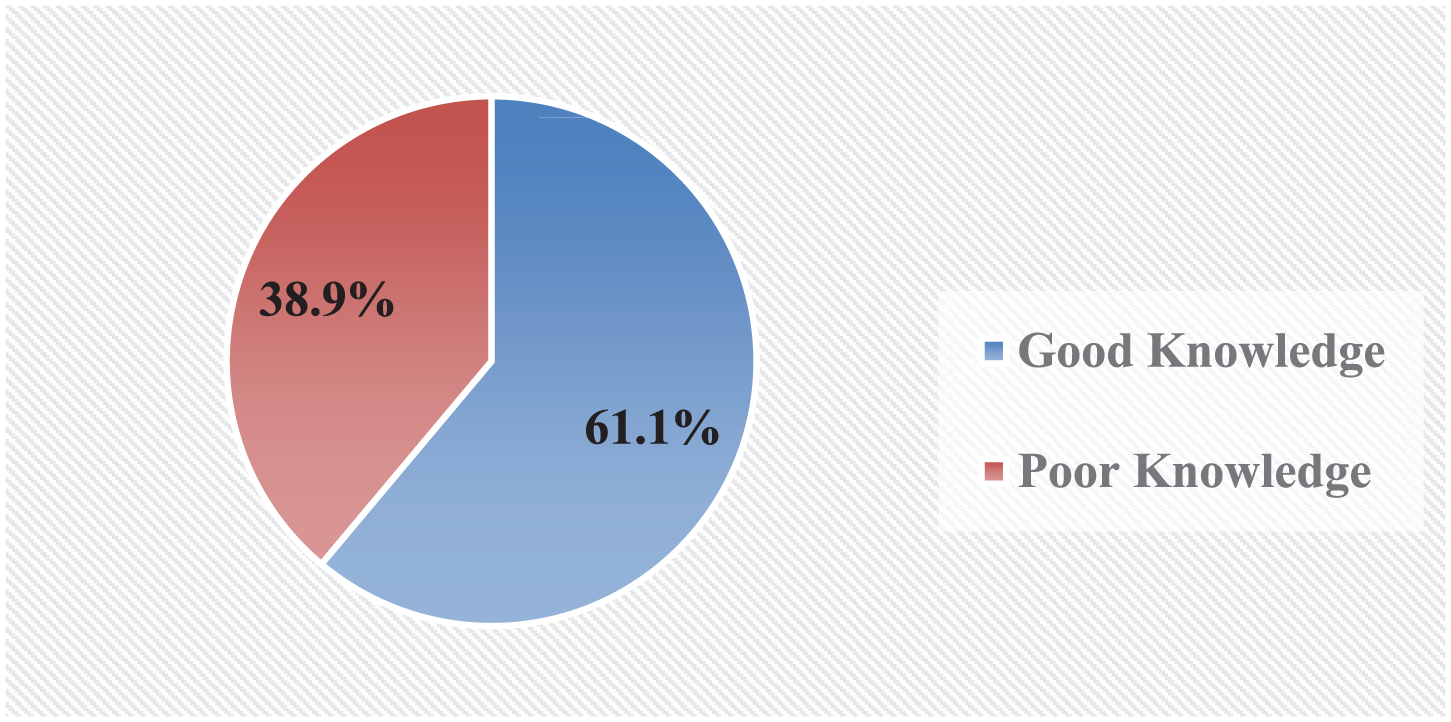
Overall father’s knowledge of exclusive breastfeeding in Dessie town, Northeast Ethiopia, 2023.
Factors Associated with EBF Knowledge
In the bivariable analysis, factors such as marital status, age, number of live children, educational status, partner accompaniment during ANC checkups, wife’s PNC follow-up, history of exclusive breastfeeding (EBF), occupational status, and residence showed a P-value of <.2, making them candidates for multivariable analysis. In the multivariable logistic regression study, 5 variables were found to be independently related to fathers’ knowledge of exclusive breastfeeding. These included educational status, partner attendance at ANC checkups, wife’s PNC follow-up, occupational status, and living in urban areas.
Study participants residing in rural areas were 16% less likely to have good knowledge about exclusive breastfeeding compared to those living in urban areas (AOR = 0.16; 95% CI: 0.1-0.33). Regarding fathers’ occupations, employers were 1.8 times more likely to have good knowledge about EBF compared to farmers (AOR = 1.87; 95% CI: 1.2-5.4), while merchants were 9% less likely to have good knowledge compared to farmers (AOR = 0.094; 95% CI: 0.024-0.371).
Fathers who attended secondary school or higher were 3.8 times more likely to have good knowledge about EBF compared to those who could not read or write (AOR = 3.83; 95% CI: 1.47-13.04). Participants who accompanied their wives to health institutions during ANC checkups were 5 times more likely to have good knowledge about EBF compared to those who did not (AOR = 5.2; 95% CI: 2.1-9.8). Additionally, fathers whose wives attended PNC during the last postpartum period were 6.1 times more likely to have good knowledge compared to those whose wives did not (AOR = 6.10; 95% CI: 2.90-14.25; Table 3).
Bivariable and Multivariable Regression Analysis Indicating Factors Affecting Knowledge of Exclusive Breastfeeding of Respondents in Dessie Town, Northeast Ethiopia, 2023 (n = 612).

AOR = adjusted odds ratio, COR = crude odds ratio, CI = confidence interval, 1 = reference category.
Discussion
This study examined fathers’ knowledge and associated factors about exclusive breastfeeding (EBF) among those whose wives had given birth in the previous year in Dessie Town, Northeast Ethiopia. The findings were compared to studies conducted both globally and in Ethiopia. According to this study, 374 (61.1%) of respondents had good knowledge of EBF, with a 95% confidence interval (CI) of 57.2% to 64.9%. This result aligns with findings from a study conducted in the Gurage Zone, Southern Nations, Nationalities, and Peoples’ Region (SNNPR), Southwest Ethiopia. 17 However, this was lower than the study conducted in India. 15 The discrepancy might be attributed to differences in access to healthcare and media, as well as socio-cultural, economic, and health service utilization characteristics between the referenced areas and the study location. Conversely, the result is higher than that from studies conducted in South Africa. 16 and Vietnam 19 This difference may be due to variations in socio-cultural characteristics, rural community settings of the referenced studies, and differences in the study periods. In this study, respondents living in urban areas were more likely to have good knowledge than those living in rural areas. This finding is consistent with findings from research conducted in India and the Gurage Zone of Ethiopia.15,17 The observed connection could be explained by urban inhabitants’ increased access to knowledge as a result of media availability, as well as enhanced healthcare access throughout pregnancy and postpartum periods. Attending secondary education and above was significantly associated with EBF knowledge.
Participants who had attained secondary school education or higher were more knowledgeable than those who were illiterate. This finding is supported by reports from Indonesia, Malaysia,28,29 and South Africa 16 This may be higher education levels may provide numerous routes for acquiring information, allowing individuals to comprehend the concept and benefits of EBF. Education improves information gathering practices and the proper and regular administration of EBF for children under the age of 6 months.
Fathers employed in non-agricultural occupations were more knowledgeable than farmers. This result is consistent with findings from a study conducted in South Africa 16 The possible explanation may be that employers are more likely to have attained some level of education, have better access to social media, and are typically urban residents.
Participants who accompanied their wives to at least one antenatal care (ANC) appointment were more knowledgeable than their peers. This finding is consistent with previous research done in South Africa and the Gurage Zone, Ethiopia.16,17 This connection could be ascribed to the health-related information given by health providers during ANC visits. Furthermore, fathers who accompany their spouses to ANC appointments are more likely to have higher educational backgrounds, which may enhance their knowledge. The study also discovered that participants who had partners who had at least one postnatal care (PNC) visit during the postpartum period were considerably more educated about EBF than those who did not. This could be due to the information shared between fathers and their wives, who receive counseling on EBF and related issues during health facility visits.
Strengths and Limitations of the Study
The research was conducted at the community level, which helps to access individuals who couldn’t visit a health facility for different reasons, and the inclusion of urban and rural residents is its strength. The effect of social desirability bias on the knowledge assessment and cluster is not considered for analysis, which were limitations of the study.
Implications for Practice
The study emphasizes the need for integrating fathers into antenatal and postnatal care programs to enhance breastfeeding practices.
Increasing access to education and using media to disseminate breastfeeding information in rural areas can bridge the knowledge gap.
The findings contribute to understanding the role of paternal involvement in breastfeeding, with implications for similar low- and middle-income settings.
Conclusion
This study highlights the importance of factors such as urban residence, education, employment type, and participation in ANC and PNC visits in improving fathers’ knowledge of EBF. These findings underscore the need for targeted interventions to enhance EBF knowledge among fathers, particularly in rural settings and among less-educated populations.
Supplemental Material
sj-docx-1-inq-10.1177_00469580261441127 – Supplemental material for Knowledge of Exclusive Breastfeeding and Associated Factors Among Fathers of Infants Under 1 year in Northeast Ethiopia
Supplemental material, sj-docx-1-inq-10.1177_00469580261441127 for Knowledge of Exclusive Breastfeeding and Associated Factors Among Fathers of Infants Under 1 year in Northeast Ethiopia by Mulugeta Animaw, Abdulaziz Assefa, Aynalem Belay, Zenebe Tefera, Amare Workie and Mangistu Abera in INQUIRY: The Journal of Health Care Organization, Provision, and Financing
Supplemental Material
sj-docx-2-inq-10.1177_00469580261441127 – Supplemental material for Knowledge of Exclusive Breastfeeding and Associated Factors Among Fathers of Infants Under 1 year in Northeast Ethiopia
Supplemental material, sj-docx-2-inq-10.1177_00469580261441127 for Knowledge of Exclusive Breastfeeding and Associated Factors Among Fathers of Infants Under 1 year in Northeast Ethiopia by Mulugeta Animaw, Abdulaziz Assefa, Aynalem Belay, Zenebe Tefera, Amare Workie and Mangistu Abera in INQUIRY: The Journal of Health Care Organization, Provision, and Financing
Footnotes
Acknowledgements
The authors would like to thank Wollo University for allowing us to conduct the research and for granting ethical approval. The authors also extend their gratitude to the study participants, data collectors, and the supervisor for their unreserved efforts and willingness to participate in this research study.
List of Abbreviations

Ethical Considerations
The data collection was carried out after taking ethical approval from Wollo University ethical review committee with reference number (Ref no CMHS/697/2023). A formal letter written to Dessie town health department. and an official permission was secured from it. The study was conducted in accordance with the ethical standards of the Declaration of Helsinki.
Consent to Participate
The purpose of the study and participants’ right to refuse were explained to the study participants, and informed written consent was obtained. Moreover, consent from participants with no formal education was obtained after the information sheet was read aloud in the local language and documented by thumb impression with a witness. Additionally, written informed consent was obtained from the legally authorized representatives of all participants under 18 years old before enrollment. Coding was implemented to remove respondents’ names and other personal identifiers throughout the study to ensure participant confidentiality.
Author Contributions
Mulugeta Animaw, Amare Workie, and Zenebe Tefera conceptualized and designed the study. Aynalem Belay and Abdulaziz Assefa conducted the data analysis. Mulugeta Animaw, Amare Workie, Zenebe Tefera, and Mangistu Abera interpreted the findings, contributed to the intellectual content, and drafted the manuscript. Aynalem Belay, Mangisu Abera, and Abdulaziz reviewed the draft manuscript. All authors critically reviewed and approved the final manuscript for publication.
Funding
The authors received no financial support for the research, authorship, and/or publication of this article.
Declaration of Conflicting Interests
The authors declared no potential conflicts of interest with respect to the research, authorship, and/or publication of this article.
Data Availability Statement
Data that support the findings are available from the corresponding author upon a reasonable request*.
Supplemental Material
Supplemental material for this article is available online.