



Abstract
This study investigates the interrelations between perceived stress, depression, anxiety, sleep quality, and fatigue among active Turkish seafarers, with a particular focus on the mediating roles of sleep quality and fatigue. A total of 955 seafarers serving on various vessel types participated in the study. Demographic information, including ship type, job role, and workload, was collected. The Perceived Stress Scale, Beck Depression Inventory, Beck Anxiety Inventory, Pittsburgh Sleep Quality Index (PSQI), and Functional Assessment of Chronic Illness Therapy–Fatigue Scale (FACIT-F) were administered, and analyses were conducted using IBM SPSS version 25 and PROCESS Macro v4.2. The results indicate that both sleep quality and fatigue significantly mediate the relationship between perceived stress and depressive symptoms, as well as between perceived stress and anxiety symptoms. Additionally, mental health outcomes varied significantly across ship type, job role, and workload. The findings highlight the critical role of sleep and fatigue management in safeguarding seafarers’ mental well-being and enhancing operational safety at sea. This study contributes to the growing body of knowledge on psychosocial risk factors in maritime settings and suggests that integrated fatigue risk management systems and evidence-based psychological support programs are essential to ensure safety, efficiency, and sustainability within the shipping industry.
What do we already know about this topic?
Existing research shows that seafaring involves not only physical demands but also substantial psychological burdens. Extended periods at sea, shift work, isolation, and limited social interaction create conditions conducive to anxiety, depression, stress, sleep disturbances, and fatigue. These factors are known to negatively influence occupational safety and operational performance.
How does your research contribute to the field?
This study examines multiple determinants of mental health among seafarers simultaneously, statistically testing how these factors interrelate. Its particular value lies in identifying how sleep quality and fatigue mediate the impact of stress on psychological symptoms, making it one of the few studies to address this interaction in the maritime context.
What are your research’s implications toward theory, practice, or policy?
Theoretically, the findings support the inclusion of sleep and fatigue as mediating variables in models explaining the mental health effects of occupational stress. Practically, they point to the need for psychosocial support systems and fatigue management strategies tailored to the realities of shipboard life. From a policy perspective, the results provide strong evidence for developing industry-wide standards aimed at protecting mental health and improving working conditions in the maritime sector.
Introduction
Seafarers operate in one of the most demanding and isolating work environments in the world, often facing prolonged periods away from home, irregular work hours, and exposure to high-risk conditions. These unique occupational challenges place them at a heightened risk for mental health issues, including depression, anxiety, and stress. Recent studies reveal that over 40% of seafarers report symptoms of depression, more than 30% experience anxiety, and at least 1 in 4 suffer from chronic fatigue.1,2 Şenbursa et al examined the physical and mental health of Turkish seafarers, revealing significant demographic and occupational variations, with nearly half of participants reporting poor mental health scores findings that underscore the urgency of targeted mental health interventions in this population. 3 Sleep disturbances are also alarmingly prevalent, with up to 60% of seafarers reporting poor sleep quality, directly impacting safety and performance at sea. 4 The COVID-19 pandemic has further exacerbated these challenges, introducing unprecedented stressors such as prolonged time on board due to crew change restrictions, increased workloads, and heightened concerns about personal and family health. 5 These factors have led to a significant rise in mental health issues among seafarers, with studies reporting increased levels of depression, anxiety, and chronic fatigue. 6 Notably, the lack of shore leaves and limited access to communication with family have intensified feelings of isolation and helplessness, contributing to psychological distress. 5 Moreover, the demanding work environment, characterized by irregular working hours and rotating shifts, disrupts circadian rhythms, leading to sleep disturbances and cumulative fatigue.7,8 Poor sleep quality has been directly linked to increased stress levels, emotional exhaustion, and decreased cognitive performance, which not only affect the well-being of seafarers but also compromise safety at sea. 9 Additionally, fostering onboard peer support and ensuring reliable internet access for communication with loved ones have been identified as effective strategies to mitigate the mental health impact on seafarers during crises. 5 Research indicates that these measures significantly reduce feelings of isolation, improve emotional resilience, and alleviate stress, all of which are crucial for the well-being of seafarers. 6 Moreover, studies have shown that enhancing mental health literacy onboard and creating environments conducive to open discussions about mental health can significantly improve seafarers’ psychological well-being and decrease stigma. 10 Despite the scale of the problem, mental health and occupational wellness among seafarers remain under-researched and often overlooked in maritime policy and practice. This manuscript aims to explore the interconnected nature of depression, anxiety, stress, sleep disturbances, and fatigue among seafarers, highlighting the urgent need for comprehensive strategies to support their mental health and enhance their quality of life at sea.
Overall, the mental health challenges faced by seafarers, including depression, anxiety, stress, sleep disturbances, and fatigue, are complex and interconnected. Research indicates that these issues are exacerbated by factors such as prolonged time at sea, environmental stressors, and the lack of social support. 4 The cumulative effect of stress and fatigue significantly impacts seafarers’ cognitive performance, decision-making, and overall safety at sea. 11 Furthermore, studies have highlighted that sleep quality is a key determinant of seafarers’ well-being, with poor sleep contributing to chronic fatigue and increased stress levels. 12 Senbursa and Kılıç found that organizational happiness mediates the relationship between employee-friendly workplace amenities and individual performance, further supporting the role of positive organizational environments in enhancing well-being and operational outcomes in the maritime industry. 13 To address these challenges, it is crucial to implement comprehensive interventions, including enhanced mental health support, sleep management strategies, and fostering a supportive work environment that reduces stress and burnout. These measures are essential not only for improving seafarers’ mental health but also for ensuring the safety and efficiency of maritime operations. In the literature, there is a limited number of studies addressing these topics. The originality of this study lies in the scope and diversity of the seafarer sample examined, particularly including different vessel types such as bulk carriers, tankers, and container ships. In addition, the study simultaneously evaluates multiple scales—Beck Depression Inventory, Beck Anxiety Inventory, Perceived Stress Scale, Pittsburgh Sleep Quality Index, and FACIT Fatigue Scale—which have not been collectively examined in previous research with such a diverse seafarer population. While most prior studies have focused on specific ship types or limited numbers of seafarers, this study investigates the relationships between these psychological and physiological measures and various demographic and work-related variables. In this regard, the study provides a unique and comprehensive contribution to the literature on identifying psychological health and fatigue risks among seafarers. Indeed, this article aims to be among the first to examine depression, anxiety, stress, sleep, and fatigue in seafarers, as well as to assess the challenges faced by seafarers and to evaluate how these variables influence one another. This study aims to analyze variables that have not yet been explored in the existing literature, and it is expected to serve as a reference for future similar studies in the field.
Theoretical Framework and Hypothesis Development
Stress
Stress is broadly defined as a physiological and psychological response to external or internal demands that are perceived to exceed an individual’s adaptive capacity.14,15 It involves a dynamic interaction between environmental stressors and the individual’s cognitive appraisal processes, which determine whether a situation is perceived as threatening and how it should be managed.16,17 Acute stress responses can be adaptive, helping the body respond to short-term challenges, but chronic exposure leads to dysregulation of biological systems such as the hypothalamic–pituitary–adrenal (HPA) axis and increased allostatic load, which have been associated with negative health outcomes including cardiovascular disease, immune dysfunction, anxiety, and depression.18 -20 In occupational settings, stress is frequently studied through theoretical models such as the Job Demand-Control (JDC) model (Karasek, 1979) and the Effort-Reward Imbalance (ERI) model (Siegrist, 1996), both of which link high demands, low autonomy, and inadequate rewards to poor mental health outcomes.21 -24 Therefore, these risks are particularly pronounced in maritime professions. Seafarers encounter distinct challenges arising from the inherently demanding nature of their profession. These individuals are subject to a range of unique stressors, including limited social interaction, prolonged isolation from broader society, confinement to restricted work environments, exposure to unpredictable and often adverse weather conditions, and frequent engagement with hazardous operational situations These factors can impair seafarers’ psychological and physiological wellbeing. 25 Seafarers are exposed to chronic and cumulative stressors such as long periods of isolation, disrupted sleep, hazardous working conditions, limited access to healthcare, and lack of social support—factors that compound over time and significantly affect mental wellbeing.11,26,27 Research shows that prolonged periods at sea and unpredictable schedules increase the likelihood of fatigue, depression, and occupational burnout among seafarers.28 -30 These findings underscore the critical importance of targeted mental health strategies and organizational interventions tailored to the maritime context.
Depression
Depression is a prevalent and disabling mental health disorder, characterized by persistent sadness, loss of interest or pleasure, cognitive impairment, and a range of physical symptoms, all of which significantly impair daily functioning and quality of life. 31 It is conceptualized as a multifactorial condition, influenced by genetic, biological, psychological, and environmental factors.32,33 Among these, environmental factors—particularly those related to occupational contexts—have received increasing attention, as chronic work-related stress plays a significant role in the development and persistence of depressive symptoms. Consequently, by 2020, substantial research had emphasized the need for integrative approaches that combine pharmacological, psychotherapeutic, organizational, and preventive strategies to effectively manage and reduce work-related depression.34 -36 In this regard, depression has emerged as a critical mental health concern among seafarers, arising from the unique and demanding challenges of maritime life. Indeed, studies have highlighted that prolonged exposure to adverse work conditions can erode coping mechanisms and amplify vulnerability to depressive disorders—particularly when such stressors are compounded by poor sleep, social isolation, or limited access to mental health care.28,37,38 Studies during the COVID-19 pandemic and afterward have reported a prevalence of depressive symptoms among seafarers ranging from approximately 12% to 49%, depending on the population and measurement methods. 39 Given these risks, the global burden of depression remains substantial, and work-related forms are increasingly recognized as key targets for prevention and intervention—especially in high-risk occupational settings such as healthcare, emergency services, and seafaring.23,27,40
Anxiety
Anxiety represents a significant psychological challenge for seafarers, stemming from the uncertainties and high-risk nature of maritime work. Factors such as unpredictable weather conditions, high job demands, operational hazards, and prolonged exposure to confined environments can heighten anxiety levels among crew members. 41 Persistent anxiety not only undermines individual mental health but can also impair cognitive functioning, decision-making, and overall shipboard performance. 9 Focusing more closely on the maritime sector, seafaring as an occupation is characterized by numerous chronic stressors that significantly elevate the risk of anxiety among maritime workers. Key contributing factors include prolonged periods at sea, social isolation, irregular and night-shift schedules, intense job demands, poor sleep quality, and limited access to social and familial contact—all of which correlate strongly with elevated anxiety and other psychological distress. 9 During the COVID-19 pandemic, anxiety was further exacerbated among seafarers, with extended time on board and fear of infection increasing psychological strain and work-related stress.42,43 Empirical data during the pandemic indicate that anxiety prevalence reached approximately 11.6%, alongside notable rates of depression and general psychiatric disorders. 39 In the Indian maritime context, a 2023 survey of 109 seafarers revealed moderate levels of anxiety, co-occurring with burnout symptoms—highlighting the compounded psychological toll of continuous stress exposure. 44 On the other hand, Senbursa and Nour İbrahim demonstrated that psychological well-being exerts both direct and indirect effects on job performance through organizational commitment, further emphasizing the importance of fostering employees’ mental health to sustain productivity and workplace engagement in maritime contexts. 45 In addition to the many difficulties encountered on board, women seafarers continue to face systemic invisibility and underrepresentation in the maritime workforce, adversely affecting their physical and psychological well-being. The unique challenges they experience, such as gender-based discrimination, harassment, workplace bullying and mobbing—which can lead to anxiety—along with limited access to tailored welfare policies, underscore the need for targeted interventions to improve mental health, workplace engagement, and retention in the sector. 46
Fatigue
Seafarer fatigue remains a critical concern in maritime occupational health, with significant implications for safety and well-being. Caldwell et al. describe fatigue as a condition characterized by extreme tiredness, drowsiness, or exhaustion that arises due to inadequate sleep, sustained mental or physical exertion, or prolonged exposure to stress or anxiety. 47 A systematic review by Jepsen et al. identified key risk factors including shift work, extended hours, and adverse environmental conditions, which contribute to both acute and chronic fatigue. 4 These conditions not only impair cognitive function and vigilance but also elevate the risk of cardiovascular and metabolic disorders over time. Complementing this, Ma and Liao categorized fatigue determinants into personal, environmental, and managerial factors, emphasizing the multifaceted nature of the issue. 48 Furthermore, Rüpke and Athanassiou conducted a systematic literature review highlighting that fatigue and fatigue-like conditions are widespread among seafarers across various ship types and operational tasks. 49 Their analysis identified critical contributors to fatigue, including long working hours, irregular shift patterns, harsh environmental conditions, social isolation, and small crew sizes leading to uneven workload distribution. The study also pointed out existing regulatory gaps related to work hours and crew composition that hinder effective fatigue management. Yang et al. investigated the influence of physiological, psychological, and environmental factors on seafarer fatigue. 50 Their study found that age, service years, health status, and psychological factors significantly impact fatigue levels. Additionally, external factors such as time at sea, weather conditions, and passenger numbers were identified as contributing elements.
Sleep
Sleep deprivation among seafarers is a pervasive occupational hazard within the maritime sector, largely driven by irregular watch systems, long shift durations, and challenging environmental conditions. Studies have shown that split-shift patterns, such as the 6-on/6-off system, are particularly fatiguing; watchkeeping officers under this regime frequently report falling asleep on duty and experience fragmented sleep totaling as little as 6.5 h per day—substantially below the recommended amount for optimal cognitive performance.51,52 The International Maritime Organization emphasizes that individuals should generally obtain 7 to 8 h of good-quality sleep within a 24-h period to remain refreshed and alert. 53 It further notes that alertness and performance are directly related to adequate sleep, and that insufficient rest inevitably impairs these capacities, with only sleep capable of restoring optimal performance levels. Despite these guidelines, evidence indicates widespread non-compliance and persistent regulatory shortfalls. 54 Environmental stressors such as engine noise, vibration, light exposure, and cramped sleeping quarters further degrade sleep quality and contribute to circadian rhythm disruption, increasing the likelihood of impaired alertness and navigational errors.26,55 Addressing such multifactorial risks through fatigue management strategies—including better watch scheduling, improved rest environments, and enhanced safety culture—is essential to safeguard maritime safety and crew well-being.
Material and Methods
This investigation is grounded in a research endeavor designed to scrutinize the interconnections among depression, anxiety, perceived stress, sleep quality, and fatigue within the maritime sector. The study comprises a sample of 955 seafarers engaged in the operation of ships flagged both internationally and under the Turkish flag. Data collection has been conducted between November 2, 2022, and January 31, 2023. The study has been conducted under ethical rules and ethical committee approval has been obtained DECISION NO: 2019-116. The participants (seafarers) were selected from companies and vessels to which the researchers had access in Türkiye. Therefore, the convenience sampling method was employed in this study. The data were collected through face-to-face interactions, and participation was entirely voluntary. Questionnaires containing missing responses were excluded from the analysis. Information regarding the number of individuals who declined participation is not available.
Scales
Perceived Stress Scale
The Perceived Stress Scale (PSS) was developed by Cohen, Kamarck, and Mermelstein in 1983. 56 In the present study, the Turkish adaptation of the scale by Bilge et al. was utilized. 57 The scale is structured as a 5-point Likert-type instrument, ranging from 0 (never) to 4 (very often). It consists of eight items, of which three (items 4, 5, and 6) are reverse-coded, and five (items 1, 2, 3, 7, and 8) are positively worded. The total score ranges from 0 to 32, with higher scores indicating higher levels of perceived stress.
Beck Depression Inventory
The Beck Depression Inventory (BDI) was developed by Beck and colleagues in 1961 (Beck et al 1961). 58 Its validity and reliability for Turkish university students were examined by Hisli in 1988. 59 The inventory consists of 21 items, each comprising four statements that are scored on a scale from 0 to 3. The maximum total score that can be obtained is 63. Higher total scores indicate higher levels or severity of depressive symptoms.
Beck Anxiety Inventory
The Beck Anxiety Inventory was developed by Beck et al in 1988 and translated into Turkish by Ulusoy et.al.60,61 This inventory is a Likert-type scale with 21 items, each scored between 0 and 3. The total score can range from 0 to 63, with higher scores indicating higher levels of anxiety.
Fatigue (FACIT)
The Functional Assessment of Chronic Illness Therapy–Fatigue Scale (FACIT-F) was developed by Cella et al. 62 The Turkish adaptation of the scale was conducted by Çınar and Yava. 63 It is a self-reported instrument designed to assess subjective fatigue experienced during the past week. The scale consists of 13 items, each rated on a 5-point Likert scale ranging from 0 to 4. Total scores range from 0 to 52. Higher scores indicate lower levels of fatigue, whereas lower scores reflect higher levels of fatigue. Items 1, 2, 3, 4, 5, 6, 9, 10, 11, 12, and 13 are reverse-coded, while items 7 and 8 are scored directly.
Pittsburgh Sleep Quality Index (PSQI)
The Pittsburgh Sleep Quality Index (PSQI) was developed by Buysse et al and adapted into Turkish by Ağargün et al.64,65 The PSQI is a self-report instrument designed to measure sleep quality and disturbances over a 1-month period. The scale consists of 24 items, of which 19 are self-rated by the individual, while the remaining 5 are to be answered by a bed partner or roommate and are used solely for clinical assessment purposes. The 19 self-rated items generate 7 component scores: subjective sleep quality, sleep latency, sleep duration, habitual sleep efficiency, sleep disturbances, use of sleeping medication, and daytime dysfunction. Each component is scored on a 0 to 3 scale, and the global PSQI score ranges from 0 to 21. A total score greater than 5 indicates poor sleep quality.
Hypotheses of the Study
The hypotheses developed and tested within the framework of the research model are as follows:
Statistical Analysis
Statistical analysis of the data was performed using SPSS software version 25 (IBM Corp., Armonk, New York, USA). Continuous variables were presented as mean and standard deviation, while categorical variables were summarized as frequencies and percentages. The conformity of the data to normal distribution was examined with the Kolmogorov-Smirnov or Shapiro-Wilk test. When the assumptions of normality and homogeneity of variance were met, differences between two independent groups were analyzed using the Independent Sample t-test, and differences between three or more independent groups were analyzed using One-Way ANOVA with Tukey Post Hoc test. When these assumptions were violated, the Mann–Whitney U-test (for two groups) and the Kruskal–Wallis H-test with Bonferroni-adjusted Mann–Whitney U-tests (for three or more groups) were employed. Correlations between variables were assessed using Pearson correlation coefficients (for normally distributed variables) or Spearman correlation coefficients (for non-normally distributed variables). Hierarchical regression analysis was conducted to determine the predictive power of independent variables on Beck depression and Beck anxiety scores. Furthermore, consistent with the study’s theoretical framework, the PROCESS macro v4.2 for SPSS, developed by Hayes, 66 was used to examine the mediating roles of sleep quality (Puki index) and fatigue (FACIT) in the relationship between perceived stress and both depression and anxiety. A P-value of <.05 was considered statistically significant.
Findings
The scores obtained from the five scales used in the study were statistically analyzed according to demographic variables (Table 1). Beck Depression and FACIT Fatigue scores showed statistically significant differences across age groups (P < .05). Depression scores were found to be significantly higher among individuals aged 41 to 50 compared to other age groups. FACIT fatigue scores were determined to be significantly higher in the 20 to 30 age group than in the other age groups. Beck Depression and Pittsburgh Sleep Quality scores differed significantly based on marital status (P < .05). It was observed that married individuals had significantly higher depression and sleep quality scores compared to single individuals. Except for perceived stress, the scores of the other four scales showed statistically significant differences according to education level and chronic disease status (P < .05). Depression scores were found to be significantly higher among middle school and high school graduates, whereas anxiety scores were significantly lower among primary school graduates. Sleep quality and FACIT fatigue scores were significantly higher among high school and university graduates. Additionally, individuals with chronic illnesses were found to have significantly higher depression, anxiety, sleep quality, and FACIT fatigue scores compared to those without chronic illnesses.
Descriptive Statistics and Statistical Test Results of Scales According to Demographic Variables.

Different lowercase letters (a,b,c) in each column indicate statistically different groups. Bold numbers indicate significance.
The scores obtained from the five scales for seafarers were statistically analyzed according to work-related variables and are presented in Table 2. All five scale scores showed statistically significant differences based on ship type (P < .05). In all five scales, the scores of employees working on bulk carriers were found to be significantly higher than those of employees working on other vessel types. Scores of four scales, except perceived stress, differed significantly according to the variable of duty on board. All five scale scores showed statistically significant differences based on the position onboard (P < .05). Depression scores were found to be significantly lower across all scales among those serving as cadets. In addition, anxiety scores were significantly higher among Cooks/Stewards, sleep quality scores were significantly higher among Masters/Chief Engineers and Cooks/Stewards, and FACIT fatigue scores were significantly higher among Cooks/Stewards. The FACIT Fatigue scale scores showed significant differences across seafaring time groups (P < .05). FACIT fatigue scores were found to be significantly higher among those with 1 to 5 and 6 to 10 years of service compared to the other service duration groups. Beck Depression, Pittsburgh Sleep Quality Index (PSQI), and FACIT Fatigue scale scores differed significantly according to the physical workload variable (P < .05). Depression and sleep quality scores were found to be significantly higher among those with a moderate workload compared to the high and very high workload groups. Additionally, FACIT fatigue scores were significantly higher among those with moderate and high workloads compared to those with very high workloads. Correlation analysis among the scales (Table 3) used revealed moderate positive significant relationships (P < .05). To identify the factors determining the risk of depression and anxiety among seafarers, Hierarchical Regression Analysis was performed using the enter method.
Descriptive Statistics and Statistical Test Results of Scales According to Job Related Variables.

Different lowercase letters (a,b,c) in each column indicate statistically different groups. Bold numbers indicate significance.
Correlations Among Scales.

Results of the Hierarchical Regression Analysis for Depression
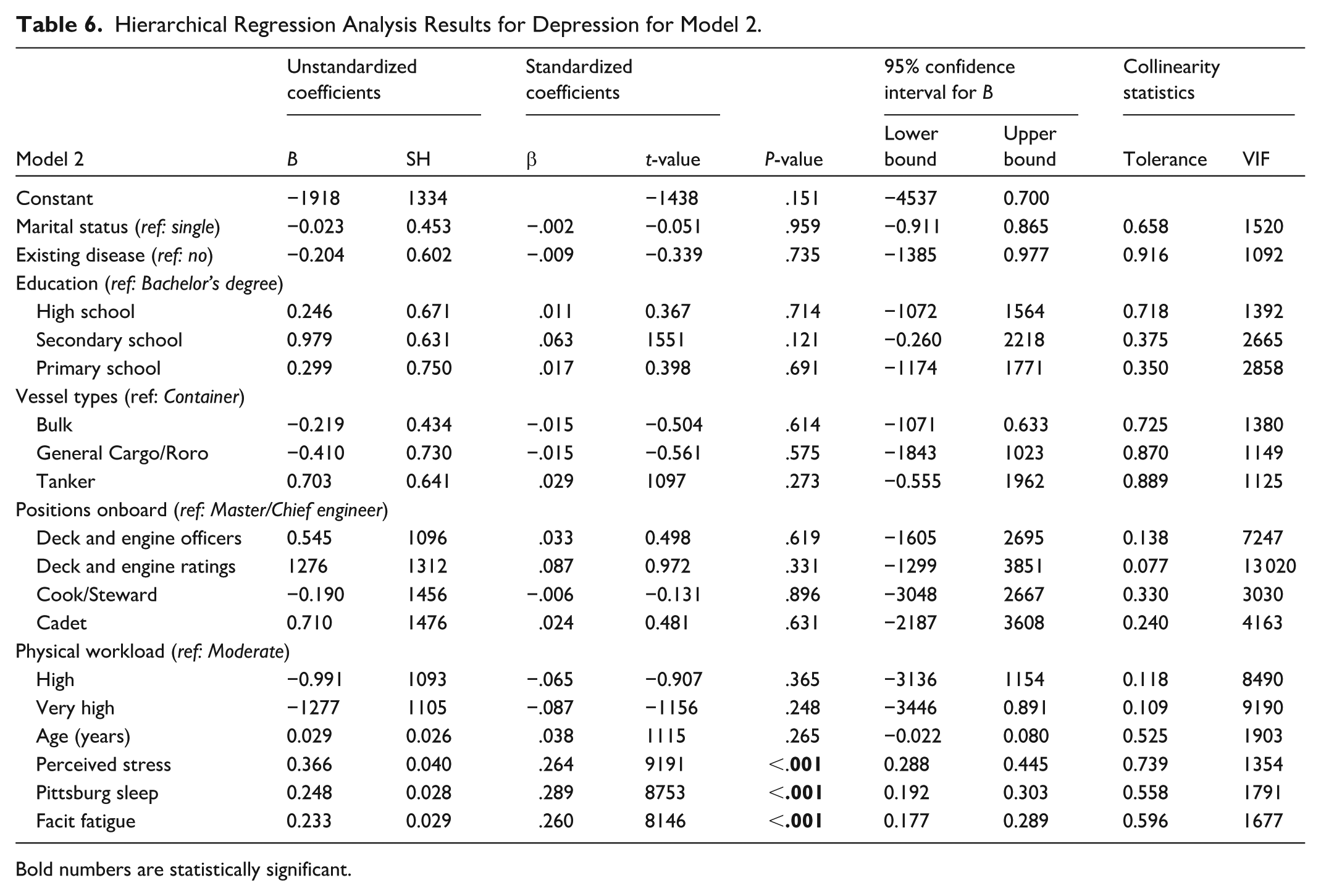
To identify the factors determining the risk of Beck depression (dependent variable), a hierarchical regression analysis was conducted. For this purpose, in Model 1 (Block 1), the independent variables included marital status, education level, presence of illness, vessel types, positions onboard, and physical workload. In Model 2 (Block 2), in addition to the variables in the first model, age and scale scores (Perceived Stress, Pittsburgh Sleep Index, and FACIT Fatigue) were included.
As a result of the hierarchical regression analysis, both models were found to be statistically significant: the first model (F = 3.958; P < .001) and the second model (F = 153.422; P < .001). The percentage of variance explained by the variables added to each model was 4.2% in Model 1 and 41.9% in Model 2, respectively. The adjusted R² values indicated an adequate level of explanatory power in Model 2 (Table 4)
Descriptive Statistics for the Hierarchical Regression Analysis (Depression).

In Model 1, the independent variables marital status, presence of illness, and vessel type were found to be significant (P < .05). In Model 2, perceived stress, Pittsburgh Sleep Quality, and FACIT Fatigue variables were significant (P < .05; Tables 5 and 6).
Hierarchical Regression Analysis Results for Depression for Model 1.

Bold numbers are statistically significant.
Hierarchical Regression Analysis Results for Depression for Model 2.
Bold numbers are statistically significant.
Results of the Hierarchical Regression Analysis for Anxiety
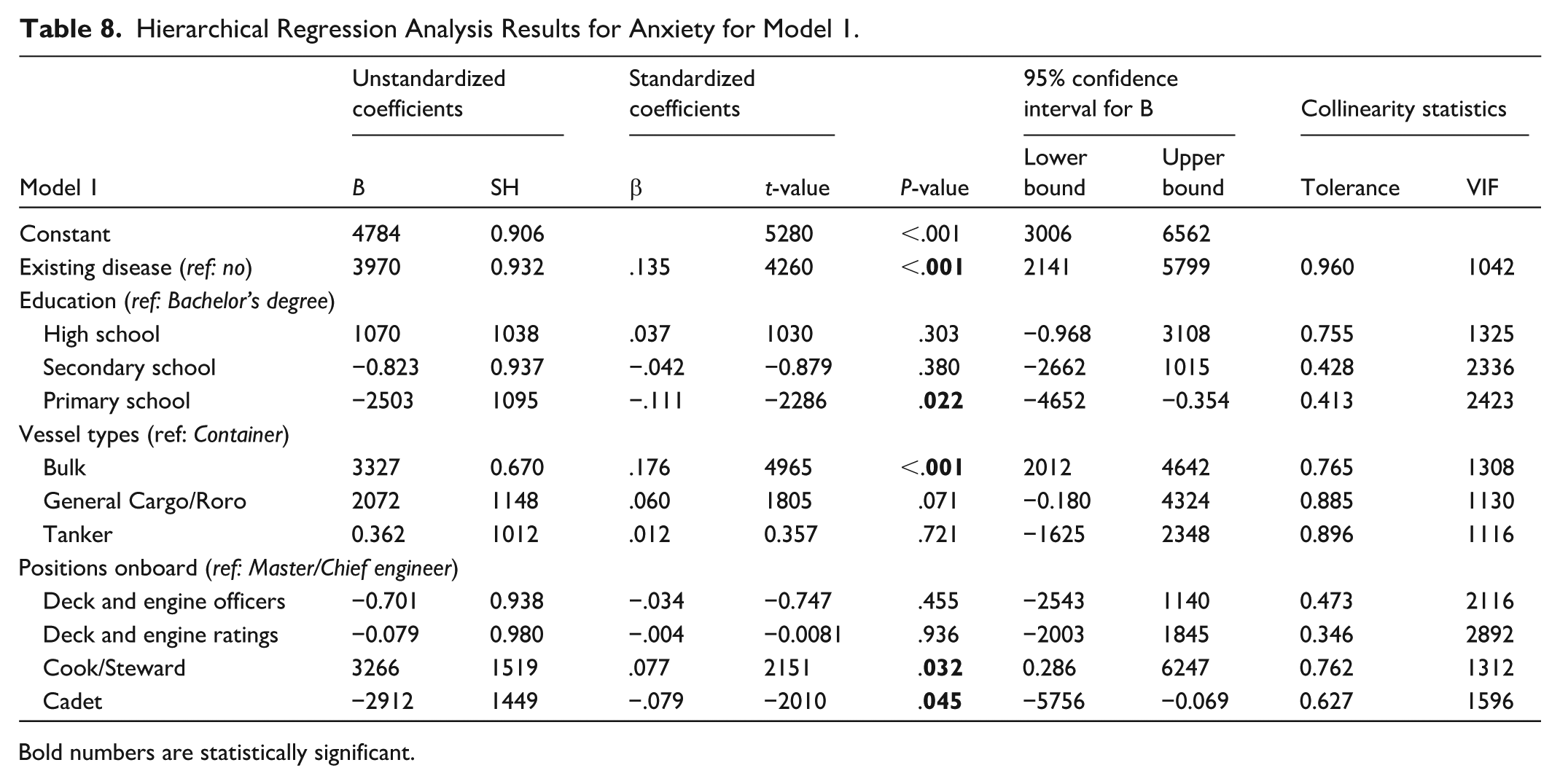
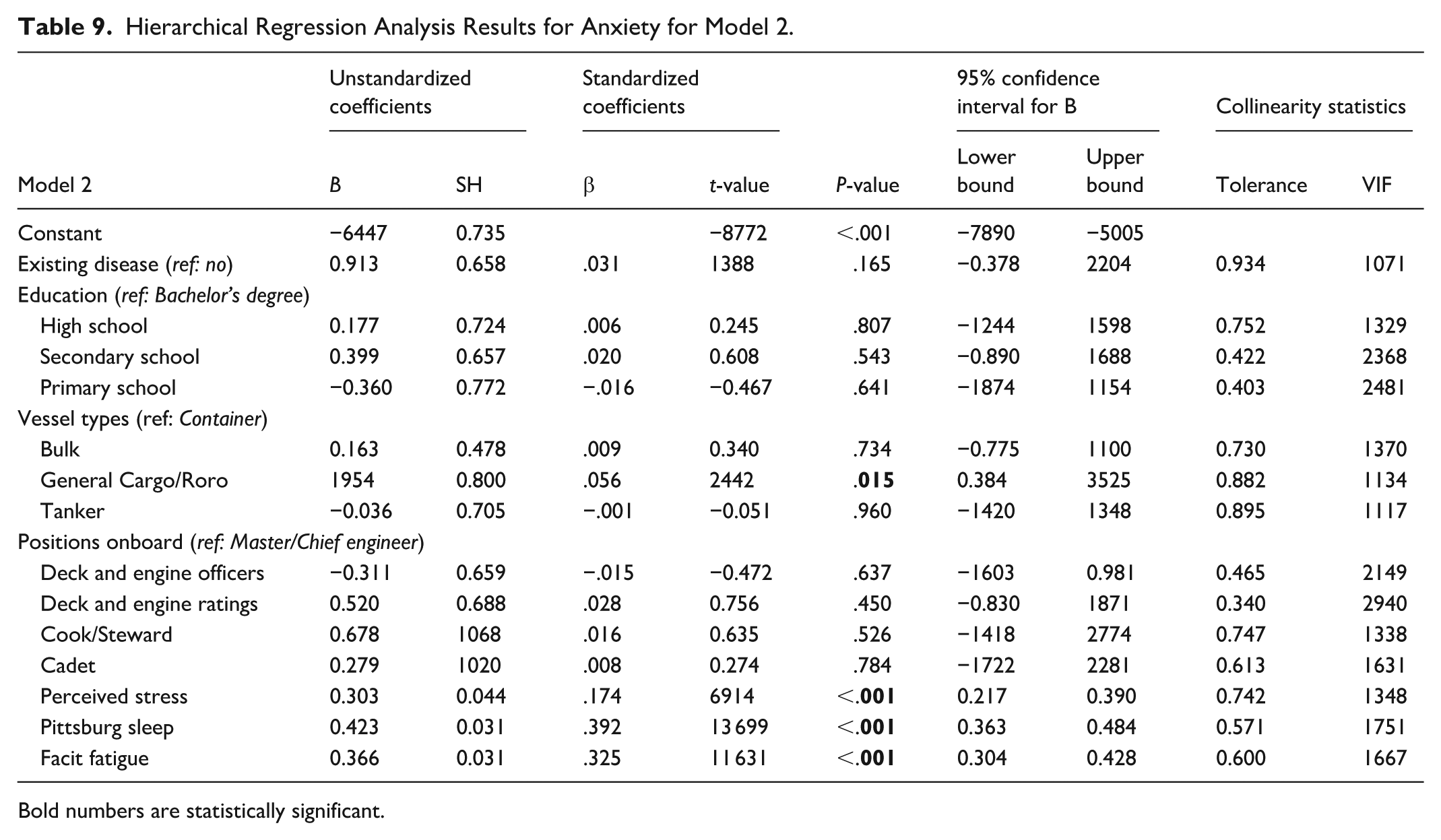
To identify the factors determining the risk of Beck anxiety (dependent variable), a hierarchical regression analysis was conducted. In Model 1 (Block 1), the independent variables included education level, presence of illness, vessel types, and positions onboard. In Model 2 (Block 2), in addition to the variables from the first model, scale scores (Perceived Stress, Pittsburgh Sleep Index, and FACIT Fatigue) were added. As a result of the hierarchical regression analysis, both models were found to be statistically significant: the first model (F = 8.456; p < .001) and the second model (F = 335.055; p < .001). The variables explained 7.9% of the variance in the dependent variable in Model 1 and 55.4% in Model 2, with the adjusted R² indicating an adequate explanatory level in Model 2 (Table 7).
Descriptive Statistics for the Hierarchical Regression Analysis (Anxiety).

In Model 1, the presence of illness, vessel type, and positions onboard were significant predictors (P < .05), while in Model 2, vessel type, perceived stress, Pittsburgh Sleep Quality, and FACIT Fatigue were found to be significant (P < .05; Tables 8 and 9).
Hierarchical Regression Analysis Results for Anxiety for Model 1.
Bold numbers are statistically significant.
Hierarchical Regression Analysis Results for Anxiety for Model 2.
Bold numbers are statistically significant.
Results of the Mediation Analysis for Depression
To examine the mediating roles of PSQI (sleep quality index) and FACIT fatigue in the relationship between perceived stress and Beck depression, the PROCESS macro v4.2, developed by Hayes, was utilized.
The results are presented in Figure 1 and Table 10.

Serial-multiple mediation of PSQI and FACIT in the relationship between stress and depression and non-standardized beta values.
Results of the Mediation Analysis in the Relationship Between Stress and Depression.

Dependent variable.
P < 0001.
In Model 1, a positive relationship was found between stress and PSQI, with the independent variable (stress) having a significant effect on the dependent variable (PSQI; β = .728; P < .001). In Model 2, positive relationships were found between stress and FACIT, and between PSQI and FACIT, with the independent variables (stress and PSQI) having significant effects on the dependent variable (FACIT; β = .321; P < .001 and β = .464; P < .001, respectively).
In Model 3, there are three independent variables (stress, PSQI, and FACIT) and one dependent variable (depression). A positive relationship was found between stress and depression, with stress having a significant effect on depression (β = .376; P < .001). One of the mediators, PSQI, also showed a positive relationship with depression and had a significant effect on depression (β = .244; P < .001). The second mediator, FACIT, similarly exhibited a positive relationship with depression and had a significant effect on depression (β = .215; P < .001). These results indicate that PSQI and FACIT have partial mediating effects in the relationship between stress and depression (Table 10). The indirect, direct, and total effects of PSQI and FACIT as mediators are presented in Table 11.
The mediating effect of PSQI and FACIT in the relationship between stress and depression.

Note. Indirect1: Stress → PSQI → Depression. Indirect2: Stress → FACIT → Depression. Indirect3: Stress → PSQI → FACIT → Depression.
The indirect effect of stress on depression (0.320; 95% CI: 0.252-0.391) as well as the direct effect (0.376; 95% CI: 0.271-0.454) were both statistically significant (P < .05). Additionally, the total effect (0.696; 95% CI: 0.271-0.454) was also statistically significant (P < .05). These results confirm that PSQI and FACIT have a partial mediating role in the relationship between stress and depression (Table 11).
Results of the Mediation Analysis for the Anxiety
To examine the mediating roles of PSQI (sleep quality index) and FACIT fatigue in the relationship between perceived stress and Beck anxiety, the PROCESS macro v4.2, developed by Hayes, was utilized.
The results are presented in Figure 2 and Table 12.

Serial-multiple mediation of PSQI and FACIT in the relationship between stress and anxiety and non-standardized beta values.
Results of the Mediation Analysis in the Relationship Between Stress and Anxiety.

Dependent variable.
P < .001.
In Model 1, a positive relationship was found between stress and PSQI, with the independent variable (stress) having a significant effect on the dependent variable (PSQI; β = .728; P < .001). Model 2 showed positive relationships between stress and FACIT, and between PSQI and FACIT, with the independent variables (stress and PSQI) significantly affecting the dependent variable (FACIT; β = .321; P < .001 and β = .464; P < .001, respectively). Model 3 included three independent variables (stress, PSQI, and FACIT) and one dependent variable (anxiety). There was a positive relationship between stress and anxiety, with stress significantly affecting anxiety (β = .310; P < .001). One mediator, PSQI, showed a positive relationship with anxiety and had a significant effect on anxiety (β = .422; P < .001). The second mediator, FACIT, also exhibited a positive relationship and significant effect on anxiety (β = .371; P < .001). These results indicate that PSQI and FACIT partially mediate the relationship between stress and anxiety (Table 12).
Both the indirect effect of stress on anxiety (0.552; 95% CI: 0.429-0.681) and the direct effect (0.310; 95% CI: 0.224-0.395) were statistically significant (P < .05). Additionally, the total effect (0.861; 95% CI: 0.764-0.958) was statistically significant (P < .05). These findings confirm the partial mediating role of PSQI and FACIT in the stress–anxiety relationship (Table 13).
The Mediating Effect of PSQI and FACIT in the Relationship Between Stress and Anxiety.
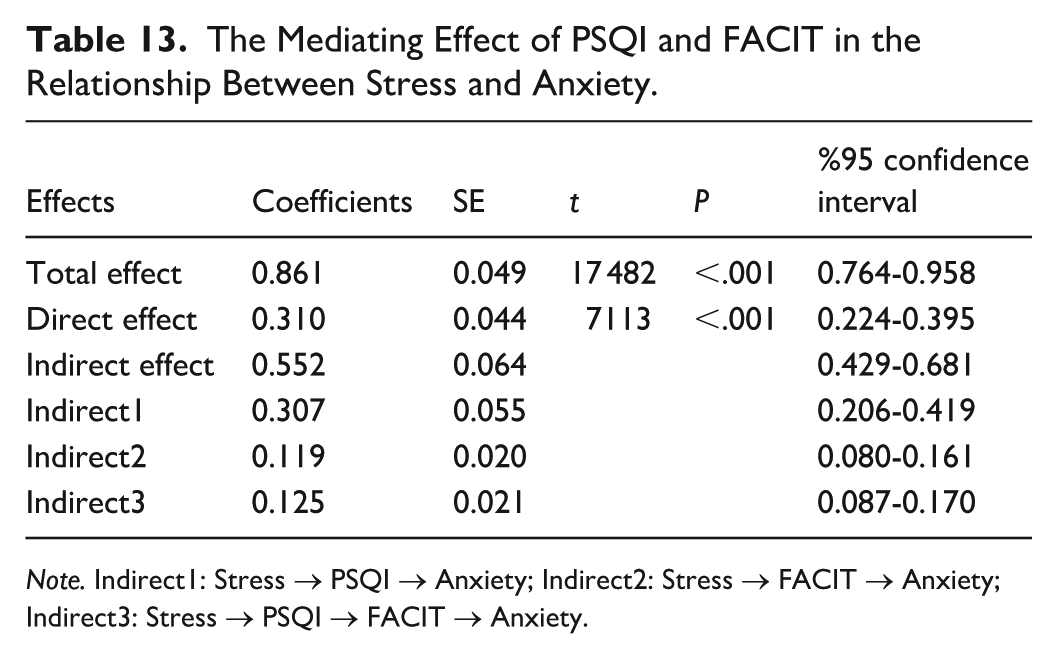
Note. Indirect1: Stress → PSQI → Anxiety; Indirect2: Stress → FACIT → Anxiety; Indirect3: Stress → PSQI → FACIT → Anxiety.
Discussion
This study reveals the complex interplay between personal, work-related, and psychological factors in shaping the mental health of active Turkish seafarers’, highlighting how depression and anxiety are significantly influenced by stress, poor sleep, and fatigue. Nevertheless, the present study is subject to certain limitations, most prominently the underrepresentation of female seafarers and the relatively small sample size, arising largely from the participants’ occupational obligations at sea and the attendant constraints on internet accessibility. The findings indicate that both sleep quality (PSQI) and fatigue (FACIT) significantly mediated the relationship between perceived stress and depressive symptoms, as well as between perceived stress and anxiety symptoms, underscoring the critical role of rest and recovery in this profession. Differences in mental health outcomes based on ship type, job roles, and workload emphasize the need for tailored support systems that address the unique demands of maritime life. These results align with prior literature, such as Senbursa and Dunder’s findings that psychological well-being plays a pivotal mediating role in occupational outcomes among seafarers, reinforcing the notion that targeted interventions can enhance both mental health and operational effectiveness. 67 Moreover, in another research of Senbursa and Dunder explored the mediating roles of loneliness and resilience among seafarers, identifying ship type as a key factor influencing psychological well-being through these mediators, and emphasizing tailored interventions based on vessel type to improve seafarers’ mental health. 42 From a policy perspective, our findings highlight the urgent need for integrated fatigue risk management systems (FRMS) in the maritime industry. While the International Maritime Organization recommends that individuals obtain 7 to 8 h of good-quality sleep per 24 h to maintain optimal performance, operational realities and cultural norms on board often prevent compliance. 53 The relatively high prevalence of poor sleep quality and fatigue found in our study also resonates with data from Smith et al., who reported that over 50% of seafarers exhibited signs of chronic fatigue, with many meeting criteria for clinically significant sleep problems. 68 Similarly, Ma 48 identified various factors, including shift schedules and environmental conditions, that influence seafarers’ sleep quality and contribute to fatigue. These findings align with the current study’s emphasis on the mediating roles of sleep quality and fatigue in the relationship between perceived stress and mental health outcomes. Also recent research highlights that digitalization significantly affects seafarers’ mental wellbeing, with digital fatigue emerging as a key risk factor linked to prolonged screen use, irregular sleep, and social isolation. 69 The study further emphasizes that stress management and psychosocial support mechanisms can help mitigate these adverse effects, offering valuable guidance for maritime stakeholders. 69
In sum, this study contributes to a growing body of literature on the complex interplay between occupational stress, sleep quality, fatigue, and mental health in seafarers. By identifying sleep and fatigue as partial mediators in the stress–depression relationship, the results underscore the importance of addressing these modifiable risk factors in both preventive and remedial health interventions. Future longitudinal research is warranted to examine causal pathways and to evaluate the effectiveness of targeted interventions in reducing psychological morbidity and enhancing operational safety at sea. One limitation of this study is that the participants were selected using a convenience sampling method. This may restrict the generalizability of the findings to the broader seafaring population.
Conclusions of the Study
This study reveals how depression and anxiety among seafarers are deeply influenced by a mix of personal, work-related, and psychological factors. Stress, poor sleep, and fatigue play a central role in shaping their mental health, showing how the pressures of maritime life can take a serious toll. Differences related to ship type, job roles, and workload highlight the need for support systems that truly fit the unique demands of seafaring. Importantly, improving sleep and managing fatigue could help reduce the mental strain many seafarers experience. In support of this, the study found that both sleep quality (PSQI) and fatigue (FACIT) significantly mediated the relationship between perceived stress and depressive symptoms (
Footnotes

Ethical Considerations
The research was conducted in accordance with established ethical guidelines. Ethical committee approval was obtained as required DECISION NO: 2019-116.
Consent to Participate
Informed consent was obtained from all participants involved in the study.
Authors Contributions
Nihan Senbursa: Writing - Original Draft, Conceptualization, Methodology, Validation, Formal Analysis, Resources, Writing-Review and Editing, Data Curation, Software, Visualization, Supervision.
Bülent Çelik: Methodology, Validation, Formal Analysis, Resources, Data Curation, Software, Visualization.
Özkan Uğurlu: Conceptualization, Resources, Writing-Review and Editing, Supervision.
Funding
The authors received no financial support for the research, authorship, and/or publication of this article.
Declaration of Conflicting Interests
The authors declared no potential conflicts of interest with respect to the research, authorship, and/or publication of this article.
Data Availability Statement
The data that support the findings of this study are available from the corresponding author upon reasonable request.