




Abstract
The migratory lifestyle of nomadic communities, combined with the lack of a suitable health-related organizational structure, has made it difficult to provide health care services that can improve their health status. To achieve the concept of justice in health and sustainable development, it is imperative to improve the health status of all citizens in Iran, which consists of the nomadic communities, and urban and rural populations. In this ecological study national health indexes in nomadic tribespeople was Identified and prioritized by expert panel and fuzzy Delphi method. In the first step, the national health indexes were extracted from the literature, and then indexes that can be measured, evaluated and representative of the nomadic communities were extracted and prioritized by using fuzzy Delphi and TOPSIS methods, Questionnaire options were analyzed according to 3 criteria of economic efficiency, measurability, and simplicity in the form of 13 components and their indicators. The analysis of the results of the fuzzy Delphi method shows that the mental health component has the lowest real score in the criteria of measurability, simplicity and economic efficiency. The child care component has the highest real score in terms of economic efficiency and the vaccination component has the highest real score based on the criteria of measurability and simplicity in nomadic communities. The results of the TOPSIS method show that the components of vaccination, maternal care and child care have the highest priority for attention and investigation of their indicators in this segment of the population. In general, by designing and implementing systems to record the information of priority indexes extracted from the present study, it is possible for responsible organizations to make effective decisions and plans for the improvement of the health status of nomadic communities.
Previous research on health indexes for pastoral nomadic tribes in Iran is limited. The fuzzy Delphi Technique offers a novel approach by incorporating expert opinions and fuzzy logic, contributing to a comprehensive understanding of health priorities for these communities.
This study’s significance lies in its innovative methodology, combining the fuzzy Delphi Technique and health index prioritization. The results will provide policymakers and healthcare practitioners with valuable insights to develop targeted interventions for the health improvement of pastoral nomadic tribes in Iran.
The fuzzy Delphi Technique facilitates a nuanced analysis by considering the inherent uncertainty in expert opinions. This methodology not only identifies critical health indexes but also assigns priorities, ensuring a more robust and contextually relevant foundation for developing health strategies for pastoral nomadic tribes in Iran.
Introduction
Competing health needs of diverse populations and ever shrinking resources available to support these needs often serve as the impetus for the initiation of advocacy efforts to improve health indexes in underdeveloped societies such as suburban, rural and nomadic communities. 1
Nomads are people who have a tribal social structure, depend on livestock farming, and have a pastoral way of life based on moving from place to place. The mobile lifestyle is one of the oldest forms of social life that has continued since the first period of the formation of human social life.2,3 According to recent studies, approximately 100 to 200 million nomads live in the world. 4 Nomad communities often need to be self-sufficient for food as well as human and veterinary health care. 5 Nomadic life in Iran dates back to approximately 8000 years ago. 6 Iran’s nomadic community, with a population of approximately 2.5% of the country’s total population, plays a significant role in the economic, social, and cultural spheres, as well as in the preservation of the country’s territorial integrity. Nevertheless, nomadic life, as the third form of human social life, along with urban and rural life, a way of living that is declining in most societies. Nomadic life is disappearing from Iran’s economic and social life due to reasons such as the implementation of nomad settlement policy, nationalization plan of pastures, expansion of agricultural land in pastures, continuation of education for the children of nomads, and lack of health facilities. 7 The most common problem of nomads in the field of health is chronic, non-communicable, communicable diseases and common diseases between humans and animals.8,9 The lack of vaccination and the use of preventive measures to prevent the spread of infectious diseases continues. The lack of knowledge of the nomadic population together with limited understanding of the importance of disease control and poor practice are likely to be important risk factors for the spread of the disease. 10
The lack of health, educational facilities and communication systems is common in nomadic communities, 11 and they do not have a fixed address due to their mobile lifestyle, so it becomes difficult to provide services to them in the health, cultural and social sectors. 12 Similar to other communities, nomads need services that can be accessed when necessary. Commonly adopted such Occasional interventions will not improve their health status. 13 One of the most important needs of every society is to improve the health and treatment conditions of the people, nomadic communities also need planned strategies in which they are able to take care of their health needs. On the other hand, any acceptable system of health services for a dispersed population involves many costs because it is likely that the number of patients who visit each day is small, 14 therefore, the nomadic population has the least access to health services compared to the general population. The continuous movement of the nomadic population is one of the main reasons for this. The official health system is not compatible with the lifestyle of the nomads, and due to limited access to the demographic and medical information of the nomads, past efforts to provide health interventions for the nomads have been costly and sometimes ineffective. 15 However, planners, especially those involved in health and other development programs in countries where nomadic life is common, should consider that, regardless of nomads, the goal of health for all (health equity) is not obtained. Additionally, the level of development of a country in the national health program can often be judged according to the services they provide for the oppressed groups, and without considering the nomads, the sustainable development goals will not be achieved until 2030. 3 One of the problems regarding public health is the existing inequalities in the health status of different sections of society. Although the general level of people’s health and its related indexes have increased in different societies, many people still suffer from health inequality and access to health services. Factors such as low social class, illiteracy, lack of household income due to unfair distribution of wealth, lack of awareness, and unhealthy lifestyles affect the health of nomadic communities currently. Ignoring these factors can hamper the achievement the goal of health for all people. To recognize and measure people’s health problems, which are becoming more complex daily, it is necessary to produce information and statistics on different aspects of health. These health statistics and information are necessary at different stages of planning and health policy. It is possible to collect these statistics and information through indexes. 16 A society will be in a better condition in terms of health status if the distribution and quality of health indexes are more balanced. Conversely, the lack of health services, especially in deprived areas, will have negative effects on the population of that area. 17 Investigating the distribution of health indexes in different geographical locations will facilitate a better understanding of the imbalance in the distribution of health facilities and facilitate planning for their fair distribution and universal access. 18 Studies conducted on the health status of nomads in Iran indicate that for many health indicators, the status of this group is at an average or even low level. 19 Population-related health indexes are one of the main criteria for evaluating the quality of governments’ performance in providing health care services for populations. For with to address the needs of nomadic life and the lack of attention in health programs for this group, health services are not provided to nomads in an optimal and consistent manner. Additionally, due to the lack of an accurate and reliable information system, there is insufficient data regarding on the health indexes of nomads. 7 In general, separate data are not available on nomadic groups, but indexes of health are generally poorer in rural areas than in towns and cities. 13 The current status of access to health facilities in the tribal community indicates that they are far from the standards compared to the rural and urban communities of Iran. Health indexes are regarded as an essential need of societies due to their long-term effects on the health and vitality of society. Covering nomads due to the distance they have from rural and urban healthcare centers is one of the actions that needs to be planned for nomad development. 9 Evaluating the benefit of healthcare services can be considered as an indicator of social justice in the field of health and politics. Due to the nature of nomadic life and the lack of attention in health programs in the health system, the national medical system does not provide health services to nomads in the form of a defined program. 20 Although numerous indices and components influence health, this study localized and examined the relevant indices based on the lifestyle of nomads and by drawing from the National Health Index developed by the Ministry of Health. Therefore, the purpose of this research is to design and prioritize a set of selected health indexes for the nomadic community of Fars province (Iran) in 2023 by using expert panel and fuzzy Delphi method.
Methods
The Study Area
Fars Province has an area of more than 133 thousand square kilometers and its heights are the continuation of the Zagros Mountains. This province has 3 types of different weather conditions: cold, moderate, and hot. Most of the regions, especially the northwestern part of Fars province, have the field of livestock breeding and the use of natural resources. 21 In Iran, Fars province has the largest nomadic population in Iran. Fars nomads with more than 27 000 households account for approximately 12.5% of the country’s nomadic population. This community plays a very important role in preserving and raising livestock, producing red meat and dairy products, agricultural products and producing and supplying wool and exquisite handicrafts. However, despite the prominent role of this community in the economic development of the country, they receive few services, especially in the field of health and treatment. 9 Our research focused on the Fars province which has the largest nomadic population in Iran see in Figure 1. It is obvious that improving the health of a society requires the cooperation and participation of all organizations and social institutions. This study was based on the priorities of the nomadic affairs of Fars province in terms of health and development, which requires proper planning in providing health care services in order to evaluate and compare the way of providing services, including medical, health, etc. Identifying and classifying health indicators provides the possibility of a more comprehensive and detailed study of the aforementioned characteristics, which will lead to the identification of strengths and weaknesses in nomadic life in terms of health indicators. As a result, more accurate planning is possible according to the characteristics of each population to implement healthcare programs and solve their problems better and more appropriately, which is an important step in the direction of fair and appropriate distribution of healthcare facilities and services. This study was conducted after obtaining the ethics code from Shiraz University of Medical Sciences. This ecological study was conducted in 2023 to prioritize a set of selected health indices in the nomadic community of Fars province, Iran.
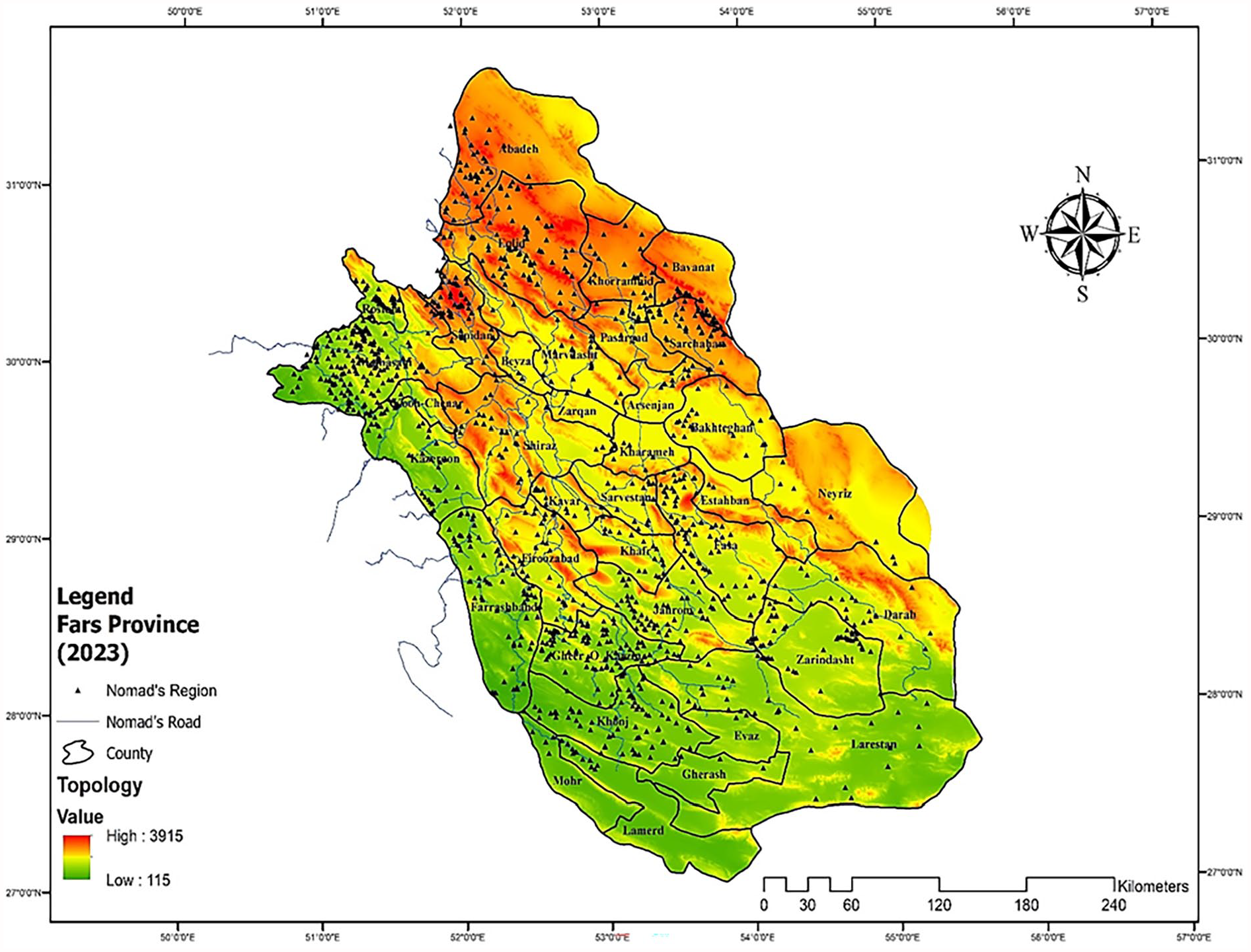
Distribution of areas where nomads are known to live and the routes in which they migrate in Fars, Iran province. 22
Methodology
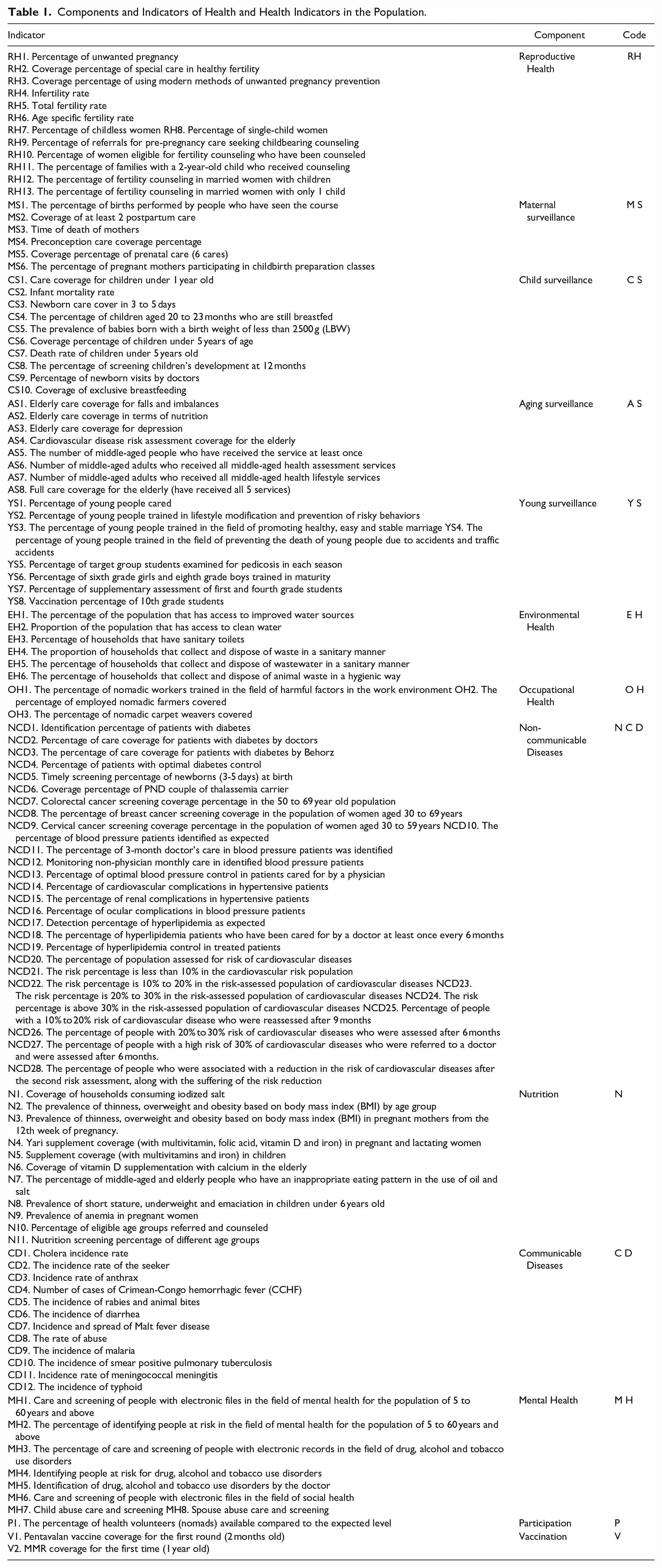
What are the priorities of indigenous indicators of health and well-being for the nomadic community according to the lifestyle? Fuzzy Delphi technique and TOPSIS were used to answer this question. Fuzzy Delphi techniques and the TOPSIS method were used to design and prioritize health indexes. The Delphi method is widely used in many industrial sectors, including health care, defense, commercial, educational, information technology, transportation and engineering. 21 In the Delphi technique, there is no precise mechanism to identify the number of people to be included in each individual study. 23 In this technique, the appropriate number of sample members can be determined according to whether the experts are homogeneous or heterogeneous, so a homogeneous group can be used from 10 to 15 experts, with increasing heterogeneity, this value can be extended to several hundred for international projects. 24 The process of implementing the fuzzy Delphi method is shown in Figure 2. In the first step, with the formation of a reference group consisting of specialists, researchers, and experts in the field of community health, interviews were conducted in relation to the types of health indexes in the population and the amount of data registration related to them in the SIB (integrated health system). In this study, the fuzzy Delphi method, based on the opinion of the expert panel, examined the appropriateness of the factors extracted from the literature review with the prevailing contexts and conditions. The main feature of the panel of selected experts in this research was having the necessary knowledge and experience in the relevant subject. These experts should have active participation in the field of health and tribes. Based on this, 15 people were selected as a panel of experts, and initial preparations were made for them to implement the project. In conducting this study, local experts and specialists were used in the field of health, implementation of nomadic affairs. According to the importance of the indicators, there were experts who included 4 members of the faculty, 1 member responsible for nomadic health, 5 members of health education experts and 5 expert health workers, and based on the available information and research and the experiences of these people, the basic indicators were selected. According to the results of the interviews and the review of the research literature about health and health indexes, a set of indexes related to the health status of society, which have maximum validity and application in urban and rural populations, were determined. Suitable indexes for evaluating the health status of the community were developed in the form of an electronic questionnaire. Fifteen Delphi panel experts who had the necessary expertise, ability, and knowledge in the subject area were recruited via snowball sampling and provided with the questionnaire. The necessary information about the lifestyle conditions of nomads and their access to healthcare services was provided to the expert panel. During the initial screening by the expert panel, health indices that were irrelevant to the nomadic community were eliminated. Ultimately, 13 out of 52 health equity indices, deemed relevant to nomadic life, were selected. The expert panel then determined the weighting and scoring for these significant indices in a Table 1.

Flowchart of the theoretical framework of the Delphi technique in qualitative research. 25
Components and Indicators of Health and Health Indicators in the Population.
It has been recommended that the size of the panel varies according to the type of topic, different perspectives, and available time and cost. 26 Snowball sampling is one of the most common sampling methods used in this technique. In this method, the participants in the study introduce the next people to participate in the study. 18 For this purpose, an electronic questionnaire was designed to gather the expert panel’s views on the components and indicators of health, focusing on 3 criteria: measurability, simplicity, and economic efficiency. The questionnaire utilized a 5-point Likert scale and was distributed to the experts in 2 stages, continuing until theoretical saturation was achieved. The results indicated that the experts shared a common perspective on the subject and the questions posed. To assess the reliability of the questionnaire, the Cronbach’s alpha value was calculated to be .86, confirming its reliability.
Since human thinking does not have a complete numerical quantification process, it is better to use fuzzy numbers to make long-term predictions and make decisions in the real world. 27 Triangular fuzzy numbers are used in this research due to their simpler calculations. To perform fuzzy Delphi analysis, the options were converted into fuzzy numbers through qualitative variables (Table 2). In this research, the fuzzy equivalent of A was used for the linguistic variables of the Likert scale. 21 To calculate the fuzzy value of each component and indicator and then defuzzify these values, relations 1 to 4 have been used.
Triangular Fuzzy Numbers of 5-Point Likert Scale.

According to the theory of fuzzy sets, a Triangular fuzzy number is a fuzzy number, that is displayed with 3 real numbers (F = (l, m, u)). The upper bound denoted by u is the maximum value of fuzzy number F. The lower bound denoted by l is the minimum value of fuzzy number F. m is the most likely value of a fuzzy number. The membership function of a triangular fuzzy number is as follows:
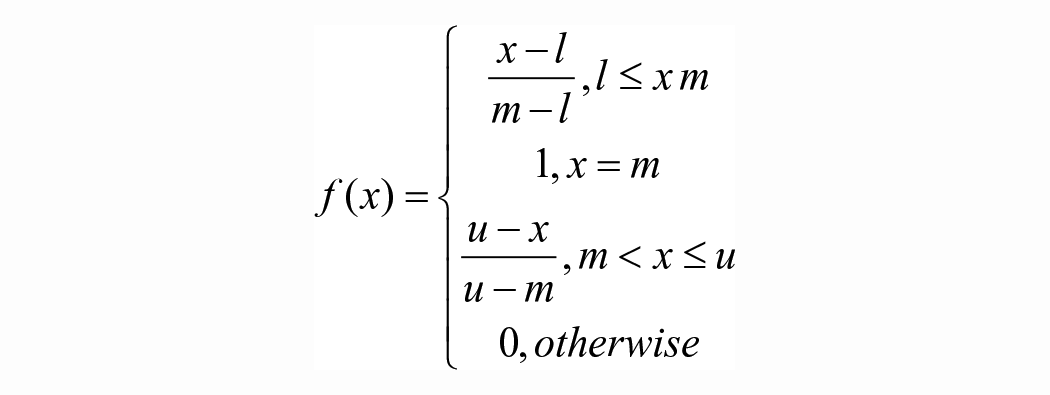
After collecting the data, the fuzzy average of experts’ opinions is calculated using (Relation 1). In this regard, the average opinion of experts is equal to the sum of the lower limit (Σl), the sum of the middle limit (Σm) and the sum of the upper limit (Σu) divided by the number of experts (n).

After fuzzy aggregation of experts’ opinions, the values should be defuzzified. In different methods that are performed with a fuzzy approach, the researcher ultimately converts final fuzzy values into a crisp and understandable number. Typically, the aggregation of triangular and trapezoidal fuzzy numbers can be summarized by a crisp value, which was the best average. This operation is known as defuzzification. Different methods can be used for defuzzification in the fuzzy Delphi technique. The most common defuzzification method is the center of gravity and center of area method. In this research, the center of gravity method is used (Relations 2-4). Because it is a valid method and has been used many times, it also provides a coordinated and balanced approach. 24



Crisp number = Max (x1max, x2max, x3max)
After selecting an appropriate method and defuzzifying of values for screening items, a threshold should be calculated. The threshold is typically 0.7 but it varies based on the researcher’s opinion in different studies. In this research, according to the number and importance of indexes the value of 0.6 was considered threshold limit. if the crisp value of defuzzification of aggregated experts’ opinions was larger than the threshold, the criterion was confirmed. If the criterion is less than the threshold, it is removed. Since the indexes are evaluated based on the criteria, it is necessary that the evaluation score of the indexes is finally presented in the form of a single score. 28 For this purpose, the multicriteria decision-making method based on the TOPSIS technique was used. The underlying logic of this method is to arrange options based on proximity and similarity to the optimal solution in such a way that the option has the shortest distance to the optimal answer. 18 In this method, according to the different importance of the criteria, in the process of applying the TOPSIS technique, weighting of the criteria was performed and at the end, a single score was obtained for each component and indicator.
Results
The child care component had the highest actual economic efficiency score, and the vaccination component had the highest actual score of the criteria of measurability and simplicity. According to the actual score of the proposed components based on the criteria of measurability and simplicity and compared to the threshold value of 0.6, the vaccination component has the highest measurability and simplicity in the nomadic population with actual scores of 0.828 and 0.783, respectively. Moreover, and is one of the most important components according to the opinion of experts. Except for mental health and occupational health components, both of which have a real score lower than the threshold value, other components have a real score higher than the threshold value. Therefore, even within the nomadic population, these components are understandable for people without specialized knowledge or access to quantitative measurable data. The actual scores of the components based on the criteria of measurability and simplicity are shown in Figure 3a and b. The score of the components based on the criterion of economic efficiency and comparison with the threshold value is shown in Figure 4a. According to the Figure 4b, the child care component has the highest economic efficiency with an actual score of (0.806). The components of vaccination, maternal care, communicable and noncommunicable diseases and public participation follows. Other components, except the mental health component, have economic justification, and it is possible to collect and analyze data related to each component in a time and cost framework. Figure 4b shows the graph of the total and weighted actual scores of the components of health indexes according to the 3 evaluation criteria based on the TOPSIS method. The actual score of the components of healthy reproduction, maternal care, child care, elderly and middle-aged care, vaccination, and infectious diseases, is more than the threshold value of (0.6). Therefore, based on the experts’ point of view, these components are suitable components for analyzing the health index in nomadic communities. The components of adolescent and youth care, environmental health, nutrition, noncommunicable diseases and public participation are the components whose real score is lower than the threshold value of (0.6), but they are close to it. Considering that for these components, important indicators have been suggested and evaluated by the Delphi panel, the decision about these components was made according to the actual score of their indicators and they were not removed from the process. However, the components of mental health and occupational health were removed by the panel of experts due to their actual scores, which are much lower than the threshold value of (0.6), and as a result, the predicted indicators for these components were also excluded from the analysis process. In the fuzzy analysis of the indicators and finally their prioritization based on the TOPSIS method, the age-specific fertility rate indicator from the reproductive health component with a weight of (0.691), the percentage coverage of prenatal care with a weight of (0.922) from the maternal care component, and the indicator of the care of children under 1 year of age With a weight of (0.892 ) from the child care component, indicating the vaccination percentage of 10th grade students, with a weight of (0.833) from the adolescent and youth care component, indicating the risk assessment coverage of cardiovascular diseases of the elderly with a weight of (0.465) from the elderly care component, indicating the proportion of the population that has access to safe water with a weight of (0.765) from the environmental health component, an indicator of supplementary coverage in pregnant and lactating women with a weight of (0.849) from the nutrition component, an indicator of the percentage of coverage of diabetes patients by health care workers with a weight of (0.904) from the noncommunicable diseases component, indicators of the incidence of rabies and Animal bites from the infectious diseases component, first MMR vaccine coverage from the vaccination component and the percentage of nomadic health volunteers from the public participation component have the highest priority of investigation in the nomadic population with weights of (0.829), (0.746), and (0.951), respectively. Some of these indicators have a fixed value in urban and rural populations and may not be very important due to more favorable living conditions compared to nomadic populations, for example, in a study on the health status of African nomads, communicable diseases were the major causes of morbidity and mortality. The chief causes of death among children are malaria, measles, diarrhea and bronchopulmonary infections. 15
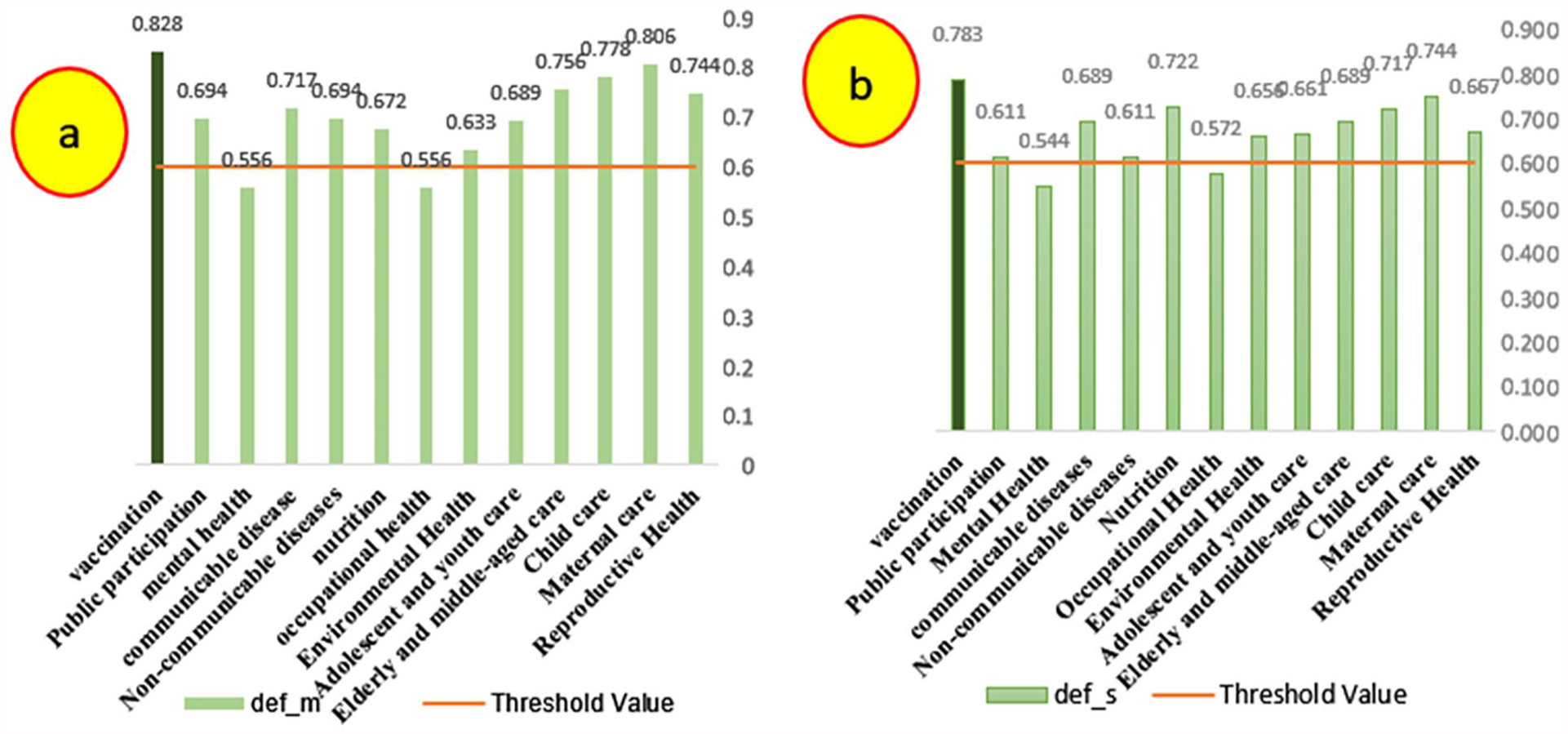
(a) Score of the components based on the measurability criterion and comparison with the threshold value. (b) Score of the components based on the simplicity criterion and comparison with the threshold value.

(a) Score of the components based on the criterion of economic efficiency and comparison with the threshold value. (b) Weighted score of the components of health indexes according to the 3 evaluation criteria based on the TOPSIS method.
Discussion
Considering the importance of surveying the health status of all members of the community, access and derivation of information related to health indexes seem essential. 29 Health is the cornerstone of social, economic, political, and cultural development in all human societies, playing a crucial role in shaping the infrastructure of various sectors. Recognized as a fundamental right, the government is responsible for ensuring that health is provided equitably and justly. The primary aim of any nation’s healthcare system is to enhance the health of its population by ensuring fair access to healthcare services for everyone. Consequently, achieving equal access to healthcare has consistently been a focal point for researchers worldwide.30-32 health indicators serve as pivotal yardsticks for assessing the efficacy of governments in delivering healthcare services to their populace. A key aspect of healthcare management within a nation is ensuring equitable access to healthcare across diverse segments of society. Nomadic communities represent one such segment requiring meticulous planning to ensure adequate healthcare provision. Evaluating and comparing healthcare delivery methods, encompassing medical services and public health initiatives, is imperative for effectively addressing the needs of nomadic societies.33,34 In societies where the information related to health indexes is registered and maintained in the relevant systems, when necessary or in case of a crisis, by extracting and examining the indexes, general and partial information can be extracted from the current health status and then planned to improve the health status of the people. 35 In any society, according to the conditions of the people living in it, the health indexes should be defined and prioritized, and then the information related to those indexes in the defined systems should be fully recorded to improve the health condition of different groups. 36 According to the historical background and climatic conditions, the vast country of Iran has 3 types of urban, rural and mobile nomadic populations.23,37,38 Through the investigations, it was determined that health indexes for urban and rural populations are defined, prioritized and registered in the systems designed for this purpose. 39 However, regarding the nomadic population due to reasons such as constant mobility, not having a specific address, and being registered as a rural population, the information related to the health that is specific to the nomadic population is not recorded and checked, and most of the information recorded by the nomadic health care workers for the population is registered manually, which makes it difficult to access at the national level and to check and plan by the responsible organizations.40,41 On the other hand, in the nomadic community, due to the nomadic lifestyle, closer proximity to nature, direct contact with all kinds of pollution related to livestock, or lack of access to health facilities, the living conditions and subsequently the status of access to the health facilities in these communities are different compared to the resident communities, in which case the indexes defined for the nomadic population should be reviewed and prioritized according to their living conditions. 42 The migratory nomadic population in Iran often faces challenging living conditions, including limited access to clean water. Their pastoralist lifestyle requires frequent interaction with livestock, as they engage in the import and export of herds to various regions. These nomads play a crucial role in the production, processing, and handling of dairy products. 43 Hampshire, in a study on nomadic women in Chad, highlighted gender discrimination in access to health services among this population. They noted that nomadic women can only access health services during the non-migratory season. 13 Omar 44 also highlighted the difficulties nomads face in accessing health services, particularly in African countries. They emphasized that governments must develop scientific and accessible methods to improve healthcare access for nomads. Health service provisions should be specifically designed for this group, as systems intended for other populations may not be suitable. Additionally, Omar pointed out that nomads experience high rates of accidents and poor personal hygiene practices, such as infrequent use of soap and sanitary toilets. 44
In the current study, the fuzzy Delphi method was used to gather and analyze expert opinions on nomadic health. This approach helped to examine and prioritize health-related indexes according to the nomadic lifestyle. 45 Using the fuzzy Delphi method and subsequently defuzzifying the components, it was determined that the mental health component had the lowest actual score based on the criteria of measurability, simplicity, and economic efficiency. The Delphi method avoids the influence of prominent individuals in discussion groups and group pressure for uniformity, thereby enabling a valid consensus from the experts’ perspectives. An additional advantage of the Delphi method is its simplicity, as it does not require advanced mathematical and analytical skills, but rather someone knowledgeable about the Delphi method and creative in project design. The Delphi method, while maintaining its simplicity, exhibits high reliability.
Using definite numbers in problem-solving scenarios like decision-making, forecasting, and policymaking often leads to results that diverge from reality. Experts frequently find linguistic variables more common and convenient to use. Therefore, it is preferable to represent data with fuzzy numbers instead of definite ones, which led to the development of the fuzzy Delphi method. This method is valuable for making decisions and reaching consensus on issues where goals and parameters are not clearly defined. It is also more cost-effective in terms of time and expense, leading to better and more efficient outcomes when selecting the agent.46-48 Yousefi et al in a 2021 study in Designing indicators for assessing the sustainability of nomadic rangelands in Fars province, used the fuzzy Delphi technique and TOPSIS. 25 They were chosen in such a way that they have simplicity, economic efficiency, and measurability in the nomadic population. The results show that a number of indexes are relatively important with respect to the nomadic lifestyle and some others are not very important in mobile nomadic populations. A component such as vaccination and its indicators have the greatest value and importance in all communities, including the nomadic community, because vaccination is an important measure by which infectious diseases can be prevented and huge costs caused by the disease can be reduced. Nowadays, vaccines play a crucial role in preventing and controlling communicable diseases and are vital in addressing emerging infectious diseases. They can curb or contain epidemic outbreaks and help combat the spread of antimicrobial resistance. Consequently, society is urging the industry and the scientific community to swiftly develop vaccines in response to epidemics such as H1N1 flu, Ebola, Zika, and COVID-19. 49 Components such as maternal and child care, as well as contracting communicable and noncommunicable diseases, especially communicable diseases such as the incidence of rabies and animal bites, Malt fever, and cholera, which are more common in nomadic communities, are also important and obtained a significant amount based on the opinions of experts.
Gender and seasonal mobility interact in complex ways that significantly impact nomadic women’s access to health resources, including information, treatment, and care. For a pastoralist woman, the actions taken during an illness and the outcomes heavily depend on the nature and quality of her social support systems and her ability to mobilize them effectively in response to her health needs. These support systems encompass her husband and other relatives, male kin, and networks of female kin and friends. Due to the mobility and fluidity of social and domestic organization, women’s access to kin and social networks can change substantially throughout the year. In terms of health policy and practice, addressing only the issues of mobility (eg, setting up mobile clinics or encouraging the settlement of nomadic populations) will not necessarily improve access to health services for pastoralist women. It is also essential to understand the social context of control and distribution of health resources.13,50 In their study on nomadic women’s health access in Africa, Hamp and colleagues concluded that health resources are highly dependent on the specific nomadic groups. For nomadic women, actions taken during periods of illness largely depend on the nature and quality of their existing social support systems, which include husbands and other dependents, male relatives, and networks of female relatives and friends. 13 The main burden of work in nomadic society is on the shoulders of women. Therefore, women’s injury causes serious damage to an entire family. 51
Ranking method such as TOPSIS or F-TOPSIS can to carry out structural comparative studies between those indicators in the different nomadic or areas to propose more effective solutions and treatments. This will help to promote the equity and investment of government resources and budgets on the one hand, and to attract institutions with different directions to implement their social responsibility practices in line with their directions on the other. Based on the foregoing, these applications will constitute the most prominent set of future research directions for researchers in this study. 52
Limitation
Insufficient studies on the health and hygiene of nomads, a lake of experienced experts in nomadic health, lack of interdepartmental coordination among organizations, coordination issues with panel specialists, potential biases, and inadequate understanding of the living conditions of nomadic life are limitation in researching nomadic health and hygiene.
Conclusions
According to the results of vaccination indicators, care of mothers and children, care of the elderly and middle-aged, healthy fertility, communicable and non-communicable diseases that have a higher score can be prioritized in the programs. Those in charge should prepare different applications for the mental and physical health of this segment of the society. Also, the strengthening and activity of mobile health home centers and the training of nomadic nomads in health matters are considered essential and should be given more attention by the officials than in the past.
The TOPSIS method shows that the components of vaccination, maternal care and child care, have the highest priority for attention and investigation of their indicators in pastoral nomadic tribespeople population. In general, by designing and implementing systems to record the information of priority indexes extracted from the present study, it is possible for responsible organizations to make effective decisions and plans for the improvement of the health status of nomadic communities. Based on the findings, the following recommendations can be made for future studies: conducting field investigations and prioritizing indicators within nomadic societies, as well as examining the adequacy of health measures and their availability in alignment with health equity.
Footnotes
Acknowledgements
We express our deep gratitude to the Vice-Chancellor and all the staff at Shiraz University of Medical Sciences for their indispensable support, which made this study possible (Project number Project No: 23807 and IR.SUMS.SCHEANUT.REC.1400.016 ethic approval code).
Author Contributions
Atefeh Neamati: writing—original draft and experimental data collection. Hassan Hashemi : methodology, supervision investigation, and funding acquisition. Atefeh Neamati, Hassan Hashemi: experimental data collection and writing—review. Mohammad Reza Samaei, Mansooreh Dehghani, Saeid Salehi, Ahad Amiri Ghareghani, Mohammad Shahbazi: writing—review and editing. Hassan Hashemi, Majid Amiri Gharaghani: conceptualization, methodology, formal analysis, and funding acquisition. All authors have read and agreed to the published version of the manuscript.
Data Availability Statement
Data presented in the current paper are available upon request.
Declaration of Conflicting Interests
The author(s) declared no potential conflicts of interest with respect to the research, authorship, and/or publication of this article.
Funding
The author(s) disclosed receipt of the following financial support for the research, authorship, and/or publication of this article: This research was financially supported by Shiraz University of Medical Sciences/ Project No: 23807. The funding agency had no role in the design of the study, data collection, analysis, interpretation of results, or in the writing of the manuscript.
Patient Consent for Publication
Not applicable.
Ethics Approval
This article is the result of an MSc thesis conducted at Shiraz University of Medical Sciences (Project No: 23807, Ethical Code: IR.SUMS.SCHEANUT.REC.1400.016).
