




Abstract
This study analyzes the legislation process of the Korean government regarding the development of the medical device industry in the perspective of the issue network. It also aims to identify the difference in network structure between conservative and progressive governments and analyze major issues and stakeholders. It examines the network structure in the legislation process of the government to develop and support the medical device industry through social network analysis (SNA). This study conducted a policy network structure analysis of the conservative and progressive governments. SNA was used for the structure analysis, using the contents of newspaper articles as the baseline data related to the medical device industry. We analyze using the 2-mode network analysis that the node centrality is determined by eigenvector centrality. The more nodes with great power (stakeholders, information, resources) it is linked to, the greater power centrality (eigenvector centrality) it will have, which indicates that it has great influence within the network. The conservative government discussed the promotion of the medical device industry led by government departments, focusing on its potential as a future growth engine. On the contrary, the progressive government tended to have fewer stakeholders and issues around the idea, shifting the stakeholders that lead the promotion of the industry from government departments to relevant interest groups, and focusing more on policy issues like transparency than on economic issues. We identify implications to legislate the relevant act by analyzing the relevant stakeholders and issues around legislation, while reinforcing the competitiveness of Korea’s medical device industry in the larger global framework. We believe that this study would comprehensively addresses the pros and cons of the government-led promotion of the medical device industry in Korea, as well as the key issues for stakeholders, which can be applicable to many other societies.
Keywords
It examines the network structure in the legislation process of the government to develop and support the medical device industry through social network analysis.
Medical device industry
We identify implications to legislate the relevant act by analyzing the relevant stakeholders and issues around legislation, while reinforcing the competitiveness of Korea’s medical device industry in the larger global framework.
Introduction
President Park’s government had adopted a policy to develop the health care industry as a future growth engine among 140 major government projects. To this end, it selected the pharmaceutical industry, advanced medical devices, new medical convergence services, and the globalization of traditional Korean medicine as top priority projects. 1 The health care industry is an essential field for the treatment of national diseases and preparation for the aging population, and the medical device industry, in particular, is a knowledge-intensive industry that provides goods related to national health, and thus requires support at the national level due to the fierce competition in the global market.
The medical device industry is based on the convergence of technologies such as information technology, biotechnology, and nanotechnology, and it has a short product life cycle.2,3 The market is also limited to hospitals to fulfill specialized needs, thereby having low-price elasticity, and it requires constant investment in research and development.4,5 Thus, government policy support is imperative in terms of licensing, export, and regulation of the medical device industry.
Therefore, the Ministry of Knowledge Economy and Small and Medium Business Administration announced the Medical Device Industry Development Plan to promote the medical device industry in November 2010, after which they proposed the Medical Device Industry Development and Support Act. There have been 3 attempts at legislation in 2011, 2013, and 2016, but these attempts have been unsuccessful, and it has not developed as a policy and is currently not progressing.
In general, if a government policy fails to produce the effect as originally intended in the policy process, it is referred to as policy failure. 6 The attempts at legislation in 2011 and 2013 to promote the medical device industry ended up as policy failure due to automatic disuse when the term of the National Assembly ended. Failure of legislation in the policy-making stage is caused by lack of leadership, hasty policy-making, and lack of connection among stakeholders. 7 Moreover, there is also national distrust of the policy in public opinion or political intervention in the policy process.8,9
From a different perspective, this failure may also be explained by the transformation of policy goals or directions during the introduction of a new legislative bill after automatic disuse due to the change in the National Assembly majority.3,10 This is referred to as policy slippage, indicating a situation in which a bill is not passed because it strays from the original policy intention before being passed.11,12 This policy slippage is also caused by bureaucratic objections or their exertion of influence, as well as political distortions,13,14 which are referred to as bureaucratic, legislative, and policy slippage. The Medical Device Industry Development and Support Act is facing policy slippage even after going through the National Assembly 3 times because it may be affected by policy distortion or the influence of the National Assembly.
Meanwhile, the legislative process of the Medical Device Industry Development and Support Act can be explained by a policy network. In the legislative process of the act related to the medical device industry, the stakeholders and key issues are quite variable and dynamic. Thus, a policy network analysis is needed to identify the diverse stakeholders of the legislation of the medical device industry act and to understand and analyze their dynamic interactions.15,16 The types of policy networks include the subgovernment model and policy community model that are closed and stable with a few participants in the resource exchange process. These are placed on one end of the policy network spectrum. At the other end of this spectrum is another type called the issue network model, which is open and variable with many participants in the policy-making process.17,18
The legislative process of the Medical Device Industry Development and Support Act also takes the form of an issue network in that the line between network and environment is blurred, stakeholders can participate freely, and the alliance constantly changes.19,20 This issue network has certain weaknesses, such as frequent conflicts among stakeholders and disadvantages for some stakeholders caused by certain policy decisions. 17
This act failed to be legislated within the issue network and faced policy failure or slippage within various frameworks. First, according to Kingdon’s Multiple Streams Framework (MSF), legislation related to the medical device industry failed to succeed through the policy window after the problem, policy, and politics streams. It is also difficult to be legislated because it merely stays on the politics stream because of the president or the ruling party. Moreover, according to the Interest Group Standing Change Framework (ICF) by Mucciaroni, the progressive president and members of the National Assembly are not enthusiastic about developing the medical device industry, and thus has a benefit in terms of system. They also failed to bring about a national consensus in terms of issues, which puts them in a disadvantageous position. Thus, their fortunes will decline rather than increase or remain the same. 21
This study will analyze the legislative process of the act regarding the development of the medical device industry from the perspective of the issue network. It will provide implications for the legislation of the relevant act by analyzing the stakeholders and issues around legislation. We analyze the period when the conservative party ruled the country, and the recent period when a progressive president was elected, along with the situation last year when the opposition party became a majority, in order to analyze the policy network around legislation of the relevant act in each time period. More specific objectives are as follows.
Clarify the difference in the issue network model that appears in the legislative process of the act related to the medical device industry between the conservative and progressive ruling parties.
Analyze the major issues and key stakeholders in the issue network model of both parties.
Explain the cause of policy failure and slippage using MSF and ICF.
Method
The Flowchart for Research
To compare the difference in the issue network in the legislative process between the conservative and progressive governments, the conservative government period was defined from 2013, when the conservative government was ruling and declared the medical device industry as a future growth engine, to 2016, when the progressive party occupied most seats in the National Assembly.

Flowchart for research.
Moreover, the period from 2016, when the progressive party occupied most seats, to May 2017, when the progressive government took over, was defined as the progressive government period. It was assumed that the stakeholders and major issues might vary in terms of the form of the issue network between the 2 periods. This is because while the conservative government was business-friendly, the progressive government is not.
Research Tools
A social network analysis (SNA) was conducted to analyze the legislative process of the Medical Device Industry Development and Support Act. As a tool to interpret the results of policy network in the conservative and progressive governments, this study used the MSF by Kingdon 22 and ICF by Mucciaroni. 21
In an issue network, people with technological expertise participate in the network surrounding a particular policy issue. The boundary between the network and the environment is unclear, and dependency and cohesiveness among participants tend to be low. 23 Therefore, there is a strong competition between policy actors, and the complexity of the issue increases further when discussion and arbitration are difficult; this, in turn, prevents the policy from being effective. However, when conflicts between stakeholders are arbitrated well, the policy may be effective and fair.19,20 Similarly, in networks surrounding the medical device industry, participation by stakeholders with expertise can lead to conflicts and disagreements among them making the legislation of policies very complex, and hence, these networks can be called policy networks.20,24,25
Kingdon’s MSF is a typical qualitative research method to analyze the policy-making process, which claims that separated streams such as problem stream and policy stream, and politics stream are all combined in the policy window through a certain occasion and form a new policy. 22 The problem stream refers to public problems that require the government’s actions, and the policy stream is the process in which stakeholders that form policy alternatives discuss their pros and cons to select them as policies. The political stream, unlike the other two, is affected by the change in administration and majority party, as well as pressures from interest groups.22,25 If even one of these streams fail, the policy legislation will also lead to failure.
Mucciaroni’s ICF divides the pros and cons of issues regarding national preference toward the stakeholders around the medical device industry, and the institutional pros and cons are divided by political support. To succeed in legislation related to the medical device industry, there must be an agreement on the governmental policies as well as the issues, and consensus may fail if there is a disagreement toward the two, making legislation difficult to achieve. 21
Therefore, to legislate policies relating to the medical device industry, issues faced in promoting the medical device industry should be recognized and political support and agreement among stakeholders in the networks must be procured.19,26,27 Legislation will be successful only if institutionalization through a national agreement and political support to tackle challenges involved in promoting the medical device industry are achieved in problem, policy, and political streams.28-30 Accordingly, the present study aims to analyze the legislation process for the medical device industry in conservative and progressive governments through policy network models and to come up with implications by analyzing the causes of legislation failure through MSF and ICF.
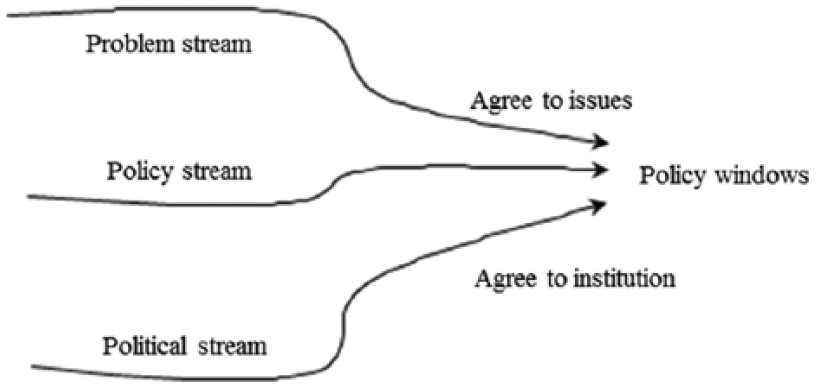
Successful medical device legislation model.
The Collection of Data
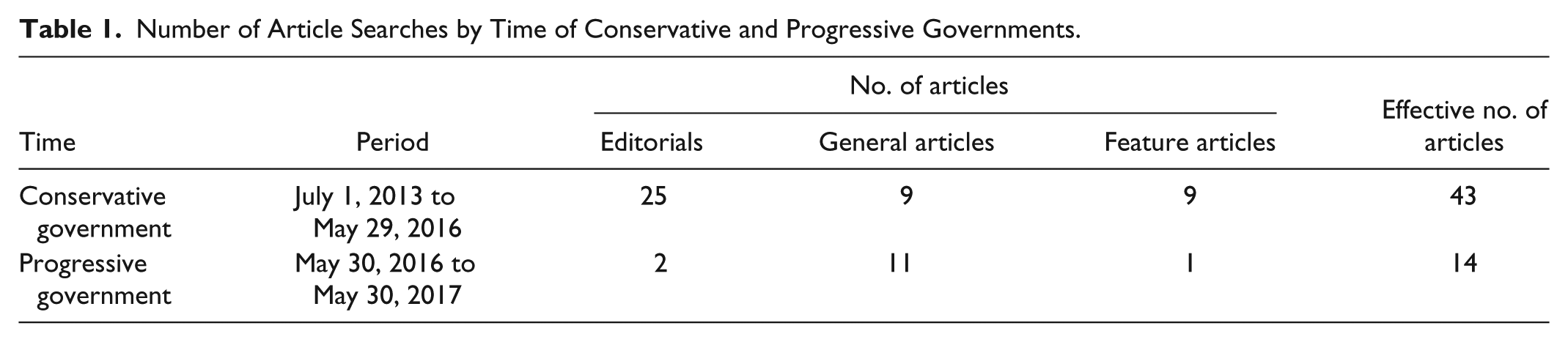
This study conducted an analysis of the policy network structure of the conservative and progressive governments. An SNA was used for the structure analysis, using newspaper articles as baseline data related to the medical device industry. The policy network of the conservative government period is from July 2013—when President Park’s government, which was inaugurated on February 25, 2013, designated the medical device industry as a future growth engine and the Medical Devices Act was first amended—to May 30, 2016, when the 20th National Assembly was opened. The policy network of the progressive government period is from May 30, 2016, when the 20th National Assembly was opened, to May 30, 2017. The main keywords were “Medical Devices Act,” “amendment of the Medical Devices Act,” and “Medical Device Industry Development and Support Act,” and related articles were extracted from BIG Kinds and Naver News search engines. BIG Kinds (www.bigkinds.or.kr) and Naver (www.naver.com) News search were used to search for articles related to the promotion of the medical device industry; BIG Kinds provides articles published by 8 Korean metropolitan newspapers, 5 newspapers focusing on economy, 26 regional newspapers, and 4 broadcasting companies while Naver is the biggest search engine in Korea covering 55.4% of the news as of 2017. Using such keywords as “medical device industry,” “promotion of the medical device industry,” and “Medical Devices Act,” 85 articles published during the conservative government period and 32 articles published during the progressive government period were found. Among these, promotional articles or articles containing 1-sided arguments were excluded, and a total of 57 articles were selected as valid articles. Table 1 displays more specific information related to the number of article searches.
Number of Article Searches by Time of Conservative and Progressive Governments.
In general, there are many studies that use newspaper articles as baseline data in the SNA for a structural analysis of the policy network. Jimenez analyzed the environmental organization network in Spain based on news articles and van Atteveldt et al analyzed network structure and policy authority by analyzing the semantic relationship of policy agents using German newspaper articles. 31 Moreover, Dredge analyzed the relationship between local governments and companies related to tourism through newspaper articles. Therefore, it is valid to use newspaper articles as baseline data for analyzing the legislative process of the medical device industry.
Methodology
While previous policy network analyses mainly conducted qualitative analysis of the policy network structure through content analysis, SNA enables the quantification and graphing of the relationship among agents within the network. 32 Generally, an SNA is used to determine centrality according to the level of analysis, which includes degree centrality, betweenness centrality, and closeness centrality. These indicators can be used to rank the size of the influence of stakeholders and the major issues in the overall policy network. 33
Formula of degree centrality (D.C.):
Formula of betweenness centrality (B.C.):
Formula of closeness centrality (C.C.):
Meanwhile, the 2-mode analysis among the SNA methods analyzes the network structure by simultaneously coding stakeholders and major issues. More specifically, major agents are coded in Line 1, and agreement-disagreement toward major issues is either entered as “1” or “0” starting from Line 2. Therefore, the 2 mode-network matrix concerns stakeholders (n) and major issues (M) regarding the medical device industry. The data consist of n column nodes and m row nodes, and the entire network forms a (n + m) × (n + m) network matrix (www.cyram.com). There were 15 stakeholders and 35 major issues during the conservative government period, and 12 stakeholders and 17 major issues during the progressive government period.
In the 2-mode network analysis, the node centrality is determined by eigenvector centrality instead of the 3 types mentioned above. Eigenvector centrality is one of the centrality indicators that deal with indirect influence, and it has a greater effect on increasing its influence than in the case in which a single node with great influence is linked to multiple nodes that are normal.
In other words, the number of nodes connected to a node does not make it important; instead, the number of important nodes connected to a node makes its influence stronger. Although degree centrality (Cd) is limited in that it analyzes only the number of connected nodes, eigenvector centrality (Ce) calculates the centrality while reflecting the centrality of other nodes.
Assuming that the network concerning the medical device industry is a n × m adjacency matrix while the matrix representing Ce is 1 × n, the following values can be calculated. In other words, in the present study, there were 15 stakeholders and 35 major issues during the conservative government period, and 12 stakeholders and 17 major issues in the progressive government period. Therefore, because the conservative government period is a 15 × 35 matrix whereas the progressive government period is a 12 × 17 matrix, there are 15 and 13, respectively, possible eigenvalues.
In other words, for a node with great power in the medical device industry (stakeholders, information, and resources) it is linked to, the greater power centrality (eigenvector centrality) it will have, which indicates that it has great influence within the network. The formula for the eigenvector index is as follows. 34

For a network analysis of the legislation process in the medical device industry, the present study used NetMiner 4.0, which has a stronger network visualization and is more user friendly, rather than the previously used UCINET or Pajek.
Results
Medical Device Network of the Conservative Government
During this period, the conservative Korean government amended the Medical Devices Act 4 times. The first amendment was enacted on July 2, 2013, with the major issue of setting the suspension of service within 1 year of when the related act is violated. The second amendment on December 31, 2013, provided medical device quality managers with requirements for manufacturing and import permission of medical devices, as well as their duties and tasks. The fine in case the duty to report adverse events of the medical devices was violated was also increased. The third amendment was enacted on December 29, 2014, which expanded the scope of subjects that are prohibited from altering or fabricating medical devices from users to anyone. It also became possible to assign certification of low-risk medical devices to a private agency. The fine for violation of the duty to report adverse events increased from 3 million Korean won (KRW) to 5 million Korean won (KRW). The last amendment was enacted on December 9, 2015, clarifying the requirements for the designation of examination agencies for the technical dossiers of low-risk medical devices, as well as changes and cancellations of clinical tests. Moreover, the amended act established legal grounds to designate and cancel nonclinical trial agencies and made it mandatory to appoint a consumer medical device officer to eradicate illegal rebate.
Altogether, there were 4 amendments to the Medical Devices Act, but even though the bill for the Medical Device Industry Development and Support Act that may have a crucial effect on developing the medical device industry was tabled by Jese Oh and 10 others on May 24, 2013, it was automatically disused when the 19th National Assembly ended on May 29, 2016. This strengthened the legal regulations on the medical device industry but failed to get the bill legislated for actual support, which formed a network around the pros and cons.
Figure 3 shows the results of the analysis of the network structure around the legislative bill related to medical devices during the conservative government period, from July 2013 to May 2016. Government departments such as the Ministry of Food and Drug Safety, Ministry of Health and Welfare, and Ministry of Strategy and Finance agreed to promote the medical device industry. On the contrary, interest groups such as the Korean Medical Association, the medical community, and the Association for Physicians for Humanism were all against the idea. Stakeholders who agreed argued that the medical device industry can overcome the inefficiency of assessment delay as a future growth engine. On the contrary, stakeholders who disagreed claimed that promoting medical devices will lead to increased medical expenses and will also bankrupt small hospitals and clinics.

Policy network in 19th assembly.
More specifically, the following discusses the analysis of the centrality of stakeholders in terms of the pros and cons around the promotion of the medical device industry and their major issues. Among the ones who agreed, the Ministry of Food and Drug Safety (centrality .843) had the highest centrality, followed by the Ministry of Health and Welfare, Seoul National University Medical School, Ministry of Strategy and Finance, Saenuri Party member Gisun Kim, and Ministry of Trade, Industry and Energy (Table 2). In particular, the Ministry of Trade, Industry and Energy and the Ministry of Health and Welfare showed the biggest number of node links at 13 and 5, respectively. This is because the inauguration of the conservative government in February 2013 and its declaration of the medical device industry as a future growth engine resulted in the government-led development of the industry. Furthermore, Saenuri Party member Gisun Kim, while belonging to the conservative government, tabled the bill for the Medical Device Industry Development and Support Act and took the lead in promoting the industry.
The Centrality of Stakeholder in 19th Assembly.
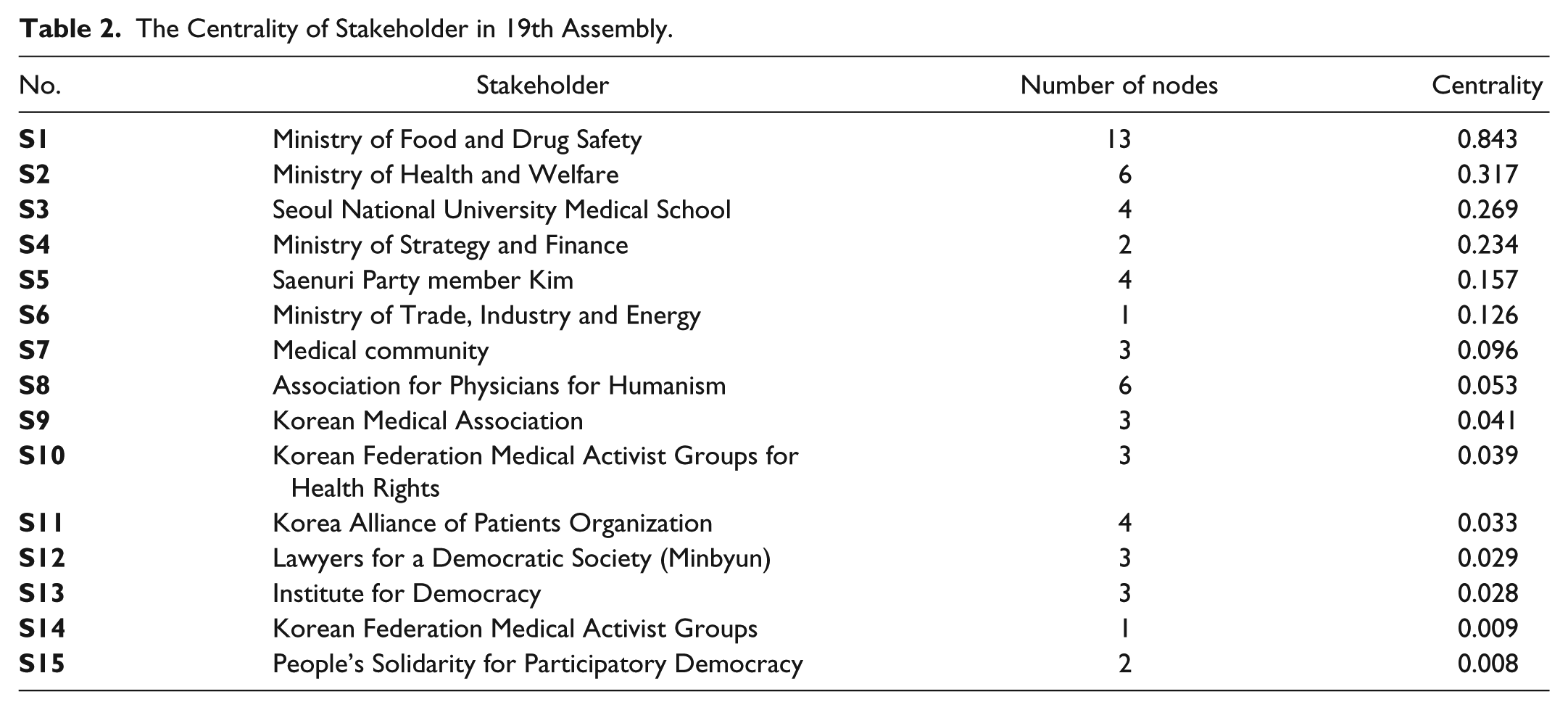
Meanwhile, the medical community (centrality .096) was at the very center of the stakeholders that are against the idea, followed by the Association for Physicians for Humanism, the Korean Medical Association, and the Korean Federation Medical Activist Groups. In the political community, the Institute for Democracy was against the artificial promotion of the medical device industry led by the government. Stakeholders that did not support the promotion of the industry had a lower centrality than those that supported it.
This indicates that they did not have the initiative in the government-led artificial efforts. However, regarding the number of node links, the Association for Physicians for Humanism had 6 and the Korea Alliance of Patients’ Organization had 4, which shows potential for them to serve as leading stakeholders with regard to the medical device industry.
Next, for the logic of agreeing to the promotion of the medical device industry in the conservative 19th National Assembly, the highest centrality was found in reinforcing competitiveness as a future growth engine (centrality .496). It was followed by inefficiency of assessment delay for new medical technology, conversion of some medicine into medical devices, and abolition of restriction on contract manufacturing of medical devices, which turned out to be important issues for agreement. However, most issues related to the promotion of the industry had only 1 node, except for reinforcing competitiveness as a future growth engine, which had 6 nodes.
The centrality score was high despite the small number of nodes because Ce, which values connections to nodes with significant power, was used. The fact that many issues had the same score indicates that that issues were distributed among stakeholders of the medical device industry, thus preventing major issues from gaining attention.
The issue with the highest centrality as the logic for being against the promotion of medical devices in the conservative government was increase in overall medical expenses (centrality .036), followed by the possibility of a hospital’s insistent recommendation of its own medical device, prevalence of a hospital’s expedients, and lack of penalty clauses. One thing to note is that inefficiency of assessment delay for new medical technology (centrality .239) was also a major issue for stakeholders who were against the promotion.
Overall, the major reasons against the promotion of medical devices had lower centrality than the ones in agreement, but because increase of overall medical expenses (4) and incapacitation of the government regulation (3) had many nodes, they are likely to emerge as major issues. The groups against the promotion of medical devices were concerned that this will incapacitate the government regulation and lead to excessive increase of medical expenses.
The Centrality of Chief Issues in 19th Assembly.

In conclusion, groups with expertise in medical devices participated in issue networks in the conservative government. However, despite the government’s strong will to promote the medical device industry, interest groups strongly opposed the promotion arguing that it would increase medical costs and favor large hospitals. Therefore, the findings confirmed the previous results that strong disagreement within issue networks would prevent policies from being effective. 20 Moreover, there was no major issue or stakeholder that could connect the opposing and agreeing groups in the aspect of policy issue. In other words, as can be seen in Kingdon and Mucciaroni’s models, the legislation was unsuccessful despite the government’s strong will and critical attitude toward the promotion of the medical device industry because there was no political stream that could arbitrate and bring about an agreement among stakeholders with opposing views and because there was no consensus regarding the issues or the systems.
Medical Device Network of the Progressive Government
The progressive government period is from the time the progressive party became the majority in the 20th Assembly election on April 13, 2016, through March 10, 2017, when the conservative president of the time went through an impeachment process, to the present time since the inauguration of the new progressive president on May 10, 2017. Since the initiation of the 20th National Assembly on May 30, 2016, the bill for the Medical Device Industry Development and Support Act was tabled by Gisun Kim and 16 others on July 22, 2016. However, not a single form of an act related to the development of the medical device industry has been discussed until today. Meanwhile, the amendment bill of the Medical Devices Act was passed on November 17, 2016, which contains details unrelated to the development of the medical device industry, such as storing data related to financial benefits including support of samples for health care professionals, support of symposiums, and support of clinical trials for 5 years. It was also made mandatory to mark the standard code for medical devices.
Therefore, there was barely any discussion on the development of the medical device industry during the progressive government period, with the related issues and stakeholders from the conservative government remaining active. They mostly agreed to the Medical Device Industry Development and Support Act. The network structure during this period is shown in Figure 4.

Policy network in 20th Assembly.
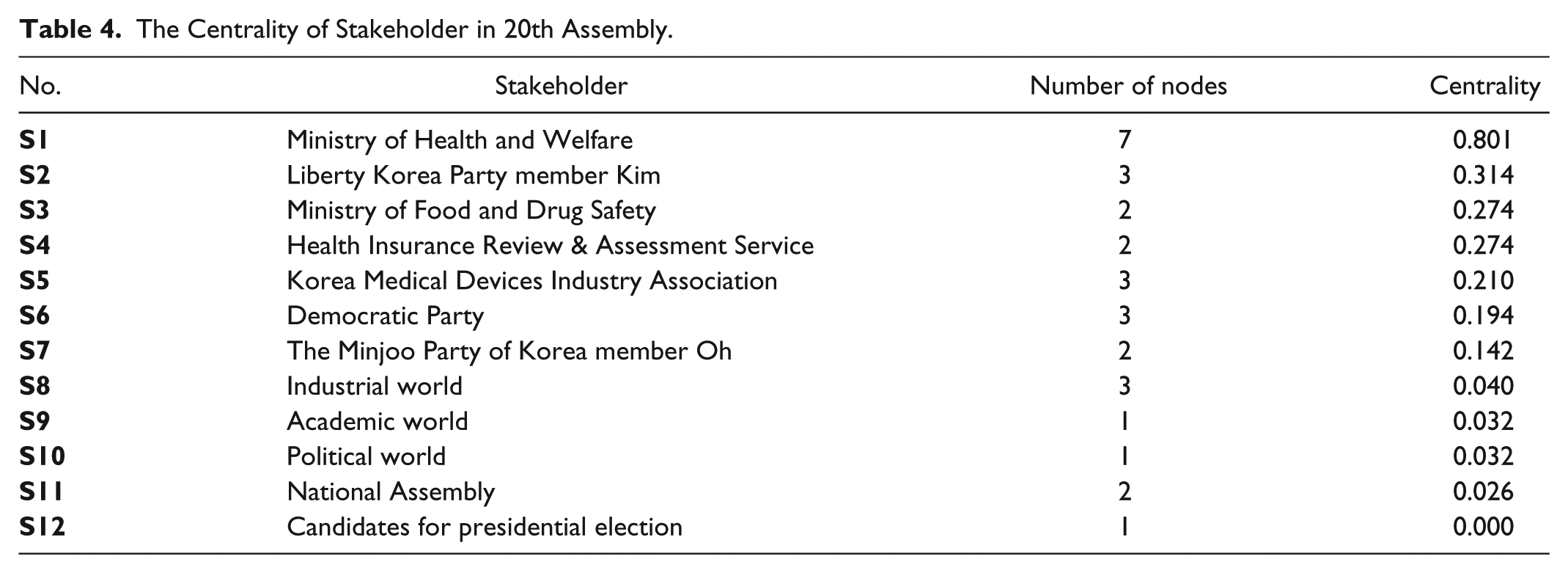
It was found that many stakeholders and major issues regarding the promotion of the medical device industry decreased in the progressive government period since May 30, 2016. The centrality of the Ministry of Health and Welfare was highest (0.801) in terms of stakeholders, followed by Liberty Korea Party member Gisun Kim, Ministry of Food and Drug Safety, and Health Insurance Review and Assessment Service. The Ministry of Health and Welfare had 7 nodes, which was also the largest number. Stakeholders of the medical device industry decreased significantly compared with the conservative government period, which emphasized the role of the market, but it is worth noting that the Health Insurance Review and Assessment Service and the Korea Medical Devices Industry Association, which are directly related to medical devices, emerged as major stakeholders. They are likely to perform significant roles when the medical device industry is linked to the fourth industry, which is the key promise of the progressive government. Because it has been only a year since the emergence of the progressive government, there is still no specific opposition force aside from the ruling party, which is the Democratic Party. Because one of the members of the ruling party is enthusiastic about promoting the medical device industry, it is likely that he or she will later serve as a medium.
The Centrality of Stakeholder in 20th Assembly.
The key logic of agreeing to the promotion of the medical device industry in the progressive government is focused on securing transparency of medical devices, such as disclosure of price information for medical devices (centrality .485), establishment of a distribution data system (.430), and establishment of an integrated data management system (.430). The market-oriented conservative government had claimed the economic logic of securing industrial competitiveness, but the progressive government seems to focus more on securing transparency of the medical device industry. On the contrary, the stakeholder against the promotion of the industry is the ruling party, and this is due to a suspicion about the possibility of a connection to health care privatization. Passing of the amendment bill of the Medical Devices Act had 4 nodes, which was the largest number, followed by disclosure of price information, establishment of a distribution data system, and establishment of an integrated data management system, all of which had 3 nodes.
The Centrality of Chief Issues in 20th Assembly.

SMEs: Small and medium-sized enterprises.
Policy Implications
The results of the analysis of the issue network observed through the legislation process of the Medical Device Industry Development and Support Act are summarized as follows. Both the conservative and the progressive governments showed a clear political orientation, as outlined by Kingdon. The perceptions regarding the medical device industry changed in accordance with the functioning style of each type of government. Both governments commonly made changes in stakeholders and in the perspective on medical devices. However, the progressive government maintained an ambiguous position toward the medical device industry, in contrast to the conservative government, which decisively selected the industry as a future growth engine. In terms of policy development, the conservative government made investments mainly for the growth of the medical device industry itself because the focus of the government was on leading the medical device industry. Conversely, the progressive government had an alternative vision to connect the medical device industry with the fourth industry. Therefore, the conservative government failed to gain public support and closed its policy window, resulting in policies that did not consider the prospects of the industry. In contrast, the progressive government has the potential to open the policy window and consider policy orientation that would connect the medical device industry with the fourth industry.
From the perspective of Mucciaroni’s ICF, the conservative government not only failed to gain political support from interest groups, but also did not reach public consensus on the growth of the medical device industry, eventually losing its standing. On the contrary, the progressive government’s standing will likely be strengthened in case it manages to gain support from interest groups and the general public by establishing the connection between the fourth industrial revolution and the medical device industry.
Kingdon and Muccinaroni Analysis.

Note. MSF = Multiple Streams Framework; ICF = Interest Group Standing Change Framework. ○ = supported; available; × = unsupported; unavailable; Δ = partially OK (between ○ and ×); ? = possible future.
Discussion
This study determined the difference in the issue network model in the legislative process of the Medical Device Industry Development and Support Act between the conservative and progressive governments through an SNA. In conclusion, most groups in the conservative government that agreed to the promotion of the medical device industry were government departments such as the Ministry of Health and Welfare, Ministry of Food and Drug Safety, and Ministry of Strategy and Finance, which emphasized economic logic such as reinforcing competitiveness as a future growth engine. However, the centrality of stakeholders in the progressive government seemed to shift from government departments to direct stakeholders such as Health Insurance Review and Assessment Service and interest groups such as the Korea Medical Devices Industry Association. Moreover, it was still possible to link the medical device industry to the fourth industry, which was the key promise of the progressive government.
However, in this study, both the conservative and progressive governments failed to legislate on the subject of the medical device industry. Based on the results of the network analysis, this study explains the cause of policy failure and slippage of the Medical Device Industry Development and Support Act, using Kingdon’s MSF and Mucciaroni’s ICF.
First, according to Kingdon’s MSF, the conservative government had index clarity, such as selecting medical devices as a future growth engine, but it failed to come up with focus events or form public opinion. However, this was related to the political stream as it attempted to promote the medical device industry led by the government. However, the policy window failed to open in the end as there were no alternatives, and it failed to enter the policy-making process due to the objections of the opposition party and interest groups. According to Mucciaroni’s ICF, the conservative government failed to gain political support of interest groups as well as national support and consensus, thereby resulting in the decline of its position.
Next, according to Kingdon’s MSF, it has only been a year since the progressive government was inaugurated, and thus, there is no awareness of problems related to the promotion of the medical device industry. However, considering the change of regime, increased centrality of interest groups, and the possibility of a connection to the fourth industry that was the government’s key promise, there is a chance that the policy window will open. According to Mucciaroni’s ICF, if there is a rise of fortune that can help obtain political support in association with the fourth industry and gain national consensus, it is likely that the medical device industry will be developed.
Meanwhile, the assessment delay system for new medical technology in the conservative government network was selected as a major issue in both groups. Therefore, this system is highly likely to serve as a medium to promote the medical device industry in the progressive government. In other words, if the medical device industry is sufficiently promoted, thereby ensuring higher reliability in clinical test results, it will be much easier for medical devices to enter the market. Therefore, considering that the situation in Korea is highly dependent on the global medical device market compared with the growth of the local market, legislation of the act related to the promotion of the medical device industry is likely to succeed if relevant infrastructures are established by the government. Moreover, many jobs will be created as this is a high value-added manufacturing business related to the fourth industry.
Conclusion
This study examined the network structure in the legislative process of the government to develop and support the medical device industry through an SNA. It aimed to discover the difference in the network structure between the conservative and progressive governments and to analyze major issues and stakeholders. In particular, it clarified the reasons for failed legislation based on Kingdon’s MSF and Mucciaroni’s ICF.
The results showed that the conservative government discussed the development of the medical device industry led by government departments, focusing on its potential as a future growth engine. On the contrary, the progressive government tended to have fewer stakeholders and issues around the idea, shifting the stakeholders that lead the development of the industry from government departments to relevant interest groups, and focusing more on policy issues such as transparency than on economic issues.
Index clarity was revealed in the legislative process in the conservative government according to Kingdon’s model, but it merely remained in the government-led politics stream. Therefore, it failed to form public opinion or a consensus, and the bill was discarded even before entering the policy process. Their position also declined according to Mucciaroni’s model, as related interest groups failed to secure political and national support.
On the contrary, the progressive government also remained in the politics stream in Kingdon’s model, but there is a possibility of success in legislation once the promotion of the industry leads to job creation related to the fourth industry, which will bring national support. In particular, the centrality of related interest groups increased in Mucciaroni’s model, increasing the possibility of legislation for the promotion of the medical device industry.
This study aimed to analyze the network structure around the current medical device industry to improve the infrastructure of the industry in Korea and reinforce its competitiveness in the global industry. To promote the Korean medical device industry, it is necessary for related interest groups to obtain political support and national consensus, which will enable the government-led establishment of infrastructures and policy support for the medical device industry.
Nonetheless, this study may have some limitations. First, the number of articles focusing on the progressive government period is relatively smaller than that of the conservative government period. This is because the conservative government period was 3 times as long as the progressive government period, with the periods being 3 years and 1 year, respectively. In addition, the number of searched articles decreased after excluding commercial articles. However, this is significant in that the network structure of the progressive government in 1 year is clearly different from that of the conservative government. Second, limitations exist in the ability to precisely reflect the actual network structure of the medical device industry through an SNA. In other words, there may be limitations in determining all the unofficial dynamics that may occur among the stakeholders. Third, the fact that there were no in-depth interviews with medical institutes, manufacturers, and government agencies related to the medical device industry may also serve as a limitation for the network structure analysis.
To overcome these limitations, it is necessary to conduct coding of 2 or more persons if the quantitative figure of the cases could be increased in follow-up research, thereby determining the Kappa coefficient to verify their consistency. Furthermore, in-depth interviews must be conducted with various stakeholders according to the results of the network structure analysis to determine the unofficial dynamics among such stakeholders.
Footnotes
Appendix
A comparison of the Medical Device Industry Development and Support Act in Conservative and Progressive Governments.

| Category | Tabled on | Tabled by | Purpose | Details |
|---|---|---|---|---|
| Conservative government | May 24, 2013 | 10 MPs including Jese Oh | • To select it as a future growth engine industry • To promote technological development in the medical device industry • To minimize the impact of opening up the medical devices market • To strengthen the competitiveness of the industry • To contribute to national health and economic development |
• Establish a comprehensive plan to promote the medical device industry • Establish a committee for the promotion of medical device industry • Certify medical device companies that can pioneer and lead the industry • Financially support and offer tax exemption for medical device companies • Standardize medical devices • Support research and development of new medical devices • Preferentially purchase outstanding products • Promote exports to overseas markets |
| Progressive government | July 22, 2016 | 16 MPs including Gisun Kim | • To develop biotechnology and information technology • To meet the increased demand for medical services due to the aging society • To strengthen the competitiveness of the medical device industry • To contribute to national health and economic development |
• Establish a comprehensive plan for developing advanced medical devices • Certify innovative medical device companies • Support innovative medical device companies • Research and development in medical device companies • Set terms for confidentiality • Temporary approval for various special cases (10 years) |
Note. The conservative government defined the medical device industry as a future growth engine industry and proposed a market-friendly act that includes planning, promotion, support, and exportation of the products of the medical device industry. In contrast, the progressive government set about improving the competitiveness of the medical device industry and national health promotion as their major goals and focused on government regulation, such as certification of the medical device industry and terms for confidentiality. It also limited market intervention through granting a temporary approval for special cases.
Declaration of Conflicting Interests
The author(s) declared no potential conflicts of interest with respect to the research, authorship, and/or publication of this article.
Funding
The author(s) disclosed receipt of the following financial support for the research, authorship, and/or publication of this article: This work was supported by the Ministry of Education of the Republic of Korea and the National Research Foundation of Korea (NRF-2016S1A5A2A03926834) and the grant of the Korea Health Technology R&D Project through the Korea Health Industry Development Institute (KHIDI) funded by the Ministry of Health & Welfare, Republic of Korea (grant number : HI14C3229).
