



Abstract
One of the most substantial health issues still prevalent among adolescents is teen dating violence. Research indicates that up to 60% of teens report some form of aggression or violence in their relationship. While a number of studies have reported risk markers correlated with this social problem, few studies have tested the applicability of Agnew’s general strain theory on teen dating violence. Therefore, the goal of the current study is to examine Agnew’s general strain theory and teen dating violence perpetration. More specifically, this study aims to determine which, if at all, of the three stressors (the failure to achieve positively valued goals, the removal of positively valued stimuli, and the presentation of negative stimuli) predicted teen dating violence, while also determining if negative emotions mediate the relationship between the three stressors and teen dating violence. A subset of data obtained from the Technology, Teen Dating Violence and Abuse, and Bullying in Three States (n = 1,940) showed support for the theory. Results show that negative emotions (anger, depression, and anxiety) arose from two of the three stressors. Analyses from logistic regression models demonstrated that all three stressors did predict teen dating violence. The study’s overall contributions and limitations will be discussed.
Introduction
Teen dating violence, defined as any harmful form of physical, sexual, or psychological behavior that occurs in dating relationships, continues to be a frequent social health issue facing many teens. A recent meta-analysis showed that up to 60% of teenagers had experienced some form of teen dating violence (Pusch, 2024). Given this high incidence rate, it is perhaps not a surprise that scholars have attempted to document factors associated with teen dating violence. One meta-analysis showed that factors such as approving the use of violence, engaging in risky sexual behaviors, alcohol abuse, depression, delinquency, displaying controlling behaviors, and others are associated with teen dating violence (Spencer et al., 2021). In addition, another review of the literature shows that social learning theory appears to be the leading criminological theory used to explain teen dating violence (Pusch, 2024). For example, studies using social learning theory have found that dating violence is associated with having peers who encourage violence in relationships (differential association), believing that such violence is beneficial (differential reinforcement), viewing violence as an acceptable solution to relationship problems (definitions), and witnessing violence at home (imitation; Ali et al., 2011; Archer et al., 2010; Reyes, et al., 2016; Simons et al., 1998). Overall, Pusch (2024) reported that social learning theory is adequate in explaining teen dating violence.
However, one theory that has received little attention in the teen dating violence literature is Agnew’s (1992) general strain theory. Agnew (1992) argued that people are more likely to engage in criminal behavior when they experience any of the following three sources of strain: failing to achieve a positively valued goal, losing a positively valued stimulus, or experiencing a noxious stimulus. These strains are especially likely to generate criminal behavior if a person sees them as unjust, high in magnitude, and if they possesses low self-control, which then creates negative emotions (anger, depression, anxiety, etc.) that increase the motivation to engage in criminal behavior to release or cope with these emotions (Agnew, 2006). There is reason to believe that Agnew’s (1992) general strain theory is applicable in explaining teen dating violence. For example, failing to acquire relationship quality may be seen as failing to achieve a valued goal in an intimate relationship. Furthermore, being constantly monitored (partner surveillance) by a controlling intimate partner may make some people feel like they are losing their independence or autonomy and therefore losing a positively valued stimulus. Finally, a person being subjected to various forms of aversive behaviors would certainly be experiencing a noxious stimulus. Taken together, these highlights position general strain theory as a possible explanation for teen dating violence. This study empirically tests these notions on a sample of 1,940 teens attending high school in the United States.
The current study will advance the literature in at least two significant ways. First, it tests a criminological theory rarely tested to explain teen dating violence. Relying exclusively on one particular theory like social learning may prevent practitioners from discovering new insights that may help further understand teen dating violence. Second, general strain theory’s ability to explain specific behaviors like teen dating violence is limited. One important necessity for evaluating theory is the exploration of core propositions with various populations and different types of behaviors (Akers et al., 2020). These goals are accomplished through the following steps. First, the literature on teen dating violence will be reviewed. Second, Agnew’s (2006) general strain theory will be presented and studies that have tested this theory will be examined. From this literature review, hypotheses will be formed to guide the empirical analysis that follows. Third, the data and measures used in this study are described in detail. Finally, the results are presented and the article concludes with a general discussion of the results, limitations of the study, and ideas for future research.
Literature Review
Teen Dating Violence
Teen dating violence has been well documented by scholars. Due to its high prevalence (Wincentak et al., 2017) and health problems associated with it (Taquette & Monteiro, 2019), this concern has prompted significant attention to identifying risk factors for teen dating violence perpetration and victimization. A meta-analysis has shown that factors such as experiencing child abuse in the family of origin, engaging in controlling behaviors, low parental support, poor parenting practices, limited peer social support, aggressive behavior toward peers, and witnessing parental violence are important risk factors for teen dating violence perpetration. In contrast, having a high-quality relationship with parents serves as a protective factor (see Spencer et al., 2021). In another meta-analysis looking at teen dating violence victimization, Spencer and colleagues (2020) found that factors such as substance use, exhibiting externalizing behaviors like conduct problems, risky sexual behaviors, carrying a weapon, depressive symptoms, suicide attempts, and others were also significant risk markers for physical teen dating violence victimization, while communication skills, higher levels of self-esteem, and good physical health protected against teen dating violence victimization.
In addition to documenting the risk markers for teen dating violence perpetration and victimization, other studies have documented the negative consequences associated with this social health issue. That is, teen dating violence significantly injures a teen's well-being, which may hamper their success in various areas, like social interactions at school and at home. For example, the negative impacts of teen dating violence include mental health problems, poor school performance, and the use of violence during conflicts (Edwards & Neal, 2017; Leadbeater et al., 2014). Beyond external behaviors, teen dating violence can also lead to psychological problems such as feelings of inadequacy, anxiety, paranoia, depression, isolation, guilt, and self-blame (Exner-Cortens et al., 2019). Furthermore, studies have shown that the effects of teen dating violence can be long-lasting, including continued isolation, lack of emotional support, and a higher risk of experiencing further abuse like harassment and humiliation (Banyard & Cross, 2008; Exner-Cortens et al., 2013). Some of these assertions have also been found in longitudinal studies. For example, longitudinal research has also revealed persistent challenges for teens who have experienced dating violence, like depression, binge eating, substance abuse, and antisocial behavior (Foshee et al., 2010). These harmful and potentially chronic consequences highlight the critical need for programs aimed at preventing teen dating violence to be grounded on theory. One theory that may be applicable to teen dating violence in Agnew’s (1992) general strain theory.
General Strain Theory
The theory’s main proposition is that stress, anger, frustration, anxiety, or strain is the cause of criminal behavior. Agnew (1992) articulated that criminal behavior would occur if an individual experienced any of the following three sources of strain: failing to achieve a positively valued goal, losing a positively valued stimulus, or experiencing a noxious stimulus. These strains in return generate anger, frustration, depression, or anxiety that may prompt an individual to commit criminal (or non-criminal) behavior in an attempt to eliminate or reduce that source of strain. Physical aggression, for example, may be used against an intimate partner to release stress, eliminate a noxious stimulus, or to achieve a goal. The theory also suggests that individuals with high levels of strain can avoid criminal behavior if they have a strong social support system or practice non-criminal coping behaviors. Overall, research has generally supported the link between strain and different types of criminal or deviant behaviors (Akers et al., 2020).
General strain theory may be well suitable to explain teen dating violence. For example, failing to establish relationship quality may be seen as failing to achieve a valued goal. Relationship quality is defined as a person’s subjective evaluation of their intimate relationship and is characterized by high levels of trust, satisfaction, and commitment (Fincham & Rogge, 2010). Youth who report high relationship quality in their relationships may be more likely to suppress urges to use violence against their partner when provoked, but failing to achieve it may increase the odds of teen dating violence (Blake et al., 2018). Furthermore, partner surveillance may be seen as losing a positively valued stimulus because it is the loss of independence or decision-making (e.g., determining who to hang around with). Surveilling an intimate partner is exercising coercive power over them, which refers to “. . .the agent's ability to impose on the target things the target does not desire, or to remove or decrease desired things” (Dutton & Goodman, 2005; p. 745). Past studies have demonstrated a relationship between controlling behaviors and dating violence (Cook & Goodman, 2006; Hamberger et al., 2017; Miller & White, 2003). Finally, being subjected to physical bullying can be seen as experiencing a noxious stimulus. Indeed, Agnew (2006) pointed out that associating with abusive peers is one of the strains that is more likely to lead to crime and delinquency. It is therefore not a surprise that studies have found a relationship between being bullied and juvenile delinquency (Cullen et al., 2008; Glassner, 2020; Park & Metcalfe, 2020; Patchin & Hinduja, 2011). This association has also been found in dating violence among youth (Zych et al., 2021).
While not extensively used to explain teen dating violence, general strain theory has been used by scholars as their theoretical framework to explain intimate partner violence perpetrated by police officers, one of the most stressful occupations. Anderson and Lo (2011) found that police officers with an “authoritarian” mindset were more likely to use violence towards their partners. They also found that negative emotions as a result of police work positively influence the perpetration of violence. Furthermore, Gershon et al. (2009) reported that exposure to incidents, discrimination in the workplace, job dissatisfaction, and a lack of cooperation among police officers all contributes to job-related stress, which in return influences intimate partner violence. Gibson et al. (2001) found a similar result.
Johnson et al. (2005) reported that burnout also contributes to the perpetration of violence. Police officers who treated civilians like objects, were unconcerned about their welfare, or indicated that working with civilians all day is a strain, were more likely to use violence in their relationships. One study using a non-law enforcement sample found that husbands who reported being unhappy with their marriage and experiencing physical abuse as children were more likely to report perpetrating violence towards their wives (Cheung et al., 2014). Analyzing data gathered from a university sample, Mason and Smithy (2012) found that academic strain, cumulative academic strain, and intimate partner cumulative strain increased the use of dating violence. Finally, studies using youth samples have found similar results. Chen and Foshee (2015) found that male teens who reported high levels of life stressors were more likely to use violence in their relationships than female teens. In addition, Rosenfield and colleagues (2013) reported that common stressors increase the likelihood of dating violence among at-risk teens, but it was especially stronger for teens with a recent history of dating violence.
Current Study and Hypotheses
One of the most substantial health issues still frequent among adolescents is teen dating violence. As mentioned, up to 60% of teens report some form of violence in their intimate relationship. While a number of studies have reported risk markers correlated with teen dating violence, few studies have tested the applicability of general strain theory on teen dating violence. Therefore, the purpose of the current study is to apply general strain theory to teen dating violence perpetration. Specifically, this study aims to determine which, if at all, of the three stressors (the failure to achieve positively valued goals, the removal of positively valued stimuli, and the presentation of negative stimuli) predicted teen dating violence, while also determining if negative emotions mediate the relationship between the three stressors and teen dating violence. Given this background and the literature review above, the following three hypotheses are tested:
Methods
Data
Data for this research are obtained from the cross-sectional study Technology, Teen Dating Violence and Abuse, and Bullying in Three States, 2011–2012 (Zweig et al., 2013). Data were collected through a paper and pencil survey. A total of 5,647 youth from ten schools in five school districts in New York, New Jersey, and Pennsylvania participated in the study. All youth present on the day the survey was administered were eligible to partake in the study. Youth responded to the survey in their classrooms and were monitored by school officials who were trained by the research team. The survey contained questions that pertained to a youth’s dating relationship, technology use, risky behaviors, school experience, family relationships, and bullying. The overall response rate was 84%. While 5,647 youth participated in the survey, only 3,745 respondents indicated that they were in a dating relationship or being in a dating relationship in the past 12 months. Of these 3,745 respondents, 1,805 cases were removed after eliminating cases with missing data on all study variables, which resulted in a final sample of 1,940 youth. For more information, see the final report published by Zweig et al. (2013).
Dependent Variable
Respondents who were currently or recently in a dating relationship were asked questions about physical dating violence in the prior year. They were asked how often they perpetrated certain incidents toward their current or former partner. An example item included “Scratched him or her.” Respondents marked their answers using a 4-point Likert-type scale (0 = Never to 3 = Happened 10 or more times). Next, these items were summed together and collapsed into a dichotomous variable, where 1 represented perpetrating at least one form of violence against their partners (responses 1 through 3 = 1) and 0 indicating that the respondent did not commit violence against their partner (response 0 = 0; α = .89). This coding scheme is used because this study is interested in the occurrence of violence rather than the frequency of violence and is consistent with other studies that have used these data (see, Torres-Rivera et al., 2025).
Independent Variables
Failing to Achieve a Valued Goal
Relationship quality is used to capture failing to achieve a valued goal. Respondents were asked how often the person that they were in a relationship with did certain behaviors in the past year. An example included “He/she made me feel close to him/her.” Respondents marked their answers using a 4-point Likert-type scale (0 = Never to 3 = Very often). These items were summed together, with higher scores indicating high relationship quality (α = .94).
Losing a Positively Valued Stimulus
Partner surveillance is used to capture losing a positively valued stimulus. Respondents were asked how often in the past year their partner or former partner did certain acts. An example included “Tried to limit my contact with friends.” Respondents marked their answers using a 4-point Likert-type scale (0 = Never to 3 = Very often). These items were summed together, with higher scores indicating higher incidents of partner surveillance (α = .88).
Experiencing a Noxious Stimulus
Being subjected to physical bullying is used to capture experiencing a noxious stimulus. Respondents were asked how often in the past year did they experienced certain incidents perpetrated against them by people other than their intimate partners. An example included “I was pushed or shoved.” Respondents marked their answers using a 6-point Likert-type scale (0 = Never to 5 = Everyday). These items were summed together, with higher scores indicating higher incidents of physical bullying (α = .85).
Mediation Variables
Questions to measure anger, depression, and anxiety were obtained from the subscales of the Symptom Assessment-45 Questionnaire (SA-45). To capture anger, respondents were asked five questions. Specifically, participants were asked to reflect on their experiences with certain statements. An example include “Getting into frequent arguments.” Respondents marked their answers using a 5-point Likert-type scale (0 = Not at all to 4 = Extremely). These five items were summed together, with higher scores indicating higher levels of anger (α = .84). Five questions were asked to measure depression. Respondents were asked how much they have been bothered by certain things. An example included “Feeling lonely.” Respondents marked their answers using a 5-point Likert-type scale (0 = Not at all to 4 = Extremely). These five items were summed together, with higher scores indicating higher levels of depression (α = .89). Finally, five questions were asked to measure anxiety. Respondents were asked how much they have been bothered by certain things. An example included “Feeling fearful.” Respondents marked their answers using a 5-point Likert-type scale (0 = Not at all to 4 = Extremely). These five items were summed together, with higher scores indicating higher levels of anxiety (α = .84).
Demographic and Control Variables
A number of demographic and other variables are controlled in the current study. Sex is coded 1 for males and 0 for females. Age is measured in years. Mutually exclusive dummy variables were used to capture race/ethnicity. White is coded 1 for White respondents and 0 otherwise. Black is coded 1 for Black respondents and 0 otherwise. Latino is coded 1 for Latino respondents and 0 otherwise. White respondents will serve as the reference group. Respondents who indicated their race/ethnicity to be Asian, mixed race, or Native Americans were removed due to their small count. Parental education was used as a proxy for socioeconomic status. Respondents were asked about the highest level of education of each parent on a scale ranging from 1 to 5. Responses include “Elementary/middle school,” “high school,” “college,” “Master’s degree,” or “MD, JD, or PhD.” The two responses (one for their mother and the other for their father) were added together to establish combined parental education. This method is consistent with other studies that have used these data (Semenza, 2021a,b).
Past research has demonstrated that frequency of parental activities/communication, delinquent behavior, and risky behaviors are correlated with teen dating violence. Therefore, these variables are controlled (Higgins et al., 2018; Muñiz-Rivas, et al., 2019; Walters & Espelage 2018). Parental activities were captured with five questions. Respondents were asked during the past month, how frequently did they engage in certain activities with a parental or guardian. An example included “Gone shopping.” Respondents marked their answers using a 4-point scale (1 = Never to 4 = Often). These five items were summed together, with higher scores indicating higher frequency of parental activities (α = .68). Similarly, parental communication was measured with four questions. Again, respondents were asked during the past month, how frequently did they engage in certain events with a parental or guardian. An example included “Talked about someone you’re dating,” Respondents marked their answers using a 4-point scale (1 = Never to 4 = Often). These four items were summed together, with higher scores indicating higher frequency of parental communication (α = .62).
Delinquency was measured with nine questions. Respondents were asked if they have engaged in certain behaviors in the past year. An example included “Sold drugs.” Respondents marked their answers with a yes or no response (0 = No, 1 = Yes). These nine items were summed together, with higher scores indicating greater involvement in delinquency (α = .76). Drug use will be used as a proxy for engaging in risky behaviors. Eleven questions were asked to capture drug use. Respondents were asked how many times in the last 30 days they did certain acts. An example included “Used cocaine.” Respondents marked their answers using a 4-point scale (1 = Never to 4 = 10 or more times). These eleven items were summed together, with higher scores indicating higher drug use (α = .78).
Analytical Plan
The analysis is conducted in four steps. First, descriptive statistics for the variables are presented. Second, a test of the effect of strain on all negative effects will be presented. Third, given the dichotomous nature of the dependent variables, logistic regression models are produced to determine which independent variables are correlates of the dependent variable. Finally, mediation analysis in this study was performed by using SPSS PROCESS macro for binary variables using a 5,000-sample bootstrap procedure to estimate bias-corrected 95% confidence intervals (CIs) to examine the significance of indirect effect of the relationships (Hayes, 2017). If the confidence intervals do not contain 0, indirect relationships are significant, which results in significant mediating effects (Hayes, 2017). To determine if multicollinearity is a problem in these data, tolerance and variance inflation factors (VIF) were calculated. The VIF statistics are all below 6.0 (Keith, 2015) and all tolerances are above 0.25 (Walker & Maddan, 2020), providing evidence that collinearity is not a problem (see Table 1)
Descriptive Statistics (n = 1,940).
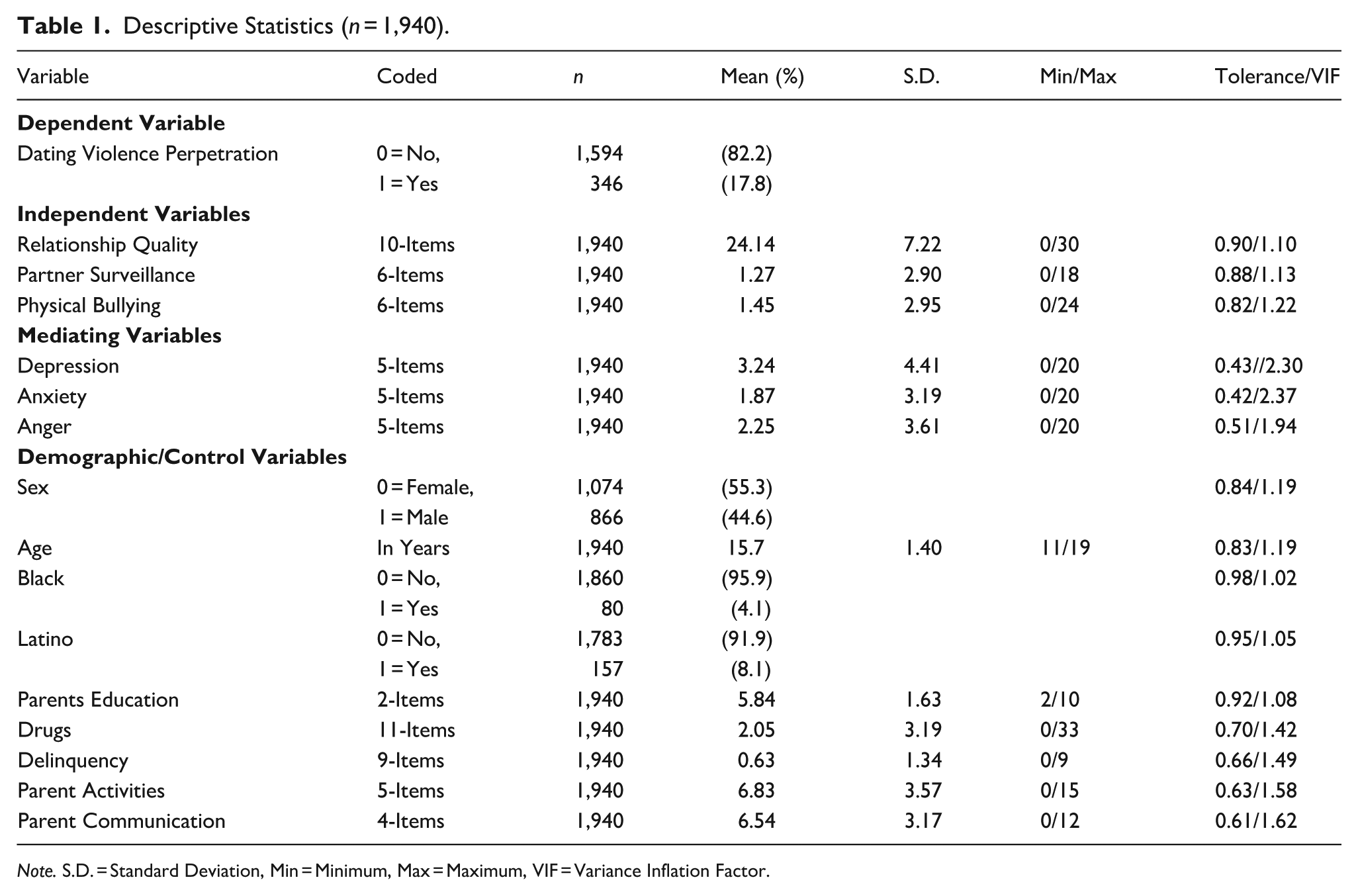
Note. S.D. = Standard Deviation, Min = Minimum, Max = Maximum, VIF = Variance Inflation Factor.
Sample Characteristics
Table 1 presents the descriptive statistics for all of the variables in this study. Starting with the dependent variable, about 82% of respondents (n = 1,594) reported not engaging in dating violence towards their partners, while 17.8% (n = 346) reported perpetrating violence towards their partner. Focusing on the independent variables, relationship quality scored a mean of 24.14 on a scale of 0 to 30. Partner surveillance scored a mean of 1.27 on a scale of 0 to 18, and physical bullying scored a mean of 1.45 on a scale of 0 to 24. Turning our attention to the mediating variables, depression had an average score of 3.24 on a scale of 0 to 20. Anxiety had a mean of 1.87 on a scale of 0 to 20, and anger had an average score of 2.25 on a scale of 0 to 20. Lastly, looking at the demographic and control variables, parent’s education had an average score of 5.84 on a scale of 2 to 10, while drugs had a mean of 2.05 on a scale of 0 to 33. Delinquency had a mean of 0.63 on a scale of 0 to 9, and parent activities had an average score of 6.83 on a scale of 0 to 15. Lastly, parent communication had a mean of 6.54 on a scale of 0 to 12. The majority of respondents were female (n = 1,074), and the average age of the sample was 15.7 years old. The majority of the respondents in the sample did not identify as Black (n = 1,860) or Latino (n = 1,783).
Effect of Strain on Negative Emotions
Table 2 examines the effect of strain on three negative emotions (anger, depression, and anxiety). Looking at the effects of partner surveillance and experiencing physical bullying on anger, the effects are positive and significant. Individuals who exhibit greater levels of partner surveillance and experiencing physical bullying exhibited higher levels of anger. Relationship quality is non-significant. Furthermore, partner surveillance and experiencing physical bullying was also found to be positive and significant. Individuals who showed greater levels of partner surveillance and experiencing physical bullying showed higher levels of depression and anxiety. Again, relationship quality is non-significant with depression and anxiety.
The Role of Strain on Negative Effects (n = 1,940).
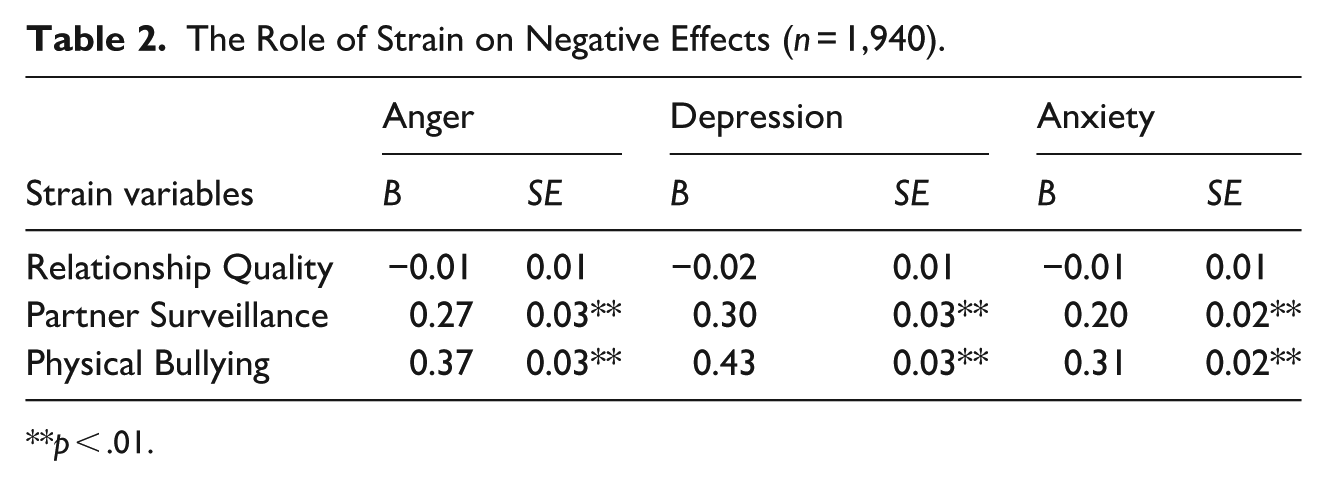
**p < .01.
Logistic Regression Analysis
The results of the logistics regression analyses are presented in Table 3. Model 1 of Table 3 examined the strain variables, plus the demographic and control variables. Model 1 showed that all three strain variables are positive and significantly correlated with teen dating violence perpetration. Relationship quality had a positive and significant effect in that a unit increase in relationship quality increases a youth’s odds of teen dating violence perpetration by 3% (Odds Ratio [OR] = 1.03). In addition, partner surveillance also had a positive and significant effect in that a unit increase in being monitored increases a youth’s odds of teen dating violence perpetration by 20% (OR = 1.20). Finally, being the subject of physical bullying had a positive and significant effect in that a unit increase in being bullied increases a youth’s odds of teen dating violence perpetration by 10% (OR = 1.10). Turning our attention to the demographic and control variables, sex, being Latino, parent’s education, drug use, and parent activities were all significant. Males have a significantly lower likelihood of perpetrating teen dating violence (OR = 0.50), while drug use had a positive and significant effect in that drug use is correlated with a 5% increase in teen dating violence perpetration (OR = 1.05). Latino respondents have a significantly higher likelihood of perpetrating dating violence by 94% (OR = 1.94), while parent’s education had a negative and significant effect in that parent’s education is correlated with an 11% decrease in teen dating violence perpetration (OR = 0.89). Parent activities had a negative and significant effect in that parent activities are correlated with an 8% decrease in teen dating violence perpetration (OR = 0.92). The pseudo R2 for this model is 0.15.
Logistics Regression Analyses (n = 1,940).
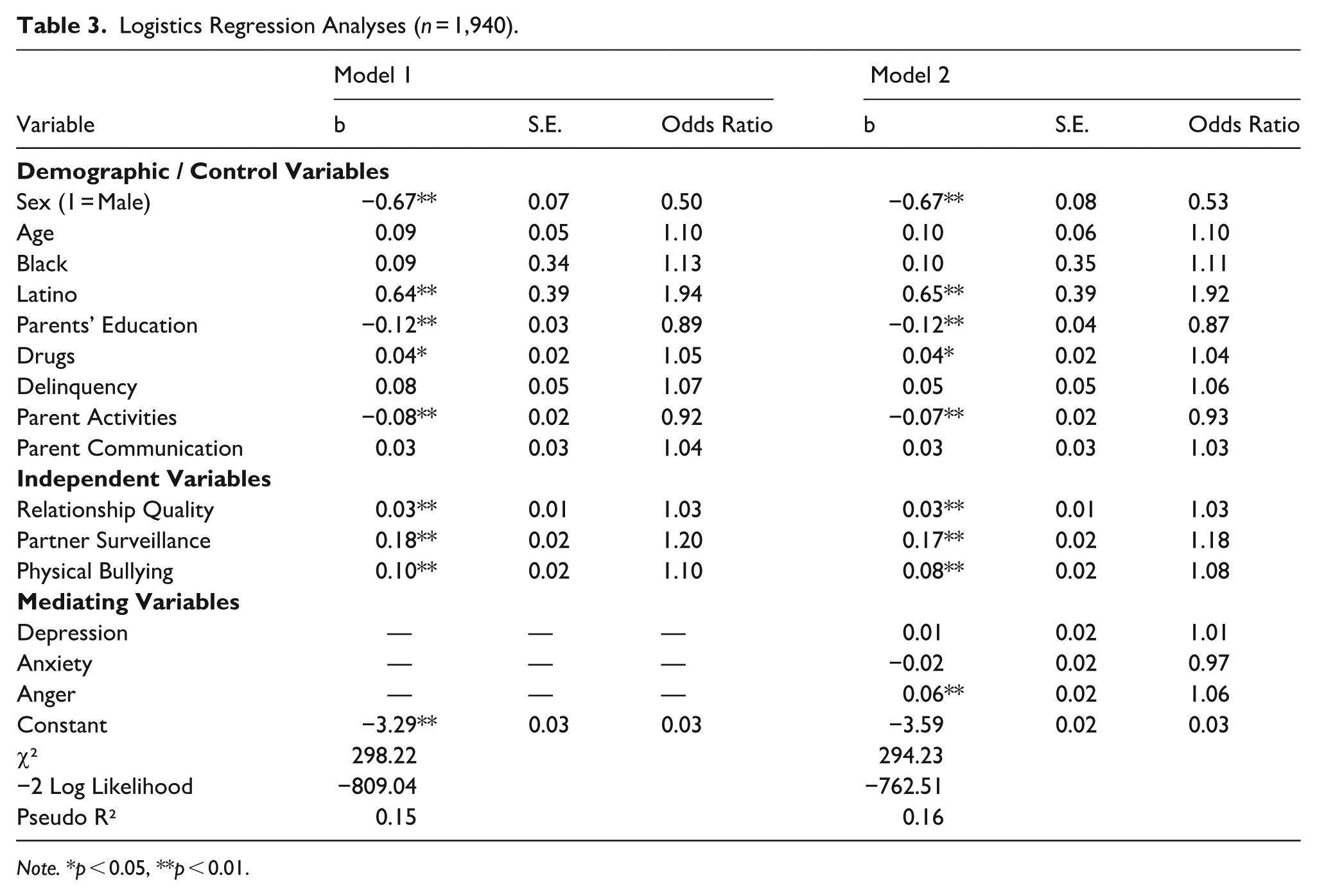
Note. *p < 0.05, **p < 0.01.
However, recall that Agnew (1992) maintains that strains do not directly cause criminal behavior, but instead they indirectly affect criminal behavior through negative emotions (anger, depression, and anxiety). Model 2 of Table 3 presents the full regression model by adding the mediating variables. Model 2 shows that only one mediating variable is positive and significant. However, all three strains remain significant with the inclusion of the mediating variables. Anger had a positive and significant effect in that higher levels of anger are correlated with a 6% increase in teen dating violence perpetration (OR = 1.06). No other mediating variables were significant. Looking at the demographic and control variables, the same variables found significant in Model 1 of Table 3 were significant in Model 2 and in the same direction. In Model 2, males again have a significantly lower likelihood of perpetrating teen dating violence (OR = 0.53), while drug use had a positive and significant effect in that drug use is correlated with a 4% increase in teen dating violence perpetration (OR = 1.04). Again, Latino respondents have a significantly higher likelihood of perpetrating dating violence by 92% (OR = 1.92), while parent’s education had a negative and significant effect in that parent’s education is correlated with a 13% decrease in teen dating violence perpetration (OR = 0.87). Parent activities also had a negative and significant effect in that parent activities are correlated with a 7% decrease in teen dating violence perpetration (OR = 0.93). The pseudo R2 for this model is 0.16.
Mediation Analysis
Mediation analyses were conducted to determine the significance of the indirect effects between relationship quality, partner surveillance, physical bullying, and teen dating violence perpetration through anger. Results for the meditation analyses are presented in Table 4. First, the indirect effect of relationship quality on teen dating violence perpetration through anger is statistically non-significant (β = 0.0003, CI = −0.00018, 0.0023). Second, the indirect effect of partner surveillance on teen dating violence perpetration through anger is statistically significant (β = 0.0261, CI = 0.0182, 0.0349), such that relationship quality is significantly correlated with anger, which in return was correlated with teen dating violence perpetration. Finally, the indirect effect of being bullied on teen dating violence perpetration through anger is statistically significant (β = 0.0416, CI = 0.0132, 0.0529), such that bullying is significantly correlated with anger, which in return was correlated with teen dating violence perpetration. Overall, these results indicate that the relationships between partner surveillance and bullying on teen dating violence perpetration are mediated by anger.
Results of Mediation Analyses (n = 1,940).
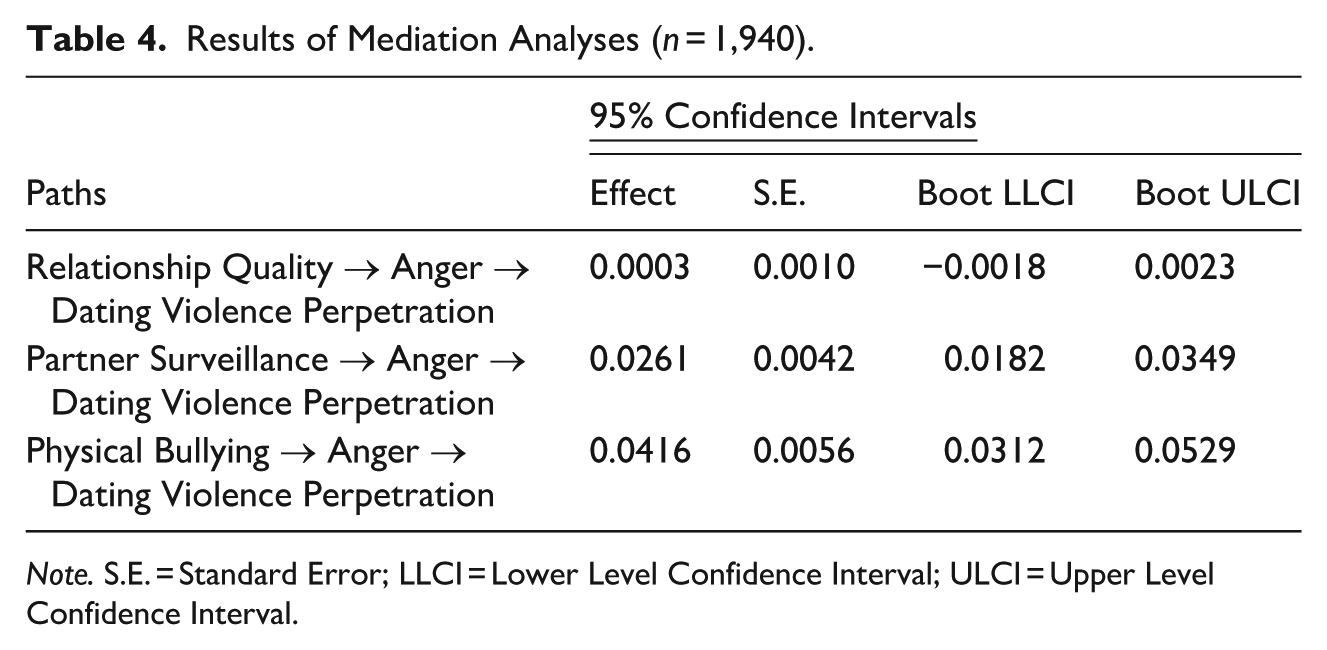
Note. S.E. = Standard Error; LLCI = Lower Level Confidence Interval; ULCI = Upper Level Confidence Interval.
Discussion
The purpose of the current paper was to test Agnew’s (1992) general strain theory and its ability to explain teen dating abuse among youth in intimate relationships. Data obtained from the Technology, Teen Dating Violence and Abuse, and Bullying in Three States were analyzed and the results of these analyses produced several important findings that adds to the limited studies on the effect of strain on teen dating violence.
Hypothesis 1 stated that partner surveillance and physical bullying will be positive and significantly related to negative emotions, while relationship quality will be negative and significantly related to negative emotions. This hypothesis was derived from Agnew’s (1992) argument that experiencing various strains will lead to negative emotions. Results presented in Table 2 reported that only two of the three strains had a positive and significant relationship with negative emotions. Respondents who experienced partner surveillance and were victims of bullying were more likely to report high levels of anger, depression, and anxiety. Hypothesis 1 is partially supported. Relationship quality was not significantly related to anger, depression, or anxiety. This is perhaps not a surprise given that those who are happy with the quality of their relationship are less likely to be depressed, experience anxiety, or be angry. Nevertheless, the results of this hypothesis suggest that school-bullying intervention programs may help youth reduce their levels of anger, depression, and anxiety as research has shown that school-bullying intervention programs do reduce bullying victimization (Gaffney et al., 2019). Results of the current study suggest that these same school-bullying intervention programs may also reduce teen dating violence perpetration as well. Future research should assess this notion.
Hypothesis 2 declared that partner surveillance and physical bullying will be positive and significantly related to teen dating violence perpetration, while relationship quality will be negative and significantly related to teen dating violence perpetration. Model 1 of Table 3 was estimated to test this notion. As this model showed, all three strains are significantly related to teen dating violence perpetration, with higher relationship quality positively and significantly related to dating violence perpetration. Hypothesis 2 is partially supported. Partner surveillance and reporting physical bullying were both positively correlated with teen dating violence perpetration. This is again perhaps not a surprise. Those who experience these adverse behaviors may be more motivated to use violence against their partners if he or she may be the source of these antagonistic activities. This finding advocates for the continued use of dating violence prevention programming aimed at increasing knowledge about the negative consequences of engaging in this behavior, understanding the signs of healthy and unhealthy relationships, and altering attitudes/beliefs towards the use of violence and aggression in relationships (Crooks et al., 2019). These types of prevention programs have been found to reduce teen dating violence (see, Lee & Wong, 2020). Surprisingly, relationship quality was positively and significantly related to dating violence perpetration. Those who reported good relationship quality were more likely to report perpetrating teen dating violence. There are two possible explanations for this finding. First, relationship quality may also reflect a greater degree of partner monitoring, which this study found is positively associated with teen dating violence perpetration. Second, it may be that a teen who is highly committed might also be overly dependent on the relationship for self-worth. This can manifest as an intense fear of the relationship ending, driving some toward controlling or violent behaviors (like monitoring) to prevent it from ending. Teen dating violence, in this context, is an attempt to maintain the relationship they highly value. Research on emotional dependence and attachment supports this interpretation. Adolescents with high emotional dependence report greater jealousy and higher rates of relational aggression and dating violence, suggesting that dependence on a partner for self-esteem can heighten conflict and control (Arbinaga et al. 2021; Castillo-Gonzáles et al. 2024). Similarly, teens with anxious or insecure attachment styles often engage in electronic intrusion or surveillance behaviors to reduce anxiety about abandonment, linking attachment insecurity to control and digital forms of dating abuse (Laforte et al. 2023). From a commitment-theory perspective, individuals who have invested heavily in their relationships may resort to coercive or violent tactics when facing potential loss, as high investment and poor alternatives increase the perceived costs of dissolution (Rusbult et al., 2011). In this way, controlling behavior can function as a maladaptive relationship-maintenance strategy rooted in dependence rather than hostility, illustrating how strong commitment, when coupled with low self-worth, may paradoxically fuel teen dating violence.
Finally, Hypothesis 3 proclaimed that anger, depression, and anxiety would mediate the relationship between all three types of strain and teen dating violence perpetration. This argument derived from Agnew’s (1992) notion that strain itself does not cause criminal behavior, but rather indirectly through negative emotions. Again, mediation analyses were performed to determine the significance of the indirect effects between relationship quality, partner surveillance, physical bullying, and teen dating violence perpetration through anger. Hypothesis 3 is partially supported. Results for the meditation analysis indicated that the relationships between partner surveillance and bullying on teen dating violence perpetration are mediated by anger. This result is consistent with Agnew’s (1992: 59) proclamation that “anger. . .is the most critical emotional reaction for the purposes of general strain theory.’’ This is because anger is more likely than any other negative emotion to create a desire for retaliation and more likely to energize the individual for action (Agnew, 1992). Depression and anxiety were not significant in these data. One possible explanation may be that these negative emotions manifest in more internalizing outcomes, like self-harm, reclusion, or withdrawal, rather than externalizing outcomes, such as the dependent variable of this study–dating violence perpetration. From an intervention standpoint, we agree with Zavala and Muniz (2021) in that early intervention programs that address and reduce anger management issues could reduce dating violence. Therefore, it is important for family members, teachers, and other adults to be cognizant of this characteristic and take action to get those who exhibit anger and related behaviors the help they need.
In this study, Latino respondents have a significantly higher likelihood of perpetrating dating violence and thus warrants additional discussion. Prior studies have found that Latino youth who report higher levels of acculturation (the degree to which someone has adapted to the host culture) are more likely to engage in dating violence perpetration (Hokoda et al., 2007; Sanderson et al., 2004). In addition, from a general strain theory perspective, it has been argued that ethnic specific strains are the driving forces for criminal and delinquent behavior among the Latino population (Kendall & Cuevas, 2025). These arguments point to experiences of acculturation, discrimination, criminal justice injustices, institutionalized discrimination, and economic deprivation, arguing that they generate anger, depression, and frustration, thus leading to various forms of adverse behaviors (see Isom Scott et al., 2020; Zavala et al., 2021). This study was not able to include ethnic specific strains to determine if they explain why Latino respondents have a higher likelihood of perpetrating dating violence in these data.
Limitations
As with any study, the results should be viewed with some limitations in mind. First, the cross-sectional nature of the data does not allow for a precise determination of causal relationships between study variables and teen dating violence. Some readers may call the temporal ordering of events into question. For example, perpetration can lead to poor relationship quality. Second, some respondents may have been reluctant to disclose their perpetration, which may create the possibility of underreporting. Third, although the sample was large, it is not a nationally representative sample of high school students. Therefore, caution should be exercised when generalizing these results to students attending private high schools or students attending schools outside of New Jersey, New York, and Pennsylvania. Finally, because of the secondary nature of the data, other important predictors of criminal behavior like self-control are not included in the study. Such key variables may have altered the results of the study.
Conclusion
The current paper tested Agnew’s general strain theory on teen dating violence to determine which, if at all, of the three stressors predicted teen dating violence, while also determining if negative emotions mediate the relationship between the three stressors and teen dating violence. Results showed partial support for the theory, as analyses from logistic regression models demonstrated that all three stressors to a degree did predict teen dating violence. However, a number of limitations prohibited the study from clearly stating a causal relationship between theoretical variables and teen dating violence. It is encouraged that future researchers attempt to address these limitations and replicate these findings in the hopes of creating new and valuable intervention and preventive programs that will address one of the most substantial health issues still prevalent among teens.
Footnotes

Funding
The authors received no financial support for the research, authorship, and/or publication of this article.
Declaration of Conflicting Interests
The authors declared no potential conflicts of interest with respect to the research, authorship, and/or publication of this article.