



Abstract
Data from the 2019 Minnesota Student Survey, consisting of 166,176 students ranging in age from 10 to 18 years, were used to investigate patterns of adolescent suicidal ideation and attempt through the lens of Minority Stress Theory (MST). Through a conjunctive analysis of case configurations (CACC), the current study demonstrates that adolescent suicidal ideation and attempt cluster significantly among specific situational profiles defined by the unique combination of variable attributes. Students most likely to indicate suicidal ideation were generally sexual minority females in high school who experienced cyberbullying, parental abuse, dating violence, and sexual abuse. Students least likely to report suicidal ideation were generally non-sexual minorities in elementary school who nearly never experienced parental abuse, dating violence, or sexual abuse. Results regarding adolescent suicide attempt indicate analogous results. The current findings highlight the importance of furthering research on contextual predictors of adolescent suicidality, with particular emphasis on sexual minority adolescents.
Introduction
A recent report from the National Center for Health Statistics showed that suicide rates for youth aged 10 to 14 have significantly increased since 2000 (Garnett et al., 2022). Although recent data on suicide mortality in the U.S. has shifted since 2000, studies have also noted factors that place adolescents at greater risk of suicidality (Hatchel et al., 2019; Turpin et al., 2020). A growing body literature has established that sexual minority youth encompassing those who identify as lesbian, gay, and bisexual, or not solely heterosexual, or who are unsure of their sexual attractions, face elevated risks of suicidality and other adverse mental health outcomes compared to their heterosexual peers (Bouris et al., 2016; Hatchel et al., 2019, 2021; Luk et al., 2021; Mandatori et al., 2023). For example, Luk et al. (2021) assessment of adolescent suicidality from a longitudinal cohort of 1,771 adolescents demonstrated that sexual minorities had a higher likelihood of suicidality compared to their heterosexual counterparts. The extent to which risk factors have a consistent effect across different situational contexts that characterize adolescent suicidality, or whether its influence is context-dependent, remains unclear.
In response to this significant gap in the current literature on adolescent suicidality, this study seeks to identify situational factors that increase adolescents’ risks for suicidality by applying the theoretical framework of Meyer’s (1995) Minority Stress Theory (MST), using a conjunctive analysis of case configurations (Miethe et al., 2008). By adopting a conjunctive analysis of case configurations approach, this study offers an opportunity to assess whether adolescent suicidality is situationally dependent through the exploration of unique patterns in which individual (e.g., demographic characteristics) and contextual factors (e.g., bullying, cyberbullying victimization, sexual abuse, dating violence, and parental abuse) play across the various unique situational contexts or conditions that give rise to suicidality. Finally, understanding which situational contexts are more dominant in characterizing suicidality is crucial to generate specific profiles of adolescents at risk of this harmful behavior, especially among at-risk subgroups such as sexual minorities.
Literature Review
Adolescent Suicidality and Minority Stress Theory
Suicidality refers to the risk of thinking about or acting upon suicidal thoughts and it consists of three separate stages: ideation, planning, and attempt (Button, 2015; Mandatori et al., 2023; Turpin et al., 2020). Suicidal ideation is the first stage of the suicidality cascade and refers to thoughts about engaging in suicidal behavior (Button, 2015). Suicidal planning refers to making a serious suicide plan, and suicidal attempt refers to attempting to end one’s life on purpose (Turpin et al., 2020). While statistics on youth suicidality emphasize the seriousness of this issue, extant research also highlights significant differences in suicide risk among subcategories of youth (Hatchel et al., 2019; Turpin et al., 2020). Past scholarship showed that sexual minority adolescents are at significantly higher risk for negative mental health outcomes compared to their heterosexual counterparts (Hatchel et al., 2019, 2021). In particular, sexual minority adolescents in the United States are among the subpopulations at the highest risk for suicide (Mandatori et al., 2023; Turpin et al., 2020). Current literature also emphasizes that sexual minority adolescents are more at risk of suicidal ideation than their heterosexual counterparts (Mereish et al., 2019), in addition to being highly likely to engage in suicide attempt (Turpin et al., 2020).
The theoretical framework of minority stress theory (MST) was originally proposed by Meyer (1995, 2003) to explain the disproportionate incidence of negative mental health outcomes among stigmatized populations, primarily sexual minorities. Minority stress theory explains mental health disparities among sexual minorities as the outcome of stressors resulting from social stigmatization, prejudice, and discrimination (Busby et al., 2020; Meyer, 2003). Meyer (2003) incorporated both distal stressors, defined as sources of stress that are objective and not contingent upon one’s perception (e.g., experiences of violence) and proximal stressors, defined as subjective stress related to one’s identity (e.g., internalized homophobia). Factors such as general stressors, circumstances in the environment, as well as coping and social support are also included in the model as significant contributors to minority stress and negative mental health outcomes (Meyer, 2003).
MST also posits that, beyond general stressors, sexual minorities experience unique stressors such as internalized homophobia or biased-based victimization, which increase the likelihood of experiencing negative mental health outcomes (Bishop et al., 2021; Hatchel et al., 2019; Meyer, 2003). The extent to which sexual minorities experience unique stress due to their sexual orientation engenders significant mental health disparities, which also account for the increased suicide rate (Bishop et al., 2021). From an MST perspective, it is crucial to examine stressors as contextual predictors of suicidality, particularly among sexual minority adolescents who are at higher risk for negative mental health outcomes due to their stigmatized social status.
Predictors of Adolescent Suicidality
Demographic predictors
Extant literature identifies several demographic characteristics, such as age, sex, race, and sexual orientation, that influence the likelihood of adolescents experiencing suicidality (see Hatchel et al., 2021). Age has been shown to be negatively associated with suicidality among adolescents (Reed et al., 2015), although contrasting findings from Button’s (2015) research would indicate that there is no significant relationship between age and suicidality. The relationship between biological sex (i.e., male or female) and suicidality among adolescents remains understudied and have demonstrated mixed results. For example, research by Haas et al. (2010) indicated that males are more at risk compared to females. However, recent studies by Whitaker et al. (2016) and Mereish et al. (2019) showed that females were more prone to suicidal behaviors compared to their male peers. Although not the focus of the current study, it is important to note that recent literature has demonstrated that transgender youth experience high rates of various mental health issues including suicidality (Austin et al., 2022; Thoma et al., 2019).
On a similar note, scholarship has demonstrated contrasting findings related to the association between race/ethnicity and adolescent suicidality. For example, Hatchel et al.’s (2021) findings emphasized heightened risk for suicide for sexual minority youth of color compared to their White counterparts. However, research by Lytle et al. (2014) indicated a lower likelihood of suicidality among racial and ethnic minorities as compared to Whites. While the extent to which demographic predictors (i.e., age, sex, race/ethnicity) affect adolescent suicidality remains unclear, the impact of sexual orientation on suicidal risk has been consistently shown to be significant. Extant scholarship emphasizes that identifying as a sexual minority is a significant predictor of a wide range of negative mental health outcomes, including suicidality (see Hatchel et al., 2019; Mandatori et al., 2023; Turpin et al., 2020). For instance, Hatchel et al. (2019) found that identifying as a sexual minority was a significant predictor of suicidal ideation and attempt (Hatchel et al., 2019).
In addition to demographic predictors, peer victimization, drug use, and depression have been identified as predictors of suicidal ideation among sexual minorities (Hatchel et al., 2019). Research has also demonstrated that the impact of victimization on suicidal risk is more detrimental among sexual minorities compared to their heterosexual counterparts, consistent with MST propositions (Hatchel et al., 2019). These findings are consistent with research on demographic predictors of adolescent suicidality (Bishop et al., 2021; Johns et al., 2018).
Situational predictors
The current study examines situational predictors that include experiences of victimization such as bullying, cyberbullying, parental abuse, dating violence, or sexual abuse that act as general stressors and have been linked to heightened risk for suicidality, particularly among sexual minorities (Baiden et al., 2021; Barnett et al., 2019; Bishop et al., 2021; Mandatori et al., 2023). For example, Bishop and colleagues (2021) found that experiencing bullying or cyberbullying victimization was predictive of suicidality. Recent findings from Mandatori et al. (2023) demonstrated a similar relationship between peer victimization (i.e., bullying and cyberbullying) and suicidality. Concerning the influence of parental abuse on suicidality, Mandatori et al. (2023) found that parental abuse was a significant predictor of suicidality among heterosexual and sexual minority adolescents. Similar research by Baiden et al. (2021) examined physical teen dating violence as a predictor of the suicide cascade and found that among adolescents aged 14 to 18, those who reported physical teen dating violence were significantly more likely to report any stage of the suicidality cascade.
In addition, sexual victimization among adolescents is widespread and an alarming social concern (Basile et al., 2020). For instance, Basile et al. (2020) examined 13,677 responses from the 2019 Youth Risk Behavior Surveillance System (YRBSS) to assess the prevalence of various forms of victimization among U.S. high school students and found that roughly 56% of females and 48% of males attending grades 7 through 12 indicated experiencing some form of sexual victimization by a peer, which can range from unwelcomed comments to forced sexual intercourse. Furthermore, a significant body of research has focused on correlates, risk factors, as well as consequences of sexual victimization among adolescents (Barnett et al., 2019; Bouris et al., 2016; Myers et al., 2020).
For example, Turpin et al. (2020) assessed responses of sexual minority youth from the 2015 and 2017 YRBSS (N = 3,357) to assess whether sexual and non-sexual victimization, as well as depression, influenced suicidality and found that sexual victimization was positively associated with suicidal ideation and suicidal attempt among those who reported at least one count of suicidal planning. These findings accentuate the need for in-depth exploration of contextual predictors of suicidal risk among sexual minority adolescents, with particular emphasis on the effects of victimization on subsequent negative mental health outcomes.
A Case-Oriented Approach to Adolescent Suicidality
While previous studies offer meaningful insight into our understanding of and response to adolescent suicidality (Barnett et al., 2019; Bouris et al., 2016), most are based on variable-oriented approaches (e.g., regression models). However, applying a case-oriented approach such as conjunctive analysis of case configurations (CACC) could enhance the current empirical understanding of adolescent suicidality and approaches to reduce and preventing these occurrences. A case-oriented approach purports to assess the various aspects of each observed case profile and illustrate each outcome based on the connections among the characteristics of these configurations (see Miethe et al., 2008). This approach views cases as amalgams of characteristics and situations—or configurations—and aims to understand them at the level of particular cases. In a case-oriented approach, situational conditions may merge in contrast to and occasionally contradictory ways to generate similar outcomes. Unlike a typical variable-oriented approach, CACC regards causation as conjunctural and distinct (Paez & Briones Robinson, 2023).
In the current study, situational context refers to the specific circumstances or conditions in which something occurs. Measures of situational context include self-reported experiences of bullying, cyberbullying, parental abuse, dating violence, or sexual abuse. Situational contexts also refer to the unit of analysis used in CACC and situational predictors refer to predictors of an outcome used in traditional variable-oriented analytic techniques (e.g., regression models). It is important to note that in the currently study, “situational profiles” and “case configurations” are utilized interchangeably with “situational context.”
CACC narrows the contrast between traditional variable-oriented approaches and other case-oriented methods (Miethe et al., 2008) by recognizing the distinctive permutations of variable attributes that produce “situational conditions” among specific outcomes (Paez & Briones Robinson, 2023). In the current study, situational conditions are not meant to imply that CACC can establish causation. Alternatively, causation can be illustrated by generally incongruent conditions. These conditions or case configurations are characterized by the combination of variable attributes observed in a “truth” (see e.g., Hart et al., 2017; Paez & Briones Robinson, 2023; Paez & Hart, 2022). Each case configuration is deemed as a condition that delineates the situational context in which the outcome is empirically observed and thus clarifying our understanding of how and when conditions like suicidal ideation and attempt occur.
The Current Study
Previous research has lacked a systematic exploration of the contextual profiles of adolescents experiencing suicidality and the associated likelihood of such experiences, as they generally rely on variable-oriented models. In response to this limitation, data from the 2019 Minnesota Student Survey (MSS) were analyzed using conjunctive analysis of case configurations to answer four questions that focused on the distribution of the MSS survey respondents (i.e., adolescents experiencing suicidality) across dominant case configurations and the relative frequency with which these profiles were observed. (1) Is adolescent suicidal ideation context dependent; and if so, to what extent? (2) Is suicide attempt among adolescents’ context dependent; and if so, to what extent? (3) Does the influence of situational factors grounded in Minority Stress Theory vary across the distinct situational profiles that characterize adolescent suicidal ideation? (4) Does the influence of situational factors grounded in Minority Stress Theory vary across the distinct situational profiles that characterize suicide attempt among adolescents?
Methods
Data
The Minnesota Student Survey (MSS) collects cross sectional data on the health and well-being of 5th, 8th, 9th, and 11th grades students ranging from 10 to 18 years of age. The MSS is monitored and conducted by the MSS Interagency Team. The instrument remained consistent throughout its administration across various age groups. Administered electronically every 3 years, the instrument targets students attending public, charter, and tribal schools necessitating parental consent for student participation (Minnesota Department of Education, 2018). Since its inception in 1989, the MSS has extended its collection of health-related data to include information on nutrition and health, illegal substance use, relationships, school climate, and bullying. The current study is based on self-reported data collected from students during the 2019 wave of the MSS (N = 166,176) consisting of 25% elementary (n = 42,096), 27% middle school (n = 44,352), and 48% high school (n = 79,728) students. The initial data consisted of 170,128 responses; missing or blank data were excluded to strengthen the validity of the dataset.
Measures
In the current study, the primary variables of interest reflect measures of suicidal ideations and attempt as well as both demographic and situational factors grounded in MST (see, e.g., Baiden et al., 2021; Basile et al., 2020; Johns et al., 2018). The measures applied in the current study were developed from survey questions about the situational conditions of suicidal ideation and attempt among respondents to the 2019 wave of the MSS.
Dependent variables
Suicidal ideation was constructed from the survey measure: “Have you ever seriously considered attempting suicide?,” and suicide attempt was constructed from the survey measure: Have you ever actually attempted suicide?” Both measures were recoded from their original responses (0 = not selected, 1 = selected) to generate suicidal ideation (0 = No, 1 = Yes) and suicide attempt (0 = No, 1 = Yes). This approach is consistent with prior research assessing components of adolescent suicidality among adolescents (Bishop et al., 2021; Button, 2015; Hatchel et al., 2019). It is essential to note that the MSS does not contain a measure of suicidal planning, a component of suicidality, which is thus not included in the current study.
Independent variables
Nine predictors of adolescent suicidality were utilized in the analysis, encompassing students’ school level, sex, race/ethnicity, as well as experiences of bullying, cyberbullying, experienced parental abuse, dating violence and sexual abuse. Four of the nine predictors correspond to demographic characteristics of adolescents. Five are related to situational predictors of suicidal ideation and attempt that reflect important sources of stressors contributing to negative mental health outcomes, as posited in MST. These independent variables were generated from adolescents’ responses to questions asked during the 2019 wave of the MSS. School level indicates students’ grade level at the time of the survey that includes 5th, 8th, 9th, and 11th grades. The responses were aggregated as a proxy for age that is ideally suited for the analytical approach for the current study (i.e., conjunctive analysis of case configurations) and has been applied in previous research that utilized the same technique (see Paez & Briones Robinson, 2023; Paez & Hart, 2022). Two additional dichotomous indicators are included in the analysis to capture demographic characteristics: biological sex (0 = Male, 1 = Female) and race/ethnicity (0 = Non-white, 1 = White). It is important to note that the measure of race/ethnicity in the MSS aggregated both race and ethnicity. Respondents were allowed to select more than one choice.
Finally, the following question: “How do you describe yourself?” was used to identify respondents’ sexual orientation. This survey item was designed to capture responses on a 7-point scale (1 = Heterosexual, 2 = Bisexual, 3 = Gay or lesbian, 4 = Questioning, 5 = Pansexual, 6 = Queer, 7 = I don’t describe myself as any of these). To allow for a comparison of sexual orientations, responses to this item were dichotomized to generate sexual minority (0 = No, 1 = Yes), where adolescents who identify as “Heterosexual” are categorized as not being a sexual minority. Other studies have used the acronym “LGBQ” to operationalize sexual orientations and compare heterosexual and non-heterosexual adolescents (e.g., Button, 2015). However, the current study utilizes “sexual minority” as a broader term encompassing sexual orientations beyond lesbian, gay, bisexual, and queer/questioning (see, e.g., Bouris et al., 2016).
Situational correlates of adolescent suicidality grounded in the parameters of MST were also examined (e.g., general stressors and victimization). First, bullying victimization was generated from the survey question: “Were you bullied once or more in the last 30 days?” The initial binary responses to this question were used to generate bullied (0 = No, 1 = Yes), where adolescents who responded “Yes” were classified as being bullied at school. Cyberbullying victimization was composed from the following question: “During the last 30 days, how often have you been cyberbullied?” This question was supplemented with a clause that stated: “(Count being bullied through texting, Instagram, Snapchat, or other social media).” The original binary responses to this question were used to create cyberbullied (0 = No, 1 = Yes), where adolescents who reported “Yes” were classified as being cyberbullied.
A measure of abuse from parents was comprised of two survey items that asked respondents: “Does a parent or other adult in your home regularly swear at you, insult you or put you down?” and “Has a parent or other adult in your home ever hit, beat, kicked, or physically hurt you in any way?” The initial binary responses to these questions were aggregated to create parental abuse (0 = No, 1 = Yes), where adolescents who reported “Yes” to either question were classified as being a victim of parental abuse.
Dating violence victimization was composed from three survey measures: “Have you been in a casual or serious relationship where your partner ever physically hurt you on purpose?,” “Have you been in a casual or serious relationship where your partner ever verbally hurt or controlled you?,” and “Have you been in a casual or serious relationship where your partner ever pressured, tricked, or forced you to do something sexual, or did something sexual to you against your wishes?” The initial responses to these questions were aggregated to create dating violence (0 = No, 1 = Yes).
Finally, sexual victimization was developed from two survey measures: “Has anyone who was not a relative/family member ever pressured, tricked, or forced you to do something sexual or done something sexual to you against your wishes?” and “Has any relative/family member ever pressured, tricked, or forced you to do something sexual or done something sexual to you?” Initial responses were aggregated to create sexual abuse (0 = No, 1 = Yes).
Analytical Strategy
The current study applies a conjunctive analysis of case configurations (CACC) to answer the proposed research questions and is grounded in previous research utilizing this analytical approach (see Hart et al., 2017; Paez & Briones Robinson, 2023; Paez & Hart, 2022). This approach begins with the development of one “truth table” that is comprised of an outcome variable (i.e., suicidal ideation) and predictor variables (i.e., demographic and situational predictors) in a dataset, and another “truth table” for suicide attempt and predictor variables. Both truth tables show theoretically observable situational contexts generated from the predictor variables’ attributes (see Hart, 2014; Hart et al., 2017; Miethe et al., 2008; Paez & Briones Robinson, 2023).
Each row in both truth tables denotes all probable permutations of variable characteristics connected with the outcome and characterize the possible number of outcomes. The columns denote the variables utilized in the analyses. Each observation in the data is combined into one of the truth table’s rows. The truth table is then analyzed to ascertain the probability to note each combined profile. The probability of the outcome is computed by dividing the total number of times the outcome variable is viewed for each case configuration by the absolute number of times the case configuration is viewed (Hart et al., 2017). This process results in the formation of dominant case configurations or profiles, which are a composite representation of a specific unit of analysis (e.g., suicidal ideation or attempts). These profiles also highlight the frequency of unique combinations of variables and the probability of their occurrence, offering insights into when the unit of analysis is most and least likely to manifest.
Next, selection rules for identifying dominant case configurations or profiles are applied to each truth table. When the CACC data matrix is predicated on reasonably large samples (N ≥ 1,000), the threshold for determining a dominant case configuration is usually 10 or more observations (Hart, 2014). The following truth tables contain one row for each dominant case configuration that is empirically viewed in the initial data, the number of times it was observed, and the percentage of times it generated the dependent variable (see Tables 1 and 2).
Dominant Situational Factors and the Likelihood of Adolescent Suicidal Ideation (N = 166,176).
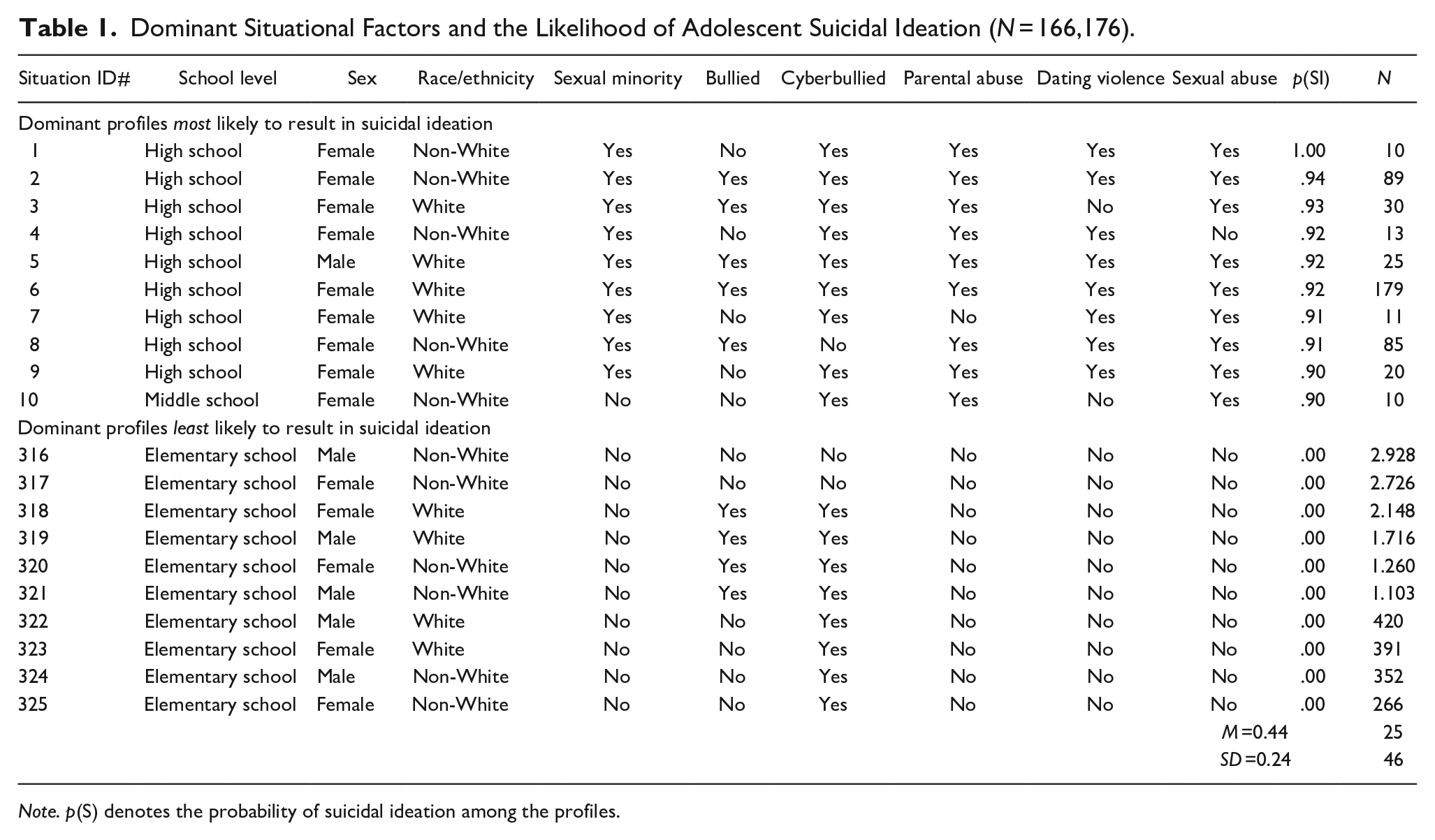
Note. p(S) denotes the probability of suicidal ideation among the profiles.
Dominant Situational Factors and the Likelihood of Adolescent Suicide Attempt (N = 166,176).
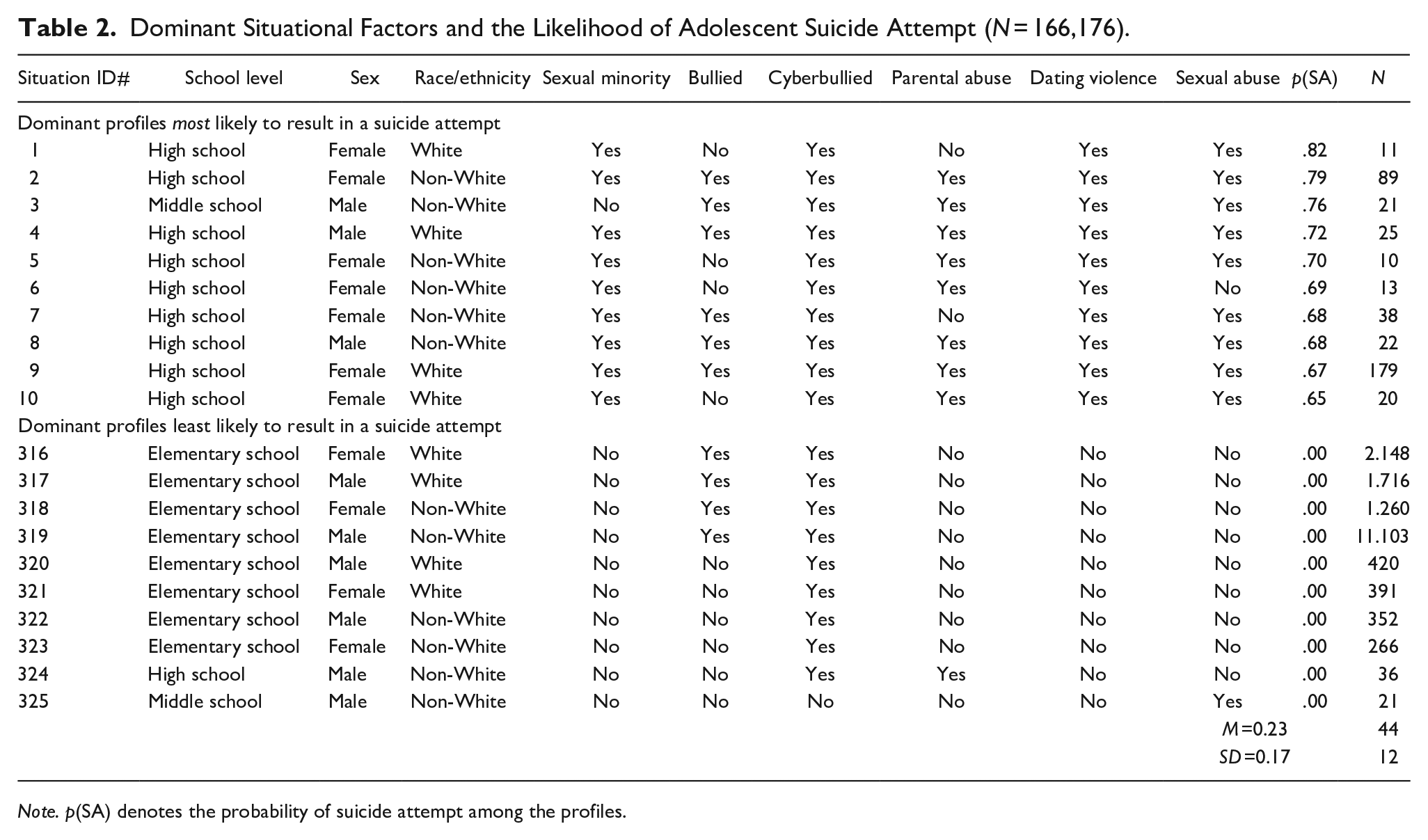
Note. p(SA) denotes the probability of suicide attempt among the profiles.
The observed patterns among the dominant case configurations in the truth table can be assessed and tested. Hart (2019) recently developed a method to determine whether there is significant clustering of the data aggregated to a truth table’s case configurations; and if there is, enumerating the magnitude of clustering. These tests enable researchers to establish whether an outcome is situationally consistent and homogenous or whether context matters, according to unique situational profiles in the truth table. Recent methods established by Hart (2019) can be used to examine the main effects that each predictor variable has on the outcome variable.
Finally, the current study explores the situational profiles that result in suicidal ideation and attempt among adolescents. Hart’s (2019) global test of situational clustering is used to assess whether the dependent variables cluster significantly among dominant situational profiles that delineate adolescent suicidal ideation and attempt. Additionally, a Situational Clustering Index (SCI) is used to quantify the magnitude of clustering when each dependent variable is observed.
Results
Sample Characteristics
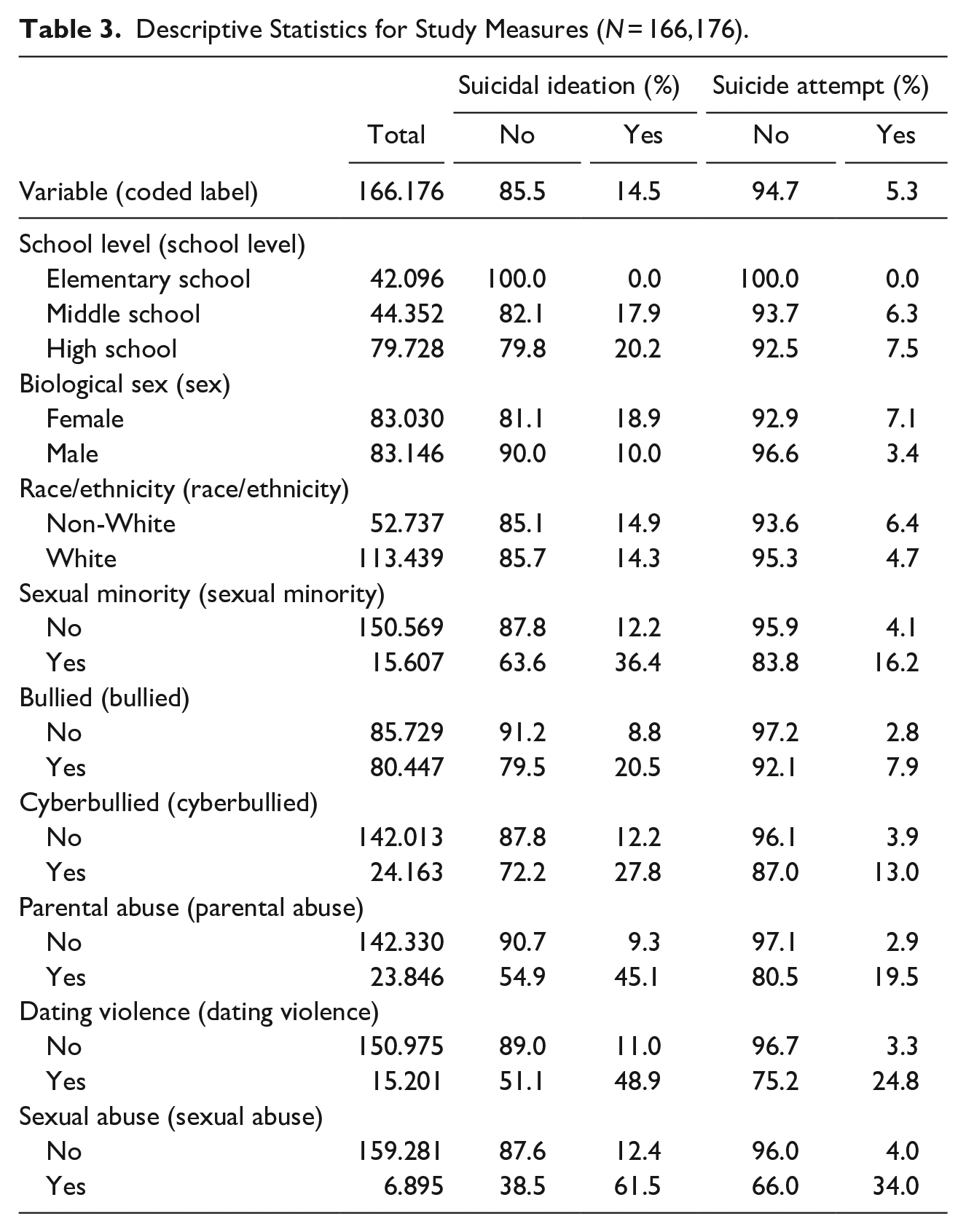
Descriptive statistics of the measures included in the current study are presented in Table 3. Results indicate that roughly 24,095 respondents to the 2019 MSS reported suicidal ideation and 8,807 reported a suicide attempt. The typical respondent in the current sample is a high school student (n = 79,728) and White (n = 113,439). An overwhelming proportion of respondents (n = 150,569) reported not being a sexual minority. Approximately 85,729 and 142,013 respondents indicated that they had not been bullied and cyberbullied in the previous 12 months, respectively. The majority of respondents reported no parental abuse in the home (n = 142,330), no experiences with dating violence (n = 150,975), and no sexual abuse (n = 159,281).
Descriptive Statistics for Study Measures (N = 166,176).
CACC was applied to a sample of adolescents who participated in the 2019 MSS survey to answer the first research question: Is adolescent suicidal ideation context dependent; and if so, to what extent? The first CACC matrix was constructed from one trichotomous and eight dichotomous individual and situational predictors of suicidal ideation. Although a total of 768 unique situational profiles defined the truth table (i.e.,
In addition, results of a goodness-of-fit test showed that the 2019 MSS data clustered significantly among a small sub-set of dominant situational profiles that characterize suicidal ideation (X2 (324, N = 398) = 683,991.53, p < .000). These findings provide empirical evidence that cases of adolescent suicidality are not randomly distributed across situational conditions that result in reported suicidal ideation; rather, they cluster among certain unique combinations of variable attributes more so than others. A situational clustering index (SCI) was also computed: SCI values range between 0 and 1, where values closer to 1 denote stronger clustering of data among dominant profiles and values closer to 0 signifying weaker clustering. Current results shown in Figure 1 indicate the magnitude of clustering observed was strong (SCI = .80).
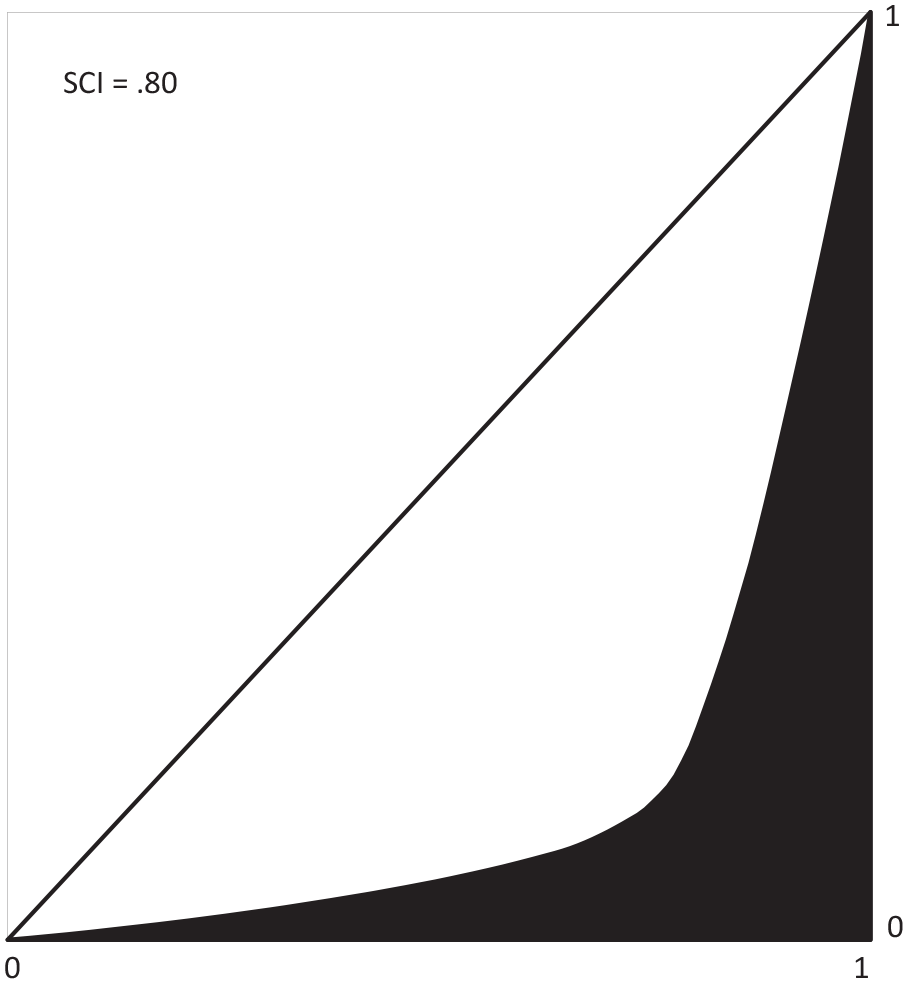
Situational clustering of adolescent suicidal ideation.
CACC was also applied to answer the second research question: Is adolescent suicidal attempt context dependent; and if so, to what extent? A second CACC matrix was constructed using the same individual and situational predictors noted above but concerned with suicide attempt as the outcome variable. The second CACC matrix is analogous to the first matrix in that the same number of unique situational profiles, observed profiles and dominant configurations were observed. Table 2 exhibits (1) the situational profiles that are formed by the joint distribution of individual and situational factors used in the study, and (2) the relative rank ordering of the situational contexts based on their mean prevalence that ranges from 0% to 82% (M = .23, SD = .17). Much like Table 1, the 10 profiles that produced the greatest and least likelihood of suicide attempts are presented in Table 2. The average likelihood of suicide attempt for all dominant case configurations is higher than for the entire sample (see Table 2), which may signify that suicide attempt is context dependent or that this outcome is contingent upon certain situational conditions.
Table 2 highlights there is considerable contextual variability in the likelihood of suicide attempt, ranging from 82% certainty when the situational profile involves a white female high school student, sexual minority, who reported being cyberbullied, and experienced dating violence as well as sexual abuse (i.e., ID # 1), to a low of 0% for students in other contexts (see IDs #316 through #325). A SCI was also computed for suicide attempts and demonstrated a similar magnitude of clustering (SCI = .80). Finally, results of a goodness-of-fit test of the dominant situational profiles that characterize adolescent suicide attempt were identical to the findings for suicidal ideation. This outcome echoes the findings for cases of suicidal ideation and thus provides evidence that cases of adolescent suicide attempt are not arbitrarily distributed across situational conditions, but cluster among certain unique combinations of variable attributes more than others.
Results of the CACC analyses also provide answers to the third and fourth research questions: Does the influence of situational factors grounded in Minority Stress Theory vary across the distinct situational profiles that characterize adolescent suicidal ideation? and Does the influence of situational factors grounded in Minority Stress Theory vary across the distinct situational profiles that characterize suicide attempt among adolescents? For the top 10 dominant profiles in Table 1 and Table 2, adolescents overwhelmingly reported being in high school and identified as a sexual minority. However, the dominant situational profiles most likely to result in a suicide attempt demonstrated that adolescents were consistently cyberbullied and experienced dating violence. Interestingly, adolescents who never reported being a sexual minority defined situational conditions where suicidal ideation and suicide attempts were least likely to occur (see Tables 1 and 2). Simply put, when adolescents are the most and least likely to report suicidal ideation and attempt, sexual orientation is the only factor that remained constant regardless of situational context. This finding lends support to the theoretical stance taken from MST that sexual orientation may, in turn, result in suicidal ideation or attempt.
Discussion
Drawing from MST through the application of CACC, the specific situational conditions that may result in suicidality among adolescents were examined and several patterns were identified. The finding that significant situational variability in the risk of suicidal ideation and attempt exist is consistent with findings of previous studies on the influence of demographic or contextual characteristics (see Bishop et al., 2021; Button, 2015). Although previous research has demonstrated an inconsistent effect that age has on adolescent suicidality (Button, 2015; Reed et al., 2015), this study shows that 100% of the dominant profiles that demonstrated a lower likelihood of suicidal ideation consisted of younger adolescents (see Table 1, ID#’s 316-235) and that 80% of dominant profiles that demonstrated a lower likelihood of suicide attempt were also exclusively comprised of younger adolescents (see Table 2, ID#’s 316-235). Regarding the situational association between sex and adolescent suicidal ideation, the dominant profiles most likely to result in suicidal ideation in Table 1 demonstrate that females were more at risk of suicidal ideation (i.e., 90%) and 70% of the dominant profiles mostly likely to result in a suicide attempt consisted of biological females (see Table 2). This outcome is analogous to previous studies showing that females are more prone to suicidal behaviors compared to males (see Mereish et al., 2019; Whitaker et al., 2016).
The expected lack of situational influence that race/ethnicity has on the risk of suicidality found in the current study is congruous with previous inquiries with mixed outcomes (Hatchel et al., 2021; Lytle et al., 2014). For instance, the dominant profiles most and least likely to result in suicidal ideation in Table 1 and suicide attempt in Table 2 demonstrated similarities for racial and ethnic minorities as compared to Whites (i.e., 50% and 60%, respectfully). The expected situational association that sexual orientation has on the risk of adolescent suicidal ideation and attempt found in this study is consistent with the outcomes of recent studies (Hatchel et al., 2019; Mandatori et al., 2023; Turpin et al., 2020). For instance, the dominant profiles of adolescents most likely to result in suicidal ideation in Table 1 and suicide attempt in Table 2 were predominately sexual minorities. The dominant profiles of adolescents least inclined toward likely to result in suicidal ideation and suicide attempts were overwhelmingly heterosexual adolescents (see Tables 1 and 2).
Regarding the situational association between adolescent victimization (i.e., bullying and cyberbullying) and suicidal ideation, the dominant profiles most likely to result in suicidal ideation in Table 1 demonstrate that adolescents who reported both forms of victimization were at increased risk of suicidal ideation (i.e., 50% and 90%, respectively). Moreover, Table 2 shows that adolescents who reported both bullying and cyberbullying were at increased risk of suicide attempts (i.e., 60% and 100%, respectively). These effects are congruent with previous studies that evidenced adolescents who report being bullied or cyberbullied are more prone to suicidal behaviors compared to their peers who did not experience this type of victimization (see Bishop et al. 2021; Mandatori et al., 2023). Finally, the situational association that other forms of victimization (i.e., parental abuse, dating violence, and sexual abuse) has on the risk of adolescent suicidality found in this study is congruent with the outcomes of previous studies (Baiden et al., 2021; Mandatori et al., 2023; Turpin et al., 2020). For example, the dominant profiles of adolescents most likely to result in suicidal ideation in Table 1 overwhelmingly reported these types of victimizations (i.e., 90%, 80%, and 90%, respectively). The dominant profiles of adolescents least likely to result in suicidal ideation consistently lacked reporting of parental abuse, dating violence, and sexual abuse (see Table 1). Similar outcomes were exhibited in the dominant profiles most likely to result in a suicide attempt in Table 2, specifically in the reporting of parental abuse, dating violence, and sexual abuse (i.e., 90%, 100%, and 90%, respectively). Again, the dominant profiles least likely to result in suicide attempt generally lacked the reporting of parental abuse, dating violence, and sexual abuse (i.e., 80%, 80%, and 100%, respectively).
Limitations
Despite the contributions of this study to the existing literature on adolescent suicidality, a few limitations should be highlighted. First, given that data from the MSS are extracted from self-reported surveys, it is plausible for students to under- or overreport their victimizations. It is also possible that participants of the MSS may not have submitted accurate responses to certain questions. For example, while sexual attraction and self-identity are still in development during adolescence, the misclassification or mismeasure of responses to sexual orientation items is possible (Saewyc, 2011). Respondents may also experience discomfort when answering items on sensitive topics related to sexual identity, attitudes toward suicidality, and victimization experiences given the social stigma associated with these issues (Saewyc et al., 2004).
The measures utilized in this study that were derived from the MSS asked participants about experiences/behaviors/situations within varying timeframes (e.g., 30 days, 12 months, or lifetime). These varying timeframes might influence the interpretation of results because the responses to certain items could have transpired outside of the survey reference period. Furthermore, certain measures utilized in the current study may also present some constraints of understanding the outcomes. For example, the measure of parental abuse employed in the current study encompasses psychological and physical violence, but lacks other components of this harm like neglect, abandonment, and sexual exploitation. As a result, the scope of understanding the impact of these factors on children and its influence on adolescent suicidality is limited. Another limitation is that while sex was examined, differences by gender identity were not. Extant scholarship emphasizes that transgender and gender expansive youth are more likely to experience both general and unique stressors that enhance exposure to negative stimuli, which in turn magnifies the risk for suicidality (see, for instance, Bochicchio et al., 2021). Thus, future research on situational contexts for adolescent suicidal ideation and attempt should also include transgender and gender expansive/nonbinary youth to highlight the important role of gender.
Although the current study involves examining the impact that general stressors experienced by adolescents have on suicidality that incorporate some propositions of MST, these stressors may not be unique to sexual minorities. For example, the impact that minority stressors such as internalized homophobia or identity concealment (Meyer, 2003) have on suicidality could not be assessed given the existing MSS survey items. Thus, future research is needed to further articulate how unique stressors contribute to these relations. Future research should also incorporate additional social factors and considerations to provide a more thorough understanding of suicidality among adolescents. However, the data used in the current study allowed for the assessment of risk factors for suicidality within the context of Minority Stress Theory while allowing for a comparison between heterosexual and sexual minority adolescents, which addressed a significant gap in the current literature.
Conclusion
Current findings demonstrate the prevalence and seriousness of adolescent suicidality while shedding light on situational contexts that further exacerbate disproportionate vulnerability to negative mental health outcomes among subcategories of adolescents. As such, it is crucial to deepen our understanding of risk factors and contextual predictors of suicidality to underpin effective prevention initiatives to curtail suicide rates. At the national level, initiatives such as “It Gets Better” and “The Trevor Project” provide remote assistance to sexual minority individuals struggling with suicidality, in a continued effort to minimize suicide rates among vulnerable populations. Yet, evaluation research on the effectiveness of existing programs for sexual minority youth is limited; future work should address this important gap.
Considering the current results, adolescent suicide prevention programs can be tailored towards the particular “student profile” most at risk of suicidality, that is, sexual minority youth. Extant research emphasizes that school-based initiatives can positively impact adolescents’ mental health. For instance, Zhang et al. (2018) demonstrated that students attending schools with health centers, where mental health care can be easily accessed, reported overall lower depressive symptoms and suicidal behaviors compared to schools without health centers. Additionally, Platt and Niederkrotenthaler’s (2020) recent review of evidence-based interventions demonstrates that awareness programs in schools have a positive effect on reducing reported suicidality among adolescents. Platt and Niederkrotenthaler (2020) also note that school-based interventions vary and thus schools can utilize “student profiles” to identify “at-risk” adolescents to supplement established interventions. Thus, additional research on initiatives such as the abovementioned ones is crucial to assess their effectiveness and inform future programs.
Finally, the findings of the current study also support previous work that evidenced the link between bullying, cyberbullying, parental abuse, dating violence or sexual abuse, and adolescent suicidality (Baiden et al., 2021; Barnett et al., 2019; Bishop et al., 2021; Mandatori et al., 2023) but limited the ability to discern complex social conditions that are not simply outlined in a specific variable that remains constant across all contexts. A CACC approach to identify adolescents most at risk of suicidality provides school administrators and staff with archetypal profiles of students that are most at risk of suicidality, especially sexual minorities as evidenced in the current study. This approach could be utilized as an analytical tool by school administrators and staff to direct their efforts to adolescents most in need of support (i.e., sexual minorities and those that experienced victimization) instead of adolescents who are at lower risk of suicidality or relying on generic school-based interventions. Additional approaches that could be easily implemented include school-based initiatives to foster social support among sexual and gender minority youth. For instance, safe zones and support groups could both help prevent negative mental health outcomes among youth by improving social connectedness and preventing isolation among minorities, while simultaneously providing easily accessible peer support to those who may already be experiencing signs of suicide.
Footnotes
Acknowledgements
We would like to acknowledge the Minnesota Department of Education for providing the 2019 Minnesota Student Survey data used in this manuscript.
Data Availability Statement

Declaration of Conflicting Interests
The author declared no potential conflicts of interest with respect to the research, authorship, and/or publication of this article.
Funding
The author(s) received no financial support for the research, authorship, and/or publication of this article.