




Abstract
In a prospective cohort study of Latinx adolescents living in an agricultural county in California, we examined perceptions of federal immigration policy and its effects on community and individual wellbeing. From May to December 2017, 565 youth responded to an open-ended item integrated into ongoing surveys. Median age was 14 (range 13–16 years), 53% female, and 94% Latinx. About 12% were immigrants, 71% children of immigrant parents, and 52% had a parent employed in farm work. Most (78%) indicated they directly experienced or observed effects of current federal immigration policies. Adolescents described anti-immigrant sentiment as heightening discrimination, isolation, fear, and mental health changes. They also perceived constraints on future educational and employment opportunities. These findings suggest that the federal immigration policy environment can negatively impact the wellbeing of youth in Latinx communities and that immigration policy should be considered a social determinant of health.
Introduction
Public Policy Effects on Health
While the United States (U.S.) has spent much of the last decade debating health policies such as the Affordable Care Act, other public policies have had significant impacts on the health of U.S. communities. Recent increased attention to structural racism within systems of education, law enforcement, criminal justice and healthcare has shown clear consequences for health (Bailey et al., 2017; Williams et al., 2019). Similarly, a growing body of evidence underscores the negative effects that anti-immigrant policies have on wellbeing in immigrant communities (Philbin et al., 2018; Sabo & Lee, 2015). Health effects of structural racism and xenophobia are not limited to immigrants or those without documentation; these policies and concurrent racist and xenophobic climates also affect immigrants with legal status, Latinx U.S. citizens and the U.S. citizen children of immigrants (Novak et al., 2017; Patler et al., 2019; Roche et al., 2018; Sabo & Lee, 2015).
There are multiple pathways through which immigration-related policies and policies relevant to immigrants may influence the health of Latinx populations. Focusing on state-level policy effects on the health of Latinx adults, Philbin et al. (2018) proposed a model of theorized pathways that include structural racism, stress, access to social institutions, access to health-related services, and the material conditions which give rise to health outcomes. We draw on this model to examine evidence for each pathway’s effects on Latinx health with a focus on adolescence, a critical period for psychological and physical development.
Structural Racism
Structural racism encompasses racism and discrimination inflicted by laws and public policies that create and sustain racial/ethnic inequity (Philbin et al., 2018). Asad and Clair (2018) describe the concept of racialized legal status as, “a social position based on an ostensibly race-neutral legal classification that disproportionately impacts racial/ethnic minorities.” Immigrants, especially those who are not naturalized, are particularly vulnerable to structural racism given their dependence on the federal government to remain in the country. Children are also particularly vulnerable to the effects of structural racism given their legal and developmental limitations to advocate for themselves. The 2018 Public Charge Rule is one recent example of structural racism that targets immigrants and children in immigrant households. This rule allows the United States Citizenship and Immigration Services (USCIS, 2020) to deny legal permanent residency to immigrants who have received one or more public benefits (e.g., most forms of public insurance, supplemental nutritional assistance program). This policy has the potential to affect the nutrition and health insurance of up to 8.3 million children through a chilling effect of the policy on enrollment (Zallman et al., 2019). An early analysis suggests that 260,000 children lost health insurance access just prior to the COVID-19 pandemic when this policy went into effect, impacting both immigrant children and U.S.-born children of immigrant parents (Barofsky et al., 2020).
Other examples of structural racism against immigrant children in recent years include family separation at the U.S. Mexico border, the imprisonment of childhood arrivals, executive branch attempts to discontinue the Deferred Action for Childhood Arrivals (DACA) and Temporary Protected Status (TPS) programs, and increased Immigration and Customs Enforcement (ICE) raids in minority communities. Collectively these policies serve to marginalize and destabilize immigrant families creating an environment of “precarity as policy” (Gomberg-Muñoz, 2017) that is particularly severe in mixed immigration status households where family members without documentation live in a “criminalized state of illegality” (Abrego, 2019). All of these policies, and the instability they create, have potential mental and/or physical health consequences for youth.
Stress
Structural racism in the form of anti-immigrant policies is detrimental to the health of Latinx immigrants and “spills over” to other members of the Latinx community (Abrego, 2019; Philbin et al., 2018). For adolescents this is particularly critical because stress tied to an uncertain immigration policy environment alongside perceived and actual limits on access to community resources and institutions may disrupt adolescent developmental trajectories. Neurodevelopmental changes during early and middle adolescence shape the adoption of new types of motivation and learning (Dahl et al., 2018). Because of this critical window of neurodevelopment, environmental stressors during early and middle adolescence may have both immediate and longer-term developmental implications, which can contribute to negative health outcomes including the development of depression, post-traumatic stress disorder, and substance abuse. Threats of deportation and family separation are salient for youth, (Dreby, 2012) with destabilizing effects on families (Zayas et al., 2015) and potential intergenerational effects on child wellbeing (Hainmueller et al., 2017).
Access to Social Institutions
Studies with adolescents have shown that in restrictive immigration policy environments youth have concerns about access to education and other social institutions. Institutions and programs critical to the healthy development of children, including public education and supplemental nutrition benefits, have been repeatedly targeted by anti-immigration policies. Examples of such initiatives exist at the state level (e.g., California’s 1994 Proposition 187; Arizona’s Proposition 200 and SB 1070) and the federal level (e.g., Federal Personal Responsibility and Work Opportunity Reconciliation Act, or “Welfare Reform Act,” of 1996 and the Federal United States Customs and Immigration Services Public Charge Policy; USCIS, 2020). California’s Proposition 187, passed by voters in 1994, required verification of citizenship or legal immigration status prior to use of any state-funded social programs, health care, or education, functionally turning welfare workers, educators, and health care professionals into mandated immigration reporters (Martin, 1995). Subsequently, Arizona passed a series of increasingly inhospitable anti-immigrant policies in the 1990s and 2000s which culminated in SB 1070 allowing law enforcement officers to question and detain any person who could not produce proof of citizenship or legal status, creating state-sanctioned racial profiling and increasing fears of law enforcement in immigrant communities (Santos et al., 2013). Available studies on the engagement of Latinx youth with social institutions following the passage of SB1070 showed declines in welfare and health care utilization (Toomey et al., 2014). Even when such laws are struck down or not legally enforced, there can be a reduction in the use of needed benefits due to fear of reprisal in immigration proceedings, often termed the chilling effect (Bernstein et al., 2020).
Public education programs have also been repeatedly targeted with anti-immigrant policies to limit the enrollment of immigrant students at all levels of education. Both California’s Proposition 187 and Arizona’s Proposition 200 required verification of citizenship or legal immigration status prior to use of state-funded primary, secondary, or higher education programs (Martin, 1995; Santos et al., 2013). These laws were put into place despite the Supreme Court Ruling in Plyler v. Doe, which found that children could not be discriminated against in public education access based on their immigration status (US Supreme Court, 1982). While California’s Proposition 187, was over-turned in the courts, one team of researchers studying the impacts of SB1070 noted “the effects on children. . .are not necessarily linked to the most controversial provisions in the law but to the passage of the law, and how the mere awareness of the law can have serious repercussions for those affected” (Santos et al., 2013). Additionally, many states continue to enforce policies that deny undocumented students in-state tuition or admissions preferences, creating significant barriers to higher education and placing a disproportionate financial barrier on undocumented and mixed status families. This marginalization furthers the “precarity as policy” that Gomberg-Muñoz (2017) describes. Collectively these policies are even more devastating in rural and agricultural settings where they compound structural limitations such as distance to colleges and limited internet access that result in fewer students going to college than in urban settings (Jones et al., 2019; Post-Secondary National Policy Institute, 2021).
While state and federal policies can limit access to important structural health resources, they can also be leveraged to increase access to key social institutions for immigrant youth. For example, DACA created an opportunity for temporary reprieve from deportation and a legal path to work, particularly for adolescents and young adults who are engaged in educational activities or have graduated from high school. This policy has incentivized some students to return to high school who previously dropped out and opened opportunities for DACA-recipients to matriculate to college (Hooker et al., 2015). Access to higher education has been further bolstered in some states, such as California and New York, where immigrants with DACA became eligible for in-state tuition and state-based financial aid (Hooker et al., 2015). Access to higher education is critical given that highest education level is predictive of longevity (Kaplan et al., 2014) and higher education increases access to structures such as employment and health insurance that support health.
Physical and Mental Health
Anti-immigrant policies have been associated with an array of negative health outcomes for Latinx communities, including among children and adolescents (Crookes et al., 2021). Stress and mental health impacts can be particularly severe in mixed documentation status families (Gomberg-Muñoz, 2017). Deportation and family separation have known psychological effects on adolescents, including depression, suicidal ideation, substance use, and post-traumatic stress disorder (Roche et al., 2020; Rojas-Flores et al., 2017). Importantly, the health impacts of anti-immigrant policies have been shown to affect youth far beyond those who are directly involved in immigration proceedings (Gulbas et al., 2016). Fear, anxiety, and anger were common themes in a subset of urban Latinx high school students reflecting on immigration and the impact of the 2016 election (Wray-Lake et al., 2018). Immigration raids have also been associated with depression, elevated anxiety levels, blood pressure, and sleep problems among U.S. born Latinx adolescents (Eskenazi et al., 2019). A study of Latinx parents of adolescents demonstrated adverse effects of the anti-immigrant climate arising around the 2016 election, including increased psychological distress and shifting resource utilization, with heightened risk, regardless of immigration status (Roche et al., 2018).
In contrast, policies that support immigrant communities have been found to yield health benefits for immigrants (Crookes et al., 2021). For example, available data suggest reductions in depression, stress, anxiety, and hypertension for adolescent and young adult DACA recipients (Giuntella & Lonsky, 2020; Venkataramani et al., 2017). This may result from several factors, including reduced fear of deportation, increased financial stability, increased income, or increased access to health care. Importantly, the benefits of DACA extend beyond the recipient, with improvements in the mental health of their children as well (Hainmueller et al., 2017; Venkataramani et al., 2017).
Current Study: Latinx Adolescents’ Perspectives on the Effects of Immigration Policy
With the 2021 change in the United States Executive branch, prior xenophobic policies are beginning to be dismantled. It is critical to understand the impact of these policies on adolescents and the communities in which they live to begin to rebuild the health and wellbeing of youth in these communities. In a cohort study designed to examine social and structural factors affecting health trajectories during the transition from middle school to high school, we assessed Latinx adolescents’ perceptions of the federal immigration policy environment and its effects on their community, themselves, and their families. Few data are available about the experiences of Latinx youth in agricultural settings, even though this remains one of the fastest growing segments of the U.S. Latinx population. Our analysis builds on the pathways that Philbin et al. (2018) have proposed by which immigration-related policies and policies relevant to immigrants influence Latinx health, applying and adapting this model within the developmental context of adolescence.
Methods
This mixed-methods research was conducted within a prospective cohort study of 599 adolescents enrolled as eighth graders from November 2015 to March 2017 and followed for 2 years (Comfort et al., 2018). All procedures were approved by the participating institutions’ intuitional review boards. The study took place in an agricultural county in California’s Central Coast, a predominantly Latinx community shaped by immigration from Mexico with strong cultural identity and historical ties to California’s farmworker rights movement (Ferriss & Sandoval, 1997). Participants were recruited from all public middle schools in the study community.
Following the November 2016 U.S. election, our local research team and community partners reported that federal immigration policy debates and related local discussions regarding sanctuary city resolutions and visible farmworker shortages (Mohan, 2018) had affected the study community and the families of study participants. Through engagement with members of our study’s Community Advisory Board (CAB) and interaction with participants during interview visits, our study team determined that assessing youth’s perceptions of the political climate was important to our research objectives, with potential implications for study outcomes, specifically adolescent wellbeing and youth health trajectories.
Quantitative Measures
Our analysis draws on the sociodemographic data provided by participants at their baseline study visit (between November 2015 and March 2017), as well as measures of participants’ use of public safety net programs, depressive symptoms, and experiences of discrimination (Krieger et al., 2005; Kroenke et al., 2009). Quantitative measures are summarized in Table 1.
Sociodemographic Characteristics of Participants, A Crecer: Salinas Teen Health Study.
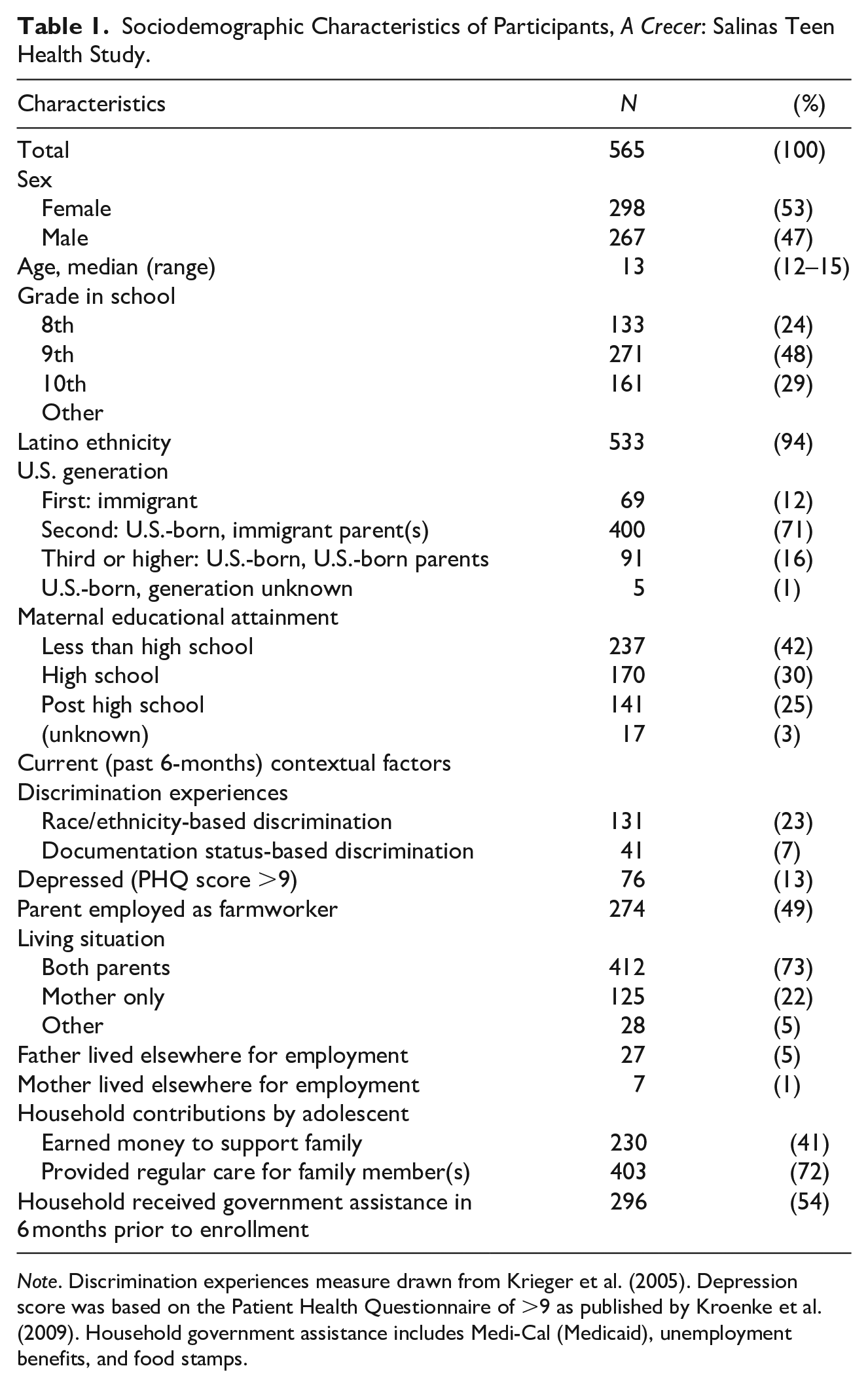
Note. Discrimination experiences measure drawn from Krieger et al. (2005). Depression score was based on the Patient Health Questionnaire of >9 as published by Kroenke et al. (2009). Household government assistance includes Medi-Cal (Medicaid), unemployment benefits, and food stamps.
Qualitative Methods
We developed a set of politically neutral questions to assess multi-level influences of the current political environment on adolescents, which we added to our questionnaires administered at ongoing prospective study visits. In consultation with CAB members and our research ethics committee, we developed these as open-ended questions to allow youth to raise a wide range of policy issues without directly asking them to address the potentially sensitive topic of immigration. We pretested these questions to assess developmental appropriateness and ensure that participants understood the question’s focus on federal policy, first and foremost. The added political environment questions were as follows:
As you probably know, many communities have been talking about how the policies of the current U.S. president are affecting them or may affect them in the future. We have heard this in Salinas, too. We would like to learn from you about your experience here in Salinas. In what ways do you see the policies of the current U.S. president affecting your community or neighborhood? What about for your friends, in what ways are the policies affecting them? Your family? How about for you, individually?
Participants were free to indicate that they had not observed or experienced any effects, and the interviewer probed no further.
We administered these questions to all participants completing their regularly scheduled follow-up visit between May and December 2017, thereby collecting data from all enrolled participants during a concentrated time period. A total of 177 participants responded at their 6- and 12-month study visits (31% of responses at each visit), 208 participants responded at their 18 months follow up visit (37%), and 3 responded at their 24 months follow up visit (1%). Study interviewers read the question aloud in Spanish or English, depending on participants’ preference, and entered participants’ responses into an open-text field in the computer-based interview. Interviewers were trained to capture responses as accurately as possible and to include quotation marks only around statements recorded verbatim. At the end of the study visit, youth were offered a handout identifying local teen services and information about available immigrant support services.
We developed a codebook based on a review of the initial 75 responses, which was discussed and subsequently refined after applying the preliminary codes to an additional 50 responses. One member of the research team then coded all remaining responses, bringing ambiguous cases and questions to the analysis team for discussion and resolution. All responses were entered into Excel and assigned numerical codes that corresponded to thematic content as well as whether participants were speaking about themselves, family, friends, or community. We then reviewed responses coded under each theme. In analytic meetings, we discussed thematic areas and observations and then developed memos that explored themes and summarized team discussions. We shared a summary memo of preliminary findings with members of the CAB and the research interviewers to solicit suggestions about the salience of codes and interpretations of the data. We tabulated code frequencies for commonly represented themes. In our final stage of analysis, we examined key themes, focusing on those pertaining to elements of Philbin et al.’s (2018) analysis of immigration policy as a driver of Latinx health. Analysis in this stage included identifying participants’ comments about specific immigration policies or health policies that affected immigrants, racism (structural, direct, or anticipated), access to social institutions, and material conditions. We triangulated these findings with the quantitative measures above to contextualize and deepen our understanding of the implications of the current political environment on the health and wellbeing of youth in this immigrant community.
Results
Demographics
A total of 565 youth, 94% of the cohort, completed a study interview that included open-ended questions on the multi-level influences of the current political environment between May and December 2017. Youth ranged in age from 13 to 16 and 53% were female. Nearly all (94%) identified as Latinx, 12% were immigrants, and 71% were children of immigrant parents (Table 1). Half (52%) had at least one parent employed as a farmworker. Sixty-seven percent lived with both parents at the time of their interview. Commonly, youth indicated they made substantive monetary or in-kind contributions to their families: 41% earned money to support their family; and 32% provided regular care for family members. Immigration-Related Policies and Policies Relevant to Immigrants.
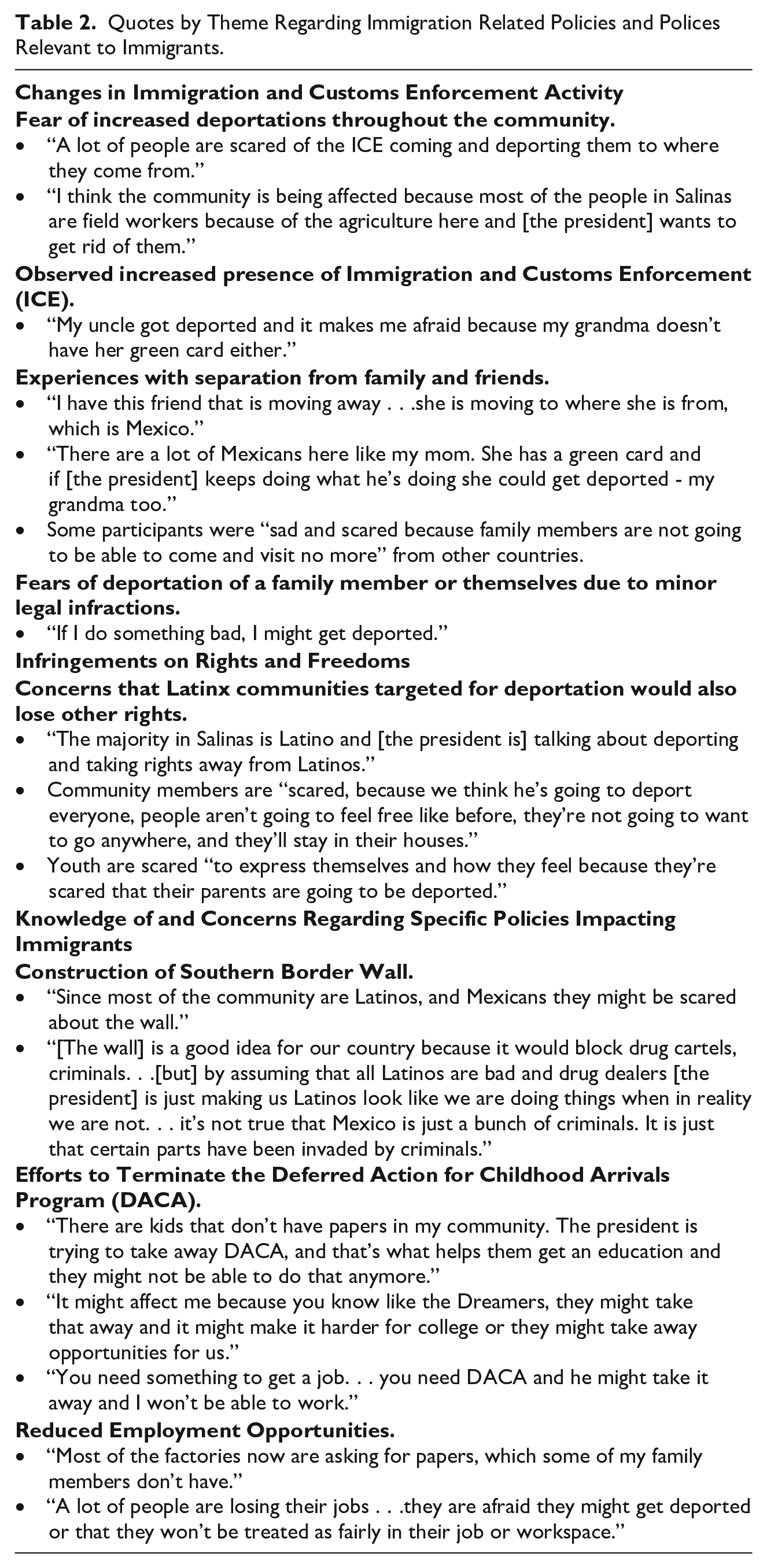
When asked about the current federal policy environment, code counts revealed that most youth described immigration-policy effects (N = 441; 78%). Subthemes that arose within this code included changes in Immigration and Customs Enforcement (ICE) activity, infringements on rights and freedoms, and youth’s knowledge of and concerns regarding specific policies affecting immigrants (see supporting quotes in Table 2). Youth noted an increased presence of ICE officials in their community and spoke about their experiences with family members’ deportation, implications for their parents’ employment prospects, and fears of separation from family and friends. A few participants felt reassured by media reports that deportation efforts would focus on “criminals,” but other participants discussed concerns about the potential deportation of themselves and family members due to minor legal infractions. Additionally, participants were concerned that Latinx people, including citizens, in communities targeted by ICE would lose other rights, including the right to move about their community and the right to free speech. Many youth spoke about their concerns regarding the targeting of Latinx populations in specific policies and messaging. Youth were knowledgeable about and highlighted specific components of federal immigration policy, including, for example, the construction of a wall along the southern border of the United States and the administration’s efforts to terminate the DACA program. They expressed concerns about the impacts of each of these policies on themselves, their families, or their community.
Quotes by Theme Regarding Immigration Related Policies and Polices Relevant to Immigrants.
Structural Racism
Code counts revealed that 17% of responses to the open-ended political environment question described discrimination experienced as a result of the immigration policy environment. Qualitatively, one participant explained concerns with the racist tone expressed by the administration with the comment, “many of the people in our neighborhood are immigrants. They get scared because of the comments that [the president] makes and basically the things that he says that he’s going to do” (female, age 15). Another said, “It’s negatively affecting us. It’s basically racism and prejudice” (female, age 14). Some understood the change of administration as signifying that racism was more widespread in the United States than they previously understood: “There might be a lot of racist people” (female, age 15). Additionally, participants reported that their family members “don’t want to take opportunities, because they are afraid how they’ll be mistreated” (male, age 15). Participants were also concerned for their own long-term employment prospects: “maybe, because of my color or accent, the jobs might, like another white female might take that job from me” (female, age 14). These findings compliment the study’s quantitative measures, which show that experiences with racism were common among participants, with nearly early one-quarter (23%) reported personally experiencing discrimination based on their race/ethnicity in the previous 6 months (see Table 1).
Stress
Code counts also revealed that more than half of participants (55%) reported extreme stress related to the current political climate, primarily linked to fear of family separation due to deportation (32%). One youth explained simply, “I’m afraid that they will take my mom and I don’t want my future without my mom” (female, age 14). Another participant detailed the fears that she and her friends face: “[My friends] are scared that they’ll deport their parents and they’ll be left behind here. They are scared that it will happen while [they] are in school . . .and they won’t know what to do [when they discover a parent is missing]. I’m scared that they’ll get my parents at work and we won’t know until we get home from school and we’ll be left behind and we will have to go to the place where they take you away from your brothers and sisters” (female, age 13).
Participants discussed their many concerns about how deportation could impact their responsibilities and their futures. Some were worried about being responsible for younger family members with little adult support: “[my parents are] scared that immigration is going to catch them and that me and my sister are going to be here alone” (female, age 13). Another said, “Mostly the fear is for my little sister who is sick and is barely 11 months and I’m not old enough to take care of her if something happens” (female, age 15). Some youth recognized that their own deportation would remove them from established support systems in the U.S., “I wouldn’t like moving back to Mexico, my whole life is here in the US. If I were to go back, I wouldn’t know anyone and living in another country is not something I would like to get used to” (female, age 14).
Participants commonly witnessed anxiety about family separation among their family members as well. One participant explained, “Some of my relatives don’t have papers so they are pretty scared. . .I see how scared they are and it scares me too because I don’t want to see them scared all of the time” (female, age 15). Others witnessed this anxiety in their parents, “My mom she is scared and so is my dad, she’s scared of someone just coming and knocking on the door asking for her so they could deport her” (female, age 15).
Access to Social Institutions
Code counts demonstrate that 12% of participants reported increased isolation in their community as people restricted their movements, such as deferring errands and staying home, in order to limit contact with law enforcement. One participant recalled, “One time my mom heard that the ‘migra’ [ICE] was here and so she wouldn’t go anywhere because she was afraid that they would take her. She was afraid she would have to leave us” (female, age 14). Others described more general behavioral changes: “Everybody’s trying to hide. They are trying not to get involved with the police. Trying not to get in trouble. They’re afraid and worried” (female, age 14). Another explained that many community members were now fearful of the law enforcement officers who are supposed to protect their community, “Most people don’t wanna go out anymore because they’re scared that the police might get them” (female, age 15).
In some cases, the political climate was also perceived to limit educational opportunities, with code counts showing 17% of respondents reporting concerns about restrictions on their future opportunities. One participant said, “Some of my friends aren’t going to school because their parents aren’t letting them because of the fear” (female, age 15). Another explained, “I would hate to see other people like me and brighter than me not get their full potential because of the policies” (female, age 15). Youth also expressed concerns that immigration policies could impede their ability to attend college, due to constrained family resources limiting access to basic necessities or due to increased family care-taking responsibilities: “It gets me scared because most of my family is immigrant and now we live in fear [and] hope that they won’t come and take my family away. Sometimes I feel like I’m not going to get a good education because my parents being immigrants and my cousins, too” (female, age 13). Participants also anticipated being uprooted from their U.S.-based educational opportunities: “Many people [are] losing the opportunity to [obtain] a better education to better themselves and their family” (male, age 15). Another youth explained, “My parents are undocumented so they could be taken. . .back to Mexico. I will probably have to go there and my dreams here will end” (male, age 14).
Material Conditions
Code counts revealed that, when noting implications of the federal policy environment, 12% of participants reported adverse financial implications for their family or others in the community. These comments addressed concerns related to parent job loss or fear of working, as well as effects on their own employment prospects in an agricultural region with already limited job opportunities. One participant remarked, for example, that his friends expressed concern about being able to “get a better job” than their parents who are immigrants and farmworkers (male, age 13) with concerns that more financially stable employment opportunities would be diminished. Likewise, participants cited immediate financial implications of the uncertain employment environment. One reported that youth in his community, “started working for money. . . My sister is working in the fields right now because she also needs money for school, and she has seen 12-year-olds working there and nobody is doing or saying anything about it” (female, age 13). These participant concerns are arising in the setting of significant family financial limitations underscored by the sociodemographic measures (Table 1).
Physical/Mental Health
In addition to the stress expressed in anticipation of family separation, code counts demonstrate that 49% of participants identified at least one type of adverse psychological impact as a result of the political environment. Participants noted that immigration policies have the potential to have mental health consequences for children in the community. One participant explained, “If they take people that I care about, I may get sad or depressed or something, it can affect me” (female, age 15). Another reflected, “Since this community is mostly Mexican, if he [the President] deports the majority of them, then it’s going to. . . create depression with the kids who are born here and won’t have their parents anymore” (female, age 15). One participant articulated a similar concern for community members more broadly: “People get sad and depressed or worried or sick, a lot of Latinos are afraid that they’ll get deported” (male, age 13). Other youth noted that the messages they are exposed to have the potential to change their sense of self-worth. One participant worried that his friends might “think negatively about themselves; they think that just being Mexican is bad” (male, age 13).
Discussion
In this predominantly U.S-born, second-generation population of Latinx adolescents, youth identified multiple effects of the federal immigration policy environment on their community and families with consequences for individual wellbeing. Family separation related to deportation constituted a prominent concern, eliciting fear and worry among participants. Likewise, they identified negative impacts of an immigrant-restrictive policy environment, including experiencing discrimination and heightened fear of encountering future discrimination, concerns regarding longer-term educational and employment opportunities, and worsening financial insecurity. In addition to the impacts of these policies on youth mental health, the scope of implications highlighted by these adolescents supports other literature on the perceived and anticipated constraints on opportunities for societal integration (Almeida et al., 2016).
Philbin Model: Adaptations for Adolescents
Our data affirm the major domains of the Philbin model while highlighting some ways in which the model may operate differently for adolescents compared to adults. Youth in this study where highly aware of the immigration policy climate and its impact on their community, their family, and themselves. Youth reported many experiences of actual and anticipated racism including interpersonal racial/ethnic discrimination within their community and structural racism occurring in education and employment opportunities, which further compound opportunities that are already limited in rural and agricultural settings (Jones et al., 2019; Post-Secondary National Policy Institute, 2021). In addition, unlike adults, youth expressed stress across all domains of the model. This pervasive stress may have been due to the adolescents’ limited legal autonomy and limited control of their life circumstances. For example, supporting prior literature, youth expressed fear of family members being deported and associated stress regarding if they would return to Mexico or remain alone in the U.S. (Rubio-Hernandez & Ayón, 2016). Youth expressed stress about financial stability—both their own and their families—due to decreased employment opportunities arising from xenophobic policies. Reported stress due to uncertainty about their own abilities to pursue higher education or meaningful employment as a result of policy changes, such as attempts to end DACA, align with findings from other studies (Burciaga & Malone, 2021; Raymond-Flesch et al., 2014).
Xenophobic Policies and Chronic Stress in Adolescence
Adolescence is a critical developmental window in which youth establish long-term social and behavioral trajectories that impact their transition into young adulthood (Dahl et al., 2018). Our data support a growing body of work that suggests that xenophobic immigration policies create an environment of chronic stress for youth in immigrant communities. Studies in immigrant communities following ICE raids have shown that all children in a community can be adversely affected by anxiety and anticipation of family separation (Capps et al., 2007). Some data now link fear of deportation within a family to biological markers of chronic stress (Martínez et al., 2018). Other data suggest short term increases in stress hormones for adolescents proximal to political events (Zeiders et al., 2020). It is already well documented that exposure to Adverse Childhood Experiences (ACEs) increases the risk of a wide variety of health outcomes ranging from depression to cancer (Felitti et al., 1998), likely mediated by these same stress hormone pathways. Additional investigation is needed to determine if stress that youth in immigrant communities experience due to hostile policy climates has the cumulative health impacts of other forms of Adverse Childhood Experiences.
Immigration Policy as a Social Determinant of Health
Findings from this study suggest ways to leverage immigration policy as a positive social determinant of health. For example, study participants discussed the positive benefits of programs such as DACA, adding to prior research that supports the beneficial health impacts on youth of immigrant-friendly policies such as DACA (Burciaga & Malone, 2021; Giuntella & Lonsky, 2020; Raymond-Flesch et al., 2014; Venkataramani et al., 2017). The current administration has begun the process of reinstating DACA and rolling back policies such as the Public Charge Rule and funding for the southern border wall (The White House, 2021). However, numerous policies remain in place that threaten the health and wellbeing of immigrant youth. Undocumented immigrants, including those with DACA, remain ineligible for health insurance through the Affordable Care Act; families continue to be separated during immigration; and tens of thousands of asylum applicants remain in limbo at the southern border. Additionally, even as xenophobic policies are dismantled, the chilling effect of these recent policies on immigrants’ engagement in health and social services may persist for years (Bernstein et al., 2020). Importantly, these policies are not strictly partisan issues. While rates of deportation climbed throughout the Trump presidency, the Obama administration also set deportation records (Gonzalez-Barrera & Krogstad, 2014; Gramlich, 2020). Similarly, law makers from both major parties are currently sponsoring immigration reform bills that could help young immigrants and children of immigrants by improving their educational access, stabilizing families, and increasing asylum processing (Cornyn, 2021; Dick Durbin United States Senator Illinois, 2021). At the state and local levels, law makers have likewise passed immigrant supportive policies (e.g., California’s SB 54, the California Values Act). Ongoing research is needed to evaluate the health impacts for youth of the current wave of immigration policy changes, including the residual chilling effects of xenophobic policies as well as the benefits and unintended consequences of immigration reform and sanctuary policies.
Limitations
This study afforded a unique and timely opportunity to examine adolescents’ perceptions of the immigration policy environment in a predominantly Latinx agricultural community in California. By integrating this assessment into an ongoing cohort study, we elicited responses from 94% of the study sample during a discrete 7-month time period. Nonetheless, this approach had limitations. The assessment was cross-sectional and thereby did not afford the opportunity to establish temporal relationships with other behavioral and health outcomes assessed at the study visit nor to examine longer-term effects on mental health outcomes or other measures of adolescent wellbeing. The use of open-ended questions, rather than a set of quantitative items that assessed immigration-policy effects directly, presented both challenges and strengths analytically as we did not systematically measure the prevalence of specific experiences or perceived implications in this population of adolescents. Rather, the open-ended item structure, using an approach developed with input from community partners, allowed respondents to identify issues salient to them. Our priority was to be developmentally appropriate and sensitive to adolescents’ willingness to engage on a very sensitive topic, allowing them to discuss immigration and deportation only if they opted to do so. Finally, although these data were collected in the setting of an established, longitudinal study in which participants had an ongoing relationship with the research team, it is possible that responses were limited if youth did not feel comfortable discussing the political environment with study staff.
Conclusions
Adolescents identified the US policy environment as contributing to heightened fear of family separation, stress, and experiences of discrimination, with implications for their future opportunities. These findings illustrate ways in which the current US immigration policy environment can be an important social determinant of health for Latinx youth, with evident opportunities for immigration policy to support access to educational opportunities and other positive determinants of health. In addition, findings underscore a need to consider the consequences of both immigration policies themselves and the immigration policy environment for the health and wellbeing of adolescents, including U.S.-born children of immigrant parents. Such evaluation should inform health policies and programs that attend to adolescents’ wellbeing to achieve continuity in access to health care and social institutions, support resiliency among youth and their families in the face of anti-immigrant sentiment, and connect youth with legal, civic, and educational resources to assist them and their families in navigating changes in immigration policy.
Footnotes
Acknowledgements
The authors would like to thank Tatiana Barraza for her insights in building the initial data codebook and synthesizing preliminary themes, and to express appreciation to members of our CAB for providing guidance on the addition of this research question to our ongoing study of adolescents’ health trajectories.
Declaration of Conflicting Interests
The author(s) declared no potential conflicts of interest with respect to the research, authorship, and/or publication of this article.
Funding
The author(s) disclosed receipt of the following financial support for the research, authorship, and/or publication of this article: Research reported in this publication was supported by the Eunice Kennedy Shriver National Institute of Child Health and Human Development and the Office of Behavioral and Social Sciences Research of the National Institutes of Health under award numbers R01HD075787 and K23HD093839. The content is solely the responsibility of the authors and does not necessarily represent the official views of the National Institutes of Health.
