



Abstract
Building upon literature that considers social network influences on health attitudes and behaviors among youth experiencing homelessness, this study assessed associations regarding social norms of pregnancy, perceived by youth experiencing homelessness (ages 13–25; N = 304) as endorsed by their network members, and youths’ pregnancy attitudes. Multivariate results revealed that youth who perceived their street peers as more objecting to (versus encouraging of) them becoming involved in a pregnancy were 51% less likely to endorse pro-pregnancy attitudes (OR = 0.49, p < .01). Youth who perceived their serious partners as more objecting to their pregnancy involvement were 74% less likely to endorse pro-pregnancy attitudes (OR = 0.26, p < .01). Results suggest utility in exploring peer-based and dyadic approaches to prevention efforts with this group.
Background Literature
In the United States, over 3 million young people between the ages of 18 and 25 experience homelessness each year (Morton et al., 2017, 2018). Youth experiencing homelessness (YEH) represent a sub-group in which pregnancy rates are high; a large study documented that among sampled YEH (ages 18–25), 44% of young women were pregnant or mothers, and 18% of young men were fathers or had pregnant partners (Dworsky et al., 2018). Other regional studies report similar findings, with 30%–60% of female YEH indicating current or prior pregnancies (Cauce et al., 2005; Crawford et al., 2011; Narendorf et al., 2016; Slesnick et al., 2006; Winetrobe et al., 2013), and 22% to 43% of male YEH indicating pregnancy involvement (Begun et al., 2020; Wagner et al., 2001; Winetrobe et al., 2013).
Elevated pregnancy rates among YEH may be attributed to this group’s higher likelihood of engaging in sexual activity when compared to their housed counterparts, as well as initiating sex at earlier ages (Solorio et al., 2008). YEH also indicate relatively higher rates of concurrent sexual partners, engagement in survival sex, and condomless sex (Rabinovitz et al., 2010; Rice et al., 2010; Tevendale et al., 2009; Warf et al., 2013).
Predictors of pregnancy among housed youth, such as substance use (Kirby, 2002; Zapata et al., 2008), poverty (Mollborn & Morningstar, 2009; Waddell et al., 2010), mental health challenges (Crittenden et al., 2009; Mollborn & Morningstar, 2009), and childhood history of physical and sexual abuse (Logan et al., 2007; Noll et al., 2009), are comparatively more common phenomena among YEH (Bantchevska et al., 2008; Hathazi et al., 2009). Such factors perhaps thereby further amplify pregnancy risks among YEH. Significant relationships have also been shown between foster care history and youths’ homelessness experiences (Brandford & English, 2004) as well as early pregnancy (Dworsky & Courtney, 2010). Moreover, in a nationally representative sample of YEH, identifying as a race/ethnicity other than White, longer homelessness duration, feelings of abandonment by one’s family or caregivers, and not completing high school were positively associated with pregnancy (Thompson et al., 2008). YEH who have been pregnant also report high rates of subsequent pregnancies; in two large studies of YEH, just under one-third of both female samples had been pregnant two or more times (Crawford et al., 2011; Halcón & Lifson, 2004). Crawford et al. (2011) further noted that 13.5% of their study’s female sample had been pregnant three or more times.
Pregnancy and parenting among YEH are important topics for deeper consideration in prevention and intervention research. Early maternal age among YEH is of noteworthy concern, as their babies are often born pre-term, at low birth-weights, with prenatal exposure to substances, and with higher likelihoods of being placed into child welfare (Novac et al., 2011; Smid et al., 2010; Stein et al., 2000; Thompson et al., 2016). Child-bearing is often stressful for YEH, who demonstrate further elevated physical and mental health challenges, including higher rates of depression when compared to YEH who have not had children (Slesnick et al., 2006; Thompson et al., 2008, 2016). Raising children in chaotic shelters and drop-in settings with limited privacy has been shown to exacerbate YEH parents’ mental health challenges and self-perceptions as inadequate parents; it is perhaps understandable that such factors prompt some YEH to amplify their substance use as short-term strategies for stress-relief, while also making long-term exits from homelessness more difficult to achieve (Begun et al., 2018; Dworsky & Meehan, 2012; Swick & Williams, 2010).
Further, most studies of pregnant and parenting YEH focus solely on cisgender, heterosexual-identified females (Begun, 2017; Begun, Torrie et al., 2019). Parenting and caregiving have been cast as feminine roles in contexts of gender norms and gender role-socialization (Grusec & Hastings, 2014). Such gendered notions of parenting are pervasive and impact how homelessness services are delivered, with more programs and supports being made available to young mothers experiencing homelessness compared to fathers (Panter-Brick et al., 2014). As a result, young fathers experiencing homelessness have been shown to struggle as they navigate these major life changes (Schindler & Coley, 2007), with some being relegated to serving in roles that are limited solely to being financial providers (Alschech & Begun, 2020; Combs et al., 2020), or excluded from parenting and related supports altogether (Alschech & Begun, 2020; Begun, Torrie et al., 2019). Accordingly, more emphasis should be placed on intentionally including YEH fathers in research, prevention, and supports regarding pregnancy and parenting.
Pregnancy Attitudes Among Youth Experiencing Homelessness
Extant research has shown that 20% to 40% of sampled YEH agreed that they are actively interested in becoming pregnant or being involved in a pregnancy within the following year (Begun et al., 2020; Begun, Frey et al., 2019; Tucker et al., 2012; Winetrobe et al., 2013). For some YEH, pregnancy, and parenthood are perceived as helpful in accessing services and supports that they may otherwise lack (Begun, Frey et al., 2019; Cauce et al., 2005; Smid et al., 2010; Tucker et al., 2012). Pregnancy and parenting have been illustrated by some YEH as motivating factors for establishing positive life changes, such as finishing school, reducing substance use, or obtaining housing and employment (Begun, Torrie et al., 2019; Hathazi et al., 2009). Pregnancy is viewed by some youth as an opportunity to create emotional connections as a means of reimagining a future beyond the splintered bonds that many YEH experienced in their families of origin (Alschech & Begun, 2020; Begun, Torrie et al., 2019; Thompson et al., 2008; Tucker et al., 2012; Winetrobe et al., 2013). Child-bearing has also been described by some YEH as a facilitator toward reconnecting with their families of origin (Begun, Torrie et al., 2019).
Although limited and dated, research with housed youth from the general population has shown that positive or “pro-pregnancy” attitudes are associated with Latinx ethnicity (Unger et al., 2000), increased age (Sipsma et al., 2011), and low educational aspirations (Unger et al., 2000). Among housed young people, depression (Horwitz et al., 1991), positive communication (e.g., quality time spent, openness of communication styles, and perceptions of feeling loved) with parents or family of origin (Unger et al., 2000), and a female’s emotional reliance upon her male sexual partner (Grant et al., 2002), are also positively associated with pro-pregnancy attitudes. However, little is known about whether such associations hold true for YEH, or whether other factors may play a role in forming YEHs’ pregnancy attitudes. Research is needed to examine correlates of pro-pregnancy attitudes more narrowly among YEH. As noted by Tucker et al. (2012), studies on predictors of YEHs’ pregnancy attitudes would benefit from not only exploring such associations with regard to youths’ sociodemographic characteristics, but also with regard to contextual factors that often pertain to YEH (e.g., homelessness duration, transience, whether sheltered or on the streets/homelessness severity).
The Importance of Social Networks to Youth Experiencing Homelessness
Emerging research specific to YEH, while again limited, has found that certain types of interpersonal connections are associated with YEHs’ pro-pregnancy attitudes, such as having contact with family members and being in a relationship with a serious partner (Tucker et al., 2012). Another study found that youth who reported receipt of instrumental support (e.g., monetary resources) from a serious partner were significantly more likely to endorse pro-pregnancy attitudes compared to their peers who did not receive such form of support (Begun et al., 2020). In a similar vein, at-large population research has shown that the most demonstrative predictor of a young woman’s attitudes toward pregnancy is her perception of a serious (male) partner’s desire for a baby (Cowley & Farley, 2001). Other characteristics that have shown positive associations with pro-pregnancy attitudes include longer homelessness duration (Begun et al., 2020; Tucker et al., 2012), prior pregnancy experience (Begun et al., 2020), and identifying as male (Tucker et al., 2012). However, as noted by Smid et al. (2010), young males’—especially male YEHs’—perspectives are conspicuously absent from pregnancy-related literature, interventions, and service provision efforts. Yet, their roles in, and attitudes toward, pregnancy are seemingly influential, suggesting that male involvement in pregnancy decision-making and attitude-formation is another important omission in research and prevention.
While research has preliminarily identified certain characteristics associated with pregnancy prevalence and attitudes among YEH, there has been little replication to verify such factors. In addition to a need for research that further examines sociodemographic characteristics and experiences specific to homelessness in relationship to pregnancy attitudes and incidence, more research is needed to explore observations that YEHs’ pregnancy attitudes are seemingly not formed in isolation, nor solely at the individual level. Individuals’ pregnancy views are likely influenced by the attitudes and behaviors exhibited by, and social support offered (or not) from peers, family members, service providers, and serious partners. These findings thus point to a need for continued research that emphasizes the broader “ecological,” or social network influences on YEHs’ pregnancy attitudes and behaviors, particularly as the effectiveness of many current reproductive and sexual health prevention efforts is limited by their tendency to focus on individualistic attitudes and behaviors (Kirby & Lepore, 2007; Layzer et al., 2014). Furthermore, most pregnancy prevention and intervention efforts are solely directed toward females (Manlove et al., 2008; United States Department of Health and Human Services Office of Adolescent Health, 2017). Taken together, recent advances in research suggest that the analysis of individual-level risk and protective factors should be expanded to examine influences on all YEHs’ attitudes and behaviors, including those of youths’ social networks (Melander et al., 2016; Rice, 2010; Young & Rice, 2011).
The role of social norms among YEH
Social networks, or individuals and groups who are connected and interact with each other, influence youths’ behaviors in a variety of ways, such as via social norms (Davey-Rothwell & Latkin, 2007; Friedkin, 2001). Social norms are characterized as perceptions of what behaviors are considered prevalent and/or acceptable within a group of people (Kincaid, 2004). Emerging research notes that social network norms reveal compelling associations with YEHs’ engagement in a range of health-related behaviors, such as substance abuse (Barman-Adhikari et al., 2015, 2016a; Barman-Adhikari, Al Tayyib et al., 2017; Melander et al., 2016), safer sex practices (Tyler, 2013), condomless sex (Barman-Adhikari, Hsu et al., 2017; Rice et al., 2007), and HIV testing (Rice et al., 2010).
Research has demonstrated that YEHs’ networks are heterogeneous (Rice et al., 2007, 2008; Wenzel et al., 2012), and such heterogeneity impacts youths’ perceptions of social norms. Social network scholars have thereby noted the importance of considering these social norms in multidimensional ways (Coleman, 1990; Latkin et al., 2009). Whereas youth may perceive that some members of their networks would encourage a certain behavior, youth may believe that other network members would discourage that same behavior. Therefore, it is crucial to determine which endorsements of, or objections to, certain behaviors (and by which specific social network members) are most salient in influencing youths’ attitudes. In doing so, analyses benefit from dissecting social norms into youths’ specific referent-groups (i.e., home-based peers, street-based peers, family members, staff members and service providers, and serious intimate partners) to see which social network members are most influential amidst youths’ complex networks, which sometimes convey contradictory norms (Rimal et al., 2005).
Yet, a dearth of research has examined YEHs’ social networks and norms in relationship to their pregnancy attitudes. This is a surprising gap in the literature, considering that pregnancy and decision-making in sexual encounters are typically not individual acts, and also as prevention scientists have increasingly called for the inclusion of males, peers, intimate partners, and families in intervention activities. Also, in light of aforementioned research on youths’ motivations to become pregnant or involved in pregnancy as perceived conduits toward positively re-connecting them with family, to give them someone to love, and to improve bonds with an intimate partner, we hypothesize that there is indeed utility in better understanding how youths’ social networks and perceived social norms regarding pregnancy may be associated with their pregnancy attitudes, as such potential relationships may also ultimately inform youths’ engagement in sexual behaviors and family planning decision-making. This exploratory study examined associations regarding social norms of pregnancy, perceived by YEH as endorsed by their network members, and youths’ pregnancy attitudes.
Methods
Sampling, Recruitment, and Procedures
Secondary social network data were analyzed from a larger multi-year panel study (MH R01 903336; PI: Eric Rice, University of Southern California). The study’s overall aim was to assess the interconnected networks of YEH in Southern California. Cross-sectional quantitative data were obtained from a sample of YEH (N = 1,046), aged 13 to 25 years. All data collection took place in a drop-in center in Santa Monica, and another in Hollywood. Recruitment was conducted at both agencies by graduate research assistants who were onsite to approach youth during service provision hours at each site. Any client older than 13 years of age receiving services at either agency was eligible to participate. Both drop-in centers had one main entrance, respectively, where youth signed in for services for the day. These logistics helped researchers to ensure that they approached all youth. Youth who were new to the agency completed the agency’s intake process before engaging with the study, to verify that they met the eligibility requirements for the agency and thus the study. This study included youth who were literally homeless (i.e., sleeping on the streets, in a vehicle, and accessing emergency shelters), and those who were temporarily housed (i.e., couch-surfing, intermittently staying with friends and family, in transitional housing arrangements), parameters set forth by the agencies and consistent with the homelessness definition advanced by Tsemberis et al. (2007). A consistent pair of two research assistants was responsible for all recruitment efforts to prevent youth from participating in the study multiple times. Signed voluntary informed consent was obtained from each youth who agreed to study participation. Informed consent was obtained from youth 18 years of age or older, and informed assent was obtained from youth under age 18. The Institutional Review Board (IRB) of the Principal Investigator’s university waived parental consent, as YEH under age 18 are deemed unaccompanied minors and may not have a parent or caregiver from whom they could obtain consent.
Instruments
The survey consisted of two parts: (1) an audio computer-assisted self-interview (ACASI), which included sociodemographic questions and items pertaining to attitudes and behaviors specific to each youth; and (2) a face-to-face social network interview (F2F-SNI), which inquired about individuals nominated by youth as comprising their social networks, including nominees’ characteristics, attitudes, and behaviors. Both interview portions could be completed in English or Spanish. Study participation required approximately 60 minutes for each participant, with each youth receiving $20 in cash or gift cards in exchange for their time. All survey items and procedures were approved by the aforementioned IRB.
Part 1: Audio-computer assisted self-interview (ACASI)
The ACASI asked youth to enter their answers privately into the computer after reading questions as they appeared on the screen, or after listening via headphones to questions being read aloud to them. After youth entered their responses, subsequent questions were selected by the computer using a series of pre-programmed skip patterns. The ACASI approach to data collection was used because it has shown to reduce non-response rates, particularly to sensitive questions regarding potentially stigmatized topics such as substance use, illegal activities, and sexual behaviors (Ghanem et al., 2005; Macalino et al., 2002; Morrison-Beedy et al., 2006).
Part 2: Face-to-face social network interview (F2F-SNI)
The F2F-SNI was then used to collect data pertaining to youths’ social networks that were used in the current study. The F2F-SNI has shown to reduce participant burden by enhancing youths’ ability to focus, particularly when recalling and providing a large amount of social network data (Rice et al., 2012). This part of the interview used a face-to-face, social network-mapping interview, conducted by the trained research assistants. A prompt was read: “Think about the last month. Who have you interacted with? These can be people you interacted with in person, on the phone, or through the Internet.” After youth nominated their social connections, an additional 15 prompts to solicit nominees were read, including: “These might be friends; family; people you hang out with/have conversations with” and so forth. Interviewers paused between each prompt to allow youth to nominate additional social connections before moving on to the subsequent prompt.
Name generator
As part of the F2F-SNI, youths’ social network data were collected by research assistants using a name generator. Youth provided information for up to 50 people with whom they had interacted during the previous 30 days. When youth finished nominating individuals in their networks, characteristics of each nominee were collected, including first name and last initial, aliases, gender, age, race/ethnicity, whether the nominee was a client of the agency, each nominee’s relationship type with regard to the participant (e.g., home-based peer, street-based peer, family member, staff member, serious partner), and a series of questions about the characteristics, attitudes, and behaviors of network members nominated.
Measures
Several variables were selected, based on prior theoretical and empirical findings, to meet the overall goal of understanding associations between youths’ perceived social norms regarding pregnancy and youths’ endorsements of pro-pregnancy attitudes. After controlling for sociodemographic and other life experience variables, associations were analyzed between youths’ perceived “descriptive” norms regarding pregnancy (i.e., youths’ perceptions of how many members of their social networks are currently or have been pregnant or involved in a pregnancy) and the outcome variable of youths’ pro-pregnancy attitudes. Associations were also analyzed between youths’ perceived “injunctive” norms regarding pregnancy (i.e., youths’ perceptions of how many members of their social networks would object to, versus encourage, them becoming pregnant or involved in a pregnancy) and the outcome variable of youths’ pro-pregnancy attitudes. These descriptive and injunctive norms variables were more narrowly dissected to examine youths’ social network referent-group members. Referent-group members are the specific “types” of people who youth named as comprising their social networks, such as home-based peers, street-based peers, family members, staff/service providers, and serious intimate partners. After controlling for sociodemographic and other life experience variables, associations were analyzed between youths’ perceived “descriptive” norms regarding pregnancy (i.e., youths’ perceptions of how many of their home-based peers, and street-based peers, respectively, are currently or have been pregnant or involved in a pregnancy), youths’ perceived “injunctive” norms regarding pregnancy (i.e., youths’ perceptions of how many of their home-based peers, street-based peers, family members, staff/service providers, and serious partners, respectively, would object to, versus encourage, them becoming pregnant or involved in a pregnancy), and the outcome variable of youths’ pro-pregnancy attitudes.
Sociodemographic and other life experience measures
Sociodemographic measures included sex (0 = male, 1 = female); race/ethnicity (0 = non-white, 1 = white); age (measured as continuous variable, in number of years); education level (0 = non-graduate of high school, 1 = high school graduate); current school attendance (0 = no, 1 = yes); current employment (0 = not currently employed, 1 = currently employed); and time spent homeless (measured as continuous variable, in number of years). Participants were also asked whether they had a series of other life experiences including: “traveler” status (“Have you ever been a ‘traveler’? A traveler is someone who moves by themselves or with friends from city to city after a short period of time”; 0 = no, 1 = yes); alcohol/drug use prior to sex (“Did you drink alcohol or use drugs before you had sex the last time?”; 0 = no, 1 = yes); sexual abuse history (0 = no, 1 = yes); foster care history (0 = no, 1 = yes); and prior pregnancy or involvement (0 = no, 1 = yes).
Descriptive norms measures
To examine descriptive norms regarding pregnancy, after youth finished nominating their network members, they were asked: “Out of the people you nominated, who has ever been pregnant or gotten someone pregnant?” Descriptive norms measures were further dissected to examine youths’ perceptions of how many of their home-based peers, and street-based peers, respectively, had ever been pregnant or involved in pregnancy, as a proportion of their total network members named. For example, if a youth in the sample named 10 network members total, and noted that three home-based peers have ever been pregnant or involved in a pregnancy, the perceived descriptive pregnancy norm proportion for the referent-group of home-based peers equaled (3/10) = 0.3. The same calculations were also made for the referent-group of street-based peers. However, descriptive norms regarding pregnancy for referent groups of family, staff members, and serious partners were deemed less logically pertinent to evaluate, and were not included in this referent-group specific model. Family members and staff members at drop-in services, for instance, are typically comprised of either people from different age groups and life situations, and their pregnancies are thus less comparable to homeless youths’ pregnancy attitudes or intention. Furthermore, the ways in which data were collected did not allow for the further dissection of family into sub-groups, such as siblings; descriptive norms of siblings’ pregnancies may be influential to youths’ pregnancy attitude formation, but this level of analysis was not possible in the current study.
Injunctive norms measures
To evaluate injunctive norms regarding pregnancy, after youth finished nominating their network members, they were asked: “Out of the people you nominated, who would object to you getting pregnant or getting someone else pregnant right now?” Youth were also asked, “Out of the people you nominated, who would encourage you to get pregnant or get someone pregnant right now?” Each individual a youth named within a given referent-group (i.e., home-based peers, street-based peers, family, staff, and serious partners) category was summed, respectively, and examined in proportion to the total number of individuals nominated by youth as comprising their entire networks. To interpret the two injunctive norms questions as predictor variables suited for the logistic regression models, these proportions were dichotomized and coded as “0” if the proportion of a specific referent-group member type, out of total network members named, who youth perceived would encourage them to become pregnant or involved in a pregnancy, was greater than the proportion of the same specific referent-group members who youth perceived would object to them becoming pregnant or pregnancy-involved. Conversely, variables were coded as “1” if the proportion of specific referent-group members, who youth perceived would object to the youth’s pregnancy or involvement, was greater than the proportion of the same referent-group members who youth perceived would encourage the youth’s pregnancy or involvement. These transformed injunctive norms variables were then used as predictor variables of interest in the model, and included: home-based peers (0 = more encouraging, 1 = more objecting); street-based peers (0 = more encouraging, 1 = more objecting); family (0 = more encouraging, 1 = more objecting); staff (0 = more encouraging, 1 = more objecting); and serious partners (0 = more encouraging, 1 = more objecting). Because questions about descriptive and injunctive norms regarding pregnancy were included in only Waves 3 and 4 of data collection in this study, analyses utilizing these variables were conducted on a smaller sub-sample of study participants (n = 304).
Outcome variable: Pro-pregnancy attitudes
Youths’ pregnancy attitudes were measured using three items, which were combined to form a single pro-pregnancy attitudes scale variable (Cronbach’s alpha = .71). These questions included: (1) “Getting pregnant, or getting someone pregnant, at this time in your life is one of the worst things that could happen to you”; (2) “It wouldn’t be all that bad if you got, or if you got someone, pregnant at this time in your life”; and (3) “I would like to get pregnant, or get someone pregnant, within the next year.”
The first and second items were adapted from Add Health (Carolina Population Center, 1999), and the third item was created by the study team. Response options for each question comprised: 1 = Strongly Agree; 2 = Agree; 3 = Neither Agree nor Disagree; 4 = Disagree; and 5 = Strongly Disagree. The second and third items were reverse-coded such that all questions conveyed that 1 = most anti-pregnant attitudes, and 5 = most pro-pregnant attitudes. Based on prior literature noting there are few differences in either sociodemographic characteristics or pregnancy outcomes (within the following year) among young people who endorse pregnancy-ambivalent attitudes compared to those who hold overtly pro-pregnancy attitudes (Jaccard et al., 2003; Rosengard et al., 2004), participants’ responses were subsequently dichotomized. Recoded responses of “1” and “2” were combined to represent anti-pregnancy attitudes (“0”), whereas recoded responses of “3,” “4,” and “5” were combined to denote pro-pregnancy attitudes (“1”).
Data Analyses
Data analyses were conducted using SAS Version 9.4 and SPSS Version 26.0. To preserve degrees of freedom and ensure statistical power, an accepted strategy (Hosmer & Lemeshow, 2004) was employed to minimize the number of variables used without weakening the comprehensive nature of the conceptual model itself. All analyses predicting associations with the dependent variables progressed in two stages. First, bivariate logistic regressions were conducted to determine statistically significant (unadjusted) associations between each independent variable, respectively, and the outcome variable. Second, each bivariate association was examined via a pair-wise approach; any independent variable significantly associated with the outcome variable at a threshold of p < .05 was retained in a subsequent multivariate logistic regression model to determine any statistically significant (adjusted) associations. One exception was the variable for sex, which was retained in all models. Given the physiological nature of pregnancy, sex was deemed important to retain as a control variable in all multivariate models regardless of indications of significance in bivariate tests. Variance Inflation Factor (VIF) was assessed to detect any potential concerns of multicollinearity among independent variables.
Results
Descriptive Statistics
The sample was comprised of a majority of males (n = 223, 73.4%), and individuals identifying as white were the largest racial/ethnic group (n = 146, 48.0%). Regarding views on pregnancy, 39.1% (n = 119) of youth indicated endorsements of (combined) ambivalent and overtly pro-pregnancy attitudes. Table 1 displays more comprehensive information pertaining to youths’ sociodemographics and other life experiences.
Sample Characteristics of Youth Experiencing Homelessness in Southern California (n = 304).
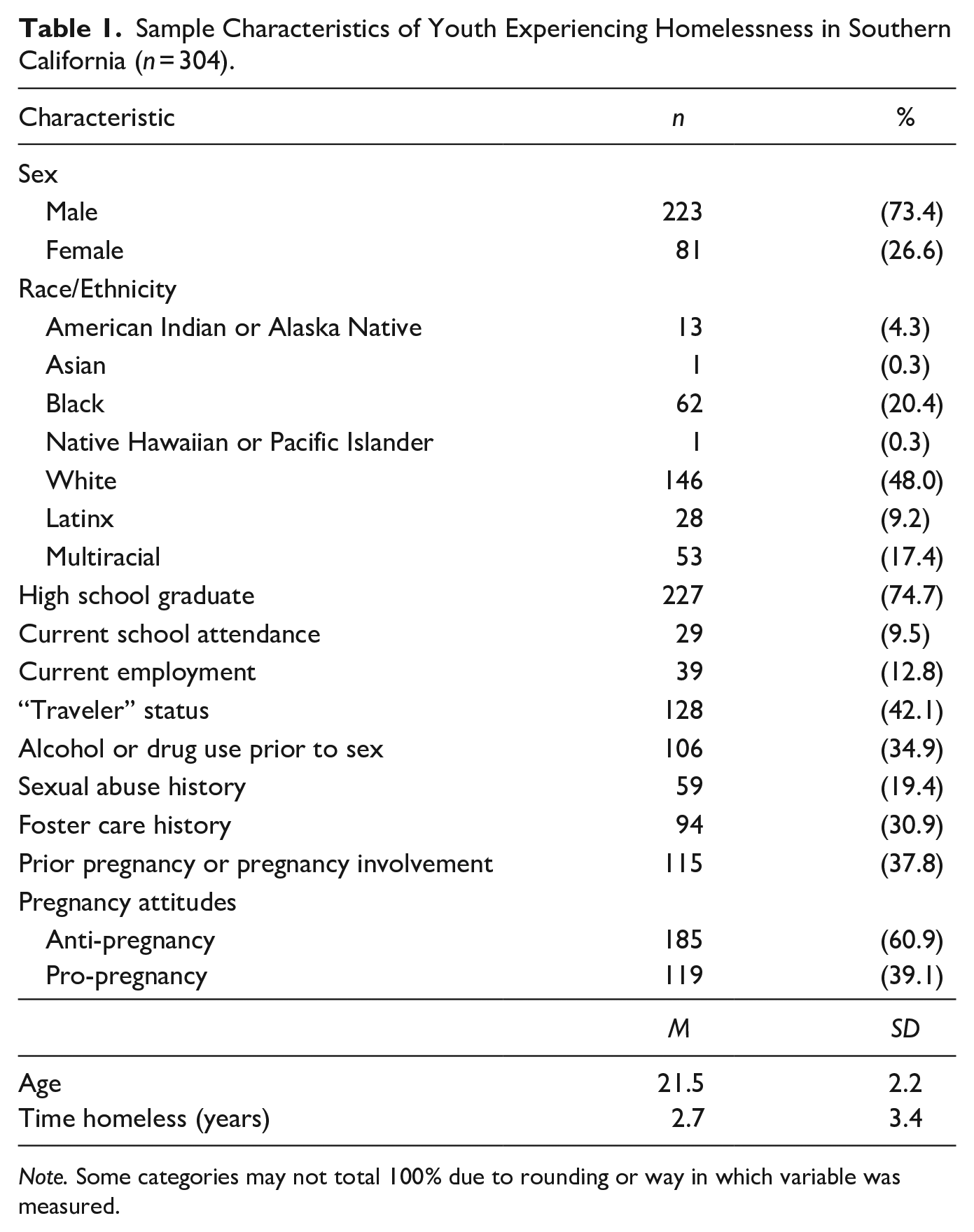
Note. Some categories may not total 100% due to rounding or way in which variable was measured.
Table 2 shows details regarding descriptive statistics on social norms pertaining to pregnancy that youth perceived as present in their social networks, further dissected into specific referent-group categories. Approximately two-thirds of youth (n = 205, 67.4%), perceived that one or more of their home-based peers had ever been pregnant or involved in a pregnancy, whereas just under one-third of youth (n = 92, 30.3%) perceived that one or more of their street-based peers had ever been pregnant or involved in a pregnancy.
Descriptive Statistics of Perceived Social Norms Regarding Pregnancy, by Youths’ Specific Referent Groups (n = 304).
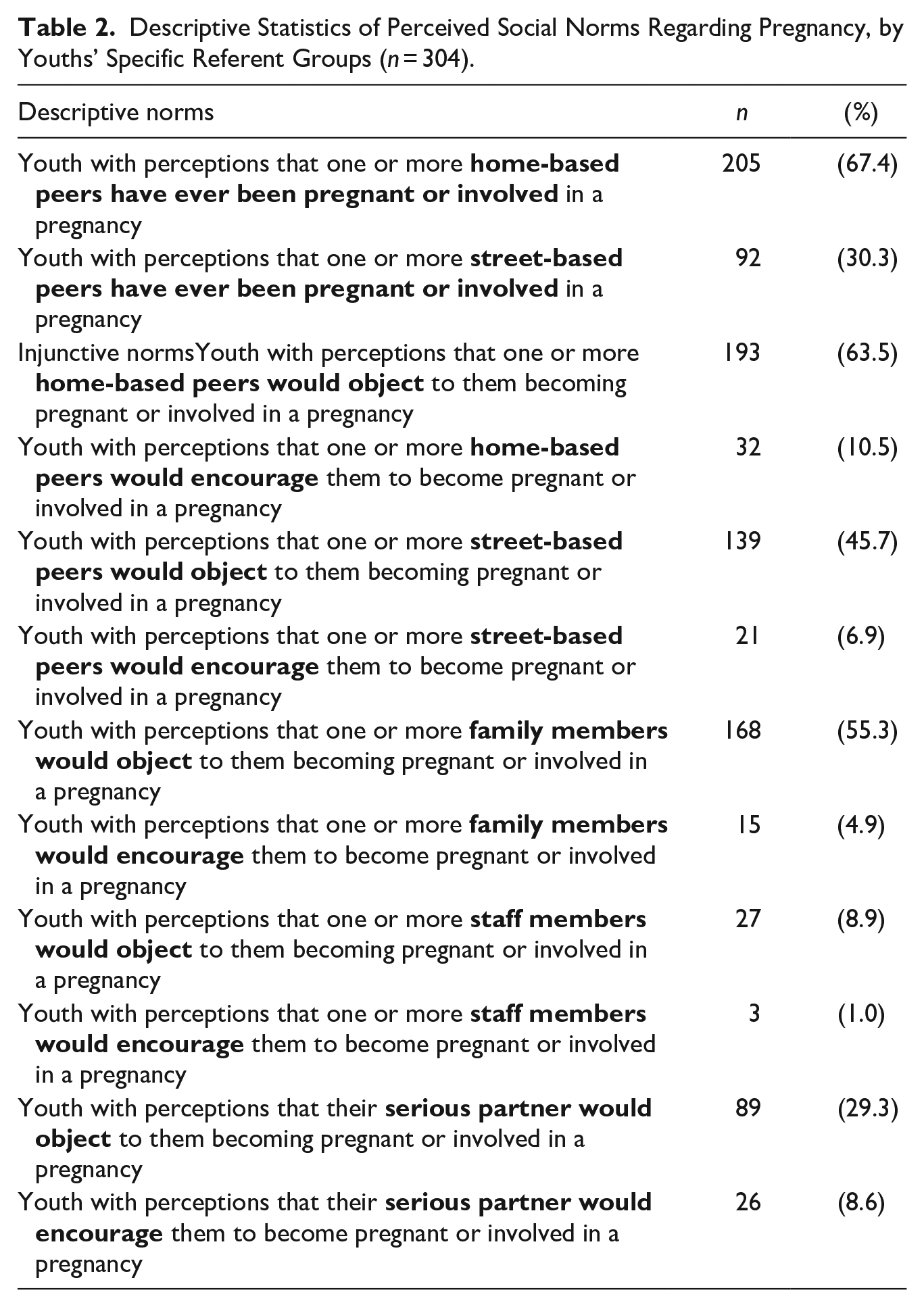
In terms of injunctive norms regarding pregnancy, a majority of youth (n = 193, 63.5%) perceived that one or more of their home-based peers would object to them becoming pregnant or involved in a pregnancy, whereas far fewer youth (n = 32, 10.5%) believed that one or more of their home-based peers would encourage them to become pregnant/involved in a pregnancy. Relatively fewer youth (n = 139, 45.7%) believed that one or more of their street-based peers would object to them becoming pregnant or involved in a pregnancy, but very few youth believed that one or more of their street-based peers would encourage them to become pregnant/involved in a pregnancy (n = 21, 6.9%). Just over half of youth (n = 168, 55.3%) believed that one or more of their family members would object to them becoming pregnant or involved in a pregnancy, whereas only a few youth (n = 15, 4.9%) thought that one or more of their family members would encourage them to become pregnant/involved in a pregnancy. A notable minority of youth (n = 27, 8.9%) believed that one or more staff members would object to them becoming pregnant or involved in a pregnancy, but almost no youth (n = 3, 1.0%) believed that one or more staff members would encourage them to become pregnant/involved in a pregnancy. Finally, less than one-third of youth (n = 89, 29.3%) believed that a serious partner would object to them becoming pregnant or involved in a pregnancy, while 8.6% (n = 26) of youth believed that a serious partner would encourage them to become pregnant/involved in a pregnancy.
Inferential Statistics
After controlling for sociodemographic and other life experience variables, the pro-pregnancy attitudes variable was regressed on the descriptive norms variables (specific to home-based peer and street-based peer referent-groups, respectively), and the injunctive norms variables (specific to home-based peer, street-based peer, family, and serious partner referent-groups, respectively). As displayed on Table 3, bivariate results revealed that white youth were significantly less likely than their non-white peers to endorse pro-pregnancy attitudes (OR = 0.51, p < .01). Youth who identified as “travelers” were significantly less likely than their non-transient peers to endorse pro-pregnancy attitudes (OR = 0.56, p < .05). However, youth who were currently enrolled in school were significantly more likely to endorse pro-pregnancy attitudes than their peers who were not currently in school (OR = 2.91, p < .01). Youth who perceived their street-based peers as overall more objecting to (versus encouraging of) them becoming pregnant or involved in a pregnancy were significantly less likely to endorse pro-pregnancy attitudes (OR = 0.43, p < .01). Similarly, youth who perceived their serious partners as overall more objecting to (versus encouraging of) them becoming pregnant or involved in a pregnancy were significantly less likely to endorse pro-pregnancy attitudes (OR = 0.24, p < .01).
Associations Between Perceived Social Norms Regarding Pregnancy, by Specific Referent-Group, and Youths’ Pro-Pregnancy Attitude Endorsements (n = 304).
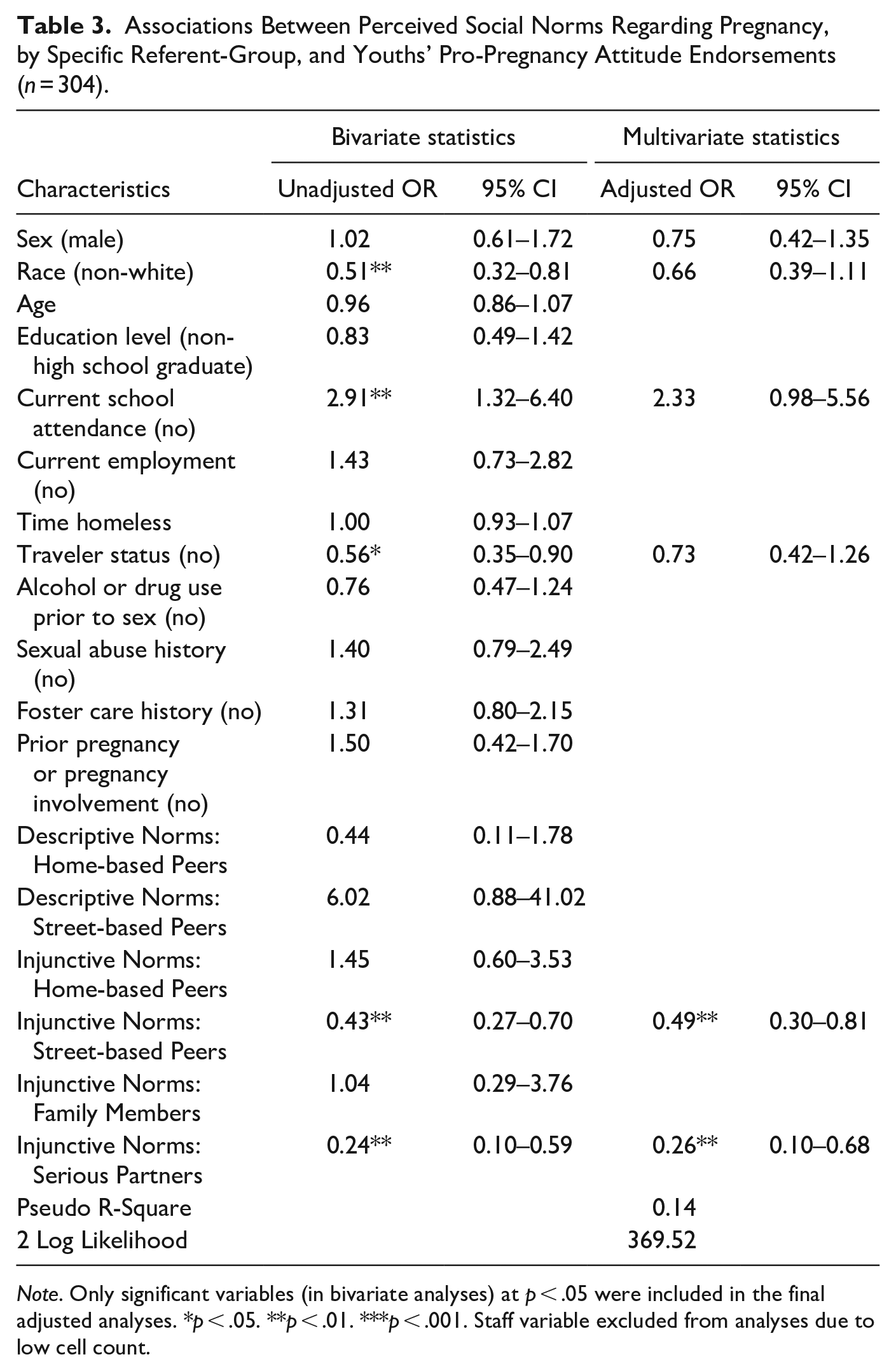
Note. Only significant variables (in bivariate analyses) at p < .05 were included in the final adjusted analyses. *p < .05. **p < .01. ***p < .001. Staff variable excluded from analyses due to low cell count.
In the multivariate model, two of these associations remained significant. Youth who perceived their street peers as overall more objecting to (versus encouraging of) them becoming pregnant or involved in a pregnancy were 51% less likely to endorse pro-pregnancy attitudes (OR = 0.49, p < .01). Youth who perceived their serious partners as overall more objecting to (versus encouraging of) them becoming pregnant or involved in a pregnancy were 74% less likely to endorse pro-pregnancy attitudes (OR = 0.26, p < .01).
Discussion
In response to emergent research indicating the salience of youths’ social network influences on a wide array of their health outcomes and behaviors, and in recognition of the pervasiveness of pregnancy and pregnancy involvement among youth experiencing homelessness (YEH), this study represents the first social network analysis to examine social norms regarding pregnancy, perceived by YEH as exhibited by their social network members, in relationship to youths’ own pregnancy attitudes. This study is innovative, as it further dissected the examination of youths’ perceived social norms of pregnancy into analyses of descriptive (prevalence) and injunctive (acceptability) norms regarding pregnancy, and also assessed such norms in the contexts of youths’ most common social network member types (home-based peers, street-based peers, family members, staff members, and partners).
A notable proportion of this sample (39.1%) endorsed pro-pregnancy attitudes, findings which align with prior research (Begun et al., 2020; Begun, Frey et al., 2019; Tucker et al., 2012; Winetrobe et al., 2013). In terms of descriptive norms of pregnancy, a majority of youth (67.4%) believed that one or more of their home-based peers had ever been pregnant or involved in a pregnancy, but that less than one-third (30.3%) of youth perceived that one or more of their street-based peers had ever been pregnant or involved in a pregnancy. Such findings may be surprising, particularly given the high rates of pregnancy and pregnancy involvement that have been observed in prior research with YEH. However, such results might be explicated through youths’ contexts that often include transience, traveling, and accessing shelter-based and drop-in services with infrequency and across short-term timeframes. As such, YEH may not be aware, and thus under-estimate, the extent to which their street-based peers have been involved in pregnancy. Youths’ home-based peers may comprise a much wider range of ages in comparison to youths’ street-based peers, which perhaps also adds useful context to explain the higher rates of pregnancy involvement among home-based peers. With regard to injunctive norms of pregnancy, youth perceived that certain members of their social networks would object to their pregnancy involvement, with 63.5% of youth indicating this about their home-based peers, 45.7% in terms of their street-based peers, and 55.3% regarding their family members. As this is the first known study exploring such dimensions of social networks and pregnancy attitudes among YEH, more research is needed to replicate and corroborate such findings. However, research has indeed indicated that social support provided (or not) by youths’ social network members is significantly associated with youths’ pro-pregnancy attitude endorsements (Begun et al., 2020), adding further weight to calls for examining pregnancy attitudes among YEH in relationship to their social network characteristics and contexts.
Perceived Social Norms of Pregnancy in Relationship to YEHs’ Pregnancy Attitudes
Bivariate results showed significant associations between identifying as a youth of color (in comparison to white-identifying youth) and endorsing pro-pregnancy attitudes. This point merits greater exploration, as research in this regard has been sparse. Youth who identified as travelers were significantly less likely than their non-traveling counterparts to endorse pro-pregnancy attitudes. Although research testing this association is also scant, this may be a function of YEHs’ frequently-shifting place-based contexts serving as influences in youths’ lack of desire to add pregnancy to their already unpredictable circumstances. An interesting finding, YEH who were enrolled in school were significantly more likely to endorse pro-pregnancy attitudes in comparison to youth who were not enrolled in school. Tucker et al. (2012) found that YEH were less likely to endorse pro-pregnancy attitudes if they had greater numbers of network members who regularly attend school. However, other recent qualitative research showed that some YEH in the sample expressed pro-pregnancy attitudes specifically because of their school enrollment and felt as though their lives were moving in a direction of greater stability and higher-paying employment opportunities; as such, for these youth, pregnancy or pregnancy involvement did not represent a major obstacle (Begun, Frey et al., 2019). Of note, each of the aforementioned variables did not remain significant when included in the subsequent multivariate model assessing adjusted associations. There was also no significant finding when comparing female- and male-identified youth with regard to their pregnancy attitudes, further bolstering support for expanding reproductive and sexual health prevention efforts, as well as parenting resources and supports, to more intentionally include all YEH (of any gender).
At both bivariate and multivariate levels, no significant relationships were found between youths’ perceptions of descriptive norms of pregnancy and youths’ pro-pregnancy attitudes. As previously noted, such results may reflect the fleeting or short-term nature of YEHs’ relationships with some of their street-based peers, which may subsequently influence the degree to which descriptive norms regarding pregnancy are able to play a role in YEHs’ pregnancy attitude formation. However, this study found, at both bivariate and multivariate levels of analyses, that injunctive norms of pregnancy may be influential factors in YEHs’ pregnancy attitude formation. Two relationships specifically, injunctive norms among street-based peers, and those also with regard to serious partners, emerged as significantly associated with YEHs’ pregnancy attitudes. Here, youth who believed that their street-based peers were overall more objecting to (versus encouraging of) them becoming pregnant were 51% less likely to endorse pro-pregnancy attitudes. Similarly, youth who perceived that their serious partner was more objecting to (versus encouraging of) them becoming pregnant or involved in a pregnancy were 74% less likely to endorse pro-pregnancy attitudes. Such relationships have not been the explicit focus of research efforts of which we are aware, and of interest are common narratives pertaining to youths’ connections to “pro-social” individuals. Pro-social network members are typically described as home-based peers, family, and staff members. Research has often characterized these individuals as the “most optimal” connections for YEH in terms of encouraging their engagement in healthy, positive behaviors, and differentially in comparison to YEHs’ connections to street-based peers and partners, who are at times stigmatically shown as “less ideal” influences. These findings suggest, perhaps contrarily, that there may be positive outcomes derived from engaging YEHs’ street-based peers and serious partners in intervention activities, especially when the focus of such efforts is pregnancy prevention. This also suggests utility in further exploring peer-based and intimate partner/dyadic approaches to engaging YEH in accessing medically-accurate reproductive and sexual health information and discovering healthy sexual communication strategies. For youth who ultimately do become pregnant or involved in pregnancy and who may desire to become parents, information, resources, and supports must be made truly accessible and inclusive to this group such that their experiences are positive, healthy, and informed by tenets of reproductive justice.
Limitations
Several limitations should be noted regarding the study’s findings. The cross-sectional design used does not allow for causal conclusions to be made. Future research would benefit from longitudinally examining YEHs’ reproductive and sexual health trajectories, needs, and outcomes over time. The majority of respondents were male-identified, white young people, and research truly must seek far more diversity than was available in this particular sample. Although this is a noteworthy limitation impacting generalizability, this study adds value to the burgeoning literature base on pregnancy and parenting among YEH, especially as the voices and experiences of young men and young fathers are largely absent and under-addressed through research (Dworsky et al., 2018). As found in research by Alschech and Begun (2020), young fathers experiencing homelessness are typically excluded from parenting resources and supports; many are not actively involved in the caregiving of their children—some by choice and some not—and if involved, their roles are often relegated to serving merely as a financial breadwinner to their children. Though the narrow nature of this sample is indeed a limitation, this area of research should be considerably expanded upon in future intervention development and testing.
In addition, the dichotomous nature of logistic regression limits our understanding of complexity and nuance that may be present with regard to any given aspect of a participant’s identity, lived experiences, and the fluidity of youths’ relationships to network members of all types. Relationship status was not assessed, which may impact one’s pregnancy attitudes; results nonetheless capture youths’ “real-time” syntheses of their pregnancy attitudes, which inherently take such shifting relationships and multifaceted environmental contexts into consideration. Future research may consider including a more granular assessment of the potential influence of relationship status on YEH pregnancy attitudes. Moreover, limitations on nuance captured through such research approaches may be overcome through studies that utilize more complex multivariate designs and/or through qualitative and participatory research alongside YEH.
This study also examines perceived social norms and there were no independent confirmations of these norm endorsements from network members. It is thus possible that youth are inaccurately projecting distorted notions of what their network members believe. Research has shown that although such perceptions may be biased, they nonetheless influence behavior and are important to examine (Kennedy et al., 2013).
Several variables were derived from self-reported data and social desirability bias may have been introduced, especially with regard to stigmatized or private topics under exploration. Providing youth with reminders that their information would be held confidential and de-identified, and the study’s use of computer-assisted self-interview methods such as the ACASI were some of the strategies that sought to reduce threats of social desirability. The sample engaged service-seeking youth, which may lower generalizability with regard to youth who are unable or unwilling to access such services. Finally, youth in this study inherently do not represent all YEH, as they were recruited from service provision contexts in a large urban area in which services and resources were prevalent. Thus, future research should seek to engage youth experiencing homelessness who are, for a variety of reasons, disconnected from services.
Implications and Conclusion
Findings from the current study yield an array of practice and research implications. First, it is evident that social network members and social norms present within YEHs’ networks play key roles in YEHs’ pregnancy attitudes, which bolsters the notion that YEHs’ pregnancy attitudes are not entirely constructed in isolation nor at individual levels. Additional research is needed on how to best leverage opportunities and supports that exist within YEHs’ perceived social norms and social network spheres of influence in order to help them optimize their reproductive and sexual health goals and outcomes. Whereas extant research has emphasized the important influence of “pro-social” home-based peers, family members, and staff members on promoting health and wellness among YEH, these findings suggest that there is also important untapped potential in engaging street-based peers and serious partners in intervention and prevention efforts in areas of reproductive and sexual health, sexual communication, and family planning. As noted by Rice et al. (2012), many YEH have a diversity of members in their networks that are instrumental in supporting favorable outcomes among youth, such as reducing engagement in risk-taking behaviors. Given these results, prevention and intervention efforts should seek to engage not only YEH who may be capable of becoming pregnant, but also those who may become involved in pregnancy, and further, members of YEHs’ social networks who have not historically been framed as so-called positive “pro-social” influences. This aligns with other emerging research suggesting there may be promise in engaging serious partners’ involvement in dyadic-based approaches and/or in more intentionally emphasizing peer-led intervention efforts to shift youths’ knowledge, beliefs, and behaviors with regard to safer sex practices, contraceptive decision-making, and utilization, sexual well-being, and social belonging (Aparicio et al., 2018; Tyler, 2013). Finally, it is also important to consider and honor YEHs’ decision-making and experiences when they do become pregnant or involved in pregnancies; stigma-free and non-judgmental information, resources, and supports must be designed and tailored to the needs and experiences of YEH that help them experience pregnancy, and subsequently parenting if applicable, such that their lives are happy and their outcomes are positive and healthy.
Footnotes
Declaration of Conflicting Interests
The author(s) declared no potential conflicts of interest with respect to the research, authorship, and/or publication of this article.
Funding
The author(s) disclosed receipt of the following financial support for the research, authorship, and/or publication of this article: This research was supported to Society of Family Planning Research Fund (Small Research Grant).
