




Abstract
Social networks are ubiquitous in the lives of adolescents. This work systematically reviewed all studies which investigated the relationship between subjective well-being and the social networks of adolescents. Twenty-nine articles (out of 1,204 hits) were included within the review. Offline social networks have a positive association between the mood, self-esteem, and loneliness of adolescents but not body image. Nine of the studies investigating online social networks found a positive association on mood, life satisfaction, and loneliness through support seeking and receiving positive feedback. Fifteen of the studies found a negative association between online social networks and mood, self-esteem, life satisfaction, body image, and overall subjective well-being through high investment, passive use, receiving negative feedback, and social media ostracism. There is a need for intervention programs and education for young people, educators, and parents to address the risks to subjective well-being brought about by online social networks.
Introduction
The well-being of young people is a major concern in society. Globally, depression is one of the leading causes of illness among adolescents and suicide is the third leading cause of death among 15 to 19 year olds (https://www.who.int/news-room/fact-sheets/detail/adolescent-mental-health); the incidences of mental ill health diagnosis and self-harm are increasing (Bentley et al., 2018). In a study among girls aged 13 to 16 years, there was an apparent increase of 68% of self-harm reported between 2011 and 2014 (Morgan et al., 2017). Therefore, it is a major priority that government bodies, academics, and educators are collaboratively working together to investigate what contributes to poor well-being to improve outcomes for young people.
There are many factors that can affect a person’s well-being for better or for worse. It is commonly known that seemingly insignificant daily habits such as eating a daily breakfast (Reeves et al., 2013) consuming at least five portions of fruit and vegetables each day (Naska et al., 2000), partaking in physical activity (Biddle & Asare, 2011) and a good night’s sleep (Fuligni & Hardway, 2006) can play a major role in the well-being of children and adults, particularly growing adolescents. However, if all these conditions are met and a person is living isolated from any other human beings, it is unlikely that their well-being will be flourishing. Substantial evidence has shown that support from our social networks is positively and causally related to mental health and well-being (Thoits, 2011). This is because we do not exist as unconnected individuals existing without ties but rather, we live in connection with others, strong or weak ties bind us to our families, neighbors, colleagues, and friends. It is these people that we spend time with, brush shoulders with and nod across the street to who make up our social network. It is these people that can affect our emotions, how our day goes, what our mood becomes, and how we feel about our own lives. According to Putman (2000), “even simply nodding to another regular jogger on the same daily route. Like pennies dropped into a cookie jar, each of these encounters is a tiny investment in social capital” (p. 93).
For adolescents, this can be particularly true as their emotions, moods, and feelings are prone to fluctuate more than adults, and their self-esteem and body image are more vulnerable than those who are older and more experienced in life; according to Cookingham and Ryan (2015), it is a time when it is as important to be distinctive yet fit in with their peer group.
Over the decades, these connections and interactions with our social networks have moved away from face-to-face encounters and into cyberspace. However, just like the introduction of the telephone, internet communication has not replaced face-to-face contact but has complemented it (Putnam, 2000), and personal networks are no longer restricted by geography and physical space. Offline social networks fulfill several needs such as the need to belong, social support, and social comparison which can be translated in an online space and fulfilled by social networking sites (Burke & Kraut, 2016).
Definitions
Subjective well-being
The term well-being has been described as having a holographic quality: Different meanings are being projected by different agents, consequently what it means depends on where you are standing (Ereaut & Whiting, 2008). Subjective well-being refers to how a person feels about their own life, how satisfied, happy, or comfortable they feel that they are. In its most simple form, it is used to refer to a person’s wellness in terms of mental and emotional health. Subjective well-being includes life evaluations that people make about their own lives (OECD Guidelines on Measuring Subjective Well-being, 2013). Among the sea of wordy explanations and theories from across many disciplines, the definition of subjective well-being from Weare (2015) who defines well-being as, “a state of positive mental health and wellness” (p. 3) is clear, concise, and pragmatic, and so for the purposes of this study, it will be used.
Well-being outcomes
Several elements make up subject well-being, according to Diener et al. It is “a broad category of phenomena that includes people’s emotional responses, domain satisfactions, and global judgements of life satisfaction” (Diener et al., 1985). This review included studies which investigated the following well-being outcomes: mood, self-esteem, loneliness, body image, and life satisfaction.
Mood refers to a person’s temporary state of mind and is often thought of alongside emotions, that is, their feelings. Although similar in concept, mood is different than a person’s emotions because in comparison with emotions which come and go quickly and are more immediate, mood tends to be more long term and can build up gradually. Moods are less intense than emotions and come and go without any apparent reason (Garrido, 2014). Mood can be described in many ways—healthy, happy, positive, negative, bad and depressed. There is a difference between depressed mood and having clinical depression which is a mental disorder. The dictionary refers to both, defining depressed as “in a state of unhappiness or despondency” and “suffering from clinical depression” (Oxford English Dictionary Online, 2010). The studies in this review investigated the relationship between social networks and any type of mood, including depressed mood, but the review did not include studies which investigated the relationship between social networks and clinical depression.
Self-esteem is the extent to which a person views themselvse as worthwhile and competent. (Coppersmith, 1967). Body image refers to how a person views their own body, whether that view is a reality or not. Alysse explains that body image is not a single entity, but it includes attitudes, thoughts, beliefs, feelings, and behaviors that one has about their own body (Bailey et al., 2017). One of the elements that makes up subjective well-being is life satisfaction, which can be described as how a person evaluates their life. Related to life satisfaction is the concept of happiness which Seligman (2011) illustrates by explaining happiness as a thing which can be measured by life satisfaction, just like temperature is a thing that can be measured by a thermometer.
Offline social networks
Networks can be explained as a way of thinking about social systems that focus on the relationships between the entities that make up the system (Borgatti et al., 2013). In an “in-person” network for example, it will consider the relationships between the persons within the network whether they be family, neighbors, coworkers, or classmates (Christakis & Fowler, 2009). With the birth of social networking sites, it is easy to be confused by the overlap and scope of the social networks that people have within the “offline” world and the online world. For the purposes of this review, the “in-person” social networks will be referred to as “offline” and the use of social networking sites will be referred to as “online” networks.
Online social networks
Children are going online more, at younger ages and in more diverse ways (Livingstone et al., 2014), with social networking being the most common online activity in the past 10 years (Akkın Gürbüz et al., 2017). Social media employ mobile and web-based technologies to create highly interactive platforms through which people create and share content (Kietzmann et al., 2011). Social networking sites are a type of social media which specifically allow individuals to (1) construct a public or semi-public profile within a bounded system, (2) articulate a list of other users with whom they share a connection, and (3) view and traverse their list of connections and those made by others within the system. (Boyd & Ellison, 2008)
Mobile phone ownership complete with often unlimited access to the World Wide Web has become the accepted norm with 96% of Americans owning a mobile of some kind (https://www.pewinternet.org/fact-sheet/mobile/).
Background
From as early as the 1930s, a method of analyzing social networks has been developing called Social Network Analysis which uses matrices and mathematical formulae to describe, analyze, and understand social networks as well as using graph theory to visualize the connections between people or nodes within the networks (Scott, 2000).
A variety of influences and behaviors have found to spread within social networks such as obesity, smoking, infectious disease, and mood. Christakis and Fowler studied smoking behaviors within a large social network over a 32-year period (Christakis & Fowler, 2008) and the influence of obesity within a social network of 12,067 people (Christakis & Fowler, 2007). It was found that smoking behavior spreads through close and distant social ties and that a person is more likely to stop smoking if their spouse, sibling, friend, or coworker does too. A systematic review entitled, “You are what your friends eat” showed that adolescents are influenced by their friends’ eating behaviors and body weight (Fletcher et al., 2011). In a different study, 49 adults recorded their daily casual and close encounters with everyone they met to see what could be learnt about the spreading of infectious disease (Read et al., 2008).
With the use of social networking sites ubiquitous in the lives of young people (de Vries et al., 2016), concerns have arisen over the negative impact this can be having on a person’s subjective well-being. There has been an influx of studies investigating the association of online social networks with subjective well-being over recent years, some showing a negative association, others resulting in a positive association due to the increase in social support seeking from online social networks and widening of friendship circles, and others with mixed results.
In a study among university students in Turkey, life satisfaction and subjective happiness were significantly negative predictors of problematic Facebook use (Satici & Uysal, 2015). In another study among 13 to 16 year olds, it was found that emotional dependence on Facebook has a negative impact on psychological well-being (Naeemi & Tamam, 2017). In a study entitled, “Instagram #Instasad?: Exploring associations among Instagram use, depressive symptoms, negative social comparison and strangers followed,” it was found that Instagram use was marginally positively associated with depressive symptoms among 18 to 29 year olds (Lup et al., 2015). Adolescents’ electronic media use at night was related to higher levels of depressive symptoms (Lemola et al., 2015).
Although there are no reviews which look at the association of both offline and online social networks and subjective well-being, there are a number of reviews which have sought to investigate and synthesize the use of online social networks and subjective well-being. In a systematic review investigating adolescents (mean age of 22 years), psychological distress and well-being, and problematic Facebook, Marino and colleagues investigated 23 studies and found a negative correlation between problematic Facebook use and well-being. They indicated that problematic Facebook use might have the potential to be recognized as a standalone disorder. Their study defined problematic Facebook as, “a problematic behaviour characterized by either addictive-like symptoms and/or scare self-regulation related to Facebook use reflecting in social and personal problems” (Marino et al., 2018, p. 3).
A systematic review of mental health outcomes and Facebook by Frost and Rickwood synthesized 65 studies and found that Facebook use was associated with six main outcomes: Facebook addiction, anxiety, depression, body image and disordered eating, drinking cognitions and alcohol use, and other mental health problems. They recommended that rather than investigating whether or not social networking sites are good or bad, the different factors that are either protective or lead to risk should be investigated (Frost & Rickwood, 2017). In other words, what is it about social networking sites which can lead to poor well-being?
In a systematic review on online communication, social media, and adolescent well-being, both positive and negative influences of the use of social media were cited. Increased self-esteem, social support, and social capital were benefits and social isolation and depression were among the negatives (Best et al., 2014).
This study is different to those detailed above because it will consider wider aspects of subjective well-being and not include diagnosable mental illnesses and also it is not limited to a single platform such as Facebook; furthermore, it encompasses studies which were published up until March 2018.
The novel aspect of the present study is that it is focused on the relationship between well-being and both offline and online social networks. We should not underestimate the monumental change in society that has been brought about by new technologies and the online world, especially the subsequent effect that has had on adolescents, the generation who have “grown up” with the internet. Prenskey who is accredited with coining the phrase “digital natives” describes the arrival and dissemination of digital technologies as “discontinuity” from the previous generations (Prensky, 2001). It is because of these new technologies that social life is changing, how people network and how they organize their social lives is different than generations before them; according to Chambers (2006), life is being “resocialised.” Therefore, it is difficult to separate the online and offline social networks, which is why they are being investigated in unison within this review.
Objectives
The aim of this review is to systematically synthesize the existing literature which investigates the relationship between social networks (both offline and online) and the subjective well-being of adolescents. There are three objectives which seek to answer the following research questions:
Is there an association between the offline social networks and the subjective well-being of adolescents?
Is there an association between the online social networks and the subjective well-being of adolescents?
To investigate the similarities and differences of the offline and online social networks of adolescents.
To answer these questions a systematic search of databases was conducted using search terms designed to capture as much of the extant research as possible. Studies were screened against predetermined inclusion and exclusion criteria and selected accordingly.
Method
A reporting framework, PRISMA (Preferred Reporting Items for Systematic Reviews and Meta-Analyses), was used to identify, screen, and assess records for eligibility and inclusion (Liberati et al., 2009). The amended PICO method (population, intervention, comparison, and outcome), PEO (population, exposure, outcome), was used to describe the eligibility criteria. Articles were initially identified by the corresponding author and screening was verified by the three members of the research team.
Population
This review focused on studies with an adolescent population, the period when a child starts developing into an adult. The population was confined to children with a minimum age of 11 years and a maximum age of 18 years, and only studies with a mean age between 11 and 18 years were included. Studies with a population of adolescents with a preexisting condition were excluded because the focus of the study is healthy and typically developing adolescents with the absence of overriding factors which would affect their well-being.
Exposure
The exposure is social networks: This includes both studies investigating offline friendships and studies investigating online social networks.
Studies investigating offline social networks had to include social network data within the study. Social network data can be defined in its purest form as a square array of measurements (known as a matrix), and in each cell of the array, the relationship between the actors is inputted (Hanneman & Riddle, 2005). These data are gathered using a name generator question usually found within a survey, and question asks the respondent to list names of people that they have a relationship with, for example, “list 10 people whom you are friends within your class” or “name the people in your life who influence you.” This review will include studies which ask for friendship nominations.
Social networking sites allow users to “present themselves, articulate their social networks and establish or maintain connections with others” (Ellison et al., 2007, p. 1143). There are numerous social networking sites used by adolescents and other age groups around the world. YouTube, Instagram, and Snapchat are the most popular with adolescents in America (https://www.pewinternet.org/2018/05/31/teens-social-media-technology-2018/) and Snapchat, Instagram, and Musical.ly (now called TikTok) are the most popular among young people in England (The Childrens’ Commissioner, 2018). There is a large and growing number of studies based on specific sites such as Facebook (Frost & Rickwood, 2017; Glassman, 2012; Hormes et al., 2014; Košir et al., 2016; Sarabia & Estévez, 2016), Instagram (de Vries et al., 2018; Lup et al., 2015), YouTube (Thelwall, 2018), and Snapchat (Utz et al., 2015). This study will include studies on any social networking site as reflected in the search criteria.
Outcome
When considering the outcomes eligible for inclusion within this review, it is prudent to keep in mind the use of Weare’s definition of well-being which was stated at the outset. The definition, “positive mental health and wellness” (Weare, 2015, p. 3), refers to having good health of mind. We take a broad view of well-being outcomes using terms well known to be aspects of well-being (Burke & Kraut, 2016). They were categorized as mood, self-esteem, loneliness, body image, life satisfaction/happiness, and overall subjective well-being. Studies which investigated mental health disorders, such as clinical depression and anxiety, as well as specific behaviors, such as smoking and delinquency, were excluded from the review.
Inclusion Criteria
Studies were included if the following criteria were met:
Must be written in the English language (due to time restrictions and access to papers).
Must be full papers (full text of the published, peer reviewed papers must be available to the authors).
Must be within the predefined population age group (mean age of 11–18 years).
Must have exposure of either (a) at least one online social networking site or (b) a measure of offline friendship social networks using a name generator question.
Must have an outcome of subjective well-being according to the above well-being definition.
Must investigate the relationship/association between offline social networks and/or online social networking sites and well-being.
Must contain a measure of well-being.
Identification
The Pearl Harvesting method was used to collect the widest range of search terms as possible, which in turn helped to encompass as many relevant studies as possible (Sandieson, 2006). This method works by identifying a small number of studies, each relevant to at least one of the search terms of the study. Then, in each of these “pearls,” all the keywords are extracted and combined together with other known alternative terms resulting in an extensive list of search terms which are put into each database (see Table 1).
Alternative Search Terms Used in Database Searches.
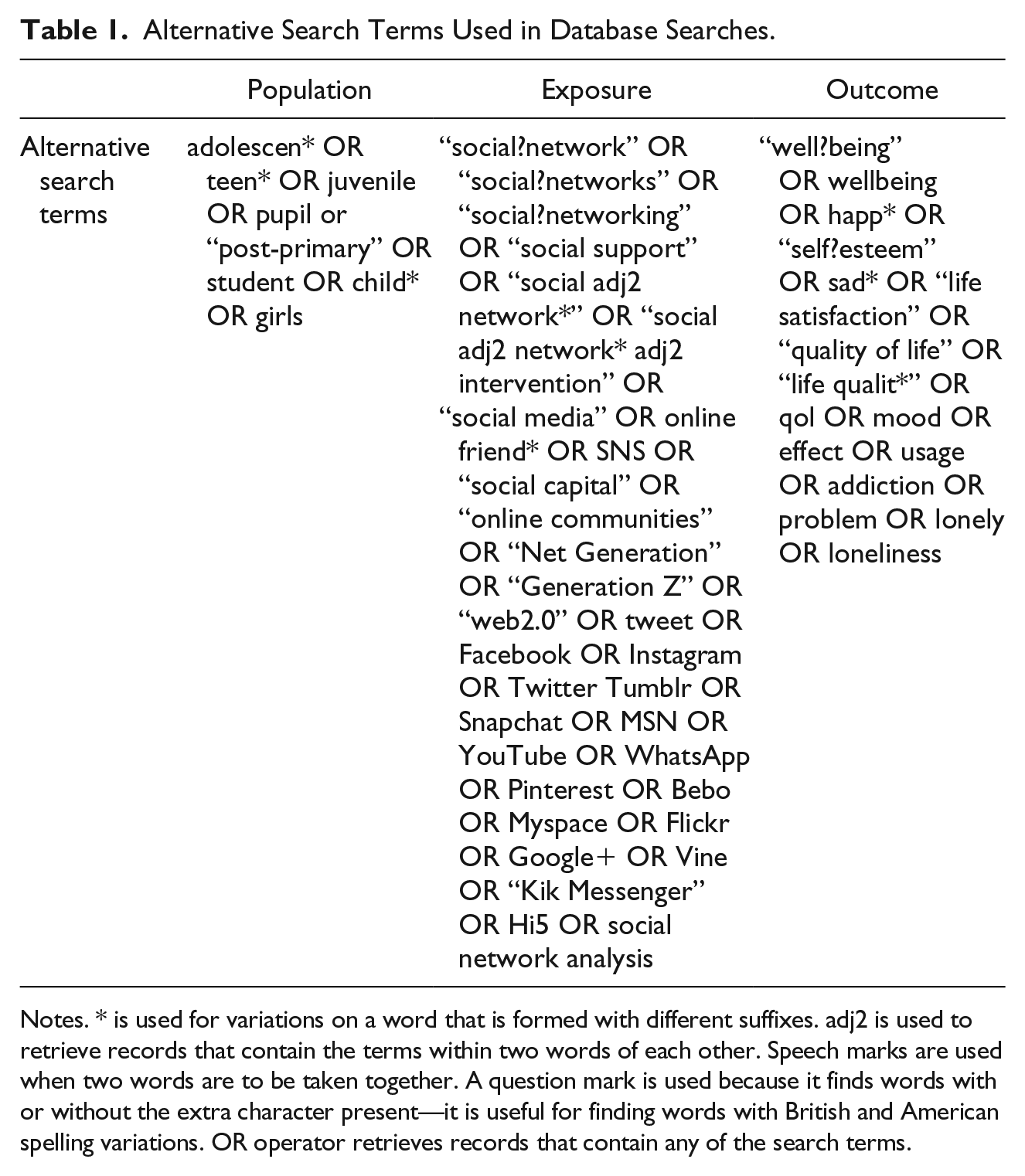
Notes. * is used for variations on a word that is formed with different suffixes. adj2 is used to retrieve records that contain the terms within two words of each other. Speech marks are used when two words are to be taken together. A question mark is used because it finds words with or without the extra character present—it is useful for finding words with British and American spelling variations. OR operator retrieves records that contain any of the search terms.
Screening
Articles were first screened by title and abstract against the predetermined eligibility criteria. In cases of uncertainty, the full text was read for clarification. Exclusion criteria was then applied as follows:
Any systematic reviews or meta-analysis.
Conference abstracts or posters.
All included articles were then read in full to check that they were eligible.
Data Extraction and Data Synthesis
The following details were extracted for each study: country in which the research was conducted; the exposure in the study, that is, the use of social networking sites or offline social networks; and the well-being outcome tested for in the study. Details of the exposure and the population used in the study were also recorded such as number of participants, gender percentage, and mean age. In addition, a summary of the main findings of each of the study was recorded. The studies were further classified according to design: quantitative, qualitative, and mixed-method.
Evidence was synthesized according to which aspect of subjective well-being was being investigated. The aspects of subjective well-being being investigated were mood, self-esteem, loneliness, body image, life satisfaction/happiness, and overall subjective well-being. Several of the studies measured more than one well-being outcome in which case they were synthesized under each outcome that they measured.
Assessment of Trustworthiness
The studies were assessed for trustworthiness on a scale of 0 to 4 using Gorard’s Trustworthiness sieve which assesses the studies on design, scale, dropout, data quality, and any other threats (Gorard, 2014).
Results
Initial database searching was carried out on March 23, 2018, and resulted in the retrieval of 1,204 studies in five databases, which was reduced to 648 after duplicates were removed. Titles and abstracts were screened, resulting in 494 records being excluded. This was followed by full-text screening, whereupon 115 records were excluded. Papers may have had population, outcome, and exposure terms present within their title, but did not meet the inclusion criteria upon inspection of the full text. Often this was because the paper did not investigate the relationship/association between offline social networks and/or online social networking sites and well-being. Other papers did investigate the relationship between networks and well-being, but did not contain any measure of well-being and therefore could not be included.
The search was narrowed down to 39 relevant articles. These studies were then screened for eligibility criteria resulting in 10 exclusions. A final number of 29 studies were included in the review. Figure 1, as recommended by PRISMA (Preferred Reporting Items for Systematic Reviews and Meta-Analyses) (Liberati et al., 2009), details how the studies were selected: The studies were predominantly of a quantitative nature, two were qualitative and one was a mixed-method study. See Figure 2 for a full list of studies included in the review.
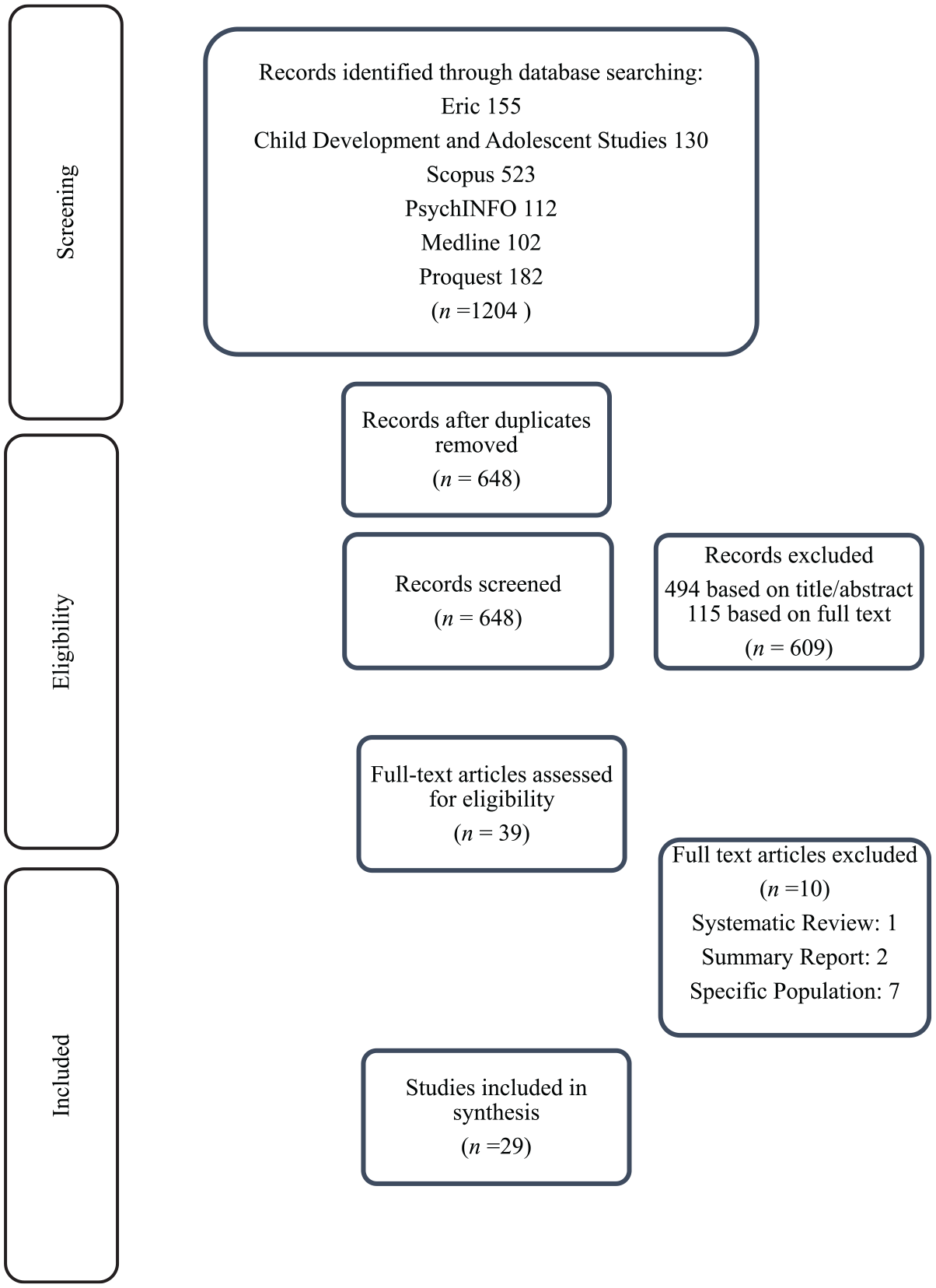
Study selection flowchart.
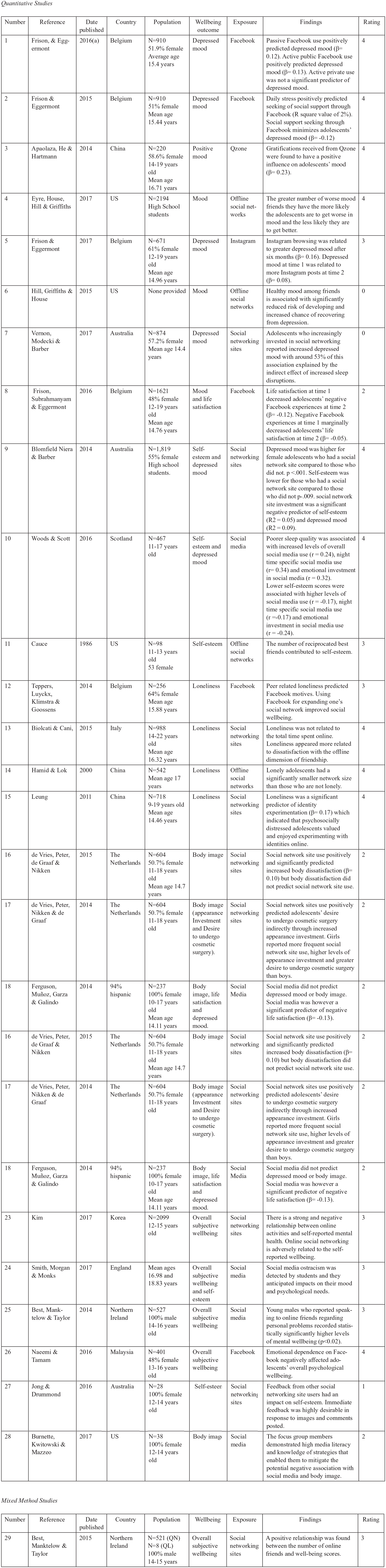
Results of studies included in the review.
A total of 23 studies investigated the relationship between online social networks and subjective well-being and six studies investigated the relationship between offline social networks and subjective well-being. Mood was investigated in 11 of the studies, self-esteem and body image in five studies, life satisfaction/happiness and loneliness in four studies each, and overall subjective well-being was tested for in six of the studies.
The study design varied in nature from questionnaires with a large population (n = 2,194 was the largest) to qualitative studies which used a much smaller number of participants. A total of 13 studies received a rating of 4 out of 4 according to Gorard’s Trustworthiness sieve. Seven studies were rated 3, six studies were rated 2, one study was rated 1, and two studies were rated as 0. The studies that were rated 0 out of 4 was due to the lack of reporting of the number of participants in the studies. Other low ratings were mostly attributed to a poor retention score or a lack of reporting of missing data.
Is There an Association Between Offline Social Networks and the Subjective Well-Being of Adolescents?
Only six studies which looked at the association between offline social networks and the subjective well-being of adolescents were included in the review. The studies investigated the association between offline social networks and mood, loneliness, self-esteem, and body image. The studies found that there is an association between social networks and mood, whether that be a healthy or depressive mood. In a study by Hill et al. (2015), it was found that healthy mood travels through a social network; in fact, the mood of friends matters so much that having sufficient friends with healthy mood can halve the probability of recovering from depression over a 6-month period. Eyre et al. (2017) found that the greater number of worse mood friends one has, the more likely a worse mood is to increase.
In a study in China of 542 adolescents, Hamid and Lok (2000) found that lonely adolescents tend to have smaller social networks than those who are not lonely and that lonely adolescents have fewer significant others whom they can look to for emotional support. In a study of the social networks of 98 11 to 13 year olds, Cauce (1986) found that the number of reciprocated best friends contributed to self-esteem.
In Hutchinson and Rapee’s (2007) study of the friendship cliques of 10 to 14 year olds, it was found that clique members share similar scores on dieting, extreme weight loss behaviors, and binge eating, but not body image concerns.
These findings suggest there is an association between social networks and the subjective well-being of adolescents in terms of mood, self-esteem, and loneliness. However, it was found that there is no association between social networks and the body image of adolescents although this finding is only based on one study.
Is There an Association Between Online Social Networks and the Subjective Well-Being of Adolescents?
The results showed that there is an association between online social networks and the subjective well-being of adolescents although the results are mixed as to whether this is a positive association or a negative association. Nine of the studies found that online social networks were positive for subjective well-being. The studies investigated the association between online social networks and mood, self-esteem, loneliness, body image, life satisfaction, and overall subjective well-being.
Using Facebook for expanding one’s social network seems to improve well-being (Teppers et al., 2014), and in a study of 527 male adolescents in Northern Ireland, it was found that those who had more online friends had higher well-being scores (Best et al., 2015). In one study with 459 high school students from Turkey, the use of social networking sites significantly and positively predicted happiness (r = .48) and life satisfaction (r = .34) (Dogan, 2016), and in another study with 10 to 17 year olds (n = 237), a small concurrent correlation between social media use and life satisfaction (b = −.13) was found (Ferguson et al., 2014).
Support seeking was one factor of online social networks that had a positive association with subjective well-being. Apaolaza et al. (2014) found that support seeking through social networking sites minimizes depressed mood. Frison and Eggermont found that daily stress positively predicted seeking social support through Facebook and that this minimized depressed mood (b = − .12) (Frison & Eggermont, 2015) and one study found a null result (Ferguson et al., 2014). In another study, adolescents who reported online support seeking reported significantly higher levels of mental well-being (Best et al., 2016).
Another factor of online social networks that was associated with positive subjective well-being was receiving feedback. A study in China of 14 to 19 year olds (n = 220) found that when adolescents received gratifications from the social networking site Qzone, their positive mood increased (b = .23) (Apaolaza et al., 2014). However, receiving feedback was also found to be associated with negative subjective well-being. A study with girls aged between 12 and 14 years in Australia reported that immediate feedback on the images the girls posted was not only highly desirable, but directly influenced their emotional state (Jong & Drummond, 2016). One of the studies specifically investigated peer victimization on Facebook among 910 adolescents in Belgium with a mean age of 15.4 years; results show how negative online feedback received marginally predicted decreases in life satisfaction (b = −.12) (Frison et al., 2016).
Fifteen studies found a negative association between online social networks and subjective well-being. In a study with 12 to 15 year olds in Korea (n = 2,099), Kim (2017) found a negative relationship between online social networks and self-reported well-being, and in a study with High school students in Australia, girls with a social networking site profile reported significantly higher levels of depressed mood and lower self-esteem than those without a profile; however, this was not the case for boys (Blomfield Neira & Barber, 2014).
Two studies found that online social networks predicted increased body dissatisfaction (b = .10) (de Vries et al., 2016), and in a study with 11 to 18 year olds in the Netherlands, social networking site use positively predicted adolescents’ desire to undergo cosmetic surgery indirectly through increased appearance investment (de Vries et al., 2014). Frison and Egremont (2016b) demonstrated how decreases in life satisfaction was influenced by negative comparison on Facebook (b = −.08). There were three factors of online social networks that were found to have a negative association with subjective well-being: high investment, passive use, and social media ostracism.
Adolescents who invested in social networking sites had higher levels of low self-esteem (Blomfield Neira & Barber, 2014) and depressed mood (Blomfield Neira & Barber, 2014; Lup et al., 2015; Vernon et al., 2017; Woods & Scott, 2016) when compared with those who did not invest highly. Emotional dependence on Facebook was found to negatively affect the overall psychological well-being of 13- to 16-year-old students in Malaysia (Naeemi & Tamam, 2017), and the frequency of adolescents in Australia checking Facebook was linked to levels of emotional difficulties (Bourgeois et al., 2014).
The results found that browsing on social networking sites or passive use can lead to an increase in depressed mood. Instagram browsing by 12 to 19 year olds in Belgium was associated with depressed mood (Frison & Eggermont, 2017), and in another study with adolescents in Belgium, passive use positively predicted depressed mood (b = .12), but private active use did not (Frison & Eggermont, 2016a). Finally, in a study with high school students, participants perceived social media ostracism as having a detrimental effect on their psychological well-being, specifically as a threat to their belonging, control, and a meaningful existence (Smith et al., 2017).
In conclusion, the results of this study inform us that there is an association between online social networks and the subjective well-being of adolescents. The results are mixed as to whether this is a positive or a negative association. It can be a positive association in terms of mood, life satisfaction, and loneliness through support seeking. But other studies found a negative association between the use of online social networks and subjective well-being in terms of depressed mood, low self-esteem, poor body image, and, in some studies, decreases in life satisfaction. It can be a negative association due to high investment, passive use, and ostracism from social networking sites. Receiving feedback through online social networks could have a negative or positive association with well-being depending on the nature of the feedback.
Discussion
Is There an Association Between Offline Social Networks and the Subjective Well-Being of Adolescents?
There were fewer studies investigating the relationship between offline social networks and subjective well-being than expected—only six out of the 29 studies in the whole review—and thus caution is to be applied when considering these results. This surprisingly small amount of studies is attributed to the minimal amount of studies investigating subjective well-being and social networks of the adolescent population using social network data from a name generator question.
It is well known that social support and relationships are important to a person’s health and well-being (Turner, 1981). Everyone has a need if not always a desire for a relationship with others; this is confirmed by Cauce’s (1986) study on reciprocated friendships. Intentionally expanding the social networks of adolescents who regularly experience low or depressed mood to include others who enjoy healthy mood would be one strategy to help combat depressed mood. Similarly, intentionally widening the network of lonely people would be an effective way to help alleviate loneliness. By introducing them to others, they could make friends with the new people that they meet and therefore spend more time with others and less time on their own, thus becoming less lonely. In addition, they may be exposed to more positive behavior and activity.
Is There an Association Between the Use of Online Social Networks and the Subjective Well-Being of Adolescents?
The studies suggest that it is how online social networks are used that contributes to subjective well-being. Receiving social support was a positive factor, and feedback was either positive or negative depending on if and what type of feedback was received. The factors of using social networking sites identified in the studies which contribute to a negative association with subjective well-being are high investment, passive use, and ostracism.
Social support
Online social networks can be a powerful tool for alleviating loneliness. The examples are endless—a student forced to be off school due to a long-term illness or unable to access extracurricular activities because of their physical location or personal restrictions; a shy, self-conscious teenager who feels more comfortable establishing friendships not face to face; or a teenager estranged from friends or neighbors during the long summer holidays. Using social networking sites and other social media forms, they can communicate with friends and like-minded peers.
Feedback
Receiving feedback was found to have an association with subjective well-being. Whether that feedback is positive, negative, or whether there is a lack of feedback received will determine whether this association is deemed to be positive or negative. The studies found that receiving positive feedback on social networking sites increased life satisfaction and happiness. In a study with 300 adults, it was found that the number of likes individuals received on their Facebook profile positively correlated with self-esteem (Burrow & Rainone, 2017).
Our review also found that receiving negative feedback decreased life satisfaction. Hummel and Smith (2015) found that students (mean age of 18.73 years) who received extremely negative comments on their Facebook profile were more likely to report disordered eating concerns 4 weeks later.
Jong and Drummond (2016) found that the need for positive feedback among 12- to 14-year-old girls living in Australia was both urgent and highly desirable. They found that the girls perceived a lack of feedback to mean that they were not liked, which subsequently left them feeling insecure, upset, and depressed.
High investment
The studies showed that there was a negative association for adolescents who invested highly in their online social networks and their subjective well-being. High investment implies using the platforms for more than the purposes of simply communicating a message to another person, but instead putting a high value on their online social networks, spending a lot of time on them, and making their online social networks an integral part of daily life. A review on social media use and adolescent mental health using the U.K. Millennium cohort study found that social media use was found to be associated with mental health in young people. Their study went on to find out that greater times spent online related to online harassment, poor sleep, low self-esteem, and poor body image, all of which related to higher depressive scores (Kelly et al., 2018).
Passive use
The studies found that passive use of online social networks contributed to a negative association between online social networks and subjective well-being. Passive use of social networking sites is when the user is simply scrolling on their phone or other device not for any specific purpose than to browse as one might do in a clothes shop when not looking for anything in particular. This contrasts with active use which is when the user is purposefully connecting with others via the platforms. Verduyn et al. considered the impact of both active and passive use of social networking sites on subjective well-being on a wider population group. They concluded that social networking sites can improve our subjective well-being if they are used actively to connect with others but at the same time can be a “significant stress” to our well-being if used passively because of the effects on life comparison and envy (Verduyn et al., 2017).
Ostracism
Finally, social media ostracism was found to be detrimental to subjective well-being due to what has become commonly known as the “fear of missing out.” Fear of Missing Out (FoMo) is the concern that individuals are missing out on experiences that their peers are having. FoMo is related to anxiety and social media use (Dhir et al., 2018). This is perhaps what prevents adolescents from putting down their mobile phone, switching it off at night-time, and having the desire to be constantly connected. The Pew Review indicated that 45% of adolescents say they are online “almost constantly” (https://www.pewinternet.org/2018/05/31/teens-social-media-technology-2018/).
What Are the Similarities and Differences Between Offline and Online Social Networks of Adolescents?
There are two main similarities of the offline and online social networks of adolescents, who they are communicating with and the reason that they are communicating. Although there are many “online communities” such as forums and chat groups with a specific focus, for the most part adolescents are actively communicating online with the same people whom they communicate in their offline social networks, namely, already existing friends (Boyd & Ellison, 2008). That said, the dangers of meeting strangers online must still be a message to be proclaimed, as adolescents are more likely to make risky connections online unwittingly than in the offline world. It is too easy for predators to impersonate someone else online for the purposes of grooming. Although the EU Kids Online project found in 2014 that children are less likely to make contact online with someone they don’t know face to face compared to a study in 2010 (Livingstone et al., 2014), giving confidence that these messages of “think you know who you are talking to” (a message by Child Exploitation Online Protection organization, https://www.thinkuknow.co.uk) are being heard by adolescents and taken notice of.
The second similarity between offline and online social networks is the reason that they are communicating is the same. As for the most part, adolescents are communicating with already existing friends and those whom they also communicate with in the offline sphere; the reasons that they are communicating with them is for a shared interest. When seeking new friendships online, adolescents are more likely to use social networking sites to facilitate homophily, connecting with others who are similar to them (Hooft Graafland, 2018). That leads us to the differences between offline and online social networks, which are how they communicate, where they are communicating (geographical boundaries), when they are communicating and the blurring of reality of online social networks.
How adolescents communicate online is different to their offline social networks although with the technological advancements these differences are becoming less distinct. Online social networks tend to be text-, image-, and video-based using social network sites such as Snapchat, Instagram, and YouTube. By their very nature, online social networks lack body language, facial expressions, and social cues; yet with live streaming and FaceTime now commonplace, online communication is becoming much more akin to offline communication. The use of emoticons and memes has made text-based online communication more emotionally similar to the experience of offline communications (Derks et al., 2008). However, in their study, Lee et al. (2011) conclude that online interpersonal communication cannot replace face-to-face communication.
The second difference between offline and online social networks is geographical boundaries. Although it has been previously stated that adolescent online networks are predominantly people whom they already know, having no geographical and practical restrictions other than an internet connection allows the opportunity for expanding online social networks. Online social networks allow adolescents to follow the lives of celebrities, see inside their Hollywood mansions, see inside their slide robes, and feel that they are part of their lives.
Online social networks lack another boundary that makes them distinct from offline networks and that is when the adolescents are communicating. Online social networks are not naturally restricted by time and space; therefore, unless these restrictions are put in place, they can encroach on family time, study time, mealtimes, and bedtimes. In fact, the restrictions of online social networks will very much depend on the family home and parental involvement which varies considerably. In a survey of 12 to 16 year olds in the United Kingdom, only 60% of the adolescents said that their parents set screen time rules (https://parentzone.org.uk/sites/default/files/Parenting%20in%20the%20Digital%20Age%20conference%20report.pdf).
Finally, one further difference between offline and online social networks is the blurring of reality. Although Goffman likens the presentation of oneself in the offline world as an actor on the stage, comparing what we reveal of ourselves backstage and what we present on stage to the world (Goffman, 1959), it is much more challenging in the offline world to only portray reality in part. When online, however, adolescents can use many tactics to portray only what they want their followers or online friends to see. For example, they can employ digital technology such as filters to modify photographs to their advantage and portray a “perfect” image. They can choose to only reveal aspects of their day, their personality, or their life to create a particular impression and so reality is blurred. As Miller (1995) says, “On the internet you can’t smell my breath, catch the tremor in my voice, or realise that I’m watching the rest of the party over your shoulder” (p. 4). This blurring of reality leads to a negative association between subjective well-being. A study with adolescent girls and Instagram found that exposure to manipulated Instagram photos leads to lower body satisfaction (Kleemans et al., 2018).
Strengths and Limitations
The novel aspect of this review is that it investigates social networks in a holistic manner, a combination of an adolescents’ online and offline social network, which is a truer reflection of the reality of how a young person lives their connected life. However, there are a few limitations of the review.
Due to time and resource restrictions, only papers available in the English language were included in the review. This is a limitation of the study because while many of the papers included originate from different countries and one paper investigated the relationship between well-being and the social networking site Qzone in China, other papers which investigate well-being and social networking sites in non-English speaking countries were not included because the paper was not written in English. Including papers from different languages would have taken into consideration a wider range of cultures and social networking sites which might have had a different impact on well-being.
Second, no gray literature was reviewed. This review would have been enhanced by having a greater number of studies which investigated the association between offline social networks and subjective well-being.
Implications for Future Research and Practice
There are two recommendations for future research and two recommendations for practice from this review. First, future research should bring together both offline and online social networks to look at how they impact well-being, reflecting the ubiquitous nature of the social networks of adolescents. Second, there is a need for more studies which investigate the association between offline social networks and the subjective well-being of adolescents using social network data and which contains a name generator question.
In terms of practice, interventions are needed to educate adolescents of the potential risks that online social networks can be to their subjective well-being. Second, the studies endorsed the school environment as the best place to facilitate critical thinking of students in their own use of social networking sites and to encourage healthy online relationships.
Conclusion
This systematic review has provided a range of evidence from both quantitative and qualitative studies to suggest that there is an association between social networks and the subjective well-being of adolescents. We all need relationships; therefore, it should not be surprising that the studies showed that online social networks can contribute to positive subjective well-being and that social media ostracism had a negative association with subjective well-being.
Online social networks themselves are not “bad” for subjective well-being, in fact they can be very beneficial; however, like so many things in life that are useful, there are drawbacks. There is a need to address these risks with adolescents when they begin this journey into the use of online social networks to protect their subjective well-being and educate them about the factors which can impact their subjective well-being positively and negatively.
Footnotes
Declaration of Conflicting Interests
The author(s) declared no potential conflicts of interest with respect to the research, authorship, and/or publication of this article.
Funding
The author(s) disclosed receipt of the following financial support for the research, authorship, and/or publication of this article: D.W. is in receipt of a student scholarship from the Department for Economy.
