




Abstract
Given that over 50% of the global population resides in urban environments, more rigorous methods are essential to address social and health inequities that urban environments maintain, despite their potential to offer both economic and social possibilities. Thus, it is critical to adopt innovative approaches to address the inequalities while considering the complex relationship between the built environment and human well-being. For achieving spatial justice, an interdisciplinary field that integrates neuroscientific knowledge within design principles is needed. This study, particularly integrating the WHO’s dementia-inclusive cities model into neuroarchitecture, seeks to develop guidelines on how to improve the overall quality of life by enhancing the safety and accessibility for older adults, especially those with dementia. This paper presents a case study conducted in Wrocław, Poland, where the photoproduction methodology has been used to analyse urban ageing with attention to both the visible elements captured in the photographs and the underlying reasons. One of the key themes that emerged from the analysis was spatial justice coupled with cognitive accessibility, suggesting that urban design can alleviate the daily challenges of older adults. Results put emphasis on practical ways to apply neuroarchitectural approaches in urban design and provide insight into how the challenges linked to a sense of safety and security can be overcome in the ageing urban population.
Introduction
Urbanisation is advancing at an unprecedented rate; cities have become hubs of both opportunity and significant social and health divisions. With more than half of the world’s population living in urban areas, taking a more rigorous approach is necessary to address social and health related challenges, particularly in domains where progress is urgently needed, such as achieving equality (Marston et al., 2024; Ritchie et al., 2024). Although urban areas are often seen as places of economic growth, they are also an environment with entrenched social and health inequalities. Contemporary urban research indicates that traditional paradigms in design often tend to fail towards the diverse needs, whether they be physical, cognitive, or psychological, of the urban area’s citizens in a manner that ultimately promotes stress, anxiety, and social isolation (Soebarto and Bennetts, 2014). Chong et al. (2010) points out that innovations in design processes have been recently confined to computer modelling, reducing designers’ contributions to creative and inclusive design. Thus, such challenges necessitate innovative, inclusive methods for urban design that prioritise equitability with health-promotive environments, answering to larger global calls for sustainable development in urban centres. Addressing these challenges requires not only methodological innovation but also deeper interdisciplinary collaboration.
Better collaboration between designers and scientists in understanding human responses to environmental stimuli is essential so that the ‘how,’ ‘what,’ and ‘why’ of design can again be brought into proper balance (Chong et al., 2010). A pivotal step in the emergence of neuroarchitecture, a discipline that examines how man-made environments influence human well-being by emphasising the critical role of design on the nervous system, was the founding of the Academy of Neuroscience for Architecture (ANFA), which bridges neuroscience and architecture (Santos, 2023). Neuroarchitecture is described in a cyclical model proposed by Assem et al. (2023). Architecture acts as a stimulus that affects people’s emotions. These emotions activate certain parts of the brain, triggering cognitive processes that can affect decision-making and behaviour. Physiological changes can occur even before conscious awareness. The cycle is continuous because the state of the nervous system can affect the perception of environmental stimuli, leading to positive or negative physiological, emotional, cognitive, and behavioural effects. Neuroarchitecture is based on the premise that the built environment can influence psychological outcomes by regulating neuronal pathways, and refers to designing the built environment using neuroscientific approaches to provide a positive impact on human behaviour and well-being (Lee et al., 2022; Ravven, 2003; Santos, 2023; Verkerk et al., 2018). Examples include direct experiences mediated by the sensory organs or empathetic experiences, which bring about changes in the bodies that have repercussions on emotional state. From this standpoint, the environment encompasses all things physical, such as natural or man-made factors, but also other aspects of society and culture around us which affect human lives (Spitz and Trudinger, 2019; Szewrański et al., 2025). By acknowledging that each person has different abilities, urban planners and designers can rethink built environments to meet a wide range of needs. This rethinking is a step towards achieving spatial justice since it aims to remove barriers that may prevent individuals with diverse abilities or other limitations from fully participating in urban life (van Hoof et al., 2021). When urban environments are designed with people’s diverse abilities in mind, they become more accessible and safe, allowing everyone to navigate, interact, and benefit from the urban environments equally.
One of the aims of urban design is to create environments that offer equitable access to resources and chances for every person, irrespective of their socio-economic conditions, age, gender, or ability (Imrie and Hall, 2003). Such design embraces urban development processes to reduce discrimination and build inclusiveness (Kempin Reuter, 2019). Fainstein (2014: 6) states that many urban policies preserve social injustices, hence planners must give priority to justice in order to generate more equitable urban scapes. Talen (2012) identifies spatial justice as one of the key components that can be achieved through fair distribution of resources such as parks, schools and transport systems. As Talen (2012) notes, spatial injustices, are often mirror images of wider socio-economic inequalities resulting in some urban inhabitants having limited access to essential services. Buffel et al. (2024) expand on this by defining spatial justice as a fair and equal allocation of resources, opportunities, and access to urban amenities both within and between geographic. It highlights the understanding that power dynamics and inequality are influenced by and profoundly ingrained in the social and physical fabric of cities, as well as the structural ability of these areas to meet the wants and goals of its inhabitants (Buffel et al., 2024: 8). To ensure that people of all ages, and particularly those most adversely impacted by environmental pressures and urban change, can fully participate in, shape, and benefit from the social, economic, and cultural resources in cities, spatial justice demands that urban environments be transformed through deliberate planning, policy-making, and social interventions (Buffel et al., 2024: 8).
Urban ageing and spatial justice are interconnected, as older adults are particularly vulnerable to spatial inequities, with restricted access to green spaces, healthcare facilities, and age-friendly housing. As stated in the World Health Organization’s publication entitled Global Age-Friendly Cities: ‘An age-friendly city encourages active ageing by optimizing opportunities for health, participation and security in order to enhance quality of life as people age’ (World Health Organization, 2007: 1). One key element in achieving spatial justice is ensuring the sense of safety and security which also aligns with the WHO’s the age-friendly agenda. As the World Health Organization (World Health Organization, 2007: 9) has pointed out, the physical environment of a city, such as outdoor spaces, buildings, transportation, and housing, plays an important role in ensuring the safety and security of the older adults, especially in accident prevention and protection from crime. It also reports on issues of safety and security in the use of public transportation, wherein factors such as theft or antisocial behaviour could make older adults avoid such services. The study by van Hoof et al. (2022) stated that the older adults report that concerns about their safety, especially when it is dark outside, as a barrier to social participation. They felt less safe outside their neighbourhoods, especially in areas with groups of young people (29.8%), in city centres (23.2%), and on public transportation (22.7%) – which was similarly reported for the general population (van Hoof et al., 2022).
Besides the physical environment, social environment and municipal services also empower older adults so that they can continue to lead independent lives in good health, stay engaged in their communities and remain socially included (World Health Organization, 2017). All the related domains clustered around the physical and social environment and municipal services should adapt to the needs of older adults with varying capacities, since an individual’s capacity to age well and independently depends on the interaction between their physical and mental abilities and environmental barriers. For many older adults, especially those with dementia, their sense of well-being strongly encompasses issues of safety and security. Vulnerability can increase with successive life stages, while impairments in cognition can make ordinary spaces challenging and confusing. The WHO’s dementia-inclusive cities model (World Health Organization, 2021) expands the framework of Age-friendly environments in Europe: A handbook of domains for policy action (World Health Organization, 2017) and offers a framework for designing urban environments that meet the unique needs of individuals with dementia (Figure 1). The model urges cities to implement policies such as accessible transport, cognitive-friendly signage, safe well-lit pathways, and community programmes that keep both physical and mental health in mind. The intention is to provide an environment that will promote safety, equality, and accessibility.
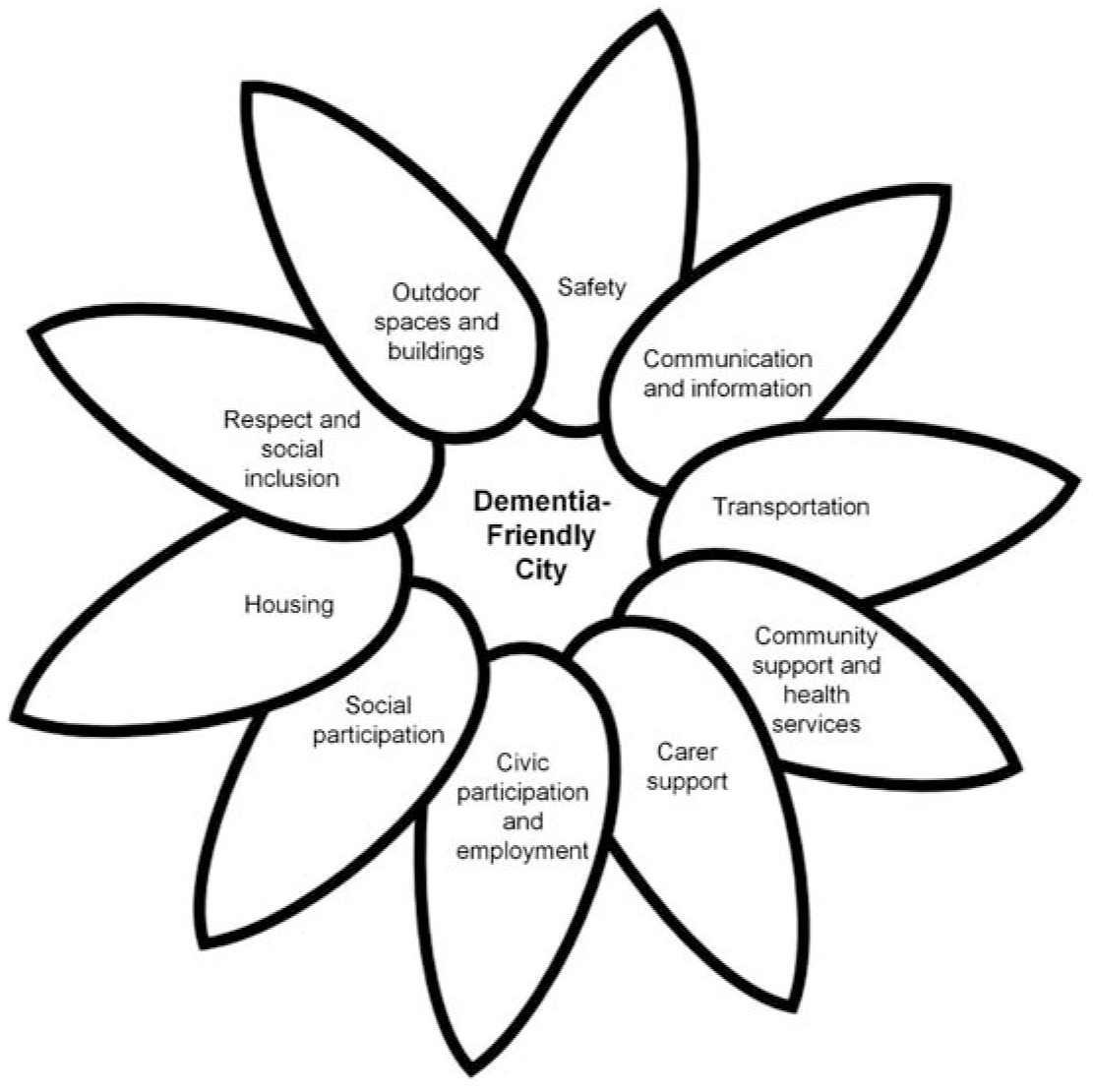
The model of dementia-inclusive cities, adapted from World Health Organization (2021).
Supplementing this model of dementia-inclusive cities, the role of neuroarchitecture in designing the built-environment to support cognitive and emotional well-being is fundamental. For the older adults with dementia, through the principles of neuroarchitecture, a built environment that decreases confusion and anxiety while promoting safety can be designed. Integrating the WHO’s dementia-inclusive cities model (World Health Organization, 2021) with neuroarchitecture ensures that older adults, particularly those with dementia, can access public spaces safely and confidently. This intersection of safety, security, spatial justice, neuroarchitecture, and dementia is central to creating age-friendly environments that promote autonomy, dignity, and a higher quality of life for vulnerable populations.
An accessible environment for people with disabilities is another critical aspect of spatial justice. Imrie and Hall (2003) assert that the built environment frequently marginalises individuals with disabilities and consequently calls for inclusive designs that acknowledge a diversity of abilities. Such a concept agrees with the expanding movement towards universal design, which aims at making places usable by everyone without needing major alterations (Steinfeld and Maisel, 2012). Spatial justice deals with imbalances in housing, transport, public spaces, and amenities to ensure all inhabitants can live healthy and fulfilling lives. Enabling inclusive urban design through neuroarchitectural approaches can enhance the efficacy of these initiatives by considering the multiple sensory and cognitive demands made on the people who live there. Moreover, in urban environments, imbalances in housing, transport and public spaces create a considerable obstacle to spatial justice among older adults and people with disabilities. Age-friendly cities and communities as proposed by the World Health Organization (2007) lay emphasis on building inclusive environments which support the health, participation and safety of older adults thus combating age-based inequalities. According to Scharlach (2012), there is often disregard for ageing populations’ needs concerning urban environments, hence creating exclusionary physically and socially environments. While the idea of creating inclusivity in physical and social environments for older adults is the focus of many studies, there is a gap in the contribution of neuroarchitectural approaches to the creation of these environments. Therefore, in this study, the challenges related to the sense of safety and security in urban environments will be examined through the spatial lens of age-friendliness using a photoproduction method. In addition, an adapted version of a neuroscientific framework, Ulrich’s Stress Recovery Theory (SRT) will be used to relate specific features of the environment to expected cognitive and emotional outcomes (Ulrich et al., 1991). This process involves looking for patterns in those data in which a feature either supports or inhibits cognitive processing, and this source of data provides an empirical basis to apply neuroarchitecture to the analysis of reference findings within the photoproduction phase. Since SRT suggests exposure to specific features of the environment, including natural features, open spaces, and visual coherence (e.g. clarity of pathways and contrast in surfaces) contributes to cognitive and physiological stress reduction, bringing SRT into the analysis of photoproduction phase strengthens the methodology by providing a neuroscientific framework to deciding upon images and coding that may be analysed for their restorative potential. Also, opportunities for retreat and safety (e.g. shaded seating areas, quiet pathways), the placement of furniture, and distinctive decision points are important for stress reduction, and emotional comfort. By aligning environmental characteristics with the theoretical foundations of stress reduction, the integration of SRT adds both analytical depth and practical significance to the photoproduction process.
Through this structured approach of employing SRT with neuroarchitectural principles, photoproduction emerges as a strong method for documenting and interpreting age-friendliness in the built environment. This structured approach carefully considers the choice of images, the interpretation of visual data, and the means to extract relevant insights. Based on the results of this study, a guideline for neuroarchitectural approaches will be developed to explore these challenges in depth. To explore how neuroarchitectural principles can be applied to increase spatial justice in urban environments for older adults and to investigate the physical and social environmental challenges related to safety and security that older adults face in urban contexts, the following research questions were asked:
Methodology
Photoproduction
As highlighted by Annemans et al. (2012), photoproduction seeks to obtain a deeper understanding of what has been made visible in the photographs, in addition to why and how. The current study adopted this method as it tries to capture age-friendliness in the urban environment following the steps of Annemans et al. (2012), Radley (2010), and van Hoof et al. (2015, 2020). The visual research method used in this study is based on geotagged photographs that were taken by the researchers with smartphones with regard to equity, with a focus on age-friendliness specifically, to evaluate how well urban environments meet the needs of this demographic group.
Neuroarchitecture studies the impact of the built environment on cognitive and emotional responses through the way that spatial characteristics integrate with neural processes. To better support integrating neuroarchitectural principles into photo-production methodology, it is important to set a structured method that focuses on age-friendliness. In general, compared to the tools of structured surveys and interviews focusing on participants’ responses to specific questions, photographs provide visual stimuli that allow detailed analyses, allowing participants to bridge the subjective experience and objective analysis. It is a method that has been used in research that enables participants to document an event, capture a complicated phenomenon, or use photographs to convey a story. They serve as a permanent record of an event, or in this example, an urban, sustainable, or architectural scene, which is necessary to examine how people interact with their surroundings. A photograph is not a substitute for words; rather, it is a means of conveying a more complex, deliberate, and careful story. Through photography, complicated social and environmental concerns may be documented and then disseminated. Thus, the aim of this case study is to provide practical examples of how neuroarchitecture can address spatial justice issues in urban design, highlighting successful strategies and identifying potential challenges related to the sense of safety and security that older adults face every day. In other words, photoproduction allows investigation of the impact of environmental characteristics on cognitive and emotional states in actual (built) environments (van Hoof et al., 2015).
As a component of exploring cognitive and emotional responses related to the environment, neuroarchitectural principles begin with describing some key spatial parameters that are known to influence neural processes. These are elements such as the spatial organisation, lighting condition, colour, texture and biophilic elements which influence attention, memory, and well-being. When the photoproduction process is used, data collectors are asked to capture the things that produce an emotional (positive or negative)/cognitive response. Then using the neuroarchitectural framework, it can be analysed how the visual representation has contributed to psychological or physiological responses, systematically categorising each environmental feature according to its influence on cognitive load, wayfinding, or emotional comfort.
In this photoproduction process, six trained researchers conducted the photoproduction process in the case study area. The approach was systematic and grounded in both neuroarchitectural theory and the WHO Age-Friendly Cities framework. Researchers were provided with a detailed manual prior to data collection, which functioned as both a protocol and a conceptual guide. Researchers were not photographing at random, nor were they passively documenting the environment for later open-ended analysis. Rather, they went into the field with a focused lens informed by neuroarchitectural principles, and the domains of age-friendliness. The process was guided by an internal checklist of neuroarchitectural and age-friendly design features. Photo-graphs were taken using smartphones with GPS/geotagging enabled and uploaded into a data collection tool, allowing for spatial analysis and the generation of a heatmap to identify visual density across the study area.
Using researchers for data collection, instead of older adults as participants, was advantageous in the current study, especially when visual or spatial methods like photoproduction were used. As previously mentioned, researchers were trained to follow systematic protocols, ensuring consistent data collection across locations and time. This allowed for a more structured analysis aligned with the study’s objectives (e.g. safety, cognitive accessibility, environmental stressors).
This study highlights the importance of inclusive research practices by being aware that such exclusions carry the risk of marginalising already underrepresented voices. However, involving older adults, particularly those with cognitive impairments or mobility limitations, might generate safety and feasibility constraints (e.g. transportation with the caregivers to multiple places in the city). Researchers were better equipped to handle issues of consent, anonymity, and data sensitivity, especially in public spaces. Also, older adults might be unfamiliar or uncomfortable with digital tools like smartphones, GPS tagging, or photoproduction applications. Researchers were familiar with using such tools which ensure geotagged and time-stamped data. So, researchers could complete targeted documentation more efficiently and with greater geographical coverage.
Case study area
As specific, large-scale cases and studies explicitly integrating neuroarchitecture for spatial justice are limited in number, we can comprehensively examine the topic through a case study that demonstrates the potential of this approach to support the sense of safety and security of older adults. For this aim, Wrocław, which is located in southwestern Poland in Central Europe, was selected as the case study. Like in many other Central European countries, Wrocław has historic buildings from before World War I, interwar modernist urban design and housing estates created after World War II, which are dominated by prefabricated blocks of flats, typical of many cities in Central and Eastern Europe, and urban green areas (Jakóbiak et al., 2024; Książek and Suszczewicz, 2017). Besides, Wrocław underwent urban changes after the political transformation of 1989, when the free-market economy changed the rules. Until then, newly built neighbourhoods consisted of closely packed blocks of flats, but they lacked essential infrastructure such as schools, nurseries, clinics, playgrounds, and other facilities necessary for daily living, leading to significant inequalities (Jakóbiak et al., 2024). As a representation of Wrocław, the districts of Ołbin and Plac Grunwaldzki were selected (Figure 2). Over the past few decades, Ołbin and Plac Grunwaldzki have been under development and revitalisation, with significant efforts starting in the 1990s. Those areas are well-established, and have dense urban areas with a mix of residential, commercial, educational and public spaces. The areas have a mix of older, often less accessible buildings, and also newer developments, offering a contrast in architectural styles and urban planning approaches that can influence the spatial justice among older adults. About 20% of Wrocław’s residents are aged 65 and above and the districts of Ołbin and Plac Grunwaldzki reflect similar demographic trends (Statistics Poland, 2021). The data gathering occurred during March and April of 2024.
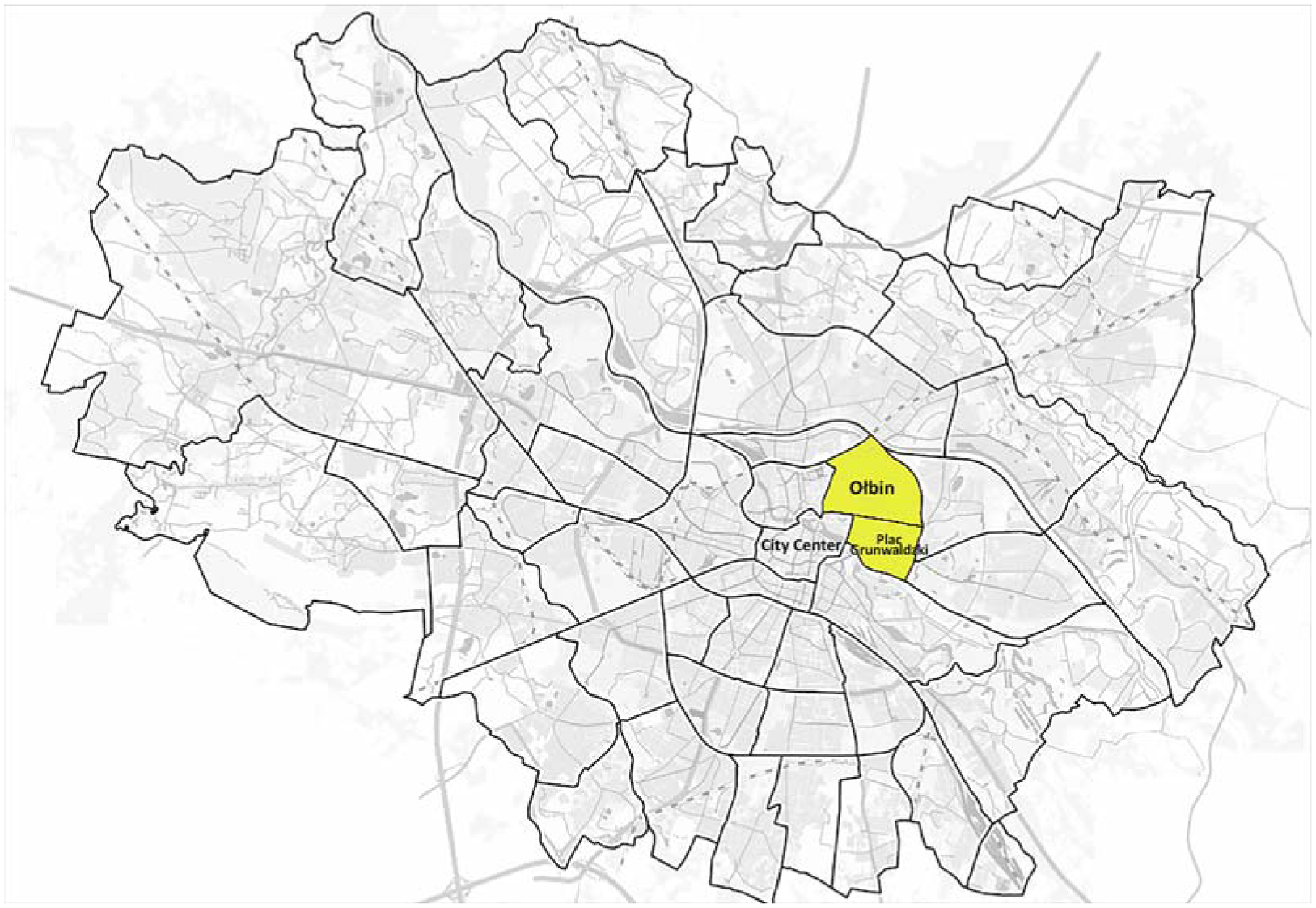
Map showing the districts of Ołbin and Plac Grunwaldzki.
Results
Following many daytime and nighttime trips to the case study area, 245 photographs were gathered by a group of six researchers using KoBo Toolbox (an opensource geolocated data collection tool; Aslanoğlu et al., 2024). The heat map shows the concentrations of the number of photographs taken at a geographical point (warm colours like red and orange shows high concentrations while cool colours like blue and green represent low concentrations; Figure 3).
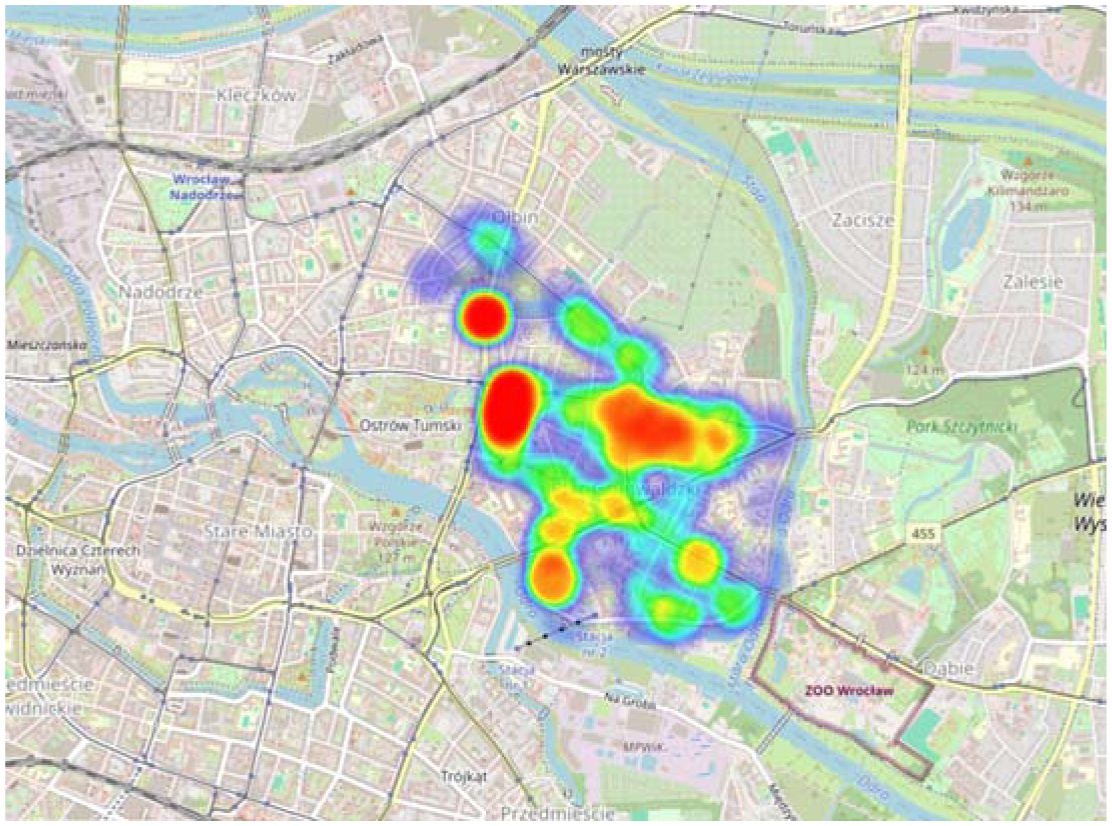
Heatmap showing density of the photographs taken in the districts of Ołbin and Plac Grunwaldzki.
In the second step all photographs were labelled and the contents were described by two separate researchers based on the phases by Braun and Clarke (2006). Initially, all labels and narratives (the significance of the photos) were thoroughly read. Open coding was then used to create the initial set of codes. The pertinent information (open coding) in the transcripts was methodically underlined by the researchers. The act of breaking down all of the gathered data into codes or pieces is known as open coding. Following the clustering and labelling of similar codes and statements, key themes surfaced. Then, researchers organised the codes and clustered them into smaller thematic groups. These groups were clustered around the physical and social environment and municipal services as posited by the World Health Organization (2017) as a simplified way to summarise the eight domains of age-friendly cities and communities. More codes were gathered about the physical and social environment than the municipal services. During this phase, the codes from the photographs were written down and clustered on various sheets, representing the themes of sense of safety and security challenges that older adults face in their daily lives which hinder spatial justice. These main themes are: spatial justice in the physical environment and spatial justice in the social environment. Under the main theme of spatial justice in the physical environment, smaller thematic groups of cognitive accessibility and mobility, and environmental stressors were defined. Social interaction and community engagement and technological integration were defined as the smaller thematic groups under spatial justice in the social environment.
Spatial justice in the physical environment
Cognitive accessibility and mobility
As cities seek to become more inclusive and supportive of older adults, ensuring safety and security within urban environments is a critical priority. Older adults represent a diverse population with varying social–economic status, cultural background, and physical and, cognitive ability. Urban environments, particularly those with overwhelming sensory information, can pose navigation challenges for older adults as they feel more unsafe on public transportation. Besides free public transportation for everyone over 65, the free taxi ride programme in Wrocław exemplifies how urban planning can address these mobility challenges and improve quality of life. Due to this programme, older adults aged 75 and above can benefit from free taxi rides (Figure 4).
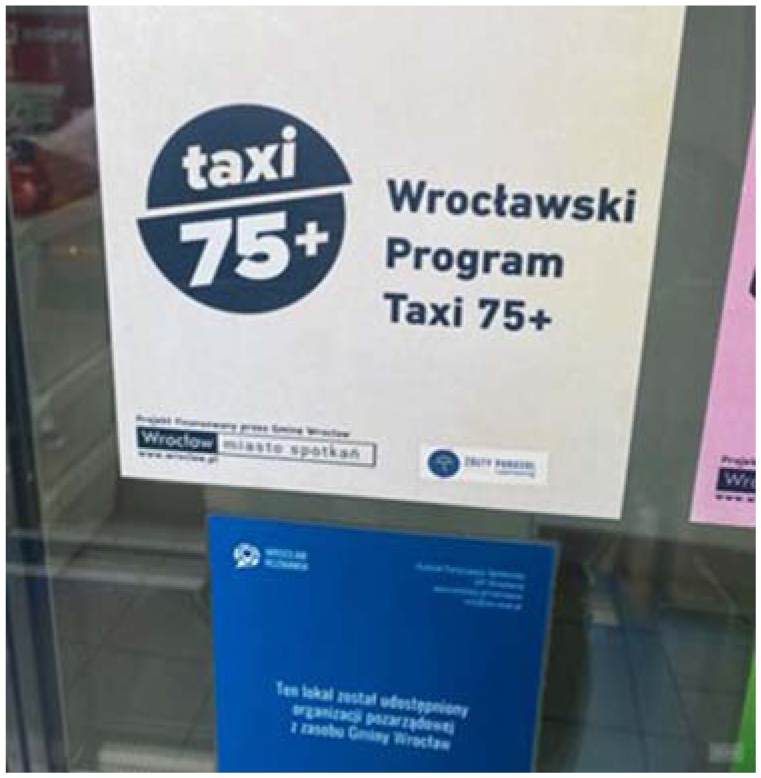
A free taxi ride programme called Taxi 75+announcement in the district of Ołbin.
Urban environments using clearly marked signs, landmarks and visual cues can enhance cognitive accessibility and facilitate mobility (Figure 5). Such elements prevent confusion, hence enabling older adults to locate themselves in familiar places with confidence (Wiener and Pazzaglia, 2021). Another essential consideration in cognitive access is designing spaces that promote memory function. In urban design, adopting simple forms or even recognisable patterns and colours might help minimise cognitive load, reducing the risk of disorientation or the chances of forgetting things while on the streets. As can be seen in Figure 5, the community centre in the district of Ołbin, which is mainly occupied by older adults, is easily recognisable due to its façade design.
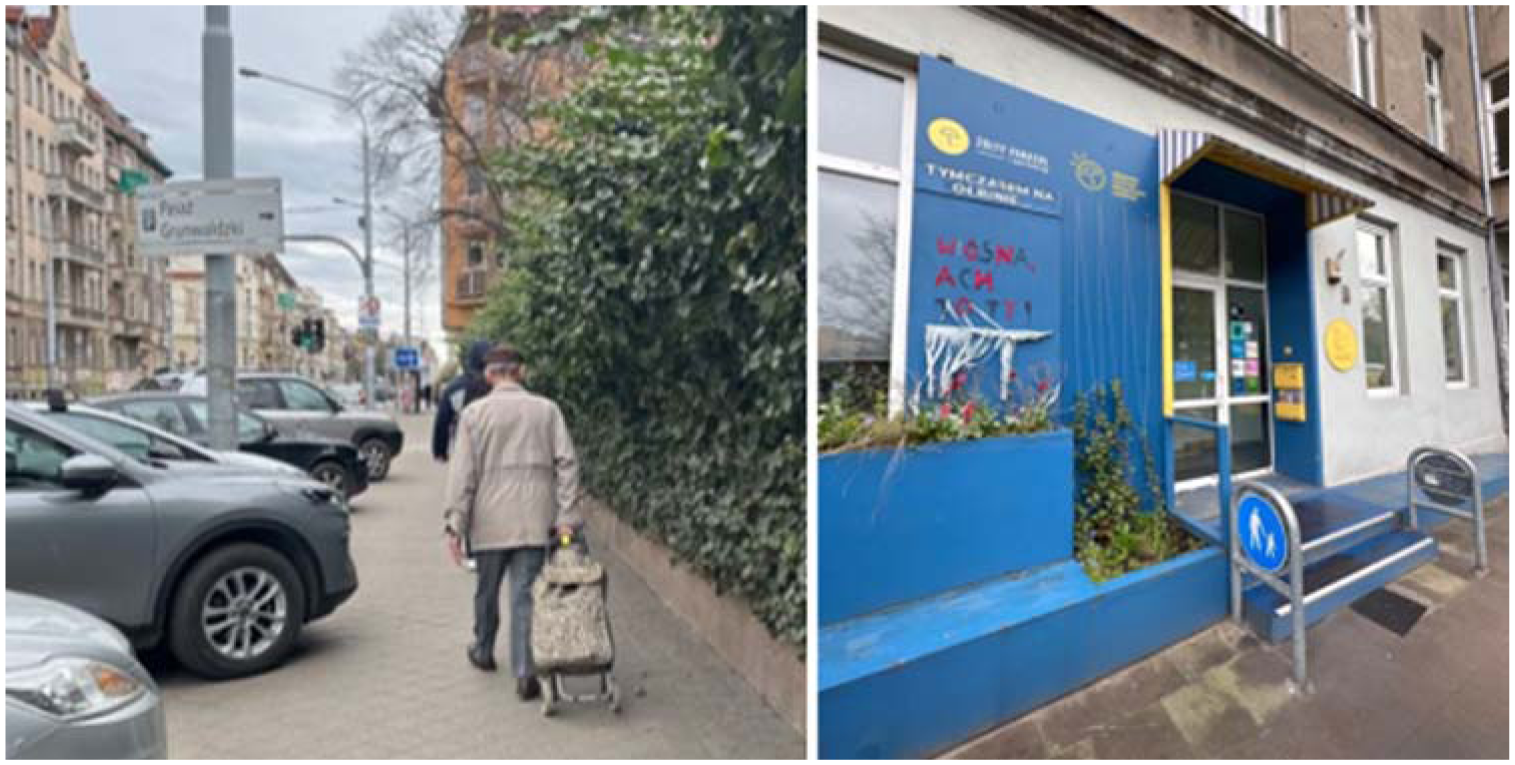
Clear signs (on the left) and recognisable patterns and colours (on the right).
Making sure that individuals with mobility impairments can use the urban environments is another aspect of cognitive accessibility. The universal design concept should be employed in making urban environments available to all. This involves integrating ramps, non-slip flooring, accessible public transport for all, and street furniture that prioritises comfort for any user who may walk or roll in case they have problems with mobility (Figure 6). Including all these features can enable people with limited mobility to feel comfortable using urban environments.
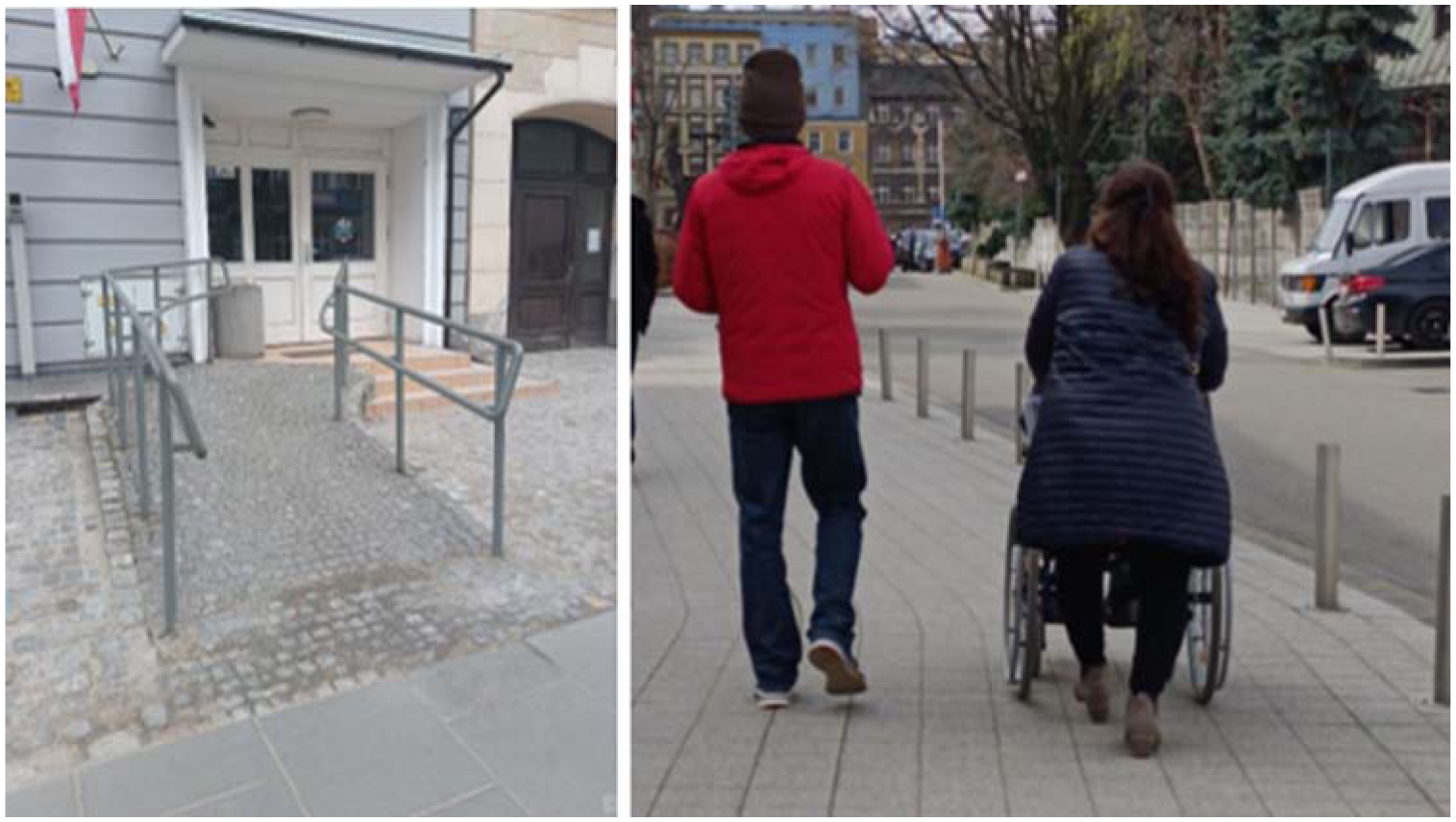
Ramp (on the left) and non-slip, easy-roll pavement (on the right).
Urban density and crowding can pose significant challenges for older adults, especially those with cognitive impairments. For example, such individuals may experience increased stress and become overwhelmed in high-density environments. To address this, urban planners should consider creating areas with lower population concentrations or incorporating quiet zones within denser settings such as the examples in Figure 7. These areas can facilitate calmness and reduce anxiety for older adults, allowing them to avoid crowded and overwhelming situations. For instance, urban parks and street furniture and even roadside flower pots can create relaxation spaces for older adults (Figure 7).
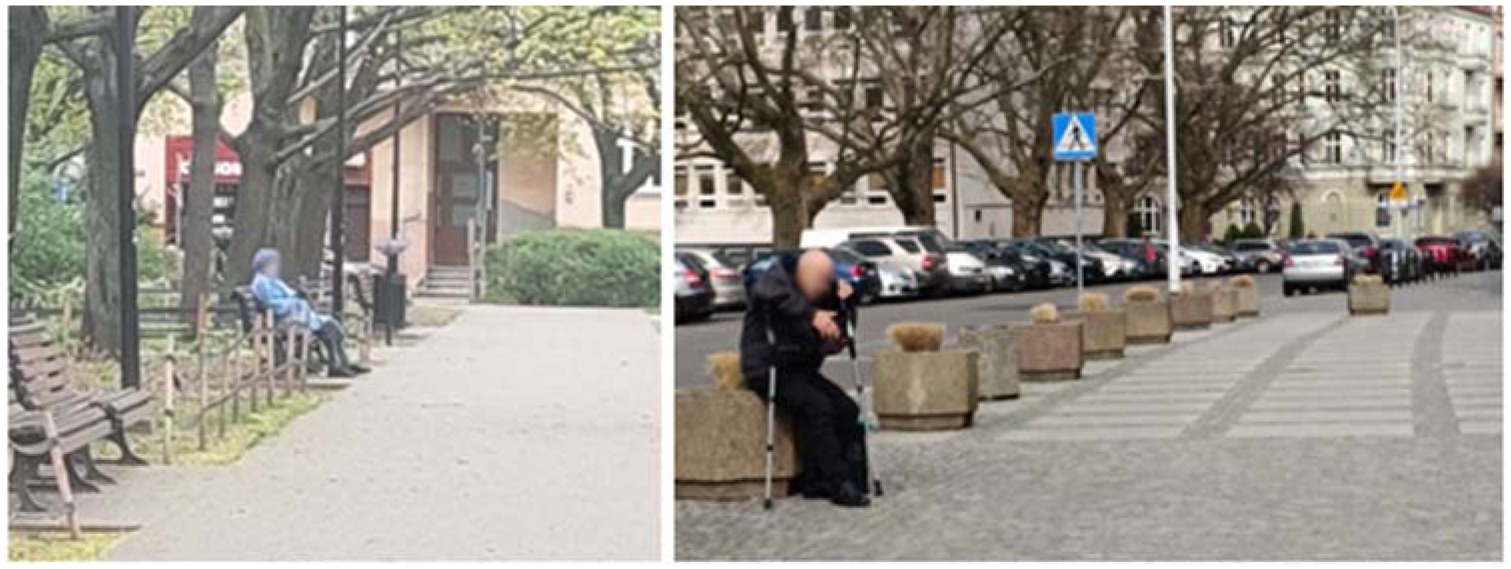
An urban park (on the left) and roadside flower pots (on the right).
Environmental stressors
Environmental stressors have a substantial impact on older adults’ wellbeing, particularly as they intensify sensitivity to environmental aspects due to age-related changes, and in this regard, lighting is a key factor. Appropriate natural and artificial lighting is crucial because inadequate lighting not only worsens vision problems and results in anxiety but also leads to disorientation. Therefore, making urban environments well-lit helps improve the life quality of older people. As can be seen in Figure 8, night street scenes can be concerning from the perspective of older adults. The absence of lights may enhance a sense of insecurity and limit safe navigation where in case someone has poor eyesight or moves slowly (Sobnath et al., 2020). More so, it may discourage older people from engaging in evening activities due to fear of violence, thus isolating them and making them feel alone. As a remedy, cities ought to increase lighting levels. Uneven pavements and obstacles are also harder to detect in dark areas, which can cause danger not only for older adults but for everyone (Figure 8).
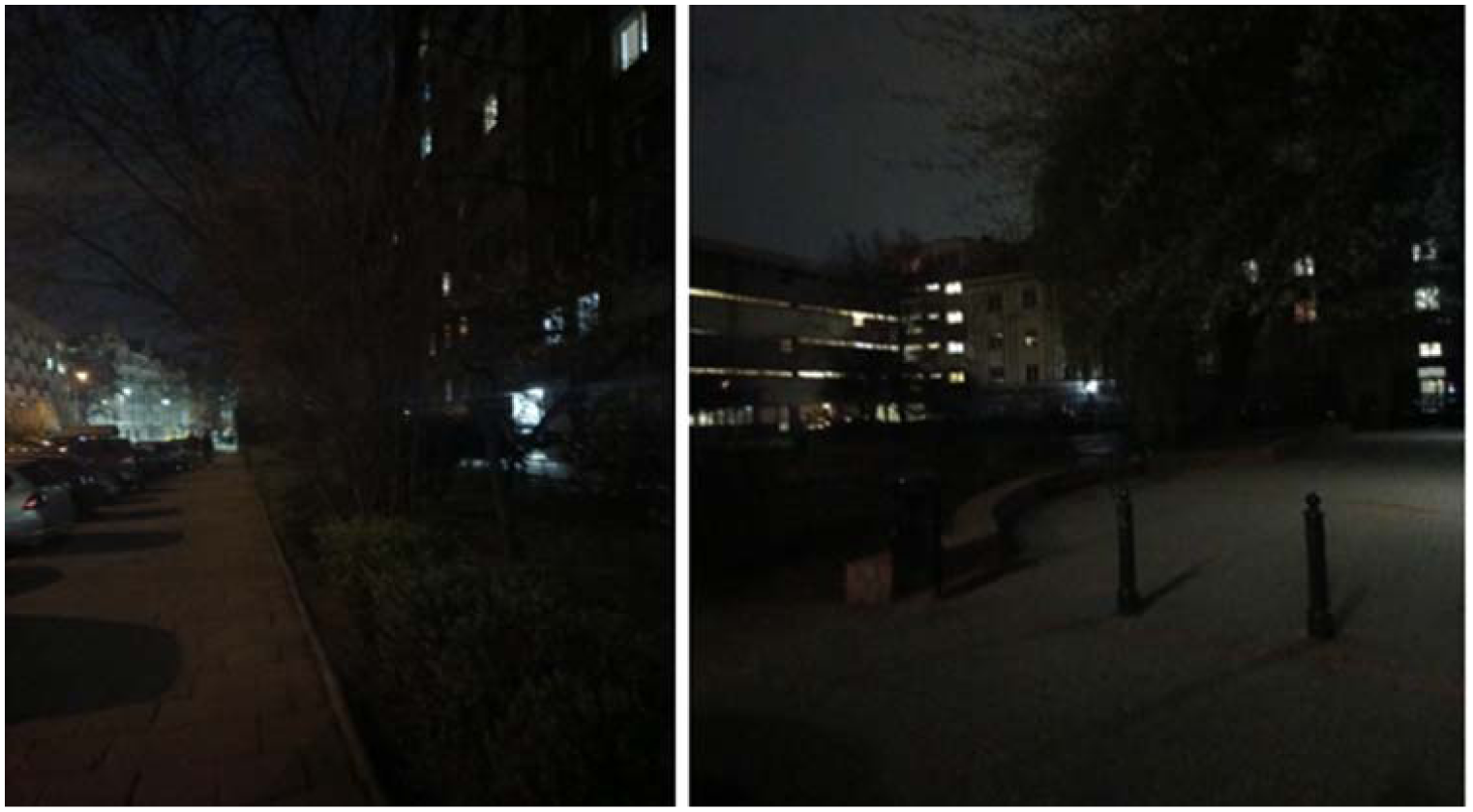
A dark street (on the left) and obstacles on the pavement (on the right).
Diverse textures and materials offer rich tactile experiences within the urban environment, making it more accessible to all ages in urban space (Figure 9-left), however poorly maintained pavement surfaces can pose safety risks for everyone, regardless of age (Figure 9 right).
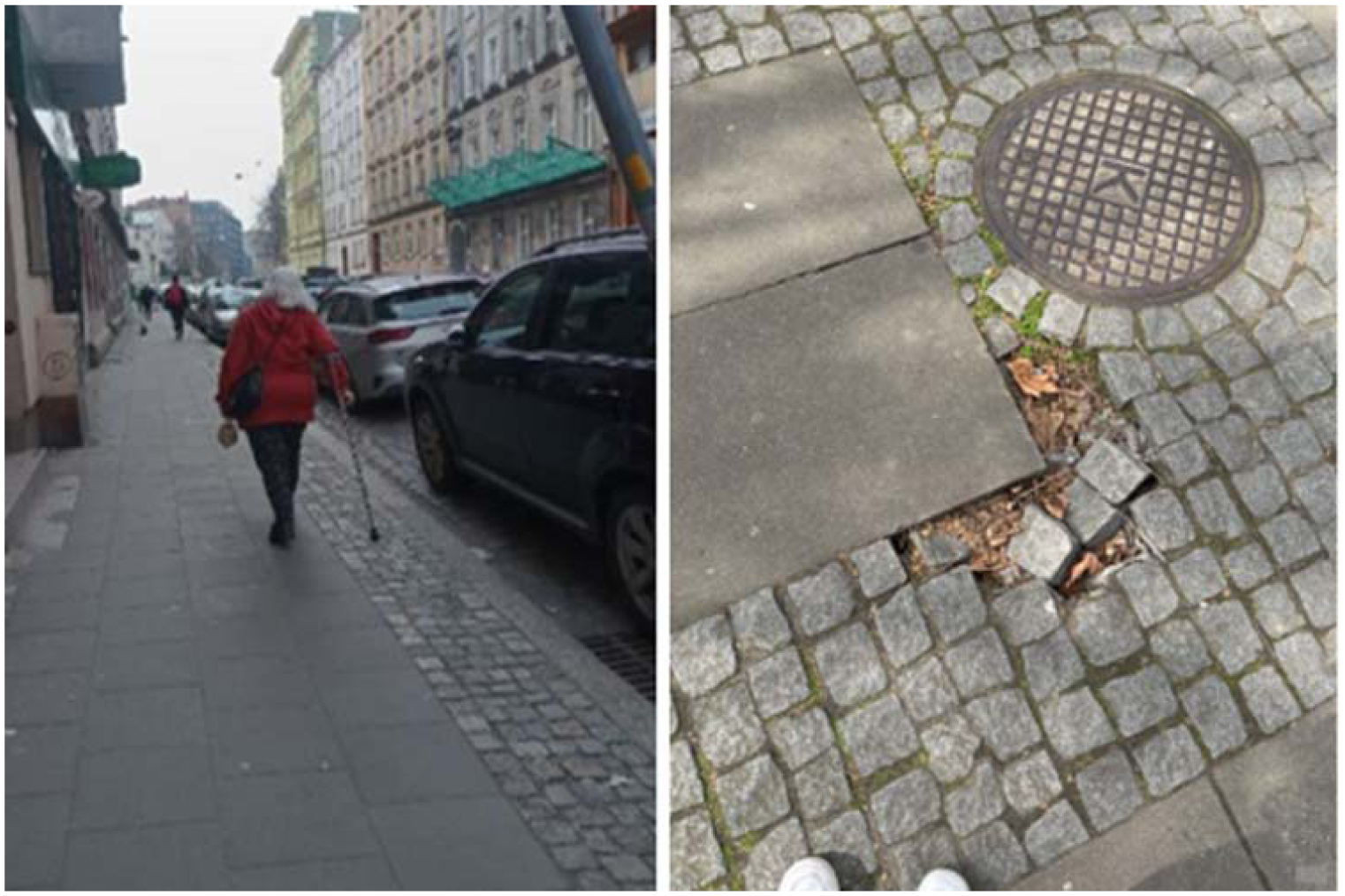
Well-maintained (on the left) and poorly-maintained pavement surfaces (on the right).
Spatial justice in the social environment
Social interaction, and community engagement are key parts of ageing well. Inclusive public spaces such as parks, community centres, plazas etc. have a role in enabling these interactions where adults can engage with peers, take part in activities or just feel connected to the community they reside in. Therefore, accessibility must be the focus of public space design so that all older adults, regardless of their physical or cognitive capacities, can take an active role in societal life. By creating places where individuals can naturally interact, socially supported structures in urban areas have been found to increase community participation. As can be seen in the Figure 10, the district of Ołbin has a community centre where older adults can join workshops and take part in various physical activities as well as socialise. For older adults, such communal facilities are important in developing a sense of belonging within the society or community. They provide an avenue for both unplanned and planned encounters that are vital in keeping them socially connected. Through encouraging these kinds of interactions, cities can help the older adults form as well as sustain social connections, which are crucial for their overall well-being (Figure 10). For instance, through a regularly published nationwide newspaper called Senior, older adults can find information presented in an age-friendly form (in an accessible language, without distracting advertisements, and so on) about the latest social, economic and health solutions specialised for them.
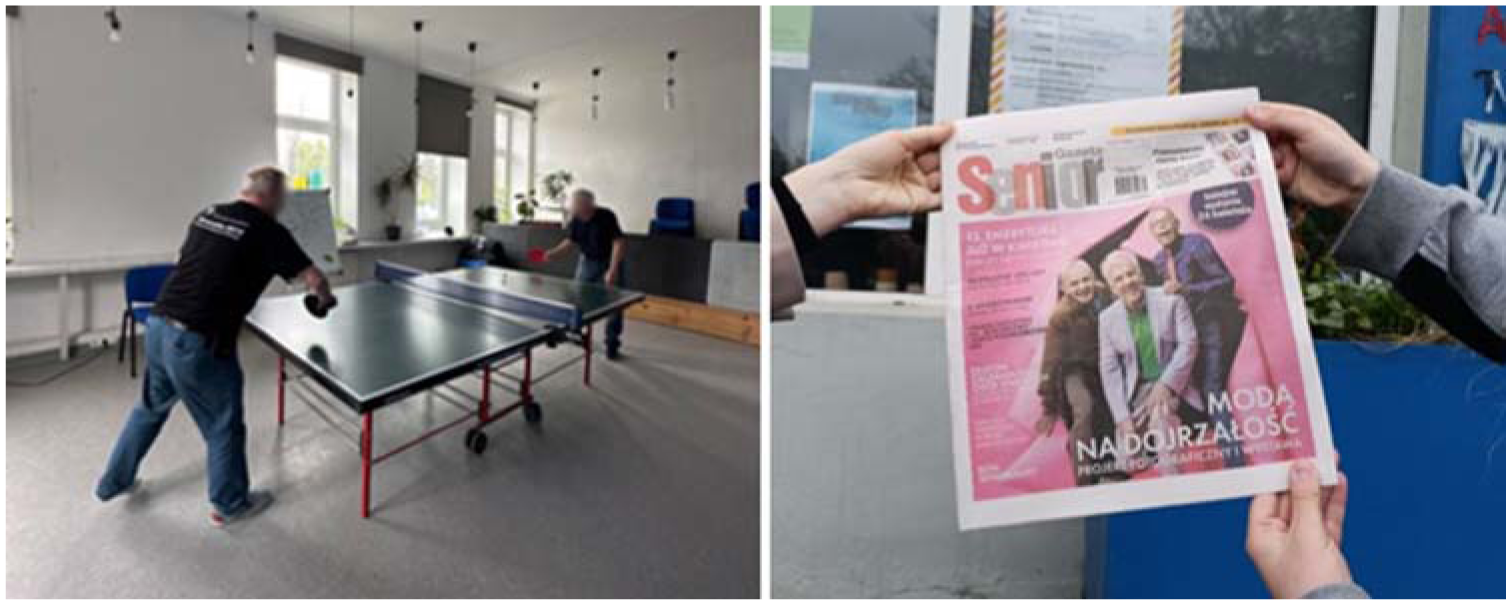
The community centre of the district of Ołbin (on the left) and the newspaper Senior (on the right).
Technological integration
Older adults living in developed cities can improve their quality of life in various ways, especially by using technological integration in urban environments (Marston and Van Hoof, 2019). With digital wayfinding aids, information and ticket kiosks that are easy to access, and communication tools that help them to move freely and confidently around the city, they can find it easy to go from one place to another without assistance (Figure 11). These devices can be very helpful for older adults with mobility or cognitive issues since they reduce the complexity of interacting with the environment. Transport services available in real-time, for instance, enable older adults to plan their travels better, thus lessening anxiety levels and making public transport system accessible by all. In addition, there are automatic mobility aids like escalators and lifts operated by smart technologies that facilitate movement around the city for older adults. In this way they become more comfortable with the environment while also supporting safety conditions.
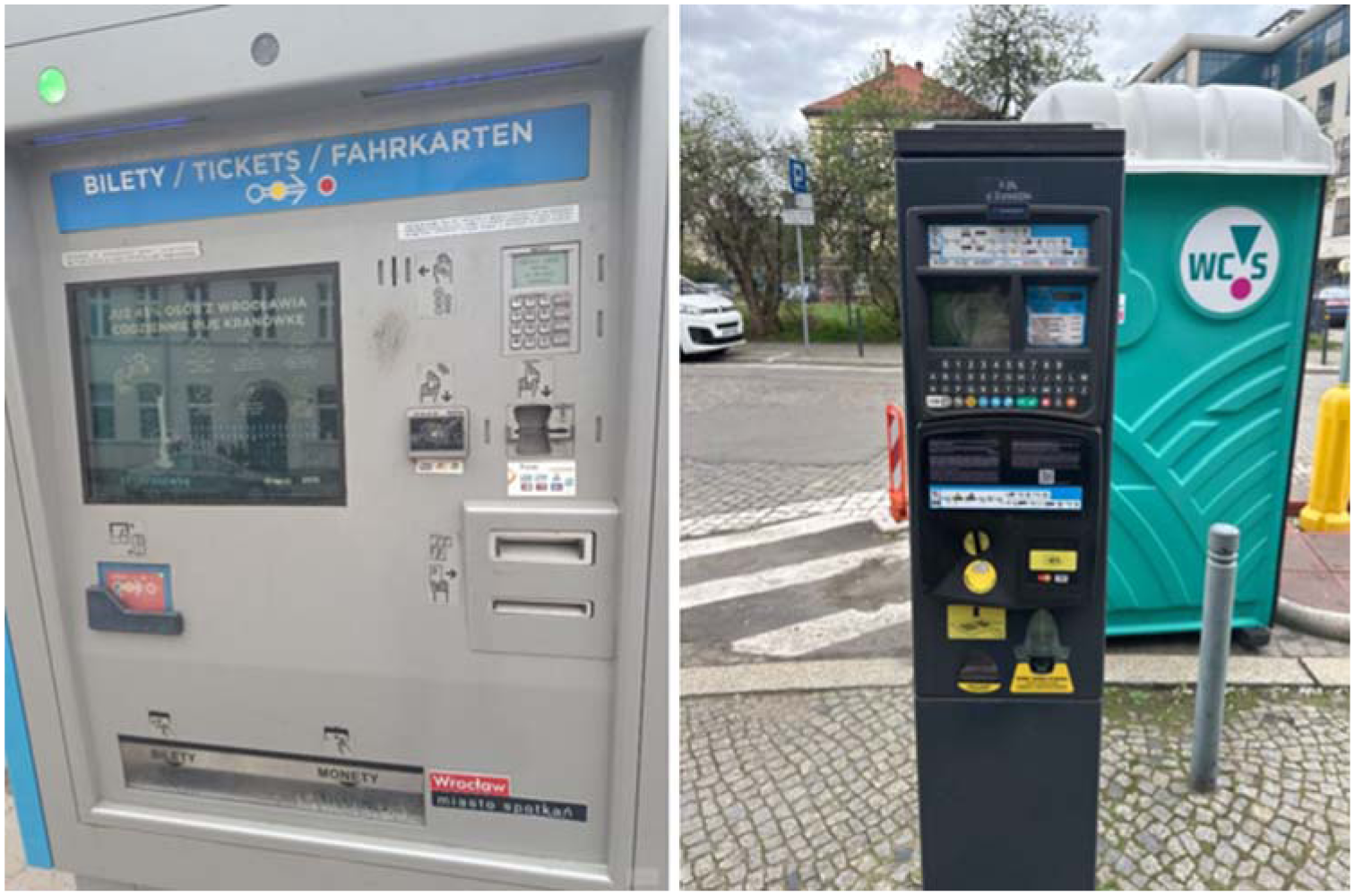
Public transport ticket kiosk (on the left) and parking meter (on the right).
For cities to promote health, ensure safety and security, well-being, and independence among their aged inhabitants it is important that efforts in social interaction encourage spatial justice, where involvement in communities includes equal opportunities as well as equal accessibility at every stage in life, such as with urban design that integrates technology. To this end, urban environments can be developed to be more inclusive by providing environments that are supportive regardless of a person’s financial status or physical condition; such environments are possible through technological advancement since they conform with the principle of justice across generations.
Discussion
The case study in Ołbin and Plac Grunwaldzki forms a critical basis for further analytical studies of how spatial justice is to be conceptualised and improved for urban ageing. One of the main themes that emerged from the analysis was spatial justice in the physical environment, and the smaller thematic groups, cognitive accessibility and mobility, show that modifications in the urban environments can minimise the cognitive load on older adults, especially those with dementia, since the majority already have challenges related to daily activities, cognition, behaviour, and communication (van Hoof et al., 2013). The changes in their urban environment would make them more confident and decrease confusion and accidents. While these findings emphasise the need to address an improvement in design at the local level, they also provide a space for comparison to other European contexts where more systematic or remediating approaches have been utilised. For instance, the Netherlands and the UK have not only identified a clear agenda to become more age-friendly, but they are also implementing comprehensive approaches to age-friendly change (Menéndez and García, 2022). The Hague has readily available and well-maintained public spaces and community programmes aimed at increasing social inclusion of older people. The redevelopment of North Manchester General Hospital in the UK Great Britain represents a more integrated approach to design with an underpinning social inclusion agenda that fits older people needs, interlinking adaptive transport and public space where older and vulnerable people can live and age sustainably in healthy environments (Menéndez and García, 2022). Additionally, other countries such as Finland and Germany have attempted to include older people in engaging with the urban planning processes, inviting older people to directly contribute with suggestions of their needs and values in urban spaces and to value their preferences in accessing services and public spaces (Menéndez and García, 2022).
The other thematic group under spatial justice in the physical environment identified in the analysis was environmental stressors. Poor lighting, uneven pavements and high building densities increase the sense of insecurity and isolation in older adults, particularly in the dark. This also aligns with the World Health Organization’s (2017) emphasis on accessible and well-lit environments being major contributors to increased safety and social participation. Such stressors should be minimised by urban planners through improved lighting and maintenance that will enable the older adult to safely navigate in their surroundings.
Spatial justice in the social environment amplifies this social and community interaction towards betterment. Community centres and other public spaces in Ołbin do tend to support the participation of older adults in social activities that also enhance their sense of belonging. High attendance in centres and the production of local newspapers like Senior show that creating environments that allow planned and spontaneous social contact is important for the prevention of social isolation. Combatting loneliness through such social engagement is vital since isolation can lead to depression, among others, which will result in a wide range of negative health outcomes including cognitive decline (Williamson et al., 2022).
Integration of technologies within the urban environment also plays a significant role, facilitating spatial justice. It encompasses access to tools such as digital kiosks, real-time transportation updates, and devices granting mobility like escalators and lifts. These have the potential to alleviate much anxiety caused by trying to navigate through an unfamiliar or highly complicated structure in the urban environment and thus contribute towards independence among older adults.
SRT, which emphasises the restorative effects of certain environmental features, particularly those found in nature, offers a useful lens through which to interpret the visual data collected via photoproduction. In this study, the photographs taken by researchers captured both stress-inducing and restorative elements within the urban landscape. For example, images of dimly lit streets, uneven pavements, and crowded urban settings reveal spatial stressors that align with SRT’s notion of environments that hinder recovery and elevate anxiety. In contrast, photographs depicting green spaces, tactile landscaping, clear signage, and calm seating areas illustrate the presence of restorative features that can promote psychological relief, especially among older adults who are more sensitive to environmental conditions. The photoproduction method, by documenting how these features are distributed and perceived, makes it possible to identify not only the presence of restorative design elements but also the gaps in urban planning where SRT-aligned features are absent. By visually mapping environments through the lens of older adults’ needs, this study operationalises SRT in a real-world context and supports the argument that integrating natural, calming, and cognitively accessible features is essential in designing urban areas that contribute to spatial justice and emotional well-being.
Even though these three frameworks come from different disciplinary origins, they mutually reinforce each other in the context of designing age-friendly urban environments. For example, neuroarchitectural principles may suggest quiet, controlled environments to reduce cognitive load, while participatory frameworks may call for dynamic, multifunctional public spaces that support a variety of social interactions. Similarly, design elements intended to serve cognitive clarity (e.g. simplified signage or muted colours) may unintentionally erase culturally specific or expressive spatial features valued by local communities, which may raise concerns from a spatial justice perspective. It is necessary to view and address these tensions not as contradictions but as productive areas of negotiation in urban design. Future work should further explore how participatory neuroarchitecture can be operationalised in ways that honour both scientific knowledge and lived experience, particularly among cognitively diverse users.
The study’s limitations include the potential oversight of certain age-friendly elements related to the sense of safety and security, as the photographs were captured by researchers instead of older adults. The absence of a photovoice approach where older adults would actively participate in capturing and discussing their lived experiences could mean that the researchers, despite attempting to view the environment through the lens of older people, may not have fully captured the nuanced perspectives or priorities of this demographic. Thus, while there was an effort to understand the experiences of older adults, the lack of direct involvement in the photographic process is a limitation.
Although the challenges that older adults face in urban environments were highlighted in this study through the photoproduction method, neuroarchitectural approaches need to be used to uncover the underlying reasons. Neuroarchitectural approaches involve cognitive processing of the built environment and better adapting sensory information to the needs of older adults. For instance, knowledge of how specific lighting conditions might affect mood and circadian rhythms could lead to design aiming at reducing anxiety and, supporting mental well-being. Equivalently, knowledge of noise pollution and its impact on cognitive functioning might lead to the design of more silent places for public use. This perspective is important when it comes to spatial justice in urban ageing as a safe, open and relaxed environment is essential for older adults to share their thoughts (Buffel et al., 2024).
Also, the neuroarchitectural approach prioritises spaces designed for the whole range of human experiences, especially vulnerable populations like older adults with dementia. This will help to avert health inequalities and make sure that every person has access to an environment that supports their well-being, both physically and mentally, regardless of their age or abilities. Through an understanding of diverse inhabitants’ sensory, cognitive, and emotional requirements, urban planners and architects can create spaces that augment justice, lessen health inequalities and improve quality of life for older adults.
Conclusion
Neuroarchitectural approaches can be used to better understand the perspectives and priorities of older adults. By integrating these approaches, researchers and practitioners can obtain a detailed understanding of the relationship between the built environment and human well-being and develop evidence-based strategies for creating spatial justice.
In general, an insight into the experiences of the older adult, from a neuroarchitectural viewpoint, would place an enhanced emphasis on inclusive city designs. While designing a city, one should recognise the diversity of the older population and their varying needs and preferences. It requires flexibility and sensibility to plan a city. Focusing on the sensory, cognitive, and emotional needs of older adults enables urban planners and architects to design environments that fulfil not just the basic needs of this age group but also increase their quality of life. By adopting neuroarchitectural approaches (electroencephalogram, eye-tracker, biosensors and etc.), architects and urban planners can design spaces that enhance cognitive function, overall well-being, and social interaction. Based on the analysis of the case study area, the guidelines below show the contributions of neuroarchitecture to spatial justice.
Guidelines on green infrastructure integration
Design urban greenery that is easily accessible for older adults, especially those with mobility issues. These spaces should be well-shaded and include seating arrangements where one can rest comfortably. Additionally, there is a need to design sensory gardens with fragrant flowers, leaves with texture, and colours for an arousing experience. The findings imply that green space often improves perceptions of social safety, which runs counter to the popular perception of green space as a risky hiding spot for criminal activity that creates feelings of unease (Maas et al., 2009).
Guidelines on community engagement and participation
Accommodating a specific understanding of unique needs and preferences of older adults requires collaboration with local organisations and programmes. Community spaces need to be developed that will allow older adults to continue to be active and socially engaged within their community. Accommodations to facilitate participation, such as transportation or financial assistance options, need to be provided so older adults can participate in activities offered within their community. Continuous feedback from older adults themselves is also very important; it is essential to maintain an open dialogue to better meet their needs.
Guidelines on mixed-use development
Have basic services, such as food stores, pharmacies, and community medical facilities, located in close proximity to residences of older adults. Sidewalks and pathways should be designed with safety and access in mind, accommodating older adults with limitations in mobility and making daily activities easier and safer.
Guidelines on cognitive accessibility
To enhance cognitive accessibility, clear signage should be used along with patterns and contrasting colours to make navigation easier for older adults. Tactile pavement surfaces can also help individuals with sensory impairments, while adequate lighting is crucial for better visibility and reducing the risk of falls.
Footnotes
Acknowledgements
The APC is financed by Wrocław University of Environmental and Life Sciences. The author would like to express sincere gratitude to the data collectors for their dedicated efforts in gathering the data essential to this study

Funding
The author disclosed receipt of the following financial support for the research, authorship, and/or publication of this article: The APC is financed by Wrocław University of Environmental and Life Sciences.
Declaration of conflicting interests
The author declared no potential conflicts of interest with respect to the research, authorship, and/or publication of this article.