



Abstract
Housing stands as a significant contributor to the adverse environmental impacts stemming from human activities. Reducing floor space emerges as a key strategy for advancing sustainable urban development since larger homes typically consume more electricity and heating. However, there is an undeniable link between dwelling size and residential satisfaction, making it challenging to design homes that are both functional and appealing within limited spatial constraints. A solution to mitigate spatial limitations involves the implementation of shared facilities within residential complexes. While individual households maintain exclusive access to their units, they also benefit from amenities usually found in larger dwellings. Despite its potential, the concept of shared facilities has received limited attention in the urban housing literature. This study contributes to the literature by investigating the applicability of the theory of planned behaviour (TPB) in this unexplored context, involving an investment that carries considerable financial risk. Results demonstrate that our extended TPB model provides insights into homebuyers’ intentions to purchase dwellings with shared facilities. Out of the variables examined, attitudes emerge as the strongest predictor of intentions, indicating the need for collaborative efforts between developers and policymakers to bolster homebuyers’ interest in these unique housing solutions. The data reveals a tendency among homebuyers to compromise on dwelling size in favour of accessing amenities deemed essential for enhancing liveability. However, on the whole, homebuyers do not exhibit strong purchasing intentions, and attitudes towards the concept tend to be neutral.
Introduction
Housing significantly contributes to the environmental repercussions of human activities. Specifically, greenhouse gas emissions attributed to housing are estimated at 2.62 t CO2eq per person annually in Europe, with electricity consumption and space heating being the most significant contributors (Lavagna et al., 2018). Given that larger homes typically consume more electricity and heating, reducing dwelling size emerges as a crucial strategy for sustainable urban development. Also, downscaling floor area will significantly cut emissions from the production of building materials (IRP, 2020). Nevertheless, numerous studies highlight that the size of a dwelling is a pivotal determinant of residential satisfaction (Dekker et al., 2011; Kabisch et al., 2022; Wang and Wang, 2016). Smaller units with space constraints often diminish perceived liveability, prompting individuals to relocate from urban settings (Howley, 2009; Lotfi et al., 2019). Further complicating the issue, societal spatial norms can act as barriers to the acceptance of downsizing. Hagbert (2016) discovered that prevailing norms regarding acceptable living standards influence homebuyers’ willingness to adopt compact living. Similarly, Sandberg (2018) posited that a shift in perception towards smaller living spaces is essential for downsizing to be regarded as a viable option.
Consequently, a pressing challenge for architects and developers is designing homes that, while compact, remain both functional and aesthetically appealing. Several innovative interior design techniques, such as adaptable furniture and movable walls, have been proposed to enhance spatial efficiency (e.g. Barbosa et al., 2016). An alternative approach to counteracting the limitations of smaller spaces is the introduction of shared facilities for residents (Kotulla et al., 2019). This model dedicates certain communal areas within a building for specific shared purposes. While individual households retain their private spaces, they simultaneously enjoy amenities that are usually exclusive to larger dwellings, such as separate laundry rooms or office spaces. Many real estate developers have already integrated various shared facilities into their offerings to entice potential buyers, and research indicates that such common amenities bolster the resale value of apartments (Tajima, 2020). However, there is a noticeable gap in research regarding homebuyers’ readiness to trade off personal living areas in favour of gaining access to communal amenities. In essence, this means transitioning from homes that offer more space than necessary to homes that provide sufficient space for comfortable living (Hagbert, 2016; Sandberg, 2018). The practice of sharing resources and the institutional challenges of maintaining housing commons have been widely explored in resident-led non-profit co-housing projects (e.g. Boyer and Leland, 2018; Glass, 2020; Tummers, 2015). With a pressing need to promote sustainable housing models in the commercial real-estate market, this study adopts a distinct angle and seeks to ascertain whether shared amenities can make downsizing more appealing to homebuyers in market-led housing projects. Ultimately, the study’s objective is to provide insights for developers and stakeholders in the housing sector to pinpoint avenues for increasing acceptance for downscaling living space, thereby aiding the transition to more sustainable housing choices.
Theoretical framework and hypotheses
Shared facilities in housing
Within the housing domain, sharing has predominantly been linked to resident-led co-housing projects. Traditionally, co-housing hinges on participatory processes and an emphasis on communal facilities and social interaction, such as group meals and joint activities (Beck, 2020; Boyer and Leland, 2018). Although there seems to be an emerging interest in co-housing concepts (Beck, 2019, 2020), co-housing still represents only a modest fraction of the overall housing stock, even in countries like Denmark, which is regarded as a pioneering country in collaborative housing (Beck, 2020). In recent times, some of the basic ideas of co-housing have gained interest from commercial real estate developers who have begun incorporating various shared spaces into new apartment complexes (Pirinen and Tervo, 2020; Tajima, 2020). Shared spaces are delineated as areas associated with home environments that are ‘located outside the boundaries of privately controlled domestic spaces and shared with a limited number of neighbours, typically the members of a housing company, in various ways’ (Hasu et al., 2017: 37). Such shared spaces or facilities can encompass guest rooms, event spaces, play areas and modest fitness centres, among others. However, in contrast to traditional co-housing, which is intentionally structured to bolster extensive social unity, these modern shared spaces bear no implied obligation for residents to regularly engage in collective activities. Consequently, this approach represents a less intrusive model of sharing housing facilities. The primary objective here is to counterbalance the limitations of smaller apartments by providing practical amenities rather than fostering profound social ties among residents. Furthermore, since these concepts stem from commercial motivations, they can be characterised as top-down initiatives, in contrast to the more resident-driven, bottom-up approaches that describe co-housing projects. Therefore, in the context of this discussion, shared facilities encompass spaces and resources intended for collective utilisation among apartment residents within self-managed communities. This stands in contrast to the provision of spaces and resources exclusively designated for individual units.
Theory of planned behaviour
An extension of the theory of planned behaviour (TPB) is used to predict homebuyers’ intentions to purchase a dwelling with shared facilities (see Figure 1). The TPB (Ajzen, 1991) is a model that defines salient determinants of an individual’s decision to perform a behaviour and has been used to predict behaviour in a multitude of behavioural domains. A central premise to the model is that behaviour is determined by the individual’s intention to engage in the behaviour. Intentions represent the motivational factors that guide behaviour and signal how much effort one is willing to exert to perform the behaviour. Additionally, TPB posits that three factors (attitudes, subjective norms and perceived behavioural control) steer an individual’s behavioural intentions. Attitudes describe the individual’s overall evaluations of the behaviour, that is, whether (s)he expects a favourable or unfavourable outcome from performing the behaviour. Subjective norms refer to the social pressure of performing or not performing a behaviour. They consist of the individual’s beliefs about whether significant others approve or disapprove of the behaviour, and the willingness to comply with these expectations. Finally, perceived behavioural control is the individual’s perceptions of the ease or difficulty of performing the behaviour (Ajzen, 1991). Perceived behavioural control is contextual and a person will have varying perceptions of control depending on the situation. Contrasting attitudes and subjective norms which are solely predictors of behavioural intentions, the TPB considers perceived behavioural control a determinant of both behavioural intentions and the behaviour itself.
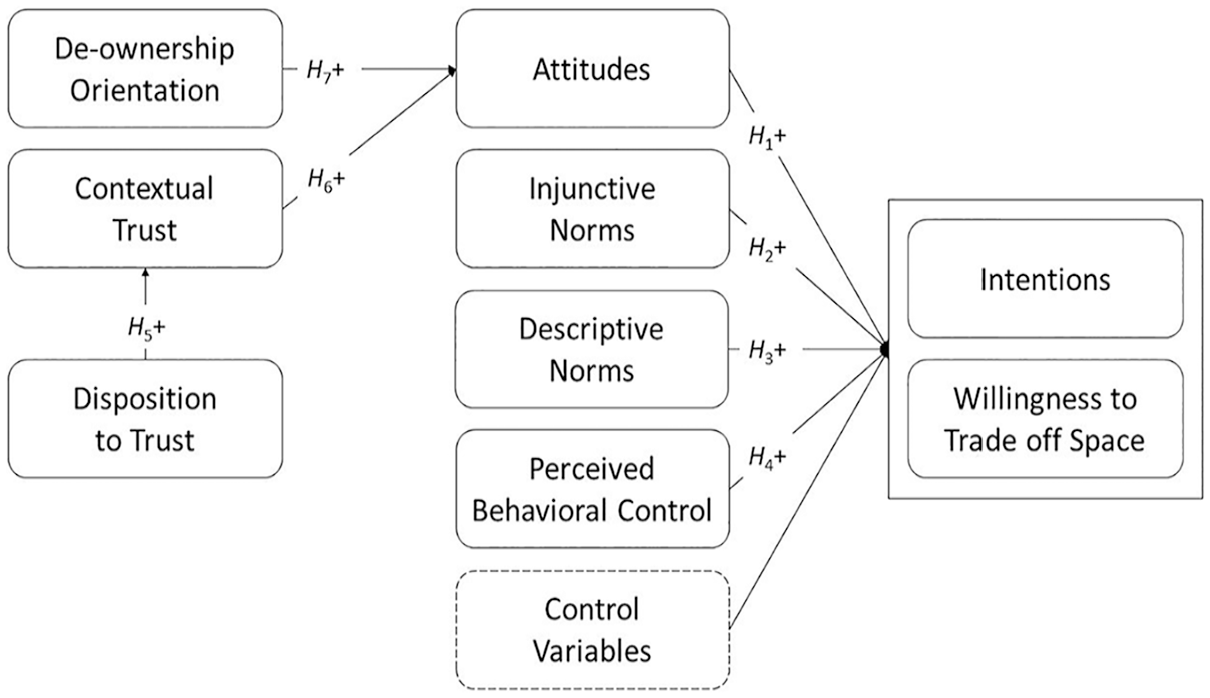
Conceptual model.
TPB has been used to predict behavioural intentions across various domains (Ajzen, 1991; Rivis and Sheeran, 2003), including sustainable housing decisions (e.g. Judge et al., 2019). TPB effectively encapsulates key behavioural determinants pertinent to understanding homebuyers’ interest in apartments offering shared amenities. Primarily, prospective buyers must perceive that they possess the requisite financial means for such an investment (Wijayaningtyas et al., 2019), and dwellings with shared facilities must be available in the market. Additionally, since sharing and downsizing challenge prevailing norms that associate larger dwellings with status and wellbeing (Bohnenberger, 2021; Lehner et al., 2024; Sandberg, 2018), the influence of social pressure (influential individuals expressing approval or disapproval of the behaviour) is anticipated to hold significance. Finally, the attitude component describes the degree to which a person has a favourable or unfavourable evaluation of the behaviour (buying an apartment with shared facilities) and has proven to be a significant predictor of purchase intentions for sustainable housing (Judge et al., 2019; Tan, 2013). The TPB framework allows for the integration of further predictors (Ajzen, 1991). Therefore, we have augmented the original model by including two specific variables, namely trust and de-ownership orientation, both of which have been established as influential in shaping attitudes towards sharing and collaborative consumption.
Trust
The concept of trust as a determinant in consumers’ engagement with collaborative consumption has garnered attention across numerous studies. At its core, trust encapsulates a predisposition to be susceptible to the actions of others, premised on the anticipation that these individuals harbour benevolent intentions and will act in accordance with them (Rousseau et al., 1998). However, the logic of sharing and trust is subject to the social categorisation of the collaborating partners (Bhappu et al., 2020; Julsrud and Priya Uteng, 2021; Ter Huurne et al., 2017). Trust directed towards close relations (friends, family and neighbours) is termed ‘ingroup’ trust, whereas trust in unfamiliar individuals is labelled ‘outgroup’ trust (Julsrud and Priya Uteng, 2021). The former is a central element of community-based interactions, suggesting that one’s social self-categorisation, coupled with the perceived inclusion of exchange partners within the same community, can generate assumptions of trustworthiness.
Following this, Hofmann et al. (2017) found that trust was more pronounced in sharing experiences that took place in self-regulating communities than in collaboration contexts characterised by market exchanges. This indicates that condominium environments may inherently possess elevated trust dynamics, as residents are predisposed to cultivate sentiments of collective unity and mutual connectivity (Chen et al. (2009). Concurrently, individuals exhibit variability in their intrinsic propensity to trust. Those with a naturally trusting demeanour often manifest trust towards others even in the absence of deep interpersonal knowledge, stemming from the belief that such trust is generally reciprocated (McKnight et al., 1998). This inherent disposition to trust becomes especially salient when individuals unfamiliar with each other must rely on cognitive and emotional assessments to gauge trustworthiness (Colquitt et al., 2007), a scenario frequently encountered when moving into a new condominium.
De-ownership orientation
De-ownership orientation pertains to the emphasis an individual places on the sharing of products and services over their acquisition and ownership (Lindblom and Lindblom, 2017). Individuals characterised by this orientation exhibit a predilection for resource sharing to meet needs, underscoring the importance of accessing products and services rather than possessing them. This contrasts with ownership-centric consumers, who prioritise personal control and possession of resources. The focus for de-ownership consumers is the utility derived from the resource rather than its mere possession. Scholarly investigations have evidenced a positive correlation between de-ownership orientation and favourable attitudes towards collaborative consumption (Khalek and Chakraborty, 2022; Lindblom and Lindblom, 2017; Ni, 2021). De-ownership orientation may be motivated by economic, environmental, social and/or practical reasons and has been found to impact collaborative attitudes and practices in various fields. Within the current discourse, a prevailing de-ownership orientation is anticipated to manifest as an inclination or acceptance towards shared housing amenities with fellow residents rather than an insistence on exclusive, individualised access to such facilities.
Hypotheses
Drawing from the preceding discourse, we predict that the three standard TPB variables are key determinants of homebuyers’ intentions to buy an apartment with shared facilities. Moreover, we project that trust and de-ownership orientation will serve as significant precursors to attitudes. Elaborating further, we propose the subsequent hypotheses.
Attitudes
Attitudes signify an individual’s comprehensive positive or negative assessment when considering the enactment of a specific behaviour. According to Belk (2014) and Botsman and Rogers (2010), consumers have a generally positive attitude towards collaborative consumption, primarily because its economic benefits outweigh its potential costs. In the present context, individuals are predisposed to contemplate acquiring a residence featuring shared amenities if they perceive this decision as beneficial. Such advantages could encompass environmental benefits (such as the reduced environmental impact of compact apartments), economic benefits (such as reduced energy expenses for smaller dwellings) and functional benefits (such as access to amenities generally reserved for expansive living spaces). Consequently, a favourable disposition towards the purchase of a residence with shared facilities is anticipated to be positively related to purchasing intentions (H1a) and willingness to trade off floor space (H1b).
Norms
Previous research has demonstrated that injunctive norms (the perceptions of what pertinent individuals believe about the behaviour) and descriptive norms (the observations of those relevant individuals actualising the behaviour) are positively related to housing purchase intentions (e.g. Bhutto et al., 2020; Judge et al., 2019; Wang et al., 2021). Given that home acquisition frequently encapsulates collective considerations, integrating the views and aspirations of the primary decision-maker and their immediate circle, injunctive norms seem particularly relevant. Correspondingly, perceptions of influential individuals’ purchasing of dwellings with shared facilities (descriptive norms) may influence purchasing intentions. Therefore, we propose that there is a positive correlation between injunctive norms and purchase intentions and willingness to trade off floor space (H2a and H2b respectively), and similarly, that descriptive norms are positively related to these same outcomes (H3a and H3b).
Behavioural control
Perceived behavioural control encapsulates an individual’s assessment of the feasibility or challenges associated with implementing a specific behaviour (Ajzen, 1991). Homebuyers may perceive that various external factors reduce their control over purchasing dwellings with shared facilities. Boyer and Leland (2018) pointed out that the measured pace of co-housing adoption in the United States stemmed from limited availability rather than diminished interest. Consequently, homebuyers could have a heightened sense of limited control, perhaps due to the limited market availability of such shared facilities or financial concerns over affording a residence in a contemporary apartment complex. It is anticipated that a positive correlation exists between perceived behavioural control and the intent to purchase homes with shared amenities (H4a) as well as the willingness to trade off floor space (H4b).
Trust
Numerous studies affirm that an individual’s inherent trust tendencies can significantly shape his/her perceptions and subsequent actions (Bhappu et al., 2020; Colquitt et al., 2007), especially in scenarios involving interactions with unfamiliar others (Bigley and Pearce, 1998). We thus posit that one’s innate propensity to trust correlates positively with one’s beliefs regarding the trustworthiness of neighbours within a shared environment (H5). Previous research using the TPB framework has indicated that trusting beliefs play a pivotal role in shaping attitudes (e.g. Canova et al., 2020; Ibrahim et al., 2020). In the unique context of shared facilities maintained by a community-driven approach, the element of trust becomes even more paramount due to the inherent uncertainties that arise from the absence of strict regulations. Therefore, it is anticipated that the individual’s trust in their co-residents will significantly influence their attitudes towards the sharing of facilities (H6).
De-ownership orientation
Attitudes towards sharing housing facilities are further expected to be influenced by the de-ownership orientation. Following the value-attitude-behaviour hierarchy (Homer and Kahle, 1988), a pronounced de-ownership orientation, as a personal value, should align positively with collaborative consumption attitudes. Empirical evidence of this relationship, within a generalised context, has been provided by Lindblom and Lindblom (2017), and similar findings have been documented in diverse consumption scenarios like car-sharing, digital consumption behaviour, accommodation and bike sharing, among others (e.g. Khalek and Chakraborty, 2022; Kos Koklic et al., 2022; Ni, 2021). Thus, we expect that attitudes towards sharing facilities are positively influenced by the individual’s de-ownership orientation (H7).
The theoretical model underpinning our study is illustrated in Figure 1, detailing the hypotheses and their anticipated signs.
Methodology
To test the research model, we conducted an online survey among clients associated with a leading real estate agency in Trondheim, Norway, which boasts a population of approximately 200,000. Notably, this agency holds a significant position in Trondheim’s housing market, with a 35% market share. The survey targeted clients who had either recently made a home purchase or were in the process of home-searching. 1 These clients received an invitation via email from the agency to participate in our research, with the email including a link to a questionnaire prepared by the research team. This questionnaire encompassed statements pertinent to the model’s constructs, questions regarding interest in and experience with shared housing amenities and the willingness to compromise on floor space in favour of shared amenities, as well as demographic details about the respondents. Of the roughly 3000 clients on the mailing list, we garnered 500 valid responses suitable for analysis, translating to a response rate of 17%. The demographic breakdown of our final sample revealed an average age of 46 years; females constituted 58%, and a notable 69% had attained at least a bachelor’s degree. Moreover, 30% had finalised a new home purchase within the preceding year, while 24% reported residing in an apartment equipped with shared amenities.
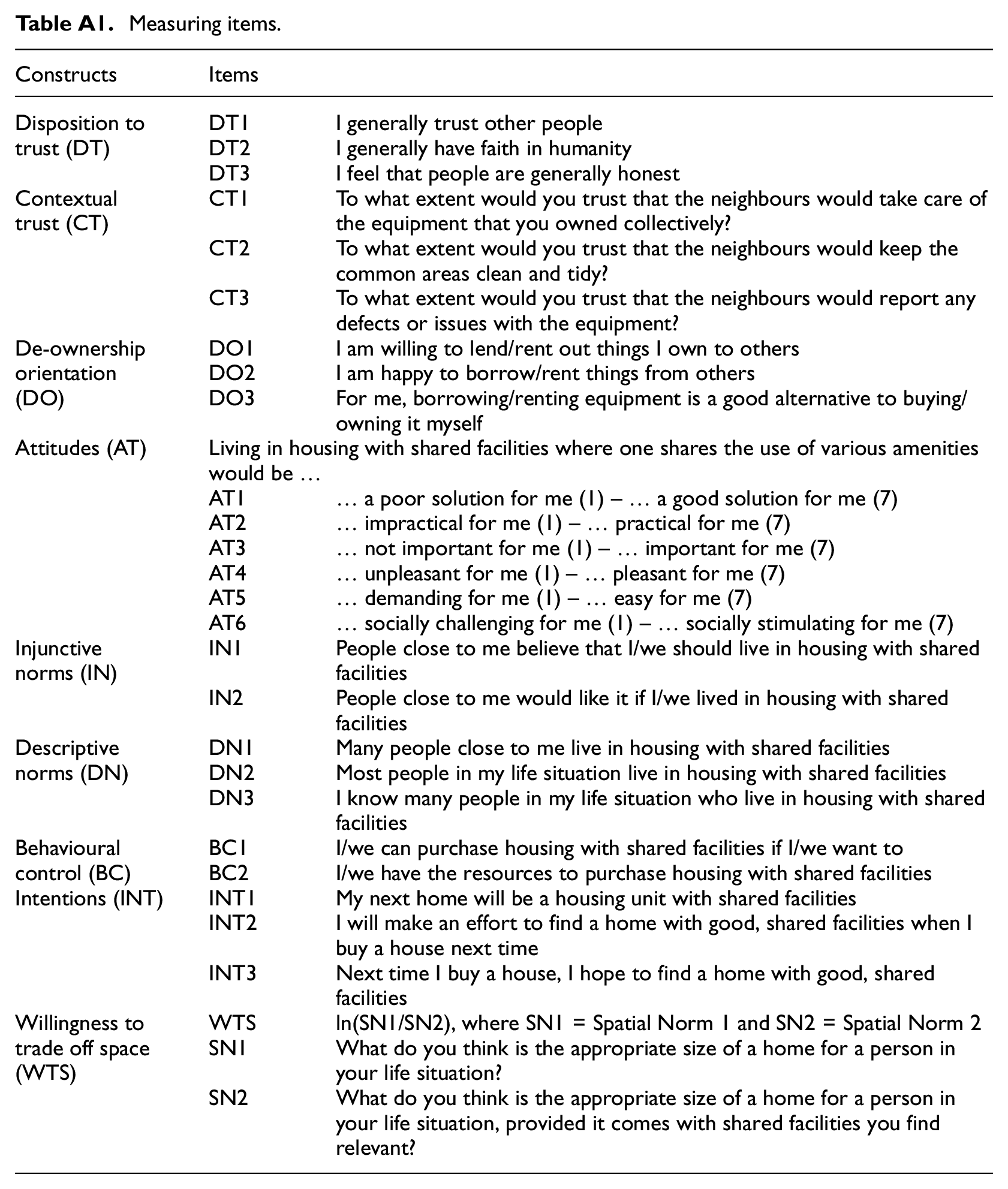
We sourced our construct measures from established literature. The de-ownership orientation was assessed using three items derived by Lindblom and Lindblom (2017). Disposition to trust was measured through three items adapted from the trust measures proposed by Mittendorf (2018). To measure trust in fellow residents – specifically concerning the upkeep of shared amenities (contextual trust) – we directly questioned respondents about their confidence level in their neighbours’ commitment. The TPB variables were based on scales developed by Fishbein and Ajzen (2011). A comprehensive list of all construct measures can be found in the Appendix, Table A1. For the dependent variable, that is, behavioural intentions, we also incorporated the respondents’ expressed willingness to adjust floor space in exchange for access to shared amenities. This measurement followed a three-step procedure. First, respondents were questioned about their perceived ideal dwelling size (in m2), considering their current life circumstances (‘What do you think is the appropriate size of a home for a person in your life situation?’). This response was labelled ‘Spatial Norm 1’. Subsequently, after acquainting them with the concept of shared facilities, they indicated their interest levels in 10 facilities that could potentially be shared between condominium residents. 2 Finally, they reiterated their ideal dwelling size (in m2), but this time considering the availability of shared facilities they deemed essential (‘What do you think is the appropriate size of a home for a person in your life situation, provided it comes with shared facilities you find relevant?’). This was categorised as ‘Spatial Norm 2’. To discern the extent of a participant’s willingness to compromise on personal floor space in favour of communal facilities, we derived the natural logarithm from the ratio of ‘Spatial Norm 1’ to ‘Spatial Norm 2’.
The research model was tested using structural equation modelling (SEM) analysis, a statistical approach that combines factor analysis and multiple regression, making it well-suited for explaining complex relationships between observed and latent variables (Bollen, 1989). While the TPB can be estimated with multiple regression or structural models (Ajzen, 2020), SEM offers advantages over OLS by accounting for measurement error, yielding more accurate estimates. SEM also better handles complex relationships, including mediating effects, and can estimate multiple dependent variables simultaneously, as in our extended TPB model.
This analysis proceeded in two steps: validation of the measurement model and assessment of relationships between latent variables using the structural model. The analysis was conducted in two variations: one including control variables and one without. While this setup is akin to four separate models due to the inclusion of two dependent variables, SEM allows for an efficient and integrated analysis, effectively reducing it to two distinct models.
Results
Descriptive statistics
Descriptive statistics for all items and control variables are presented in Table 1. Respondents exhibited a high level of dispositional trust; however, the extent of contextual trust is comparatively subdued. Notably, scores related to de-ownership orientation surpass the scale’s mid-point, suggesting a prevailing inclination towards sharing as opposed to exclusive ownership. Moreover, respondents displayed neutral attitudes towards shared facilities, and there appears to be a lack of compelling norms guiding this behaviour. The perception of significant behavioural control over such housing decisions is evident, but the inclination to purchase a residence equipped with shared facilities leans towards the negative spectrum of the scale. Intriguingly, the difference between the two spatial norm variables underscores that respondents were prepared to sacrifice 15% of floor space for the advantages of shared amenities, indicating a notable shift towards compact living. The Pearson correlation between the two indicators of behavioural intention is low (0.105).
Descriptive statistics.
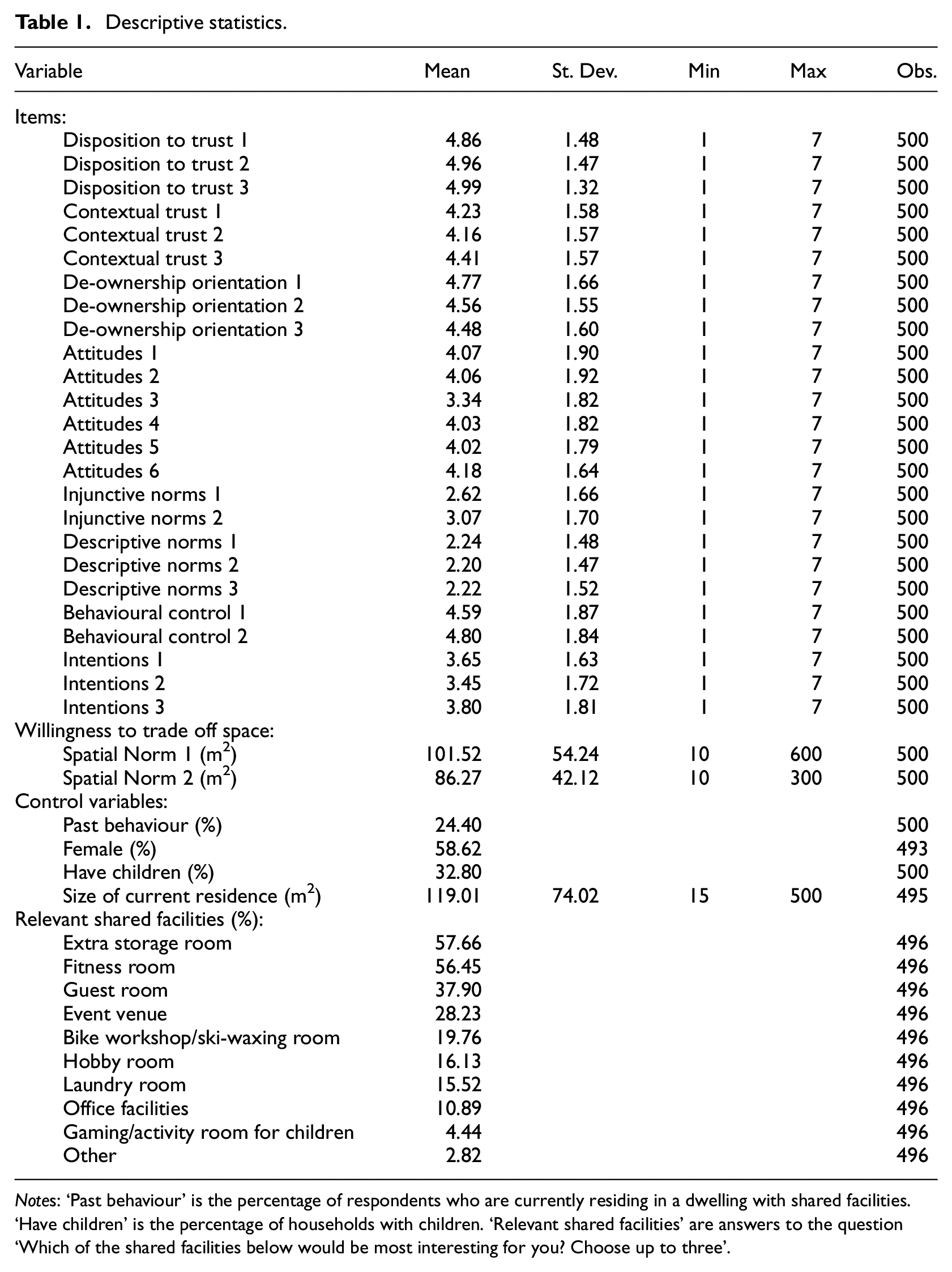
Notes: ‘Past behaviour’ is the percentage of respondents who are currently residing in a dwelling with shared facilities. ‘Have children’ is the percentage of households with children. ‘Relevant shared facilities’ are answers to the question ‘Which of the shared facilities below would be most interesting for you? Choose up to three’.
Additionally, the table delineates responses to the question ‘Which of the shared facilities below would be most interesting for you?’ Respondents were prompted to select up to three preferences from a list of 10 potential amenities. Notably, ‘extra storage room’ and ‘fitness room’ emerged as predominant choices, garnering interest from 58% and 56% of respondents, respectively. ‘Guest room’ and ‘event venue’ also attracted considerable attention, with 38% and 28% of participants favouring them. Conversely, a mere 4% indicated a preference for a communal gaming or activity space designed for children. Under the ‘Other’ category (open-ended responses), predominant mentions pertained to additional parking provisions and dedicated areas for car cleaning.
SEM: Measurement model
The assessment of the measurement model entailed evaluations for internal consistency reliability, convergent validity and discriminant validity, following the guidelines set by Hair et al. (2021). The outcomes of this assessment are documented in Table 2. The establishment of internal consistency was supported by Cronbach’s alpha coefficients and composite reliability, both of which surpassed the benchmark of 0.70 (Hair et al., 2011), with relatively high values observed for most constructs. The value for average variance extracted (AVE) exceeded 0.50, indicating convergent validity. It is recommended that factor loadings surpass 0.70 to ascertain indicator reliability. All items adhere to this criterion, except for two pertaining to de-ownership orientation (DO1 = 0.68; DO3 = 0.69), which are marginally lower than the recommended value. Nonetheless, given their solid theoretical underpinning and an otherwise robust validation process, the inclusion of these items was deemed appropriate.
Internal consistency reliability, convergent validity and discriminant validity.
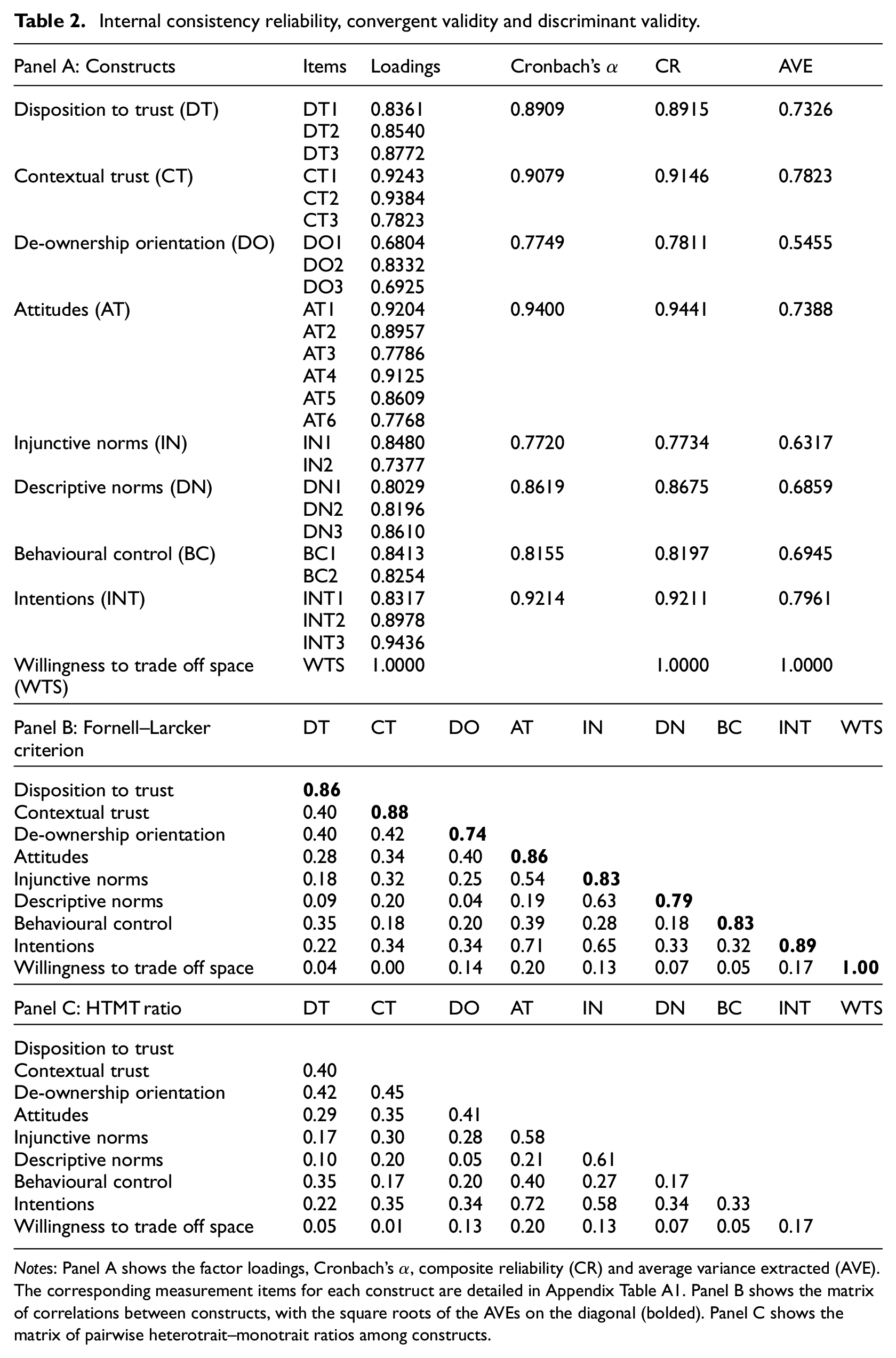
Notes: Panel A shows the factor loadings, Cronbach’s
The measurement model’s discriminant validity is confirmed by comparing the square root of the AVE of each construct with its highest correlation to any other construct. According to Fornell and Larcker (1981), the square root of the AVE for each construct should exceed its highest corresponding correlation coefficient. This validation is reported in Panel B. Additionally, this result is supported by the heterotrait-monotrait (HTMT) ratio values presented in Panel C, all of which fall below the threshold value of 0.85 (Henseler et al., 2015).
SEM: Structural model
Table 3 shows results from two structural equation models, including (model 2) and excluding (model 1) control variables. The models produce mostly consistent results, with the direction and magnitude of the significant coefficients aligning closely. This is underscored by similar goodness-of-fit statistics, where model 2 appears to have the best fit overall. Moreover, the coefficients’ magnitude in the first estimation remains consistent even after introducing control variables in the second estimation. The second estimation accounts for 30.9% of the variance in the ‘Attitudes’ construct, 59.6% in the ‘Intentions’ construct and 7.3% in the ‘Willingness to trade off space’ construct, exhibiting a higher explanatory power than the first. Both estimations account for about 17% of the variance in the ‘Contextual trust’ construct. It is pivotal to emphasise that both estimations yield a low explanatory capability for the ‘Willingness to trade off space’ construct.
Structural model results.
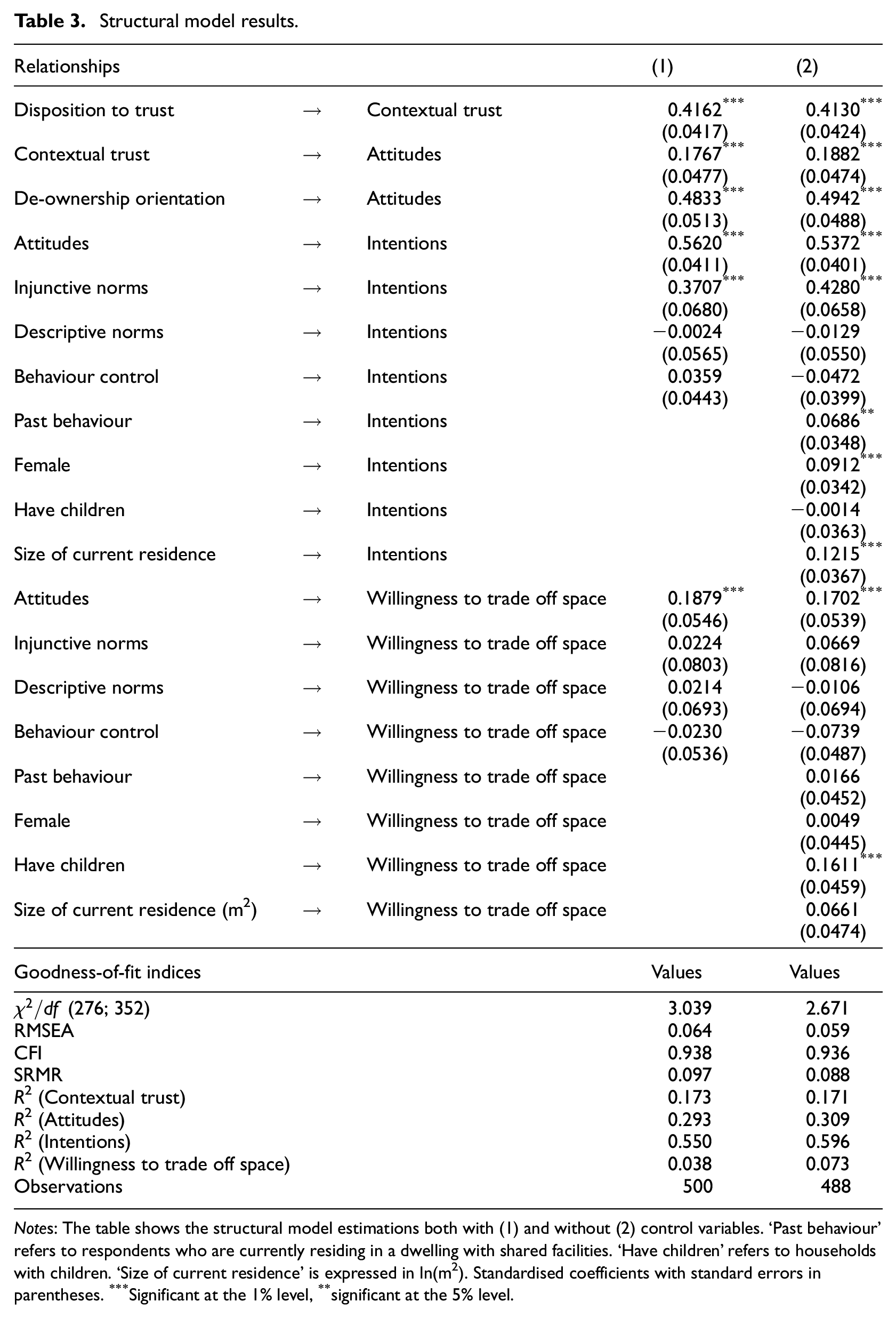
Notes: The table shows the structural model estimations both with (1) and without (2) control variables. ‘Past behaviour’ refers to respondents who are currently residing in a dwelling with shared facilities. ‘Have children’ refers to households with children. ‘Size of current residence’ is expressed in ln(m2). Standardised coefficients with standard errors in parentheses. ***Significant at the 1% level, **significant at the 5% level.
Hypothesis H1a, which proposes that homebuyers’ attitudes towards purchasing a dwelling with shared facilities are positively related to buying intentions, is validated by the significant coefficients of ‘Attitudes’. This relationship with ‘Intentions’ appears particularly robust, given its largest standardised coefficient ranging between 0.54 and 0.56. Following this, the coefficient of ‘Injunctive norms’, fluctuating between 0.37 and 0.43, further affirms the positive association outlined in hypothesis H2a. However, while both ‘Descriptive norms’ and ‘Perceived behaviour control’ were anticipated to correlate positively with buying intentions as per hypotheses H3a and H4a, the estimations do not bolster these hypotheses due to their non-significant coefficients.
Hypothesis H1b, which proposes that homebuyers’ attitudes towards purchasing a dwelling with shared facilities are positively related to their willingness to trade off space, is supported by the significant coefficients of ‘Attitudes’, ranging from 0.17 to 0.18. However, this is the only significant relationship in the hypotheses pertaining to space adjustments, as H2b (Injunctive norms), H3b (Descriptive norms) and H4b (Perceived behaviour control) are all rejected.
In the second estimation, the control variables, ‘Past behaviour’, ‘Female’ and ‘Size of current residence’, exhibit positive and significant relationships with ‘Intentions’. Conversely, while the ‘Have children’ variable does not demonstrate a significant relationship with ‘Intentions’, it is uniquely significant when related to the ‘Willingness to trade off space’.
The data underscores that ‘Disposition to trust’ profoundly influences ‘Contextual trust’, with coefficients ranging from 0.41 to 0.42. This result supports hypothesis H5, suggesting that a disposition to trust is positively associated with trust in collaborating partners or fellow residents. In the subsequent step, ‘Contextual trust’ significantly influences ‘Attitudes’, with coefficients ranging from 0.18 to 0.19. This provides support for hypothesis H6, suggesting that trust in fellow residents has a positive relationship with attitudes towards shared housing facilities. Lastly, ‘De-ownership orientation’ exerts a significant impact on ‘Attitudes’, with coefficients that notably range higher, from 0.48 to 0.49. This outcome supports hypothesis H7, indicating that attitudes towards sharing housing facilities are also positively influenced by homebuyers’ orientation towards de-ownership. A summary of the hypotheses and conclusions is presented in Table 4.
Results of hypothesis testing.
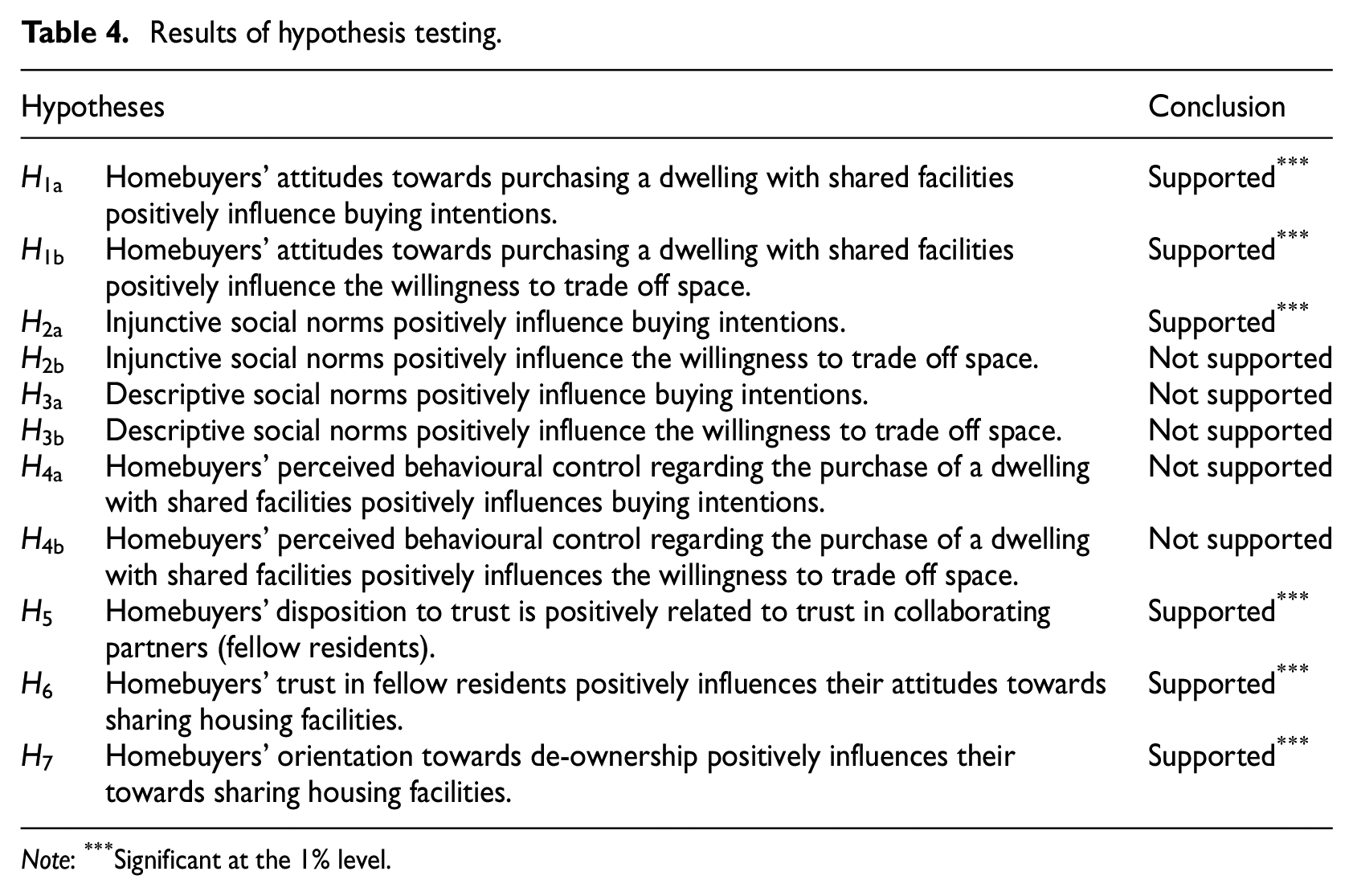
Note: ***Significant at the 1% level.
Discussion
Although dwelling size has historically been linked to increased residential satisfaction and perceived urban liveability (e.g. Dekker et al., 2011; Kabisch et al., 2022; Wang and Wang, 2016), our findings suggest that shared facilities can contribute to greater acceptance of downsizing floor space among prospective homebuyers. The data reveals an inclination among Norwegian homebuyers to compromise on dwelling size in favour of accessing communal amenities. On average, the desired dwelling size decreased by 15 m2 (a reduction of 15%) when participants were introduced to the concept of shared facilities.
Among the shared facilities, increased storage space and fitness rooms were most valued, especially in mitigating the perceived drawbacks of smaller living spaces. This highlights a clear demand for practical and health-related facilities, potentially reflecting the respondents’ need for efficient use of personal space and opportunities for on-site exercise. The attraction to guest rooms and event venues indicates a preference for spaces that facilitate opportunities for hosting visitors and social events like birthdays and family gatherings, but also meetings for condominium residents. Regarding the latter, Beck (2019) reports increased interest among Danes in living in housing that offers common dining opportunities. The low level of interest for communal gaming or activity space designed for children may suggest that families with young children consider such spaces less essential, finding greater marginal utility in storage rooms and other practical spaces. Another explanation could be that families primarily arrange playdates with friends outside the building – often with children they know from school or daycare – thereby reducing the perceived need for on-site activity areas. Overall, the strong preference for practical amenities, such as storage, fitness and social spaces, can inform the design and prioritisation of amenities in future shared-facility developments, better aligning offerings with residents’ actual preferences and lifestyle needs.
Access to these and other communal amenities can advance homebuyers’ urban capabilities, and, ultimately, wellbeing. Janssen et al. (2024: 334) define urban capabilities as people’s opportunities to utilise implemented place interventions in urban development projects, basically ‘to perform those functionings that he/she has reason to value for a worthy life in the urban place where he/she lives’. Interventions may be multifaceted, ranging from large policy efforts to small-scaled measures, including communal amenities in condominiums and other collective facilities which have the potential to make a difference in people’s daily lives (Janssen et al., 2024). For instance, access to office facilities might increase capabilities for working residents since it enables a more flexible work situation and can facilitate a better work–family balance; access to a hobby room/workshop can cater to residents’ creative passions; a fitness room provides opportunities for a more physically active lifestyle, etc. Besides, communal spaces enhance opportunities for social interaction with fellow residents, though this might come out as a negative outcome for residents who prefer to socialise in alternative ways.
Our results showed that attitudes emerge as the paramount predictor for homebuyers’ intentions to sacrifice floor space in favour of shared facilities, followed by injunctive norms. Descriptive statistics revealed a generally neutral stance towards shared facilities. However, a fairly high standard deviation implies the existence of distinct segments of consumers, with some expressing keen interest while others displaying pronounced reservations. The significant impact of injunctive norms on purchase intentions and the propensity to compromise on floor space underscores the weight that homebuyers place on societal opinions during housing decisions. Moreover, perceived behavioural control did not stand out as a significant determinant, which contrasts with some prior studies on sustainable housing (e.g. Judge et al., 2019; Sang et al., 2020; Tan, 2013).
Further, the research model posits that consumers’ attitudes towards sharing facilities are shaped by their trust and de-ownership orientation. While participants in the current study reflected high degrees of dispositional trust, there was a decline in trust levels when probed about their confidence in neighbours maintaining shared resources within a shared living context. Trust is a prime determinant of active participation in sharing (e.g. Botsman and Rogers, 2010; Möhlmann, 2015). The findings discussed above show that contextual trust robustly predicts attitudes, and, consequently, trust emerges as a pivotal element in shaping a favourable disposition towards purchasing apartments that offer shared amenities. Reducing conflict levels and building trustful communities requires sound governance, which implies the formation of clear boundaries, effective monitoring, sanctions for rule violations, conflict resolution mechanisms and local autonomy (Ostrom, 1990). In this respect, residents in commercial housing projects can draw on principles found in various non-profit co-housing cooperatives. For instance, Savini (2023) describes how establishing multiple thresholds of engagement in commoning processes (‘nesting’) help promote and sustain a sharing culture.
Additionally, this research aligns with existing literature that advocates the instrumental role of de-ownership orientation in collaborative consumption (e.g. Khalek and Chakraborty, 2022; Lindblom and Lindblom, 2017; Ni, 2021). The findings suggest that homebuyers willing to relinquish personal possessions in favour of accessing communal resources harbour a propensity to perceive shared facilities in housing positively. As such, the study amplifies the significance of de-ownership orientation as a salient explanatory variable in the domain of collaborative consumption, which has not previously been explored in this context.
Regarding the control variables, there is a nuanced variation in their influence on intentions and willingness to trade off space. The positive and marked influence of past behaviour on prospective intentions suggests that homeowners, having previously purchased residences with shared amenities, remain steadfast in their conviction regarding such arrangements, anticipating similar features in their subsequent homes. Intriguingly, females manifest a pronounced inclination towards the idea of homes with shared facilities compared to their male counterparts. Furthermore, intentions are positively influenced by the current size of the residence. The presence of children, on the other hand, exhibits a positive and significant influence on the willingness to trade off space. This highlights that family units potentially perceive a greater array of benefits from such housing paradigms than other demographics. The data reveals that respondents with children expressed a heightened interest in amenities such as playrooms and laundries in comparison to other participant groups.
Conclusion
From an environmental perspective on urban housing development, there is a compelling case for encouraging homebuyers to consider smaller living spaces. Estimates by the International Resource Panel (IRP) indicate that reducing living space up to 20% through more efficient use of space will cut greenhouse gas emissions from the production of building materials by 56–58%, saving 4–6 billion tons of CO2 equivalents, while an additional 3–3.5 billion tons can be saved through reduced energy demand (IRP, 2020). The IRP further claims that policies to encourage downsizing are missing since there is a general attention to maintaining standards for minimum dwelling sizes to secure decent living conditions. However, results show that homebuyers are willing to reduce floor area in exchange for communal amenities, particularly practical and health-related facilities like storage and fitness rooms. While this study focuses on shared facilities within apartment complexes, future research could explore shared outdoor spaces, such as communal gardens or yards, to address the desire for private backyards, which are often underutilised.
Through sharing practices, it becomes possible to envision pathways to downscaling that significantly cut emissions from the building sector without compromising liveability and housing qualities for the residents. These pathways must build on trustful residential communities since trust stands out as a crucial factor in enhancing positive attitudes towards properties equipped with shared amenities. In self-regulating communities, residents oversee maintaining equipment and shared facilities. Building trust among neighbours becomes especially crucial in such settings since the lack of legal requirements might lead to increased uncertainty among residents. Recognising this, developers and real estate professionals should proactively establish guidelines and norms for proper use, for example by organising workshops for the community. Additionally, homebuyers inclined towards de-ownership are more likely to recognise the benefits of shared amenities and, consequently, should become prime targets for marketing campaigns. Prior studies suggest that the inclination towards de-ownership is shaped by factors like the burdens of ownership, environmental considerations and perceived economic gains (Khalek and Chakraborty, 2022). Each of these can be viewed as potential benefits arising from acquiring properties with shared facilities. Highlighting these advantages in communication strategies can effectively stimulate consumer demand.
Footnotes
Appendix
Measuring items.
| Constructs | Items | |
|---|---|---|
| Disposition to trust (DT) | DT1 | I generally trust other people |
| DT2 | I generally have faith in humanity | |
| DT3 | I feel that people are generally honest | |
| Contextual trust (CT) | CT1 | To what extent would you trust that the neighbours would take care of the equipment that you owned collectively? |
| CT2 | To what extent would you trust that the neighbours would keep the common areas clean and tidy? | |
| CT3 | To what extent would you trust that the neighbours would report any defects or issues with the equipment? | |
| De-ownership orientation (DO) | DO1 | I am willing to lend/rent out things I own to others |
| DO2 | I am happy to borrow/rent things from others | |
| DO3 | For me, borrowing/renting equipment is a good alternative to buying/owning it myself | |
| Attitudes (AT) | Living in housing with shared facilities where one shares the use of various amenities would be … | |
| AT1 | … a poor solution for me (1) –… a good solution for me (7) | |
| AT2 | … impractical for me (1) –… practical for me (7) | |
| AT3 | … not important for me (1) –… important for me (7) | |
| AT4 | … unpleasant for me (1) –… pleasant for me (7) | |
| AT5 | … demanding for me (1) –… easy for me (7) | |
| AT6 | … socially challenging for me (1) –… socially stimulating for me (7) | |
| Injunctive norms (IN) | IN1 | People close to me believe that I/we should live in housing with shared facilities |
| IN2 | People close to me would like it if I/we lived in housing with shared facilities | |
| Descriptive norms (DN) | DN1 | Many people close to me live in housing with shared facilities |
| DN2 | Most people in my life situation live in housing with shared facilities | |
| DN3 | I know many people in my life situation who live in housing with shared facilities | |
| Behavioural control (BC) | BC1 | I/we can purchase housing with shared facilities if I/we want to |
| BC2 | I/we have the resources to purchase housing with shared facilities | |
| Intentions (INT) | INT1 | My next home will be a housing unit with shared facilities |
| INT2 | I will make an effort to find a home with good, shared facilities when I buy a house next time | |
| INT3 | Next time I buy a house, I hope to find a home with good, shared facilities | |
| Willingness to trade off space (WTS) | WTS | ln(SN1/SN2), where SN1 = Spatial Norm 1 and SN2 = Spatial Norm 2 |
| SN1 | What do you think is the appropriate size of a home for a person in your life situation? | |
| SN2 | What do you think is the appropriate size of a home for a person in your life situation, provided it comes with shared facilities you find relevant? | |
Acknowledgements
The manuscript benefitted significantly from the comments received from two anonymous reviewers.
Declaration of conflicting interests
The author(s) declared no potential conflicts of interest with respect to the research, authorship, and/or publication of this article.
Funding
The author(s) received no financial support for the research, authorship, and/or publication of this article.
