




Abstract
This article examines the impact of air-conditioning on the history of Wuhan, a Chinese city famed for the oppressive heat of its summers. It draws upon oral history testimony, ethnographic research, and written sources, to argue that air-conditioning has played an important yet underappreciated role in changing local culture, social interactions, and the urban environment. It begins by describing how citizens of Wuhan coped with heat in the Maoist era (1949–1976), examining official heatstroke prevention techniques alongside the everyday practices of local citizens, including the use of bamboo beds and air-raid shelters. It then examines the dialectical relationship between socio-economic and technological change that occurred following the introduction of air-conditioning. This new technology, which required people to close their doors on their neighbours, arrived at the same time that older forms of communal living were becoming untenable. Finally, this article examines the role that air-conditioning has played in creating and alleviating the urban heat island problem, a process of localised climate change that makes cities hotter than their hinterlands. It concludes by exploring how locals feel about urban heating, a problem that seems intractable in Wuhan, as it is throughout much of urban Asia.
Introduction
As the sun started to set, and the scorching heat of the afternoon began to retreat into the muggy calm of the evening, a change came over the neighbourhoods of Wuhan. Elderly people and children, who had until this point been clinging to the shade, now lugged basins of water out into the street and wet down patches of ground, washing away dirt and dissipating heat absorbed during the day. Next, stronger family members placed bamboo beds on the damp ground, marking out patches of territory for the evening. Here they would sit and while away the last few hours of sunlight, chatting with neighbours, eating on their bamboo beds, and playing games with friends. More basins of water were brought out, and people washed and cooled their bodies ready for sleep. Then, as night drew in, everyone laid back on their bamboo beds – the stillness of the night punctuated by crying babies, rumbling snores, and hands slapping away mosquitoes. Just before dawn, the sleepers roused themselves and made their way inside, bleary-eyed parents carrying slumbering infants. Back in their own beds, they would try to catch a few more hours sleep in the pleasant cool of the early morning. All too soon, the sun would rise again, stirring the city from its slumber and plunging it back into the burning heat of the day.
From the mid- to late-20th century, this was the way most people in Wuhan spent their summer evenings. With high temperatures and punishing humidity, the city is known as one of China’s ‘great furnaces’ (da huolu). Located in the middle Yangtze region, Wuhan is built on the remnants of a once vast wetland (Courtney, 2018). Though the marshes have been drained and the lakes reclaimed, during the summer a damp fug still rises, reminding the city of its watery origins, by enveloping it in a muggy haze (Fang, 1997). With a subtropical monsoon climate, Wuhan experiences comparable humidity to cities such as Mumbai or Singapore, but, being an inland city, it lacks the cooling coastal breezes that make the heat in these latter locations more bearable (Jia et al., 2019). In the summertime, the whole city stews in a breathless torpor – night and day. As the local author Fang (2013) remarked, living through a Wuhan summer is like being cooked in a giant steamer (zhenglong). Far from being just a temporary inconvenience, heat is a way of life.
Despite being a defining feature of local culture, heat is almost entirely absent from scholarly accounts of Wuhan – or China more generally. Even environmental historians, who obsess over long-term climatic changes and other aspects of meteorology, have largely ignored this quotidian feature of life. It is as if past events unfolded in a thermally neutral zone, devoid of the sweat, thirst, and discomfort that defines everyday life. In contrast to scholarly accounts, popular memories in Wuhan are dominated by stories about heat. When asking older residents how their lives have been transformed since their youth, it does not take long before they begin evoking scenes such as the ones described above, with neighbours and friends sitting on bamboo beds, wafting hand fans, and finding simple ways to alleviate the discomforts of the summer. One of the central objectives of this article then is to ask what kind of histories can emerge when we begin to treat heat not as the passive background to the past, but as a vital historical subject, shaping cultural, economic, and social life.
Wuhan changed in the 1990s. People still assembled outside to enjoy the cool of the early evening, but as night drew in, they withdrew into their apartments, sealing themselves off from the city. As private life crept indoors, bamboo beds disappeared from streets, taking an idiosyncratic mode of city life with them. When asked to account for this profound change in urban culture, scholars usually refer to the political and economic changes that have convulsed China since the 1980s – the decline of work unit system, the easing of the household registration system, the breakneck pace of economic development, amongst other factors (see Andreas, 2019; Solinger, 1999; Zhang, 2008). When asked to account for the same transformation, many residents of Wuhan offer a far simpler explanation – they were enticed into the interior world of their apartments by the allure of air-conditioning.
Neither of these explanations are wrong, but the former has enjoyed considerably more attention than the latter. While resisting simplistic technologically determinism, this article argues that air-conditioning played a significant role in urban change in Wuhan, and China more broadly. In doing so, it draws inspiration from scholars such as LeCain (2017), who have sought to revitalise materialist approaches to the study of history. For, alongside government policies and economic trends, it has been a heat exchange caused by refrigerant chemicals that has helped catalyse the profound urban and environmental changes witnessed over the past few decades. Stated simply, this article argues that a humble electrical appliance has helped to transform life in the city of Wuhan – and beyond.
Most historical studies of air-conditioning have focussed upon the experience of the United States, the birthplace of mechanical cooling. Drawing upon a social construction of technology approach, Cooper (1998) described how large cooling systems, designed to remove heat and humidity in industrial production, evolved into the smaller consumer appliances that later became ubiquitous in American homes. Other historians, such as Arsenault (1984), have focussed less on technological innovation and more upon the cultural impacts of air-conditioning, which has encouraged people to abandon the sociality of porches and withdraw into the privacy of their homes. Whereas Arsenault assumed that air-conditioning satiated a natural appetite for coolness, Ackermann (2002) argued the manufacturers helped to create this desire, inculcating new norms of thermal comfort within American consumers, transforming their cultural and bodily dispositions. While air-conditioning was habituating bodies to new hegemonic norms, it was also reshaping American cities, as the architectural historian Siry (2021) has demonstrated. The possibilities afforded by air-conditioning helped give rise to many of distinctive features of modern American building design, making possible the hermetically sealed high-rise glass-fronted edifices that have come to dominate urban skylines across the world since the mid-20th century.
The early history of air-conditioning in China bore similarities to the American story. The vast majority of people would, of course, never have come into contact with the technology. Yet those living in wealthy treaty port cities such as Shanghai and Hankou – one of the three historic cities that make up modern day Wuhan – might have encountered air-conditioning in the same kind of recreational spaces as their American counterparts – cinemas, ice-cream parlours, and dancehalls. The technological trajectories of the two nations diverged in the mid-20th century. In the United States, air-conditioning began to conquer the domestic sphere, with the invention of window units which could be installed by homeowners. Air-conditioning was no longer a complicated system but, rather, a simple appliance – control had been taken out of the hands of engineers and placed into the hands of household consumers (Cooper, 1998).
There was no comparable consumer revolution in mid-20th century China. Even if households could have afforded to purchase an expensive air-conditioning appliance – which most could not – and the electricity system was reliable enough to power it – which it was not – indulging in such a bourgeois luxury under the austere communism of Mao Zedong would have been considered politically unacceptable. Instead of pursuing thermal comfort, the regime used cooling technologies exclusively for heatstroke prevention (fangshu) – a form of occupational health designed to protect the wellbeing of workers in high-temperature environments. Even in this context, the use of air-conditioning remained minimal, with factories relying instead upon remedial measures such as ceiling fans, water curtains, and salted drinks. Outside of work, the people of Wuhan were left to find thermal comfort wherever it presented itself – sleeping outside on bamboo beds, creating homemade fanning systems, and retreating to cool underground shelters.
When domestic air-conditioning finally did arrive in Wuhan in the 1990s, it proved instantly popular. Since that time, China has grown to become the world’s leading manufacturer and consumer of room air-conditioning. By 2017, China was responsible for 70% of the global production of these appliances, 45% of which were installed within the country (International Energy Agency, 2019). Together with a raft of contemporaneous economic and social processes, the inexorable rise of air-conditioning facilitated a shift away from the older culture of the street, towards a new form of high-rise living, which has come to typify the pattern of urban development in China. Furthermore, the rapid growth of Chinese manufacturing has helped popularise air-conditioning throughout the broader region, precipitating the great cooling wave that has swept over much of Asia in recent years. By recalling the experience of Wuhan, this article contributes to a growing literature that looks beyond the story of the United States, to explore the global history of air-conditioning (Chang and Winter, 2015; Li, 2021; Mrázek, 2002).
By describing the impact of an imported product, this article builds upon the work of historians of technology who attempted to move away from focussing upon technological innovation, towards examining how technologies are adopted and adapted in differing socio-cultural settings (Arnold, 2013; Choi, 2017; Edgerton, 2011). It suggests that in order to understand the Chinese experience with air-conditioning, it is less illuminating to ask how engineers designed new technologies, than to ask why ordinary people were willing to invite this technology into their homes. To explore this question, this article draws upon data gathered through oral history interviewing and ethnographic fieldwork conducted over two decades in Wuhan. 1 This is augmented with written sources, ranging from media reports, to published memoirs, to more technical literature. While these sources help to reconstruct a particular story about Wuhan, the historical trajectory described has been echoed elsewhere in China and beyond.
Over the past few decades, much of Asia has witnessed a shift from passive to mechanical cooling, and a concomitant transformation in the way that citizens engage with urban space. This has had a dramatic effect upon the environment, on both local and global scales. Ironically, the pursuit of individual thermal comfort has made cities less comfortable, as the waste heat from air-conditioning appliances has contributed to the urban heat island effect. Meanwhile, the energy demands of these appliances contribute to the larger scale problem of global heating. A final objective of this article, therefore, is to offer a qualitative account of the growing problem of urban heat islands – a trend more often described using quantitative analysis – and to describe the role air-conditioning has played in urban heating. As this technology has not just insinuated itself into the lives of the people of Wuhan but can now be found in cities throughout the world, this article sheds light on an increasingly pressing problem affecting global urban environments.
City of bamboo beds
The cotton mills of 1960s Wuhan were unbearably hot places to work. Xu Mintan recalled how, in her youth, she had to conduct physically demanding labour for eight hours a day standing next to whirring engines, which not only emitted a deafening noise but also vast quantities of waste heat. Her only respite from these sweltering conditions was a ceiling fan which wafted air down onto the workers. Zhou Pingyuan was slightly more fortunate. Though she had to endure similarly oppressive conditions, working behind a hot lathe, at the height of the summer, her factory ordered large blocks of ice from the local ice works and placed them in front of standing fans, which blew cool air over the workers. Such measures had been common since the early 1950s, when the nascent Maoist regime (1949–1976) began promoting a form of occupational health known as heatstroke prevention (see for example Li, 1956).
In keeping with the ideological precepts of the Communist Party, exposure to heat was understood to be an essentially class-based problem. Figure 1, taken from the educational pamphlet The Story of Heatstroke, demonstrates how the virtuous classes of the proletariat, soldiers, and peasants, were understood to suffer disproportionately as a result of their occupations. Heatstroke prevention may have been couched in terms of benevolence and class consciousness, but it was also in keeping with the productivist objectives of the state. Drawing inspiration from the Soviet Union, the government drew up regulations determining maximum working temperatures, and stipulating periods of rest and methods of protection from heat (Duan, 1957).
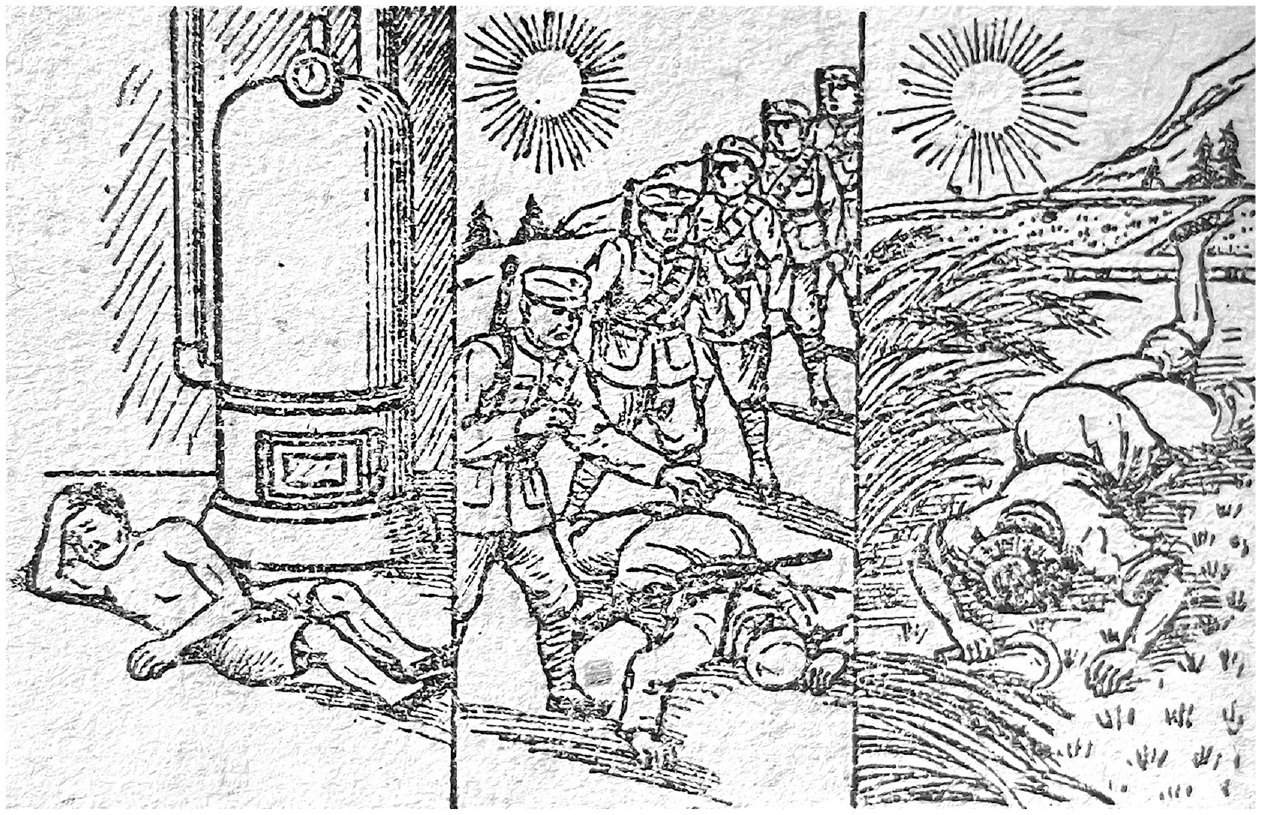
The Story of Heatstroke (Su, 1951).
Workers in sectors such as steel production and automobile manufacturing were particularly susceptible to heat stress. Lacking air-conditioning, these sectors relied upon other technological solutions, including heat screens, misting fans and water curtains (Renmin Ribao, 1961) Workers were also granted privileged access to medical and dietetic treatments for heat. Yao (2023) has described how factories in Shanghai that had once manufactured soft drinks such as Coca Cola, were now directed to produce salted soda drinks. These simple isotonic drinks were designed to replenish the salt that workers in hot industries lost through perspiration. The substitution of sugar with salt in such beverages created a functional yet somewhat unpalatable solution to the problem of heat. This typified the approach of the Maoist state, which was concerned less with comfort and more with establishing conditions tolerable enough for workers to maintain industrial output.
Outside the workplace, the state did little to alleviate the problem of heat. People were left, instead, to seek out thermal comfort wherever they could. Some swam in local lakes and rivers, although industrial effluent gradually rendered this recreation less pleasant. Others consumed cooling drinks, such as sour plum juice (suanmei tang) and cold green bean soup (lüdou tang). The most common way to alleviate heat was through the practices described at the outset of this chapter. People set out bamboo beds – or sometimes just wooden planks – and slept outside alongside their neighbours. These beds were a time-honoured vernacular cooling technology. Thin strips of bamboo, grown in mountain groves outside the city, were stretched over a frame to form a permeable mattress, which allowed air to circulate around the body. (Fang, 2013). While beds like these had been used for centuries, communal sleeping was a more recent development. It was a product of the very particular mode of urban governance that emerged in the Maoist era.
Sleeping outside was nothing new. Up until the early 1950s, the Li family had spent their summers in their large private courtyard, lined by their family home, a pigsty and a tofu-making workshop. Though located in a busy commercial district, with the gates closed this courtyard became an island of tranquillity away from the bustle of the streets. Courtyards such as these were one of many design features that helped the relatively wealthy to cope with heat. Vernacular architecture made extensive use of passive cooling and cross-ventilation, in some instances even incorporating cooling ducts (lengxiang) through which servants wafted air with fans (Li, 2021). Courtyards and cooling ducts were beyond the means of most households in Wuhan, who instead sought out any cool spaces they could, within a tangled knot of cramped lanes and alleyways. Everything changed for the Li family in 1950s when the family’s tofu workshop was taken into joint private–state ownership (gongsi heying). Soon, outsiders came to work and live within their once private courtyard home. Eventually, the daughter of the Li family found employment in a tractor factory and moved into an apartment provided by her work unit (danwei).
The fate of the Li family was typical. Throughout China, the commodified property market was replaced by state-allocated housing, with work units helping to radically reshape the social geography of cities (Davis, 1993). By the late 1950s, 90% of urban residents belonged to a work unit (Lincoln, 2021: 210). Members not only worked together, but often lived in the same neighbourhoods, sharing welfare and recreational services (Andreas, 2019). This fostered the kinds of close-knit communities in which collective sleeping became possible. ‘It was very safe to sleep outside then’ as one retired factory worker told me, ‘At that time, you could leave your door open all night and nobody stole anything’. This was a typical refrain, expressed by numerous interviewees. ‘We ate together and slept alongside one another’, another former worker remembered, ‘at that time our neighbours were like our family’. This sense of communal security was enhanced by the fact that, in many cases, work unit neighbourhoods were walled communities, with access controlled through monitored gates (Bjorklund, 1986). It was this unique context, of community and surveillance, that gave rise to the city of bamboo beds.
By the late 1960s, some work units had created another idiosyncratic urban form which members exploited in order to alleviate heat. As Cold War tensions mounted, and China feared both Soviet and American nuclear attack, Mao commanded the population to ‘dig deep tunnels and store grain everywhere (shen wa dong, guang ji liang)’. Soon, millions of citizens began excavating air-raid shelters throughout urban areas. The cotton worker Xu Mintan joined her work unit in digging out a network of tunnels in a local hillside. This was eventually so extensive that it housed a canteen, a medical station, and even a cinema. Fortunately, the efficacy of these shelters as protection from nuclear attack was never tested. Yet work unit members soon discovered that they offered excellent protection against the heat. At the height of the summer, Xu and her colleagues would seek out the coolest inner reaches of the tunnels, lighting their way with burning torches. The cooling effect of air-raid shelters was so effective that some factories even developed an ersatz form of air-conditioning, which consisted of fans drawing cold air from underground shelters and blowing it out into workshops (Beijing shi weisheng fangyi zhanbu, 1972). Today, in some cities, Mao-era tunnels are still used as collective heat shelters for urban residents (Renmin Ribao, 2010).
The nostalgia which older Wuhan residents display when recalling summer evenings spent on bamboo beds or in tunnels is not unusual for members of their generation (see e.g. Lee, 2007). The decline of outdoor sleeping is, in this respect, subsumed within a broader narrative about the perceived erosion of community and equality now associated with the Mao era. As is so often the case, these nostalgic memories are highly selective. The fact that many people were not free to sleep on the streets is conveniently overlooked. Despite the grandiose claims of the Maoist state to have liberated women from their former cloistered seclusion, one interviewee recalled how her father forbade her from spending evenings outside, considering it unseemly for neighbours to see her sleeping. She was not the only women left sweltering in her apartment. Fang (2013) recalled how some families kept their daughters off the streets due to the fear of sexual assault. Ironically, women left alone in apartments were far more vulnerable. In other instances, people were forced to stay inside for political reasons. Wang Husheng, the son of a Communist official, recalled how his father would not allow him to outside as he believed it was too dangerous. Given that Wuhan was a hot spot during the street battles of the Cultural Revolution, this was perhaps reasonable (Wang, 1995). Those who look back on the era of outdoor sleeping with nostalgia may not have realised – or perhaps have chosen to forget – the myriad prohibitions and fears experienced by those conspicuously absent from the streets.
Despite these exclusions, most people in Wuhan seem to have spent summer evenings outside. They felt comfortable sleeping alongside neighbours who belonged to the same exclusive territorial enclaves and were inculcated with a similar collectivist ethos. ‘At that time’, as one elderly gentleman put it, ‘we were all hot, but we were all hot together’. There was, it seems, a sense of solidarity in shared physiological discomfort. From the 1980s, this egalitarian ethos began to decline, as economic changes eroded stable employment and increased income disparities (Davies, 2005). As recompense, the market also offered up a miraculous new appliance, which promised urban citizens a new way to spend the summer. Air-conditioning arrived as cold comfort for those no longer able to sleep outside.
The birth of cool
The rise of Deng Xiaoping in the late 1970s is often depicted as the clear dividing line between collective and market economies. This is an oversimplification, which fails to appreciate the tenacity of Mao-era institutions throughout the 1980s. The work unit system is a case in point. Andreas (2019) has described how, despite the increased influence of market reforms, the work unit system survived and even expanded in the 1980s, only beginning to decline at the end of the decade, as more radical market reformers gained influence. It was not until the 1990s, that urban China witnessed the rapid and wholesale privatisation of housing (Davies, 2005). As older neighbourhood forms persisted, so too did older ways of coping with heat, albeit now augmented by new consumer cooling appliances. Within this interstitial era – where established collectivist institutions persisted under novel economic circumstances – the defining heat beating technology was not air-conditioning, but another consumer appliance – the electric fan.
Treaty port foreigners first introduced electric fans to Wuhan in the early-20th century, and it did not take much time for the local population to start making their own (Liu, 1936). While fans proved popular with wealthier citizens, most people had neither the funds nor the electricity necessary to use one (Tan, 2021). Electric fans continued to be used in settings such as factories after 1949, as part of heatstroke prevention efforts, but they remained beyond the means of most households. In the domestic setting, people continued to rely upon hand fans, which came in a range of styles from simple woven bamboo to more ornate designs made from feathers. One former street cleaner recalled how her husband had bought her a feather fan for their wedding in the 1970s, that was of such high quality that she was still using it decades later. As with bamboo beds, fans were a means of coping with the heat that strengthened communal bonds. Parents and grandparents wafted hand fans over sleeping children. Some families even rigged up canvas sheets on pulleys, taking turns to pull the rope. This was a more egalitarian version of the hand-pulled punkah – a large cloth fan pulled by a servant, which was used to cool perspiring British imperialists in the 19th century (Chang, 2016: 110).
Things began to change as economic reforms fostered new forms of consumerism. ‘We bought our first electric fan in 1983’, recalled one elderly man. ‘I had a good job. Electric fans were very expensive then, costing 100 RMB, which was more than many people earned in a month’. As wages rose and prices fell, electric fans became ubiquitous. In the summertime, as families made their way down to the street, many would now carry a portable fan, to be propped up on the end of their bamboo beds. These changes were not limited to Wuhan. The market for electrical fans grew rapidly throughout China, with three thousand new companies established by 1980. Before long, the press was publishing articles describing an ‘electric fan war’ (dianshan dazhan). Eight hundred companies fell in the first year alone, and by 1985 there were 600 more casualties (Renmin Ribao, 1990). What finally burst the bubble for electric fan manufacturers was not the overcrowded market, but the arrival of a rival technology, which further revolutionised the way people coped with heat – air-conditioning (Renmin Ribao, 1994).
As with electric fans, there were earlier precedents for this technology. Large air-conditioning systems had been incorporated into the architectural design of some buildings in cities such as Wuhan and Shanghai in the early-20th century. They were used to entice customers into places such as cinemas, restaurants, and dancehalls. They could also be found in luxurious train compartments (Shenbao, 1932, 1936, 1948). The nascent development of mechanical cooling in Chinese treaty ports mirrored the development of air-conditioning in colonial Asia, arriving first to serve the needs of European and American elites, before later being adopted by local communities. Whereas post-colonial states such as Singapore embraced air-conditioning, under Mao this bourgeois luxury fell from favour (Chang and Winter, 2015). If cinemas were cooled at all in the People’s Republic, it was with a ceiling fan (Renmin Ribao, 1952). Even in the late Mao era, the only forms of air-conditioning that could be found in Wuhan were those used in factories, where their primary function was to cool produce rather than people (Hubei Sheng Qing Gongju, 1972).
Things began to change at the end of the 1970s, as China opened to travel from those regions of Asia, such as Hong Kong and Singapore, where consumers had grown accustomed to mechanical cooling. The revival of air-conditioning for thermal comfort began in the transportation industry. A small number of air-conditioned luxury trains had been maintained in the Maoist state, to provide luxurious conditions for foreign guests (Tiedo Cheliang, 1967). In 1984 Chinese travellers were finally able to enjoy similar privileges, as trains began to add air-conditioned carriages to accommodate those willing to pay a more expensive fare (Renmin Ribao, 1984). It was not until the 1990s that air-conditioning began to infiltrate the domestic sphere. The rapid introduction of air-conditioning initiated yet another commercial war, with companies fighting over the lucrative market. The victors in this conflict stood to make huge profits. Less than a decade after its introduction, the press was reporting that air-conditioning could be found in 44% of urban households (Renmin Ribao, 2002).
In the furnace city of Wuhan, the figures were significantly higher, with nearly 70% of surveyed households owning air-conditioning by 2002 (Pan and Chen, 2002). Another study found ownership rising from eight per 100 households in 1993, to 111 per 100 by 2002, indicating that some households now owned multiple units (Fang, 2004). The qualitative evidence supports these statistics. One interviewee recalled how, by this time, air-conditioning was considered such a vital necessity that it counted alongside televisions and washing machines as one of the vital appliances that any respectable groom’s family would be expected to purchase for the apartment of a newlywed couple. Far from slowing down, the market continued to grow, with nationwide sales increasing five-fold between 2000 and 2017 (International Energy Agency, 2019).
Air-conditioning sealed the fate of the older culture of heat alleviation in Wuhan. Whereas electric fans could be carried to the street, air-conditioning only works inside, with windows and doors closed. To take advantage of this new technology, people had to abandon their bamboo beds and retreat into the privacy of their apartments. Some readily embraced this new epoch of mechanical comfort. ‘My life is heaven now, in comparison to the hell of the past’, Zhang Guoqing remarked. It is easy to see why he would feel this way. When the nostalgic veneer is chipped away, most people admit that sleeping outside – amidst noise, dirt, and insects – was far from ideal. All hell would break loose when Wuhan was struck by one of its dramatic summer storms, and the streets transformed into a mass of scrambling limbs and bamboo beds, as sleepers rushed for cover (Fang, 2013). It is little wonder, then, that many people embraced the air-conditioned lifestyle. In a furnace city, this product virtually sold itself. A humble appliance, it would seem, seduced a whole city into abandoning an established way of life.
Before attributing the great retreat indoors to a form of technological determinism, however, it is worth examining the broader context of urban change that was sweeping over China at the time. As noted above, the once dominant work unit system began to break down in the late 1980s. This occasioned a rapid shift in the housing market, as the anthropologist Zhang (2008) has described. As private real estate replaced public housing, there was a ‘dual cultural process of space making and class making’ (Zhang, 2008: 24). Under the Maoist regime, even high-status figures such as factory managers lived in the same neighbourhoods as their workers, enjoying relatively few material privileges. Now, growing income inequalities were translated into spatial inequalities, as the range and quality of housing began to vary greatly (Davies, 2005). While the relatively wealthy were able to move into fairly opulent apartments, many of the 50 million workers who lost their jobs due to the restructuring of state-run industrial enterprises, found they had also lost access to the space and facilities offered by work unit membership (Andreas, 2019: 198). People were pushed into their apartments due to the privatisation of once communal spaces, at exactly the same time that they were being pulled inside by mechanical cooling. This dialectical relationship between technological and socio-economic transitions reshaped habits and space, with the air-conditioner serving as both as an emblem and agent of urban change. Those who might seek to resist such changes, soon found themselves confronted with another pressing factor. As life inside was cooling down, the world outside was heating up.
Life in an urban heat island
‘Wuhan is much hotter than it used to be, it really is, it never used to be this bad in the past’. The observation, made by a retired professor, is one that has been made by people from all kinds of backgrounds. It would be easy to dismiss such observations as part of the avalanche of nostalgia that so often advances when older people are asked to describe the changes they have witnessed over their lifetime. Yet in this instance, this observation is borne out by data gathered by climate scientists. Measured temperatures throughout Hubei Province, where Wuhan is located, have risen across the board since the 1960s. Yet the temperature of urban regions has grown at a far greater pace than their rural counterparts, particularly since the 1990s (Jia et al., 2019). This is due to the phenomenon known as the urban heat island effect, whereby the temperature of cities becomes artificially elevated relative to the surrounding countryside. Although this phenomenon has been known throughout history, and affects cities in all regions, it has become a particularly acute problem with the development of modern industrial cities (see Yow, 2007).
There are numerous anthropogenic causes of the urban heat island effect which can be witnessed in Wuhan. Urbanisation reduces the amount of green space, diminishing the cooling effect of transpiration, while the artificial building materials that replace vegetation radiate heat back out into the city (Mohajerani et al., 2017). While Wuhan has been a large city for centuries, the pace of urbanisation increased dramatically in the late-20th century, with urban land growing by a staggering 58% between 1988 and 2004 (Huang et al., 2019; Jia et al., 2019). Architecture has also changed, as a largely wooden city gave way to low-rise concrete apartment blocks, which have, more recently, been joined by a phalanx of glass-fronted towers. These tall buildings exacerbate the urban heat island effect by trapping heat within the artificial topography, causing what is known as the urban canyon effect (Louiza et al., 2015). Meanwhile, the machines upon which the population of Wuhan have come to rely for their daily lives produce large quantities of waste heat. Traffic is a prime culprit, as motorists have replaced cyclists and pedestrians. Another culprit is the very technology designed to ameliorate high-temperatures – air-conditioning. The reason for this is that air-conditioning works by transferring indoor heat to the external environment (Roth and Chow, 2012). When enough people use air-conditioning, a whole city can get hotter.
There is a bitter irony in the fact that the individualised pursuit of thermal comfort has contributed significantly to the collective problem of thermal discomfort. It is for this reason that George (2000: 16–17) described the appliance as a ‘selfish technology’ – one used by individuals to cool themselves down at the collective expense of their communities. Though this seems a neat formulation to explain the phenomenon of air-conditioning, characterising the decision to use mechanical cooling as one of individual consumer choice fails to appreciate the collective dilemma facing people living in rapidly heating cities. Cooling has increasingly become a necessity, particularly as dangerous heatwaves are now striking with increased frequency and intensity. In this context, the negative consequences of air-conditioning use are more a tragedy of the commons than an individual moral failing. This was illustrated painfully in 2022, when a record-breaking heatwave precipitated such a marked increase in air-conditioning use, that the government was forced to ration the use of this technology in supermarkets and shopping malls, in order to protect its ailing energy sector (Tang, 2022). In such a context, it is difficult to know how ordinary citizens would cope without this so-called selfish technology.
The overuse of air-conditioning is indicative of a distinct lack of alternative cooling options. In the early 1990s, the decision to purchase an air-conditioner in Wuhan was truly an individual choice. Initially, few were in a position to make this choice. Wang Bolin was able to buy a unit long before most people he knew, because he was a party official with privileged access to imported electrical goods. Later, as both domestic production and wages increased, air-conditioning shifted from being a prestigious luxury to a commonplace appliance. By the early 2000s, even relatively modest households – ones that lacked toilets, washing machines, or showers – had air-conditioning. People purchased this appliance not because they wished to luxuriate in their own selfishness, but because they had few alternative options to make the heat tolerable. Many people in Wuhan understand, at least partially, that this has caused their city to grow hotter. ‘In the past’, as Zhang Guoqing pointed out ‘sleeping outside was much better than today. There was no air-conditioning and no car exhausts, so the temperature was cooler than it is today’. As this quotation suggests, heat was only one factor that pushed people inside. The rapid growth in the volume of traffic not only contributed to problem of waste heat, but also increased atmospheric and noise pollution. Likewise, a burgeoning night-time economy filled streets with a cacophony of sound and a steady stream of potentially dangerous strangers. All these reasons conspired to make the old city of the bamboo beds considerably less attractive.
While some enjoyed cool privacy, others simply endured it, developing a deep antipathy for air-conditioning, even as they grew dependent upon it. Song Liyuan described how she felt excessive time spent in her air-conditioned apartment was not good for her health, as cold atmosphere and recycled air exacerbated her aches and pains. Such fears seem to be fairly common. In the early 1990s, the media reported on the dangers of a mysterious condition that it described as ‘air-conditioning syndrome’ (Renmin Ribao, 1993). This health scare echoed a concern voiced by traditional medicine practitioners in the early-20th century, who had warned people that electric fans would harm their body by cooling it too quickly (You, 1934). Others dislike air-conditioning for moral rather than health reasons. For Zhou Pingyuan, a woman proud of having spent more than thirty years labouring in heavy industry, a predilection for air-conditioning and television exemplified the indulgent nature of the younger generation, who had lost the value of frugality (jieyue) which was a hallmark of the collective era.
Despite this antipathy, shared by a vocal minority of interviewees, few were willing to eschew the comfort of mechanical cooling altogether. Wilhite (2009) has described how air-conditioning has grown throughout the world through a co-evolution of demand ‘where changes are due to both individual choices but also to the ways that choice alternatives are structured’ (p. 85). In Wuhan, alternatives have been structured not just by long-term changes to urban space and housing, but also by the transformation of the local climate. Hence, even those who wish to live without air conditioning find themselves with little choice.
Conclusion: City of foldaway stools
‘How can I say it, that time had that its own kind of happiness, this time has its own kind of happiness. Now we are happy because everything is cleaner and tidier. In the past people were closer. Your neighbours were just like your family’. Wu Qingguo is a veteran of over 70 Wuhan summers. Like the other interviewees whose memories have informed this article, he is not a naive victim of nostalgia. He has not forgotten the discomforts of the past. He is aware, however, that alongside initiating a marked improvement in his material wellbeing, mechanical cooling has helped to change the culture of his city. The old culture of the bamboo bed has been consigned to memory, commemorated in public art as a symbol of a historic epoch, as we see in the statue in Figure 2, on a popular Wuhan shopping street. For Wu, this cultural change did not destroy his happiness, it merely substituted it for a new kind of happiness. Social comfort was traded for physiological comfort, conviviality for convenience, equality for tranquillity. Would he like to return to the past, to sleep once again on the street, pitching his bamboo bed up amongst neighbours who treated him like family? ‘Some people like a lively atmosphere, some people like the quiet. Right now, I like the quiet’.
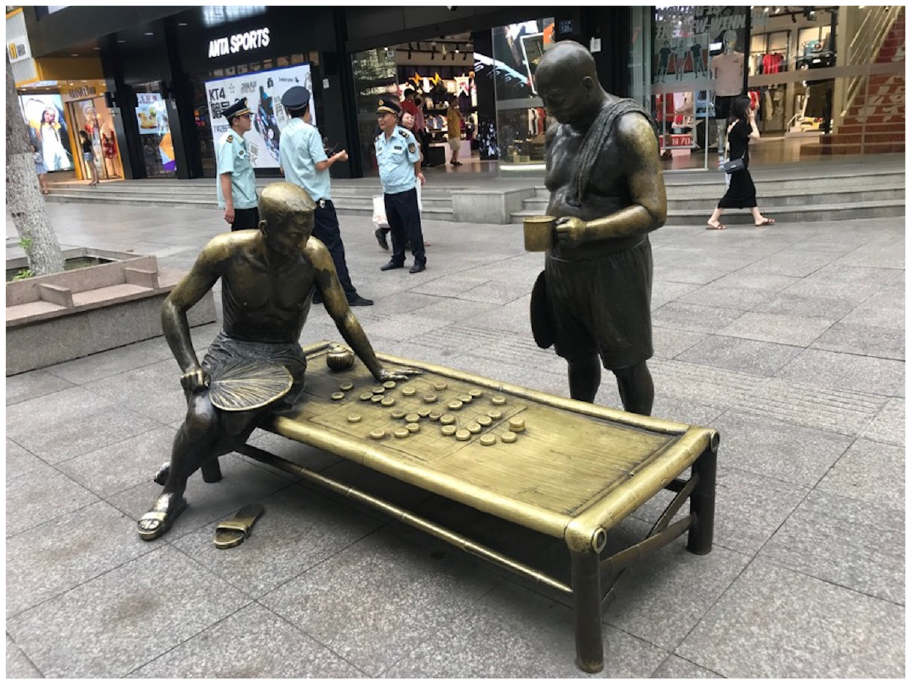
A statue commemorating bamboo bed culture on Jianghan Road (photograph by the author).
This was a ridiculous question. The technological transformation that has been described in this article did not come with a reverse gear. Like urban citizens throughout Asia – throughout the world – the people of Wuhan find themselves locked in a trajectory of path dependency. The appliances they use to keep cool are entangled within a Gordian knot of technological, economic, and environmental processes that seems impossible to untie. Those fumbling for their air-conditioning remote controls in sweltering apartments, have been abandoned to live as individuated consumers within a collective feedback loop – the hotter their city gets the more they need to cool their homes, the more they try to cool their homes the hotter their city becomes. Meanwhile, the local dynamic of urban heating is unfolding within the broader crisis of global climate change. Once again, air-conditioning has become a prime culprit, accounting for more than 10% of total electricity growth in China since 2010, with this share rising to as much as 50% of the peak electricity demand on extremely hot days (International Energy Agency, 2019).
Though China may now be one of the leading consumers of air-conditioning, it is hardly alone in embracing this technology. The techniques that past generations in Wuhan used to cope with heat, were, perhaps, idiosyncratic to the Maoist state. Yet they bore a family resemblance to other low-energy techniques found throughout hotspots around the world. Likewise, the loss of these techniques has been a common experience. Domestic air-conditioning became increasingly commonplace in the United States from the 1960s, yet it was not until the 1990s that it began to conquer Asia. Its impact upon the culture and environment of cities is only now becoming apparent. In relating the experience of one Asian city, this article has sought to initiate a broader discussion about the great mechanical cooling wave that has been breaking across much of the continent over the past few decades, with increasingly dramatic social and environmental consequences. Unfortunately, as both local and global heating causes urban temperatures to rise, it seems the market for air-conditioning is unlikely to diminish. This is despite the fact that the heat and carbon emitted by this technology have contributed to both of these heating processes.
Finding themselves confronted with this dilemma, some older citizens of Wuhan have found ways to adapt a time-honoured heat alleviation tactics to the conditions of the modern city. As temperatures soar outside, they seek out new forms of indoor public spaces where they enjoy free communal air-conditioning. They sit on benches and foldaway stools in spaces such as supermarket lobbies or underground food courts, socialising with friends, and availing themselves of the free mechanical cooling, supplied not through an individual appliance, but through a centralised air-conditioning system. They are often unwelcome. Shopping malls, as private spaces, use security guards to eject those they suspect of not being legitimate customers. Preventing the public from using public spaces is more difficult, as the municipal authorities governing the new underground railway system discovered in the late 2010s. As gleaming new stations with centralised air-conditioning systems opened throughout Wuhan, before long they were packed with people seeking respite from the summer heat. The station authorities soon began posting signs designating loitering as a proscribed activity, alongside such uncivil acts as eating, hawking, or begging. Yet there is a wisdom in this collective solution to an individualised problem – sharing a public system rather than using an individual appliance. This roving bands of pensioners, their foldaway plastic stools serving as proxies for bamboo beds, were searching for a new way to make their communities cool.
Footnotes
Declaration of conflicting interests
The author declared no potential conflicts of interest with respect to the research, authorship, and/or publication of this article.
Funding
The author disclosed receipt of the following financial support for the research, authorship, and/or publication of this article: Ministry of Education (Singapore) Academic Research Fund, Tier 2 Grant, MOE2018-T2-2-120. Heat in Urban Asia: Past, Present and Future
