



Abstract
The intensity of Bangkok’s urban heat island during the dry season can be as high as 6–7° and in the densest areas the urban heat island’s intensity is approximately 4°C. The urban heat island thus is causing a city already oppressively hot to become even hotter. The urban heat island also contributes to health problems, such as heat stroke and fatigue, particularly to those with lower incomes. We historically examine the numerous causes of Bangkok’s urban heat island, such as the lack of green space, high levels of air conditioning, and high rates of vehicle exhaust fumes. For example, Bangkok has only three square metres of green space per person which is one of the lowest in all of Asia. Local governmental weaknesses, administrative fragmentation, prioritisation of economic growth and limited buy-in from the private sector have intensified Bangkok’s urban heat island, and imposed numerous barriers to actions that would reduce heat, such as establishing green space, restructuring urban transport or creating and following an effective urban plan. Ideas mooted to remedy these problems have yet to come to fruition, largely because of bureaucratic inertia, fragmentation and divisions within the relevant lead organisations. The political ecology lens also reveals how political–economic processes largely determine the vulnerability of urban inhabitants to heat, but also that thermal governance is highly unequal and unjust. Those who contribute to and profit the most from Bangkok’s urban heat island, such as real estate developers, shopping mall owners, and automobile corporations, suffer the least from its effects, whereas low-income communities hardly contribute to this problem, yet are the most vulnerable.
Introduction
Global warming is causing more frequent, longer, and more severe heatwaves. Record-breaking temperatures are already occurring more frequently than they would without anthropogenic global warming. Heatwaves have become a serious global public health threat. Between 1998 and 2017, heatwaves resulted in more fatalities globally than all other environmental hazards, with some groups particularly vulnerable (Bassil and Cole, 2010), notably in expanding urban areas. Urban populations are increasingly exposed to climate-related disasters, including heatwaves, whose impacts may be compounded by ecological changes produced by rapid urbanisation, such as land use change, the filling in of waterways and land subsidence. As both urbanisation and climate change intensify, the increased temperature rise is expected to disproportionately impact cities due to the phenomenon of urban heat islands (UHIs), where urban temperatures are higher than those in nearby rural areas due to anthropogenic environmental changes (Oke, 1982), such as the loss of tree cover. UHIs intensify heatwaves, where temperature thresholds are passed more often, and exacerbate other urban environmental risks, such as air pollution, prevalent in many Asian cities (Frazier, 2019). This paper examines the impact of UHIs in Bangkok, the capital of Thailand, through a political ecology perspective, with particular reference to the city’s limited green space, since few such studies currently exist in Asia (Aflaki et al., 2017). Asia has historically been central to discourses on heat, and remains so today (Williamson, 2020), even as heat waves worsen globally.
An urban political ecology (UPE) perspective is valuable for examining UHIs, where landscapes and urban infrastructures of cities are ‘historical products of human-nature interactions’ (Keil, 2003: 724) which are ‘controlled and manipulated and serve the interests of the elite at the expense of marginalized populations’ (Swyngedouw and Heynen, 2003). Cities are both tangible, built environments, and social products aimed at circulating capital, including people and commodities, hence ‘founded upon the exploitation of the many by the few’ (Harvey, 1973: 314). Urban political ecologists have extended this, viewing the city as a ‘site where ecology, economy, and society collapse on one another and must be untangled’ (Sassen and Dotan, 2011: 825). Thinking of the city as a socio-spatial hybrid enables us to see how the ‘social production of urban space unevenly distributes vulnerability to hazards, exposure to risk and ecological breakdown’ (Murray, 2009: 171) including, increasingly, the impacts of urban heat partly because spaces of protection against these threats, such as parks and tree cover, are unevenly distributed within cities.
As cities grow, asphalt, concrete buildings and roads displace trees and vegetation increasing urban heat absorption and storage. These impervious surfaces also cause heat to be more slowly released at night than does natural ground cover. Skyscrapers and streets trap wind paths, thereby increasing heat. Moreover, anthropogenic sources of heat, including vehicles, industry, and air conditioners, discharge additional heat which is trapped close to the ground. Urban shade vegetation and green space modify and reduce the intensity of UHIs. Higher urban temperatures are also combined with higher humidity, which is a critical influence on respiratory diseases. These impacts influence the extent of urban climate injustice and inequality. UHIs intensify the effects of heat waves, and those most vulnerable to extreme heat events often live in the poorest neighbourhoods with the highest UHI intensity (Wilhelmi et al., 2013). During a 2014 heatwave in Portland, Oregon, poor and non-white populations had a higher risk of heat exposure (Voelkel et al., 2018). Other studies have similarly found that areas in the US which were redlined and thus where non-white populations are overrepresented have higher land surface temperatures (Li et al., 2022; Wilson, 2020). Such situations recur in Asian cities (Mabon, 2020; Mitchell et al., 2021). Living in poor quality housing, combined with limited or non-existing cooling, results in lower-income households suffering more from heat waves (Harlan et al., 2007). Less directly, living in areas with high levels of crime and limited public amenities may make vulnerable groups, particularly the elderly and ethnic minorities, more likely to suffer and die from heatwaves because of reluctance to leave their homes (Klinenberg, 2015). Low-income groups, especially in the Gulf and in Asia, are more likely to experience heat stress, including riding in open-top vehicles and working outdoors.
In contrast, the rich and middle-class in tropical countries may work and live in offices, skyscrapers and shopping malls, whereas other citizens may be excluded from these spaces (e.g. Connell, 1999; Roitman and Recio, 2020). Ironically, richer groups consume the highest rates of air conditioning and emit the most carbon. Air-conditioned environments also exude heat, creating a vicious cycle: heat dumping increases UHIs, and causes further demand for air-conditioned environments (Graham, 2015). Moreover, the wealthy often have better access to public parks or private green space such as in private residential housing estates and condominiums. As UHIs intensify, production of urban heat and access to green space must be regarded as an environmental justice issue (Drescher, 2019; Wolch et al., 2014). We seek to examine the extent to which this is true in Bangkok and the impacts that this has had.
A number of scholars have examined urban climates from a critical social science perspective more widely in Asia (and the tropical regions of Australasia) (Chee et al., 2011; Kusno, 2011; Mabon et al., 2019; Oppermann et al., 2018, 2021). Our article seeks to build upon and expand this work by applying an UPE framework to explicitly look at issues of power and justice. Indeed, as Mabon (2020: 432) argues, ‘Given that Asian cities are home to a large proportion of the world’s population and are at significant risk from a changing climate, … the environmental justice implications of urban greening … is notably understudied in the literature’. Our paper therefore seeks to address this gap.
Bangkok
We seek to apply a UPE analysis to Bangkok, which has a maximum UHI intensity of approximately 6–7°C during the hot season, where UHI intensity is the temperature difference between urban and non-urban (less than 25% built-up area) points (Arifwidodo and Chandrasiri, 2015; Martin-Vide et al., 2015). Temperatures can rise to above 40°C in the same period, making the overall severity of Bangkok’s UHI worse than that in most other major cities, including Shanghai and Tokyo (Arifwidodo, 2015). Over 80% of Bangkok’s inhabitants have reported that heat affects their daily activities, contributing to adverse physical and mental health conditions and decreasing overall life satisfaction (Arifwidodo and Chandrasiri, 2013). Moreover, Bangkok has the least amount of green space of all major Asian cities (Chandran, 2019), with only around three square metres per person, contrasting sharply with Singapore, for example, which has 66 square metres per person (Lefevre, 2012). High urban heat intensity disadvantages urban health, and affects Bangkok’s residents unequally: those with less income were more likely to experience heat stress, particularly during daily travel and sleeping while those living near green spaces were less likely to experience heat stress (Arifwidodo and Chandrasiri, 2020). The UHI is characteristically uneven. The average land surface temperature of built-up areas is approximately 3°C higher than in green areas (Estoque et al., 2017). The UHI is also strongest in the central areas of Bangkok (Figure 1) which have more impervious surfaces and the least green space (Khamchiangta and Dhakal, 2019).
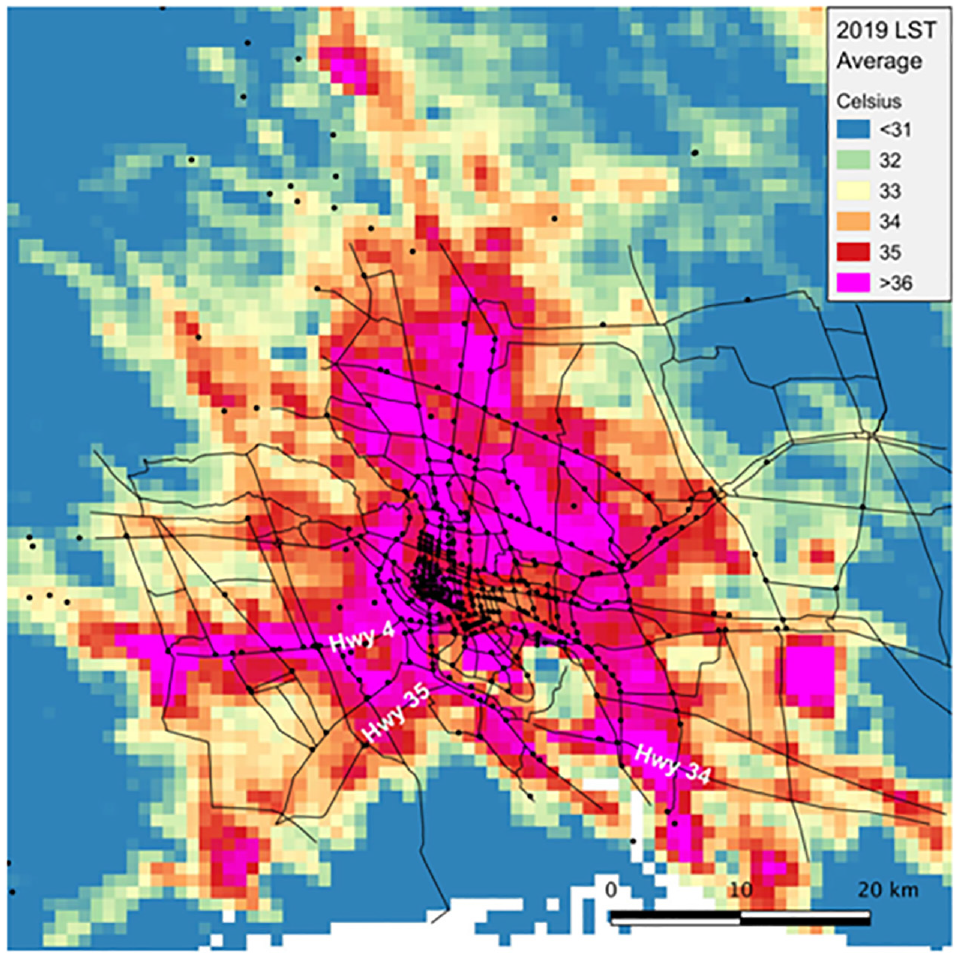
Bangkok’s average land surface temperature (LST) in 2019.
Uneven temperature variations are matched by and correlated with other forms of uneven development. Thailand has the world’s largest wealth gap with the richest 1% controlling almost 67% of the country’s wealth (Lindsay, 2019). These wealth inequalities have bred ‘other kinds of inequality… built into the structure of society and the attitudes of its members’, including privileged access to legal and political power structures (Phongpaichit and Baker, 2015: 17). Concurrently, particularly since 2006, the country’s political system has enduring ‘authoritarian tendencies’ with recurrent military repression (Glassman, 2020). Thailand’s high degree of political and economic inequality is particularly stark in Bangkok (Marks et al., 2020), and increasingly reflected in environmental distinctions.
Bangkok is governed by the single metro-wide Bangkok Metropolitan Administration (BMA). The BMA was created in 1972, replacing the former Bangkok municipality which administratively unified Bangkok and Thonburi. By the 1990s, its governor and administrators had become more responsive to the demands of the city’s middle- and upper-class constituents, evident by the Skytrain and other modern development in the central business district. However, BMA’s capacity remained limited. Monsoon rains and seasonal tides frequently inundate the city, which continues to sink, and many mass transit plans have been delayed (Askew, 2004). BMA’s limited capacity extends to land use planning which adversely affects the city’s UHI.
A considerable literature on Thailand’s political economy has ignored how urban change affects Bangkok’s UHI and particularly access to green space. We therefore develop this, firstly, by discussing the factors influencing Bangkok’s UHI: particularly high levels of vehicular exhaust and energy usage and, secondly, by examining Bangkok’s lack of green space. We then identify and discuss how the city’s form of governance influences the structure of its UHI.
Methods
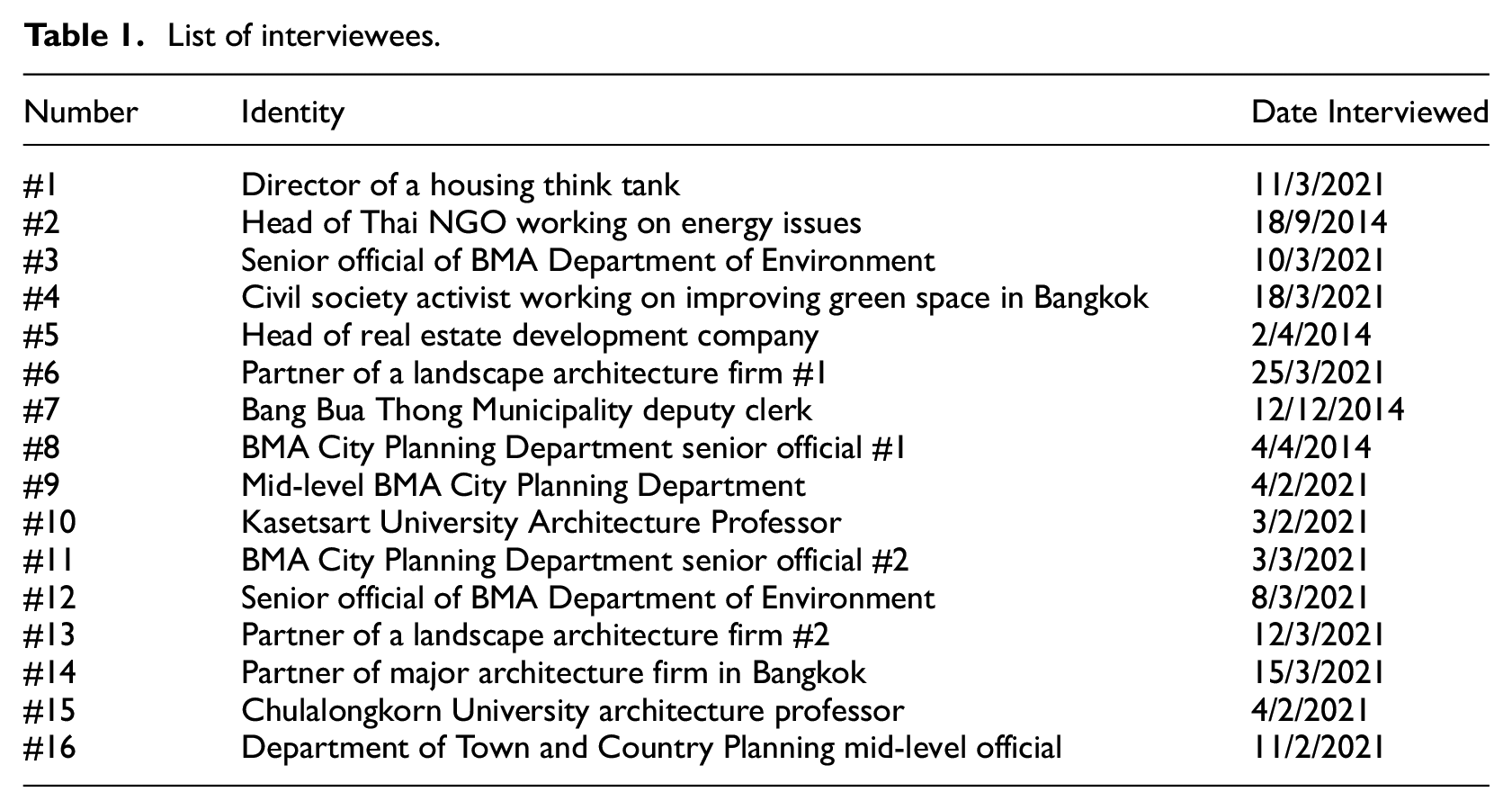
The first author conducted semi-structured interviews with 13 key actors from February to March 2021 using purposive (selective) sampling and snowball sampling (targeting interviewees based upon the selected interviewees’ recommendations). By using these combined techniques, we sought to capture a representation from the diversity of (sub)national government agencies, private companies, civil society, and academics (see Table 1) who either work in agencies whose actions affect Bangkok’s UHI or have knowledge of Bangkok’s UHI. We asked them about the causes of Bangkok’s UHI, its limited green space, the role of state actors, particularly BMA, and non-state actors in affecting Bangkok’s UHI, and what can be done to reduce the UHI. We also draw upon three earlier interviews the first author conducted during fieldwork in Bangkok in 2013–2014 for his PhD fieldwork on the history of land use change and Bangkok’s urbanisation. They remain relevant in providing a historical context. Some of the findings from these interviews are also pertinent to urban heat. Given that Bangkok was semi-locked down in 2021 due to COVID-19, most of the interviews were conducted online but a few were also conducted in person in Bangkok. Most of the interviews were conducted in Thai, but a few were conducted in English.
List of interviewees.
We analysed the interview data based on key patterns and themes that emerged. We also employed qualitative documentary analysis to triangulate our interview findings. We examined government policies and land use plans, journal articles, NGO reports and media articles. Qualitative document analysis is well-suited to examining power relations in the production of urban heat that quantitative methods cannot fully capture.
Vehicle emissions and energy usage
To understand the uneven social implications of Bangkok’s urban heat island effect, it is also important to understand the development of transportation in the city and its relation to vehicle emission and energy usage. Other often distinctive contributions, such as industrialisation, are quite limited. The considerable number of cars, and heavily polluting buses, account for the primary role of vehicular emissions. Car numbers have risen exponentially in the past few decades, from 4.2 million in 1999 to 10.7 million in 2019 (Figure 2).
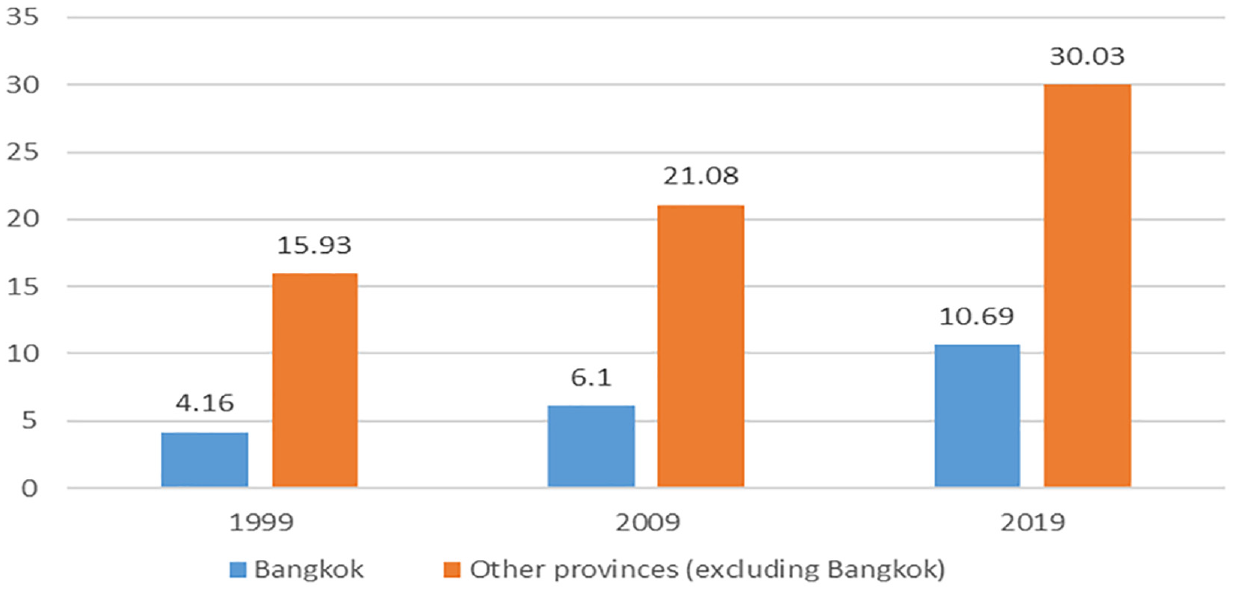
Number of cars in Thailand (in millions).
In just the first two months of 2019, the Land Transport Department registered 180,000 new vehicles (Roengjit, 2019). Vehicular exhaust has risen by over 250% in the past two decades.
Car numbers have grown at a faster rate than the urban population (which rose from 6.3 million in 2000 to 10.5 million in 2020). Societal pressure and cultural values have encouraged Bangkok residents to buy and drive cars, evident in media advertisements where cars are portrayed as status symbols (Marks, 2020).
Growing affluence has been assisted by Bangkok’s minimal parking costs and ample parking spaces. Within Asia, Bangkok provides drivers the second-highest amount of commercial and retail parking spaces (Siu, 2017). Unlike many countries, where buildings have a maximum number of allocated spaces, in Thailand, a long-established Building Control Act requires commercial buildings to have a minimum number of parking spaces determined by the building size.
Public transport has numerous shortcomings. Poor quality buses are outdated, passengers experience lengthy wait times, bus stops provide insufficient information and bus routes are as outdated as the buses themselves. Few areas have dedicated bus lanes. Because of the city’s large physical expansion, routes no longer meet many residents’ transportation needs. Other alternative modes of public transportation, including light rail, mass rail and public boats, are too limited and localised in the inner city to significantly reduce car usage (Marks, 2020). Pollution, congestion, and a lack of bicycle lanes prevent cycling being a real option.
Exacerbating the number of vehicles is their high level of emissions. Many older cars with diesel engines, low fuel efficiency and high pollutant outputs remain in circulation because they incur low taxes. The number of registered cars aged 10 years or older almost doubled from 7.7 million in 2007 to 14.1 million in 2019 (Thailand Clean Air Network, 2020). Thailand’s tax regime also encourages ownership of high-polluting diesel vehicles, especially pickup trucks, which constituted half of all vehicle sales in 2017 and around one-quarter of Bangkok’s registered vehicles. Given their popularity, tax changes affecting pickups are politically problematic (Janssen, 2018). Since 2012, the Euro 4 fuel standard for small vehicles has been used in Thailand, whereas countries in the EU, China, and South Korea, emission and fuel standards have been upgraded from Euro 4 to Euro 6 (Thailand Clean Air Network, 2020). Despite recent limited investments in mass rail, the Thai government is yet to pass any policy, such as congestion pricing, to discourage driving (Marks, 2020).
The outcome has been an uneven political economy of vehicle emissions. The middle-class and rich comprise most car owners. Many have moved to suburban areas to own a house, which means they require private transport and must drive greater distances, and, as a Ministry of Transport consultant asserts, ‘the middle class does not request public transportation’ (quoted in Marks, 2020). Further, according to a senior Bangkok Mass Transit Authority official, the government has not enacted any policy that constrains vehicle use, such as more bus lanes or congestion pricing, fearing that ‘car drivers will mobilize and protest’ (quoted in Marks, 2020). The poor, in contrast, have a much smaller ‘pollutant footprint’ in that many drive motorbikes or take buses. In this century the expansion of the city has therefore increasingly favoured vehicles, and therefore urban pollution and an intensified UHI.
Similarly, air conditioning use is also highly unequal. In 2017, the Bangkok Metropolitan Region (BMR), consisting of Bangkok plus the surrounding five suburban provinces (Figure 3), accounted for about 40% of national electricity consumption, which rose by 85% from 2002, though the BMR constituted only 1.5% of the country’s total land area and contained only a fifth of its population (EPPO, 2017). Air conditioning accounts for 27% of energy use in Bangkok’s households (Poolsawat et al., 2020), 50% in offices (Suwannapruk et al., 2020), and up to 60% in shopping malls (Baird and Quastel, 2015). Since the middle and upper class have larger homes, work in offices, and frequent shopping malls, they are the largest consumers of air conditioning. In contrast, as a think tank director stated: ‘some low-income communities and other vulnerable groups cannot access air-conditioning or cannot afford electricity costs during the hot season’ (#1). Even beyond travel, relatively poor Bangkok citizens experience hotter and more humid working and residential conditions.
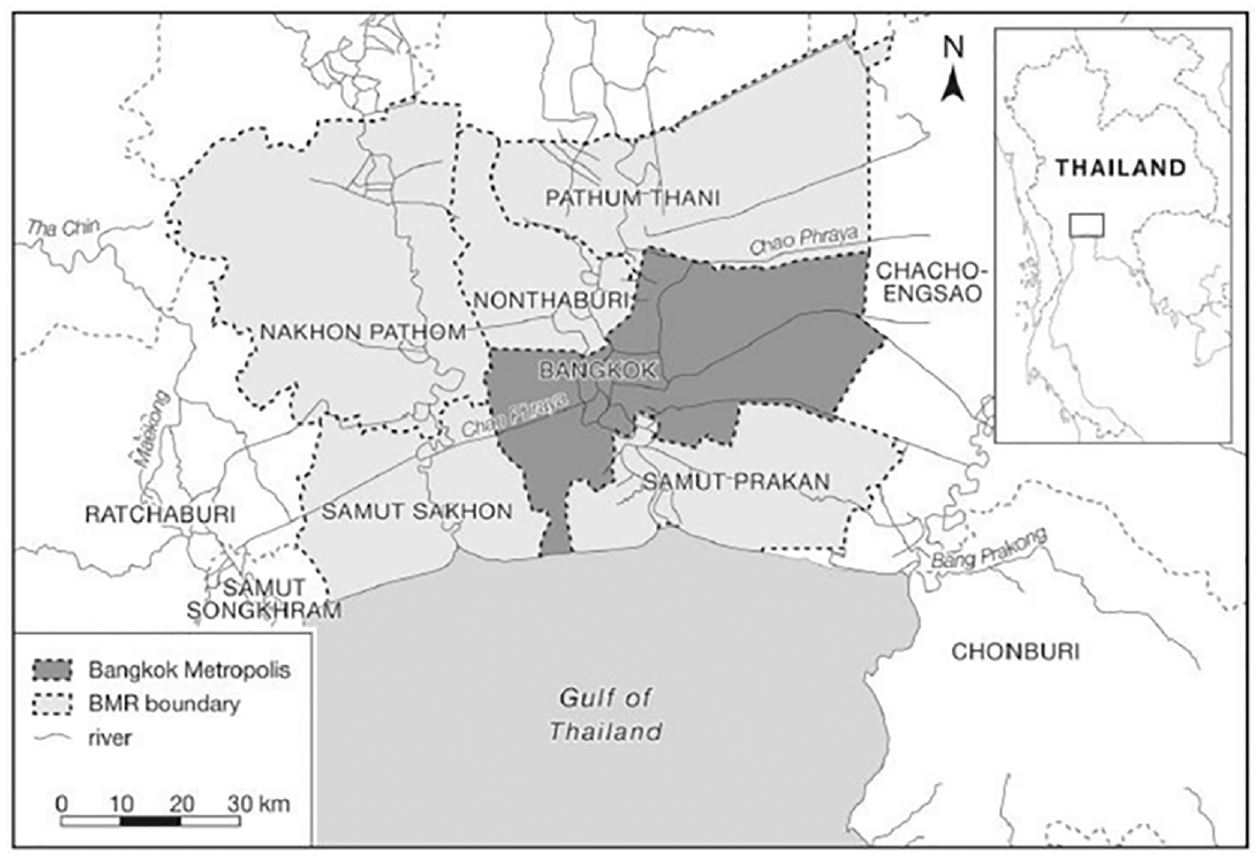
Map of the Bangkok Metropolitan Region (BMR).
Regulatory frameworks place few constraints or provide insufficient incentives to curb air conditioning and overall electricity consumption. None of the provinces within the BMR consider electricity supply as a factor relevant to urban growth. Neither national nor provincial governments have regulated electricity usage in new semi-public buildings, such as shopping malls. Moreover, the Metropolitan Electricity Authority (MEA) has created a pricing structure which does not discourage heavy users from consuming electricity; thus, the price of electricity has had little effect in curbing consumption (Marks and Zhang, 2019). As the head of a local NGO told us with respect to affluent consumers and large businesses: ‘they don’t care about energy use’ (#2). Consequently, it is scarcely more expensive for shopping malls or industries to buy electricity per unit than it is for home residents. Additionally, the government has offered insufficient incentives for developers to follow green building codes and does not penalise those who do not comply (Mitchell et al., 2014). Thus, Bangkok’s skyscrapers have adopted primarily a modernist glass-and-steel aesthetic with fully glazed buildings that require high levels of cooling (Suwannapruk et al., 2020). Overall, a regulatory structure which imposes few limits on electricity consumption accompanies increased air-conditioning and larger and more modern buildings, such as shopping malls and elite residential and business condominiums and skyscrapers. Anthropogenic heat released as a result of combustion from vehicular travel and air-conditioning has contributed to Bangkok’s worsening UHI.
Limited green space in Bangkok
In this section, we examine the historical context of Bangkok’s urbanisation, and how this provided only limited green space, and then examine the contemporary UPE of the city’s green space, focusing on Bangkok’s current paucity of such space, particularly public parks. Green space in cities potentially mitigates the impact of heating by providing a cooling influence. However, Bangkok has the lowest amount of green space of any major Asian city, with only approximately 3.3 square metres per person (Chandran, 2019). The BMA suggests that the real figure is approximately double that at 6.9 square metres per person, but, as a senior BMA Department of Environment official admitted: ‘BMA uses 5 million as the city’s population, which is the number of registered residents, but really the population is at least 8 million’ (#3). A leading civil society activist added: ‘The 6.9 square meters includes golf courses, street medians, underdeveloped land, shrubs, and undeveloped land along the coast. Mangroves are included … but really it’s around three square meters. And if we count only parks, it’s less than one’ (#4). Both suggested that BMA uses the figure 6.9 to make Bangkok appear greener than it is.
Bangkok’s UHI gradually intensified, particularly after the 1980s, with infrastructure expansion and a real estate boom in peri-urban areas. The BMR population grew by around 4 million in the 1980s alone, the majority from migration (Baker and Phongpaichit, 2002). The housing boom primarily came in the form of townhouses and detached houses. Mirroring the location of new industrial sites, developers located the majority of new housing projects in peri-urban Bangkok. From 1986 to 1990, the average distance of new projects from the city centre increased from 16.7 to 20.3 km (Dixon, 1999). Subsequently, peripheral areas underwent rapid transformation in terms of land use, during which developers and speculators bought large tracts of cheaper agricultural land and converted them into housing projects. To build these new roads and estates, developers filled in paddy fields with a loss of over 600 km2 of rice land during the 1980s. Overall, the BMR’s built-up area expanded drastically, increasing more than four-fold between 1974 (470 km2) and 2003 (1951 km2), a trend that has mostly continued until the present.
However, the BMR grew rapidly in a haphazard and sprawling fashion, along the three major transportation routes leading from the urban core, without any areas reserved for green space. Transport corridors became heavily congested while underutilised land remained between the corridors. Expansion resulted in all urban land uses, including individual houses, housing estates, and commercial and industrial buildings, becoming mixed together. The city expanded without following even basic land use planning, with houses and factories encroaching upon designated green zones. Developers built housing estates on both sides of roads and disregarded spacing regulations (Mehl and Mekvichai, 2013). By 2013, 28,000 houses had been constructed in the eastern greenbelt (Figures 4 and 5). According to the head of a major real estate company, some developers had paid bribes to government agencies to obtain housing permits in these areas (#5). These sprawling and illegal housing developments, from which real estate developers profited handsomely, significantly reduced the amount of green space in the city. As a landscape architect stated, ‘We were supposed to leave some space for floodway and agriculture but in the end, we cannot control the growth of the city’ (#6). Despite such housing being banned, BMA was unable or unwilling to restrict private landholders from changing vegetation areas into built-up areas, thereby contributing to Bangkok’s increasing land surface temperature.
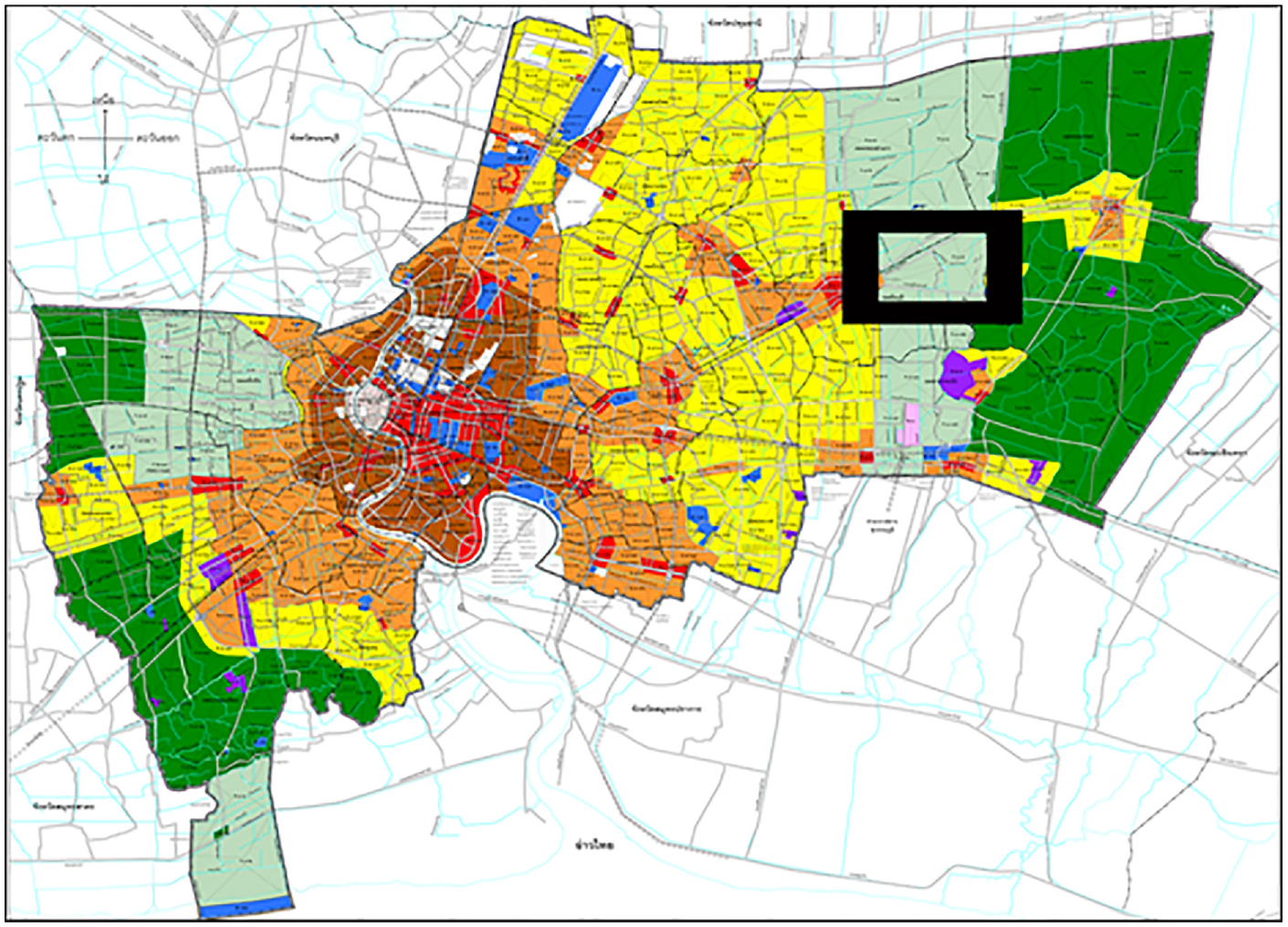
Bangkok’s land use plan in 2013.
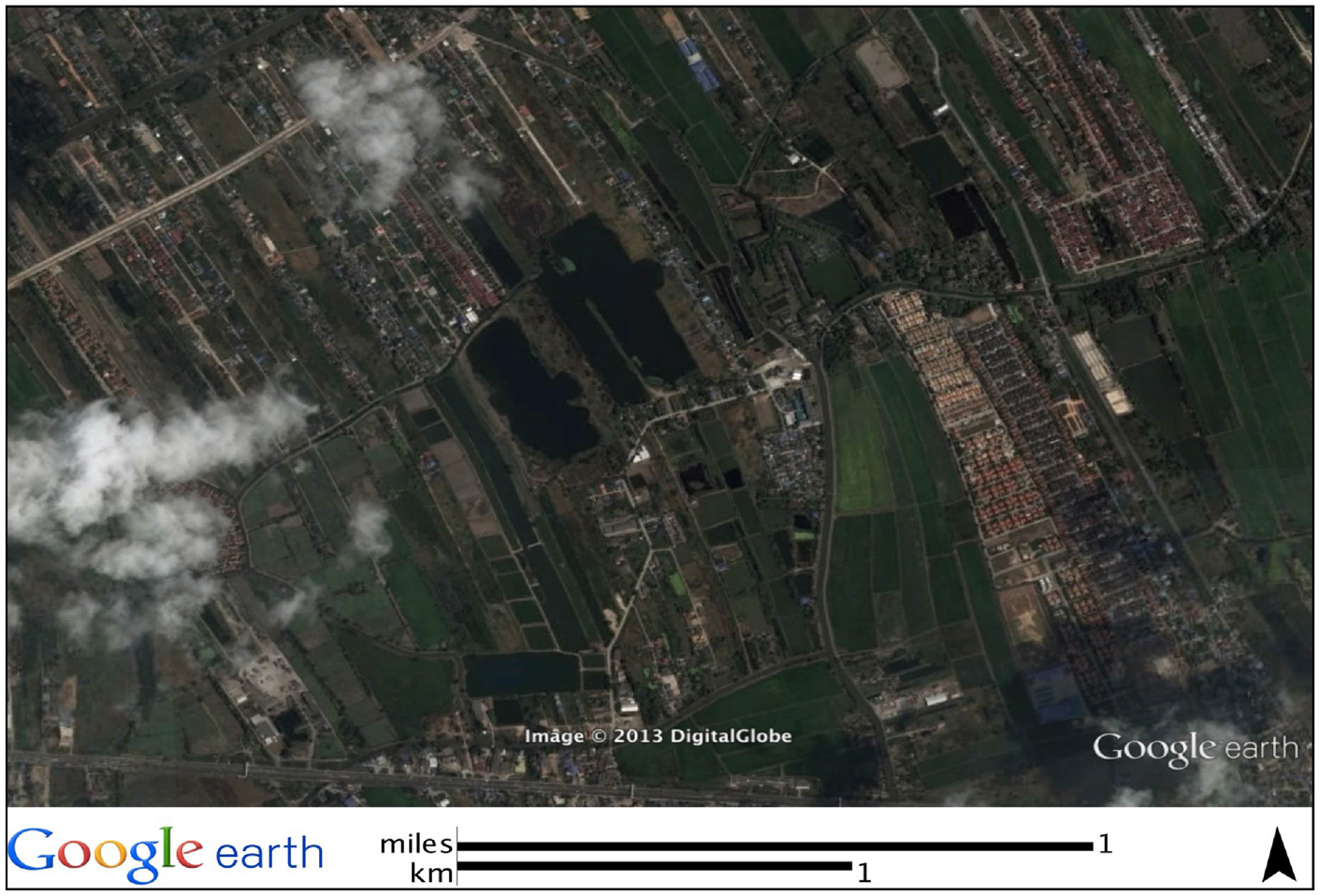
Actual land use within black square of Figure 2.
An underlying driver of the city’s numerous planning violations is not, as Roy argues, the failure or lack of urban planning. Instead, as in Jakarta (Colven, 2023) and Indian cities, urban planning in Bangkok is ‘the management of resources, particularly land, through dynamic processes of informality’ which is at the ‘very heart of the state’ (Roy, 2009: 80, 84). Thus, the use, ownership, and purpose of land is not governed by any prescribed regulations but instead by a state of deregulation. Similarly, Holston argues that Brazilian cities are shaped by an ‘unstable relationship between the legal and illegal’ (Holston, 2021) where much land in the city is occupied through ‘misrule of law’ (Holston, 1991). Management and regulation are widely absent.
As a result, urban planning in Bangkok has been ‘a highly symbolic modernistic ritual for sections of the … bureaucracy, but it is effectively impotent as policy’ (Askew, 2004: 63). Until 1992, Bangkok was probably the largest city in the world without an official development plan. The first Bangkok General Plan was delayed numerous times and was in draft status for 15 years before being officially adopted and, even after its passage, there was no actual commitment to the plan. The plan made no mention of preserving open space or reducing urban heat as objectives.
Moreover, each plan was designed for five years, after which, according to a senior National Economic and Social Development Board official, there was a ‘gap period of sometimes two–three years before the new plan emerges. Investors buy and develop land during the gap period’ (#2). Lengthy delays in adopting the plans and lack of enforcement were due to strong resistance from powerful local elites and fragmented and feeble government institutions governing urbanisation. These institutions had been weakened from the late 1980s onwards, especially as senior and mid-level bureaucrats moved to the private sector where they could earn higher incomes, while their links to former colleagues could help them evade, or at least blunt, regulations (Baker and Phongpaichit, 2002). Hence, delays and gaps to city plans, lack of commitment to enforce them, and private-sector resistance all limited the state’s ability and interest in controlling the shape and form of metropolitan expansion.
Until the creation of BMA’s 2006 Comprehensive Land Use Plan, plans were vague, without any detailed or quantifiable goals, and were not linked with wider policy goals (Plumb, 1999). The 1992 plan was merely intended to ‘be used as a guide to the development of the city’ (Bangkok Metropolitan Administration, 1992). Indeed, as a landscape architect explained, ‘For a long time the Planning Department of BMA did not have authority to enforce the law. When it actually comes to approving the construction of buildings, it’s another department [Land Department]’ (#6). The BMA rarely had any incentive to or interest in restraining urban growth by designating green areas or imposing other limitations, hence land use plans were ‘in practice mapping exercises that capture changes in land use that have already occurred, rather than setting future land use limitations’ (Friend et al., 2014: 13). A deputy clerk in suburban Bangkok echoed this limitation: ‘We had city planning only after the area was already developed and full of residential areas’ (#7). A senior BMA planning official explained that an underlying reason for BMA’s limited capacity to control land use was that the country is ‘still extremely centralised. BMA cannot do much, especially compared to other cities worldwide. Everything is controlled by the Ministry of the Interior’ (#8). Because of Thailand’s incomplete decentralisation (Marks and Lebel, 2016), BMA had limited power to curb urbanisation and therefore prevent the UHI from intensifying.
Without formalised, institutionalised urban planning the growth of the housing sector stifled green space, favoured developers, banks, and the urban middle-class. While increased income and demand for housing, particularly among the middle class, played a key role in the 1980s boom, so too did the Government Housing Bank (GHB). The GHB tapped the domestic savings market to increase its funding, and then expanded its mortgage lending, and developed various financial strategies that made housing more affordable. By the late 1980s, when the higher-income housing sector had become saturated, developers went ‘downmarket’: building cheaper and smaller houses, mostly townhouses, by using cheaper materials and shoddier construction techniques. Property developers and banks became important financial backers of political parties to gain favourable policies, creating a supportive environment for additional projects (Sheng, 2002). While government policies did not help the urban poor – limited public housing was constructed – wealthy landowners and speculators profited from the boom in urban land prices. ‘Private developers were the major beneficiaries of [government] policy as they could develop housing without much concern for its social and environmental consequences’ (Sheng, 2002: 46). This contributed to the rapid expansion of BMR’s built-up area, thereby reducing urban green space and the capacity to absorb heat.
Until the late 1980s, leaders of the bureaucratic polity, many of whom were military leaders, were unelected. They developed policies and practices that would gain support from both the elite and middle class and secure political stability. ‘This political and economic arrangement became an incubator for the expansion of the capitalist and middle classes’ (Hewison, 2014: 849) while repressing the poor and concurrently deregulating the private sector and providing government assistance to industrialists when needed, thereby enhancing their role in policy-making (Christensen, 1993). The new elites, some of whom became local politicians, pushed for less state control over development (#6). Their practices led to Bangkok’s rapid growth, and to the decline and degradation of green space, thereby increasing the city’s UHI. As urban sprawl increased throughout the BMR, with the built-up area increasing from 30% in 1991 to 55% in 2016, there were parallel increases in the city’s average surface temperature (Bentley et al., 2020), increasing from 26°C in 1991 to 31°C in 2016 (Khamchiangta and Dhakal, 2020). At no time was the reduction, or mitigation, of the UHI ever a consideration in any facet of urban management and planning.
The political economy of green space
In this section, we discuss the contemporary political economy of the city’s green space, including winners and losers. Trends in housing development, and the number of vehicles that followed, in peri-urban areas, enabled by weak planning legislation and minimal regulation, have continued and in some case intensified. As a leading landscape architect stated: Bangkok’s UHI for the past five years has become worse – it’s quite obvious. A lot of new housing developments are coming –condominiums, high-rise buildings. The speed of this development is faster than the amount of green space being developed. There is a lack of investment in green space in comparison to buildings. (#13)
City planning remains weak. The City Planning Department of BMA enacted a land use plan in 2013 which restricted developments in certain places (see Figure 6). Developers were able to play off the different departments involved, including BMA, the City Planning Department and the Land Department, to achieve a positive outcome. As a BMA City Planning Department official declared, ‘The department does not check with BMA [if the development complies with the zoning code]. The developer will then go to the district office’ (#9) with the permit, thus evading the City Planning Department’s zoning requirements. She also complained that fines handed out by BMA for breaching zoning requirements were ‘too low, very low. We forgive easily’ (#9). Thus, BMA’s capacity to curb development in the remaining green space was enfeebled.
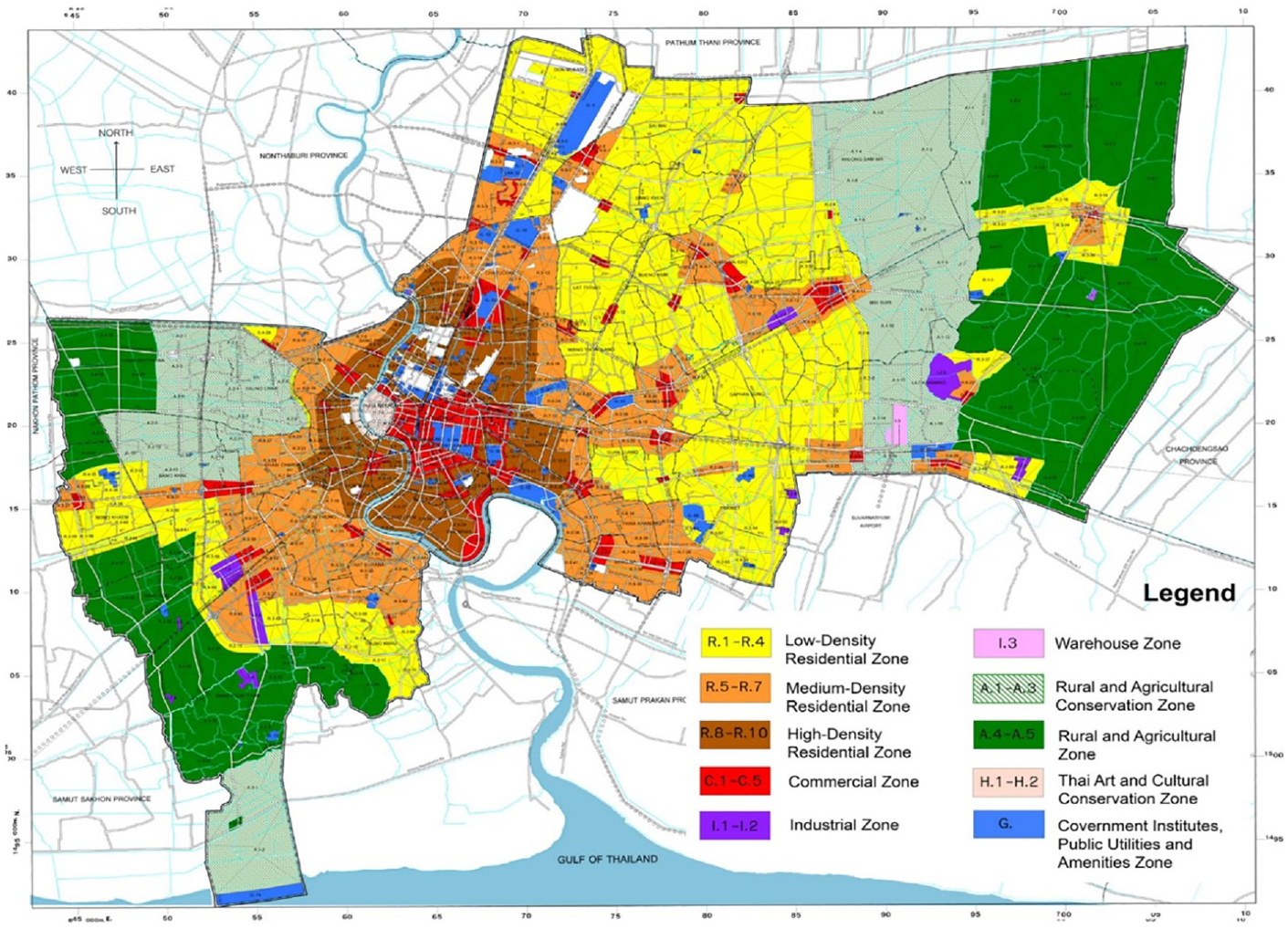
The 2013 Bangkok Comprehensive Plan.
As land is lost to housing development, BMA has yet to retain or buy land back to develop public green space, such as parks. As an architecture professor put it, ‘We did research that showed that to reduce temperatures in the city, you need one big chunk of green space, a big park like Central Park’ (#10). As many interviewees agreed, the BMA has so far failed to buy land to build parks. As a BMA Department of Environment official explained: It is a difficult, long process to buy land. There are many regulations which raise transparency questions. In using taxes to buy land, the government needs to answer why it picked this land and deal with conflict-of-interest questions. It is better to rent the land or have somebody donate it to the BMA. (#3)
A BMA City Planning Department official confirmed this explanation: ‘BMA will not purchase land because it does not want to be accused of using land for the own good of the leaders’ (#11). BMA does not want to be accused of corruption or a conflict of interest when it buys land. Moreover, land in Bangkok’s central area is expensive. As another BMA Environment Department official stated, ‘urbanisation makes land more expensive. It is difficult to find land to purchase to create green space or public parks’ (#12). A City Planning Department official added: ‘In central areas, prices are very high. The public will question why the BMA has paid so much’ (#9). While a think tank director argued that the BMA had legal tools, and the land expropriation act to acquire land for parks, it ‘needs courage to use [the act]. So far BMA has used it only for roads and basic infrastructure, not for upgrading quality of life in Bangkok’ (#1). A civil society representative added another reason: The BMA has enough budget and buys land to do everything else, but never to build parks. They only lease land to build parks. I suspect this is because it is dominated by the Public Works Department. It has a big budget and is all engineers. Money is used to build roads and bridges. [For this department] five new tunnels are better than one park. (#4)
Because of the structure of BMA, using money to buy costly land to build parks is a low priority, hence BMA has never purchased any land to retain or turn into green space.
BMA has also never had much land to use as parks. In such Asian countries as Malaysia, Singapore and India, parks were inherited from the colonial era. In never-colonised Thailand national leaders have mostly been military generals with ‘no interest in parks’ (#4). Therefore, they never designated any park land for BMA to maintain. Land in Bangkok is generally owned by developers and government authorities (#4), so that most existing parks have come from occasional donations from the royal family or the private sector. BMA itself has used land designated for parks for other purposes, such as parking and flood control, and only about 1% of BMA’s budget goes to the Department of Public Parks (#4). Preserving or adding public green space is a low priority. A think tank director added: ‘UHI is just a buzzword. I cannot see any obvious BMA policy on it’ (#1). Where land has been designated for parks, it has taken a long time for BMA to build them, largely due to the lengthy approval process, including procurement procedures and considerable paperwork. As a BMA Department of Environment official stated, ‘60–70% of the time is spent on approving. The design and construction are only 30%’ (#3).
Access to green space remains highly unequal. Bangkok’s few large parks are concentrated in the city centre where land prices are highest and where Bangkok’s wealthiest residents live. In the 1980s and 1990s, as land prices rose, residents of low-income communities were forced to move to new locations either on the outskirts of Bangkok or in surrounding provinces, especially to northern and north-eastern Bangkok (Marks, 2015). These areas have less green space than the city centre does (#1). A think tank director noted: ‘BMA will not actually provide green space for low-income communities’ (#1) as it has no policy to do so. Indeed, a 2020 study based on a survey of 505 respondents found that low-income groups residing in areas of high-density areas with limited green open space ‘were more likely to experience heat stress’ (Arifwidodo and Chandrasiri, 2020: 5).
New green space is being constructed in new high-end condominiums, hotels, and other projects. These are private gardens, including rooftop ones, and ‘urban forests’ which do little to reduce the city’s UHI but improve the aesthetics of these dwellings and micro-cooling within these spaces. According to a landscape architect: One of the components of new residential development is landscape design to satisfy buyers. For the past decade, we relied on private developments for green space. However, the majority of the people cannot access fancy green designs in these private spaces. (#13)
Another architect, who headed one of Bangkok’s largest firms, confirmed this sentiment: ‘People these days will pay more for luxury which means having more green space’ (#14). Access to new green space is thus for the privileged who can afford to buy or rent property in these exclusive spaces while others must access Bangkok’s limited public parks.
Various factors, including a limited historical legacy of parkland, the persistent weakness of land use controls, BMA’s reluctance to buy land for parks, and the high cost of land and the low priority given to parks, explain why Bangkok continues to lack public green space beyond central Bangkok. Access to Bangkok’s limited green space is highly uneven: the upper echelon of society has greater access to both public and private green spaces in relatively new residential development including condominiums, while the urban poor living in high density residential areas have limited access. Ultimately, BMA has yet to address the issue of an intensifying and uneven UHI. Wealthier groups therefore suffer less from Bangkok’s UHI than poorer groups do. Land surface temperatures are inversely correlated with the extent of vegetation cover (Khamchiangta and Dhakal, 2020), with the coolest places adjoining the city’s limited parks, with the hottest places in Bangkok being large low-rise buildings and a dense mix of buildings with no nearby green area surroundings. Low-income communities live in the latter, in Bangkok’s hottest spaces. They also are more likely to work in places lacking air-conditioning and thus experience a greater degree of heat stress at work and at home (Arifwidodo and Chandrasiri, 2020).
Governance and power in Bangkok
This section analyses how structures of power influenced the governance of the city’s UHI. A single metro-wide BMA was created in 1972. Evident by the sky train, stock exchange, and towering skyscrapers in the central business district by the 1990s, the governor and city administrators became more responsive to the demands of the city’s middle- and upper-class constituents. Leadership does not therefore come from the top. At the national level, there has been no push for nature-based solutions and increased green space. As a landscape architect stated, Department of Town and Country Planning (DTCP), the agency in charge of national-level land use planning, ‘does not understand or care. They love concrete – concrete has an obvious price. How many metres of concrete you pour is the price’ (#13). A DTCP official admitted that ‘our department focuses more on economic rather than environmental priorities’ (#16).
That has remained so despite public interest in and demands for public open space. In the 2013 land use plan, the City Planning Department gave a floor-to-area ratio bonus, of not more than 20%, if developers or landowners met one of five criteria. One was the provision of green space, including public parks. However, although a number of interviewees stated this offered a positive development, it had yet to lead to significant further green space being developed from 2013 to 2021. From April 2021, landowners who owned empty or undeveloped plots of land must pay a vacant land tax (Chantanusornsiri, 2020). According to a think tank director, as a result of this new tax, many vacant landowners have already offered to ‘donate or lease their land long-term to BMA without any payment’ (#1) so that they could avoid paying the tax. A BMA Department of Environment official confirmed if they let BMA develop green space on their land, such as a park, they would be able to avoid the tax (#8). BMA may therefore acquire land at no cost which they can convert to green space.
However, BMA’s capacity has been limited (Askew, 2004). As a City Planning Department lamented: ‘Even within BMA, we don’t work together that much. Everyone wants to show off, a one-man show. We don’t work well in teams. It’s the Thai style’ (#9). For example, the Department of Environment does not work together with the City Planning Department to plan future parks (or with the Department of Public Works on flood mitigation). A senior City Planning Department official complained: ‘when I want to negotiate with the executive level, it is related to the budget. They are only concerned about economic factors and return on investment. Quality of life is difficult to measure. Building a road or infrastructure is much easier’ (#11). However, as a landscape architect explained, ‘most people in BMA are from an engineering background so they think only about engineering solutions. Using nature-based solutions will be more difficult to be implemented’ (#6). In the transport sector, BMA can only build and manage some streets and bus stops, but cannot manage public transport, enact traffic laws, or control congestion within the city (Marks, 2020). The Department of Environment can only plan rather than implement projects, such as those related to energy efficiency. As an official from this department said: ‘On energy issues we just try to encourage’ (#11). These various organisations lack the power to make structural changes. The time taken to develop and implement projects is in itself a constraint, where a park may take more than five years to put in place. Division and fragmentation, limited authority to go beyond policy, and a lack of broad leadership and coordination, constrain the agencies most related to controlling the city’s UHI.
The private sector has shown no real interest in reducing Bangkok’s UHI. Private developers have sought to expand commercial space in downtown public areas rather than keep some of it green. As a civil society activist declared, ‘Whenever there is a chance to turn a piece of land into a commercial space, developers always build the maximum’ (#4). In the transport sector, Japanese automobile companies in Thailand have been reluctant to transition to electric vehicles even though they are cleaner. In the energy sector, companies continue to invest in new projects, such as hydropower dams in Laos, diverting the need for Bangkok residents and building owners to be concerned about curbing their demand (Marks and Zhang, 2019). Developers continue to build malls and residential units which will use more air-conditioning. According to an architecture professor, private-sector architect firms ‘do not care about their contribution to the environment, only about aesthetics. They look at buildings as pieces of art’ (#15). Both public and private sector interests have failed to coordinate development or address the problems of an intensifying UHI.
Other groups have sought to encourage change and work with BMA. Together with the WePark network, a public group of landscape architects, civil society advocates, and academics seeking to improve green space in Bangkok, BMA have devised a partial solution to Bangkok’s dearth of parks. Since it will be difficult to construct large new parks, they have proposed ‘pocket parks’, with the support of local communities, constructed on vacant plots of land, between and underneath expressways, and in other empty spaces. As a BMA Environment Department official stated: ‘I think the way forward is pocket parks. They are popular and suit Bangkok well. We can scatter these parks all around. Some areas have high density and high land prices so pocket parks can reduce the heat there’ (#8). That marked a shift in direction where BMA ‘needs to work with the local community and other stakeholders to ensure that the park will be part of their lives and they can help take care of it’ (#6). As an Environment Department official explained, ‘Many areas are overlooked, some in small streets or in abandoned land. We are in the process of obtaining more information about these areas, such as who owns them and their sizes’ (#8). There was little indication that this would happen quickly. Nonetheless BMA has optimistically put forward a target of 10 square metres of green space per person by 2030, a vision unmatched with actual plans and which seemed to many improbable (#4, #13). Indeed, there has been minimal intent to mitigate or plan for an intensified UHI.
Conclusion
This paper has identified how local governmental weaknesses, administrative fragmentation, prioritisation of economic growth, and limited buy-in from the private sector have intensified Bangkok’s UHI, and imposed numerous barriers to actions that would reduce heat, such as establishing green space, restructuring urban transport or creating and following an effective urban plan. Ideas mooted to remedy these problems have yet to come to fruition, largely because of bureaucratic inertia, fragmentation and divisions within the relevant lead organisations. While pocket parks, and improved leadership and organisation, may eventually play a small part in overcoming some barriers, the political ecology that has shaped urbanisation in Bangkok has imposed an increasing UHI that over time has proved increasingly difficult to reverse or remedy.
The political ecology lens has also revealed how political–economic processes largely determine the vulnerability of urban inhabitants to heat, but also that thermal governance is highly unequal and unjust. Those who contribute to and profit the most from Bangkok’s UHI, such as real estate developers, shopping mall owners, and automobile corporations, suffer the least from its effects, whereas low-income communities hardly contribute to this problem, yet are the most vulnerable. As we have shown, not only are urban parklands, with their cooling properties and aesthetics that contribute to wellness, distributed unevenly but also new condominiums and shopping malls accentuate this pattern. That has contributed to a city divided by temperature and heat stress. Furthermore, those most negatively affected by the increasing UHI have limited voice or means to affect the governance of urban heat, and reverse the direction of change. The multi-scalar and multi-sectoral dimensions of the problem, bureaucratic divisions and inertia and an absent political will have made this an unusually intractable and wicked problem.
These findings and conclusions contribute to critical social science insights into urban thermal environments. The UPE lens used in this paper suggests that, similar to vulnerability to disasters (Chitra, 2022) and access to water (Das and Skelton, 2020), uneven urban thermal environments do not only exist in the present and can be easily ‘resolved’ through planning and engineering measures, but rather are products of social and political processes spanning decades. Those winning and losing from the production of UHIs reflect and follow concentrations of capital and unequal political power (cf. Swyngedouw, 2018). Worsening UHIs in terms of both magnitude and inequality can be the result of authoritarian states, such as that of Thailand, pursuing neoliberal goals, such as rolling back or not enforcing environmental protections (McCarthy, 2019). Finally, our study suggests that instead of merely seeking to build urban resilience to climate risks, such as heat, we need to tease out the actors and processes that produce these risks (Kaika, 2017) and then work to mitigate the behaviour of these actors and change these structural processes.
Footnotes
Acknowledgements
We are most grateful to Sataphat Silsawang and Kittima Leeruttanawisut for helping with the data collection. We would also like to thank Gregory Clancey, Jiat Hwee Chang, Simon Marvin, and three anonymous reviewers for their helpful comments and feedback.
Declaration of conflicting interests
The author(s) declared no potential conflicts of interest with respect to the research, authorship, and/or publication of this article.
Funding
The author(s) disclosed receipt of the following financial support for the research, authorship, and/or publication of this article: Ministry of Education (Singapore) Academic Research Fund, Tier 2 Grant, MOE2018-T2-2-120. Heat in Urban Asia: Past, Present and Future.
