




Abstract
China’s eco-cities are often regarded as branding tactics of the entrepreneurial local state for economic growth and land revenue generation. However, it is not clear whether the ecological goal has been pursued at all. This paper fills this lacuna using a case study of Taihu New Town. Through an ecological fix perspective we suggest that ecological enhancement through the production of nature is attempted in conjunction with the production of the built environment. The ecological fix is not confined to an economic agenda. Under state entrepreneurialism, the central state maintains environmental governance in the name of ‘ecological civilisation’, while the local state performs the ecological fix. In Wuxi, the fixes include the removal of low-efficiency, polluting town and village enterprises (TVEs); creation of green space and infrastructure; the development of renewable energy; and low-carbon transition.
Introduction
Despite an extensive body of literature that regards Chinese eco-cities as a growth-oriented development tool and largely a greenwashing campaign (Caprotti, 2014; Chang and Sheppard, 2013; Chien, 2013; Wu, 2012, 2015), China has recently seen a turn towards the environment under the new discourse of ‘ecological civilisation’ (Kostka and Nahm, 2017). Confronting the ecological and metabolic crisis, does the Chinese state still pursue economic growth at the expense of the environment? In addition, recent studies on Chinese urban governance reveal the contradictory aspects of maintaining state strategies while pursuing market development (Wu, 2018). In this governance context, to what extent does the Chinese city deviate from the ‘entrepreneurial city’, as seen in eco-cities development, in dealing with the environment? A long-established literature on the entrepreneurial city and the environment argues that the ‘urban sustainability fix’ is a tactic to sustain capital accumulation (While et al., 2004). On the other hand, the imperative to cope with an ecological and metabolic crisis requires substantial ecological improvement (Ekers and Prudham, 2017). To what extent does the Chinese state strive to perform the fix?
This paper attempts to combine two streams of literature – the ecological fix in environmental governance studies and state entrepreneurialism in China studies – to understand the recent trend of environment governance in China. The empirical case is Taihu New Town, located in the city of Wuxi. The initial development of the new town fits well in the narrative of the entrepreneurial city (Chien, 2013; Wu, 2015) and the eco-city was located in a greenfield location (see below). However, strikingly, our fieldwork uncovered that a large proportion of the area near Taihu was largely occupied by chaotic township industries. The current studies on Chinese eco-cities have not fully realised the imperative for ecological fixes. The case reveals a complex picture of environmental governance.
The ecological fix
The concepts of the ‘urban sustainability fix’ (While et al., 2004), the ‘socioecological fix’ (Ekers and Prudham, 2015, 2017) and the ‘ecological fix’ (Castree and Christophers, 2015) are derived from the ‘spatial fix’– a concept developed by Harvey (1982) to extend Marxian theory into the study of the built environment. While all these concepts contain the word ‘fix’ (Bok, 2019), the concept of the ecological fix focuses on the ecological aspect of the socioecological fix, as Castree and Christophers (2015: 379) indicate that ‘we use the word fix differently to denote the possibility of an ecologically and socially progressive reconfiguration of existing built environments’. Following this usage, we use the term ‘ecological fix’ in this paper. This does not mean that the social processes of the fix, such as green grab, displacement and green gentrification, are irrelevant and these have been extensively studied in Chinese cases (see Caprotti, 2014; Caprotti et al., 2015; Xie et al., 2019). Rather, this concept allows us to interrogate ecological changes before discussing their social implications.
The concept of the ecological fix has evolved in two stages. First, the concept follows more closely the original ‘spatial fix’ as a temporary solution to cope with the capitalist accumulation crisis. The perspective reveals the critical importance of the production of the ‘city’ in sustaining capital accumulation in capitalist economies. But the solution is temporary, only deferring the crisis into the future. Hence, it is a fix. Applying this idea to environmental governance, While et al. (2004) developed the ‘urban sustainability fix’ to explain the incorporation of environmental considerations into urban development. The urban sustainability fix suggests that greening is not only possible but also imperative in order to sustain capitalist accumulation. However, environmental objectives are only selectively adopted so long as they contribute to the agenda of capital accumulation (p. 551) and in this sense it is a tactical rather than a fundamental solution. Thus, a fix is an appropriate characterisation. Nevertheless, the concept does allow us to understand environmental politics beyond the scope of greenwashing. Or, more precisely, green discourse may sometimes be a tactic used in the urban sustainability fix but there are other tactics that can make a material change to the environment. But the concept developed in the first stage stresses that the primary motivation for the fix originates from the pro-growth agenda by the entrepreneurial city. Hence, environmentalism accommodated in the urban sustainability fix is limited and partial. In other words, what is seen in the fix is a variegated manifestation of urban entrepreneurialism. For example, environmental best practices and policy mobilities are embedded in the production of the built environment (Temenos and McCann, 2012). In short, the initial concept of the sustainability fix explains why the entrepreneurial city can transform the built environment to reduce the negative impacts on the environment or the ecology of the city, because these changes help achieve and sustain capital accumulation.
Second, in addition to the transformation of the built environment or environment-friendly city building, the concept is further extended into the production of nature (Ekers and Prudham, 2017). While the theory of political ecology has been introduced into the study of the city (Keil, 2003), Angelo and Wachsmuth (2015) criticise ‘cityism’ in urban political ecology. Now the concept of the ‘socioecological fix’ stresses the imperative of ecological metabolism (Ekers and Prudham, 2017; Keil and Macdonald, 2016) besides the imperative to cope with the crisis of capital accumulation. The fix is not limited to solving the immediate crisis of capital accumulation but also addresses ecological crises. The perspective points out the importance of ecological development in its own right in capitalism, as highlighted by the political ecological critique (Angelo and Wachsmuth, 2015).
The development of the ecological fix is inspirational for our study, as the concept reveals the possibility for the entrepreneurial city to perform the ‘ecological fix’ to pursue an environmental goal rather than always being driven by growth-oriented motivation (and in China’s case, the generation of land profits). However, to apply the ecological fix to China, we need to consider the governance context. The concept of the ecological fix or urban sustainability fix was originally developed in the context of neoliberal entrepreneurialism. In China, urban governance contains the contradictory features of the significant role of the state and the pervasive operation of the market.
China’s ecological fix under state entrepreneurialism
In this section we review the literature of Chinese eco-cities to highlight the need to understand a state-centred context of governance. We then demonstrate the value of applying the ecological fix to China and explain how it is possible for the entrepreneurial local state to pursue environmental goals, that is, perform the ecological fix. Our application of the ecological fix emphasises state centrality in environmental governance but also reveals the inherent contradiction of state entrepreneurialism as the local state often uses market development to achieve intended ecological improvements.
Chinese eco-cities are developed in the context of spatial commodification, land-based urbanisation and entrepreneurial governance. In short, the prevailing literature on Chinese eco-cities regards them as tactics or means adopted by the local government to achieve a growth-oriented agenda (Wu, 2015) through ‘imagineering’ (Pow and Neo, 2013), selling nature (Chang and Sheppard, 2013), the technological yet symbolic fix (Caprotti, 2014) or ‘aestheticisation’ (Pow, 2018). These growth-oriented eco-cities bring limited environmental improvement but generate greater social segregation (Caprotti et al., 2015). Their environmental values are quite dubious, even if building eco-cities is not entirely greenwashing. The social critique is appropriate as many eco-cities in China have failed to deliver on their promises. No wonder there is a strong consensus that these eco-cities are probably greenwashing, and current research on eco-cities tends to provide a more social than environmental critique. The label of ‘eco-’ does not guarantee a study of environmental governance. The main limitation of these studies, however, is their assumption of a neoliberal approach to local governance in China.
In the Chinese context, that local public finance relies heavily on land-based income is a reasonable assumption. However, it should not be assumed that all local states are entrepreneurial and only interested in economic growth and revenue generation. Recently there has been some reflection on China’s governance to suggest that while market tools are pervasively used, the state is maintaining its centrality in governance. That is, ‘state entrepreneurialism’ may present ‘institutional configurations that make the Chinese case different from a neoliberal growth machine’ (Wu, 2018: 1383). In practical terms, state entrepreneurialism is an alternative interpretation of the role of the state beyond entrepreneurial governance, that is, the ‘state acts through the market’ (Wu, 2020a). Thinking along these lines, environmentalism and developmentalism may not be mutually exclusive. From the perspective of political ecology, we need to understand the different power relations and actors participating in environmental governance (Lin and Kao, 2020). As Chinese eco-cities are largely built as new towns rather than by retrofitting existing cities, their development is a material process of construction that extends the built environment and transforms nature. Therefore, applying the notion of the ecological fix to Taihu New Town is illuminating as this might shed light on the ecological driver of new town development, which adds a new narrative of actual environmental governance in China (Wu, 2020b).
In China, there are two different explanations for rapid urban expansion and new town development: first, GDP-ism, or the thesis of GDP competition which emphasises economic achievement as the promotion criterion for local political leaders; and second, land revenue generation. While both place an emphasis on economic growth, the underlying motivation is quite different. GDP-ism is a political or behavioural explanation, while land revenue is a structural or institutional explanation. In the specific context of eco-city building, this motivation should be empirically verifiable.
New town development may have complex political and development motivations, not only involving the public sector to gain land at a discounted price but also regulation to achieve a more compact form of transit-oriented development (Li et al., 2014). Suburban development aims for economic restructuring and industrial upgrading and involves complex coordination between different levels of government. Among different modalities of suburban governance (Ekers et al., 2012), different from an exclusive neoliberal suburbanism narrative (Peck, 2011), these new town developments are mega-urban projects organised by the state. The objective may be a more compact and environmentally friendly development (Zhang et al., 2020). These state actors may be subject to political processes.
Thinking along the lines of state entrepreneurialism, we need to examine the actual process of building the eco-city, in which the ecological objective is not a derived but rather a deterministic consideration. For example, examining the planning process of the Tianjin eco-city, Xu (2017) finds that the Chinese planners managed to create an environmental narrative of pursuing ecological value despite the pressure of landed interests and urban entrepreneurialism. Chung et al. (2018) point out that it is possible to ‘negotiate green space’ during land-based urbanisation in China. In the Pearl River Delta, they found that greenways had been extensively developed through using under-utilised residual land without changing ownership and fostering the green coverage contribution from property developers. Local governments, subject to public funding, may pursue a green agenda for political considerations, either under the steering of the central government or under a redistributive fiscal policy (Luova, 2020). The combination of environmentalism and developmentalism means that we need to treat the context of environmental governance more seriously.
Reviewing the literature on the ecological fix in general and China’s state entrepreneurialism suggests that the existing literature on Chinese eco-cities has paid appropriate but overwhelming attention to the ‘entrepreneurial city’, from which the original notion of fix is derived. The existing literature casts serious doubts on the possibilities of pursuing environmental goals. However, the challenge is not about whether the ecological fix has been applied in China but rather about how the Chinese state is performing the ecological fix under state entrepreneurialism.
Methods
Wuxi is located in the heartland of the Yangtze River Delta, 128 km west of Shanghai. Our case study selects Taihu New Town in Wuxi. The term ‘new town’ in China refers to a new settlement outside the central city. The new town is developed through large-scale, state-planned development. Taihu New Town is located 6 km south of Wuxi city proper and occupies an area of 150 km2. The development of the new town represents a strategic spatial shift from the area along the Shanghai–Nanjing railway and the Grand Canal to the Taihu Lake area. Within the new town, an eco-city demonstration area received national status and is one of the earliest eco-cities in China. However, very few studies of this eco-city have been conducted. Different from other purpose-built eco-cities, such as the projects in Dongtan, Tianjin or Shenzhen, Taihu New Town incorporates eco-city construction within the suburban new town. In other words, the component of the eco-city has been added to the planned new town. To some extent, the case is appropriate as it represents a more ‘ordinary’ case of ecological development.
This research draws on six fieldworks spanning 2015–2018. During this period 45 interviews were conducted and transcribed in Chinese. The interviewees include planners in the Wuxi planning bureau, officers in the office of new town development and other departments related to energy and development (local reform and development commission), landscape architects, developers and constructors, eco-planning consultants, university scholars and local residents. Because of the long timespan of this research, we witnessed how the topic of eco-cities has become less ‘sensitive’ along with the receding eco-city fever. Instead, low-carbon energy transition has gained more attention. Similarly, research on Chinese eco-cities has changed from being overly critical of greenwashing to a more nuanced reflection on the ecological implications (Chang et al., 2016; Xie et al., 2019, 2020). Now is an appropriate time for us as researchers to comprehend the context of eco-city building within new town development.
The metabolic crisis and the imperative for the ecological fix
Like many other new towns in China, Taihu New Town is a strategic development led by the Wuxi municipal government. In contrast to the eco-city coined by Richard Register (1987), Taihu New Town is a compact suburban development with high-rise buildings, large land plots and wide roads. The original intention was not to fix the whole of Wuxi into an eco-city but to create an entirely new town for Wuxi.
In 2007, the development office of Taihu New Town was set up to coordinate and manage investment and construction. Just like a management committee (guan wei hui) in China’s development zones, it represents an entrepreneurial style of governance for the development of a new town. The target population size of the new town was 800,000, indicating that it was a large-scale development compared with small residential enclaves. To support the development of the new town, Wuxi relocated its municipal government offices to the centre of the new town. The initial plan was a mega-urban project for economic development, to be constructed under entrepreneurial governance. In other words, before the eco-city initiative, the new town had already been planned.
However, in the same year as the establishment of the development office of the new town, Wuxi experienced an unprecedented environmental crisis. Taihu Lake, one of the largest freshwater lakes in China, experienced a cyanobacteria bloom, creating a drinking water shortage in Wuxi. The event triggered stricter measures for environmental control imposed by the central government to deal with the prolonged water pollution of this region. Under a development approach known as the sunan model (Wei, 2002), southern Jiangsu had seen the development of township and village enterprises (TVEs). These small plants, particularly in the chemical and textile industries, discharged untreated water into rivers and lakes and seriously polluted the environment. In this context the concept of the eco-city became particularly appealing: At that time Wuxi had a crisis of cyanobacteria bloom. The central government and Wuxi municipal leaders became particularly concerned about pollution and are very serious about ecological planning. The government invited an overseas speaker [who works for Arup, see below] to give lectures to the officials in the municipality. The development of the ecological plan and eco-city has been driven by the local government. We did not deliberately aim to develop a brand of low-carbon city and did not care about how glamorous the brand might be. We did not want to use this excuse to develop the greenfield. We really wanted to do it well. This is a serious matter for the local leaders. Our planning bureau together with other government departments tried very hard to promulgate ecological regulation. Although the document was not perfect, it has been finally legislated. At least, [local legislation] demonstrated the determination of the local government. It wants to do this. (Interview, a senior officer of Wuxi planning department, April 2017)
The ecological and metabolic crisis created a crisis of governance and legitimacy (i.e. a ‘serious matter’), which changed the agenda of the new town development. The overwhelming task then was to clear up pollution by TVEs and restore the wetland along Taihu Lake. This environmental initiative became a top priority in Taihu New Town.
Multi-scalar state entrepreneurialism and state-centred environmental initiatives
The national state
The eco-cities movement in China has been promoted by the central government, especially under the Ministry of Housing and Urban and Rural Development (MOHURD). Various local governments have striven to capture the opportunity for endorsement by central government for their new development areas. In the early 2010s, several pilot eco-city programmes started (Chang and Sheppard, 2013; Chang et al., 2016; De Jong et al., 2013; Pow and Neo, 2013; Wu, 2012). Dongtan eco-city was perhaps the first experiment, which received much criticism for its site selection near wetlands (Chang and Sheppard, 2013; Wu, 2012); however, perhaps the site was not a deliberate choice. The parcel of land belongs to the Shanghai Industrial Investment Corporation (SIIC), which wished to carry out an exercise in master-planning. Despite the failure, Dongtan did trigger eco-cities fever. Under pressure to reduce greenhouse gas emissions, MOHURD also added a ‘low-carbon’ objective to the eco-city to promote experiments with green buildings and technologies for carbon reduction. Naturally, Taihu New Town considered this initiative as a new opportunity to incorporate low-carbon development into the new town. The strategy of new urbanisation was adapted to cope with environmental problems in the Taihu Lake area. The central government has further strengthened environmental control and monitoring. In 2014 the new Chinese leadership put forward the vision of ‘ecological civilisation’. The development of Taihu New Town reflects the local government’s alignment with central government policy.
Policy mobility facilitated the development of Chinese eco-cities (De Jong et al., 2013; Hult, 2015). As mentioned above, Arup, a global engineering and architecture firm headquartered in London which has planned a number of eco-cities in China, provided consultancy for the development of ecological codes for the project, which were later embedded into zoning. Arup advocates an integrated approach to sustainable urban development, that is, comprehensive planning at the city level rather than solutions for individual buildings. It emphasises the input in planning. The Swedish firm Tengbom provided technical design. Eventually two sets of planning guidelines were created in 2010: one for the whole of Taihu New Town, the other for the Sino-Swedish Low Carbon Eco-City (SSLCEC). Just 2 years before Taihu New Town, the Caofeidian eco-city project started in 2005. Both experiments had little Swedish investment except for the promotion of Swedish environmental technologies. In other words, two projects master-planned by Swedish architecture firms featured Swedish imaginary and clean-tech products rather than capital (Hult, 2015).
The central government endorsed Wuxi’s eco-city initiative, based on a prepared eco-plan and key performance indicators (KPIs). This was a significant achievement for Wuxi: On 3 July 2010, the Ministry of Housing, Urban and Rural Development and the Wuxi Municipal People’s Government signed the National Low-Carbon and Eco-City Demonstration Area – Taihu New Town cooperation framework agreement, which names Taihu New Town as a National Level Low-Carbon Eco-City Demonstration Area. (Sima et al., 2018: 131)
The provincial state
The provincial government of Jiangsu also initiated tougher environment management and governance. In 2017, Jiangsu province launched the ‘Two-Six-Three Operation’, which is the most stringent environmental action so far. Two refers to two reductions: in coal consumption and in chemical plants. Six refers to six treatments: of the Taihu water environment, household waste, polluted ponds and waterbodies, pollution from livestock and poultry farming, organic chemical pollution and hidden environmental risks. Three refers to enhancements of ecological protection, environmental policy and regulation, and environmental supervision and law enforcement (Interview, officer in the science park, May 2018). For Taihu New Town, 62 KPIs were introduced. The KPI on energy efficiency required that the energy-savings rate of newly built residential and public buildings should reach 65% (Sima et al., 2018: 149). The planning conditions at the parcel level are incorporated into the land leasing contracts with developers. The compulsory indicator has a serious implication for cadre promotion, up to a veto effect.
The municipal state
The introduction of the eco-city reflects policy mobility. Its route, however, is more local than could be regarded as the outcome of the ‘global intelligence corps’ (Rapoport and Hult, 2017). The owner of Dongtan, SIIC, did not believe Dongtan eco-city would offer a viable business plan because the project failed to find a business investor. However, seeing the development of Taihu New Town, SIIC proposed to the Wuxi municipal government that it was willing to draw up an eco-city plan for Wuxi. It is not clear whether SIIC intended to become the future developer for the eco-city parcel in the new town or simply wished to take this on as a business consultancy. Discovering that it was in fact Arup that had drawn up the Dongtan eco-plan, the planning bureau of Wuxi directly approached one of the key consultants in Arup. Arup’s integrated sustainable urban model, however, was far too abstract for Wuxi: Arup’s indexes are too general. He gave us a set of strategy, as what to achieve in the general direction. We need to decompose the objective into detailed indicators. His indicator is too tough. We examined other figures in China, including the cities in the Yangtze River, in the Yellow River. Then, we understood what we should do. (Interview, senior officer, planning department, Wuxi, April 2017)
The actual implementation of the low-carbon codes was through the low-carbon demonstration project. Within the new town, a small area was designated for the experiment, that is, SSLCEC. This means that the eco-city is not a stand-alone ecological zone but rather part of a new town. The new town becomes a new district of Wuxi. While cooperation with Sweden was limited to the eco-city project, the concept of ecological development was applied to the whole new town (Interview, director of planning, Wuxi, April 2017).
In fact, in order to have a speedy start-up, the government tried hard to select a proper site; the senior officer of the planning department explains the process of site selection: When our Party Secretary Yang visited Sweden, he talked to the senior officials in their Ministry of Environment. He then called back and requested us to find a parcel of land to collaborate on. Although our new town has an ecological plan, the new town is not built upon vacant land [greenfield]. There were five townships, and many township and village enterprises. This is a well-developed area and has peasant houses. It was an old town and not a vacant place. Therefore, the new town would need to redevelop in some places while building something new in other areas. Therefore, it is difficult to adopt a standard development code for the whole new town. (Interview, senior officer of planning department, April 2017)
In short, the initiative and reorientation of Taihu New Town towards ecological improvement was made possible by the conjunction of local development ambition, the central government’s environmental steering, global policy mobility and learning. It is very revealing to understand the actual development process of this ecological development from its business consultancy start-up, to official endorsement, and finally to standstill.
Performing the ecological fix
Closing down polluting industries and nature restoration
First and foremost, the development of the new town represents the ecological fix of low-efficiency land uses that existed prior to the new town. The area had a population of 195,000, mainly farmers, and was a mix of agricultural land, rural villages and town and village enterprises (TVEs). Therefore, the development of the new town was not entirely a greenfield project. The entire new town is divided into three zones. In the east is the science park, in the centre the CBD and the administrative and cultural centres, and to the west are a scenic resort and an education and science park. The new compact form of development attempts to reduce land consumption, as the head of the planning division explained: The area of planned development for the entire city of Wuxi has been reduced. The size was shrunk by 70–80 square kilometres from the previous master plan. In fact, it is clearer now where the future population will be concentrated. The agglomeration will be at places where development is possible. The place that does not have a chance in the near future should be excluded by a development boundary. We had a reorganisation of government departments. The merger [between planning and land management] creates stricter land use control. For example, we now inspect land use in the rural area. The development quota will not be issued to those villages whose residents have moved to the city. In this case [no additional quota will be given]. Only when existing land has actually resumed cultivation will more developments be allowed. (Interview, head of planning division, Wuxi, May 2018)
The ecological fix has been achieved through closing down factories (Figure 1): The enterprises that did not reach the standard for pollution treatment were shut down. Some were relocated to places in northern Jiangsu. In 2007, we closed down a number of chemical plants. This time, Operation 263 is more comprehensive and fully spread out. The continuous process is not a gust of wind. Every enterprise in the textile, machinery, chemical and pharmaceutical industries is very nervous. The current concept is very serious. Every leader in Operation 263 is paying attention. It is very serious and not the same as before, but with actual enforcement. Rectification requires the manufacturer’s own investment and upgrade. This time, instead of a fine as usual, it was shut down and [the relevant person made] accountable from top to bottom. After the upgrade, products would be better. This action considers the long-term interest of the company. So, the company is also willing [to upgrade]. (Interview, senior planning officer at Wuxi planning department, May 2018) Last year, all small factories were experiencing technical transformation. The Land and Resource Bureau and Economic and Information Bureau have already conducted a survey to identify low-efficiency land use. The government required the land to be reused. There is a quota for each district to carry out urban renewal. Rough and inefficient land is renewed. The Bureau of Construction had green building codes, which have now become a compulsory requirement. It was also first introduced in the construction of Taihu New Town. It was not a compulsory requirement at the time. Solar energy, reclaimed water, green building ratio and the percentage of green star rating for each land plot are now stipulated for parcels in the city. The percentage of furnished houses is also required to avoid secondary pollution from decoration. (Interview, director of planning, Wuxi, May 2018)
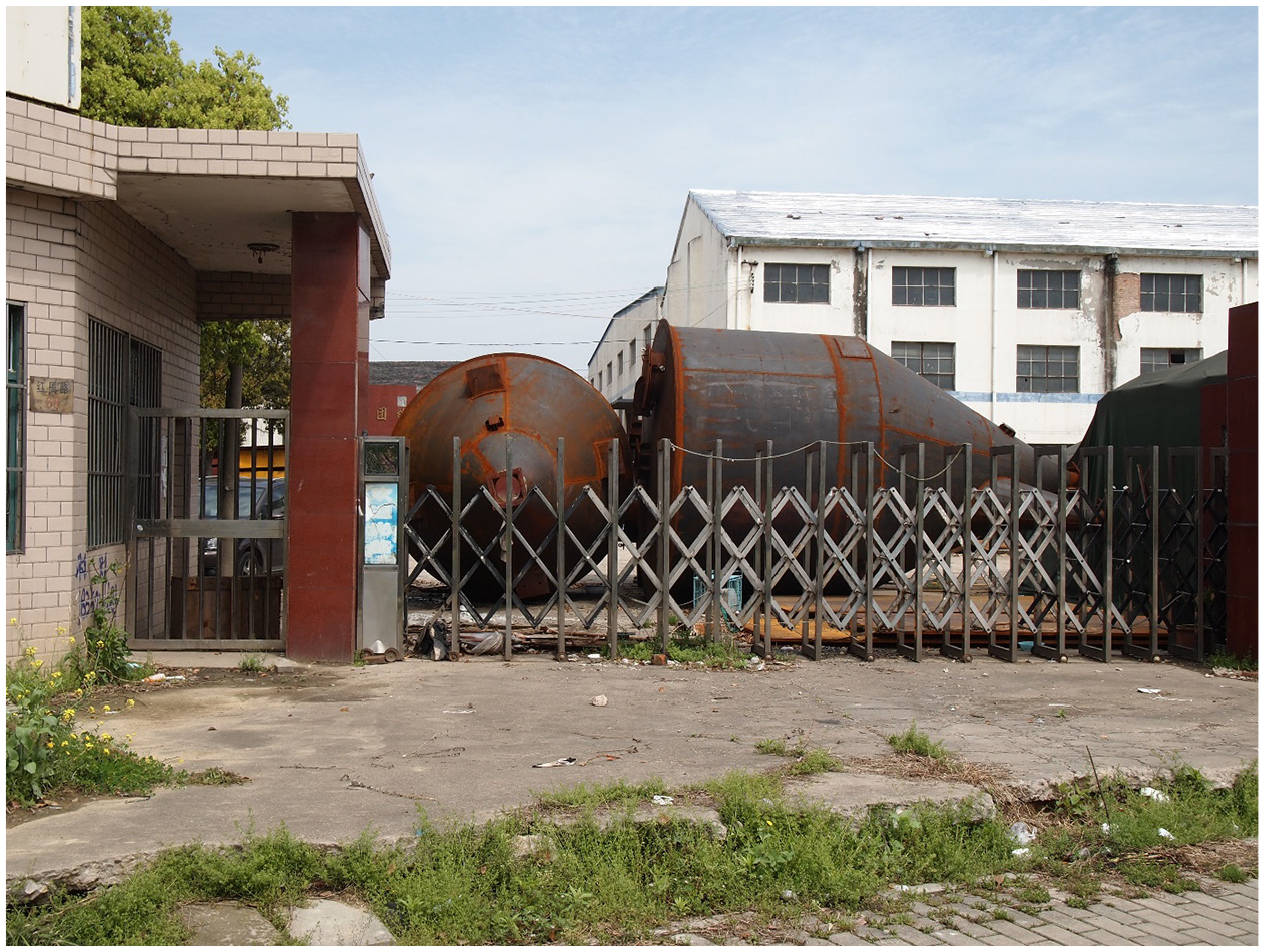
The closing-down of polluting TVE industries.
Unlike industrial development zones, the new town does not pursue manufacturing industries. There has been no intention to attract industrial investment, partly because the investment in infrastructure is significant and this requires a high value-added economic sector such as creative industries. The planning officer remarks: Honestly speaking it is impossible to develop the land to attract large enterprises, because the land has already been transformed in its use from manufacturing to service industries. Because the land price of manufacturing industries is very low, it is impossible for me to use such an attractive piece of land to reintroduce manufacturing industries. Therefore, in the industrial structure, we have to select new industries and more environmentally friendly and economically profitable enterprises. (Interview, senior planning officer at Wuxi planning department, June 2015)
The ecological fix has a great impact on the landscape. Taihu New Town reveals that there is no lack of actions in fixing the environment. Instead, the closure of polluting enterprises, the creation of wetland parks and green corridors, and the formation of a compact new town proceed with significant costs and have had great impacts on the landscape and livelihoods, as a local resident observed: Before redevelopment, all villages were the same here. There were old farmers’ houses. The villages were surrounded by agricultural land for rice cultivation. There were fishponds near the Taihu Lake, and factories along the roads. Around 2008, there were still quite a lot of private enterprises. Now heavy industries such as machinery were moved to the new district. At the village houses, the wetland parks were newly dug. The hill near the government was piled up when the wetland parks and lakes were dug. Villages disappeared. My house was demolished in 2008. I got a resettlement house. Because my old house was quite large, I got several apartments, and some are still empty now. (Interview, a resident, June 2015)
The case shows that the ecological fix involves not just development but also deconstruction. The new wetland parks and greenways are the outcome of the production of nature.
Creating green space, wetland parks and green infrastructure
Greenbelts and boundaries are important ecological fixes (Keil and MacDonald, 2016). The ecological fix in Taihu New Town similarly stresses ecological land uses such as green corridors and the network of water bodies and landscaping. The lakefront preservation area, wetland parks and greenways have been created for leisure but also preservation and the water quality of Taihu Lake (Figure 2). Green space has significantly increased. Even in the central area, green space occupies 22% of the land. The new town also considers the characteristics of the southern Jiangsu water landscape and has preserved 300 rivers and creeks. These wetland parks are designed to create impressive scenery for the new town. The government led the infrastructure development but hoped that the market would subsequently take over residential and commercial property development. However, it is questionable whether the private sector is prepared to bear additional costs to achieve ecological objectives. So far, the local government has invested heavily in wetland park development and major green infrastructure.
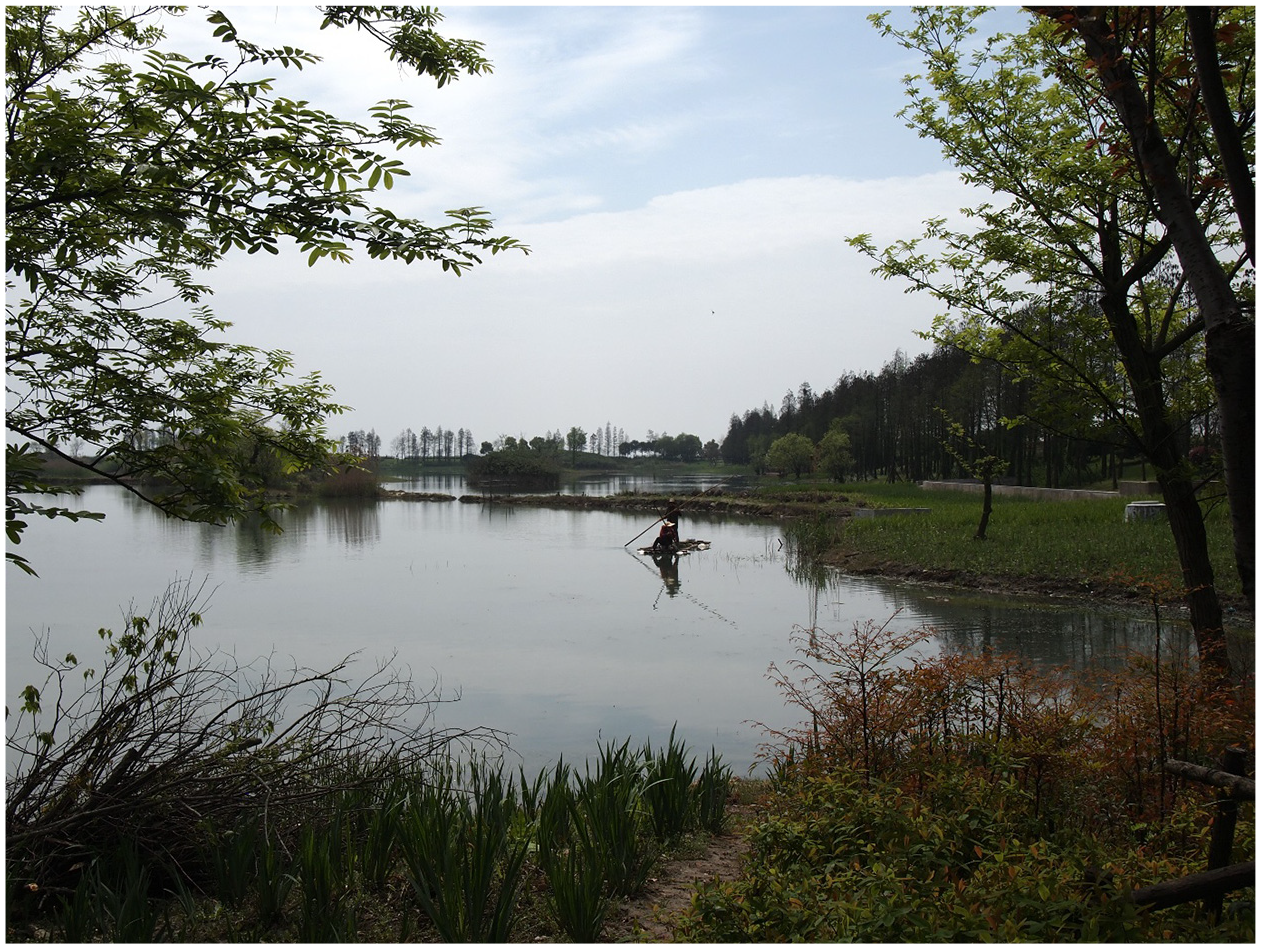
The wetland park and greenways along Taihu Lake.
Developing renewable energy and promoting low-carbon transition
The ecological fix includes not only restoring nature but also changing energy usage to reduce carbon emissions. The transition to renewable energy is an important fix (McCarthy, 2015). The new town provides a chance for Wuxi to experiment with heat pumps and solar energy stations. However, other green technologies such as combined power and heating systems, regional energy supply and pneumatic waste collection systems recommended by the Swedish partners are too expensive or not suitable for Chinese conditions and hence have not been adopted. The local government encourages the development of solar power industries and the use of their products in the new town. Distributed PV plants are installed in the industrial parks, and a system of solar water heaters (SWH) is widely installed in residential buildings. Over 45% of households owned SWH products in 2018. The new town provides ample space for the installation of solar power stations. The newly built main roads and streets are equipped with solar power lamps. There are several reasons why Taihu New Town has made significant progress in the development of a low-carbon city.
First, in terms of production, the city of Wuxi has seen a clustering of solar power industries and has become a PV manufacturing base. However, the anti-dumping sanctions launched in Europe and the USA in 2012 hit the export market for Chinese PV products hard, driving many solar manufacturing enterprises to the brink of bankruptcy. Then, to cushion the impact, the government began to emphasise the installation of distributed solar power systems for domestic use. The new town provides an opportunity to encourage local energy transition to create a local PV market.
Second, the development of the new town creates a new space for solar power usage. Under government directives, the industrial parks in the new town began to explore the use of solar power. The development of low-carbon infrastructure received government support and helps to reduce business costs. According to a manager of the science park in the new town: When we built our science park, we installed the distributive PV stations to advertise our high-tech infrastructure. The theme of low carbon helps us gain more subsidies from the government [under the low-carbon energy policy] and attract more investment. Currently we are introducing start-ups into our science park. The PV roofs reduce their expenditure on electricity and are one of our advantages. (Interview, April 2017)
For developers, suburban lower-density gated communities are a better environment for the installation of solar power stations. The residents of detached houses own their roofs and therefore can install PV or SWH more easily. Even for high-rise residential buildings that have a single roof, some developers integrate green technologies into their buildings using as a selling point that the green buildings can bring a more comfortable environment and reduce electricity costs.
The contradiction of state entrepreneurialism and the limits of the ecological fix
Despite good ecological conditions, a set of eco-plans and KPIs, available infrastructure nearby and central government support, SSLCEC failed to make substantial progress and did not attract much investment. While some villages were demolished, the site has been largely left empty. Although the new town was located in a more developed region than Dongtan in Chongming Island, the problems are fairly similar. There are two issues: first location, and second the business model. With hindsight the failure of Dongtan eco-city could be due to several reasons: inappropriate location near the ecologically sensitive wetland, failure to obtain land development quota and the change of Shanghai mayor. But the main issue was that the eco-city could not possibly rely on low-density real estate development at this location. The site is too far from Shanghai city proper, although the bridge and tunnel were built later. For Wuxi, the site of the eco-city was still a little too far from the centre of the new town. It is located further to the south of the new town, while the overall new area is being built from the north to the south. The wave of development has now gradually extended to the area. Recently, because the land in the northern part of the new town has been fully developed, the eco-city site has begun to attract attention. In 2019, the detailed development control plan of the eco-city was adjusted, indicating a possible start in the near future.
Second, both Dongtan and Wuxi had difficulty finding a business model. With low development intensity, it is impossible to sustain the overall cost of infrastructure investment. The eco-city of Wuxi faced a similar issue. As a Wuxi local planner points out, the model of Dongtan could not be applied to Wuxi because a ‘zero-carbon settlement is impossible’. In contrast, the Tianjin eco-city carried out massive real estate development in order to compensate for investment in ecologically inferior areas. To some extent, the development in Tianjin can still be regarded as an environmental improvement, albeit that the outcome is mainly for real estate development. The Singaporean firm treated investment in the eco-city as an extra-territorial economic strategy, regardless of whether or not it was an eco-city. In Shenzhen, the eco-city was based on industrial upgrading (Xie et al., 2020). In Wuxi, although the new town was driven by economic development, the local government was willing to experiment with ecological improvement in a defined site. This has proved quite challenging as the ecological considerations were not fully supported by a viable business model. The challenge of the business model is also because the nature of the partnership has been confined to technical support. The director of the planning bureau explains: Different from the Sino-Singapore Industrial Park where the Singaporean government firm invested, here in the new town, the Swedish government only acts as a bridge to introduce Swedish companies to come to collaborate. All the enterprises are based in Sweden and the costs are very high, maybe three to five times higher [than local production]. Therefore, the introduction of ecological products in new town development would not be feasible unless the Swedish government provides subsidies to these firms or Swedish enterprises need to produce these products in China to reduce costs. The main role of the Swedish government so far is business promotion and thus their enterprises have not yet operated here. (Interview, April 2017)
Although the former minister of MOHURD who campaigned for the eco-city has openly criticised many fake eco-cities, our close examination of the development process suggests that the ecological fix is not greenwashing or place branding. Some have not achieved their ecological objectives, as the local state lacks resources and could not realise ecological improvement on its own. They thus have to rely on market development and operation to achieve the ecological fix. The intention of the ecological fix has been partially achieved in Taihu New Town, mostly in wetland parks, greenways and renewable energy usage. Under state entrepreneurialism, the ecological fix has to be performed regardless of economic costs, but the ultimate realisation of the fix requires the local state to negotiate with development interests and give greater flexibility to market instruments.
Conclusion
This paper fills a lacuna in the extensive studies on Chinese eco-cities and investigates whether these initiatives have any intention to fix the ecological and metabolic crisis. We apply the ecological fix to Chinese eco-cities but also develop the concept in the context of state entrepreneurialism. Following earlier doubts that these eco-cities are no more than largely greenwashing or development tools, we explain why ecological development is not necessarily incompatible with entrepreneurialism. We find that the ecological fix in Taihu New Town has been substantially executed, which not only justifies the removal of inefficient and polluting TVEs through destruction but also the construction of new green spaces and renewable energy along with the transformation of the built environment. This paper confirms that the ecological fix on nature is conducted in conjunction with growth-oriented Chinese cities (Wu, 2015). We also stress the contextual importance, because under state entrepreneurialism there is a strong mentality of developmentalism. The ecological fix performed during building new towns opens up not only space for capital accumulation (Shen and Wu, 2017) but also space for state manoeuvre and governance.
We find that the challenge to economic sustainability is not the lack of ecological intervention, neither is it economic promotion in the name of ecological advancement. The ecological fix as a strong intervention may be performed at significant economic and social cost (Xie et al., 2019). In the case of Taihu New Town, although it is a new town it is not an entirely greenfield development. The current literature on Chinese eco-cities assumed, correctly at the time, that the local state was always economically minded and thus not interested in an ecological fix. The essence of Taihu New Town, however, is the transformation from low-value manufacturing industries on the sunan model to tertiary industries, and the ecological fix is essential to this transformation. The treatment of TVE pollution and the protection of the water environment are all necessary. The local state seized this opportunity to control the rights of development to foster a comprehensive new town strategy. The ecological fix was launched under pressure from the central government and opportunities for policy mobility and learning (Chang et al., 2016; Rapoport and Hult, 2017). However, under global capitalism, policy mobility has been driven by the export of technologies and new business ventures in emerging markets. Even though the Chinese local state wished to embrace the ecological project, the SSLCEC failed to materialise because the ecological fix did not fit into the reality of market development (the site being too far from the town centre), though Taihu New Town has achieved ecological improvement, because an ecological fix can only be performed under specific conditions such as an imminent environmental crisis or central government strategy (While et al., 2010). The case of Taihu New Town also reveals the limits of the ecological fix, because the fix needs to resort to market operation. Now, ‘climate urbanism’ is gaining momentum worldwide (Long and Rice, 2019). The actually existing ecological fixes are often steered towards dealing with climate change issues but at the same time these fixes have to rely on capitalist development. As shown in Taihu New Town and many other failed Chinese eco-cities, global capitalism creates the imperative for ecological production and possible incremental ecological improvement but simultaneously impedes its full implementation. In this sense, the ecological fix is only a temporary solution.
Footnotes
Declaration of conflicting interests
The author(s) declared no potential conflicts of interest with respect to the research, authorship and/or publication of this article.
Funding
The research was supported by grants from the British Academy (SG163119, project entitled Chinese eco-city planning beyond the ‘sustainability fix’?) and Advance Grants from the European Research Council (No. 832845 – ChinaUrban). We would like to thank Tingting Lu, Zihan Yin, Ka Chu and Jiayan Shi for helping with the fieldwork.
