




Abstract
Radical housing reform has triggered tremendous changes in both housing supply and housing demand in China over the past four decades, leading to apparent generational fractures in homeownership. In contrast to the rising age of first dwelling purchasers in some Western countries, younger cohorts in China are entering homeownership at increasingly younger ages despite rising housing prices. Based on a retrospective survey conducted in Shanghai in 2018 and 2019, this study examines the changing roles of family formation and parental background in affecting the timing of entering homeownership across different cohorts. Employing event history analyses, this study demonstrates that transitions to first homeownership have become synchronised with family formation among younger cohorts, which implies the social norm of ‘marital home’. Furthermore, the results reveal that parental background is increasingly influential in determining the timing of first home purchase; men and individuals from one-child families are more likely to be the beneficiary of parental help to enter homeownership. Through the lens of cohort, this study contributes to understanding the changing role of family formation and family of origin, which are shaped by institutional and cultural transformations in China. The intensified intergenerational transmission leads to exacerbation of horizontal housing inequality, that is, some achieving homeownership at a younger age while others being shunned from homeownership in the context of worsening housing affordability.
Introduction
Entering homeownership is a significant milestone in an individual’s life course. Whether and when people make this transition exerts a profound impact on one’s wealth accumulation, life chance and ontological security (Dong and Hansz, 2019; He et al., 2020; Mulder et al., 2015; Saunders, 1984). In contrast to the emergence of ‘generation rent’ and the rising age of first-time home buyers in the United States and many European countries (Department for Communities and Local Government, 2016; Lersch and Dewilde, 2015; US Census Bureau, 2017), Chinese first dwelling purchasers are becoming younger over time despite skyrocketing housing prices over the last decade. According to a report by the Hongkong and Shanghai Banking Corporation (HSBC, 2017), 70% of Chinese millennials already owned a home in their 20s and early 30s. However, this phenomenon is not common among earlier generations. A majority of individuals belonging to post-60s and post-70s cohorts 1 rented dwellings from their work units or municipal governments, and they were not able to obtain homeownership until they were already middle-aged in the late 1990s when housing commodification and privatisation were initiated (Ho and Kwong, 2002). Thus, the timing of entry into homeownership is profoundly affected by the macro context of the housing system.
Although previous research has uncovered generational differences in housing opportunities (Cui et al., 2021; Li and Yi, 2007), cohort differences in the timing of entry into homeownership have rarely been examined in the context of urban China. The importance of the timing of first homeownership lies in three aspects. First, given the rapid rise in housing prices, the timing of entering homeownership directly affects the cost of home purchase, 2 which has long-term implications for people’s accumulation of wealth. Second, temporal dynamics of housing policies, to some extent, shape windows of opportunity for homeownership. Since 2010, a series of purchase restriction policies has been implemented in big cities, imposing restrictions on people’s eligibility to purchase a dwelling. The changing constraints on and opportunities for individuals’ homeownership also highlight the significance of the timing of entering homeownership. Third, as homeownership is increasingly bonded with marriage, a delay in entering homeownership has immediate repercussions for one’s progression in terms of careers and life chances (Zheng, 2020). In the context of China, where homeownership rate has exceeded 90% (Liao, 2020), the timing of entering homeownership, in addition to the access, constitutes an important dimension of housing inequality. Purchasing a dwelling is usually metaphorised as getting on the train to ‘success’. The earlier one gets on the train, the more benefits one can reap. Furthermore, from the policy-making perspective, the generational shift to a younger age of first-time homeownership has inflated the Chinese housing market because of the crowding effect, and this poses a critical challenge to Chinese policy-makers who have been striving to deflate the housing bubble in recent years. It is imperative to understand the characteristics and underlying causes of this shift.
In the international literature, the debate concerning the timing of transition into homeownership centres on its connection with household events (marriage, first childbirth, etc.). Smits and Mulder (2008) found for the Netherlands that the likelihood of becoming a first-time homeowner has increased for singles and cohabiters since the 1990s, and then concluded that, when becoming a homeowner, household events have become less important than they used to be. In contrast, in Germany, the transition into first homeownership is strongly connected with household events, due to policy-implemented preferences for marriage and traditional household formation, as well as the availability of other tenure options (Thomas and Mulder, 2016). In the United States, where homeownership is the dominant tenure, couples and families move into homeownership at a quicker pace (Clark et al., 1997). In Asia, buying a home for marriage is customary, leading to marriage-induced demand for homeownership (Cheung et al., 2020). In addition to the connection between the timing of transition into homeownership and household events, the impact of parental background on an adult child’s entry into homeownership has received wide attention (Cigdem and Whelan, 2017; Mulder et al., 2015; Öst, 2012; Smits and Michielin, 2010). While recognising the increased dependence on parental help in many countries, Cigdem and Whelan (2017) suggest that the role of parental background varies, reflecting the variety of housing systems, institutional regimes and cultural norms across countries.
In the Chinese context, the transformation of the housing system and the accompanying changes in cultural norms related to homeownership during the past four decades may not only give rise to cohort differences in the timing of first-time homeownership, but also lead to the changing effects of household events and parental background. In this study, based on a retrospective survey conducted in Shanghai in 2018 and 2019, we examine how and why the timing of transition into homeownership changed across cohorts by exploring the changing effects of family formation and family of origin. This empirical study contributes to the existing literature by providing a lens through cohort differences to understand the institutional and cultural transformation concerning homeownership, that is, how the installation of homeownership as a normative social ideal is facilitated by creating a ‘rigid demand’ for marriage and intensification of intergenerational transmission.
Literature review
Divergence of homeownership across cohorts
The theory of Mannheim’s (1952)‘social generations’ claims that a generation shares similar structural and institutional experience and is characterised by certain aspirations, values and behaviours. In terms of pathways towards homeownership, generational fractures have been shown in many countries (Myers et al., 2020; Öst, 2012; Sánchez, 2018). Furthermore, generational differences in the timing of first dwelling purchase have also been found (Bayrakdar et al., 2019; Feijten and Mulder, 2002). In an early study, it was found that the transition into homeownership was made at increasingly younger ages across cohorts 1920, 1930, 1940, 1950 and 1960 in both West Germany and the Netherlands (Mulder and Wagner, 1998). This largely owed to the expansion of the owner-occupied housing sector, facilitated by the provision of subsidies and increasing access to mortgages in Western countries from the Second World War until the 1980s (Chevan, 1989; Martens, 1985; Neutze and Kendig, 1991; Öst, 2012), from which the baby boomer generation benefitted the most.
Between 1980 and 2000, homeownership by households with ‘heads’ aged 25–44 years declined substantially in the United States (Fisher and Gervais, 2011). In more recent years, millennials looking to buy their first home have been facing substantially greater challenges (Hoolachan and McKee, 2019). The median age of home buyers in the United States has increased from 31 in 1981 to 47 in 2019 (National Association of Realtors, 2019). In Britain, the ratio among those aged under 35 dropped from 50.3% to 28.9% between 2003 and 2015 (Ronald, 2018). Diminishing access to homeownership among young cohorts has given rise to the emergence of ‘generation rent’ in developed societies, referring to the fact that younger households have been increasingly pushed into the rental sector (McKee, 2012; Ronald, 2018). Housing inequality between baby boomers, who benefitted uniquely from post-war expansion of homeownership and subsequent housing price inflation, and millennials, who are in insecure jobs and suffered from continuing decline in housing affordability, has become a major concern among researchers (Coulter, 2017, 2018; Hoolachan and McKee, 2019; Ronald, 2018).
Family formation and homeownership
Ever since Rossi (1955) argued that the desire for shelter arises once a family has formed and gradually stabilised, many studies have consistently shown that the transition to homeownership is closely connected with household events (Clark et al., 1997; Cui et al., 2016; Feijten and Mulder, 2002). However, the extent to which people synchronise homeownership with marriage or parenthood differs, subject to temporal and contextual variation in housing market circumstances and cultural norms. Compared with some social welfare states, the traditional link between marriage and homeownership may be smaller nowadays in a more neoliberal society (Thomas and Mulder, 2016). For instance, in the Netherlands, it has been found that the difference in the likelihood of becoming a homeowner between married and unmarried couples has decreased, and an increasing number of singles and cohabiters enter owner-occupied housing (Smits and Mulder, 2008). This can be attributed to a less pronounced emphasis on the traditional family and on marriage, as well as the growing notion of homeownership as an investment rather than a commitment (Thomas and Mulder, 2016).
In the United States, Fisher and Gervais (2011) documented that marriage and homeownership are tightly linked, and a decline in the incidence of marriage was deemed to account for half of the decline in homeownership among those aged 25–44 years. However, this can also happen the other way around. Couples in Britain were found to postpone marriage or parenthood due to the unaffordability of housing (Forrest et al., 1999; Murphy and Sullivan, 1985). In Asian societies, the ideology of becoming a homeowner before marriage is prevalent (Ronald, 2004). According to Becker’s (1974) theory of marriage, possessing a home increases individuals’ (men in particular) competitiveness on the marriage market. This marriage-induced demand for homeownership is more pronounced in Asia, where family and cultural norms are more traditional (Cheung et al., 2020). The housing tenure structure also matters. In Germany, where rental housing is of good quality and thus can serve as an alternative to homeownership, transition into first homeownership is usually made at a later time, after first childbirth (Mulder and Wagner, 1998). This is also related to Germany’s housing policies, which differentiate between household statuses, that is, homeowners with children receive more subsidies than those without children.
Family of origin and homeownership
As mentioned above, the diminishing access to homeownership among young cohorts is prominent in many Western countries. To cope with that, parents are eager to offer help, leading to an intensification of intergenerational support and assistance (Ronald and Lennartz, 2018; Wong, 2019). A positive and significant impact of parental homeownership on children’s homeownership has been substantiated in most European countries (Lersch and Luijkx, 2015; Smits and Michielin, 2010). In the UK, Udagawa and Sanderson (2017) revealed that first-time home buyers with parental support were 4.6 years younger than those without parental support. Similarly, Ma and Kang (2015) found that adult children whose parents are wealthy are more likely to transit quickly to homeownership in Korea. The extent of parental impact varies in different time periods. Smits and Mulder (2008) found that the effect of parental homeownership had increased owing to rising house prices and an increased ability of parents to help. Öst (2012) extended this research by incorporating cohort differences and found that parents’ homeownership has a significantly greater impact on the opportunity of cohort 74 to become homeowners than that of cohort 56 in Sweden. A considerable body of literature has demonstrated that family of origin is becoming crucial for the younger generation’s ability to transition to homeownership in contexts where housing prices are higher, renting is not a feasible alternative and family matters more for the provision of housing (Coulter, 2018; Cui C et al., 2020; Galster and Wessel, 2019; Mulder et al., 2015; Or, 2018). An exception is that the effect of parental homeownership was found to be limited in the United States after housing market characteristics were taken into account (Henretta, 1987).
When examining the impact of parental support, the presence of siblings is of great importance but is largely neglected (Heath, 2018). According to the quantity–quality trade-off theory, there is a negative relationship between the number of children in a household and a child’s achievement, because finite family resources are diluted as family size grows (Becker and Feeley, 1973). Children from larger families are often found to be inferior in terms of educational attainment, health and wealth (Keister, 2003; Ponczek and Souza, 2012). Sibship size may also affect parental resource allocation and consequently leads to variations in adult children’s transition into homeownership. Relatedly, gender difference in parental resource allocation is well documented. Some Western studies have suggested that parents are more willing to support their daughters than their sons because daughters tend to have closer relationships with their parents and are, therefore, more likely to look after them than sons (Blaauboer and Mulder, 2010; Mishra, 2015). Conversely, in East Asian countries, patriarchal culture dictates ‘son preference’, which prioritises sons in intra-household resource transfer and allocation (Chai and Feng, 2021; Wu, 2012). However, it has seldom been explored how gendered intergenerational transmission leads to variation in the timing of entering homeownership between male and female children.
The Chinese context
In China, the post-reform shift in the housing system and the associated transformations in cultural norms related to homeownership have altered the constraints on and opportunities for individuals’ homeownership as well as the demand for homeownership. These structural and institutional changes at the macro level have given rise to generational differences in the transition into homeownership at the individual/household level. Before 1978, homeownership and private property rights had virtually vanished, and urban residents had neither opportunities nor incentives to own a home (Ho and Kwong, 2002). Since 1978, housing reform has been implemented through the privatisation of public housing stocks (He et al., 2017; Wei et al., 2020). Housing inequalities across work units rooted in socialism have been strengthened by the institutional changes of a state-led market economy. Among older cohorts, those employed in the public sector were provided with greater opportunities to acquire a home (Fang et al., 2020; Li and Yi, 2007; Logan et al., 2010). Along with the deepening of marketisation, the increasing economic, political and cultural significance of homeownership has increased young people’s desire for homeownership. Wu (2019) found that, compared with older cohorts, post-80s are more likely to transit into homeownership, even though housing prices have rendered housing a highly inaccessible commodity.
The link between entering homeownership and household events is complex and may have changed with the shift of the housing system over the past four decades. Under the socialist housing allocation system, family formation could not alter housing tenure when homeownership barely existed. Since the housing reform, there has been a clear trend of young couples increasingly leaving their parental homes and making the tenure transition, owing to the expansion of homeownership (Zheng, 2020). In recent years, family formation has started to act as a trigger for entering homeownership, and it has gradually evolved into homeownership becoming a prerequisite for marriage (Hu and Wang, 2020; Yu and Xie, 2015). The emergence of the term ‘home for marriage’ (hunfang) vividly demonstrates that homeownership has been tied closely to marriage. In addition, the tradition of men providing the ‘home for marriage’, which is rooted in patrilocal residence, seems to have resurged. A number of scholars have argued that China’s rising sex-ratio imbalance has increased the bargaining power of females in the marriage market, which gives rise to a phenomenon called the ‘mother-in-law effect’, referring to mothers who oppose their daughters marrying a man who does not own a dwelling (Li et al., 2018; Zheng, 2020).
Although there is a long-standing tradition of parents helping their children secure a home in China (Or, 2018), radical housing reform and cultural transformations may lead to a changing role of parental help. Before the housing reform, residential housing was allocated mainly by the work unit, and parental financial support for housing was marginal. Young adults who did not work in the public sector relied on family support in the form of co-residence, owing to the limited housing supply and the fact that multigenerational co-residence was a part of cultural traditions (Li and Wu, 2019). During and after the housing reform, young people could benefit from or inherit certain advantages from their parents, particularly those parents who had benefitted from housing privatisation and subsequent housing price appreciation (Cui, 2020; Wu, 1996; Xie and Jin, 2015). In the past decade, housing commodification and marketisation have reduced housing affordability considerably. High housing prices can only be counteracted by intergenerational cumulative wealth, which means that the younger generation’s ability to own a home is increasingly contingent on parental financial transfers (Huang, 2018; Zhang and Bian, 2021).
When patrilocal intergenerational co-residence was prevalent, it was much more often that a married woman resided in and served her husband’s family (Zheng, 2020). Later on, the proportion of patrilocal intergenerational co-residence largely reduced, and men and their family of origin are more often assumed to take responsibility for purchasing a dwelling for the newly married couple, leading to gender differences in intergenerational resource transfer. However, this patrilineal family reproduction model has been challenged after economic reform with the increased coverage of social safety nets and the implementation of the one-child policy (Deng et al., 2019). Zheng (2020) found that women from more established middle-class families also receive considerable financial support from their parents. Gender gaps in nutrition, health conditions and educational opportunities have also narrowed in post-reform China (Zheng, 2015). How gender dynamics together with the implementation of the one-child policy affect parental resource allocation and consequently lead to variations in the timing of first-time homeownership in urban China has received scant attention in the existing literature.
Methodology
Data
The data used for empirical analysis in this study were collected from a survey conducted in Shanghai during 2018 and 2019. Adopting stratified and multi-stage probability proportional to size sampling, we first decided the number of sub-districts to be selected from each district in Shanghai 3 based on the total number of sub-districts within each district. Then, by ranking the sub-districts by the total population within each district, two to four sub-districts were randomly selected from each district, serving as the primary sampling unit. For each selected sub-district, one neighbourhood 4 was randomly chosen, from which approximately 35 households were selected based on their apartment number. 5 Household heads (or their spouses) who were aged between 18 and 60 years and had lived in the surveyed neighbourhood for more than six months were interviewed. We acknowledge that, owing to the fact that the survey was residence-based and covered only formal neighbourhoods, a large number of migrants who live in informal housing, such as factory dormitories and urban villages, were difficult to reach. Therefore, the samples are likely to be biased towards local residents and higher educated populations.
The survey was conducted by a group of professional investigators and a group of students who were trained to recruit respondents and administer the survey. In the course of the interview, the interviewers read the questions from the questionnaire, the respondents answered orally and then interviewers recorded the answer. Finally, a total of 950 samples were used in the analysis after eliminating those with invalid or incomplete information. A retrospective survey was designed and used, allowing us to obtain information on respondents’ first-time homeownership. The respondents were asked to provide basic socio-demographic information and to answer questions related to their life histories, including information on household, job and residential mobility. We also collected information on their family of origin, such as self-reported parents’ economic status 6 and parental homeownership (when the respondents were 14 years old), in addition to the number of siblings.
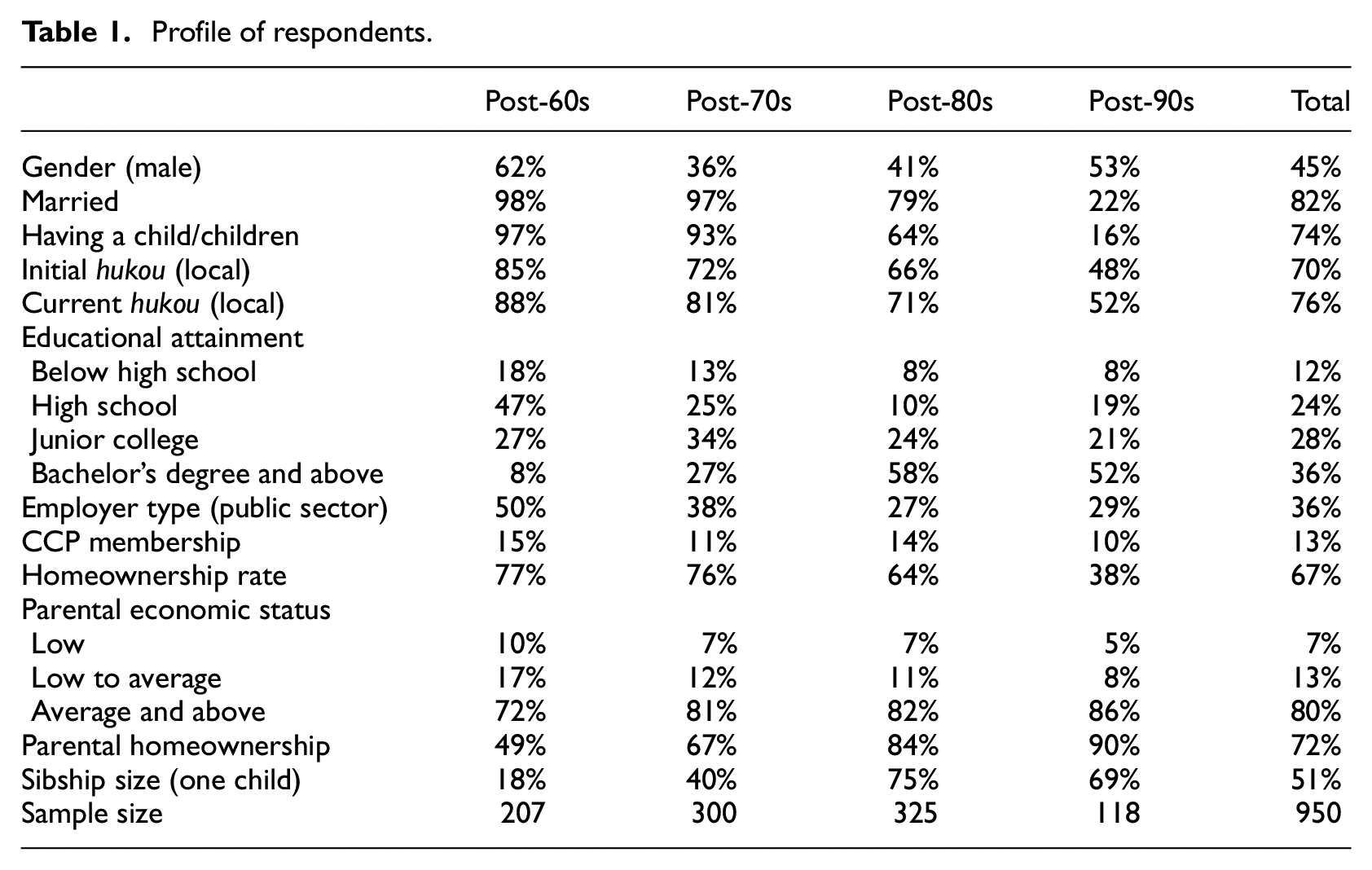
To facilitate the empirical analysis, the samples are divided into four groups based on their birth cohorts using 10-year spans. The groups are thus defined as post-60s, post-70s, post-80s and post-90s cohorts, comprising individuals who were born in the 1960s, 1970s, 1980s and 1990s, respectively. 7 Table 1 displays the profile of respondents for each cohort. The younger cohorts have remarkably smaller proportions of individuals who are married and have one or more children. Additionally, the younger cohorts include more migrants, regardless of whether they are defined by the initial hukou or the current hukou. Comparing the initial hukou with current hukou, it can be seen that only a small proportion of respondents transferred their hukou to Shanghai in spite of some variations between cohorts. The younger cohorts are relatively more educated, while the older cohorts have a higher share of public sector employment and Chinese Communist Party (CCP) membership. For the total sampled respondents, the average homeownership rate is 67.47%, which is similar to the rate reported by the Annual Report on Social Development of Shanghai (Lu et al., 2019). With regard to parental background, the proportion of wealthy parents increases slightly across cohorts, and the proportion of parents who own a home increases substantially across cohorts. Owing to the implementation of the one-child policy, the majority of individuals in the younger cohorts are their family’s only child.
Profile of respondents.
Method
In this study, we used event-history analysis technique to investigate how housing tenure choice is associated with covariates of individuals across four cohorts. Because our survey data are censored data that include homeowners and non-homeowners, the event-history analysis is particularly suited to handle censored data and to include time-varying covariates (Allison, 2014). Specifically, discrete-time logistic models were employed after converting the dataset into a person-year format, in which each respondent i corresponds to Ti (the number of years before entry into homeownership) rows. For locals, the observation period starts from the age of 16; for migrants, the first person-year is the year when the individual started their residential career in Shanghai after age 16. As the event of interest is first-time homeownership, which is not repeatable, all subsequent person-year observations after the transition into homeownership were excluded from the analysis. This resulted in a total number of 13,319 person-year observations. Clustered standard errors were used, as each respondent contributed to a bundle of observations in person-year formatted data. The model specification is as follows:
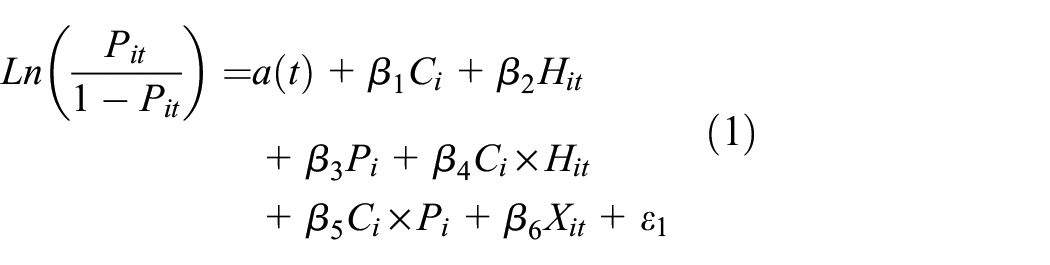
where Pit refers to the probability of respondent i acquiring their first owned home at time t, and Pit/(1–Pit) is the odds ratio of the probabilities of the occurrence and non-occurrence of making the transition to homeownership.
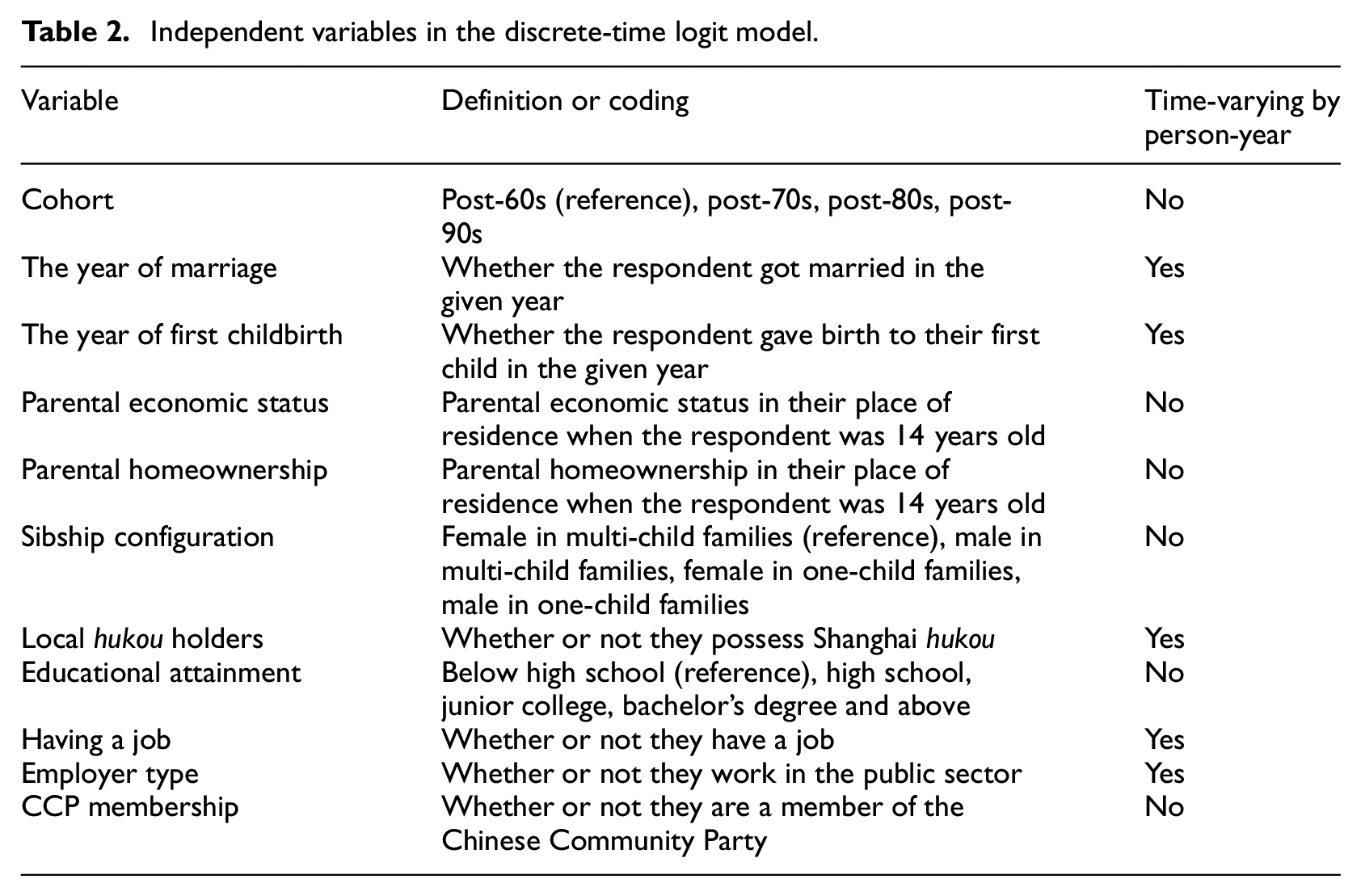
The definition of explanatory variables in the discrete-time logistic model is presented in Table 2. Some variables are time-varying, the value of which may change throughout the course of the observation period, such as the year of marriage, the year of first childbirth, hukou, 8 having a job and employer type. Other variables are not time-varying, including cohort, parental economic status, parental homeownership, sibship configuration, educational attainment and CCP membership.
Independent variables in the discrete-time logit model.
Variation in the timing of first-time homeownership
Cohort differences in the timing of first-time homeownership
Figure 1 demonstrates evident cohort differences in the timing of transition to homeownership in terms of both the age and the calendar year. Using Kaplan–Meier survival curves, Figure 1(a) shows the percentage of respondents who ‘survive’ entering homeownership at a certain age. The younger cohorts have made the transition to homeownership at an increasingly younger age in comparison to the older cohorts. By age 25, fewer than 10% of people born in the 1960s had become homeowners, while nearly 40% of the post-90s cohort had already become homeowners. Entering homeownership is not only determined by one’s progress in the life course, indicated by age in Figure 1(a), but also shaped by policies enacted at different stages of housing reforms. Hence, Figure 1(b) showing the calendar year in which different cohorts enter homeownership reflects the influence of institutional changes and reforms in the housing sector over the past 40 years. At the early stage of housing reform (1985–1994), public rental was dominant, and very few people obtained homeownership. Since the privatisation of work-unit housing, a large proportion of individuals in the post-60s cohort and some individuals in the post-70s cohort capitalised on the privatisation opportunity to make the transition into homeownership during 1995–2000. Between 2001 and 2010, the rate of first-time homebuyers was steady, while an increasing number of the post-80s cohort started to enter the housing market. After 2010, the proportion of individuals entering homeownership increased sharply, especially for the post-80s and post-90s cohorts.
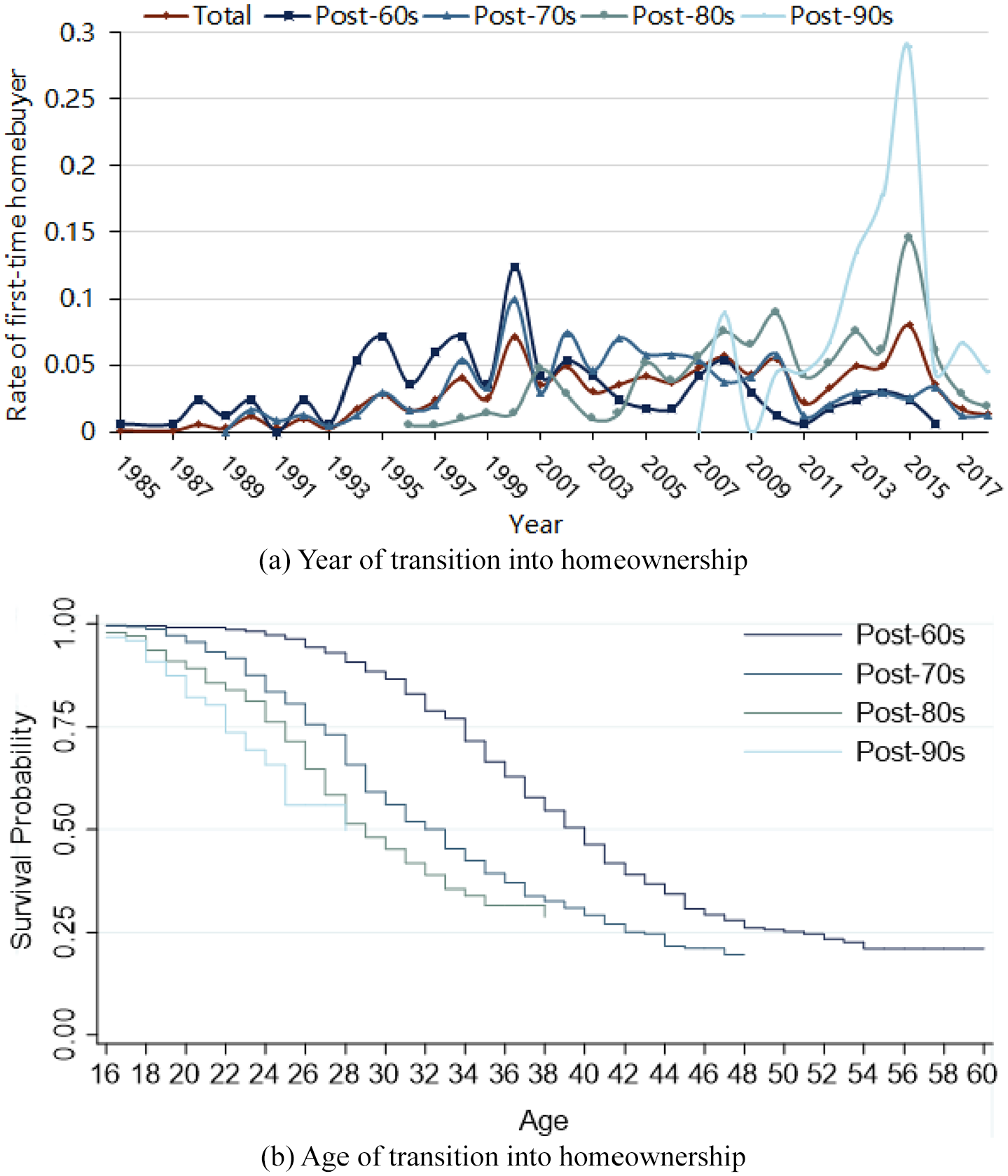
Timing of transition into homeownership.
Household events and first-time homeownership
The timing of first-time homeownership is compared to the occurrence of two household events, marriage and the birth of one’s first child (Figure 2). Since the majority of the post-90s cohort are unmarried and have no children, we excluded this cohort from this part of the analysis. The concurrence of first-time homeownership and marriage in the same year is quite common, accounting for 13% of the total sample. In addition, many individuals become homeowners for the first time either two years before or after marriage (Figure 2(a)). However, cohort differences can be clearly observed. The strong relationship between first-time homeownership and marriage does not exist for the post-60s cohort, but does exist for the post-70s cohort, and becomes much stronger for the post-80s cohort. For the post-80s cohort, more than 20% of respondents purchased their first homes and married in the same year. The association between first-time homeownership and the birth of one’s first child follows a similar pattern (Figure 2(b)). First-time homeownership is often accompanied by the birth and anticipation of one’s first child, especially for the post-70s and post-80s cohorts.
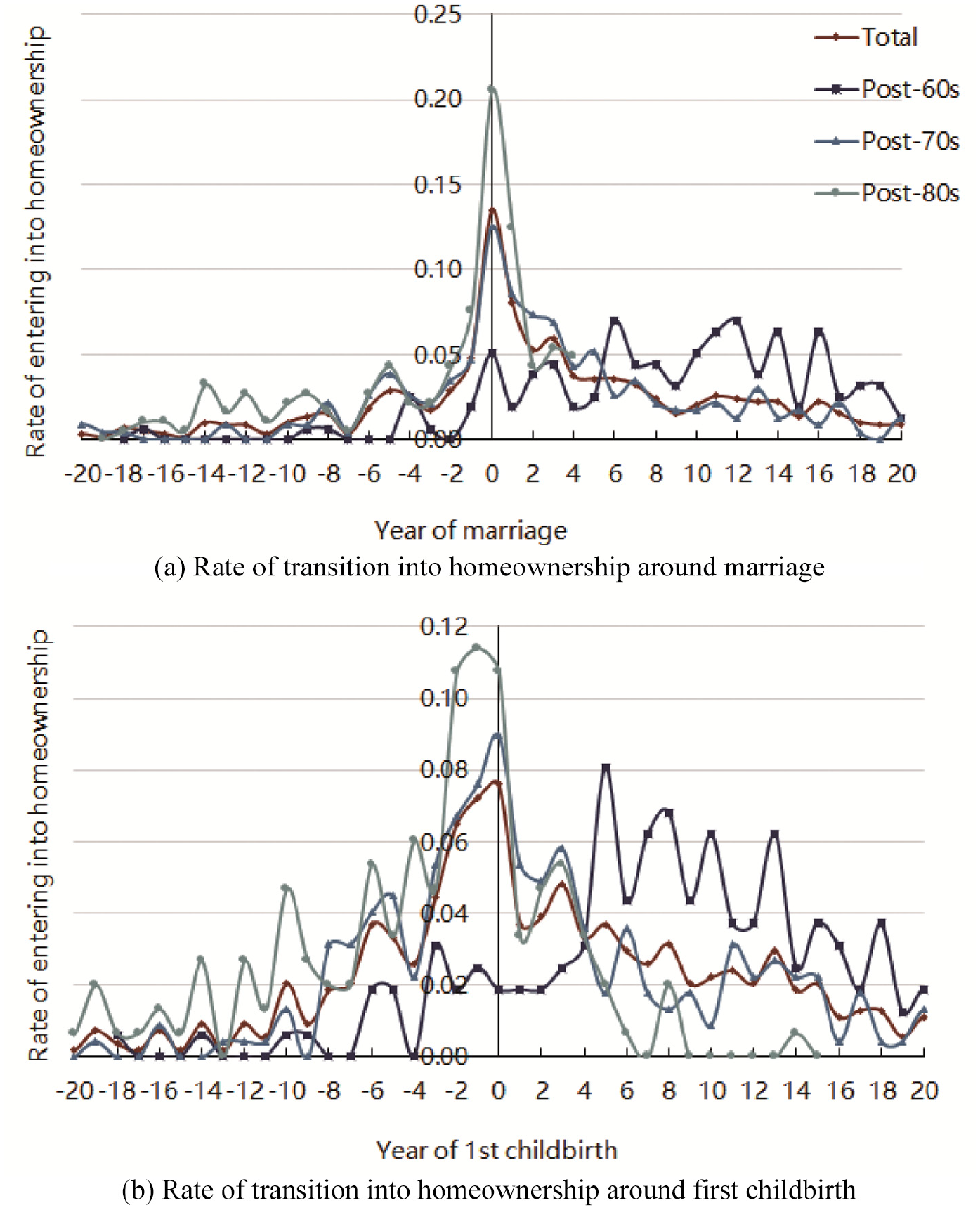
Timing of transition into homeownership and household events.
Family of origin and first-time homeownership
Figure 3 illustrates the distinct differences in the timing of entering homeownership between cohort groups with different parental economic statuses. For all cohorts (Figure 3(a)), as expected, individuals with higher economic status parents are more likely to transition to homeownership at a younger age. Taking individuals aged 35 years as an example, more than 60% of people in the average and above parental economic status category have entered homeownership, while only 40% and 25% of respondents in the low to average and low parental economic status categories have obtained homeownerships, respectively. Figure 3(b) to (d) presents the differences between cohorts, and these figures illustrate that the variation in parental economic statuses is greater among the younger cohorts. For the post-70s cohort (Figure 3(c)), the gap in the timing of entering homeownership between the low and low to average categories appears at age 25 and widens as age increases; however, the gap between the average and high categories is moderate and disappears after age 40. For the post-80s cohort, the gap between the low and low to average categories appears at younger ages, whereas the gap between the lower and higher parental economic status categories increases after age 27.
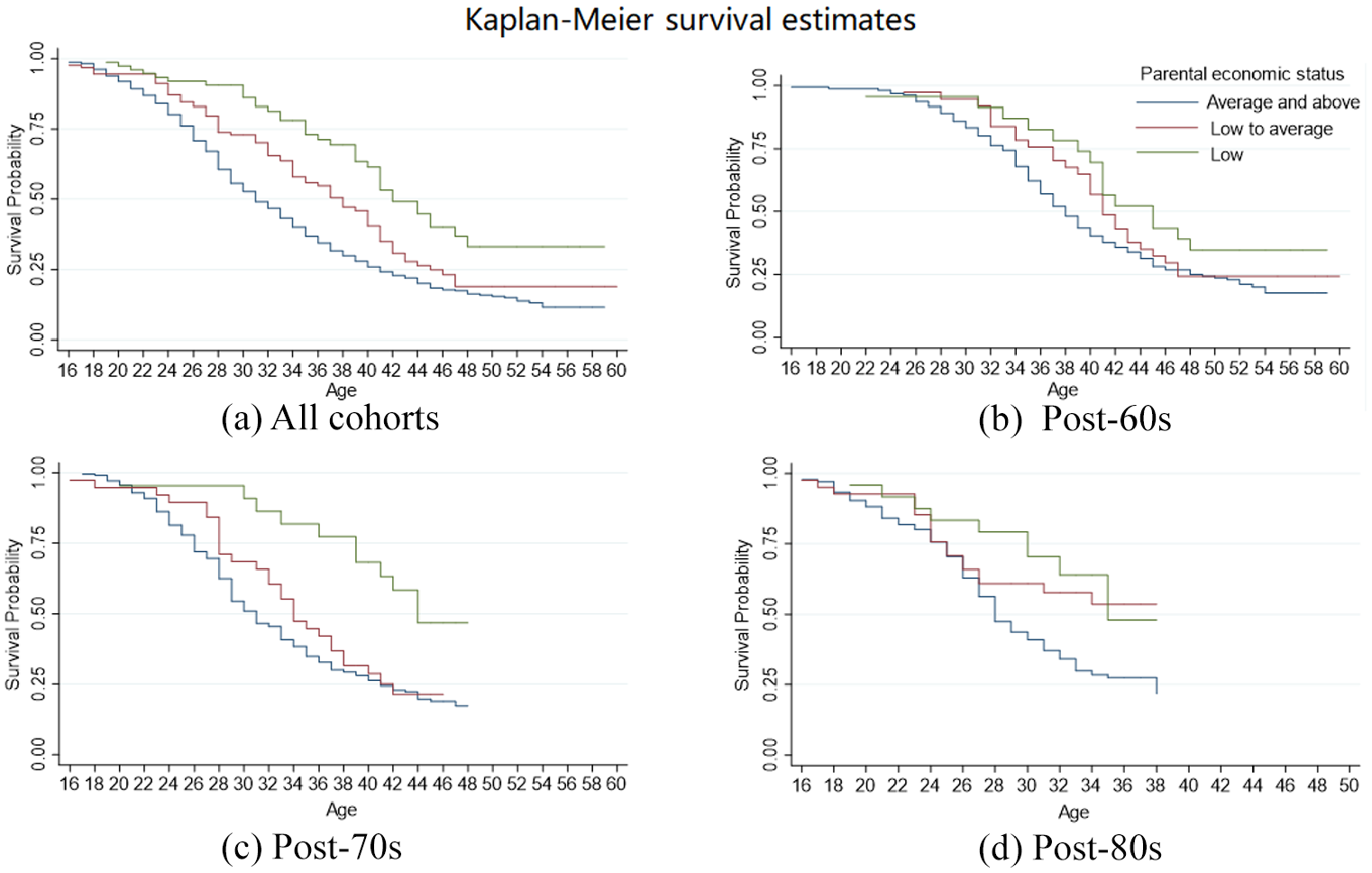
Age of transition into homeownership by different parental economic statuses.
As hypothesised earlier, gender and the number of siblings may affect the amount of resources transferred from parents, thereby leading to a variation in the timing of entering homeownership. Figure 4 demonstrates the percentage of respondents who ‘survive’ the transition to homeownership for four groups – males in a one-child family, females in a one-child family, males in a multi-child family and females in a multi-child family. For all cohorts (Figure 4(a)), the difference in the timing of first homeownership between one-child and multi-child families is much larger than that between genders. People from one-child families are much more likely to transition to homeownership earlier than those from multi-child families. Taking all cohorts together, the gender gap is moderate among multi-child families, but it is almost negligible for one-child families.
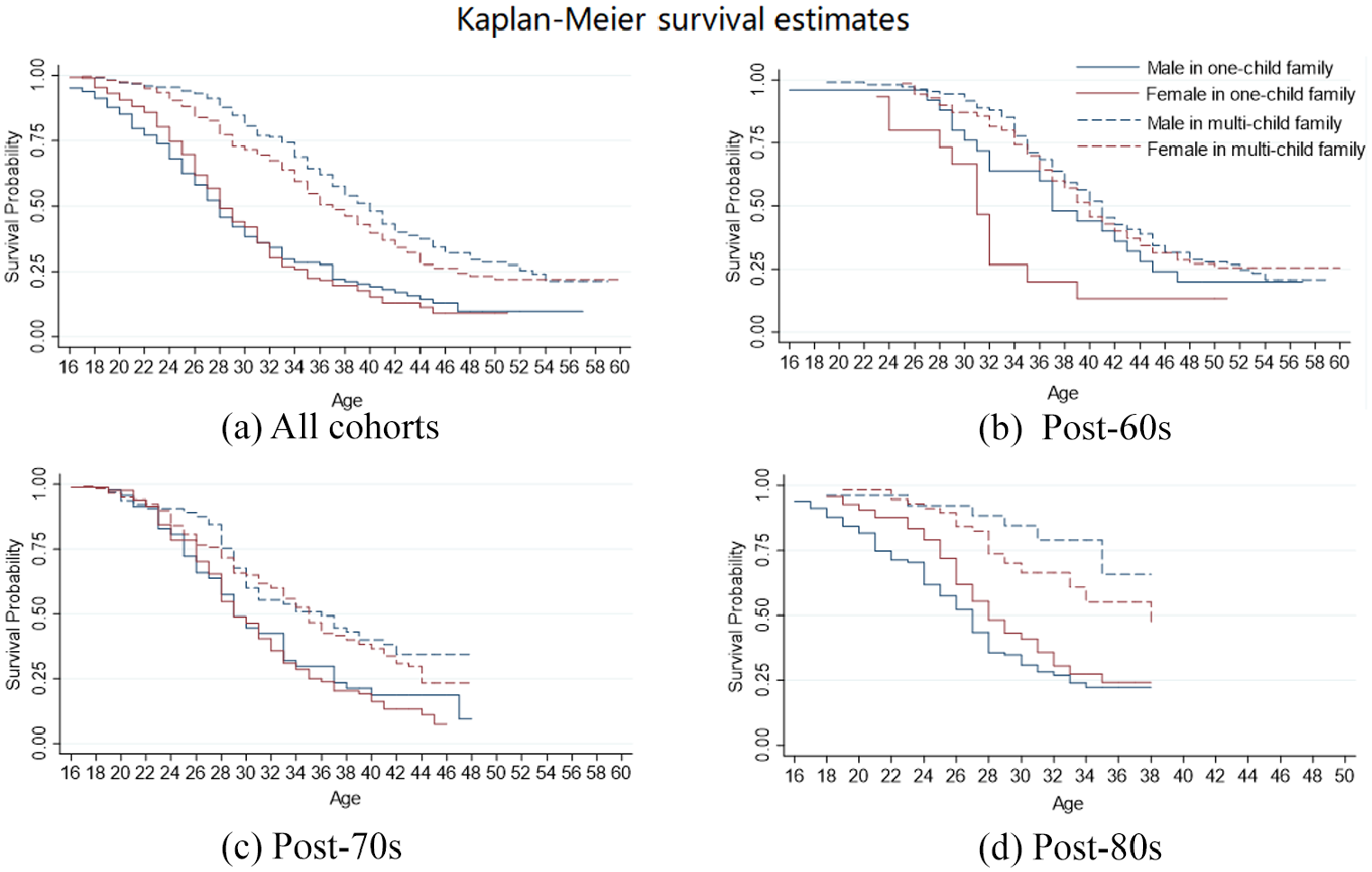
Timing of transition into homeownership by gender and sibship size.
Figure 4(b) to (d) provides more details regarding differences in gender and sibship size between the respective cohorts. The gap between one-child and multi-child families is more evident for the younger cohorts. In regard to gender difference, for the post-60s cohort, there is a gender gap for the one-child family group; more specifically, females from one-child families make the transition into homeownership at a younger age than their male counterparts. For the post-60s cohort, very few families have only one child, and even fewer families have only one female child. Those families with only one female child are likely to be better off families who are not subjected to the son preference tradition, resulting in their daughters’ early transition into homeownership. For the post-70s cohort, there is almost no gender gap for either one-child or multi-child families. However, among the post-80s cohort, there is a notable gender difference for both one-child and multi-child families but in a different way. It has become a widespread custom that young people, men in particular, need to become a homeowner when they get married (Cheung et al., 2020; Fang and Tian, 2018; Wang, 2018). Males in one-child families are more likely to receive financial support from the family of origin and thus get a home ready long before the marriage. However, their female counterparts wait for the ‘marital home’ to enter homeownership (Zheng, 2020). Among multi-child families, females are more likely to obtain their first home at an earlier age than males. For parents having multiple children, they can hardly prepare a home for each child without the anticipation of marriage. More often, whether males or females in multi-child families, they enter homeownership at the approach of marriage. Hence, women who normally get married earlier also enter homeownership earlier.
Family factors influencing the timing of first-time homeownership
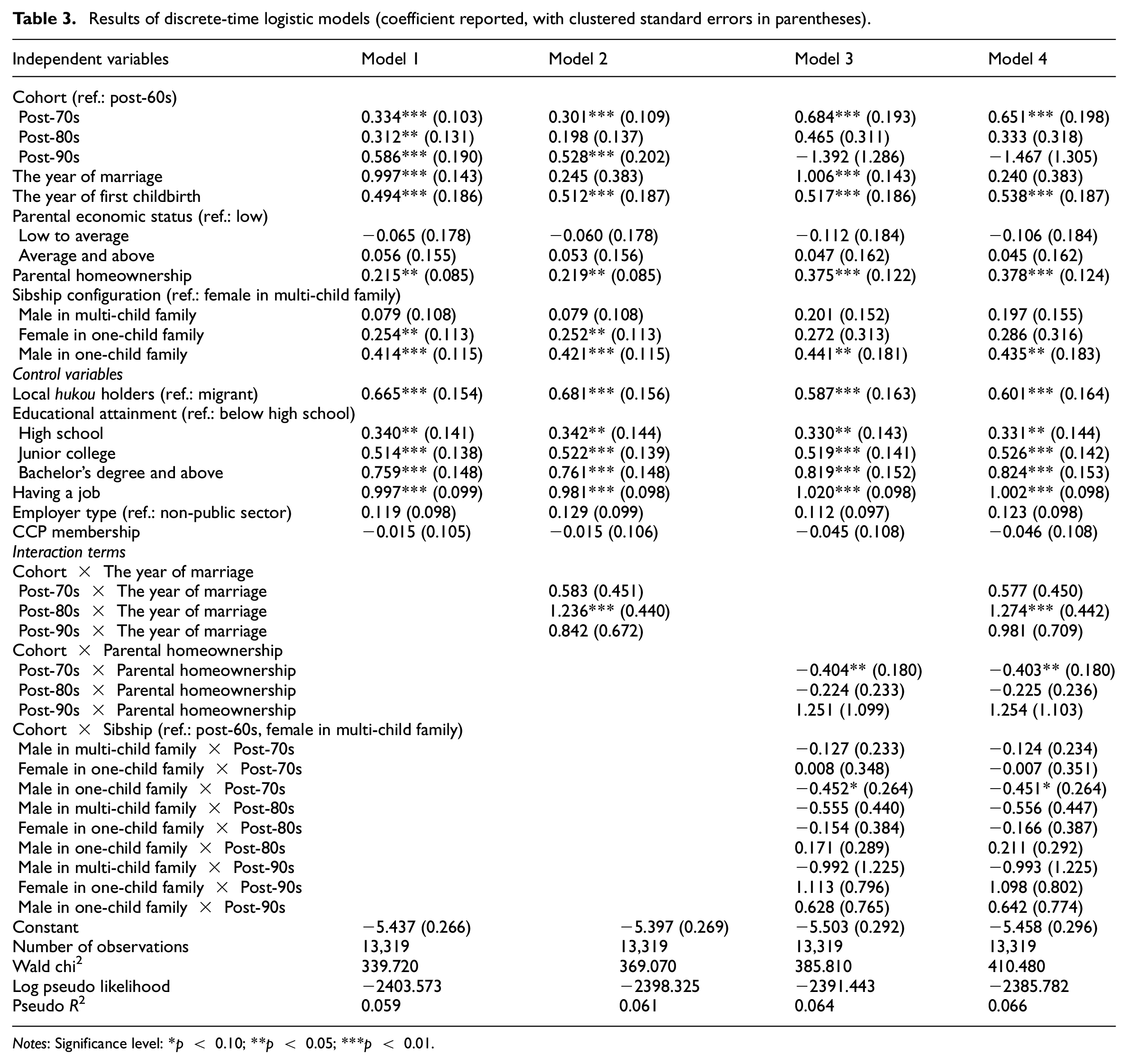
To examine the cohort differences and investigate the influence of family formation and family of origin on the timing of entry into homeownership, we conducted discrete-time event history analyses (as specified in equation (1)) using Stata 15. With Model 1 serving as the baseline, we added a series of interactions between cohorts and core variables of family formation and parental background to Models 2–4 to test the changing roles of household events and family of origin across cohorts (Table 3). The variance inflation factors (VIFs) for all independent variables were less than three, indicating that there were no multicollinearity problems in the models.
Results of discrete-time logistic models (coefficient reported, with clustered standard errors in parentheses).
Notes: Significance level: *p < 0.10; **p < 0.05; ***p < 0.01.
In line with the descriptive analysis, Model 1 verifies that there are significant cohort differences in the likelihood of becoming a homeowner. The younger cohorts are more likely to become homeowners, which reflects the expansion of the owner-occupied housing sector. As expected, marriage acts as a trigger for the transition into first homeownership. Meanwhile, the birth of the first child is also significantly associated with the transition into homeownership. In contrast to what we expected, parental economic status does not have a significant effect on the likelihood of becoming a homeowner, though we did observe intergenerational continuities in homeownership. As hypothesised, there is a clear effect of sibship size; specifically, individuals from one-child families are more likely to transition into homeownership than those from multi-child families. This finding is consistent with the quantity–quality trade-off theory that resources are diluted as family size grows (Becker and Feeley, 1973). There is a moderate gender difference. Men from one-child families are more likely to transit into homeownership than women from one-child families.
The interaction term between cohort and family formation (the year of marriage) was introduced in Model 2. Interestingly, the coefficients of family formation became insignificant, but the coefficient of the interaction term between the post-80s and family formation is statistically significant. That is, marriage only acts as a trigger for transition into first homeownership for the post-80s. For earlier cohorts (post-60s and post-70s), their timing of entering homeownership was more structured by the macro-level housing system transformation, and housing privatisation specifically. However, the post-80s were facing a marketised housing system, in which homeownership has become a social norm. Particularly, a ‘marital home’ (purchasing a dwelling at the time of marriage) became a rigid demand (Wang, 2018). For the post-90s, the effect of marriage is positive but not significant. There could be two reasons for this. First, the post-90s were in their 20s at the time of the survey, thus the observation period is not long enough to observe the association between marriage and entering homeownership among them. Second, purchasing a dwelling has already been fulfilled even before marriage. Entering the housing market as soon as possible has been widely acknowledged. Parents of the post-90s are willing and financially capable of purchasing a home for their children for investment.
In Model 3, interaction terms between cohort and parental background were added to investigate the changing role of family of origin in affecting the transition to homeownership. For the post-60s cohort, the respondents whose parents own a home are more likely to enter homeownership than those whose parents do not own a home. For the post-70s, there is a negative relationship between parental homeownership and their adult children’s homeownership. With respect to the post-80s and post-90s, the coefficients of parental homeownership are positive but not significant. This indicates that parental homeownership exerts certain impacts, but there are subtle cohort differences. Parental homeownership, when serving as an indicator of parental accumulated wealth, is assumed to be positively associated with adult children’s homeownership. Meanwhile, at the same time, parental homeownership provides a possibility of intergenerational co-residence, which could result in a negative association between parents’ and adult children’s homeownership. Contrary to our expectations, the interactions between cohort and sibship configuration are insignificant, implying that the effects of gender and sibship size do not vary significantly across cohorts. In Model 4, the interaction terms that were added to Models 2 and 3, respectively, were added simultaneously. The results are basically consistent with the other models.
Other classic variables explaining homeownership attainment are controlled in the model, and they show consistent effects across the four models. Highly educated individuals are more likely to transit into homeownership. Hukou remains a key institutional barrier underlying the housing differentiation in Chinese cities. Being a local hukou holder boosts the probability of entering homeownership, whereas, in contrast to findings in the early 2000s that the institutional legacy played a vital role in residents’ housing behaviour (Li and Yi, 2007; Zhou and Logan, 1996), employer type and CCP membership do not significantly impact the timing of first-time homeownership.
Conclusion and discussion
Over the past four decades, the restructuring of the Chinese housing provision system and the increased demand for homeownership have given rise to variation across cohorts in the timing of entering homeownership. Although the growing pattern of inequality in housing supply and opportunities across cohorts has emerged in both Chinese and Western contexts, the variation in the timing of first-time homeownership across cohorts is different between China and many Western countries. We observed that an increasing number of Chinese young people enter homeownership as early as in their 20s, which is significantly earlier than their counterparts in many Western countries, where reduced rates of homeownership and the rising age of first-time home buyers have raised concerns (Department for Communities and Local Government, 2016; Goodman and Mayer, 2018; US Census Bureau, 2017). It seems that the skyrocketing housing prices in Chinese cities have not discouraged people from embracing homeownership but have instead ignited their enthusiasm to make a foray into the housing market sooner. To unravel this phenomenon, in this study we examined the influence of family formation and family of origin on homeownership and how such effects vary across different cohorts, leading to variations in the timing of first-time homeownership.
The transition into homeownership has become tightly synchronised with and even before family formation, which is different from the situation in some Western countries where first moves into homeownership occur later, around or after the arrival of children (Bayrakdar et al., 2019; Feijten and Mulder, 2002; Mulder and Wagner, 2001). The binding of marriage and housing is rooted in Chinese traditional culture. While this tradition was abandoned in the pre-reform era, it has recently revived and been increasingly strengthened because of the widespread social norm of ‘home for marriage’ (hunfang). In this regard, deteriorated housing affordability may lead to a divergence in the timing not only of entering homeownership but also of family formation. For financially privileged groups, people become homeowners at a very young age, whereas others from disadvantaged groups are prevented from entering owner-occupation, and what is worse, they may find it difficult to form a family because of their inability to purchase a dwelling (Hu and Wang, 2020).
The housing affordability deterioration faced by younger cohorts in many Western countries has led to an intensification of intergenerational support and assistance (Ronald, 2018). In China, there seems to be a similar situation. Individuals are more likely to make the transition to homeownership at a young age if their family of origin is economically advantaged. However, when individuals’ own socioeconomic statuses are controlled for, parental economic status does not exert a significant impact. It can be inferred that parental economic advantages have already been transferred into children’s advantaged socioeconomic status, which has been revealed by previous studies (Cui J et al., 2020). We also observed intergenerational continuities in housing tenure, despite there being subtle variations across cohorts. Parents’ home providing the possibility of intergenerational co-residence may result in the negative association among the post-70s. For the younger generation, parental homeownership more serves as an indicator of accumulated wealth, and it becomes more influential for younger cohorts to transit into homeownership. Given the fact that intergenerational solidarity is strong and resilient in China, the pattern of housing inequality between groups with different characteristics will likely be inherited from one generation to the next.
In addition to examining the influence of parental background, we also took the effects of gender and sibship size on the timing of first-time homeownership into account. We found that men have a greater chance of becoming a homeowner than women. This is probably because men are more likely to receive intergenerational financial resource transfers (Deng et al., 2019). In accordance with quantity–quality trade-off theory, which has been applied to assess sibship size effects on educational attainment, health and wealth (Keister, 2003; Lee, 2012; Ponczek and Souza, 2012), we found that people from one-child families are more likely to become homeowners at an earlier stage of life. Unexpectedly, the effects of gender and sibship size do not significantly vary across cohorts. In other words, a narrowed gender gap has not been found, which could be attributed to the deep-rooted traditional patriarchal culture.
In China, the restructuring of the housing provision system and the binding of marriage and homeownership have brought about variations across cohorts in the timing of entering homeownership. Furthermore, the long-standing tradition of parents helping their children to secure a home has deepened with the institutional and cultural transformation, which would lead to the exacerbation of horizontal housing inequality and thus hinder social mobility. Faced with housing affordability deterioration, the central government recently launched a series of policies to regulate housing prices, detach certain welfare benefits from homeownership, promote the development of the public housing system and cultivate the development of the rental housing market. However, until now, the implementation of these policies still faces tremendous obstacles at the local level. Homeownership as a normative social ideal may persist if no desirable alternatives to homeownership are available for young people. However, the case of Shanghai is unique in some ways, such as the soaring housing prices and the policy of home purchase restrictions. Conclusions of this study are drawn based on the local context and need to be applied to other contexts with caution, even within China.
Footnotes
Declaration of conflicting interests
The author(s) declared no potential conflicts of interest with respect to the research, authorship, and/or publication of this article.
Funding
The author(s) disclosed receipt of the following financial support for the research, authorship, and/or publication of this article: This work was supported by the joint funding from the National Natural Science Foundation of China [grant number 72061137072] and the Dutch Research Council [grant number 482.19.607], the National Natural Science Foundation of China [grant number 42171233], and Key Laboratory of Regional Sustainable Development Modeling, Institute of Geographic Sciences and Natural Resources Research, Chinese Academy of Sciences.
