




Abstract
This study examines how structural and cultural forms of capital interact to shape the academic attainment of first- and second-generation immigrant students within urban coethnic communities. Drawing on data from the Children of Immigrants Longitudinal Study and hierarchical multinomial logistic regression, we integrate Yosso's community cultural wealth and the cultural and structural coethnic frameworks to examine how socioeconomic resources, bilingual fluency, and coethnic community strength predict postsecondary outcomes. Findings reveal that strong coethnic networks, bilingual fluency, and faith-based participation offset structural disadvantage. Results reframe the immigrant paradox through an intersectional, asset-based lens, emphasizing community-driven supports for equity-focused urban education policy.
Keywords
Despite decades of policy initiatives and reform efforts, educational disparities continue to persist and have widened across racial, ethnic, and socioeconomic lines in the United States. These disparities are particularly pronounced in urban educational settings, where structural inequalities, diverse student populations, and resource constraints intersect in complex ways (Jackson & Holzman, 2020). Traditional explanations often center on structural capital, which is defined by access to socioeconomic resources, infrastructure, and institutional support, as the primary determinant of student achievement. However, growing evidence suggests that structural capital alone does not sufficiently explain patterns of academic attainment success or failure, particularly among immigrant-origin students navigating urban school systems.
Recognizing these contradictions, researchers have increasingly adopted frameworks that foreground the role of cultural and social resources in influencing academic attainment outcomes. One particularly compelling example is the immigrant paradox, wherein first- and second-generation immigrant youth often demonstrate higher academic achievement than expected, given their socioeconomic circumstances (Albornoz et al., 2018; Duong et al., 2016). While students from marginalized communities face substantial academic barriers due to limited access to structural capital, immigrant students outperform their nonimmigrant peers across multiple academic indicators. This paradox raises critical questions about the relative influence of structural versus nonstructural factors in shaping educational outcomes. Although some Asian American (AA) subgroups report higher average household incomes and academic outcomes relative to European American and other ethnic minority groups (Peter G. Peterson Foundation, 2023), these economic factors do not fully account for the academic resilience of newly arrived families with limited financial capital. In response, scholars have increasingly turned to cultural capital frameworks to explain these trends, emphasizing the influence of parental expectations, familial obligation, and deeply held educational values as protective factors that support attainment in the face of structural disadvantage (Aretakis et al., 2015; Bourdieu, 2018; Hsin & Xie, 2014; Yosso, 2005).
The immigrant paradox also reveals a significant contradiction in our understanding of educational attainment: while first- and second-generation immigrant youth routinely outperform expectations despite socioeconomic disadvantage, research suggests that these advantages may diminish across subsequent generations due to acculturative pressures, structural barriers, and declining coethnic support (Coll & Marks, 2012; Duong et al., 2016; Feliciano & Lanuza, 2017). This generational decline raises critical questions about the durability and transferability of cultural capital, as well as whether current frameworks fully capture the mechanisms behind early immigrant success. For example, research indicates that the children of immigrants often outperform their third-generation peers, even when controlling for income and parental education (Perreira et al., 2006). This suggests that cultural capital may play a particularly salient but time-sensitive role in academic success. As assimilation increases, cultural values that once served as academic motivators—such as familismo in Latinx families or collectivist educational norms in some Asian cultures—may weaken, giving way to more individualized and, in some cases, less education-centered belief systems.
Despite these critical insights, much of the research on immigrant student achievement remains fragmented, focusing on either structural inequities or isolated cultural explanations rather than examining how these factors intersect to shape educational outcomes (Feliciano & Lanuza, 2017). Furthermore, few studies adopt a comprehensive quantitative approach that simultaneously considers the roles of structural capital, cultural values, and generational status across different racial and ethnic groups in urban educational contexts.
This study aims to address these gaps by examining how structural and cultural capital intersect to influence the academic achievement of first- and second-generation immigrant students in urban high schools. Moving beyond deficit-based or overly generalized models of immigrant success (Feliciano & Lanuza, 2017), this research integrates Yosso's (2005) Community Cultural Wealth (CCW) and Paik et al.'s (2017a) Cultural and Structural Coethnic (CSC) model to examine how coethnic community strength, social capital, and identity-based experiences shape educational outcomes. In this study, coethnic refers to individuals or groups who share a common ethnic or national origin and form localized social networks providing cultural, linguistic, and institutional support within immigrant communities. Within urban school contexts, these coethnic networks operate as informal guidance, mentorship, and advocacy systems that reinforce a sense of belonging and promote academic resilience. By situating coethnic networks within broader structural and cultural frameworks, this study examines how the interplay between institutional resources, community support, and individual identities influences the educational trajectories of immigrant students. The study is, therefore, guided by the following research questions for first- and second-generation immigrant students:
How do traditional indicators of structural capital (e.g., household income, parental education, school resources) contribute to academic attainment compared to cultural and ethnic social structures? What is the relationship between coethnic community involvement, ethnic social capital, and academic attainment? How does strong coethnic community membership, alongside race and gender, collectively influence academic outcomes within urban school environments? What patterns can be identified among high-performing immigrant subgroups that may inform culturally responsive advising practices or targeted academic interventions?
This study provides a more nuanced understanding of immigrant student academic attainment in urban educational settings by employing a quantitative, intersectional approach that combines structural and cultural frameworks. The findings aim to inform future educational policy, academic advising, and resource allocation strategies that acknowledge the complexity of immigrant experiences across generational and community contexts.
Literature Review
Understanding the academic achievement of immigrant students requires attention not only to individual or cultural factors but also to the broader educational environments in which they learn. Much of the existing literature situates these students within “urban” educational settings, where population density, demographic diversity, and disparities in resource access are particularly pronounced. These contexts shape how students access and engage with structural and cultural capital, making them essential for examining the intersecting influences of race, ethnicity, and gender identities on academic outcomes. Within these urban educational settings, immigrant-origin students navigate a complex interplay of social, cultural, and institutional factors that influence their academic achievement. These influences are shaped by access to structural capital and community norms, familial expectations, and students’ experiences of race, place, and identity. In this context, urban refers to schools and communities defined by population size, density, demographic diversity, socioeconomic variation, and racial and ethnic composition (Schaffer et al., 2018). The term also encompasses schools where students bring a wide range of experiences, resources, and abilities (Milner, 2008, 2012; Milner & Tenore, 2010), where educational inequities persist regardless of a district's overall size (Welsh & Swain, 2020).
Additionally, urban education considers race, place, and space as integral factors that shape school environments (Buendía, 2011). Overall, urban schools are typically characterized by the size of their surrounding cities, the diversity of their student populations, and disparities in access to resources (Milner & Lomotey, 2014). For this study, urban education refers to the geographic and demographic characteristics, as well as social contexts, defined by racial stratification, spatial marginalization, and community-based educational norms (Buendía, 2011). These settings are not neutral; they often reproduce racialized opportunity structures that constrain immigrant students’ mobility. However, as Rodriguez (2020) demonstrated, community–school partnerships in urban contexts can also disrupt these structures by fostering a sense of belonging and leveraging community resources. Similarly, Li and Qin (2022) emphasized that educators’ everyday practices in urban schools are pivotal in mediating immigrant students’ access to academic and linguistic resources, underscoring the importance of community-aligned instructional agency. Understanding urban education, therefore, requires attention to how systemic inequities and community-based assets coexist and shape students’ educational trajectories.
To examine these complex dynamics, this review draws upon Yosso's (2005) CCW framework, which theorizes how marginalized students access six interrelated forms of capital—aspirational, familial, social, navigational, resistant, and linguistic—that are often overlooked in traditional educational research. The CCW model counters deficit-based assumptions by foregrounding the cultural assets immigrant students draw on to navigate schooling. This framework, along with emerging models such as the CSC community model (Paik et al., 2017a), provides a foundation for understanding how community structures and cultural strengths shape educational pathways.
Rethinking the Immigrant Paradox
While often cited as a sign of resilience, the immigrant paradox raises more questions than answers. The immigrant paradox refers to the pattern where first- and second-generation immigrant students outperform native-born peers despite their economic and linguistic disadvantages and has been widely documented (Albornoz et al., 2018; Coll & Marks, 2012; Duong et al., 2016; Feliciano & Lanuza, 2017; Marks et al., 2014). These disadvantages include limited English proficiency, restricted financial aid, and cultural barriers, all of which are typically associated with lower academic achievement (Azzolini et al., 2012; Shankar, 2011). However, substantial evidence complicates this narrative. For example, students from several Asian groups, including those from Eastern, Southeastern, Southern, and Filipino regions, have demonstrated significantly higher academic effort and performance than Caucasian students (Hsin & Xie, 2014).
This complexity suggests that the so-called “paradox” may not be paradoxical but rather reflects unmeasured cultural, familial, and contextual factors. Coll and Marks (2012) argued that the immigrant paradox is best understood not as a universal phenomenon but as one profoundly shaped by the interaction between social stratification and the immigrant experience. They caution against essentializing immigrant success and emphasize how developmental outcomes are contingent on various social and policy contexts. Similarly, Marks et al. (2014) emphasized the importance of disaggregating findings by generation and ethnic subgroup, noting that benefits observed among first-generation youth may decline in subsequent generations due to assimilation processes and the erosion of protective cultural factors. Feliciano and Lanuza (2017) expanded on this concept by introducing the idea of contextual attainment, which posits that educational mobility should be assessed in terms of both absolute outcomes and relative to the social and academic backgrounds of immigrant parents. They demonstrate that immigrant families often hold higher educational expectations and pass them down intergenerationally, which helps explain why their children appear to “overachieve” relative to structural constraints.
Together, these works suggest that immigrant optimism, defined by the strong ambition and positive outlook of recent immigrants (Kao & Tienda, 2022), counteracts the lack of educational resources, motivating these individuals to overcome their barriers. As a result, this phenomenon may be better understood not as a paradox but as a reflection of aspirational and familial capital (Yosso, 2005), whereby immigrant students draw motivation from intergenerational sacrifice, transnational values, and deep family bonds. Thus, understanding the paradox requires attention to the generational status and contextual features of coethnic communities. These dynamics illustrate how schools serve as cultural sorting institutions, where the navigational capital of immigrant-origin students becomes crucial in resisting deficit-based discourses and institutional marginalization.
Structural Capital and Socioeconomic Status
Second-generation students may gain significant motivational advantages from their cultural background and access to resources. A key advantage of second-generation immigrant status is having a dual frame of reference, which allows immigrants to think more positively about their situation by framing it in relation to their country of origin, especially during periods of political unrest or conflict (Kasinitz, 2008). This dual frame is a powerful example of aspirational capital, wherein immigrant youth maintain high hopes for upward mobility by measuring present challenges against past hardships (Yosso, 2005). The contrast between their family's past hardships and their current situation can serve as a powerful motivator for immigrant youth, driven by an awareness of the sacrifices their parents overcame to afford these opportunities (Caplan et al., 1991; Suárez-Orozco et al., 2008). However, these advantages, marked by improved English fluency and greater geographic dispersion from coethnic communities, may erode over time as second-generation youth become more assimilated and experience a weakening of cultural ties and familial expectations (Marks et al., 2014; Portes & Rumbaut, 2001; Telles & Ortiz, 2008; Tran, 2010). This cultural erosion can reduce the protective effects of coethnic support networks as racialization in American contexts introduces new forms of marginalization (Marks et al., 2014; Portes & Rumbaut, 2001).
Parental education and occupational status consistently predict youth academic outcomes, as they influence both the availability of resources and the transmission of academic attitudes and expectations (Feliciano, 2006; Kroneberg, 2008). This relationship mirrors Yosso's (2005) concept of familial capital, encompassing the knowledge and resilience of family structures. Guo and Harris (2000) found that socioeconomic status (SES) shapes material conditions, discretionary time, parental involvement, and access to educational support.
Kohn's (1963) theory of class-based parental determinism suggests that middle-class parents encourage autonomy and negotiation. In contrast, working-class families tend to emphasize obedience and deference to authority (Weininger & Lareau, 2009). These practices align with Lareau and Weininger's (2003) notion of natural growth, wherein low-income families provide for their basic needs but rely on institutions to guide their children's learning and development. For immigrant families, cultural interpretations of these parenting styles vary, often reinforcing educational values through culturally grounded practices (Feliciano, 2006).
Parental involvement serves as social capital, an adaptive and protective resource that helps bridge structural inequalities in urban education. Jeynes (2003, 2007) emphasized the importance of both home-based and school-based engagement in achieving academic success for immigrant students. Even when parents face linguistic or institutional barriers, they often employ culturally informed strategies to support learning (Lareau & Weininger, 2003). Emotional closeness in immigrant households, particularly among girls, is associated with increased academic engagement (Pong & Landale, 2012; Ravecca, 2010).
Cultural Capital, Aspirations, and Peer Influence
Building on familial forms of social capital, aspirational capital is deeply rooted in the immigrant experience. Through the lens of the blocked opportunities approach, immigrant parents develop high educational aspirations for their children in response to the structural barriers, discrimination, and socioeconomic hardships they have experienced (Kao & Tienda, 2022; Salikutluk, 2016). This is particularly evident among Vietnamese families, where parents emphasize academic achievement as a crucial path to upward mobility and a means to honor family sacrifices (Zhou et al., 2001). For that reason, immigrant parents tend to impose higher academic expectations on their children and hold them accountable for their academic performance, reinforcing intergenerational resilience and responsibility (Ogbu, 2003).
Students’ own expectations are shaped by the influence of their family and peer environments. Hao and Bonstead-Bruns (1998) and Bohon et al. (2006) showed that immigrant-origin students report higher educational aspirations than native-born peers. Jerrim et al. (2015) and Sikora and Pokropek (2021) found that the optimism and motivation of second-generation students remain strong. Additionally, significant gender differences exist in student expectations; female students consistently report higher academic self-perceptions, up to three times greater than those of their male counterparts (Ravecca, 2010).
Beyond individual traits, peer context shapes academic identity. Students exposed to higher-achieving peers and academic environments tend to internalize these expectations, which positively influences their motivation, engagement, and performance (McPherson et al., 2001). Furthermore, these students perceive themselves as capable learners who are more likely to succeed in understanding instruction (Suamuang et al., 2020).
Educator Expectations and Institutional Context
Educator perceptions operate as gatekeepers of opportunity, shaping students’ access to academic supports and affirming (or undermining) their sense of belonging in school. Agirdag et al. (2013) found that high teacher expectations enhance student engagement, while bias and discrimination contribute to alienation and disengagement (Perreira & Ornelas, 2011; Skinner & Belmont, 1993). These interactions also reflect a broader form of navigational capital that enables individuals to maneuver through institutional structures that may not affirm their cultural backgrounds (Yosso, 2005). Immigrant boys often experience heightened surveillance and disciplinary measures, while girls may receive more emotional support (Ravecca, 2010). Although this gendered interaction contributes to differentiated outcomes and may deepen alienation from the school system, positive educator–student relationships can help affirm immigrant identities and strengthen students’ belief in their academic potential.
Religious Participation and Ethnic Social Capital
Religious involvement serves as a vital source of social capital for immigrant and low-income communities. Carol and Schulz (2018), Coleman (1988), and Putnam (2000) identified religious participation as a significant source of social capital, offering mentorship, moral guidance, and academic support. These benefits are especially evident in low-income communities, where faith-based networks often serve as substitutes for formal institutional resources (Regnerus, 2000). However, the relationship between religion and education is not uniformly positive. Carol and Schulz (2018) reported that when religious identity is tightly coupled with ethnic isolation, it can hinder integration with dominant schooling norms. Among Muslim youth in Europe, for instance, religious involvement sometimes correlates negatively with academic outcomes. This suggests that the form, context, and integration of spiritual practices have a significant impact on their educational value.
Discrimination, Belonging, and Resistant Capital
Discrimination is a common predictor of alienation among immigrant students, which undermines their academic adjustment (Benner, 2017; Bottiani et al., 2017; Umaña-Taylor, 2016). Resistant capital refers to how students respond to these inequities with resilience and defiance, constructing positive identities despite marginalization (Yosso, 2005). However, combined with cultural differences and language barriers, immigrant students face the additional challenge of social integration and achieving academic success (Hwang & Goto, 2009; Obiakor & Afoláyan, 2007; Pong & Hao, 2007). Resistant capital can fuel collective agency, with students drawing on cultural identity and peer solidarity to advocate for school climate reforms and culturally responsive curricula.
In summary, the academic trajectories of immigrant-origin students are profoundly shaped by forms of community cultural wealth that are often overlooked in deficit-oriented models. Through aspirational, familial, social, navigational, and resistant capital, these students actively construct paths to achievement in urban educational contexts marked by structural inequality. Recognizing these assets is critical to developing more equitable and affirming educational practices and policies.
Theoretical Framework
A dynamic interplay of cultural, structural, and contextual forces shapes the academic trajectories of immigrant-origin youth. SES, parental involvement, and student motivation are embedded within broader networks of coethnic support and institutional opportunity. This complexity necessitates a theoretical model that examines how cultural norms, structural inequalities, and community assets intersect to influence academic attainment. This study draws on two frameworks to guide the analysis: (1) Yosso's (2005) CCW framework and (2) Paik et al.'s (2017a) CSC model, which integrates cultural values (e.g., religion language and customs) with structural positioning (e.g., class and immigration context) to assess how coethnic communities produce ethnic social capital.
The CSC model (see Figure 1) offers a composite lens that brings together cultural assets, structural positioning, and the differential capacities of coethnic communities to illuminate how educational opportunity is shaped not just by individual traits but also by the broader configuration of community resources and institutional relationships (Coleman, 1990; Paik et al., 2017a; Portes & Rumbaut, 2001; Zhou & Kim, 2006). It distinguishes between strong, weak, and dispersed coethnic communities based on occupational composition and internal resource circulation. Strong communities, characterized by a high density of skilled professionals, are better positioned to generate supportive structures that benefit student outcomes. In contrast, weak or dispersed communities may lack the cohesion or institutional infrastructure to offer similar support. Building on Zhou and Kim's (2006) work with Chinese and Korean American communities, this study extends the CSC model to a broader set of immigrant-origin groups, including Cuban, Mexican, Central American, West Indian, and Southeast AA communities. Its flexibility allows for comparative analysis across racially and ethnically diverse populations while retaining sensitivity to community-specific definitions of value and success.
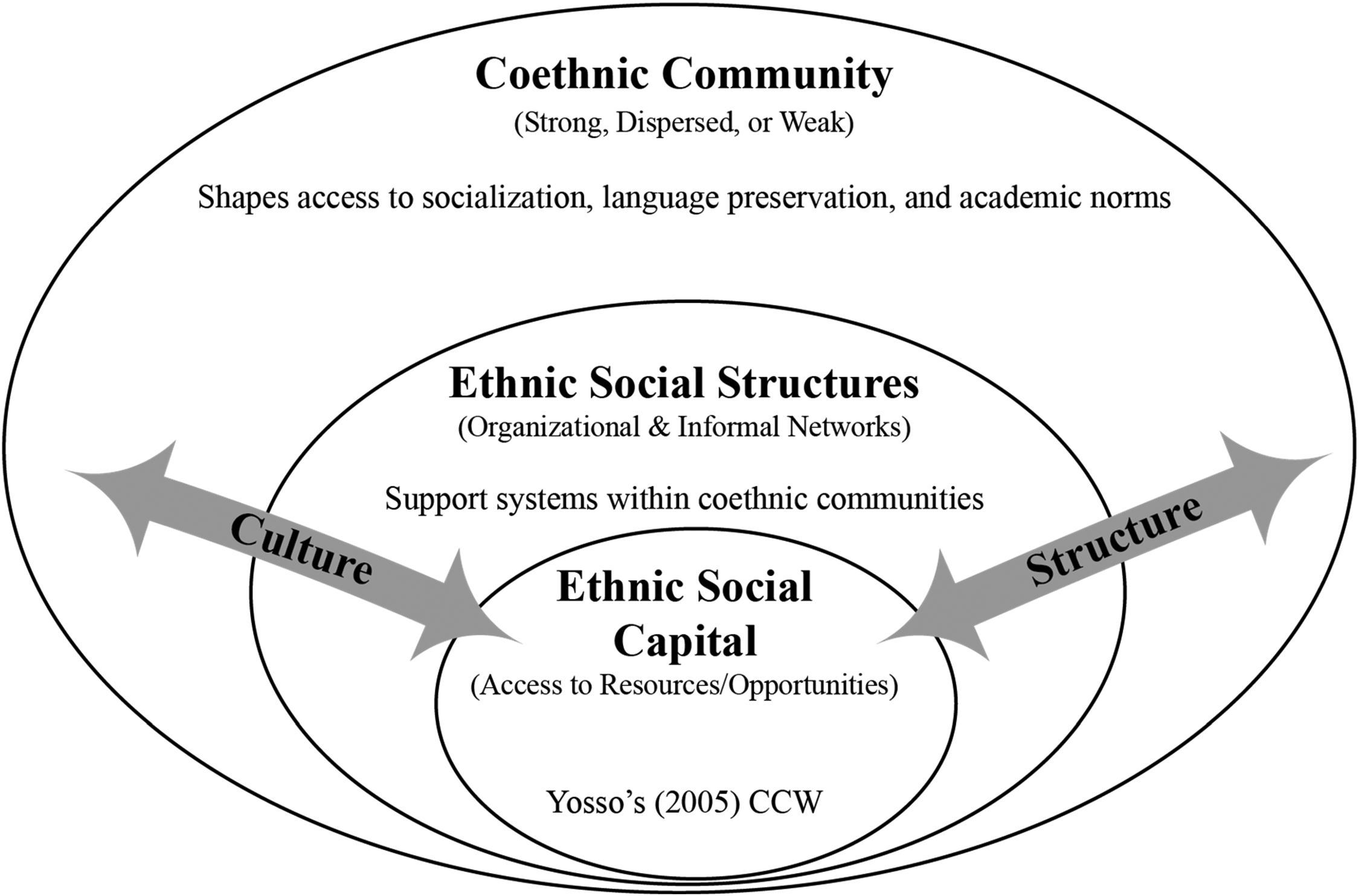
Adapted cultural and structural coethnic model (Paik et al., 2017a).
By centering ethnic social capital, the CSC model offers a robust framework for examining intersectional disparities and guiding culturally responsive educational interventions in urban school settings.
Method
Dataset and Sample
The research study utilized a nationally represented longitudinal sample of secondary students, the Children of Immigrants Longitudinal Study (CILS). CILS was designed to follow a panel of over 5,262 first- and second-generation immigrant students from their late middle school years throughout their postsecondary schooling and career entry. CILS serves as a comprehensive data source for investigating the experiences of immigrant youth, including (1) immigrant family dynamics and society, (2) demographic characteristics, (3) language proficiency and bilingualism, (4) identity formation, (5) structural barriers and supports to academic attainment, and (6) economic mobility and employment. The overall dataset comprises participants from 77 nationalities, evenly distributed across the San Diego, California, and Fort Lauderdale/Miami, Florida, urban metropolitan areas, by gender, year in school, and birth status. The response data for CILS were accumulated over 14 years, corresponding with three data collection strategies aligned with major student achievement milestones.
Our analytic sample includes 1,008 students who reported their race/ethnicity, gender, coethnic community/nationality, and generational status. Table 1 presents the descriptive statistics for this panel of students, categorized by their coethnic community and the highest level of academic attainment. There is a distinct relationship between the strength of coethnic communities and the highest level of educational attainment. For example, Mexican American students, representing a weak coethnic community, had the highest percentage of high school graduates (70.6%) but the lowest rate of 4-year college graduates or higher (12.1%). Conversely, students from strong coethnic communities—such as Cuban American, Vietnamese American, and European American groups—achieved the highest levels of undergraduate, graduate, and professional degree graduates (29.4%, 42.3%, and 53.3%, respectively). Notably, West Indian American students diverged from this trend, with one of the highest percentages of 4-year and advanced degree holders (27.7%), despite a relatively weak coethnic community. Given these patterns, this study employs a logistic regression approach to investigate how community dynamics either support or act as barriers to the academic success of first- and second-generation immigrant students.
Frequency of Educational Achievement Outcomes by Coethnic Community.
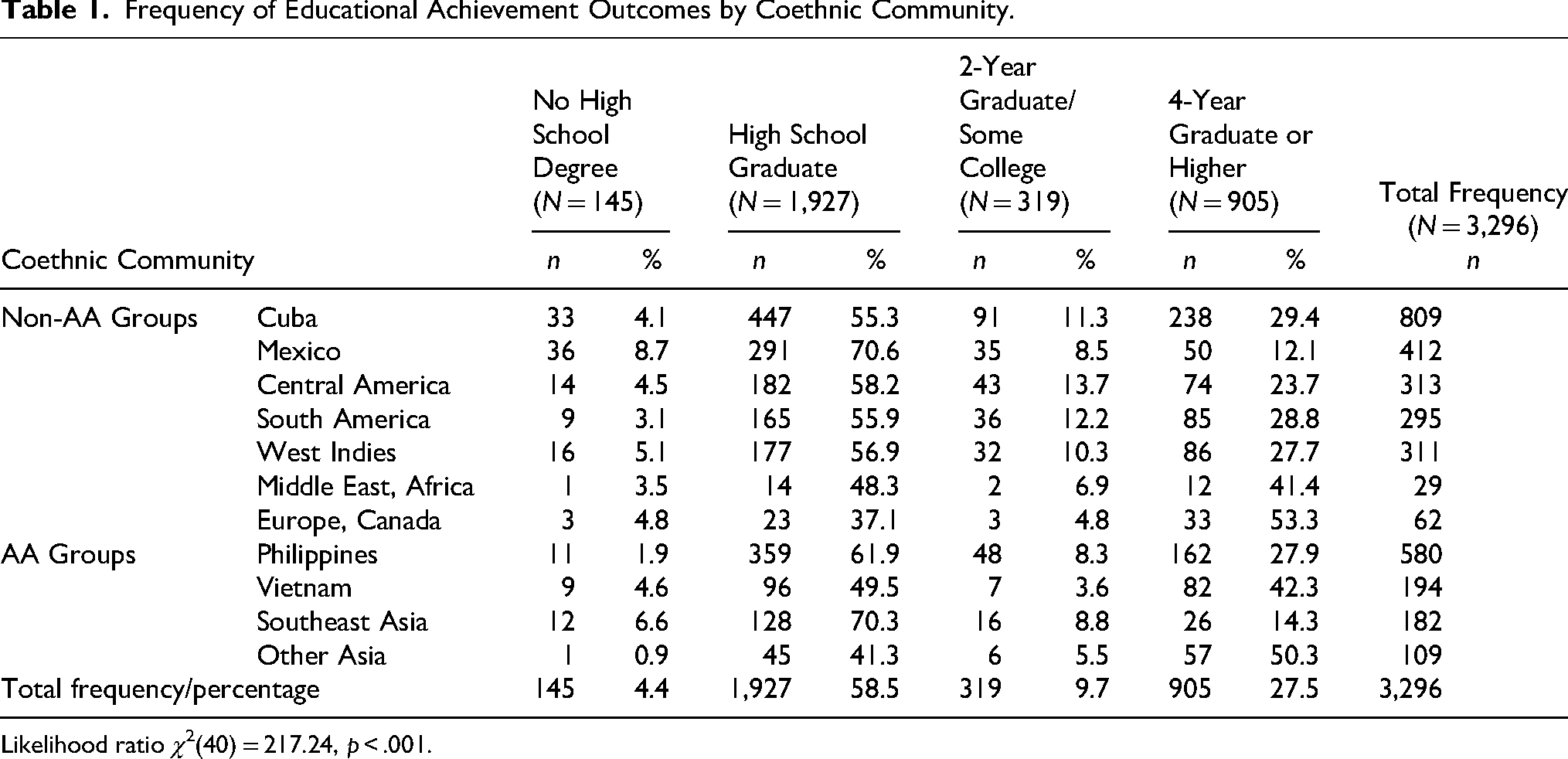
Likelihood ratio χ2(40) = 217.24, p < .001.
Measures
Our primary outcome measure is academic attainment, collected in the third wave of the CILS panel (2001–2003), when participants were in early adulthood. This categorical variable was derived from responses to the following: What is the highest grade or year of school you have completed? (10-point Likert scale), condensed into five education milestones: (1) some high school, (2) graduated from high school, (3) graduated from a 2-year/some college, and (4) graduated from a 4-year college or obtained a master's, doctoral, or professional degree/certificate. This classification aligns with established frameworks used in national education research frameworks (Hout, 2012; Steinmayr et al., 2014).
The key predictors (see Table 2) were grouped into six predominate variable clusters: (1) demographics and educational factors (e.g., race, gender, and generational status), (2) ethnic social structures, (3) cultural norms (e.g., family rules and expectations), (4) structural variables (e.g., SES and immigration context), (5) coethnic community type, and (6) ethnic social capital. We applied Paik et al.'s (2017a) framework to classify coethnic community types, distinguishing between strong, weak, and dispersed communities based on national origin (Table 1). Each researcher independently applied the coding protocol, and any discrepancies were resolved through collaborative discussion to ensure consensus. The final classifications in Table 1 reflect the outcomes of this consensus-based process.
Children of Immigrants Longitudinal Study (CILS) Independent Variables of Interest.
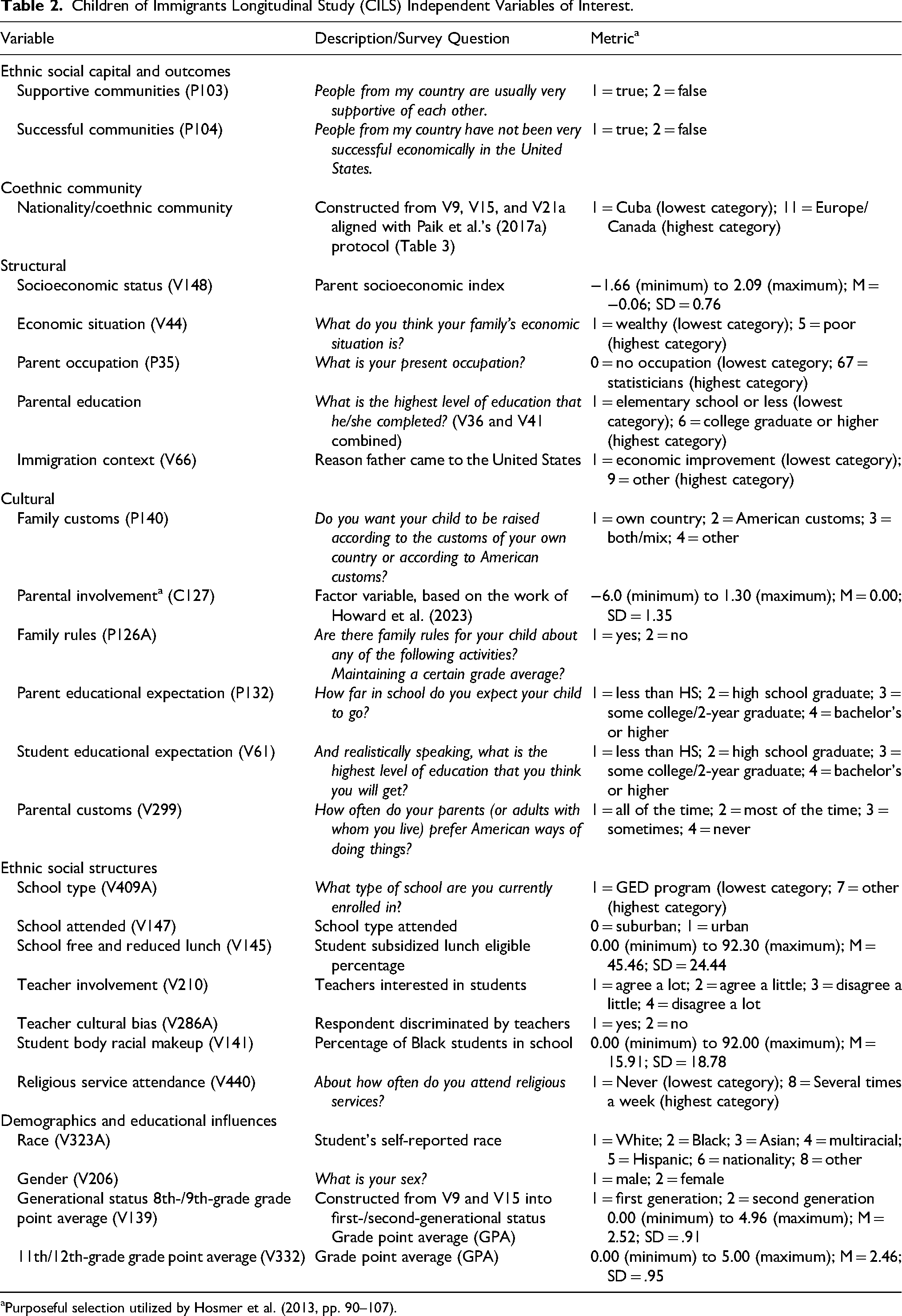
Purposeful selection utilized by Hosmer et al. (2013, pp. 90–107).
Procedure and Analytic Strategy
A hierarchical multinomial regression (HMNR) was employed to investigate how structural and cultural predictors impact academic attainment outcomes, while controlling for race/ethnicity, gender, and generational status (see Table 3). This approach enables the comparison of multiple categorical attainment outcomes, such as high school graduation, 2-year college, and 4-year or postbaccalaureate completion, relative to a reference category, providing a nuanced understanding of how different forms of capital influence educational trajectories. The hierarchical structure enables predictors to be entered in theoretically informed blocks (e.g., structural, cultural, and coethnic variables), allowing the incremental explanatory power of each set to be assessed. This analytic strategy aligns with the study's conceptual model, which views educational attainment as the product of intersecting structural and cultural forces operating at multiple levels.
Coethnic Community Description/Assignment.
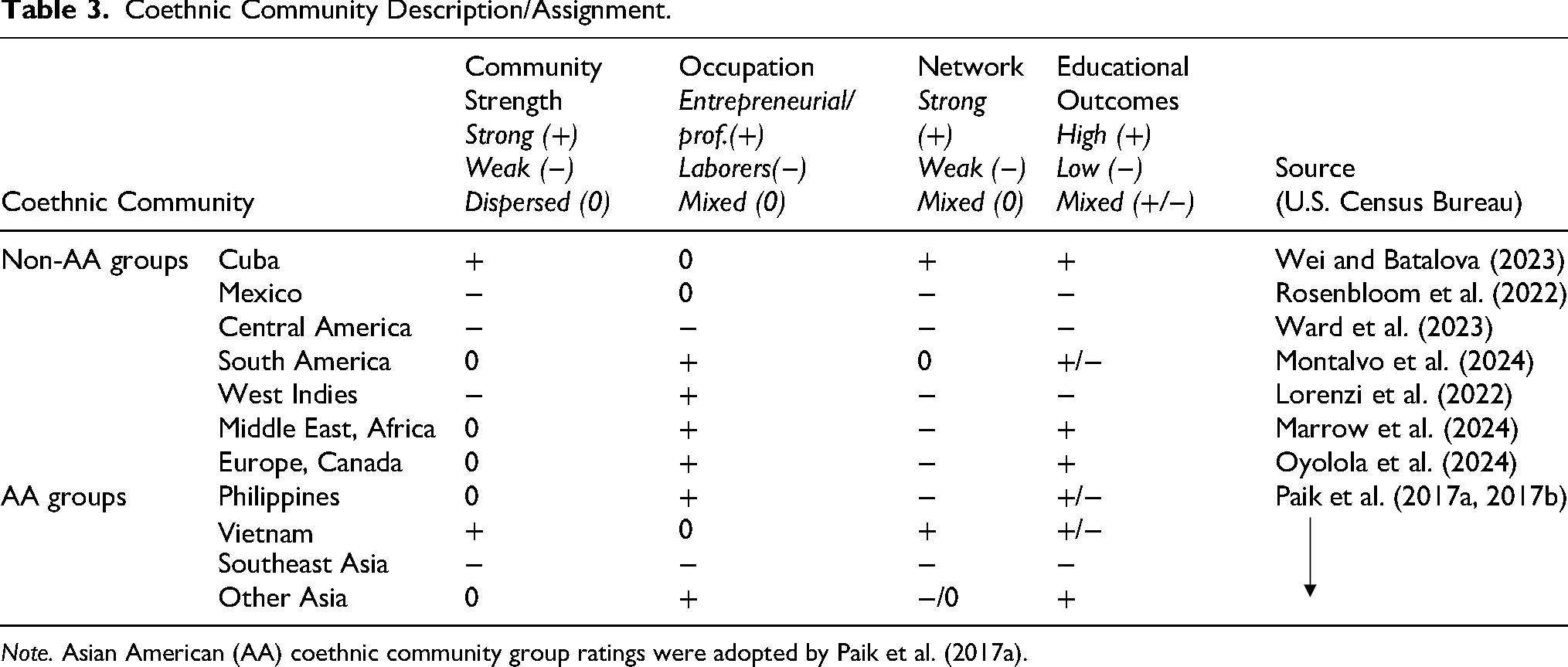
Note. Asian American (AA) coethnic community group ratings were adopted by Paik et al. (2017a).
Model development followed a multistep process outlined in Figure 2. Preliminary diagnostics evaluated (1) sample size adequacy based on established criteria (Tabachnick & Fidell, 2018); (2) multicollinearity using variance inflation factor (VIF) values, (3) homoskedasticity, and (4) linearity assumptions (Hosmer et al., 2013). Normality was further confirmed through p–p and q–q plots validated by skewness and kurtosis statistics. These steps ensured the robustness and interpretability of coefficient estimates. The final model was selected based on calibration and discrimination analyses, including assessments of model fit and effect size (Hosmer et al., 2013). A minimum sample size of 1,008 students was included in any single subsample, meeting the inclusion criteria. Descriptive and post hoc analysis techniques were conducted to interpret the modeling results within the broader theoretical framework.
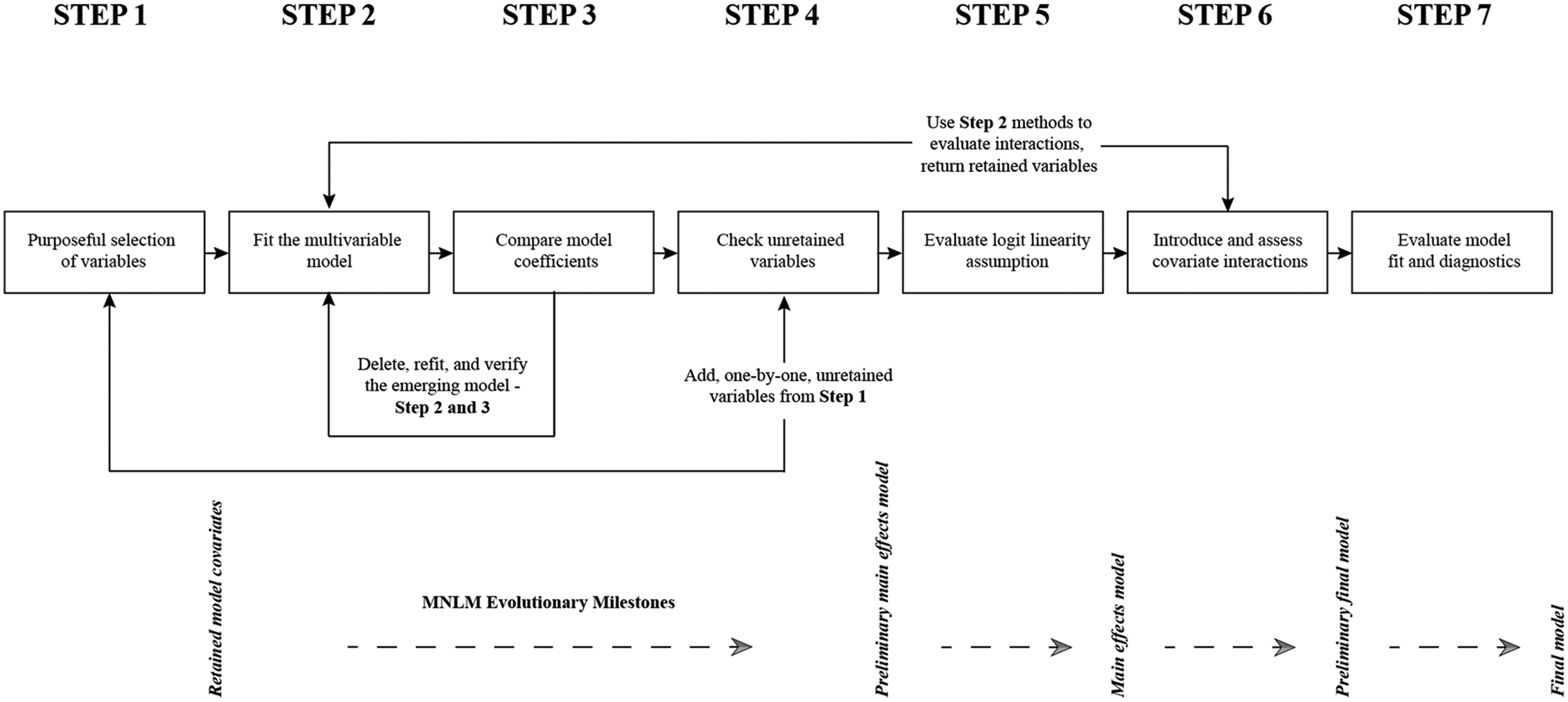
MNLR model-building flowchart. Note. Process flow map designed from the methodology in Hosmer et al. (2013).
The following multinomial logistic regression (MNLR) equation represents the resulting model specification:
Aigst represents the attainment outcome for student i in grade g and school s at time t; EDUCi includes educational influences; CECi represents student coethnic community; CULTi signifies cultural influences; STRUCi characterizes structural factors; and ESSi represents ethnic social capital influences. Additionally,
Model Limitations
While the hierarchical multinomial logistic regression design offers a rigorous approach for modeling categorical attainment outcomes, several limitations merit acknowledgment. First, CILS does not provide school-level identifiers, limiting the ability to model contextual effects nested within specific institutions or neighborhoods. Second, the reliance on self-reported variables introduces possible recall and social desirability bias. Third, although key predictors such as SES, cultural capital, and coethnic community strength were included, unobserved variables (e.g., peer influence, discrimination experiences, and school funding) may partially confound results. Finally, given the sample size of immigrant subgroups, the modeling approach emphasized parsimony over exhaustive specification. These limitations do not undermine the study's conclusions but rather contextualize the findings within the design and scope of the data. Recognizing these analytic boundaries, we also acknowledge that interpretation is shaped by the researchers’ own lived experiences and epistemological commitments.
Researchers’ Positionality
We approach this study critically as a research team composed of scholars with personal ties to the immigrant experience. Our identities span multiple generational and cultural contexts, including third-generation Jewish American and first- and second-generation Vietnamese American backgrounds. These positionalities shape how we engage with questions about migration, opportunity, cultural preservation, and educational mobility. Collectively, our lived experiences navigating family, school, and community structures inform the lens through which we examine the achievement of immigrant students.
Although this study utilizes quantitative methods, we reject the idea that statistical modeling is neutral or value-free. Asset-based, equity-centered frameworks have guided every stage of our analytic process. We draw upon Yosso's (2005) CCW and Paik et al.'s (2017a) CSC models to reframe educational attainment not as an individual outcome shaped solely by SES, but as the product of intergenerational capital, community resources, and racialized opportunity structures. By articulating our positionality, we acknowledge that our epistemological commitments influence the research questions we ask and the meaning we derive from the data.
Results
The hierarchical MNLR process outlined in Figure 2 produced a highly significant model (χ2[78, N = 1,008] = 586.68, p < .001), accounting for 27.2% of the variance in academic attainment (Nagelkerke R2 = .2716). Although moderate in magnitude, this explained variance is noteworthy given the multifaceted and intersectional nature of educational outcomes among immigrant-origin youth. Model validity was further validated through receiver operating characteristic (ROC) curve analyses (see Supplementary Appendix A) and diagnostic checks (Hosmer et al., 2013), including assessments for multicollinearity, influential cases, and logit linearity (pp. 233–287). These findings reinforce the value of incorporating cultural, structural, and coethnic predictors in examining stratified educational opportunity structures, directly addressing Research Question (RQ1), and aligning with the CSC and CCW theoretical frameworks.
Contributions of Structural, Social, and Cultural Factors
Table 4 shows the relative contributions of each domain. Educational factors, such as 11th- and 12th-grade GPA, accounted for the most significant proportion of variance (15.9%). However, coethnic community strength (3.3%) and ethnic social capital (2.5%) added significant explanatory power beyond traditional socioeconomic indicators (1.0%). These results underscore the importance of examining culturally embedded capital and community infrastructures when analyzing attainment among immigrant-origin youth. These findings support the CSC model's premise that community-level social capital, particularly embedded in institutions such as churches, ethnic organizations, and family networks, substantially predicts academic achievement. These outcomes extend the model's utility beyond AA populations, reinforcing its relevance across Latinx, West Indian, and Southeast Asian communities (Research Question 2 [RQ2]).
Hierarchical Multinomial Logistic Regression Model Results for Academic Attainment Outcomes.
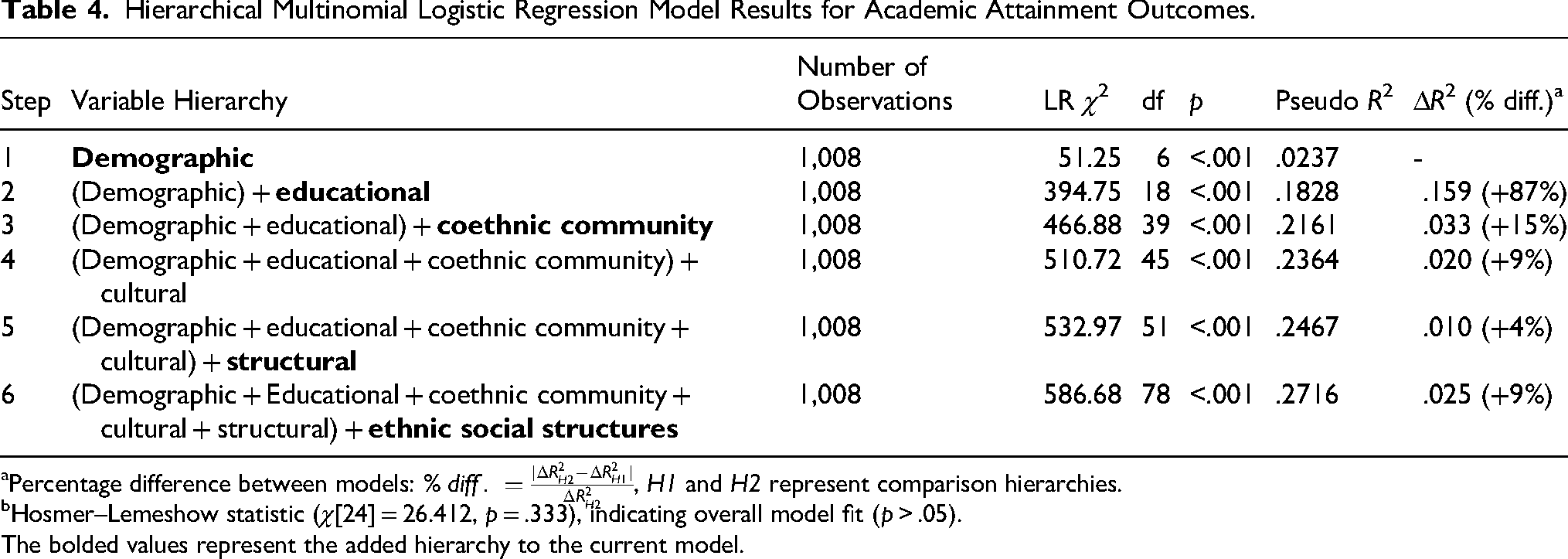
Percentage difference between models:
Hosmer–Lemeshow statistic (χ[24] = 26.412, p = .333), indicating overall model fit (p > .05).
The bolded values represent the added hierarchy to the current model.
Intersectional Marginal Effects of Key Predictors
Figures 3, 4, 5, and 6 illustrate the marginal intersectional effects across race, gender, and coethnic community for the most significant predictors identified in the final MNLR model. These plots illustrate how independent variables, including student expectations, grade point average (GPA), bilingual fluency, SES), and religious service attendance, interact with social identity and coethnic context to influence academic attainment. Notably, they highlight differentiated starting and ending predicted probabilities across educational attainment milestones and reveal “handoffs” between high school graduation and 4-year college completion across intersectional groupings.
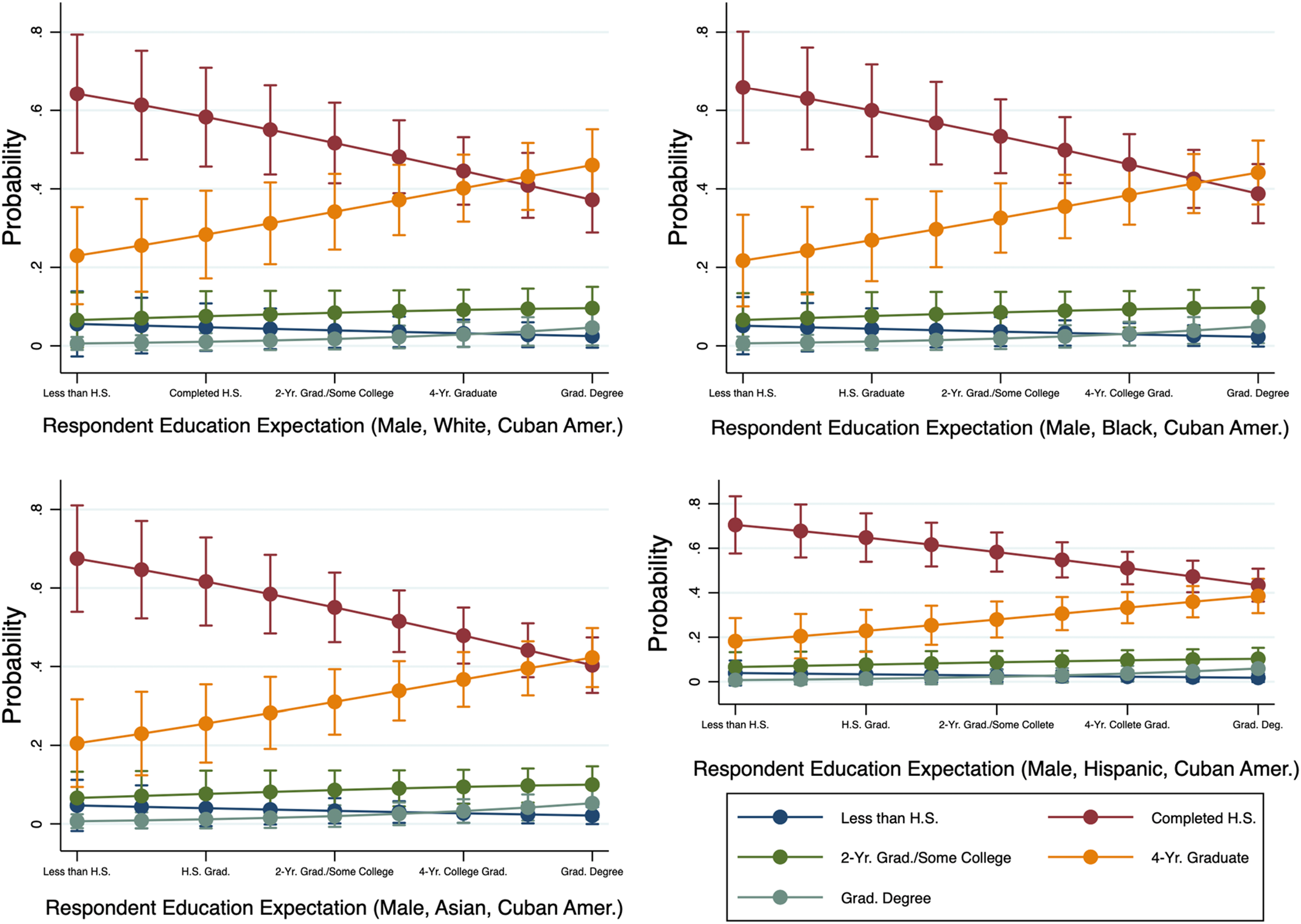
Marginal plot of educational expectations (strong coethnic community and race).
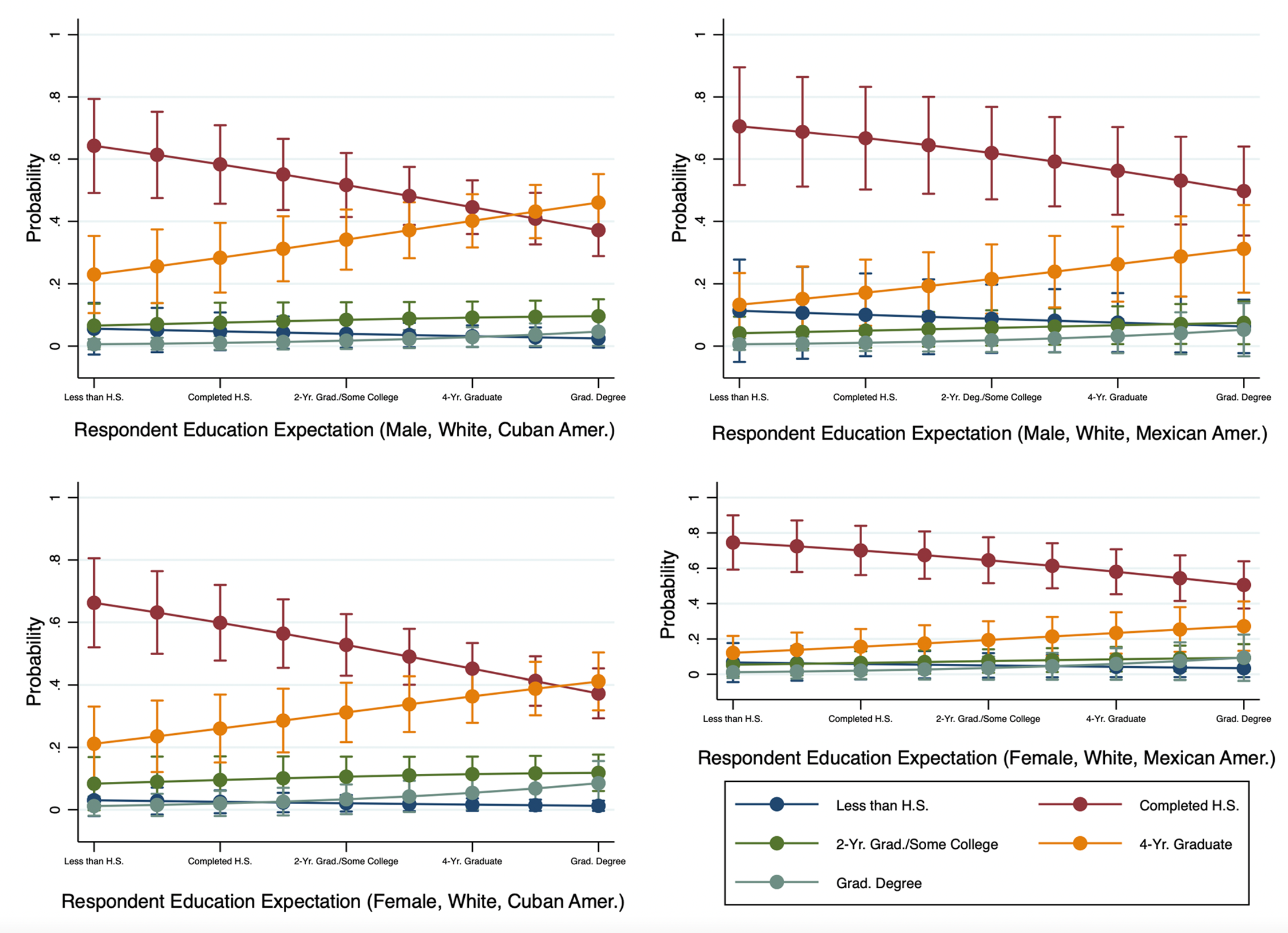
Marginal plot of educational expectations (strong coethnic community and gender).
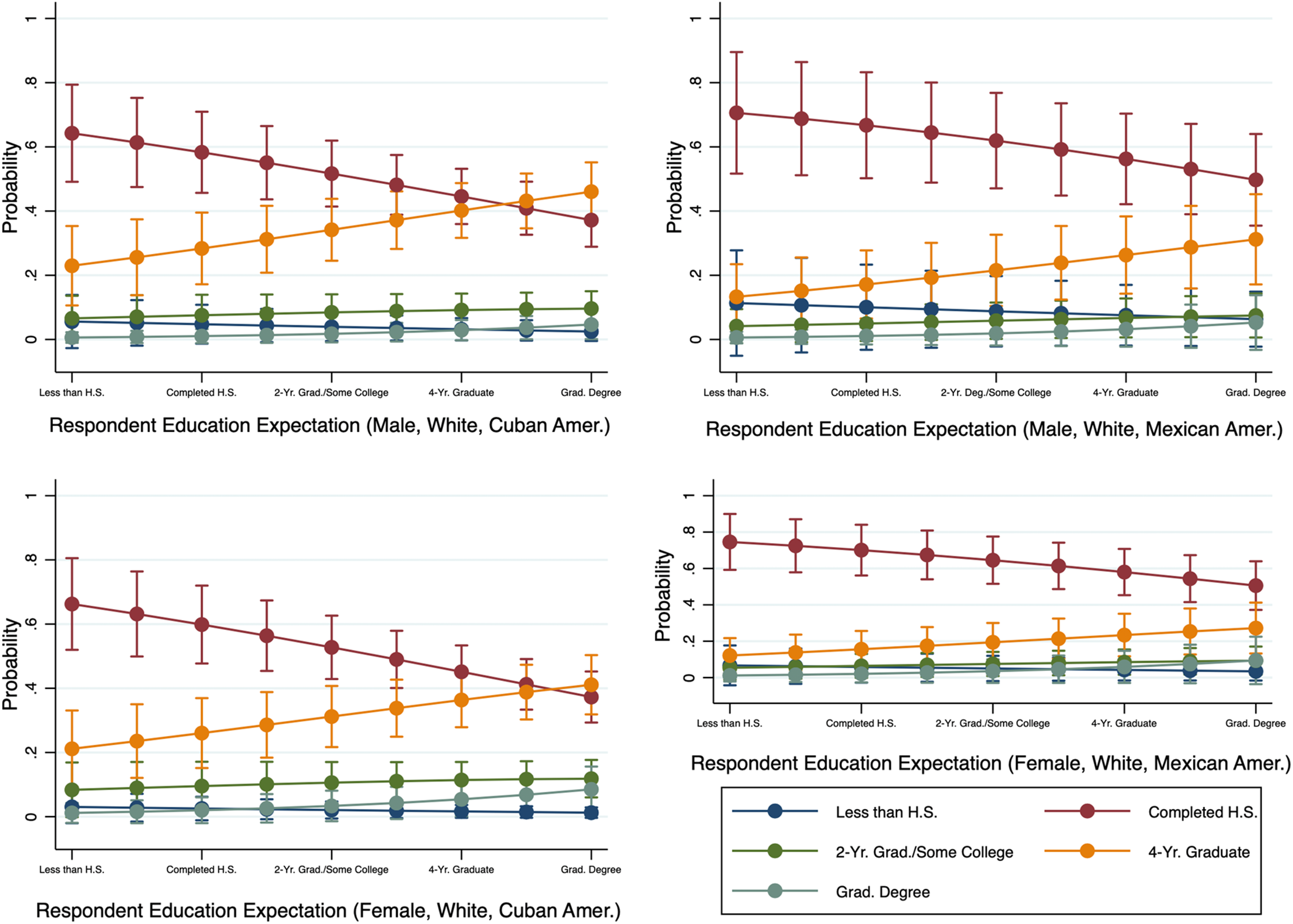
Marginal plot of educational expectations (coethnic community and gender).
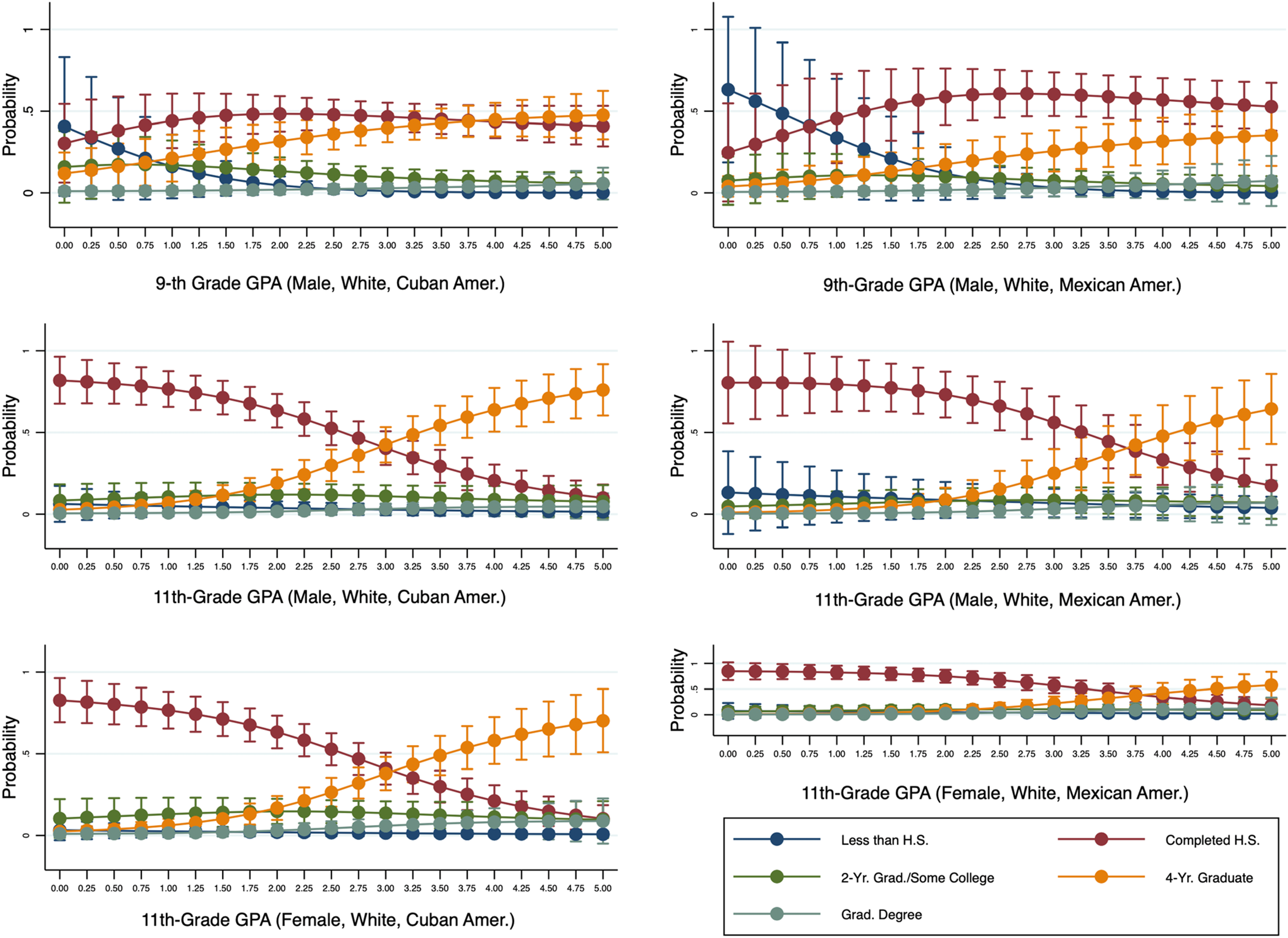
Marginal plot of ninth-/12-grade grade point average (GPA; coethnic community).
Figure 3 presents outcomes by race within strong coethnic communities. AA students exhibited the highest predicted probabilities of completing postbaccalaureate degrees. In contrast, African American and European American students in similar coethnic contexts exhibit lower levels of postsecondary attainment, with earlier plateauing across educational milestones compared to their AA peers. Figure 4 compares gendered outcomes within strong coethnic Cuban American communities. Female students consistently outperformed male peers in 4-year degree completion across nearly all racial/ethnic groups, particularly within strong coethnic communities. This gendered effect was most pronounced among Latina and Southeast Asian girls from low-SES households, where community strength appeared to offset broader structural barriers. Figure 5 contrasts strong versus weak coethnic community contexts. Students in weak coethnic communities showed sharp drop-offs between high school graduation and college entry, whereas strong community membership supported smoother postsecondary transitions.
The marginal effect of GPA (Figure 6) highlights the influence of structural achievement indicators, indicating that academic performance has the most pronounced positive effect within strong coethnic contexts. Supplementary Appendix B extends these findings by visualizing how SES, bilingual fluency, and religious service attendance interact with race, gender, and community strength to shape predicted attainment. These additional marginal plots reveal that bilingualism and religious participation have the most pronounced effects for low-SES students, suggesting that these cultural forms of capital become especially consequential under conditions of economic precarity.
These results provide empirical support for RQ2 and Research Question 3 (RQ3), showing that community and cultural assets intersect with race, gender, and SES in shaping educational attainment. These patterns support the explanatory power of the CCW framework in urban educational contexts.
Impact of Coethnic Communities and Generational Status on Attainment
Among the most significant findings from the final MNLR model was the predictive power of strong coethnic community membership (Research Question 4 [RQ4]). Cuban American students embedded within robust coethnic networks were more than twice as likely (odds ratio [OR] = 2.1, p < .001) to complete a 4-year college degree compared to their peers in more fragmented communities, even when controlling for academic performance and demographic factors. When considered across all ethnic subgroups, students within strong coethnic communities were 2.4 times more likely (p = .002) to attain a bachelor's degree or higher than those in dispersed or weakly connected communities.
The importance of ethnic social capital also emerged as a powerful predictor. Ranking as the second strongest influence on attainment after academic performance were religious service attendance (OR4-yr = 4.01, p < .05; OR2-yr = 3.70, p < .05) and teacher cultural bias (OR < HS = .20, p < .001) in their predictive strength. The positive results underscore the critical role of culturally embedded networks, including churches, ethnic-specific after-school programs, and community centers, as compensatory sources of support for immigrant-origin youth navigating underresourced urban schools, surpassing structural influences (OR4-yr = 1.33, p < .001). These institutions serve as sites of cultural affirmation and vehicles for academic guidance, mentorship, and knowledge about the college-going process. The analysis also reaffirmed generational status as a significant and independent predictor of educational attainment, even after controlling for coethnic and cultural factors. Compared to their first-generation counterparts, second-generation students were 42% more likely (p = .008) to enroll in some form of postsecondary education and 63% more likely (p < .001) to complete a bachelor's degree or higher.
These results offer a nuanced understanding of the immigrant paradox. Rather than viewing first-generation resilience as the sole narrative, the data suggest that second-generation students with greater linguistic fluency, cultural familiarity with U.S. schooling, and stronger access to institutional capital may be better positioned to convert inherited aspirations into tangible academic outcomes. Still, the findings highlight the indispensable role of coethnic infrastructure in facilitating this success. Without access to strong community networks, even culturally fluent and academically motivated students may struggle to bridge opportunity gaps in urban educational systems.
Discussion
This study examines how intersecting cultural and structural factors influence the academic trajectories of first- and second-generation immigrant students in urban educational contexts, with a particular focus on the moderating role of coethnic community strength in shaping opportunities and access. RQ2 examined the relationship between coethnic community strength and academic achievement, while RQ3 investigated how these effects varied across different racial, gender, and community structural contexts. Drawing on data from the CILS and informed by social capital theory and the CSC model (Paik et al., 2017a), the findings highlight the decisive role of community-based resources in shaping educational trajectories. Within urban school environments, where systemic inequities are often more pronounced and resources are more unevenly distributed and culturally embedded, community-driven supports have emerged as critical factors in fostering academic success (Tables 4 and 5). These findings challenge deficit-oriented narratives and provide a deeper understanding of how second-generation immigrant youth navigate complex social ecologies (RQ4).
Hierarchical MNLR Models for Academic Attainment Outcomes.
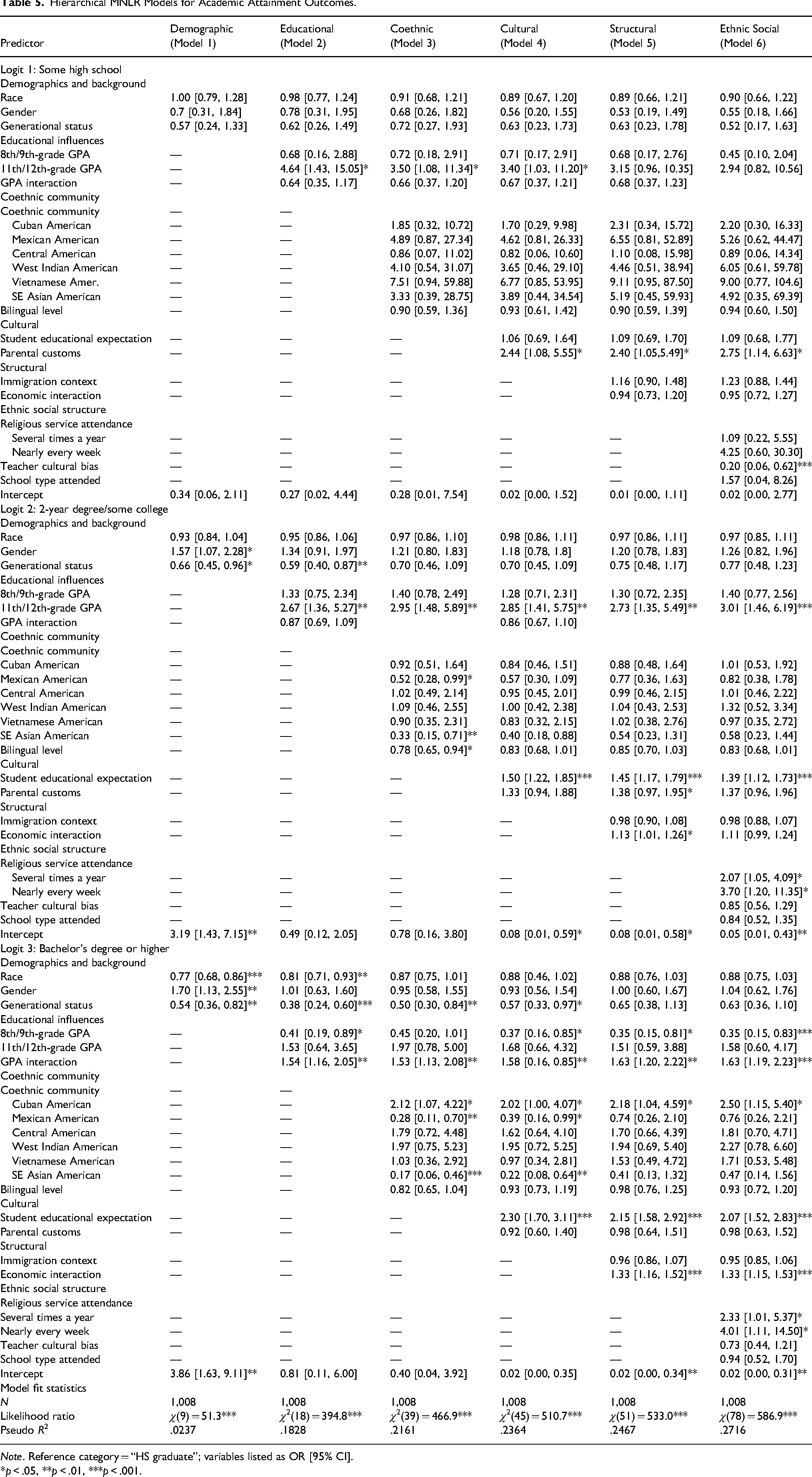
Note. Reference category = “HS graduate”; variables listed as OR [95% CI].
*p < .05, **p < .01, ***p < .001.
The Influence of Strong Coethnic Communities
One of the most salient findings was the academic support associated with strong coethnic communities, regardless of race or gender (RQ3). This was particularly evident among Cuban American students, whose membership in a “strong” coethnic community was associated with a 2.1 times greater likelihood of graduating from a 4-year university, even after controlling for ninth-grade GPA, race, and gender (RQ3 and RQ4). This aligns with Paik et al.'s (2017a) CSC framework, which emphasizes cultural and structural factors embedded within coethnic community institutions such as schools, churches, and civic organizations (RQ2).
Importantly, ethnic social capital (Table 5) was the second strongest predictor of educational attainment, underscoring the power of community networks (RQ2). These networks, situated in urban religious organizations, cultural centers, and ethnic-specific after-school programs, provide social, human, and cultural capital in ways that directly influence academic engagement and postsecondary aspirations (Coleman, 1990; Zhou & Kim, 2006).
Reframing the Immigrant Paradox in Urban Contexts
RQ1 investigated the interaction between structural and cultural capital in influencing academic outcomes among first- and second-generation immigrant students. Results presented in Table 4 indicate that second-generation students demonstrate higher postsecondary attainment rates than their first-generation peers, a pattern consistent with prior research (Fuligni, 1997; Glick & White, 2003; Rumbaut, 2004). This advantage likely reflects greater linguistic fluency, increased familiarity with the U.S. educational system, and enhanced access to cultural and institutional capital within urban environments. While traditional explanations of the immigrant paradox have predominantly emphasized structural capital, findings in Table 5 highlight the critical role of aspirational and familial capital, underscoring the need to reframe the paradox beyond structural constraints (RQ1 and RQ4). Drawing on Yosso's (2005) CCW framework, the study affirms that immigrant students’ academic success in urban schools is shaped by multiple, interrelated forms of capital, including aspirational, familial, and social capital embedded within coethnic communities:
Aspirational capital reflects the high educational expectations of immigrant parents, shaped by a dual frame of reference that contextualizes present struggles against past experiences, fostering strong beliefs in upward mobility (Goyette & Xie, 1999; Table 5). Familial capital emerges through shared customs and multigenerational support systems common in immigrant households, which transmit educational values and reinforce student resilience (Stanton-Salazar, 2001). Consistent with this conceptualization, Table 5 reveals that parental customs significantly predict higher odds of postsecondary academic attainment (OR = 2.75, p < .01), even after controlling for structural, educational, and coethnic community factors. Social capital is evident through participation in religious and ethnic organizations that provide mentorship, tutoring, and college-going resources, especially in underresourced urban contexts (Coleman, 1988; Table 5) (RQ2 and RQ4).
These forms of capital offer a culturally affirming counterpoint to traditional notions of achievement gaps and the immigrant paradox, inviting more asset-based frameworks in urban education policy and practice (RQ4).
Intersectional Insights and Coethnic Variation
While strong coethnic communities showed positive effects across all identity groups, the study revealed meaningful intersectional variation—particularly in how gender, race/ethnicity, and community structure collectively shaped academic outcomes (RQ3). Figures 3, 4, and 5 illustrate these variations, highlighting how attainment patterns differ across intersectional identities. For example, Figure 3 shows that AA students in strong coethnic communities have the highest predicted probability of completing postbaccalaureate education. In contrast, African American and European American students in the same context plateaued earlier. Figure 4 reveals that female students consistently outperformed their male peers in attaining a 4-year degree across racial groups, with the effect amplified in strong coethnic communities. Figure 5 illustrates how weak coethnic settings limit educational mobility, with students in these contexts exhibiting high secondary school graduation rates but failing to transition into college at similar rates. These visualizations provide empirical illustrations of how structural and cultural supports intersect to produce uneven patterns of opportunity.
The marginal effect of GPA (as depicted in Figure 6) highlights the role of structural achievement indicators, indicating that academic performance has the most pronounced positive effect within strong coethnic contexts. Supplementary Appendix B extends these findings by visualizing how SES, bilingual fluency, and religious service attendance vary across racial, gender, and coethnic configurations. These additional marginal plots highlight how structural and cultural predictors operate differently depending on identity context. For instance, bilingualism and religious engagement have stronger effects among low-SES students, suggesting that these cultural forms of capital are particularly influential under conditions of economic precarity. These subgroup-specific outcomes (RQ4) indicate that “high performing” reflects individual motivation and the alignment between student identity, community supports, and institutional opportunity structures.
Policy and Practice Implications for Urban Education
These findings carry significant implications for how we design culturally responsive supports in urban educational settings, especially for high-performing but historically underserved immigrant subgroups (RQ4). For instance, the success of West Indian American and Vietnamese American communities (Table 5) highlights the potential of embedded mentorship structures, civic organizations, and culturally situated advising models. Schools can partner with coethnic organizations to leverage community-based expertise in underresourced urban districts where immigrant students may lack access to individualized academic advising or college preparatory programs. Districts could also adopt targeted interventions that draw from these models, such as expanding ethnic-specific after-school programs or church- and community-based college readiness initiatives in areas with less dense coethnic networks. These findings align with Li and Qin's (2022) observations that educators’ everyday practices and community partnerships in urban contexts are essential to fostering immigrant students’ sense of belonging and academic engagement. Therefore, partnerships between schools and coethnic organizations may amplify these effects by integrating community-based expertise within instructional and advising systems.
To address intersectional needs (RQ3), advising programs should consider ethnicity and how gender and generational status shape students’ experiences. Girls from immigrant families may benefit from peer mentorship programs that reinforce academic efficacy in male-dominated mathematics-based disciplines, helping to counteract stereotype threat and build resilience (Beasley & Fischer, 2012), while boys from less academically engaged communities may require targeted, culturally responsive interventions that bridge cultural identity and school engagement (Nasir & Hand, 2006). For students from weak or dispersed coethnic communities, these supports may need to be more deliberately scaffolded by using models like CSC to identify which structural features (e.g., professional networks, parent education workshops, and church-based mentoring) can be strengthened (Paik et al., 2017b). Ultimately, this research supports a shift toward asset-based models of educational equity in urban settings, specifically models that recognize and invest in the forms of community cultural wealth immigrant-origin students already possess.
Limitations and Future Research Directions
While the study accounted for 27% of the variance in academic achievement, significant space remains for future inquiry. School-level variables, neighborhood characteristics, peer influences, and experiences of discrimination may further illuminate the trajectories of immigrant-origin students in urban schools. Using a generalized cultural connection variable and comparing first- and second-generation students represented a necessary constraint due to the limitations of the third-generation sample size. Future qualitative or mixed-methods research could explore within-group cultural variation more deeply. Likewise, while extending the CSC model, initially designed for AA communities, to a broader range of racial and ethnic immigrant groups was supported by the analytical approach, it also highlights the need for cultural specificity and theoretical flexibility. Lastly, the generational rise in the influence of cultural capital suggests a dynamic process of acculturation and structural integration. Future research should investigate how schools and community institutions can intentionally preserve cultural strengths and ethnic identity amid urban assimilation pressures, potentially building on insights from transnational education or diasporic identity scholarship.
Conclusions
This study highlights how community-level cultural and structural dynamics, particularly strong coethnic community involvement, shape the academic outcomes of first- and second-generation immigrant students in urban school settings. While prior research has often emphasized the structural disadvantages of immigrant-origin youth, this study reframes that narrative by centering on the assets embedded within ethnic social structures, such as religious institutions, multigenerational family networks, and culturally rooted educational expectations. By extending the CSC model beyond its original AA context, this research demonstrates its broader relevance across racially and ethnically diverse immigrant communities. When linked with Yosso's (2005) CCW framework, the findings suggest that cultural and ethnic social capital can influence academic outcomes more significantly than conventional structural indicators, such as SES. In urban educational contexts, where structural inequities are pervasive, these insights highlight the importance of affirming and engaging the cultural and institutional capital that immigrant students already possess.
Educators, school leaders, and policymakers must recognize and strengthen the ethnic social structures that support student resilience and achievement. Tailored interventions, especially in schools serving students from weak or fragmented coethnic communities, should cultivate culturally responsive environments, invest in family engagement, and build partnerships with trusted community organizations. Future research should continue examining how these cultural assets shift across generations, particularly as immigrant communities navigate acculturation and systemic inequality within complex urban landscapes.
Supplemental Material
sj-docx-1-uex-10.1177_00420859261417347 - Supplemental material for Navigating Intersectional Margins: A Multilevel Analysis of First- and Second-Generation Immigrant Students’ Academic Outcomes Within Urban Coethnic Communities
Supplemental material, sj-docx-1-uex-10.1177_00420859261417347 for Navigating Intersectional Margins: A Multilevel Analysis of First- and Second-Generation Immigrant Students’ Academic Outcomes Within Urban Coethnic Communities by Douglas Havard, Minh Truong, Sophie Nguyen, Richard Vo, Luis Truong, Nellie Nguyen and Ryan Dam in Urban Education
Footnotes

Author Contribution
Each author contributed a significant level of research, writing, and editing, including introduction/literature review (M.T., S.N., and N.N.), theoretical framework (R.V. and R.D.), methodological approach (L.T.), results and data analysis (D.H.), and concluding discussion.
Funding
The authors received no financial support for the research, authorship, and/or publication of this article.
Declaration of Conflicting Interests
The authors declared no potential conflicts of interest with respect to the research, authorship, and/or publication of this article.
Availability of Data and Material
Supplemental Material
Supplemental material for this article is available online.
Author Biography
References
Supplementary Material
Please find the following supplemental material available below.
For Open Access articles published under a Creative Commons License, all supplemental material carries the same license as the article it is associated with.
For non-Open Access articles published, all supplemental material carries a non-exclusive license, and permission requests for re-use of supplemental material or any part of supplemental material shall be sent directly to the copyright owner as specified in the copyright notice associated with the article.
