




Abstract
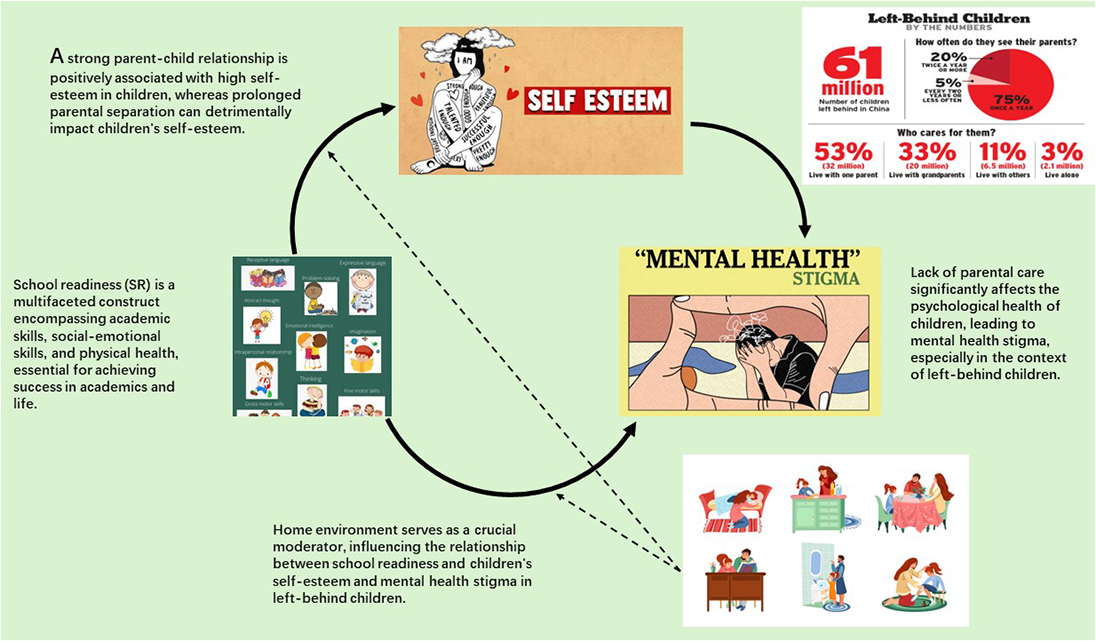
This study examines mental health stigma in Chinese left-behind children (LBC), focusing on the roles of self-esteem, school readiness (SR), and the predictable home environment. Drawing on self-esteem theory, it investigates the association between SR and mental health stigma. Additionally, it examined the mediating role of self-esteem in the relationship between SR and mental health stigma. Furthermore, it aimed to determine the moderating role of a predictable home environment in the relationship between SR and mental health stigma, as well as between SR and self-esteem. Data were collected from 312 teachers at boarding schools in China using a convenient sampling technique. It employed a partial least square structural equation modeling (PLS-SEM) with the SmartPLS software for empirical analysis and investigation of proposed hypotheses. The present study's findings have revealed significant associations between SR, self-esteem, and mental health stigma. Moreover, a predictable home environment moderates the relationship between SR and self-esteem, as well as between SR and mental health stigma. These findings are crucial for raising awareness of the mental health issues faced by LBC and can inform interventions to improve their well-being.
Graphical Abstract
Keywords
Get full access to this article
View all access options for this article.