




Abstract
Supporting nontraditional students within the student lifecycle is one of the major challenges faced by urban universities. This study presents a pedagogical intervention in which a group of Hispanic students participated in an engaged learning project with a bilingual newspaper. Findings indicate that this project motivated students to complete their degree, helped them develop transferrable skills, led to higher academic engagement, and increased their sense of belonging to the local Hispanic community. These results highlight the importance of engaged learning as one of the tangible tools teachers can use to support nontraditional and minority students in urban tertiary institutions.
Keywords
Introduction
Urban universities are not only institutions located in urban areas but institutions that are socially engaged and whose mission centers around educating the citizens of the region with the aim of enhancing the area's standard of living (Coalition of Urban and Metropolitan Universities, 2019). These universities tend to serve nontraditional students, that is, underrepresented populations such as ethnic minorities who have historically been excluded from of higher education. At the core of their mission is then to reduce the achievement gap so that these students can become successful and productive members of society. This article focuses on a group of Hispanic students attending an urban university in Tennessee, an area of recent immigration. Hispanic students in the U.S. have traditionally lagged behind their counterparts in terms of educational achievement, this has been commonly referred to as the Hispanic/Latino achievement gap. 1 For instance, in 2007 Hispanic students had a higher high school rate of student departure (21.4%) than non-Hispanic youth (13.7%) (Cataldi et al., 2009). Also, Hispanics between 18 and 24 were less likely to be enrolled in school than all young adults (42% versus 24–33%) (López, 2009).
More recent data show some hopeful trends (de Brey et al., 2019), but these need to be taken cautiously because there are still noticeable inequalities as we can see in the following figures. From 2000 to 2016, the Hispanic high school departure rate among 16- to 24-year-olds decreased from 28% to 9%. Nevertheless, the Hispanic departure rate in 2016 remained higher than the Black and White rates (6% and 5% respectively). In terms of high school completion rates, from 2000 to 2016, the high school completion rate for Hispanic 18- to 24-year-olds increased from 64% to 89%, but the overall completion rate was still higher for students from other ethnic backgrounds (the Black and White completion rates increased from 84% to 92% and from 92% to 94%, respectively). The percentage of adults aged 25 and over who had not completed high school was higher for Hispanic adults (33%) than for adults in any other ethnic group (with percentages ranging from 8% percent for White adults to 17% percent for American Indian/Alaska Native adults).
Researchers have proposed a compendium of sources that have contributed to these academic inequalities such as poverty, lack of access to proper nutrition, lack of curricular rigor, low teacher expectations, overcrowded classes, lack of resources, lack of parent-school partnerships, and negative peer pressure, among others (León et al., 2011; Madrid, 2011). It is important to acknowledge the enormous responsibility that schools and districts nationwide bear regarding the achievement gap and how they play a fundamental role in addressing issues of inequity in access to educational services for Latino students. Bridging the achievement gap is a complicated issue that requires action from many stakeholders but it is essential that schools approach the education of these students from the perspective of asset-based pedagogies instead of from a deficit perspective (Alim & Paris, 2017; Gay, 2018; Ladson-Billings, 1995).
When we look at figures related to tertiary institutions, we see some interesting trends. First, between 2000 and 2016, Hispanic undergraduate enrollment more than doubled (a 134% increase from 1.4 million to 3.2 million students) but the completion rates remained low (54%) (de Brey et al., 2019). In particular, Hispanic enrollment growth in open access universities has been quite large with a 48% increase (compared to a 44% for Black students and 0% for White students) (Carnevale & Strohl, 2013). However, although Hispanic enrollments were fairly representative of their surrounding urban regions, the growth on campus did not maintain the same rate of growth as their regions (Zerquera, 2016).
These figures indicate that there have been some positive developments with respect to the educational attainment of Hispanic students, yet they still lag behind their counterparts. They also show that many of them opt for open access universities. Thus, it is important that tertiary institutions—and in particular urban institutions—explore support systems to help close this gap entirely so that Hispanic students are given the same chances of success within the U.S. education system and eventually in the professional world.
This article explores one such attempt to support Hispanic students at an urban institution through a pedagogical intervention. In particular, it analyzes how a group of students in a class of Spanish for heritage language learners—bilingual individuals raised in homes where Spanish is spoken (Valdés, 2000)—reacted to an engaged learning project, which required them to publish original articles in a local bilingual newspaper. This study contributes to the literature on engaged learning and its intersection with student success, particularly as it applies to underrepresented students in urban institutions.
Urban Education and Nontraditional Students
Urban universities appeared in the second half of the twentieth century in the United States to fulfill the demands of a growing population accessing higher education. This new group of students concentrated in cities due to urbanization and migration from the countryside and included women as well as people of color. After World Word II and the Korean War, urban universities also responded to the educational needs of GIs which were funded by the GI bill 2 (Cohen & Brawer, 2003; Grobman, 1988; Harcleroad & Ostar, 1987; Wusten, 1998). Additionally, an increasing number of jobs were requiring university training, which meant—among other things—that there was a significant increase in the number of people attending university and that adults with families and job responsibilities were going back to university to continue their studies to either maintain their jobs or aspire to better ones, especially in industrialized areas (Berube, 1978; Riposa, 2003).
To face these changing realities within U.S. cities, urban universities emerged as new kinds of institutions that were not only defined by where they were located—metropolitan areas with populations of 450,000 or greater (Coalition of Urban Serving Universities, n.d.)—but by who they served and what their mission was. Overall, these tertiary institutions are portrayed in opposition to “ivory towers”—i.e., the term commonly used to refer to elite research universities—and are considered to be “of their region and not just in it” (Bell et al., 1995, p. xii). According to the Coalition of Urban and Metropolitan Universities (2019), these types of institutions—although varying with respect to multiple aspects (e.g., public vs. private status, 4-year colleges vs. large research universities)—have a series of defining features in common:
Serve as anchor institutions for their regions Integrate teaching, research, experiential learning, and public service into their mission Activate their mission through community engagement Respond to community needs while striving for national excellence Utilize mutually beneficial partnerships to accomplish strategic goals Provide an educated citizenry and engaged workforce Have a diverse student body that reflects regional demographics Generate new knowledge and creative activity that benefit their communities
The nature of these institutions and their mission has not been traditionally represented in the Carnegie classification. However, the newest elective category proposed in 2005 by the Carnegie Foundation for the Advancement of Teaching—“community engagement classification” (Driscoll, 2008)—fully encapsulates the “urban mission” (Severino, 1996) of urban-serving institutions mentioned above. Community engagement is described as “the collaboration between institutions of higher education and their larger communities (local, regional/state, national, global) for the mutually beneficial exchange of knowledge and resources in a context of partnership and reciprocity” (Driscoll, 2008, p. 39).
Urban universities face unique challenges that are inherently different from those faced by Land-Grant or state flagship institutions.
3
This article focuses on a specific one that is related to the characteristics associated with their student bodies and the chances of these students succeeding in higher education (but see Zerquera & Doran (2017) for a complete analysis of the general challenges confronted by urban universities). An integral element of the “urban mission” (Severino, 1996) intrinsic to the urban university is to provide access to populations who have been typically underrepresented in higher education, usually referred to as nontraditional students. The National Center for Education Statistics (Choy, 2002) defines nontraditional students as those having one or more of the following characteristics:
Delays enrollment (does not enter postsecondary education in the same calendar year that he or she finished high school); Attends part time for at least part of the academic year; Works full time (35 hours or more per week) while enrolled; Is considered financially independent for purposes of determining eligibility for financial aid; Has dependents other than a spouse (usually children, but sometimes others); Is a single parent (either not married or married but separated and has dependents); or Does not have a high school diploma (completed high school with a GED or other high school completion certificate or did not finish high school).
Serving this type of student population represents a challenge that requires commitment on the part of the student, the faculty, and the administration. Unlike traditional students—whose primary role is to be a student—nontraditional students have to juggle multiple roles and responsibilities such as those derived from being a student, a parent, caretaker, and/or a worker (Meyers et al., 2012). Thus, an essential aspect of the mission of urban-serving institutions is to provide a learning environment in which these students can thrive. As mentioned, the target population of this study is an ethnic minority, in particular, Hispanic students at an urban university in Tennessee. Students were encouraged to participate in an engaged learning project as part of one of their Spanish classes, “Spanish for Heritage Speakers”, with the objective of motivating students and help them develop a series of skills, which could assist them in finishing their degree.
The Connection between Student Success and Engaged Learning
Student success is at the heart of the mission of the urban university, and thus, not only providing access to a diverse student body but supporting these students through the student lifecycle is a priority for these institutions. There is not a simple definition for student success. Traditional views on student success comprise grade point averages (GPAs) as well as retention and completion rates. Yet other ways of accounting for student success include the development of transferable real-world skills such as cultural competency, communication skills, and critical thinking (Cress et al., 2010). However, traditional views of student success tend to prevail at many institutions because universities across the U.S. are under growing pressure for accountability in terms of student retention and graduation rates (Kallison & Cohen, 2010) since state funding is tied to such performance indicators (Lahr et al., 2014). Given the characteristics of urban universities and their diverse student body, reaching these indicators might be challenging (Zerquera & Doran, 2017). Multiple investigations have evaluated the effect of different types of support systems and pedagogical interventions on the recruitment, retention, and graduation of nontraditional students in an effort to build an empirical body of knowledge on which universities can base their decisions (Hadfield, 2003; Hammer et al., 1998; Leonard, 2002; Moore, 2013). This is not only a focus of attention within the U.S. but a global concern for tertiary institutions in different countries (see Bolam & Dodgson (2003) for an analysis of this issue in the U.K; Benseman et al. (2006) for New Zealand).
Tinto's seminal work on student departure (Tinto, 1993; Tinto et al., 1994) highlighted that academic and social engagement are key elements of student persistence and success. Thus, one of the approaches taken by universities 4 in order to help students—especially underrepresented students—to reach their full potential is the implementation of engaged learning. This type of learning represents a redefinition of what it means to teach and to learn with respect to more traditional teaching methodologies. Some of the basic indicators of engaged learning have to do with a reconceptualization of the learning process (which is active), the tasks (which have to be challenging, authentic, and meaningful), the assessment (which is performance-based), the instructional model (which needs to be interactive), the context (which turns the classroom into a knowledge building learning community), the teacher (who takes the role of a facilitator) and the students (who take an active role and are responsible for their own learning) (Jones et al., 1994). Engaged learning takes different forms across institutions and is embodied in the ten high impact educational practices recommended by the Association of American Colleges and Universities (Kuh, 2008). These ten practices incorporate the following: first-year seminars, common intellectual experiences, learning communities, writing-intensive courses, collaborative assignments and projects, undergraduate research, diversity/global learning, eportfolios, service learning/community-based learning, internships, and capstone courses and projects. These practices have shown to be advantageous for students’ learning, engagement, and career preparation (Kilgo et al., 2015; Kuh, 2008) and particularly so for students belonging to underserved populations (Kuh, 2008; Sandeen, 2012).
This article focuses on one particular aspect of engaged learning—service learning or community-based learning—which Kuh (2008) defines as follow: In these programs, field-based “experiential learning” with community partners is an instructional strategy—and often a required part of the course. The idea is to give students direct experience with issues they are studying in the curriculum and with ongoing efforts to analyze and solve problems in the community. A key element in these programs is the opportunity students have to both apply what they are learning in real-world settings and reflect in a classroom setting on their service experiences. These programs model the idea that giving something back to the community is an important college outcome, and that working with community partners is good preparation for citizenship, work, and life.
Community service learning (CSL) has a long tradition at urban institutions (Moore & Sandholtz, 1999). The benefits of CSL are well-attested. Although beneficial for all students, CSL has shown to be particularly beneficial for ethnic minorities and underrepresented students (Kelly, 2012; Kersten, 2006; Kuh, 2008; Ward & Wolf-Wendel, 2000). CSL has also proven to increase students’ retention rates as well as their likelihood to complete their degrees (Cress et al., 2010). 5
CSL has been documented to be beneficial for Hispanic students taking Spanish classes. Lowther-Pereira (2016) stated that this type of pedagogy results in tangible results such as the development of linguistic skills and pre-professional skills, and more abstract ones such as the development of positive attitudes and relationships with the local communities, the development of positive linguistic identities and a raised awareness towards sociolinguistic and sociopolitical issues. These benefits have been evidenced in other studies such as Leeman et al. (2011), Lowther-Pereira (2015), Martínez & Schwartz (2012); Pascual y Cabo et al. (2017), among others. Particularly relevant for the current study are the findings of Petrov (2013) and Pak (2016). Petrov (2013) reported on the benefits of a CSL component on a heritage language class in the Chicago area, specifically in terms of the attitudinal changes that took place in the students. Pertinent for this study is the fact that the author emphasizes the important facet of students acting as role models for younger Hispanic generations, especially in relation to college preparedness, which is something that the current study addresses.
Pak’s (2016) study with Spanish heritage learners in a predominantly White institution revealed that CSL provided a strong sense of belonging. Strayhorn (2012) defined the concept of sense of belonging as “students’ perceived social support on campus, a feeling or sensation of connectedness, the experience of mattering or feeling cared about, accepted, respected, valued by, and important to the group”. A number of factors—which depend on the type of student population surveyed—have been associated with sense of belonging. For instance, peer interaction, faculty support, and campus climate were found to be significant predictors for first-year college students (Hoffman et al., 2002). In a study exploring Latino students in predominantly White institutions, three factors were significant predictors for sense of belonging: grades, time spent studying, and interaction with diverse peers (Strayhorn, 2008b). That is, while sense of belonging is understood as the sense of integration and connectedness to one's institution, different factors can predict this sense of connectedness for different student groups. For Latino students, having a class with other Hispanics and interacting with the local Hispanic community through CSL was found to be correlated to a stronger sense of belonging to their academic institution (Pak, 2016). Because sense of belonging is yet another variable which has been considered essential for the retention of minority students (Hausmann et al., 2007; Locks et al., 2008; Maestas et al., 2007; Strayhorn, 2008a, 2008b, 2012), the present study also builds on previous findings in this area.
Through this study, we will delve into how engaged learning, and in particular a specific instantiation of engaged learning, CSL, can foster a sense of community in students as well as how it could beneficially influence different aspects of their academic experience and performance.
Motivation and Research Questions
This study took place in a large urban research university in the Southeastern United States. The university has seen a large increase in the number of Hispanic students in recent years: from 277 in 2008 to 992 in 2018, which represents a 77% growth rate in the last decade (University of Memphis, 2008, 2018).This reflects the demographic reality of Tennessee, which has become a new destination for Hispanic immigrants in the last two decades and is a part of what is commonly referred to as the New Latino Diaspora (Hamann et al., 2002). Hispanics constituted 5.5% of the total population of the state as of 2018, as compared with 2.2% in 2000 and 0.7% in 1990 (U.S. Census Bureau, 2001, 2018). Nagle et al. (2012) reported that Hispanic students in Tennessee were more likely to live in poverty and experience linguistic isolation than their counterparts, two factors that are directly related to low educational achievement. Thus, given the rising number of Hispanic students across the country but—particularly in these new immigration areas—it is essential that institutions explore ways to support these students during the student lifecycle.
Given that the institution where the study took place is an urban-serving institution, a large part of its student body falls under the umbrella of nontraditional or underrepresented students, with older students and students who have to work part or full time to support their college studies as well as fulfill family responsibilities such as taking care of children, younger siblings or older relatives. In 2018, data collected by National Student Survey of Student Engagement reported that seniors worked an average of 20 h a week. With respect to Hispanics, the population targeted in this study, close to 85% of Hispanics said they planned to work during their 4 years at the university (National Student Survey of Student Engagement, 2018). Apart from that, Hispanic students carry the weight of attending university in a country in which they might experience racial discrimination inside or outside the campus (Feagin & Cobas, 2015), something which was exacerbated under the Trump administration when this study took place (Huber, 2016). This is yet another factor that could negatively impact Hispanic students’ chances of succeeding in college. Hence, universities as institutions and teachers as individuals carry the responsibility of reaching these students and help them succeed in higher education. In this article, I focus on small but tangible actions that teachers can take in their classroom to contribute to the academic success of this specific student population. The main objective that I aim to explore is whether CSL—and, in particular, writing for a bilingual newspaper—is beneficial for Hispanic students in urban universities. I attempt to address this issue through four research questions (RQs):
RQ1: Can CSL motivate students to pursue/complete their degrees?
RQ2: Can CSL help students develop transferable skills?
RQ3: Can CSL lead to higher academic engagement?
RQ4: Can CSL increase to student sense of belonging?
The Engaged-Learning Project: Voces Hispanas en la Universidad de Memphis
The University and the Course
The university where the study took place is categorized as a community engaged institution according to the Carnegie classification and, as such, it promotes community engagement by supporting faculty, students, and community partners to make these projects feasible (University of Memphis, n.d.). One of the common constraints to develop and implement such engaged learning opportunities in urban institutions is the limited time students have to devote to activities outside of class. On many occasions, students’ personal and family commitments prevent them from getting involved in extracurricular activities or classes, such as those with CSL components, that usually require a significant amount of work outside the established class time. Therefore, in order to overcome these issues, the project described here was designed in the spirit of CSL and with the goal of maximizing all the benefits reported in the literature but also trying to minimize the time students had to commit to activities outside the class. The class chosen for the project was “Spanish for Heritage Speakers”, a class created in the Department of World Languages and Literatures in response to the rapidly changing demographics of Tennessee and the rising number of Hispanic students entering the university and taking Spanish classes. This rapidly changing scenario had led to Hispanic students being placed in classes traditionally designed for second language learners (i.e., non-Hispanic students without family ties to Spanish language or culture), which faculty agreed were not the optimal learning environment for Hispanic students whose language skills and cultural competence were being undervalued and underdeveloped. Thus, the class “Spanish for Heritage Speakers” was created in order to provide a learning environment for HLLs which was designed with their linguistic and socio-affective needs in mind, with goals that were challenging for them, and assignments that not only developed their linguistic ability but allowed them to explore their identity as members of the Hispanic community of the U.S. The second time this class was offered it was redesigned to include an engaged learning component with the support of an Engaged Scholarship Committee Fellowship.
This service-learning component entailed a semester-long collaboration with a local bilingual newspaper, La Prensa Latina, and it represented 25% of the course grade. The class published biweekly articles in a bilingual column named “Voces hispanas en la Universidad de Memphis/Hispanic Voices at University of Memphis”. Before staring the project, students had two introductory sessions: one with the teacher to discuss concepts such as engaged learning and CSL and their role within the university, and a second one with the community partner. The overall topic of our column was: The value of university studies. The eight columns explored the following issues:
Advantages of a college education How to find financial support to attend college The benefits of being a bilingual student How to prepare since high school to be a good candidate for college The role of parents in their children's college education Experiences in college: Inside and outside the classroom Resources for students without legal status Life after college
The goal of the column was to encourage Hispanic high school students to pursue university-level studies and offer some valuable advice from the perspective of current University of Memphis students. Every two weeks two students published in the newspaper about the designated topic and the rest of the class published their articles on the same topic on a public class blog linked to the newspaper pieces. This ensured all students were engaged and actively participating on the project.
A well-designed CSL project needs to fulfill both the needs of the students and the needs of the community partner. In our case, the goals that I wanted my students to achieve through the CSL project were the following: (i) Development of academic/formal writing skills, (ii) development of translation skills, (iii) acquisition of research skills, (iv) improvement on the ability to work in groups, (v) empowerment through the use of their language for professional purposes, and (vi) consciousness raising on social issues pertinent to the local Hispanic community.
The community partner highlighted two main concerns that they wanted our project to address: (i) Lack of education in the adult population, and (ii) loss of Spanish language and/or Spanish cultural ties in the younger generations. The community partner saw the bilingual newspaper as an educational tool and also as an element of community building. Through our columns, we tried to address these two issues by providing information about the benefits of bilingualism and the benefits of attending university in a language that was clear and straightforward, and with articles based on both reliable sources and the experiences of the students themselves.
The Students
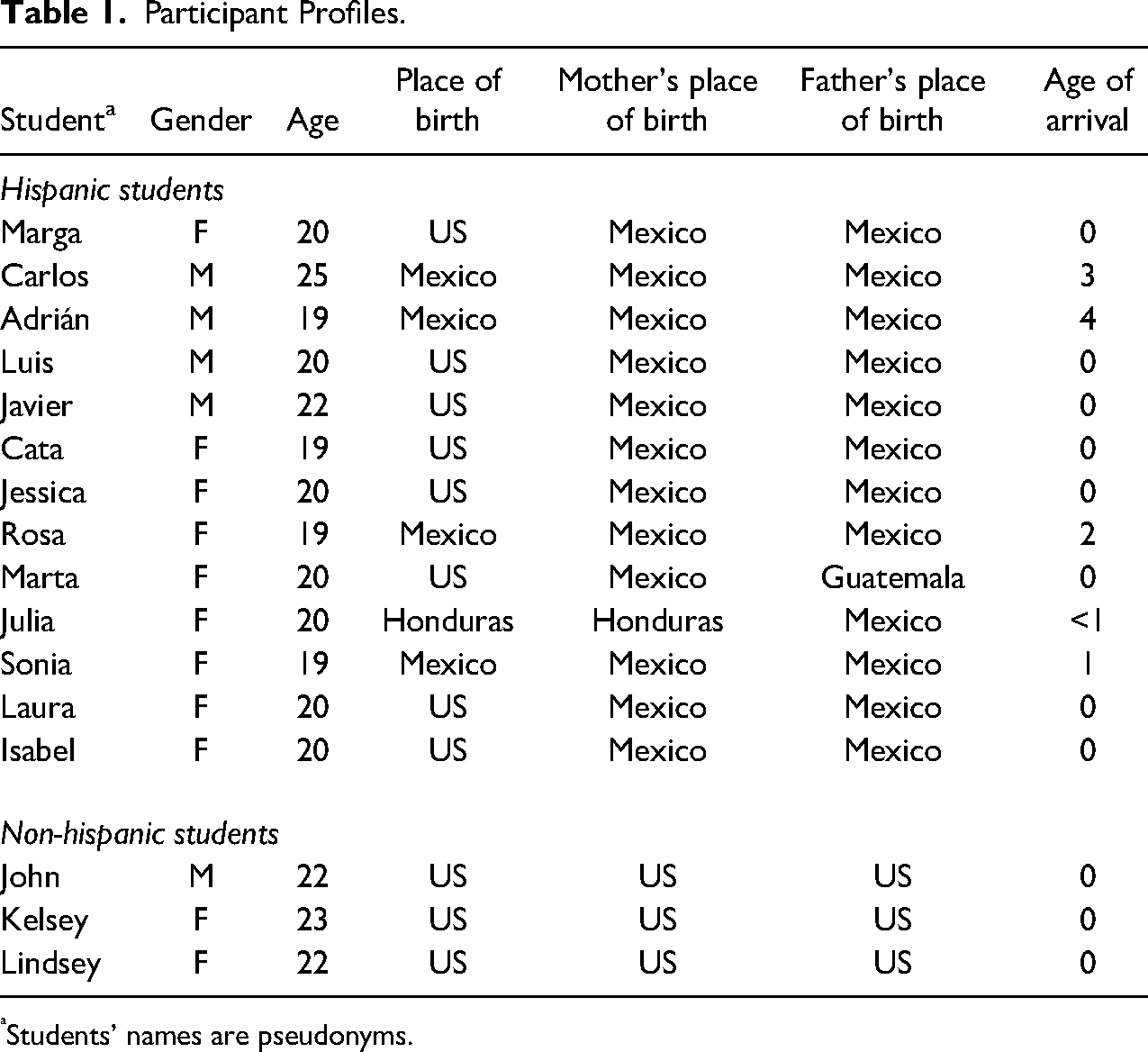
During the first week of class, students completed a background questionnaire and a proficiency test. There were 16 students in this class (13 Hispanic and 3 non-Hispanic). In the Hispanic group—the one relevant for this particular study—there were 4 male students and 9 female students. Their ages ranged from 19 to 25 (average 20, 23). Most (8) were U.S. born, four had been born in Mexico, and one in Honduras. Those students who were not born in the U.S., arrived in the country very young, as early as a few months and as old as 4 years old. All students were of Mexican descend, but two of the students had one parent who was from another Spanish-speaking country (Guatemala and Honduras) (Table 1).
Participant Profiles.
Students’ names are pseudonyms.
Methodology: Instruments and Data Analysis
Apart from the background questionnaire and proficiency test mentioned in the previous section, students completed two additional assignments towards the end of the semester: the first one was a graded guided reflection essay about the CSL component of the class (Appendix). The second one was a survey provided by the Engaged Scholarship Committee, which they had previously validated and tested in a large number of courses and which included engaged learning components, at the university where the study took place. Students were presented with a series of statements to which they had to show their level of agreement/disagreement on a Likert scale. They were also asked to report on their experiences and preparation for the CSL project in several open questions. 6
Quantitative data from the Engaged Community Committee survey are presented as percentages. The qualitative data from the guided reflection essay were also analyzed with the view that analysis is an ongoing, cyclical, and reflexive activity (Coffey & Atkinson, 1996), producing reflective memos throughout the collection and analysis of the data. I employed a grounded theory approach (Strauss & Corbin, 1994) to data analysis, which allows for the emergence of important themes, similarities, and differences—rather than their imposition a priori—throughout the process of collecting, coding, comparing and contrasting of data (Lincoln & Guba, 1985). The data went through a process of open, axial, and selective coding, being grouped into salient themes related to RQ3 and RQ4. I grouped data around two main clusters: Usefulness and motivation related to the authentic purpose and audience of the CSL project and sense of belonging. Data in the second cluster were grouped around two themes: sense of belonging to the local Hispanic community and sense of belonging to the Hispanic community in the classroom.
Given the foci of this study, it is important to discuss and acknowledge the researcher's positionality. I recognize that my social identity as a native Spanish speaker from Spain, a Spanish instructor, and a researcher could have affected the way participants detailed their views and experiences and the way they replied to the survey. These social identities may have caused participants to filter their responses; however, they also allowed them to share their views and experiences with an interested audience. Additionally, it was always made clear that their opinions on the project would not influence their class grade and that the survey was completely anonymous. To avoid any conflict of interest, the survey was collected and analyzed by the Engaged Scholarship Committee and results of the guided reflection essay were only analyzed for research purposes after the semester was completed and grades had been submitted. My positionality with respect to participants also recognized the “context of their lives in relation to structures of power that constitute their actions” (Madison, 2012, p. 153). Participants’ views, opinions, and experiences were interpreted in this light.
Results
Quantitative Data
I analyzed the Engaged Scholarship Committee survey answers and grouped them into three categories that were relevant for the purposes of this study: the impact of the CSL project on (i) students’ likelihood to complete their degrees, (ii) student development of transferable skills, and (iii) student academic engagement. Each of these categories correspond to RQs 1, 2 and 3 respectively. 15 out of the 16 students completed the questionnaire.
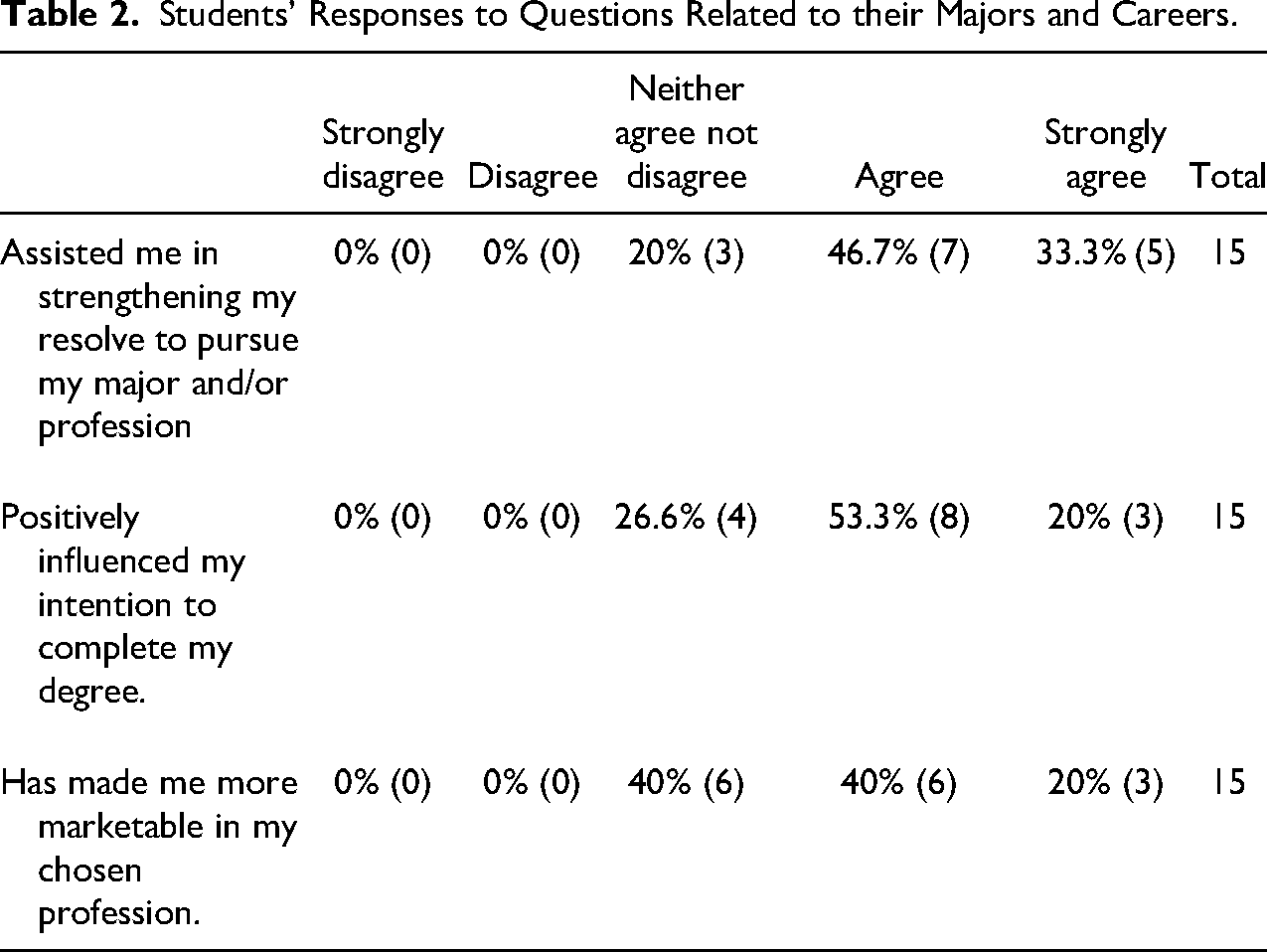
In the first category (impact of the CSL project on students’ likelihood to complete their degrees) (Table 2), there were very positive results: 80% of the students agreed or strongly agreed that the collaboration with the newspaper assisted them in strengthening their resolve to pursue their major and/or profession. 73.3% of the students also agreed or strongly agreed that the project positively influenced their intention to complete their degree and 60% considered that this experience had made them more marketable in their chosen profession.
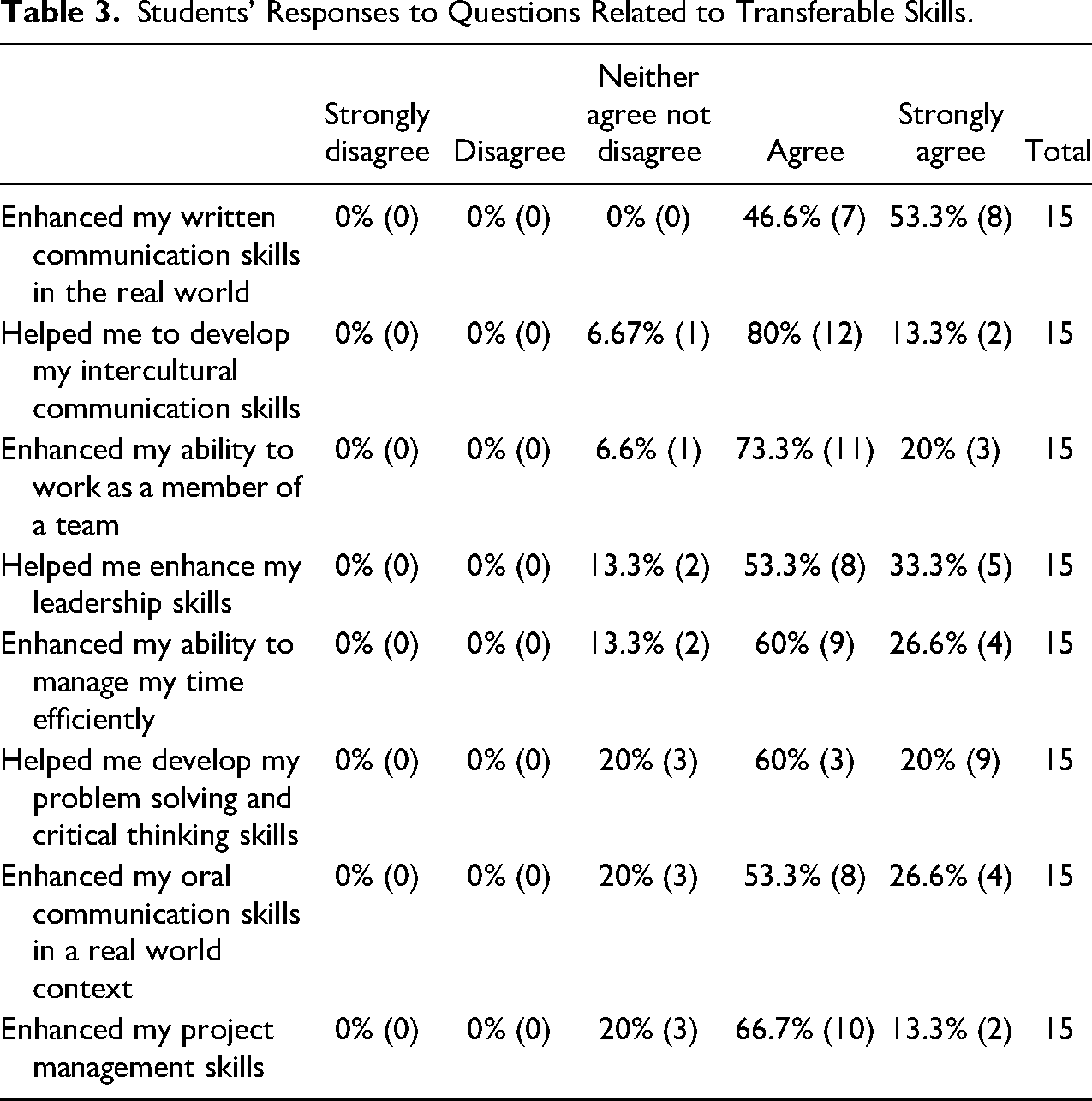
The next set of questions targeted the relevance of the engaged learning project on a series of transferable skills that have clear applications in the world outside the classroom (Table 3). Students work with La Prensa Latina was particularly beneficial in three areas: enhancing written communication skills (100%), developing intercultural communication skills and enhancing students’ ability to work in teams (both 93.3%). Additionally, 80% or over 80% of participants agreed/strongly agreed that the CSL project had helped them enhance a series of practical skills (86.6% for leadership skills and time management, and 80% for oral communication, problem solving and critical thinking, and project management).
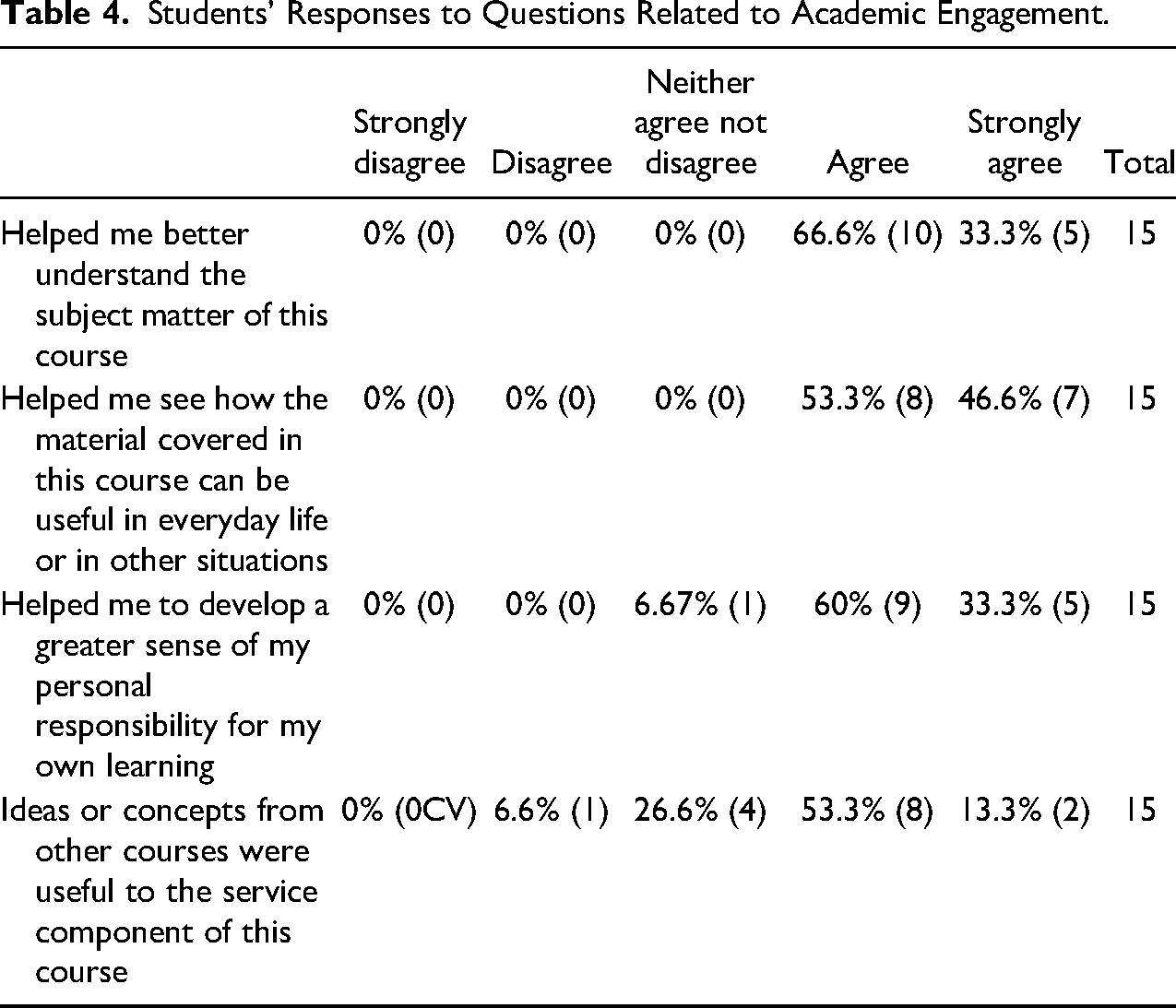
The third category focused on the CSL project's effect on student active engagement with the course (Table 4): 100% of students agreed or strongly agreed with two statements “The engaged learning component helped me better understand the subject matter of this course” and “The engaged learning component helped me see how the material covered in this course can be useful in everyday life or in other situations”. 83.3% students considered that their work with the newspaper helped them develop a greater sense of their personal responsibility for their own learning. 66.6% considered it helped them make connections with other courses.
Qualitative Data
Data from the guided reflection essay were analyzed resulting in two categories relevant for the RQs targeted in this study: (i) Usefulness and motivation related to the authentic purpose and audience of the CSL project, and (ii) Sense of belonging. The first category is directly related to RQ3 (Can CSL lead to higher academic engagement?) while the second category addresses RQ4 (Can CSL increase to student sense of belonging?). Students’ quotes were originally written in Spanish, and they have been translated to English for the purposes of this article.
As part of the guided reflection essay, students answered the following question: “Do you think that having an authentic audience (authentic readers in La Prensa Latina and the class blog) who read the class articles made a difference? Explain why or why not.” Their answers shed light on the benefits of writing for an authentic audience and how it impacted them as writers. Laura commented: “When you know you have audience, it gives you a certain motivation. As a writer, you want that audience to see that you can write well and you want to give them a good impression, so I believe the difference this project made was positive and motivating.” Similarly, Julia claimed: “Having authentic readers made a difference because, as a writer, you feel more pressure to do a good job. I believe this is something positive because you have to think more carefully about what you are writing”. In a similar fashion, Javier stated: “I believe this [having an authentic audience] caused a difference because we really felt, or at least I felt, that we really have someone who cares about our opinions and that can take advantage of the effort we made to make this information available to everyone”. Sonia stated: “I believe having an authentic audience made a difference because we knew there was someone who wanted to listen who may not know or they may disinformed about what we were writing”. Isabel went a beyond the issue of having an authentic audience and reported on the impact of having a class project with a real-world purpose. “This project gave me the opportunity to go out to the community and inform myself as well as inform them [the Hispanic community in Memphis]. This helped me learn a more professional Spanish and put it in practice for real purposes. It is not just a project I did and was left saved in a folder. Without the newspaper we could not have shared our message with so many people.”
Students’ narratives also highlighted that the CSL project helped them feel closer or more involved in the Hispanic community. Some students felt a connection with the local community, although this connection was done through becoming more aware of the community's challenges and providing information to help them address these challenges and not through actual interactions with the community. Marta commented: “Now I feel closer to the local Hispanic community because I know I have made a contribution to the community because I was able to inform, explain and facilitate the transition from high school to college for students and their parents.” Javier mentioned: “I feel more included [in the local Hispanic community] because since I was a child, I lived in Memphis, but it has always been my family and me and nobody else. I could never open the doors to the Hispanic community, so I finally feel like I have been able to have a relationship with them, even if it was just through information”.
For other students the most important connection took place in class with their own classmates. Through the relationships that were fostered in class, students started developing a sense of ethnolinguistic belonging. Rosa commented: “After doing this project, I have realized how many people are going through the same thing and how much we have in common as Hispanic university students. It gives me great joy that we are studying and making our dreams and our parents’ dreams true.” Carlos commented: “I feel a bit closer to the Hispanic community in Memphis because I spent time with them in class. This is something that would not have happened if I did not take this class”. Adrián referred to a similar feeling of connection within class: “Well, I have never had a close connection with the Latino community because I have not grown up with them. But after taking this class, I have interacted with the Latino community in this class and realized I have more in common with them than I thought.” Both Carlos and Adrián are students from Mexican descend who came to the U.S. really young (3 and 4 respectively), however, as is common in an area like Memphis with a small Hispanic community, they had not had much interaction with the community and had not developed a sense of belonging to such group.
Discussion
This study examined the impact of an engaged learning component—particularly, a CSL project involving writing articles for a bilingual newspaper—on a group of Hispanic students in an urban university with the aim of understanding the relationship between engaged learning and student success in traditionally underrepresented student populations. This overarching goal was explored through four targeted RQs. The first question addressed the issue of student attrition: Can CSL motivate students to pursue/complete their degrees? Student departure is a common problem associated with minority students in general and Hispanic students in particular and one of the challenges faced by urban institutions, who serve a population of nontraditional students. The data collected in this study can only allow us to address this question indirectly. The quantitative data from the survey (Table 2) shed some light on this matter. A large percentage of students confirmed that the engaged learning project had encouraged them to pursue their major/profession and positively influenced their intention to complete their degree. Also, 60% considered that the project with the newspaper had made them more marketable in their chosen profession. As described earlier, the project was based on a collaboration with a newspaper, so it was more closely associated with fields such as Journalism and Communication. Given that none of the students in the class were Journalism/Communication majors, I consider this a very positive result since students seemed to consider that the skills they developed during the semester could apply to different courses of study and different professions, something I will explore in more detail with RQ2. Although the benefits of CSL have been well documented (Cress et al., 2010), Johnson and Stage (2018) reported that CSL—as well as other high impact practices—were negatively correlated with timely graduation rates. If we consider the amount of time that students are required to devote to service-learning projects outside of class, it is not surprising that these courses could delay students’ graduation. This might be one of the issues that keeps nontraditional students from enrolling in classes that have a community service component. For that reason, with the current project, I tried to design a learning experience that allowed the students to reap the benefits traditionally associated with CSL without the added burden of the time commitment outside of class. No solution is perfect and this one was not ideal either; however, it allowed students to experience the positive effects of engaged learning while continuing their path to graduation uninterrupted. I am conscious that face to face involvement with the community would have been ideal, and students pointed that it in their reflective essay, however, in trying to maintain the balance between minimal time commitment outside of class—to not interfere students’ responsibilities—and learning benefits, I consider this project was a good compromise.
Students’ Responses to Questions Related to their Majors and Careers.
As discussed in the introductory section, the issue of student retention is a complicated one and one that requires an active and collaborative participation of all stakeholders involved (students, teachers, counselors, institutions, et cetera). There are plenty of approaches that universities as institutions can take to support students and increase their likelihood of staying in college despite their personal challenges. What I present here is a small step that can contribute to the overarching goal of motivating students and encouraging their intentions to persevere through the integration of engaged learning projects into university courses. This is a tangible action that teachers can take in their own classes; an example of how individual teachers can exert their agency to support students. However, institutional support is essential for the sustainability of these projects to make sure that faculty have the necessary resources to carry out these endeavors and that the long-term feasibility of these is not tied out to specific faculty members (Watson-Thompson, 2015). It is crucial that there is funding to design and implement engaged learning courses, a strong network of engaged scholars that can support each others' efforts and act as mentors for new members, and an overall university environment in which engaged scholarship is recognized and rewarded through different means and included in tenure and promotion guidelines.
The second RQ addressed whether CSL could help students develop transferable skills (Table 3). Clear benefits were reported in this area with between 80 to 100% of the students agreeing that the project had helped them foster a number of practical skills such as written communication, intercultural communication, ability to work in teams, leadership, time management, problem solving and critical thinking, oral communication, and project management. Some of these gains—like those in the areas of written and intercultural skills and the ability to work in teams—were more obvious given the nature of the project which entailed students being involved in collaborative semi-professional writing about topics that dealt with intercultural issues. Other findings were less expected such as students’ positive assessment of how the project enhanced their leadership skills, time management, critical thinking, or oral communication. Leadership skills became relevant because students were becoming published authors at a local newspaper and they felt the need to lead their teams to do the best work possible as this was going to be read by a large audience. The project pushed students beyond traditional classroom assignments to work together to come up with a product that was worth publishing in a newspaper. The project also forced students to manage a semi-professional assignment in which they had to meet specific deadlines set by the newspaper. Not meeting the deadlines would not result in a bad grade but in their articles not being showcased in the newspaper. So, as in any job students could have in the future, managing the different moving parts of a project and managing time efficiently were essential skills they had to develop. Problem solving and critical thinking were other transferrable skills that were cultivated through the progression of the project as students had to conduct research in topics that were not only complex but in some cases also controversial (such as the resources for students without legal status). They had to publish facts from reliable sources that could be of use to help Latino high schoolers in the area, which required an significant amount of work—such as contrasting conflicting information from different sources, comparing data from different states and institutions, debating different viewpoints among classmates—to be able to publish an article that was not only worth reading but which provided useful and reliable information. Finally, oral communication was also slightly surprising given that the core of the project was to develop professional/academic writing skills and not speaking skills. However, students had to discuss the topics of their articles with their partners, with the entire class, and with the teacher before the article could be published, which pushed them to articulate complex thoughts orally through Spanish. Students also commonly mentioned they would run to the stores which distributed La Prensa Latina on the day of publication to share their article with family and friends and that they would read the Spanish version to their grandparents. Here again we see not only a development of practical skills but a clear sense of pride and accomplishment which derived from their participation in the engaged project.
Students’ Responses to Questions Related to Transferable Skills.
These gains in themselves can be considered a fair measure of student success since they are an indication of students’ preparedness for the professional world which they will be accessing after completing university (Cress et al., 2010). Making students aware of the skills they are developing can be a powerful tool to motivate students within a course and encourage them to continue pursuing their university studies.
RQ3 inquired into the issue of student engagement with the course, that is, can CSL lead to higher academic engagement? Student responses to this part of the questionnaire (Table 4) illustrated that the project undertaken in this class led to students being more engaged with the course in multiple ways. They believed that the project allowed them to have a better understanding of the subject matter and considered it useful beyond the classroom. In line with the tenets of engaged learning, students felt an enhanced responsibility for their own learning and the project allowed them to make connections with other courses. The qualitative data from student responses to the guided reflection essay shed some light onto why students felt more engaged with the course. Students referred to the fact that the project had an authentic purpose and that there was an authentic audience reading their articles. This was not the type of project that stays in a folder within the learning management system to which only the teacher had access. This was a motivating force for students, a positive type of pressure that pushed them to do their best and helped them see the relevance of their college studies outside the walls of the classroom. Students mentioned the positive impact of having someone who cared about what they were researching and writing. This highlights the importance of designing assignments that are not pure classroom constructs but that transcend the classroom, assignments in which students can use their knowledge and skills with a purpose greater than getting a grade at the end of the semester. Given the high degrees of motivation and engagement that these types of projects tend to spark, it is likely that these projects will indeed lead to better results. In fact, student academic engagement has been considered one of the cornerstones of academic success (Tinto, 1993). Although we cannot make far-reaching conclusion due to the exploratory nature of this study and its small number of participants, students’ responses are a good indication of student engagement which can in turn be a predictor for academic success.
Students’ Responses to Questions Related to Academic Engagement.
The last research question addresses the other cornerstone of student success: social engagement. Specifically, RQ4 inquired whether the CSL project could increase students’ sense of belonging. This something has been considered particularly important for underrepresented minority students including those of Hispanic origin (Hausmann et al., 2007; Locks et al., 2008; Maestas et al., 2007; Pak, 2016, Strayhorn, 2008a, 2008b, 2012). Through students’ responses to the refection essay, two types of connections emerged. On the one hand, students felt a connection with the local Hispanic community. This was a somewhat unexpected result given that students where not spending time with members with the community or having direct interactions with them. Still, they felt that making a contribution through the newspaper articles by researching topics that were important to the community and allowing them to access that information was enough to feel valued and connected. On the other hand, students developed a sense of belonging to the Hispanic classroom community by taking a class where the vast majority of students were Hispanic. Something that appeared repeatedly in students’ narratives was the fact that, despite being Hispanic, many students had grown up without much contact with the community. This is related to the demographics of Tennessee. Because of the low percentages of Hispanics in Tennessee and, especially when these students were growing up, many of these students reported being the only Hispanic child at their schools and having grown up without interacting with Hispanic peers other than their siblings. Given this situation, it is even more important that this project—despite its limitations—was able to foster a sense of belonging in students whether it was by allowing them to interact closely with other Hispanic students in class or by researching topics that were relevant for the local community and publishing their newspaper articles. As seen in previous research, these two factors (connectedness to the Hispanic local community and peers) can be considered important predictors to students’ sense of belonging to their academic institution (Pak, 2016) which correlates directly with student success.
Students also had the opportunity to offer suggestions to improve the project. Their suggestions centered around two issues: (i) they would have enjoyed visiting the La Prensa Latina offices to understand the publishing process, and (iii) they would have liked to have real contact with the local community by holding workshops in which they could have had direct conversations with them about the topics dealt with in our column. Although overall they enjoyed the project, they missed having obtained direct feedback from La Prensa Latina and the community in order to understand the reach of their columns. We received such feedback from one local Latino activist who commented on our blog saying she was using our blog and articles in the information sessions she regularly held with the community. Students’ suggestions should be considered in future iterations of this project or in the implementation of similar ones. Data from student input in this first iteration can serve to inform additional RQs to be explored in future studies. There are a number of limitations related to the exploratory nature of the study. First of all, because it was the first time I was running this type of project and there was only one class for Spanish heritage learners, there is no control group and thus no way of objectively contrasting the effects of the service-learning project, although this is not truly necessary within a sociocultural framework such as the one in which this article is couched. Secondly, there is a small sample size and 3 students who were not Hispanic. In the results of the survey, the answers of the Hispanic and non-Hispanic students cannot be teased apart. Thirdly, the project only lasted a semester so it is hard to say what the long-term implications of this pedagogy will be because of the small-scale nature of the study. Finally, I do not have access to students’ graduation data and, even if I did, it will be impossible to make a clear connection between this project and student success with regard to timely degree completion. Despite these limitations and although this study does not provide a direct measure of the relationship between service learning and student success, it shows that the engaged learning project was beneficial for all students enrolled in the class and it gives us data about important predictors for student success related to academic and social engagement. What emerged clearly from the data was that there were multiple benefits associated to the incorporation of an engaged learning project in the class and there were no negative aspects related to the project. In students’ own words, the project pushed them outside their comfort zone, which turned into unexpected gains. To ratify the benefits of this type of projects, larger-scale and longitudinal studies are needed.
Conclusion
Supporting nontraditional students during their student lifecycle is one of the main challenges faced by urban universities. This study focuses on a specific group of students, Hispanic students, who have traditionally lagged behind their counterparts in terms of academic achievement. This project highlighted the benefits of involving students in a service-learning project that allowed them to make connections to the Hispanic community without actually participating in community activities. Data showed benefits on students’ perceptions on the likelihood of completing their degree, the development of transferable skills, their academic engagement and their sense of belonging. In a new-destination immigrant state such as Tennessee, coming up with appropriate support systems for the new influx of Hispanic students needs to be a priority in educational institutions given that, in these areas, the Hispanic community is smaller and support for Hispanic students tends to be underdeveloped. Because the success of Hispanic students needs to be a collective effort, this study attempts to motivate all stakeholders to contribute to the development of this type of initiatives which can be as a piece of the puzzle of student success. It is my hope that this exploratory study will encourage teachers in urban universities to design CSL projects that are tailored to the needs of nontraditional students. However, it is clear that this type of initiatives can only thrive when appropriate institutional support for teachers and students is in place. Teachers need to be guided in this process via mentoring and training, supported with funds when necessary, and recognized and rewarded for the added effort these projects entail. Students need to be encouraged to participate in projects that will take them outside of the comfort zone. However, it is important to make them see the value of these projects and that their efforts are recognized (for instance, additional credits could be awarded for participating in engaged learning projects). This line of research can be used by institutional policy planners when designing strategies and interventions geared towards the retention of ethnic minorities and nontraditional students. I hope this study encourages us to put service-learning opportunities at the heart of urban institutions and inspires us to see it as a fundamental element that helps us fulfil our urban mission rather than as an opportunity of which only certain student populations can avail.
Footnotes
Acknowledgments
I am grateful for the support of the Engaged Scholarship Committee, for my students’ hard work and the flexibility of my community partner, La Prensa Latina.
Declaration of Conflicting Interests
The author(s) declared no potential conflicts of interest with respect to the research, authorship, and/or publication of this article.
Funding
The author(s) disclosed receipt of the following financial support for the research, authorship, and/or publication of this article: This work was supported by the University of Memphis Engaged Scholarship Committee (Engaged Learning Fellowship).

Notes
Author Biography
Appendix
These questions were originally in Spanish, but they have been translated for the purposes of this article.
What is your general impression of the project? What part of the project did you like the most? Which one did you like the least? Do you think having an “authentic audience” (authentic La Prensa Latina readers or blog readers) reading the class articles has made a difference? Explain why or why not. Do you think your Spanish has improved with this project? Do you think that you have improved in some aspects in which you would not have improved only with other class activities? Specify which aspects of your Spanish have improved and which have not (for example: accents, structure of a text, verb forms, argumentation, use of formal language, vocabulary, etc). Do you feel that you have become more aware of the issues that concern the Latino community in Memphis? Do you feel closer to or more included in the Latino community (be it the Latino community in Memphis or the Latino student community at the university) after participating in this project? Do you feel that you have made a contribution to the local Latino community? In what other ways do you think Hispanic students (or those interested in Hispanic culture) can collaborate with the community? Do you think your attitudes towards the local Latino community or the Latino community in the United States have changed, in general, after participating in this project? Have your attitudes towards Spanish changed after completing the project? Is there anything you would have liked to change about the project? Do you have suggestions on how it can be improved in the next semesters? Anything else you want to add