



Abstract
Mechanochromic materials offer a promising solution for smart textiles by enabling real-time, energy-free visual feedback through mechanical strain-induced color changes. Posture-focused and joint-control exercises such as yoga, pilates, and rehabilitation involve subtle, low-intensity movements that require continuous and accurate biomechanical feedback. Subtle mechanical strains generated during posture-focused and joint-control exercises limit the applicability of conventional electronic wearables due to power consumption, system complexity, and latency, whereas mechanochromic materials can accommodate these scenarios with passive, real-time visual feedback. This review explores the fundamental mechanisms of mechanochromic materials and evaluates textile integration strategies including surface coating, fiber spinning, and polymer blending. Key mechanochromic platforms such as polymer-based systems, cholesteric liquid crystal elastomers, and photonic crystal materials are compared in terms of responsiveness, durability, and suitability for low-strain applications. Furthermore, this paper proposes a user-centered application framework to guide the design of mechanochromic smartwear tailored for postural and joint-control use. By connecting material innovation with application-specific demands, this review lays the groundwork for nonelectronic smart garments that support proprioception, movement precision, and rehabilitation effectiveness in low-movement exercise scenarios.
Keywords
Over the past few years, smart textiles have become highly influential in sportswear and rehabilitation through their ability to provide intuitive, real-time biomechanical feedback. Among smart textile applications, smart sportswear has emerged as one of the key development directions. 1 This trend is further reinforced by the growing focus on real-time biosensing in wearable systems, aimed at providing physiological monitoring and diagnostic support in active contexts. 2 These intelligent textiles provide users with immediate insights into their physical condition, greatly enhancing movement precision and injury prevention, particularly in applications where subtle body adjustments are crucial. 1
Mechanochromic materials are specialized functional materials that exhibit distinct color changes when subjected to mechanical stress, providing a visual, real-time indication of strain without the need for electronic components or external power. 3 The color-changing mechanism typically results from alterations in molecular structures, photonic crystal arrangements, or surface morphologies, making these materials highly suitable for integration into wearable textiles.3 –5 Current research primarily focuses on optimizing sensitivity, durability, and repeatability of color change under repeated mechanical deformation, while exploring scalable fabrication methods suitable for textile integration.
Posture and joint control training is a type of training that uses refined movements. The typical characteristics of this type of training are to improve movement accuracy and body control ability through static and dynamic posture control, joint micromotion control, and balance maintenance under low-intensity conditions 6 such as yoga, pilates, and rehabilitation training, emphasizing precise postural alignment, controlled muscle activation, and balanced weight distribution rather than dynamic, high-impact movements.7,8 These activities require continuous, subtle adjustments to body posture to ensure effectiveness and safety, thus demanding instantaneous and intuitive biomechanical feedback mechanisms. 9 Recent studies in exercise science focusing on joint control have begun to explore more refined, low-intensity training modalities, with increasing attention to posture regulation and micromovement feedback mechanisms. 10
Conventional posture-tracking technologies, including electronic sensors, inertial measurement unit (IMU)-based devices, and artificial-intelligence-based wearable devices, have limitations with postural and joint-control exercises. These electronic solutions generally require power sources, data processing time, and calibration, resulting in latency and diminished effectiveness in capturing minor posture deviations and providing immediate corrective feedback. 11 Specially, these electronic smartwear systems frequently rely on external devices such as smartphones, tablets, or smart glasses to process sensor data and deliver feedback, which increases system complexity and latency. 12 In contrast, mechanochromic materials offer substantial innovation by eliminating these limitations. Their passive, energy-free, immediate visual feedback mechanism enables wearers to instantly perceive and correct posture deviations, enhancing proprioceptive awareness and minimizing injury risks during postural and joint-control activities. Specifically, cholesteric liquid crystal elastomers (CLCEs), when integrated via fiber spinning or coating methods, demonstrate fast, reversible optical responses to low-strain joint motions (5–15%), making them particularly well-suited for posture-monitoring applications requiring high sensitivity to subtle deformations.
Despite increasing awareness and technological advancements, less than 1% of textile waste is recycled into new clothing, with most postconsumer textiles being landfilled or incinerated due to economic and material challenges in fiber-to-fiber recycling. 13 Moreover, 75% of textile waste is landfilled, and only 25% is recycled or reused, with fiber-to-fiber recycling facing considerable challenges due to mixed fiber content and technological limitations. 14 Therefore, these facts reveal an industry consensus: there is currently no widely implemented, effective solution for directly reducing postconsumer textile waste.13,14 In this regard, mechanochromic smart sportswear that does not involve electronics to provide posture feedback offers a promising direction to minimize textile and e-components embedded in wearable products, especially by increasing product lifespan along with eliminating embedded e-components.
In fact, mechanochromic materials have drawn much attention in recent years, with existing literature focusing mainly on their design from a material perspective, mechanism of chromism, as well as their performance under high-strain industrial or structural applications. Conversely, research from an applications standpoint, for instance in wearable systems to monitor human movement, is scarce. At the same time, in exercise science, joint-control and posture-regulation training requires accurate, timely feedback, but many smart sportswear solutions are based on electronic devices such as IMUs or displays. Research on nonelectronic, textile-integrated feedback systems for such low-intensity movement applications remains scarce. This review addresses these gaps by systematically summarizing the principles of mechanochromic materials, analyzing their integration techniques into textiles, and exploring specific applications and challenges associated with postural and joint-control exercises.15 –17
To address these gaps, this review aims to bridge the material-level innovation of mechanochromic systems with their practical deployment in posture-related wearable applications. Specifically, we examine the fundamental mechanisms and categories of mechanochromic responses; review current integration strategies for embedding mechanochromic materials into textile substrates; discuss application scenarios and challenges in postural and joint-control exercises; and propose a user-centered prototype development framework for mechanochromic smart garments. By doing so, this review provides a comprehensive reference for advancing nonelectronic, intuitive feedback systems in smart sportswear and rehabilitation contexts.
Mechanisms and classification of mechanochromic materials
Mechanochromic materials are a class of smart functional materials that visibly change color in response to applied mechanical stimuli such as stretching, compression, or pressure.18,19 Unlike conventional electronic sensors, mechanochromic systems provide real-time, energy-free visual feedback without requiring external power, making them especially attractive for wearable technologies and low-power monitoring systems. 15 This passive color-change capability allows users to intuitively perceive mechanical strain, positioning mechanochromic materials as promising candidates for smart textiles, posture-monitoring wearables, and interactive fabrics.20,21 While irreversible mechanochromic systems such as rotaxane-based or phase-transition-induced materials offer utility in structural damage detection and anticounterfeiting,22 –24 they are beyond the scope of this review, which focuses on reversible and reusable systems for posture-monitoring applications in postural and joint-control exercises.
Basic principles and mechanisms
Mechanophore activation can be defined as incorporating specific molecular units in a polymer matrix which undergo chemical transformations upon exposure to mechanical forces. When a critical force threshold is reached, the mechanoresponsive molecules undergo molecular rearrangements or bond ruptures, resulting in reversible or irreversible color changes.25,26 For example, polymers functionalized with oxazine-based mechanoresponsive molecules exhibit rapid, reproducible, and fatigue-resistant color changes, making them particularly suitable for strain sensing and structural integrity applications. 27
The photonic crystal effect is used to refer to color change because of periodic nanostructures changing in structure through mechanical deformation. When mechanical force changes the spacing within these photonic lattices, it changes their reflective optical properties, significantly changing their color.28,29 This precise optical tuning capability is ideal for applications requiring highly sensitive visual strain monitoring, including flexible displays, wearable sensors, and health monitoring devices.30,31
In addition, surface wrinkling is one of the most extensively examined processes is wrinkling phenomena in which strains induce microscopic wrinkling in polymeric mechanochromic systems, resulting in controlled brightness, hue changes, or view-dependent colors. This property allows for tunable optical responses in stretchable displays and soft robotics. 29 A study demonstrated that mechanical stress induces a shift in emission color and, more importantly, that this process is reversible, allowing the material to recover its original fluorescence once the force is removed. 32 Their potential for repetitive, real-time applications is increased by their reversibility.
Moreover, liquid crystal reorganization is a kind of mechanochromic material based on the reorganization of liquid crystals under mechanical strain, which directly affects their optical constants such as birefringence and reflectance. The mechanical force changes the alignment of liquid crystals, causing immediate and reversible shifts in the perceived color or brightness. 8 This mechanism is highly effective for applications demanding rapid, clear visual feedback, such as posture-monitoring garments, adaptive camouflage textiles, and wearable display technologies. 33
A schematic illustration of typical mechanochromic mechanisms is given in Figure 1.
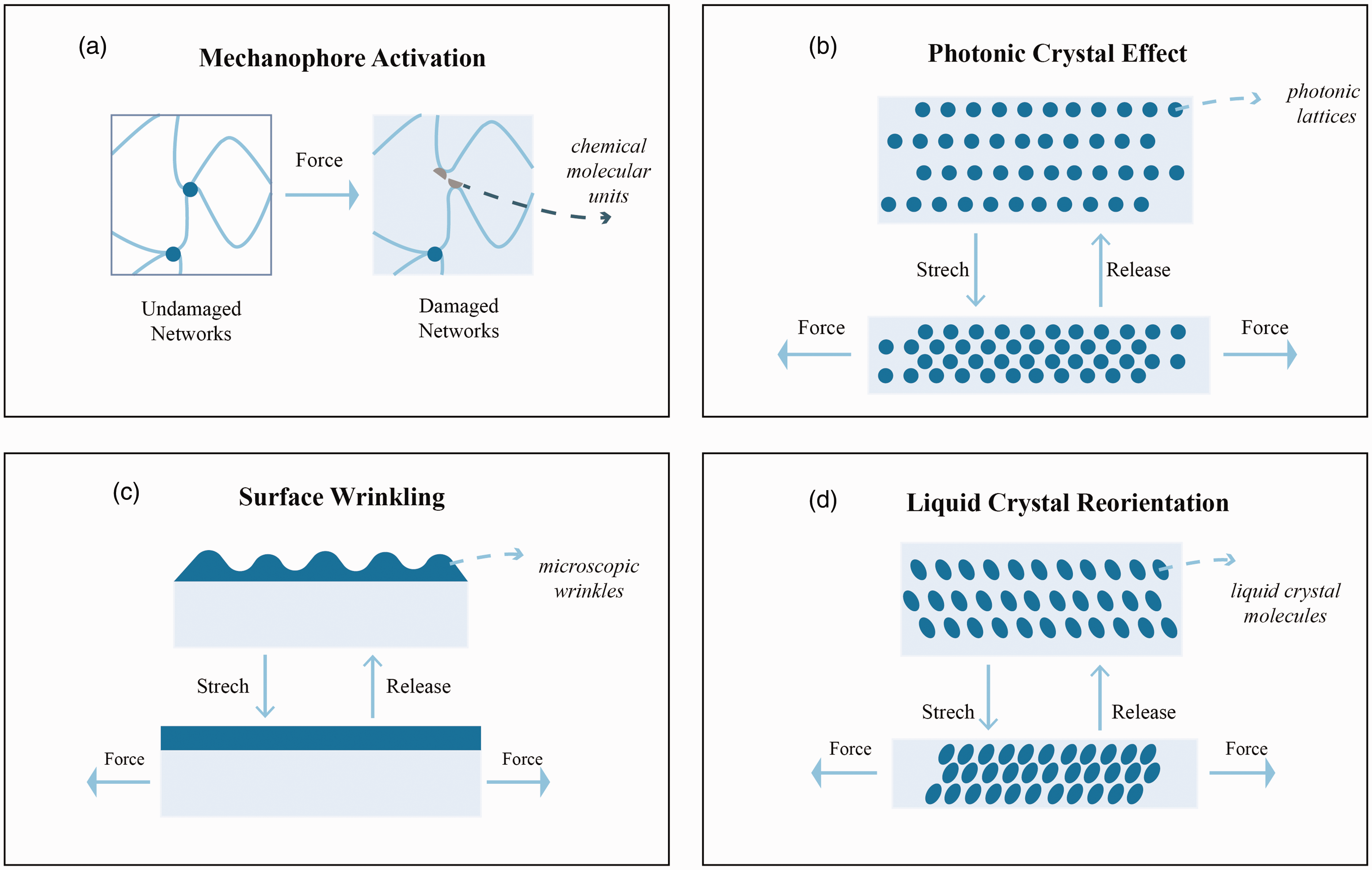
Schematic illustration of typical mechanochromic mechanisms: (a) mechanophore activation via force-induced bond breaking; (b) photonic crystal color change through lattice deformation; (c) surface wrinkling induced by mechanical stretching and (d) liquid crystal reorientation under applied strain.
Material platforms for mechanochromic applications
The practical application of mechanochromic technology in wearable textiles depends heavily on the underlying material system. 20 Mechanochromic materials are typically implemented in three main forms: polymer networks, liquid-crystal-based composites, and nanostructured photonic crystal systems. Each platform offers unique optical responsiveness, manufacturing compatibility, and application potential. The following section summarizes their characteristics and applicability to textile integration.34 –36
Polymer mechanochromic systems are widely adopted due to their flexibility, ease of processing, and compatibility with textile structures. 37 These systems typically integrate mechanochromic molecules (molecular units that undergo bond breakage or rearrangement under pressure) into an elastic or thermoplastic matrix. 38 The color change occurs through conformational changes in the polymer backbone or through phase separation effects that modulate light absorption. 36 They have potential applications for real-time pressure sensing, injury prevention clothing, and interactive clothing. 39 For example, polymer blends processed by melt spinning or electrospinning can enable scalable production of responsive fibers for smart sleeves, compression garments, and rehabilitation supports. 40
In addition, liquid-crystal-based mechanochromic materials exhibit color changes due to molecular redistribution of orientations under mechanical stress. When force is applied, the mesogens rearrange, changing birefringence and reflected wavelength. CLCEs represent an advanced class of mechanochromic materials that combine the ordered structure of liquid crystals with the elasticity of polymer networks. Their color-changing behavior arises from mechanical deformation-induced changes in the helical pitch of the cholesteric phase, leading to shifts in the selective reflection of light. 41 Due to their high sensitivity and fast optical response, CLCEs have been widely investigated for real-time biomechanical feedback in posture-monitoring garments and flexible displays. For example, CLCE-based fibers have been shown to visibly respond to spinal curvature during yoga poses, providing intuitive visual cues for body alignment correction. 42 Recent innovations also demonstrate CLCEs with programmable shape memory and self-healing capabilities, extending their utility in interactive textiles and soft robotic interfaces. 43 These materials react quickly and are highly sensitive, making them ideal for low-motion postural training, wearable optical indicators, and biomimetic smart skin. 44 Applications include yoga clothing that changes color as the curvature of the spine changes, or flexible sensors that track body symmetry during pilates or rehabilitation exercises. 41 Their reversible and adjustable properties make them suitable for real-time biomechanical feedback. 43 A demonstration of mechanochromic behavior in CLCEs integrated into an elastic band is shown in Figure 2.
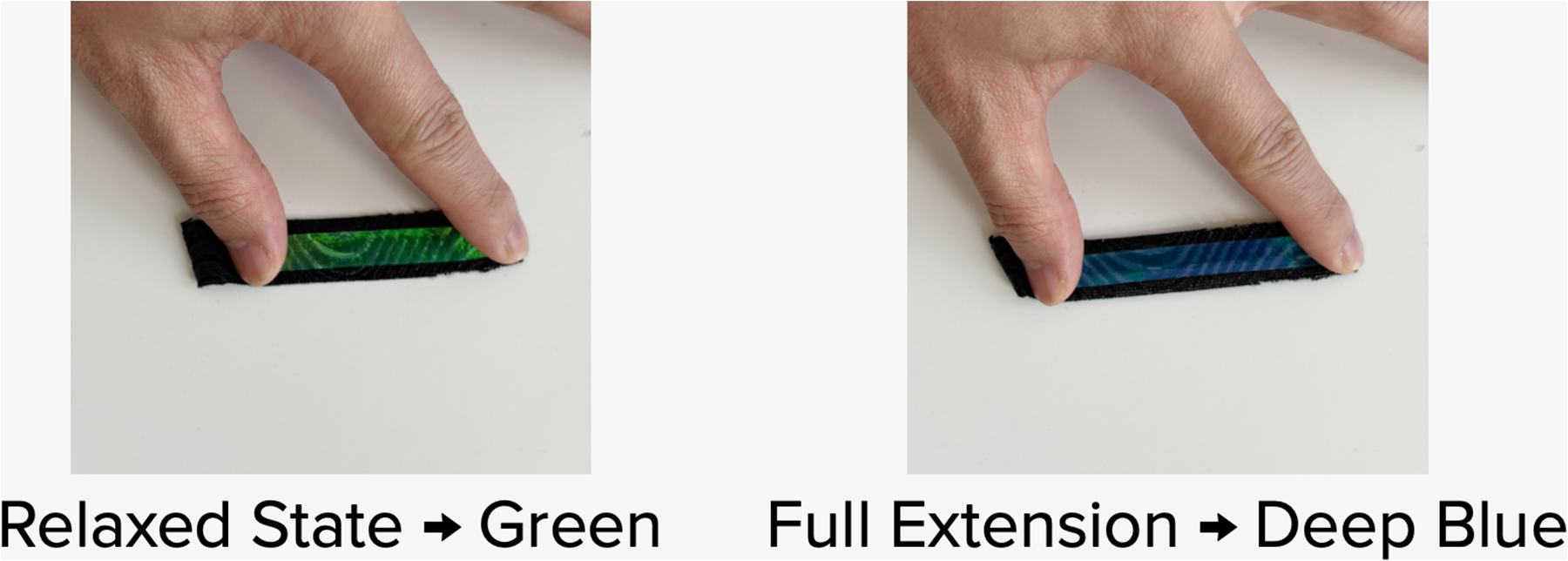
Demonstration of mechanochromic behavior in CLCEs integrated into an elastic band. The material shifts color from green in a relaxed state to deep blue under full extension, indicating its high strain sensitivity and reversible optical response.
Moreover, the photonic-crystal-based material systems rely on nanoscale periodic structures that diffract visible light. When mechanical strain changes the lattice spacing, the wavelength of the reflected light changes, resulting in an instantaneous and reversible color change. Unlike molecular mechanochromism, this mechanism does not require chemical transformation and is therefore stable and repeatable. 45 These materials are highly sensitive and require no external power source to operate, making them candidates for passive visual strain sensors, ground motion mats, and high-resolution feedback surfaces. 46 For example, a photoelastic coating on an exercise mat can reveal pressure imbalances during a plank or lunge. Their durability, vibrant color contrast and real-time responsiveness make them a promising solution for non-invasive posture correction. 47
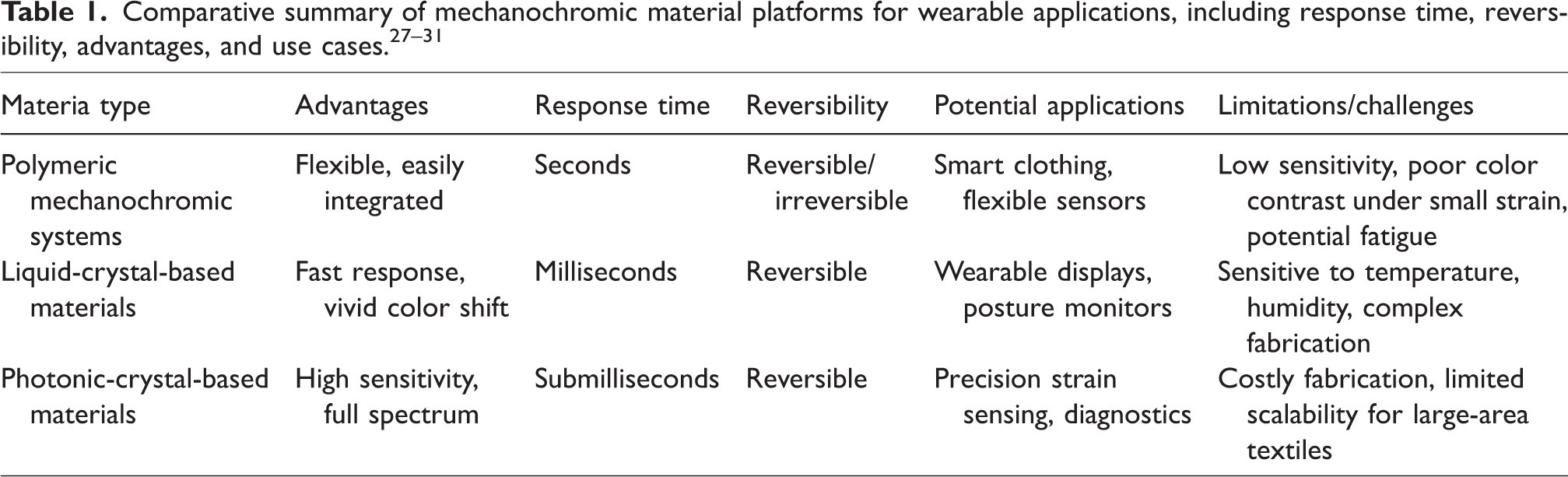
A comparative summary of mechanochromic material platforms for wearable applications is given in Table 1.
Determinants of mechanochromic response
The key factors influencing the mechanochromic performance of wearable textiles are shown in Figure 3. In order to design more durable mechanochromic materials capable of fulfilling designated applications, one must have knowledge of such factors and how they interact. Internal factors are represented by molecular architecture, polymer matrix, and how the distribution and density of mechanophores are. For instance, polymer networks incorporating diaryl bibenzothiophenonyl units have demonstrated highly stable mechanochromic responses, making them effective in stress-sensing and structural diagnostics applications.48,49 Moreover, polymer chains with diaryl bibenzothiophenonyl segments have been proven to possess strong and reproducible mechanochromic properties, which makes them especially suitable for use as optical sensors of damage or strain. 50 The bulk properties of elasticity, mechanical toughness, and optical properties of a mechanochromic material are mostly defined by their constituent components' chemical structure and their respective relationships in terms of binding.
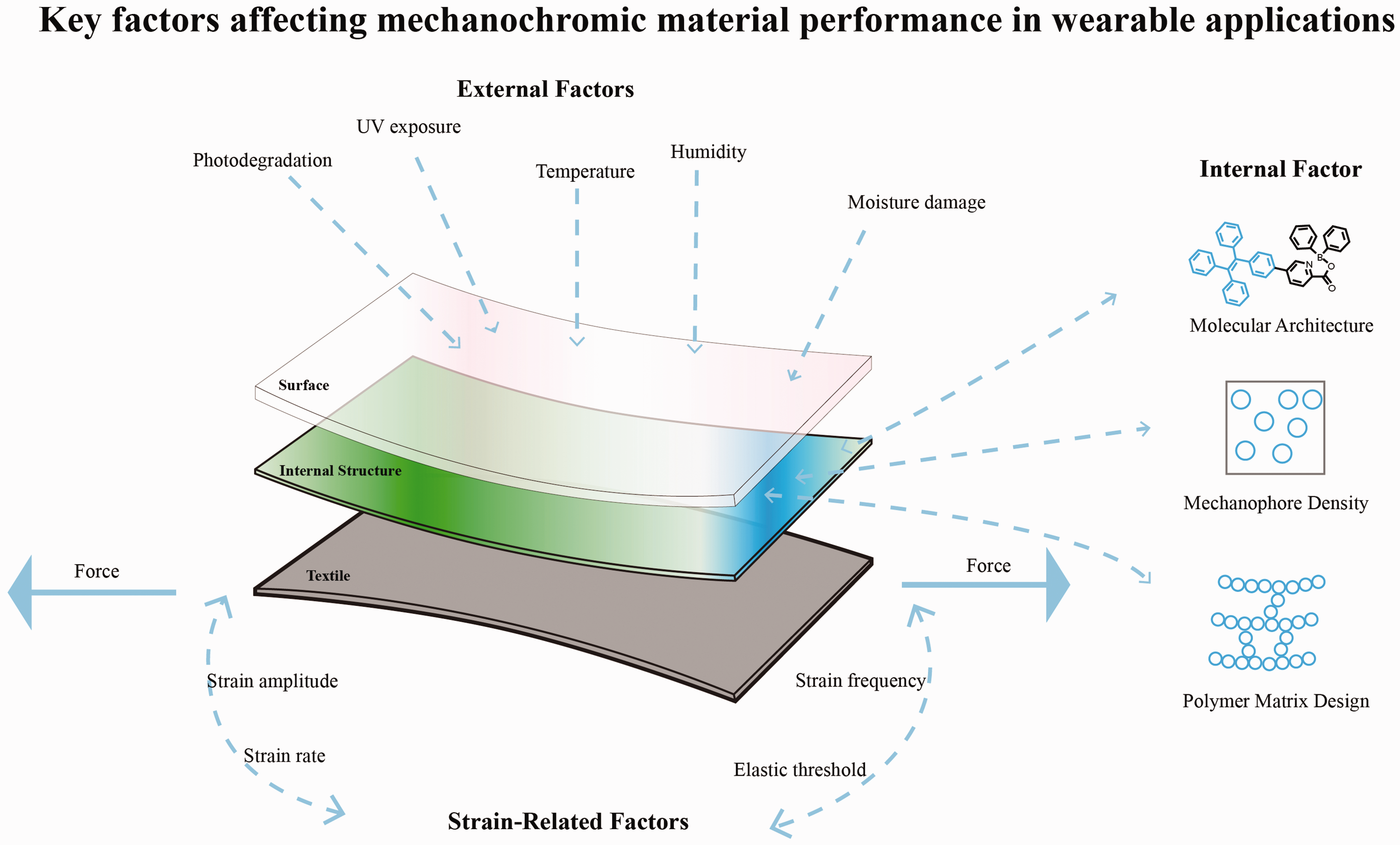
Schematic illustration of key factors influencing the mechanochromic performance of wearable textiles. These include internal factors such as molecular alignment and mechanophore density, external factors such as UV exposure and humidity, and strain-related factors including amplitude and frequency.
External factors such as ultraviolet (UV) radiation, temperature fluctuations, and humidity can significantly degrade the mechanochromic response over time. For instance, mechanochromic hydrogels used in wearable biosensors are highly susceptible to moisture uptake, which alters their mechanical and optical behavior. 51 Similarly, UV exposure can lead to photodegradation of chromogenic units, weakening or eliminating the visual response, and high humidity can amplify this damage. 52 To address these challenges, UV-resistant coatings and environmental shielding layers are being developed to improve long-term durability in outdoor or high-moisture applications. 53
In addition, strain-related parameters such as the magnitude, rate, and frequency of applied stress also affect the optical response. Research on photonic nanostructures confirms a strong correlation between strain amplitude and the intensity or wavelength of color change. 54 In liquid crystal elastomers and cellulose nanocrystals, the reversibility of mechanochromism depends on the material’s strain threshold and elasticity.20,55
Overall, to obtain optimal mechanochromic performance, there is a need for an even balance of a design strategy with considerations of mechanical flexibility, durability in the environment, and optical output stability. Such understanding is important in optimizing mechanochromic devices in prospective applications in biomedical diagnosis, smart textiles, as well as anti-counterfeit technology.
Integration techniques into textiles
Importantly, effective incorporation of mechanochromic materials in textiles involves a judicious selection of fabrication techniques to achieve sensitivity, durability, comfort, and feasible production. Some typical fabrication methods for mechanochromic fibers are illustrated in Figure 4.
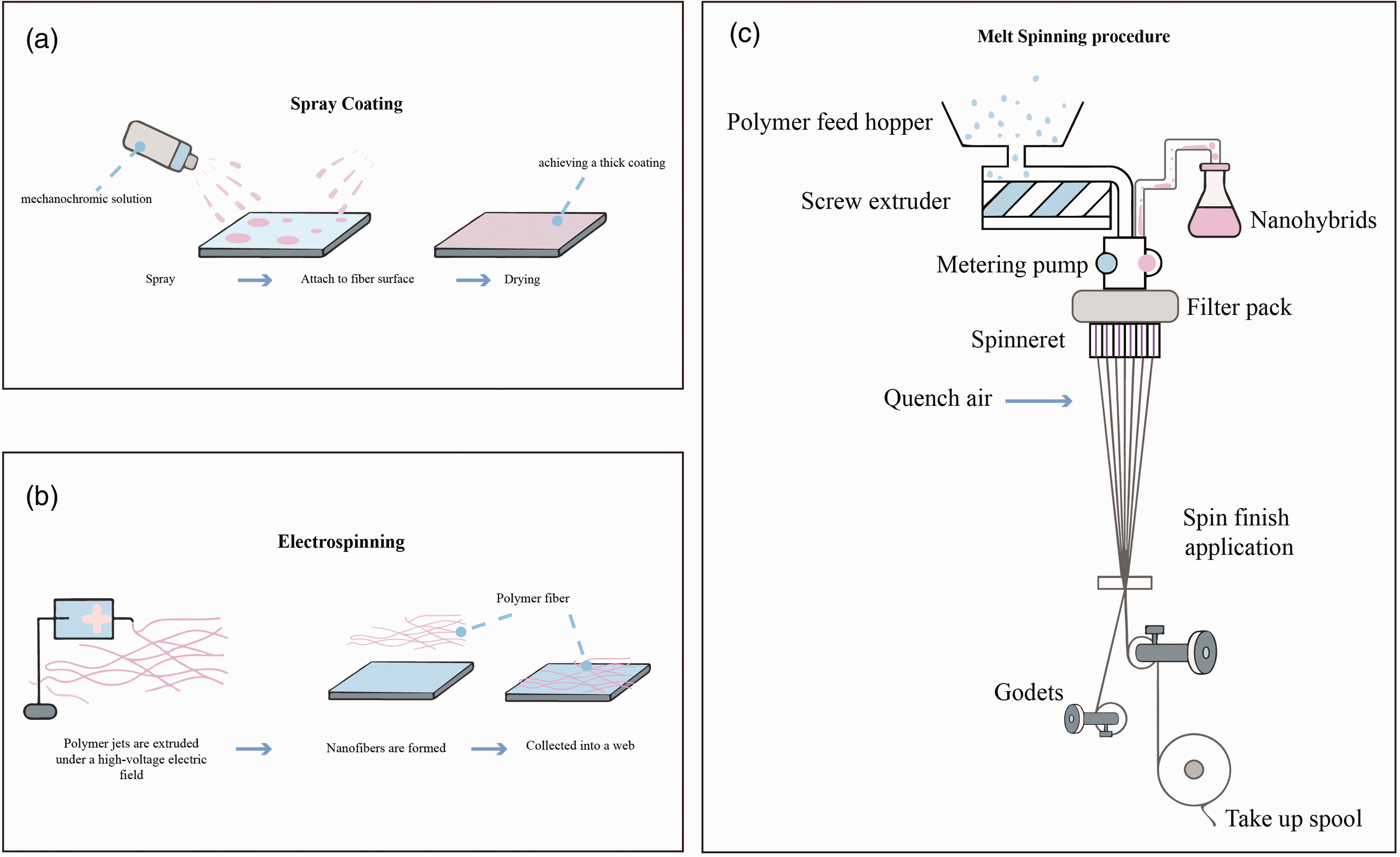
Schematic illustration of typical fabrication methods for mechanochromic fibers: (a) spray coating of mechanochromic materials onto textiles, followed by drying; (b) electrospinning of polymer jets under high voltage to form nanofibrous webs and (c) melt spinning incorporating mechanochromic nanohybrids into thermoplastic fibers.
Surface coating methods
Surface coating is among the most straightforward and simplest methods of introducing mechanochromic behavior to textile surfaces. It makes possible rapid applications of color-switchable coatings with minimal disruption to the substrate structure. The coating method is a straightforward way of introducing mechanochromic components to textiles, particularly useful for use in applications where there is need for instant visual response with minimal loss of flexibility and softness. The coating is typically nondestructive to whatever is below. In fact, longevity of coated material is based on coating adhesion to substrate, washfastness, abrasion fastness, and again exposure to elements to a large degree. The combination of coating techniques is wide, and every technique presents advantages, with good performance obtainable with every alternative.
Spray coating has proved to be an immensely scalable and low-cost mass production technique. Research indicates that the durability of spray-coated fabrics is contingent upon the adhesion of the coating to the textile fibers. 56 Such processing involves interspersing the textile with a fine spray of the mechanochromic solution, achieving a thick coating but nonetheless a uniform layer. However, a major drawback of this method lies in the inherent surface roughness and absorbency of woven textiles, which makes it difficult to form continuous and uniform thin films, potentially leading to poor device performance or uneven functional properties. 57
Dip coating technique is especially appropriate for reversible mechanochromic materials, including fluorescent polymers and photochromic dyes, which react to external stimuli such as light or mechanical stress. 58 To proceed, the sample is immersed in a solution containing mechanochromic material, assuring homogeneous dispersion of the substance over the internal fiber structure. Nonetheless, the immersion method may result in significant material loss or even substrate degradation, especially for thin or delicate fabrics, limiting its compatibility with all textile types. 59 Furthermore, sol-gel research suggests this technique can improve abrasion resistance and UV protection, making it a superior option for durable smart textiles. 60 Sol-gel coatings, which are obtained through the process of embedding mechanochromic nanoparticles in a gel matrix and then applying it to the fabric, yield a strong and reversible finish that can be washed out. 60 Nevertheless, sol-gel coatings can sometimes reduce the flexibility or breathability of fabrics, especially when high concentrations or multiple layers are applied. 61
These coating methods are best suited for short-term applications or rapid prototyping, but may require protective treatments for long-term wearability.
Spinning approaches
Whereas coating is providing a solution at the surface level, spin techniques provide an opportunity for mechanochromic elements to be integrated to become part of the structure of the fiber. With various spin techniques being used, one can have fine control over the fiber orientation to achieve high-quality mechanical or structure responsive textiles. Modifying the fibers that are constituents or carrying out the surface coating in spin, stabilizing as well as enhancing the mechanochromic compounds are facilitated for extended durations. The principal types of spin fibers may be classified as follows.
Electrospinning, studies have shown that electrospun fibers have high surface area and sensitivity, making them particularly suitable for wearable strain sensors and responsive textiles. 62 The given method is based on the generation of (high-voltage) electric fields to produce nanofibers. However, one drawback of this method is the potential for inhomogeneity in fiber distribution or thickness during electrospinning, which can lead to inconsistent sensor performance across batches. 63
In addition, the melt spinning procedure incorporates mechanochromic nanoparticles or dyes into thermoplastic polymer fibers during the extrusion process. Melt spinning research has effectively incorporated ZnO/Ag@SiO2 nanohybrids into PET fibers, preserving excellent washability and durability, rendering them suitable for functional textiles and industrial applications. 64 Nonetheless, one limitation of this method is the potential difficulty in achieving uniform nanoparticle dispersion throughout the polymer matrix, which can lead to inconsistent functional performance across the fibers. 65 Moreover, solution spinning technique has been employed extensively for thermosensitive textiles, facilitating the incorporation of stimuli-responsive components into the fiber composition. 66 The production process typically entails incorporating a mechanochromic dye into a polymer solution, resulting in fiber formation via phase separation and coagulation. 67 Nevertheless, one drawback of solution spinning is the use of large volumes of organic solvents or coagulants, which raises concerns about environmental impact and scalability in industrial settings. 68
Collectively, spinning-based integration offers excellent mechanical adhesion and higher durability, which is suitable for high-performance wearable use, but with higher fabrication difficulty.
Polymer blending techniques
In addition to structural spinning, polymer blending represents an avenue to completely embedded color-change behavior throughout textile substrates (Figure 5). Such technology offers smart fabrics' design with the ability to display integrated mechanochromic properties. The properties react to mechanical stimulus with minimal energy loss as well as high energy efficiency. Embedding mechanochromic components in textile's threads during weaving allows for permanent reversible change of color in contrast to the yarn type without sacrificing the physical properties of threads. Traditional technologies being used in blending include the following.
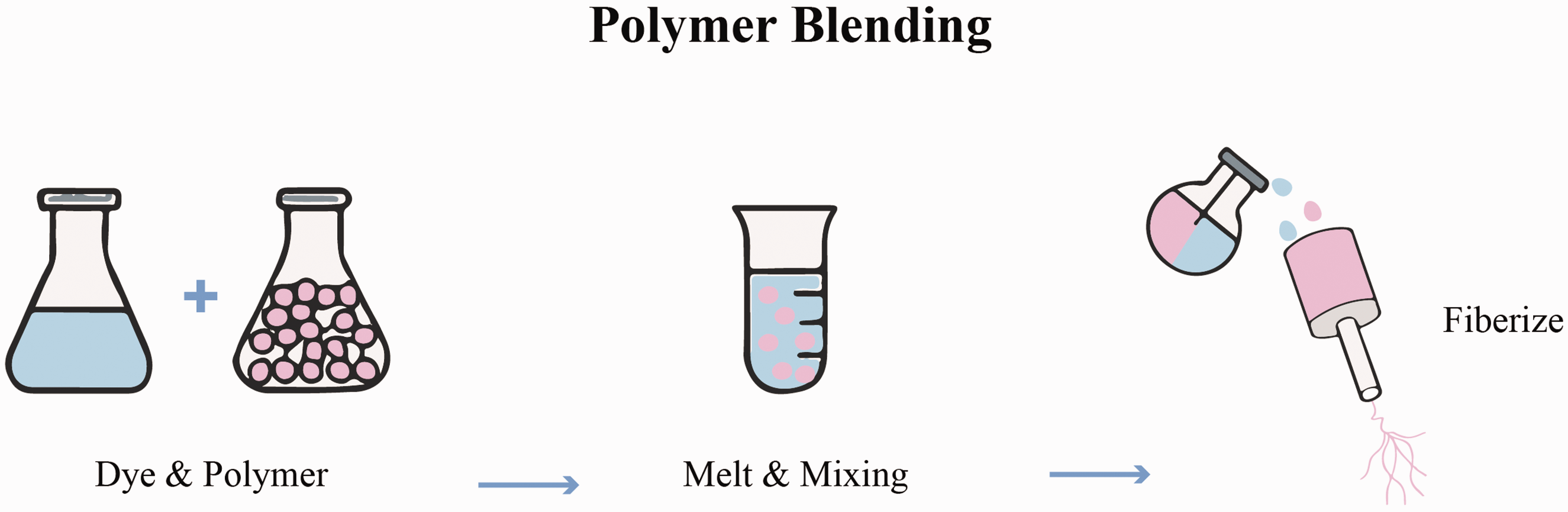
Schematic representation of the polymer blending process for mechanochromic fiber fabrication. Dye molecules and polymer pellets are first mixed and melted to form a homogeneous solution, which is then extruded and fiberized into functional mechanochromic yarns.
Polymer blending studies have demonstrated that blending mechanochromic molecules into polymer matrices can produce highly sensitive, luminescent polymer blends, where the color response correlates with mechanical stress. This method takes place when mechanochromic dyes or nanoparticles are physically mixed into (e.g., TPU, PCL, PLA) matrices before filament spinning. Because of mechanical stretching or mechanical deformation, the mechanochromic fibers will therefore change from one color to another.69,70 However, a notable drawback of this method is the potential for dye aggregation or phase separation within the matrix, which may diminish the uniformity and reliability of the mechanochromic response. 71
Fiber-level blending is an industrial method that directly incorporates mechanochromic dyes or nanoparticles into natural (e.g., cotton) or synthetic (e.g., PET) fibers prior to spinning. This approach has been shown to significantly enhance the washability, durability, and structural integrity of functional textiles, while maintaining their mechanical performance.72,73 Nonetheless, one challenge of this technique lies in achieving uniform nanoparticle distribution within the fiber core, which may affect color consistency and functional performance across production batches. 73
Therefore, polymer blending offers a balanced trade-off between responsiveness, compatibility, and scalability, though material miscibility and dye dispersion must be carefully managed.
A comparison of textile integration methods for mechanochromic materials is given in Table 2.
Comparison of textile integration methods for mechanochromic materials based on structural depth, durability, flexibility, and application suitability

Choosing materials and case studies
Choosing the right mechanochromic materials is critical to performance, wearer comfort, and lifespan of smart textiles. Such materials vary in their mechanical properties, optical performance, durability, and process compatibility. Taken together, they can be classified in three general categories as follows.
Inorganic mechanochromic materials such as TiO2 and ZnO compounds offer exceptional UV resistance, thermal stability, and chemical durability, making them ideal for industrial fabrics and protective applications.74,75 Polymer-based mechanochromic materials exhibit excellent flexibility and are well-suited for wearable garments due to their softness and reversible color change under strain. Fluorescent elastomers and responsive polymers such as TPU-based blends have demonstrated strong compatibility with sportswear and interactive textiles.76,77
In addition, composite materials combine the advantages of two or more systems, leveraging hydrogen bonding between mechanophores and polymer backbones to enhance mechanical strength and optical reliability. These are particularly valuable in high-durability applications such as melt-spun or wet-spun smart fibers.78,79
A growing body of literature has demonstrated the successful integration of these materials into textile fibers through various fabrication techniques. Specifically, sol-gel coated mechanochromic fabrics embedded with ZnO nanoparticles have demonstrated excellent abrasion resistance and wash-fastness, validating their use in long-lasting smart clothing.80,81 In addition, melt-spun PET fibers incorporating ZnO/Ag@SiO2 nanohybrids have achieved over 95% color and functional retention after 50 washing cycles, showcasing their potential for industrial-scale wearable sensor applications. 73 Moreover, electrospun mechanochromic fibers with fluorescent dye loading demonstrated highly sensitive color changes under low-strain conditions, making them ideal for posture monitoring in yoga and rehabilitation garments. 82
Material selection significantly affects the optical response, mechanical toughness, and extended functionality of mechanochromic woven or knitted fabrics. Case studies demonstrate the viability of coating, spinning, and blending platforms to combine these materials, paving the way for their commercialization.
Application prospects of mechanochromic textiles in postural and joint-control exercises monitoring
The features of mechanochromic intelligent textiles render them highly adaptable to posture monitoring in low-intensity sport applications. This section will explore the specific characteristics of posture and joint control training, summarize the current monitoring needs, and discuss the conceptual application framework of mechanochromic materials in motion guidance and posture correction.
Characteristics of postural and joint-control exercises postural activities and monitoring needs
Postural and joint-control exercises are a type of specialized training that improves body stability, joint mobility, and neuromuscular coordination through refined movement control. 83 The typical feature of this type of training is to improve movement accuracy and body control ability through static and dynamic posture control, joint micromovement control, and balance maintenance under low-intensity conditions. 6
Different from traditional flexibility training or simple stretching exercises, posture and joint control training not only focuses on the range of motion, but also focuses on key elements such as joint path, alignment, and stability in slow and controlled movements.83,84 A large number of studies have shown that this type of training is widely used in health promotion, sports rehabilitation, balance training for the elderly, sports injury prevention, and other fields, and can effectively improve posture control ability, reduce the risk of joint injury, correct compensatory movements, and strengthen proprioceptive feedback.6,84
However, a critical challenge lies in ensuring high precision during execution. Even minor deviations in joint angles (e.g., >5° knee valgus during lunges) can compromise training efficacy or lead to injury.85,86 To address this, core monitoring requirements include: real-time posture correction feedback to guide the body to adjust and avoid compensatory movements87,88; accurate detection of joint displacement or strain to support safe range of motion control88,89; and providing intuitive and easy-to-use feedback so that users can perform self-correction without professional assistance.89,90 Particularly important is conventional monitoring systems, such as electronic wearables, IMUs, or AI-driven platforms, which face limitations including feedback latency, high power consumption, and complex data processing demands. 91
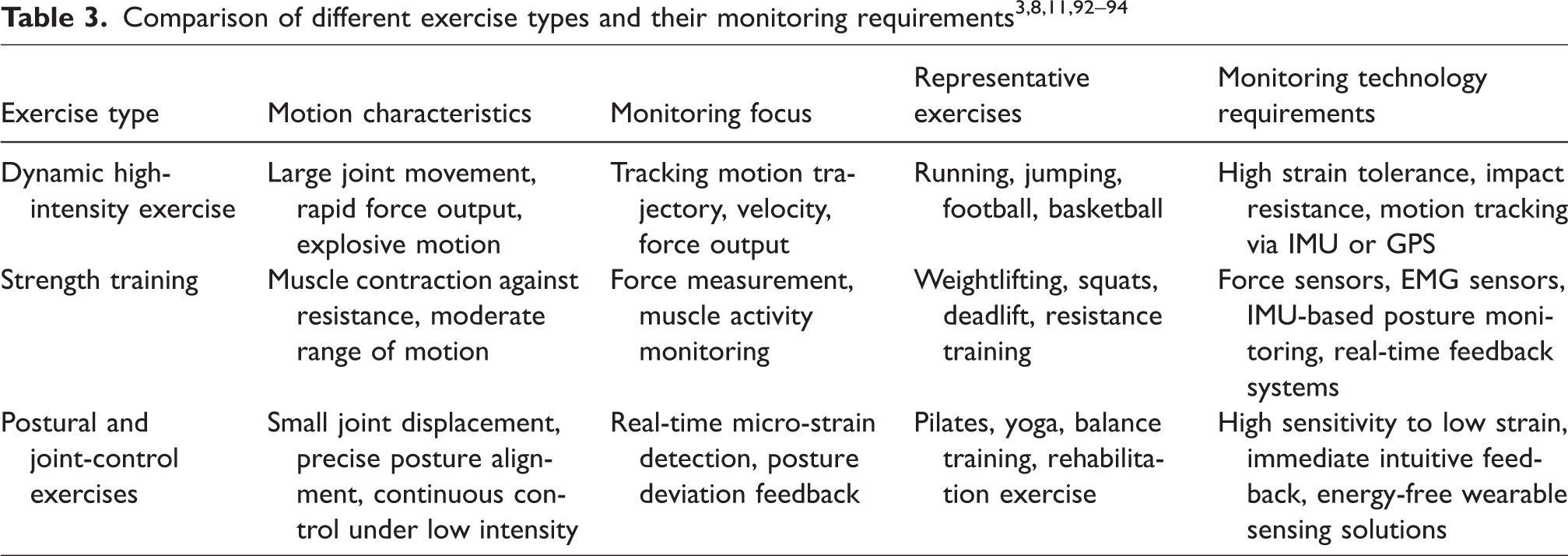
In order clearly to present the distinctive features and monitoring demands of postural and joint-control exercises, Table 3 provides a comparison of the motion features, monitoring targets, example exercises, and technical demands for various exercise categories. This comparative table is synthesized and modified from recent publications with reference to which features of mechanochromic materials make them particularly suitable for posture monitoring under reduced-strain environments.3,8,11,92 –94
Preliminary experimental evidence for mechanochromic textiles in posture monitoring scenarios
To supplement the literature discussion in the literature and to assess practical applicability of mechanochromic textiles to exercises in posture and joint control, a pre-experiment material response analysis with CLCE-based samples was carried out.
A mechanochromic textile prototype was created by depositing CLCE films onto elastic fabric substrates. The prototype was tested on body locations such as finger joints in order to mimic hand joint movement postures (e.g., flexure, extension, holding). The visual response of the material under varying mechanical deformation was examined by repeated manual movements (Figure 6).
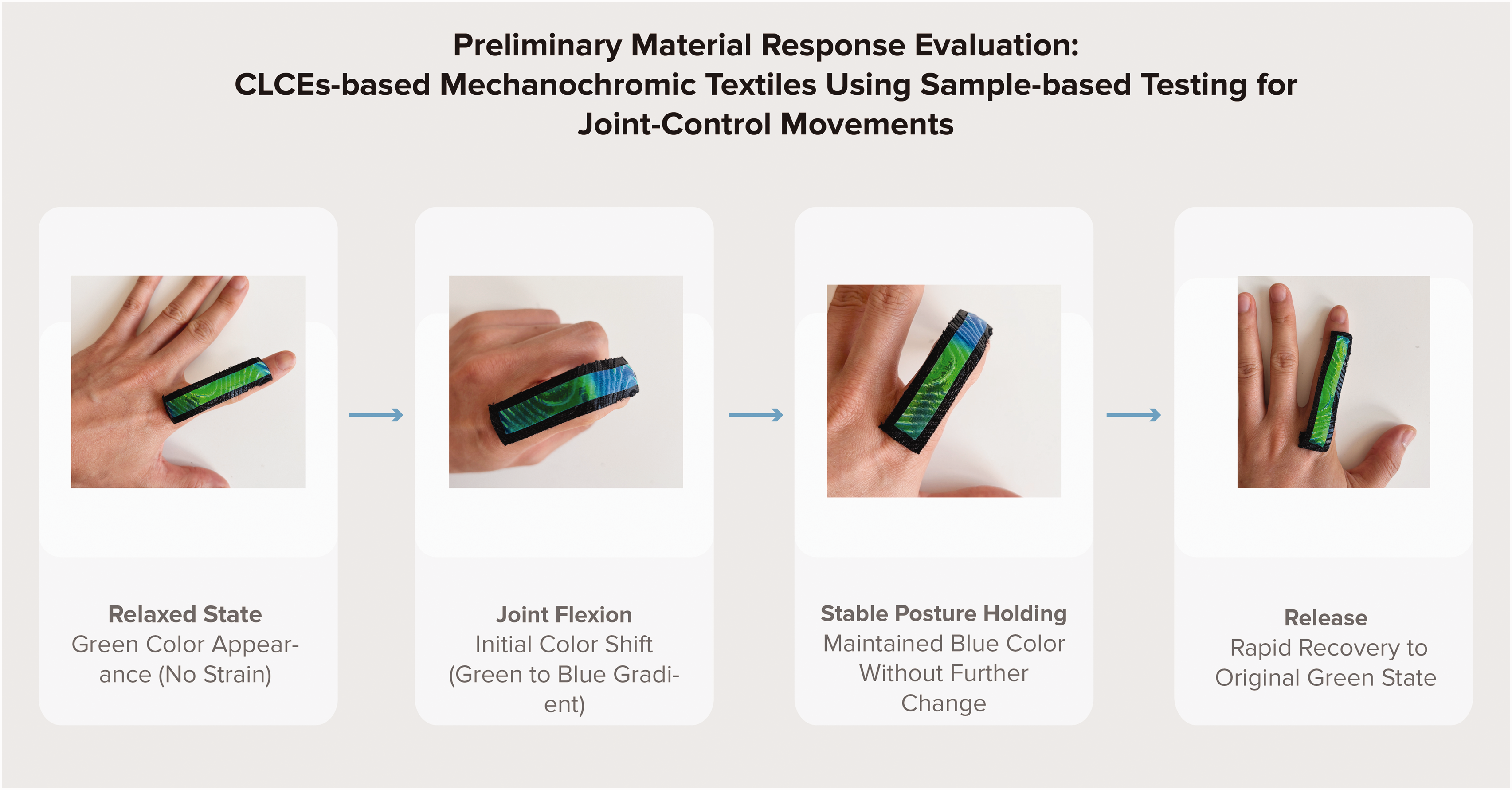
Preliminary performance properties were tested by manual flexion–extension of CLCEs mechanochromic samples. The observations show rapid coloring response, where visual indication remains stable under static hold, with reversible performance, which is indicative of applicability for low-strain posture monitoring.
This test procedure included simultaneous observation in real-time and video recording to record the color change behavior. The prototype showed fast color changes from green (relaxed state) to blue (under strain) with good visualization under joint bending motions. In addition, the color stayed static when the joint is placed in a fixed state, which indicated good strain-holding property. The material test procedure integrated quality observation with simple quantitative analysis to preliminarily verify the performance of the color change response under joint-control movement. The test was performed manually by repetitive finger joint flexion–extension motions, mimicking exercises under low-strain posture control.
Experimental testing emphasized five essential performance metrics: response time, holding color stability, recovery speed, visual contrast, and reproducibility (Table 4). The response time to change in visible color from green to blue under 1 second supports real-time feedback. In maintaining static posture for ≥30 seconds, the mechanochromic color is remarkably stable without fading, which suggests suitability for posture monitoring.
Summary of material performance indicators and applications implication
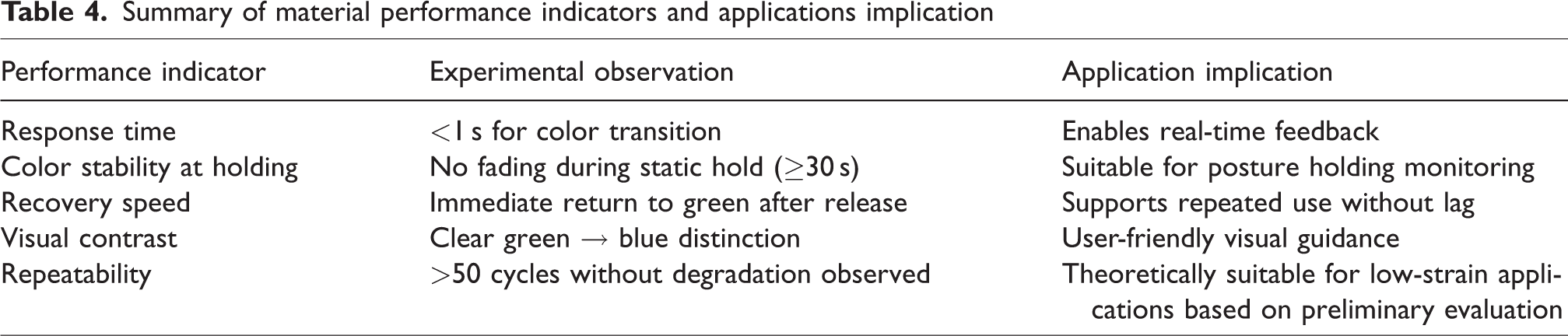
Recovery performance was tested by relieving the applied strain, with the material registering an instant return to its original green state, allowing for repeated use without noticeable lag. In addition, distinct color contrast from green (relaxed state) to blue (strained state) was always observed, with intuitive visual clues for users. For repeatability, more than 50 movement cycles were maintained by the material without performance compromise.
Key experimental results are presented in Table 4, including response time, color stability, speed of restoration, visual contrast, and reproducibility. The outcomes show that the present material prototype is theoretically appropriate for posture monitoring applications with reduced strain based on initial trials. Note that in this work, test results are constructed at the material level with simple demonstrations, which are intended to present concept evidence but not extensive experimental evidence.
Design considerations and conceptual frameworks
Effective design of mechanochromic smart textiles for postural and joint-control exercises involves precise consideration of material properties, placement strategy, visual clarity, and user comfort. CLCEs were specifically selected in this study owing to their rapid, reversible, and highly sensitive mechanochromic responses, particularly suitable for low-strain detection and real-time visual feedback.95,96 Previous studies have demonstrated that CLCEs possess excellent fatigue resistance, enabling repeated, consistent feedback without performance degradation, 97 which aligns closely with our preliminary experimental observations reported previously.
Conceptual examples for demonstration of possible uses of CLCE-based mechanochromic textiles for joint-specific postural monitoring included one for knee joint alignment and another for wrist joint control (Figures 7(a)). The knee joint conceptual design (Figure 7(b)) depicts material placement over the anterior knee, taking advantage of the area's high strain in response to flexion–extension movements. Such design is supported by biomechanical evidence demonstrating anterior knee strain as a reliable indicator of posture deviation during rehabilitation, yoga, and balance training.87,98
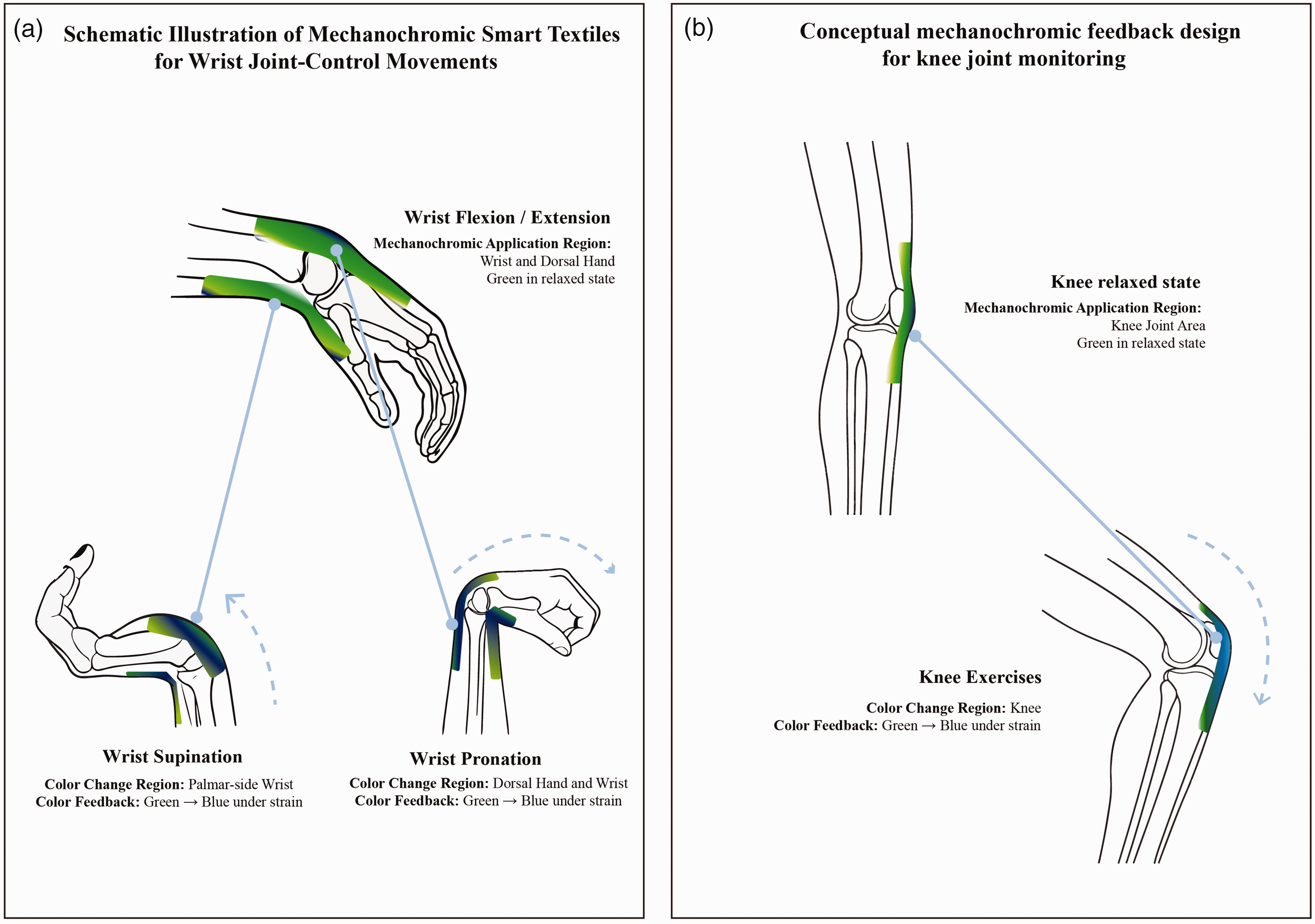
Schematic illustration of mechanochromic textile applications for joint motion monitoring. (a) Application to the wrist: mechanochromic materials placed on the dorsal and palmar sides of the wrist change color from green (relaxed) to blue (under strain) during flexion, extension, pronation, and supination and (b) Application to the knee: a mechanochromic patch over the anterior knee shifts from green (resting) to blue (under strain) during flexion–extension movements.
The wrist joint monitoring concept (Figure 7) strategically places the mechanochromic materials across dorsal and palmar aspects to visualize strain during flexion, extension, pronation, and supination movements. Accurate wrist posture monitoring is crucial as improper alignment and repetitive strain contribute significantly to wrist-related disorders, making immediate visual feedback beneficial for preventive care and therapeutic exercises.99,100
Both conceptual frameworks share core design principles rooted in the inherent advantages of CLCE materials, most notably the following.
Rapid visual feedback: The initial material experimental results verified an evident color transition in about 1 second, important for real-time posture correction. High sensitivity to low strain: CLCEs material exhibits clear visual responses to even minimal joint motions, addressing the particular needs of joint-control training applications where accuracy and incremental adjustments are paramount.95,97 Reversibility and stability: The fast reversible return to original shape upon release from loading, as well as stability in static poses, were experimentally confirmed, allowing for repeated, reliable use without deterioration in performance. Nonelectrical and energy-independent operation: CLCE-based mechanochromic materials are by nature nonelectrical and energy-independent, which suits wearable applications based on simplicity, reduced weight, and improved wearer comfort.
3
These shared features attest to the generalizability of the discussed conceptual frameworks in such a way that highly similar design principles can be easily applied to other important regions such as the spine, ankle, or shoulder.
While posture monitoring mechanochromic textiles are still in their concept phase, their applicability and functionality are clearly endorsed by breakthroughs in wearable sensing technologies targeted at sport, rehabilitation, and health monitoring. Relevant studies in surrounding fields offer useful design clues and tangible evidence for posture monitoring systems.
In particular, one notable case in spinal posture correction created an intelligent textile-based soft exosuit for spinal support, with stretchable sensors and textile actuators to track and assist in spinal posture in everyday life and rehabilitation. 101 Although appropriately targeting trunk over limb joint space, the system does address an important element of postural and joint-control training in general, which is to keep spinal segments in neutral in low-level, static, or semidynamic situations. Notable in this case is how closely this aligns with demands of core stability exercises and position-controlled body placement. The research also justifies providing real-time feedback for correction of minimal deviation from posture, something that mechanochromic fabrics would be able to provide through intuitive, nonintrusive visual indication, especially in applications of long duration or where supervision is absent.
In addition, wearable stretchable nanocomposite sensors have also been developed to track joint flexion–extension motions and aid in physiotherapy. The sensors work by using resistance change mechanisms to give instant responses with an average response delay of about 1 second. 102 The systems give instant responses regarding joint angles based on resistance change methods, which is important for motion pattern correction and enhancing joint stabilization during prescribed exercise sessions. Tracking fine joint movement, in particular, measuring specific flexion or extension angles or keeping posture in range, demands clear, localized, and prompt responses for use in adjusting motion in real-time. This functionality requirement is matched closely by strain-responsive color-change behavior of mechanochromic textiles, allowing them to directly display joint displacement or angular deviation in form of dynamic color patterns. Such material responses present an intuitive, easy way to help users identify mistaken joint motion tracking or excessive strain under rehabilitation or posture training.
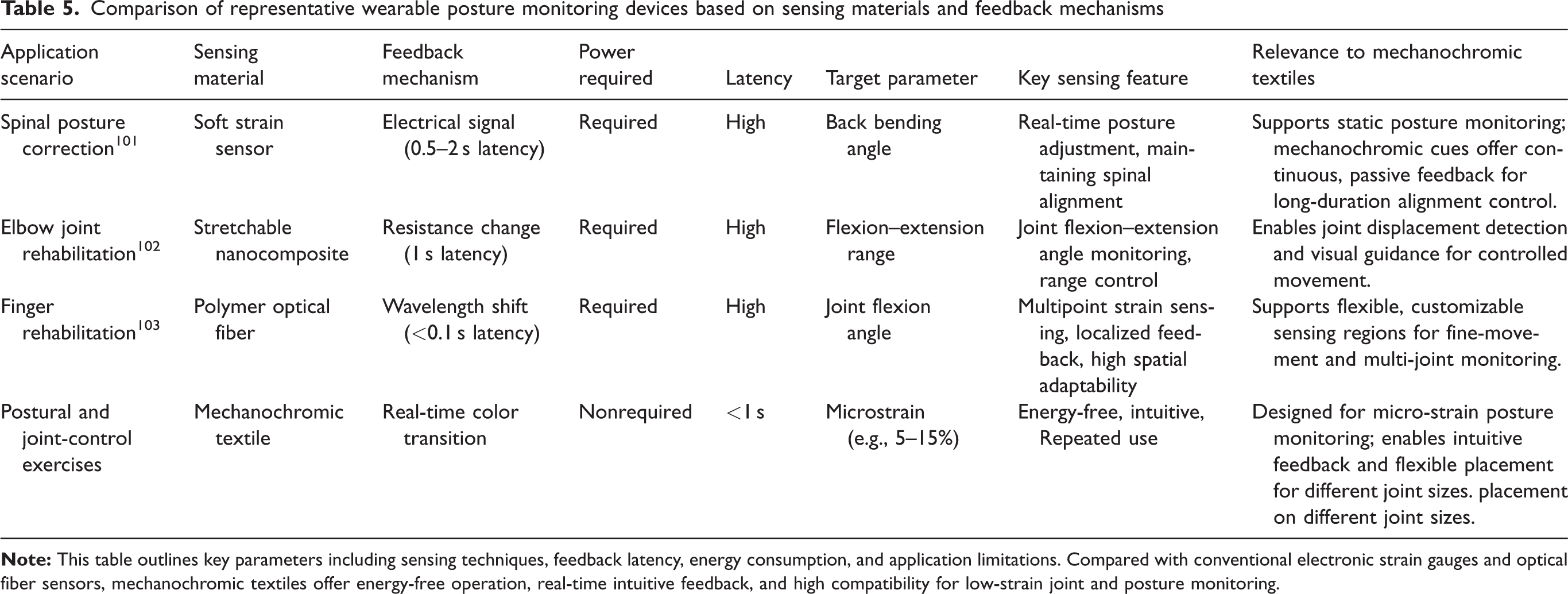
In addition, a study in finger rehabilitation presented an extensive review of wearable optical fiber sensors used in human posture monitoring and motion detection. Optical fiber sensors allow for multi-point strain sensing as well as high-precision movement monitoring of curvatures in the spine and bending in limbs. The systems provide useful information in terms of material design and sensor placement strategies for wearable posture monitoring, even though they are still dependent upon signal processing units and power supply. The systems emphasize distributed sensing and spatially-resolved feedback for accurate posture guidance in joint-control exercises as well as rehabilitation. 103 The sensing strategy offers useful information for mechanochromic textile design, in which color-change materials are patterned or segmented in space along specific body regions to map strain distribution and joint movement. Furthermore, mechanochromic materials have good cuttability as well as geometrical adaptability, through which their length and width can be adjusted to fit various joint sizes and movement ranges. This adaptability is highly compatible with the usage features of optical fiber sensors, which are highly sensitive and suitable for compact or spatially confined regions. 103 Such material flexibility makes mechanochromic textiles capable of supporting localized posture monitoring and fine-movement control even in confined wearable spaces.Collectively, these cross-domain research results identify the increased necessity for wearable sensing platforms providing real-time, intuitive, and power-saving feedback channels. The mechanochromic fiber strategy put forward in this paper shares this technological direction, promising an alternative solution to posture and joint-control exercises, especially in low-strain applications. A brief comparison of characteristic wearable posture monitoring platforms is presented in Table 5.
Comparison of representative wearable posture monitoring devices based on sensing materials and feedback mechanisms
Current challenges and future directions
Materials challenges
In addition to remarkable advances in the creation of mechanochromic textiles, their actual implementation in posture-monitoring applications remains anchored in several main challenges. Most of these are categorized under five groups: material-related problems with regard to durability, sensitivity, and ecological stability; fabrication challenges involving nanoparticle dispersion, reproducibility, and scalability; washfastness as well as mechanical resistance under cyclical use; cost limitations with regard to high-precision fabrication processes; and user-related challenges such as interpreting sensor responses, accessibility, and requiring training for use. Overcoming these multifaceted challenges will be important to propel mechanochromic textiles toward more mature and integrated implementation in posture-monitoring wearable applications.
At the material level, durability and sensitivity remain fundamental bottlenecks. Polymeric mechanochromic systems, including liquid crystal elastomers and hydrogels, are often susceptible to environmental factors such as humidity, UV radiation, temperature variations, and mechanical fatigue.43,104 –106 Their optical response may degrade over time or under repeated strain cycling, reducing feedback accuracy and long-term functionality. For instance, hydrophilic polymers such as hydrogels tend to swell in high-humidity environments, leading to delayed color recovery and compromised signal reliability. 104 To counteract these consequences, hydrophobic TiO2 nanoparticle coatings have since been created, which improve sweat and moisture resistance under high-exertion exercise. Nevertheless, TiO2-based hydrophobic coatings' performance in actual wearable use is still largely untested, with existing studies mostly confined to laboratory-scale studies through which they lack thorough long-term performance evaluation. 104
In addition, thermochromic interferences caused by temperature fluctuations, such as unintended color changes observed in Ni(II) organometallic nanofiber membranes at elevated temperatures further highlight the need for phase-transition-resistant polymers and nanocomposite reinforcements to improve thermal stability.24,107 However, most phase-transition-resistant materials reported so far remain at the proof-of-concept stage, with limited evidence supporting their robustness under dynamic and harsh environmental conditions.
Moreover, achieving sufficient sensitivity to minor strains, a key requirement for posture correction in rehabilitation or sports, remains challenging. Existing mechanochromic textiles often exhibit limited color contrast and poor responsiveness to subtle deformations, particularly under strains lower than 5%. 108 In addition, uniform integration of mechanoresponsive components into natural fibers poses further technical barriers due to poor interfacial compatibility, phase separation, and aggregation effects. 109
From a fabrication perspective, scaling up the production of mechanochromic textiles from laboratory prototypes to industrial manufacturing is impeded by processing complexities. Conventional coating techniques often fail to produce uniform and stable color-changing layers on flexible and porous textile substrates. Meanwhile, spinning or weaving processes involving mechanochromic components demand precise control over nanoparticle dispersion and polymer matrix homogeneity to ensure reproducibility and consistent performance. For instance, melt-spun fibers incorporating ZnO/Ag@SiO2 nanohybrids often suffer from nonuniform distribution, necessitating optimized process parameters. 73 Nevertheless, optimized melt-spun ZnO/Ag@SiO2 hybrid fibers have demonstrated excellent durability, maintaining over 95% of their mechanochromic functionality after 50 washing cycles, underscoring their potential for industrial-scale sportswear applications. 73 Emerging scalable fabrication strategies, such as roll-to-roll (R2R) processing for photonic crystal films and 3D printing for spatially-resolved strain feedback designs, also hold significant promise for the mass production of customized smart textiles.110,111
Another pressing issue relates to washability and mechanical robustness. Repeated laundering or abrasion can diminish mechanochromic functionality, especially when the active components are insufficiently bonded to the textile matrix. From a durability perspective, self-healing mechanochromic polymers, such as materials based on diarylbenzothiophene units, have shown promise in autonomously repairing microscopic damage, thereby extending operational lifespan and maintaining optical performance under repeated mechanical stress. 112
Cost-efficiency is an additional concern, as many of the current mechanochromic systems rely on high-precision and resource-intensive fabrication techniques, such as nanoimprinting, photonic crystal templating, or chiral dopant alignment. These methods typically require cleanroom conditions, sophisticated lithographic equipment, and batch-wise processing steps, which are incompatible with the continuous, high-throughput demands of textile manufacturing. 113 Furthermore, the materials used, such as specialized liquid crystal dopants or chiral photonic structures, are often costly and difficult to recycle, with limited commercial viability in large-scale applications. 114 These factors collectively hinder the scalability and affordability of mechanochromic textiles for mass-market applications.
Sport application challenges
Extending mechanochromic smartwear applicability to broader sports contexts presents several challenges concerning mechanical adaptability and user-centered practicality.
Specifically, mechanochromic materials are inherently constrained by their mechanical deformation range. High-impact movements, such as sprinting, jumping, or powerlifting, can induce strains that surpass the elastic limits of current mechanochromic systems, causing irreversible color changes, signal saturation, or material fatigue. 115 Materials optimized for detecting subtle micromovements (e.g., 5–15% strain) may therefore fail to capture or withstand the stress associated with explosive movements, limiting their viability in high-strain sports scenarios. 116 This performance gap is especially evident in multijoint dynamic training, where localized feedback systems struggle to maintain mechanical and optical stability under compound loads.
In addition, temporal mismatch in high-frequency motions is a challenge in mechanochromic sportswear. The visual feedback provided by mechanochromic systems often lags behind the rapid and repetitive joint actions typical in many sports, reducing the effectiveness of real-time monitoring in dynamic contexts. In such cases, biomechanical adjustments must occur on the millisecond scale, rendering mechanochromic feedback too slow for real-time correction. 5 Even though some photonic hydrogel materials can achieve subsecond color switching, their inherent instability in ambient environmental conditions limits their practical viability. As a result, they remain unsuitable for addressing this specific research gap. 117
Beyond external limitations, user-centered challenges significantly affect the applicability of mechanochromic feedback systems. While conceptually aligned with posture-training goals, the practical relevance of such feedback remains largely unvalidated. In real relevant training scenarios, users may rely sufficiently on proprioception or verbal cues for posture correction, reducing the perceived necessity of continuous visual feedback. 5 Conversely, over-reliance on color cues may distract users or interrupt the natural flow of movement, especially during complex or fast-paced tasks.
Moreover, the current mechanochromic paradigm depends entirely on visual interpretation, which can be affected by environmental lighting, body positioning, or individual limitations such as color vision deficiencies. In visually demanding or dynamic contexts, color-only feedback may be insufficient or even inaccessible.5,118 This highlights the need for empirical validation of user experience and acceptance, addressing key questions such as whether users find the color changes intuitive and actionable, which types of exercises benefit most from visual strain cues, and whether such feedback leads to measurable improvements in posture accuracy, injury prevention, or training adherence. In addition, user-specific factors, such as color sensitivity or visual impairments including color blindness, further complicate the exclusive reliance on color-based feedback, presenting a significant challenge for future research.
Future research
To advance mechanochromic smart textiles toward real-world adoption in posture and joint-control exercises, future research must address key challenges across materials engineering, user-centered design, and system-level integration.
First, while mechanochromic material systems still face limitations such as environmental instability, low sensitivity to microstrain, and optical fatigue, recent advances have laid a solid foundation for practical exploration. A variety of mechanochromic composites have demonstrated potential in laboratory settings, particularly in terms of reversible color transitions and sensitivity tuning. As a result, future work should prioritize evaluating the effectiveness and practicality of these materials across different substrates and use cases. Prototype testing can serve as a critical step in assessing durability, responsiveness, and wearability under real-world conditions, especially during common postural movements. Comparative studies across material types, such as polymer-based, hydrogel-based, or nanocomposite-infused mechanochromic systems, will help identify optimal candidates for specific sports or rehabilitation contexts. In addition, improvements such as surface passivation, hybrid mechanophore integration, or environmental encapsulation can be explored in parallel to enhance long-term functionality.
Second, iterative design through user-centered testing is essential for aligning material behavior with exercise-specific requirements. Controlled user studies can help define appropriate strain thresholds for different joints, identify which postural exercises benefit most from visual feedback, and validate whether real-time color changes effectively improve user awareness, posture accuracy, and injury prevention. These insights can also guide optimized placement strategies and material patterning for different body regions.
To operationalize these future directions, we propose a structured experimental framework that outlines a clear research and development pathway for mechanochromic smartwear (Figure 8). The framework consists of three interconnected phases: exploratory, generative, and evaluative. Each phase incorporates a range of methods to support material optimization, user-centered design, and system integration. The exploratory phase focuses on identifying user needs and theoretical gaps through literature reviews, contextual inquiry, and behavioral observation. In the generative phase, codesign workshops, 119 rapid prototyping, and research-through-design sessions 120 drive iterative concept development and material integration. The evaluative phase applies usability testing, ergonomic analysis, and customer experience audits to assess both technical performance and user alignment.
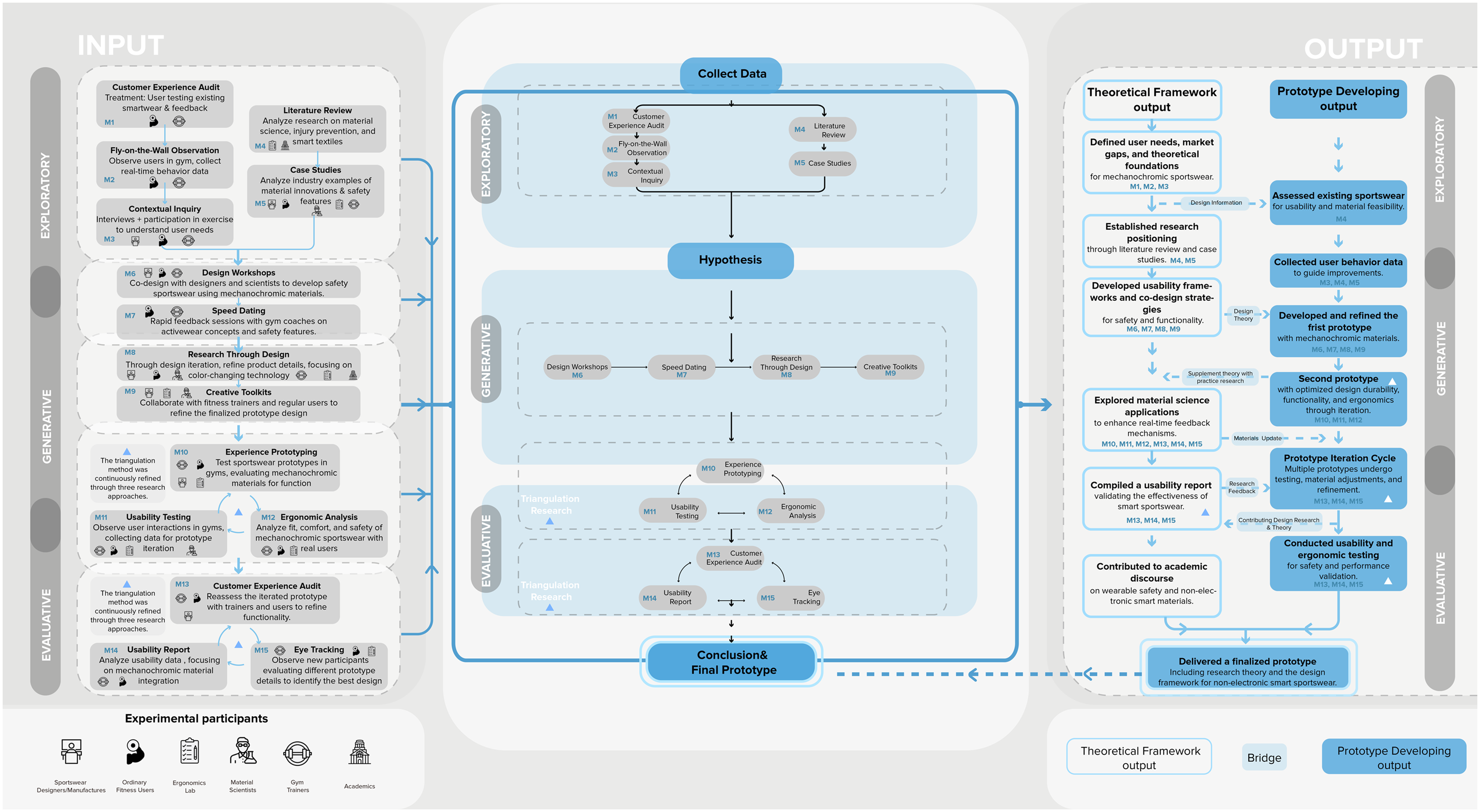
Experimental framework for the iterative development of mechanochromic smartwear. The process includes three main phases: exploratory, generative, and evaluative. Each phase involves methods such as contextual inquiry, 121 codesign workshops, 119 usability testing, 122 and user feedback. 123 This structured approach supports material validation, user-centered design, and prototype improvement.
While conceptual in structure, this framework is grounded in the preliminary material validation and intended to guide future prototype development and scenario-specific user testing. This framework actively engages multiple stakeholder groups throughout the process. Sportswear designers, manufacturers, ergonomics researchers, and material scientists contribute technical insights that inform early design refinement and material selection. Ordinary fitness users and gym trainers provide passive yet essential feedback to validate usability, wearability, and functional effectiveness in realistic settings. In parallel, academics play a critical role in evaluating scientific validity, supporting dissemination, and advancing mechanochromic research through peer-reviewed publication. This phased, multimethod, and multiactor approach ensures methodological triangulation, accelerates prototype iteration, and offers a scalable roadmap for translating mechanochromic materials into functional, wearable solutions for posture training and rehabilitation.
Conclusion
This review provides a comprehensive analysis of mechanochromic materials and their integration into smart textiles for posture monitoring in postural and joint-control exercises. By bridging material-level innovation with application-driven design, it has highlighted the unique advantage of mechanochromic textiles in delivering passive, real-time biomechanical feedback without the need for electronics. These properties make them particularly suitable for joint-control scenarios where subtle posture deviations require immediate correction.
Although mechanochromic materials have matured in terms of functionality, current research is still largely focused on material mechanisms, with limited attention to practical and user-centered applications. This situation is partly due to the diverse characteristics of different mechanochromic systems such as molecular deformation, photonic crystal shifts, or surface topology changes, which complicate standardized integration into textiles. However, for smart sportswear applications where moderate strain and visual feedback are sufficient, several mechanochromic systems already demonstrate the responsiveness needed for posture monitoring. At this stage, commercialization may not be the primary goal, but early-stage prototype development and context-specific testing are both achievable and timely. Based on a broad review of current materials and applications, this study suggests that mechanochromic smart textiles are ready for functional validation in realistic training environments.
To support this progress, we have proposed a user-centered application framework designed for the biomechanical needs of posture training. This framework provides a practical foundation for future experimental research and helps bridge the gap between material science and wearable system design. It also promotes the development of sustainable, accessible smart garments that offer intuitive, energy-independent feedback for personalized health monitoring and rehabilitation.
Footnotes
Acknowledgment
The authors would like to sincerely thank Professor Rita Assoreira Almendra from CIAUD for her invaluable guidance and instruction in research methodology.
Declaration of conflicting interest
The author(s) declared no potential conflicts of interest with respect to the research, authorship, and/or publication of this article.
Funding
The author(s) received no financial support for the research, authorship, and/or publication of this article.
