




Abstract
Thermally activated shape memory polymers are of increasing interest nowadays. Their incorporation in textile-based preforms reinforced composites is being focused on, owing to some functional applications of medical textiles, e.g., posture support of joints after fracture surgery where gradual healing of fractures requires the joints to be moved slightly, which is not possible with conventional supports. Hence, this study was aimed at the development and characterization of thermally activated shape memory composites having woven glass fiber reinforcements for such applications. Three different stackings or laminates were developed (single-, double-, and triple-layered composites), solely using glass fiber, whereas resin material induced shape memory function. The glass transition temperature of the engineered specimens was determined, and the shape memory function was evaluated at three different temperatures, namely, below, at, and above the glass transition temperature (45°C, 65°C, and 85°C). Increasing the characterization temperature decreased the shape recovery time by 75%, owing to softening and better polymer chain mobility at higher temperatures. The shape recovery velocity also increased with increasing temperature. Increasing the number of glass fabric layers compromised the shape memory function; however, the interlaminar shear strength was improved.
Keywords
Medical textiles, covering a diverse range of applications, serve to support many critical areas, and there is an increasing demand for more functional attributes with technological advances. After bone fracture surgery, it is usually necessary to use some bulky bandage assembly to keep the fractured area in its place with firm support. Such bandages restrict the movement of joints for a prolonged time, causing muscles to lose their function. To overcome the issue, posture correctors, e.g., elastic bandages and braces, are employed. However, the process sometimes becomes hectic for patients and necessitates a one-step process. Hence, introducing some materials into bandages that could change the joint posture after a certain period is beneficial. In this regards, shape memory polymer (SMP) materials have gained a significant market interest, owing to their applications in several high-tech sectors, including the automotive sector, as well as in medical textiles.1,2 Shape memory composites can be engineered using conventional reinforcements, such as carbon, aramids, and SMP matrices.3–5 SMPs possess the unique ability to, as it were, memorize a temporary shape and recover the original shape after some trigger. The trigger could be temperature or voltage. 6 Temperature-triggered shape memory composites work successfully in several applications, in which a temporary shape is memorized, and the permanent shape is recovered by providing a specific temperature, termed the shape recovery temperature. 7 This temperature lies around the glass transition temperature of the composite, so the polymer chains become softened and mobile. Activation and recovery cycles of shape memory composites depend greatly on the composition and mechanical nature of reinforcing fibers.8,9 Rigid fibers having brittle behaviors may undergo permanent deformations during shape memory cycles, and vice versa for ductile fibers. 10 However, the incorporation of such high-performance fibers also works for mechanical performance enhancement of shape memory composites; hence, a study of the behaviors of rigid reinforcement (carbon, glass, and aramid) comprising shape memory composites is crucial, and this is the context of this study.
Investigators report that changing the thread densities of warp and weft yarns of woven shape memory composites significantly affects their dynamic mechanical characteristics, e.g., the shear modulus is enhanced. 11 Carbon fiber pre-pregs consisting of binary shape memory resin exhibit higher tensile characteristics, owing to better shape fixities, but the impact performance is compromised. In a similar study, 98% shape recovery was achieved in up to 30 cycles. 12 However, Nji and Li 13 proposed glass-woven 3D structures exhibiting better impact and self-healing characteristics when incorporated with shape memory resins. Fejős et al. 14 measured shape memory characteristics of glass fiber reinforced woven shape memory composites under three-point bending mechanical characterization fixtures, and observed failure-free flexural deformations. Wang et al. 15 engineered shape memory alloy wire comprising glass fiber reinforced composites to enhance tensile characteristics under cyclic mechanical loading. However, Xu et al. 16 revealed the effect of changing the stacking sequence on the mechanical characteristics of reinforced composites of shape memory alloy wire and glass fiber. Ohki et al. 17 developed shape memory polyurethane composites reinforced with short glass fibers and noted an increase in tensile and dynamic mechanical characteristics with increasing glass fiber content. Liu et al. 18 engineered shape memory polyurethane composites comprising short-cut glass fibers for orthodontic applications; their results revealed an enhancement of mechanical characteristics with glass fiber addition; however, the shape memory effect was comprised with increasing fiber volume fraction. Similarly, several investigations have been carried out using short glass fibers and some shape memory alloys in glass fiber laminates.19–21 However, composites reinforced with woven preforms are among the most significant components of architectures requiring shape memory functions, e.g., post-surgical joint posture settings, and there does not appear to be any significant literature reporting on the shape memory and dynamic mechanical behavior of shape memory resin composites reinforced with woven glass fiber, developed for specified applications. Hence, the aim of this study is to develop shape memory composites using woven glass fibers with three different laminating sequences. Also, a simplified method for shape memory characterization has been reported using only thermal triggering, making it easy to change the joint posture while keeping the bandage on; hence, in this study, the use of mechanical fixtures and complex processes in post-surgical setups is also neglected. Dynamic mechanical characteristics and interlaminar shear behaviors have also been analyzed to avoid plastic deformations during shape memory function.
Materials and methods
Experimental materials
Glass fiber finds a wide range of applications in industry, owing to its adaptability and exceptional properties. Glass fiber can sustain its mechanical characteristics at high temperatures and hence is employed for shape memory composites engineering. The fiber was used in the form of woven preform with a density of 200 g/m2. A two-component epoxy, with a ratio of 1:0.6 of resin and hardener, was used to fabricate the composites. The epoxy was supplied by Aditya Birla Chemicals Ltd. (Thailand), with trade names of EPOTEC TH 7301, for the epoxy, and EPOTEC YD 128, for the hardener.
Fabrication of shape memory composites
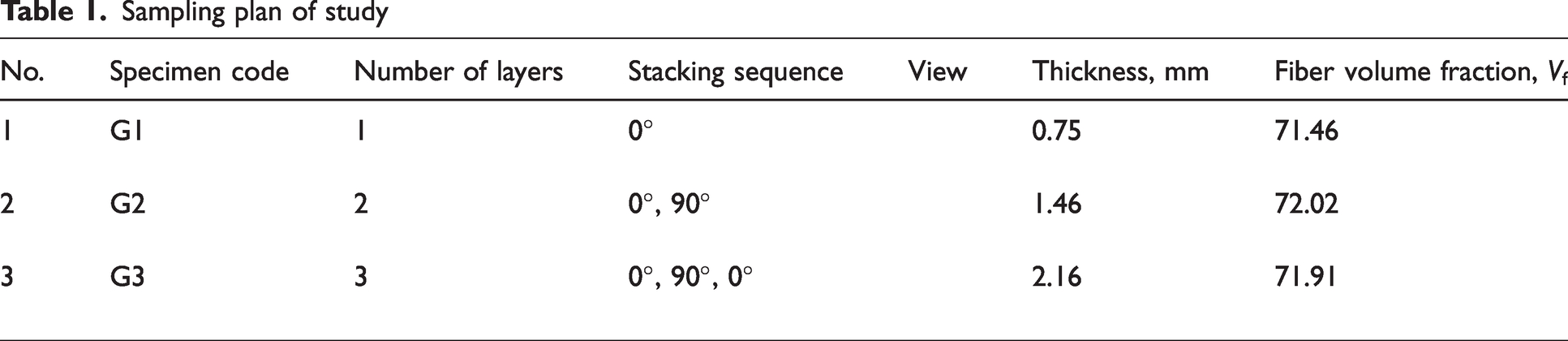
Composite fabrication involved using a conventional hand layup technique. Glass fabrics were cut in rectangles, with dimensions of 20 mm × 100 mm. Specimens were placed on a steel platform comprising Teflon sheet, and glass reinforcement layers were placed with evenly distributed epoxy (Figure 1) at room temperature. Three different stacking sequences were chosen, to analyze the influence of increasingly stiff reinforcing material on shape memory characteristics. Table 1 gives the sampling sequence of the study. After the hand layup process, the samples were left overnight at room temperature to cure, and then moved toward characterization; three replicates of each specimen were used to take appropriate results.
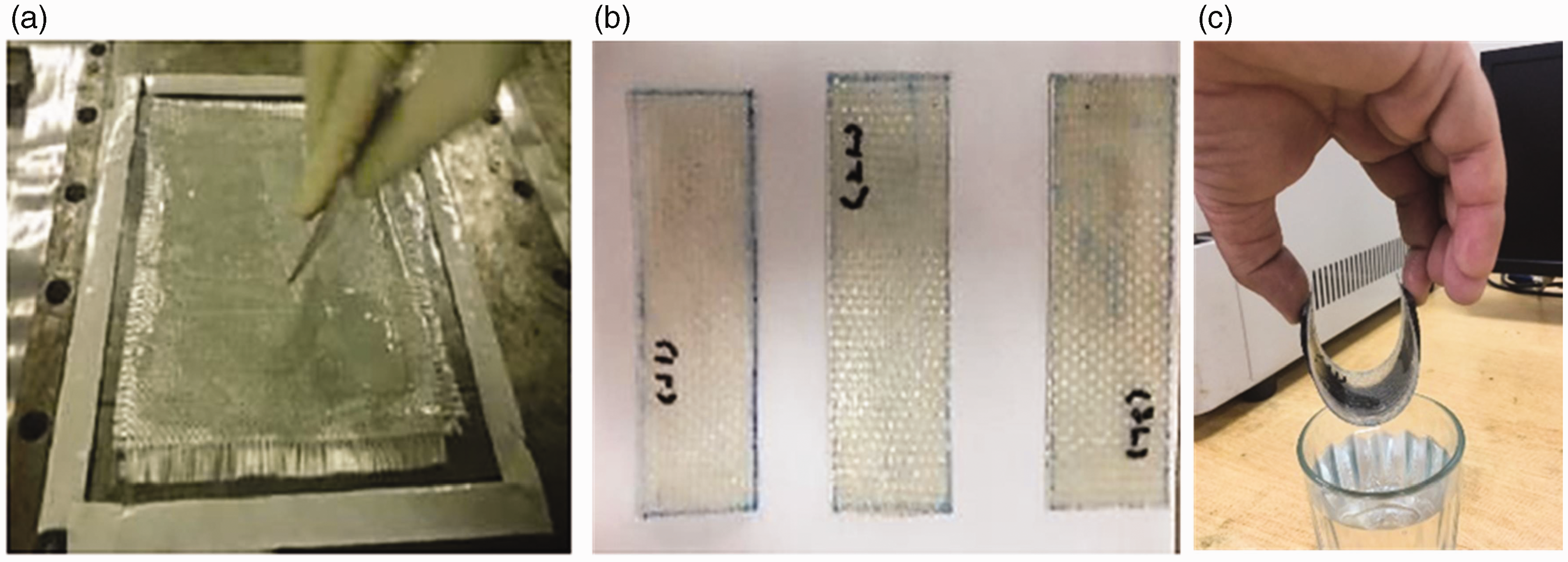
(a) Composite fabrication; (b) standard size of composites and (c) shape memorization mold and chilled water for shape fixation.
Sampling plan of study
Characterization
Differential scanning calorimetry
Differential scanning calorimetry (DSC) is a thermal analysis technique that measures the difference between the amount of heat needed to raise the temperature of a sample and a reference value as a function of temperature. DSC analysis gives essential information about a vast array of material properties, such as glass thermal stability and transition temperature. Hence, DSC was performed to identify the glass transition temperature of engineered shape memory function composites for shape memorization cycle temperature setting, using a standard test method of ASTM D4318. 22
Dynamic mechanical analysis
Dynamic mechanical analysis (DMA), providing information about a material’s rigidity, elasticity, damping qualities, and glass transitions, is an essential thermal characterization. The basic parameters obtained from DMA characterization following ASTM D4065 include storage modulus, loss modulus, and tan δ.
23
In response to mechanical deformation, a material’s storage modulus (also called its real, elastic, or tensile modulus) determines the amount of elastic energy that the material can retain. It measures the material’s dissipative or viscous behavior and provides an estimate of the amount of energy lost as heat during deformation. Moreover, tan δ is a key metric in describing the viscoelastic behavior of composite materials. It is the ratio of loss modulus (G″) to storage modulus (G′)

Interlaminar shear strength
Interlaminar shear strength (ILSS) testing is a standard technique for determining the interface strength between layers (plies) in laminated composite materials. Laminated composites are manufactured by adhering layers of several materials, mainly fibers and a matrix, to produce a material with enhanced mechanical characteristics; hence, the evaluation is crucial. The characterization was performed using ASTM D2344 to analyze the interlaminar adhesions of composites, in order to estimate the quality and strength during shape memorization and recovery phenomena. 24
Shape memorization and recovery characterization
The engineered thermally triggered shape memory composites were sophisticated materials, combining the exceptional features of shape memory materials and composites. The ability to adopt a temporary shape at a specific temperature and then return to the permanent shape was characterized using a laboratory-developed method. Figure 2 shows the shape memory cycle of manufactured composite specimens. A controlled temperature chamber or oven was used to maintain the desired temperature for specimens during shape memory and recovery characterization. Firstly, the composite was heated above its glass transition temperature to soften it. The softened and rubbery composite was then placed in a metallic mold to memorize a temporary shape; the mold and specimen were quenched in a cold-water beaker at room temperature to memorize the temporary set shape (Figure 1(c)). Shape fixity was calculated at room temperature; after that, the composite specimens were placed in an oven with a temperature above the glass transition temperature. Three different elevated temperatures (45°C, 65°C, and 85°C) were employed to analyze the shape recovery behaviors. The shape memory cycle parameters were recorded in terms of shape recovery time, velocity, and shape fixity ratio. Velocity was calculated using the generic formula of physics; however, shape fixity ratio was calculated using

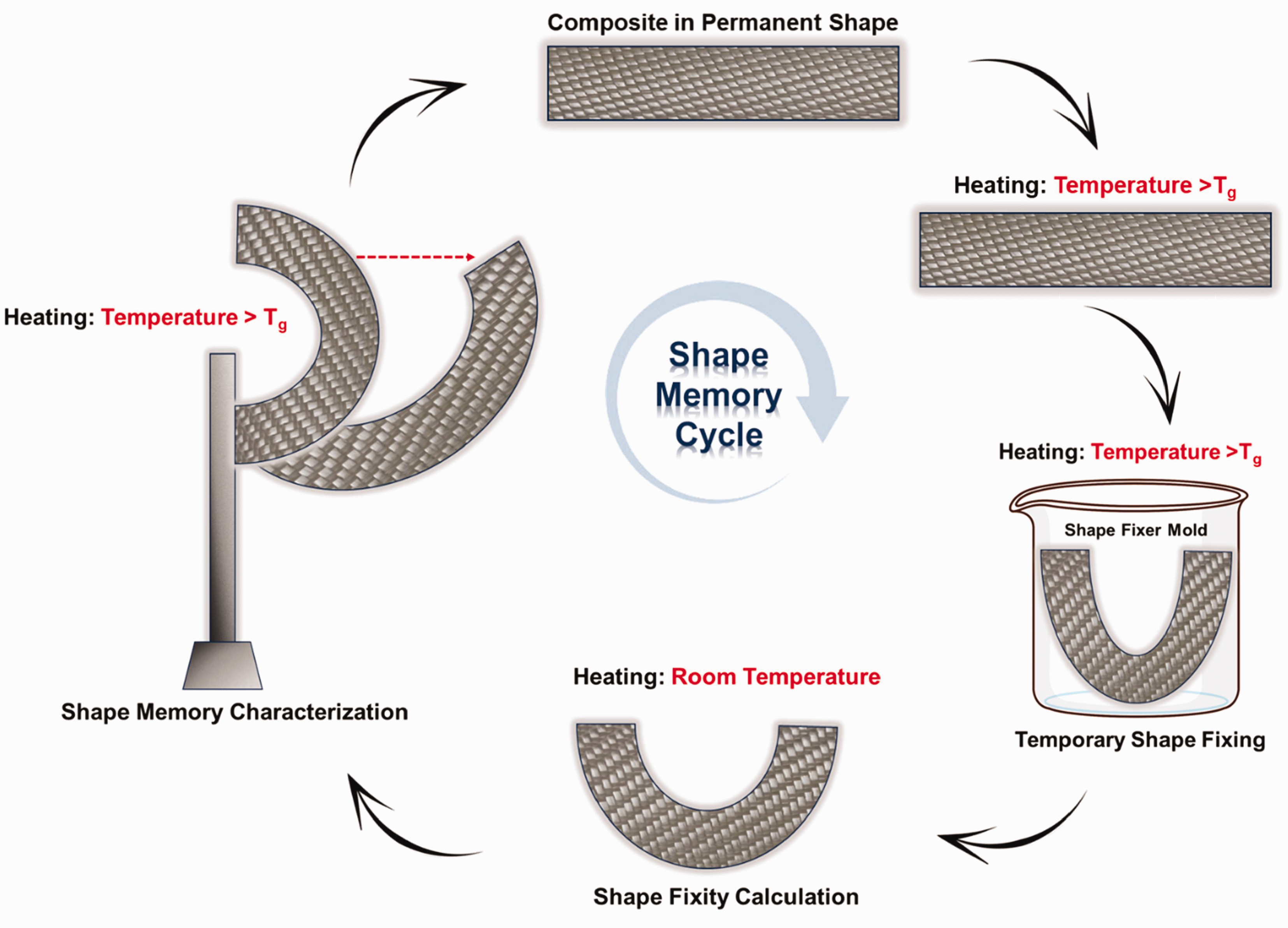
Shape memory cycle.
Results and discussion
DSC
DSC monitors the heat flow, as a function of the temperature, that results from phase changes, chemical kinetics, and other thermal phenomena in a sample. The DSC characterization was performed prior to shape memory characterization, to identify the glass transition temperatures of both the resin and the composite, as the shape memory effect is achieved around the glass transition temperatures of materials. Figure 3 shows the calorimetric curve of characterized specimens for heat flow and temperature, where the arrows represent the glass transition temperature (Tg). Endothermic curves were obtained for both the composite and the resin because of the heat absorption phenomenon for making material rubbery. Heat flow is the measurement of the energy transfer; it is caused by a temperature difference and leads to the temperature balance between substances. Moreover, the heat flows can be kept different for the specimens being tested, to segregate the curves after characterization. Initially, a positive heat flow was observed, owing to the crystalline nature of polymer chains inside the material depicting an exothermic curve. 25 However, increasing the temperature shifted the curve toward endothermic behavior, making materials transition from solid to rubbery. The shape memory composite having rigid glass reinforcement exhibited higher heat flow than the resin, and this observation was supported by the higher glass transition temperature of the shape memory composite. An abrupt fall in the curves indicated the glass transition temperatures of both the composite and the resin, as shown in Figure 3. The shape memory composite had a glass transition temperature of 65.37°C, and the shape memory resin had a glass transition temperature of 63.37°C. Hence, the shape memory cycle was designed around the glass transition temperature of the characterized shape memory composite.
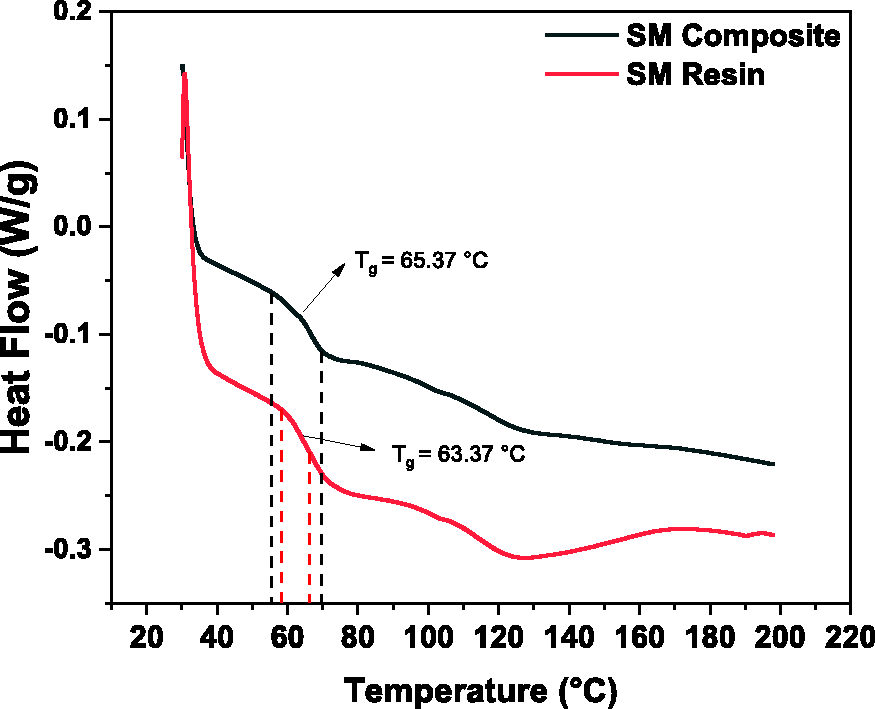
Differential scanning calorimetry characterization curve. SM: shape memory.
DMA
DMA measures the mechanical behaviors of viscoelastic composites under applied temperature and load. This analysis becomes crucial for composite materials employed under simultaneous temperature and mechanical stresses. Hence, the characterization was performed for engineered shape memory composites. Figure 4 shows the DMA parameters of the characterized composites. The storage modulus plotted in Figure 4(a) shows the energy stored by viscous portions of the characterized composites. A larger storage modulus indicates better capability of the composites to perform the shape memory function. The three-layered composite exhibited the highest storage modulus governed by the higher rigid reinforcement portion, as compared with the double- and single-layered composites. The storage modulus is subject to the influence of both the matrix material and the reinforcing glass fibers; it is correlated with the material’s resistance to deformation when exposed to an applied load and its stiffness. In general, the strength and rigidity of glass fibers surpass those of the matrix material. Hence, increasing the number of glass fiber layers in a composite results in a corresponding increase in the fraction of the rigid and robust reinforcing phase. This results in a stiffer material overall, as reflected in the higher storage modulus. 26 Similarly, the specimens with double-layered glass reinforcement exhibited a 15% smaller storage modulus than the treble-layered composites, and the decreasing trend continued toward the single-layered composite, with a 50% smaller storage modulus than the treble-layered composites. However, increasing the proportion of glass fibers enhanced the composite material’s stiffness. Increased glass fiber volume fractions resulted in a more heterogeneous composite material, exhibiting fluctuations in damping and stiffness characteristics. Because of this increased heterogeneity, energy dissipation was accelerated, leading to a greater loss modulus, as shown in Figure 4(b). 27 Hence, the three-layered composite showed the highest storage modulus, of 4500 MPa, with an increasing characterization temperature. By contrast, the two-layered composite showed 45% less loss modulus than the three-layered composite. A further decrease in the glass fiber layer led to decreased energy dissipation and friction at the fiber–matrix interfaces during characterization and contributed to a decreasing loss modulus. Hence, the single-layered composite exhibited a 50% smaller loss modulus than the three-layered composite. The tan δ curve plotted in Figure 4(c) shows the characterized composites’ ability to dissipate energy as heat and other factors during dynamic mechanical loading. Mathematically, tan δ is the ratio of loss modulus and storage modulus; hence, increasing the numerator or decreasing the denominator contributes to greater energy dissipation. The treble-layered glass-reinforced composite, having a higher storage modulus, exhibited a higher value of tan δ, and vice versa for single- and double-layered composites. Such higher energy loss could have a negative effect while performing the shape memory function; thus, increasing the number of glass fiber layers decreased the efficiency of the shape memory function; however, the shape memory function was not compromised.
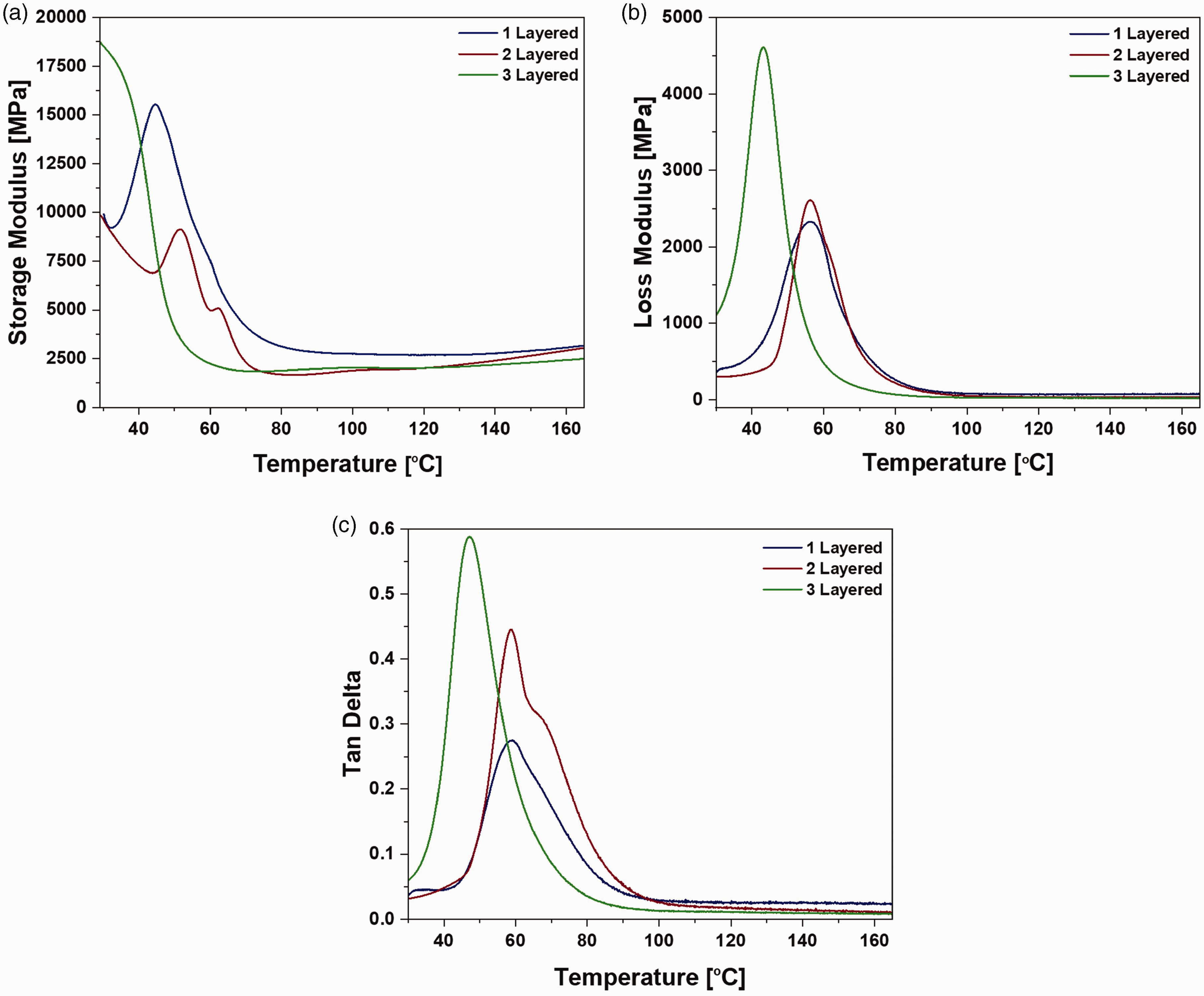
Dynamic mechanical analysis curves: (a) storage modulus; (b) loss modulus and (c) tan δ.
Shape memory characteristics
DSC revealed the glass transition temperature of the engineered composite; moreover, DMA provided thermally influenced mechanical behaviors. Hence, shape memory characterization and justification of trends became viable. The glass transition temperature of the composite was found to be 65.37°C; therefore, shape memory properties were analyzed at 20°C above and below the glass transition temperature, i.e., 45°C, 65°C, and 85°C. Figure 5 shows the shape recovery behaviors of all developed specimens at 45°C. Increasing the number of glass fiber reinforcement layers increased the shape recovery time, as the rigid part of the composite increased. 28 Similar trends can be observed for all specimens at 65°C (Figure 6) and 85°C (Figure 7). Moreover, the recovery speed was enhanced for all specimens by increasing the characterization temperature. Overall, shape recovery times (the time required to recover the original shape after a temporary shape memorization) are plotted in Figure 8. Moreover, further parameters, including fixity and recovery velocity, are described.
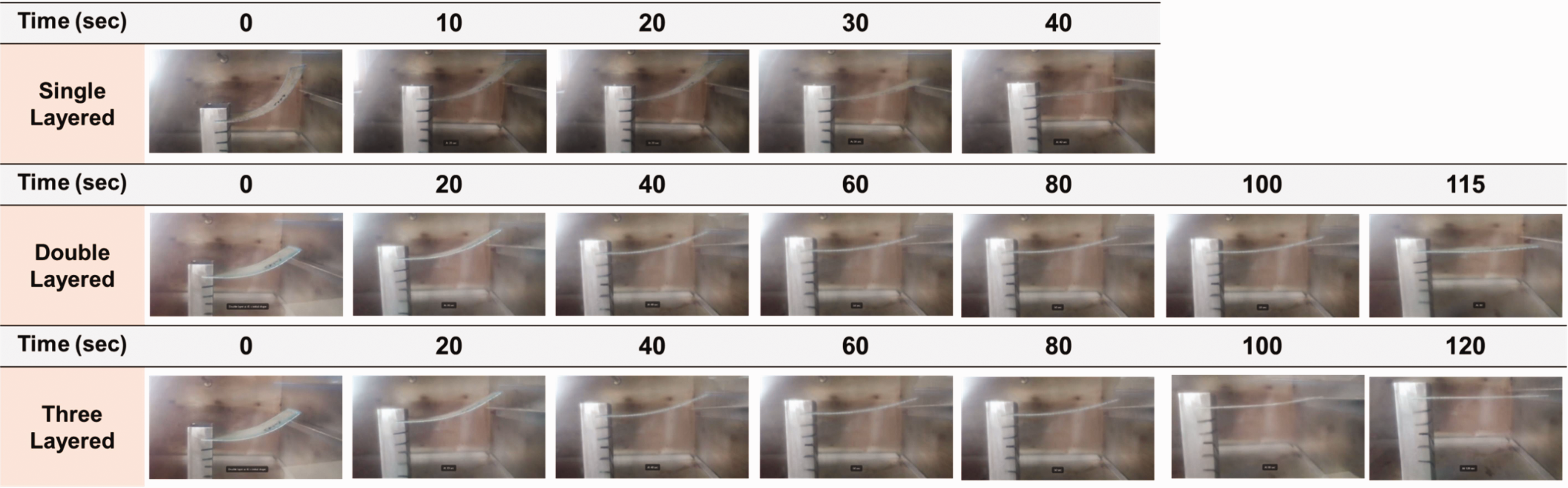
Shape memory behaviors at 45°C.
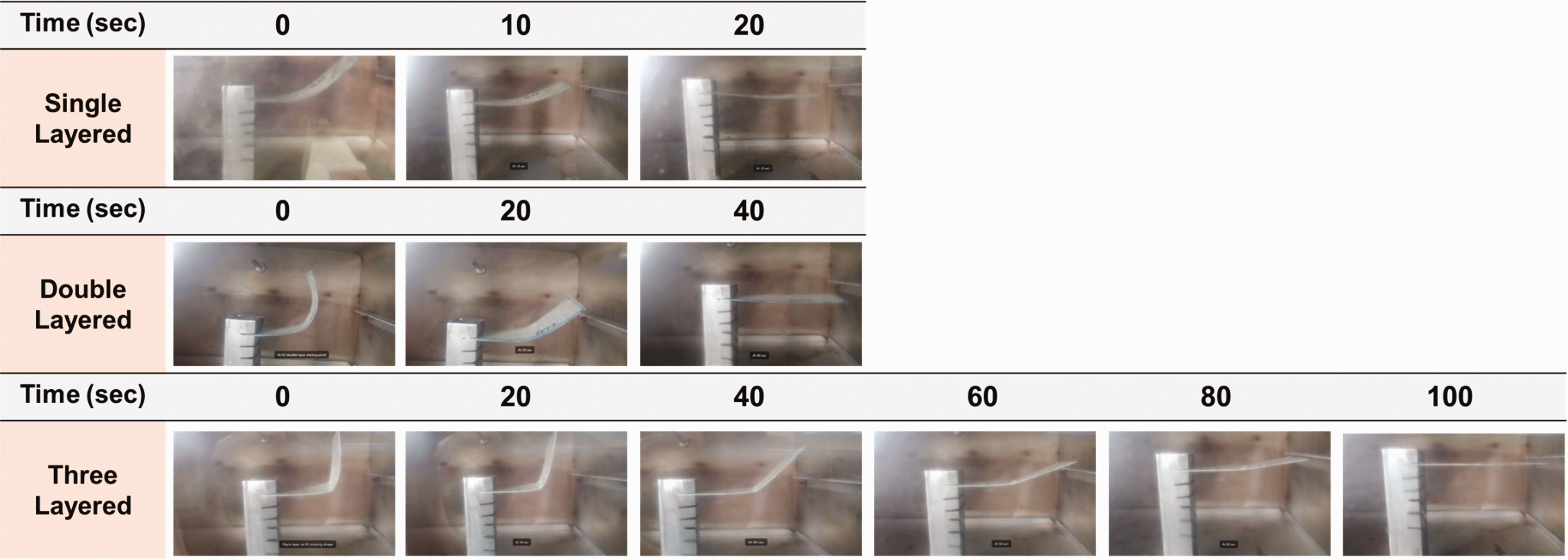
Shape memory behaviors at 65°C.
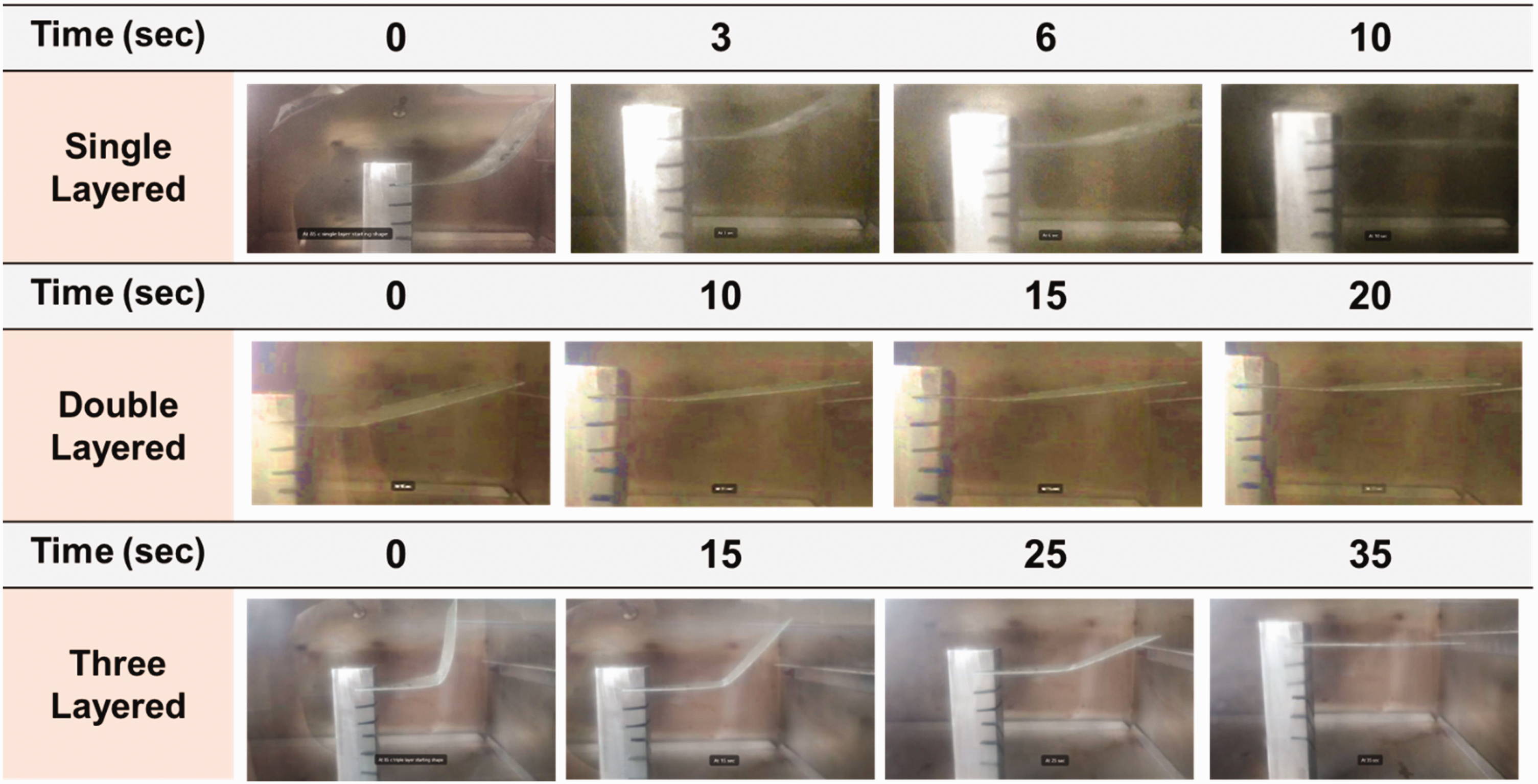
Shape memory behaviors at 85°C.
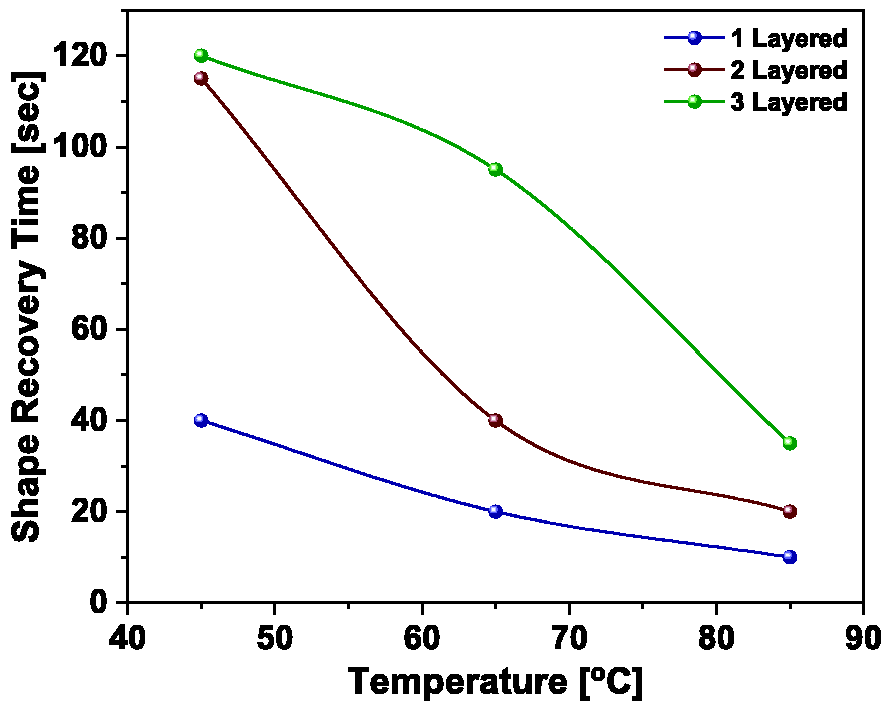
Shape recovery time according to changing temperature.
The shortest shape recovery times can be seen for the single-layered composite; the behavior was supported by the smallest proportion of rigid glass reinforcement in the composite. The smallest loss modulus was also observed for the single-layered composite in DMA (Figure 4(b)). The shape recovery time was longest below the glass transition temperature, owing to the smaller mobility between polymer chains and a lack of enough heat to retain the original shape from the memorized shape. Increasing the experimental temperature from 45°C to 65°C decreased the shape recovery time by 50%, as the polymeric chains were mobile and rubbery at this temperature. Similarly, a further increase in the characterization temperature decreased the shape recovery time to 10 s, which was 75% shorter than the time at 45°C. A higher loss modulus in DMA also showed the loss of energy as heat during mechanical deformations, increasing the time to recover the original shape. However, the trend of decreasing shape recovery time with increasing experimental temperature was found to be the same for two- and three-layered composites. The two-layered composite decreased its shape recovery time up to 65% at 65°C, and 82% at 85°C. Similarly, three-layered composites showed a 20% and 70% decrease in shape recovery time at 65°C and 85°C, respectively.
Figure 9 shows the overall shape recovery velocity and shape fixity percentages of composites during shape memory characterization. The shape recovery velocity corresponded directly to the previously discussed shape recovery time trends. The decreased shape recovery time reduced the division factor in the denominator and the shape recovery velocity was improved. Hence, the single-layered composite exhibited the largest shape recovery velocity, followed by a decreasing trend toward the double- and treble-layered composites. The highest shape recovery velocity, of 1 m/s, was observed for the single-layered composite at 85°C; while the treble-layered composite showed the smallest shape recovery velocity, of 0.1 m/s at 45°C. A larger proportion of rigid glass reinforcing fibers and the smallest polymer molecular chain mobility, owing to the temperature being less than the glass transition temperature, simultaneously governed the phenomenon of such least velocity for the treble-layered composite. Figure 9(b) shows the shape fixity calculated using equation (2). Single-layered composites exhibited better shape fixity, compared with double- and treble-layered composites. The increasing number of glass fiber layers made the composite stiffer. Elevating the stiffness of a material could diminish its capacity to maintain and conform to a temporarily distorted shape. 14 Hence, the shape fixity percentages decreased for composites having a greater number of glass fiber reinforcement layers. Moreover, increasing the temperature rendered the polymer chains inside the composite more mobile and flexible, reducing the stiffness; hence, composites could be more efficiently molded into a temporary shape, and the shape fixity percentage increased. The single-layered composite exhibited a 37% increase in shape fixity when changing the characterization temperature from 45°C to 65°C, and 43% when changing the temperature to 85°C. A similar trend was observed for the double-layered composite; however, the highest increases, of 272% and 305%, were seen for treble-layered composites on changing the temperature to 65°C and 85°C, respectively, as the composite comprised the highest proportion of rigid glass reinforcement and was not able to recover the shape at a temperature less than the glass transition temperature, owing to the domination of the glass fibers’ rigidity over the shape memory resin.
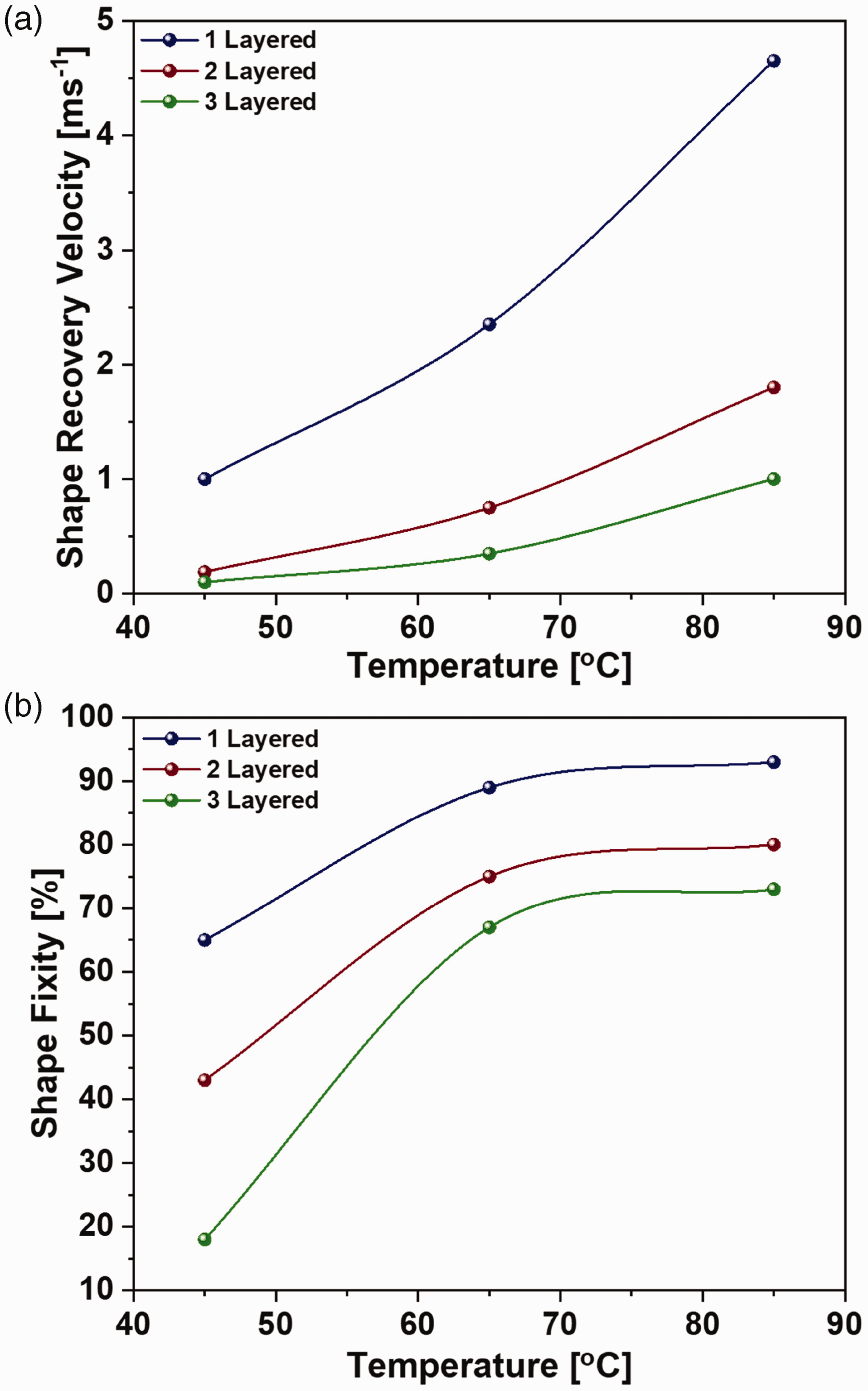
(a) Shape recovery velocity as a function of temperature and (b) shape fixity as a function of temperature.
ILSS
ILSS characterization was used to interpret the laminates’ interfacial strength during the bending process of shape memory characterization. Figure 10 shows the force–deformation curves of the characterized composites. The single-layered composite exhibited the smallest interlaminar force and deformation, as the composite comprised a single reinforcement layer and was thin in cross-section, compared with the two- and three-layered composites. Increasing the number of reinforcement layers from one to two enhanced the interlaminar shear strength by 1300%, and the deformation was increased by 100%. With the proliferation of the glass fiber layers, a greater quantity of fibers was available to withstand the imposed load. This increased the efficiency of the load transfer between laminae, hence decreasing the probability of the interlaminar mode of failure. Furthermore, increasing the quantity of glass fibers resulted in a more homogeneous dispersion of stresses through the entire composite material. This phenomenon facilitated the reduction of residual stress at the interfaces between laminae, hence enhancing the interlaminar shear strength. However, a further increase in the number of glass fiber reinforcing layers acted to compromise the interlaminar shear characteristics. The interlaminar shear strength of the three-layered composite was 57% less than that of the two-layered composite. Glass fiber is rigid, and increasing the glass fiber proportion above the optimum limit shifted the composite’s behavior to a brittle nature. Moreover, stress concentration points are also increased between laminae for increasing numbers of layers. Hence, the two-layered composite was found to be the best performer for the shape memory function, while maintaining the interlaminar characteristics.
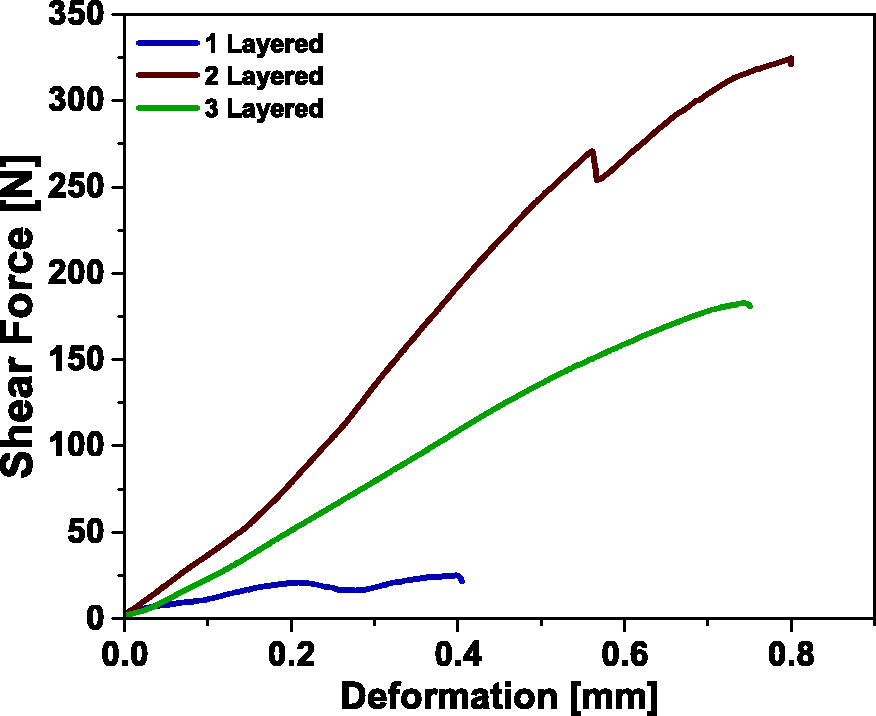
Force–deformation curves for interlaminar shear strength characterization.
Conclusion
This study presented the successful development and characterization of shape memory composites reinforced with rigid glass fibers for some potential medical applications. Woven glass fabrics showed a noticeable shape memory function below, at, and above the glass transition temperatures. At 45°C, molecular chains in composites were less soft and mobile, hence shape memory characteristics were not viable. Changing the characterization temperature to 65°C and 85°C enhanced the shape memory function. Increasing the temperature decreased the shape recovery time for composites, while a higher shift, of 82%, was observed for two-layered composites, and the phenomenon was supported by a smaller loss modulus in DMA. Increasing the number of glass fabric layers decreased the shape fixity owing to increasing rigidity; however, changing characterization temperature improved the shape fixity of three-layered composites by 272% and 305% at 65°C and 85°C, respectively. The two-layered specimen exhibited a better shape memory function and dynamic mechanical characteristics simultaneously. ILSS was also noticeable for the specimen; hence, the two-layered composite was considered better overall, proving that increasing the content of rigid reinforcing fibers works for performance enhancement up to an optimum limit. However, the findings of this study are limited to the glass fiber reinforcement, specimen sizes used, and temperature ranges employed for shape memorization and recovery. The results do not encompass overall fibers being employed for shape memory attributes in other medical applications. Moreover, the shape recovery temperature capability for a patient’s body and other fabric layers of bandages will also remain of concern.
Footnotes
Declaration of conflicting interests
The author(s) declared no potential conflicts of interest with respect to the research, authorship, and/or publication of this article.
Funding
The author(s) received no financial support for the research, authorship, and/or publication of this article.
