




Abstract
In non-stationary wear conditions, characterized by intermittent pulses of moderate or heavy sweating, a garment with a good moisture buffering action can improve comfort. This is consistent with the common consumer belief that clothing manufactured from hygroscopic natural fibers (e.g., wool or cotton) provides better breathability. The current work describes a new approach for measuring dynamic moisture buffering potential using the sweating guarded hotplate instrument in a novel mode of operation. A fabric test sample is placed on the hotplate following the normal procedure for dry mode testing but with the relative humidity of the surrounding environment set to a low value (45%). After equilibration, the relative humidity is rapidly increased to a high value (85%). In the case of hygroscopic samples, a transient reduction in the heat required to maintain the hotplate at its fixed temperature is observed. It is demonstrated that the area of this transient peak is a measure of the water vapor absorbed during this transition, that is, the moisture buffering potential of the test specimen. A key to this new approach is that the heat of sorption per gram of water vapor absorbed is approximately the same for a wide range of natural and synthetic fibers commonly used in clothing. Using matched knitted fabrics manufactured from wool, cotton or polyester, the technique detected the heat released from light weight fabrics and the performance of the different fiber types is clearly distinguished.
Keywords
Understanding and improving the comfort of garments remains a topic of research interest, with major reviews appearing at regular intervals.1–3 Physiological comfort has both thermal and moisture components and ‘moisture in clothing has been widely acknowledged to be one of the most important factors contributing to discomfort.’1,4
In clothing worn next to the skin, consumers comment on the ability of the clothing to breathe as being an important component of comfort. It is associated with the ease with which a garment allows moisture to be removed from the micro-climate surrounding the skin.5,6 Consumers generally believe that clothing manufactured from natural fibers (e.g., wool or cotton) provides better breathability and comfort. 7 Controlled trials1,8,9 comparing the performance of garments manufactured from natural or synthetic fibers have verified this consumer preference. It is understood that the hygroscopic nature of natural fibers is the key to this improved performance,1,7,10–12 and moisture sorption isotherms graphically illustrate these between fiber type differences.13,14
As a laboratory tool for assessing the physiological comfort attributes of fabrics, a range of test methods has been developed to measure heat and moisture transport through fabrics. 6 The sweating guarded hotplate is the most widely used method and instrument6,15 and is the basis of an international standard test method. 16 The test specimen is placed in contact with the top surface of a sintered hotplate that simulates the skin surface and the whole system is placed in an environmental chamber with both temperature and relative humidity (RH) control. The instrument has two modes of operation. In the dry mode, it is used to calculate the steady-state thermal resistance of the test specimen, Rct. In wet mode, the porous hotplate surface sweats and this enables the steady-state water vapor resistance (Ret) of the test specimen to be calculated. A key feature of the instrument in both modes of operation is its ability to accurately record the electrical heating required to maintain the temperature of the hotplate within tight tolerances. The measured steady-state water vapor resistance value (Ret) is sometimes defined to be the ‘breathability’ of the test specimen.17–21
However, there can be a difference in a garment’ s comfort performance between stationary and non-stationary wear situations, which both commonly occur in practical use. Barker 22 notes two different domains for physiological comfort. The first is normal wear, which is associated with insensible perspiration and steady-state heat and moisture vapor fluxes. He contrasts this with transient wear characterized with pulses of sweating and sensible perspiration. In transient wear, Hess 6 further notes that ‘the textiles have to have not only moisture transport properties but also good moisture buffer action’ ‘for good wear comfort.’
A number of authors have acknowledged that laboratory measurement of steady-state heat and moisture vapor resistance will not fully describe the thermo-physiological components of comfort of garments across all wear situations. For example, Huang12,15 noted the need for the sweating guarded hotplate method to be redesigned to make measurements under non-steady-state conditions. Barker 22 listed ‘development of an application basis for laboratory measurements of non-steady-state tests for heat stress and comfort’ as one of five identified research needs. To date there has been only a limited number of studies aimed at a laboratory measurement of comfort under these dynamic conditions. Barker 22 described a laboratory system where pulsed moisture loads can be applied to one side of a fabric.22,23 Kim et al. 24 described the use of two connected environmental chambers to create dynamic conditions, and Kaplan and Okur 25 described a new dynamic sweating hotplate system that is similar to that described by Barker. 22
Naylor et al. 26 developed a simple but novel protocol using the sweating hotplate instrument to create a dynamic situation. The test sample was equilibrated in the instrument as for a normal dry mode measurement of thermal resistance (Rct) with the only difference being that the RH of the surrounding chamber was set at 45%. After steady state was achieved, the RH of the external environmental chamber was rapidly ramped from 45% to 85%. During this transition in the external environment, in contrast to polyester samples, in the case of wool samples the instrument recorded a large transient reduction in the heat flux required to maintain the hotplate at its fixed elevated temperature. The magnitude of this peak was found to be proportional to the quantity of wool in the test specimen. During the rapid increase in RH, the regain of the wool sample will increase with the accompanied exothermic release of heat.13,14,27 This additional heating from the sample then directly reduces the quantity of electrical energy that is required to be supplied by the instrument to maintain a fixed hotplate temperature. That is, the size of the transient peak area in the heat flux data was interpreted as a direct measure of the quantity of water vapor absorbed by the test specimen. The novel protocol was able to clearly distinguish products manufactured from natural/hygroscopic fibers compared to synthetic fibers.
Recently, a new international test method titled ‘Measurement of exothermic and endothermic properties of textiles under humidity change’ has been published. 28 It notes a background where ‘reliable information about hygroscopic and exothermic properties of textiles cannot be offered because of the absence of a standard test method.’ The principle of this test method is to mount a small piece of test fabric by folding it around and attaching it to a temperature sensor and then measuring the accompanying temperature change of the test specimen when it is transferred between two different humidity environments. No statistical information is given regarding the expected precision of this approach.
The current paper explores the apparent problem that the steady-state measurement of water vapor resistance Ret, in spite of sometimes being labeled breathability, is unable to distinguish the comfort of garments manufactured from natural/hygroscopic versus synthetic fibers, particularly when worn in non-stationary wear situations, which occur commonly in real life, that is, it does not measure the dynamic water buffering potential of a fabric/garment. Building on the work of Naylor et al., 26 a new laboratory technique is presented that uses the novel protocol with the sweating guarded hotplate to measure the dynamic moisture buffering potential of a fabric. A key to this new approach is that the heat of sorption per gram of water vapor absorbed is similar (between 2500 and 3000 J/g over the middle range of humidities) for a wide range of different fiber types, including the natural and synthetic fibers commonly used in clothing textiles.14,27 The efficacy of this new technique is explored using matched light weight fabrics manufactured from wool, cotton or polyester.
Materials and methods
Materials
Washed fabric samples were obtained from a commercial supplier. These had been prepared from three fiber types (wool, cotton and polyester) with the aim of producing light weight single jersey knitted fabrics matched as closely as possible for mass per unit area and thickness. The fabric thickness and thermal and water vapor transport properties of two physical fabric samples (each approximately 600 mm by 600 mm) of each of the three fiber types were evaluated.
Total fabric thickness (i.e., core plus surface) was measured with minimal applied pressure (approximately 70 Pa) using a manual Shirley thickness gauge with a 79 mm diameter foot, that is, an area of 5000 mm2. Fifteen individual measurements on each of the two physical samples of each fabric type were undertaken. Data sets from the two physical fabric samples of each fiber type were combined.
Standard Rct and Ret measurements
Standard measurements of steady-state thermal resistance (Rct) and water vapor resistance (Ret) were undertaken following the procedure outlined in ISO 1109216 using a commercial instrument (Measurement Technology Northwest Model SGHP-10.5, in an Espec environmental chamber Model Number EPL-4 H). For all experiments, data from the instrument was recorded at 10 second intervals. Two repeat measurements on each of the two physical samples of each fabric type were undertaken.
In the case of the measurement of water vapor resistance (Ret), as described previously, 26 one variation to the standard test method was also incorporated. A 6 mm thick layer of open cell polyurethane foam was placed between the cellophane membrane on the instrument and the test specimen. This provided a physical separation between the test sample and any minor leaks of liquid water around the edge of the membrane, thus ensuring that the test specimen remained dry during the measurement.
Following the standard procedure, reported Rct and Ret values are after subtraction of measured ‘bare plate’ values of the instrument. In the case of Ret, the ‘bare plate’ measurement was made with the foam layer in place on the instrument.
Transient heat flux peak area measurements
Transient heat flux area measurements followed the procedure used in the previous study. 26 The sweating guarded hotplate was setup in the dry mode as used for the usual Rct measurement, that is, with the plate maintained at 35℃. The environmental chamber surrounding the hotplate was initially set to 20℃ and 45% RH. With the test fabric on the hotplate and instrument recording data at 10 second intervals, the system was allowed to reach a steady state. After the steady state was reached, the steady-state thermal resistance under these environmental conditions (e.g., 20℃ and 45% RH) was measured over a period of approximately 1000 seconds. After this time, with the sweating hotplate instrument still operating and recording data, the RH of the environmental chamber was set to 85%. Data recording continued for at least 1000 seconds after a new steady state was reached.
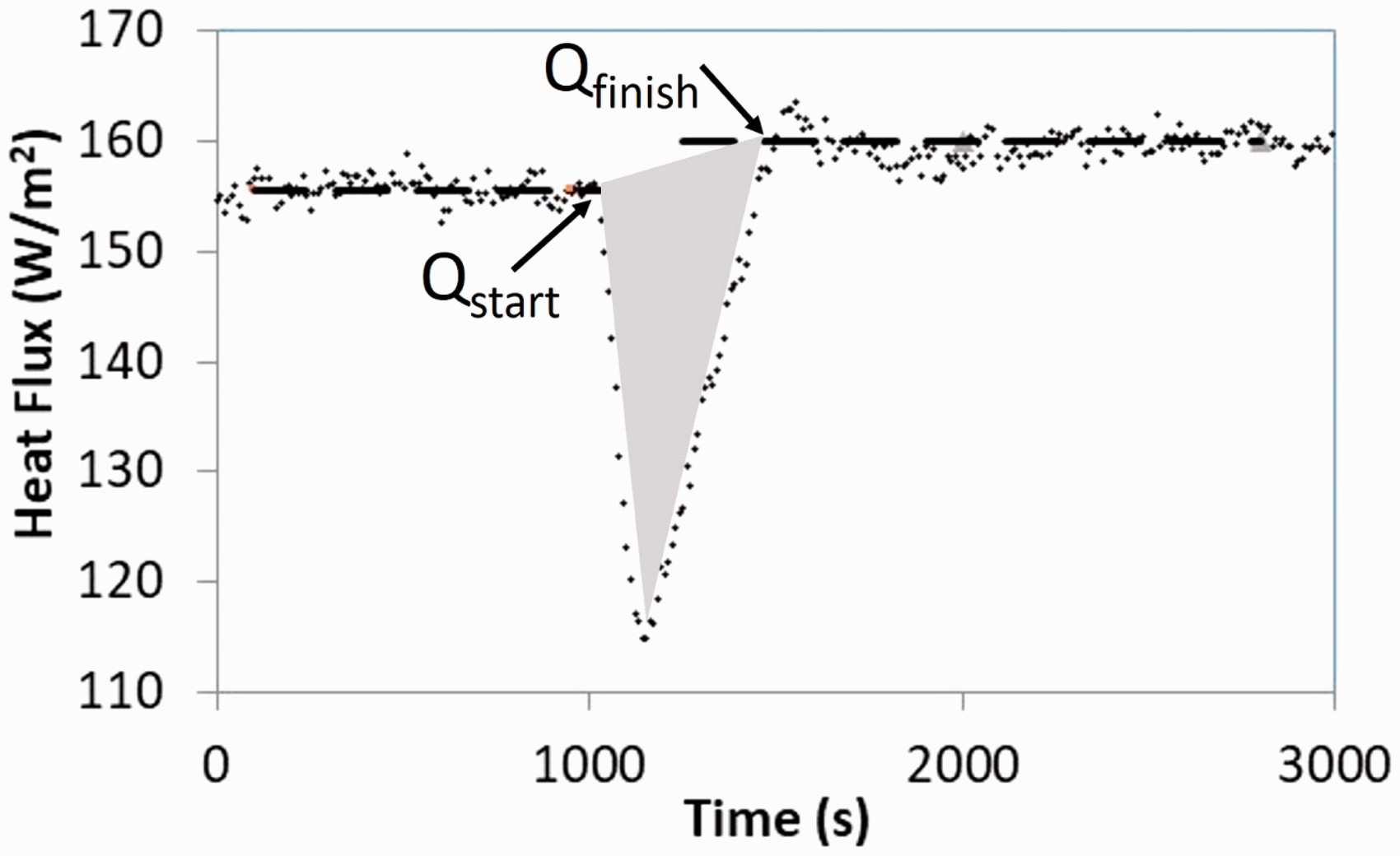
During the period of rapidly changing RH in this protocol, it is observed that the heat flux values (W/m2) reported by the instrument (i.e., the Q values) do not remain constant but rather a transient peak is observed. A typical example is shown in Figure 1. The area associated with this transient peak was then extracted by a numerical integration using the following simple steps.
Qstart, the average steady-state Q value in the initial steady-state region prior to the peak, is obtained by averaging the Q values over a suitable range. (The region was chosen manually to cover at least 500 seconds, a convenient time period to obtain a representative average value.) Qfinish, the average steady-state Q value in the final steady-state region after the peak, is obtained by averaging the Q values over a suitable range. (The region was chosen manually to also cover at least 500 seconds.) Peak Area = 10* ∑{Qi – (Qstart + Qfinish)/2}. The sum is over the region containing the peak (chosen manually).
Typical example for a wool fabric of the observed transient peak in heat flux in the hotplate during a period of rapidly increasing relative humidity. This figure also highlights the Qstart and Qfinish levels and the peak area.
It was found convenient to undertake these steps in Excel after exporting the data from the instrument. (It was found previously that the output of this simple numerical integration was in good agreement with that obtained using a more elaborate peak fitting routine. 26 )
Results and discussion
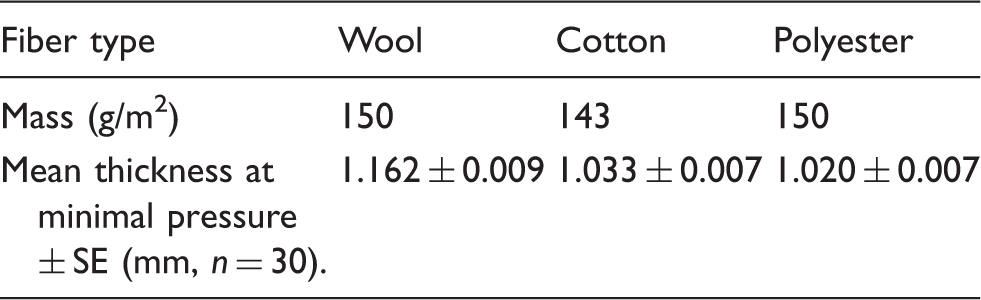
Details of the fabric samples
Steady-state measurements
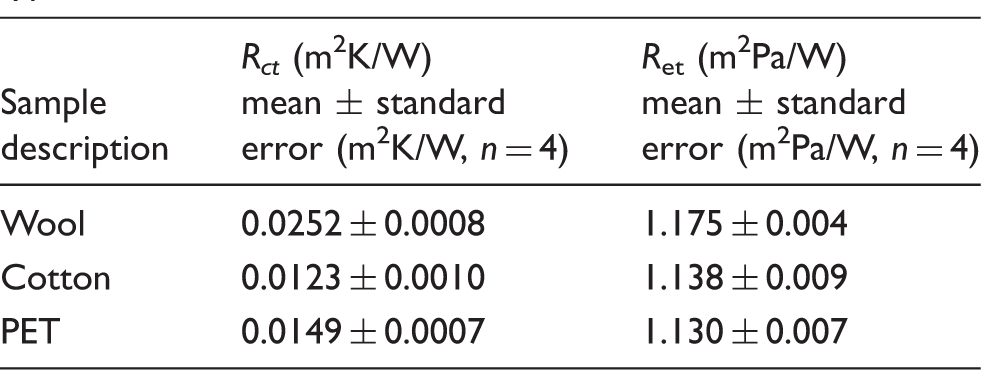
Measured steady-state thermal resistance (Rct) and water vapor resistance (Ret) for each of the three different fiber types
PET: polyethylene terephthalate.
Separate statistical analyses (two-way analysis of variance (ANOVA) and Tukey’ s honest significant difference (HSD) Post-Hoc Test) of both Rct and Ret data were undertaken. For thermal resistance:
there is no significant difference between the two samples of each fiber type ( p = 0.72); there is no significant fiber type and sample interaction (p = 0.19); and the thermal resistance value for the wool sample is significantly larger than that of the cotton and polyester samples (at both the 1% and 5% levels), and there is no significant difference between the thermal resistance of the cotton and polyester samples (p = 5.03 E-05).
For water vapor resistance:
there is no significant difference between the two samples of each fiber type (p = 0.96); there is no significant fiber type and sample interaction (p = 0.58); and the water vapor resistance value for the wool sample is significantly larger than that of the cotton and polyester samples (at the 5% level), and there is no significant difference between the water vapor resistance of the cotton and polyester samples (p = 0.0145).
The steady-state thermal resistance values in Table 2 in combination with the fabric thickness values in Table 1 are consistent with the known importance of fabric thickness as the primary determinant of steady-state thermal resistance, 29 that is, the statistically significant but small increase in the mean Rct of the wool fabric compared to the cotton and polyester fabric is consistent with the wool fabric being slightly thicker than the fabrics manufactured from the other two fiber types.
Similarly, the measured steady-state water vapor resistance values in Table 2 are in agreement with other, albeit limited, published data on lofty non-woven products, 26 which demonstrated that water vapor resistance is primarily determined by sample thickness and largely independent of fiber type. This is readily understood as follows. During the early stages of the test, that is, when a sample is first placed onto the sweating hotplate and before the steady state is reached, fibers will absorb or desorb water vapor as dictated by the local RH of the micro-climate around the sample and the fiber’ s specific regain characteristics. However, once steady state has been reached, there is no further net absorption or desorption of water vapor by the fibers as they are now in equilibrium with their surroundings, that is, the fibers effectively become ‘invisible’ from a water vapor transport perspective. So, in this steady state (precisely when the Ret measurement is undertaken), the rate of water vapor transport through the sample is determined by fabric properties (e.g., sample thickness and tortuosity of the pathway of air pockets between the fibers), that is, fiber sorption properties will not play a role during this steady-state measurement.
This illustrates that by definition the Ret value provides information on the steady-state water vapor transport properties of a fabric that is likely to be applicable to comfort in stationary wear conditions. However, it is unable to discriminate the known different consumer perceived comfort properties of the three fiber types in non-stationary wear conditions.
Transient measurements
As highlighted in the introduction, an additional component of perceived comfort during non-stationary wear conditions can be the moisture buffering potential of the fabric or garment. This is of course a physical characteristic that is separate from steady-state moisture vapor resistance (Ret). Noting (a) the exothermic nature of a fiber’ s water absorption and (b) the fact that the heat of sorption per gram of absorbed water vapor is virtually independent of fiber type, the heat released from a fabric during a step increase in RH should be directly proportional to the amount of water vapor absorbed by the fabric. As noted in the introduction, Naylor et al. 26 demonstrated that the sweating guarded hotplate in a novel and dynamic mode of operation can be used to measure the heat released during a step increase in RH by lofty non-woven wool structures.
Figure 2 shows typical results from the sweating guarded hotplate in ‘dry’ mode during the novel transient experimental protocol described in the methods section for the three different fiber types. Figure 2(a) shows that the RH is set initially at 45% and that at time t = 1000 seconds RH is set to rapidly increase. After a small overshoot the new steady-state value of 85% RH is reached at t ≈ 1500 s. Figure 2(b) shows the temperature of the environmental chamber during the same time period, illustrating how well the environmental chamber manages to maintain constant temperature during the large change in RH. Small fluctuations of the order of ± 0.2℃ are apparent on top of a slower drift down of approximately 0.5℃. These features were consistent between different experiments and fiber types. Hence, they were assumed to reflect the engineering limitations of the control system in the environmental chamber. (The small difference in temperature between the two steady-state RH values is also the likely explanation for the observed small differences in the Qstart and Qfinish levels that are visible in Figure 1.) During this transition in the RH surrounding the sample, the heat flux supplied by the guarded hotplate system to maintain the hotplate surface at 35℃ does not remain constant but rather a transient peak is observed, as illustrated in Figure 2(c). Measurements of the area of this transient peak are summarized in Table 3.
The observed transients for the three fabric samples, with the time axis adjusted to align the start of the observed change in relative humidity (RH) of the chamber. PET: polyethylene terephthalate. Measured transient peak areas for the two test specimens (Samples A and B) of each of the three different fiber types PET: polyethylene terephthalate.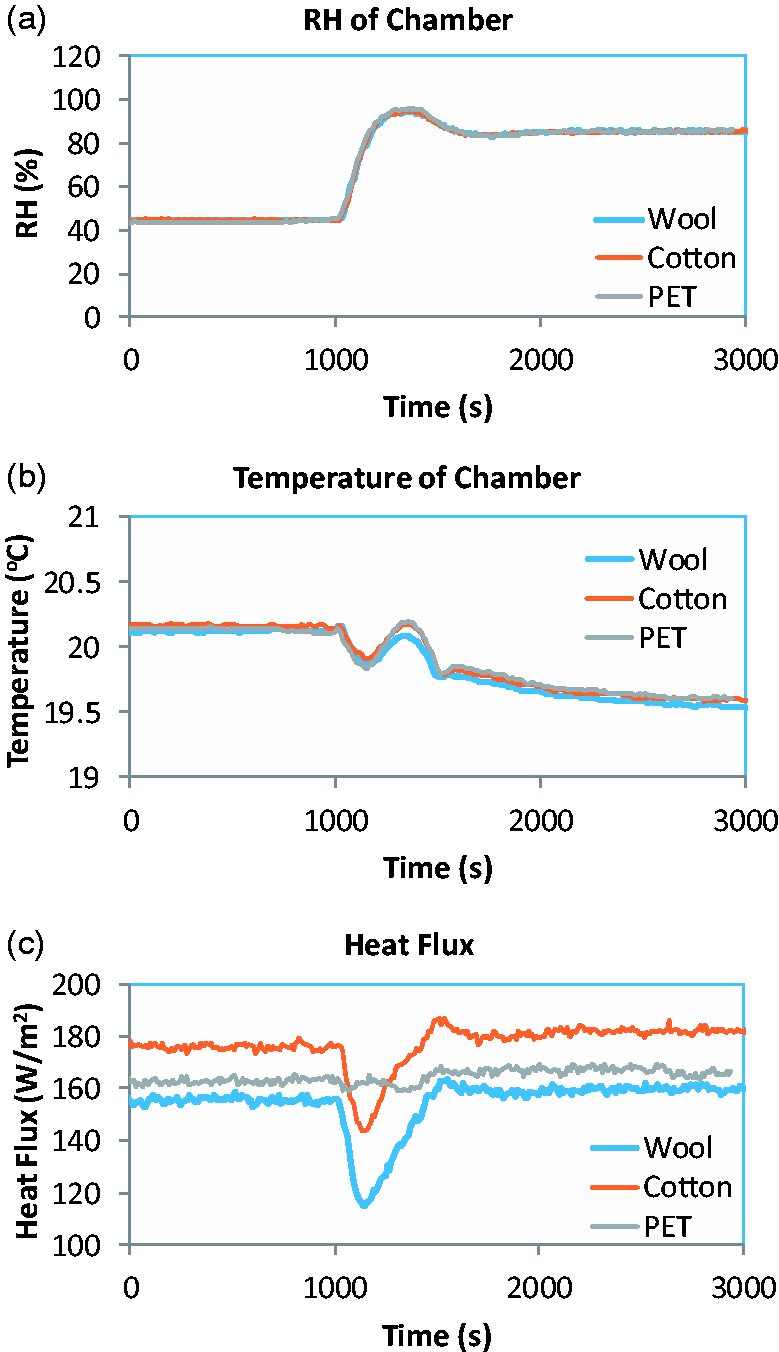
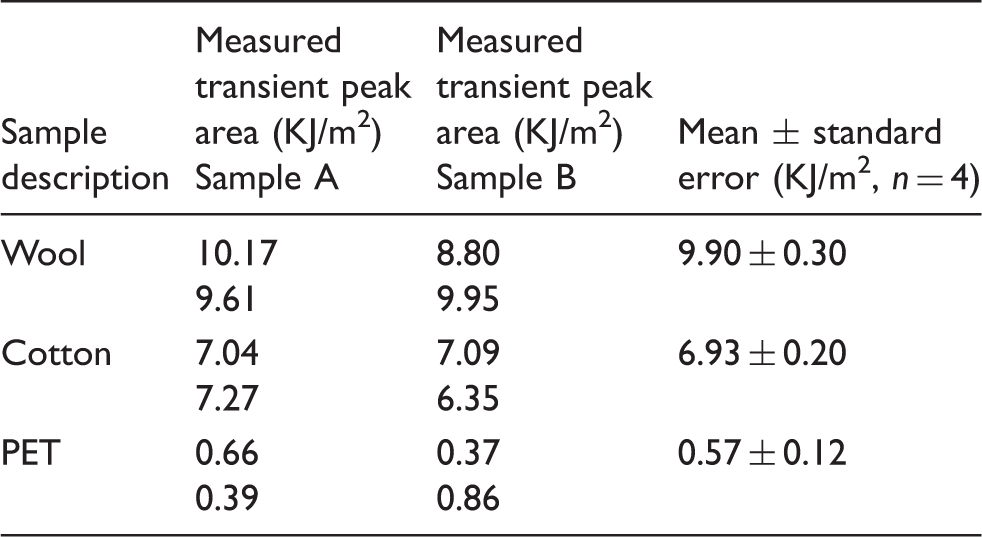
Some between fiber type differences are clearly apparent. The statistical analysis (ANOVA and Tukey’ s HSD Post-Hoc Test) of this data set is summarized in Table 4. The conclusions from this analysis are as follows:
there is no significant difference between the two samples of each fiber type (p = 0.32); the transient peak values for each fiber type are significantly different from each other; and Two-way analysis of variance summary for the transient heat flux peak area

Estimated fabric regain changes during the transient protocol (the polyester data were estimated from the curve labeled Terylene in Morton and Hearle 14 )
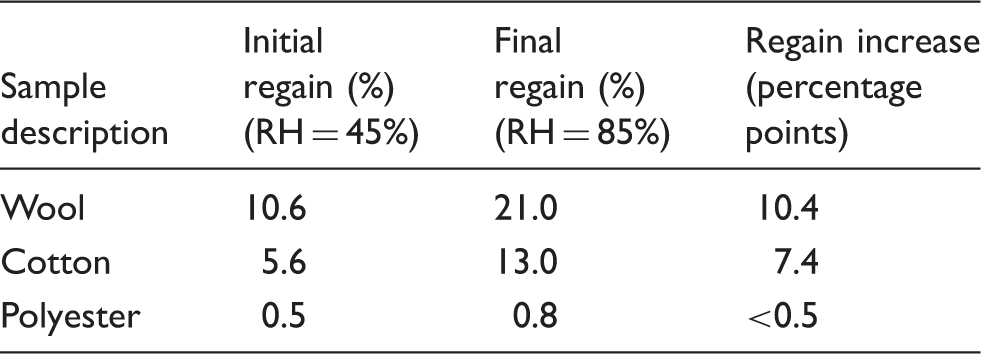
RH: relative humidity.
An important outcome is that the sweating guarded hotplate instrument in this novel and dynamic mode of operation is sensitive enough to detect the heat released from these very light weight fabrics. The size of the observed peak area is different for each fiber type and quantitatively in line with expectations based on the known relationships between fiber regain and RH. It can thus be concluded that the transient peak area is indeed a measure of the moisture buffering potential of each fabric, an additional important component of comfort in non-stationary wear conditions.
A related outcome is the robustness and viability of this measurement of dynamic moisture buffering potential. The between replicate measurements and between physical sample variability (e.g., represented together by the standard error values in Table 3) are very small relative to the between fiber type effects of interest, that is, the sources of error evaluated in the current experimental design are indeed small. In summary, the protocol and measurement of dynamic moisture buffering potential is such that the performance of the different fiber types is clearly distinguished.
Static and dynamic testing
Measured steady-state thermal resistance values (Rct) measured at 45% relative humidity for the first repetition of data collection
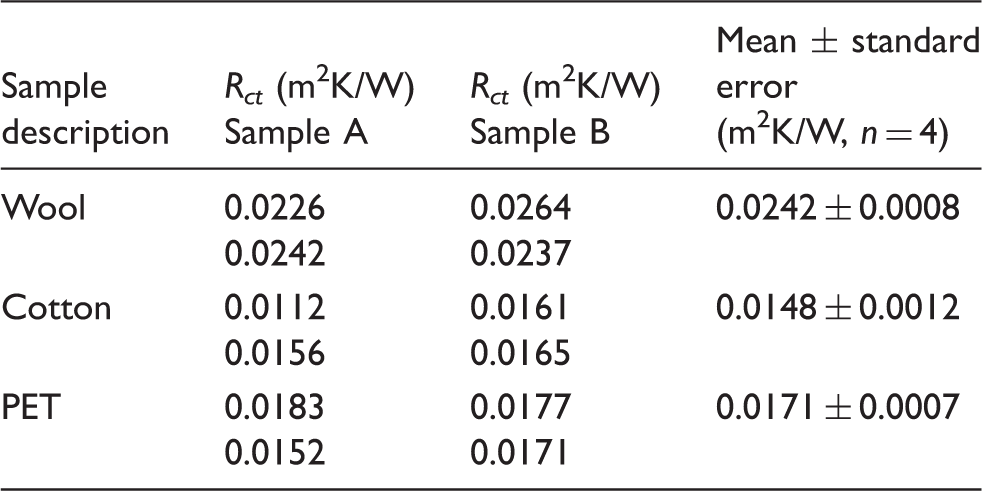
PET: polyethylene terephthalate.
Two-way analysis of variance comparing the effect of relative humidity (RH) on steady-state thermal resistance, Rct (the values for the two physical samples for each fiber type were grouped for this analysis)
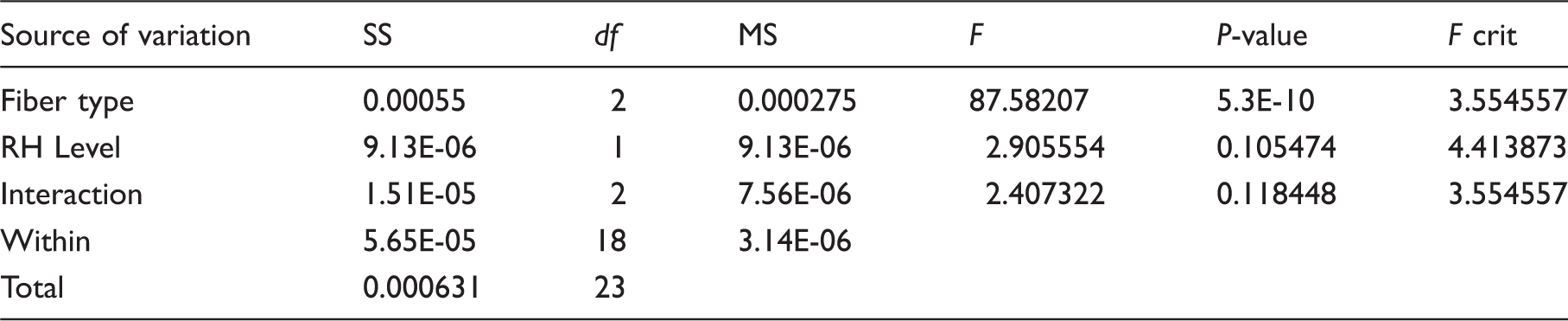
As noted previously, ISO11092 and the sweating guarded hotplate instrument are currently well established and widely used as a tool for assessing the comfort attributes of fabrics by measuring steady-state thermal and water vapor transport properties. The current work has illustrated that with a simple procedural change to the existing test method using the sweating guarded hotplate instrument a determination of the dynamic moisture buffering potential is also possible. Further, while the peak area data has been extracted manually in the current work, it is envisaged that a relatively simple algorithm could be incorporated into the instrument’ s software to automate extraction of these data.
Static and dynamic breathability
Returning to the broader consumer concept of breathability, it is perhaps unfortunate that sometimes breathability is linked to the steady-state water vapor resistance value (Ret) of a fabric/garment. It is clear that while the water vapor resistance value is indeed relevant to an assessment of the comfort attributes of a fabric under stationary or static wear conditions, the additional information available from a determination of dynamic moisture buffering potential can be an important contribution to comfort in non-stationary wear situations. Using this language, perhaps a more helpful interpretation of the standard Ret value would be as a measure of static breathability and the new measurement of dynamic moisture buffering potential presented in the work as dynamic breathability. Further, it is interesting that static breathability appears to be determined by fabric properties (e.g., fabric thickness) and independent of fiber type whereas, in contrast, dynamic breathability is strongly influenced by fiber type (e.g., natural/hygroscopic versus non-absorbent).
Conclusions
One outcome of this study is that, after accounting for small differences in fabric thickness, the water vapor resistance (Ret) values for the well-matched fabrics from the three different fiber types (wool, cotton and polyester) were found to be similar, that is, independent of fiber type. This is consistent with the other, albeit limited, available published information. It highlights the limitations of steady-state water vapor resistance in being able to discriminate the comfort of garments manufactured from natural and synthetic fibers, particularly in non-stationary wear conditions.
A technique is presented to measure the dynamic moisture buffering potential of fabrics, an important additional component of comfort in non-stationary wear conditions. The technique using the sweating guarded hotplate instrument in a novel and dynamic mode of operation is sufficiently sensitive to measure a transient in the heat flux of the instrument when the humidity of the surrounding environment is changed. This transient peak area is shown to be a measure of the moisture buffering potential of the test fabric. The between replicate and between test specimen variabilities associated with this measurement are indeed small relative to the between fiber type effects of interest, which suggests it has potential as a viable test method. Evaluation over a wider range of fabrics will be required to confirm the applicability of the approach.
Finally, based on these two outcomes, it is concluded that two independent moisture-related components of comfort can be readily obtained using the sweating guarded hotplate instrument. Steady-state water vapor resistance Ret relates to comfort in stationary wear situations characterized by insensible perspiration and steady-state heat and moisture vapor fluxes. The new measurement of dynamic moisture buffering potential is relevant to an additional component of comfort that arises in non-stationary wear situations, for example, changing environmental conditions and/or changing levels of activity. These two components of comfort are complementary. For example, water vapor resistance largely captures the contribution of fabric properties (e.g., fabric weight), and dynamic moisture buffering potential captures a component of comfort largely determined by fiber properties, for example, fiber type.
Footnotes
Acknowledgements
The author thanks Deakin University for use of their sweating guarded hotplate instrument. Thanks also to Carol Naylor for technical editing and proof reading assistance.
Declaration of conflicting interests
The authors declared no potential conflicts of interest with respect to the research, authorship and/or publication of this article.
Funding
The authors received the following financial support for the research, authorship, and/or publication of this article: This work was supported by Australian Wool Innovation.