




Abstract
The world is highly occulocentric, in which vision in terms of access is placed above all other senses. Visual materials such as worksheets, maps, graphics, illustrations, videos, and written texts are the standard tools for learning, making access challenging for students with visual impairments (VI). Students with VI contend daily with a system that is not inherently designed for them. Teachers of students with visual impairments (TSVI) are specialized, credentialed, and highly qualified educators who provide avenues for the access needs of a student with VI. Beyond ensuring equitable access to academics, their next area of focus is the expanded core curriculum (ECC), which is a disability-specific curriculum consisting of nine essential skill areas supporting the holistic development of students with VI. However, supporting the development of all children relies on effective collaboration and open communication among educational teams to be truly impactful.

As the academic year draws near, Mr. Roberts is notified that a new student will be joining the fourth-grade class. The student, albeit performing at grade level, has a visual impairment (VI) with specific accessibility needs. Mr. Roberts has been teaching for over a decade and never had a student with any kind of VI. He has no idea how to begin. He is familiar with fidgety students who may need extra breaks or movement and students who struggle with reading, but he has no experience with visual access needs. He reflects on his training and does not recall much in terms of learning about blindness. He reaches out to his principal and district special education coordinator for support.
In this highly occulocentric world, the inclusion of students with visual impairments (VI; i.e., those who are blind or have low vision) is often met with significant uncertainty. Although substantial efforts have been made to include and educate individuals with disabilities (e.g., UN Human Rights Commission, Americans with Disabilities Act), challenges persist when addressing blindness and VIs. Teachers via preparation programs, depending on their area of specialization, may have limited exposure to low-incidence disabilities such as VI (UNICEF, 2012). Many educators may go years without having a blind student in their classrooms and may require guidance on how to proceed when they do. This article introduces education professionals to the vision services available for students while highlighting the importance of collaboration. By working together, educators can ensure students receive the necessary support to thrive and achieve a high quality of life as adults. A crucial team member in this process is the teacher of students with visual impairments (TSVI).
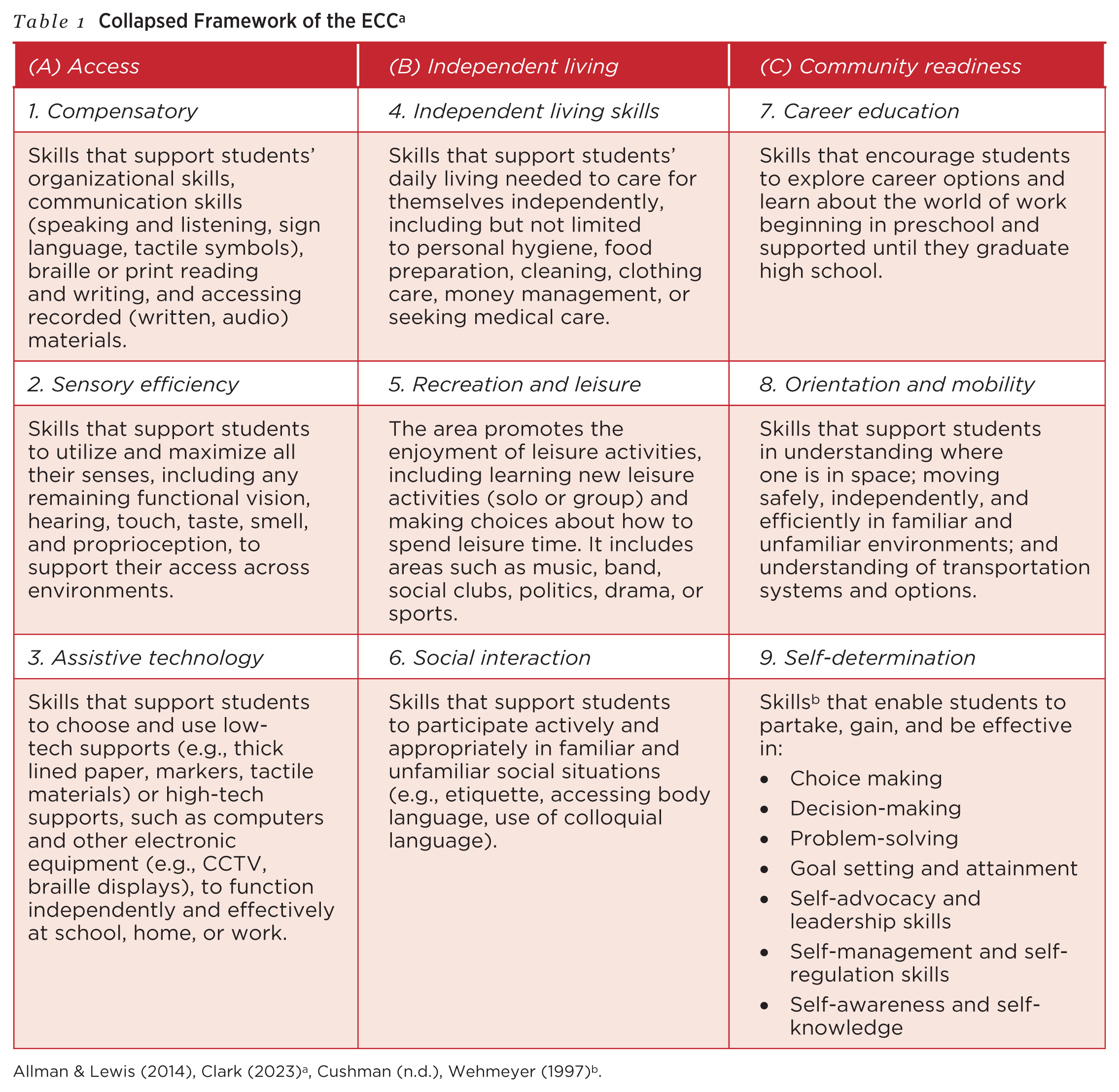
Ms. Daniels, the district TSVI, receives an email from Mr. Roberts regarding a new student who will be joining his classroom. Emery, an incoming fourth grader in an academic setting, was diagnosed with optic nerve hypoplasia at birth. As Ms. Daniels reviews the files, she learns that at Emery’s previous school, they received only consultative services from a TSVI and did not receive any disability-specific instruction. It is also revealed that Emery’s vision has worsened significantly over the past year, leading to frequent headaches and eye fatigue. After the initial team meeting, everyone agrees that a comprehensive reevaluation of Emery’s functional vision needs is necessary. In the meantime, Ms. Daniels provides Mr. Roberts with information about the TSVI’s role, the expanded core curriculum (ECC;
“
Collapsed Framework of the ECC a
Ways to Begin Supporting Students With Visual Impairments
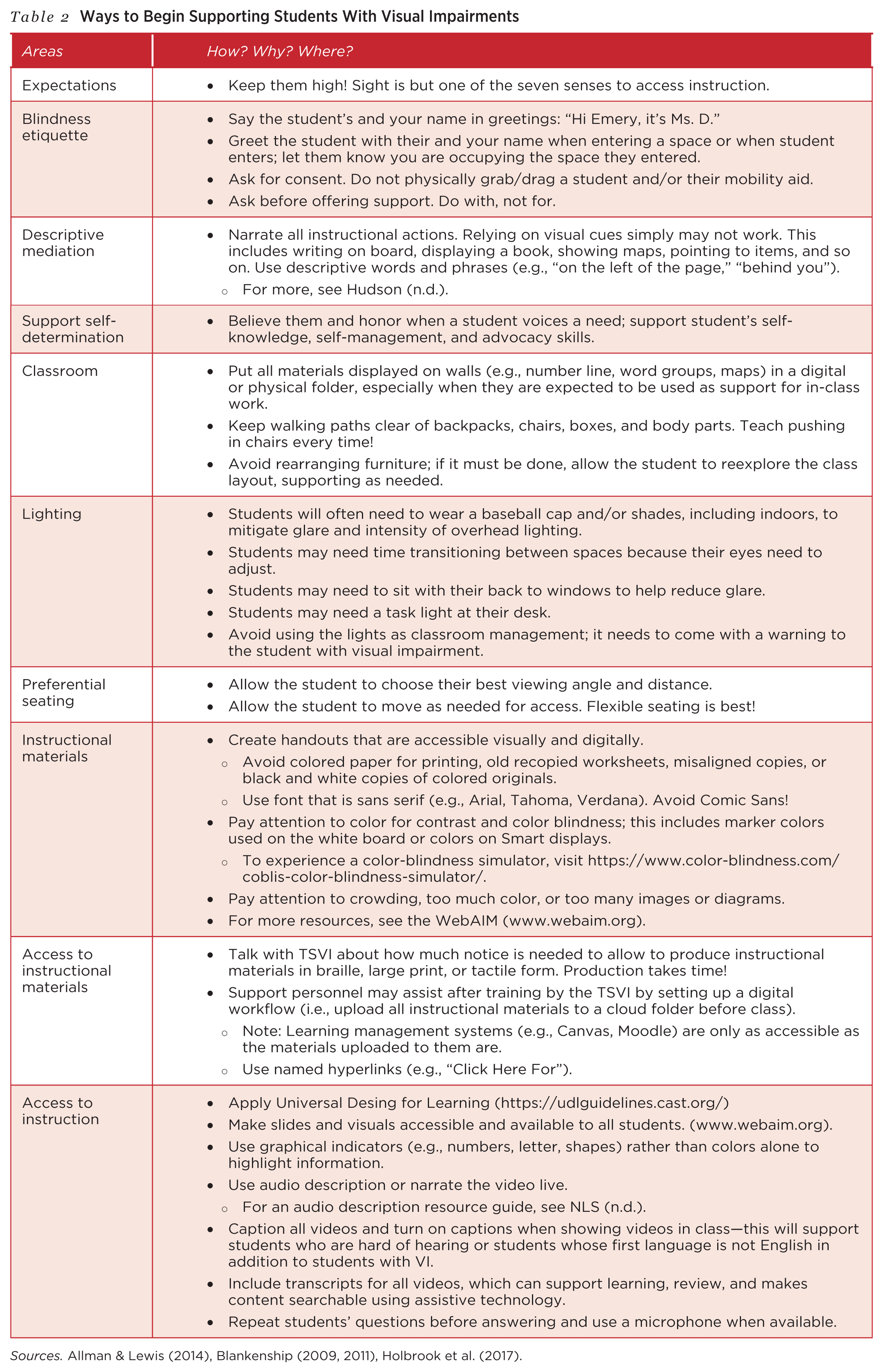
Sources. Allman & Lewis (2014), Blankenship (2009, 2011), Holbrook et al. (2017).
Role of TSVIs
TSVIs are highly trained professionals who usually hold a master’s degree in education or a related field along with specialized certification or credential to teach students with VIs (Blankenship, 2005; Fundelius, 2023; Wolffe et al., 2002). Like many related service providers—such as occupational therapists, physical therapists, and orientation and mobility (O&M) specialists—TSVIs primarily work in itinerant settings. Itinerant (travel) teaching demands a high degree of flexibility and strong compensatory skills. TSVIs must manage complex schedules across multiple locations; complete assessments; write individualized goals across multiple ages, educational levels, and needs; and maintain strong time management and orientation skills to navigate between schools. Furthermore, they need excellent social skills because they must collaborate with educators, other service providers, and families with diverse backgrounds.
Depending on state or provincial policies, TSVIs support students from birth to age 22 through either consultation—offering guidance to the educational team—or direct instruction in blindness-related skills under the disability-specific curriculum of the ECC (
Ms. Daniels and Mr. Garcia, the certified O&M specialist, agree to collaborate on evaluating Emery’s current knowledge and skills across all nine areas of the ECC and completing a comprehensive functional vision assessment (FVA). Together, they cover Emery’s in-class and broader environmental access needs, providing the team with a comprehensive report. During the assessments, they will also discuss and document how the educational team—including classroom teachers, assistants, related service providers, administration, and caregivers—can best support Emery in the new academic year. Furthermore, they will highlight strategies to empower Emery in developing effective self-advocacy skills. In addition, Ms. Daniels will complete the evaluation process with the completion of a learning media assessment (LMA), which will highlight ways Emery accesses the environment and instruction.
Planning to the Adult: Assessments and Goals
In the fast-paced world of education, it is easy to overlook the long-term goal outlined by John Dewey in 1938: helping children become productive and valued members of society (Garrison et al., 2012). Before setting meaningful, long-term goals, comprehensive assessments—particularly those conducted by vision professionals—must be completed (
“
Essential Assessments
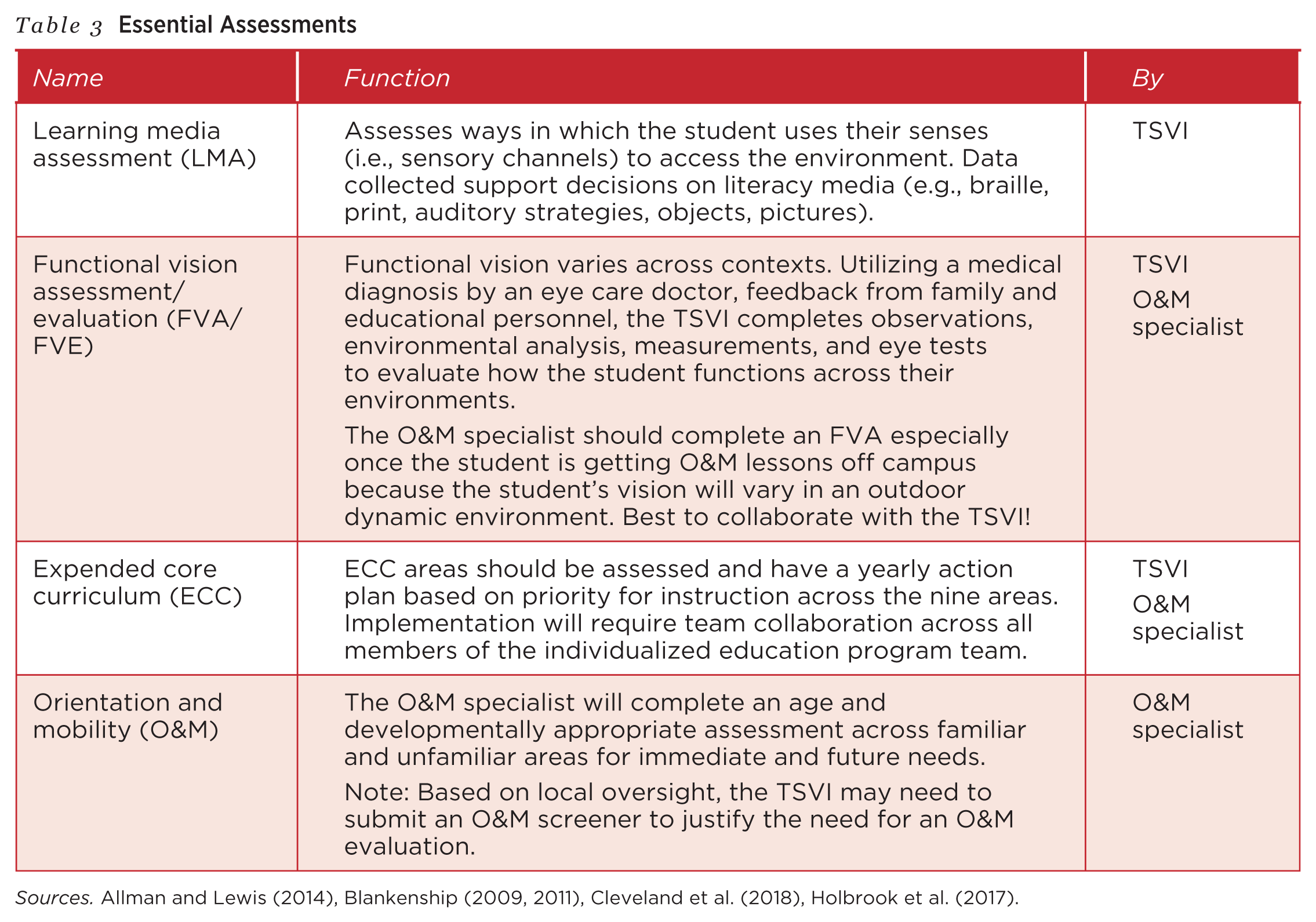
Once all assessments have been completed, only then can a clear picture emerge of the student’s needs and provide opportunities for teaming toward an individualized plan. Goals need to be based on assessment data and priorities across the ECC (e.g., braille or compensatory for a blind student, play and social skills for a preschooler, or career education for an incoming high school student). When ECC goals connect to academic expectations of the student’s grade level (
Interaction of a VI-Specific Goal, ECC Areas, and Academics
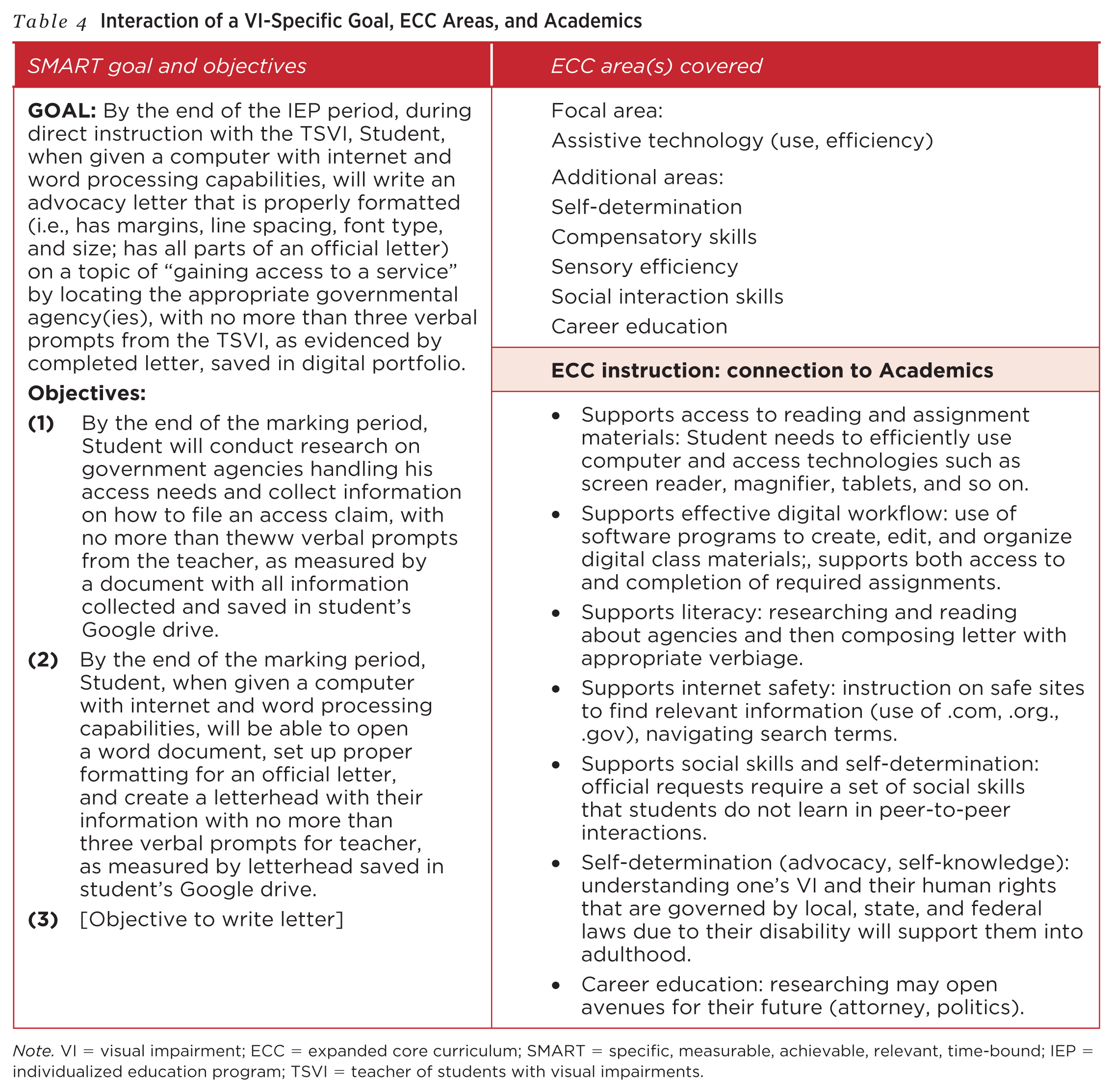
Note. VI = visual impairment; ECC = expanded core curriculum; SMART = specific, measurable, achievable, relevant, time-bound; IEP = individualized education program; TSVI = teacher of students with visual impairments.
Opportunities for Collaboration
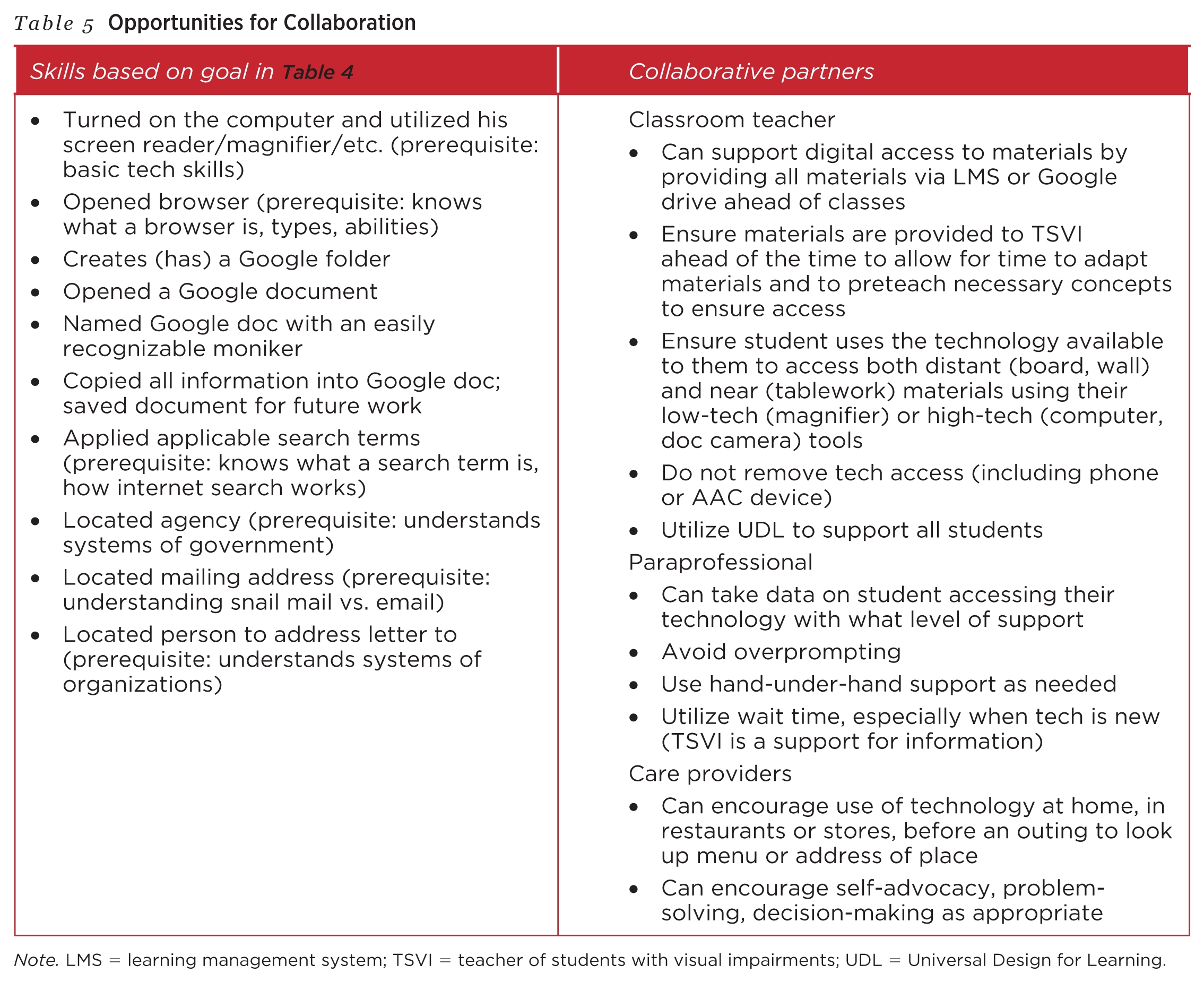
Note. LMS = learning management system; TSVI = teacher of students with visual impairments; UDL = Universal Design for Learning.
During the assessment period, Mr. Roberts needed additional assistance in making instruction accessible and meaningful for Emery. Ms. Daniels spoke with Emery about their needs. Emery used the computer to create a list of immediate needs, such as receiving the slide deck and handouts via electronic means before class, being allowed to use assistive technology (including cell phone) as needed to access materials, and extended time to complete assignments and exams. Due to the sudden decline in Emery’s vision, as they learn additional techniques to deal with the newness of eye fatigue and headaches, they asked for patience most of all. The three of them met to discuss Emery’s needs. Mr. Roberts felt that the information coming from Emery was very helpful and encouraged Emery to speak up as new concerns surfaced. Ms. Daniels used the time spent on the meeting preparation to assess Emery’s compensatory access skills, use of technology, self-advocacy, and social skills.
Disability-Specific Curriculum
The National Agenda (Corn et al., 1995) was a pivotal effort to focus national attention on the educational needs of students with VI, including those with multiple disabilities. It outlined key priorities—such as access to qualified teachers, appropriate materials, and transition services—to improve consistency and equity across states. Developed by professionals in the field, the agenda helped guide policy and promote accountability in service delivery. Soon followed the disability-specific curriculum that supported nine essential areas, named the “expanded core curriculum” (Hatlen, 1996;
Educational teams often find the ECC overwhelming, which can make it difficult to fully appreciate its value and to ensure that TSVIs have adequate instructional time to support students across all the areas where they have needs. Allman and Lewis (2014) highlighted in the book ECC Essentials that the nine areas cannot be effectively covered if they are treated in isolation. Robbin Clark, an educator and advocate, simplified the ECC by creating a framework—developed with guidance from Dr. Karen Wolffe—that organizes the nine skill areas into three main focus areas: (a) access skills, (b) independent living skills, and (c) career access (Clark, 2023;
Once all assessments are completed and the IEP team convenes, Emery shares their plan for the upcoming year. The plan highlights that they need comprehensive O&M instruction to support their safer and independent travel. Areas that impact academic instruction include the following: Emery will self-advocate for their access needs in their classes and will be taking a proactive position by concentrating on learning new assistive technology to support their access to materials and instruction. Emery shares with the team the font and font sizes they prefer for printed materials, ways to support their access to an effective digital workflow (e.g., Google folder, emailed materials), lighting, and seating needs. The team discusses ways in which they will collaboratively approach data collection. Mr. Roberts will expect Emery to use their technology, provide space for self-advocacy, and upload materials to the learning management site before classes. The caregivers will support social activities and independent travel skills as Emery progresses in their O&M instruction. The team agrees to continue having high expectations for Emery and to communicate with each other to ensure Emery is effectively supported in their journey across their life span.
Collaborative Teaming
The fundamentals of effective teaching have been distilled into what is known as “high-leverage practices” (McLeskey et al., 2017), which encompass four key components: collaboration, assessment, social-emotional and behavioral practices, and instruction (
“
Selected High-Leverage Practices (HLPs)
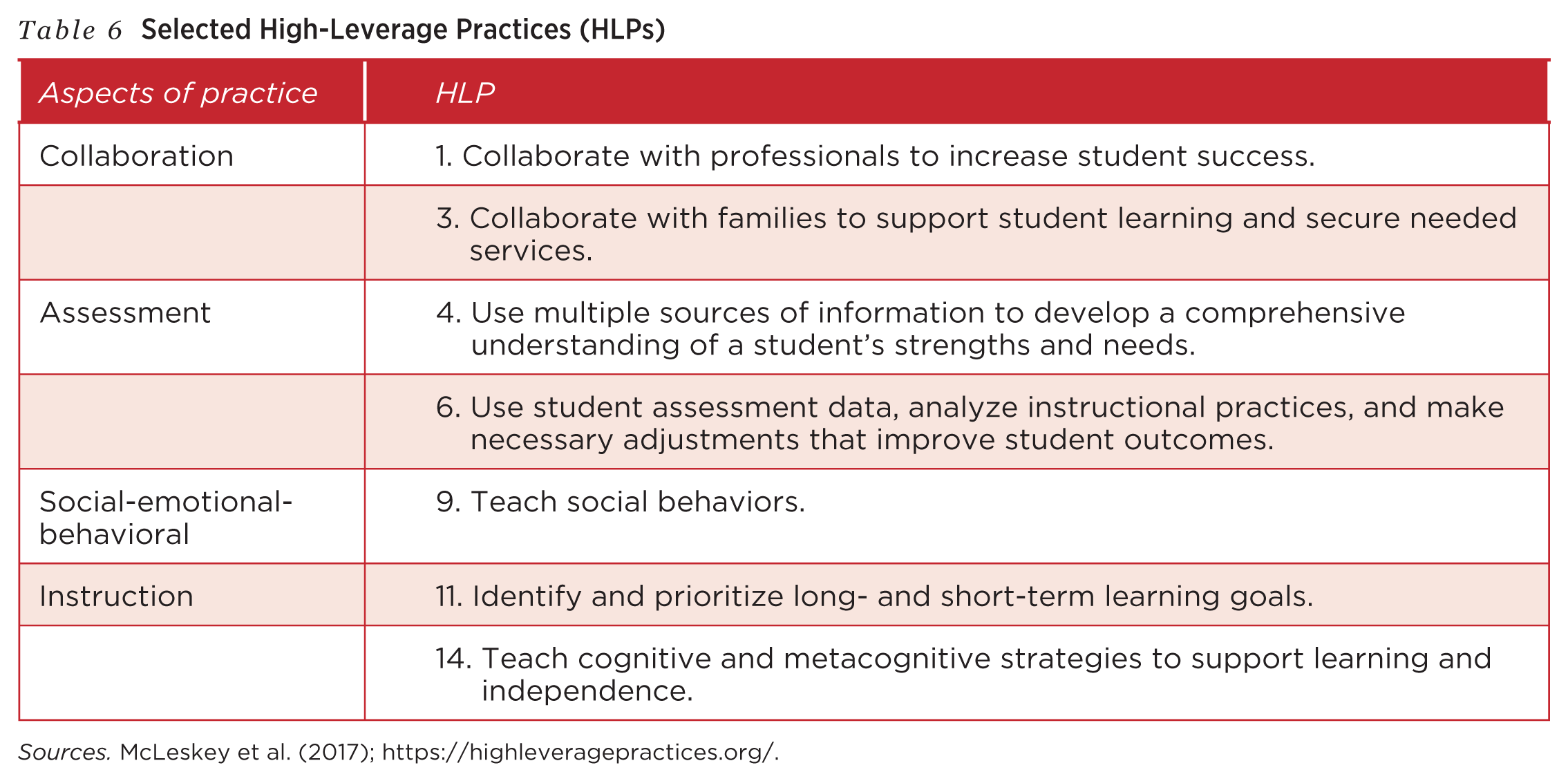
The heavy reliance on vision and visual materials in schools presents significant challenges for students with VI. However, understanding and addressing a student’s specific support needs creates opportunities for classroom teachers to apply Universal Design for Learning principles (Meyer & Rose, 2025). For example, a blind student may struggle to create a visually pleasing PowerPoint presentation without sighted assistance. However, allowing them to present their learning through tactile elements provides an alternative means of representation while simultaneously supporting their compensatory and sensory efficiency skills. Additionally, if the student needs to purchase materials to complete their presentation, they are also developing independent living skills, O&M skills, and self-determination, supported by the vision team. In one simple adjustment, five areas of the ECC are supported while making academic instruction more inclusive.
Students with VI are frequently excluded from physical education classes due to safety concerns or low expectations (Allman & Lewis, 2014). However, an inclusive approach—such as assigning a sighted student to serve as a guide runner or using high-contrast sports equipment with auditory cues—can increase participation for all students. When students with VI are meaningfully included and effectively taught across all physical education units, they have opportunities to develop key areas of the ECC, such as social skills, sensory efficiency, and independent living skills (Lieberman et al., 2013, 2014). By incorporating creative, inclusive strategies, educators can enhance all students’ experiences and foster a lasting sense of belonging.
Meaningful caregiver involvement in planning, supporting, and teaching ECC skills accelerates a student’s development (Avendaño & Cho, 2020; Garbacz et al., 2022; Kea et al., 2025). Encouraging students to practice technology skills while completing homework or setting high expectations for independent living skills at home (e.g., cleaning, laundry, meal preparation, personal care) contributes to positive long-term outcomes. Additionally, as the role of paraeducators (i.e., educational assistants, teacher’s aides) continues to expand, it is critical that they receive proper training (McDermott et al., 2024) on effectively supporting students with VI. Strategies such as providing guidance rather than completing tasks for the student and using hand-under-hand physical support promote independence and help develop confident, self-sufficient adults (Brock et al., 2017; Scheef et al., 2023).
Teaching to the Adult
People develop an understanding of quality of life (QoL) based on their individual experiences, and for many, meaningful employment and social inclusion are key components. Given the ongoing challenges of underemployment and unemployment faced by individuals with disabilities—often due to social biases and systemic barriers—it is unsurprising that postsecondary outcomes for students with VI remain disappointing (OCED, 2022). Such outcomes reflect more than just a lack of employment; they highlight deficits in job and social skills, motivation, self-confidence, and independence (Antonelli et al., 2018; Cmar et al., 2018). This situation runs counter to the objectives of global educational and disability policies and undermines the core principles of inclusion.
Research on children’s QoL is limited, but Chadha and Subramanian (2011) found that QoL indicators tend to decline as children with VI grow older. This trend is further supported by Kordestani et al. (2014), who found that students with VI often lack essential social and coping skills, leading to social isolation and lower overall QoL measures as they age. Additionally, Cmar (2015) noted that students who had opportunities to develop independent travel skills or who were held to high expectations were more likely to gain employment. These findings underscore the importance of comprehensive, collaborative instruction across all areas of the ECC. Intentionality is essential when educating students with VI. This work begins in early childhood and depends on current, comprehensive, and accurate data—supported by high-quality assessments (
“
Whereas classroom teachers are responsible for delivering meaningful and accessible instruction in the core curriculum, the TSVI is responsible for supporting students’ access needs and providing instruction across relevant areas of the expanded core curriculum. TSVIs may also coach paraprofessionals and offer consultation to promote inclusive and accessible instruction for all learners. With thoughtful planning, collaboration, and active involvement of students and families in decision-making, educators can create learning environments—both at school and at home—that support the development of self-reliant, independent learners who can become valued members of their communities and lead meaningful lives.
Footnotes
Declaration of Conflicting Interests
The author declared no potential conflicts of interest with respect to the research, authorship, and/or publication of this article.
Funding
The author received no financial support for the research, authorship, and/or publication of this article.
