




Abstract
Using Bourdieusian class analysis, this mixed-methods study examines the nuances in the upward mobility of Filipino nurse migrants in the Republic of Ireland as they move from the Philippines to Ireland. The article illustrates how the transnational connections of nurses create cleavages among them as a micro-class category in the host state and argues how the social class position of the family continues to impact on the class conditions of migrants – especially those from lower income backgrounds. In contrast, the financial independence of higher income families leads to better life chances for nurses allowing them to invest in additional economic capital, pursue personal projects and improve their symbolic capital. This can be described as the social reproduction of inequality on a transnational scale, which has repercussions on the present and future class conditions of migrants. The article contributes to discussions on class conditions and mobility from a transnational frame.
Introduction
Carmen, a Dublin-based Filipino nurse works as a manager for a large public hospital in Ireland. In her newly bought Dublin home, her bag and shoe collections are lined up on a wall. Many of them are high-end brands whose prices range from hundreds to thousands of euros. Her closet also contains her collections of luxury apparel one would normally see in magazines or clothes racks of high-end shops. Since she has had no financial obligations to her upper-middle-class family back home (her father was a doctor who owned a small private hospital in her home province), she was also able to save up and buy a house with her Central Asian husband, who runs a thriving importation business in Dublin. Although her privileged situation is not the norm for all nurses, it illustrates the possibility for substantial upward social mobility for middling migrants abroad. Carmen belongs to a class of migrant professionals from developing countries who possess the cultural capital to unlock ‘social and economic capital’, pursue ‘lifestyle experiences’ (Robertson and Roberts, 2022: 2–3) and convert their cultural and economic capital to symbolic capital as highly skilled professionals employed in industrialised economies (Bourdieu, 2013).
Migrant nurses are distinct from the archetypal unskilled, low-waged manual labourers from developing countries (Islam and Cojocaru, 2016; Parreñas, 2001) and elite transnational migrants, who possess wealth, privilege and clout (Sklair, 2000). They are ‘skilled’, ‘educated’, ‘globally mobile’ and relatively well-paid non-elite denizens (Smith and Favell, 2006: 6) who belong to a category called middling or middle-class migrants, whose class location rests in the middle of the two aforementioned migrant groups. They share similarities with settled middle-class populations (Wee and Yeoh, 2021), but are set apart by their transnational context that shapes their experiences as workers differently.
Traditionally passed over in research due to their heterogeneity, fragmentation and wavering class allegiances and positions, the middle classes came into the forefront of research in the 1980s (Burris, 1980; Hamnett, 2003). Estimated to reach two billion by 2030 (Das, 2009), the growth in their numbers has coincided with the improvement in international wealth and living standards in the post-war era; the adoption and appropriation of ‘values, habits, and lifestyles’ associated with the West (Lange and Meier, 2009: 2); and labour and lifestyle migration motivated by economic goals, ‘choice, affluence, and self-actualisation’ (Robertson and Roberts, 2022: 2). The growth of the middle classes has also fuelled consumerist culture (Lopez and Weinstein, 2012; Lury, 1996), which indicates the possession of disposable income to achieve prestige and status.
However, despite the surge in their numbers worldwide particularly from the 1950s to the 1980s, the class location of the middle classes has never been as insecure. While capitalism has brought about an increase of wealth across different groups, the middle classes from the world over (Kocchar, 2017) have been subject to intermittent economic insecurity (Sassen, 2013). Composed of a wealthier and more disadvantaged groups (Sassen, 2014), the latter group is highly prone to economic shocks. Unlike middle classes from the Keynesian era who benefited from robust social benefits that buffered their experience of economic shocks, current day middle classes are increasingly subjected to economic insecurity brought about by diminished state support and government neoliberal discourses. Neoliberal capitalism from the 1980s onwards (Kotz, 2009) and the diminishing role of the welfare state (Sassen, 2014; Schram, 2015) have made them increasingly vulnerable to financial insecurities.
The growing research interest on middling migrants is a more recent phenomenon, a refreshing break from the focus on elite and marginalised migrants in class research (Scott, 2019). Research works on middling migrants re-examine serial migration and locational mobility (Wee and Yeoh, 2021); the depreciation of class identities with migrant movement from developing countries to more prosperous states where migrants occupy low status jobs (Adler, 2022); the assertion of ‘local middle class belonging’ through the performance of gender and ethnic roles (Takahashi, 2022: 148); and middle-class lifestyle migration to maximise economic capital that allows them to fully express their middle-class habitus (Osbaldiston, 2022). Other works examine the occupational class of migrant nurses and how their institutional affiliation (public vs private) creates cleavages in their class conditions within and across states (Trinidad and Faas, forthcoming). This article examines another layer of ‘complexity’ (Erel, 2010: 646) in the migrants’ class conditions by probing social mobility processes in a transnational context.
The article answers the question: how are the socio-economic class conditions of migrant nurses impacted by their transnational context and the various fields they belong to? This article looks at how their transnational existence creates divergent and heterogeneous class conditions that create privilege in some, and disadvantage in others. This is important because physical space ‘indicate[s] the absence or presence of contexts of access and of possibilities of choice’, which create complexity in their class experiences (Milanovic, 2016: 452). It examines aspects of the lives of migrant Filipino nurses in the Republic of Ireland (henceforth, Ireland) to illustrate how connections to geographical or physical space and specific fields reinforce or constrain their lifestyle choices, opportunities and life chances. At the outset, the article argues Filipino nurse migration as largely a middling migration phenomenon involving middle-class nurses who are driven by aspirations for upward social mobility. However, upward social mobility is not a straightforward process. The ‘standards of living’, ‘material security’ and the choices migrants make (Wright, 2002: 28) are contingent on various factors that create within class differences in their class conditions.
Filipino nurses in Ireland offer a good case study of a micro-class category of migrant workers. They are highly skilled migrant healthcare professionals from a middle-income country who pursue social mobility in a high-income country. Around 6348 Filipino nurses work in Ireland based on the 2023 Nursing and Midwifery Board’s records. They augment workforce shortages and address the expanding healthcare needs of the country (Humphries et al., 2008). Filipino nurses generally receive better wages in Ireland than in the UK or the Middle East (Trinidad and Faas, forthcoming). The country also ranks 13th in the European Union in terms of standards of living related to the consumption of goods and services including health and education services (Taylor, 2021). All these open possibilities for economic advancement for migrants and their families.
Theoretical Framework
The micro-class category refers to specific ‘institutionalised occupations’ that are distinct from ‘institutionalised big classes’ (Jonsson et al., 2009: 982–983). Goldthorpe and Marshall (1992) and Savage et al. (2015) classified the latter into occupational aggregations where professionals occupy mid-level positions different from unskilled manual workers and those occupying high-level positions (Savage et al., 2013). Jonsson et al. (2009) note that micro-classes (e.g. nurses, doctors or accountants) serve vital functions in the social reproduction of classes. Micro-class groups exhibit processes (e.g. interest formation, class consciousness) and traits (e.g. practices) displayed by big classes (Jonsson et al., 2009), allowing the study of class and its processes on a smaller scale.
Bourdieu holds that class analysis ‘cannot be reduced to the analysis of economic relations’ alone, but also involves the examination of ‘symbolic relations’ that distinguish people’s lifestyles and status (Weininger, 2005: 84). It examines the larger constellation of social relations, while looking at class as a process that cannot be separated from individual experience and perspective (Cederberg, 2017). Analysis focuses on actual class-making processes in the ‘symbolic and cultural’ and ‘social or material realms’ (Amelina and Schäfer, 2023: 3; Bourdieu, 2013; Weininger, 2005) to uncover class complexities and to avoid viewing ‘“classes” as “given entities”’ (Amelina and Schäfer, 2023: 3).
Highly skilled workers with globally recognised, institutionalised cultural capital (Weiss, 2005) like nurses acquire economic capital in the migration field associated with the middle classes (Ho, 2011). This allows nurses to engage in distinctive middle-class lifestyles that provide them with symbolic capital (Bourdieu, 1984) to demarcate themselves from other class groups (Weininger, 2005). These can be seen through lifestyles, lifestyle choices and life chances (Moore, 2008: 110; Oliver and O’Reilly, 2010) that mark their social status (Bourdieu, 2013).
‘Economic, cultural and social resources’ enable migrants to achieve upward social mobility that leads to improvements in living standards enough to enjoy ‘leisure, material security, and other things’ (Wright, 2002: 28). On the other hand, possession of objective capitals such as land properties, designer clothes, house decor (Bourdieu, 2013) and artefacts imbued with symbolic value (Moore, 2008) become emblems of upward social movement.
Interestingly, Carlson and Schneickert (2021: 1131) assert that the habitus or dispositions of people are forged heterogeneously in the transnational field, which belies the idea of habitus being a ‘homogenous totality’. As a result, migrants develop ‘multilocal, inconsistent, and instable class identities’ (Rye, 2019: 27). Furthermore, the multilocality of class means that migrants are inscribed in different class structures at the same time (Rye, 2019). This article further unravels such heterogeneities and complexities by looking at class processes involving the transformation of economic and symbolic capitals in plural locational contexts (Cederberg, 2017).
While location in the social hierarchies is socially reproduced (Crossley, 2008; Jonsson et al., 2009) the process and outcomes are not fated or inevitable (Stock, 2023). Differentiation occurs because human action and interaction occur in different physical spaces (Reed-Danahay, 2020) and different fields that have distinctive rules of the game (Thomson, 2008). Moreover, migrant capital conversion processes occur within an elaborate context that involves the convergence of structural, institutional and personal factors (Erel, 2010; Stock, 2023). Stock (2023), for instance, looks at how cultural capital is converted transnationally through adaptation to local contexts. The field consists of ‘objective, historical relations between positions’ (Bourdieu and Wacquant, 1992: 16) that engenders specific normative practices and principles (Weininger, 2005). It is a social space that opens or obstructs possibilities for people to attain ‘rewards, gains, [or] profits’ or experience ‘sanctions’ (Thomson, 2008; Weininger, 2005: 87).
Social mobility processes in the context of the global care chains will be examined in this article. This global network connects low- to middle-income and high-income states and institutions to a transnational care labour and commodity chains (Yeates, 2004). It connects workers to different ‘physical locations’ (Reed-Danahay, 2020: 30) that extend their ‘frames of reference for their actions’ (Nowicka, 2013: 29) and structure their experiences. Kim (2018: 279) further underscores how capitals are ‘constituted and reconstituted’ amid ‘relational’ and ‘political’ processes. In this article we regard the processes occuring within political and economic fields that additionally serve as contexts that actively shape migrant class conditions, creating varying levels of privilege and disadvantage among migrants. The embeddedness of nurses in these physical spaces creates nuances in their class location and their micro-sociological experience of their class conditions (Robertson and Roberts, 2022). Thus, this article examines the ‘micro-level’ class experiences of migrants and the ‘macro’ (Erel and Ryan, 2019: 259) transnational context and politico-economic fields that impact the class conditions of migrant nurses.
Methodology
Data for this article were derived from mixed-methods research involving a survey and semi-structured interviews with nurses in Ireland. Mixed methods were deemed appropriate given people’s possession of ‘resources and constraints that exist as “objective facts”’ and their ‘subjective’ class experiences (Breen and Rottman, 1995: 454–455). The survey captured variables like ‘income, savings’ and home ownership, ‘leisure interests, cultural tastes, social networks, and economic situation’ (Savage et al., 2015: 5–6), while the semi-structured interviews apprehended the complex connections between macro-social structures and context-based experiences (Goldthorpe and Marshall, 1992). Research instruments were pre-tested and revised for clarity, coherence and aptness. It underwent ethical approval by the Ethics Committee of the School of Social Sciences and Philosophy, Trinity College Dublin.
The 418 survey respondents were recruited through the authors’ personal networks and the social media pages of various Filipino groups in Ireland. Non-probability, convenience sampling was utilised given the absence of a sampling frame of Filipino nurses in Ireland. Respondents answered a 20-minute online survey on Survey Monkey.
Purposive sampling criteria consisting of gender (male vs. female), position (junior vs. senior) and location (Dublin vs. non-urban settings) were used to select 61 interviewees from the survey participants. The selection was predicated on predetermined theoretical considerations: the underrepresentation of male nurse experiences in research (Yeates, 2012), the differences in the class locations of managerial and staff workers (Savage et al., 2015) and the need to understand locality as a mediator of class (Robertson and Roberts, 2022). The criteria considered the intersectional perspectives and experiences of different categories of nurses (Onwuegbuzie and Collins, 2007). The 61 interview participants were drawn from survey participants who expressed interest in participating in the research further. Lasting from 60 to 180 minutes, the interviews were conducted via Zoom, Facebook Messenger or WhatsApp due to the Covid lockdowns.
Survey and interview questions revolved around multi-country work conditions, remittance practices, investment and settlement plans, consumption patterns, lifestyle upgrades, class status perceptions and experiences, discrimination and future plans, among others. The interviews provided in-depth discursive understanding of the experiences of migrants (Creswell, 2009). Conducted in Tagalog, English or both, the interviews were all recorded with permission and were transcribed and translated, as necessary, by the principal researcher who is fluent in both languages. Anonymisation and the suppression of identifying details were carried out to protect the respondents.
From the survey, consumption patterns in both Ireland and the Philippines were derived to determine the migration-induced changes in the nurses’ economic capital and material properties. Descriptive statistics were derived using Stata 17.
Interviews, on the other hand, were analysed using NVivo 12. Initial coding involved using both pre-established (Creswell, 2009) nodes or codes such as socio-economic situations in the Philippines and Ireland. Emerging themes were then identified from both qualitative and quantitative data. The article looked at how both sets of data corroborated or contradicted each other. Findings were then integrated to provide a better picture of the nurses’ transnational class experience.
Findings and Discussions
Filipino Nurse Migration as a Middling Migrant Phenomenon
Gaining a nursing degree in the Philippines requires considerable economic capital that Filipinos from lower class backgrounds normally have no access to. Tuition fees range from PhP12,145 or €204 (€0.017 = PhP1) for provincial public colleges or universities to PhP130,000 (€2181) for private nursing schools (Find University, 2022). Additional costs for books, internship fees, uniforms and other related expenses also have to be shouldered by the family. Alex, who hails from a less fortunate family from a Philippine province, explains: [The public university I went to is] not supposed to be expensive, but then nursing is an expensive course by itself because of requirements such as the affiliation programme [a month-long programme conducted in four consecutive summers in different healthcare work settings]. When we went to Manila, we paid for our hotel, which was expensive. I was lucky to make it to the dean’s list, which provided me a full scholarship that spared mom from paying for my travel expenses.
Bigger, publicly owned higher education institutions (HEI) offer cheaper tuition fees (Bautista et al., 2019) but also offer limited admissions. Selection processes are skewed in favour of students from middle-income families, who can afford private schools that commonly offer better basic education than public schools (Daway-Ducanes et al., 2022). Not surprisingly, 83.2% of our respondents went to private nursing schools where education is pricier, while 16.3% studied in public universities, strongly indicating the middle-class location of the respondents. This is corroborated by the survey where 82.7% of respondents self-identify as ‘neither rich nor poor’ (see Table 1). ‘Neither rich nor poor’ was used as a proxy for the middle-class category because it closely approximates the vernacular term, ‘hindi mayaman, hindi mahirap’ that pre-test respondents used to refer to their class location. Moreover, 47.5% of male and 52.4% of female household heads of the nurses were professionals, managers, business owners and overseas contract workers, which places them in middle-class positions in the Philippines. Because parents could put regular food on the table; afford rent, mortgage or tertiary education fees; and finance conveniences like gadgets or occasional travel, respondents consider themselves to be middle class. Possession of economic capital distinguishes them from the poor who have little or no means for these.
Self-reported socio-economic status.
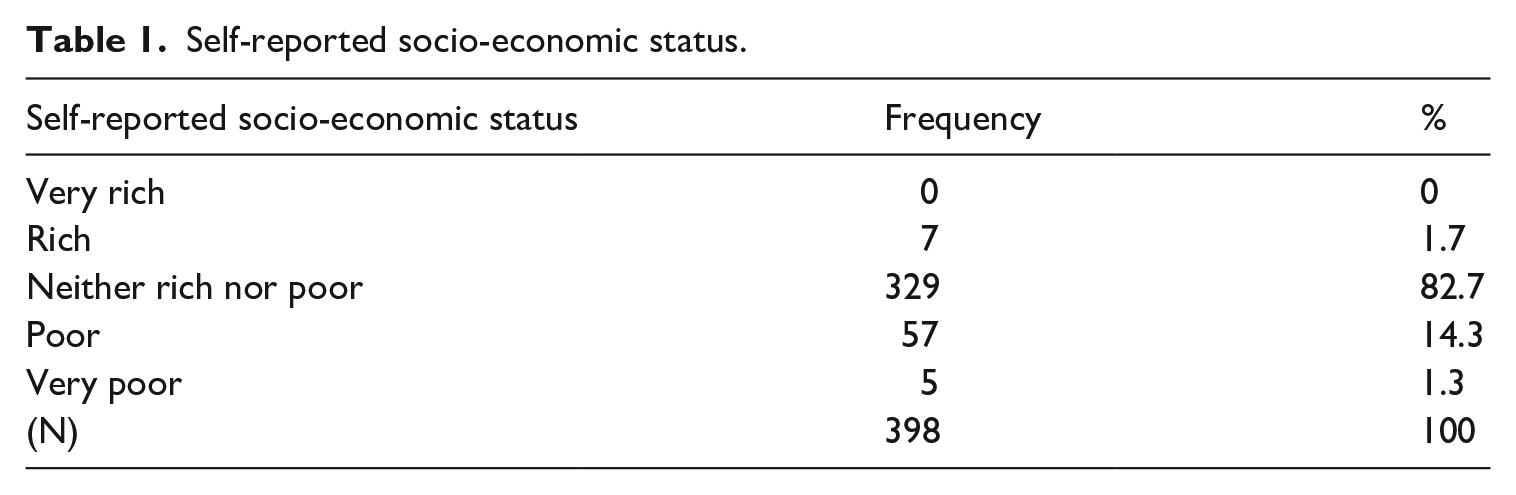
Income (Albert et al., 2018) along with education, employment assets, place of residence, housing tenure, consumption patterns, job stability and social connections (Never and Albert, 2021) serve as official determinants of socio-economic class in the Philippines. The middle classes are subdivided into three different sub-categories based on monthly income (Never and Albert, 2021): the lower middle (PhP19,040/€319 to PhP38,080/€639 at 2017 prices), intermediate middle (PhP38,080/€639 to PhP66,640/€1118) and upper-middle-income classes (PhP66,640/€1118 to PhP190,400/€3194). These provide an initial comparative reference point not only for class positions of nurses in the Philippines but also to understand differences in lifestyles and life chances of people from developed and developing countries. Filipinos from the upper-middle-income bracket can roughly afford similar lifestyles of the middle classes from the developed world. Those from upper-middle-class backgrounds most likely went to private schools, lived in family homes with similar amenities found in western households, updated their gadgets regularly, while a few travelled internationally within Asia or beyond. Nurses from middle- to lower-middle-income backgrounds, on the other hand, owned homes in less gentrified parts of the Philippines, some rented houses in informal settlement communities and had fewer economic and symbolic capitals than those in the upper brackets. Lisa, whose single mother was employed in the sales department of a large mall chain explains their middle-income situation: My brother and I went to private schools. We were provided with . . . uhm [lengthy pause] . . . I cannot say we were spoiled with material things. Like I remember when I was a kid, there were Barbie [dolls] . . . toys, but not many gadgets. It took a long time for [mom] to buy us a desktop and cell phones. I was already in college when I got my phone. There were like clothes, shoes, lots of gifts during Christmas, nice shoes and bags but the only backside [sic] to that was, she couldn’t save up to buy her own house. Until now, mom rents a house.
Even in the Philippines, the nursing degree is skewed towards those from families with economic capital to reproduce and/or deepen their social advantage (Thomson, 2008). Those from less fortunate backgrounds relied on their social capital to pursue nursing education such that 13% of the survey respondents received financial assistance from overseas or well-paid locally employed relatives, while a smaller 10% secured government and private scholarships.
The Pursuit of Upward Social Mobility
The out-migration of Filipino nurses has been fuelled by the volatile economy and the cyclical man-made and natural calamity-induced inflation in the Philippines (Asian Development Bank, 2009), exacerbated by stagnant real incomes across many professions. This has dented people’s belief in the government’s ability to address the inequitable income distribution in the country (The World Bank, 2022).
Many Filipino nurses start out as pro bono volunteers or underpaid professionals (Trinidad and Faas, forthcoming). Almost seven in 10 of the survey respondents earned approximately €3024 annually (see Table 2), which is on the lower end of Philippine salaries. Nurses in private hospitals (39%) received lower wages than those employed in public sector institutions. These problems are partly due to the Philippine Government’s sluggish initiatives to improve labour standards and its subscription to neoliberal policies (Bello, 2009). While wage hikes were enacted recently, local nursing unions critiqued these as insufficient to attain their middle-class aspirations, especially considering the global pandemic-induced inflation (Aurelio, 2022).
Distribution of the monthly salaries of respondents prior to migration.
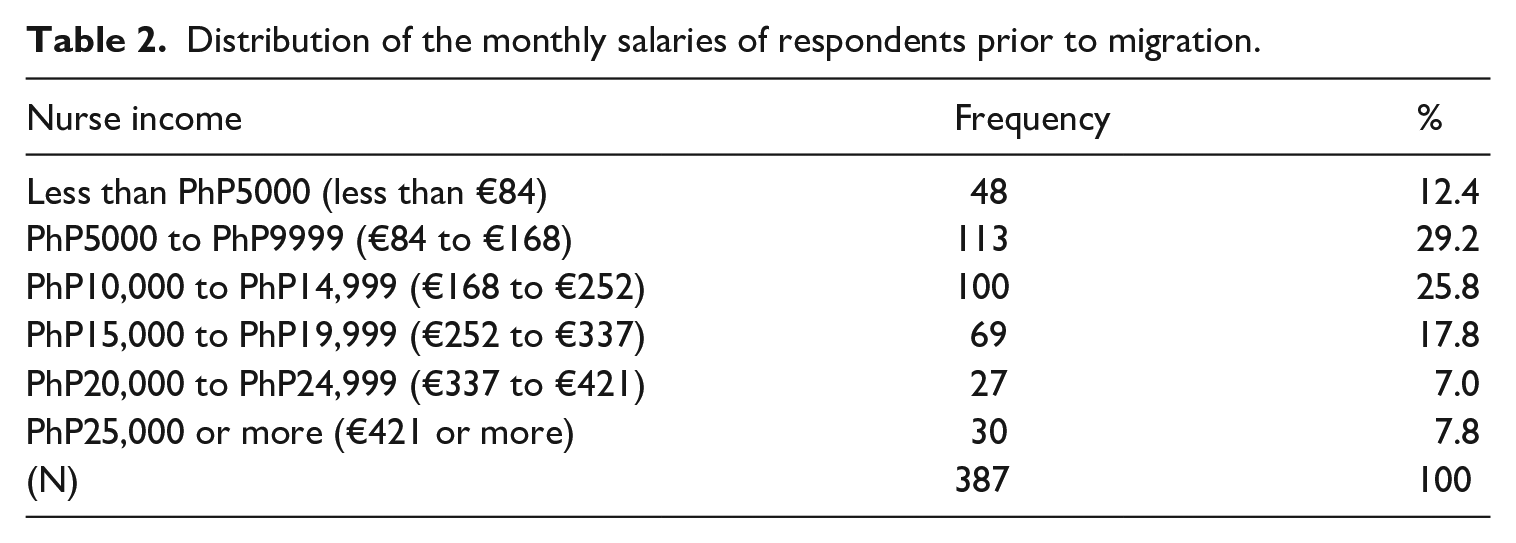
Nurses from lower income brackets usually felt the brunt of the financial strain at the start of their careers as they remained dependent on their economically distressed families. Even with full-time wages, the lower rates prevented them from contributing to the family finances and achieving their middle-class life goals. Expectedly, 51% of the migrants strongly agreed and 27% agreed to the statement ‘salaries [in the Philippines] were not enough for their needs’, regardless of the year they left the country, indicating the stagnant wages and labour conditions in the Philippines through time. Emma, whose annual salary was PhP144,000 (€2377) speaks about her limited life chances: I’d say it was just enough for my own needs. I don’t [sic] have luxuries; it was sufficient [to pay for rent, food and transportation]. But I couldn’t get my wants. I couldn’t help my family. I contributed only when I had extra money.
Nurses from more affluent backgrounds fared a little better with their access to free housing and financial support from parents. Exempt from filial financial obligations, they pursued lifestyle choices that generated symbolic capital that peers from lower income backgrounds did not have.
Inequalities run vertically (within the country) and horizontally (across different countries). Global socio-economic inequalities create deep cleavages in the standards of living between the Global North and South (Crompton, 1996). The lure of Ireland for nurses is related to higher salaries that enhances the nurses’ capacity to improve their economic and symbolic capitals. The annual incomes of junior nurses range from €33,943 to €51,628, while senior staff nurses earn a maximum of €54,079 based on Health Service Executive (HSE) rates in 2023 (Department of Health, 2023). Interestingly, the majority started out chasing the ‘American dream’; however, the selective and long-drawn capital conversion requirements of the USA forced many to bring their vision of ‘material acquisition’ and ‘conspicuous consumption’ (Guevarra, 2010: 166) elsewhere like Ireland.
The exponential growth of Ireland’s export market-driven economy (McQuinn et al., 2021) has contributed greatly to hikes in average real salaries that now surpass average OECD (2020) salaries. This has improved standards of living (Taylor, 2021) allowing people access to status symbols and prestige markers (Atkinson and Brandolini, 2013). Ireland opened its doors to the global migrant labour market to man different industries that its labour force cannot fill. This has attracted numerous migrants who are given access to a ‘package of employment relations and consumption opportunities’ (Jonsson et al., 2009: 980) that improve their lifestyle and life chances. Arthur, who comes from an upper-middle-class family and whose dad worked as a cargo ship captain, explains why he chose Ireland, ‘I want to provide what dad provided us, at least to maintain or even elevate the lifestyle of my future family.’
However, upward social mobility is neither a linear process nor an inevitable outcome for all (Crossley, 2008). The latitude of social mobility that migrants achieve varies depending on their transnational ties, the class backgrounds of families left behind and other variables like politico-economic variables that create divergent trajectories of upward social mobility.
Capital Conversion: Greater Latitude for Consumption and Familial Obligations
With increased economic capital, nurses can now afford things they could not back home. Economic capital is converted to symbolic capital such as luxury items (69%), local (91%) and international travel (90%), leisure activities (89%) and car ownership (54%) in Ireland. The privileged few like Karen, Nadia and Rex take their expenses a notch higher when they splurge on high-end apparel and fly in style to coveted destinations. A few have also thrown lavish parties for birthdays and wedding anniversaries, where members of the Filipino community are invited. The ‘assemblage of goods, clothes, practices, experiences, [and] appearance’ is their way of putting together a lifestyle (Featherstone, 1991: 86) mainly based on a ‘consumerist identity’ (Never and Albert, 2021: 596) that foregrounds the class location and identity (Corrigan, 1997) they have achieved.
However, this is not the norm for migrants. Nurses whose families are financially independent and whose siblings have the capacity to share the family financial burden are the ones who can flaunt their economic and symbolic capitals.
Nurses from humbler backgrounds are more circumspect with their expenses to stretch their resources for their transnational needs. Those with filial responsibilities send remittances ranging from €200 to €1500, the frequency of which is dictated by the family’s needs. The varying degrees of responsibilities to the left behind are akin to the ‘different degrees of migrant transnationalism’ (Nowicka, 2013: 31). Less privileged nurses use their economic capital to pay for welfare services that the Philippine Government could not provide to their family back home like healthcare services (70%), siblings’ education (37%) and affordable housing (63%).
Economic capital that is deployed transnationally is a testament to the significant changes in their economic and symbolic capitals as evidenced by their possession of material goods and the capacity to purchase basic services for their family back home that sets them apart from those who cannot afford them. Lury (1996: 90) explains: [Bourdieu] describes how individuals struggle to improve their social position by manipulating the cultural representation of their situation in the social field. They accomplish this, in part, by affirming the superiority of their taste and lifestyle with the view to legitimising their own identity as ‘what it is right to be’.
Home Ownership and Inequalities within the Micro-Class Group
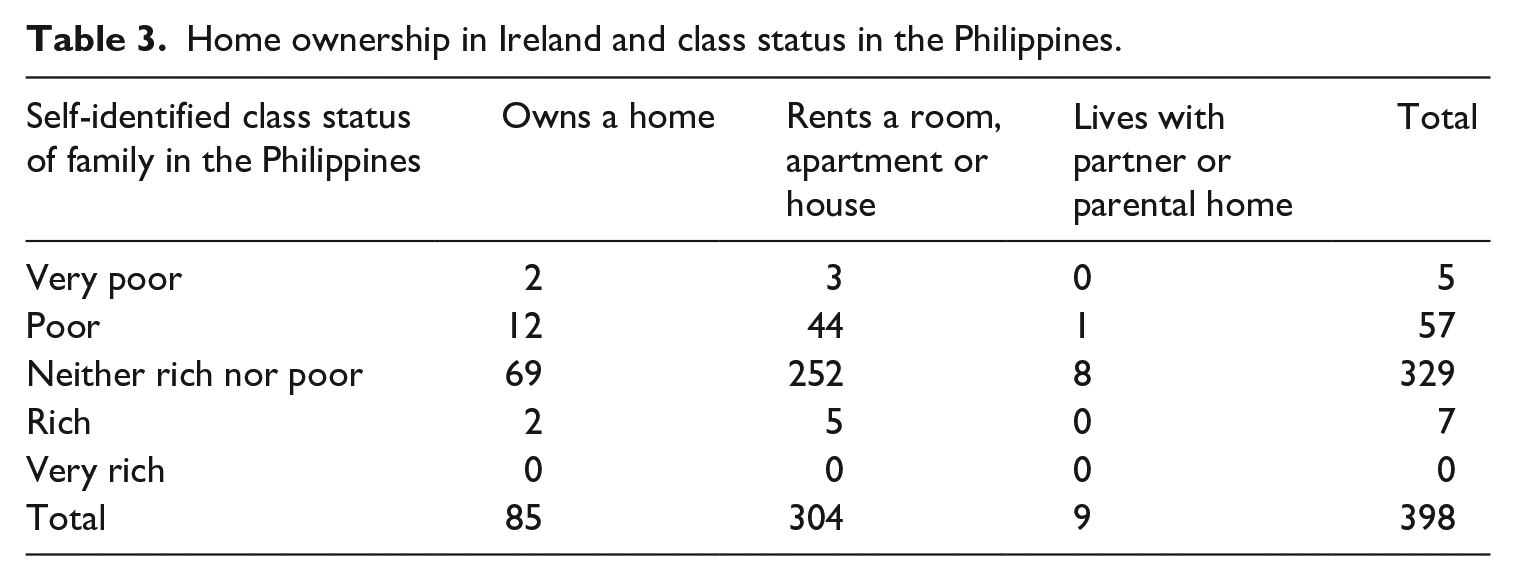
Six of 10 survey respondents bought, built or renovated homes for family members in the Philippines. Interviewed nurses from less economically established families who were not homeowners were more likely to purchase a house back home as their first initial major expense (Table 3). Home ownership is an indicator of class location in the Philippines. For many, the purchase has been aided by auspicious conditions in the transnational field, such as favourable exchange rates, the comparative affordability of housing in the Philippines, uncertainties in one’s retirement or settlement plans or asserting their improved social status in their home community. Leandro, who took advantage of the favourable economic fundamentals in the early 2000s, shares his experience: The rate of pesos and euros was big, so we have [sic] extra . . . extra money [so] we built a house in the Philippines. We bought a car in the Philippines and [Ireland] . . . Because our thinking was, we need to go back to the Philippines, we will invest a lot in the Philippines.
Home ownership in Ireland and class status in the Philippines.
However, the prioritisation of homeownership in the Philippines carries financial setbacks that affect migrant life chances and well-being in Ireland. For instance, unable to save for a housing downpayment due to outstanding loans they incurred from their property acquisitions in the Philippines, Leandro’s family continues to rent in the expensive Irish house rental market (The Journal, 2022). He regrets the decision to invest in the Philippines since his wife and children want to remain in Ireland.
Interestingly, there are more nurses from the self-identified middle class (n = 69) and rich (n = 2) families in the Philippines who own houses in Ireland (Table 3) than those from poor and very poor households (n = 14). Freedom from familial responsibilities, among others, allows these nurses to build their lives in Ireland ahead of the rest.
While there is a desire for the majority (63%) to buy a house in Ireland, the housing shortage and rising real estate costs (Hearne, 2022) and unfavourable housing market conditions, especially in the Dublin real estate market, have posed barriers for nurses to owning homes. These have forced many into rental arrangements. House rental is around €2307/month in Dublin for a three bedroom house, which eats into the salary of nurses. Unmarried nurses, and a few married ones, find themselves in house sharing arrangements to save on costs. Most of those who bought their homes did so when the Irish economy was much stronger, through the help of an employed partner, and when mortgages were easier to acquire.
Migrants who have invested in a home have strategised the mobilisation of economic capital (Erel, 2010) through capital accumulation for their present and future material security. With the upward trajectory of property prices, home buyers are likelier to gain financially compared with renter-migrants. As Karen astutely observes: If worse comes to worst, and I need to retire in the Philippines, I can sell the house. The denomination will be in euros. I can also have the house rented, which will earn passive income, also in euros. Compare this to building an apartment in the Philippines, you will not earn there what you will be earning here.
Some migrants also convert their purchase into self-financing ventures as they lease rooms to help defray mortgage costs. Homeowners will also have a home on their retirement, possibly bequeath the property to their heirs or even earn from it with its sale. Thus, homebuyers have higher potential for greater capital accumulation than those who invest in the home country.
Jim, a long-time nurse migrant, also astutely observes how home ownership in Ireland is connected to the enjoyment of the middle-class lifestyle: [Why would I] buy a house back home that I will put up for rent or have my relatives live in? I won’t be able to enjoy [that] until I go back, maybe once a year or after I retire after 35 years? Why do I have to buy a house [there], when I can just buy a house here, enjoy myself, you know?
Nurses from better off backgrounds have also invested in securities, cryptocurrency and other investments. Barbara established a coffee shop and a start-up information technology business company in her hometown. A few were able to establish cafes, a skin care clinic and a gelateria in Ireland. Without transnational obligations, these nurses have created additional streams of income to grow their wealth further. This underscores how the family’s financial independence and elevated class position capacitates migrants to concentrate on personal projects and to decide freely on where to spend their wages, creating better life opportunities for themselves. Thus, we see class reproduction on a transnational scale as privilege is reproduced among nurses who are unfettered by economic responsibilities back home, which enables them financial freedom and the attainment of economic advantage over nurses whose families remain dependent on them.
Structural Constraints and the Volatility of the Middle-Class Condition
Migrant nurses exist in multiple overlapping fields such as the migration, healthcare and politico-economic fields that impact their conditions as a micro-class group.
For instance, public and private healthcare institutions offer different salary and benefits packages in the Philippines and Ireland. Public sector nurses are generally paid better wages and benefits than the privately employed (Trinidad and Faas, forthcoming). In Ireland, some privately owned facilities, particularly nursing homes offer disadvantageous salaries and benefits packages that devalue the nurses’ class location (Trinidad and Faas, forthcoming). Income differentials such as these create disparities in terms of access to ‘utility’ or ‘goods and services’ that affect their fulfilment, gratification, sense of well-being, capacity for social mobility and sense of social security (Rycroft, 2018: 6).
Larger politico-economic factors also structure their class conditions. Following the 2008 economic crisis, the Irish Government implemented the Haddington Road Agreement, a cost-cutting policy that impacted all public sector employees. These measures involved increased work hours, salary increment freezes, pay reductions among those occupying management positions, the reduction of annual leave entitlements or salary deductions and pension reduction (Byrne, 2013, 2014; Department of Public Expenditure, 2013). These were done in the guise of increasing Government fiscal efficiency. Such neoliberal policies illustrate the volatility and vulnerability of the middle classes to economic downturns and Government-led austerity measures that compromise their class conditions (Standing, 2011). Although the Irish Government recently enforced 3% salary increases across different public sector positions, Irish nursing unions have condemned the non-prioritisation of nurses, midwives and other healthcare workers in these public sector salary hikes (Malone, 2022). All these underscore class positional insecurities impacted by the political and economic fields.
Further aggravating their situation are rent and mortgage inflation in the country. The worst housing crisis (Business Plus, 2023; Hearne, 2022) to hit Ireland over the last 16 years has driven rental prices to historic highs (Weston and Mulgrew, 2022) affecting 77% of our respondents who are renters. In addition, mortgage rates have also increased for a total of 46%, spread over a total of ‘eight straight interest rate hikes’ (Burke-Kennedy, 2023). This has been exacerbated by the inflation of goods and services following the Covid crisis, described as an ‘unprecedented cost-of-living crisis’ (Malone, 2022). The high inflation rates are preventing renters from saving for downpayments, while the high mortgage rates are eating into the net salaries of home buyers. These have made it even harder for nurses to own homes in Ireland and to establish a more secure financial future. This is further aggravated by those who have remaining financial responsibilities in the Philippines.
Conclusion
The article examined the complex processes involved in capital conversion in the ‘transnational migration field’ (Erel, 2010: 647), focusing specifically on the intersections between physical space (Reed-Danahay, 2020) and the political and economic fields, and how all these impinge on the social mobility of middle-class migrant nurses. The article specifically focused on economic capital conversion. These intersecting factors reproduce either advantage or disadvantage among nurses and lead to the achievement or curtailment of life chances available to them.
While economic capital opens the possibility of reaching certain living standards (Das, 2009), their enduring connections to the home country create hierarchies in living standards and distinctions in their class conditions (Rosenblatt, 1999). The class location of the family left behind, whose lives are equally shaped by physical space and context-related fields, continues to impinge on the class conditions of nurse migrants in their host society. The family’s class conditions back home create inequalities among them as middle-class migrants. Apart from these, the transnational politico-economic field and the migrants’ persisting connections to the home country, also impact their possession of economic and symbolic capitals creating variances in their class conditions as a micro-class group. Migrants who regularly repatriate part of their income to the home country experience delays in or inhibition of the full actualisation of their middle-class position in the host country. This sets them apart from peers from better off backgrounds who possess disposable income to acquire middle-class symbolic capitals and who can engage in wealth generation activities that allow them to cement their middle-class advantage.
The overlapping fields migrants find themselves in could create instabilities and insecurities in their class conditions. Middle-class migrants are susceptible to economic shocks in neoliberal capitalism and the policies and strategies that states adopt to adjust to economic upheavals and dislocations. Often, these responses are dictated by prevalent discourses in the political and economic fields. This is echoed by Erel and Ryan (2019: 247) who aver how ‘socio-political factors’ create ‘opportunities and strategies for social and spatial mobility’, which this article found to create positions of privilege for some and disadvantage for others. Although the effects of global economic downturns and the neoliberal strategies adopted by the Irish Government on the nurse migrants have not been in the magnitude described by Sassen (2013); nevertheless, we see a strong indication of the volatility of and inherent insecurities in the class conditions of middling migrants. The migrants’ wealth can contract, and their class location can degenerate, depending on state and market responses to crisis situations. This is also determined by the situation of their families. All of these affect their present and future class conditions and life chances.
Future research on middling migrants should explore how the presence or absence of state support impacts the class conditions of migrant workers. The intersections between occupational class and the performative and cultural aspects of class and how they shape migrant agency and class conditions are also worth investigating. Lastly, research could examine further how translocality, particularly the migrants’ situatedness in local settings, impacts their class conditions.
Footnotes
Funding
The authors disclosed receipt of the following financial support for the research, authorship and/or publication of this article: the work would not have been possible without the Grattan Scholars programme at Trinity College Dublin designed to support exceptional PhD students who have the potential to become future academic leaders and influential voices for social and economic development.
