




Abstract
Appearance-based inequalities are gaining increasing interest in sociology. This article is the first to systematically examine the extent to which attractiveness is linked to culturally shared ideas of representatives of different occupations. We conceptualise these cultural expectations as ‘occupation-congruent appearance’. To understand the gendered dynamics between attractiveness and looking ‘congruent’, we analyse large-scale photograph data representing a heterogeneous group of different occupations (n = 1411), including population-level ratings on those photographs (n = 3456). We find that for both men and women, attractiveness is generally associated with an increase in perceived occupation-congruent appearance. However, this association is gendered, so the differences between occupational categories are greater for men than for women. Therefore, we argue that attractiveness can magnify appearance-based status differences, particularly among men. The research opens new perspectives to examine appearance and inequalities, not only from the perspective of looking attractive, but also through looking congruent.
Introduction
The sociological examination of appearance has found stronger footing in the realm of sociological and broader social research in the past 10 years. While appearance may be perceived as superficial compared with other seemingly more serious sociological topics, it is connected to profound societal changes and processes that (re)generate social inequalities, and is hence significant for sociological analysis. These societal changes include, for example, the flourishing of consumer culture, the increased prevalence of media and visual representation in society, and transition towards a service-based economy (Kuipers, 2022; Sarpila et al., 2021; Vandebroeck, 2017). While these societal shifts accentuate the societal relevance of appearance across daily life, the most tangible consequences of not meeting appearance standards have been found in labour markets. Previous sociological research has indeed shown how attractiveness-based social inequalities manifest through job positions (Kukkonen and Sarpila, 2021; Kukkonen et al., 2024; Mears, 2020), wages (Jæger, 2011; Monk et al., 2021) and work-related evaluations (Wolbring and Riordan, 2016).
Sociological research on appearance and inequality has predominantly focused on attractiveness and beauty, and particularly quantitative research on the topic has been heavily influenced by economics. However, recently this focus has been criticised. It has been suggested that sociologists should cultivate distinct concepts and metrics for studying appearance, instead of solely adopting economists’ perspectives on beauty as a universal and investable individual resource (see Kuipers, 2015; Kukkonen et al., 2024; Mears, 2014; Monk et al., 2021). Despite this discussion, sociologists employing attractiveness as a quantitative metric have shown little interest in developing novel measures of appearance and studying the relationship between attractiveness and occupational appearance standards. These types of measures could better consider the potential role of attractiveness as a cue within the most relevant social category in the context of work, which is occupation. In this article we take this step and ask: to what extent do culturally shared ideas of how representatives of different occupations are expected to look overlap with attractiveness for men and women in different occupational fields?
The literature on the role of attractiveness in labour markets suggests diverse results regarding the relationship between attractiveness and occupational stereotypes. On one hand, research on attractiveness-based stratification has debated whether attractiveness functions as an independent ‘category’ or axis of inequality (Anderson et al., 2010; Webster and Driskell, 1983; Wolbring and Riordan, 2016). On the other, the extent to which attractiveness operates as a cue pointing towards gender or gender-specific occupations has been deliberated (Kuwabara and Thébaud, 2017; Warhurst and Nickson, 2020). Moreover, attractiveness, that is, beauty, has been considered an integral part of class-based, and thus occupation-based, social hierarchies (Kuipers, 2022; Vandebroeck, 2017; cf. Warhurst and Nickson, 2020).
To our knowledge, our study is the first to analyse attractiveness systematically as part of wider occupational appearance standards. We analyse photograph data representing a heterogeneous group of representatives of various occupations (n = 1411) and data including population-level ratings of the photographs (n = 3456). We draw on three approaches to occupational physical appearance: (1) the attractiveness-based stratification approach; (2) the gendered occupational stereotypes approach; and (3) the aesthetic labour approach. Based on these, we hypothesise on the relationship between attractiveness and appearance-based occupational stereotypes. To measure occupational appearance, we introduce a novel concept and measure called occupation-congruent appearance.
We find that there is a positive association between attractiveness and occupation-congruent appearance, with significant gendered variations. For men, attractiveness enhances occupation-congruent appearance in female-dominated, gender-balanced, high-status jobs and occupations with organisational or interpersonal work logic. For women, the association is strongest in male-dominated occupations, high-status jobs and occupations with technical work logic, with lesser differences between occupational categories compared with men. We argue that the concept and measure of occupation-congruent appearance offers a potentially useful tool for sociologists to understand social inequalities at the intersection of attractiveness, gender and occupations.
Approaches to Occupational Physical Appearance
Gender and occupation are socially significant characteristics that shape people’s access to participation, influence and positive evaluations (Ridgeway, 2014). However, these social categories do not become meaningful without fellow individuals’ interpretation of these category memberships. In this interpretive framework, appearance becomes a central source for interpreting social group memberships. Herein, various interpretations have been proposed regarding whether attractiveness should be understood as an independent social category or a clue under other social categories, indicating socially relevant group memberships. Regarding labour market inequalities, three dominant approaches can be discerned. We call the first the attractiveness-based stratification approach, the second the gendered occupational stereotypes approach and the third the aesthetic labour approach. The three approaches differ in how they see the role of attractiveness as part of various occupations, their appearance expectations and role of gender in the process of valuations and evaluations.
Attractiveness-Based Stratification Approach
The significance of physical attractiveness in occupational appearance standards is ambiguous in attractiveness-based stratification research, but warrants examination because it has received the most attention in studies on appearance and inequality. In the attractiveness-based stratification approach, societies are considered stratified according to physical attractiveness. Therefore, attractiveness contributes to resource access, and thus social inequality, along with other individual ‘traits’ such as gender, race and ethnicity. Empirically, this implies that the ‘trait’ of attractiveness can be measured using longitudinal or ordinal scales from attractive to less attractive (see Kukkonen et al., 2024). The paradigm thus assumes that shared beauty standards exist in a particular culture, given that a single person can evaluate the looks of another, and that trait can be used as a proxy of the ‘trait’ of attractiveness for an individual in a given time and culture (see Monk et al., 2021). As such, attractiveness is not considered to be in the ‘eye of the beholder’.
The literature on this approach argues that good looks are universally beneficial. Indeed, social stratification researchers in sociology focused on analysing connections between attractiveness and socio-economic outcomes, showing that attractiveness contributes to social inequalities in various ways (e.g. Jæger, 2011; McClintock, 2014; Mobius and Rosenblat, 2006; Monk et al., 2021; Wolbring and Riordan, 2016). Several mechanisms have been proposed to explain how attractiveness shifts into these inequalities. From an economics-based argument, employers, co-workers and customers tend to prefer beautiful people, leading to social and economic rewards for the attractive and penalties for the unattractive (e.g. Hamermesh, 2011). The source of these preferences is not well understood, but some evolutionary psychologists explain it as an ingrained disposition stemming from the evolutionary role of attractiveness in mating (e.g. Buss et al., 1990). Another explanation in social psychology suggests it is due to the association of beauty with desirable traits such as trustworthiness and intelligence (Langlois et al., 2000). A widely used sociological approach sees beauty as a diffuse status characteristic that signals status and thus facilitates access to valuable resources in life (Webster and Driskell, 1983; see also Frevert and Walker, 2014; Wolbring and Riordan, 2016).
In sum, stratification research does not necessarily assume anything about the role of attractiveness as part of occupational appearance expectations. Instead, it draws on interdisciplinary insights to posit that the influence of appearance is based on universal principles. Thus, the implicit assumption of this literature is that attractiveness is an independent entity unrelated to professional appearance expectations: people favour attractive individuals because they have the natural or learned tendency to do so. Based on the explanatory models commonly used by proponents of this perspective, people would prefer good-looking individuals when judging the congruence of their appearance as a representative of an occupation: what is beautiful might also be good in terms of occupational representativeness.
Gendered Occupational Stereotypes Approach
In the attractiveness-related occupational stereotypes literature, attractiveness as part of occupational stereotypes is directly addressed, emphasising the gendered logics of evaluations related to attractiveness. Research from this approach implicitly assumes that the evaluation process is based on universal beauty standards, whereas valuation (i.e. the value given to attractiveness) is gendered and varies according to the gender composition of the occupational field (Heilman and Eagly, 2008; Kuwabara and Thébaud, 2017; Paustian-Underdahl and Walker, 2016).
Gender-typing through roles and tasks stereotypically considered relevant in certain occupations is understood as the key process through which gender and appearance-based cues of gender become decisive in formulating durable inequalities (Heilman and Stopeck, 1985; Ridgeway, 2014). According to Ridgeway’s (2011) theory of status beliefs, gender is the primary cultural frame on which people classify each other. Ridgeway showed that in social interactions, cultural beliefs about gender are activated, contributing to discrimination and reproducing gender inequalities. Cultural beliefs are culturally shared stereotypes, the significance of which is actualised in social situations as people combine social categories (e.g. gender, race and social class) with evaluative judgements (e.g. competence and suitability).
Heilman’s (1983) ‘lack of fit’ model integrates gender stereotypes, labour market contexts and appearance-based gender cues. According to this model, especially women are discriminated against in the labour market when the attributes stereotypically considered more feminine (e.g. warmth and niceness) do not fit with the stereotype of an occupation a woman applies for or works in (e.g. management). Empirical findings suggest that physical attractiveness decreases ‘fit’ (i.e. occupational congruency) for women in certain occupations. The connection between attractiveness and fit (or lack thereof) reportedly varies according to the gender and status of the job: for women, attractiveness increases fit in low-status jobs, but decreases fit in high-status jobs. For men, attractiveness does not seem to affect fit in either of these cases (Heilman and Saruwatari, 1979). Johnson et al. (2010) identified the detrimental consequences of beauty for women, concluding that female attractiveness decreases fit in male-dominated jobs for which physical appearance is considered an ‘unimportant’ part. Similarly, studies suggested that attractiveness erodes women’s perceived agency (Paustian-Underdahl and Walker, 2016) and increases their perceived femininity, feeding the idea of lack of fit for women in male-dominated occupations (Heilman and Eagly, 2008; Heilman and Stopeck, 1985; Kuwabara and Thébaud, 2017).
In general, the gendered occupational stereotypes approach questions the universal value of attractiveness while emphasising the gendered and occupationally bound meaning of attractiveness in working life. Thus, based on this approach, we could assume that attractiveness plays a different role as part of occupational appearance stereotypes for men and women and in different occupations. Specifically, based on this literature, we could expect attractiveness to be more related to culturally shared appearance standards for women.
Aesthetic Labour Approach
Whereas studies under the attractiveness-based stratification and occupation stereotypes approaches have analysed the outcomes of physical attractiveness and relied on culturally shared evaluations of attractiveness, research on aesthetic labour has focused on analysing the process of appearance-based social inequalities; that is, how beauty translates into social class-related advantages or disadvantages in labour markets. This research tradition draws on a Bourdieusian perspective of the body, and is thus anchored in a broader cultural sociological tradition.
Within this framework, it is argued that the expansion and development of the service sector have made conforming to middle-class appearance standards an occupational necessity, particularly in the growing field of interactive service work (Kuipers, 2022; Vandebroeck, 2017; Warhurst and Nickson, 2020). According to original phrasing of aesthetic labour, employees in interactive service jobs are expected to ‘look good and sound right’ (Warhurst et al., 2000). Indeed, scholars in organisational studies on aesthetic labour emphasised the importance of attractiveness as a valued part of occupational looks. Specifically, aesthetic labour entails embodied competencies and skills, which make employees ‘employable’ and which employers commodify in everyday business. Employees and job candidates must ‘fit in’ the organisational culture and firm brand, and thereby, are expected to please middle-class customers’ aesthetic senses (Warhurst and Nickson, 2020; Warhurst et al., 2000). Therefore, appearance rules in terms of hairstyle, make-up, tattooing and piercing, clothing and body figure can be strict and aesthetically conventional (Boyle and De Keere, 2019; Warhurst and Nickson, 2020; see also Kuipers, 2022). Translating this into culturally shared appearance expectations could mean that people expect workers to look attractive in jobs perceived to include interaction with others.
Many applications of the concept of aesthetic labour emphasise the importance of the interplay between social class and gender, with a focus on middle-class femininity. The expectations of gendered class appearance materialise in labour markets, where women are overrepresented in professions where the company’s image is primarily (re)produced through female embodied symbolic capital (Vandebroeck, 2017). Research on aesthetic labour has focused on studying women working in the service sector (see Kwan and Trautner, 2009), showing that social expectations for appearance, at work or in other contexts, are often imposed disproportionately on women (Mears, 2014; Van den Berg and Arts, 2019; Vonk, 2021). Consequently, beauty can operate as a form of gendered class distinction, and class is also interpreted from the bodies of others (Kuipers, 2015; Rodríguez and Archer, 2022; Vandebroeck, 2017). Therefore, we could expect that women employed in occupations grounded in service logic, specifically, would be expected to embody attractiveness.
Appearance standards for men have been analysed less than those for women. However, a gendered class perspective on appearance standards could mean that some men are placed in an unequal position. If middle-class femininity sets the general standard for the right kind of appearance, the aesthetics of working-class males could be perceived as a ‘misfit’ with the aesthetic standards associated with service work (Boyle and De Keere, 2019). This phenomenon can be considered relevant in post-Fordist labour markets, where traditional working-class professions are declining, giving rise to new aesthetic appearance requirements for working-class men (Van den Berg, 2019). Similarly, Vandebroeck (2017: 27–37) has analysed how social divisions based on class and the sexual division of labour create appearance challenges for working-class women and men. Limited access to economic and cultural resources can hinder working-class women from meeting middle-class appearance demands.
Meanwhile, working-class men struggle with defending traditional masculine appearance standards, because physical performance is one of the few capitals on which they can build value (see also Hakim, 2018). As people climb social hierarchies, both women and men from the middle and upper classes become more concerned about their appearance. This manifests in efforts to conform to certain conventional (upper) middle-class styles of grooming and clothing (Vandebroeck, 2017: 27–37). However, it is unclear how this idea translates into cultural expectations regarding occupational appearance. Possibly, working-class men are not expected to exhibit attractiveness, and that attractiveness is stereotypically associated more with high-status occupations. Forming a hypothesis based on this is challenging, although this interpretative framework may help interpret the results. Before presenting the hypotheses we test, we introduce our conceptual framework to empirically analyse the relationship and understand the gendered dynamics between attractiveness and appearing ‘congruent’.
Conceptualising Occupation-Congruent Appearance
To better conceptualise attractiveness as part of social appearance standards in different occupations, we introduce a new concept: occupation-congruent appearance. This concept enables examining attractiveness as part of occupational appearance expectations in the population. Our approach is similar to Monk’s (2022) categorical cues argument urging researchers to analyse social inequalities by directing their attention away from membership in broad and state categories – for example, gender, race and, in this case, occupation – towards the cues of those categories, membership in subcategories and perceived typicality. We applied Monk’s framework to our analysis by asking people for their views on the extent to which the people in the photographs fit their image of an occupation. Here, we are interested in attractiveness as an easily observable cue according to which people differ from each other, and its role in diminishing and enhancing occupation congruency.
Research on social cognition suggests physical appearance as the main informational source in situations where people have limited information about another (see Hosoda et al., 2003). Therefore, when people are given a photo of an unknown person, the evaluation is based only on what the evaluators see before them; that is, the appearance of the unknown person. The evaluation process can be approached as part of a broader classification process, namely a dual process where people begin to categorise and evaluate the person in the photo. Categorisation refers to the process of assessing the wider categories of people (e.g. occupational category) of which the person is part (Kuipers and Franssen, 2020: 143). Evaluation means assessing the extent to which a person is a good or bad representative of that category (Kuipers and Franssen, 2020: 159).
This conceptualisation of occupation-congruent appearance enables us to formulate a complementary appearance-based measure, which can enhance understanding of attractiveness and social inequalities.
Based on previous literature, we formulate five hypotheses. As we employ a descriptive research design, our hypotheses focus on relationships rather than causal effects:
H1: Attractiveness is positively associated with occupation-congruent appearance (attractiveness-based stratification approach).
H2: Attractiveness is associated with a decrease in occupation-congruent appearance for female workers in male-dominated fields (gendered occupational stereotypes approach).
H3: Attractiveness is associated with a decrease in occupation-congruent appearance for female workers in high-status jobs (gendered occupational stereotypes approach).
H4: Attractiveness is associated with an increase in occupation-congruent appearance for those in occupational positions based on service logic (aesthetic labour approach).
H5: Attractiveness is associated with an increase in occupation-congruent appearance for female workers in occupational positions based on service logic (aesthetic labour approach).
Data and Methods
Overview of the Data
The multi-dimensional data set used in this study comprised photograph data and evaluation survey data collected in Finland.
Occupational Photograph Data
For the purposes of the study, our data set had to include digital images of individuals linked to their real occupations. Thus, we used data from the 2017 Finnish municipal elections, which included facial portraits and occupation information for thousands of candidates. The data set included 33,618 candidates who ran for election in 295 municipal councils in Finland, offering considerable variation across various occupations. We obtained the candidates’ background information from the official candidate register, which had information on their declared names, municipalities or electoral districts, parties, election numbers, gender, age and occupation. Candidates who did not have an occupation at the time of the election were removed from the data. We gathered more than 10,000 official candidate photographs from various sources including party offices and municipalities, and randomly sampled 1415 images. The final gender distribution of the photograph data (40/60 for men) corresponds to the distribution in the original population. The advantages of the data are its size; demographic and geographic representativeness; and standardised quality of the images, which are publicly available. Demographic information about the individuals is also publicly available (candidate register) and based on the self-disclosure of those appearing in the images. (For details on the ethical and legal considerations regarding the use of the material, see the Online Appendix.)
Evaluations Survey Data
We conducted an online survey to evaluate a random sample of approximately 50 photographs of individuals from a data set of 1415 images. The sample of 26,500 potential respondents was drawn from the Finnish population register. Invitations were sent to participate in the survey, resulting in 7920 responses (30% response rate). Attractiveness and occupation-congruent appearance were coded by different randomly assigned subsamples, enhancing the generalisability of our results. The demographic characteristics of the subsamples are equivalent, because the division into subsamples was done randomly. In this article, we use the portion of data for which respondents answered questions about the attractiveness and perceived occupation-congruent appearance of individuals in the images (n = 3456). For a detailed description of the data, see the Online Appendix.
Measures
Evaluating Aspects of Appearance from Images
Occupation-Congruent Appearance
Respondents were shown 50 randomly produced images one-by-one and asked: To what extent does this person correspond to your image of someone working in the occupation [insert actual occupation of person in the image]? Please respond according to your first impression. If you recognise the person in the picture, choose the option ‘I recognise the person in the photograph’.
The response options were measured on a five-point scale (5 = perfectly corresponds to my image, 4 = corresponds well to my image, 3 = somewhat corresponds to my image, 2 = does not correspond to my image well and 1 = does not correspond to my image at all). For occupation-congruent appearance, each image was rated approximately 80 times. Note that because we were testing a novel measure, we set the contingent of ratings at this level to receive a feasible amount of ratings per image. Thus, this procedure differs from those used in studies where ratings were forced to correlate by inviting additional coders until reaching a certain level of inter-coder reliability (e.g. Kuwabara and Thébaud, 2017).
Attractiveness
Furthermore, a different subsample of respondents was shown 50 randomly produced images one-by-one and asked: ‘In your opinion, how attractive does this person look compared with others of the same age and gender?’ Again, respondents were instructed to follow their first impression, and given the option, ‘I recognise the person in the photograph’. The other response options were 5 = very attractive, 4 = more attractive than the average, 3 = average, 2 = below average, 1 = well below average (Bono et al., 2017; Griffin and Langlois, 2006; Tu et al., 2022).
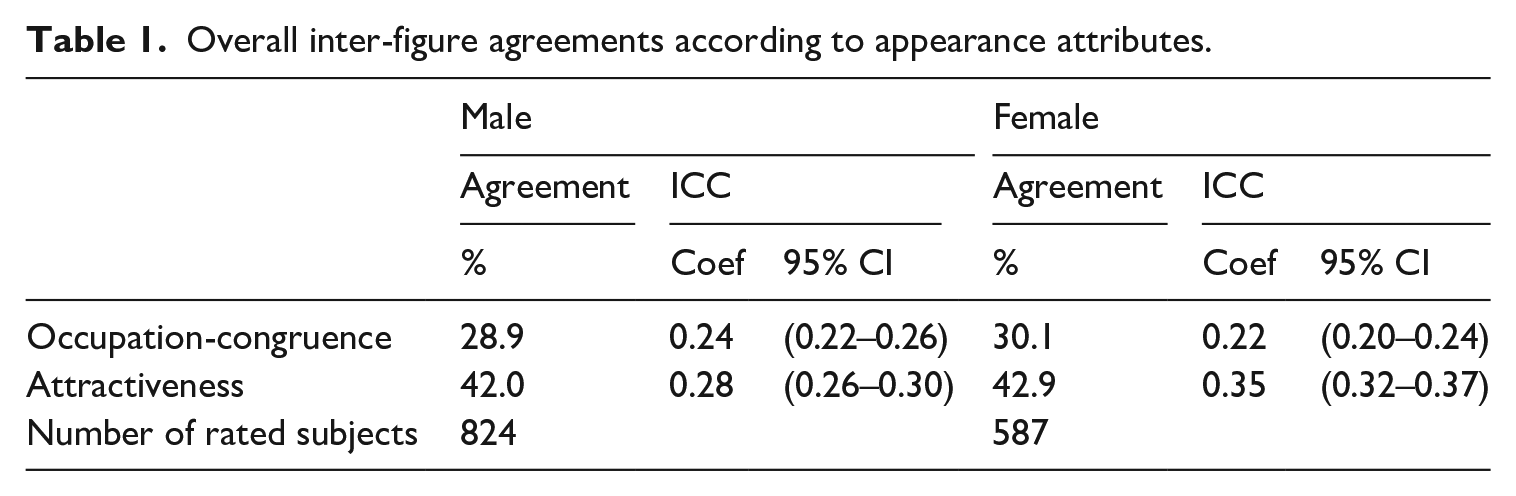
We examined how image-specific ratings correlated between respondents (i.e. whether there is reliability between measurements). Table 1 shows the average percentages and intraclass correlations (ICC) for male and female images according to the evaluating aspects. The ICCs of occupation-congruent appearance were not high, but can be considered fair (Klein, 2018; Landis and Koch, 1977).
Overall inter-figure agreements according to appearance attributes.
Context and Control Variables
Women’s Share in Occupation
We calculated the share of women in occupations as the number of women in an occupation (classified using the 2008 International Standard Classification of Occupations (ISCO-08)) divided by the total number of Finns in the occupation, using data from 2014 from the Official Statistics of Finland (2021). We then matched the ISCO codes of occupations of the people in the photographs with information on the share of women in an occupation using the VLOOKUP command in MS Excel.
Occupational Status
We used the standard International Socio-Economic Index of Occupational Status (ISEI) to gauge occupational status. ISEI is a valuable metric for assessing status, because it considers a range of factors including average income and education level in relation to specific occupations (Ganzeboom et al., 1992).
Work Logic
Incorporating individuals’ work logic, we used Oesch’s (2006) classification system to categorise occupations. First, we grouped individuals’ occupations (from the ISCO) into eight categories based on Oesch’s class scheme. The eight categories were then merged into three overarching categories, which differentiate occupations according to their (a) technical, (b) organisational and (c) interpersonal logic.
Controls
In our analysis, we controlled for age and smiling of the person in the photographs. Research showed that the age of a person in a picture affects the attractiveness evaluation, and in general, younger people are judged more beautiful than older people (Hamermesh, 2011). Therefore, we use the ages of persons in the photographs as a continuous variable. Information is based on the Ministry of Justice Information and Results Service’s (2017) register information. According to Golle et al. (2014), smiling matters for photo-based evaluations of physical appearance (cf. Kuwabara and Thébaud, 2017). Hence, a research assistant coded smiles on a three-point scale: 1 = not smiling (a neutral or serious face), 2 = smiling mouth closed, 3 = smiling so that teeth are visible. Table 2 shows the descriptive statistics for the applied variables.
Descriptive statistics for the applied variables.
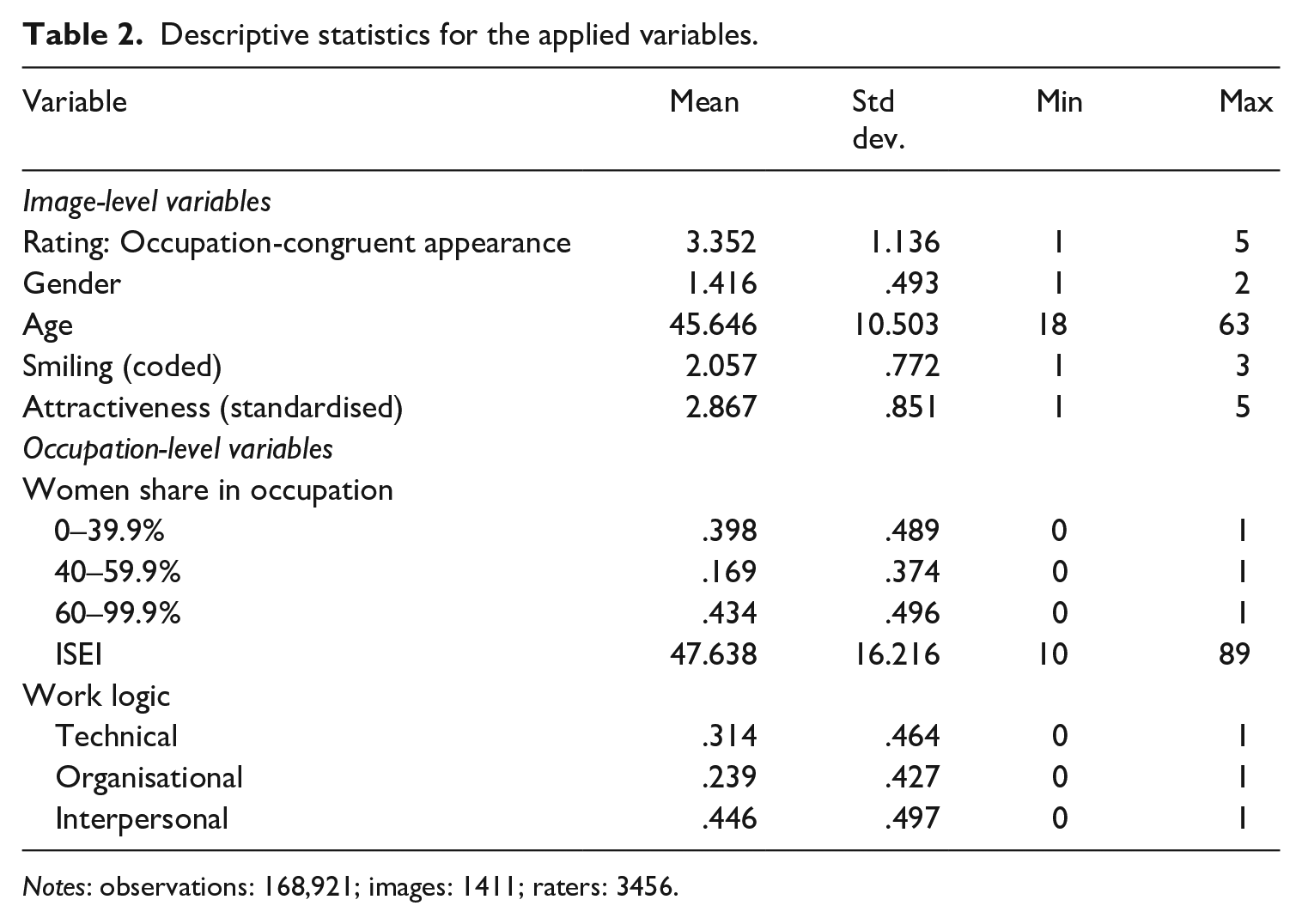
Notes: observations: 168,921; images: 1411; raters: 3456.
Analytical Strategy
The study is based on a large sample of 168,921 observations, grouped by respondent level. In total, 3456 respondents rated each image approximately 80 times for occupation-congruent appearance and 50 times for attractiveness. We employed a within-respondent design, in which the images received by the respondents vary randomly between them. The data are structured hierarchically, with evaluations at the first level and individuals at the second.
To account for the unobserved heterogeneity between respondents, we use fixed-effects models and maximum-likelihood estimations to test the hypotheses by predicting how the characteristics of the image affect the evaluations of an individual respondent. The models include image-level characteristics such as attractiveness, gender and age, and separately introduced occupational-level characteristics with occupations’ female dominance, occupational status and work logic. Moreover, the models consider whether a person in an image is smiling.
To establish the groundwork, the analysis began without gender separation to determine the variables generally associated with occupation-congruent appearance. Next, we conducted separate regression models for male and female images.
The independent continuous variables were standardised by rescaling them to have a mean of 0 and standard deviation of 1 according to gender throughout the analyses. We report the unstandardised regression coefficients, standard errors and statistical significances, and present interaction effects in graphs as more easily interpretable forms. We employed Stata 17 and the user-written coefplot package to illustrate the results as graphs (Jann, 2014).
Finally, we acknowledge that the images in our study are clustered, whereby groups of images are randomly assigned to respondents. However, the same images are repeatedly evaluated by respondents, resulting in interdependence. To account for the potential impact on our standard errors, we conducted a robust analysis using the user-written reghdfe command, which considers the image-clustered standard errors while the respondent level is fixed (Correia, 2017). We report the results of the robustness analyses in the Online Appendix.
Results
We used fixed effect models to address our hypotheses of the relationship between attractiveness and occupation-congruent appearance. First, we analysed the general association between attractiveness and occupation-congruent appearance. As seen, Table 3 confirms H1 that attractiveness is positively associated with occupation-congruent appearance. However, the effect size is modest. The results also suggest that in general, women are more frequently perceived as representing a particular occupation based on their appearance than men.
Predicting occupation-congruent appearance according to attractiveness, gender, age and smiling.
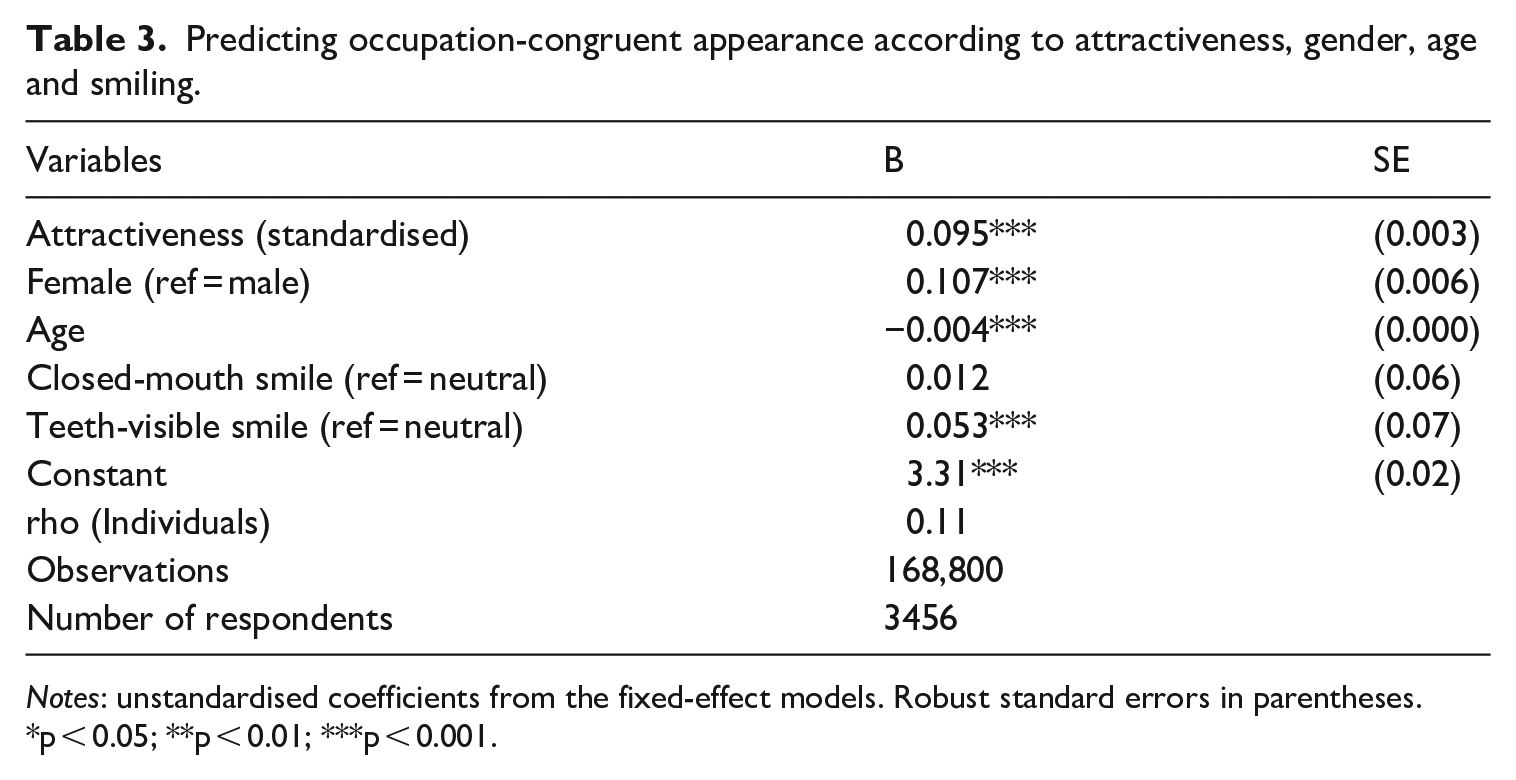
Notes: unstandardised coefficients from the fixed-effect models. Robust standard errors in parentheses.
p < 0.05; **p < 0.01; ***p < 0.001.
To investigate the moderating effect of occupational female dominance on the relationship between attractiveness and occupation-congruent appearance, we ran separate regression models for male and female workers. The first column (M1) in Table 4 shows the overall coefficients of female dominance for both genders without the interaction terms. As shown, as the level of female dominance in an occupation increases, males’ occupation-congruent appearance ratings decrease. The opposite pattern is observed for females. However, the second column (M2) shows a significant interaction between an occupation’s female dominance and attractiveness for both men and women. This interaction is depicted in Figure 1. Here, attractiveness is more strongly associated with occupation-congruent appearance for men when their occupation is female-dominated or has an even gender distribution. For women, the association is similar to that of men, but not as distinct; the significance of attractiveness is more pronounced for women in male-dominated occupations. These results contradict H2, which hypothesised that occupation-congruent appearance decreases with attractiveness for female workers in male-dominated occupations. The findings suggest that for both men and women, attractiveness enhances the likelihood of being judged as having high occupation-congruent appearance, even if the person does not represent the dominant gender of the occupation. However, while attractiveness ‘elevates’ the occupation-congruent appearance of men in female-dominated occupations more than that of men in male-dominated occupations, for women, attractiveness only improves occupation-congruent appearance in male-dominated occupations, remaining significantly lower than that of women in female-dominated and gender-balanced occupations.
Predicting occupation-congruent appearance among males and females according to image-level factors and female dominance in occupation, fixed-effect models.
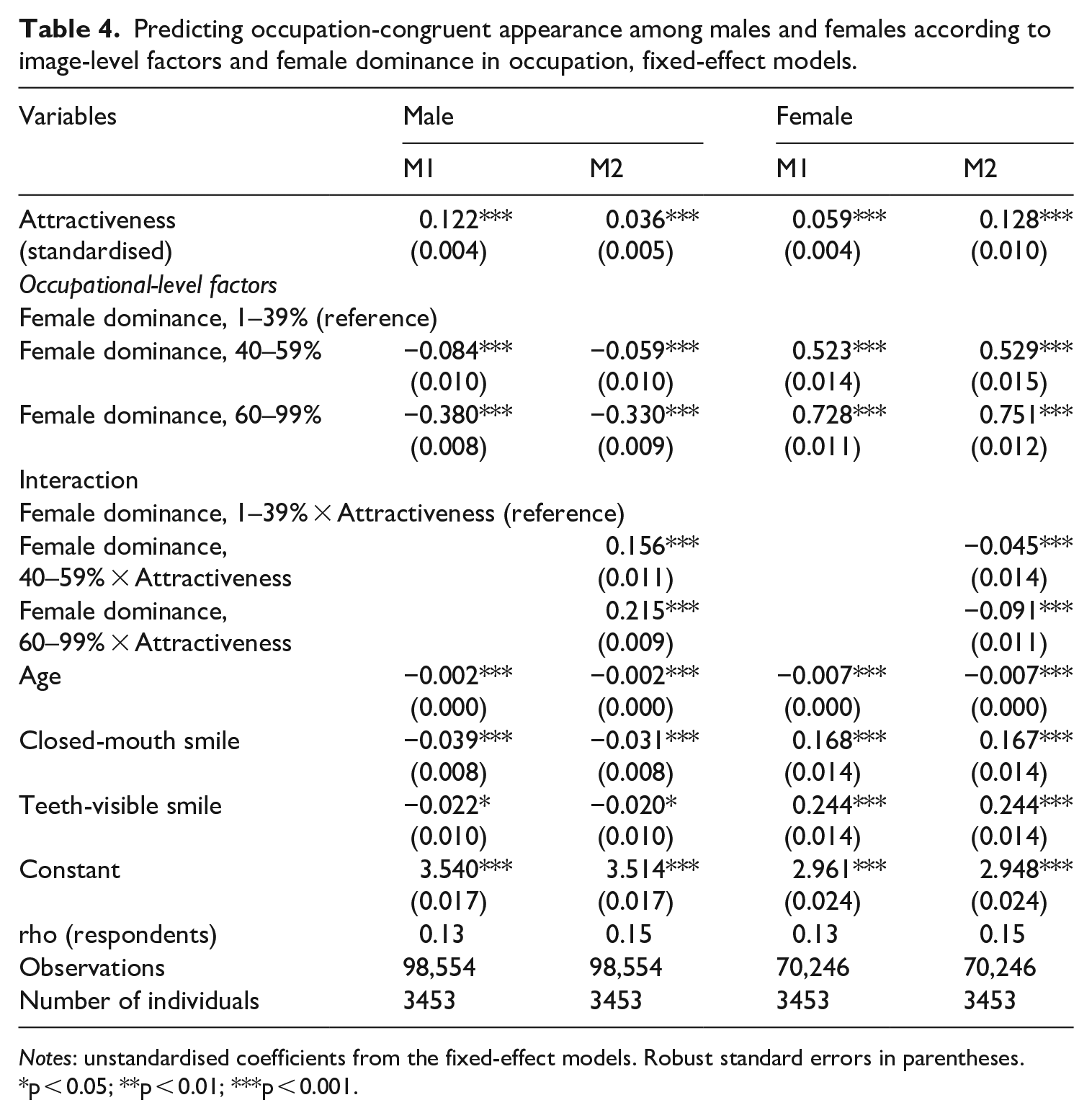
Notes: unstandardised coefficients from the fixed-effect models. Robust standard errors in parentheses.
p < 0.05; **p < 0.01; ***p < 0.001.
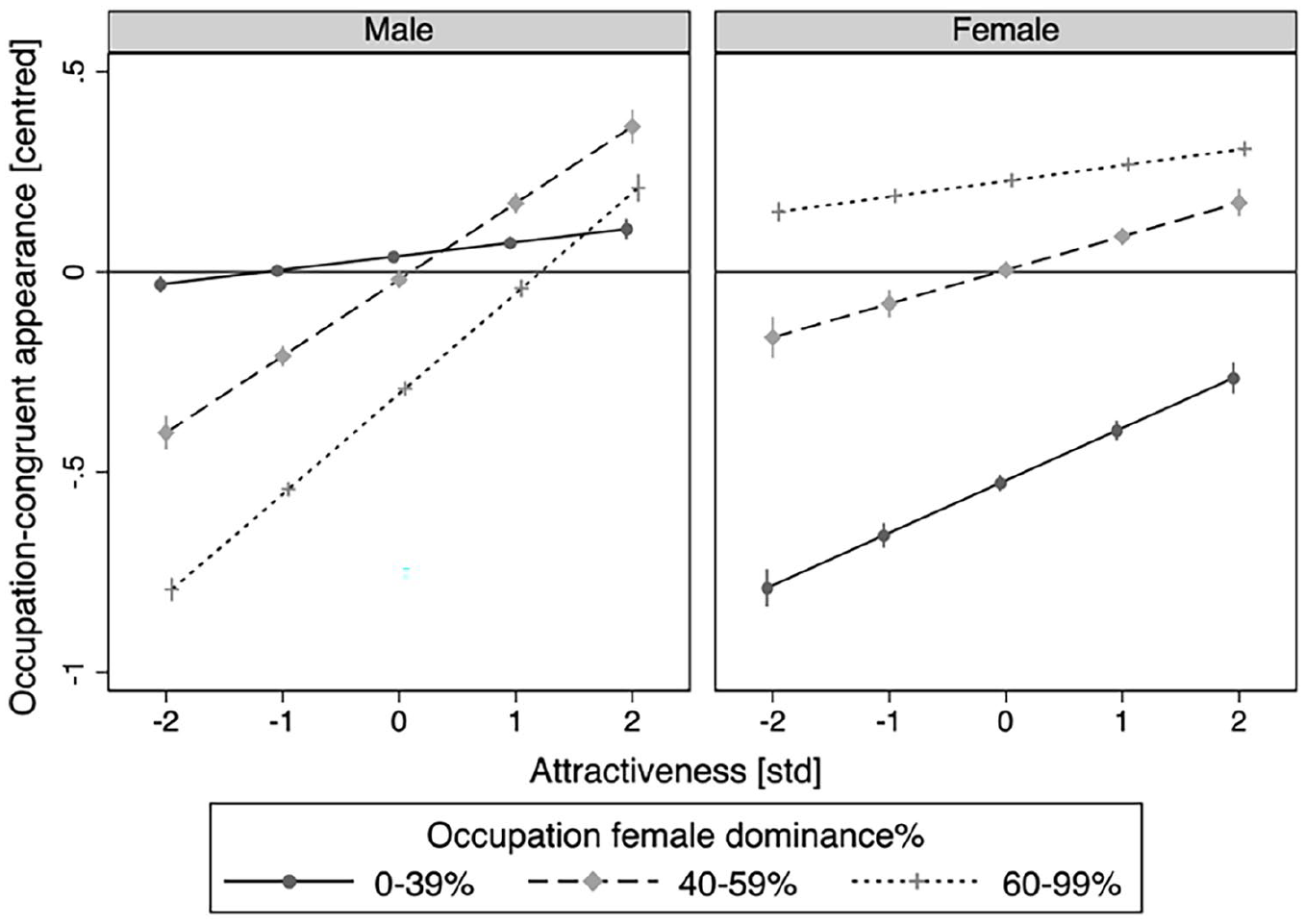
Adjusted predictions of occupation-congruent appearance according to attractiveness in different occupations divided by women’s share.
In the following analysis, we investigate the association between occupational status and evaluations of occupation-congruent appearance. Table 5 presents the findings. The first model (M1) indicates the significant influence of occupational status on how individuals’ appearance is evaluated congruent with their occupation. The second model (M2) does not support our gendered-status hypothesis, as it demonstrates that attractiveness is more significant for those with higher occupational status, regardless of gender. Thus, contrary to H3, attractiveness does not seem to hinder women in high-status jobs from having an occupation-congruent appearance (H3). We present this interaction in Figure 2, which reveals that the interaction between attractiveness and occupational status is more prominent for males than for females. The figure also shows that for women, occupational status is significantly associated with occupation-congruent appearance at various attractiveness levels. For men, the occupation-congruent appearance is reduced at lower attractiveness levels. The findings suggest that attractiveness does not seem to diminish occupational status disparities; rather, it appears to amplify them.
Predicting occupation-congruent appearance among males and females according to attractiveness and occupational status, fixed-effect models.
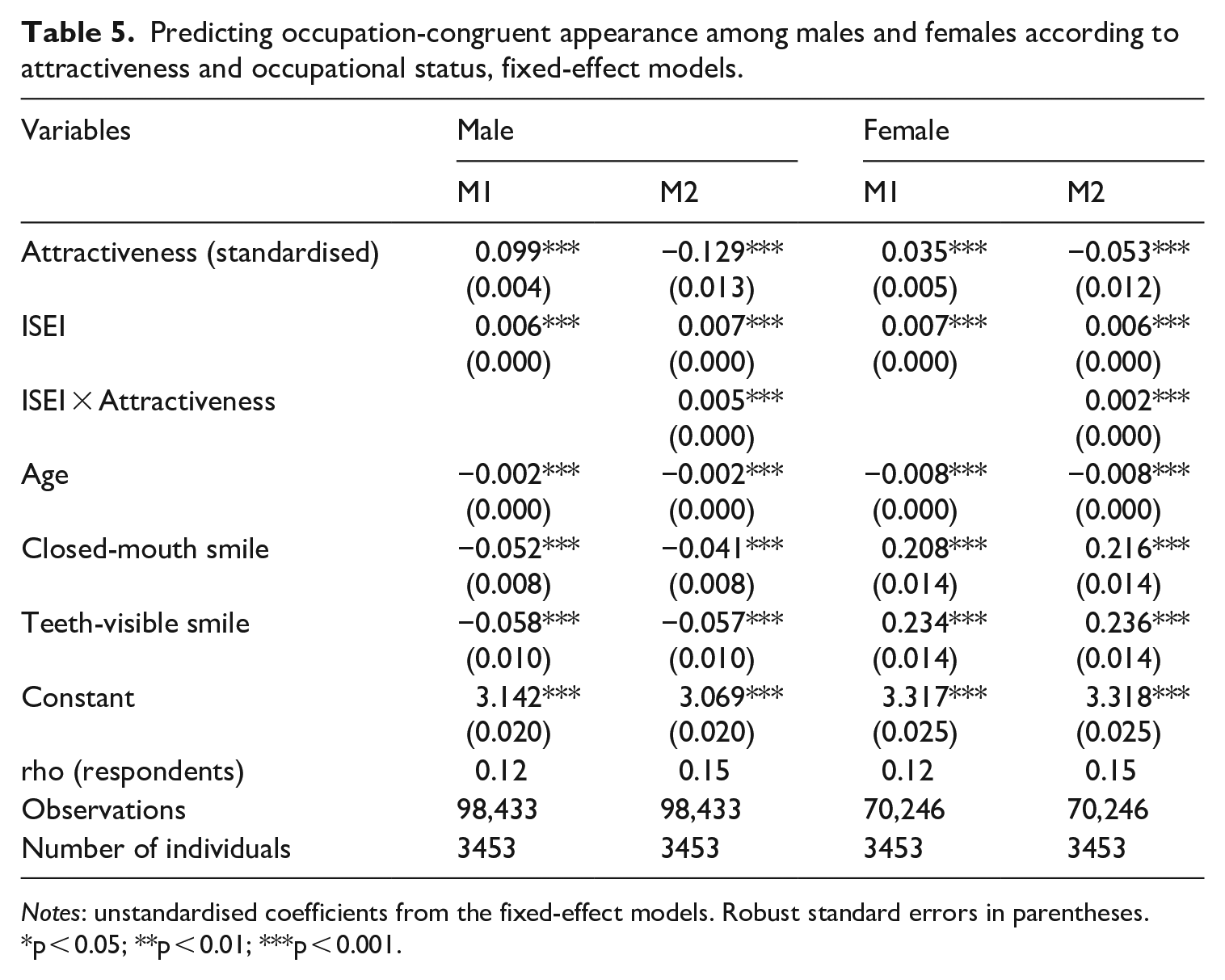
Notes: unstandardised coefficients from the fixed-effect models. Robust standard errors in parentheses.
p < 0.05; **p < 0.01; ***p < 0.001.
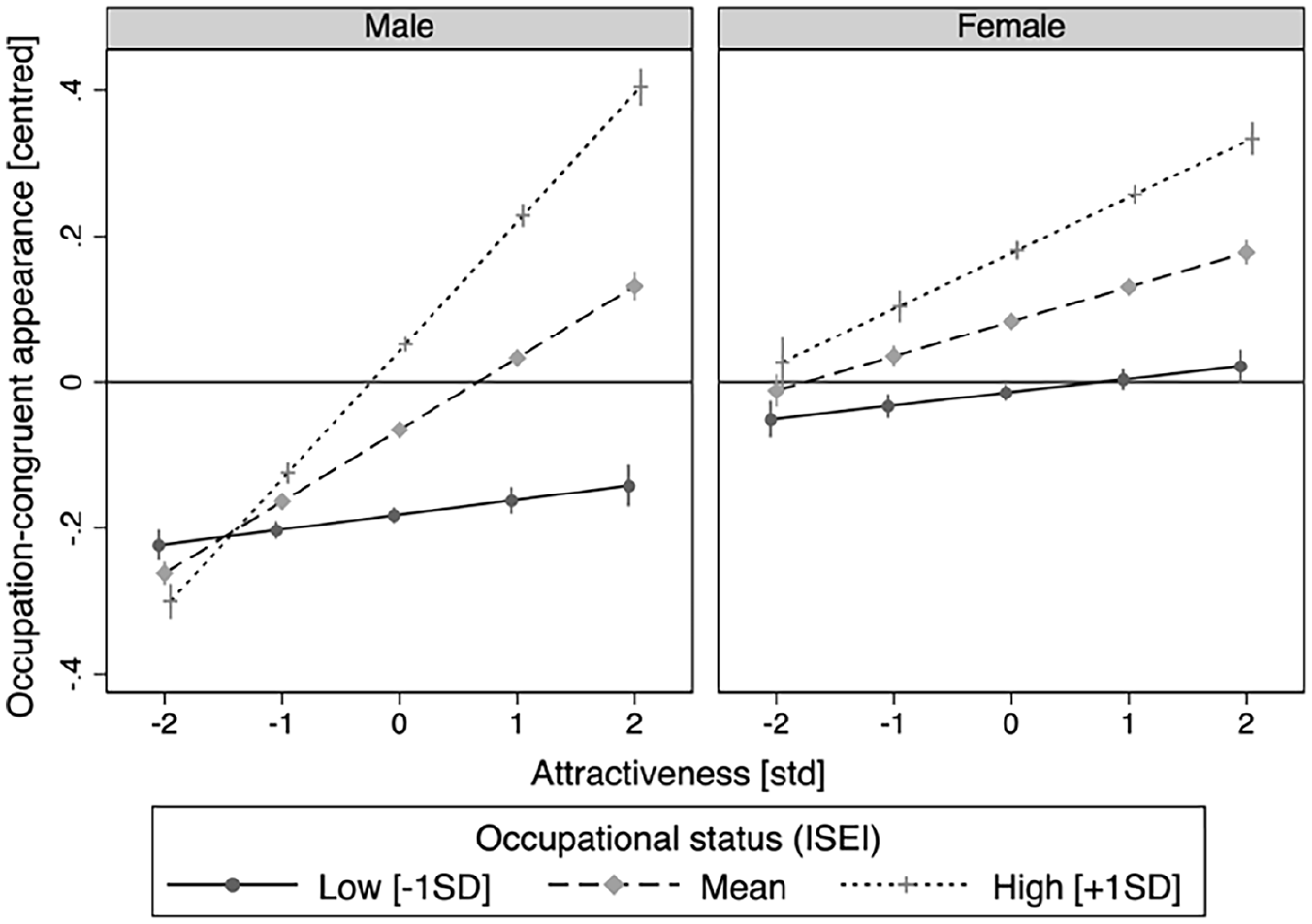
Adjusted predictions of occupation-congruent appearance according to attractiveness in different occupations divided by an occupation’s ISEI score.
Finally, we examined the association between attractiveness and occupation-congruent appearance for male and female workers according to work logic. Table 6 presents the results. The first model (M1) demonstrates that the association differs considerably according to work logic between men and women. To test H4 and H5, we ran the model M2 with the interaction terms. Figure 3 provides the results. The figure shows that for men, attractiveness is more strongly associated with occupation-congruent appearance in occupations with an interpersonal or organisational work logic. For women, attractiveness is associated with occupation-congruent appearance in technical occupations. Contrary to H4, the results did not support the notion that attractiveness would enhance occupation-congruency in the service sector. H5 is also not supported regarding an enhanced association between attractiveness and occupation congruency for women working in the service sector. Overall, attractiveness appears to decrease disparities associated with work logic when evaluating occupation congruity based on appearance.
Predicting occupation-congruent appearance among males and females according to attractiveness and occupation work logic, fixed-effect models.
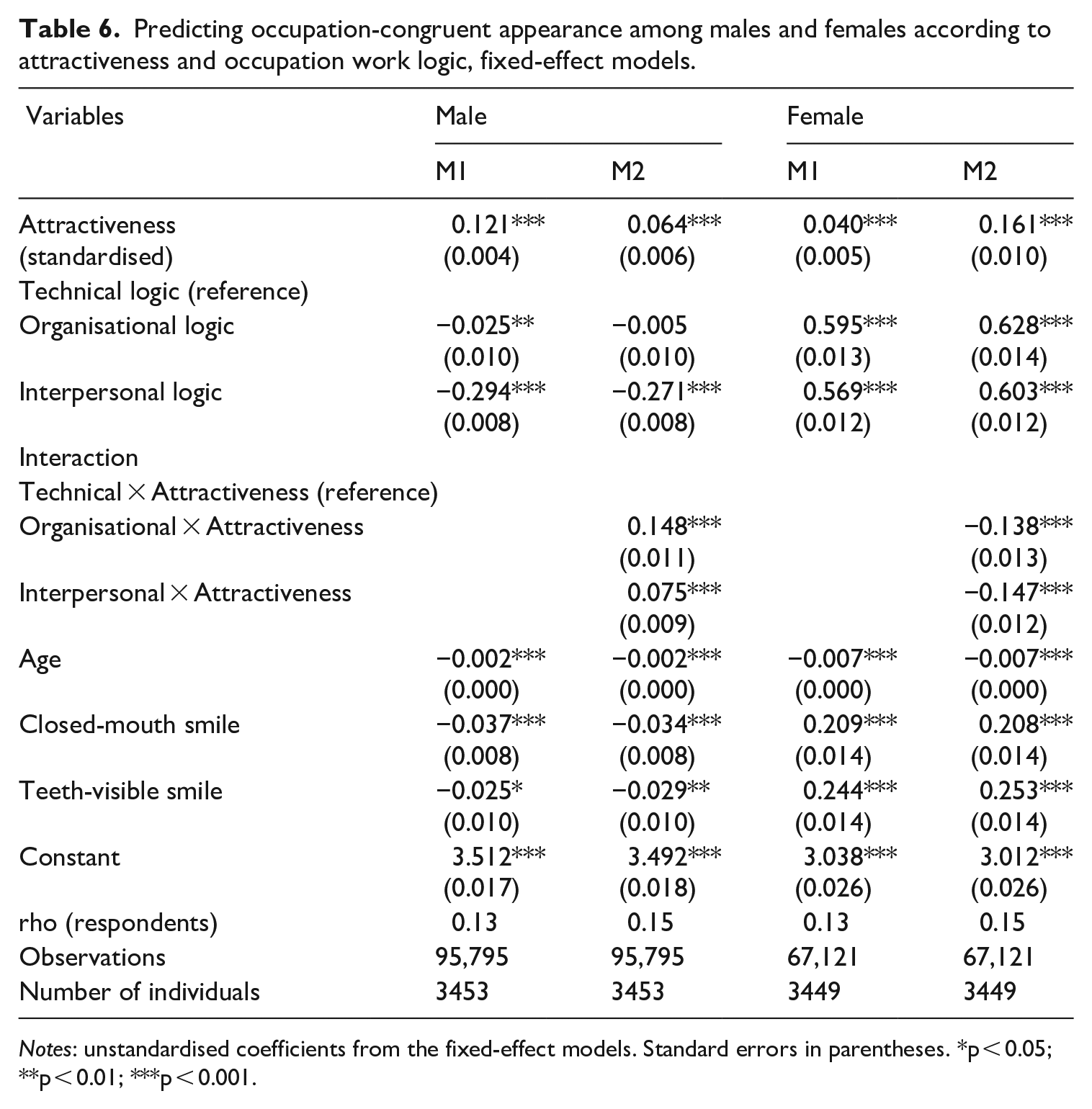
Notes: unstandardised coefficients from the fixed-effect models. Standard errors in parentheses.
p < 0.05; **p < 0.01; ***p < 0.001.
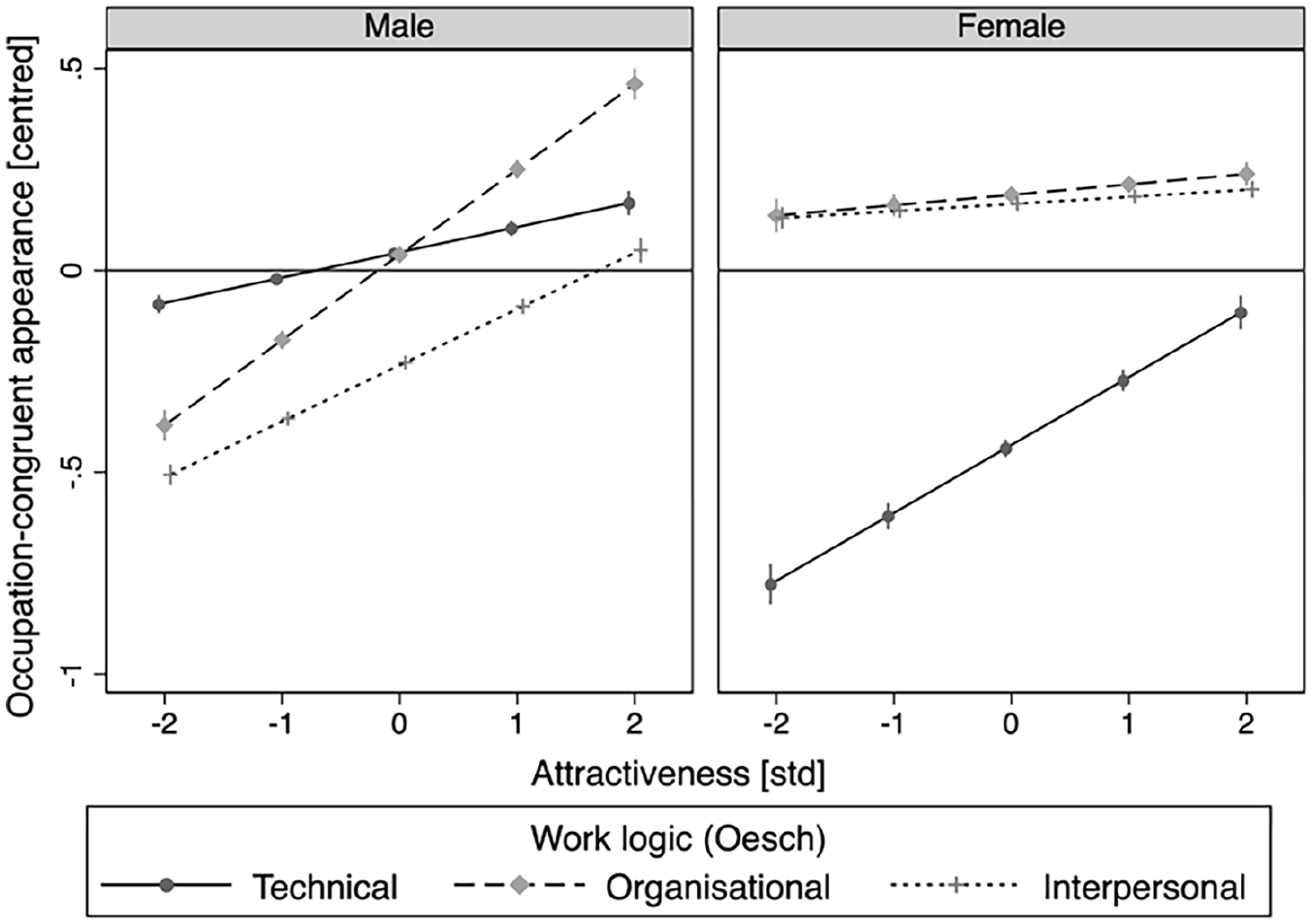
Adjusted predictions of occupation-congruent appearance according to attractiveness in different occupations divided by work logic.
In Tables 4 to 6, the models include the control variables of age and smiling. The findings consistently indicate a negative association between age and occupation-congruent appearance for both males and females. However, the effect of smiling varies depending on gender. For men, smiling seems to diminish occupation-congruent appearance, whereas for women, the association is the opposite.
Our robustness analysis in the Online Appendix Tables A1 to A4 confirms our initial interpretations of the results. First, they support H1, indicating that despite considering the impact of image clustering on standard errors, the overall association between attractiveness and occupation-congruent appearance persists. Furthermore, our robustness analysis highlights the interaction between attractiveness and occupation-related factors as more salient for men than women.
Discussion and Conclusion
In this article we introduced the novel concept of occupation-congruent appearance to broaden the sociological understanding of culturally shared appearance standards. We aimed to systematically examine attractiveness as part of cultural occupational appearance expectations. We asked: to what extent do culturally shared ideas of how representatives of different occupations are expected to look overlap with attractiveness for men and women in different occupational fields?
We found that attractiveness is positively associated with occupation-congruent appearance. However, this association is gendered in two ways. First, the strength of this association varies by occupational field: for men, attractiveness seems to enhance occupation-congruent appearance in particular fields including female-dominated and gender-balanced occupations, high-status jobs and occupations with an organisational or interpersonal work logic. For women, however, attractiveness seems to most strongly enhance occupation-congruent appearance in male-dominated occupations, high-status jobs and occupations with a technical work logic. Second, the differences between occupational categories are greater for men than for women.
The result that attractiveness is positively associated with occupation-congruent appearance is aligned with the argument in attractiveness-based stratification research that people tend to favour good-looking people (Wolbring and Riordan, 2016; for a review, see Kukkonen et al., 2024). As we formulated here: what is perceived attractive is also likely to be perceived occupationally congruent.
Based on research on gendered occupational stereotypes (Heilman and Saruwatari, 1979; Kuwabara and Thébaud, 2017; Paustian-Underdahl and Walker, 2016), we anticipated that attractiveness would be associated with a less occupationally congruent appearance for female workers in male-dominated fields and high-status jobs. However, in these occupational fields, attractiveness seemed to most significantly enhance women’s occupation-congruent appearance. Likewise, we found no support for the idea that attractiveness would be important for women’s occupational appearance expectations in interpersonal service occupations, as proposed in the research on aesthetic labour (Warhurst and Nickson, 2020). These results suggest, first, a gap between task-related performance evaluations (e.g. how likely would you hire the person in the picture) and pure appearance evaluations. Second, it is also possible that the associations would be different for specific occupations (e.g. certain types of entrepreneurs, as in a study by Kuwabara and Thébaud (2017)). Third, because most research on the negative outcomes of attractiveness for women is conducted in the USA (for a review, see Kukkonen et al., 2024), a more optimistic interpretation is that in more gender egalitarian Finland, sexist attitudes (i.e. attractive women are less competent) are not as common. Fourth, the expectations of employers and ordinary citizens (i.e. also customers) may not align.
Attractiveness seems to be associated with looking congruent with high-status occupations for both women and men. This is consistent with the cultural sociological understanding whereby middle- and upper-class people are more capable of conforming to societal beauty norms due to their economic and cultural resources (Kuipers, 2015; Vandebroeck, 2017). However, our results suggest this interpretation can be refined and expanded to include more widely shared class stereotypes. Furthermore, the pronounced differences in the association between attractiveness and occupational appearance for men may reflect deepening societal disparities among them. If attractiveness is strongly associated with high-status men, they may be the most likely to benefit from their appearance. In contrast, working-class men may face difficulties in a society that places a high value on good looks. Thus, there may be a mismatch between the general societal importance of attractiveness and how men in working-class occupations are expected to look.
Despite our findings, our study has limitations that need to be acknowledged. First, with our data, we were not able to analyse the extent to which occupation-congruent appearance actually produces inequalities. Second, our data do not allow us to comprehensively analyse what comprises occupation-congruent appearance. For example, questions concerning the kinds of grooming styles or facial expressions (other than smiling) that contribute to congruent appearance in different occupations are outside the scope of this study. Thus, for now, we must put the contents of occupational aesthetics into a ‘black box’ (cf. Mears, 2014). Third, our data are homogenous in terms of race and ethnicity; thus, we were unable to consider them. Recent studies highlighted the importance of examining the intersections of race/ethnicity, gender and class in beauty and inequality research (Kuipers, 2015; Monk et al., 2021). It is imperative that our research is expanded in this direction in the future.
In summary, our results suggest that formulating new approaches to appearance offers a critical step towards understanding appearance-related inequalities. Here, we looked ‘beneath the surface of social categories’ (Monk, 2022: 5) and proposed the idea of the occupation as a social category based on appearance-based cues, which can be examined using the concept of occupation-congruent appearance. Attractiveness, as one such cue, has a role that varies significantly, for men and women, and when evaluating congruence across different occupations. Therefore, our study also brings a new perspective to examining appearance-based differences within categories of gender: we argue that attractiveness can magnify appearance-based status differences, particularly among men. We conclude that the concept of occupation-congruent appearance can help in understanding social inequalities in societies undergoing fundamental changes, which are unlikely to diminish the societal importance of appearance.
Supplemental Material
sj-docx-1-soc-10.1177_00380385241249038 – Supplemental material for Appearance and Social Inequalities: Physical Attractiveness as a Part of Occupation-Congruent Appearance
Supplemental material, sj-docx-1-soc-10.1177_00380385241249038 for Appearance and Social Inequalities: Physical Attractiveness as a Part of Occupation-Congruent Appearance by Outi Sarpila, Aki Koivula and Iida Kukkonen in Sociology
Footnotes
Acknowledgements
We want to thank Jani Erola and Mads Meier Jæger for feedback on an earlier version of this article, Daniel Klein for support in using kappaetc and Anna Grahn and Tero Pajunen for their research assistance. We are also grateful to the editor and anonymous reviewers of Sociology for their constructive comments.
Funding
The authors disclosed receipt of the following financial support for the research, authorship and/or publication of this article: this research was funded by the Research Council of Finland (325813).

Supplemental material
Supplemental material for this article is available online.
References
Supplementary Material
Please find the following supplemental material available below.
For Open Access articles published under a Creative Commons License, all supplemental material carries the same license as the article it is associated with.
For non-Open Access articles published, all supplemental material carries a non-exclusive license, and permission requests for re-use of supplemental material or any part of supplemental material shall be sent directly to the copyright owner as specified in the copyright notice associated with the article.
