




Abstract
In this article the use of old photograph techniques is considered as a way of ‘slowing sociology down’ in order to have more thoughtful and immersive engagement within the field. This is contrasted with contemporary methods and their emphasis on speed, efficiency and perfection.
Using the analytical lens of relational and processual sociology, or sociologies that have an orientation towards long-term social changes and transformations (see, for example, Goodwin and O’Connor, 2019; Goodwin and Parsons, 2021), we can understand contemporary sociological research practices and preoccupations as reflecting the ‘standards’ of, and priorities for, research design today. Research designs and data collection techniques come in and go out of fashion, although current (and even future) methodologies are informed by, and linked to, techniques of the past. For example, Hughes (2012) and others have highlighted that the perceived value of visual sociology has fluctuated dramatically during the last hundred years or so. It started as a standard approach to data collection. It declined due to concerns about photographs not being ‘scientific’, followed by a re-emergence of photographs as an essential data collection tool in the last 20 to 25 years – the so-called visual turn. Likewise, the so-called biographical turn is pre-dated by many authors who used autobiographical methods over 70 years ago (see Goodwin, 2018). As such, we as practitioners need to view sociological research as a long-term process where past research practices are linked with current research practices and point forward to possible future orientations to research and data collection.
So, where are we now and what are the challenges? For me, three concerns characterise this current phase. First, the ongoing interplay between qualitative, quantitative, mixed and creative research design offers sociologists a variety of tools to examine social life. Second, it is hard to ignore how the global COVID-19 pandemic has impacted the opportunities to undertake fieldwork. In my role supporting the data skills and methods work of the UK Economic and Social Research Council, I have observed first-hand the challenges colleagues have faced with fieldwork. For example, in-person interviewing, particularly in interviewing in respondents’ homes, has become challenging, not only due to the capacity of field workers but also because of the hesitancy of respondents to allow unknown researchers into their homes.
Finally, my main concern has been the apparent constant desire to collect data as quickly and efficiently as possible. While efficiency is not an issue per se, the compression of time to do research due to funding constraints or the speeding up of data collection, facilitated by ubiquitous mobile technologies, is fraught with problems. For example, do research funders or universities provide the time and financial resources needed to undertake studies like those detailed, long-lived, immersive ethnographies of the past (see, for example, Dennis et al., 1969; Frankenberg, 1957)? Time and the desire for ‘quick’, ‘impactful’ results would perhaps suggest not. Likewise, returning to visual sociology, this ‘speeding up’ of sociological work may create a disconnection between the researcher and the researched via a lack of sustained engagement with the subject. Such techniques curtail reflexive, analytical moments with images being created without thought. While some are used to speed, we have to consider what is potentially ‘lost’. For me, as sociologists we lose, by ‘being speedy’, the time to stop stare, reflect, to observe, absorb and record in an unhurried and unrushed way.
I have experienced this ‘speeding up’ in my practice of visual sociology, where the availability of smartphones can lead to images that are high definition (good) but disconnected, ‘unthinking’ and monotonous (bad). Indeed, a recent conference showcased various visual data capture. The software enabled the researcher to walk through the research landscape at a pace and automatically capture images as they went. The software even prompted the researcher to walk more quickly if the software algorithm detected a slowing of pace. The images, once collected, could be analysed later.
Yet, is this good sociology? Do we lose the time to reflect? I am no Luddite, but the future of sociological practice may reside in aspects of our sociological past. Improvement and quality are not only to be found in a one-way linear direction of development. Instead, we should learn from the cycles of ‘value’ highlighted above. So, what can we learn from the past to improve what we do in the future? For me, the future of sociological research needs to be slower and not be rushed. We need space and time ‘to absorb what’s going on around you’ (Helmreich, 2013: 3), capturing both rhythms and images (Jacobs, 1961). Such concerns have prompted me to reappraise the value of slower, older technologies such as Polaroid, Instax or 110 cartridge cameras, which can be purchased as cheaply as £5 second-hand on auction websites. Returning to the past and using older technologies imposes a slowing down. Their limited capacity encourages unhurried observation and the careful consideration of visual framing. Their visual imperfections invite closer interrogation and deeper reflection than the 4k, high-definition ‘point and click’ phone-created images.
To illustrate this approach, I have included some photographs captured with analogue photographic equipment (so-called ‘Lomography’) for current research work. Figure 1 is from a re-study of Pearl Jephcott’s The Social Background of Delinquency, as part of which the research team has returned to the original site of the fieldwork to capture something of what it was like back then (see Goodwin et al., 2022). A place of leisure that existed during the original phase of research was the Byron Cinema; evocative 1930s architecture, and a hub for pleasure and entertainment. I stopped for a while in front of this building and framed the image. This allowed reflection; it enabled the sociological imagination to consider this place in the past. Walking by at speed taking multiple photographs on my phone would have interrupted the immersive experience.
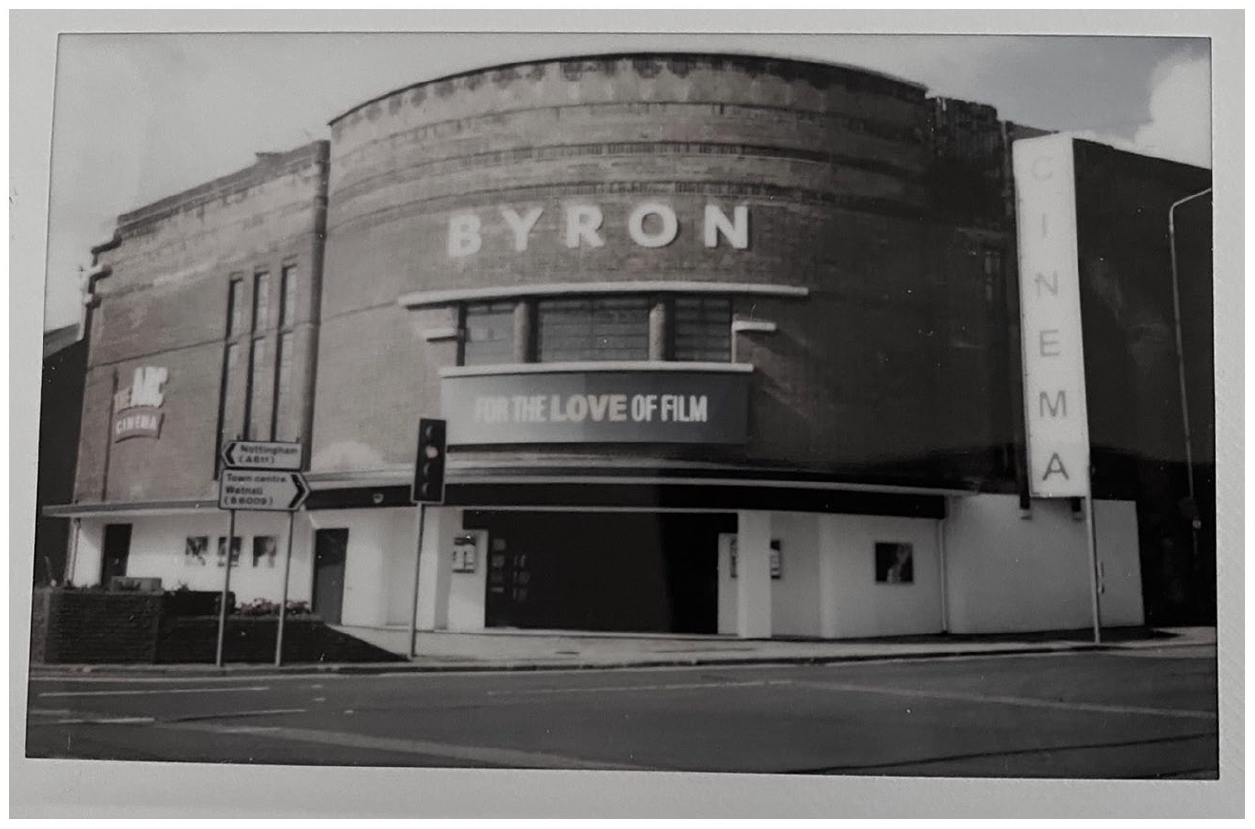
Return to Radby.
Figure 2 also relates to a re-study of Elias and Scotson’s The Established and the Outsiders. Walking in the field has become a crucial part of understanding this community and understanding how this space has transformed over time (see Goodwin et al., 2016). The images reveal both substantive contents, such as the conversion of the old bobbin factory into a college and the rows of parked cars, illuminated by the rear lights, filling the street. During the original research, this street would have been empty of such vehicles. In addition, the images reveal the imperfections of the research process – over or underexposed images and the unintentional capturing of the researcher’s car wing mirror. For me, these imperfections are not to be hidden or replaced by the super high-definition images available through all the devices as they tell you something of the research process and how imperfect it is.
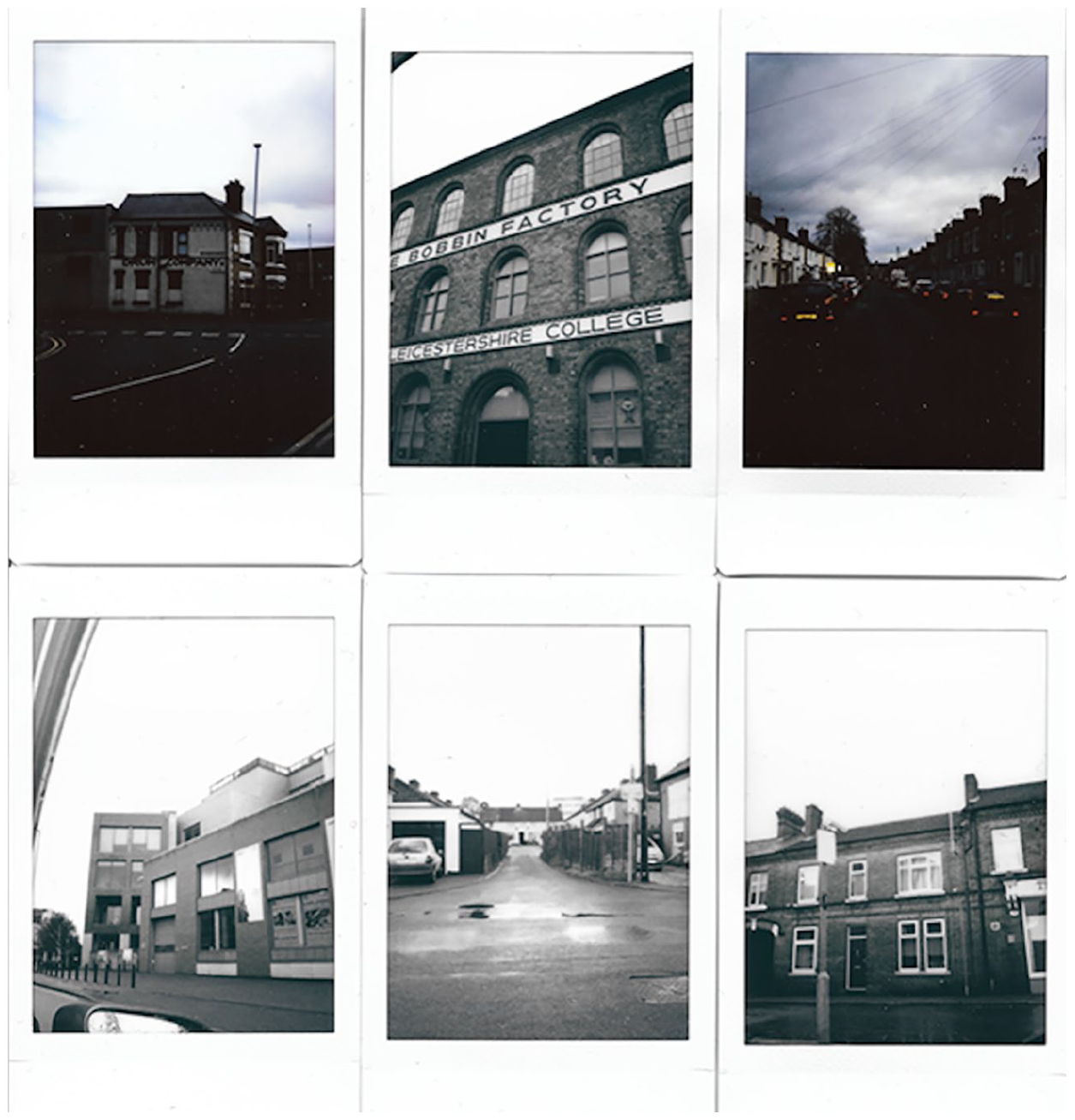
Winston Parva – The Established and the Outsiders.
Figure 3 is a representation of a much-maligned Leicester car park. Brutalist in its architectural origins, the crumbling concrete disguises what was once a highlight of Leicester’s shopping offer. The car park sat above one of an early Tesco supermarket and claimed to be the first automated car park in the UK. The image points to a story of urban change with the site of consumption shifting away from this part of the city to the more glamorous upscale American-style shopping malls. Yet the car park remains a visual reminder to a once differently radical view of the future. Again, the image is far from perfect, but it captures enough to stimulate the sociological imagination.
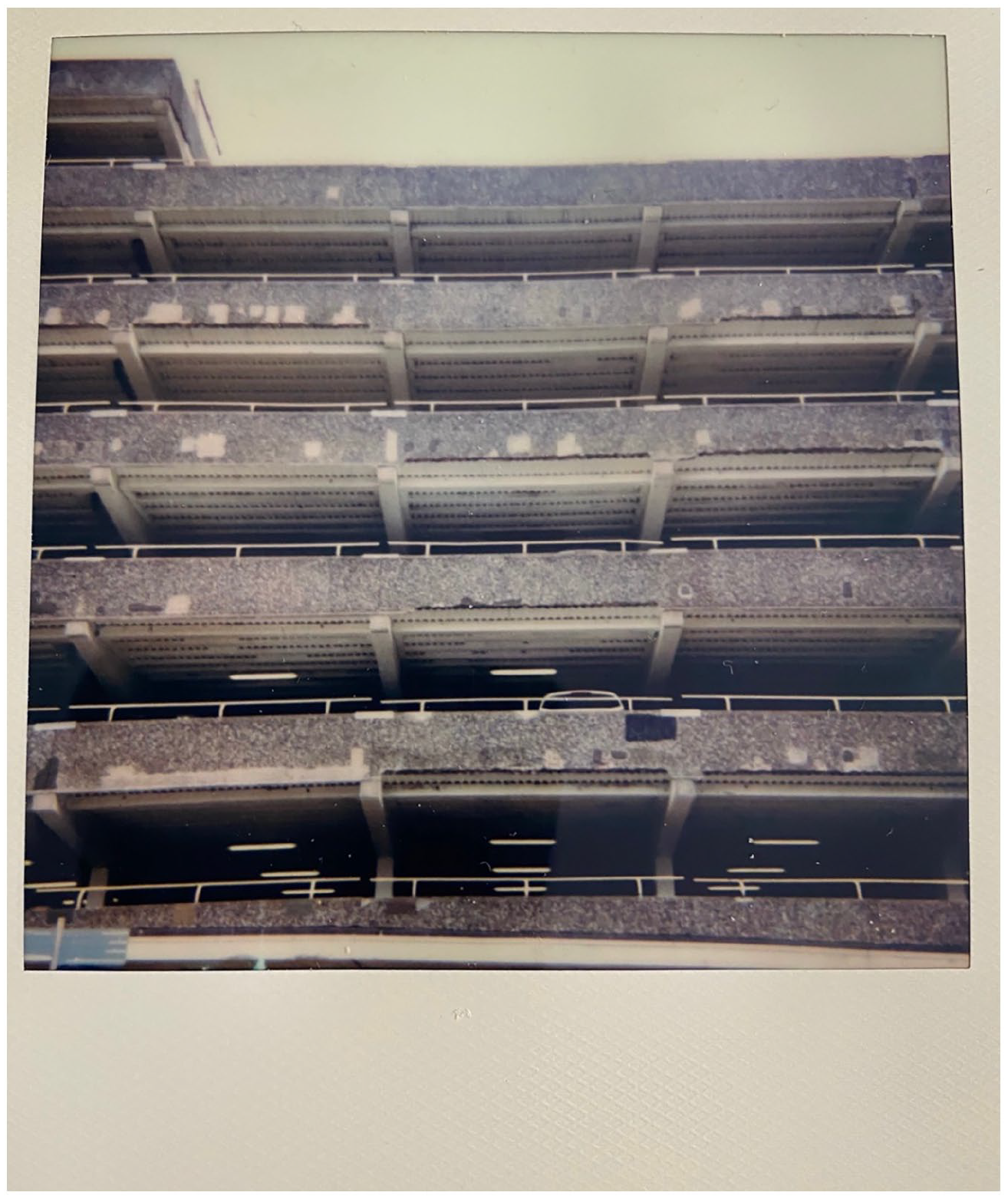
Leicester as a modernist metropolis of dissent.
It is time to challenge yourself to a sociological future inspired by the past. Imagine you are undertaking fieldwork. You need images, but you only have a roll of film that allows you to take 10 pictures. The chances are that at least three will not work or develop as envisaged. What do you do? You slow down. You take your time. You engage. You frame your shot with yourself embedded in the social context of its creation. Sociology continues to have much to offer the future, but the habits we need for good sociology (Hughes, 2013) may continue to reside in the past.
Footnotes
Acknowledgements
I would like to thank the special issue editor, the anonymous referees and Laurie Parsons for their support and feedback.
Funding
The author disclosed receipt of the following financial support for the research, authorship and/or publication of this article: I would like to acknowledge the support of the British Academy grant SRG2021\210767, Return to Radby: Re-entering the field from the social background of delinquency (1954).
