




Abstract
Low-income parents have long been demonised in both political discourses and mainstream media, portrayed as lacking in parenting skills not just financial resources. Using the Millennium Cohort Study (MCS) this article examines to what extent there are differences in the parenting of low-income mothers by examining parenting behaviours of low-, middle- and high-income mothers. The findings show that where there are negative differences in the parenting of low-income mothers these are often part of a broader income gradient that extends all the way up the distribution, rather than unique to low-income mothers. Furthermore, there are some positive differences in parenting among low-income mothers compared to middle-income mothers. These findings have important implications: low-income parents are not an unusual or deviant group parenting differently to everyone else. The findings suggest more attention ought to be given to parenting differences higher up the income distribution. In focusing on low-income parents only, existing evidence exaggerates differences and wrongly identifies low-income parents as problematic.
Keywords
Introduction
Over the last few decades, attention and concern has focused on a particular sort of mother. She is portrayed as irresponsible, immature, immoral, and a potential threat to the security and stability of society as a whole. While this type of mother is accused of bad parenting, it is her status as poor and marginalised that sees her located at the centre of society’s ills. (Gillies, 2007: 1)
The demonisation of parents from low-income backgrounds has a long history. Lewis (1980) for example, describes how in the early 1900s working-class mothers were ‘educated’ in order to reduce infant mortality. Concerns surfaced about changes in family structure in the 1960s and 1970s (Gillies, 2007: 5) and theories of an ‘underclass’ and ‘culture of dependency’ in the 1990s (Lister, 1996). More recently the English riots in 2011 predictably led to accusations of bad parenting, with then Prime Minister David Cameron highlighting ‘The question people asked over and over again [. . .] was “where are the parents?”’ and concluding that ‘Either there was no one at home, they didn’t much care, or they’d lost control’ (Cameron, 2011).
Writing about social class and parenting in the USA, Lareau (2003: 13) highlights how mainstream the demonisation of working-class parents is, not just in the media and politicians’ speeches, but also in the endorsement by teachers and other professionals of middle-class parenting while ‘the strategies of working-class or poor families are generally denigrated and seen as unhelpful or even harmful to children’s life chances’.
In this context this article examines whether there are indeed negative differences in low-income mothers’ parenting and importantly whether such differences are specific to low-income mothers, in other words whether low-income mothers are deviant as these discourses suggest. This research contributes new evidence on this topic, as most existing research focuses on parents in poverty only.
Parenting in Poverty as Different, not Deficient
A number of sociologists have challenged the notion that low-income parents are deficient in their parenting practices as political and mainstream media discourses suggest. From her ethnographic study of parenting in the USA, Lareau (2003) identified different cultural logics of childrearing across social class backgrounds. Lareau describes the parenting style of middle-class parents as a process of ‘concerted cultivation’, aiming at developing the child into a successful adult and cultivating skills through organised activities. By contrast, the parenting of poor or working-class parents aims at the ‘accomplishment of natural growth’, focusing on meeting the child’s needs and looking after their well-being; aiming for children to be healthy and happy. While Lareau acknowledges that society’s institutions tend to reward children whose parents’ childrearing logic is of ‘concerted cultivation’ she argues that this approach to parenting is not superior, and indeed emphasises some of the negative consequences of this approach and some of the positive consequences of parents focusing on the ‘accomplishment of natural growth’. Importantly, Lareau (2003: 5) highlights these different childrearing approaches are in part due to the economic context in which parenting takes place: ensuring children’s basic needs are met is challenging in a context of economic disadvantage. Additionally, it is worth observing that many of the activities that fit with the middle-class approach Lareau describes also require financial resources, such as paying for sports clubs, music lessons and cultural trips out.
The work of Gillies (2007) also seeks to challenge the deficit model of low-income parenting. Through depth interviews with parents in England and Scotland, Gillies (2005) demonstrates how parenting is shaped by economic, cultural, social and emotional capital. Gillies (2005) documents the ways in which middle-class parents in her sample view their children as exceptional and entitled to special attention, and draw on different types of capital to protect their privilege and pass on educational advantage. By contrast, Gillies found that working-class parents did not expect special treatment for their children, had a more difficult relationship with their child’s school and less access to resources including social and cultural capital. Despite this Gillies highlights the great efforts working-class parents went to in helping their children navigate their disadvantaged positions. Like Lareau, Gillies describes different aims of working-class parents for their children, based on the reality of the disadvantages they face.
Finally, work by Daly and Kelly (2015) based on semi-structured interviews with low-income parents in Northern Ireland also highlights the commitment of low-income parents to be ‘good parents’, though this is in the context of being constrained by resources and might look different to notions of good parenting shared by parents who are better off. Daly and Kelly (2015: 193–194) describe children as being the most important focal point of the family and parents often going without in order to provide for them as well as going to great efforts to protect their children from the family’s struggles and the disadvantage they faced in the outside world.
Though employing different sociological frameworks, what is common among these works is the emphasis on characterising low-income parenting as different rather than deficient – but acknowledging there are differences to be explained nonetheless. In their own qualitative research the authors justify the logic of these differences and challenge the idea that low-income parenting is problematic.
Quantifying Differences in Low-Income Parenting
The qualitative studies described above offer insight into how low-income parents approach parenting and what processes shape this, as well as importantly revealing processes that shape the parenting of those who are financially better off. However, in order to understand how much difference there is in low-income parenting in the first place we need to look to quantitative evidence. There is little quantitative evidence on parenting within the sociological literature; most of the evidence on poverty and parenting analyses parenting as a mediator between poverty 1 and children’s outcomes (Burgess et al., 2006; Dickerson and Popli, 2016; Gutman and Feinstein, 2010; Violato et al., 2011). Experience of poverty has been found to be associated with a number of differences in parenting, including children being read to less frequently, a lower likelihood of library visits, lower maternal warmth and irregular meal and bedtimes (Holmes and Kiernan, 2013). In terms of the size of the effect a number of studies find that parenting explains around 40–50% of the negative relationship between poverty and children’s outcomes (Holmes and Kiernan, 2013; Kiernan and Huerta, 2008; Kiernan and Mensah, 2011).
One important exception to this body of evidence, which is sociologically orientated, is the work of Dermott and Pomati (2016) which analyses the importance of poverty, education and time for parenting practices. The authors included seven measures of parenting, related to educational activities, leisure activities and family meal times. They found that poverty, whether measured objectively (less than 60% median income) or subjectively (feeling poor) is not significantly related to parenting. There were two exceptions to this which can be interpreted as positive differences: parents in income poverty were more likely to watch television with their child and more frequently eat evening meals with their child. The authors concluded that ‘despite the frequently made association between poverty and a lack of appropriate parenting, there is no clear evidence for this relationship in our findings’ (2016: 135).
An important limitation of the existing evidence, including that of Dermott and Pomati (2016), is that it focuses on parents in poverty rather than analysing parenting across the income distribution. This is problematic for two reasons; first, in focusing on parents in poverty it potentially obscures differences in parenting further up the income distribution, perhaps also exaggerating differences between parents in poverty and all other parents. Second, and more fundamentally, focusing only on those who are disadvantaged can contribute to problematizing those who are disadvantaged (Dean and Platt, 2016).
There are also a number of other gaps in existing evidence: there is no attempt to distinguish whether differences reflect low-income parents behaving in ways we would consider to be inadequate for children’s healthy development or whether the differences are actually an artefact of the benchmark being pushed up by the most advantaged parents. It is also unclear how much diversity there is in low-income parenting; whether most parents experiencing poverty are parenting differently, or whether these differences are actually driven by an extreme minority. Finally, existing studies focus on a narrow range of parenting behaviours preventing analysis of whether low income is related to different types of parenting behaviours in different ways. For example, Lareau’s work would lead us to expect minimal differences in meeting children’s physical needs but bigger differences when it comes to extra-curricular activities which are associated with a concerted cultivation approach to parenting. This article seeks to address these gaps.
Analytical Approach
I approach this analysis differently from previous research in a number of ways. First, instead of comparing those in poverty with all other parents, I analyse parenting behaviours across income quintiles. This is for two reasons: first, to allow for comparisons between parents with low incomes and parents with middle incomes. This is important because poor parents are often represented as being deficient in their parenting compared with parents who are not poor (Magnuson and Duncan, 2002: 104; Taylor et al., 2000). Middle-income parents are therefore the implicit reference group in the dominant discourses. It may be the case for instance that low-income parents parent differently to high-income parents or the rich, but not compared with those on median incomes. When comparisons are made between low-income parents and everyone else, including the rich, differences may be exaggerated.
Second, using income quintiles enables an assessment of the association between income and parenting behaviours across the income distribution. This will identify whether any differences in parenting between mothers on low and middle incomes are because low-income parents are a distinct group that are uniquely different (again suggested in some discourses), or whether any differences are part of a broader pattern, of which the lowest-income parents might do worst, but the median-income parents still parent differently to those at the top.
Additionally, if there are significant differences in the parenting behaviours of mothers in the lowest- compared to the middle-income group, this analysis seeks to examine how common these differences are among low-income parents and whether they indicate low-income parents merely do less of the ‘ideal’ parenting behaviours (e.g. reading with their child four times a week instead of five times a week), or whether their parenting behaviours would actually give cause for concern.
Finally, this analysis will distinguish between different types of parenting behaviours allowing for any differences in the relationship with income by type of parenting behaviour to become clear.
Using this analytical approach this article aims to answer the following research questions:
Do low-income parents parent differently compared with middle-income parents?
Are low-income parents a unique group behaving differently from all other income groups?
Are low-income parents less likely to parent in ways that are considered to be ‘ideal’ or are they more likely to parent in ways that are considered to be ‘poor’?
What Is ‘Good’ Parenting?
The concept of parenting is complex and multifaceted and what counts as good parenting is contested: professional parenting advice is constantly evolving and critics have highlighted that traditionally white middle-class definitions have been favoured presenting working-class parenting or parenting across different ethnic groups as inferior (Coll and Pachter, 2002; Magnuson and Duncan, 2002: 104; Taylor et al., 2000). A further difficulty in defining good parenting is not only is there diversity in parenting practices across different contexts but the same parenting practices have been found to have different effects depending on a range of factors including the gender and ethnicity of the child (Deater-Deckard et al., 1996; Gutman and Feinstein, 2010). Nevertheless, there is a wealth of evidence which suggests certain parenting behaviours tend to have positive/negative associations with children’s outcomes, though there is a lack of consistency in the measures of parenting used. In order to take a transparent and comprehensive approach to measuring parenting I first briefly review the main theories and evidence of what is good parenting before proposing my own conceptual framework for measuring parenting based on children’s outcomes and the associated goals and practices that relate to these outcomes.
There are three main theories that explain the relationship between parenting and children’s outcomes. The first is Baumrind’s (1966, 1991, 2005) typology of parenting styles based on two dimensions: levels of demandingness (behavioural control and monitoring) and levels of responsiveness (warmth, support and reasoned communication). Studies that conceptualise and measure parenting in this way have consistently found that an authoritative parenting style, characterised by both high demandingness and high supportiveness, is associated with better outcomes for children and adolescents compared with other parenting styles (Baumrind, 1991; Baumrind and Black, 1967; Chan and Koo, 2011).
A second dominant theory of parenting is that of attachment theory, which posits that the bond between children and their main caregiver is crucial for children’s development and later outcomes. Having a ‘secure’ or healthy attachment with the parent provides children with a ‘secure base’ from which they can comfortably leave and explore (Bowlby, 1979: 132) and provides a template for future relationships with others (Holmes, 1993: 77). In terms of parenting behaviours that foster this secure attachment, this theory emphasises the importance of sensitivity and responsiveness, for example holding and comforting a child when they cry, which enables the child to feel secure and also teaches them they can ‘safely express negative emotion’ and the parent will respond in a way that makes them feel better (Moullin et al., 2014: 9). Studies informed by attachment theory have found that children who have a secure bond with their main caregiver develop healthier psychological dispositions (such as trusting others, not being overly dependent or self-reliant) (Bowlby, 1979) as well as better physical health, cognitive and language outcomes (Moullin et al., 2014: 11).
Finally, social learning theory maintains that children learn through positive and negative reinforcement of their actions. When a child’s actions have a positive effect, for example they are rewarded for their behaviour; this provides an incentive to repeat that behaviour in the future, and when a child’s actions have negative consequences such as punishment, they avoid repeating these actions again (Bandura, 1977: 17). In terms of children’s early socialisation this means if children are not taught to respond to social stimuli the child will fail to develop social behaviours (Patterson, 1969: 343). Because both positive and negative reinforcement are important to this theory the parenting behaviours that are emphasised are again responsiveness but also discipline.
Taken together these three theories provide useful frameworks for thinking about what ought to be included in any measure of parenting, though there are other aspects of parenting not included that evidence suggests are important for children’s development. For example, there is much evidence on the importance of the home learning environment for children’s cognitive development (Melhuish et al., 2008; Washbrook, 2010). In terms of health outcomes children’s diet and the amount of physical activity they do is important (Janssen and LeBlanc, 2010). Shouting at the child, smacking, having an irregular bedtime and watching more hours of television have negative associations with children’s outcomes (Hobcraft and Kiernan, 2010; Jones et al., 2013; Kelly et al., 2013; Scott et al., 2014). As we would expect there is evidence that different parenting behaviours are important for different types of outcomes, for example Washbrook (2010) found that the home learning environment was particularly important for children’s cognitive development, parental sensitivity was important for children’s socio-emotional outcomes and parents’ health behaviours were important for children’s health outcomes.
Taking into account the main theories and evidence on parenting it is clear that a range of different parenting behaviours are important for children’s development, though many studies of parenting do not give explicit justification for the parenting measures they focus on. The aims for this conceptual framework for measuring parenting are to be theoretically informed, comprehensive in including all parenting practices likely to be important for children’s development and organised conceptually into parenting domains that are both policy-relevant and replicable in other research. Given that this article is concerned with parenting in terms of what parents do to promote their child’s well-being, I begin by considering children’s outcomes and work back to which parenting practices are likely to be important for these.
Children’s outcomes can be broadly grouped into physical health, social and emotional well-being and cognitive development (Waldfogel, 2006: 11). From these I consider the overall parenting goals that relate to each of these outcomes, for example the practice of feeding a child has the overall goal of meeting the child’s physical needs.
Specific parenting practices are organised under one of the four parenting goals outlined in Table 1, although many parenting behaviours will contribute to multiple goals simultaneously. For example, reading to a child will be cognitively stimulating but is also likely to contribute to a more positive parent–child relationship. Specific practices will change as the child ages but arguably they are still aimed at the same overarching goals. For example, facilitation of learning may take the form of play when the child is a baby and as the child ages this will change to teaching letters and numbers and eventually include activities such as helping with homework.
The relationship between child outcomes, parenting goals and parenting practices.
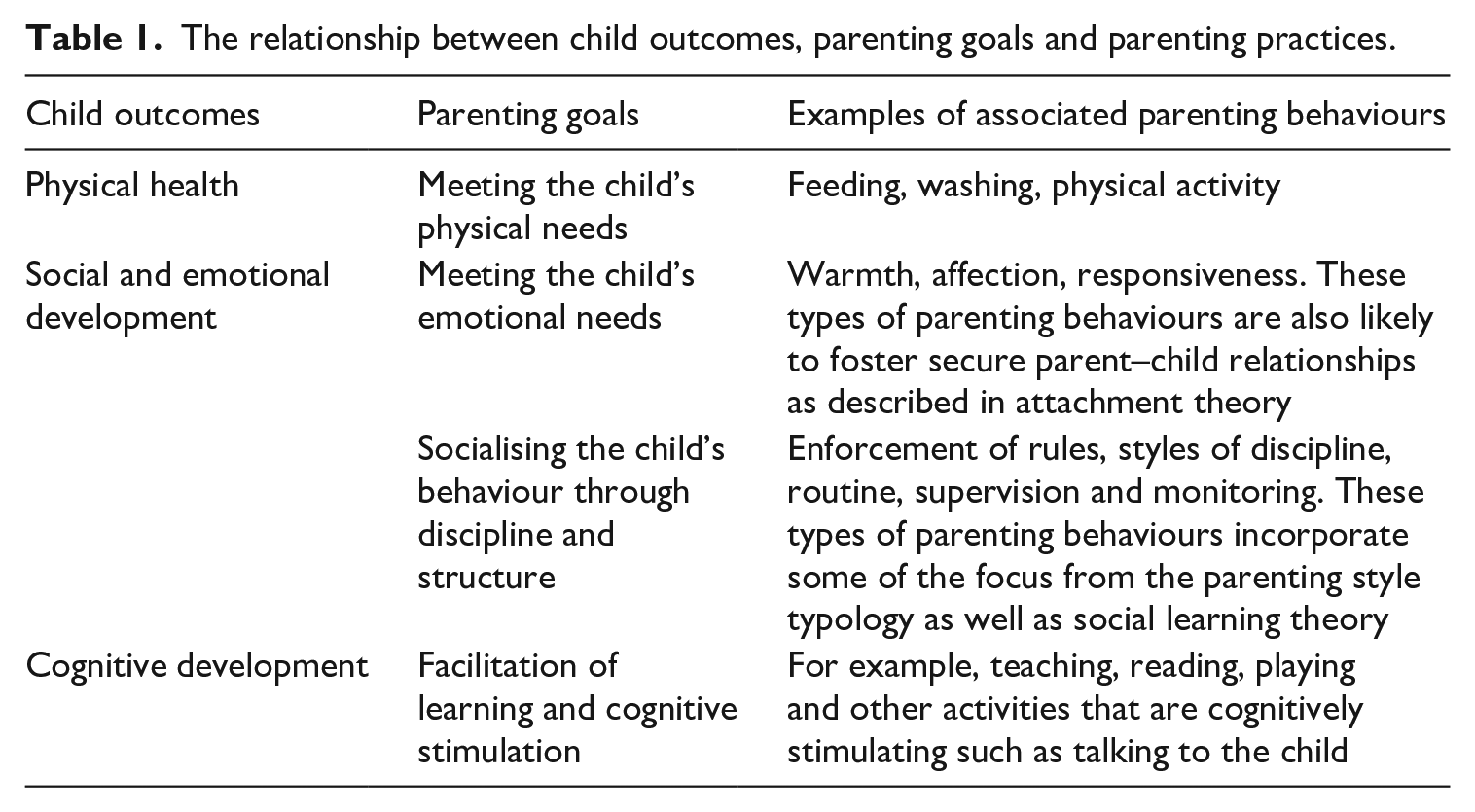
The conceptual framework outlined here will be used to inform the measurement of parenting in this article, with specific measures mapped onto the following four parenting domains:
meeting the child’s physical needs;
the parent–child relationship;
discipline and routine;
cognitive stimulation.
Data and Methods
This analysis makes use of the third wave of the Millennium Cohort Study (MCS) when children are aged five years. 2 The MCS is a birth cohort study of around 19,000 children from England, Wales, Scotland and Northern Ireland (Hansen, 2012). The sample is clustered geographically and includes boosted samples of families from areas of high child poverty in England. The survey started in 2001/2002 when the children were nine months old, and there have since been six more waves when the children were three, five, seven, 11, 14 and the most recently collected data in 2018 when the children were 17 years old. For all analyses the sample used is restricted to natural mothers only (who are 97% of the original sample). This is because of expected differences in parenting between mothers and fathers, as well as parenting of step, foster and adoptive parents or grandparents/other relatives. Twins and triplets are also excluded from the sample. The effective sample size is therefore reduced from 15,246 to 14,595. 3 For analysis and discussion of item non-response see Appendix 2.
The wave when children are aged five was chosen because the early years period has not only received a lot of political attention (e.g. Allen, 2011; Field, 2010), but there is also evidence which suggests that this is an important period because development at these early ages occurs at an accelerated rate and also influences development at later ages (Feinstein and Duckworth, 2006). Therefore, children’s environments and experiences at this age are of particular significance.
The analysis focuses on unadjusted raw differences in parenting by income quintile. It does not control for any factors associated with low income because it is important to adequately establish whether there are differences in parenting in the first place, before attempting to unpick what contributing factors may explain some of these, such as maternal education or work hours. Given that both the range of parenting measures and the comparison across the income distribution has not yet been explored, estimating the bivariate relationships is a substantial task in itself.
I estimate binary logistic regression models to assess the relationship between income quintile and ‘ideal’ and ‘poor’ parenting behaviours. Income is measured using the derived Organisation for Economic Co-operation and Development (OECD) equivalised household net income quintiles, which takes into account differences in household size (Hansen, 2014: 86). Sample weights are used for all analyses, to adjust for the stratified cluster sample design used (more information about can be found in Plewis, 2007a, 2007b).
Measuring Parenting
There are 38 measures of parenting as well as one measure of how good a parent respondents think they are, all of which are included in the analysis presented here. Throughout the analysis these parenting measures are organised into the parenting domains outlined in the conceptual framework. A number of parenting behaviours could fit into two or more of these categories simultaneously, but to save repetition each parenting measure is grouped into one primary parenting domain (see Table 2).
Measures of parenting from MCS wave 3 mapped onto the conceptual framework.
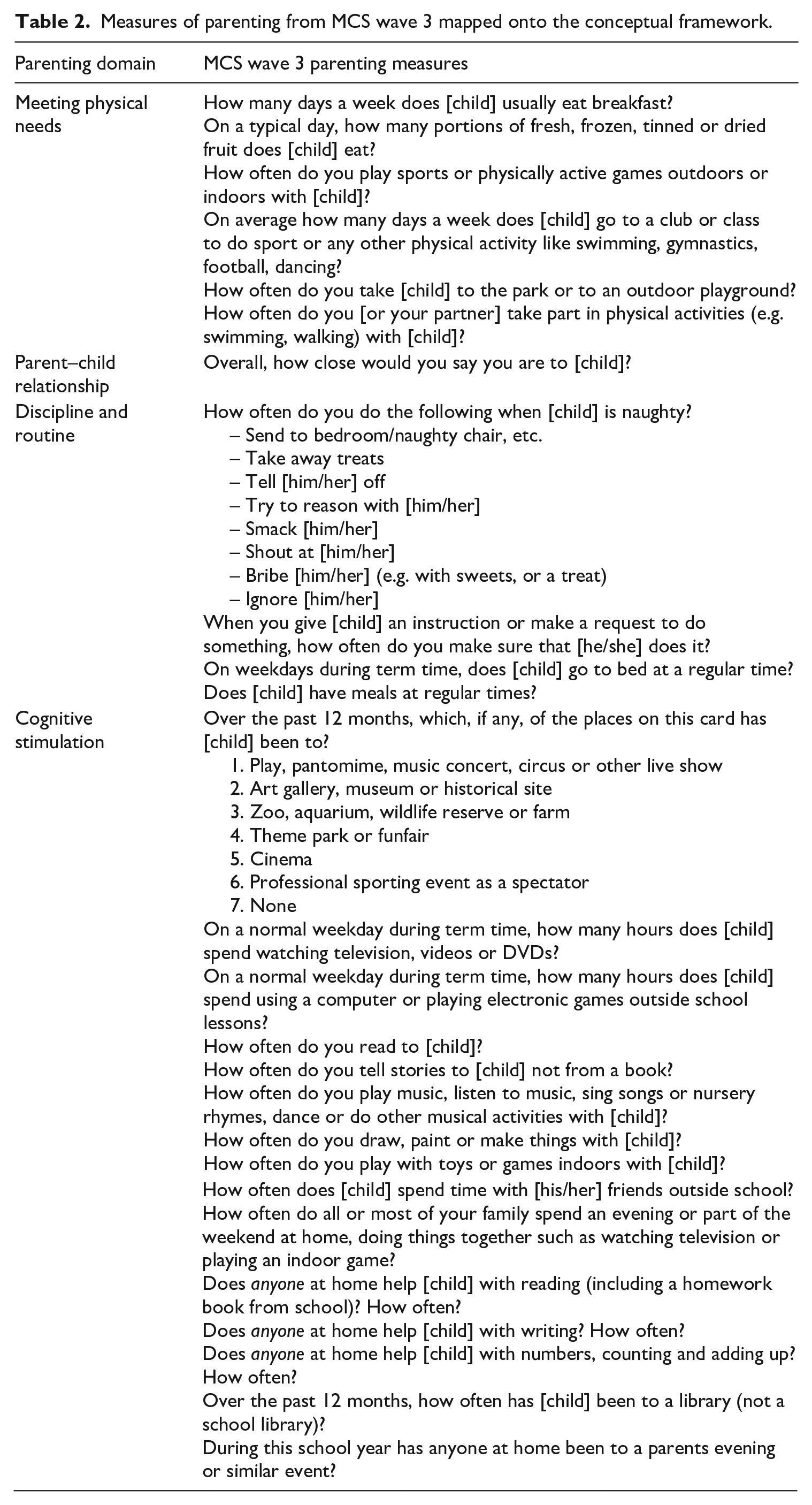
The majority of the parenting measures are ordinal with five or more categories. However, in order to answer the research question ‘Are low-income parents less likely to parent in ways that are considered to be “ideal” or are they more likely to parent in ways that are considered to be “poor”?’ the measures were recoded into two sets of binary variables, one concentrated on the ‘ideal’ end comparing the best categories to the rest, and one binary variable to capture what would be considered as ‘poor’ parenting compared to all other categories (see Appendix 1 for details).
Some might object to these categorisations of parenting as being inherently biased towards middle-class parenting. Idealising the top categories arguably endorses intensive (or ‘helicopter’ parenting), typically associated with the middle classes (Bristow, 2015). However, for the purpose of exploring differences in parenting behaviours it seems clear that doing more positive behaviours (such as reading to their child) and less of the behaviours that are negative (such as shouting), can be evaluated as better or worse comparatively (though precisely where to draw the line is not always clear). The analysis is also restricted by the data themselves, which, while rich with many parenting measures, could be critiqued for mostly including measures which reflect typically middle-class ideals of parenting, for example focusing on activities that are characteristic of ‘concerted cultivation’.
In the absence of evidence-based guidelines two approaches could be taken for deciding which categories to include in the ‘ideal’ and ‘poor’ parenting measures. A distribution-based approach could be used, taking a certain proportion of the sample from the top and bottom to define ‘ideal’ and ‘poor’ (e.g. top 30% and bottom 30%). The problem with this is that many measures are skewed towards the ‘ideal’ end of parenting behaviours, often with more than 50% of the sample represented in the top category (see Appendix 1 for the distributions of all parenting measures). An alternative approach is to use the categories themselves, simply selecting the top and bottom categories as representing ‘ideal’ and ‘poor’ parenting. However, this approach faces the same issues of a skewed distribution with the lowest categories often including less than 1% of the sample; this would make comparisons of ‘poor’ parenting less meaningful if categories were constructed that applied to almost none of the respondents. It would also place undue emphasis on the scales constructed for each question. I therefore use a combination of both approaches: behaviours were categorised as ‘ideal’ by taking the top categories that included the top 5% of the sample (as mentioned this was often much more than 5%, so in most cases amounted to taking the top category). Behaviours were categorised as ‘poor’ by taking the bottom categories that included the bottom 5% of the sample (this often meant taking the bottom two or three categories). This allowed for a consistent approach to recoding the measures and minimised the subjectivity of the process. Appendix 1 presents descriptive statistics for each of the binary parenting measures alongside the distributions of the original measures they are based on.
A couple of caveats to the measures are worth observing; since this approach is based on the assumption that a higher frequency of good parenting behaviours is always better (and a lower frequency of good behaviours is worse), this has meant that often extreme categories are counted as ‘ideal’. However, it is questionable whether the most extreme categories are necessarily ideal. For example, watching television never or less than an hour a day might be considered less than optimal and moderate amounts of television may be stimulating. Nevertheless, these categories represent the top end of the spectrum in terms of parental input.
Finally, an important limitation is that the parenting measures are self-reported. Inevitably social desirability bias (Krumpal, 2013) will mean that certain behaviours, such as smacking, will be under-reported and others, such as portions of fruit consumed, will be over-reported. Some of the more sensitive questions were answered anonymously using the self-completion questionnaire which should reduce this problem. However, these are still not direct measures of parenting behaviours but are reflections from parents themselves on their own behaviours.
Results
Figures 1–6 present the results in a series of bar charts which show the percentage of parents who report particular ‘ideal’ or ‘poor’ parenting, across the five income groups. Results are only included in the bar charts where there is a significant difference (at 95%) between mothers in the low- and middle-income group. All charts have the same scale from 0–100%; though this makes some of the smaller significant differences less visible this is more transparent and puts parenting differences in context.
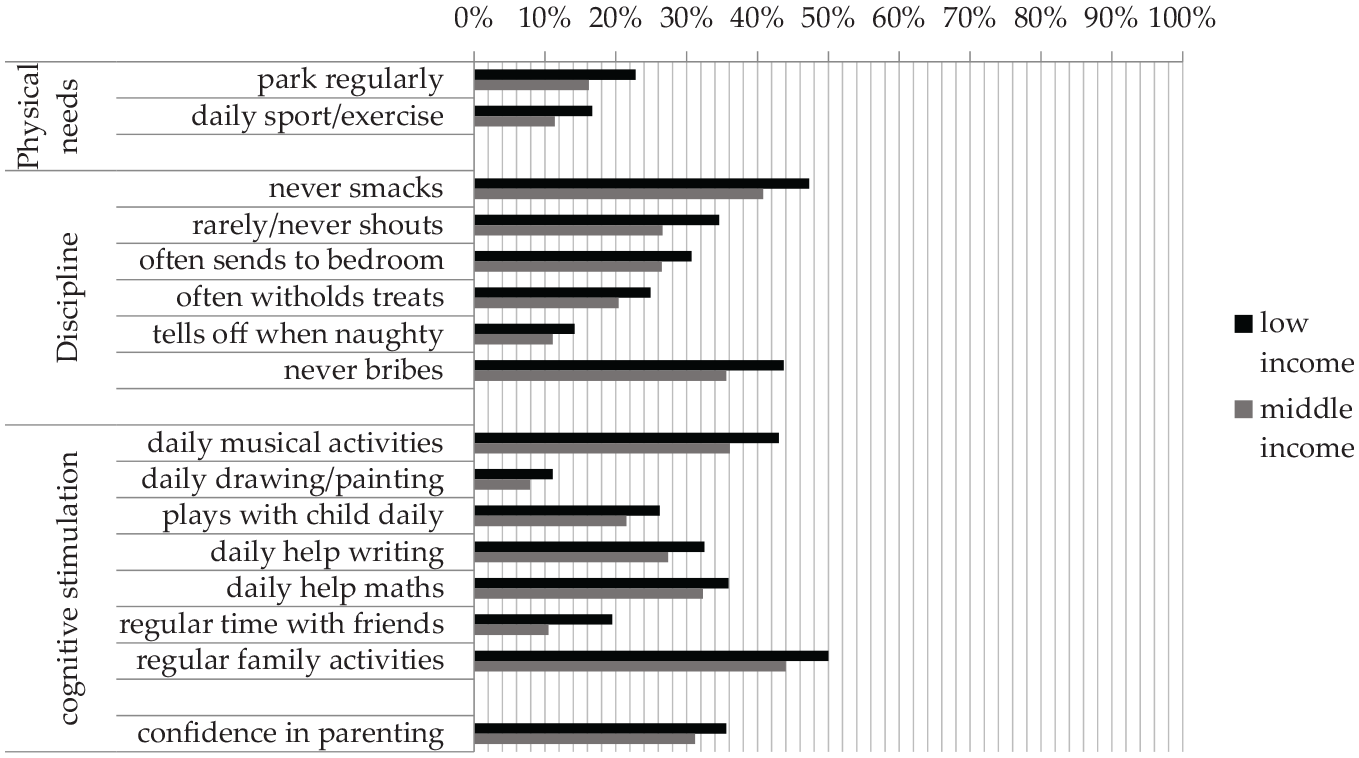
‘Ideal’ parenting behaviours that significantly more low-income mothers report doing than middle-income mothers.
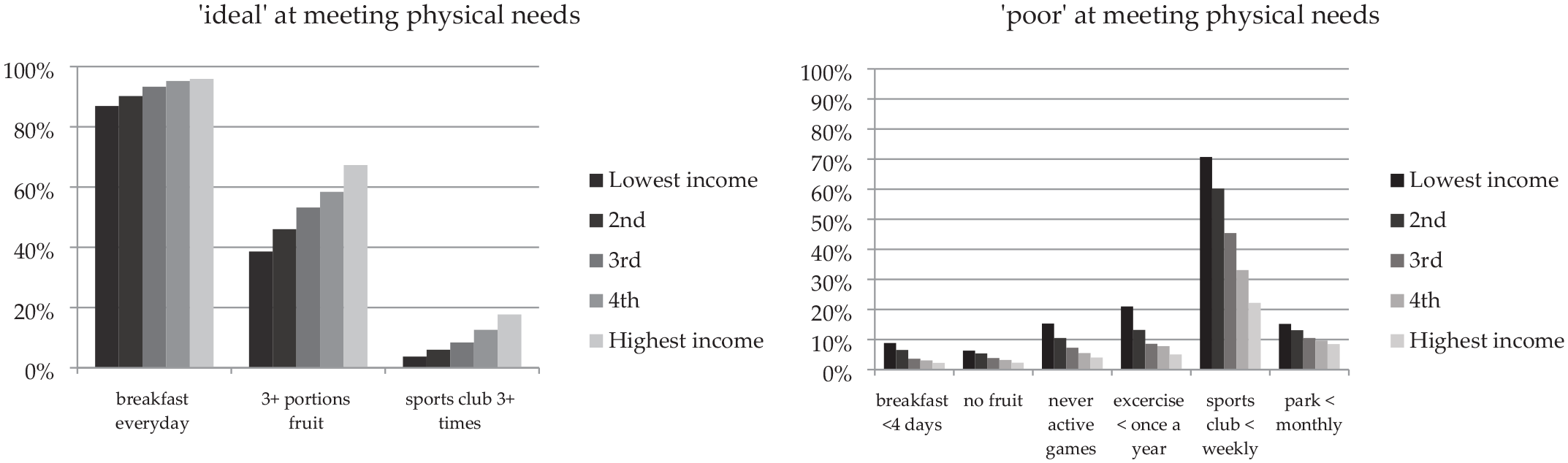
Parenting measures related to meeting physical needs that have a significant income gradient.
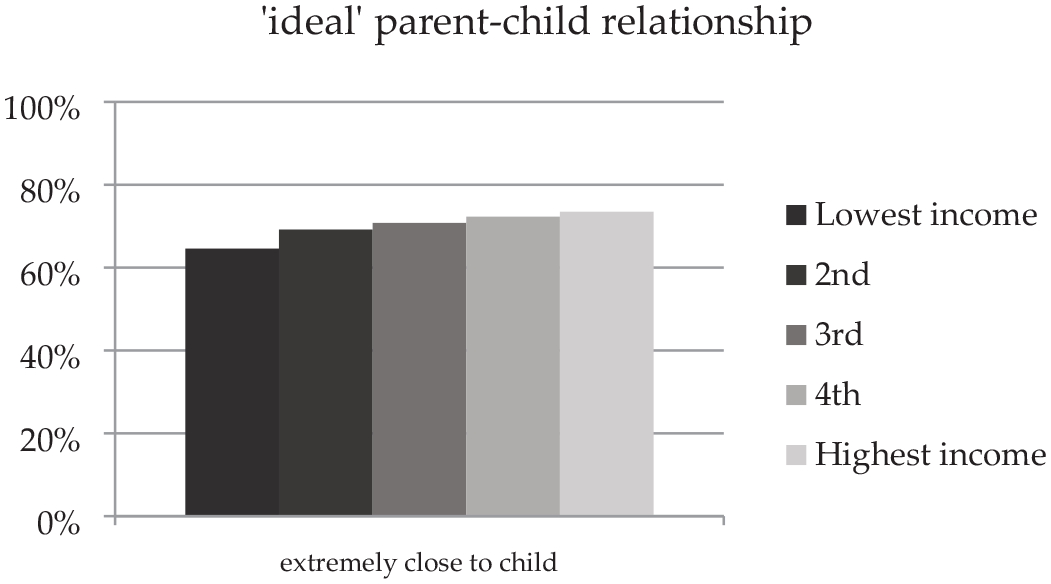
Measure related to the parent–child relationship that has a significant income gradient.
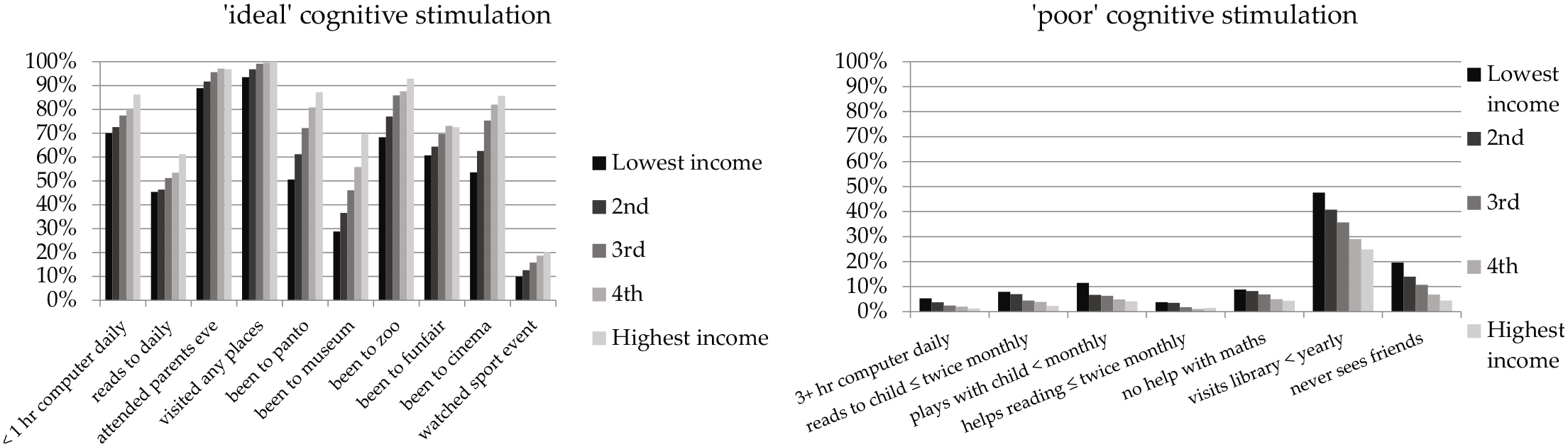
Parenting measures related to discipline and routine that have a significant income gradient.
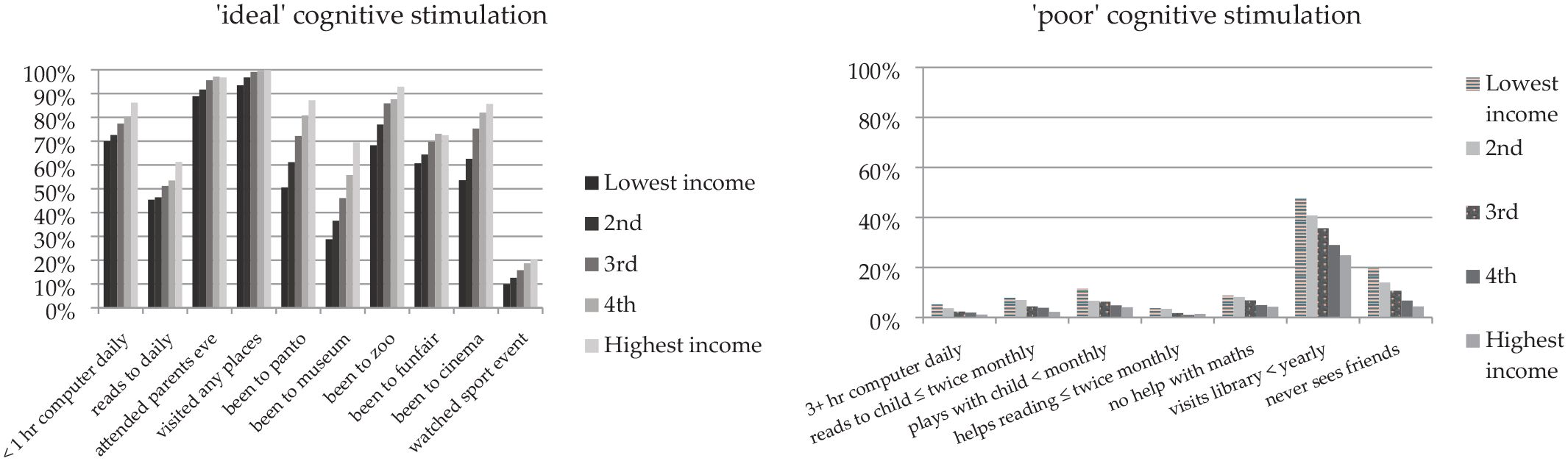
Parenting measures related to cognitive stimulation that have a significant income gradient.
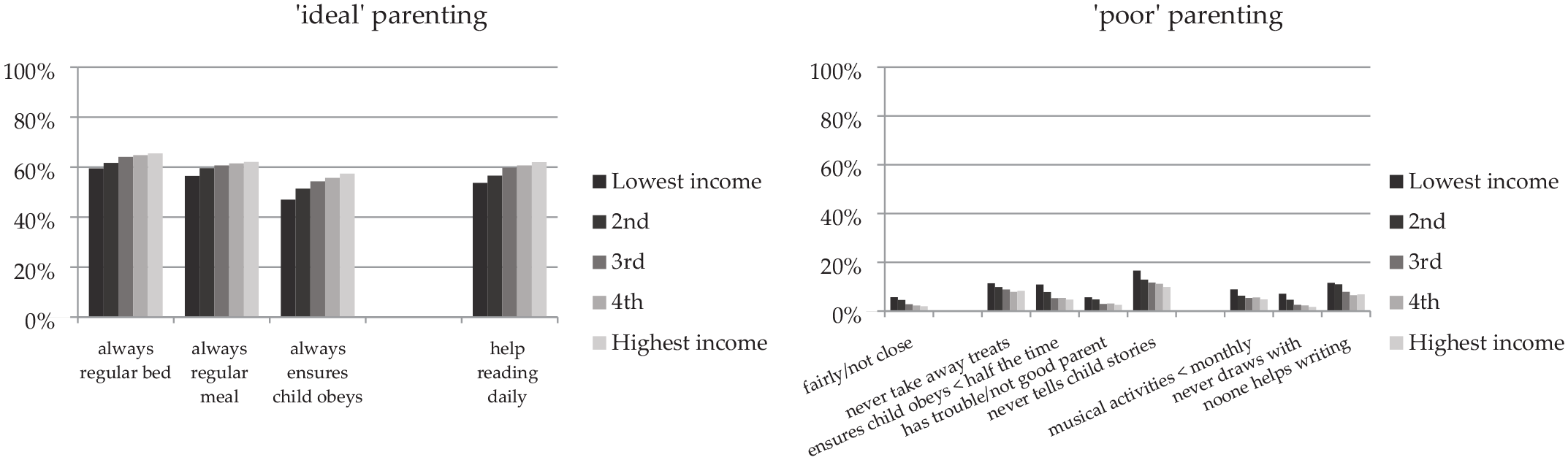
Significant differences in parenting (compared to the middle-income group) that are unique to the lowest-income quintiles only.
Do Low-Income Parents Parent Differently Compared with Middle-Income Parents?
Overall, there are significant differences in parenting between mothers in the lowest- and middle-income groups. Only 11 out of the 72 measures showed no significant difference (at 95%). There are 16 measures of parenting where mothers in the lowest-income group are more likely to report ‘ideal’ parenting behaviours than middle-income mothers, as shown in Figure 1. These positive differences in low-income parenting are mainly related to discipline and cognitively stimulating activities. For the majority of these measures (12 of the 16) mothers in the lowest-income group have a greater probability than the middle-income group of doing both the ‘ideal’ and ‘poor’ type of parenting behaviour; that is, they are over-represented in both extreme categories.
Are Low-Income Parents a Unique Group Behaving Differently from All Other Income Groups?
For over half of the parenting behaviours analysed (45 of the 72) low-income mothers were significantly more likely to be doing worse than middle-income mothers. Importantly, where there are negative differences in parenting the majority of these differences between low-income and middle-income mothers (33 of the 45) are actually part of a wider gradient across all income groups rather than differences that are specific to low-income mothers only (see Figures 2–5). 4 That is to say that the probability of being in the ‘poor’ parenting categories decreases with an increase in income and for the ‘ideal’ parenting behaviours the probability of doing these behaviours increases with income.
Only 12 of the (45) negative differences in parenting were unique to mothers in the lowest-income quintile. However, as can be seen from Figure 6 although only the differences between mothers in the lowest/two lowest-income groups reach statistical significance compared to middle-income mothers the pattern still clearly shows an income gradient across the full income distribution. Furthermore, the differences are small, for instance, as can be seen in Figure 6, while 60% of low-income mothers report their child always has a regular bedtime this only increases to 64% for middle-income mothers.
Given the attention that low-income parenting receives it is a striking finding that most differences in parenting are not specific to parents on low incomes, rather there is a gradient across all income groups. Further, almost half of the differences that are specific to low-income parents only relate to positive differences in parenting of mothers in the lowest-income group.
Are Low-Income Parents Less Likely to Parent in Ways That Are Considered to Be ‘Ideal’ or Are They More Likely to Parent in Ways That Are Considered to Be ‘Poor’?
Where there are significant negative differences in parenting between mothers in the lowest- and middle-income group, the majority of these (27 of the 45) relate to mothers in the lowest-income group being over-represented in the ‘poor’ parenting categories. It is worth reiterating however, that it is still a minority of low-income mothers who report ‘poor’ parenting as can be seen from Figures 2, 4, 5 and 6.
Discussion and Conclusion
The qualitative literature on poverty and parenting has focused on explaining low-income parenting as different rather than deficient and illuminating the processes that shape these differences. This article addresses a gap in the quantitative evidence on parenting and poverty, by analysing to what extent there are differences in parenting across income groups and the size of any such differences. The findings demonstrate that although there are significant differences in parenting between low- and middle-income mothers, there are important qualifications to these differences. First, most of these differences were found to be part of a broader gradient in parenting across all income groups. Second, although low-income mothers are more likely to report ‘poor’ parenting behaviours, it is still a minority of low-income mothers that describe their parenting in this way and likewise, still a large proportion (often around 50%) of mothers in the lowest-income group report ‘ideal’ parenting behaviours. Finally, for some parenting behaviours low-income mothers are actually more likely to behave in ‘ideal’ ways compared to middle-income mothers. For example, children in the lowest-income group are more likely to have someone at home helping with maths and writing every day, and more likely to paint/draw, do musical activities and play games with their mother every day. Parents in the lowest-income group are also more likely to report never smacking and never or rarely shouting at their child when naughty. These findings of positive differences are in line with Dermott and Pomati’s (2016) analysis which found that parents in poverty were more likely to report having family time with their children. They also support assertions based on qualitative evidence that low-income parents go to great efforts to support and provide for their children (Daly and Kelly, 2015; Gillies, 2005).
This article also developed a new framework for analysing parenting across four different domains: meeting physical needs, the parent–child relationship, discipline and routine and cognitive stimulation. Based on Lareau’s (2003) ethnographic research we would expect fewer differences in parenting related to meeting the child’s physical needs, as low-income parents would be focused on ‘accomplishment of natural growth’ and more differences related to cognitively stimulating activities, as middle-income parents aim at ‘concerted cultivation’. However, the findings do not neatly map onto this framework, as the positive differences described above demonstrate, which relate mostly to low-income mothers reporting more frequent activities that facilitate cognitive stimulation. Furthermore, a number of negative differences are found in low-income parenting related to meeting physical needs, including how often the child has breakfast and how many portions of fruit the child has per day.
Limitations and Future Research
A limitation of this study is that it relies on self-reported parenting measures and is therefore prone to social desirability bias. Middle-class parents tend to be more familiar with expert advice on parenting (Lareau, 2003: 248), and may therefore be more susceptible to social desirability bias. One implication of this is that differences between low- and middle-income mothers may be over-estimated if middle-income mothers are under-reporting negative parenting practices and over-reporting positive parenting practices more than low-income mothers.
This research has focused on quantifying the extent of differences in parenting across income groups rather than seeking to explore the mechanisms that explain any such differences; as outlined in the literature review qualitative research is much better placed to explore the complex processes at play. However, future quantitative research could contribute to unpicking some of these income-related patterns found in parenting. For example the positive differences in parenting related to cognitive stimulation, whereby low-income mothers are more likely to report helping with maths and writing as well as drawing and musical activities every day, may be explained by the mother having more time with the child and could therefore be related to differences in work hours. It could also be more directly related to financial resources which restrict the kinds of activities the mother can do with the child, resulting in more activities with the child in the home rather than organised activities outside of the home which are likely to cost more. Some of the largest differences that show an income gradient are related to trips outside of the home, which lend support to this suggestion.
The parenting measures could also be further developed in future research. Having been explored individually it would be useful to combine them into domain-specific parenting indices. This would give a better understanding of the overall experience of the child than can be gained from focusing on individual parenting measures. While some behaviours are clearly important in themselves, such as having breakfast every day, other behaviours may be substitutive. For instance, a parent may rarely do painting or drawing with their child but may do many other creative games and activities. Parenting indices would go some way towards addressing this.
Conclusion
This article makes three main contributions to the literature on low-income parenting. In examining parenting behaviours across the income distribution it reveals an income gradient in many parenting behaviours as well as positive differences between low- and middle-income parenting. These findings are not evident in most previous studies, because often the focus is on parents in poverty only, thereby exaggerating differences between low-income parents and other parents and reinforcing the notion that low-income parents are uniquely deviant. Second, unlike previous studies this article distinguishes the ways in which parenting behaviours differ for low-income mothers – specifically whether low-income mothers are doing less ‘ideal’ parenting behaviours or whether they are doing more ‘poor’ parenting behaviours. Finally, this analysis offers a comprehensive overview of the relationship between income and parenting by examining all available measures of parenting in what is a considerably rich dataset. Furthermore, in doing so it has proposed a new framework for measuring parenting behaviours across four domains: meeting physical needs; the parent–child relationship; discipline and routine; and cognitive stimulation.
The findings have important implications for our understanding of the relationship between income and parenting. The demonisation of poor parents that is prevalent in media and political rhetoric is unjustified. While there were significant differences in parenting by income group for most of the parenting measures these differences were small; the majority of parents regardless of income were more likely to report ‘ideal’ rather than ‘poor’ parenting. Furthermore, differences were not always negative. In identifying an income gradient for many parenting behaviours this work has raised important questions about the difference income can make to parenting across the full income distribution and suggests attention should not be concentrated on low-income parents only.
Footnotes
Appendix 1
Appendix 2
Acknowledgements
This article draws on data from the Millennium Cohort Study. I am grateful to the Centre for Longitudinal Studies (CLS), for the use of these data and to the UK Data Service for making them available. The author bears sole responsibility for the analysis and interpretation of the data. I would like to extend my gratitude to the respondents of the survey also. I am grateful to Kitty Stewart, Lucinda Platt, Polina Obolenskaya, Tania Burchardt, Katharina Hecht, Tammy Campbell and Nina Zhang for reviewing early versions of the article. I would also like to thank three anonymous reviewers for their constructive feedback.
Funding
The author disclosed receipt of the following financial support for the research, authorship and/or publication of this article: this research was funded by the Economic and Social Research Council [grant number ES/J500070/1].
