



Abstract
Schools in the UK are reportedly facing an acute mental health crisis due to the ongoing effects of the COVID-19 pandemic and subsequent cost of living pressures, leading to a renewed focus on therapeutic education and a growing prominence for wellbeing and emotion-based initiatives. These developments form part of a longer story about the increasingly dominant influence of psychology and the therapeutic ethos in late modern societies, but one that has been subjected to various critiques in recent years. This article approaches schools as a lens through which to interrogate the evolving nature of the therapeutic ethos and how it manifests in education, through a particular focus on pedagogies of citizenship and character formation. Drawing on in-depth qualitative data from four primary schools across Britain, it explores the nature and scope of therapeutic education in the post-COVID educational context, its relationship with citizenship and character education, and the role of religion as a significant case study for understanding these processes. It is argued that psychological and therapeutic sensibilities emerge as dominant influences on the development of young selves, but in rather more complex ways than is reflected in the existing literature, resonating with recent scholarship on therapeutic cultures emphasising their hybrid, heterogeneous nature. The article offers a sociological analysis of the continued rise of therapeutic education, while advancing wider theoretical debates about contemporary therapeutic cultures, the emerging relationship between religion and psychology, and the significance of schools as social institutions.
Introduction
According to news reports, schools in the UK 1 are currently facing an acute mental health crisis (e.g. Adams, 2024b; Williams & Davies, 2024). The ongoing effects of the COVID-19 pandemic and subsequent cost of living pressures are portrayed as leaving a legacy of deteriorating classroom behaviour, pupil absenteeism and family conflict. This has reportedly led to increasingly unmanageable teacher workloads, as National Health Service (NHS) mental health provision cannot cope with the growing demand for referrals to specialist services, and schools are left struggling as the ‘fourth emergency service’ (Porter, 2023). Recent studies show that pupils’ mental health worsened during the pandemic, with higher rates of depression and social, emotional and behavioural difficulties, and lower levels of mental wellbeing (e.g. Montero-Marin et al., 2023). Yet, it is debated whether these patterns show substantive increases in mental health problems, or more willingness to diagnose, label and pathologise a wider range of emotional states, or rather, a mix of the two (Madsen, 2014). Either way, the growing focus on mental health and wellbeing in schools looks set to continue, supported by growing interest from the UK government (e.g. Adams, 2024a), as well as internationally (e.g. European Parliament, 2024).
This context could well provide a renewed drive for the further entrenchment of ‘therapeutic education’ and the prominence of wellbeing and emotion-based initiatives in schools (Ecclestone & Hayes, 2009b). These developments form part of a longer story about the increasingly dominant influence of psychology and the therapeutic ethos in late modern societies (Madsen, 2014), albeit one that has been subjected to various critiques in recent years (e.g. Wright, 2011). Previous research has explored the growing influence of therapeutic education and Social and Emotional Learning (SEL), including their role in the shaping of young selves (e.g. Brunila, 2012; Gagen, 2015). However, we know little about how the therapeutic manifests in a post-COVID educational landscape in relation to citizenship and character formation, or the benefits of viewing these developments through the lens of recent scholarship on therapeutic cultures, which emphasises their hybrid and heterogeneous nature (Nehring et al., 2024).
Citizenship and character education are distinct but overlapping aspects of schooling, which act as umbrella terms for learning activities that seek to (respectively) equip pupils with the skills and knowledge to play an active role in democratic society, and to develop pupils’ individual values, virtues and morals (Mills, 2021). Neither are usually taught as discrete subjects in primary schools but typically form part of other areas of the curriculum, such as Personal, Social, Health and Economics Education (PSHE) (England), Health and Wellbeing (Wales, Scotland) and Social Studies (Scotland). As such, they can be delivered through curricular (e.g. subject lessons), co-curricular (e.g. assemblies) and extra-curricular (e.g. hobby clubs) contexts (Mills, 2021). Messages pertaining to citizenship and character formation are also communicated more subtly, through the ‘hidden curriculum’, defined as the implicit norms and values conveyed intentionally or unintentionally through everyday school interactions and cultures (Jackson, 1968).
In this article, we draw on in-depth qualitative data from four primary schools across Britain to interrogate the evolving nature of the therapeutic ethos and how it manifests in education, through a particular focus on pedagogies of citizenship and character formation. Our aim is to bring out some of the complexity surrounding the dynamics of therapeutic education, which is often unrecognised in current debates. We begin by summarising existing literature on the therapeutic ethos and therapeutic education, before outlining details of the study and our findings. These include mapping the therapeutic ethos in the schools and how it intersected with citizenship and character education, along with considering the role of religion for further understanding these processes. We argue that in the post-COVID educational landscape, psychological and therapeutic sensibilities emerge as dominant influences, resulting in some individualising and secularising effects, but in much less totalising and more contradictory ways than is typically acknowledged. These original insights contribute to wider sociological debates on contemporary therapeutic cultures, the emerging relationship between religion and psychology, and the role of schools as social institutions.
Therapeutic cultures
The ideal of emotional wellbeing is deeply interwoven in contemporary culture, as languages and practices originally associated with professional therapy have become widespread across media, popular culture and institutions. Nolan (1998) defines the key features of the ‘therapeutic turn’ as: (1) the rise of the individual as the ultimate moral authority, seeking liberation from societal constraints to achieve self-realisation; (2) an emphasis on feelings and emotions as a reaction against the bureaucratic and rationalised nature of late modernity; (3) enormous growth in the number of psychologists and therapists as a new ‘priestly class’, enjoying high levels of authority and prestige, and helping people make sense of life; (4) the pathologisation of human behaviours previously not viewed as illness, with a widening set of labels used to diagnose them; and (5) the construction of humans as victims of past events and relationships, with pain and suffering no longer seen as inevitable parts of life but as infringements on health and happiness.
The literature on therapeutic cultures stems back to Rieff (1968), who described the rise of ‘psychological man’ (sic) of late modernity. He argued that therapy had evolved from a professional specialism to a major influence on wider culture, resulting in a loosening of external authorities and moral demands rooted in religion, in favour of individual goals, wellbeing and self-realisation. Lasch (1979) viewed the ‘psychological man’ as narcissistic and anxious, with an unsatisfied desire for gratification, and an obsession with psychic self-improvement and wellbeing. He argued that self-absorption left individuals dependent on the validation of others, turning to therapists rather than religious leaders to fulfil their emotional needs. Critics of these developments have argued that a focus on the individual and the psychological can result in the obscuring of wider social, political and economic structures and problems, along with the means to challenge and address them (e.g. Moskowitz, 2001). Moreover, the individualism associated with these shifts is charged with undermining traditional institutions and ethics, causing the decline of religious and democratic participation, precipitating social isolation and community fragmentation (e.g. Bellah et al., 1985).
Nolan (1998) documented the institutionalisation of the therapeutic ethos into aspects of the American state, including law, criminal justice, education, welfare, politics, healthcare and the military, enabling the expansion of state authority into citizens’ private lives. In the UK, Furedi (2004) argued that counselling had been institutionalised across a range of sectors, including the workplace. Rather than selfish and narcissistic, he viewed therapeutic cultures as emphasising human fragility, vulnerability and emotional deficiency, with normal life experiences increasingly portrayed as damaging through a pathologisation of everyday pressures. Some critics argue that psychology has fundamentally changed how we understand and relate to ourselves, providing those in authority with new tools to manage, control and improve us. Citizens are encouraged to focus on their own self-improvement and personal development, effectively self-regulating and making choices that align with neoliberal goals of government, to maximise productivity (Foster, 2016; Rose, 1999). The individual is thus made responsible for managing their own wellbeing, deflecting the need to address structural causes for mental ill health in wider society (Purser, 2019).
Illouz (2008) contends that therapeutic forms have now diffused on a global scale through standardised psychological discourses that transcend national boundaries. Drawing its power from formal professional expertise and informal knowledge in popular culture and media, the therapeutic discourse comprises a new cultural matrix that permeates societies with common narratives, metaphors and explanatory frameworks for understanding the self. ‘The therapeutic discourse’, she states, ‘has become a cultural form, shaping and organising experience, as well as a cultural resource with which to make sense of the self and social relations’ (Illouz, 2008, p. 56). In helping individuals manage the increasingly complex and contradictory nature of modern life (e.g. Salmenniemi, 2017), these ideas rearticulate the boundaries between public and private, casting emotional competence, reflexivity and self-control as tools for accessing social goods in both the home and the workplace (Illouz, 2008).
Problematising critiques of the therapeutic turn that emphasise cultural decline or social control, scholars such as Wright (2011) have highlighted its complex and contradictory nature. She argues that some developments can be viewed positively, including the emancipatory effects of fundamental shifts in gender relations and an increased attention to suffering, abuse and injustices in the private sphere (see also Sointu & Woodhead, 2008). This more nuanced view, incorporating the experiences of marginalised groups, recognises that ‘as well as at times a self-indulgent preoccupation with personal fulfilment, therapeutic culture has facilitated the assertion of individual rights to bodily autonomy, emotional wellbeing and personal safety’ (Wright, 2011, p. 48). Furthermore, Nehring et al. (2024) point to more recent work on therapeutic cultures, including from the Global South, which illustrates the heterogeneous, hybrid nature of therapeutic discourses. This body of research emphasises how the therapeutic may act as a cultural resource for community building and collective engagement (e.g. Salmenniemi, 2019) and can involve complex assemblages of the traditional and the modern, the secular and the sacred (e.g. Csúri et al., 2022; Hoesterey, 2015).
Therapeutic education
The impact of the therapeutic ethos in education is documented by Ecclestone and Hayes (2009b), who outline the growth in emotional and wellbeing initiatives in schools, the integration of therapeutic ideas and practices – such as positive psychology – into curriculum subjects, and the increasing numbers of personnel employed to support this agenda. They offer a long list of therapeutic activities that have become common in primary schools, including circle time, feelings trees, worry boxes, thinking skills, philosophy for children, mindfulness meditation, nurture and counselling groups, buddy and anti-bullying schemes, and mentoring (see also Ecclestone & Hayes, 2009a). Ecclestone and Hayes (2009b) argue that although this agenda is well meaning, it constructs a diminished understanding of the human subject, encouraging children to view themselves as fragile and vulnerable with low self-esteem, and unable to cope emotionally with the challenges of everyday life. Moreover, they portray the shift away from traditional curriculum knowledge towards ‘soft’ skills as educationally detrimental, constructing learners as incompetent and projecting a lack of confidence in their abilities to master a subject-based education.
Therapeutic ideas have also filtered into areas of schooling concerned with the formation of character and the production of good citizens. As Arthur (2019) notes, this endeavour has been a perennial aim of education, and Walker et al. (2015) document a long-term shift from conceptions of children’s character informed by religious doctrine and social class expectations in the 18th and 19th centuries, towards an increasing focus in the 20th century on pro-social behaviours and moral reasoning rooted in psychological development. By the turn of the 21st century, therapeutic discourses had become dominant, with an emphasis on emotional literacy, confidence and resilience, then evolving into the current interest in virtue ethics and positive psychology as ways to promote human flourishing (Arthur, 2019). Such approaches confirm Martin’s (2006) contention that ethical and moral matters, and mental health and wellbeing, are increasingly viewed as intricately intertwined.
Despite the growing influence of psychology and the therapeutic ethos on citizenship and character formation, religion has also maintained a presence through its longstanding role in the provision of education in the UK. This was, for instance, reflected in debates about children’s moral values during the passing of the Education Act 1944, which established daily Collective Worship for all schools in England and Wales, and the Education Reform Act 1988, which clarified this should be wholly or mainly of a Christian nature (Shillitoe, 2023). Most state-funded schools in England (religious or not) are still required to provide daily collective worship (even if many do not comply with the law), compulsory Religious Education (RE) 2 and provision for pupils’ ‘Spiritual, Moral, Social and Cultural’ development as a cross-cutting curricular theme (Hemming, 2015), while around 34% of schools possess a formal religious character (Long et al., 2024). Similar arrangements are also in place in Scotland and Wales, albeit with certain variations (Hemming, 2015).
There are, however, clear signs that citizenship and character education have somewhat moved away from religion in recent decades, towards psychological and therapeutic understandings (Walker et al., 2015). For example, Watson (2006) examines the 2004 ‘Every Child Matters’ initiative, which provided a holistic approach to children’s care and wellbeing across education and other services. It aimed to improve outcomes in a range of domains, including physical and mental health and emotional wellbeing, but religion and spirituality were absent from the strategy. Similarly, Smith and Smith (2013) evidence a shift away from the teaching of religious beliefs and values in school assemblies, despite the legal requirement for Christian-orientated collective worship. Instead, the schools in their study (including church schools) were primarily teaching virtue ethics in assemblies.
Further critiques of therapeutic education have thus focused on its implications for the shaping of citizens and character. Gagen (2015), for instance, contends that SEL reframes education for citizenship, encompassing the development of emotional competences, such as self-awareness, anger management and impulse control, to cultivate self-restraint and maximise productivity. Similarly, Brunila (2012) argues that therapeutic education leads to an excessive focus on the self, encouraging students to view societal issues, such as unemployment, as personal problems for which they are individually responsible and should show emotional resilience. As Mills (2021) highlights, this is also demonstrated through the recent focus on developing ‘grit, gumption, resilience and perseverance’ among pupils in England, encouraging children to learn how to ‘bounce back’ from life’s challenges and hardships. She argues that these discourses deny the disproportionate effect of structural inequalities on disadvantaged groups, placing the responsibility for dealing with setbacks and managing wellbeing onto individual pupils, even if their problems stem from wider societal issues (see also Forbes, 2019).
While the studies above largely portray therapeutic education in a negative light, other scholars have evaluated these trends more positively. Hyland (2006) argues that while therapeutic approaches should never dominate, they play an important role in the values and caring aspects of educational endeavours, especially in the context of neoliberal education policies that prioritise targets, testing and narrow performance outcomes. Similarly, Wright (2014) highlights the long history of therapeutic influences in education, and how approaches such as ‘child-centred’ learning and an ‘ethic of care’ have often been associated with social justice imperatives and efforts to make education more inclusive and a better experience for disadvantaged pupils. She argues that the effects of therapeutic education are thus likely to be more complex and multifaceted than some of the literature tends to recognise, with positive and negative outcomes.
In both strands of literature explored above – therapeutic cultures and therapeutic education – the dominant narrative has focused on the individualising and secularising tendencies of psychological trends, purportedly leading to social fragmentation and the promotion of personal responsibility and self-improvement in place of collective efforts towards societal or educational transformation. However, more recent work has begun to question the totalising character of such arguments (e.g. Nehring et al., 2024; Wright, 2011, 2014), pointing to the complex and contradictory nature of therapeutic trends in education and wider society (e.g. Csúri et al., 2022; Hoesterey, 2015; Salmenniemi, 2019). In this article, we further explore and evaluate this emerging critique, by investigating how the therapeutic ethos manifests in relation to citizenship and character education in primary schools across contemporary Britain.
Methodology
This article draws on data from a wider study exploring the role and significance of religion in the fostering of citizenship and belonging among primary school pupils in Britain. Multi-sited, in-depth qualitative fieldwork was undertaken in 2022–2023 in four schools across England, Wales and Scotland, including participant observation, interviews with pupils, parents and staff, and child-friendly creative methods. The research comprised the following sample of state-funded primary schools from contrasting localities:
Faircroft – a community school in an ethnically and religiously diverse, low-income urban neighbourhood in the Northwest of England;
Ysgol Dyffryn – a community school in a small former mining town in South Wales with a mixture of working-class and middle-class families, with low levels of religious identification/practice;
St Jude’s – a Church of England school in a predominantly middle-class rural village in the South of England;
Bellview – an ethnically and religiously diverse community school in the Central Belt of Scotland with a mixture of working-class and middle-class families.
Fieldwork involved volunteering as a classroom assistant with two to three classes in each school, while performing participant observation of everyday school life for a period of one term per institution (11 weeks, 3 days per week). This focused on children aged 8–11 (Y4–6 in England/Wales, P5–7 in Scotland) and incorporated a diverse range of activities such as RE, PSHE (or equivalent), collective worship/assemblies, festivals/ celebrations and general classroom interactions. Semi-structured interviews were conducted with five members of staff per institution (N = 20) and the parents of 12–15 children in each school (N = 53), discussing their views about the role of religion, values and citizenship in school life. Children were invited to participate in paired (or small group) interviews to discuss their (non)religious identities, peer interactions, values and ideas about citizenship, and experiences of school. These took place with 26–30 pupils in each school (N = 108). Interview and observation data were also supplemented by child-friendly creative tasks, including photography and drawing activities, to enable pupils to reflect on their ideas about community, identity and belonging.
Institutional ethical approval was granted from the University of York. 3 Schools were recruited through existing researcher contacts and direct approaches. Informed consent for observational fieldwork was secured from headteachers, class teachers and parents, and project summaries for teaching staff and parents were provided to each participating school prior to its commencement. Informed consent for interviews was obtained for all participants. For child participants, a parental information sheet and consent form were sent home, and pupils were encouraged to discuss these with their parents before returning them. Prior to each pupil interview, the researcher also talked through a child-friendly consent form, explaining each point with examples and encouraging children to ask any questions if they did not understand. All names, including people, places and schools, have been changed to protect anonymity.
Data were analysed iteratively throughout and after the fieldwork period, using both inductive and deductive logics. Initial descriptive analysis of fieldnotes and transcripts helped to inform the development of a coding framework, agreed among all four project members. This was then used to undertake a full thematic analysis of all data sources using NVivo, rooted in an interpretivist approach. In this article, we focus specifically on the issue of therapeutic education, its relationship with citizenship and character formation, and the role of religion in these processes. We draw primarily on the observational fieldnotes and interview data from all four schools, to show the relevance of the processes explored across different contexts, including schools with and without a religious character.
Mapping the therapeutic ethos
The institutionalisation of the therapeutic ethos (Furedi, 2004; Nolan, 1998) was apparent across all four schools in our study. Schools have long been involved in health promotion, but this agenda had been extended to incorporate wellbeing. It was discussed by teaching staff and parents, and represented in curriculum frameworks (e.g. Health and Wellbeing in Wales) and professional school roles (e.g. mental health and wellbeing coordinator). Mental and emotional health featured prominently across lessons and other school initiatives. These included thematic weeks or days focusing on mental health and wellbeing, and the involvement of pupils in activities such as health and wellbeing action groups, meetings and questionnaires. Most of the schools also ran some kind of buddy scheme where older pupils would support younger children in class or act as ‘friendship ambassadors’ or ‘worry warriors’ on the playground.
A number of children [. . .] are part of the health and wellbeing group. I asked what this was, and it is about emotional wellbeing, e.g. dealing with worries. The members come up with ideas for the whole school on how to deal with these things. (Fieldnotes, Bellview)
Aligning with Nolan’s (1998) observations on the growth of psychological and therapeutic professions, there were dedicated school personnel working to support this agenda, such as wellbeing officers and counsellors, as well as mental health and psychological services available internally or externally. These included a therapy room, sensory room, anger management club and ‘peace out time’ cards, with play therapy, art therapy and farm therapy mentioned in the interviews. Moreover, teaching staff seemed quite attuned to pupils’ individual emotional needs, recounting instances where they had ‘trod carefully’ to avoid ‘triggering’ pupils considered vulnerable, during classroom discussions about sensitive issues. A few pupils also discussed using specialist services in school or their referrals to external NHS mental health services.
I like this room because that’s where I go to counselling and the school counsellor is really nice. (Cleo, Pupil, Bellview)
As highlighted in previous studies (e.g. Wright, 2014), such initiatives are generally constructed as a ‘good thing’, associated with a caring approach and a more inclusive learning environment. In the interviews with teaching staff, they almost all viewed the emphasis on wellbeing through a positive lens, often talking approvingly about how they felt that their school focused more on wellbeing than others. Participants highlighted the post-COVID context to explain and justify why a focus on mental health was viewed as so necessary at the present time. References were made to low or reduced levels of ‘emotional intelligence’ (Ecclestone & Hayes, 2009b), particularly among boys getting into arguments on the playground, and often linked to the ongoing impact of lockdown experiences during the COVID-19 pandemic.
Since COVID-19 we have noticed they are not very emotionally intelligent. [. . .] They can’t articulate how they feel, so we are trying to encourage them to say, promote healthy relationships. (Miss Evans, Staff member, Ysgol Dyffryn)
On the whole, parents seemed to support this focus on wellbeing and mental health. Some felt that the schools their children went to, or schools more generally, should pay even more attention to developing healthy behaviours of all types. These views support Illouz’s (2008) contention that therapeutic discourses represent a new cultural matrix, which permeates society with common narratives about emotional and psychological wellbeing.
And it is the habits, which is what I think schools need to instil more in young people, and make it part of the curriculum to learn to stay healthy, mentally and physically. (Desmond, Parent, Faircroft)
There were a few parents and one member of teaching staff who were somewhat concerned that there might be too much focus on wellbeing and mental health in schools, but these views were very much in the minority. They felt that this could lead to other curriculum subjects or medical needs being neglected, or encourage children to focus too inwardly on themselves, rather than outwardly towards others. These concerns echoed wider theoretical critiques of therapeutic cultures as educationally detrimental, individualising and/or socially fragmenting (e.g. Bellah et al., 1985; Ecclestone & Hayes, 2009a).
In my other son’s school [. . .] they do an awful lot of wellbeing work. I’m not against wellbeing [. . .] but there seems to be an awful lot. (Erin, Parent, Ysgol Dyffryn)
Therapeutic education was therefore central to the schools’ health and wellbeing agendas but, at least at the surface level, was approached in somewhat of an apolitical way, emphasising psychological prevention and treatment for individual pupils, rather than engagement with relevant social or educational factors that might lead to poor mental health (Forbes, 2019; Purser, 2019). However, the significance of wellbeing and mental health was not limited to this function, because psychological influences were also closely entwined with efforts to shape pupils as social and moral subjects, as explored in the next section.
Citizenship and character education
A key thread in the therapeutic cultures literature highlights its role in processes of governance, including the encouragement of individual responsibility, personal development and self-regulation. As Rose (1999, p. 8) contends, ‘the psychological sciences are intimately bound up with programmes, calculations, and techniques of the soul’. Similar themes were apparent in our schools through the way that therapeutic education became entwined with education for citizenship and the shaping of the social subject. Teaching staff often made links to therapeutic aims or activities when discussing how they taught pupils to become ‘good citizens’, treating them as overlapping areas of the curriculum. For example, one school used a resource scheme called Jigsaw, 4 marketed as a mindful approach to PSHE, while another teacher discussed how citizenship was taught using real-life examples in Health and Wellbeing lessons.
Citizenship is taught through PSHE. Obviously, within early years, it’s part of the personal, social, emotional, development. [. . .] They teach a lot about their strong sense of self, their community, where they come from. (Mrs Daniels, Staff member, Faircroft)
Much of this agenda appeared to focus on cultivating individual skills through SEL, such as emotional literacy (Gagen, 2015). Most of the schools made use of (to differing degrees) a scheme called ‘Zones of Regulation’, 5 which involved pupils reflecting on which of four emotional states they were most aligned with on any given day (see Figure 1). These included Blue Zone (Sad, Bored, Tired, Sick), Green Zone (Happy, Focused, Calm, Proud), Yellow Zone (Worried, Frustrated, Silly, Excited) and Red Zone (Overjoyed/Elated, Panicked, Angry, Terrified). Staff would sometimes speak with pupils choosing the Blue or Red Zones to check if they needed extra support. A few parents spoke approvingly about the ‘Zones of Regulation’ during interviews, feeling it was an important initiative.
They’re working a lot on the ‘Zones of Regulation’, which I think is a good thing. So, they know how to [emotionally] regulate, especially as they get older, they can find that more difficult and they’ve got all their hormones coming. (Bethan, Parent, St Jude’s)
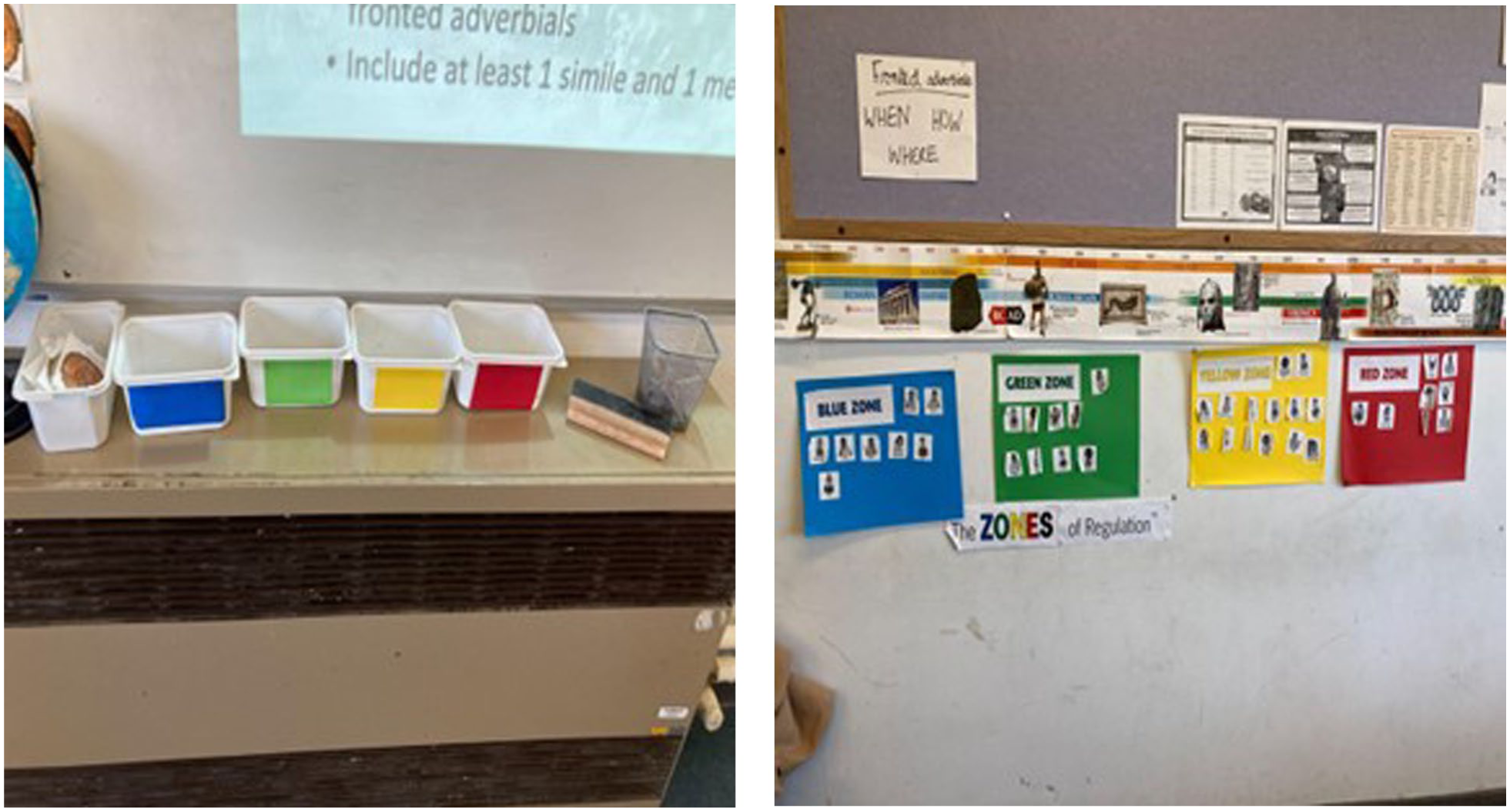
The Zones of Regulation, St Jude’s.
The curriculum subjects of PSHE and Health and Wellbeing were highlighted as important vehicles for delivering therapeutic education and/or SEL lessons. This included teaching children to deal positively with their emotions and worries, understand emotional triggers, use problem solving as a thinking or sensory strategy, and reflect on their own learning. A range of other activities outside of formal lessons were also used to encourage children to understand and regulate their own emotions, such as in assemblies and general classroom interactions. Pupils were asked to write down any anxieties for the ‘worry monster’ or to play an ‘emotion charades’ game before an English lesson. Teaching staff in assemblies would discuss the importance of ‘settling minds’ with the aid of a bottle filled with water and dirt, or would encourage pupils to work towards winning a ‘reflective learner’ certificate.
[The teacher] started by asking the children to think with partners about what triggers might be for changes in behaviour or Zones of Regulation. [. . .] He then asked them to think about the warning signs which might mean you’re going from one [emotional] Zone to another. (Fieldnotes, St Jude’s)
There were also examples of therapeutic education overlapping with character education and the teaching of values and virtues, and thus the shaping of the moral subject. Prominent here was the promotion of (emotional) resilience, perseverance and independence, particularly in the schools in less affluent localities. This was achieved through a variety of learning activities in the classroom or assemblies, including dedicated lessons, wall displays and drama-based games, and singing popular songs such as Elton John’s ‘I’m Still Standing’ or Incubus’s ‘Drive’. The focus on resilience aligns with therapeutic education’s purported emphasis on individual responsibility and self-regulation (Brunila, 2012), as well as recent popular discourses in character education that stress the development of ‘grit and gumption’, especially in pupils from disadvantaged backgrounds (Mills, 2021).
The challenge was to balance a bean bag on their head whilst walking. [. . .] The teacher then explained how even when the task got difficult, they didn’t give up, they kept going to achieve their goal. She said ‘we can’t always control what life throws at us – at times we need to use our ‘building resilience’ skills to help us. (Fieldnotes, Bellview)
These processes can be interpreted using Zembylas’s (2007) ‘emotional rules’ and Ahmed’s (2004) ‘affective economies’. Both theories conceptualise emotions not merely as individual experiences but as social and political forces or a type of capital, circulating within wider networks of power, connecting and separating subjects, and shaping which emotions are deemed (un)acceptable and (un)desirable within specific contexts. Here, children were taught that calmness, self-control and resilience were the ‘correct’ emotional responses, attracting cumulative value within their school’s affective economy, and arguably preparing them to be docile but productive members of society. In the examples above, the focus of therapeutically orientated citizenship and character education was on the individual pupil, aligning with dominant narratives on the rise of neoliberal mechanisms that promote individual responsibility and self-improvement (e.g. Brunila, 2012; Nolan, 1998; Rose, 1999).
Pro-social relationships
There was, however, evidence that the alliance between psychology and citizenship and character education was not only limited to a concern with the individual but also emphasised interpersonal relationships. In this sense, the schools’ affective economies extended beyond individual conduct, to encompass a set of emotional rules governing interactions with others (Zembylas, 2007). Specifically, the schools were promoting kindness, forgiveness and respect for others as important virtues, and this was often framed in terms of pupils’ levels of empathy and emotional understanding, highlighting the positive affective ‘impressions’ that pupils had the potential to make on one another (Ahmed, 2004). These qualities were taught in both the classroom and assemblies, through activities such as stories or poster-making competitions (see Figure 2), aligning with the stated values promoted across the schools.
There needs to be, then, an understanding of your relationships with other people, the respect that you have for others and things like. . . We did a lot of work at the start of the year about your emotions and worries. (Miss Quinn, Staff member, Faircroft)
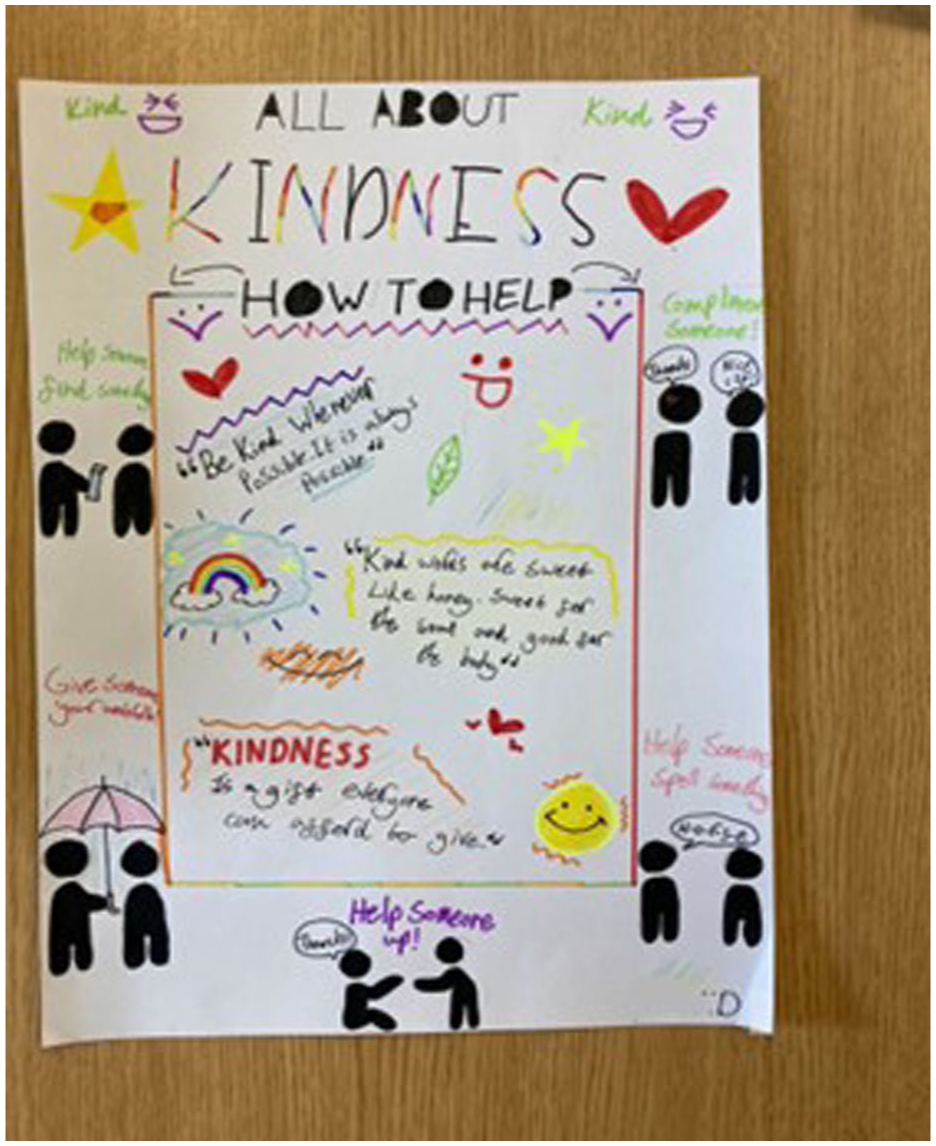
Pupil ‘Kindness’ poster, Bellview.
SEL often took the form of dedicated lessons or activities aimed at helping pupils develop pro-social skills, such as controlling anger towards others and learning conflict resolution. Again, these could take different forms such as reference to brain science in PSHE, drama in the classroom, philosophy lessons, or impromptu conversations about disputes on the playground. However, all shared the aim of encouraging pro-social traits and virtuous character among pupils, as well as promoting positive interpersonal relationships within the school community (see also Hemming, 2015). Although philosophy is not inherently therapeutic, the way it is taught in primary schools foregrounds speaking, listening and agreeing or disagreeing with others in a civil way, and thus can be understood as an example of the teaching of interpersonal skills within therapeutic education (Ecclestone & Hayes, 2009b).
First thing was a ‘Young Citizens’ slide show which was about ‘dealing with conflict’. [. . .] The aim of the PowerPoint was looking at what happens when you feel under threat and explaining what happens in the brain when the logical and reasoning part of the brain is overtaken by emotions. Another aim was to learn how to deal with these emotions and take control of the thinking part of the brain again – e.g. by deep breathing or pausing. (Fieldnotes, Ysgol Dyffryn)
Although the observational data showed a few examples when pupils approached such activities with some resistance, for example by sighing and giving silly answers during lessons, in the paired interviews, they also showed an awareness of what they had been taught about emotional literacy and self-regulation strategies, such as anger management and staying calm and cooling off before responding to insults. Revealingly, these examples mostly arose in the context of discussions about friendships and disputes, rather than individual wellbeing.
I mean if someone is being mean you probably are tempted to say a nasty thing, but Miss says count to ten. (Taylor, Pupil, Ysgol Dyffryn)
Parents also typically referred to individual skills and interpersonal relationships when talking about how they valued mental health and wellbeing as a significant part of children’s personal and social development. In discussing their hopes and aspirations for their children, parents often made links between mental health and other moral traits such as resilience, hard work, self-awareness, kindness, empathy and awareness of others’ needs, demonstrating how the therapeutic and the moral are increasingly viewed as intricately interconnected (Martin, 2006).
If you are kind to people, you are more likely to get kindness back. Yeah, and you are more likely to have a healthy mental health and physical health and wellbeing. (Melanie, Parent, St Jude’s)
Care for ‘the other’
In addition to pro-social relationships, there were instances where therapeutically influenced citizenship and character education moved even further beyond individualisation. Teaching about kindness, empathy and respect for others was typically accompanied by messages about equality, diversity and human rights, thus embedding them within wider socio-structural concerns. All four schools in the study were addressing issues of gender, race/ethnicity, religion, LGBTQ+, disability and/or neurodiversity, albeit to different degrees, through classroom discussions (e.g. on religious difference in RE), learning resources (e.g. books on ‘queer heroes’) and wall displays (e.g. on Black History Month). Teachers in most of the schools were also regularly showing ‘Newsround’ in class (a short BBC news bulletin for children), which covered stories about the Suffragettes and women in sport, for example. Discussions on equality and human rights were often explicitly linked back to caring for others and the therapeutic-inspired values and virtues that pupils were learning.
When we talk about our rights underpinning everything [. . .], we teach about human dignity and about treating people how people like to be treated [. . .]. Our school in general, we are a community, we’re not just a group of random folk coming together, we all have shared values, we all care about each other. (Ms Ferguson, Staff member, Bellview)
One of the most vivid examples of how therapeutic influences and those concerned with human rights and dignity came together in citizenship and character education, was through a focus on refugees. In three of the schools, this topic was covered in class during the fieldwork period and children were encouraged to learn about and empathise with refugee experiences. At Ysgol Dyffryn, the school had invested in several books including Adam’s Diary: A Refugee’s Story by Michaela Morgan and The Boy at the Back of the Class by Onjali Rauf, which were used to stimulate discussion and understanding. At Bellview, pupils were given the opportunity to engage with artwork by Petrit Halilaj and write a descriptive paragraph about what it might be like in a refugee camp. At Faircroft, children watched and responded to a short animation called Ali’s Story 6 as part of a philosophy lesson during ‘Refugee Week’.
Miss Murphy put on a video called ‘Ali’s Story’, which is a real-life account of a boy leaving Afghanistan. The class was then asked to write down their first thoughts about the video [. . .]. When feeding back their initial thoughts, these included: ‘sad’, ‘emotional’, ‘heartbreaking’, ‘worrying’, ‘shocking’. (Fieldnotes, Faircroft)
The focus on extending kindness, empathy and respect to refugees was referred to in the staff interviews as a deliberate strategy, particularly when some pupils in their school were themselves from refugee families. Their welcoming approach was also mentioned in a few of the parent interviews, as well as by some of the pupils, who talked about their hopes that refugee children from Ukraine would join their school, and the idea that no one should be prevented from moving to other countries and feeling like they can belong there.
I really hope [. . .] a Ukrainian kid will be transferred to England and find this school. Because I think they would fit in very easily, and I think they would love it here. (Savannah, Pupil, Faircroft).
Ahmed (2004) explains how emotions such as hate can accumulate through circulation between objects, signs and bodies, thus delineating certain groups of subjects from others (such as asylum seekers). In the examples above, the schools’ affective economies were instead working to accumulate kindness and empathy for ‘the other’ among pupils, thus drawing together groups of different subjects and subverting dominant discourses that construct refugees as a threat. As Zembylas (2007, p. 307) points out, ‘affective connections may call attention to a group’s demand for respect and recognition, but also highlight inequalities more generally’. Therapeutic inspired citizenship and character education in our schools therefore became linked to broader socio-structural issues relating to the wider community (Salmenniemi, 2019), going far beyond pro-social virtues, individual resilience and self-regulation. These findings challenge traditional critiques of the therapeutic ethos as primarily individualising, aligning instead with emerging research emphasising its heterogeneous and hybrid nature (Nehring et al., 2024).
The shifting place of religion
Developing further our argument about the heterogeneous, hybrid nature of therapeutic discourses, we now take a closer look at the role of religion in the schools and its relationship with citizenship and character education. Often featuring in debates about therapeutic cultures (e.g. Bellah et al., 1985; Rieff, 1968), with historical links to the development of education for citizenship and character (Arthur, 2019), a focus on religion affords insight into how the therapeutic ethos can be viewed as simultaneously traditional and modern, sacred and secular (Nehring et al., 2024).
Earlier literature on therapeutic cultures often focused on the decline of religion and the shift away from religious forms of authority and morality, in line with longstanding theories of secularisation (e.g. Bellah et al., 1985; Rieff, 1968). Across the schools in our study, religion was an important aspect of some children’s identities, but its presence in other ways was not always so pronounced (Strhan et al., 2025) and often tended to be deprioritised compared with therapeutic education, including at St Jude’s, which possessed a formal religious ethos. Collective worship and RE were often missed off the timetable due to lack of time or competing curriculum pressures. In Ysgol Dyffryn, the new Religion, Values and Ethics curriculum had recently been published but the teachers had not yet found time to introduce it, meaning the subject was never taught for the duration of the fieldwork.
We haven’t taught any religion lessons this year, and I know the curriculum is changing so it is coming in slowly, but I wouldn’t say religion is a big thing in this school at all. (Miss Evans, Staff member, Ysgol Dyffryn)
Teaching staff in all schools often described RE as though it was part of PSHE, with its main purpose to help pupils be more accepting and understanding of others with different beliefs. There were several occasions where therapeutic education activities were taught as a direct replacement for RE or collective worship. This was particularly striking at St Jude’s, where planned RE lessons about Easter – often considered the most important festival in the Christian calendar – were abandoned to make way for therapeutic education.
Today’s afternoon RE lesson became a lesson on Zones of Regulation [on emotional triggers]. The teacher explained that this was being pushed by the Senior Leadership Team and people had complained when it had been done in English lessons, so it was to replace RE instead, which is presumably less important. (Fieldnotes, St Jude’s)
There was little indication of religious influences on citizenship and character education in the schools without a religious ethos, aside from a specific focus on respect for diversity and religious difference (Strhan et al., 2025). Some parents saw values such as kindness and respect as subtly underpinned by a wider nominally Christian culture, but they acknowledged that such values were no longer typically presented as interlinked with Christianity. Many parents discussed how this was different to their own school days, where religious assemblies, hymns, prayers and Bible stories were daily occurrences (Brown, 2009). In contrast to these past experiences, overtly religious forms of citizenship and character education in Bellview, Faircroft and Ysgol Dyffryn tended to be occasional and/or latent in nature, and less prominent than therapeutic influences.
Olivia came home and said that the people from the church [visited] for an ‘Open the Book’ assembly [. . .]. They act out a story from the Bible and then they teach the lesson that was behind the story. That’s the first time she’s come home and said [that]. When I was younger, I would have a religious assembly every day. (Gwen, Parent, Ysgol Dyffryn)
Beyond secularisation
The prominence of therapeutic education did not, however, equate to a straightforward diminishment of religion. Scholars have increasingly drawn attention to how the rise of expressive individualism has led to a range of outcomes, rather than solely religious decline, including diverse ways of living a spiritual or moral life (Strhan & Shillitoe, 2025; Taylor, 2007; Watts, 2022). Rakow (2013, p. 494) argues that ‘the relationship between religious cultures and therapeutic ethos is not one of replacement or substitution but one of intricate interconnection and entanglement’, including the evolution of the religious domain to embrace psychological influences. Madsen (2014, 2018) suggests that this has taken two main forms: firstly, the rise of new types of ‘alternative spirituality’, which, like therapy, are associated with the individual’s experiential search for meaning and authenticity, and secondly, the incorporation of therapeutic thinking into more traditional religious practices, for example through an emphasis on personal development and pastoral support.
Across the schools in our study, new forms of religion and spirituality consistent with the therapeutic ethos emerged in subtle ways. This was evident in many of the wellbeing initiatives and extra-curricular activities, which often aligned with alternative spirituality, involving practices such as mindfulness (see Figure 3), yoga, or engaging with nature through forest school activities (Heelas & Woodhead, 2005). There were also examples at St Jude’s of links between therapeutic education and more traditional Christian spiritualities, such as mention of a resource kit provided by the local Diocesan Board of Education, which was used to encourage pupils’ spiritual development and self-reflection through contemplative practices rooted in ancient Christian traditions. Although at face value, these practices could be considered individualised, they were often delivered in ways that developed interpersonal relationships and community, such as team-building activities in the forest or building trust by guiding a blindfolded partner around a mindfulness class.
Every single Wednesday we would always do a body scan. Then we would also do activities that might have been yoga. [. . .] Then we also did a mindful walk around the canal, which was fun. (Ivy, Pupil, Bellview)
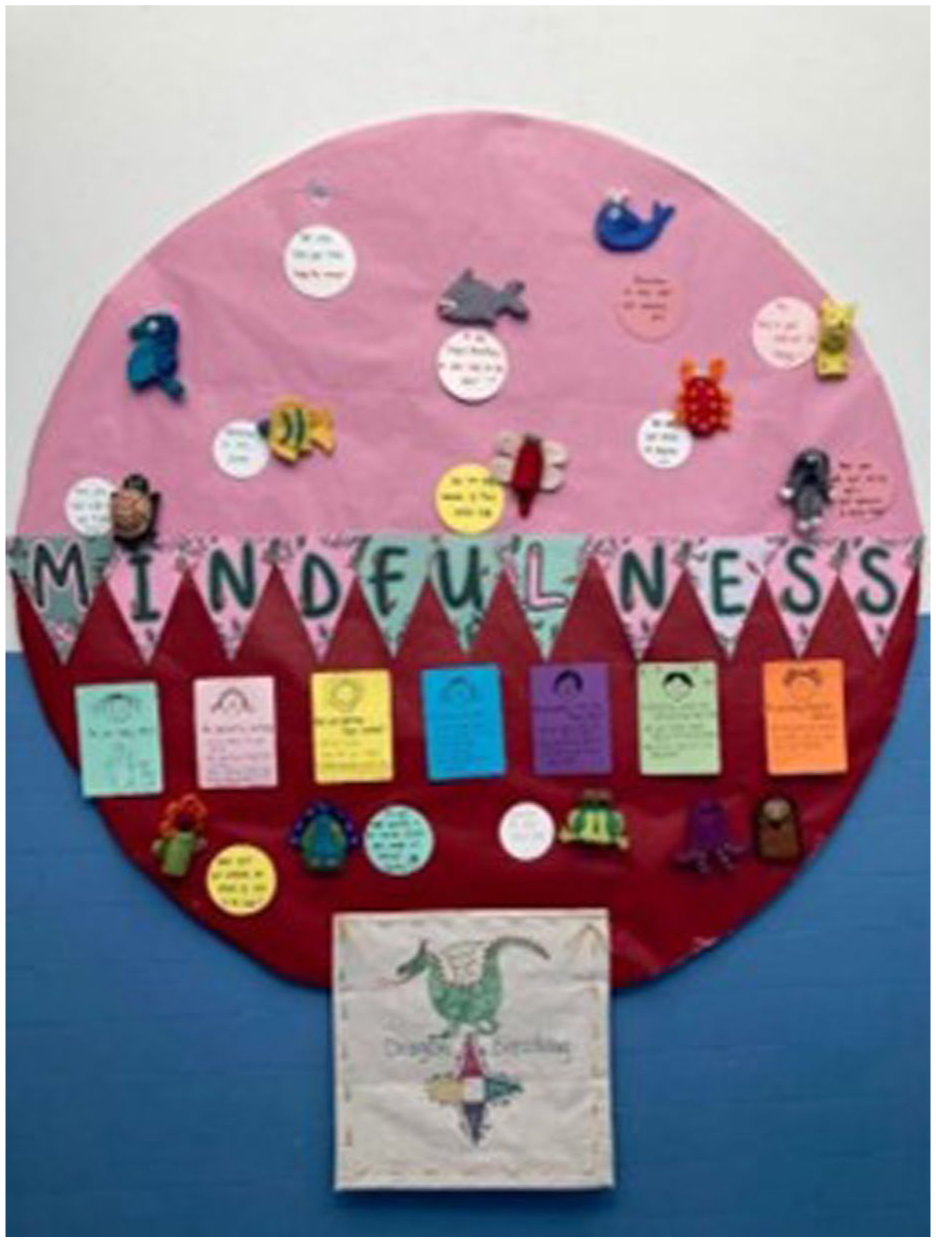
Mindfulness display, Bellview.
At St Jude’s, where religion played a more significant role due to its Christian ethos, the evolving relationship between religion and psychology was also evident. Here, values and virtues were often linked to Christian doctrines, such as through the telling of relevant Bible stories. For example, an assembly about aspiration was illustrated with the story of David and Goliath. Some of these, such as aspiration, were aligned with the individual, whereas others, such as kindness, forgiveness and empathy, were aligned more with the community. However, the focus in all cases tended to rest primarily on warm, pastoral aspects of Christianity, rather than more difficult and contentious elements, such as the concept of sin (e.g. see Madsen, 2018). St Jude’s was therefore similar to the other schools in the mix of individualist and collectivist values promoted through therapeutic education, which provided common resources for understanding and shaping the self and social relations (Illouz, 2008), albeit here presented through a Christian framework.
Before the end of the day there was collective worship in the hall. It was taken by the headteacher who started it by lighting a 3-wick scented candle, and with each wick said ‘Father, Son, and Holy Spirit’. She then introduced the new school rules which were ‘be kind’ and ‘be safe’. (Fieldnotes, St Jude’s)
This section has offered further evidence to support our arguments about the limitations of dominant narratives on therapeutic cultures. While the role of religion in citizenship and character education appeared to be in decline across the schools compared with therapeutic influences (including at St Jude’s to a certain extent), there were also many examples where religion was evolving to coexist with therapeutic discourses and practices. These included spiritual wellbeing techniques such as mindfulness and yoga, but also pastoral religious approaches to teaching values and virtues, which spoke to both the individual and the collective. As such, these findings strengthen the emerging body of work that emphasises the complex and hybrid nature of the therapeutic ethos. In the final section, we consider the implications of this for sociological approaches to therapeutic cultures, the relationship between religion and psychology, and the role of schools as social institutions.
Discussion and conclusion
At a time of acute concern about children’s declining mental health and wellbeing, we have interrogated the evolving nature of the therapeutic ethos, through a focus on pedagogies of citizenship and character formation. By drawing on in-depth qualitative research in four primary schools across post-COVID Britain, we have explored some of the complexity surrounding the dynamics of therapeutic education, through the lens of recent scholarship on therapeutic cultures, which emphasises their hybrid and heterogeneous nature (Nehring et al., 2024). We found that while psychological and therapeutic sensibilities clearly acted as dominant influences, resulting in some individualising and secularising effects, these manifested in much less totalising and somewhat more contradictory ways than is typically acknowledged in the existing literature, including the facilitation of interpersonal relationships and community building, and the emergence of new forms of spirituality.
The extensive institutionalisation of the therapeutic ethos (Ecclestone & Hayes, 2009b; Nolan, 1998), with its apolitical focus on psychological prevention and treatment, remains strong, and has taken on a new prominence in these increasingly troubled times. Participants’ accounts were infused with a sense of urgency, through references to the perceived negative effects of the COVID-19 pandemic and lockdowns on pupils’ wellbeing and emotional competencies, providing further justification for why such interventions were considered so necessary at the present time. The pervasiveness of therapeutic discourses, as documented by Illouz (2008), was reflected in significant support for this agenda from pupils, parents and teaching staff, with only limited resistance from a few participants who expressed longstanding concerns about therapeutic education and cultures as educationally detrimental, individualising and/or socially fragmenting, resonating with scholarly critiques (e.g. Bellah et al., 1985; Ecclestone & Hayes, 2009a). These findings suggest that education is fast becoming a key site in the formation of the ‘new cultural matrix’ (Illouz, 2008) permeating societies with common therapeutic narratives, metaphors and frameworks for understanding the self. Furthermore, this matrix appears to be, at least in part, largely secular, given that religion was often positioned in a subservient role to psychological and therapeutic influences on citizenship and character education. In this respect, our findings align with sociological narratives situating the rise of the therapeutic ethos within processes of secularisation, with psychology replacing religion in many ways (e.g. Bellah et al., 1985; Rieff, 1968).
Our research reveals that psychological discourses and practices are exerting a major influence on the shaping of young selves, socially and morally, through the construction of emotionally competent, self-regulating and resilient individuals, but also via the development of pro-social traits such as kindness, respect and empathy. These insights support mainstream accounts of therapeutic cultures and education that highlight how psychology and emotional literacy can be used by those in authority as a tool for management and control, through an emphasis on self-improvement and personal growth (e.g. Gagen, 2015; Rose, 1999). Moreover, they also reveal the increasing interconnections between mental health and wellbeing matters, and ethical and moral matters (Martin, 2006), as teaching staff and parents often presented these as two sides of the same coin in their aspirations for children’s development. This underlines how goals of education for citizenship and character formation have become increasingly synonymous with those of therapeutic education, as pupils are prepared for life within increasingly psychologised cultures.
Yet the simultaneous promotion of individual skills like self-regulation and resilience (Mills, 2021) and pro-social virtues such as kindness, empathy and caring for others (Hemming, 2015) also challenges the long-established notion that therapeutic education prioritises individualisation (e.g. Brunila, 2012; Nolan, 1998), and resonates with recent work on therapeutic cultures that demonstrates its ability to promote interpersonal relationships and community building, alongside personal wellbeing (e.g. Salmenniemi, 2019). The affective economies and emotional rules operating in the schools were rather more complex than previous research has recognised, seeking to shape pupils’ emotional behaviours and competencies not only at the individual level, but also as members of the school and the wider community. This was achieved through the affective impressions that pupils were encouraged to make on one another, and the accumulation of kindness and empathy for ‘othered’ groups such as refugees (Ahmed, 2004; Zembylas, 2007). This hybridity was also demonstrated through the way that spiritually orientated wellbeing activities such as mindfulness, and Christian inspired values promotion at St Jude’s, were directed towards both the individual and the collective.
The evolving nature of the therapeutic ethos was further demonstrated through the subtle, albeit repositioned, presence of religion within the schools. As Taylor (2007) argues, ‘secular modernity’ has led to new forms of religion, spirituality and the sacred arising in the wake of declining institutional Christian belief and belonging. These are typically fostered and enacted through a range of institutional forms (Watts, 2022) and include the growing significance of alternative spiritualities, and the prioritisation of authentic experience and emotional wellbeing over doctrinal requirements (Madsen, 2014, 2018). Our study reveals how religion found new ways to show its presence, for example, through spiritually orientated therapeutic activities such as meditation and reflection (Heelas & Woodhead, 2005). At St Jude’s, those Christian values that were more aligned with therapeutic cultures, such as the pastoral priorities of kindness and forgiveness (Rakow, 2013), were emphasised the most. This novel fusion of the psychological and the sacred in the shaping of pupils’ citizenship and character offers additional support for recent accounts of therapeutic cultures that emphasise complexity, hybridity and heterogeneity (Nehring et al., 2024).
Although our research has demonstrated that dominant narratives on therapeutic cultures and education can be understood as overly totalising and insufficiently nuanced, they still raise valid concerns of relevance for understanding the school as a social institution and its role in reproducing or challenging the cultural order. These include the depoliticisation of education for citizenship and character, and the ‘flattening out’ of structural issues concerned with social class, race and gender inequalities into individualised narratives about psychology and emotional wellbeing (e.g. Brunila, 2012; Forbes, 2019; Mills, 2021; Moskowitz, 2001; Purser, 2019). However, by demonstrating that the reality on the ground is messier and more contradictory than some of these narratives suggest, we highlight the transformative potential of educational practices. If there is space for schools to prioritise the wellbeing of the community alongside the individual, and to combine the secular and the sacred in their provision of citizenship and character education, there is also scope for the emergence of other critical pedagogies (e.g. Giroux, 2020; hooks, 1994) that may resist and contest the more problematic aspects of education in therapeutic societies, in the pursuit of positive change.
Footnotes
Acknowledgements
We are grateful to the Leverhulme Trust and our research participants for making this study possible. Many thanks also to the anonymous referees for comments on earlier drafts of this article.

Funding
This research was funded by The Leverhulme Trust – Research Project Grant RPG-2021-195. For the purpose of Open Access, the authors have applied a Creative Commons Attribution (CC BY) public copyright licence to any Author Accepted Manuscript version arising from this submission.
Declaration of conflicting interests
The authors declared no potential conflicts of interest with respect to the research, authorship, and/or publication of this article.
Data access statement
The data underlying this article are not openly available due to ethical concerns and issues of confidentiality.