




Abstract
This article critically explores responses to the suffering of animals caused by industrialised agriculture aiming to reflect on broader aspects of the current state of animal politics in the 21st century. Focusing on the regulatory schemes introduced to control the welfare of animals in Denmark, the article foregrounds sites of law enforcement and industry regulation, in which animal suffering is ‘carefully’ curated. The analysed material comprises inspection reports and interviews with veterinary officers and technicians charged with monitoring the level of care in Danish agribusinesses. The article builds upon Kelly Oliver’s theory of witnessing to develop a sociological perspective on the function of expert testimony within regulatory and administrative domains – what is defined as acts of juridical eyewitnessing. Through this framework, it becomes evident that law and bureaucratic procedures wield considerable influence in transforming a social and legal expectation to reduce animal suffering into specific ethical-scientific and bureaucratic standards. Furthermore, in adopting a de-human-centred sociological lens, the article presents an alternative interpretation of the evolution of anti-suffering sentiment – understood as negative emotional responses to animal suffering – one in which the state plays a prominent role in shaping particular attitudes towards other animals based on ‘seeing’ and ‘knowing’ suffering.
Animal suffering on display
Scholars have long debated the role of social, cultural and economic structures in shaping human attitudes toward other animals. Particularly, historians and sociologists of (human) emotions and feelings have contended that the increased sight of animal mistreatment and abuse in urban and industrialised spaces was a pivotal factor contributing to the rise in anti-suffering sentiment during the 18th century in Europe. Combined with the rise of the bourgeois class and Enlightenment sensibility, these influences are considered to have provoked emotions, which eventually spurred anti-cruelty reforms in Britain and later elsewhere (Boddice, 2008; Kean, 1998; Thomas, 1983). However, despite these insights into shifting attitudes during significant societal and cultural transformation, little attention has been given to attributing such sentiments to developments in animal politics proper: the governing, through regulation, of human and nonhuman life, encompassing active efforts aimed at moulding the human population’s relationships with its fellow creatures.
In elucidating a particular case of interspecies moulding, this article offers a close-up examination of how care for animals has become inscribed in agricultural policies shaped by the social and legal expectation to reduce animal suffering under Danish and EU law. More specifically, it concerns regulatory schemes introduced to improve animal welfare in Danish agribusinesses. Through analysing responses to suffering in the context of agro-industrial policy, the article aims to contribute to the understanding of the contemporary paradigm for animals negotiated within an industrial mode of production.
By articulating this perspective, the analysis contributes to the expanding literature that questions conventional sociological examination of human–animal relations by recognising the limitations of standard humanist interpretations that tend to treat the killing of animals as an exception rather than a distinct feature of the current social and political order (Cudworth, 2015; Todd & Hynes, 2017). In pursuit of this objective, the subsequent analysis observes how strategies ostensibly designed to curb harmful practices in agribusinesses sustain a view of nonhuman animals as merely susceptible to suffering, hence enabling the continuous exploitation of these beings to serve human purposes. Further, in support of this claim, I adopt the perspective that any attempt at reducing animal suffering within the animal welfare framework should be considered a consequence of deliberate state efforts at ensuring a continuous and economically viable animal economy over time (Torssonen, 2015). Hence, compared to previous contributions in the history and sociology of human–animal relations and emotions, my analysis is neither an attempt to uncover the sentiments that emerged in ‘modernity’ nor to contribute to a narrative of civilised progress eventually leading animals to be included in humanity’s moral circle (Fudge, 2002). In fact, research has shown how valuing human life often involves actively diminishing the lives of other animals, even within frameworks that profess to equally prioritise human and animal wellbeing (Svendsen, 2022).
With the aim of contributing to the sociological understanding of expert testimony negotiated within administrative and regulatory schemes, this article concentrates on the everyday reality of assessing the welfare of animals to make their suffering ‘intelligible’. Building upon sociological and anthropological writings concerning the impact of scientific knowledge and interactions in shaping veterinary care (Law, 2010; Vogel, 2022), I explore the involvement of veterinary expertise in establishing legal certainty (Shmuely, 2021) and shaping the perception of animal suffering. Drawing on historian and science studies scholar Shira Shmuely’s analysis of the coproduction of law and science in shaping ‘ethical scientific facts’, i.e. facts that are socially accepted and warranted through administrative authority, and sociologist Tora Holmberg’s (2014) observation of the role of the senses in investigating animal hoarding cases, I analyse the significance of veterinary expertise in testifying to animal suffering during inspections.
Further, informed by philosopher Kelly Oliver’s (2001) theory of witnessing, I propose thinking of the inspections as acts of juridical eyewitnessing based on specific ways of ‘seeing’ and ‘knowing’ suffering shaped by law and bureaucratic procedure. Hence, the concept of juridical eyewitnessing captures how veterinary testimony regarding the suffering animals endure is transformed within an administrative and regulatory scheme intended to control agribusinesses. Additionally, as I will revisit in the conclusion, Oliver’s conceptual framework also provides a constructive space for contemplating the ethics and politics of witnessing beyond the confines set by the current institutionalised practices of on-farm animal welfare inspections.
The article is organised as follows. The first section provides the background for the inspections, introducing the regulatory schemes under Danish and EU law. The second section presents my analytical framework between veterinary care, sensing and juridical eyewitnessing, drawing in particular on Oliver’s (2001) notion of the double-meaning of witnessing. The third section introduces the empirical material, method and analytical approach, which includes qualitative interviews with Danish veterinary officers and (non-veterinary) technicians in combination with analysis of the inspection reports from pig production in 2021 and the official guidelines by the Danish Food and Veterinary Administration, supported by the reading of relevant legal provisions. The fourth and fifth sections present my analysis of how law and bureaucratic procedures shape veterinary care and responses to animal suffering. In particular, I focus on the effort of making suffering intelligible and defining the prospects of sick and injured pigs as essential to veterinary inspectors’ acts of eyewitnessing. Finally, the article concludes by situating the attempts at curating suffering in the broader context of contemporary animal politics.
Animals as objects of care under Danish animal welfare law
Animal welfare has been on the political agenda in Denmark since the beginning of the 1990s, with the European Council playing a prominent role in pushing for legal reforms. New legislation regarding the conditions of animals in farming came into force in 1991, replacing the anti-cruelty legislation from 1950, which was considered outdated. The 1991 Act introduced the concept of animal welfare, in line with other European legislative bodies and countries that had previously been under British colonial rule (Vapnek & Chapman, 2010).
In much of Europe and elsewhere, the concept of animal welfare had become more broadly known after the publication of an investigatory report commissioned by the UK government in 1965, following a heated debate about the conditions of modern factory farming, in part based on the conditions described in Ruth Harrison’s book Animal Machines from 1964. Later, in 1979, the UK Farm Animal Council revised and proposed the principles of The Five Freedoms, which came to replace or supplement previous anti-cruelty laws with animal welfare legislation in many jurisdictions (Sandøe & Palmer, 2018). However, contrary to conventional stories about animal welfare reform, it has been noted how animal welfare had already been appropriated to benefit animal experimentation (at least) by the beginning of the 20th century (Torssonen, 2015).
In supplementing anti-cruelty legislation, animal welfare provisions generally seek to minimise what is considered ‘unnecessary suffering’ based on the assumption that ‘some conditions are unavoidable collateral effects of productive economic activity’ (Torssonen, 2015, p. 29). Thus, in contrast to prohibiting the ‘extreme, deliberate or wilful forms of mistreatment of animals’ – what is defined as cruelty – animal welfare legislation ‘aims at improving conditions that cause suffering to animals through negligence or oversight, by regulating farms, slaughterhouses, transport and personnel’ (p. 29). Thus, animal welfare legislation will often include provisions that regulate the management and housing of animals, transport and slaughter methods in addition to previous animal cruelty bans. At the same time, animal welfare provisions introduce a set of measurable and scientifically-based indicators.
A particularly debated issue in Danish pig production concerns the widespread use of tail docking to prevent pigs from biting each other’s tails due to the way in which they are crammed together under conditions that do not accommodate their investigatory behaviour. Tail docking is a procedure that takes place within two to three days after a piglet’s birth and involves cutting off a part of the tail. Performed without any anaesthetic, the piglet experiences acute pain and trauma. Research indicates that the piglet also experiences chronic discomfort due to the irreversible loss of the function of the tail (Nannoni et al., 2014). Tail docking carried out on a routine basis is forbidden by national and EU law. Instead, to reduce tail-biting behaviour, Danish pig producers must (by law) ensure ‘appropriate’ bedding and other potential sources of environmental enrichment, so-called ‘rooting and activity material’ (rode- og beskæftigelsesmateriale). Only if tail biting persists is the pig’s tail allowed to be cut off. Despite this rule, 98.5% of piglets in Denmark have their tails docked, as estimated by the European Commission (Danish Veterinary and Food Administration, 2019; European Commission, 2018). This has led the EU Commission to criticise the Danish authorities, who are obliged to monitor and report all infringements to the EU according to the principle of conditionality (formerly known as cross-compliance) of the Common Agricultural Policy (European Commission, 2023).
It is the Ministry of Food, Agriculture and Fisheries which is responsible for overseeing and monitoring the welfare of animals kept for commercial and non-commercial purposes. On-farm animal welfare inspections are one of the primary means to assess the conditions of farmed animals, and the annual publication of the results usually garners attention from various stakeholders, including animal advocacy groups, agribusiness lobbyists and policy-makers. Nevertheless, the report tends to be followed by seemingly ritualistic discussions about what needs to be done and who is to blame. In fact, a recent evaluation by the Danish Veterinary and Food Administration (2019) concluded that several governments had failed to deliver on a number of key concerns that they had previously described as targeted goals for improving the welfare of pigs. These issues included the high level of piglet mortality. Despite the claim that efforts were being made to improve the situation, the premature death of piglets has increased in recent years since the ministerial action plan was signed in 2014. Currently, around 30,000 piglets die every day (Danish Veterinary and Food Administration, 2019).
Decades of unsuccessful reform efforts to improve animal welfare suggest a significant inadequacy in addressing structural welfare issues, such as piglet mortality and tail-biting. These issues, influenced by intensified modes of production, are often poorly reflected in inspection results. Instead, when faced with a high number of reported breaches, producers, lobbyists and policy-makers tend to frame the narrative around the ‘bad apples’ of industrial farming – thereby reaffirming the claimed high standards in animal welfare in the Danish animal economy (Ministry of Environment and Food of Denmark, 2017). Over recent years, there has been an annual increase in agribusinesses subject to the national inspection scheme, rising from 5 to 10%. Simultaneously, Danish producers have voiced complaints about what they consider a rigid and tedious inspection regime based on overly detailed legislation and rules (Anneberg et al., 2013b; Mogensen, 2021). In response, the administrative body asserts its commitment to conducting inspections based on the principles of being ‘effective’ and ‘risk-based’ (Danish Veterinary and Food Administration, 2021), keeping in mind what is best for the animals and Danish producers.
Against the backdrop of this ostensibly political impasse, the day-to-day operations of industry regulation and law enforcement tend to receive less attention. To fill this gap, the subsequent analysis brings to the fore the daily negotiations of animal care shaped by administrative regulation, aiming to underscore its broader implications. Before delving into the analysis, I introduce the conceptual approach that guides my understanding of how responses to animal suffering are shaped within administrative setups, increasingly influenced by veterinary expertise.
Veterinary care, sensing and juridical eyewitnessing
Veterinary expertise and care have increasingly found their way into anthropological writings on the ‘tinkering’ on farms (Law, 2010; Law & Mol, 2011; Vogel, 2022) and in labs (Sharp, 2018; Svendsen, 2022), aquariums and zoos (Braverman, 2020). For example, in a publication following the deadly outbreak of foot and mouth disease at UK dairy farms in the early 2000s, John Law traces the multiple ‘objects of care’ that defined the veterinary assistance that was provided in the aftermath of the outbreak. According to Law, veterinary care takes multiple objects likely to be in tension. It describes ‘care for the animal, care for the farmer, care for the self and care for various versions of the collectivity’ – possibly even including ‘the economic wellbeing of the country as a whole?’ (Law, 2010, p. 66). In departing from Mol et al.’s (2010) notion of care multiple, Law (2010, p. 67) suggests thinking of veterinary care as ‘a repertoire that allows situated action’. As he contends (2010, p. 69): . . . [veterinary care] can be understood as an improvised and experimental choreography for holding together and holding apart different and relatively non-coherent versions of care, their objects, and their subjectivities. It is the art of holding all those versions of care in the air without letting them collapse into collision.
According to Law, the presumed tension between care and killing is key to understanding veterinary work. As Clarke and Knights (2022, p. 677) observe, ‘claims of care are difficult to disentangle from practices of control, thereby rendering “ethics” in veterinary professional codes and practices a contested space’ (see also Singleton, 2012; Vogel, 2022, for related interpretations). Similarly, in contemplating the multiple tensions in animal care, Druglitrø (2022) has recently proposed the concept of procedural care to encapsulate how conflicting care is managed within administrative systems, such as the licensing of animal research in the EU. In this way, legal and bureaucratic procedures come to play an essential role in the analysis. Similarly, in highlighting the institutional framing of veterinary practices, Shmuely (2021) – in drawing on science and technology scholar Sheila Jasanoff’s notion of coproduction – examines the intertwinement or blurring of law and medical science in her analysis of the early formation of the British Vivisection Inspectorate in the late 19th century, which aimed to regulate experiments ‘calculated to give pain’ to animals (Shmuely, 2021, p. 934).
Shmuely’s analysis offers a stimulating insight into the vivisection inspectors’ investigation of pain at a time when there were few so-called ‘objective indicators’ compared with today’s upsurge in methods of assessing the welfare of animals (Roe et al., 2011). By analysing the historical records and unpublished notebooks of the inspectors – who themselves were experienced scientists – Shmuely documents the inspectors’ reluctance to report on pain and suffering in animals given the lack of scientific consensus at the time. Instead, her analysis suggests how rather than pain, the inspectors reported on other kinds of bureaucratic breaches. As Shmuely (2021, p. 950) observes: The inspectors constructed pain as an object of regulation not by a direct identification and handling of the suffering body but, rather, through the creation of various other means – such as a meticulous enforcement of procedural requirements, the education of physiologists about the act, and intervention in the design of the experimental space – in the name of animals’ well-being.
Shmuely’s analysis demonstrates how law/regulation and science/knowledge became enmeshed in bureaucratic responses to animals’ pain, illustrating how ‘ideas of moral conduct’ were translated into legal provisions of the Cruelty to Animals Act of 1876 – the first law of its kind to impose restrictions on experimentation on live animals through ‘the establishment of a comprehensive administrative system’ (p. 933).
What is particularly interesting for the present analysis is how Shmuely’s study introduces the idea of ‘ethical scientific facts’ produced through the workings of the British Vivisection Inspectorate in the name of the wellbeing of animals (Shmuely, 2021, p. 934). Specifically, the study reveals how law and bureaucratic procedures were crucial in establishing an entirely new paradigm for morally acceptable scientific conduct based on ‘ethical scientific facts’ grounded in administrative authority, analogous to the scientific facts produced through experimenting on live animals, which were grounded in scientific authority.
A related theme in Shmuely’s study also resonates with what has been reported more recently concerning present-day animal welfare inspections conducted on European agribusinesses, i.e. the significance and effort of the individual inspectors to negotiate and establish authority in acting as the eyes of the law (Anneberg et al., 2012, 2013b; Mc Loughlin, 2022; Roe et al., 2011). For example, a recent comparative study between four European countries highlights the experiences of the inspectors and reports on the challenges of conducting the inspections in an ‘unpredictable terrain’, including the ‘emotional toll’ and ‘disillusionment’ associated with witnessing acts of cruelty (Mc Loughlin, 2022, pp. 18, 20; see also Anneberg et al., 2012). However, compared to their British Vivisection Inspectorate predecessors, today’s animal welfare inspectors operate according to a comprehensive administrative and legal framework. Nevertheless, it is interesting to juxtapose the efforts of the inspectors from the British Vivisection Inspectorate in demonstrating their authority based on being trained scientists themselves with the current experiences of veterinary officers confronted with present-day farm owners claiming to know what is best for their animals (Anneberg et al., 2012).
In further emphasising the strenuous efforts required to assess potential violations of animal protection laws, a study of professional animal welfare inspectors and police officers in Sweden is instructive. In this study, which focused on so-called animal hoarding cases, sociologist Holmberg (2014) suggests considering the assessment of hoarding in terms of sensuous governance, thereby underlining the role of ‘visual, olfactory and auditory impressions’ that underpin investigatory work and judgement in these cases (p. 465). Sensuous governance captures ‘sensing as a way of knowing’ as a precondition and essential feature of investigating hoarding cases, thereby reaffirming but also expanding on the significance placed on observation in ‘modern’ science and knowledge claims (Haraway, 1988; Harding, 1986). Holmberg’s analysis reaffirms the significance of embodied knowledge production as highlighted in feminist science studies, showcasing the range of senses involved in investigatory work and observation.
Informed by Shmuely’s emphasis on the coproduction of ethical scientific facts embedded in administrative authority and Holmberg’s observation of the role of the senses in relation to investigating hoarding, I analyse the significance of veterinary care and expertise in assessing animals and their suffering during inspections. With the intention of further emphasising the socio-legal aspects of animal welfare assessments, I draw on Kelly Oliver’s (2001, p. 16) definition of the double-meaning of witnessing: ‘the juridical connotations of seeing with one’s own eyes and the religious connotations of testifying to that which cannot be seen’. According to Oliver, eyewitness testimony is ‘always in tension’ with the process of witnessing, which signifies the ‘ethical obligation to respond and to enable response-ability from others’ (Oliver, 2001, pp. 2, 15). For instance, the juridical notion of eyewitnessing involved in obtaining evidence might run counter to the ethical commitment of bearing witness, by failing to promote any viable way of accounting for the suffering beyond the immediately observable and to cultivate response-ability. As legal scholar Maneesha Deckha (2019, p. 85) observes, witnessing can serve as ‘a vital supplement’ to the juridical sense of eyewitnessing as it engages in the kind of perpetual questioning, which is necessary for witnessing as a process of address and response, as articulated by Oliver. Consequently, witnessing suggests a way to overcome what previously has been characterised as insufficient and fraudulent responses to ‘distant suffering’ displayed through the media and news reporting (Boltanski, 1999; Kurasawa, 2009).
Therefore, drawing inspiration from Oliver’s conceptual framework, I propose thinking of the inspections as acts of juridical eyewitnessing based on specific ways of ‘seeing’ and ‘knowing’ suffering that emerge at the intersection between veterinary expertise, bureaucratic procedure and law. Yet, despite the conceptual emphasis on vision, I do not intend to diminish the role of other senses beyond the visual in informing inspection, reflecting Holmberg’s point. Instead, my aim is to critically engage with the significance of testifying to and making claims about the suffering animals endure by carrying out inspections.
Methods and analytical approach
For this study, I conducted eight qualitative interviews with state-employed veterinarians and technicians, whom I recruited based on a snowball sampling method. Interviews ranged from 58 minutes to 1 hour 50 minutes. Of the eight interviewees, five were veterinarians, two were technicians and one was a team manager employed by the Danish Veterinary and Food Administration or the Danish Agricultural Agency, respectively. However, in the subsequent analysis, the statements by the veterinary officers hold a more prominent place due to the analytical focus on the role of veterinary expertise. The interviewees, aged between 28 and 54, included six women and two men. All except one were tasked with inspecting pig welfare on various types of production sites, encompassing both small- and large-scale, conventional and organic farms. My primary objective in conducting in-depth interviews was to gain insights into the hands-on assessment of animal welfare, focusing on first-person accounts that illuminate the embodied practices and procedures involved in collecting evidence and reporting potential infringements.
When conducting the interviews, I used a semi-structured interview guide, which (at least on paper) followed a simple structure. After gathering some personal and biographical information (age, gender, education and previous work experience), I asked the participants to describe a recent inspection by taking me through each stage from when they arrived on site to the moment they identified something that needed reporting. The last part of the interviews was dedicated to more narrowly defined questions about bureaucratic procedures and legal interpretations. These interviews were a crucial aspect of the empirical material gathered for this study, providing me with a deep understanding of the complexity of on-farm animal welfare assessments and the way in which the suffering is constructed in this context. Special attention was given to descriptions of suffering and the procedure for assessing pigs.
An essential consideration when analysing the interviewees’ responses is the sensitive and contested nature of inspection work and its potential impact on their accounts. For instance, the inspectors’ willingness to openly share difficult aspects of this work or moments of uncertainty may be influenced by concerns about appearing less competent. Further, I encountered some inspectors who were cautious not to exceed their role as civil servants, among whom two declined to participate.
However, in entering this field as an outsider and trained sociologist, I found that my distance from the world of veterinary care proved advantageous for questioning what is often assumed, leading to more open discussions about the demanding nature of conducting inspections.
In general, the lingering effects of the COVID-19 pandemic impacted my empirical data collection in many ways. When I was planning to conduct this study in the autumn of 2021, I was once again seeing increasing numbers of COVID-19 cases being reported in Denmark. Moreover, I quickly realised that the inspectors’ willingness to participate relied on some flexibility on my part. Conducting on-farm inspections means spending many hours on the road and many of my interviewees preferred to conduct the interviews over the phone. In the end, all of the interviews with the inspectors were conducted over the phone or via Zoom. It is difficult to pin down the consequences of conducting the interviews at a distance. However, it is certainly contrary to how non-verbal communication is generally highlighted as key to qualitative research, not least because of the impact of the asymmetrical relationship between the interviewer and interviewee given the former’s power to decide what is included or excluded from the interview and subsequent analysis.
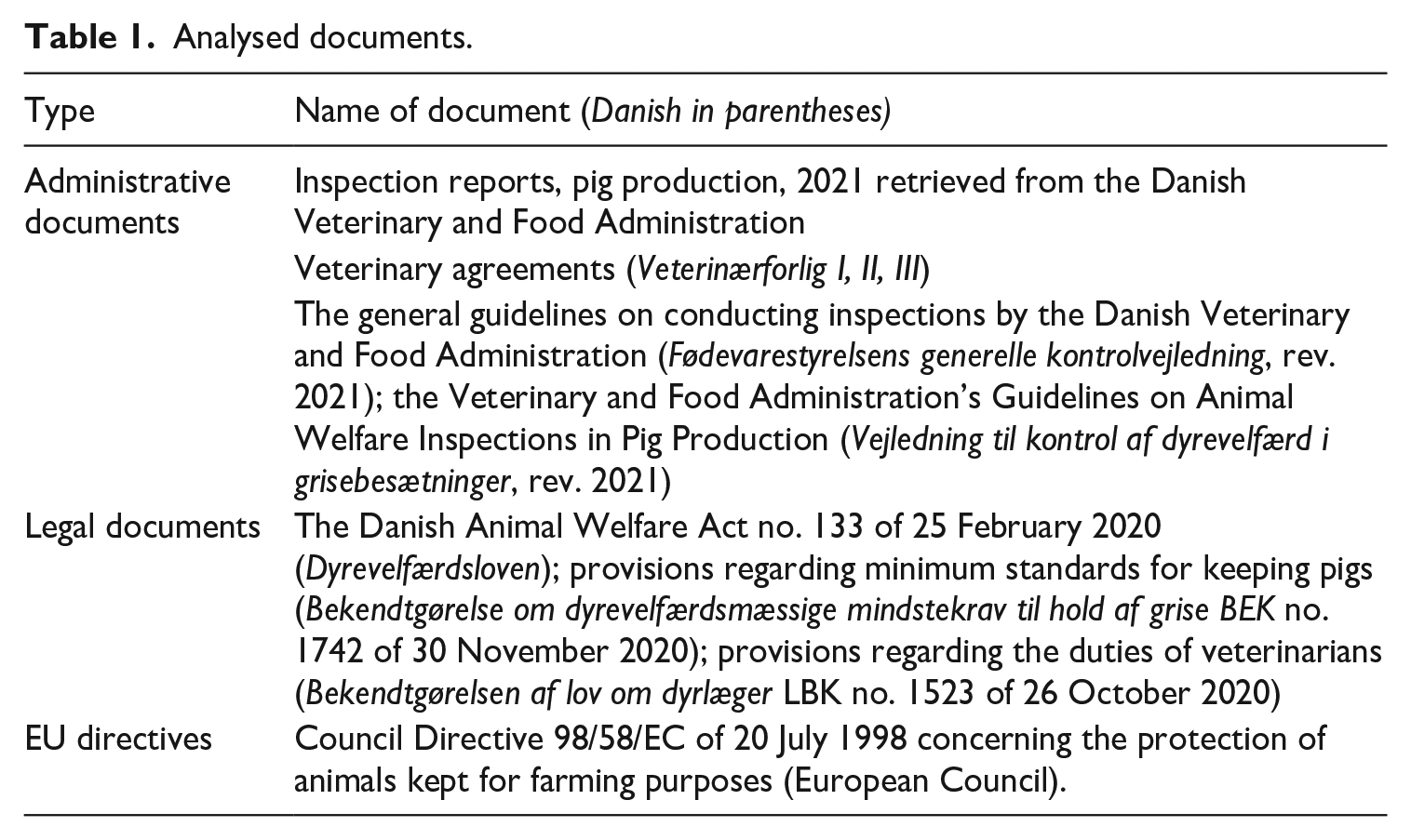
In addition to the interview-generated material, I examined various legal and administrative documents, including past political agreements and legal provisions (see Table 1). For example, the Veterinary Agreements (Veterinærforlig I, II, III) provided insights into the broader framing of animal welfare issues within political discourse and recent policy. Additionally, the inspection reports contributed to validating my preconceived understanding regarding the significant role of veterinary expertise in legal assessments. The empirical material was organised and analysed using NVivo, focusing on key themes such as ‘defining suffering’, ‘witnessing suffering’, ‘creating evidence’, ‘exercise of authority’, ‘the value of a pig’ and ‘animal care’.
Analysed documents.
I designed and carried out the study with a concern about potential benefit or harm to the research participants, ensuring informed consent, pseudonymisation of the interviewees and safe storage of the empirical material. Importantly, I extended ethical consideration to nonhuman animals: for example, acknowledging the symbolic violence in language that fails to assign subjectivity to nonhuman animals and in making claims about the suffering endured.
A final crucial point to note pertains to terminology. Even though contemporary animal agriculture is characterised by its industrial and corporate nature, the term ‘farmer’ continues to be widely employed to refer to the owners of agribusinesses. The inspectors consistently used this terminology in my conversations with them, mirroring its prevalence in official reports by the Danish Veterinary and Food Administration. For analytical purposes, I opt to adopt the vocabulary used by my interviewees, thereby centring the analysis around ‘the farmer’, despite the potential risk of evoking the image of the traditional family-run farm of the past.
Bringing evidence to suffering
This section introduces my empirical analysis by providing a close-up view of acts of juridical eyewitnessing and the role of veterinary care in the context of animal welfare inspections. I begin with an account by one of the inspectors, who reflects on her experiences inspecting a pig farm. I think it was one of the last pens – a production pen containing 8 to 10 pigs. And the pen contained a pig that could not stand up. It was lying in a posture with its two hind legs on the left side and its face held upright, almost like a sphinx, you could say. It pulled itself along by its forelegs. Its knees were completely swollen and had scratches, so I could tell it had been crawling on its knees for quite some time. And it couldn’t stand up. I tried to poke it a bit, gently kicked it with my rubber boots while I was filming: [to the pig] You just have to! It seemed pretty grotesque to be filming while I was trying to make it stand up but I needed to collect the evidence otherwise we wouldn’t get anywhere with this in court. So, I tried to force it up, but it couldn’t get up, so I tried to pull its tail gently and sort of get my boot underneath it: [again addressing the pig] Oh, will you not? I needed to see whether I could manage to get it to stand up by putting it under some pressure. I needed to get it to stand up so I could assess its overall condition. But it just screamed and lay down again.
The brief account that introduces this section illustrates what social scientists might refer to as ‘dirty work’, i.e. work that can be considered socially or morally tainted (Simpson & Simpson, 2018). In this part of our conversation, the veterinary officer – a woman in her forties with many years of veterinary experience – reflects on the discomforting experience of collecting sufficient evidence. In her quest for legal certainty, the pig is subjected to additional pain and trauma. Her account highlights how the attempt to provide better care for animals is not in itself a particularly caring exercise: injured bodies are examined, wounds are measured, and occasionally, a bodily part from a deceased animal is cut off, ‘bagged’ and taken to the laboratory for further examination and evidence.
During an inspection, the veterinary officer or technician will visit each of the pens to check whether the conditions on the production site comply with the law. In the event of non-compliance, they will have a number of options. They might issue a warning to the farm owner in the case of a minor offence. However, in cases involving more severe infringements (i.e. negligent treatment), they will issue an enforcement notice involving follow-up inspections. Lastly, infringements might be reported to the police in the event of an allegation of grossly negligent treatment of animals (Danish Centre for Animal Welfare, 2011). Should such cases proceed to court, the Danish Veterinary Council will provide veterinary opinions. If any number of animals are found to be suffering from permanent injury or chronic disease, such as in the example above, the inspector will assess their condition and whether they have been sufficiently cared for, for example, by being moved to a hospital pen, receiving treatment and – if relevant – being examined by a veterinarian (Danish Centre for Animal Welfare, 2011).
In the encounters with farm owners, the veterinarians – acting in the capacity of an inspector – make allegations by asserting claims about the suffering endured and the procedures necessary for proper management and care. For instance, in determining the seriousness of the infringement and the appropriate sanction, the assessment has two crucial dimensions: assessing the duration (of the specific medical condition) and its severity (Danish: varighed and alvorsgrad). Understanding, for example, that muscle atrophy takes 14 days to become observable is essential to producing evidence of suffering. Further, measuring the tissue on an infected joint is necessary in order to reach an ‘objective’ conclusion while ‘warm and swollen skin lesions are considered an aggravating circumstance’, according to the official instructions (Danish Veterinary and Food Administration, 2021, p. 49, author’s own translation). Conducting these assessments requires veterinary training and the inspectors particularly highlight the importance of pathological expertise. In this context, the bodies of injured or sick pigs become evidence in meeting the ‘burden of proof’.
Previous literature has suggested how inspections transform welfare – as something ‘essentially unquantifiable’ – into something quantifiable (Anneberg et al., 2013a, p. 550). As Anneberg et al. (2013a, p. 550) observe, assessing animal welfare requires measurability: ‘Without the quantification of animal welfare into numbers (reducing it to visible signs of injuries), animal welfare lacks legal precision and a bureaucratic monitorability.’ However, while this observation captures a crucial aspect of present-day regulation of agribusinesses, it is important to recognise the complex interplay between regulatory measures and the on-the-ground practices and routines. Particularly, the inspection scheme illustrates how ‘care’ in the regulatory domain cannot be clearly separated from ‘local care’ embedded in the day-to-day operations (cf. Singleton, 2012). Veterinary experts tasked with assessing the suffering endured by pigs do not solely rely on tangible evidence such as measuring wounds or determining the appropriate size of gestation crates, as depicted in Figure 1. Instead, as elucidated in the following section, serving as juridical eyewitnesses entails meticulously adapting to the standards of care practised in contemporary agribusinesses.
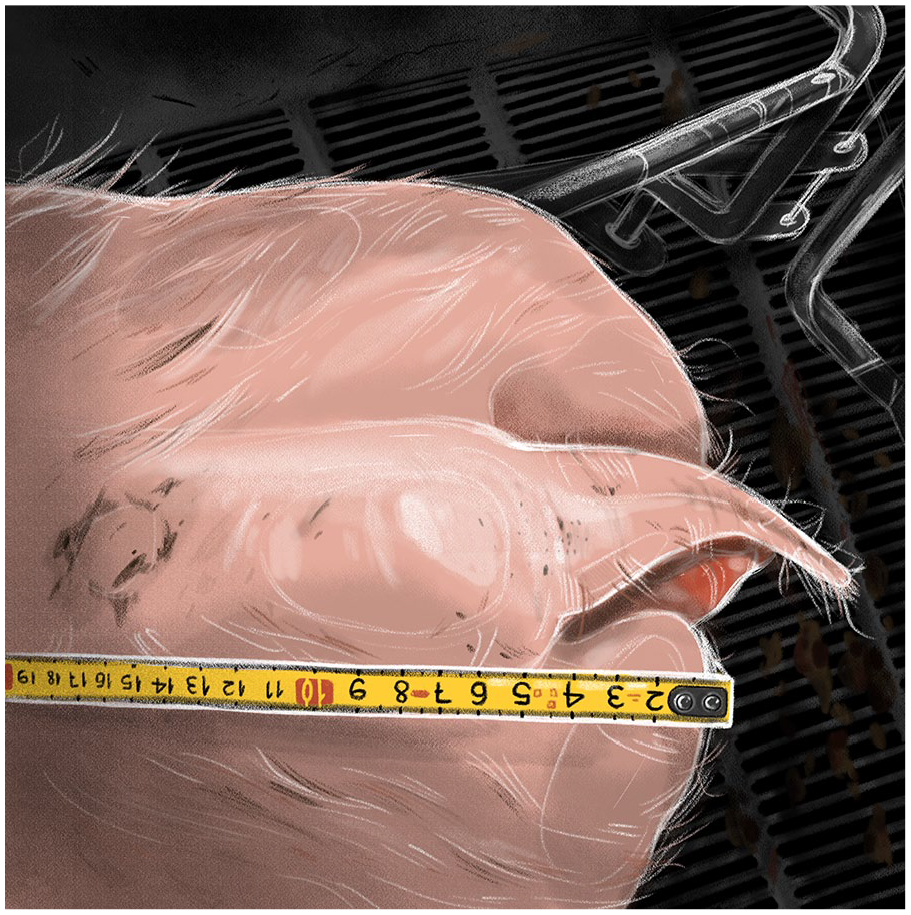
Determining the adequate size of a gestation crate.
‘Due diligence’: Determining the prospects of an industrial pig
Through my conversations with the veterinary officers and inspectors, I understood how market prices can result in fluctuations in care. As one of the veterinary officers explained: ‘when pig prices are low, farmers have little or no incentive to provide treatment and keep them alive’. According to this inspector, he encounters more sick and injured animals or ‘animals being kept alive’, when the market price of pigs is high. He uses the specific wording ‘pigs in doubt’ (tvivlsgrise) in this context, referring to how some farmers might keep sick pigs in a hospital pen (illustrated in Figure 2) for extended periods in case they might make a sudden recovery (however, this was an unlikely outcome, according to this vet). Further, in this context, the fitness of pigs for travel becomes a criterion in and of itself in determining the viability of pigs. This is because most Danish pigs do not remain on the production site for long but are transported to another facility for continuous ‘growing and finishing’, as referred to in ‘the life cycle of a market pig’ (Pork Checkoff, n.d.). According to the inspector, this journey is extremely stressful for pigs, so even minor injuries quickly deteriorate. If pigs are deemed unfit for travel, their life is defined as a life without prospects, illustrating how the production cycle comes to define end-of-life decision-making under the pretence of care.
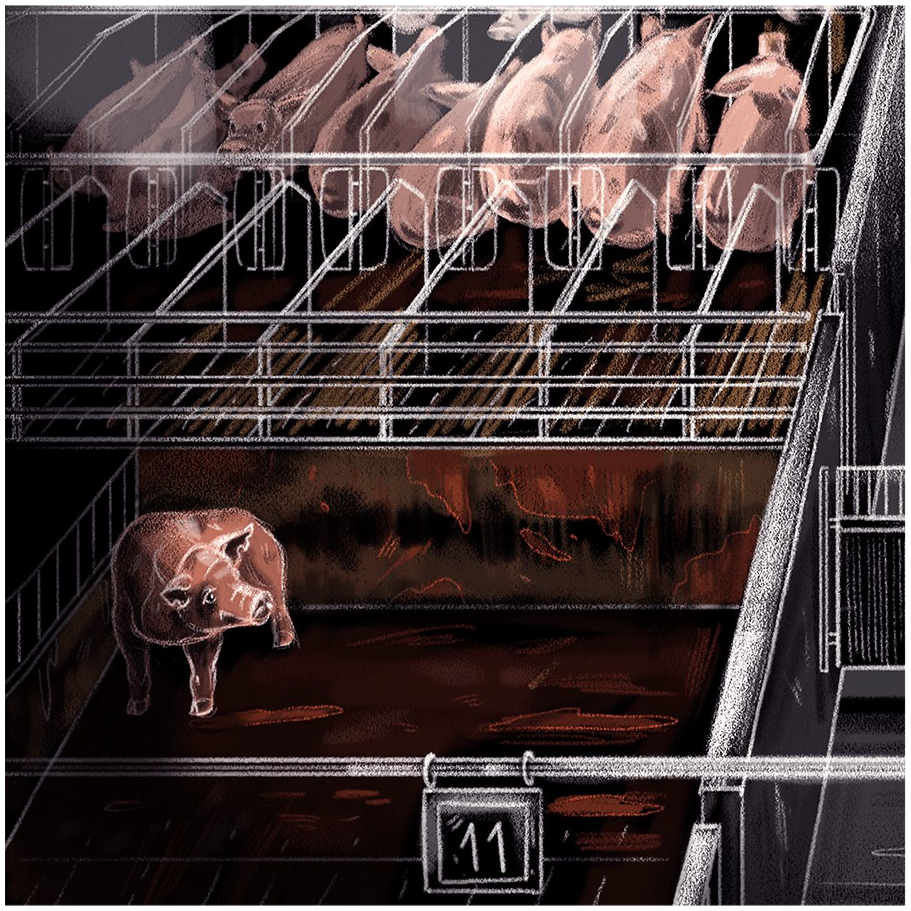
Pig in sick pen. To assess if the farmers have acted appropriately, the officers need to consider the prospect of sick or injured pigs.
When determining the occurrence of infringements, the inspector assesses ‘care’ in terms of both giving and receiving: has the individual pig received sufficient care? Has the farmer complied with the regulations? In this regard, two main issues relevant to assessing infringements emerged during the interviews: ‘due diligence’ (rettidig omhu), that is, whether the farmer has acted appropriately in the event of disease and injury; and ‘treatment without prospects’ (udsigtsløs behandling) such as administering the same medical treatment despite the pig’s condition deteriorating. In this regard, the inspector will need to examine the pig according to a chronological trajectory: how long has the pig been in pain, and what is the likely outcome of the treatment? In other words, what are the pig’s prospects: ‘will it have a future?’
If the identification of an infringement sets the initial threshold regarding enforcement, then the type of offence will establish a hierarchy between the most minor and the most severe infringement depending on the level and type of care provided by the farmer. This requires the ability to ‘see’ and ‘know’ animal suffering. Hence, an assessment of the farmer’s intentions is key to performing animal welfare inspections. One of the interviewed veterinary officers put it rather bluntly: ‘when assessing infringements, you have to keep two things in mind: the farmer and the animal’: ‘is this man willing to listen?’ and ‘will he do as he is told?’ In perhaps slightly more diplomatic terms, other veterinary officers spoke of the need for farmers to ‘understand’ and ‘acknowledge’ the problem. These aspects of the assessments regarding the well-intentioned farmer are rooted in the officially listed ‘inspection values’ (kontrolværdier), which state that the inspections are to be conducted in an ‘effective’, ‘preventive’ and ‘dialogue-based’ manner aimed at adopting a holistic approach (helheds-orienteret kontrol) rather than detecting as many infringements as possible (Danish Veterinary and Food Administration, 2021). In the words of one of the vets I spoke to: ‘we don’t want to punish people, but we want them to improve’.
Simply put, the underlying rationale of performing ‘effective’ inspections is that in helping pig producers to comply with the law, the state can help them to become better farmers. For this purpose, the assessment of the farmer extends both backwards and forwards in time: did he act with ‘due diligence’ from the outset and how will he act in the future? Thus, an inspection resembles, in equal measure, a detective’s interrogation work to determine whether a crime has been committed and a pedagogical measure to incentivise a farmer to adhere to the law. Two previous studies from Denmark confirm this picture and further emphasise the role of veterinarians ‘as agents of change’ in motivating farmers to comply with the law (Anneberg et al., 2013b; Overstreet & Anneberg, 2020). Recalling to mind Shmuely’s analysis of the British Vivisection inspectors’ efforts to establish authority based on their background as trained scientists, and not representatives of the law, a similar dynamic seems to play out here in that the exercise of authority is considered to depend on (inter)personal skills – what the veterinary officers and technicians in my interviews spoke of being ‘at eye level’ with the farmers.
The mutual assessment of the suffering of pigs and the good intentions of the farmer came up in examples provided by the interviewees. In the following excerpt, a veterinary officer describes an episode in which she identified a pig with an umbilical hernia. This condition could violate the animal welfare provisions, depending on the size of the hernia and whether open skin was detected (Danish Veterinary and Food Administration, 2021). At this point in the interview, I was trying to understand how assessments at the intersection between the possibility of recovery and legally sanctioned death for the purpose of ending suffering are made. So I asked whether there was only one possible outcome, namely, death, in the specific case, to which the veterinarian replied: He [the farmer] could have provided treatment, but he chose to put them down (aflive dem). I’ll never tell them to put animals down. I can tell them that they should either get a (private) veterinarian to assess it or they should put it down themselves. So, these are the two options they have, and they [the farmers] always say: Well, calling the vet doesn’t make sense, it’s way too expensive. [To which the veterinary officer responds:] That’s fine. Then we have one option left. And it’s only when they refuse – if they simply don’t do it, that I will enforce it. Then I’ll tell them: You must either contact a vet or put it down. You can usually resolve it by talking to them: What’s your plan with this pig? Then they say, Well I don’t know – I’m uncertain about whether or not I should give it a second chance. However, if I’m confident that it should not be given a second chance, then I’ll ask: Have you treated it already? [If the farmer replies:] Yes, I have. Then I will tell them: Well, then you have no other option. [To which the farmer responds: ] I know. Well then, I choose to put it down. And I’ll say, That’s a good decision or that’s fine. It’s your call. But let’s put it down right away. Please get your captive bolt gun and knife and then I can also examine whether they are working properly.
The example demonstrates the seemingly complex nature of making the legal assessment. According to the Danish Animal Welfare Act, animals are to be protected as much as possible from suffering. Yet, it is not the suffering inflicted by injury of disease, as such, that constitutes the violation but rather the failure to react accordingly. For example, the legislation stipulates that an animal with a disease or condition deemed ‘untreatable’ must be deceased before the inspection is initiated. Without this provision, a farm owner could simply postpone ‘putting down’ sick or injured animals until after the inspection. Given the small likelihood of being subjected to inspection, inspectors assert that such delay could likely lead to an increase in the level of suffering. Nonetheless, as the vignette illustrates, there might be instances where the benefit of the doubt is granted to farm owners, if they act promptly upon the arrival of the officer.
The way in which killing and death of animals are accounted for in the inspection scheme evidences the significant shift in the cultural perception of animals’ death with the emergence of the (Western-centric) legal paradigm to prevent animal suffering, as scholars have previously noted. As Bjørkdahl and Syse (2021) observe, the inclusion of animal death into the legal sphere dominated by expert knowledge created a new source of legitimacy concerning the killing of animals. Keeping these aspects of animal welfare legislation in mind, it appears that the legal and administrative orders transform a moral duty to prevent animal suffering into legally sanctioned acts of merciful killing. During this process, animal mortality becomes something other than a basic prerequisite for turning animal bodies into profit; it becomes inscribed in a particular legal and bureaucratic logic concerned with providing animals relief from suffering.
Beyond suffering?
Recent sociological and anthropological writings have shed light on the tensions and conflicts in veterinary worlds and the role of veterinary expertise in governing nonhuman life. Aiming to extend this literature, this article has explored how veterinary testimony has become intertwined in administrative and regulatory frameworks, leading to the establishment of particular ethical-scientific and bureaucratic standards. While much scholarly attention has focused on the effects of measurability in various accountability schemes, the analysis has revealed the impact of how veterinary expertise and testimony have been succinctly incorporated into the current administrative setup. Importantly, by employing the concept of juridical eyewitnessing, the analysis has shown how the imperative to reduce animal suffering is transformed into particular bureaucratic standards of care. In the quest for legal certainty, animals’ bodies become burdens of proof in the broader effort to make suffering intelligible through the collection of ‘sufficient’ evidence. Thus, the analysis uncovers not only how veterinary expertise has become mobilised for administrative purposes, but also how veterinary ‘knowing’ and ‘seeing’ suffering are shaped at the intersection of law/regulation and science/knowledge.
Furthermore, by examining animal welfare inspections and the extensive efforts of the Danish state and official administrative bodies to convincingly and consistently present animal suffering as a shared concern, the analyses resist succumbing to a narrative of growing moral unease, which eventually includes nonhuman animals in humanity’s moral circle. Instead of viewing on-farm inspections as the state acting in accordance with societal values by enforcing laws and setting basic standards to reduce suffering, the article has highlighted an often-overlooked aspect of animal politics: namely, the significant role of the state and its administrative bodies in fostering and shaping specific attitudes towards other animals.
Finally, grounded in attempting to adopt a de-human-centred sociological perspective, we might consider the consequences of specific ways of ‘seeing’ and ‘knowing’ suffering, including what other ways of responding to this situation are left out. Recalling Kelly Oliver’s (2001) understanding of the relationship between witnessing and response-ability, at least one central limitation to juridical eyewitnessing presents itself: namely, how the endeavour to make suffering intelligible to the consumers and the market seemingly yields limited accounts of the suffering inflicted in industrial agribusinesses and diminishes ethical commitment to reducing (certain kinds of) suffering. Consequently, there is an urgent need to develop alternative ways of responding to the situation of farmed animals, for example, by fostering modes of bearing witness that hold transformative potential (Deckha, 2019; Gillespie, 2016). As a preliminary step, this entails confronting an administrative setup which not only mandates minimal levels of care but also effectively upholds the existing paradigm for animals based on effective attempts at curating suffering.
Footnotes
Acknowledgements
I extend my sincere gratitude to the interview participants for generously sharing their knowledge and reflections with me. I would also like to express my appreciation to Maneesha Deckha, Isabel Schoultz, Inger Anneberg, Søren Stig Andersen and the anonymous reviewers for their insightful comments, which were crucial for refining my argument.
Funding
The author received no financial support for the research, authorship, and/or publication of this article.