




Abstract
In England, unaccompanied child migrants who seek asylum are the responsibility of the local state, who acts as their ‘corporate parent’. While these young people are ostensibly supported by children’s services in keeping with responsibilities under the Children’s Act 1989, in comparison to ‘local’ children unaccompanied children are disproportionately placed in unregulated, outsourced accommodation. Drawing on data from the Children Caring on the Move research project – including over 180 interviews with unaccompanied young people, frontline workers, accommodation owners and policy makers – I argue that this part of the care system can be understood as a double move of enclosure. First, I argue that claims about the unpredictability of arrivals of unaccompanied children are used as a rationale for the marketisation of children’s services, part of an enclosure of what was previously public. Second, I point to the enclosure, and commodification, of unaccompanied children themselves. They not only become a source of profit in this enclosed sector through their statuses as ‘child’ and ‘unaccompanied migrant’, but the limited forms of support provided in outsourced and unregulated provision make it more difficult for many to regularise their status before being subject to enforced destitution or deportability as non-citizen adults. The article contributes to efforts to theorise contemporary processes of enclosure in racial capitalism, adds to understandings of the UK’s ‘asylum market’ which to date has focused almost primarily on adult or family migrants, and sheds new light on causalities of care in the UK’s marketised and bordered children’s services.
Introduction
Unaccompanied asylum-seeking children are often assumed to be protected and cared for in the UK, despite the state’s wider hostile migration regime. Seen as embodying innocence, non-responsibility, radical vulnerability and exceptional suffering, unaccompanied children are seemingly entitled to support unavailable to other groups of migrants. To be sure, the trope of the ‘unaccompanied child’ features centrally in the fetishistic process whereby socially produced categories of migrants come to be viewed as natural and pan-historic (Crawley & Skleparis, 2017), and childhood serves as a filtering or dividing tactic in restrictive migration regimes. This point, however, is different from accepting claims of liberal capitalist states that children, especially those who are unaccompanied, are the beneficiaries of special protections and care, or that their experiences in countries like the UK accord with such positive suppositions. In this regard, Miriam Ticktin (2011) provides some powerful clues as to the risks, both politically and intellectually, of accepting discourses of vulnerability and deservingness as empirical reality for their purported beneficiaries. She demonstrates that a humanitarian focus on those experiencing ‘exceptional human suffering’ serves as a form of violent migration governance producing ‘casualties of care’, including both those deemed deserving of care and those rejected on spuriously moral grounds.
Here I build on, yet depart from, Ticktin’s powerful argument, showing how unaccompanied children in England, rather than being forever marked as deserving, suffering bodies and beneficiaries within an otherwise punitive and exclusionary migration regime, are filtered into forms of state care where they are contained and then – at the culmination of their inevitable march to legal adulthood based on chronological age – ejected as undeserving. In so doing, I demonstrate that unaccompanied children are better understood as ‘casualties’ not beneficiaries of care in contemporary regimes of accumulation. To make this case, I focus on the unregulated, (semi-)independent accommodation sector of children’s services in England in which unaccompanied children are disproportionately placed in comparison to ‘local’ children. I argue that this part of the care system can be understood as a double move of enclosure productive of care’s casualties. First, and in the more traditional usage of enclosure, I argue that claims about the unpredictability of arrivals of unaccompanied children are used as a rationale for the marketisation and deregulation of children’s services. Second, I point to the enclosure, and commodification, of unaccompanied children themselves. In the final section, I make the case that this enclosure is made possible through the inscribed status of both ‘child’ and ‘unaccompanied migrant’, enabling profiteering at the same time as containing many unaccompanied children before subjecting them to enforced destitution and deportability. In putting forward this argument, I contribute to contemporary efforts to theorise processes of enclosure, add to understandings of the UK’s ‘asylum market’ which to date has almost primarily focused on adult or family migrants, and shed new light on care’s casualties. By pointing to the historical specificity and social production of these ‘casualties’, I – along with others – hold out a radical hope that extractive forms of care are not preordained and that care in the commons can and is emerging as a refusal to spaces of violent enclosure.
Enclosures in England’s migration-welfare regime
The argument I make in this article revolves around enclosure and its relation to accumulation and expulsion. A starting point can be found in Ashley Bohrer’s (2016) assertion that while capitalism is often associated with movement and mobility, fixity and containment are equally central to racial capitalist accumulation. This is evident from slave ships and plantation economies through to contemporary mass incarceration and the proliferation of national and everyday borders. The latter seek to contain in place but also to filter and direct migrants via increasingly sophisticated technologies (Mezzadra & Neilson, 2013).
To make this case, Bohrer joins the growing chorus of voices elaborating understandings of enclosure as central to processes of contemporary racial capitalism, not just a historical artifice of ‘primitive accumulation’, a traditional interpretation of Marx (Jeffrey et al., 2012). Marx’s classical form of enclosure referenced the hedging of common lands in 16th-century Western Europe, a process which violently separated people from the means of (re)production and led to their exploitation through proletarianisation (Virdee, 2019). At the same time as attending to contemporary forms of classical enclosure, there are two forms of ‘new enclosures’ which feature centrally in the literature. The first refers to the commodification and subsequent enclosure of new spheres of life including reproduction, affect and genetic material. The second references the retrenchment of existing public services – a ‘restoration of old enclosures through “rolling back” the state interventions (public ownership, universal services) and class compromises of the 20th-centry Keynesian Welfare State’ (Hodkinson, 2012, p. 507; see also Harvey, 2003). New enclosures are thus strategies used by states and capital to ‘reactivate a process of accumulation’ if this comes under threat (De Angelis, 2019, p. 633). One way of understanding enclosure, then, is as a means through which capital seeks to ‘fix’ its periodic crises of over-accumulation (although see De Angelis [2007, p. 80] on enclosure as ongoing rather than periodic). Harvey (2003), for example, focuses on re-enclosure through outsourcing, privatisation and capital mobility as a ‘fix’ in the neoliberal period, while Bird and Schmid (2021, p. 1244) specify a ‘migration fix’ whereby populations who are rendered surplus (e.g. those on the move or seeking asylum) are contained spatially to ‘create [new] opportunities for profit-extraction’. As this suggests, enclosure offers a set of theoretical resources for attending to the spatial-temporal, as well political and economic aspects, of neoliberalism whilst prompting historicisation of exploitation and expropriation within racial or ‘refugee capitalism’ (Frydenlund & Dunn, 2022).
New enclosures are readily apparent in England’s welfare and migration regimes, which have been marked by rapid marketisation, privatisation and contracting out over the past decades. For instance, asylum accommodation is no longer run directly by local authorities but has been privatised, now provided by large corporations contracted by the Home Office in a multi-million-pound industry (Darling, 2016) while relegating asylum seekers to peripheral and low-income zones. People on the move become valuable to capital as unfree labour and the selling of services through the attribution of precarious or temporary immigration status, what Martin (2020) refers to as ‘status value’. Similarly, in 2014, the central government rapidly advanced the privatisation of children’s services through a non-parliamentary change in regulations (Jones, 2019). As in the asylum sector, large corporations have been major players, with the 10 largest providers of regulated care making over £300m in profits in 2021 (Savage, 2022), while providing sub-standard conditions for children in care (e.g. Titheradge, 2022). Little is known, however, about unregulated accommodation for children, including those who are unaccompanied asylum seekers – a lacuna which this article addresses.
Hodkinson (2012) proposes that enclosure takes place in three ‘acts’: privatisation which serves to set boundaries around state or common services, ideas and land, in turn making these available for capital for speculation and profiteering; dispossession from these commons for the vast majority, as wealth and control become further concentrated; with the ‘final act’ being capitalist subjectification to a logic of commodification, whether as workers or consumers. Subjectification does not create a homogeneous capitalist subject, but a differentiated one, simultaneously subjecting people to varying modalities of accumulation and justifying resultant stratifications through ascribed identities such as the gendered enclosure of domestic spheres and racialised carcerality prevalent in Anglo-America (Bohrer, 2018). Likewise, in the UK, a racialised border regime sets limits on the type and extent of social support available for ‘migrants’. This figure is racialised as Other due to supposedly immutable cultural differences and a naturalised mobility which is rendered suspect in the context of rising nativism, a ‘British nationalism underpinned by a shared allegiance to whiteness’ (Virdee, 2019, p. 21), and sedentary ideas of citizenship (Silverstein, 2005). The result is policies such as ‘no recourse to public funds’ (NRPF) which curtail mainstream welfare for those with time-limited leave to remain, effectively ‘enforcing destitution’ (Dickson & Rosen, 2021). Conceptually then, enclosure squares the violent production of alterity and forced (im)mobility with capitalism’s seemingly contradictory impulse towards homogenisation through labour abstraction – a key insight of theorists of racial capitalism.
Enclosure often places emphasis on spatial technologies involved in dispossessing, filtering, directing, excluding and exploiting. Such ideas have been put to work effectively in the migration literature to make sense of camps, squats and deportation which (illegalised) migrants find themselves subject to (e.g. Dadusc et al., 2019). Indeed, Sevilla-Buitrago (2015) insists that spatiality is what distinguishes enclosure as a technology of accumulation. But less is known about the temporal technologies involved, failing to marshal insights about the inseparability of space–time which have emerged over the past decade (see e.g. Bear, 2014). For instance, the bureaucratic production of waiting time for status recognition in migration regimes encloses people in space as their places of residence are restricted and dispersed, a spatial-temporal experience exemplified by the oft-used expression: ‘being in limbo’.
In what follows, I draw on and elaborate these understandings of enclosure to make sense of the unregulated accommodation sector where unaccompanied children are disproportionately placed.
Unaccompanied children and the care system in England
UNICEF (2022) estimates that 36.5 million children had been displaced globally by the end of 2021, including those on the move without parents or guardians, who are problematically categorised as ‘unaccompanied’ or ‘separated’ children (Rosen et al., 2021). Once in England, unaccompanied asylum-seeking children (UASC) are placed in the care of local authority (LA) children’s services. As of March 2022, there were 5,570 UASC in care in England. 95% were male (Department for Education [DfE], 2022), coming primarily from Iran, Afghanistan, Sudan, Eritrea, Iraq, Syria and Vietnam (Refugee Council, 2022). UASC tend to enter England as teenagers: 87% of those arriving in 2021 were 16–18 years old (DfE, 2022). While the category UASC often feels alien or infantilising for those it purports to include, to be deemed a child in policy terms, which in the UK is marked by the age of 18, has significant consequences. Notably for the purposes of this article, it marks the difference between being placed in the care of an LA rather than in the adult asylum system. Deemed to be the ‘corporate parent’, the LA is charged under Section 20 of the Children Act 1989 with providing support until children reach 18 years old and after as care leavers if they have regularised their immigration status.
While LAs may seek to fulfil their duties through foster care or children’s homes, supplemented with ongoing contact with social services, they also use what is called ‘other accommodation’ in policy. In practice, this is referred to as semi-independent, independent or supported accommodation. While ‘other accommodation’ varies, one common arrangement is a house where five young people live, each with their own bedroom with a shared kitchen and bathroom. Providers may offer 24-hour onsite support or a small number of hours of ‘floating’ support. ‘Other accommodation’ is distinctive in three primary ways. First, unlike children’s homes and foster care which the Care Standards Act 2000 defines as establishments that ‘provide care and accommodation wholly or mainly for children (aged under 18)’, ‘other’ settings are characterised by the provision of accommodation for children who do not need full-time care. Secondly, they are exempted from registering with the state, a requirement for providers offering full-time care. Finally, ‘other accommodation’ is ‘unregulated’. This means that it does not fall under the Care Standards Act 2000 nor is it subject to assessments by Ofsted, the government’s inspection body. As a result, hereafter I will use the term ‘unregulated accommodation’.
The local state’s use of unregulated accommodation has been steadily increasing: 8% of looked after children were placed in this accommodation in 2019, representing a 1% increase of those living independently and a doubling of those placed semi-independently between 2015 and 2019 (Greatbatch & Tate, 2020). LAs determine their own processes for securing, assessing and monitoring unregulated placements. This can help explain widespread differences in quality across regions and authorities (Wade, 2011). Provisions for children are meant to respond to their circumstances and the local authority’s assessment of their needs. However, initial need assessments are often carried out in a very short timeframe, and LAs can struggle to find appropriate placements (Association of Directors of Children’s Services [ADCS], 2016). Previous research suggests that placement decisions are often informed by available resources rather than the needs of the young people (Barrie & Mendes, 2011).
Despite constituting only 6% of children who are looked after by the state, unaccompanied children represent 43% children living in independent provision and 36% of those living semi-independently (Greatbatch & Tate, 2020). Of all 16- to 17-year-old unaccompanied children 36% are in unregulated accommodation, compared to only 23% of other 16- to 17-year-olds. The state’s justification for the disproportionate placement of unaccompanied children in unregulated provision is that they are ‘more likely to benefit from high quality placements in these settings than the wider cohort of looked-after-children’ (Ford, 2020). The suggestion here is that unaccompanied children often arrive when they are over 16 years old and are already used to greater independence than ‘local’ children, who are more likely to remain in the regulated care where they were placed prior to 16 years (Brownlees & Finch, 2010). Whether ‘other accommodation’ is beneficial, however, has little or no empirical basis and the limited existing research about unregulated accommodation suggests a range of negative impacts (O’Higgins et al., 2018). Concerns include difficulties accessing schools and other services due to geographical location (Miller et al., 2014), limited educational success (Hardy, 2018), lack of adult support for negotiating conflicts and healthy sexual behaviour (Deveci, 2012), and social isolation and limited mental health support (Knight et al., 2008). Given concerns about unregulated accommodation, and social workers’ general preference for foster care, some scholars have suggested that the lower cost of unregulated accommodation (Brownlees & Finch, 2010; Humphris & Sigona, 2017) helps to explain the disproportionate placements. For the most part, existing research does not distinguish whether the range of negative consequences identified are the result of ‘other accommodation’ as a type of provision or the fact that ‘other accommodation’ is privatised, often for-profit and unregulated. Nor have efforts been made to understand ‘which techniques, rationalities, and discursive practices’ (Martin, 2020, p. 746) have enabled its emergence within England’s welfare and migration regimes.
Methodology
In the remainder of this article, I seek to make sense of this political economy of unregulated accommodation and its impacts on unaccompanied children. To do so, I draw on empirical material from a larger piece of research: Children Caring on the Move (CCoM) is a four-year investigation of unaccompanied child migrants’ experiences of care, and caring for others, as they navigate the complexities of the immigration–welfare nexus in England. 1
Focused on two anonymous LAs in England, one in the Midlands and one in Greater London, selected because they are home to relatively large numbers of UASC, CCoM involved a total of 187 interviews, including 75 interviews with 38 unaccompanied young people and 63 interviews with adult stakeholders (e.g. social workers, foster carers, lawyers, charity staff) about their practices of and perspectives on care. A focus on unregulated accommodation emerged in the initial phase of the project in response to narratives of unaccompanied young people (Rosen, 2023). We launched a further series of interviews focused specifically on unregulated accommodation: 15 interviews with company directors or managers; 10 interviews with LA procurement and placement staff; 10 interviews with frontline LA workers; and 3 with third sector advocates. All companies that we were able to identify which provided unregulated accommodation in the LA were invited to participate while we recruited LA workers through contact with local managers and snowball sampling. These interviews were complemented by 11 with regional and national-level policy makers and professionals about broader policy issues; Freedom of Information requests; and reviews of providers’ financial records as filed with Companies House, the body responsible for incorporation and registration of businesses in the UK. My analysis in what follows is informed by all these sources, including interviews with unaccompanied children who had been placed in unregulated accommodation. For the purposes of space, I ground my arguments here with close attention to actors who run, shape and (potentially) profit from the sector whilst recognising the importance of further analysis attentive specifically to the perspectives and experiences of unaccompanied children.
Enclosing care
Enclosures 1: Marketisation
In this section, I elaborate on the marketisation of children’s services in England, drawing on the more traditional usage of enclosure by pointing to the outsourcing and privatisation of that which was previously public. I argue that claims about the unpredictability of arrivals of unaccompanied children are used as a rationale for the growth in a market of unregulated provision. This is not a simplistic causal argument, not least because children’s services over the past decade have been relatively rapidly shifting into a privatised model of outsourced provision for all children (Competition and Markets Authority [CMA], 2022; Jones, 2019). Instead, I point to the ways in which narratives about unaccompanied children function both as (post-hoc) rationalisations in this process of enclosure and as a particular justification for a growing market of unregulated marketised provision in children’s services.
It is telling that the UK’s Competition and Markets Authority recently published a ‘market study’ about children’s social care. This unquestionably presents children’s social care as operating through a ‘placement market’, a shift from local authority provision of placements to the private, and increasingly unregulated, sector. As Brent (lead role in LA children’s services) explained: I mean, most local authorities once ran residential care themselves, and you know, for various reasons, either they’ve decided it was too hard, or it was too expensive. . . Two things happened really quickly [with marketisation]: one – they started to refuse to take the children that we needed to place, and second – they started to fail their inspections, because there was inadequate leadership and management, and the practice in the homes wasn’t good enough. So, you know, our hands aren’t clean, we’ve all helped to create this market that we now don’t like.
Not only is the CMA report replete with ‘market’ talk, but this also permeated the language of policy makers, street level bureaucrats and providers who we interviewed. Like Brent, they smoothly articulated understandings of children’s services in terms of a ‘placement market’, ‘care market’ or even generic ‘market’. For example, Brian, a senior placements officer, commented: ‘I think with the emergence of supported accommodation, you know, supported lodgings and stuff, that’s more where we’ve headed, and that’s where the market has headed, so consequently that’s what’s requested more.’ Here, Brian grapples with the rising use of unregulated accommodation, implying this is driven by a demand-side market rather than children’s needs, yet without considering whether such services need to be provided through a market at all.
The incursion of marketisation is not only evident in terminology but how (semi-)independent accommodation is secured and organised. Most LAs, and certainly those in our research, had procurement and commissioning teams tasked with the responsibility for ‘creating’ a market of providers. Our interlocutors spoke about how they held ‘market engagement events’ with contenders ‘bidding’ to join framework agreements and ‘bargaining’ over the quantity and cost of support hours. Framework agreements typically operate across a group of geographically linked LAs, allowing placement teams from participating LAs to choose amongst pre-approved providers as necessary, with direct ‘spot purchasing’ used when places are not available through the framework. When calls for joining framework agreements are issued, LAs will often host events for potential providers as part of what Ethan, who works on commissioning and procurement, referred to as ‘market warming and development’. Providers make ‘bids’ to be included in framework agreements, by demonstrating that they meet the threshold on quality and pricing of both accommodation and support, as well as having appropriate policies and procedures in place. In one of our case study LAs, price was weighted at 40% in evaluating bids, with quality at 60%. However, quality criteria are not assessed via site inspections or review of support provision but based on responses to written questions and the existence of required policies.
As this hints at, there are continuously new entrants to the ‘market’. While some of those we interviewed had previously engaged in children's care, others were landlords with property portfolios. As Nathan – a manager, director and shareholder of a limited private company (LPC) running unregulated provision – explained: ‘Some typical estate agents have properties and they feel, “Oh we can offer this to local authorities.”’ Nathan sought to distinguish himself and more established providers as high quality in comparison to new entrants who were ‘seeing this as a lucrative business’. He continued: They might not have necessarily the passion for that young person, they just want to accommodate and if local authorities want to save costs [and this is] cheaper [than a specialist offering]. They sometimes decide to go for that.
Iqbal – another manager, director and shareholder of an LPC – echoed this interest in ‘maximising profits’ as a business aim as well as ‘an aim of directors’, where filling spaces takes priority over finding the best placement for the child. He commented: When it comes to our asylum seekers in shared accommodation, we’re constantly, due to the competition, constantly trying to reduce our price because you’re in a loss up to three young people in a house. There’s no way you can cover your costs with three kids, you’ve got to get your fourth kid in there to make any money. And so therefore nobody does anything for free, let’s be honest. If you’re a business, you can’t be in loss.
While profit-making is a motive for many, Ethan (LA commissioning) suggested that profits were minimal, and providers had ‘some kind of desire to do good with’ their accommodation. This assessment, however, contrasts with other evidence. The CMA report, for example, indicates that the level of profitability for the largest providers was 16.2% for the period from 2018 to 2020, a higher rate than in children’s homes (CMA, 2022, p. 51). Similarly, records filed with Companies House by providers in our case study LAs suggest rates of profitability for some smaller providers that run well over 10%, albeit these filings were minimalist with income statements not listing turnover or profit.
It is possible to understand how the contrasting views of Ethan and others on profit-making are possible: while this might not be a highly lucrative ‘market’, not least because of the relatively small number of placements required, it appeals in other ways to the small to medium size property management companies or family run enterprises which we found dominate the sector based on our review of Companies House data. Unregulated provision requires little initial investment because many companies rent properties initially. For those business which already have property portfolios, the limited support requirements and lack of regulation required only necessitate a minor shift from their property management roles, despite their responsibility for children in care. As Martin (2020, p. 748) points out, outsourcing has been central to the speed of racialised enclosure because it ‘allows states to bring existing expertise and infrastructure together and move politicized practices out of public sight’.
Rapid expansion is also facilitated by lack of regulation. As Brian (LA placements officer) pointed out: It’s really grown, because it’s almost. . . it’s an easier business to get into, because you’ve got less hoops to jump through. So. . . I could identify a property, you know, gather adequately trained staff, and set my operation up with the necessary insurances and whatnot. So, it’s a quicker thing to set up and maybe more of a low-risk business because you’re not under. . . a regulatory body.
Brian is alluding to the risks which might arise for a business that fails to meet regulatory standards for care facilities, but for property owners, turning rental units into unregulated accommodation serves to minimise their risk. It provides a steady income from LAs, meaning owners can avoid problems such as rental arrears or evictions associated with private tenants. Public funds for accommodation and support for young people in care serve to stabilise their profit earned through renterism, what we might term a ‘migration fix’. The appeal of this form of provision may therefore lie, not in the largess of possible profits, but in its reliability and facilitated access to the wider children’s services ‘market’, which costs £5.7 billion annually in England (CMA, 2022, p. 7).
The business attraction of this sector, and indeed its enclosure via ‘marketisation’, is also evident in the competition between providers. According to Ethan (LA commissioning): ‘It’s about the only placement market that. . . just has a massive glut of providers and therefore there is quite a lot of potential competition.’ As Kevin – a manager, director, and shareholder – pointed out: I think local authorities are only going through the tools, the bidding model recently; before that semi-independent providers would locally approach every local authority you can. I mean, I still do that, I send emails out marketing.
The creation of an unregulated ‘care market’ that is, by design, easy to enter and remain in has significant impacts on both quality and stability. As both providers and state representatives commented, businesses are not necessarily experienced at, or interested in, children’s services: Everyone can open up, right? You don’t have to be a social worker, you can be a normal businessman who creates a really good model and can open up. Anyone can open up! (Iqbal, owner)
The enclosure of placements also creates the conditions where providers who wish to offer quality provision may worry that the higher financial costs involved may compromise their business viability in a competitive sector. For example, Kevin (director and shareholder) commented: ‘Even if you want to provide a good service you will have to be financially competitive.’ Further, without regulations or an inspection apparatus, cash-strapped local authorities are left to set up their own systems for identifying problems or acting when there are issues with provision. As Brent (LA children’s services) explained, his LA: . . . is full of unscrupulous supported accommodation providers and we know that other authorities are often significantly less diligent than we are about the quality of some of that accommodation.
In addition to the inherent quality issues produced by the enclosure of ‘other accommodation’, the market model is also profoundly unstable given the reliance of many companies on rental units while building capital. In other words, a sector aimed at market facilitation is driven by an essentially different logic than that of care and support.
All children in care, regardless of citizenship status, can potentially be placed in unregulated accommodation. Our interlocutors explained the over-representation of unaccompanied children in such provision through narratives of unaccompanied children’s maturity and the benefits of being placed with children who speak the same language. Some unaccompanied children were deemed too risky to place in foster care with young children when they are subject to age assessment processes. As I detail elsewhere, such ideas draw their force from racialised essentialism and the myth of bounded cultures (Meetoo & Rosen, forthcoming). In the process, they justify the segregation of unaccompanied children in unregulated accommodation and away from other children in care, often in more isolated, low-income neighbourhoods (Hopkins & Hill, 2010) – reminiscent of the spatial exclusions comprising a migration fix. More frequently, though, our interlocutors’ justifications appealed to the unpredictability of new arrivals and the speedy response required, echoing the CMA report, which found that unregulated accommodation is ‘increasingly been used as a last resort to house children who the local authority wishes to place in a regulated placement but cannot find’ (CMA, 2022, p. 8). As Brian (placements officer) explained: They come in normally very rapidly, very quickly, you know. They’re picked up down south. They’re transferred here, or they just arrive on the day. The social worker doesn’t know a lot about them, and we obviously have to find them a place of safety that day.
For some interviewees, this uncertain demand was best met by a quick and agile unregulated market. Denzel, a national-level policy maker, for example, explained rationalised unregulated accommodation not solely in terms of the appropriateness of support, but because it sits at the ‘hard end of the system where all the emergency decisions have to be taken’. As he put it: You can set [unregulated provision] up really quickly in emergency situations, in a way that you can’t do with any other type of care placements. . . because if you can’t find a children’s home or a foster care placement, the only option available to you is to set up a semi-independent setting, because there aren’t the registration requirements in place.
The argument raised by Denzel, that an unregulated market allows for quick expansion and contraction needed in the face of uncertain demand, was echoed by other interviewees, albeit often in less positive terms.
In this way, the ‘unpredictable’ presence of unaccompanied children in England’s social care system is being used to justify enclosure through outsourcing in an unregulated and for-profit sector. This form of ‘status value’ means that UASC are unique among children in care – both serving as a rationale for enclosure through marketisation and deregulation and, as I go on to detail below, as a key population for profit-making. While the evidence leaves little doubt that the unregulated framework is a factor facilitating the explosion of this aspect of children’s services, the notion of enclosure makes clear that there is nothing natural or necessary about it. This is a political choice rather than the only possible way to ensure unaccompanied children and others in care receive the support they need and are entitled to. Overall, enclosure through an unregulated market indicates a shrinking of the arenas in which the state is obligated to ensure that residents (young or old) receive sufficient support, rather than the sort of enlargement and reimagined notions of a society’s responsibility to its members that would come from more expansive understandings of care and indeed belonging.
Enclosures 2: Commodification
A second enclosure accompanies the first: that of unaccompanied children themselves. Here I build on Hodkinson’s (2012, p. 509) ‘final act’: capitalist subjectification where people are ‘captur[ed] . . . in the logic of commodification’. In what follows, I suggest that unaccompanied young people are contained and commodified through their legal status as asylum seeker and child. Temporal, not simply spatial, enclosure is critical here, as the time of childhood serves as a justification for capture in the ‘care market’ and time spent enclosed within an outsourced and unregulated accommodation sector has long-term consequences. ‘To be enclosed is to be commodified, objectified, dehumanised’, Hodkinson (2012, p. 509) argues. For unaccompanied children, it is not just the commodification of their labour power (apropos Hodkinson), nor simply their biological needs met by an ‘assemblages of services’ apropos Martin (2020, p. 747), but their bodies, which become propertisable sources of accumulation.
Unregulated accommodation is not a spectacular display of enclosure through state power, such as the caging of children on the Mexican–American border or those detained in Britain’s Manston asylum processing facility in 2022, forced to sleep on food boxes and plywood floors for days on end. Unaccompanied children are not enclosed in unregulated accommodation by bars and barbed wire, but they are expected to stay where the state places them simply because they are ‘unaccompanied asylum-seeking children’. This includes where and with whom, and regardless of the conditions. Writing about schools, but the point is relevant nonetheless, Ohad Zehavi (2018, p. 244) argues that ‘the child is subject to a bitter physical detainment without any intrinsic justification: he or she are institutionalised due to the mere fact of being young of age, “childness” being their only fault’. In other words, the category of childhood serves as a justification for the containment of this group of humans in ‘institutions of child protection’ (Gillis, 2011). A cultural logic of late capitalist childhoods, where children are considered essentially dependent and care is viewed as a unidirectional undertaking by adults for children, is naturalised (Rosen & Newberry, 2018). Legalised liberal norms of protection thereby ‘lend moral weight’ (Andersson, 2014) to the act of enclosure that is occurring.
Concerns about children ‘going missing’ or ‘absconding’ from accommodation, a frequent theme in our interviews, is indicative of this point. This is a complex issue with multiple potential causes ranging from criminal exploitation to children’s separation from peers by the care system (Rosen et al., 2021; Sigona et al., 2017). For the purposes of the argument here, it is telling that the act of breaking the enclosure, an indication that young people refuse to or cannot be fully contained, is what activates the state and its representatives, more so than any problems with the organisation and quality of the provision itself, or young people’s own stated wishes. For example, speaking about the motivations for a consultation on unregulated accommodation, Denzel (policy maker) commented: Local police forces have been a big sort of lobby group, if you like, when it comes to reform in this area. They’re really keen to reduce the number of children who go missing, absorbing police resource, and they put that down to lots of children being placed out of area in the wrong types of placements.
Furthermore, the enclosure of unaccompanied children in unregulated accommodation represents an extreme form of subjectification, where they themselves, not simply their labour power or needs, become potentially profitable commodities in the UK’s ‘care market’. Even with framework agreements in place, LAs must find accommodation providers who are willing to take individual children. As Brian (LA placements officer) explained, he encourages social workers to emphasise the positive characteristics of unaccompanied children because: It’s not the nicest phrase to say. . . but we’re basically selling the young person, because providers make their money by accommodating the young people, and we’re almost advertising the young person to them.
Whilst his phrase ‘we’re basically selling the young person’ is caveated as ‘not the nicest phrase’, and regardless of our interviewee’s moral perspectives or intentions, the possibility and actuality of conceptualising an unaccompanied child as an object for sale on a care market is clear. Brian’s comments were the most explicit about the ways unaccompanied children are turned into potentially profitable commodities in a marketised ‘care system’. However, this was echoed by other interviewees who spoke, often with great frustration, about the process of procurement and placement within the unregulated sector. For example, Iqbal (director and shareholder) commented: The current way of applying [to house] a young person, for example a young person comes through. . . a portal. They call it ‘bidding’. I would never ‘bid’ for a child. What kind of terminology is that? Yeah? It’s shocking for me to think today in 2020 we say it’s ‘bidding’ for the young person.
Across the unregulated sector, there is a widespread view that unaccompanied young people are or are treated akin to commodities in the ‘care market’, be this through ‘advertising’ them, ‘bidding on’ them, or regarding them as little more than ‘parcels’ being delivered as Terri (manager) articulated: [Young] people are just being treated like they are bodies. And, they just want the money for them, but then they are not providing the support. . . I can explain it like a delivery driver, a DPD driver, he basically got picked up like he was a parcel and taken to another accommodation. . .
While a contemporary form of commodification through enclosure, this dovetails with deeply sedimented ideas of children as the property of paterfamilias and its interface with histories of colonial subjugation and chattel slavery (Rollo, 2018). Our interlocutors’ understandable discomfort in such dehumanisation, however, does not represent a critique of enclosure, so much as a reflection of the impossibility of reconciling the practice with liberal capitalist norms (Martin, 2020).
Although commodification via enclosure may affect all children in care, unaccompanied children tend to be viewed as particularly lucrative commodities because they are considered ‘easy’ and ‘compliant’ in comparison to ‘local’ children. Our interviewees spoke about unaccompanied children as being ‘easy’ because they did not complain even in contexts where unregulated provision was dirty, dangerous and unliveable. For instance, Kyle, a personal advisor for care leavers, commented: Local kids will find poor semi provision a problem. Asylum seeking young people who’ve come into the UK from other countries will not see poor semis as a problem because their baseline of life and their living environment are so below that, semis will always be an improvement from where they’ve come from.
Hope, a personal advisor, echoed this distinction explaining: We’ve had an incident where there was – I think there was maggots in a kitchen. . . and no one raised it because they thought it was fine because obviously some of their living conditions before might have even been worse than that.
Other interviewees told similar stories about rats and other vermin, and ‘inhumane’ living conditions more generally.
What I am gesturing to is that the ‘status value’ of UASC lies in both their legal precarity in the migration regime and vulnerabilisation as children, as well as racialised tropes of low expectations bred by uneven capitalist development, making them less likely to complain or ‘raise incidents’. Further, unaccompanied children’s own practices of care homed in their countries of origin and long migration journeys serve as supplements for private providers: they are required to engage freely in the labour of translation, advice provision, hospitality and welcoming for other unaccompanied children, effectively reducing expenditures for profit-seeking businesses (Meetoo & Rosen, forthcoming; Rosen et al., 2021). In short, the status value of UASC – and indeed unaccompanied children’s bodies, attitudes and practices – become potentially and particularly lucrative commodities for the ‘care market’, the consequences of which I discuss below.
Enclosure’s consequences: Enabling expropriation, postponing deportability and destitution
The Children’s Act 1989 does not differentiate between the entitlements of ‘local’ and unaccompanied children so all are likely to be affected by the enclosure of children’s services through marketisation and commodification. To a certain degree their shared status as children (in care) allows for value to be accumulated in particular ways. Hegemonic figurations of the child in late capitalism as essentially vulnerable and not-yet-developed turn containment and unfreedoms (as to where and how to live, what to do with their time, and so forth) into seemingly protective and caring acts. This is not to deny that supports are needed for children, as they are throughout life, or that solipsistic decision-making sometimes embedded in calls to ‘let children decide’ should replace collective wisdom and deliberation. It is, however, to point to the deeply entrenched justifications which produce ‘status value’ in the name of caring for children. But, as I detail below, expropriation of value via unregulated accommodation is made possible via the UASC status principally, with significant consequences for unaccompanied young people themselves.
Given that unaccompanied children are disproportionately placed in unregulated accommodation, it is unsurprising that some of our interlocutors speak about a ‘two-tiered’ system in children’s services, despite the ostensible equality offered by the Children’s Act 1989. Iqbal, an accommodation owner, commented that in his experience it is easier to obtain funded support hours for ‘local’ children than UASC regardless of need: ‘The truth is a British looked-after child who is born here will always have more attention given to them than an asylum seeker.’ Similarly, Ethan (LA commissioning) explained that ‘we have young people who. . . were born in Britain. . . who we kind of accommodate one way and treat in leaving care one way’ whereas for unaccompanied young people the attitude is: ‘we need to do the cheapest option that we possibly can to keep these young people’.
As Marco (LA worker) commented, ‘We know secretly in the country, deep down in some people’s heads, they will never let it come out their mouth, but we know this is what they say [about unaccompanied children]: “You’re lucky to even have a house”.’ His comments make clear that the Children’s Act and the services it makes possible, including unregulated accommodation, do not exist in a vacuum, but need to be understood as operating on the grounds of nativism and racial/refugee capitalism. Marco’s comments reinforce the points that I have made above, namely that the status of UASC racialises unaccompanied children as fundamentally different from ‘local’ children: not ‘one of us’, with an inherent alterity exemplified by their seeming ‘unchildlike’ maturity, impoverished or underdeveloped standards, and unpredictability. Their ‘status value’ for racial/refugee capitalism thus lies in the enclosures engendered through the category of UASC. This status is one of expendability, outsideness and acquiescence, which alongside unaccompanied children’s free labour, serves to cut costs and increase accumulative potential for providers. A consequence is that unregulated accommodation allows the state to ostensibly maintain its commitments to ‘children in need’ under the Children Act 1989 whilst producing a two-tiered care system that produces value from the status of UASC.
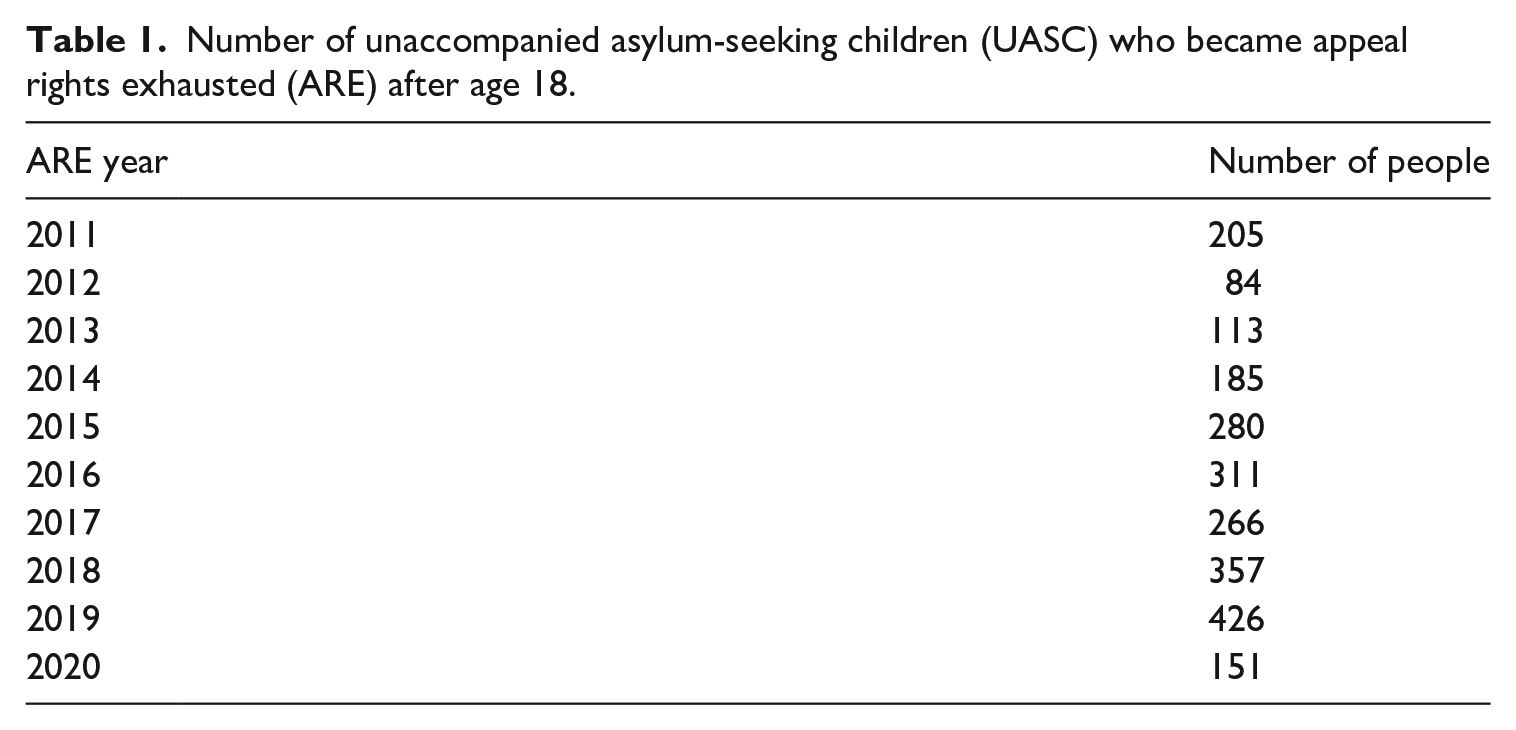
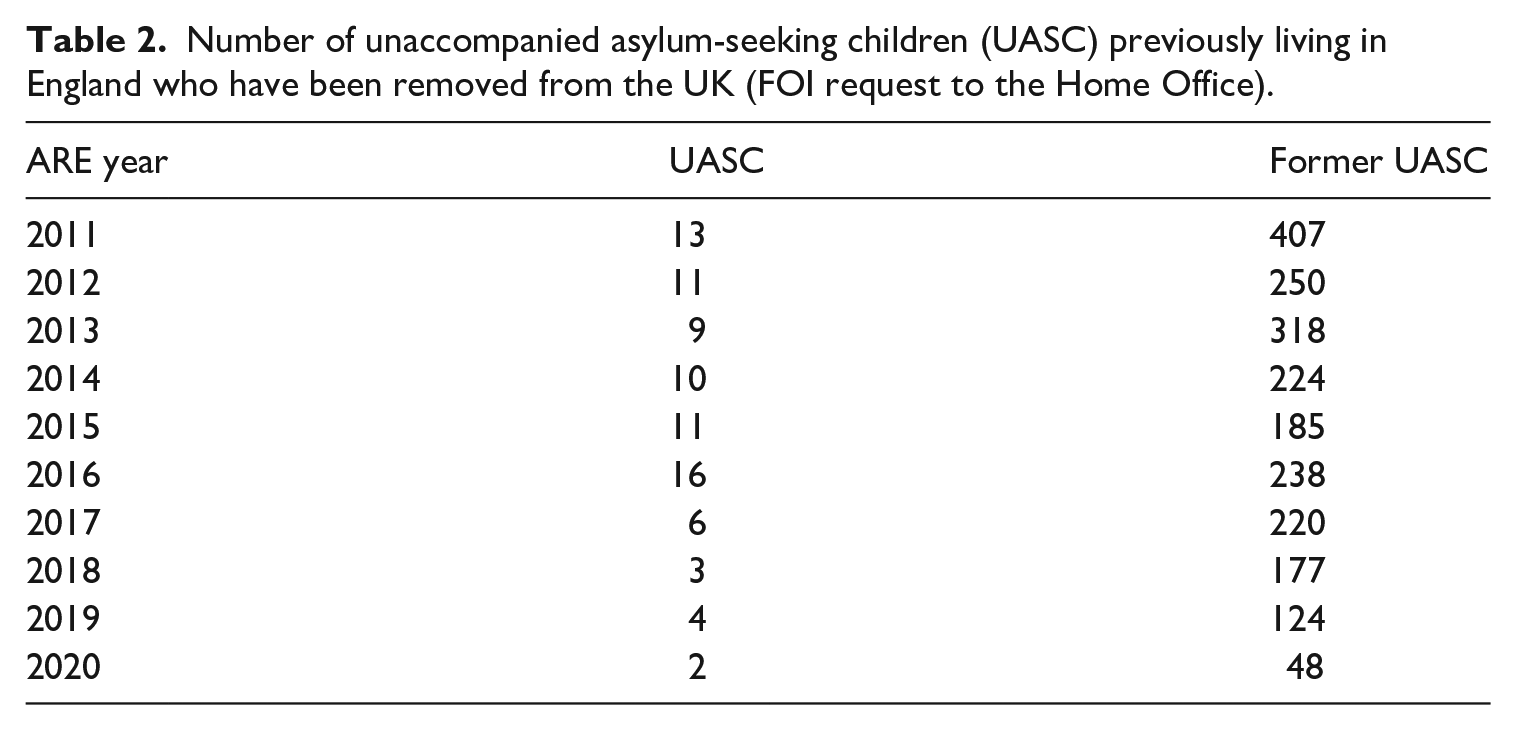
The UASC status not only justifies the enclosure of this sector, and a de facto two-tiered system of children’s services, but the consequences of this enclosure are especially adverse for unaccompanied children. I have already pointed out the unstable and deleterious living conditions in many unregulated accommodations and that children’s commodification through enclosure is at once alienating and dehumanising. While all children in unregulated accommodation may, to some degree, face similar issues, the precarity of unaccompanied children’s immigration status increases the magnitude and extent of enclosure’s impact. Regularising status, and specifically receiving leave to remain in the UK, is a challenging process involving extensive institutional and bureaucratic engagement often over extended periods of time. The process involves everything from attempting to access identification and paperwork in support of asylum claims to navigating complex legal systems, including finding effective representation. As Maggie (policy maker) commented, it ‘can take quite a lot of additional support’ to access and navigate the legal system and to ensure representation is working for the child. In a sector that has been enclosed, and where issues of low quality, instability and cost-cutting are rife, it is questionable whether unaccompanied children receive the support they need to regularise their status, with extreme consequences. Young people who have not managed to achieve the right to remain in the UK, and especially those who become appeal rights exhausted (an average of 238 per year, see Table 1), are no longer entitled to the same rights as other care leavers. As a result, a significant percentage of unaccompanied young people face deportation when they turn 18 (see Table 2) and, with limited exceptions, unaccompanied care leavers without regularised status will not be entitled to mainstream welfare support regardless of the hardships they face.
Number of unaccompanied asylum-seeking children (UASC) who became appeal rights exhausted (ARE) after age 18.
Number of unaccompanied asylum-seeking children (UASC) previously living in England who have been removed from the UK (FOI request to the Home Office).
Thus, one consequence of the double movement of enclosure for unaccompanied young people who have not been supported to regularise their status is to merely postpone the deportability (De Genova, 2002) or enforced destitution (Dickson & Rosen, 2021) associated with the adult border regime. When expulsion is no longer deemed to violate the morally legitimate urge of liberal humanitarianism to ‘protect’ the vulnerable (Ticktin, 2011), for which the child figure is the symbol par excellence, and when they are no longer potentially profitable commodities, unaccompanied young people are no longer treated in the same way as other care leavers – making the two-tiered system a de jure as well as de facto reality. They risk either being moved to another form of enclosure (such as detention prior to deportation) or shifted into part of a larger ‘destitution economy’ where impoverished migrants ‘have value for others through the grinding labor of living in poverty’ (Coddington et al., 2020, p. 1425).
Conclusion
In this article, I have drawn on data generated with a wide variety of actors involved with children’s services in England to argue that unregulated accommodation has experienced a double move of enclosure within racial capitalism, producing value for the state and private providers through immigration status and deleterious consequence for unaccompanied children.
My point here has not been to suggest that (semi-)independent settings are necessarily low quality, nor that they are, in essence, inappropriate settings for children. In contrast, I have highlighted the intersection of marketisation, late capitalist childhoods and racialised bordering practices as a way of interrogating both how and why unaccompanied children are disproportionately placed in this type of accommodation (their ‘status value’) and the consequences. By providing novel empirical insights about unregulated accommodation at this historical conjuncture, I move away from simple distinctions between unregulated accommodation and the ‘family-like’ foster care which is, in contrast, often applauded in the literature on children’s services. Rather than assuming problems are inherent to (semi-)independent accommodation, I have demonstrated the importance of turning our gaze to the political-economic structures shaping children’s services in England and considering their differentiated and stratified impacts.
Engaging with the contemporary literature on (new) enclosures has helped me to advance understandings of the double enclosure of (semi-)independent accommodation. I have demonstrated how the time of childhood is both spatially enclosed in the name of care and protection and how unaccompanied children’s time is spatially enclosed within an outsourced and unregulated sector that often fails to provide adequate support for ensuring regularisation and residency before legal adulthood. The intersection of these two forms of time–space can have long-term impacts, despite the fact unregulated accommodation is tied to the short-term status of childhood. In keeping with the temporal turn in social sciences, the arguments in this article highlight the importance of adding time into current spatial conceptualisations of enclosure. Further, by documenting the creation of an unregulated, profit-making, ‘pop-up’ market and the commodification of unaccompanied children themselves, I have shown how various forms of enclosure intersect, as well as elaborating their specificities in the immigration–welfare nexus in neoliberal border regimes. Bringing theorisations of ‘enclosure’ into conversation with existing literature on neoliberalism’s marketising impulses helpfully prompts attention to the ways that status and (im)mobility, as well as bordering through time and space, are among its constituent features. In so doing, I lend weight to the argument that that enclosure is not simply a movement against the commons but that new forms of enclosure are as much about buttressing failures to enclose through other means (Jeffrey et al., 2012) – in this case, a ‘migration fix’ (Bird & Schmid, 2021) that responds, at least in part, to instability in the private housing sector and the presence of populations constituted as disposable.
Finally, I have demonstrated some consequences of enclosure for unaccompanied children, arguing that the intersections of racialised borders and a ‘care market’ produce casualties, rather than beneficiaries, of care. I have shown how these young people are enclosed through their legal status as asylum seeker and child, rather than being ‘locked in’ or violently dispossessed. Mobility is possible, but highly surveilled and curtailed. This produces a time of waiting in under-performing facilities prior to formal expulsion, often leaving unaccompanied young people with limited options, and even destitute or facing deportation, when their legal childhood comes to an end. A (racialised) care market, I contend, does not care at all.
Footnotes
Acknowledgements
I would like to thank my colleagues on the Children Caring on the Move (CCoM) project, especially the Young Researchers, who drew my attention to the need to better understand the burgeoning unregulated accommodation sector; Sayani Mitra, the post-doctoral researcher who led many of the interviews; Atul Shah and Amy Horton for insights on economic geographies; and Sarah Crafter and three anonymous reviewers for feedback on a draft of this article. Special thanks to the CCoM research participants who shared their experiences and insights with us, and without whom this article would not have been possible. All mistakes are my own.
Funding
This work was supported by the Economic and Social Research Council under grant number ES/S001980/1.