




Abstract
Grappling with work–life challenges often hinder the growth of women lawyers within their profession. As women struggle with the dual problems of working long hours and managing the family they are bound in a precarious situation which marginalises them as revealed in literature. The Pandemic 2020 has made the ‘work from home’ the new normal phenomenon. The present study makes a comparative narrative analysis between pre and during pandemics work–life contexts of the women lawyers by interviewing fifty of them based in Kolkata (India). The already existing work–life challenges have been amplified exposing their vulnerabilities. The crisis is about their existence as professionals, due to prioritising home over work during the pandemic. As the women lawyers strive to create a space within the legal profession, the pandemic proved jeopardising pulling them towards their conventional roles. Their professional and private spaces are brought under the same roof, increasing the struggle of their multiple roles and sacrificing their ‘me time’.
Introduction
Work–life balance has become an important area of research since the increasing participation of women as a workforce. As women traverse the dual role, fulfilling family needs and managing career requirements become important part of their life. Following Druskat and Wheeler (2003), Chawla and Sondhi (2011) refer work–life balance to be the useful harmonisation between remunerative work and the various pursuits of the individual, being a part of the society. Valk and Srinivasan (2011) are of the opinion that in India the role of women as ‘homemakers’ and ‘caretakers’ are deeply entrenched within the society, making work–life balance issues very challenging. Thus, it is important to explore the area to get an idea on how women handle these challenges. The spread of the Corona virus has further affected the family, career and social life of all individuals. This creates new crisis within the already existing challenges of maintaining a proper work–life balance, making this a fruitful area for further research.
The pandemic stretched its effect in all layers of the society, having profound implications on the customary ways of life. The urge to control the spread of the pandemic has taken a toll on the country’s economy, exposing the vulnerability of different susceptible groups. Out of these, the predicament of women in India has been ascending. A trend of work from home has developed, amplifying the unpaid domestic labour that both working and non-working women have to tend (United Nation [UN], 2020).
According to a report by the Ministry of Statistics and Programme Implementation Government of India (2020), 22% of women in urban areas were engaged in different categories of paid employment in 2019. With paid work being dominated by men, the women are already marginalised and make maximum contribution towards unpaid work. For the self-employed women in the legal profession whose representativeness is limited confront further disadvantages (Michelson, 2013). Women in this profession are yet to make a stronghold and the situation that developed due to the spread of Corona virus can easily push them to the edge. Women lawyers stand on the brink of being engaged into unpaid labour from the contributions that they make in the paid labour, as they are forced to turn back to their conventional role. The UN Policy Brief (2020) regarding the impact of COVID-19 on women reported that the economic impact of COVID-19 on women would be different from men as they have greater care demands to attend. The work–life balance has been a source of constant confrontation and under the circumstances created due to the spread of the pandemic the domestic work generates a dispute, thus marginalising them further. This article discusses the fears and anxieties that are related to the work–life balance issues in the pre COVID-19 and during COVID-19 scenario and how this leads to the already marginalised facing greater repercussion.
Alternatives to the Indian Legal System in Times of Pandemic
The Government of India imposed lockdown since 24 March 2020, in wake of the COVID-19 crisis. The pandemic had converted the legal system’s operations from physical set up to that of the digital medium (Civil Original Jurisdiction Suo Motu Writ (Civil) No.5/2020). The Supreme Court had directed all courts across the country to use video conferencing for judicial proceedings (Das, 2020). The Bar and Bench reported that, the Calcutta High Court started its virtual operations since the beginning of the lockdown phase in March 2020 (Iyer, 2020). However, only the most urgent matters were heard through virtual courts. The Indian Express reported on the functioning of the virtual courts within the higher courts while the subordinate courts functioned in a limited manner (Modak & Gokhale, 2020).
Reviewing on Work–Life Balance for Women Workforce
Early Study on Women in the Legal Profession
The availability of literature regarding the legal profession is limited in India. Early researches in the field, nevertheless, focus on the autonomy and challenges that the profession carries (Sharma, 1982). One of the earliest studies on women legal professionals in India pointed out that the 1980’s saw a surge in the number of women entering the legal profession. However, the professional achievements of the women lawyers were lower in comparison to the men. The reasons were the domination of male lawyers in the profession viewed as structural constraint and the primary attachment of domestic roles associated with women viewed as the cultural constraint (Sethi, 1987). Even in the globalisation era, with the increase in law firms, women may have gained in position and performance but are yet to enjoy workplace autonomy (Ballakrishnen, 2013).
Work–Life Balance and Women in Various Professions
For women in India maintaining work–life balance has always been a challenge, not only in the legal profession but other professions as well. According to a study conducted by Valk and Srinivasan (2011), the societal role expectation of women in India and the self-identities are dichotomous in nature. Qualitative and quantitative studies have revealed that women’s career choices are dominated by the familial expectations. Another study showed the importance of work–life balance in a person’s professional life. The responsibility of the organisation or workplace in realising the multiple role of its employee is important (Chawla & Sondhi, 2011). In a transitional society like India women are expected to be connected with domestic labour putting their career at the back foot. Yet another study shows that excessive work, the burden to fulfil other’s demands and not giving time to self are some of the factors that affect work–life balance and create anxiety and stress in many women professionals. This article discusses two models of work–life imbalance. The role analysis model, which explains the multiple roles that women play, and the three factor model shows the necessity to balance the factors of knowledge, behaviour and skill (Sundaresan, 2014).
Work–Life Balance and the Legal Profession
The legal profession is challenging due to its nature. A study conducted by Bacik and Drew (2006) shows that for women the dual role expectations are a huge challenge. Problems are especially high for mothers. Motherhood and the legal profession are suggested to be inversely proportional. The professional impact of being a parent is not similar for men and women. The family work and the legal work have to undergo changes to accommodate women. According to Makhija and Raha’s (2012) study in India changes are required from both the workplace and the family. Proper facilities, especially day care facilities are recommended. In the case of Law Firms the leave taking policies needs change. There are alterations expected within the mentality prevailing against women in the workplace as well as the family.
Studies During the Early Phase of COVID-19
The COVID-19 poses new challenges as well. The legal profession faced contentious issue due to its virtual operations. The increased burden of unpaid labour threatened to engulf women. However the availability of literature concerning the legal professional’s lives in India during COVID-19 is sparse. Nevertheless few studies have been conducted during different phases of the pandemic on the morbidity trends and its impact on the lives of women. A study shows that due to the impact of COVID-19 the vulnerabilities of women have become starkly exposed in terms of health, domestic violence and livelihoods. Under these circumstances proper gender-based policy are required to be undertaken (Malik & Naeem, 2020). According to another study the increased restriction due to the pandemic has exaggerated the unpaid work time for women. This has been viewed with dissatisfaction and also the suggestion that men should contribute more towards the domestic chores to ensure gender equality (Craig & Churchill, 2021).
Work–Life Balance During Various Crisis Situations
Crisis situations are not new to the society. Situations like economic recession and in recent times the COVID-19 induced crisis has led to new work–life challenges. Thus, it was important to address the literature related to work–life balance during these crisis situations. A study conducted in Europe deciphered the policy measures taken to make the work–life balance better. However, the economic crisis of 2008 resulted in cutting down on women’s employment and equality. The study revealed that the political policies too supported women’s role in private spheres in order to make the required changes to fight the financial crisis (Guerrina, 2015). Studies conducted during COVID-19 point out towards the destroyed work–life balance. One study conducted by Schieman et al. (2021) during the pandemic revealed that the health (mental and physical) impacts due to work–life balance and conflicts. Their study concentrated on individuals with children and revealed that parents had enormous responsibility beyond their job and that makes them different as a subject of study. Another study conducted in Indonesia during the pandemic points to the limitations of the organisations in understanding employee’s work–life balance issues. Irawanto et al. (2021) showed that the organisations need to worry about job satisfaction during the pandemic as it could not be denied that working from home resulted in destroying the work–life balance and created work related stress.
Theoretical Model
The Border theory explains the work–life balance from the border crosser’s perspective. Border crossers are those people who travel from the family domain to the work domain. The theory explains the various possibilities of maintaining work–life balance as well as the factors that hinders it. This theory shows the importance of integration within the domains for better work–life balance. It reveals that the individuals must be given proper process for identification and influence on the domains. The domains too are important as stronger domain will pull individuals towards it. The relation between border crossers and border keepers in the family (the spouse and other family members) and in the workplace (the supervisors and colleagues) as well as others in the domain remain important for a better work–life balance (Clark, 2000).
This study understands the gaps in research on women lawyers and work–life challenges. The major difference in work–life challenges during and before COVID-19 is one of existence. This existence is related to be within the field of practice and the loss of it due to increased participation in the household labour. Thus, the study objectifies to explore women legal professionals’ work–life challenges both before COVID-19 and during the pandemic in Kolkata, India. This study undertakes extensive survey to understand comparative relations in times of crisis and before, thus, this research add value on this area of studies and calls for policy inputs.
Doing the Interviews: Before and at Pandemic Times
The Calcutta High Court was established as the first high court in India. It was brought into existence by the Letters Patent on 14th May 1862 (High Court of Calcutta). Thus, it is not only a place of historical importance, but the earliest establishment of legal system in Kolkata shows that the practice of law has been woven within the metropolitan for long period of time. This article draws data from semi-structured interviews that were conducted as part of the larger research project which is being undertaken at present. Hundred women lawyers practicing at the Calcutta High Court were interviewed in 2019. Snow-ball sampling, through personal acquaintance, was used to collect the interviews. As the pandemic began to spread in India (since March 2020), out of these hundred lawyers, fifty lawyers could be contacted depending on their availability and will to participate. Since, the Calcutta High Court had started its virtual operations, these lawyers were interviewed for the second time, during June to July 2020, regarding the impact of COVID-19 on their professional and personal lives. Due to the spread of corona virus and the lockdown declared by the government, this second phase of the interviews was conducted through telephonic conversations.
The interviews were manually transcribed and codes were formulated. From the codes the important themes were identified. Since this is an exploratory study, inductive method was used to identify categories, patterns and themes. The coding procedure of Grounded Theory was followed. This method helped in building a comparative analysis according to the themes that were developed. The quantitative and qualitative data can be linked to form one data set (Caracelli & Greene, 1993). The process of ‘quantising’ is used to transform qualitative data into quantitative data. The data from the interviews were reduced to items or variables with only one meaning and thus could be used numerically (Sandelowski, 2000). This article has tabular representation of the data thus using both quantitative and qualitative methods. The impact of COVID-19 is a new area to explore that is why grounded theory was used. In this study, women legal professionals are purposively chosen. The reason being, the legal system, in India, since its inception has seen the presence of male lawyers, until the Legal Practitioners (women) Act, 1923, women were not allowed to practice as a lawyer (Mishra, 2015). Women had to put up a long struggle in order to remain as a part of the legal fraternity. Thus, understanding the challenges in their path of progress is important. The work–life challenges have remained a major area of concern for all the women professionals that include the women legal professionals in the transitional society like India. Since the legal profession is associated with autonomy and job uncertainty, it takes lawyers a lengthy period of time to establish themselves. The performance of the lawyer depends on the amount of hard-work, practice and time that they have dedicated and this goes a long way towards building a proper reputation. This makes the profession unique and challenging. It was promised to the respondents that anonymity would be maintained and the valuable information that they shared would be used for the sole purpose of the research and research related publication, thus they have been indicated as R and have been assigned an identification number and age indicated whenever their narrations are quoted.
Standing Between Professional and Personal Demands in Pre- and During Pandemic Dilemmas: Analytical Lens
The analysis is divided into three broad themes. These themes include the pre-COVID-19 and during COVID-19 work–life balance of the women lawyers. The first theme discusses the multiple roles that the women are expected to play, which during the pandemic transformed to the conventional role. The second theme shows the long work hours and less self-time as a cause for disrupting the work–life balance. The third theme depicts the work–life balance facility available at the disposal of the women lawyers. Before discussing the major themes there is a requirement to understanding the socio-demographic background of the respondents. Table 1 depicts the respondents’ age, marital status, religious and caste categories.
Socio-demographic Profile of the Respondents.
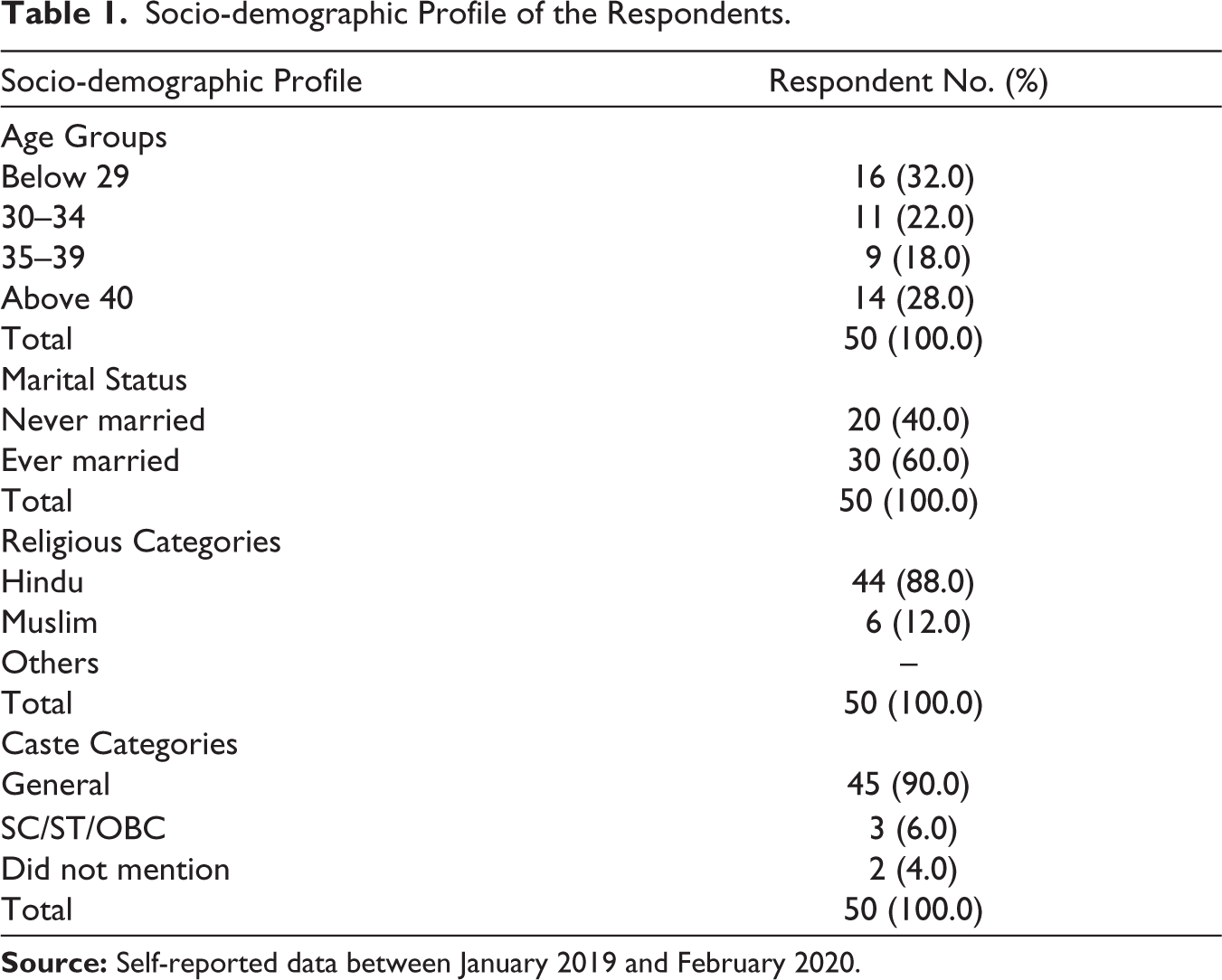
Respondents belonged to various age groups. Maximum respondents were young practitioners. Most of the women lawyers in this study are married or divorced. They have been grouped under the ever-married group. Within the sampled respondents, the women lawyers from other religion, than Hinduism were very less. Among the respondents, only a handful belonged to the SC/ST/OBC categories. Table 2 shows the field of practice and the work position of the women lawyers.
Field of Practice by Work Position of Respondents.
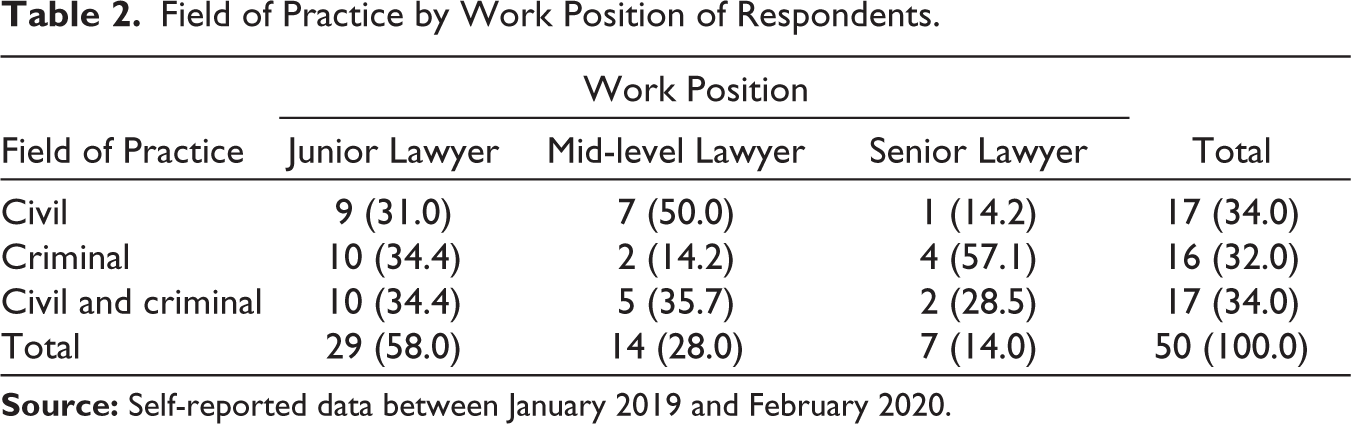
Here, majority respondents were junior lawyers; only 14% of the women in the study were senior lawyers. The women lawyers were found to be well balanced in their field of practice, though less number were found to practice criminal law. The analysis of the work–life balance through the three themes will bring out the problems that the women lawyers face in their profession.
From Multiple Roles to Conventional Roles
Family and profession create opposite demands on the working women and thus they produce the role conflict. The gendered role of women hinders their full concentration in the workplace (Eagly & Wood, 2012). Demands from the family, focus on women’s conventional role in the family, lack of consideration from family members, at times, adds up making it difficult to balance home and workplace. This theme is further divided under the pre-pandemic and pandemic role demands of the women lawyers.
Questioning the Predictability of the Multiple Roles Before the Pandemic
Before the pandemic, women lawyers were struggling with the demands of the profession and the family, as well as the multiple roles that they were expected to play. The concept of gendered role creates a burden on women lawyers. R (29), a thirty-nine-year-old married lawyer practicing civil and criminal law believes,
Most of the time women leave the profession after marriage. They are entrusted with the burden of the family. It takes time for one to be established in the profession. Added pressure from the family puts women at the edge of her professional life. In the workplace too women are seen as better managers at home.
R (29) belongs to the minority religion and comes from an extended family. She has felt the strong family demands going against her profession. She is also aware of many other women lawyers from the minority religion who have felt the same pressure. The workplace demands may not always be viewed positively by the family. The professional life becomes secondary compared to the primary duties that women are associated with.
Women’s conventional role is carried over to the workplace as well. Here they are perceived to be concentrating more on the family and less so on their profession, consequently the approach towards women lawyers remains different from the very beginning of their career. R (40), a thirty-seven-year-old civil lawyer, thinks that,
Women are socially considered to concentrate on family and children. Thus, there is a lot of expectation that they would be contributing towards the household activities more than their profession. Again, in the workplace, it is believed that women cannot give logical advice and are thus looked down upon.
R (40) comes from a nuclear family and belongs to the minority community. She has felt that her professional role is undermined in the workplace. Belonging from a minority community further made matters worse for her, as she feels that her professional role is undermined because of her gender as well as her religion. Most women lawyers found it difficult to fit together their work, family life and their social life. The situation becomes grave for the mothers, as the juggling of roles increase further. The practicability of attending the multiple roles at the same time is questionable. According to a study conducted by Makhija and Raha (2012), caretaking responsibility largely belongs to the women, and this was evident by the leave policies granted by different law firms (which grant short paternity leaves to their male lawyers). Bacik and Drew (2006) found pessimistic outlook towards work–life balance especially for women lawyers with children, Joining work after maternity can be problematic at times; as suggested by R (61), a thirty-five-year-old lawyer, practicing in various fields,
I had become very irregular at court. Most of the times it was out of my control as my newborn daughter required my attention. I had to show a lot of patience and even talked to my senior regarding my absence from court.
R (61) belongs to the general category and comes from an extended family. Gendered role stereotyping bind women to household and childcare duties, thus, pushing them to the edge of the profession. This causes a hindrance in maintaining a balance between personal and professional life as well.
Bacik and Drew (2006) share the opinion that the legal profession attaches the idea of career advancement with factors that favour men and hinders the path of women. Similarity is found in what R (19); a twenty-nine-year-old lawyer had to say,
With the kind of work culture and social structure that prevails in India, legal profession is very difficult for women. This constant juggling of role is very hectic at times. To maintain a balance, I perform less than my potential at work.
With so much of work pressure already existing, the balancing of the family and childcare responsibility adds to the negative downturn of many women lawyers.
Shift Towards Conventional Role During Pandemic Times
The spread of the pandemic further worsened the situation. Research conducted by Krentz et al. (2020) found working women to have spent an average of fifteen hours per week doing unpaid domestic work. Similar research in Australia showed parents putting extra hours for supervision of children, with women giving maximum extra time (Savage, 2020).
The multiple roles demand before the pandemic narrowed to put more weight on the societal expectation of gendered role. Even if the option of virtual court and e-filing existed, the numbers of cases being dismissed were considerably low. This pushed the lawyers towards a no work situation. Virtual courts heard urgent bail matters, matters related to COVID-19 protocol, financial matters or such matters that required urgent stay orders (Rattan & Rattan, 2021); on the other hand, family related cases, divorce and marriage matters got postponed. Thus, not all lawyers got an equal chance to represent their cases. Many women lawyers were related to the family and property matters and thus did not have work during the COVID-19. Senior lawyers handled most of the urgent matters. On the other hand, junior lawyers were unable to achieve this opportunity. Table 2 shows that the number of women as senior lawyers is limited, thus most women lawyers were restricted on work during the pandemic.
Household and childcare are still associated with women as a part of their gendered role identity. Hochshild also shows through the second shift that in-spite of entering the labour force women still make maximum contribution to the household duties (Gorp, 2013). Along with this, patriarchy, gendered socialisation and limited professional life resulted in women taking up their conventional role. According to the social role theory men and women are distributed in different social role. Women are expected to fill the caretaking roles (Eagly & Wood, 2012). Also the absence of paid services during the lockdown period aggravated the situation further for the women lawyers. R (79), a thirty-year-old lawyer who practices civil, criminal and corporate laws, felt completely overburdened with household work,
I am burdened with household work. Due to the lockdown, none of the maids are coming. So, I am left to do the cooking, cleaning, washing. Maximum time of the day I attend to these mundane chores. It is physically exhausting.
R (79) comes from a nuclear family. She stays with her husband. It is clear that the participation in household work during the lockdown phase was imbalanced. According to Dr Miyamoto (2020), due to the spread of Corona virus, schools and day care centres were shut, households with ailing family members would require attention; the burden then fell on the women to provide for the unpaid labour. Also, the absence of other support system for children like grandparents or friends due to social distancing caused further problems for women, especially for such families which were nuclear or were run by single mothers. R (51), a thirty-four-year-old lawyer who feels the pressure, equally says,
Managing the domestic chores seems like a herculean task to me. Earlier my work took most of the time and now it is just the opposite. These household chores seem meaningless to me and yet I must spend so much of my time doing them.
R (51) is divorced and lives with her children. In India the pandemic which had imposed the lockdown saw more women managing the children and doing the household chores with less help as they fought to maintain their position in the workplace (Veronica, 2020). As the household chores become the duty of the women their contribution shifts more in proportion to the unpaid labour than the paid labour. Table 3 shows the orientation of women lawyers before and during the pandemic.
Orientation of the Respondents.
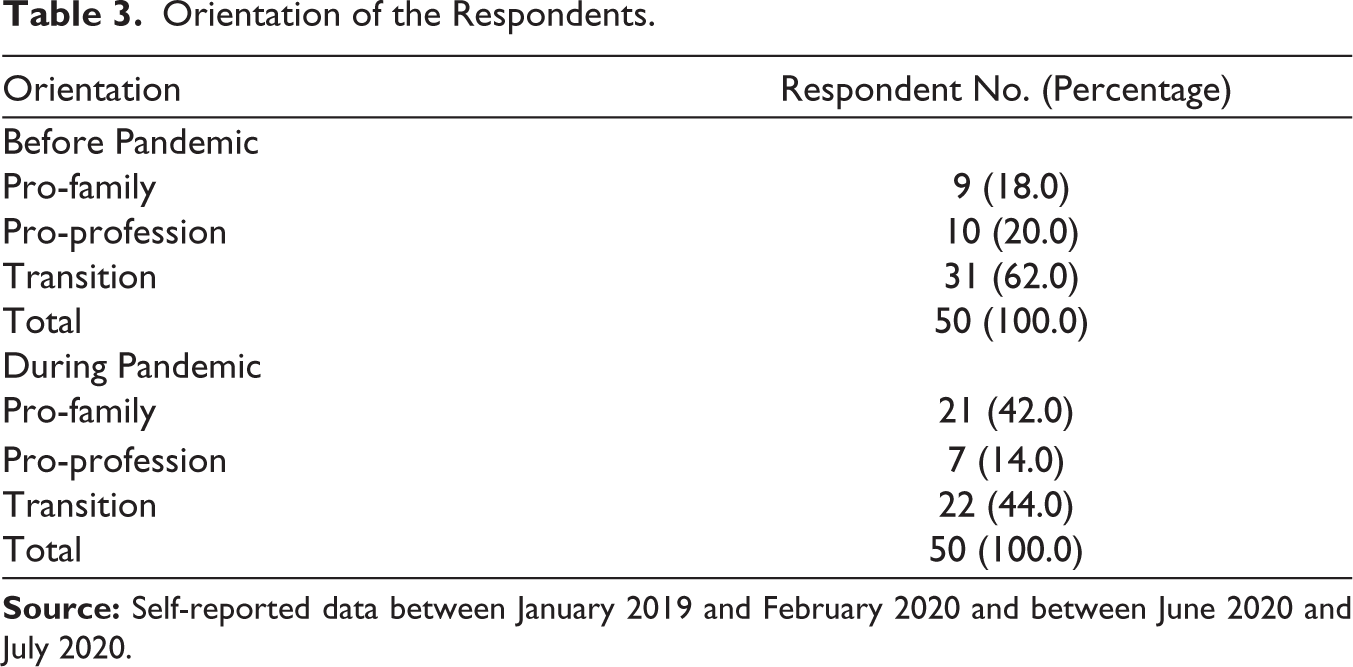
It is evident from Table 3 that there has been an increase in the pro-family or the conventional role during the pandemic, whereas the pro-profession and transition role decreased. Hakim (1998) mentions in her preference theory that women choose their orientation and most of them try to balance between family and profession. However it is evident from the table that during the spread of COVID-19 women lawyer’s inclination towards the family increased. This situation had been created due to the impact of the changing workplace and societal structures.
According to the border theory the flexibility of the borders helps to maintain the work–life balance. The level of flexibility that work and family domains allow leads to role reversals throughout the day (Desrochers & Sargent, 2004). However, the pandemic summed up the role reversals for women lawyers into the conventional role. Within the domain of the family it became difficult to continue with a professional role due to constant attention towards family members. A recent United Nations study has warned that the decades of advancement made regarding gender equality could be easily weakened due the situation created by the pandemic (2020).
Longer Work Hours and Disappearing Self-time
The legal profession consists of long duration of the day to be spent for work. Longer work hours are also accompanied by time spent on household chores and caretaking duties. This leaves limited ‘me time’ for the respondents. This theme too is divided along the pre-pandemic and pandemic situations.
Stipulation of Long Work Hours and Sacrifice of Self-time Before the Pandemic
Bacik and Drew (2006) had been highlighting the long work hours which stretches beyond the time spent in the courtrooms and chambers. Following Sommerlad and Sanderson (1998), they also specify the idea of using after work hours as a time for professional socialisation which helps in maintaining the clientele. This type of professional socialisation however becomes a problem for women. Sundaresan (2014) is critical to the problem of work hours since it can be stretched beyond the average work hours and can even spill into their family life when individuals carry work home. Usually, the work hours go beyond the functional hours of the court. After court meeting with clients, discussing cases with senior lawyers or attending chambers became significant in order to maintain the professional hold. Maintaining this work schedule is difficult for women due to their commitments at home. Thus, the work hours act as hindrance for many. R (16), a thirty-three-year -old civil lawyer, says
The profession demands that you spend long hours working. In the beginning of my career, it was fine. But once I had my daughter things started changing, I must pay attention to her, the elongated work hours hinder my responsibilities to her.
R (16) belongs to the minority community and comes from an extended family. It can be understood that she finds her family duties to be important as well. Giving full attention to the profession can be challenging especially for those who must look after their children. The extension of working hours is not only a cause of worry for mothers, but also for the unmarried lawyers. R (54), a twenty-eight-year-old lawyer, practicing civil and criminal laws, is of the opinion that,
After court hours it happens that I must attend important discussions on certain cases in my senior’s chamber. I do not have a chamber. So it happens that at times I am home for a few hours only.
R (54) belongs to the general category and comes from a nuclear family. She lives with her parents. Those who can strive with the professional demands are considered to be committed. It becomes a problem for most women due to their care giving roles, thus putting them at a disadvantage. Table 4 depicts the work hours that the women lawyers followed before the pandemic.
Work Hours Before the Pandemic.
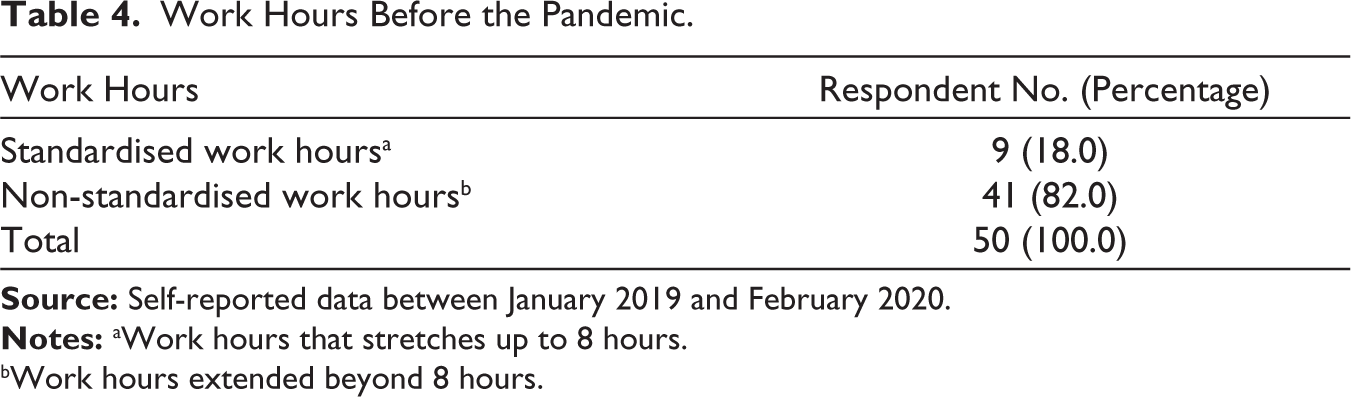
bWork hours extended beyond 8 hours.
Table 4 shows that 82% from the sampled respondents spend more than eight hours in their profession, most of the time it reached up to 9 to 10 hours. The majority of the women lawyers, who participated in the interview, did not get any separate free time for themselves. After the long work schedules the rest of the day was spent with their family and children. Women Lawyers hardly think of a separate time for their own leisure. According to R (22), a thirty-six-year-old criminal lawyer,
I have never thought of separate time for myself. The time that I spend at work I believe is for my potential. Also, I like to spend time with my family, especially my seven years old daughter. That I believe is giving time to myself.
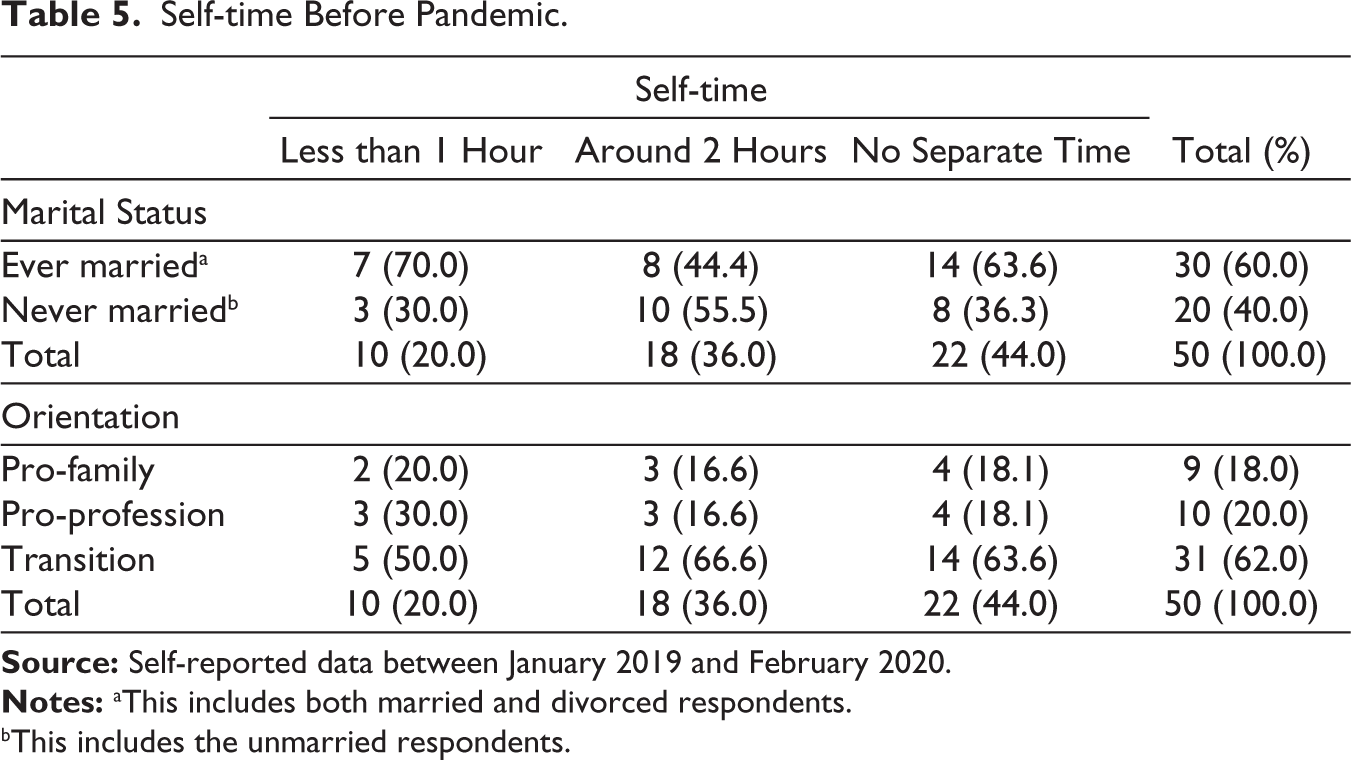
R (22) belongs to the majority religion and comes from an extended family. Since, she manages her profession and her family responsibility mostly by herself, she hardly thinks of any separate time. The household chores are looked after by a paid help, her family members also get involved in various household work. However, the caretaking role for her daughter depends on her. Similar accounts were represented by Sundaresan (2014) in her survey, when she found that most working women did not have any separate time for themselves, and their busy schedule at work and even at home deprive them off any self-time that they could have otherwise pursued. Table 5 shows the concept of self-time among the women lawyers, who participated in the study.
Self-time Before Pandemic.
bThis includes the unmarried respondents.
Table 5 shows that most women lawyers have no idea of a separate self-time, especially for the ever married respondents as well as those respondents whose orientation is in transition. Their self-time depends on the time that they give to their family or to their work. Self-time is necessary as it helps to maintain the work–life balance (Sundaresan, 2014). Since multiple roles are expected from working women, their professional identity is further difficult to be maintained, under the condition that their self-time is limited.
Family-centric and Limited Self-time During the Pandemic
Due to the pandemic, women made maximum contribution to the household. The virtual courts resulted in the disposal of minimum number of cases (Iyer, 2020). Women faced the burnt due to the time spent in doing domestic work. Many respondents opine that this is a greater cause of worry. They felt a loss of space and identity. In this regard, R (13), a 37-year-old criminal lawyer exclaims,
I am doing everything in the house except cooking. Household work takes away most of my time. Right now, I am more of a house-maid than an advocate. If I am going to be housemaid, then what was the point in getting a degree and building my career over the past nine years! My nine years of hard works, my savings-everything is getting drained out.
R (13) belongs to the majority religion and comes from a nuclear family. Self-time seemed to be a utopia as well. Earlier it was difficult to spend time on self and nurturing the self. The same idea prevails now. Earlier their profession kept them busy and then the household chores and child-care duties. Due to the pandemic the opposite materialises as more time is spend in unpaid labour than the professional work. R (33), a 43-year-old lawyer had deep thoughts on this issue,
The household chores leave me physically exhausted. Then I see to the children’s online classes and homework. Earlier I used to spend some time in the weekend for myself, unfortunately now I do not find any difference between weekday and weekend.
R (33) belongs to the minority religion and comes from a nuclear family. Women lawyers associate their profession with their self-identity. Their profession gives them independence. Valk and Srinivasan’s (2011) projected the association of self-identity and profession, while discussing the issue of work–life balance. According to them the profession opens a new world, broadens their horizon and social associations and enriches their experience. It is without doubt when the same earned identity is threatened, then the individual feels at a loss.
According to the border theory of Clark (2000), the greater influence that a professional has over their work results in their satisfaction. Being a member, who, belongs to the core of the work domain gives better opportunities of work–life balance attainment as well. For the women lawyers, their participation in household chores and childcare or even elderly care duties results in the idea that they may not be effective as central participants of the professional domain. The stereotypical role expectations of women thus spill over to their professional domain and marginalise them. The pandemic raised worst fears as it placed the women totally within the family domain and thus pushed them from the professional domain.
Border theory says that when individuals can identify and whole heartedly shape the domain then they are further committed to it (Clark, 2000). However, as women lawyers are not kept in the core of their profession and on the other hand their higher acceptance within the core of their family disrupts their professional identity and recognition with the workplace. Hakim (1998) through the preference theory suggests that women are able to handle their decision to participate in the family or profession or try to balance both. However, the stronger attachment to family domain and lesser chances of attachment to professional domain marginalise women lawyers. Also their preference is limited as their identification with the professional domain remains restricted as their primary care-giving role associates them more with the family domain.
Limited Work-Family Support and Changing Orientation
The path of progress in the legal profession depends on how much the individuals can strive to gain popularity and establish a well reputed practice. Facilities at the workplace and support in the family can be helpful to the women lawyers. This theme understands the workplace facilities and family support in the pre-pandemic situation. It also understands the supportive structures during the pandemic situation.
Un-equipped Workplace and Assistance from Family Before Pandemic
Presence of supportive elements at work can help women in maintaining work–life balance. However, there are hardly any elements for maintaining work–life balance in courts. Most women lawyers reported that, since they are self-employed, they choose their work hours and the days that they work. There are no other facilities available at their disposal. Table 6 shows the facilities available that helps in maintaining work–life balance.
Work–Life Balance Facilities and Field of Practice, Work Position.
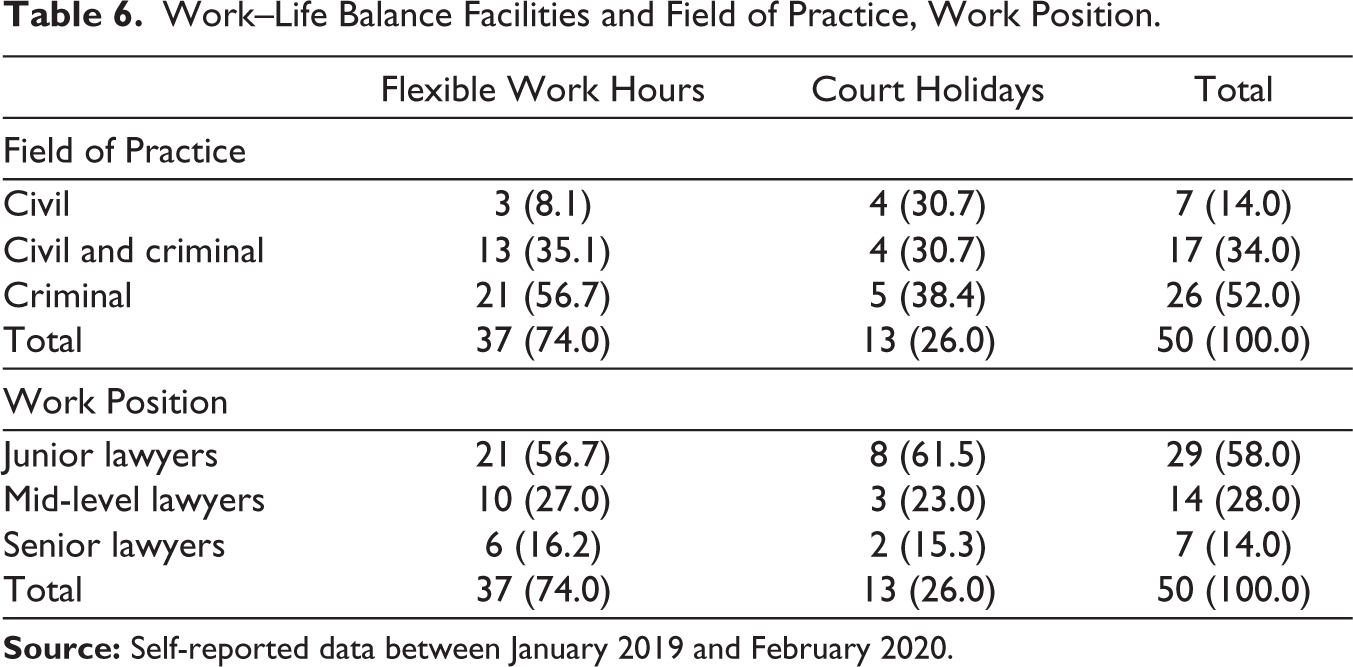
Table 6 depicts that the women lawyers from various fields of practice and various working positions mostly go for flexi hours for maintaining their work–life balance. The courts have set holidays which reduces the lawyers work for that time period. On the contrary many attend their chambers or work with their seniors during this time. Being self-employed carries a lot of responsibility, since their entire career depends on their approach towards their profession. R (25), a forty-one-year-old lawyer (practicing civil and criminal law), gives her determined view,
It is entirely my decision regarding when and how I will work. Usually, we refrain from taking leaves as these are again associated with our incompetence in the profession. There are holidays but it is when the courts are closed, not my chamber.
R (25) comes from a nuclear family and belongs to the general category. It can be understood that leave taking and flexi-timing creates a negative idea about the women lawyers. The presence of workplace facilities can boost their performance by enhancing their concentration and quality of work. Speaking along the same idea R (48), a 31-year-old lawyer, who dabbles with various fields of law; says
There are certain facilities that could be provided like the provision of proper washroom facilities for the women lawyers. It is not that there are no washrooms, but properly maintained ones are difficult to locate. The only one that I can think of is in the ladies Bar. Also, there could be some provision for Day Care Centers.
R (48) comes from an extended family and belongs to the minority community. It is evident that the respondents deeply feel the absence of facilities in the workplace. Workplace facilities like providing proper washroom and working area are the basic requirements for any person within a workplace. The women lawyers are also pessimistic regarding taking leave of any kind as it might highlight their incompetence and obstruct their professional growth. Following the border theory, it can be said that providing facilities helps in making the individual’s bond stronger with the professional domain (Clark, 2000).
According to many of the women legal professionals, family should be a support system, due to the contribution that they can make in helping balance work–life issues. Those lawyers, who could overcome their problems, had suggested that they had supportive families. R (74), a 38-year-old criminal lawyer, agrees that to maintain the career she had to endure a lot, but her family was always by her side. She lives in an extended family with her husband, child and in-laws. In her words,
My family has supported immensely and looked after my child during my absence. This helped to make things fall in place. Without their incessant support it would have been difficult to continue both with my family and my career.
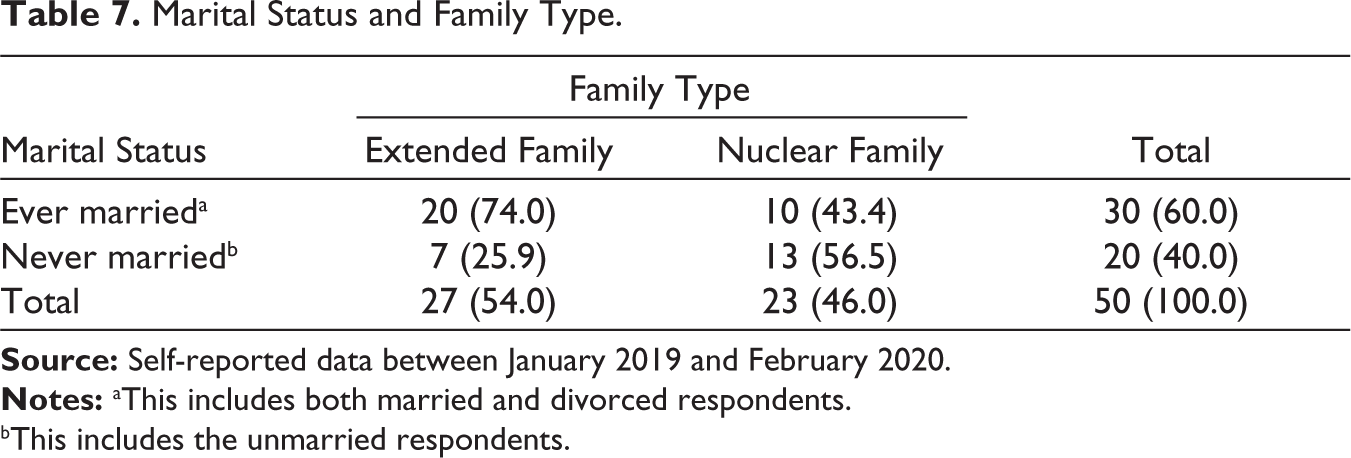
Support from the family helps working women focus their attention on their profession. For women lawyers this is very important as their profession makes them spend most of the time outside their home. Nuclear families might face difficulties regarding childcare especially when both partners are working, whereas in the extended family there are the grandparents who can take care of the children. Table 7 shows the type of family in which the women lawyers live.
Marital Status and Family Type.
bThis includes the unmarried respondents.
In the present study, 54% of the respondents were found to be living in the extended family. Thus, the role of the family can help in better maintenance of the work–life balance of the women.
Extended family can be a support as well as a hindrance when it comes to the work–life balance issues faced by the women lawyers. For working women, the presence of other family members helps in dealing with much of the household chores. Chores can be shared between the family members and working women and thus it does not turn out to be a burden on the women alone. Table 8 below indicates the sharing of household chores among women lawyers across their marital status.
Sharing of Household Chores and Marital Status Before Pandemic.
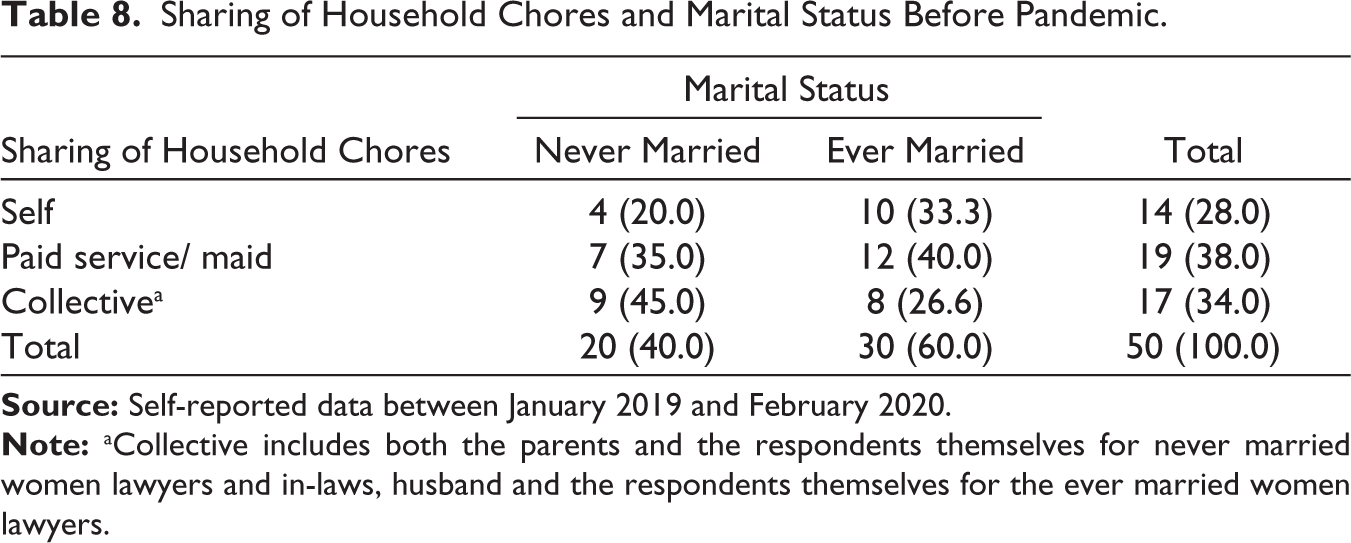
Most of the married respondents share the household chores with the maid or paid service. However, 33.3% attend to the household chores by themselves. For most of the unmarried respondents, the household work is done collectively. This shows that marriage makes a difference as it places women within one’s gender expected role. It can be said that a matrix event takes place for the women legal professionals. The family demands and societal approach regarding those demands highlight that woman should concentrate more on the family and this acts as an important challenge which hinders their professional performance. Within their workplace, their exposure is cut short due to their role in the family, resulting in their assumed lack of concentration at work and not giving logical advice. This situation corroborates with the border theory which notes that the powerful domain will have stronger pull and weaker domain will have weaker pull. This idea brings us to understand the orientation of the women lawyers. Table 9 shows the orientation in comparison with the marital status.
Marital Status and Orientation.
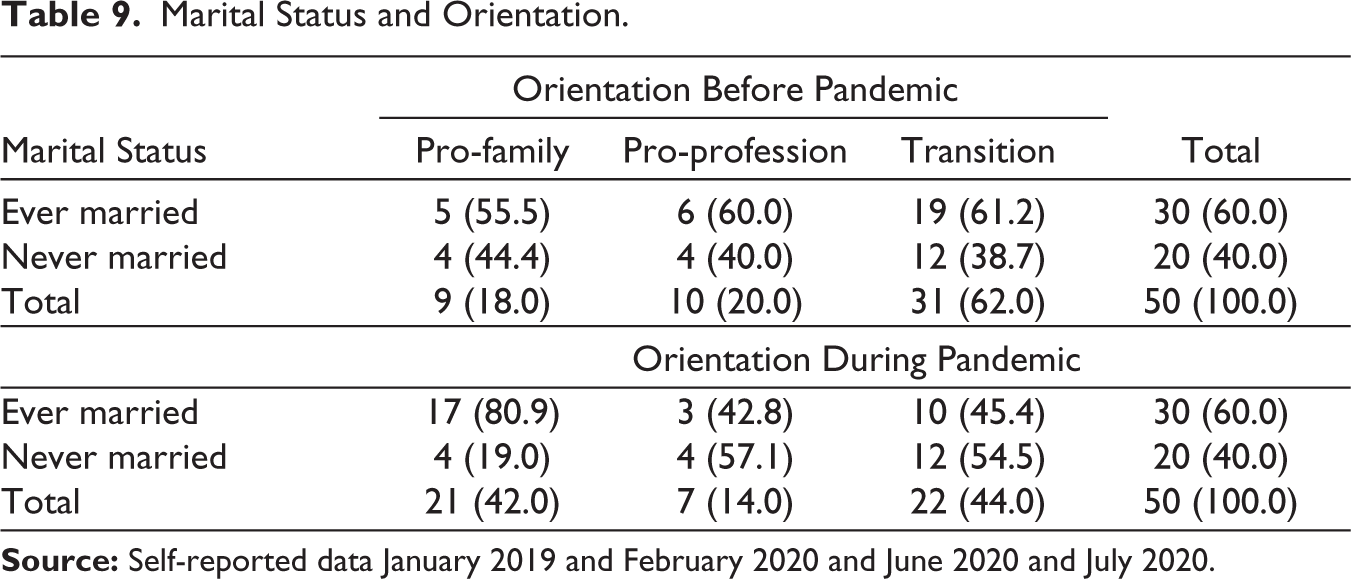
Table 9 shows that before the pandemic most women lawyers in the ever-married and never-married group were in transition. During pandemic there was a huge shift among ever-married group towards the pro-family orientation; however there are no changes in the never-married group. This supports the idea of the border theory and shows the requirement for facilities at workplace and support at home. Families need to contribute in order to help retain the women workforce within the legal profession. Makhija and Raha’s (2012) study also discusses the idea that the gendered concept of making women responsible for the childcare duties can be stopped by encouraging shared parenting. Also, Bacik and Drew (2006) stress that sharing of household responsibilities; can help women lawyers to remain in the profession. On this same context R (5), a 41-year-old lawyer, living in a nuclear family suggests,
Women need to break the traditional barriers of being solely responsible for household duties and childcare responsibilities. Women have higher worth that can take up challenges equally as men, stand on same footing and contribute equally.
Overall, 46% of the respondents belonged to the nuclear family. Within such families the household work is shared majorly between the working women and the maid. Men have fewer shares in the household work.
Absence of Family Support in the Time of Pandemic
During the pandemic the support from paid services was less; at that time the help received from the family was a boon for the women legal professionals. However, in many cases the burden solely rested on the women legal professionals, their increased presence in the home, in many cases led them to spend increased hours in household work. A study conducted during the pandemic also showed that the increased restriction has exaggerated the unpaid work time for women. This has been viewed with dissatisfaction and also the suggestion that men should contribute more towards the domestic chores to ensure gender equality (Craig & Churchill, 2021). Women lawyers unlike any other women professionals faced uncertainty as they had cases at hand but were not able to represent their client as the courts operated virtually and in a restricted manner. Thus they had been without work which pulled them towards the household chores. Social role theory suggests about women’s association with the care-giving and nurturing roles as an expectation of the society. Table 10 shows the sharing of duties during pandemic for the ever married women lawyers.
Marital Status and Support of Family During Pandemic.
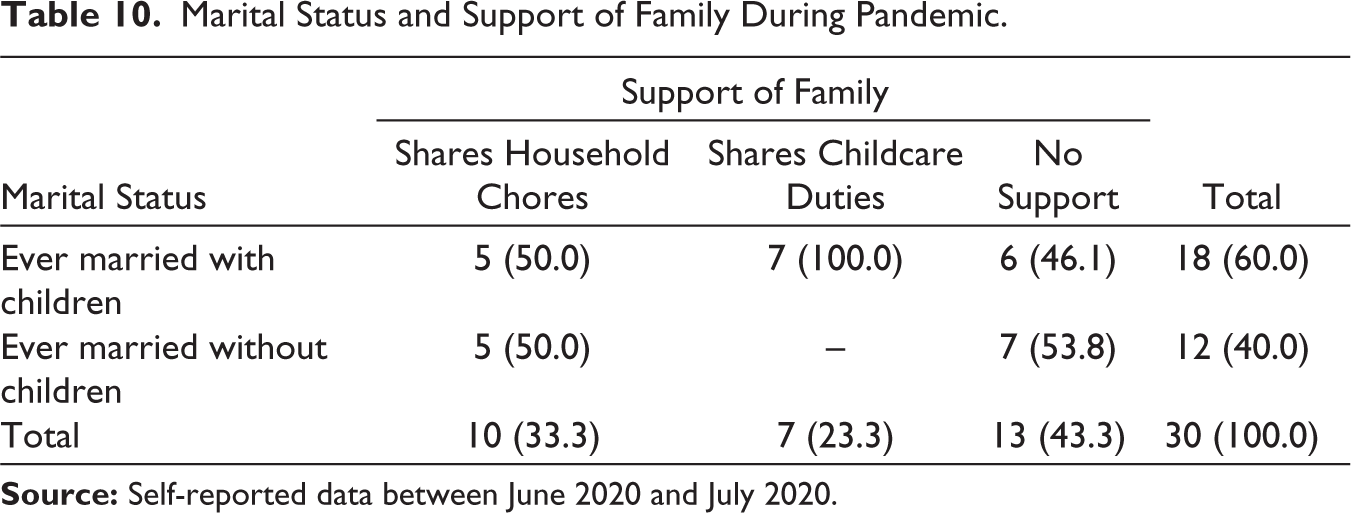
From Table 10, we can see that most respondents did not get any support from the family members during the pandemic. Also, it is observed that the childcare duties were fairly shared but household chores were less shared by the family. Earlier Table 9 showed the shift among ever-married women lawyers towards pro-family orientation. Both the tables complement each other to show that ever-married groups faced greater pressure.
Required Modifications to Cope with Work–Life Balance
Change in perception of the family and the workplace can be effective measures in dealing with the challenges that women legal professionals encounter. In this regard, R (11), a thirty-four-year-old lawyer, practicing civil and criminal laws, had many suggestions to give regarding making women feel equal within the profession. She said,
Family support is required. Within the workplace, some workshops can be organized or even seminars, which can explain the gender sensitivity issue. Women lawyers should be given more chances to prove themselves in the legal field. Society should not discriminate women in this field where it is the question of ability, knowledge and intellectuality but not based on gender.
Some of the women lawyers were aware that a good deal of effort fall on their shoulders as well. Women’s confidence and awareness is a requirement to deal with the challenges of work–life balance. R (55), a 45-year-old-criminal lawyer has been in practice for a lengthy period. She lives in a nuclear family. According to her,
Women lawyers need to consider themselves as just lawyers. It is only when women learn self-respect, is confident and determined and has faith in herself such perceptions about women lawyer’s ability will change.
The role of the family is important and so is the role of the senior lawyers and colleagues in maintaining a proper work–life balance. The border theory mentions about the role of the border keepers and other domain members. Border keepers are the spouses and supervisors, in this study the spouses and senior lawyers play the role of the border keepers, in-laws, children, colleagues form the other domain members. For the unmarried women lawyers their parents are the border keepers. The border keepers are the source of maintaining work–life balance but often they become the source of work–life conflict. During pandemic family members became a further challenge. Since the two borders came under one roof the stronghold of the family domain and the border keepers of the family became crucial in disrupting the balance.
Women lawyer’s concentration on their traditional roles and the less availability of work (like representing clients in court) during the pandemic has resulted in weakening the position that they had been creating over a lengthy period within the legal profession. This led many to leave their job or change from independent practice in court to working for law firms. The court premises hardly encourage proper work–life balance practices, thus making the role of the family increasingly important. The pandemic brought the home and the work under the same roof and work–life balance facilities became nil. Family’s support was limited thus increasing women lawyer’s household participation. The fact that many of them did not get to represent clients at all during the initial months under the first lockdown phase led to them contributing to the unpaid-labour. It can be understood that the idea of patriarchy in India still is a matter of concern for women lawyers. The patriarchal concept keeps the women tied to the idea of unpaid labour at home.
From Work–Life Challenges to Existential Crisis: A Discussion
The study aimed to understand the work–life challenges faced by women legal professionals and the impact the pandemic had on these challenges. Numerous challenges have been highlighted due to the role expectations, longer duration of work and less availability of work–life facilities. The pandemic also did not leave any time for the professional identity to develop as availability of work was less due to limited number of cases being disposed.
The opinion of the respondents varied according to the socio-demographic background. The pressure of the family is more on minority religious community than the majority community. Again the minority categories feel the pressure of being associated with incompetency. Feelings of exclusion were present in all women lawyers but more among the minority religion and category as reported by them through the narratives. However, due to the spread of COVID-19 most of the experiences for the respondents became similar regardless of their socio-demographic differences. During the pandemic, the positional difference among the women lawyers played a role in determining whether the respondents had cases at their disposal. It was seen that seniors had better chance of attending virtual courts, comparatively junior lawyers had to face a tough situation as their cases were reduced significantly and many did not attend any case at all.
Each of the themes is connected to and enhanced by the border theory. The border crossers travel from home to work and vice-versa, and the factors that can help in smooth transition and proper work–life maintenance includes arrangement of facilities at the workplace and the home, relationship between the border keepers and border crossers (Clark, 2000). Similarly, it has been found through the themes of the present study that when people cross the domains (home to work and work to home) there are a lot of role expectations that they attend. However, the pandemic brought both the domains together and thus ended the multiple roles to make the respondents concentrate on the gender expected role. Border theory mentions that internalising domain values helps participants form their identity. Adjusting to the longer work hours is one of such domain value (Clark, 2000). However, on one hand the women lawyers have been facing difficulties in maintaining their professional identity and due to the pandemic, most of them had lost their touch with the professional domain thus there was loss of their professional identity. Ultimately the border keepers like the family and the seniors play an important role as they can enhance the work–life balance. The pandemic brought the two domains together and the family domain became stronger, making it difficult to maintain the profession from the contours of the home. The women lawyers in the present study had limited identification with their professional domain, and it suffered a negative impact during the pandemic, thus destroying their work–life balance.
The conventional roles that women had been questioning are the exact areas in which they are forced to contribute most, thus becoming a part of unpaid labour. The results of the analysis also complement the ideas suggested in Second Shift by Arlie Hochschild. She points out to both paid and unpaid work with which women are burdened in dual earner families. Hochschild talks about the stalled revolution where she showcases society’s failure to become accustomed to the idea of women working outside the home. This is further associated with the lack of societal arrangement to simplify the burden of women within the dual earning home (Gorp, 2013). On a similar note it has been observed through Tables 6, 9 and 10 as well as the respondent’s narratives that they crave for facilities at workplace and family support in order to cope with the work–life issues.
The women legal professionals have different orientations towards their career. Women as a professional can be different from men. In this context, Hakim’s (1998) preference theory explains that women constitute a heterogeneous labour. However, it is also true that the pandemic changed these ideas. The societal and professional structures worked against the women lawyers and turned their preference towards the family. Understanding the work–life challenges during the pandemic requires keeping in mind women’s increasing contributions towards the home, which dragged these professionals towards a greater disequilibrium.
In Search of a Conclusion
In India, even for dual earner families, women continue to be the providers for childcare and domestic chores. Most of the work–life challenges can be resolved with proper sharing of household and childcare duties. There is an increased demand for more contributions from the male counterparts on issues of childcare and domestic work. This demand remained as a constant factor before and during COVID-19. Though it is not possible to introduce various changes within the premises of the High Court, but certain measures can be taken. There is requirement of making the working environment women friendly. The provision of a crèche or day care facility is essential, as this can solve the issue faced by many women lawyers who are mothers. As per the present context it becomes important that some policies should be considered for the women who are moving out of paid labour. Further research work needs to be carried out in this area. New dimensions can be explored regarding COVID-19 and the condition of women lawyers. These steps and considerations can help in retaining the female talent within the legal profession.
Footnotes
Declaration of Conflicting Interests
The authors declared no potential conflicts of interest with respect to the research, authorship and/or publication of this article.
Funding
The authors received no financial support for the research, authorship and/or publication of this article.