




Abstract
This article analyses Argentina’s contemporary religious field. On the basis of a statistical study on beliefs and religious attitudes, the authors reflect on a wide range of issues. They address the consequences of secularization in Argentine society, new configurations in how people believe and practise religion, shifts in religious identification, the religious diversification process, in which believers fall off the institutional frame, and, finally, people’s on religious intervention in public issues (such as education, sexual health and family planning).
Introduction: The gradual decline of Catholicism in Argentina
Argentina is one of the most populous countries in South America. 1 Its population is distributed across six regions:
Metropolitan area (city of Buenos Aires and its surroundings)
Pampa region (rest of Buenos Aires province, provinces of Santa Fe, La Pampa and Córdoba)
Northwest region (provinces of Salta, Jujuy, Tucuman, La Rioja, Catamarca and Santiago del Estero)
Region of Cuyo (provinces of Mendoza, San Luis and San Juan)
Northeast region (provinces of Corrientes, Entre Rios, Chaco, Misiones and Formosa)
Patagonia (provinces of Rio Negro, Neuquen, Santa Cruz, Chubut and Tierra del Fuego).
The Metropolitan area and Pampa region are the most populated of all, while Patagonia is the least populated. Taking into account the historic evolution of the population distribution, the city of Buenos Aires and its surroundings have increased in population density more than any other region over the past century. Today, the city constitutes the most populous urban centre in the country. The Northwest region, which has the highest poverty levels, decreased in population during the 20th century, from being the highest populated region in 1869 to holding only 11.4% of the Argentinean population today. Argentina’s population is now concentrated in the cities, and particularly in Buenos Aires and its outskirts: in 2001, almost a third of the Argentine population lived in the Metropolitan region. 2
As regards educational level, 1.9% of the population over ten years old are illiterate and 37.1% have reached secondary school (whether the cycle was completed or not) – the basic level of education required according to 2006 legislation. According to the 2001 census, 4.4% of the population have undertaken university studies. Population distribution by educational level shows that education is still seen as a means of social mobility (Giménez Béliveau et al., 2005).
From the viewpoint of religion, Argentina has been predominantly Catholic since the latter half of the 19th century. Arriving in what would later become Argentinean territory with the Spanish conquerors, Catholicism expanded with the evangelization of the aboriginal groups and the advance of Spanish settlements in the region. The colony’s Iberian political system articulated political and religious institutions according to the model of Christendom (Di Stefano and Zanatta, 2000), which superimposes political and religious symbols and functions. The politically conservative and economically liberal State model reigning in the last decades of the 19th century passed secularist measures such as the civil registry of birth, matrimony and death (1884) and a free public education law, which also regulated confessional education (1884); total separation of Church and State, however, has not yet been legislated. During the liberal period, the population remained true to Catholicism, which was broadly extended and culturally present but lacking in clergymen.
In the 1930s, the Catholic Church became stronger, as the liberal state model headed for crisis. Within Catholicism, which is definitely not a homogeneous social space, a certain current prevailed: ‘integral Catholicism’ (Mallimaci, 1988a, 1988b; Esquivel, 2004; Giménez Béliveau, 2005). The Catholic Church steadily took over public and political institutions by getting Catholic men appointed to key positions in political parties, unions, universities, factories and ministries.
In this way, the Catholic Church managed to build a web of influence, which developed throughout the time of the military governments (1955–1958; 1966–1969; 1976–1983), broadening its territorial and educational structures. This Catholic predominance, visible in the construction of churches and the presence of Catholic symbols in schools, public areas and public health centres, began to weaken towards the end of the 1980s, after the fall of the last military dictatorship of the 20th century. Non-Catholic groups emerged to claim their share of believers in the popular sectors (Oro and Semán, 2000). These religious groups, which challenged the dominance of Catholicism in recent Argentine history, comprised a renewed religious field that had not been statistically documented before the present study.
In the 20th century, there were two national censuses that included religious matters: in 1947 and in 1960. In 1947, 93.6% of the population was considered Catholic, while results from the 1960 census show a figure of 90.05%. No subsequent census has included religious inquiries and no significant data could be collected on Argentineans’ religious practices or beliefs after 1960. In 2008, a group of researchers from universities and research centres in Argentina 3 carried out the first survey on religious beliefs and attitudes in Argentina, whose results were published in 2013 (Mallimaci, 2013) and are presented below.
In this study, we present a multi-stage probability sample, with systematic random clusters selected in the first stage and, subsequently, gender/age parameters. The margin of error is +-2% and the confidence level (validity) is 95%. The sample comprises 2,403 Argentine residents. Data was collected during January and February 2008.
The beliefs of Argentinean people
The First Survey on Religious Attitudes and Beliefs provides significant data regarding the different ways in which adult (over 18 years old) Argentinean inhabitants relate to their beliefs, in particular religious ones.
The first data that strikes us as relevant is that Argentina is a nation of believers: nine out of ten inhabitants believe in God. In comparison to Uruguay, a secularised country, where the percentage of non-believers is as high as 23.2% (Da Costa, 2003), in Argentina the percentage of non believers is low: only 4.9% do not believe and 4% are doubtful; that is, only 9% of the population are agnostic or atheist. If we further analyse this data in the light of social categories, at first sight we encounter the ‘classic’ paradigms of capitalist modernism. Women seem to believe in God more than men (93.6% vs. 88.3%), the elderly more than the young (96.7% vs. 85.1%), the less educated more than the university-educated (95.7% vs. 84.5%) and widowers more than the divorced (96.7% vs. 79.8%). The Northwest region is the most religious region (98.4% of the population here believe in God), and the Metropolitan region (Buenos Aires and surroundings) shows the highest rate of Indifferents (18% vs. 1.8% in the Northwest region). The data on Cuyo and Patagonia also shows regional differences, while, in general, small cities have more believers than large ones.
In analysing the meaning people give to their beliefs, we can perceive that although most of them believe in God, multiple symbolic universes are set up around this belief. For example, God is regarded by subjects: as a Supreme Being (37.2%), as the Creator of the world (27.3%) and as a Father (21.2% – this idea of God is stronger among Evangelicals than Catholics). These representations of a distant, authoritarian or benevolent God are often combined, as is typical of the Judeo-Christian culture that is widespread in Argentina, where naturalism, transcendentalism and humanism are all part of the concept of deity.
The moments and circumstances in which people turn to their deity, as well as the idea of God, also vary. Most commonly, people turn to God in times of suffering (45% of believers). Those who do so may be seeking compensation when they cannot get answers from society or the State, or simply because suffering is in some ways vital to Christianity. Perhaps, as stated by Geertz (1973), religions face the problem of suffering and and provide paths of symbolisation to make pain and sorrow more tolerable. Turning to God in times of suffering is more common among Evangelical believers (60%) than among Catholics (45%), revealing the importance of suffering in Evangelist preaching. (It is worth remembering the Universal Church of the Kingdom of God (UCKG) motto: ‘Stop suffering’.)
What traditional religious frames apply to Argentinean beliefs? While most Argentineans are (still) Catholic, other religions’ share of believers has broadened and diversified. A total of 76.4% of Argentineans claim to be Catholic and 4 9% Evangelist 5 , while 11.3% are Indifferent. 6 (Among the Evangelicals, 12% identify themselves as Protestants 7 while 88% are Pentecostals. 8 ) The rest are distributed among Jehovah’s Witnesses (1.2%), Mormons (0.9%) and other religions (1.2%), such as Judaism, Islam, Umbanda or Africanism, Buddhism and Spiritism (see Figure 1).
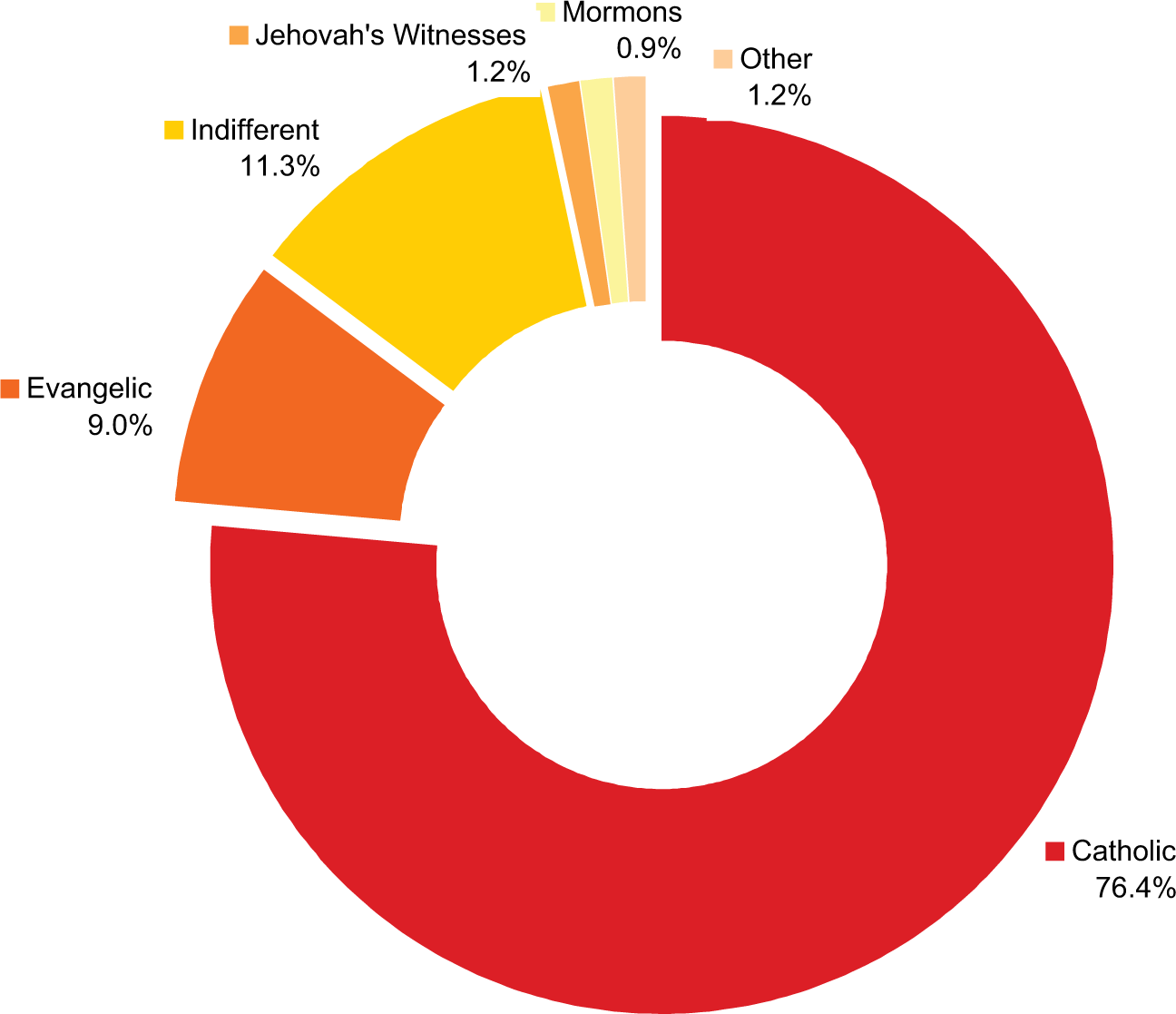
Religious belonging in Argentina.
The data collected clearly reveals the pluralism and diversity of the religious field, together with the preservation of a long-standing Judeo-Christian culture, which has deep social roots. Nevertheless, the proportion of believers in one faith or other is not the same across the social spectrum. We can identify significant variations according to age, gender, educational level and place of residence.
Let us start with educational level – which, according to statisticians, is one of the factors that best work as an accurate measure of differences in a social structure. Looking first at the illiterate category: contrary to common prejudices expressed in the mass media, the proportion of Evangelical believers among the non-educated hardly exceeds the general total (10.4% among the illiterate vs. 9% of the total). Even more notable is the fact that among non-educated people, more claim to have no religion (11.2%) than regard themselves as Evangelical (10.4%). We can note a tendency in which evangelism decreases with an increase in educational level, but the peak of attachment to Evangelist churches is shown in those who have completed elementary education (11.8%). The share of Indifferents grows toward the opposite ends: at the lowest educational level they make up 11.2% and at the highest level 17.4%, but the percentage falls in the middle levels to 10.2%.
It seems that there is increasing deinstitutionalisation among the non-educated, where we can see a protesting attitude that leads to the denouncement or rejection of religion as a whole. From a certain viewpoint, a symbolic protest against the predominant religion is more clearly expressed by a complete rejection of religion than by a shift to another religion. Another perspective would be to suppose that this group lacks the necessary social and symbolic capital to participate in the institutional practices of the Catholics and Evangelicals. It is also possible that we are facing a population of people who ‘doubt’ or ‘fear’ to say they belong to a religion that is different from the predominant one. This leaning of a group that we could name ‘disaffiliated’ or ‘vulnerable’ or belonging in one way or another to weaker social networks, is also shown in other similar groups, such as the unemployed: 86.7% believe in God – almost five points beneath the national average − 9.4% do not, and 4% are in doubt on this point.
Now, we will focus on the different age groups and their relation to religious beliefs. Among the elderly, few are Evangelical. This could be explained first by the relatively recent expansion of the Pentecostal option (which has now been taken up by the majority of the Evangelical believers) and second that the elderly tend to resort to their root beliefs. The latter reason, however, may need ethnographic studies to be proven.
Another interesting fact is the age differences among the Indifferents: the proportion is highest among people aged 18–29 (17.2%) and drops as age increases – to 9% in the middle-aged (people who are 30 to 64 years old) and 7.1% in those aged 65 and over.
If we consider the size of the places in which people live 9 , we can see that religious identifications differ depending on size of conurbation. For instance, we find more Evangelicals in big metropolises and medium-size cities (10.3%) than in small towns (5.6%). At the same time, the rise of indifferent subjects (atheists, agnostics and non-religious) is directly proportional to increases in the size of the town they live in. The contrary is observed among Catholics: the figures are higher in smaller towns. In big cities, where we find pre- and post-modern traits converging in a complex way and where geographical proximity deepens social distance, some special characteristics should be taken into account. Those indifferent to religion in Buenos Aires and its outskirts represent 18% of the population, while 69.1% are Catholics and 8% are Evangelicals. We can conclude that, contrary to the view put forward by much of the media and the assumption of many lay people regarding these matters, the Evangelical view is not exclusively present in the poorer or non-educated sector or in small towns. Among the non-educated and in large cities, the Indifferents surpass Evangelicals in number (see Figure 2).
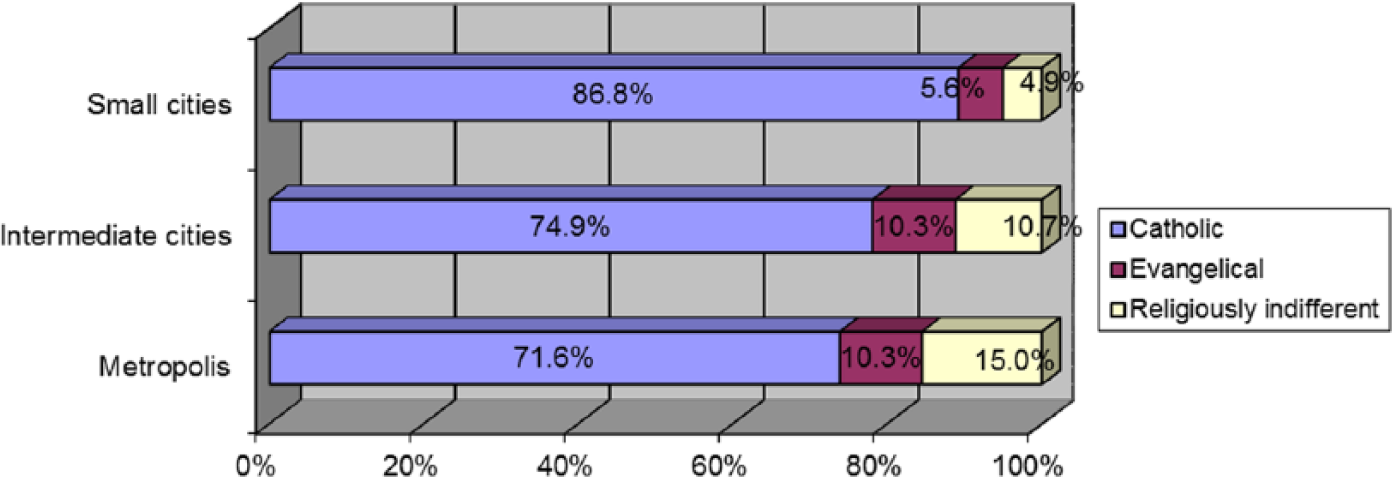
Religious affiliation by city size.
If we analyse Argentinean people’s beliefs beyond general belief in God, we can see that Catholic and Christian culture is reaffirmed in most of the population (see Figure 3). Here, it is important to mention the contemporary phenomenon of belief in energy, resulting from the diffusion of New Age ideas.
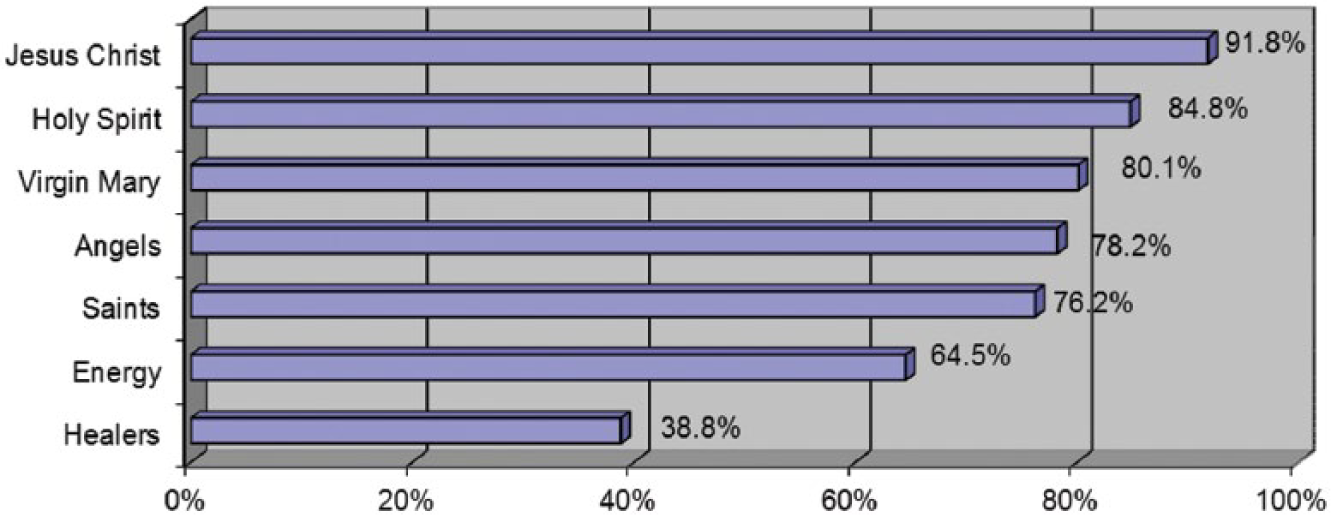
Beliefs ranking.
Autonomy, individualization and institutional crisis
This study shows up remarkable differences with respect to some controversial issues, not only between Catholics and Evangelicals, but also between the more and less conservative types of both, and even among Catholics.
Relation to deity
When respondents were asked about a series of statements deriving from doctrinal principles, we found that the opinions expressed by the majority clearly departed from the norms established by religious institutions and that a significant number of participants related to the divine in ways that were not confined to sites of worship and did not involve any mediation by religious specialists.
In terms of the different ways in which Argentineans relate to their deity, we find processes of religious individualisation and detachment from the religious institution. Believers relate to their God and their beliefs on their own, and when deciding upon their religious practices and behaviour they do not seem to consult a specialist in their religion. It is relevant to note that, from a historical perspective, the religious beliefs of Argentineans are not necessarily rooted in the modality of the parish community, in which a clerical authority regulates those beliefs (Hervieu-Léger, 1986) and then crumbles as secularisation advances. Historically, the Catholic Church has developed widespread influence on the basis of initiation and transition rites more than through active participation in the parish community. This situation may derive from difficulties in recruiting specialists, geographical and symbolic distance, and also the colonial Christendom model. Consequently, the Catholic culture in Latin America has been diffuse, broadly extended and little regulated by institutions.
This gap between the religious institutions and the believer’s daily life is deepening and can be seen in three convergent processes. In the first place, believers resort less and less to institutional intervention. Second, participation in religious organisations, while higher than in other social organisations, is in truth far less than the figures cited by religious leaders. Third, believers do not attend religious services in massive numbers.
Looking at the first tendency, figures showing institutional detachment are rather eloquent. The main type of relation with God is the personal approach: this is stated by 61.1% of believers, a proportion that rises among the Catholics (64.8%) and declines among the Evangelicals (41.4%), yet represents nearly half even of the latter. We are in the face of a cultural phenomenon that pervades all religious groups. This independence from institutions increases as the educational level rises (67.2% among those having completed secondary education and 73.5% of those with a university degree). Among cohabiting or divorced individuals, whose participation is not authorised by the Catholic Church, this autonomy reaches 70%. A believer is still a believer, even with little or no institutional intervention at all. In all, 23.1% of Argentineans relate to their religion through institutions; the percentage is slightly lower among Catholics (22.3%), with double that percentage found among Evangelicals (44.9%). Institutional mediation decreases as educational level rises, reaching 30.4% in the non-educated sector, while it is present in only 15.8% of those holding a university degree. See Figure 4.
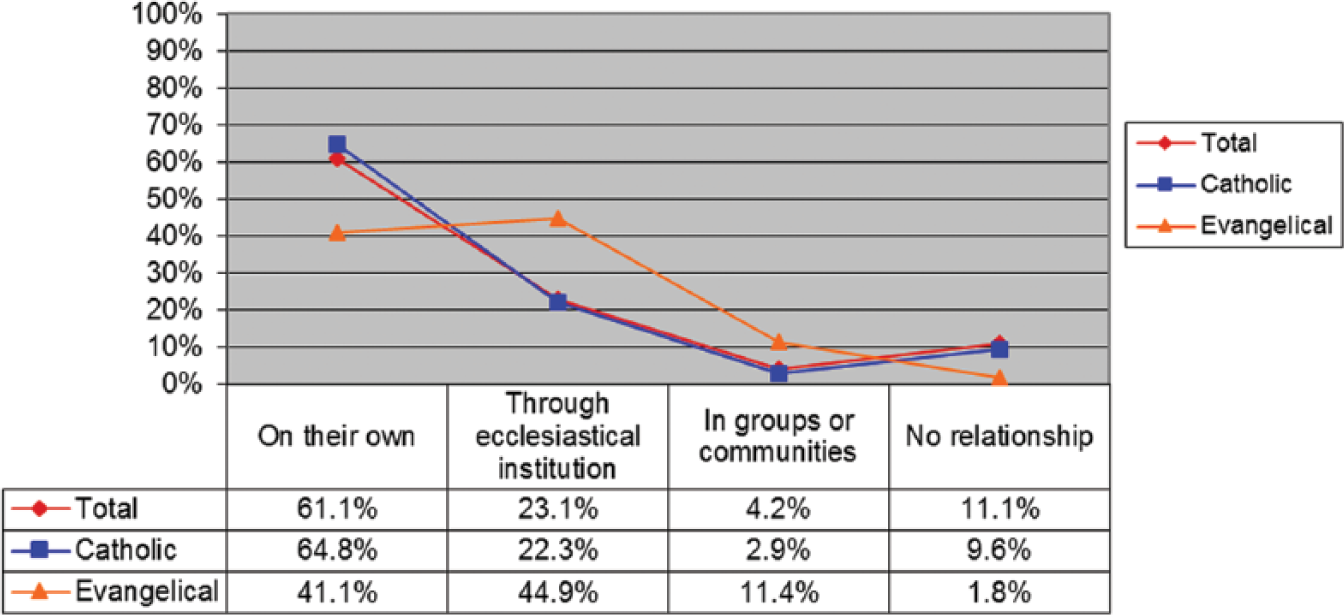
Relationship with God.
If we focus on the largest religious group in Argentina, three-quarters of Catholics deal with their beliefs without institutional intervention (64.8% of those who declare themselves to be Catholics have their own, personal approach and 9.6% state that they do not have any relationship at all with God). Among those who claim to be Evangelicals, however, the relation with institutions is stronger: 56.3% resort to religious institutions (groups and institutions), while 41.4% claim to have a personal approach. Very few Evangelicals say they do not relate to their deity (1.8%).
In response to the statement: ‘You can be a good believer without going to the church or temple’, in total, 83% of respondents totally or partially agreed; only 14% disagreed (41% among Evangelicals), who require the institutional presence as a means to reach their God (see Figure 5). The Evangelical data strengthens the idea that Evangelicals regard the religious community as a necessary condition for religious practice.
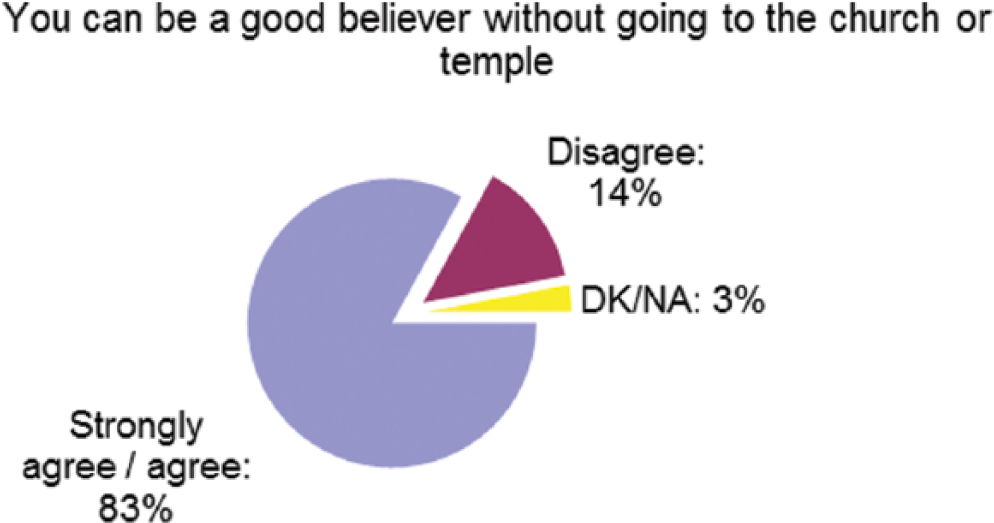
Church/temple attendance.
The number of Catholics who say they have no relationship with God at all (9.6%) is treble that of Catholics who relate to God through a group or community (2.9%). Catholics organised into groups or communities are almost non-existent among the non-educated (1.5%) and those with a university-level education (1.3%), while their percentage increases among those having completed elementary school (5%) and remains stable in those with secondary education (4.9%). Daily interaction with ecclesiastical institutions is concentrated in the middle social strata.
Regarding the second process, participation in religious organisations, we observe that it is rather low among the population in general, just as it is in the political, social and cultural areas. A total of only 6.5% of the population claims to participate actively in religious groups, a number that declines among Catholics (5.7%) and significantly rises among Evangelicals (15.8%). This pattern is repeated among those who claim to participate in church activities: the general percentage is 5.8%, while it is 4.9% among Catholics and 15.7% among Evangelicals. Female predominance in participation in religious activities becomes clear if we add up the participation rates in religious groups and institutions: women’s participation amounts to 17.1% while men’s is 6.9% (the general average is 12.3%). Participation in religious organisations is lower than claimed by religious leaders. Nevertheless, it is notable that Argentineans participate in religious organisations more than in any other social group: 4.5% participate in school associations, 2.5% in unions, 2% in NGOs and 1.9% in political parties.
As for the third process – daily religious practice – attendance at religious rites is another variable that shows people’s detachment from ecclesiastical institutions. In all, 23.8% of the subjects claim to often participate in religious ceremonies while 26.8% never do; between these two extremes, almost half of the population maintain a cool, vague relationship with their beliefs (Cipriani, 1998), only occasionally attending religious ceremonies. In the next section, we will deepen the idea of autonomy of conscience.
Education, sexuality, contraception, abortion and worship financing
Another indicator of independence could be seen as a sign of our times: 71% of Argentineans think that their children should choose their own religion or belief, while only 26% state that they should have the same religion as their parents. The first leaning is more common among Indifferents (93%), the university-educated (81%) and those residing in the Metropolitan area (81%) and Patagonia (82%). Evangelicals (34%), the elderly (32%), the less educated (36%) and those living in the Northwest region of the country (45.8%) are more prone to think that children should follow their parents in religious matters. See Figure 6.
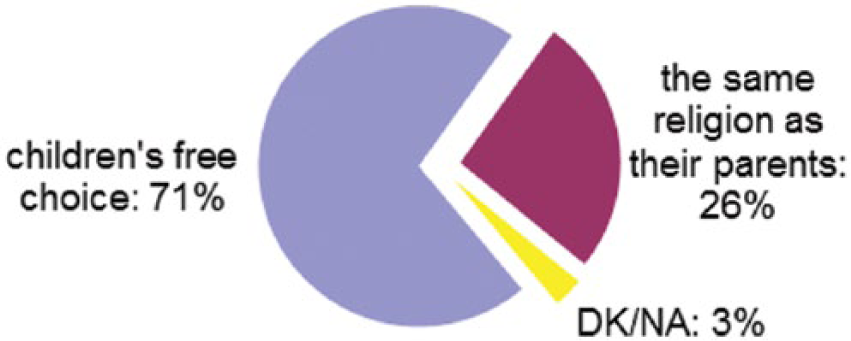
Children’s religion and beliefs.
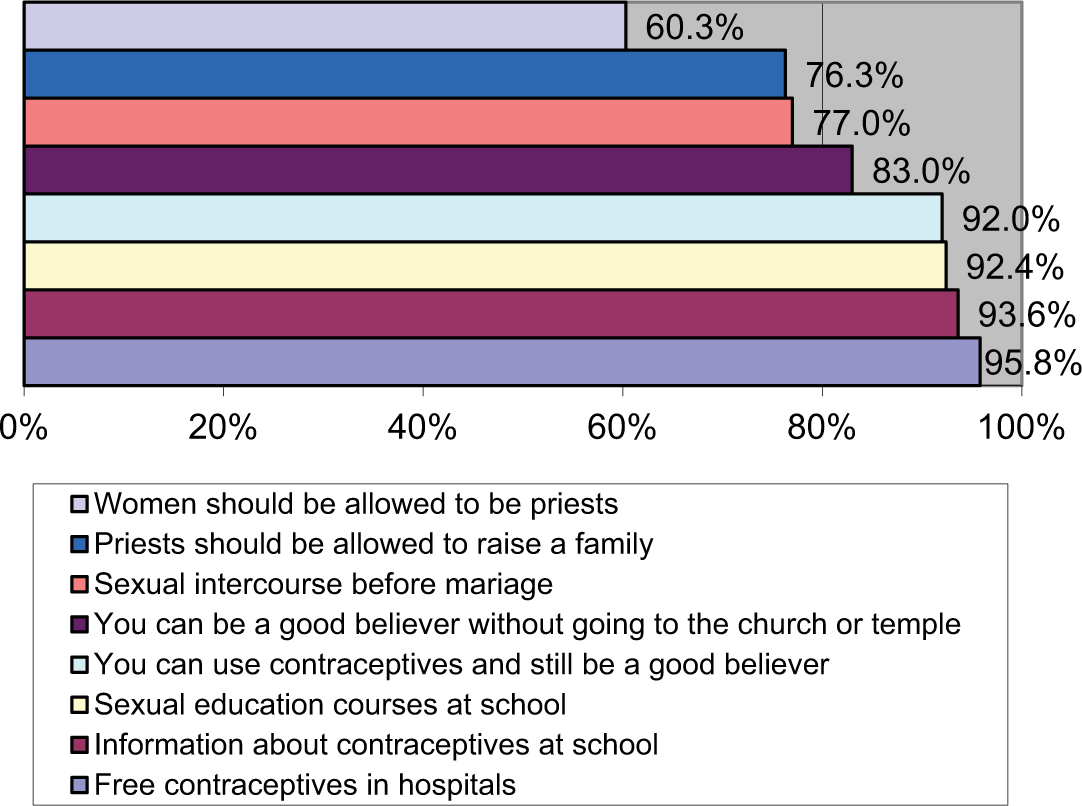
On a smaller scale, the rate of approval of the following statements also reinforces the perception of people’s freedom of conscience over the premises of the religious institutions. A total of 76.3% agree with letting clergymen have their own family. At the same time, 60.3% think that women should be accepted into the priesthood, as is the case in the Anglican Church and in many Pentecostal churches in Latin America. At this point, religious adherence, educational level and place of residence also affect the responses, as Evangelicals, the less-educated and inhabitants of the Northwest and Northeast share these opinions in a lower proportion. See Figure 7.
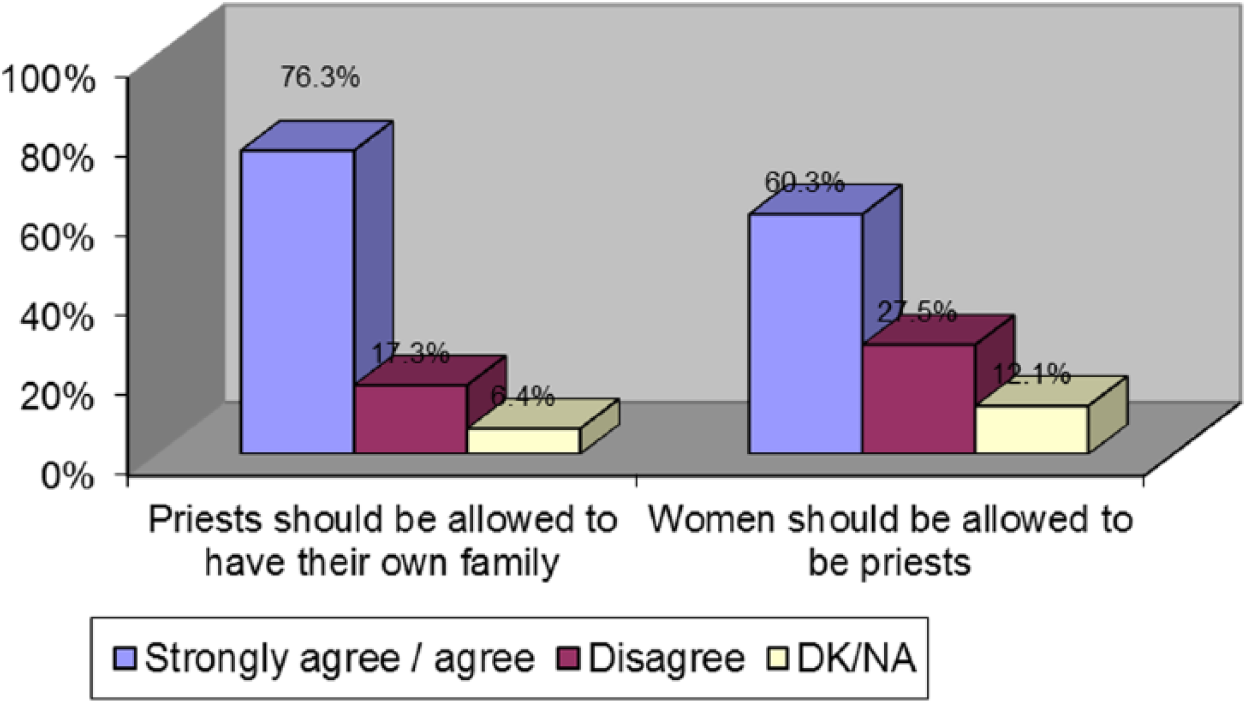
Priests.
Sexuality is another area in which the private decision is evidently defended. Secular institutions such as the school and the hospital, rather than the church, are regarded as the principal sources of information and education about what is correct. In total, 77% of subjects think that pre-marital sexual intercourse is a beneficial experience. While 89% of Indifferents expressed approval, among Evangelicals the level of approval plummets to 50%. In the Northwest region, the figure is 68.3%.
Almost the entire Argentine population (92.4%) supports the sexual education of students at school. Only 6.2% disagree with this policy. Similar results were observed with respect to whether schools should provide information on contraceptive methods: 93.6% responded affirmatively while only 5.8% expressed disagreement. Similarly, 95.8% are in favour of hospitals, clinics and health centres providing free contraception. See Figure 8.
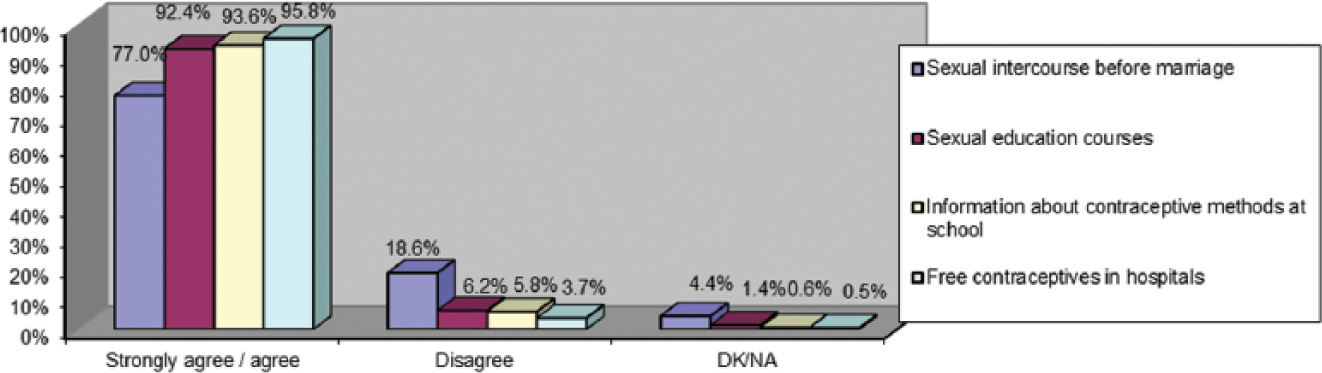
Sex and contraception.
These opinions reflecting a significant level of secularisation in society do not, however, imply a loss of religious belief. ‘Religion without ecclesiastical institution’, ‘believing without belonging’ (Davie, 1994) and ‘believing in their own personal way’ (Parker Gumucio, 2004) are phrases that describe the outcome of a complex process that combines spirituality, in terms of beliefs and practices, and institutional detachment.
As is noticeable from the data, the presence of an extended Christian culture, represented by widespread belief in Jesus Christ, the Holy Spirit, the Virgin Mary and the Saints, does not necessarily imply acceptance of religious specialists’ intervention in the regulation of private life issues, where autonomous thinking is more marked and ideas from other fields – namely, the scientific – are more often adopted. Le-gitimacy in the religious sphere is not projected onto other aspects of social life. Only 7% of Argentinean society thinks that the State should consider the opinion of priests and bishops when defining public policies in contraception and birth control. Once more, Evangelicals and Northwest inhabitants differ from the average; 18% would prioritise the religious leaders’ positions. At the opposite extreme, just 4% of Metropolitan inhabitants think that clergymen’s opinions should prevail in these matters. See Figures 9 and 10.
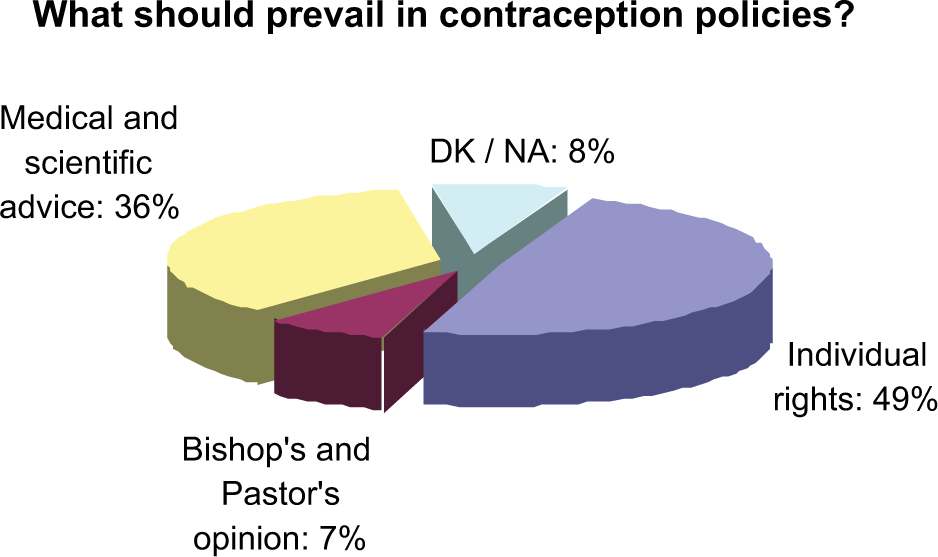
Policies on contraception and abortion.
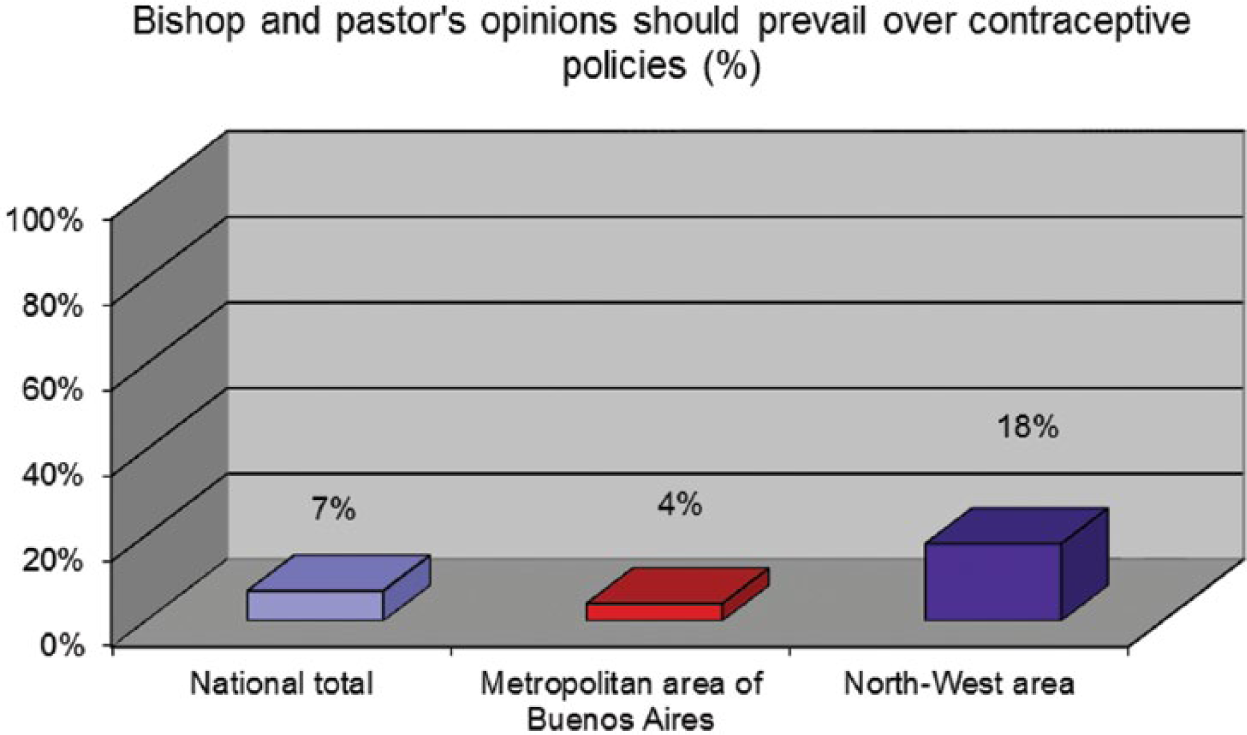
Policies on contraception and abortion by area.
Similarly, 92% of the population thinks that the use of contraceptives does not affect the question of whether one is a good believer, which clearly contradicts Catholic and Evangelical ecclesiastical directives. In the Metropolitan region and Patagonia, this conviction is even stronger. See Figure 11.
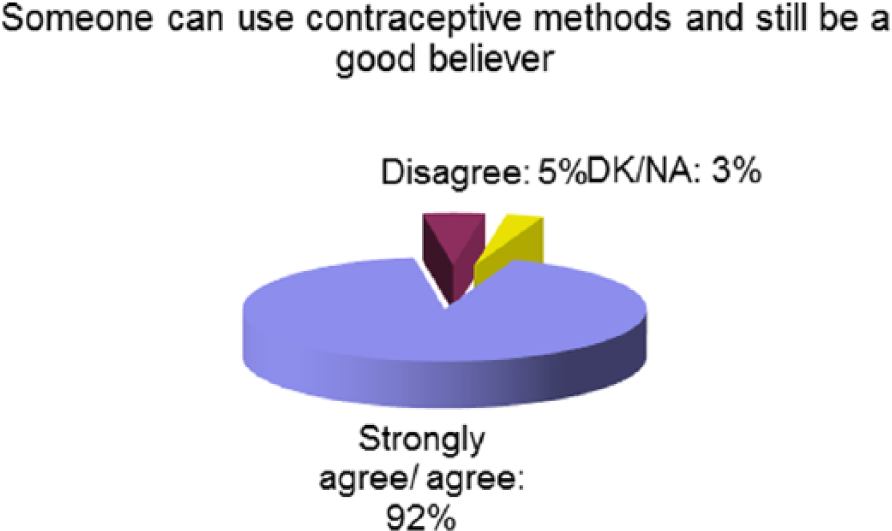
Contraception and belief.
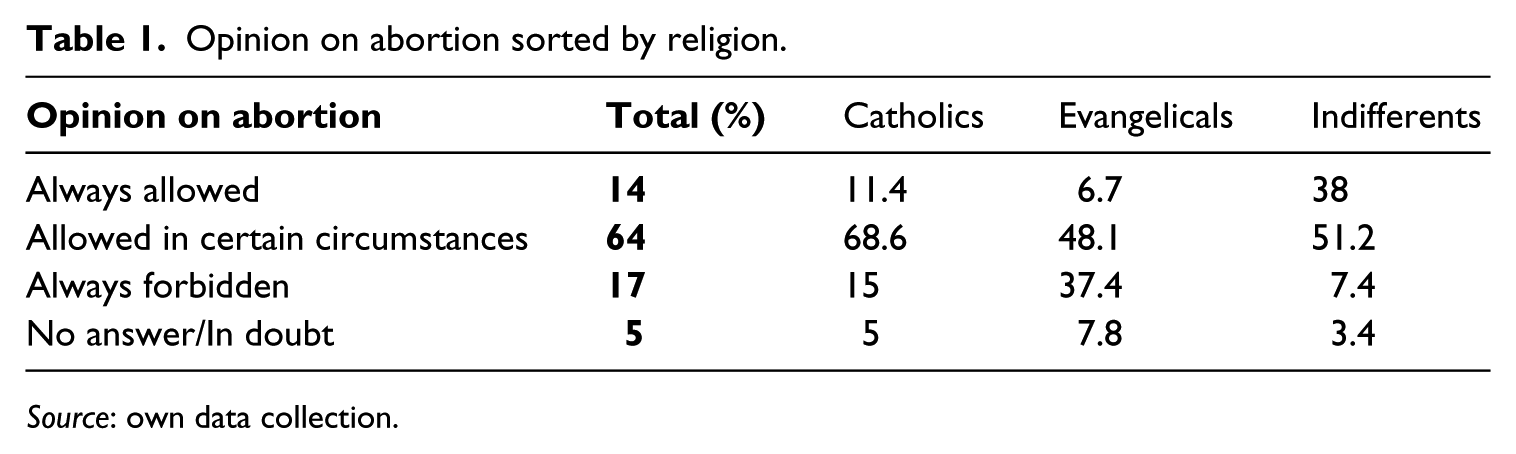
Abortion is particularly controversial in Argentinean society. 10 Although there is a diversity of opinions, 64% agree that it is right for abortion to be legal only in certain circumstances (in the case of rape, if the mother’s life is in jeopardy or if there is foetus malformation). In other words, two out of three Argentines support the present legal framework, which allows abortion in such circumstances, and are also in favour of abortion in situations not yet legally provided for. Another 17% of respondents state that abortion should be forbidden in all cases, a view which is aligned with that of most of the religious institutions; meanwhile, 14% think that women should have the right to choose abortion when they see fit, in accordance with the claims of feminist organisations.
The subject’s religion is a defining factor in opinions on the issue of abortion. Although, in the general population, the percentages of those who support abortion without restriction and those who reject it regardless of the case are similar, the distribution varies among Evangelicals. Only 6.7% of that sector supports the total legalisation of abortion, while 37.4% would not accept it under any circumstance. On the opposite side, those who are indifferent to religion show an inverted proportion: 38% support women’s right to decide what happens to their own body and 7.4% oppose abortion without exception. The percentages among Catholics are similar to those of the general population. See Figure 12.
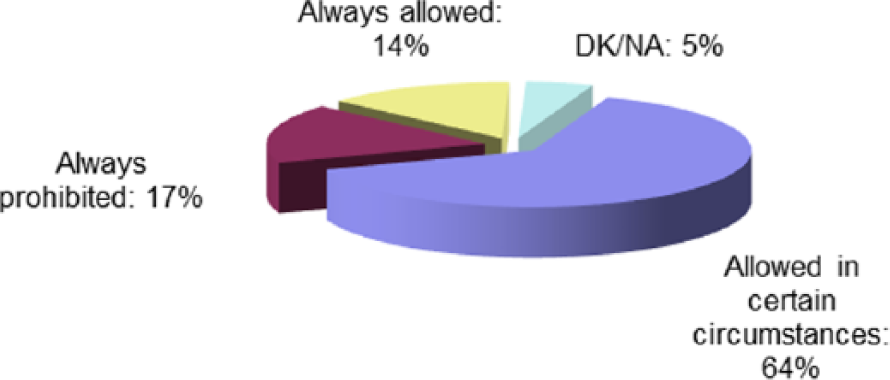
Abortion.
Opinion on abortion sorted by religion.
Source: own data collection.
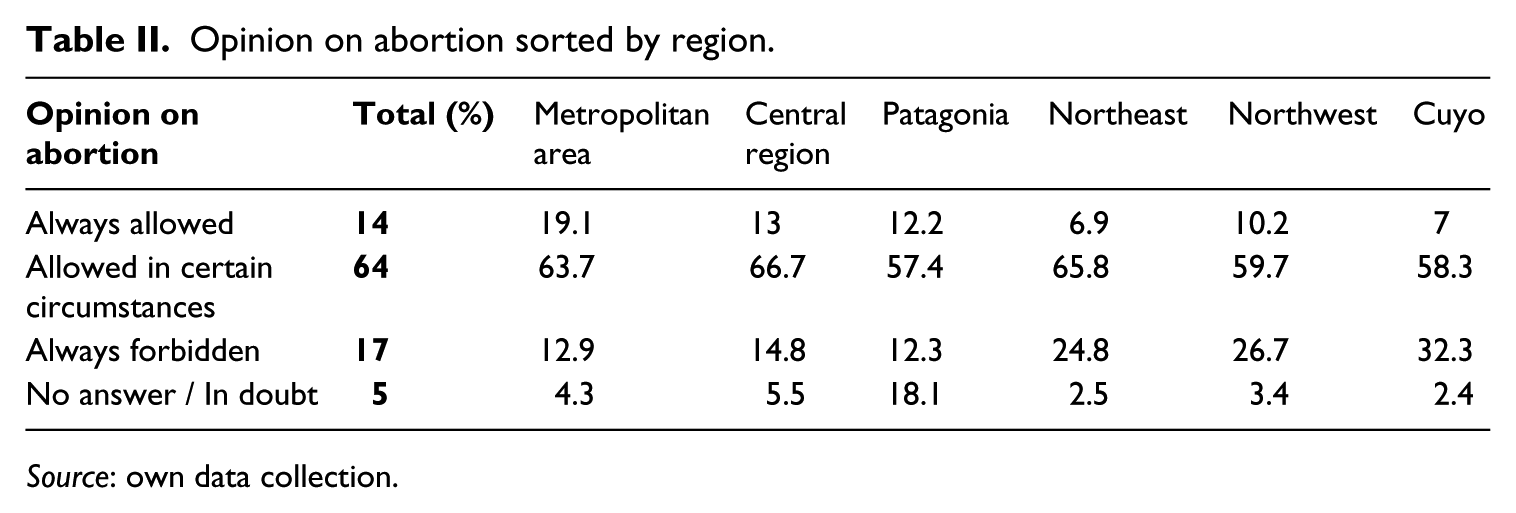
It is also worth mentioning the analysis made by region. The Northeast, the Northwest and especially Cuyo show the highest percentages of rejection. In contrast, the Metropolitan area shows higher ‘permissiveness’ on the issue.
Opinion on abortion sorted by region.
Source: own data collection.
At this point in our study of controversial issues, it is appropriate to make a transverse analysis in order to identify the areas of highest convergence of opinions within the Argentinean society. In general, although Argentineans approve more highly of religious institutions than of civil or political ones, when it comes to decisions on private matters, they are increasingly likely to follow the advice of non-religious institutions. For example, the school and the hospital are regarded as legitimate and appropriate institutions for the provision of information on sexual education and the free distribution of contraceptive methods. Nevertheless, the religious institutions continue to strive to contribute to the symbolic universes they have constructed in both the private and the public spheres through their ethical regulations. See Figure 13.
Summary.
The State and the Church
In Argentina, not all religions have the same constitutional status. Catholicism has a privileged position on the basis of article 2 of the Charta Magna, which establishes that the State must sustain the Roman Catholic Church. Also, the Civil Code highlights that the Catholic Church is a public entity, while other worship is private. In addition, non-Catholic religions must be registered with the Secretaria de Culto de la Nación (National Worship Agency) in order to legalise their religious practice. Given this institutional frame, it is relevant to collect the opinions of Argentinean society on certain issues regarding the relationship between the State and the Catholic Church, such as the State’s financing the Church through public funds.
About 60% of Argentineans disagree with the idea that the State should finance the Catholic Church, as it does presently. However, 34% support this exclusive funding (see Figure 14). Unsurprisingly, rejection levels increase to 90% among Evangelicals and those indifferent to religion, while Catholics are the most supportive in this respect. Men are more opposed than women to the Catholic Church’s privilege, as are the young more than the elderly, the highly educated more than the less educated and residents of Patagonia, Cuyo and Buenos Aires more than those living in the Northeast region.
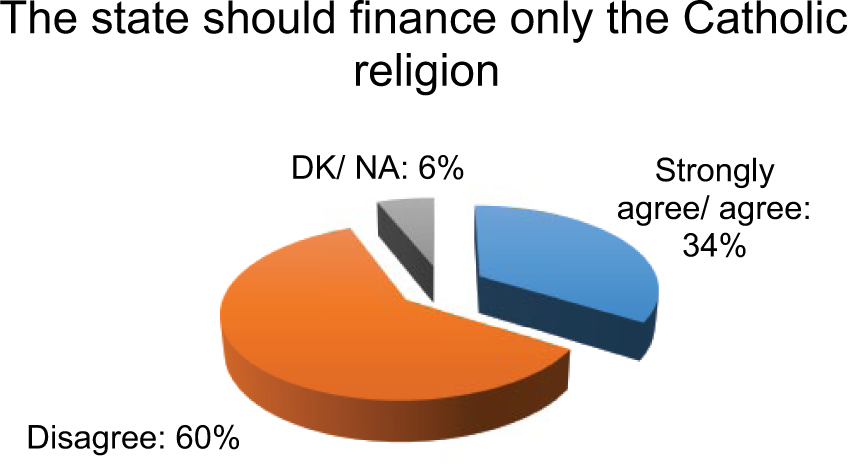
State funding of Catholicism.
In answer to the question whether the State should finance all religions, 51% strongly agreed and 43% disagreed, indicating different perspectives on connections between the State and the Churches. It is worth underlining that 72% of Evangelicals support the idea of the State contributing economically to religions, against 29% of the Indifferents. See Figure 15.
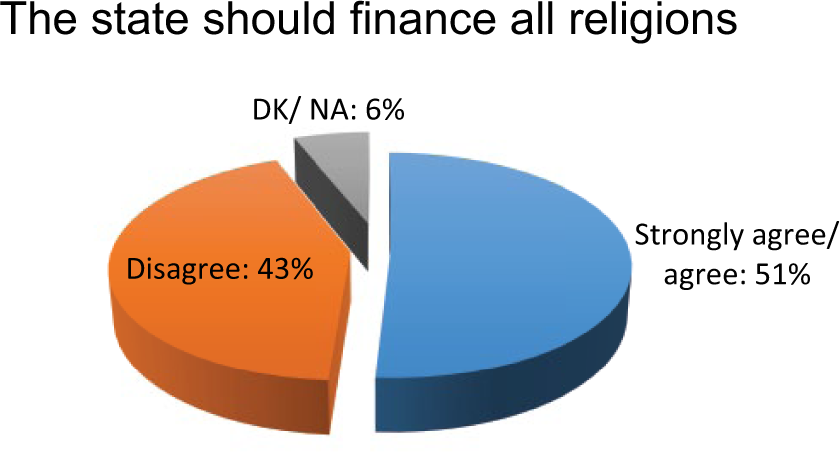
State funding of all religions.
If we associate these figures with the ones derived from the previous charts, we can perceive a scenario in which Evangelical groups advocate religious equity in the sense of a pluralism of movements rather than a stronger secular state.
When seeking to differentiate between the areas to which the State should contribute economically, we found that answers varied. The payment of bishops’ and priests wages’ is ‘hardly’ approved (27% of the population). Contribution to the Catholic Church’s social work is widely accepted (75%), as is the maintenance of cathedrals and temples (54%). Consequently, although there are some differences between areas, it can be seen that Argentine society tends to approve of public financial support for the social activities carried out by religious institutions and the preservation of its property on account of its cultural value. See Figure 16.
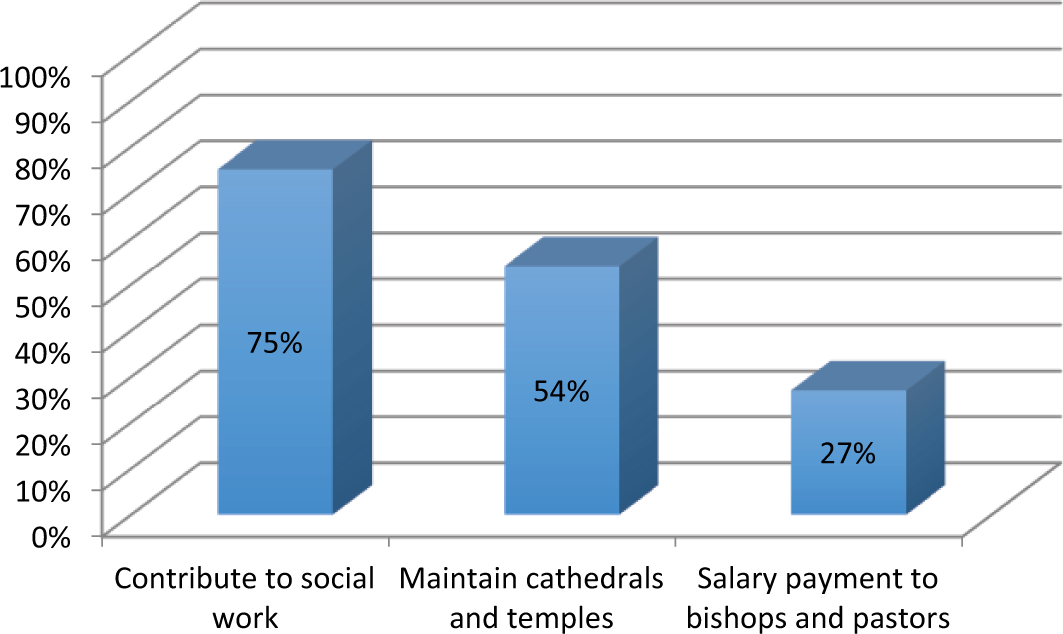
Apportionment of state funding.
Additionally, we may point out that in the Northeast and Northwest regions, more than 40% agree that the State should pay for bishops’ and priests’ wages. In both regions, cathedral and temple maintenance is approved by 75% and approval of collaboration with Church social work amounts to 85%. See Figure 17.
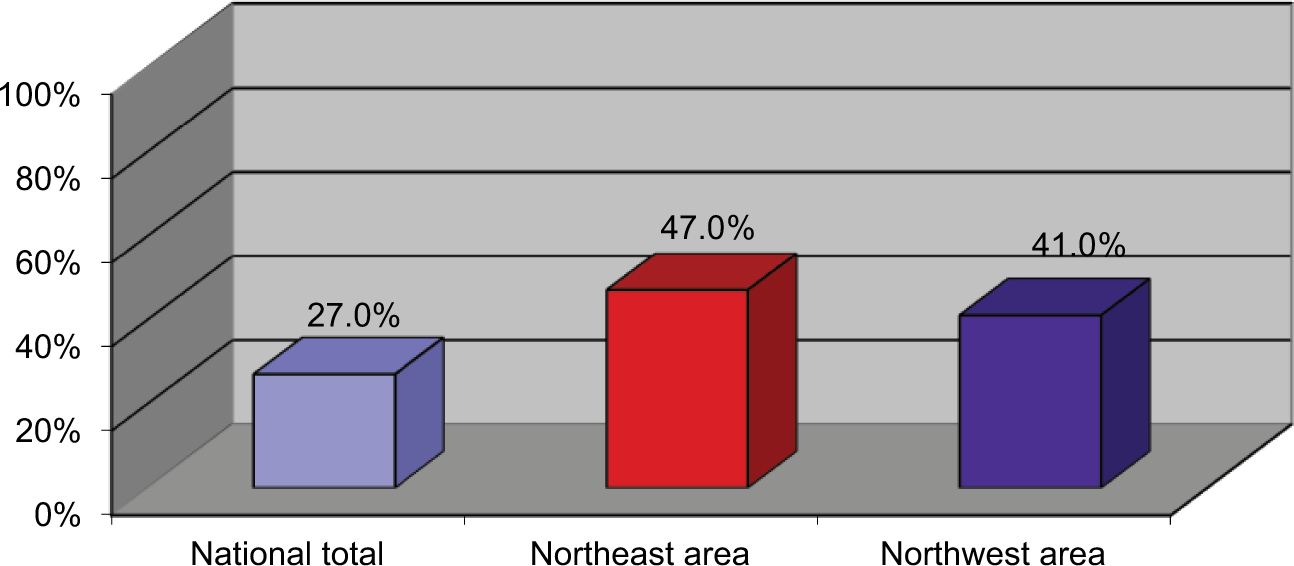
Percentage of those in favour of state payment of salaries.
Education, religious teaching and education funding
In the latter half of the 1950s in Argentina, the question of public education generated heated argument between religious segments and those defending the lay tradition. Long afterwards, in the 21st century, 55% of Argentineans say they think that the general subject of religion is acceptable for public schools’ programmes. Conversely, 27% oppose this notion and 14% favour Catholic instruction. See Figure 18.
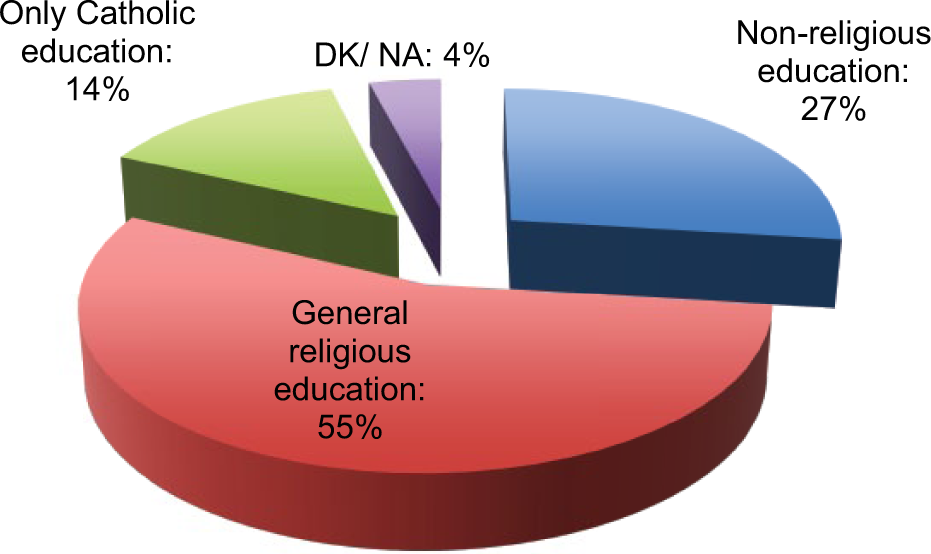
Religious education at school.
Sorting by region, we find deep contrasts. In Cuyo and Patagonia, only 5% approve of exclusive Catholic teaching in public schools, and in the Metropolitan Area 9%, compared with 36% in the Northwest region. The idea of including a general subject of religion is supported by 70% in Patagonia and 67% in the Northeast region. Lastly, one-third of the population in the Metropolitan area and the region of Cuyo reject the incorporation of a discipline with religious content.
Respondents were also asked about state subsidies granted to religious schools, an old tradition in the country. Overall, this funding is supported. Half of Argentineans approve of the granting of subsidies to religious schools in poor areas, while 31.6% support broad funding of all religious schools, regardless of social status. However, 18.8% of the population believe the State should not contribute to the financing of religious education centres. See Figure 19.
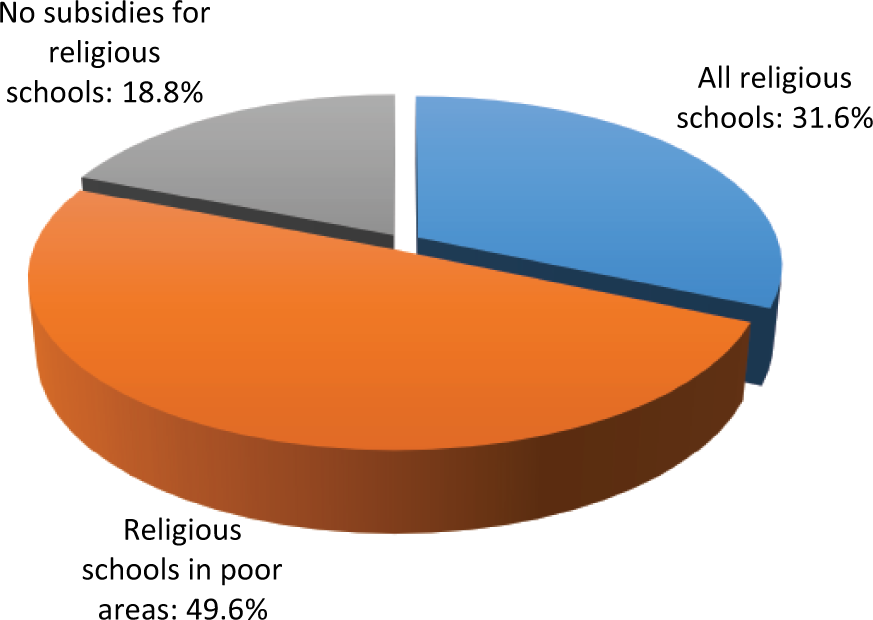
State subsidies to religious schools.
Compared to the findings shown in the previous chart, the proportion of those opposing religious education in public schools is higher than that of those opposing state subsidies to religious schools (27% vs. 18.8%). This shows a distinction between support for a public educational space devoid of religious teaching and for State support of religious schools, probably as a form of acknowledgement of the extensive and historic presence of the Catholic Church in the educational field.
As expected, those indifferent to religion are the least supportive of the public funding of religious activities: 54.4% expressed the view that the State should not finance religious schools in any way whatsoever. In contrast, 43.1% of Evangelicals claim that there should be public funding of all religious schools. The Northeast and Northwest regions also show relatively high figures in this sense (53.5% and 42.1% respectively). It is worth mentioning that 44.4% of Patagonian inhabitants agree with generalised economic support of religious education by the State; this tendency may be explained by the high incidence of Evangelical workers and the impact of the Salesian community’s (Catholic) works in that area.
It is worth noting, however, that while the percentage of people believing that public institutions should take precedence over religious institutions in matters of sexual health (contraceptives, abortion) and sexual education is high, around half of people believe that religious teaching should be present even in public education.
Conclusions
The religious map in Argentina has been changing since the 1970s. The religious landscape, once predominantly Catholic, has become a space of multiple religious groups, with a Catholic majority, a significant minority of Evangelicals with Pentecostal predominance and a growing and distinct group of Indifferents. This evolution is one of the keys to an understanding of Latin American beliefs today. In fact, if we add up the Indifferents and those believers who have a personal approach towards relating to their deity, or those who claim rarely to attend religious celebrations, we may logically conclude that Argentinean society is going though a deep process of detachment from institutional frames in the religious sphere.
Though Argentineans are still religious and predominantly Catholic, the data resulting from our study unfolds a diversity of beliefs and a multiplicity of practices within the religious options. The many and different ways of believing reveal a society that is being deeply transformed by secularisation processes. Religious institutions continue to attempt to channel beliefs through regulations set in doctrines and practices, but these are disregarded by vast numbers of their affiliates. We also find some groups in all religious movements that adapt their opinions according to institutional regulations and regularly carry out religious practices (we called these the ‘hard nucleus’). These groups are, however, small (from 10 to 15% of the population, depending on the chosen parameters) and surprisingly heterogeneous: their differing doctrinal and political opinions and their various answers to controversial issues do not reflect an organised structure. Their institutional affiliation, it seems, does not in itself mean that they will take concrete action in the public arena to uphold their beliefs (Mallimaci, 2013).
The Argentine State continues to give the Catholic Church a privileged position compared with other religions, yet Catholics (i.e. those who identify with the Roman Catholic Church) tend to recognise their Church through initiation and passage rites (baptism, matrimony) more than actually congregating and actively participating in the parish community. We may say that ‘cultural’ recognition is more frequent than dogmatic adherence. The Catholic Church has a strong presence in the public and political spheres; therefore, it is an unavoidable marker of Argentinean identity. However, Catholic prescriptions are losing ground in the private lives of followers.
Other notable points relate to the different levels of penetration of the secularization processes within the territory. The diversity shown in the Argentinean regions can be explained through sociological and structural reasons, but is particularly related to ongoing historical affirmation of a Catholic culture coexisting with social formations carved by modern and recent times (Sanchis, 2001). Opinions related to the role of women and the family and to the public funding of religious institutions feature significant territorial disparities. Some regions are strongly connected to traditional ways of thinking and behaving, while others attribute less importance to tradition in family roles and institutions as social life regulators.
As we have observed in many sections of this article, the process of secularisation in Argentina (and in Latin America) has developed in a particular way. Catholicism has been historically present in several cultural issues and shows high rates of follower identification, as well as widespread practice, such as baptisms. However, this highly Catholic culture is not sustained mainly by organised religious congregations, but rather by cultural markers and identity features that pervade the urban landscape, schools and political and public institutions. In the modern Latin America, a vague cultural Catholicism cohabits with philosophies that stand for individual autonomy and freedom of choice. This coexistence could explain the apparent paradox that most people baptise their children but then prefer to let them choose their own religion.
Like other societies, Argentinean society is finding its own particular ways of dealing with the modernising and globalising currents by developing innovative belief configurations and religious practices.
Footnotes
Funding
The research was financed by the Agencia Nacional de Promoción Científica y Técnica (National Agency for the Promotion of Science and Technology).
Notes
Author biographies
Address: Saavedra 15, 4º piso, (1083) Ciudad de Buenos Aires, Argentina
Email:
Address: Saavedra 15, 4º piso, (1083) Ciudad de Buenos Aires, Argentina
Email:
Address: Saavedra 15, 4º piso, (1083) Ciudad de Buenos Aires, Argentina
Email: