




Abstract
Dengue, a viral infection transmitted by mosquitoes, has become a substantial public health issue in Bangladesh. The high population density and subtropical-tropical climate of the nation create conducive environments for the transmission of the virus. The recent increase in dengue cases in Bangladesh prompts an inquiry into the potential for the virus to progress into an epidemic manifestation. Bangladesh is prone to dengue outbreaks due to a multitude of contributing factors. To commence, the virus is endemic to tropical and subtropical regions, and climate change is contributing to the expansion of its range. Additionally, the high population density in Bangladesh amplifies the vulnerability to dengue transmission. Intimate human proximity elevates the probability of contracting mosquito stings and transmitting viruses. The escalating incidence of dengue in Bangladesh is substantiated by the growing count of documented cases. The emergence of severe dengue is a contributing aspect that raises concerns about the potential worldwide consequences of the disease. It could potentially head from Bangladesh to neighboring nations via an infected individual. There exist apprehensions due to the substantial employment of Bangladeshi laborers overseas, compounded by the presence of foreign laborers within Bangladesh. The endeavor to control dengue in Bangladesh continues to face ongoing challenges. This review addresses the complexities of dengue transmission, assesses Bangladesh's readiness for managing epidemics, analyzes risk factors associated with dengue, and suggests preventive measures to mitigate the possibility of worldwide consequences of dengue originating within the nation.
Keywords
Introduction
Dengue is a viral ailment transmitted by mosquitoes to humans. It is more widespread in tropical and subtropical climes. 1 Aedes mosquitoes are well-known vectors of dengue fever. There are several types of dengue virus that are transmitted to humans through the bite of dengue infected Aedes mosquitoes. 2 In most parts of the world, Aedes niveus, Aedes albopictus, and Aedes polynesiensis have been identified as secondary vectors. In South Asia, Aedes aegypti and Aedes albopictus are the main vectors responsible for dengue transmission. 3 The clinical signs and symptoms of dengue, a fever sickness, can range from an infection with no symptoms to a severe infection accompanied by multi-organ failure. 4 Dengue fever is thought to be a threat to 40% of the world's population, with 390 million cases reported annually and dengue is ranked as one of the top ten global health risks by the World Health Organization. 5 There are several variables contributing to the current and anticipated expansion; the primary ones are believed to be worldwide travel and trade, viral evolution, fast urbanization, population growth, and climate change. 6
Southeast Asia and the Western Pacific region account for 75% of the world's dengue burden. 7 In Bangladesh, dengue was first identified in the 1960s. 8 Bangladesh's climate is changing in a way that makes it easier for dengue to spread because of the country's unusual seasonal changes, heavy rainfall, waterlogging, flooding, and elevated temperatures. 9 The global economy and human health are both impacted by the spread of dengue. 10 It was unusual for Bangladesh to have moderate rainfall in October, 2023 (the monsoon season runs from May to September). The population density of Aedes mosquitoes is growing as a result of the untimely rains and the suitable weather. Aedes mosquitoes can easily reproduce in such man-made collections of water since many people keep water in various containers like buckets and pots inside their homes. This practice is often a response to inconsistent or inadequate access to a reliable water supply. In regions where water supply systems are unreliable or where there are frequent water shortages, residents tend to store water for daily use. If these containers are uncovered or not regularly cleaned, then these containers are ideal breeding grounds for Aedes mosquitoes, which lay their eggs in standing water. 11
This study aims to highlight the fact that the surge of dengue in Bangladesh might be a cause for the global public health concern by spreading worldwide. The objectives of this study are to identify the main factors that contribute to the increase in dengue transmission, such as prolonged monsoon seasons, international travel, and global interconnectedness. The study aims to provide evidence-based interventions to prevent and control the potential global impact of dengue outbreaks originating in Bangladesh. Furthermore, it seeks to assess Bangladesh's preparedness for managing and addressing dengue outbreaks and suggest specific measures to mitigate the impact.
Serotype and genotype of dengue virus
Dengue is a virus that affects people and is spread by mosquito bites in tropical and subtropical climates, primarily in urban and semi-urban regions. There are generally four serotypes of the dengue virus (DENV): DENV-1, DENV-2, DENV-3, and DENV-4. 12 Figure 1 displays data collected from the Institute of Epidemiology, Disease Control, and Research (IEDCR). In Bangladesh, we found that in 2023, 3.30% of people had DENV-1 infection, 70.20% had DENV-2 infection, 23.90% had DENV-3 infection, and 0.40% had DENV-4 infection. Furthermore, 2.20% of individuals were co-infected with both DENV-2 and DENV-3. 13

Percentage (%) of affected people by different serotypes in Bangladesh in 2023.
Based on phylogenetic study, each serotype can be further subdivided into various genotypes. The envelope of the DENV virus plays a crucial role in the infection process. Through envelope receptors, DENV particles attach to the host cell. However, by interacting with specific antibodies for the envelope protein, this attachment can be avoided. The env gene, meanwhile, shows a significant mutation rate to prevent antibody neutralization. In fact, the env gene is frequently used to organize viruses into genetic groups (or “genotypes”) within serotypes. 14
The DENV-1 strains evaluated in Bangladesh between 2020 and 2023 exhibited significant phylogenetical divergence from any documented genotypes found worldwide, where the DENV-1 E gene was indicated as the genotype X.15,16 This genotype was classified as remotely related to the sylvatic genotype VI. The genotype V strains that were previously widespread in Bangladesh were fully replaced by this strain, and similar strains were sporadically detected in India in 2019. From 2020 to 2023, the National Center for Biotechnology Information (NCBI) in the country did not report viral sequences for DENV-2 and DENV-4, which prevented the generation of phylogenies. Conversely, all variations of DENV-3 in Bangladesh between 2020 and 2023 were grouped together under the same genotype I. As of 2017, genotype I has replaced genotype II in Bangladesh, as stated in prior reports. 16 A genetic investigation carried out in Bangladesh from 2018 to 2022 revealed that the co-circulation of clades B and C of the DENV-2 cosmopolitan genotype in 2017 was substituted by the circulation of clade C alone in 2018, although all clones subsequently disappeared. While DENV-4 is considered to be the least harmful serotype, it has not been detected in Bangladesh. 15
Current scenario of dengue in Bangladesh
Globally, the number of dengue cases is significantly rising, particularly in countries like Bangladesh that are tropical or subtropical. There are some factors that contribute to the habitats of dengue vectors, including the density of infected mosquitoes, people's immunity to dengue serotypes, poor housing conditions with inadequate waste management, sanitation, and drainage systems, unreliable water availability, and the use of unsafe water storage containers. Rainfall and temperature are two climate factors that have been the subject of intense investigation in recent decades for their potential as emergency warning systems to protect people who are climate-sensitive to dengue. The ability of mosquitos to transmit dengue viruses and the rate of dengue virus spread are both significantly influenced by temperature. 6
In 2023, it appears to be on trajectory to exceed all the past records. Figure 2 depicts a comparative analysis of dengue cases during the past five years. The graph illustrates a significant surge in the number of reported dengue cases in 2019, with a total of 101,354 cases recorded. In 2020, the incidence of reported dengue cases experienced a substantial decrease, reaching a total of 1405 cases. 17 This decline occurs because the symptoms of COVID-19 and dengue are similar in some extents, and people may have been more likely to be tested for COVID-19 than for dengue or other diseases. 18 As a result, some cases of dengue may have been misdiagnosed as COVID-19. Additionally, the COVID-19 pandemic may have led to a decrease in the number of people seeking medical attention for dengue, as they may have been afraid of going to the hospital or clinic. This could have further contributed to the COVID-19 masking the effect of dengue local efforts to control mosquito populations, public health campaigns, and natural fluctuations in disease prevalence. 19 The year 2021 witnessed a substantial increase in reported incidences of dengue, with a total of 28,429 cases documented. In 2022, there was a notable spike in reported dengue infections, with a total of 62,382 cases. According to the latest statistics from 2023, there has been an increasing trend in the incidence of documented instances of dengue, with a total of 316,160 cases reported, out of which 1705 cases have been identified as fatalities. 17 This indicates a concerning trend of dengue cases continuing to rise, emphasizing the importance of ongoing public health measures and research to combat this mosquito-borne disease, as these fluctuations in the number of dengue cases over the years underscore the dynamic nature of infectious diseases. Dengue fever can lead to severe illness in some cases, and those with severe symptoms often require hospitalization for close monitoring and medical intervention. 19 Dengue shock syndrome (DSS) is a life-threatening condition of dengue fever that frequently arises due to a subsequent infection with distinct virus serotypes. 20 The progression of DSS exacerbates the severity of the illness to a worrying degree, typically leading to shock, bleeding, and organ dysfunction. It involves a complex interplay between viral kinetics, the body's immune responses, and the resilience of blood vessels as one transitions from a moderate dengue infection to the critical stage of DSS. 21 The clinical characteristics of DSS encompass substantial plasma leakage resulting in shock, accumulation of fluid in the pleural and abdominal regions, heightened propensity for bleeding, and organ failure. 22 The complex interplay between immune responses, viral components, and blood vessel permeability turns an initially harmless viral infection into a perilous situation. 23
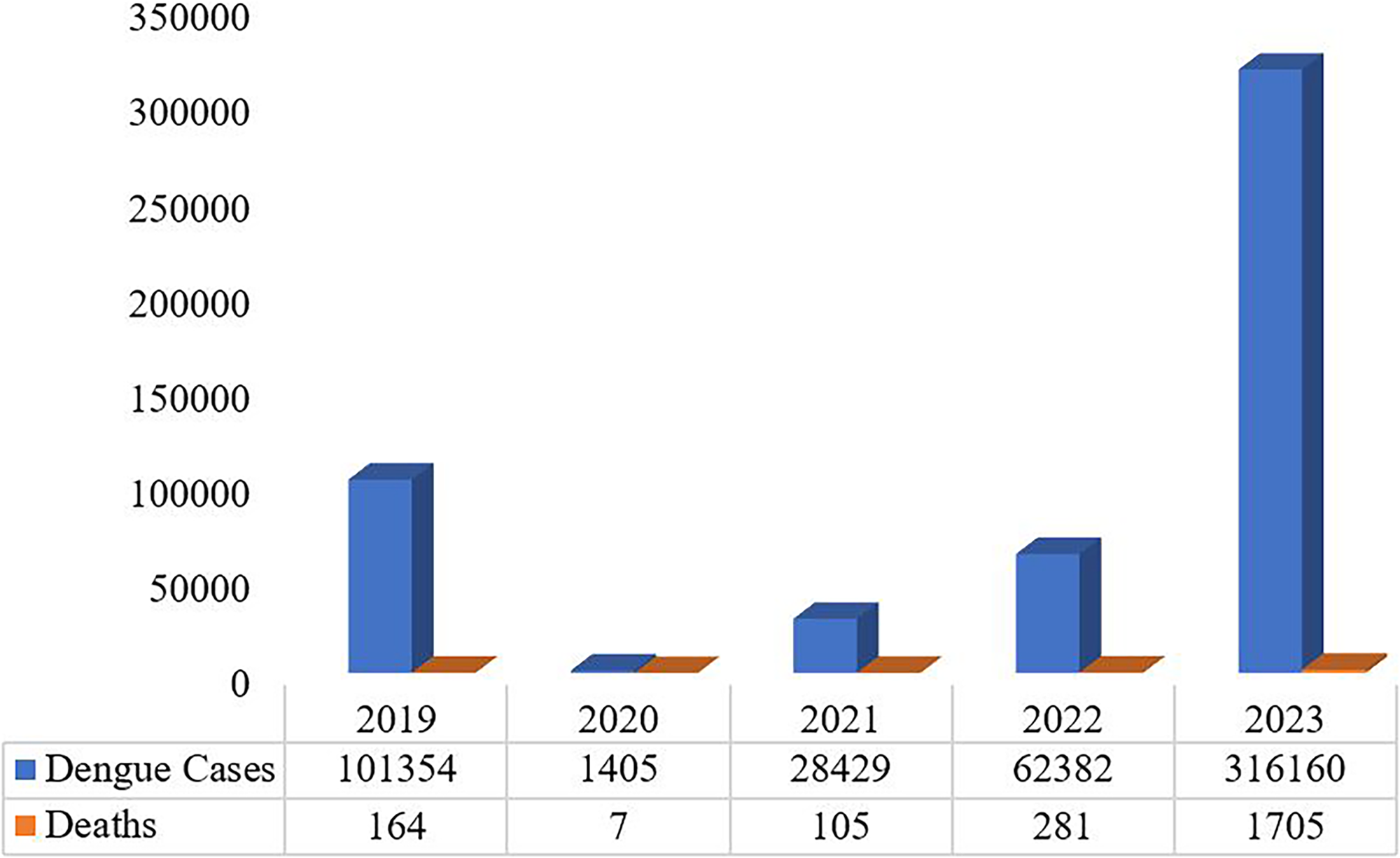
Dengue case comparison in the past five years from 2019 to 2023.
The average rainfall (mm) in Bangladesh from 2019 to 2023 has been presented in Figure 3, with 2023 having the highest amount and 2021 coming in third. Dengue cases were greater in 2022 than in 2021, despite the fact that it rained significantly more in 2022 than in 2021. 24 This could be caused by a number of things. First, consider the flood of 2022. Floods can transmit dengue more extensively because standing water from river overflows can serve as a breeding ground for mosquitos, increasing the danger for flood-affected areas. 25 Besides, it is possible that the COVID-19 post-pandemic recovery and two years of non-pharmaceutical social interventions enhanced mosquito breeding conditions, especially in regions under development. 26 Moreover, persons may have been more likely to receive a COVID-19 diagnosis in 2022 than for dengue or other illnesses since the symptoms of COVID-19 and dengue are somewhat similar. 18

Comparison of average rainfall (mm) in Bangladesh from 2019–2023.
Generally, the monsoon season in Bangladesh lasts from May until September every year. Dhaka, Bangladesh's capital, is one of the world's largest and most densely inhabited metropolitan cities. According to the most recent data from the United Nations, the current population of Bangladesh is projected to be 174,819,995. Additionally, the estimated population of Dhaka in 2024 is currently 23,935,652. 27 Because of fast development and unplanned urbanization in recent years, it has become more vulnerable to a range of public health risks, which include dengue. In 2023, Bangladesh experienced its maximum rainfall from April to October (Figure 4), 28 and from May to December, the number of dengue cases was likewise high (Figure 5). 17 In April 2023, there was a rise in the amount of rainfall, while in May, there was an increase in the number of individuals affected. Aedes aegypti mosquito takes seven to ten days to mature from egg to adult, 29 mosquitoes laid during April's rainy season would have become adults by May. Also, the mean life duration of a female Aedes aegypti is about two to three weeks. 30

Average rainfall (mm) in 2023 in Bangladesh.
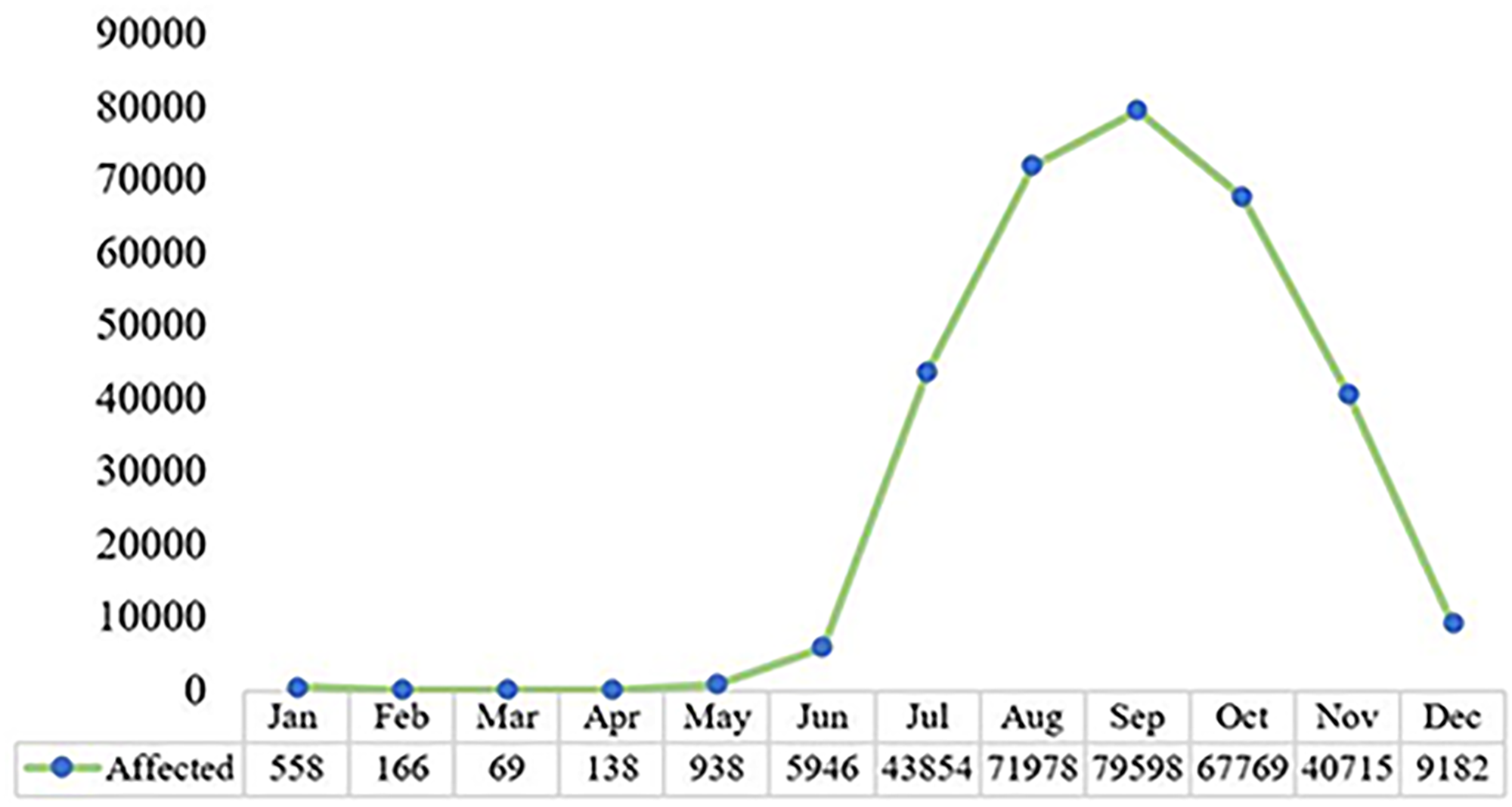
Month-wise confirmed dengue cases in Bangladesh in 2023.
In general, in Bangladesh, in late May or early June, the monsoon arrives. The temperature decreases to 30∼32 °C (86∼90 °F) during the day but stays high at night, about 25 °C (77 °F). It also brings more compact cloudiness, high humidity even during the day, and frequent rains. 31 One of the essential factors in the growth and survival of Aedes mosquitoes is temperature. The best possible maximum temperature falls between 32°C and 33°C. 32 Adult mosquitoes perish and eggs and larvae are unable to develop in temperatures higher than 40°C. Furthermore, larvae of Ae. albopictus and Ae. aegypti cannot grow at 10°C. Therefore, the Aedes mosquito can develop at this temperature. 33 The lifespan of a female Aedes aegypti, which is generally two to three weeks, supported the notion that the high number of infected individuals in May could be a result of the favorable breeding conditions resulting from the substantial rains in April.
Figure 5 depicts the recorded instances of dengue confirmed cases in Bangladesh for the year 2023, spanning from January to December. In March, the lowest number of cases recorded was 69, whereas in September, the maximum number of cases identified was 79,598. The year ends with 9182 instances in December 2023. 17 Dhaka is the only city that is in the red zone and 48.51% of confirmed dengue cases are from Dhaka (Figure 6). Other areas are affected by dengue, but not as much as Dhaka (Figure 6). 17 The remaining portion of the map depicts the number of afflicted individuals, but it is not as severe as Dhaka. Dhaka City suffers from overpopulation and significant waste generation, which is poorly managed, leading to littered areas that obstruct water flow and provide breeding grounds for dengue larvae. 34 The high population density in Dhaka City compared to other districts increases the potential for the spread of dengue. 35

Percentage (%) of confirmed dengue cases in each district in 2023 in Bangladesh. [The map has been generated using ArcGIS software (version 10.5; Esri, USA)].
Dhaka city is the center of the outbreak, the mosquito density is much higher this year than the previous year, according to a report by the Bangladesh Department of Health, Ministry of Health and Family Welfare. The increase in mosquito density is partly due to the delayed arrival and the expected long duration of monsoon season. 36 Dhaka South City Corporation (DSCC) has declared two wards as red zones after 10 or more cases of dengue were registered in each of them within one week, according to a DSCC press release. The two wards are 14 and 56. The decision was taken after reviewing the list provided by the Directorate General of Health Services. 37
Possibilities of dengue to spread globally
Dengue virus infections in humans are often asymptomatic, but they can cause a variety of symptoms, ranging from mild fevers to severe, life-threatening dengue shock syndrome. Dengue is an acute systemic viral disease that has spread rapidly worldwide, occurring in both endemic and epidemic transmission cycles. 38
According to a WHO assessment, dengue fever is prevalent in more than 125 nations. 39 With Asia bearing more than 70% of the worldwide dengue illness burden, the most seriously afflicted regions are the Americas, South-East Asia, and the Western Pacific region. 38 The dengue cases in Latin America are much higher than in the US. 40 Dengue is entering new regions, including Europe, and is causing explosive outbreaks. In the European Union and European Economic Area (EU/EEA), dengue viruses are typically brought in from countries where the disease is endemic. Only minor outbreaks have been documented in autochthonous cases, which are infrequent. In Italy, a singular outbreak in 2020 was traced back to an imported case from Indonesia. By October 16, 2023, two Italian regions (Lombardy and Lazio) had recorded 58 autochthonous cases and 14 had reported 215 imported cases. 41 As of 2021, Dengue continues to spread in the following countries Brazil, India, Colombia, Fiji, Philippines, Peru, Kenya, Paraguay, Reunion Islands and France, Vietnam, Nepal, Pakistan. 42
In 2023, the prevalence of dengue has significantly increased around the world. Over the past two decades, the prevalence and incidence of dengue have been on the rise due to a combination of demographic and social factors, such as climate change, rapid population expansion, urbanization, migratory patterns, and the breakdown of public health systems. 43 Currently, about half of the world's population lives in areas where the chances of affecting of dengue is high. 44
Bangladesh is a major hotspot for the disease. In recent years, the country has faced multiple significant dengue epidemics, including the most severe outbreak ever recorded in 2023. During this period, a total of 1705 deaths were documented between January and December 2023. 45 If the current trend persists, dengue will become a global pandemic. Bangladesh faces a substantial risk of dengue transmission due to various factors, including the transmission of the dengue virus through the bite of infected Aedes aegypti mosquitoes. The main carriers of the disease are Aedes aegypti mosquitoes and, to a lesser degree, Aedes albopictus. 8 Once a mosquito bites an infected person, the virus replicates in the mosquito's midgut before spreading to other tissues, including the salivary glands. This period is known as the extrinsic incubation period (EIP). The duration of the EIP is influenced by factors such as an average of 25–28°C ambient temperature, daily temperature variations, virus genotype, and initial virus concentration. Infected mosquitoes remain infectious for the rest of their lives. 46
People who are DENV-viremic, meaning they have the virus in their blood, can also transmit the virus to mosquitoes. This includes people who are asymptomatic, pre-symptomatic, or who are experiencing symptoms of dengue fever. Transmission from humans to mosquitoes can happen up to 2 days before symptoms appear and continue until 2 days after the fever has resolved. 1 When a person from Bangladesh has dengue and travels to another nation, then dengue virus can spread by affected people through Aedes mosquito in that specific country and it is very alarming condition. Over 1.3 million (1,305,453) Bangladeshi workers left the country in 2023, according to statistics from the Bureau of Manpower, Employment, and Training (BMET). 47 Aside from that, a large number of Bangladeshis travel to India for a variety of reasons, including trips, medical treatment, and business. The enormous influx of migrants and travelers can possibly carry and transmit dengue, putting Bangladesh as a distinct and substantial hotspot for the disease. Together, these factors lead dengue becoming a worldwide health concern that is expected to worsen in the coming years. Continued development of effective control measures and vaccination awareness is essential to reduce the burden of dengue and protect the health of millions of people worldwide.
Discussion and future prospects
Aedes mosquitoes, especially Aedes aegypti, are the primary vectors of DENV transmission between humans. 48 Other than temperature variation, total rainfall and its peaking times also influence the spread of the dengue virus. 49 As a result, it's essential to pinpoint the important climatic factor and carry out local estimates. It is essential to look at the non-climatic reasons of Aedes species, as well as the key elements for dengue transmission in those climatically favorable locations. In some areas, various dengue management methods could be able to slow the disease's spread. 50 Over 60% of Bangladesh's population lives in urban areas, where mosquitoes are more likely to find breeding sites and human hosts. Inadequate sanitation and drainage systems provide ideal breeding grounds for mosquitoes. By focusing on and controlling mosquito populations, vector control measures are essential for preventing the transmission of diseases carried by mosquitoes. Bangladesh has experienced several major dengue outbreaks in recent years. Dengue outbreaks can place a further strain on Bangladesh's already overburdened health system.
First-ever successful dengue vaccination trial conducted in Bangladesh took place on September 28, 2023. 51 The vaccine for dengue disease is known as tetravalent, or TV-005. Experimental use has demonstrated the efficacy of the vaccine against the DENV-1, DENV-2, and DENV-3 strains of the dengue virus. 52 This vaccination can prevent dengue with just one dosage. TV005, demonstrated safety and immune responsiveness in children and adults, tested effective against all the four dengue serotypes. Antibodies to all four dengue serotypes were found after vaccination, while individuals who had been infected previously had higher antibody counts. 53 But it is still in the clinical trial stage that we previously mentioned and it has not even reached the general public and the side effects of this vaccine are not exactly known.
An immunization program might be helpful in decreasing the transmission rate, in addition to this, public awareness campaign about cleanliness and how dengue spread should be carried out. Individuals with poor immune systems are more susceptible to dengue than those with stronger immunity. Foods high in vital nutrients strengthen the immune system, therefore maintaining a balanced diet might be helpful for those who are at risk of dengue.
Like COVID-19 and other contagious diseases, dengue may be spreadable from one country to another. 54 Thus, we need pay enough attention to application of dengue vaccine because the death rate of dengue rate is low in normal healthy people but the death rate in children and elderly is very high. 55 Several organizations, including Gavi, the Vaccine Alliance, WHO, UNICEF, the World Bank, and others, may fund and implement immunization and awareness campaigns against this type of infectious disease to aid in the development of Bangladesh's healthcare systems. 56
Bangladesh should implement measures aimed at mitigating the transmission of dengue fever and safeguarding the health of its population through the enhancement of vector surveillance and control initiatives. Utilizing media platforms is crucial for promoting societal awareness and efficiently preventing dengue fever.
Bacillus thuringiensis israelensis (BTI) is a highly effective chemical for killing mosquito larvae of the Aedes species. This approach can be used on a large scale to treat areas experiencing dengue outbreaks. 57 A study conducted in Selangor, Malaysia, demonstrated the efficacy of BTI (VectoBac®) WG in suppressing Aedes sp., the vectors responsible for dengue transmission. BTI (VectoBac®) exhibited its effectiveness in reducing the larvae of Aedes sp. as well as preventing the population of Aedes sp. in high-rise buildings. 58 Another study conducted in sub-Saharan Africa demonstrated that implementation of BTI on a weekly basis, using the highest recommended dosage, is effective in controlling mosquito vectors. In addition, the BTI formulation has a relatively low residual activity, making it more appropriate for use during the heavy rainy season. This is because even larvicides with higher residual activity are unable to maintain their effectiveness due to continuous dilution and the washing away of the larval habitats by rain. 59 In Dhaka North compared to Dhaka South, there are more and a higher percentage of homes with larvae. ‘Bacillus thuringiensis israelensis (BTI)’ is a particular type of bacterium that has been employed for the first time to control larvae in Dhaka North city corporation. 51 This might be helpful for vector controlling.
Aedes mosquitoes typically emerge two hours after sunrise and remain active until two hours prior to sunset. As they are unable to differentiate between natural and man-made light sources, it has been reported that they attack in areas that are well-lit. If possible, all windows should be covered with fine net screens. 60 Mosquitoes that carry dengue virus prosper in still water contained in items like tires, rubber lids, plant containers, pet water dishes, sinks, and so on. The Centers for Disease Control and Prevention (CDC) recommends the following preventive steps to protect against mosquito bites: Utilize insect repellents that are registered by the Environmental Protection Agency (EPA). It is advisable to wear loose-fitting, long-sleeved shirts and slacks. Additionally, it is recommended to wear clothing and gear that has been treated with permethrin. 61 The government should conduct campaigns to educate and inform people about the importance of taking preventive measures to eliminate any leftover water from their homes. This can be done by emptying flower pots, replacing bowls filled with water, removing water plants, ensuring the proper functioning of septic tanks and plumbing systems, and covering all water storage containers. These actions can prove to be beneficial in preventing water-related issues. 60 Getting rid of areas where mosquitoes breed helps diminish the transmission of dengue fever greatly since it disturbs the reproduction of mosquitoes. 59
Providing dengue detection kits to health centers and educating health facilitators might be advantageous in countryside areas. Ensuring long-term, sustainable management of the dengue virus is crucial to effectively handling future epidemics. Possible measures to address the issue include implementing a nationwide system for monitoring dengue outbreaks through events, along with managing the environment. Research should be conducted to study indicators of infection related to ecology, environment, and insects. 62 Additionally, geospatial and risk mapping should be developed to identify areas that are more susceptible to dengue. Researchers should be involved in collecting data on the spread and evolution of the virus over time, taking into account seasonal variations and the impact of climate change. Lastly, affordable and easily accessible bioassay systems should be implemented to detect dengue early, particularly in rural regions. While the government of Bangladesh has taken some immediate steps, mostly in Dhaka, the overall nationwide efforts to address the issue have been insufficient. It is imperative for the government and relevant stakeholders to give top priority to addressing this dengue outbreak and implement a comprehensive dengue control program. This would help prevent premature fatalities and decrease the overall impact of this epidemic. 63
There are various types of mosquito repellents including oils, creams, sprays, patches, wipes, and coils. It is important to prevent mosquitoes from approaching us at home by applying insect repellent around the room, using a mosquito coil, or setting up a liquid mosquito control device. So, put on bug repellent lotion on the uncovered skin before beginning your activity. Certain repellent creams contain Vitamin E for safe guarding the skin. Therefore, awareness should be increased about dengue among people. In response to the dengue outbreak, Bangladesh's health ministry has established a national dengue control center to collect data and coordinate efforts. The ministry has also set up additional control rooms in all districts and medical college hospitals. 64 Various biological control strategies, including the deliberate release of genetically modified mosquito species, bacteria such as Wolbachia spp. and Asaia spp., predatory fish like Gambusia affinnis and Poecilia reticulata, protozoans such as Chilodonella uncinata, fungi like Beauveria bassiana, insect growth regulators (IGRs), biopesticide spinosad, and mechanical control techniques like eave tubes and attractive sugar baits, may all be utilized to effectively manage the dengue epidemic in Bangladesh following comprehensive investigations. 54
Dengue fever can be highly transmissible within the country and any of Bangladesh's bordering countries via the Aedes mosquito native to Bangladesh or by an infected individual (Figure 7). If a person infected with dengue travels from Bangladesh, there is a chance of spreading the disease. The increasing human mobility brought about by air travel is also linked to the dengue virus's rapid global expansion. 64 In addition, a large number of Bangladeshi workers are employed in regions such as Middle East and various other nations. These individuals can transmit dengue to these nations. In our opinion if the number of dengue patients increases during the monsoon season, all countries should take precautionary measures at their borders and airports to protect against the spread of the disease. International airports should begin implementing entrance screening procedures that use non-contact infrared thermometers to identify travelers who are feverish. 65 Diagnostic testing must be done rapidly and effectively in order to identify dengue cases among feverish passengers at borders. Conventional approaches like IgM and IgG ELISAs exhibit variability in their capacity to identify acute-phase dengue and typically necessitate convalescent-phase samples, which are seldom accessible. NS1 antigen detection kits are appropriate for utilization in field environments with limited equipment, such as quarantine stations, providing results within a one-hour timeframe. 66 Utilizing cutting-edge diagnostic tools for the early detection of the dengue virus would be advantageous. Currently, laboratories worldwide are studying the detection of the NS1 antigen in patients with primary and secondary dengue infections during the acute phase. 67 The DENV NS1 rapid diagnostic test (RDT) had a sensitivity of approximately 88–99.2%, whereas the DENV NS1 ELISA exhibited a specificity of 96–100%.68,69 PCR (polymerase chain reaction) is the most often used nucleic acid test for DENV, and it is widely regarded as the most reliable method for detecting DENV in the early stages of infection because of its heightened sensitivity. 70 A multiplex reverse transcription polymerase chain reaction (RT-PCR) assay was developed to identify serotypes in blood samples. This assay is suitable for use in blood transfusion procedures. The method that had been developed was evaluated against all serotypes of DENV. The multiplex RTPCR assay demonstrated a sensitivity of 98.18% and a specificity of 100%. 71 A TaqMan probe-based one-step real-time RT-PCR test had been developed to rapidly detect, serotype, and quantify dengue virus. 72 It is encouraged that tourists to travel to regions where dengue is prevalent should be counseled on the importance of adopting preventive measures against mosquito bites. This includes correctly applying repellents, wearing protective clothing, and using insecticides. 73

Possible dengue transmission cycle from Bangladesh to the rest of the globe.
Artificial intelligence (AI) has emerged as a powerful tool for tackling various challenges in healthcare, including the prediction and prevention of dengue fever. AI algorithms have the ability to examine past dengue information, weather data, and other related aspects in order to anticipate outbreaks of dengue fever. 74 Artificial Neural Network (ANN), Decision Tree (DT), and Naive Bayes (NB), are being examined to create a diagnostic system for identifying dengue cases in their early stages and utilizing existing datasets related to dengue. 75 Devices that track signs - generally used artificial intelligence-based apps that monitor individuals. 76 Since, Aedes mosquitoes breed in stagnant water; drones can easily reach hard-to-access areas for mosquito control. 77
One of our project's main weaknesses is that we did not carry out any independent surveys to determine the original dengue scenario and severity. Here, we displayed the information gathered from several organizations. Furthermore, we suggested that Bangladesh could potentially serve as the focal point of the dengue pandemic, however there is no hard evidence to support this claim. But given Bangladesh's geographical location, climate, waste management practices, and general level of understanding and awareness, we were compelled to emphasize this. Since precise information about these matters is lacking, we recommend more research be done on this important matter.
Conclusion
In conclusion, the potential for dengue to become a significant health issue in Bangladesh is deeply concerning due to the country's dense population and conducive climate for mosquito breeding. Proactive measures are essential, including public education on prevention, robust mosquito control programs, and enhanced healthcare infrastructure to manage and treat cases effectively. Immediate and sustained efforts are crucial to mitigate the impact of this growing threat on public health. Although dengue in Bangladesh has the possibility to evolve into a worldwide health concern, collaborative actions at the nearby, countrywide, and global stages can aid in stopping its rise into a notable global burden of illness. Prompt and synchronized measures are crucial to restrain the transmission of dengue and safeguard global populace well-being.
Footnotes
Acknowledgements
The authors wish to convey their profound gratitude to the healthcare professionals who are engaged in efforts across the globe. Additionally, the authors would like to express their gratitude to Engg. Jannatul Mabia Rahman for her astute recommendations regarding the manuscript's title.
Author contributions
(I) Conception and design: SBR, SMRD
(II) Supervision: SMRD
(III) Provision of study materials: All authors
(IV) Collection and assembly of data: All authors
(V) Visualization: SBR
(VI) Manuscript draft: SBR, MMURS
(VII) Manuscript review and revision: SAK, SMRD
(VIII) Final approval of manuscript: All authors
Conflict of interest
None declared.
Data availability
In accordance with the present study, no datasets were generated or analyzed, rendering data sharing irrelevant to this article. Nevertheless, the citations for the graphical representation have been appended to the reference list.
Ethic statement
Not applicable.
Funding
The authors received no financial support for the research, authorship, and/or publication of this article.
