




Abstract
Multimodal transport can bring the technical and economic advantages in different transportation modes into full play. While ensuring the level of service, it can reduce energy consumption and transport costs. Governments of most countries are actively promoting it. Therefore, it has become a research hot spot. Being a green, fast, and all-day transport mode, railways play an important role in multimodal transport. This article aims to analyze a multimodal transport service quality indicator system involving railways from the perspectives of customers, multimodal service providers, and governments. Qualitative and quantitative research methods were adopted to analyze the secondhand data of academic papers, government policy, and industry reports to clarify the quality characteristics of multimodal transport services. Using grounded theory and to analyze firsthand data from in-depth interviews with multimodal transport practitioners, 25 evaluation indicators of container multimodal transport service quality were chosen to be the evaluation index system. To test and improve the evaluation scale, 270 valid questionnaires were analyzed using SPSS 24.0 and AMOS 21.0 software, including reliability analysis, exploratory factor analysis, and confirmatory factor analysis. The results show that all the indicators meet the standard requirements and have good reliability and validity.
Keywords
Introduction
The long-term practices of developed countries show that developing multimodal transport is not only conducive to alleviating public problems such as energy depletion and environmental damage caused by transportation but also helpful in reducing transport costs, improving transport efficiency, and optimizing transport services. On 27 June 2018, the State Council of China issued the 3-year Action Plan to promote optimizing the structure of freight transport and significantly increasing the proportion of railway freight transport. The government’s goal was to increase railway freight volume 30% by 2020 compared with 2017. However, data released at the sixth China Multimodal Transport Cooperation and Development Conference show that China’s multimodal transport volume accounts for less than 3% of the total freight volume. There is a big gap compared with the corresponding 10% of total freight in the United States. The development of China’s multimodal transport is still in its infancy stage. The main problems come from the division of different links such as transportation, settlement, and insurance business. The coordination of various links in multimodal transport is not smooth enough, and the comprehensive service capacity needs to be improved. 1 Railway transport is a clean, large-scale, and fast transport mode, but these advantages have not been effectively used in container transportation in China. According to incomplete statistics, the volume of container traffic in China accounts for only 5.4% of the railway freight volume, which is far lower than the 30%–40% level in developed countries. In China, one of the main reasons for this situation is that the railway enterprise management system is not responsive to the market, resulting in poor customer perception of service quality and leading to customers who would rather choose the higher cost of road transport. As a complex and arduous systematic project, the goal and focus of railway container multimodal transport are to establish an integrated service logistics system and promote the continuous enhancement of customer-oriented service capacity, respectively. 2 Thus, a container transportation system with the whole process service capacity would be established. From the perspective of customer position and future development, this article determines the factors that affect the service quality of railway multimodal transport and studies the evaluation index system of multimodal transport service quality with a container as the carrying unit as a decision support for enterprises and local governments to promote the development of railway multimodal transport.
The author analyzed the existing literature on the service quality of railway freight transport or multimodal transport and found that the service process and customer complaint information are analyzed by SERVQUAL model or other analysis methods, and the service quality evaluation indicators are collected through closed questionnaire survey.3,4 The direct application of these well-developed service quality assessment tools without adjustment is often difficult to accurately apply to other specific research fields because they have specific industry backgrounds. And the evaluation indicators are mainly collected from the direct participants of the multimodal transport service chain, with less consideration of the government’s policies and plans. However, the government is often an important promoter, constitutor, and organizer for factors that have a major impact on the quality of multimodal transport service, such as transportation infrastructure, information infrastructure, and industry standards. All multimodal transport participants have to adapt to the government’s policies and planning which represent future standards and conditions. Therefore, the determination of evaluation indicators should refer not only to the existing research literature, customer, and participant surveys, but also to the government policy documents, and industry reports. This article uses the quantitative method of content analysis to conduct statistics of the government’s policy documents and plans related to multimodal transport since 2010 and the industry development reports published by the China Multimodal Transport Association in the past 5 years, which has enriched the source of the evaluation indicators.
The purpose of establishing a railway container multimodal transport service quality evaluation index system is to understand the key factors affecting customer decision-making, and investigating customer opinion is an important data source. Only in this way can a realistic decision model be abstracted from a description of their personal experiences and ideas. It is also possible to draw up measurement indicators based on research by other scholars; however, each study has different research purposes, and the measurement indicators are likely to be different. Qualitative research obtains the elements of non-structural problems and their relationships by answering questions, understanding phenomena, and analyzing human behaviors and opinions and is, therefore, widely used in behavior analysis and intervention policies in the fields of health, tourism, and education, although there are few applications in the domain of service quality evaluation. As one of the analytical techniques used in qualitative research, grounded theory (i.e. constructing and revising propositional statements about relationships by questioning and observing informants in specific use contexts) can improve the quality of problem design. 5 By analyzing the facts, opinions, and motivations described by interviewees, it can identify those attributes of multimodal transport service quality that customer cares most about as explanatory variables. This design is also conducive to deriving subsequent policies and plans, and the attempt to apply qualitative research techniques is one of the contributions of this article to the existing literature.
Departments of transportation (DOTs) throughout the United States recognize that the freight transportation system is necessarily multimodal. However, no DOTs have clearly stated objective tools with which to evaluate multimodal freight project comparisons. 6 As railway freight multimodal transport is a new research field, 7 we find that there is not much literature on the service quality of multimodal transport, and the existing literature on evaluating railway freight service quality pays more attention to the evaluation and analysis of service quality.8–10 However, evaluating the evaluation index itself is neglected. To construct a reasonable evaluation index system for multimodal transport service quality, we conducted empirical research through questionnaires, exploratory factor analysis, and confirmatory factor analysis (CFA) and tested the importance of the evaluation indicators selected from the research literature, in-depth interviews, and policy reports, as well as the rationality of the evaluation index system structure. This will contribute to the final derivation of multimodal transport service quality evaluation model research work.
Through quantitative analysis, qualitative analysis, and semi-quantitative analysis, we studied the existing academic literature, both in Chinese and in English, policy documents, and industry reports from China. We conducted in-depth interviews with practitioners and customers of the multimodal transport industry and analyzed the interview data using grounded theory. We established an evaluation index system for railway container multimodal transport service quality. The effectiveness of the indicators was tested by expert investigation and a large-scale questionnaire survey. The purpose of this article is to explore what factors affect multimodal transport service quality in the current and future period, in order to serve the development of multimodal transport in China.
Theoretical study on evaluating multimodal transport service quality
Multimodal transport has received a lot of interest in recent years as part of a possible solution for a sustainable and efficient transport system. However, there has been a lack of tools to evaluate the potential of intermodal transport and to help in designing a competitive intermodal transport system. 11 Research on multimodal transport has begun to grow significantly, with a greater focus on policy support, terminal network design, intermodal service network design, intermodal routing, drayage operations, and information and communications technology (ICT) innovations. 12 To determine the characteristics of the multimodal transport research community and the existing research literature, Bontekoning et al. 7 analyzed 92 publications on railway multimodal transport and their citation relationships and concluded that research on multimodal transport has become a mature and independent research field, with the existing research being divided into eight subdomains. In addition, nine future research directions were surveyed, including the need for studying the evaluation of multimodal transport for identifying efficient policy measures. Crainic and Kim 13 believed that, due to the evolution of the regulatory, economic, and technological environment in the industry, multimodal transport needs to strengthen normative management and decision-making technologies, so the research trends and challenges of multimodal transport will focus on optimizing operational management technologies and services, including multimodal transport system real-time decision-making and operation control technology. Dynamic programming models of a multimodal transport service operation network and reducing the uncertainty of participant management in the multimodal transport chain based on an intelligent transportation system (ITS) were also considered important development directions. After reviewing 127 studies on multimodal transport from 1990 to 2016, Agamez-Arias and Moyano-Fuentes 14 further summarized the research fields of multimodal transport using the structured Systematic Literature Review (SLR) method as follows: the principle, concept, and composition of multimodal transport; variables, constraints, and model optimization of multimodal transport system modeling; and research on improving the operation mode of a multimodal transport system, that is, the improvement of economic efficiency and the improvement of service quality. Thus, the service quality of a multimodal transport system has received more and more attention from researchers. However, the above comments can only indicate that evaluating the service quality of multimodal transport will be a research trend. The theory and methods of multimodal transport service quality evaluation are still relatively lacking. 15 Rickard Bergqvist introduces an efficient way of evaluating and designing road/rail intermodal transport solutions. However, the approach does not address what aspects are important to consider when implementing road/rail intermodal transport services. This is an interesting subject for further research. Another issue related to implementing services is the challenge of coordinating and collaborating different actors, for example, the dynamics between shippers, operators, and policy-makers. This constitutes an interesting area for further research. 16
Evaluation research usually includes establishing an evaluation index system, selecting an evaluation model, and acquiring and analyzing evaluation data. This article mainly studies the first portion, that is, establishing the index system. An evaluation index system simulates decision variables. Through in-depth interviews and analyzing the decision-making behavior of the evaluation subject in the multimodal transport market, we can simulate and approximate the value judgment system held by the evaluation subject to the evaluation object. Therefore, the key to evaluating railway container multimodal transport is to select an accurate evaluation index, applicable evaluation methods, and a reasonable evaluation perspective.
Screening method for evaluation indicators
An evaluation indicator is the value dimension of the evaluation system and is selected according to the characteristics of the evaluation object and the purpose of the evaluation. In the evaluation research related to container freight and multimodal transport, the indicator selection methods can be roughly divided into three categories. First, the hypothesis of the primary indicator system is proposed based on a literature review and then revised and improved through empirical analysis.17,18 However, the indicators determined by this method may reflect the facts of the past well, but they cannot adapt to the current market demand perfectly because the environment is always changing. Second, the indicator system is formulated using SERVQUAL, SERVPERF, logistic service quality (LSQ), service blueprint technology, and other service quality measurement methods combined with the characteristics and objectives of the evaluation object.19–21 Carman 22 pointed out that “the applicability of the SERVQUAL model to different industries is different.” As a result, this kind of evaluation indicator still lacks a timely reflection of the changing environment. Therefore, the third kind is what the researchers used in independent surveys to construct the indicator system. These evaluation indicators are obtained by field investigation, in-depth interviews, literature reviews and archival analysis of various types of shippers,23–25 carriers, agent shipping companies, and so on. To enrich the evaluation indicator analysis sample, Sun 26 also included railway freight laws and regulations, national standards, and industry standards into the scope of analysis. These methods skillfully combine qualitative and quantitative research information to establish evaluation indicators more objectively. Obviously, the existing research still lacks a clear description of the understanding, abstraction, and modeling process of the evaluation subject’s value orientation.
Indicator evaluation method
When the evaluation subject decides on the value of the object, the way to judge is the “evaluation method.” Ji et al. 23 established a fuzzy evaluation algorithm model for railway freight transport quality. Based on the fuzzy evaluation method, Feng 27 used the analytic hierarchy process (AHP) to quantify the subjective judgment of experts, which reduces the error caused by personal subjective judgment. The comprehensive quantitative and qualitative evaluation of railway freight service quality using the AHP-Fuzzy evaluation method was put forward. The AHP-Fuzzy comprehensive evaluation method was applied to the path selection, enterprise risk, and efficiency evaluation of railway container multimodal transport, and the evaluation effect was also improved.28–30 Even so, the shortcomings of fuzziness and the subjectivity of the fuzzy AHP are still very obvious. Rough set theory provides new ideas to solve this problem. 31 After that, some scholars further explored the combination of rough set theory with fuzzy analysis, SERVQUAL theory, and AHP for comprehensive evaluation.32–34 The shortcomings of the evaluation process subjectivity and the influence of correlation between the evaluation indexes on the evaluation quality were overcome. Zhou 35 proposed the DHGF algorithm, which is composed of four methods—improved Delphi, AHP, Gray Relational, and Fuzzy Evaluation (Fuzzy)—to evaluate the railway container multimodal transport system, but no empirical analysis was given. It is not difficult to see that the evaluation of service quality has gradually evolved from a single evaluation method to a comprehensive evaluation method. The fuzzy gray matter element method (FHW), Technique for Order Preference by Similarity to Ideal Solution (TOPSIS) method, data envelope method, ideal point evaluation method, and so on are also widely used in evaluating railway container multimodal transport.
Indicator evaluation perspective
The evaluation result reflects the value thinking of the evaluation subject toward the evaluation object. Different evaluation subjects have different opinions on service quality. Shippers tend to emphasize the services provided and related costs (transaction prices), while carriers focus on internal management, maintenance, delivery, and information processing. 36 From the carrier’s point of view, Eryilmaz et al. 37 proposed that good cooperation in a multimodal transport chain is the key point for the quality of service from the carrier’s point of view. From the shipper’s point of view, the quality depends mainly on the time in transit, punctual delivery, communication, information, and price competitiveness. Therefore, the evaluation subjects have a great impact on the evaluation results. Service quality is a measure of how well the delivered service level matches customer expectations. In the face of the two evaluation orientations, a customer evaluation is the most basic requirement for establishing a service quality evaluation index system, and the starting point of evaluation is to introduce customer attitude and response into the evaluation index system. Some scholars divide the railway freight service quality evaluation system into functional quality and technical quality. Functional quality is the subjective feeling of customers, and technical quality is the safety and economic operation of railway freight. Such evaluation indicators can be calculated from statistical data. Therefore, the evaluation of service quality can not only account for the subjective feelings of customers but also integrate some objective technical indicators. This article will also investigate mainly from the perspective of customers, but it is difficult to fully describe railway container multimodal service quality transport by only examining customer evaluations. Therefore, it is still necessary to comprehensively examine the views of managers and front-line staff in multimodal transport enterprises.38–40
To sum up, it is very important to select the evaluation perspective, evaluation indicator system, and evaluation method reasonably for accurately evaluating the service quality of a railway container multimodal transport system. This article mainly studies the mode of innovation in the process of selecting evaluation indicators and empirically tests the evaluation indicator system through factor analysis to construct a more reasonable evaluation indicator system.
The process of evaluation indicator system selection
The service quality evaluation indicator system of a container multimodal transport system will be constructed through the following four ways in this article:
Based on the summary of the indicator system from the existing research literature, “Container Freight Transport and Multimodal Transport Service Quality Indicator Group” was established, followed by clustering and then sorting out the indicators of different literature.
Root theory is employed to analyze the firsthand data obtained by in-depth interviews with customers and multimodal transport operators in order to better understand customer’s internal value orientation and judgment process deeply and extract valuable original statements to form conceptual indicators by root theory.
Semi-quantitative analysis is conducted to study the secondhand information from policies, standards, and published reports related to multimodal transport. The analysis not only reveals the implied information but also extracts the research hot spots and trends.
The primary index system is tested and optimized. The content validity of the indicator is evaluated by the Delphi method.
Statistical screening of keyword frequency based on research literature
This article used the keywords “multimodal transport, evaluation indicator, quality of service, container and railway freight transport” to search for related academic documents in China National Knowledge Infrastructure (CNKI), the most authoritative Chinese academic literature database. At the same time, this article retrieved documents for the English academic literature from Springer and Elsevier with the keywords “multimodal transport, combined transport, multimodal transport or through transport.” Finally, 44 Chinese documents and 56 English documents are found. Service quality evaluation indicators from these two groups of literature are statistically presented in Figures 1 and 2.

Indicator frequency from Chinese literature.
Indicator frequency from English literature.
It is found that punctuality, informatization, transportation costs, and cargo damage rate appear frequently in the literature of both languages, while environmental cost is more seen in English literature. Kengpol et al. 41 believed that proactive environmental management will be critical to the organization of multimodal transport hubs in the future. This phenomenon may be due to the early development of multimodal transport in European and American countries and the comparatively perfect environmental policy. 42 Therefore, the selection of evaluation indicators in this article has a forward-looking guiding significance for China’s increasingly stringent environmental policy.
Selection of qualitative research method based on in-depth interviews of evaluation subjects
Using qualitative research method and in-depth interviews, this article interprets the evaluation subject’s personal experience, value system, and meaning construction and then analyzes the implicit and evidence-based themes and their relationships from the firsthand information, presenting them systematically and orderly.
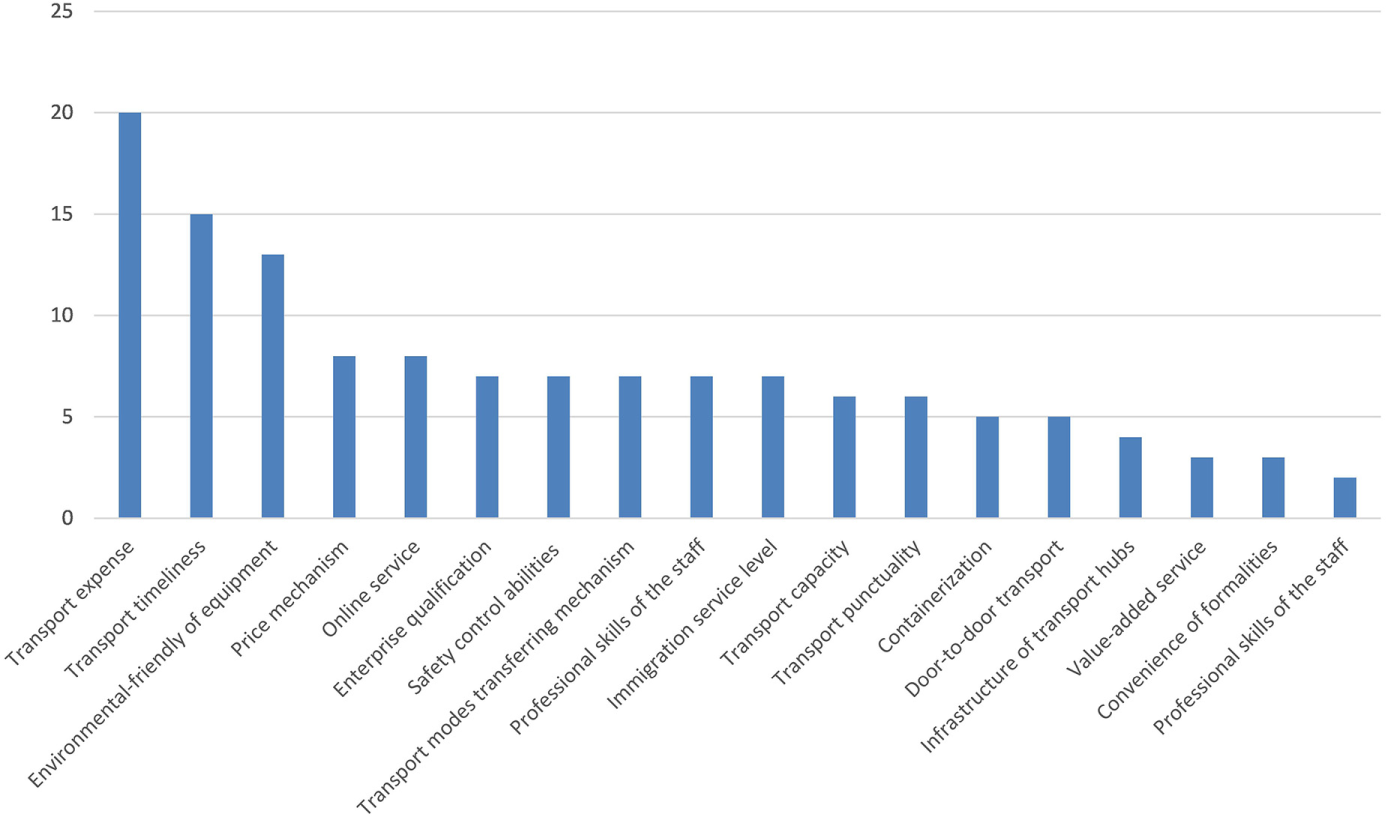
Grounded theory advocates that theoretical sampling should be purposeful, with a small sample size and in-depth analysis. Eight interviewees from multimodal transport enterprises and their customers in Hunan, Guangdong, Shandong provinces were interviewed in depth during October 2018 to March 2019, and more than 110,000 words of interview materials were collated. QSR NVivo 11.0 is employed to describe the firsthand materials in depth. More than 300 initial concepts are obtained by open coding, and 20 indicators are formed by induction and analysis of initial concepts. The outcomes are shown in Figure 3.

Interview text coding indicator frequency.
It is found that there is a slight difference from the literature research. Some concepts like “big data and the application of intelligent technology” and “facility energy saving and environmental protection” rarely appeared in the existing literature but were frequently mentioned in in-depth interviews. The results show that the concepts of sustainable development, artificial intelligence, and big data technology are increasingly accepted in China.
Screening of content analysis method based on policies and regulations
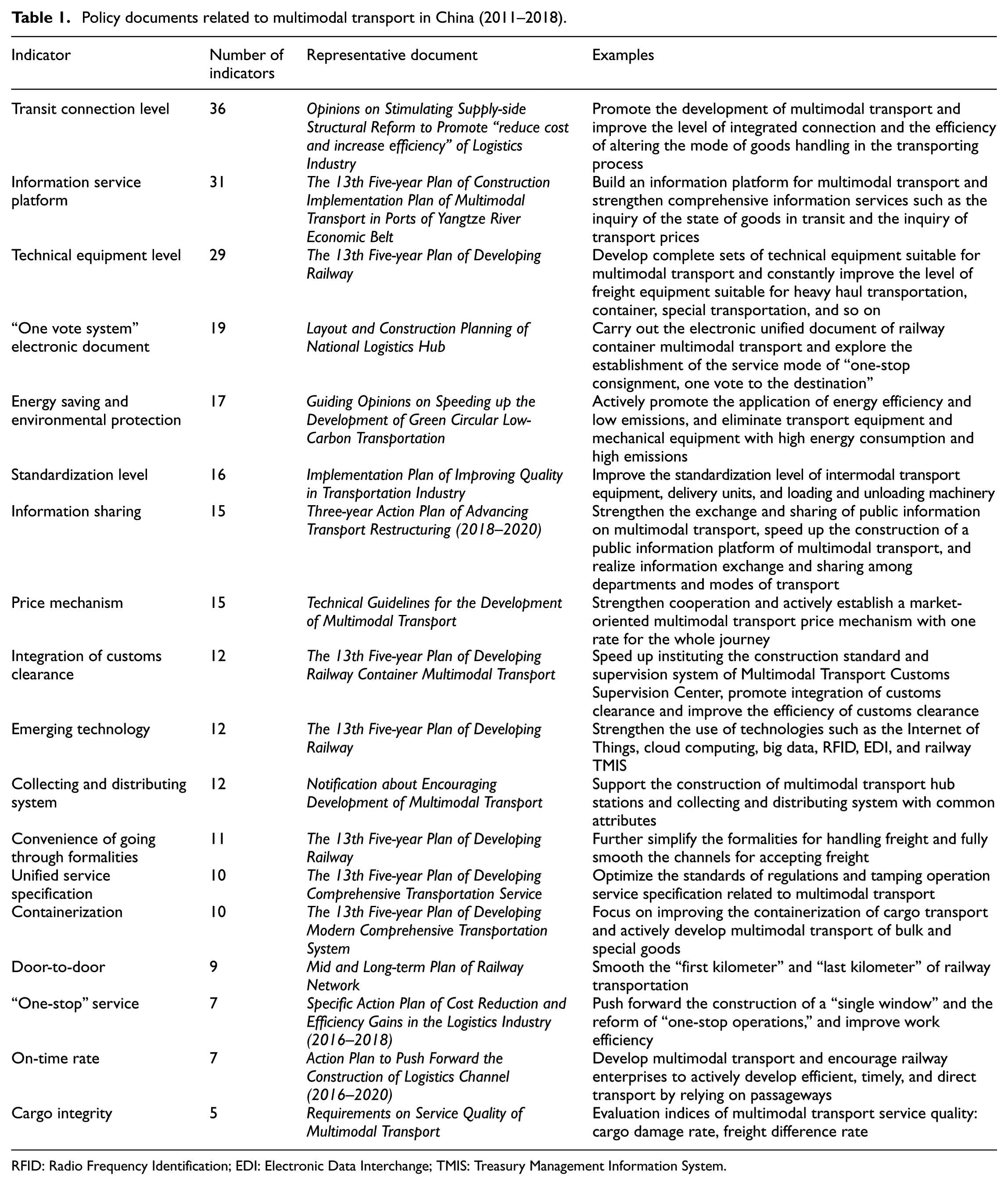
Owing to a time lag between the release and the implementation of policy, we selected 36 policy documents and industry reports with high correlation with multimodal transport in order to make the research results more adaptable to the future. Due to the fact that these texts belong to unstructured information, a semi-quantitative research method, which is known as content analysis, was used as a supplementary research path to reveal the invisible and valuable information content and the facts or trends in these texts. During the process of taking samples of policies, determining analysis units, developing analytical frameworks, and quantitative processing, 379 effective analysis units are finally obtained. Finally, 19 indicators are established by combining the specific meaning of each analysis unit and the evaluation logic of multimodal transport, as shown in Figure 4. The results of the coding analysis are shown in Table 1.

Frequency of indicators in policy documents.
Policy documents related to multimodal transport in China (2011–2018).
RFID: Radio Frequency Identification; EDI: Electronic Data Interchange; TMIS: Treasury Management Information System.
Policy pays more attention to guiding planning at the macro level, reflecting the development direction of multimodal transport. Factors affecting the overall service quality and cost control level of multimodal transport, such as system coordination ability, informatization, standardization, and the construction of technical equipment, become the focus of policy concern. The extensive application and cross-domain deep integration of modern information technologies such as the Internet and big data are reshaping the form of traffic organization and the comprehensive service model. It also points out the direction of improvement for the improvement of multimodal transport service quality.
In summary, on the basis of the foregoing analysis, this article collates the same or similar indices extracted, encoded, and summarized in Chinese and English literature, interview texts, and policies. Finally, 25 initial evaluation indicators for railway container multimodal transport are screened out.
Evaluation indicator system tests
Design and test of questionnaire
In order to analyze the rationality and importance (weights) of 25 preliminary evaluation indicators, after consulting five experts, another 30 respondents were invited to score the importance of the selected 25 indexes with a 5-point Likert-type scale. Finally, 21 valid questionnaires were collected. The results are shown in Figure 5.
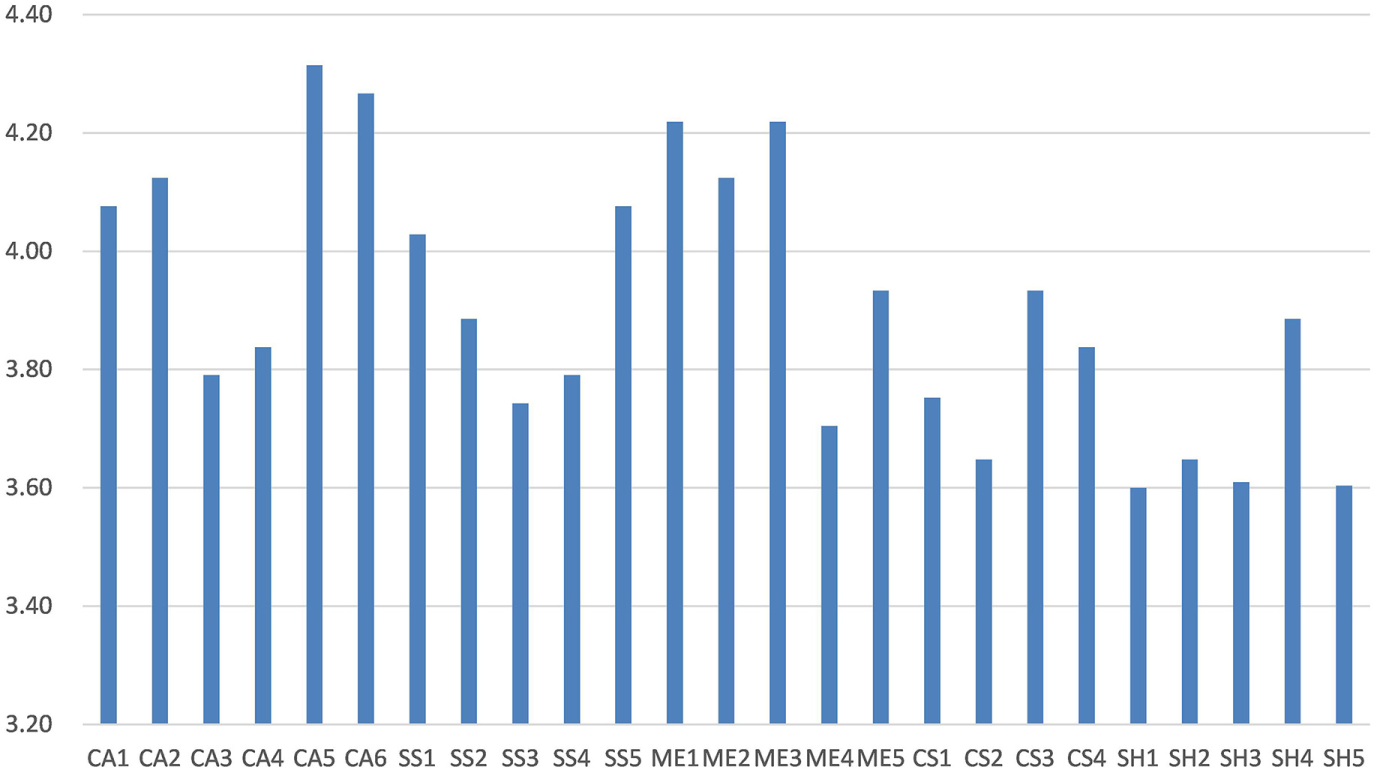
Average score of the importance of indicators.
The average score of all 25 indicators is above 3.5, representing that experts, scholars, and managers generally believed that all those 25 indicators are important, and the scale has good content validity and is suitable for this study.
Data collection and analysis
We conducted an online survey for the further test of the reliability and validity of the scale. The main interviewees are customers (shippers) related to railway container multimodal transport and managers (carriers) of multimodal transport enterprises. A total of 322 questionnaires were collected. Finally, 270 valid questionnaires were selected. The number of samples exceeded 10 times the number of variables, and the sample size was sufficient. 43
Exploratory factor analysis
If the absolute values of kurtosis and skewness are less than 10 and 3, respectively, the data obey normal distribution. According to Table 2, each item satisfied the preceding rule. As a result, the data obey normal distribution, satisfying the application of structural equation modeling (SEM).
Operational definition and descriptive statistics of indicators.

Exploratory factor analysis is used to explain the intrinsic correlation structure among variables. The complex and disordered variables are clustered into a few latent variables to make the index system more concise and clear. Before exploratory factor analysis, it is necessary to respectively judge whether the partial correlation between variables is large enough and the correlation matrix is a unit matrix by the Kaiser–Meyer–Olkin (KMO) test and the Bartlett sphericity test. The value of KMO is between 0 and 1, and the closer the value is to 1, the better the effect of factor analysis. The significance level (Sig.) of the Bartlett sphericity test needs to be less than 0.05. The results were analyzed by SPSS 21.0 software. As shown in Table 3, the KMO value was 0.875 > 0.70. At the same time, the approximate chi-square of the Bartlett sphericity test is 3754.241, and the significant p value is 0.000. Therefore, the assumption that each variable is independent is rejected. In other words, there is a strong correlation between the variables, implying that it is suitable for further exploratory factor analysis.
KMO and Bartlett sphericity test results.

KMO: Kaiser–Meyer–Olkin.
With principal component analysis, the convergence of rotation happens after five iterations where the cumulative interpretation variance is 69.47%, as shown in Figure 6. The consequences imply that the scale has convincing reliability. The results of the factor loading matrix after rotation are shown in Table 4. Five factors for which eigenvalues are greater than 1 are abstracted from Table 4, namely, control abilities (CA), standardized services (SS), mechanisms (ME), software and hardware (SH), and customized services (CS).

Scree plot.
Factor loading matrix after rotation.

CA: control abilities; SS: standardized services; ME: mechanisms; SH: software and hardware; CS: customized services (CS).
CFA
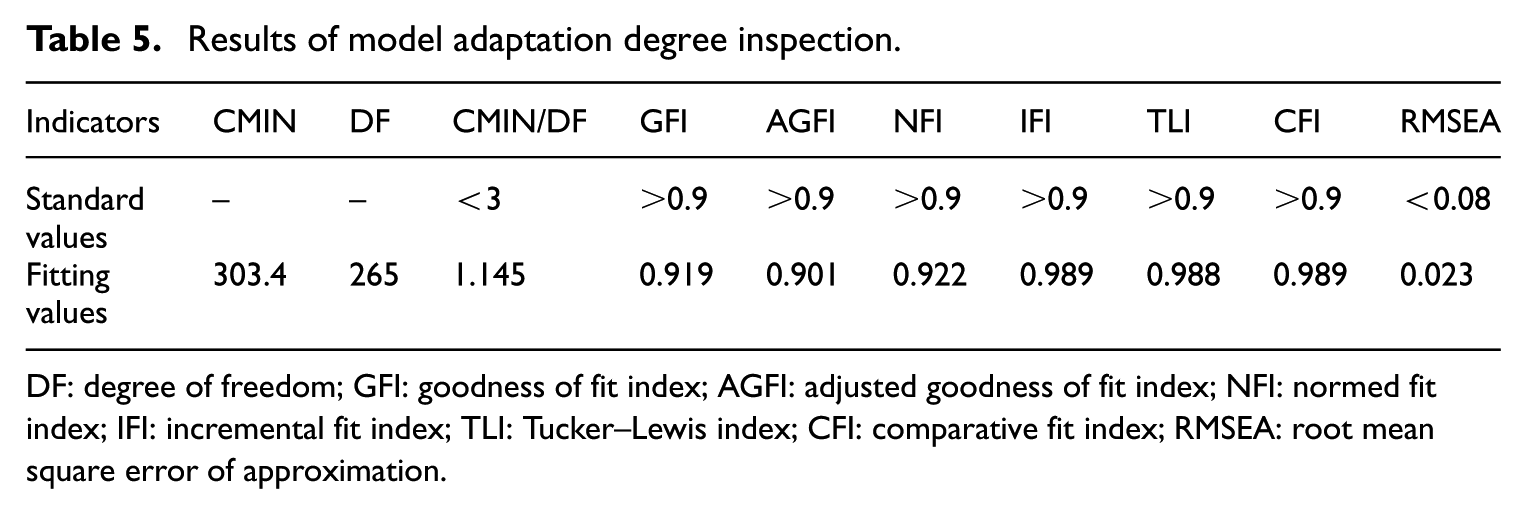
In addition to exploratory factors analysis, CFA was launched to examine the reliability of the Likert-type scale (i.e. discarding the invalid observed variables). It is known that SEM is a multivariable analysis method for setting up, estimating, and examining cause–effect models. Applying this method, a one-order CFA model was built through AMOS 21.0, as shown in Figure 7. The maximum likelihood estimation results of variables in the model are shown in Table 5, which shows satisfying fitting degrees.

Confirmatory factor analysis model.
Results of model adaptation degree inspection.
DF: degree of freedom; GFI: goodness of fit index; AGFI: adjusted goodness of fit index; NFI: normed fit index; IFI: incremental fit index; TLI: Tucker–Lewis index; CFI: comparative fit index; RMSEA: root mean square error of approximation.
According to the convergence validity criterion, both standardized factor loading (SFL) and average variance extracted (AVE) are required to be greater than 0.5. As is shown in Table 6, a majority of SFL exceeds 0.7 under the confidence coefficient of p < 0.001. In addition, AVE values are 0.611, 0.625, 0.529, 0.658, and 0.604, respectively, being greater than 0.5. These results demonstrate that CA, SS, ME, CS, and SH reach the requirements of convergent validity criterion. Moreover, the following three facts reveal good reliability of the Likert-type scale. First, Cronbach’s alpha of each latent variable lowers after removing a single item at a time. Second, the values of corrected item-total correlation (CITC) of each item are greater than 0.5. Third, the composite reliability of each latent variable varies from 0.817 to 0.920 (i.e. composite reliability of each latent variable is greater than 0.8).
CFA for the measurement model.

SFL: standardized factor loading; AVE: average variance extracted.
All normalization regression coefficients of null paths in the table were defined as fixed parameters, all equal to 1. It is not necessary for those paths to take significant tests, and their standard error (SE) and critical ratio (CR) equal the value of t where their significant levels are null. The symbol *** denotes that the parameter reaches the 0.001 significance level.
The discriminant validity is obtained from the comparison of the square root of AVE of each latent variable and its correlation coefficient to other latent variables. Table 7 shows the correlation of the latent variables, whereby a square root of AVE for each latent variable is greater than its correlation coefficient with all other latent variables. Therefore, the latent variables show sufficient discriminant validity.
Latent variable correlation matrix.
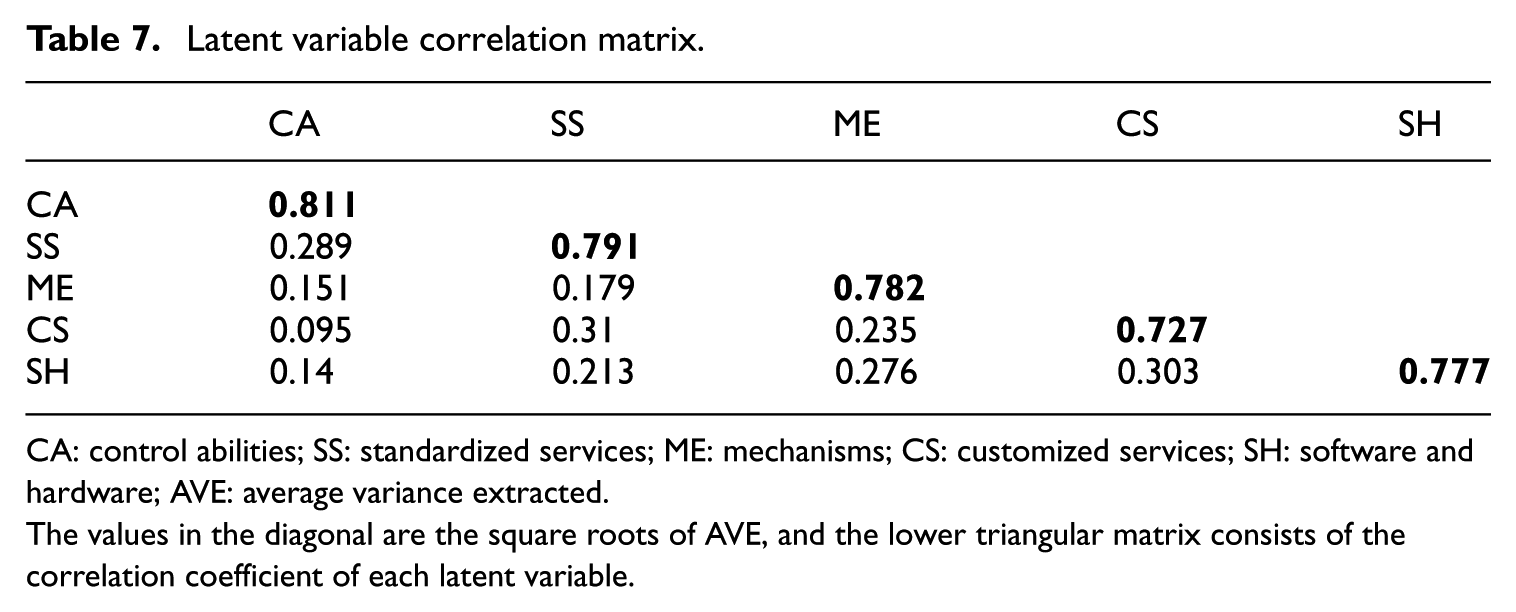
CA: control abilities; SS: standardized services; ME: mechanisms; CS: customized services; SH: software and hardware; AVE: average variance extracted.
The values in the diagonal are the square roots of AVE, and the lower triangular matrix consists of the correlation coefficient of each latent variable.
Conclusion and future research
The Chinese government is pushing toward restructuring the transport structure in the direction of “road transport to railway transport, road transport to water transport” for freight transportation. Experience from some developed countries reveals that it is vital to consider the environment and efficiency aspects during the process of formulating government policies. Transferring large-scale freight from road transport to railway or maritime has become a principal structural transport change in China. Obviously, both efficiency and cost need the accelerated development of railway multimodal transport. However, poor service quality has been one of the main reasons for the slow development of railway multimodal transport in China. To study the multimodal transport service quality evaluation index system guided by future development, from the perspectives of customers, multimodal service providers, and governments, we built a development-oriented evaluation indicator system of multimodal transport service and reached the following conclusions:
We obtained a collection of railway container multimodal transport service quality indicators by doing a literature survey on papers relating to multimodal and service quality of railway freight in Chinese. This showed that punctuality, on-line service, transport costs and rate of cargo damage, and so on are commonly considered in those domestic research papers. Meanwhile, this indicates that multimodal transport is still on the early stage in China. The main problems are the lack of smooth coordination and comprehensive service capacity due to the separation of transportation, settlement, liability, and insurance business. In terms of papers in English, environmental cost is commonly considered, while those in Chinese still attach less importance to this issue. This is due to the fact that developed countries started to launch multimodal transport and improve environmental issues much earlier than China. Therefore, the selection of evaluation indicators has a forward-looking guiding significance for China.
We conducted in-depth interviews with customers and suppliers, and we use grounded theory to tap into the latest customer needs and policy needs of multimodal transport enterprises and to establish value dimensions and indicators to evaluate the quality of multimodal transport services. Indeed, we find that the application of big data and intelligent technology is rarely mentioned in the existing Chinese literature, but it has become the focus of interviews. In addition, the integration and information-sharing mechanism of multimodal transport has also been frequently mentioned in interviews, especially customers pay special attention to the openness of the railway sector in terms of management mechanism and technological innovation mechanism. However, grounded theoretical studies have found that the level of carbon emissions and the sustainable development of the environment have attracted much attention. This is a step ahead of the existing Chinese literature, which shows that it is a change brought about by China’s policy of promoting environmentally friendly transport and logistics in recent years. This also shows that the conclusion of this article will have better adaptability to the future of China’s multimodal transport.
Using content analysis method to study the related policy documents and industry reports of multimodal transport, it is found that in recent years the Chinese government has paid more and more attention to the system coordination ability, informatization, standardization, and technical equipment construction of multimodal transport. Those factors have significant importance in balancing costs and improving multimodal service quality. Under the background of scientific and technological revolution and industrial reform, the wide application of modern information technology, such as Internet and big data, and the deep integration across different fields are reshaping the form of transportation organization and integrated service mode. These new technologies and new form provide new opportunities for multimodal transport to achieve seamless docking of multiple modes of transport; to achieve the deep integration of information, finance, and customs clearance; and to further point out the direction of improvement for the improvement of service quality of multimodal transport.
Based on policy and academic literature study and field investigation, a multimodal transport service quality index system is established, including five value dimensions of CA, SS, ME, SH, and CS. Both content and structural validity of the evaluation index system are tested by expert method and factor analysis. The evaluation system integrates the value orientation of the current Chinese multimodal transport market and the important trends influencing factors in the future, including information technology, artificial intelligence, and sustainable development policies. It provides direction to Chinese multimodal transport development and theoretical support for formulating and improving the top-level design of multimodal transport, and it has good practicability.
After defining the evaluation index system that affects the service quality of railway multimodal transport, the next step is to study the influence mechanism of these factors, the path and intensity of the impact of each index on the service quality of railway multimodal transport, and to establish an evaluation model and evaluate it.
Footnotes
Declaration of conflicting Interests
The author(s) declared no potential conflicts of interest with respect to the research, authorship, and/or publication of this article.
Funding
The author(s) disclosed receipt of the following financial support for the research, authorship, and/or publication of this article: This research was financially supported by the National Key Research and Development Program of China (No. 2017YFB1201301), Zhejiang Provincial Natural Science Foundation of China (No. LQ17G010001), National Natural Science Foundation of China (No. 71801188), and Zhejiang Provincial Social Science Foundation of China (No. 19NDJC167YB).
