




Abstract
Artificial Intelligence (AI) is transforming society, including religious practices and experiences of religious communities. The first large-scale AI church service took place in 2023 in Germany as a Protestant Christian worship event within a biannual religious celebration. Studying this religious service illustrates how AI was developed as a religious agent and provides insights into the experiences of attendees. This research note presents data from a quantitative survey and two qualitative questionnaires of participants conducted at the AI worship service. Findings show diversity of opinion and a range of attendee experiences. By presenting the results of qualitative and quantitative analysis, this research note highlights the possibilities and limitations of incorporating AI into the religious sphere. While most of the responses were skeptical, participants also reported having spiritual experiences. Nevertheless, attendees also reported conflicting feelings regarding experiences of community within an artificial setting. The main concerns were technological limitations, fear of replacing humans, biases in the theology of the underlying large language model, and lack of personality and emotion. Age-based differences include younger attendees finding the AI service more attractive while older attendees found the AI service more stimulating. Implications are drawn for practical theology and AI implementation within religious settings.
Introduction
This research note presents the empirical findings of an Artificial Intelligence (AI)-led worship service at the “Deutsche Evangelische Kirchentag” in Germany during the summer of 2023. This event marks one of the first attempts to rely on AI as the central agent in the specific context of Christian religiosity. While under human supervision, the autonomy of the AI and the scale of both the venue and the participants were unique, allowing for deeper insights into the experience of churchgoers in their worship practice when conducted by a non-human agent. The event attracted considerable media attention and fueled the discourse on whether or not religious practices should embrace AI (Gerner 2023; Grieshaber 2023; Jewel 2023; Ma 2023). The purpose of the service was twofold: firstly, to allow participants to experience a novel form of religious worship using AI in place of a human pastor. Secondly, another purpose was to evaluate the reactions of attendees in order to gain insights into the experiences of believers to religious AI. Given the uniqueness of the religious celebration, the goals are scientific inquiry coupled with practical theology.
While there is skepticism about the ethical and dogmatic considerations of AI advances, empirical evidence on this relatively novel technology is yet lacking, especially regarding the reception of AI in religious practice. To provide such evidence, attendees of the first large-scale AI church service were asked to share their experiences in a multi-method survey. This research note presents the results of a quantitative and a qualitative analysis of the post-service survey. The findings are intended to provide a better understanding of the potential for religious communities to incorporate AI into their practice, as well as the pitfalls and limitations of utilizing AI as a religious agent.
Literature Review
There has been limited empirical research thus far on the relatively novel phenomenon of AI in religious services, this project is exploratory. Therefore, literature attending to this specific phenomenon was not found. However, adjacent phenomena—such as AI in the religious sphere and religious community in digital environments or with digital tools—has been researched more widely and helps to provide context to this study. With ChatGPT making large language models (LLMs) accessible to a wide public, their use is also relevant within religious spheres. LLMs can act as a sounding board or streamline ideas and processes, which is why some religious professionals have embraced their use.
For example, the AI model Sermonly is an AI assistant for writing sermons. Even earlier, more rudimentary applications have used (smart) algorithms to facilitate their religious practices: a British convent of the Poor Clares uses a device called The Prayer Companion, which scans international news for potential events that might inspire the nuns' intercession prayers (Gaver et al. 2010). Additionally, smart technology can be worn privately in the form of the eRosary, which tracks daily prayer progress (Vatican News 2019). Apps like Evermore guide users through daily Christian meditations and also track individual progress. Yet, research on the impact of those generated outputs on user experiences is yet sparse (Chua 2024).
Research shows that Christian practices of digital religiosity are becoming increasingly accepted and widespread (Campbell 2020; Wilkins-Laflamme 2022). According to Hutchings (2017), digital religiosity typically includes three sets of experiences: sustained supportive social interaction, a shared feeling of belonging, and a practice of prayer. These practices hold significant value for their users, and these spaces should be considered as meaningful forms of religious community (Hutchings 2017). Additionally, with virtual reality environments being explored both as meeting spaces for congregations (Jun 2020) and as educational spaces (Markert 2023), avatars as representations of remote participants are enabling new forms of community in digital places.
Additionally relevant is Campbell’s (2012) concept of a networked religion: western religion’s shifting in form is part of a broader change in cultural practice that is becoming increasingly more global, digital, and interconnected. Online and offline practices of religion are not strictly separated or dichotomous but rather are integrative and mutually transformative. Therefore, an AI church service can be regarded as part of a networked religion, which integrates traditional religious practices within digitalized contexts. Campbell (2012) calls these “convergent practices,” blending technology with traditional liturgical elements. Additionally, Evolvi (2022) argues that digital religiosity is not immaterial, rather as embodied in that material technologies and embedded in everyday practices. An AI church service can be seen as a materialization of a digital religious medium (AI creating religious contents) into the material spaces that religious communities inhabit. In this way, AI is a religious agent, and thus barriers between online and offline, in-person and digital, are transcended into a digitally connected and AI-interfaced religious network.
Contemporary theology is exploring the idea of AI’s status as a religious agent. The discussion surrounds topics of human likeness as an image of God and religious properties usually reserved to humans (Herzfeld 2002). Furthermore, topics such as redemption (Strand 2021) and sin (Smith 2022) are discussed for these non-human actors. These considerations apply to both AI applications and robotics. Robots have also been used in various religious settings: from the Buddhist preaching robot Mindar (Hardingham-Gill 2019), or the educational companion monk Xian'er that leads meditations (Cheong 2020), to the infinite, interreligious prayer robot The Prayer by Diemut Strebe (Strebe 2020). Internationally, robots are increasingly populating the religious sphere (Puzio 2023; Simmerlein and Tretter 2024). Apart from some exceptions (Löffler, Hurtienne, and Nord 2019; Riek et al. 2010), only a few robotic applications used in religious practices have been empirically researched.
An outlook on the research field shows that the last years have seen a noticeable increase in research interest in religious practices with and around Artificial Intelligence (AI). Both robotics as well as language generation have been tried as means to add to or enhance religious practices. Yet, the novelty of the phenomenon means little research exists on how religious attendees experience these artificial agents, and whether any differences exist among attendees in terms of who is more receptive versus skeptical of AI pastors.
The First AI Church Service
The AI service “Alexa, starte den Gottesdienst,” held on June 9th, 2023 at the German Protestant Kirchentag in Nuremberg and Fürth, marked a significant milestone in the Western church’s engagement with technological advances. The German Protestant Kirchentag has been organized by Protestants every 2 years since 1949 as a forum for religious celebration and political debate. It is funded by the state and independent of institutionalized Protestantism (Ueberschär 2017). According to the organizers, between 70,000 and 130,000 people attended the Kirchentag in Nuremberg, making it one of the largest socio-political events of the year in Germany (“Deutscher Evangelischer Kirchentag” 2023).
The service at St. Paul’s Evangelical Lutheran Church in Fürth, Bavaria, lasted 37 minutes. The sermon, blessings, prayers and music were all produced by AI, utilizing accessible applications such as Pipio, AIVA, ChatGPT and DeepL. The service itself was conducted by avatars projected on a screen, without any human intervention. Before and after the service, there were sessions for explanation, education and discussion: the creator of the service explained the technical background of the service, so that the participants were educated about the functioning of what they were experiencing. After the service, there was a panel of experts who discussed the experience with each other and with the participants.
The event attracted considerable attention prior to the day of the celebration, having been discussed in the media (Haberer 2023) and mentioned by the organizers in their newsletter as one of the special events. As a result, participants queued up long before the service began, filling the church to capacity (Gerner 2023). The volume of attendees alone indicates a general curiosity about AI in religious events.
Project Aims and Design
The primary aim of the project was to explore the reactions of a religious community to attending a service with a distinctly non-human agent leading the congregation. In order to ensure authentic responses, an overriding requirement in both the creation and delivery of the service was to remove the human element as far as possible. Since a human agent conceived and realized the idea, there is an irreducible human element underlying the process, but the aim was to avoid human interference whenever possible. Another design feature was to aim for the process to be as intuitive and affordable as possible, to create a service that could theoretically be adopted by any congregation that chose to explore the use of AI without requiring extensive resources, inaccessible technology, or expert knowledge. The reason for this decision was to create something that was replicable, in that it could theoretically be implemented by any congregation and feasibly realistic to attendees as implementable.
Generating Sermon Text
Technically, the basic content of a worship service is text. Both situationally created text for a given Sunday (sermon, prayer) and traditional text recited at various points in the liturgical order (blessing, readings). Recent advances in text production based on large language models (LLMs) thus technically allow the integral parts of a service to be created by algorithms. The creation of the sermon began with training OpenAI's ChatGPT on some basic parameters: its role as an AI leading a service, its context in the German Protestant Kirchentag, the motto (Mark 1:15: “Jetzt ist die Zeit”/“Now is the time”) of this year's iteration of the event. With these basic instructions, ChatGPT was prompted to outline the concept of such a service.
Following this framework, subsequent prompts caused ChatGPT to generate the underlying text according to the structure it had previously outlined, while at the same time prompting it to consider existing text. This ensured the coherence of the liturgical texts. The developer’s only active intervention was to prompt the model to elaborate further (prompt: “elaborate further on this point”) to ensure that the overall text was of sufficient length. Since ChatGPT's outputs are of varying quality depending on the input language, the process was conducted in English and the text was then translated by the AI-driven translation software DeepL. While there was human oversight to prevent the model from formulating hateful or inappropriate content, no intervention was required, and the first draft was in each case used to maintain the principle of the least amount of human intervention in the process.
Accuracy of Liturgy
Apart from a few minor errors, which were deliberately left uncorrected to limit human intervention, the resulting service contained the usual elements of Lutheran liturgy. Typical elements of a Bavarian Lutheran service were presented by the AI in a way that corresponded to the formula for such events (ELKB 1994): Greeting, Introductory Prayer, Psalm, Kyrie and Gloria, Daily Prayer, Bible Readings, Hallelujah, Confession of Faith, Sermon, Intercessions, Lord's Prayer and Blessing. By adhering to the traditional outline of the Lutheran liturgy aspects of Lutheran theology which make the service meaningful to its participants like the justification of the sinner or the central status of the scripture (Meyer-Blanck 2009) were present throughout by mere consistency with the tradition. This was apparent in the reaction of the congregation, which participated in the usual manner of a Lutheran service: praying together and reading the Psalms.
One exception was for the sacrament of communion, which is optional in the Lutheran tradition and is celebrated only occasionally in many Bavarian Lutheran churches. Since communion consists of the distribution of bread and wine, which an AI without bodily characteristics cannot do, the sacrament could not be celebrated under the circumstances. Otherwise, the AI accurately included all typical elements of a Bavarian Lutheran service.
Video and Audio Creation
The AI video creation tool Pipio was utilized for a visual and audio representation of the text through animated actors. Several two-dimensional avatars presented the spoken parts of the service. Figure 1 displays an example avatar that was used to visualize an AI-generated human delivering the sermon. The tool also implemented speech support by reading the AI-generated sermon text aloud in pairing with the avatar visualizing the speech. Additionally, AIVA was trained on existing hymns to create AI-generated music, and thus the audible music accompanying the service was also composed with artificial intelligence. In summary, the AI mimicked five central features of religious services: religiously inspired sermon text, liturgical accuracy, visually captivating speakers, aligned auditory speech, and music.

One of the avatars used as pastors in the service.
Despite these AI advancements, there were also technical limitations. One was the lack of typical Lutheran robes, and a second was the inability to direct the avatars with gestures such as raising hands during the blessing of the congregation. Third, the choice of which avatars to use may have influenced reactions. Fourth, attendees were not able to lead the singing or join in to traditional communally sung hymns. Fifth, a procession to communion could not be supported, and though this is an optional feature of Lutheran services it could have added to a limited experience as a religious community. In summary, the AI also lacked four to five central elements of religious services and could not readily mimic the communal experiences of many religious events.
Data and Methods
The attendees were asked to comment in writing on their expectations before and, more importantly, on their experiences after the AI service. There were an estimated 500 people attending the service on site, with an unknown number of viewers joining online via video stream. Two different methods were used: a quantitative survey in which 80 attendees participated, and a set of two qualitative questionnaires one before (n = 316) and one afterwards (n = 194).
Data Collection Instruments
The first tool used to assess participants’ reaction to the experience was a survey that could be completed online or afterwards in written form for 3 days after the service was conducted (Supplemental Appendix 1). Event attendees were informed before the service started that a qualitative questionnaire and a quantitative survey were open for voluntary participation, which would be used for empirical research by the creator of the sermon and the author of this research note. The addition of a physical response mode, in addition to the digital one, was intended to include those who were uncomfortable with mobile phone surveys or did not have or bring a mobile device to the event. The survey was in German, and the responses correspond to the suggested translation in the English UEQ+ or were translated accordingly where these were deemed inappropriate.
Survey Measures
The first questions in the survey asked about age, subjective religiosity (from “not religious” to “very religious”) and denominational affiliation. These three were hypothesized to be useful indicators for t-tests. Additional measures included emotional ratings.
Age. Half of the participants were aged between 46 and 65 years (n = 38; 48.7%), while a comparable group was aged between 16 and 45 years (n = 36; 46.2%). Those younger than 16 or older than 65 were too few to be considered separately (n = 4; 5.1%).
Subjective Religiosity. The subjective religiosity (see Figure 2) of the participants was rather high (µ: 4.975; median: 5 on a 7-point Likert scale), which can also be explained by the context of the event: although the service was generally open to everyone, it was part of a larger religious event lasting several days, for which a ticket had to be bought, so that it was almost exclusively attended by participants of the German Protestant Kirchentag.
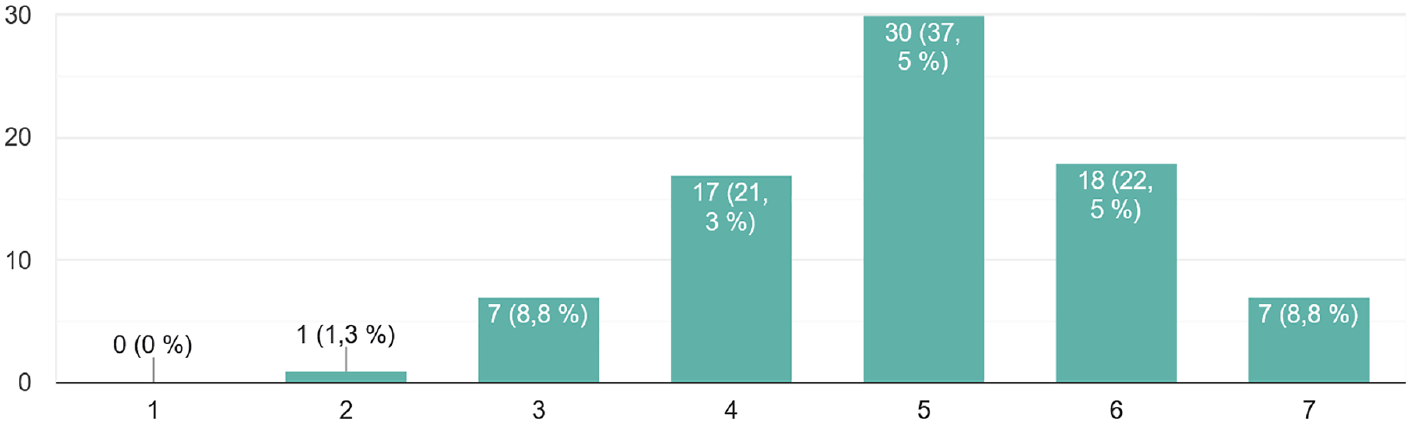
Subjective Religiosity from ‘not religious’ (1) to ‘very religious’ (7).
Denominational Affiliation. 83.5% of the participants identified themselves as Lutheran or Reformed, 7.6% as other Protestant denominations (Evangelical, Pentecostal, etc.) and 6.3% as Roman Catholic, one person as non-religious and another as another Christian denomination. One person did not indicate their religiosity. Given the context of worship at the German Protestant Kirchentag, the majority belonging to institutionalized Protestantism is hardly unusual. Given the homogeneity of denomination, the data set did not allow for robust conclusions based on this criterion.
Emotion Rating. Participants rated 16 different emotions on a 7-point Likert scale, with opposite emotions on the side, using the well-established UEQ+ (accessible at https://www.ueq-online.org/) developed by Schrepp and Thomaschweski, which has been used in various settings to assess the experiential value of technology. The UEQ+ consists of different scales, which are composed of items representing different emotions. For this research, the scales measuring attractiveness, stimulation, usefulness and value were considered relevant to this project. Scales that are relating to the personal interaction and customization (e.g., adaptability or perspicuity) or those that are measuring the experience of the developers (e.g., dependability) were excluded as well. Schrepp and Thomaschweski (2019) also advised which scales are best used in which context. The selected scales are both rather broad, which makes them suitable for various experiences attendees could have had with the church service, as well as focused on emotional reactions. Rather than rating the service as a product, these scales emphasize the subjective experience of the participants.
Data Analysis and Results
In the quantitative analysis (see Figure 3), some trends are evident. Items categorized on the emotional stimulation scale (items rating experiences as interesting, exciting, valuable and motivating) score high across the board. However, as with all responses (see Figure 4), a high standard deviation is indicative of a polarized reception among participants. This striking discrepancy is particularly evident in the field scaling the question of usefulness (which contains the items useful, helpful, beneficial, rewarding). Both the overall attractiveness (items rating the experience as enjoyable, good, pleasant and friendly) and the presentation value (value, presentability, tastefulness and elegance) fields were rated rather low on average. The Alpha-coefficient of a fifth Theology scale that was part of the questionnaire was not high enough to be considered further (Cronbach alpha: 0.69).
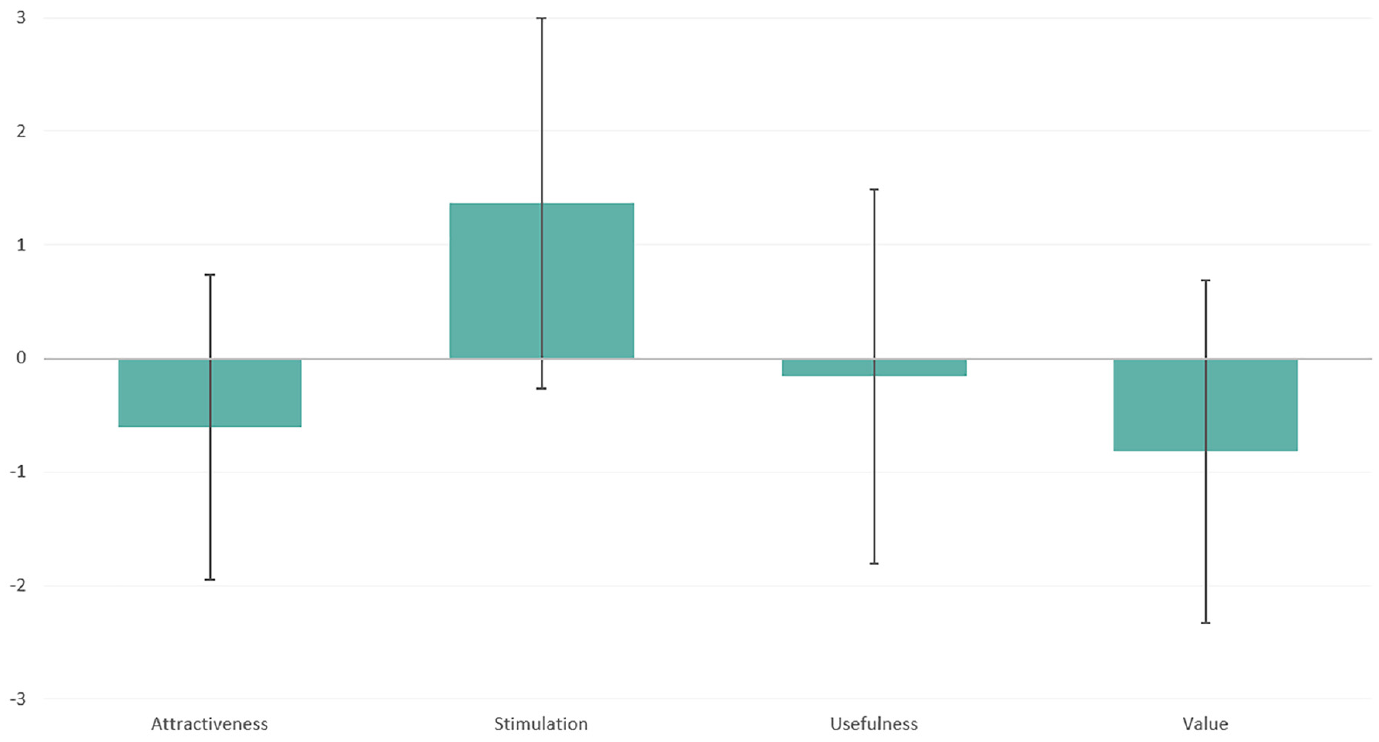
Overall scores on the UEQ+ scales with SD.
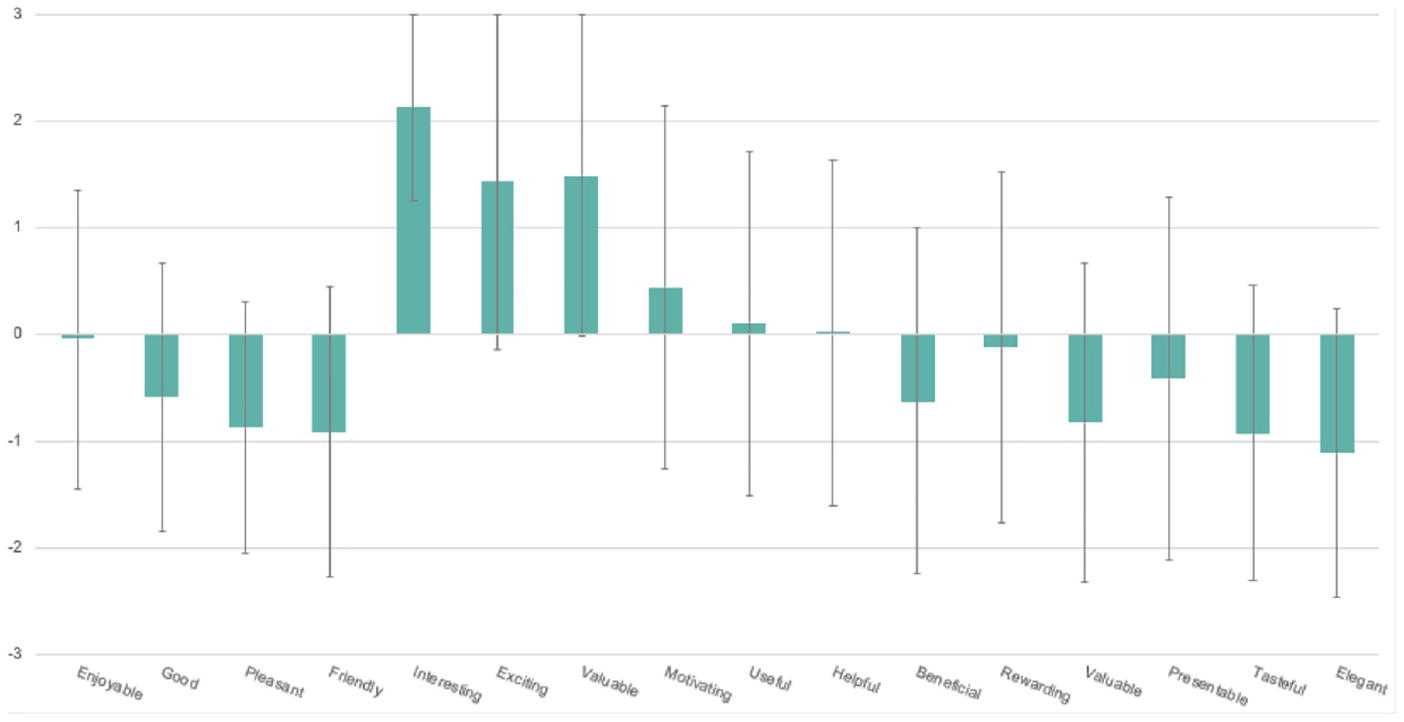
Individuals items of the UEQ+ of all participants with SD.
When testing the hypothesis that age plays a role in the reception of the AI directing the service, the results (see Figure 5) were in line with what might be expected: comparing the group of participants under 46 and those over 45, the younger people found the experience more attractive (µ = −0.45) than the older participants (µ = −0.76), while the latter were more stimulated (≤45: µ = 1.45; >45: µ = 1.28). Both could be explained by the assumption that younger participants are, on average, more experienced and familiar with new technology and interaction with non-human humanoid entities, which would explain both their relatively higher affinity and their lower stimulation by such an event. While younger participants are on average almost undecided about the usefulness of such technology (µ = −0.03), participants in their mid-forties and above are more reluctant (µ = −0.28). Finally, the value of the presentation is low for both groups, but younger churchgoers rate it slightly lower (µ = −0.9) than older ones (µ = −0.76). It is reasonable to assume that the uncanny experience and the hype around AI have left people underwhelmed by the technical state of the art.
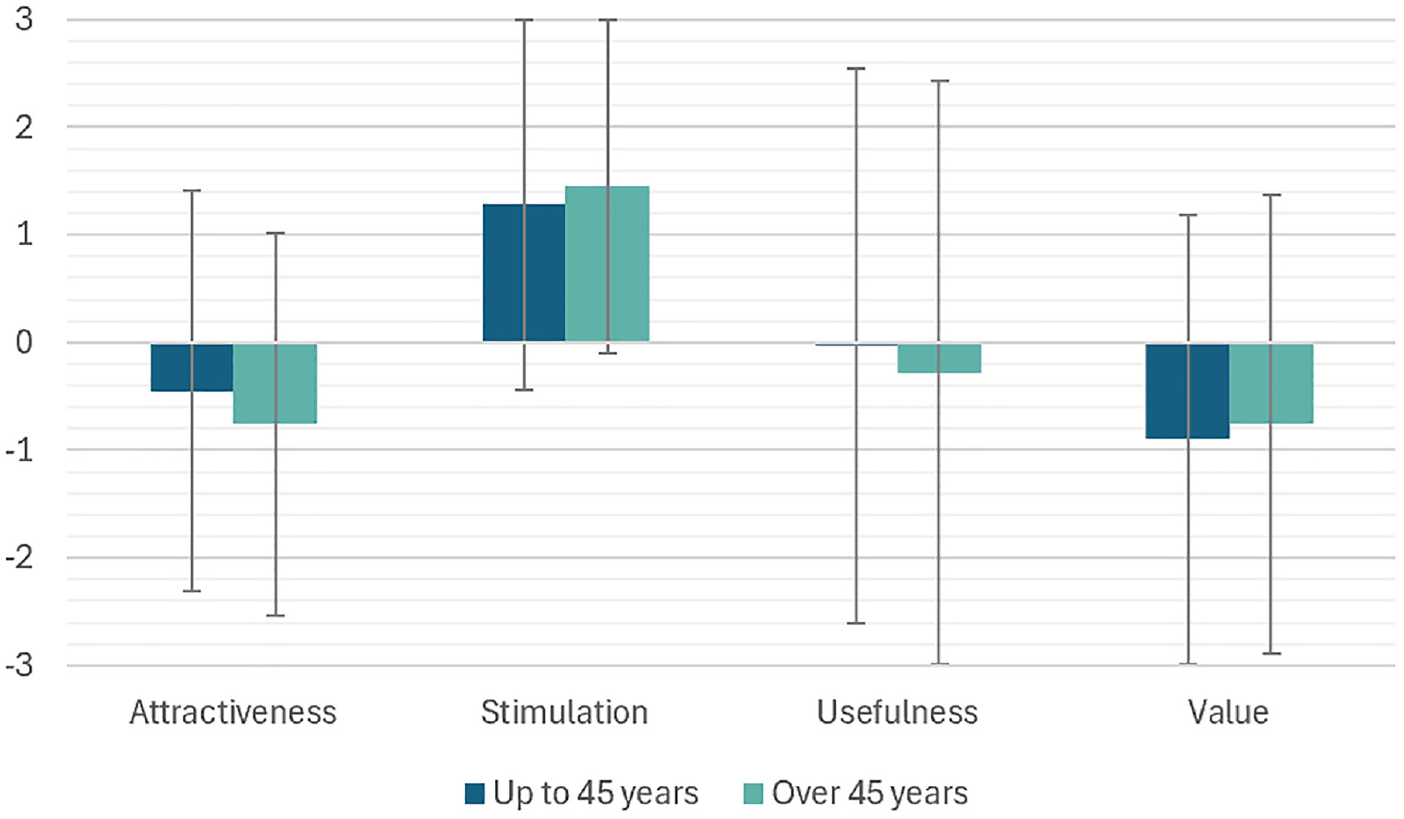
Different age groups with SD.
Subjective religiosity did not appear to play a significant role in the reception of AI-led worship among the participants (results not shown). This may be due to the relatively high level of subjective religiosity (68.8% scored 5 or higher on the scale). The research does not suggest a correlation between subjective religiosity and AI emotional stimulation.
Qualitative Results
In addition to the quantitative measures after the event, a brief questionnaire before and after the liturgical part allowed participants to express their reactions in an open-ended online survey using Mentimeter. The qualitative analysis was done by adhering to tested principles of qualitative research in coding the responses for deductive categories, which were used as a framework for categorizing the most prevalent reactions.
Two open-ended prompts were given to the attendees. They were asked: “When I consider that I am about to be led through a service by an AI, I …” before and “My experience: What became clear to me…” afterwards. This gave attendees the opportunity to express what they expected and what they experienced in a more open way than the standardized questionnaire allowed. In total, 436 individual reactions were given to the first prompt (with 316 individual respondents) and 314 (with 194 respondents) reactions afterwards. Giving multiple responses was allowed.
Content Analysis and Results
Among the 436 reactions, 267 were relevant to the question. Others were either unintelligible or did not relate to the prompt. Regarding the expectations before the event, the computer aided structuring content analysis (Kuckartz 2016; Mayring 2014) assigned four deductive categories to the material. While the brevity of the answers, which oftentimes did not exceed a couple of words, made conventional coding challenging, four substantial codes were prevalent. These were either stated verbatim or circumscribed with similar words: curiosity (61%), fear (10.8%), skepticism (9.7%) and anticipation (8.6%). The percentages represent the frequency of these categories among the relevant answers. The other 10% of the answers is made up by general reflections on the topic or not really informative about the subjective expectation (e.g. “I am unsure, what will happen”). Curiosity was the most prevalent notion, with 162 mentions like “(I am) curious” being by far the most frequent answer. While this does not say much about the respondents' assessment, there was no common attitude among the more instructive notions.
One in 10 participants expressed some form of discomfort with what they were about to experience. One participant articulated: “The idea of such a versatile AI makes me anxious and horrified.” Another one added: “I am a little disturbed.” While both anxiety and skepticism can be seen as signs of reluctance, there was a difference between those who felt anxious and uncomfortable about the intrusion of AI into the religious sphere, and those whose skepticism was more technical in nature, wondering if the technology would deliver on the promise of real worship: “I am really curious how this is supposed to work…,” others added “I fear that I will be bored.” or “I hope the technology will hold up.”
A small minority of respondents openly expressed their positive feelings and excitement: “I am full of excitement.” or “COOL” or “I am […] happily excited.” Only one person openly expressed dislike of the format (“I believe it will be the worst of all church services taking place today at the Kirchentag.”), while another response could be interpreted in a similar way, questioning: “Did God want this?” This lack of overt reluctance needs to be interpreted cautiously, since those who reject the concept outright most likely avoided the event for that reason, leading to a self-selection effect in the results.
The reaction immediately after the service showed a wide range of experiences with diverse comments. Most of the participants were critical in their response (see Figure 6). One believed it to be a “Mockery of a church service.” Another the “Devaluation of everyone participating in a church service.” The main line of criticism was aimed at technical flaws in the execution. These included remarks like “Monotonous, no breaks” or “It is hard to follow an artificial voice. Reminds me of a GPS.” Another person added: “The entirely 2D representation with a permanent view into the face is unnatural, especially during prayer.” The criticism was rarely blunt, but rather complex and ambivalent. The notion that people are irreplaceable as pastors was prominent. Many of these comments came with the caveat that it could be a matter of time. “How far this all has come. (Yet) AI is worse than me. Not spontaneous, not emotional, not personal. But this sadly will change as well.” Similarly: “I believe the importance and work of pastors will change radically and very rapidly.” or “The gap has become very narrow.”
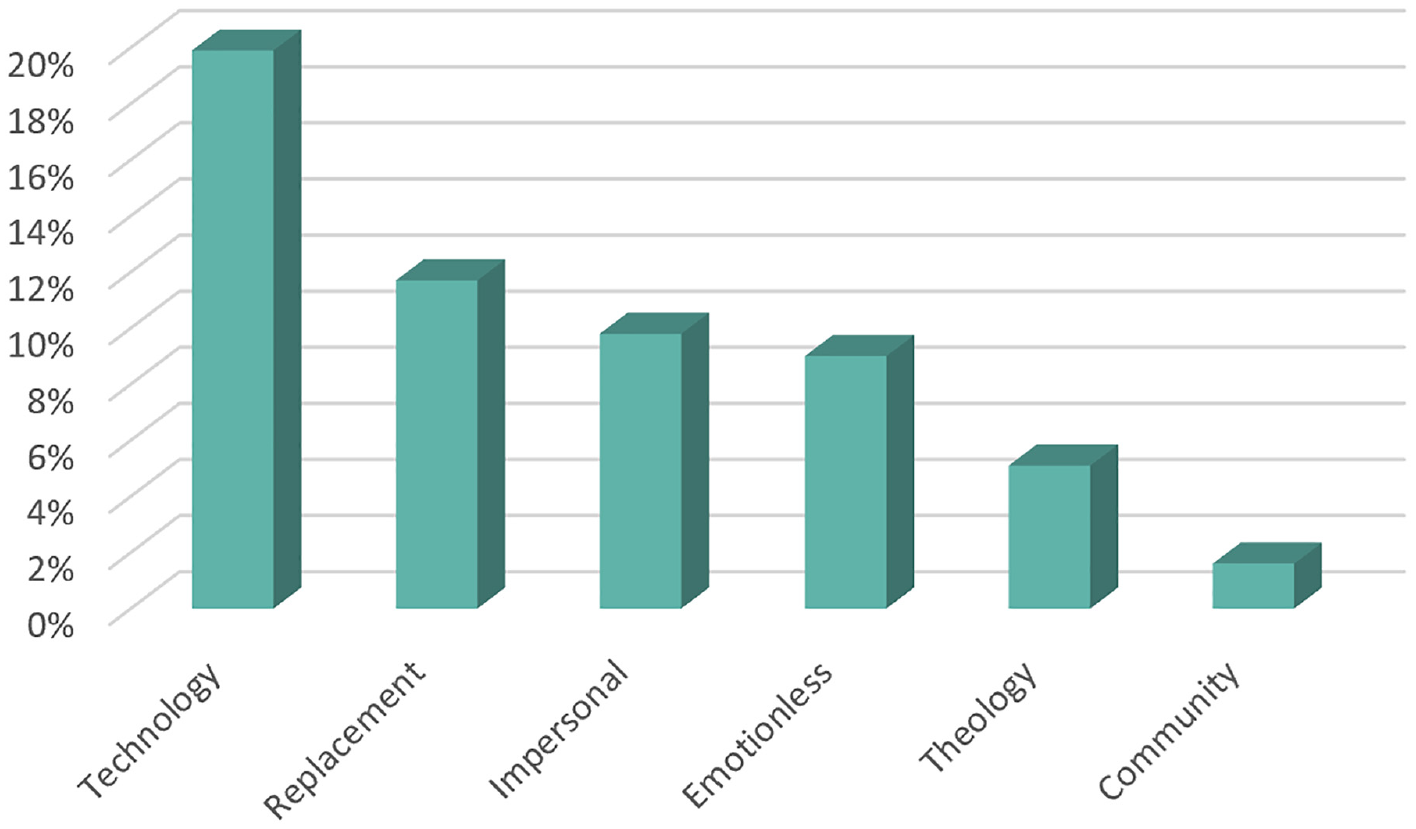
Most prevalent points of critique (with at least four critical votes on the subject).
The theology articulated by ChatGPT was criticized by several participants. In particular, its affinity for conservative and pious theology, as well as its gospel of self-optimization. Other recurring points of criticism concerned the feeling of community during the event. Reactions were ambivalent here: while someone noted that they felt an absence of community, others insisted that the community was palpable, despite the lack of connection with the AI pastor. This feeling was especially notable in moments of prayer. Other reoccurring aspects were the absence of emotion of the AI, which made it feel detached and impersonal.
Although most responses were critical, a significant group was positively surprised and impressed by what they saw: “The language skills are surprisingly pleasant.” or “How much GPT is actually capable of. I did not know that it is so capable of imitating language and humans.” Someone else rated the experience: “Impressive how much is already possible.” Additionally, several participants made ambiguous statements about the similarity between human-led worship and the AI version, suggesting that existing forms of worship are hardly better or less vague than what AI can easily copy: “I have heard worse sermons before.” or “At times closer to colleagues than we would like to admit.”
Most emphatically, four participants explicitly stated that they expected this to be the future (“This could be her (sic!) future without Pastors in the congregation.”) and described what they experienced as already sufficiently capable of conducting a worship service. “AI conveys a drawing from the depths of the church's tradition and can transport ancient truths into modern contexts.” Or even more explicit: “Spiritual feeling was present!” In summary, there was skepticism and limitations in the technology, yet there were also some participants who expressed having spiritual experiences in connection with the AI worship service.
Discussion
Several interesting points can be drawn from the results of the study. These points warrant further discussion and investigation.
Practical-Theological Implications
There are wide discrepancies in the reception and mixed results on the question of the desirability of incorporating AI into the specific practice of worship. The results evidence a diversity of opinion, which ranges from anticipation like “I am looking forward to the future” to discontent like “Incredibly terrible.” To decide either for or against the usefulness of such technological advances would be to exclude a significant portion of the participants. Clearly, a relevant number of participants were invested in the experience, while others were irritated.
Whether a long-term exposure to such an AI-based worship service would change the experience cannot be answered here but would be interesting for understanding the overall impact of artificial intelligence in religious practice. Further, larger, and more precise research would be helpful in future studies. Using an approach based on uses and gratification theory (comparable to e.g. Ratcliff, McCarty, and Ritter 2017) could be informative. To do so would require a more conversational methodology to interviews investigating the specific needs and intentions of each participant. The data suggests an ambivalent stance of attendees toward the experience of AI in religious worship.
Expectations and Overestimations About AI in Religious Practices
The data indicate a wide array of expectations about what AI is and does in worship practices. While some were surprised about the general capabilities (“How much GPT is actually capable of”), the majority was underwhelmed or had expected more of the state of technology: “AI performance [is] surprisingly bad.” Amaras’ law also applies to religious settings: “We tend to overestimate the effect of a technology in the short term and underestimate the effect in the long term.” (Ratcliffe 2016). It is worth noting that the service was conducted with limited preparation time and resources, and a more impressive realization of the project could be imagined, especially due to the technological advances made in the meantime. Yet, there was still an obvious case of overestimation in many of the responses. Since most churchgoers are not avid technophiles, false assumptions and conclusions about the technology seem inevitable. It is unclear whether this technology will soon, or ever, reach a level of sophistication that participants will find acceptable on the whole.
While interest and openness to technological innovation in the religious sphere is conceivable, the gap between expectation and reality may be an ongoing problem in the acceptance of technology. This is all the more notable given the highly complex nature of a liturgy. Minute details, movements, and symbolism must be considered, which makes religious practices particularly challenging for technological advances, even more so when they are supposed to be largely autonomous and not corrected at every move by a human expert. The acceptance of AI in religious practices hence is likely to be related to the overall knowledge about the technology. At the moment, AI in religious practices is affected by a high degree of ignorance about their limits and possibilities.
Religious Experiences with Technology
Participants in the questionnaire report having made religious experiences with the technology. While the quantitative measure is not sufficient to separate positive experiences from specifically religious experiences, some of the written responses suggest that some experiences are interpreted as specifically religious (“Spiritual feeling was present!” or “God works in various ways”). Whether this is sufficient for that label may still be debatable. Religious or not, the seriousness of the experiences is hard to deny. While the number of people who are deeply moved by such practices may be small, they should still be taken seriously. Further research would be needed to explore the question of whether our society is becoming more receptive at the experiential level to technology in religious and spiritual matters. The data clearly suggests that such experiences are possible.
Anthropological Differences
Technology is a prominent part of the responses, yet some hurdles may not be overcome by innovation, since they are grounded in differences between AI and humans. Some answers pointed out genuine anthropological differences. Three of them, reflected in the reactions, are worth mentioning. First, there is an undeniable gap between humans and AI in their subjective nature (“AI can’t incorporate personal experiences”). As religion deals with mortality, guilt, fear, pain, and other emotive experiences, AI relates from an unobstructed distance. This, secondly, has to do with their lack of embodiment (“Embodiment and resonance are missing”). While algorithms can have a spatial representation, as robots do, they lack the flesh of people in the pews (Henry 2016).
Similar to the lack of subjective experiences, respondents clearly felt a disconnect with the AI due to them missing human flesh (“The Word became flesh… For a true experience of faith, I need a human experience”). What the reactions here suggest, thirdly, is a monumental difference between human-human and human-AI relationships. What the participants were missing was the interpersonal relationship that humans experience in religious communities. When the human pastor is replaced by an avatar, this basic human need for community and co-presence between congregation and pastor is no longer met (“No personal relationship to the speaker yet” or “Somewhat impersonal.”).
However, what this reveals is a narrow focus on the pastor. With the AI failing to evoke interhuman resonance, the peers in the pews became more present, and through interjections during the sermon and communication between churchgoers, different and unusual forms of interpersonal relationships became more prevalent (“Experienced a sense of community during the Creed and the Lord's Prayer.”). This underscores the empirical research on emotions during the sermon where participants repeatedly suggest, the intricacy of religious experiences in communal practices. While some proponents of the protestant liturgical tradition long held the belief that the pastor is the integral focus of the experience of the sacred (Josuttis 1997) more recently empirical research shows how the congregation itself creates and atmosphere of joined religious emotionality (Pohl-Patalong 2011).
How and whether these differences could be overcome remains highly controversial. Remaining in an empirical framework this difference could be explored by contrasting AI church services with human-led services. Additionally, it could be possible to have AI-human congregant interactions that are contrasted with human-human congregant interpersonal interactions. While there might remain a gap between those two, further empirical research focusing on comparisons could provide the background for such assessments.
Limitations
The study has several limitations that warrant caution. All participants had to be fluent in German both to attend the service and to complete the survey. The study only allows conclusions to be drawn about a specific group of religious people, notably mostly Lutheran attendees at a religious celebration in Germany. Research participants volunteered for both the service and the survey. In contrast to the physical survey, it was not possible to participate in the qualitative questionnaire without a smartphone. Due to the infrastructure of the Mentimeter app, responses were anonymous and did not allow for follow-up questions.
Inputs by experts might have influenced the responses by the participants to some degree. While the qualitative questionnaire was already concluded, when the panel of experts discussed their experience, most of the participants of the quantitative survey rated the experience after having heard experts reflecting on the event. This might have to some extent swayed participants in their reflection.
In addition, the measure of subjective religiosity was not well specified. The self-assessment used in the survey may be one reason why religiosity yielded inconclusive results. Important and more complex measures about religious beliefs or behavior could be included in future studies to yield a deeper understanding. While the used UEQ+ successfully measured different degrees of emotional reaction, models more finely tuned to the specific religious context might bring a more granular understanding of the subject.
Further research may be needed to determine how religiosity correlates with the reception of AI in religious practices as such. More generally, more and larger research samples could investigate receptivity among more religiously diverse groups, with attendees representing a broader range of denomination affiliations. It would also be of value to seek to overcome self-selection effects by hosting an AI service within an event that was not explicitly religious in order to gauge interest among unaffiliated or non-religious attendees.
Conclusion
The rapid developments in the field of artificial intelligence affect every part of society. This includes the religious sphere, where AI has the potential to transform religious practices. While there is much debate about the ethical and dogmatic considerations of such advances, the field lacks empirical evidence, especially regarding the reception of AI in religious practices. To provide researchers with such evidence, participants in the first large-scale AI worship service were able to share their experiences in a multi-method survey, which is analyzed here.
This research note aimed to provide a better understanding of the potential of religious communities to incorporate AI into their practices, as well as the pitfalls and limitations of such attempts. To this end, an overview of the background and circumstances of the event was provided. Then, a mixed-methods study consisting of two different modes of analysis, quantitative and qualitative, were presented. This study provided insights into the experiences of the attendees at an AI religious worship service. While participants were stimulated by the experience, both the value and attractiveness of the service were rated low overall. There was also no consensus on the usefulness of the technology. The qualitative study revealed a variety of concerns with inadequate technology, the prospect of replacing human pastors with artificial intelligence and impersonality being the strongest points of contention. Yet, some participants had spiritual experiences, and age differences were noted such that younger participants found the AI more attractive. Overall, a wide range of emotions were expressed in the comments. The discrepancies in reception, the status quo of technology, the potential of religious experience with technology, and the anthropological differences between AI and humans made up the discussion section at the end.
Supplemental Material
sj-pdf-1-rrr-10.1177_0034673X241282962 – Supplemental material for Sacred Meets Synthetic: A Multi-Method Study on the First AI Church Service
Supplemental material, sj-pdf-1-rrr-10.1177_0034673X241282962 for Sacred Meets Synthetic: A Multi-Method Study on the First AI Church Service by Jonas Simmerlein in Review of Religious Research
Supplemental Material
sj-pdf-2-rrr-10.1177_0034673X241282962 – Supplemental material for Sacred Meets Synthetic: A Multi-Method Study on the First AI Church Service
Supplemental material, sj-pdf-2-rrr-10.1177_0034673X241282962 for Sacred Meets Synthetic: A Multi-Method Study on the First AI Church Service by Jonas Simmerlein in Review of Religious Research
Footnotes
Acknowledgements
The author thanks the Deutsche Evangelische Kirchentag for hosting the event, especially Daniel Hufeisen and Jürgen Pelzer. He also thanks Andrea Reutter for practical assistance with the survey on site.
Declaration of Conflicting Interests
The author declared no potential conflicts of interest with respect to the research, authorship, and/or publication of this article.
Funding
The author received no financial support for the research, authorship, and/or publication of this article.
Ethical Approval
This research paper was conducted following the ethical standards of the University of Vienna. Informed consent was obtained from all individual participants included in the study. The participants were informed about the purpose of the study, the procedures involved, potential risks, and their right to withdraw from the study at any time without any consequences. All data were anonymized to protect the privacy of the participants.
AI Declaration
AI-Tools (ChatGPT, Pipio, Aiva, DeepL) were only used in the process of creating the church service. The author is solely responsible for the content of the text. AI was not used for writing or improving the content of the text.

Data Availability
Supplemental Material
Supplemental material for this article is available online.
Author Biography
References
 . [A Worship Service Led Entirely by ‘Artificial Intelligence’ - Excerpts from a Post-Event Interview.]
Supplementary Material
Please find the following supplemental material available below.
For Open Access articles published under a Creative Commons License, all supplemental material carries the same license as the article it is associated with.
For non-Open Access articles published, all supplemental material carries a non-exclusive license, and permission requests for re-use of supplemental material or any part of supplemental material shall be sent directly to the copyright owner as specified in the copyright notice associated with the article.
