




Abstract
Different religions may have different cultural values toward volunteering in the wider community. Although prior research has examined how individual religious characteristics may influence volunteering, comparatively less is known about how different religious contexts in which one is embedded may bring about variations in volunteering. To fill in this gap, this study applied multilevel analyses to merged data from the National Study of Youth and Religion (NSYR), the U.S. Census, and the Religious Congregations and Membership Study (RCMS). Results suggest that a county’s Catholic population share was positively associated with the frequency of youth volunteering even after controlling for a wide range of individual and county-level variables. Surprisingly, an increasing county-level Catholic population share may even strengthen the positive effect of parental volunteering influence on youth volunteering. In contrast, the county-level evangelical Protestant population share bear a negative relationship with youth volunteering frequency, which was mediated by county-level socioeconomic controls.
Introduction
Volunteering is defined as a service activity that benefits the target individual or group with no financial or social rewards expected (Wilson 2000). For adolescents and young adults who volunteer, volunteer experience was associated with a wide range of positive life outcomes, such as less involvement in crimes (e.g., Ranapurwala, Casteel, and Peek-Asa 2016), higher academic performance (e.g., Moorfoot et al. 2015), and better psychological outcomes (e.g., Zaff et al. 2003). In addition to those desirable outcomes, research shows that volunteering has been gaining popularity among U.S. adolescents and young adults, so much so that many young people have turned from conventional politics to community volunteering in order to better address public problems (Dalton 2020; Hill and den Dulk 2013).
Given that volunteer activities usually require individuals to step out of their home and actively engage with others in the community, what kind of family environment in combination with what kind of community might make one more or less likely to volunteer? Prior research suggests that when a certain kind of religion dominated a community, the residents living in said religious context tended to have a higher or lower level of volunteering (e.g., Lam 2006). However, most previous research measured religious context at the national level, ignoring the more immediate religious context for individuals, such as those at the county level. Furthermore, lower-level religious context may possibly mediate the effects of national-level religious context on individual volunteering.
When it comes to the particular interest of this study, what kind of religious context may influence adolescent and young adult volunteering? More importantly, as an instrumental agent of socialization, family impacts on youth volunteering have not been sufficiently studied in connection with religion. Will what the moral communities thesis has argued about work? In other words, will parental volunteering socialization be more effective on their child when the surrounding religious context is infused with values that support volunteering? Will parental socialization on volunteering become less effective when the local religious environment is less supportive of volunteering?
Answers to these questions might be of special importance to adolescents and young adults given the positive life outcomes that volunteer experience may produce during this unique life stage, the fact that a majority of adolescents and young adults still live with their parent(s), and the embeddedness of family within a local religious context. Nevertheless, most research on religion and volunteering tends to focus on religion at the individual level. Even among the scant research looking into the multilevel effects of religion on volunteering, no research so far has ever looked into the ways in which family characteristics interact with the surrounding religious context. In this study, individual-level data on youth and family characteristics were merged with county-level data to better understand this understudied yet highly important topic.
Literature Review
Religion and Volunteering
Prior research on individual-level religiosity and volunteering tends to agree that individual religious service attendance may promote volunteer activities through a variety of mechanisms, such as effectively creating needed social networks and delivering information on volunteer opportunities (Becker and Dhingra 2001; Smidt 1999; Taniguchi and Thomas 2011; van Tienen et al. 2011; Wilson and Musick 1997; Yeung 2004). Perhaps due to differences in samples and how religious beliefs were measured, prior research diverges on the relationship between individual religious beliefs and volunteering. For example, while data from 27 European countries revealed no relationships between beliefs in sin and the afterlife and most forms of volunteering (Prouteau and Sardinha 2015), another study based on a US sample showed that believing in a judgmental God may reduce the likelihood of volunteering (e.g., Mencken and Fitz 2013).
Relatively little research has been conducted to understand the relationship between religious context and volunteering. Among those multilevel studies, a majority of them operationalized religious context at the national level, such as the mean religious service attendance rate of a country and the percentage of residents from different denominations. For instance, using a list of countries that were mostly developed, Curtis, Baer, and Grabb (2001) found that multidenominational Christian and predominantly Protestant countries tended to produce a higher rate of volunteering.
Using a more diverse set of countries, a similar Protestant contextual effect was also found in Lam’s (2006) research. Lam (2006) found that while a higher percent of Protestant residents in a country was associated with a higher voluntary membership rate, higher percent of residents affiliated with Catholicism may have the opposite effect. To explain this denominational variation, Lam cited prior research and argued that culture matters. In other words, Catholicism values collectivism and reliance on hierarchical authority, which may lead to less activism from individual believers. In contrast, Protestantism values individualism, and individuals are thus encouraged to get involved in volunteer activities without too much institutional constraint and dependence (Greeley 1989; Lam 2006).
When it comes to national-level religiosity, due to differences in research design, especially sample compositions, different studies have reached different conclusions. Based on a sample of 53 countries around the world, Ruiter and De Graaf (2006) found that national-level religious service attendance rates was positively associated with general volunteering. What’s more, the devoutness of a country may expose secular individuals to a network of religiously active individuals, more opportunities to volunteer, and norms to volunteer, significantly increasing secular residents’ likelihood of volunteering.
Consistent with what Ruiter and De Graaf have found, Bennett and Einolf (2017) revealed a positive relationship between the national-level religious service attendance rate and helping behaviors based on a sample of 126 countries across the globe. Interestingly, when limiting the country list to European Union countries, especially EU countries with lower overall religiosity, a negative association between national religiosity and volunteering was found (Prouteau and Sardinha 2015). The authors speculated that this EU exception might be due to the unique secularization process in Europe, where religious organizations have been increasingly segregated from many social activities, including volunteering. Therefore, unlike residents from other regions, European residents tend to perceive volunteering as irrelevant to religion.
However, measuring religious context solely at the national level may run the risk of an ecological fallacy. In other words, different regions of a country might have distinctive religious subcultures or levels of religiosity, leading to differential life outcomes even within the same national context (Stark 1996). At the micro level, individuals may act upon homophily and form their own (non) religious social circle keeping themselves from the influences of the dominant national religion (Rivera, Lauger, and Cretacci 2018). Therefore, national-level religious contextual influence on volunteering might be filtered through layers of “protection” at the local level as well as at the personal network level before reaching the target individual.
Matching county-level religious variables to individual-level survey data, Borgonovi found that higher county-level religious pluralism was associated with more religious volunteering. Meanwhile, individuals were more likely to volunteer in religiously plural counties, regardless of whether or not their own religion represented the majority of the local religious population (Borgonovi 2008). Using a religious market perspective, the author speculated that religious pluralism may introduce more competition between different religious groups. As a result, religious leaders in religiously pluralistic counties may be more motivated to create social pressures to incentivize their followers to actively contribute to causes (Borgonovi 2008). These results overall suggest that religious context at the lower level, in this case, the county level, may influence one’s probability of volunteering.
However, Borgonovi’s study was based on a relatively small and less representative sample of U.S. households. As a result, the findings may not be generalizable to the general population. In addition, many religious contextual measures were binary. For example, Borgonovi simply measured county-level representation of different religious groups as conservative Protestant majority county, liberal Protestant majority county, and Catholic majority county, with “1 = yes” and “0 = no” response categories for each variable. However, doing so may be arbitrary and prevent us from better understanding the extent to which the presence of a certain type of religion may influence volunteering.
Overcoming the issues above, Lim and MacGregor found that the average level of religious participation in a county was inversely associated with volunteering among the nonreligious in the US. In addition, a higher county-level evangelical Protestant population share was negatively associated with volunteering among occasional and frequent religious participants. In contrast, county-level Catholic population share was unrelated to volunteering across different levels of religious participation (Lim and MacGregor 2012). Therefore, religious composition at the county level seems to influence volunteering. However, in Lim and MacGregor’s study, volunteering was measured as a binary variable, making it difficult to better evaluate the extent to which county-level religious context may influence volunteering. More importantly, county-level religious contextual effects were studied in isolation from an even more proximate religious context—the social network. As a result, we are unable to find out whether or not county-level religious effects on volunteering may be mitigated by social networks.
When it comes to network-level religious influence, a prior study shows that having more religiously active friends was associated with more involvement in civic activities, including volunteering. In addition, religious social networks may also explain away the religious service attendance effect on volunteering (Lewis, MacGregor, and Putnam 2013). However, religious context that is higher than the network level was not controlled in Lewis and colleagues’ study. Therefore, it remains unknown how far and above religious context may independently affect individual volunteering—will it be county-, state-, or national-level religious context?
Religious Context, Family, and Volunteering
Besides a lack of research on local and micro-level religious context, more research on religion and volunteering should be focused on a critically important life stage—adolescence and early adulthood (Smith and Denton 2009; Smith and Snell 2009). Compared to formal adults, adolescent and young adult behavioral outcomes, including volunteering, tend to be strongly influenced by various agencies of socialization, such as school (e.g., Hill and den Dulk 2013; Wallace et al. 2007), peers (e.g., Adamczyk and Palmer 2008), and family (e.g., Petts 2009). Although prior research on religious context and volunteering has examined the roles of school and peer (e.g., Hill and den Dulk 2013), not enough research has been conducted to investigate how family, another instrumental agency of socialization, may interact with religious context in shaping youth volunteering.
When studying youth behavioral outcomes, the roles of family should not be overlooked. For instance, various studies on youth development have suggested that parents may exert a direct, lasting effect on their child independent of peer and school influences (Martin, White, and Perlman 2003; Myers 1996). Other studies suggest that even though parental influence may seem to ebb over the years, it still exerted a strong influence over whom the youth befriended and what kind of school the youth attended. Thus, parents were never completely out of the picture and may influence their child indirectly through the channeling process (Himmerlfarb 1980; Martin et al. 2003; Regnerus, Smith, and Smith 2004).
In what ways would parental influence on youth volunteering fit into a religious context? According to the moral communities thesis, when one’s beliefs and values on certain issues are endorsed by the surrounding environment, such beliefs and values may be strengthened and exert an even stronger impact upon the individual (Regnerus 2003; Stark 1996). According to this argument, when it comes to parental influence on youth volunteering, it is possible to have different experiences with parental socialization on volunteering in different religious contexts. In other words, the positive parental influence on volunteering might be strengthened when the local religious context also promotes volunteering. Conversely, such a pro-volunteering parental influence might be weakened when it does not receive enough encouragement from the local religious context.
What kind of religious context may promote or reduce volunteering? The civic community theory suggests that the evangelical Protestant culture tends to value in-group bonding as social capital (Beyerlein and Hipp 2005; Putnam 2000). In other words, the evangelical Protestants are more concerned with their own in-group wellbeing than that of the wider community. Such a focus on in-group bonding over the wider community is also consistent with individualistic, anti-structural, evangelical Protestant cultural values. Those cultural values argue that social problems, such as poverty, are due to personal moral failures rather than structural problems, such as inequality or a lack of opportunities. Correspondingly, the more effective way to fix those social issues should be personal religious and moral education rather than structural solutions such as active social investments and interventions (Emerson and Smith 2000). Such a cultural value that ignores the wellbeing of outgroup members and the wider community while diverting collective social efforts to religious ones has been blamed for a host of adverse outcomes, such as higher mortality rates (Blanchard et al. 2008), higher divorce rates (Glass and Levchak 2014), and higher crime rates (Beyerlein and Hipp 2005).
When those values become prevalent in a community, it might be possible that locals are less concerned with and less motivated to take action to take care of the wellbeing of outgroup members in the community. Meanwhile, local leaders are less motivated to fund and organize community organizations to collectively fix social issues, so there are fewer local, nonreligious social organizations available to the youth to volunteer for and a resulting lower level of volunteering among the local youth. Therefore, this study hypothesizes that:
Here we need to note that in Lam’s study reviewed above, Lam found that country-level Protestant population share was associated with more volunteering. The difference between Lam’s finding and what this study is hypothesizing is mainly due to two factors. First, Lam’s study used a generic term for Protestantism without looking into the important distinctions among different Protestant subcultures and denominations, particularly those between evangelical Protestants and others. Second, Lam’s study is not limited to the United States; it also covered various countries on different continents. However, the civic community theory and what the author is hypothesizing are solely based on the U.S. social context. In the U.S., due to unique political and historical processes, the evangelical Protestant subculture bears very different cultural traits and has very different social impacts than its counterparts in Europe or elsewhere (Burge 2021; Pew Research Center 2022). Therefore, it should be no surprise to expect a different finding or find something at odds with Lam’s study.
In contrast to the evangelical Protestants, the Catholics are more likely to embrace bridging social capital and actively collaborate with different social groups in the community. Such a cultural emphasis on bridging social capital and community collaborations goes hand in hand with beliefs that effective social investment and interventions should happen in order to address those pressing social issues plaguing the community (Beyerlein and Hipp 2005; Putnam 2000). Those cultural values and beliefs are reinforced by the church authorities’ stance on social actions and community well-being. For instance, Pope John Paul II has personally called for more collective, responsible, and equitable social development to alleviate the sufferings of the poor and powerless in the wider community (Anon 1987). Such a pro-social value and cultural emphasis on collective, social actions have been linked with some positive outcomes in communities with a high population share of Catholics, such as lower crime rates (Beyerlein and Hipp 2005) and better health outcomes (Nie 2021).
Therefore, we may suspect that counties dominated by Catholic cultural values may have more funding and support for local social organizations, more opportunities for the youth to volunteer in social services, and perhaps more social expectations or norms for volunteering. Taken together, based on the civic community theory and relevant literature, this study hypothesizes that:
When it comes to parental influence on youth volunteering, it is possible that parental influence may vary across different religious contexts. Prior research using the moral communities thesis found that the prohibitive effect of individual religiosity on delinquency tended to be stronger in communities where religious values were endorsed and emphasized, while weakened if the surrounding environment lacked religiousness (Stark 1996). Likewise, when parental pro-volunteering value is well echoed in the broader religious context, such value may have a stronger impact on the youth as compared to in other religious contexts where such value is not well received. Therefore, this study further hypothesizes that:
Method
Data
This study used merged data from wave 1 and wave 2 of the National Study of Youth and Religion (NSYR) for all individual-level measures. In addition, contextual-level data came from the U.S. Census 2000 and the Religious Congregations and Membership Study (RCMS) 2000. The NSYR surveyed a nationally representative sample of over 3000 U.S. adolescents, young adults, and their parents across the country. The investigators followed the survey respondents from 2003 until the early 2010s, examining various fields such as the survey respondents’ religious life, social and political attitudes, health outcomes, and socioeconomic background (Smith 2008; Smith and Pearce 2003, 2005).
The NSYR are panel data with multiple waves. This study used wave 1 (youth aged 13–17) and wave 2 (youth aged 16–20) of the NSYR data for a couple of reasons. To start with, due to the focus on parental influence, this study hoped that a significant proportion of the survey respondents still lived with their parent(s) during the survey. However, in wave 3 (aged 17—24), only 42% of the respondents still lived with their parent(s), which is a drastic drop from 82% in wave 2. Secondly, the dependent variable, volunteer activities, was measured as a dummy variable in wave 3. In contrast, the ordinal way of measuring volunteer activities in wave 1 and wave 2 allows for more accuracy when studying the extent to which religious context may influence youth volunteering.
To enable a multilevel approach to the study of the relationship between religious context and youth volunteering, county-level socioeconomic data, such as median household income and poverty rates, were merged into the NSYR from the U.S. Census 2000. In addition, the RCMS 2000 was merged into the data in order to equip this study with county-level religious context variables, such as the number of adherents of different religious denominations per 1,000 county residents in each county (Anon n.d.). These county-level religious and socioeconomic variables from the year 2000 were matched to Wave 1 and Wave 2 of the NSYR via county FIPS codes, respectively. In other words, if a NSYR survey respondent did not move to another county between waves, this respondent would have the same county-level variables for both waves. However, if a NSYR survey respondent moved to another county by Wave 2, a new set of county-level variables would be assigned for his or her county-level information in Wave 2. Supplemental analysis did not find any significant influence of moving on the main results of the study.
Measurements
Focal dependent and independent variables
The dependent variable was the frequency of volunteer work done in the past year, which was measured in both wave 1 and wave 2 of the NSYR. The question is, “In the last year, how much, if at all, have you done organized volunteer work or community service?” The response categories are 1 = never, 2 = a few times, 3 = occasionally, and 4 = regularly. The key independent variables were the log transformed adherence rates of evangelical Protestant and Catholic adherents per 1,000 population of a county calculated from the 2,000 RCMS data for the counties in which each NSYR respondent lives. The classification of denominations into denominational traditions was done in ways that parallel the classification used in the popular Steensland et al.’s (2000) classification of denominations in the US General Social Survey. Because the population share variables had a substantial positive skew, the natural logs of these population share variables were used. In preliminary data analysis, county-level mainline Protestant population share was also studied, which did not have any significant main effect on the outcome variable. Given its statistical insignificance and to save space, mainline Protestant population share was not included in the subsequent data analysis.
Control variables
This study controlled for a variety of variables that, as prior research suggests, may influence one’s volunteering. These control variables can be broadly categorized into individual-level controls and county-level controls. The individual-level controls captured the religious and demographic profile of the youth, their parents, and close friends, while the county-level controls were mostly informed by prior research that suggests that some contextual-level socioeconomic characteristics may deeply impact individual life outcomes (e.g., Leventhal, Dupéré, and Brooks-Gunn 2009).
For individual-level religious characteristics, this study controlled for the youth respondents’ religious service attendance frequency, frequency of reading religious scriptures alone, frequency of praying alone, importance of religion, and religious affiliation. The frequency of religious service attendance item has response categories ranging from 0 = never up to 6 = more than once a week. The response categories for the frequency of reading religious scriptures alone and the frequency of praying alone were worded and ranked in the same way, with 1 = never up to 7 = many times a day. The question about the importance of religion (salience) is, “How important or unimportant is religious faith in shaping how you live your daily life?” The response categories range from 1 = not important at all to 5 = extremely important. These variables were measured in both wave 1 and wave 2 of the survey. To reduce the numerous dimensions and the over-identifying problem that results, this study used the Principal Component Analysis (PCA) to extract a component that had an eigenvalue above one. All individual religiosity variables above were retained and formed a component, which was a covariate in the following regression analyses.
Individual religious affiliation came from an item used in the NSYR where respondents were asked to indicate which of a list of religious groups best describes them. This study used dichotomous indicator variables to code the following religious affiliations measured at both wave 1 and wave 2: evangelical Protestant, mainline Protestant, black Protestant, Catholic, Jewish, Mormon, unaffiliated, other religions, and indeterminate. In the wave 2 survey, black Protestants were divided into black evangelical Protestants and black mainline Protestants, but to keep the measures consistent across waves, this study recoded both of these subcategories into a black Protestant category.
This study also controlled for the following basic demographic characteristics of the youth: race (1 = White, 0 = others), gender (1 = female, 0 = male), age, and region of residence (the four major US census regions), which can be seen in Table 1. Besides controlling for the demographic characteristics of the youth, this study also controlled for the characteristics of the youth’s social network, which includes the number of friends that have “similar” religious beliefs, belong to the same religious group, are religious, and participate in a religious youth group.
Descriptive Statistics.
Besides tapping into the religious profile of a youth’s social network, this study also controlled for the number of a youth’s friends using drugs and in trouble for cheating, fighting, or skipping classes. All these social network variables were available only for wave 2 of the survey. For each of the variables, respondents could indicate up to five friends in response to the question. To reduce the numerous dimensions and the over-identifying problem that results, this study used the Principal Component Analysis (PCA) to extract two components that had an eigenvalue above one. The number of friends from the same religious group, are religious, and participate in a religious youth group formed one component, while the other variables formed another component. These two components were the network covariates in the following regression analyses.
This study also controlled for a list of variables related to parental characteristics that might influence youth volunteering. These parental demographic variables were only present in wave 1 of the NSYR. These variables include the basic demographic profile of the parent respondent, such as educational attainment (1 = less than 12th grade, 2 = completed high school, and 3 = beyond high school), household income ranging from 1 = less than $10K to 11 = more than $100K, and marital status (1 = married, 0 = otherwise).
More importantly, this study controlled for parental attitudes and behaviors toward volunteering. The parent respondents were asked for their own volunteer experience with the question, “In the last six months, have you (or your spouse/partner) done any volunteer work or community service with a group or organization?” The response categories are 1 = yes and 0 = no. In addition, the parent respondents were asked, “How important or not important is it to you that (your teen) does volunteer work or community service?” The response categories were reverse-coded into 1 = not important at all, 2 = not very, 3 = somewhat, 4 = very, and 5 = extremely important. They were asked, “How often, if at all, have you encouraged (your teen) to do volunteer work or community service?” The response categories are reversely coded into 1 = not at all, 2 = not very often, 3 = sometimes, 4 = fairly often, and 5 = very often. To reduce the numerous dimensions and the over-identifying problem that results, this study used the Principal Component Analysis (PCA) to extract a component that had an eigenvalue above one. All the parental volunteering variables formed a component of parental volunteering, which was a covariate in the following regression analyses.
Considering the religious influence that parents exert on adolescents, this study also controlled for four parental religiosity measures, including frequency of religious service attendance last year, importance of religion, frequency of praying for one’s child, and frequency of discussing religion with one’s child. To reduce the numerous dimensions and the over-identifying problem that results, this study used the Principal Component Analysis (PCA) to extract a component that had an eigenvalue above one. All the parental religiosity variables formed a component of parental religiosity, which was a covariate in the following regression analyses.
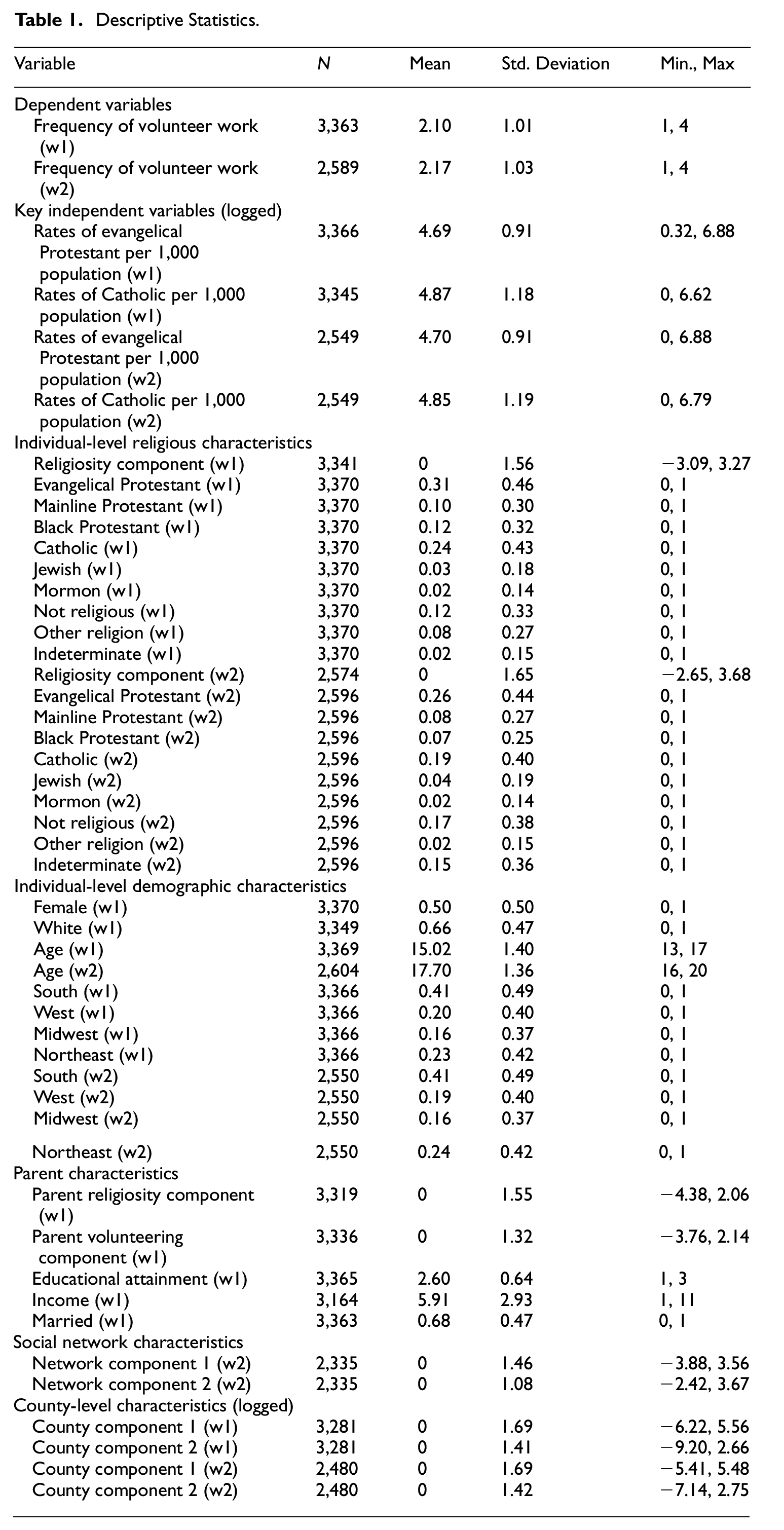
Finally, this study controlled for some county-level variables that have been widely used in prior research on community outcomes. Most of these county-level variables were drawn from the U.S. Census 2000, including the proportion of adults 25 and above with a four-year college degree, median household income, poverty rates, proportion of single mother household, proportion of African Americans, and the urbanization rate. To reduce the numerous dimensions and the over-identifying problem that results, this study used the Principal Component Analysis (PCA) to extract two components that had an eigenvalue above one. While county-level college education rates, median household income, and poverty rates formed one component, the other variables formed another component. These two components were the county-level covariates in the following regression analyses and were matched to wave 1 and wave 2 respondents via their corresponding county Federal Information Processing System (FIPS) codes. Table 1 displays the mean, standard deviation, and range of all the variables described above.
Plan of Analysis
In this study, survey respondents were clustered into different religious denominations, which in turn were clustered into different counties across the U.S. As a result, a very important regression assumption—the independent and identical distribution of variables—was violated. Such a situation may lead to issues including deflated variances and decreased confidence intervals for the estimates. The likelihood ratio tests produced very large chi-square figures and highly significant results (p < .001), which suggests that a mixed-effects model is more suitable for the data than a standard linear fixed-effects model. Given that the dependent variable is an ordinal variable with four categories, the author initially used multilevel mixed-effects ordered logistic regression. However, the model failed the Brant test, and thus the parallel regression assumption was violated. This situation prompted the author to adopt the multilevel mixed-effects generalized linear regression model, with survey waves (N1 = 2) nesting within individuals (N2 = 3370), which in turn nest within counties (N3 = 1197).
This study used Stata 18 to process all the data preparations and analyses. Data were converted from wide to long using the “reshape long varnames, i(ids) j (wave)” command in Stata. In both waves of the survey, the NSYR includes a nationally representative sample along with a small Jewish oversample. During preliminary data analyses, the author included a variable to control for this Jewish oversample, which was not statistically significant, nor did it change the main results of the model. In addition, variables on Wave 1 raw weight and adjustments for differential probabilities of selection into the sample and Wave 2 raw weight for the longitudinal sample were included in the models, neither of which affected the main results. Therefore, in the final regression models, these control variables were dropped.
As mentioned above, variables about parents and peers were only available in one of the two waves of the data. To handle the missing values, the author used the “carryforward” command in Stata to copy values from one wave over to another. There are 766 Wave 1 respondents who did not participate in Wave 2 of the survey, resulting in an attrition rate close to 23%. Supplemental analysis suggests that some demographic variables, such as race and age, were associated with attrition. These predictors of attrition were included in the imputation models, which will be discussed below.
Based on the recommendation of Azur et al. (2011), the chained multiple imputation method was employed to create a complete data set derived from 10 samples, which is preferred in large samples with missing values across several variables of different types. To avoid potential biases from sample inflation, “mi estimate” was applied so that the estimates were the averages based on the 10 samples. Meanwhile, the “mi estimate” allows the standard errors to be calculated according to the degree to which the coefficient estimates vary across the imputations. With multiple imputation, this study also followed the same application of Rubin’s rule to calculate the goodness of fit indices, including AIC, BIC, and log-likelihood, from the 10 imputed datasets (Rubin 1996). Further analyses (available upon request) showed no substantial differences in the key findings before and after multiple imputation.
Results
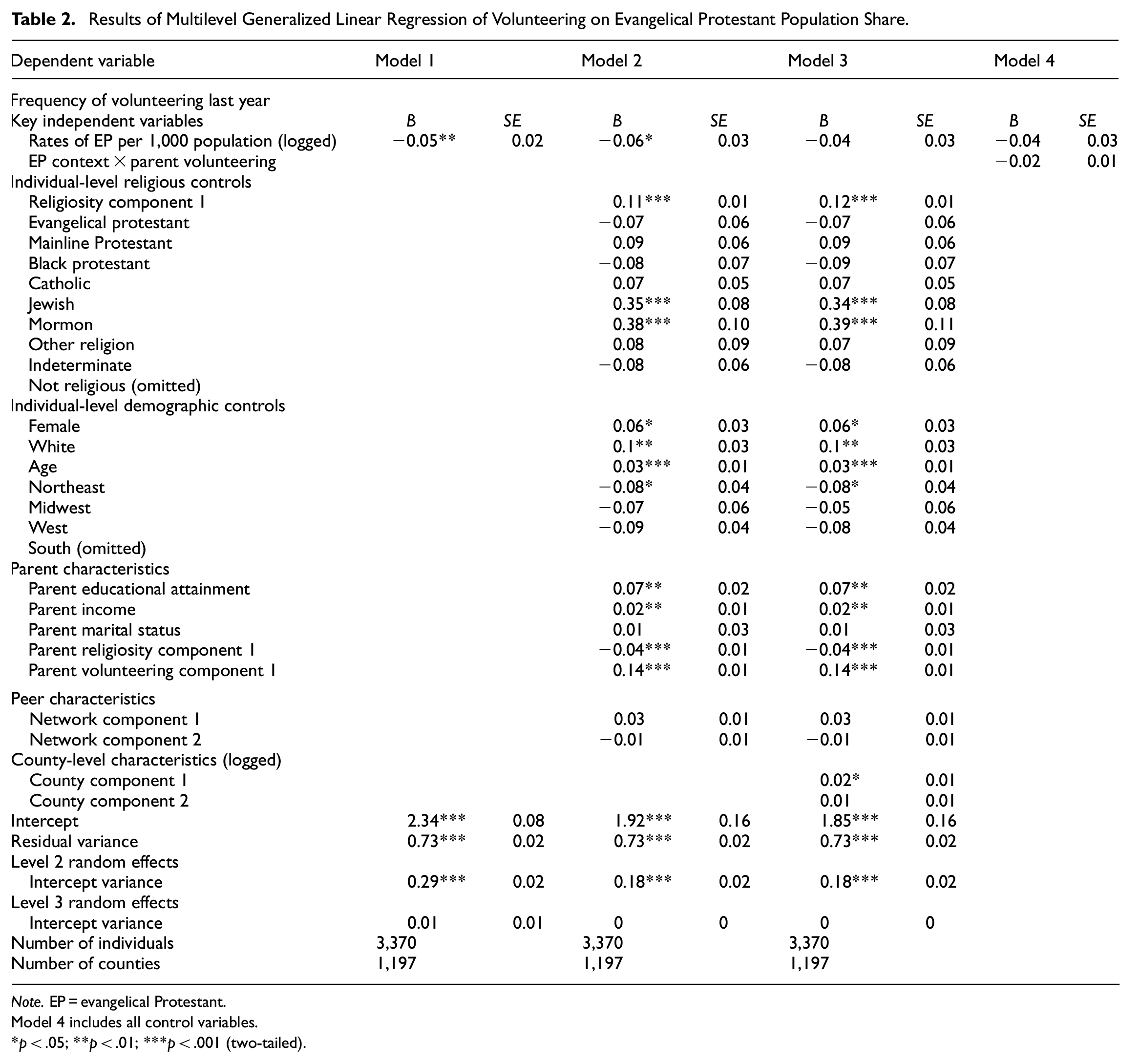
Table 1 displays the number of cases, mean, standard deviation, and range of values of each variable used in this study. From the statistics, we can see that the mean volunteering remained quite stable across the two waves, averaging “volunteered a few times in the last year.” The mean age in wave 1 was 15, which grew to 17.7 in wave 2. Table 2 presents the multilevel mixed-effects generalized linear regression results of volunteering on county-level evangelical Protestant population share. To avoid multicollinearity, county-level Catholic population share was not included in Table 2. Model 1 introduces the key independent variable, county-level evangelical Protestant population share. The finding suggests that when a county had a higher proportion of evangelical Protestants, the youth living there volunteered less (β = −.05, p < .01). Could this significantly negative effect of the evangelical Protestant religious context be explained by peer and parent characteristics? A range of individual-level control variables, including peer and parent characteristics, are added in model 2. Even after controlling for those important individual-level variables, the share of the evangelical Protestant population still exerted a significant, negative effect on volunteering.
Results of Multilevel Generalized Linear Regression of Volunteering on Evangelical Protestant Population Share.
Note. EP = evangelical Protestant.
Model 4 includes all control variables.
p < .05; **p < .01; ***p < .001 (two-tailed).
In model 3, the first county-level socioeconomic component was positively associated with volunteering, suggesting that youth were more likely to volunteer in counties where the socioeconomic environment was better. The inclusion of the two county-level components explained the negative evangelical Protestant religious contextual effect on volunteering. This result indicates that it might be due to the lower socioeconomic conditions of evangelical Protestant counties that youth were less likely to volunteer. Additional analyses reveal a statistically significant and negative bivariate association between evangelical Protestant population share and the first county socioeconomic component (r = −.66), which lends support to the above speculation. To save space, the additional analyses are not presented in the text but are available upon request. Overall, the regression results serve to reject hypothesis 1.
Model 4 includes a cross-level interaction term between county-level evangelical Protestant population share and parental volunteering influence, whose effect was not statistically significant to the outcome variable. Therefore, an increasing county-level evangelical Protestant population share did not attenuate parental pro-volunteering influence on youth volunteering. Hypothesis 3 is thus rejected. As for the control variables, youth who were female, white, older, Jewish, or Mormon, or had higher personal religiosity, were more likely to volunteer. When it comes to family characteristics, youth whose families were pro-volunteering and had a higher socioeconomic status were more likely to volunteer. In contrast, Northeastern youth and youth whose parents were very religious were less likely to volunteer.
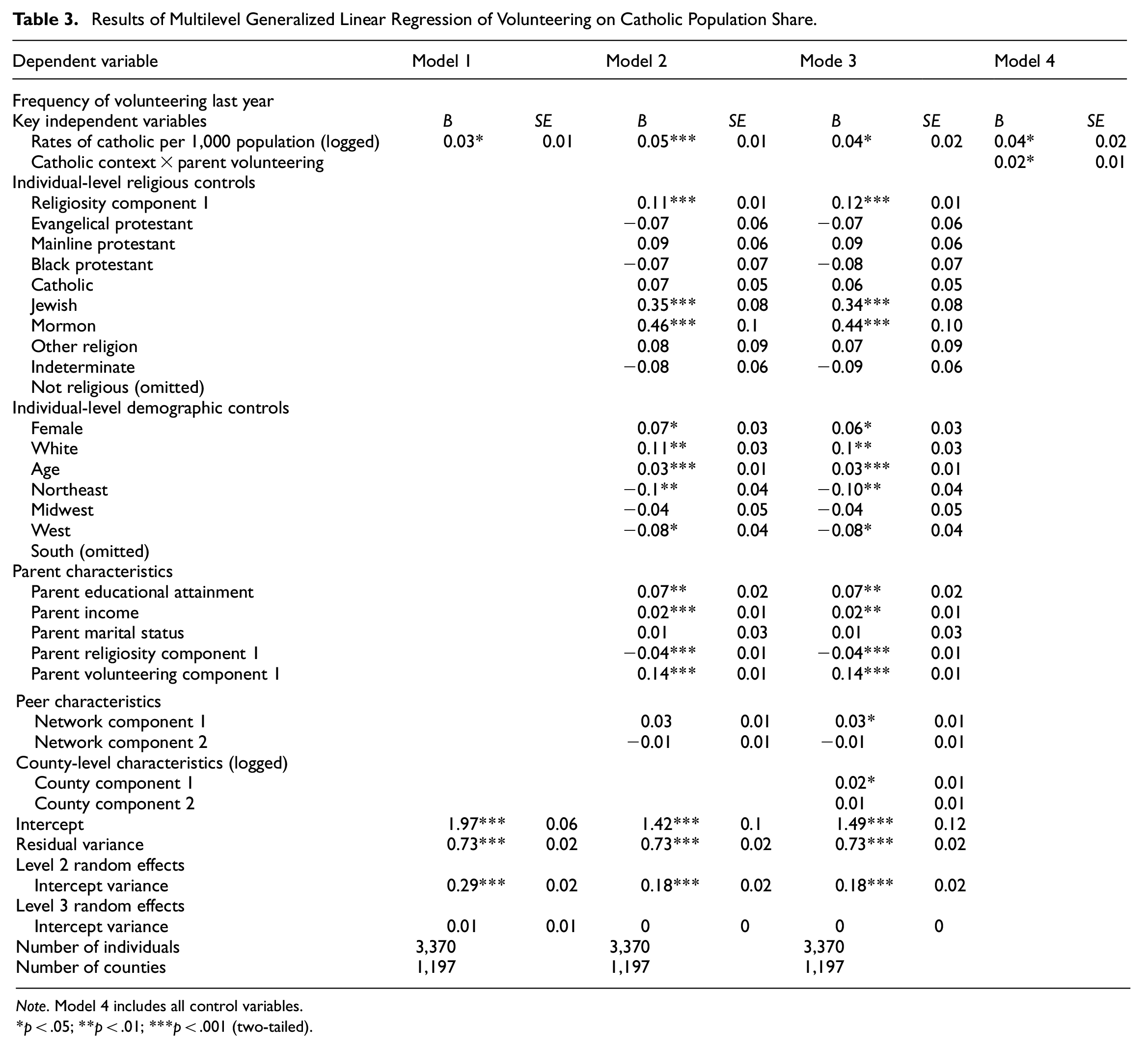
Table 3 looks into the Catholic religious contextual effect on youth volunteering, whose table layout replicates that of Table 2. To avoid multicollinearity, county-level evangelical Protestant population share was not included in Table 3. Model 3’s main finding suggests that, in contrast to the evangelical Protestant contextual effect, counties with a higher Catholic population share had more civically engaged youth residents (β = .04, p < .05). This Catholic effect was also independent from important peer, parent, and county effects. Therefore, hypothesis 2 is supported.
Results of Multilevel Generalized Linear Regression of Volunteering on Catholic Population Share.
Note. Model 4 includes all control variables.
p < .05; **p < .01; ***p < .001 (two-tailed).
In what ways does the religious context moderate parental influence on youth volunteering? Model 4 introduces a cross-level interaction term between the Catholic religious context and the parent pro-volunteering component. The statistically significant and positive coefficient suggests that an increasing population share of Catholics in the county might strengthen the positive effect that pro-volunteering parents had on their children. To better understand this cross-level effect, Figure 1 presents the predictive margins of the relationship between parental volunteering influence and youth volunteering under different levels of Catholic population share.
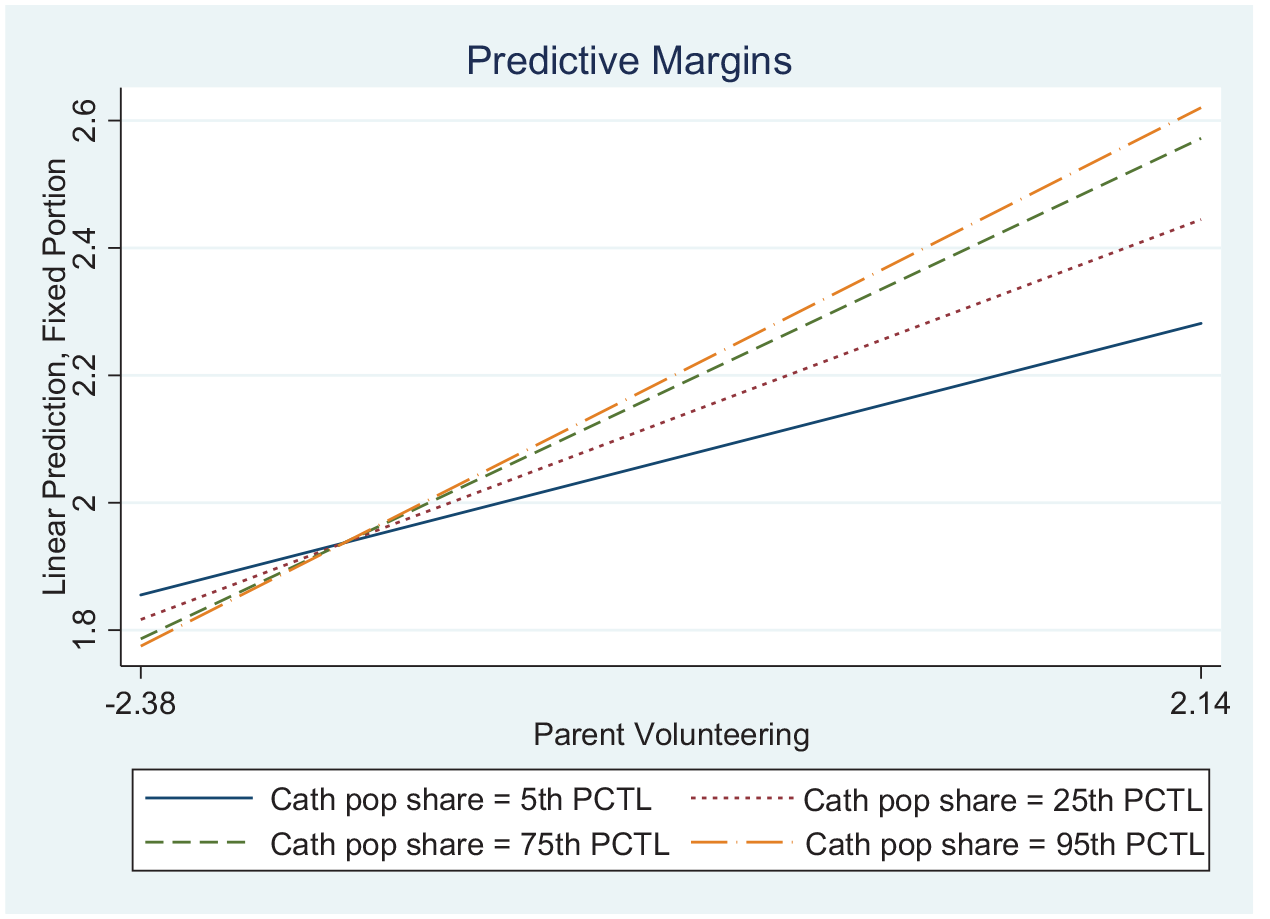
Moderating effect of Catholic population share on the relationship between parental influence on volunteering and youth volunteering.
The results suggest that when the county-level Catholic population share increased from its 5th percentile rank to the 25th percentile rank, the 75th percentile rank, and finally the 95th percentile rank, the slope of the relationship between parental volunteering influence and youth volunteer frequency became increasingly steep. In other words, youth benefit more from their pro-volunteering parents in counties where the Catholic population share was higher. Therefore, the results lend support to hypothesis 4.
Inspired by the moral communities thesis, the author speculated that Catholics may become more active in volunteering in counties with a higher population share of Catholics, while the opposite may occur for evangelical Protestants in highly evangelical Protestant counties. Therefore, in preliminary data analyses, the author also experimented with cross-level interaction terms between religious contexts and religious identity in youth volunteering. Neither the evangelical Protestant religious context nor the Catholic religious context had a statistically significant interaction with its corresponding religious identity on youth volunteering. In addition, the author also tested cross-level interactive effects between religious contexts and parental religiosity on youth volunteering. The results were not statistically significant, either. To save space, these additional analyses are not shown in the text but are available upon request.
Discussion and Conclusion
In this study, multilevel analyses were conducted to analyze the religious contextual effects on youth volunteering. Specifically, this study looked into the moderating effects of religious context on parent-to-child volunteering socialization. The main findings suggest that there was an inverse relationship between county-level evangelical Protestant population share and the frequency of youth volunteering, which was explained by county-level socioeconomic characteristics. Conversely, a higher county-level Catholic population share was associated with more frequent youth volunteering even after controlling for a range of individual and county-level variables. Compared to prior research, this study is able to better evaluate the robustness of local religious contextual influence on volunteering by controlling for network-level religious context. The results suggest that local religious contextual effects may still have an independent impact on youth volunteering regardless of the religiousness of one’s network—the lowest level of religious context (Rivera et al. 2018).
Overall, the robust Catholic contextual effect on youth volunteering may indicate that counties with a higher population share of Catholics may provide more support to local social organizations to function and recruit volunteers, the media and various local institutions, including churches, are more eager to spread information about volunteer opportunities, and there is possibly an overall pro-volunteering cultural and social atmosphere in everyday community life. More county-level control variables, particularly those that directly tap into county-level volunteering resources, such as the number of volunteer organizations per capita or social welfare expenditures, would be required to better investigate the above speculation, which is illuminated by the civic community theory.
Not only could the Catholic contextual effect independently influence youth volunteering, but it may even moderate parental influence on youth volunteering. In counties with a higher population share of Catholics, the positive effect that pro-volunteering parents may have on their children became stronger. This result enriches the famed moral communities thesis by showing that the compatibility in values between a family and the overall religious context may have an intergenerational impact. To put it in the context of this study, when the overall religious context values bridging social capital and collective efficacy (e.g., the Catholic religious context), a parent who values volunteering may have a stronger, more positive impact on the child’s volunteering because his or her values are legitimized and encouraged by the surrounding environment.
Despite these contributions, this study is not without limitations. To start with, this study is confined to the Judeo-Christian social context. If the data permit, future research may want to explore the ways parental influence interacts with non-Judeo-Christian social context with regard to youth volunteering. For example, it might be interesting to see how a Confucian environment that places a high value on familial loyalty influences youth volunteering outside the family. Another interesting direction for future research to explore is how religious context might influence volunteering during a later stage of life, given the positive impacts that both religiosity and volunteering may have upon older adults (Burr et al. 2018). Finally, although this study was able to measure religious context at a lower level than some previous studies did, a county may still be a relatively large geographic unit. To better evaluate the multilevel nature of moral communities, should data permit, future research may want to measure religious context at an even more proximate level, such as at the level of a zip code or neighborhood.
When looked at as a whole, this study gives a more in-depth look at how religion affects volunteering at the micro and local levels. The results suggest that the local Catholic religious context had a robust effect on youth volunteering. More importantly, the Catholic contextual effect may even moderate the influence of parental socialization on their child’s volunteering behavior. Therefore, this study shows that religious contextual influence is multidimensional and intergenerational, influencing not only an individual’s pro-social behavior but also how that specific behavior is shaped during the intergenerational socialization process. Theoretically, this study contributes to a renewed, more comprehensive understanding of the civic community theory and moral communities thesis in the context of family, volunteering, adolescence, and early adulthood.
Footnotes
Declaration of Conflicting Interests
The author declared no potential conflicts of interest with respect to the research, authorship, and/or publication of this article.
Funding
The author received no financial support for the research, authorship, and/or publication of this article.