




Abstract
This article presents the Collaborative Climate Laboratories (CiCli-Labs), a participatory research methodology that bridges citizenship, science and politics. This methodology is grounded on young people’s knowledge and experience about their communities and seeks to develop a strategy for co-designing climate solutions with local stakeholders. Carried out in schools, the CiCli-Labs engage scientists, activists, business owners, and politicians in discussing climate problems identified by young people. By bringing together different positionalities that emerge from people’s diverse social roles, the CiCli-Labs aim to foster conditions for democratic citizenship and climate justice, embracing the necessarily conflicting yet binding dimensions of politics that can produce transformative and reciprocal learning. Additionally, it responds to the growing demand within educational research for community-based approaches capable of tackling the shortcomings in promoting youth agentic power in participatory designs, often marked by one-off events and youth-washing practices. The CiCli-Labs’ methodology builds on community profiling, through which students identify climate-related issues that work as catalysts for broader dialogues with local actors, challenging traditional adult-centric power dynamics. The methodology evolves through a sequential design based on the adaptation of participatory tools and methods: i) Climate Problem Tree; ii) Climate Social Cartography; iii) Pros-and-Cons Circuit; iv) Solutions Funnel; v) Climate Speed Dating; vi) Hands on Earth and Eyes on Clouds. The methodology was implemented in eight schools in northern Portugal, involving more than 300 students (grades 8 to 12). We discuss the rationale and practicality of the CiCli-Labs while mobilising empirical illustrations of the methodological process and participants’ perceptions about it, thereby contributing to furthering the problematisation of democratic research practices with young people.
Keywords
Introduction
Adaptation to climate change involves significant transformations in the actions of citizens, researchers, professionals and policy-makers. These transformations concern our current ways of living and our decision-making in response to climatic events. Fostering participation and dialogue between diverse actors (young people, scientists, activists, politicians, and business owners) is the basis for co-creating alternative climate futures. However, this frequently risks intergenerational injustice, as there is a tendency to leave young people out of these processes – which is paradoxical, as they have been at the forefront of climate activism, but also because future generations will be the most affected and should have a say in imagining our shared future and discussing actionable solutions. As emphasised in the Paris Declaration (2015: 2), “children and young people represent our future and must have the opportunity to shape that future”.
The call for more democratic and participatory approaches to research goes hand in hand with recognising the tendency to speak on behalf of the oppressed and the silenced (Alminde and Warming, 2020). In his version of Antigone, Zizek (2016: 28), denounces the perverse consequences of this tendency: “the excluded (…)/ they don’t want others to speak for them, /they should speak and articulate their plight. So, in speaking for them (…)/ (…) – you deprived them of their voice”. The right to have a say about the topics and processes that concern each of us – the right to a voice, to a vote, and a veto (Montero, 2004) – requires designing research methods that create not only opportunities for diverse voices to be heard but also foster habits of conversation and trust among participants, making room for the articulation of their claims.
This rationale was the groundwork for ClimActiC project that aimed to bridge i) the laboratories where scientific and technological knowledge about climate change is produced, ii) the schools where such knowledge is generally consumed, and iii) the public sphere where diverse individuals, groups, and organisations ‘consume’ and ‘use’ knowledge in their daily endeavours – and, also, where knowledge can be reinvented and co-designed as a foundation for societal transformation. However, that process can generate imbalances regarding “what counts as knowledge and who produces, owns, uses and benefits from it” (Edwards and Brannelly, 2017: 272). As such, unequal power relationships – between researchers and citizens, between adults and young people – must be acknowledged and confronted to reveal “the strength found in communities when their rights are respected and honoured” (Mertens, 2009: 10). This article aims to present and discuss the experience of CiCli-Labs, a methodology developed to push forward and equalise youth voices about climate action, creating a fair ground for actual participation and dialogue between plural actors. The CiCli-Labs were conceived as mediational encounters, as spaces in-between people, where inevitably different perspectives would be expressed, valued, negotiated, and re-created in collective terms – spaces where the political emerges (Arendt, 1995 [1950]).
Expanding education and democracy: towards resonant research practices
Democracy and education work in tandem, pursuing equality and justice. In 1916, Dewey asserted this relationship stating that “the devotion of democracy to education is a familiar fact” (p. 30) (Dewey, 1916). Beyond the governmental level, Dewey emphasised that democracy is “primarily a mode of associated living, of conjoint associated experience” (30). Yet, far from an easy undertaking, crafting common grounds entails engaging with tensional and conflictual dimensions. As brilliantly summed up by Arendt (1995 [1950]: 52–53): “To live together in the world means essentially that a world of things is between those who have it in common, as a table is located between those who sit around it; the world, like every in-between, relates and separates men[sic] at the same time”. These foundational authors find contemporary echoes in both political sociology and educational philosophy theories concerned with how educational and social systems can accommodate different attachments to the world and build democracy: Thévenot’s (1990, 2015) pragmatist sociology of engagements poses the question of how societies produce commonality amid unsolvable differences; Biesta’s (1994, 2020) theory of democratic education reflects on how to bridge everyday societal experiences and school life to enable meaningful learning and subjectification. The complex challenges underlying these grand theorisations should point education researchers towards old, persistent and new, uncharted methodological domains.
Framed by economic, political and climate crises, the current challenges of polarisation, disinformation and inequality bring about exclusionary processes. Young people are often in the spotlight once their ‘natural’ age-related development and living conditions are regarded as driving them to political marginalisation and radicalisation or to responsible, vibrant citizenship. They are seen as a Pandora’s box, making them targets of social mandates attributed to key contexts of their lives. This is the case of school, a cornerstone setting for learning and practicing democracy. As suggested by Menezes et al. (2019: 11), schools metaphorically come as ‘democracy labs’ since: In fact, we learn quite a lot about democracy just by being at school: we learn about justice and injustice, equality and inequality, participation and alienation, power and powerlessness but we also learn to express one’s ideas, to debate and discuss, to negotiate and be flexible, to oppose and confront others, to argue and advocate in favour of those who are treated unfairly. As such, the school experience is inevitably a political experience.
At the same time, the ‘school experience’ is framed by school curricula, culture and ethos increasingly permeated by a rationale emerging from the ‘age of measurement’ (Biesta, 2009). Acknowledging the coexistence of neoliberal education policies and everyday school practices is crucial for a critical appraisal of the margins of freedom that actors manage to construct in the face of macro regulations and prescriptions. Within or outside school, it is through those tensional disputes between what is and what can be that democracy is contested and shaped. Indeed, despite challenges and constraints, young people continue to identify the school as a place to learn about and engage with political affairs. This is crystalised in a rhetorical question that emerged repeatedly in our research with young people: “If not in school, where?” (Menezes et al., 2019). While this question signals a strong hope in the power of schools, it simultaneously reflects the hopeless disenchantment with other spheres of decision-making, as if schools were the last stronghold of democratic politics.
Coupled with transformations in youth modes of political expression, the lack of real conditions and bottom-up opportunities for participation constitute a major democratic drawback (Malafaia et al., 2021; Ribeiro et al., 2014). These problems also occur in climate politics, where “young people feel tokenised and instrumentalised with widespread ‘youth-washing’ in climate change initiatives” (Thew et al., 2021: 2). As a topical and highly mobilising issue for the young generations, climate change continues to be dealt with primarily by technical and adult apparatuses that develop at odds with the centrality of climate justice frames advocated in youth street protests. The mismatch between the public sphere and political institutions can also be observed in schools, where anachronic, rationalistic and depoliticised approaches to climate education prevail (Malafaia, 2022; Tzou and Bell, 2012). Research shows informal climate education taking place within street protests through role-reversal performances that prefigure another teacher-student order, thus contesting adult power structures (Malafaia, 2022). Such role reversal reverberates with Biswas’ (2021) proposition of recognising the young generations as socio-political educators in a climate crisis world. Fulfilling this plea entails adopting a ‘childist standpoint’ aligned with an intergenerational commitment to climate education and justice. Societal and educational transformations based on principles of justice, inclusion and participation ultimately mirror our vision of what democracy should look like. As researchers, such ontological view must necessarily match our epistemological and methodological approaches.
In recent decades, the urges for democratic research practices have become increasingly salient in academia, questioning “our conceptions of how and what sort of knowledge is generated by researchers” (Edwards and Brannelly, 2017: 271). Conventional research paradigms that position researchers as quasi-omniscient of social reality, setting research agendas despite people’s real lives, have raised pleas for methodological transformations. Efforts towards democratising research are grounded on diverse methodological and epistemological perspectives, all linked by a shared commitment to consider, confront and disrupt power inequities (Mertens, 2009). When it comes to researching young people’s participation, including their involvement with climate change, it is vital not only to account for age-related power differentials but also to align with “more socially and politically committed modes of researching that go beyond the conventional, flashy, and behavioural forms of engagement that amplify the already loudest voices” (Malafaia and Fernandes-Jesus, 2024: 16).
Taking young people’s expectations seriously – ‘if not in school, where?’ –, this article presents a participatory methodological design that takes the school as a locus of convergence of pluralities around what young people perceive as relevant for their communities. From a ‘childist standpoint’, this implies recognising youths’ agency within education and believing that adults can (and should) learn from young people (Biswas, 2021). Far from a panacea, this requires confronting the inevitable power imbalances in society that transpire into school – between adults and young people, researchers and research participants. We rest on both classic and contemporary social theory addressing the relationships between democracy and education, as well as on the need to tackle the reproduction of common research pitfalls in the field of youth climate engagement, including trends of the ‘ever-search for the spectacular’ and the ‘extractivist research’ (Malafaia and Fernandes-Jesus, 2024). Such pitfalls prevent due consideration of the politics of small things and the power of nascent forms of community change that often arise from mundane practices of citizenship.
Unpacking youth climate agency: CiCli-Labs’ methodological design
Starting from the premise that young people are here-and-now citizens and, thus, agentic powerholders who may or may not have the conditions for political action and recognition, the CiCli-Labs’ methodology is driven by creating opportunities to unpack youth’s agency.
Characterisation of the CiCli-Labs’ participants.
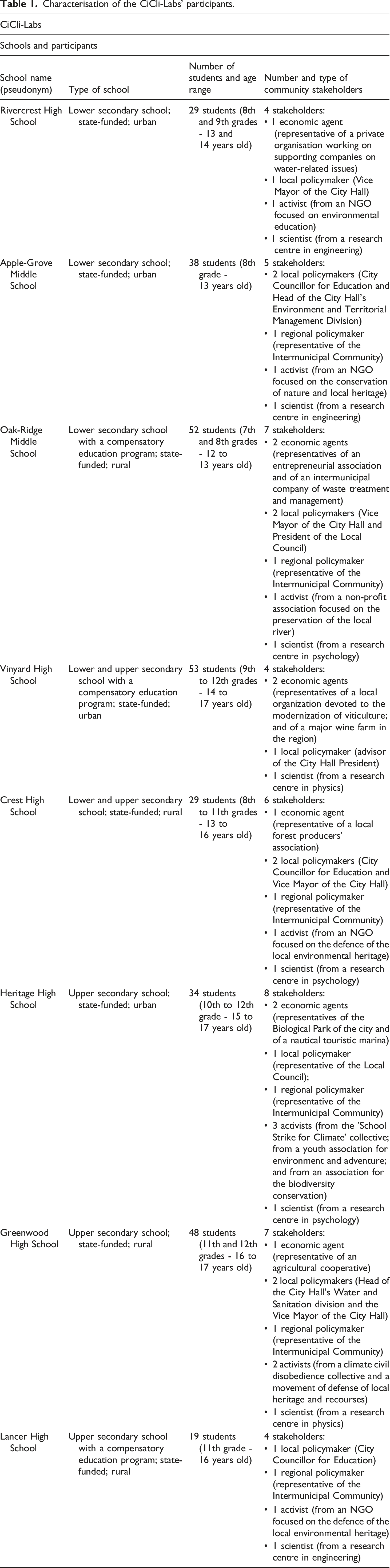
As an overarching and integrated set of methods and tools, the CiCli-Labs evolved through a sequential three-staged design, based on participatory strategies. In practice, these stages translated into three sessions in which the methods were framed as “activities” to render the methodological procedures into recognisable formats (Climate Problem Tree; Climate Social Cartography; Pros-and-Cons Circuit; Solutions Funnel; Climate Speed Dating; Hands-on Earth and Eyes on Clouds). Designed to be mutually dependent, those activities pursued a process of collaborative construction of climate adaptation by building up spaces of dialogue between young people and relevant stakeholders: scientists, activists, economic agents, and policymakers, who were invited to go to schools and participate in the Labs – see Table 1 for the characterisation of all participants in the CiCli-Labs.
In 2022, and across all participating schools, 67 students engaged in the CiCli-Labs. In 2023, the methodology was adjusted (through a “fishbowl” technique) 2 to include all the students participating in the project: more than 300 students. The CiCli-Labs were designed by the project’s team and implemented by three project researchers – two facilitators and one observer. Monitoring and accounting devices of the methodology were included: on the one hand, and throughout the process, observation notes, a video documentary and a blog 3 ; on the other hand, and after the process, focus group discussions with young people and interviews with adult stakeholders. Implementing the CiCli-Labs methodology in each school was preceded by a pre-session organised only with students. This preparatory session, scheduled near the first session of the Labs 4 , included presenting the CiCli-Labs’ design and assisting students in constructing the Climate Problem Tree based on their findings from the community profiling, igniting a reflexive process about the climate problem and, thus, giving them a head start on the Labs before the adults joined the group. The Tree was used in the kick-off activity of the CiCli-Labs (stage 1, below) presented to the adult actors in a pre-filled format, as the starting point for the dialogues.
Stage 1: approaching the problem and its territorial scope
The first stage focused on negotiating a shared understanding of the climate problems identified by young people. This involved two methods and their underlying activities: i) the Climate Problem Tree and ii) the Climate Social Cartography.
The Climate Problem Tree was the basis of the activity “In-between roots and leaves: causes and effects”. This enabled a visual (re)presentation of the climate problem deemed relevant by the young people in their territory, including its main (real and potential) causes and effects. We drew on the “Problem Tree”, a visual tool developed in the 80s and aimed at analysing community problems (UNICEF, 2019), namely collective in-depth explorations of the root causes of situations requiring collective action (Chevalier and Buckles, 2013). In the CiCli-Labs, the Tree’s construction set a collaborative tone from the start, while its materiality rendered it permeable to collective reconstructions – both the roots (climate causes) and the leaves (climate effects) were dynamic, so every participant, both young people and adults, could add new leaves and roots throughout the discussions (see Figure 1). This allowed the young people to present the climate problem (the tree trunk) that had resulted from their previous engagement with the community profiling method. Across the eight schools, problems ranged from wildfires to river pollution and prolonged droughts. Despite keeping their essence, the views on those problems were transformed by youth and adult collaborative discussions. Climate problem tree.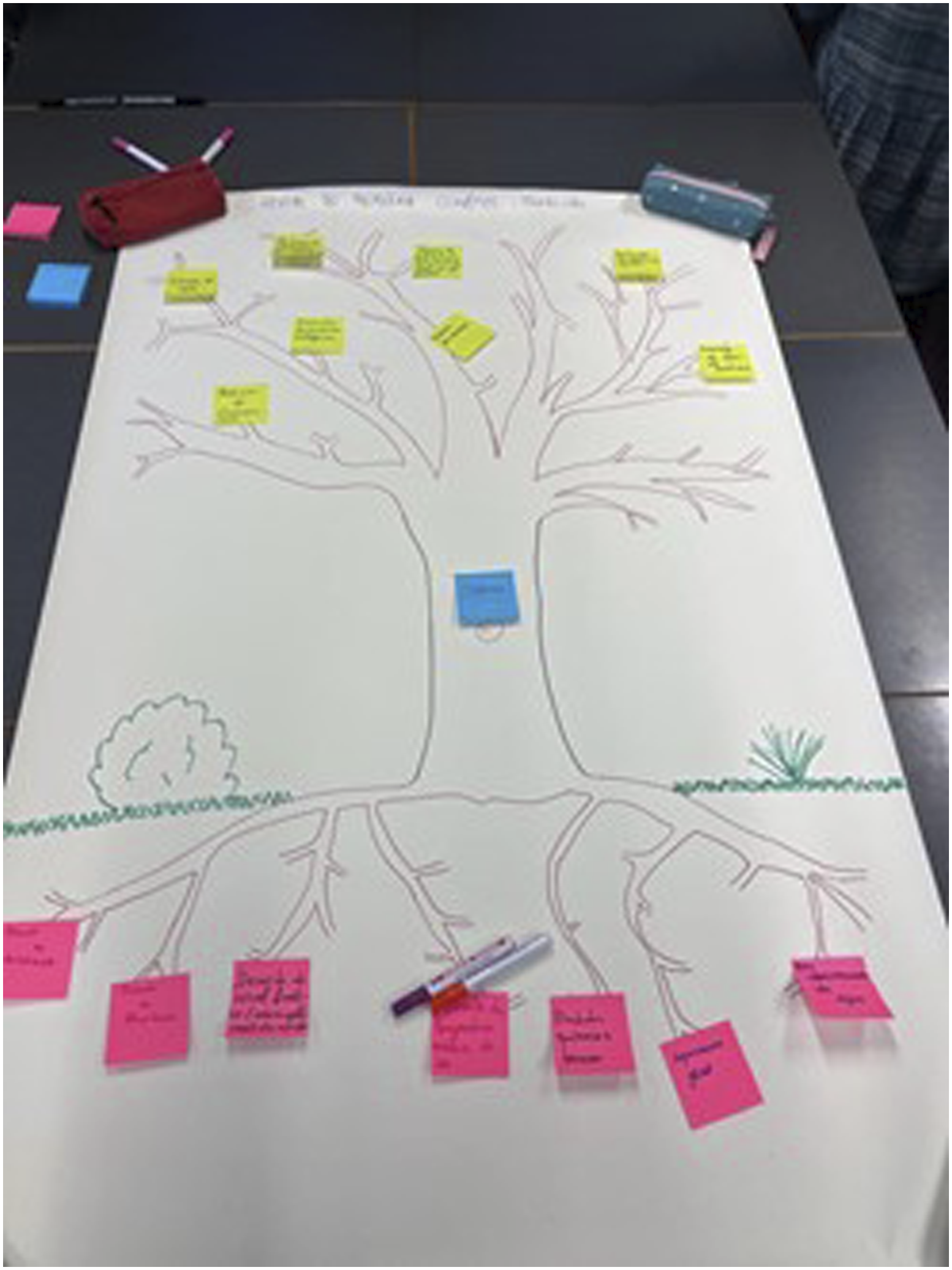
First, the experiential knowledge from the adult spheres (e.g., activist collectives, agriculture cooperatives, environmental NGOs, municipal cabinets) contributed to reframing and expanding on proposed problems. For instance, while ‘temperature changes’ and ‘vineyards’ changes’ were presented as community climate problems in two participating schools, they eventually evolved into 'heat islands’ and 'anticipation of harvest time,’ respectively. Second, we observed a tendency that, despite raising time management challenges, held educational potential: causes and effects were often discussed interchangeably, contributing to uncover contested representations on what the climate problems were. For instance, in the school focused on wildfires, throughout the discussion around the Climate Problem Tree, it came to be unearthed that deforestation should be the central problem. This happened because the teacher, despite her exclusive role as observer, raised the topic of bird extinction in the region, which was being discussed in science classes at the time. This undue intervention by the teacher led the representative of the local biological park to explain how deforestation (caused by both human- and nature-induced wildfires) has negatively impacted bird habitats and migration patterns. This influenced students to agree that wildfires could be considered not as the problem but as the cause of the problem that should be addressed: deforestation.
In this scenario, the facilitators’ role involved regulating the influence of adults on students’ views while valuing the different contributions in breaking down and adding detail to broad issues. Thus, we encouraged young people to position themselves around more precise versions of what they had initially defined. The Tree revealed itself as a tool open to reconfigurations from multiple viewpoints, creatively fostering the accommodation of plural perspectives regarding necessarily complex issues.
In constructing the collaborative Climate Problem Tree, adults and young people were able to develop shared understandings of the climate problem at hand – its underlying human and non-human causes and how it ramifies into local effects. In turn, the extension of those effects was explored through the climate social cartography.
Climate Social Cartography was adapted to shape an activity titled “Collaborative Mapping” of the climate problem. Such mapping draws from the social cartography method (Paulston, 1996 [1981]), which seeks to foster participatory mapping practices as a way of community empowerment (Moore and Garzón, 2010). Building on the premise that reality is socially constructed, this method is typically used in geography and social work. Yet, an exemplary exception includes using social cartography to examine education policies directed at groups and territories in conditions of deprivation (Ribeiro, 2019). Our main goal was to understand the different perceptions of the territorial scale of the local climate problem. This involved all participants in a collective discussion about the territorial scope of the region’s present and future climate risks through a visual cartographic representation. Google’s My Maps tool enabled the creation of custom regional maps (at a municipality level) and a more territorial-based visuality (e.g., more/less densely forested areas). By bringing the map to the table and providing coloured pens to each adult participant, diverse coloured expressions took shape on the map. Agreement and disagreement arose, together with commonalities (colour overlaps) when participants drew their perceptions of the territorial range of the climate problem (see Figure 2). The following excerpt exemplifies the interactive nature of Climate Social Cartography, when the territorial range of the ‘heat islands’ was under discussion: When young people gathered around the map, they began by looking for the school location to serve as a reference point. Before drawing, they mentioned that the southern zone of the region is probably where the heat islands are felt the most because it is more urbanised. Another student added that he has been feeling that the southern zone is becoming cooler compared to previous years and that the south and north zones “are like two different worlds” because one is countryside and the other has a lot of buildings. A third student added that the more urbanised area has connections to the river, so the river will also be affected. The city council representative agreed and the scientist backed it up – “there is data on that”. A representative of a local NGO expressed his doubts: on the one hand, he might choose the south side because of the already mentioned reasons; on the other hand, the high-risk sites of biodiversity loss are in the north side. (...) He ended up choosing the south zone. The young people joked around, saying that the adults were copying them because they all chose the area the students drew. (Observation note, May 2022) Climate social cartography.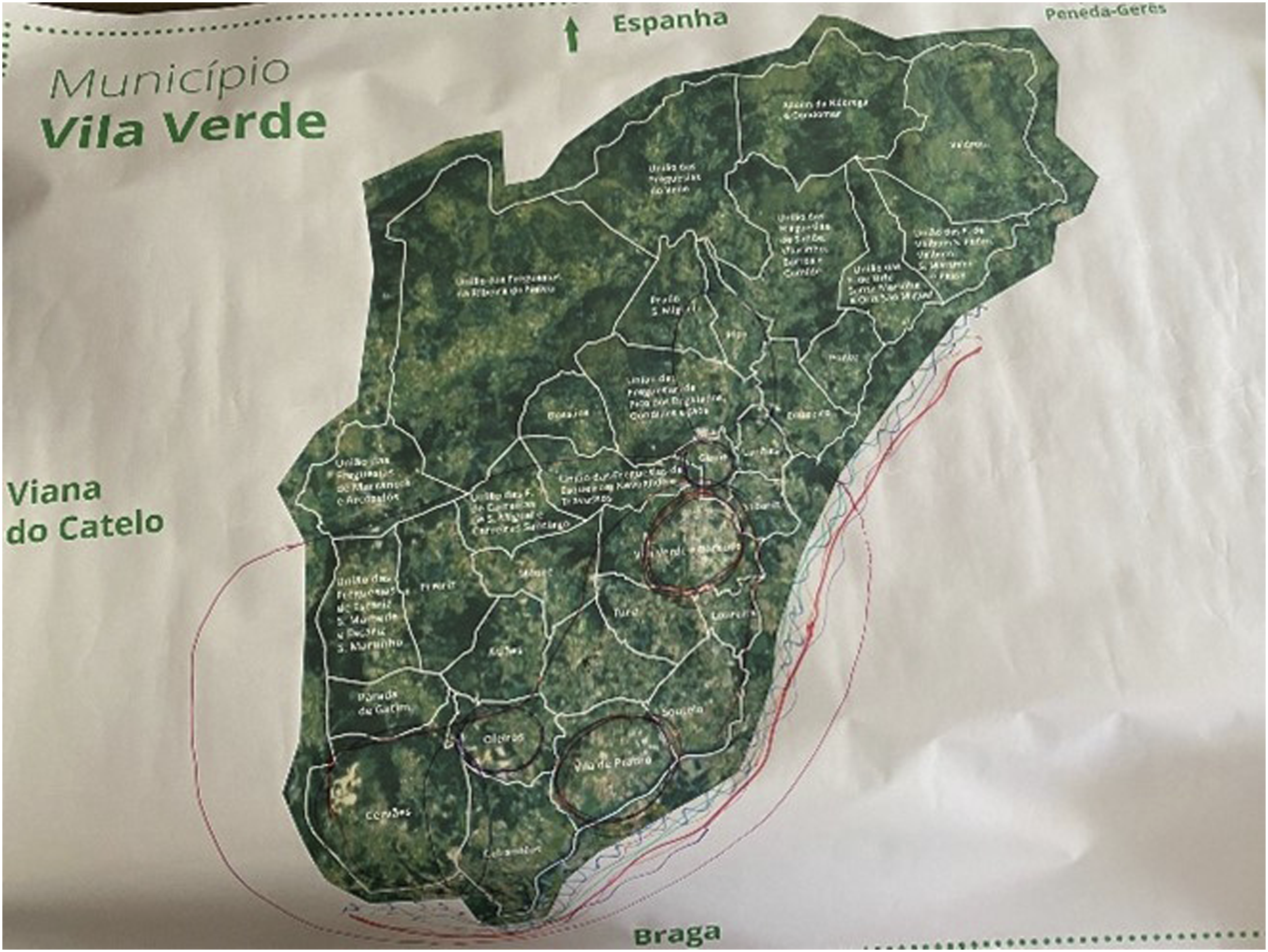
It is worth mentioning that the moment described above came to be later recalled by the young participants during a focus group discussion as a memorable recognition by expert adults of the legitimacy of the young people’s community knowledge. While the process ends with a collaborative synthesis map – and a potential anchor for the upcoming dialogues – Climate Social Cartography enabled the forging of common grounds, showcasing a collective understanding of the territorial range of the climate problem.
Stage 2: setting an actionable solution
The second stage was oriented towards a collective envisioning of locally based solutions fuelled by: i) a collective appreciation of potential climate solutions, based on young people’s suggestions and fed by the actors’ inputs (through the Pros-and-Cons Circuit exercise) and, subsequently, ii) a decision regarding the solution chosen by consensus, considering its degree of actionability (through the Solutions Funnel exercise).
The Pros-and-Cons Circuit exercise was developed into an activity called “Solution Clouds”, inspired by the Mutual Learning Exercise developed with children and local stakeholders at a municipal level concerning disaster risk reduction (Delicado et al., 2017). As a starting point for the Pros-and-Cons Circuit, young people presented potential solutions based on what they had learned from their involvement in the former stages of the CiCli-Labs. A manageable number of ideas were drawn, in the shape of clouds on a big cardboard displayed at the centre of a round table (see Figure 3). There were two columns under each ‘cloud’: pros and cons. Each adult stakeholder circulated around the table, writing one pro and one con argument in each cloud/solution with their coloured pens. Every time a pro and a con was written down, the authors were encouraged to explain their viewpoint and, thus, their underlying knowledge, experience and expertise – from the scientific, policy, activist and economic-based fields. Such plurality in the processual definition of solutions is illustrated in the following excerpt from an observation note of a school addressing the ‘heat islands’ problem: (…) the young students’ solutions mainly targeted individual behaviour changes (e.g., encouraging people to use bicycle and public transportations in order to reduce heat generation from traffic). This propelled the climate activist to make a point about the need to make broader changes that provide conditions for people to change their habits in the first place. (...) The young people became enthusiastic, suggesting that the actionable solution should be oriented to making the public transports free and energy efficient. The member of a local business association asked to speak: “Besides talking to the bus companies, we would need to inquire the population (…) because even if buses were free, we don’t know whether people would use them. I have a job that requires me to go from one place to another, and there are no buses enabling me an easy mobility (...) Perhaps we should focus on a more viable solution.” The activist reacted: “Or maybe there should be more buses”. As the attentions turned to the representative of the City Council, he explained the Cons he marked during the ‘Pros-and-Cons Circuit’, emphasising that the public transports already play a part in the local budget. The costs involved in both limiting the use of private vehicles and expanding the public transportations’ network are substantial. (...) Picking up on the initial students’ proposal about the individual changes, the scientist asked about the incentive for using renewable energies at home, which research indicates as an important element for building climate resilient communities. In the meantime, the political and economic actors proceeded with indistinct chats about electric cars, while the activist raised the question about energy poverty and the fact that most people don’t even have financial capacity for a dignified use of electricity. (…) One of the students, then, asked if the City Council provides any support for people in that regard (Observation Note, May 2022) Pros-and-cons circuit.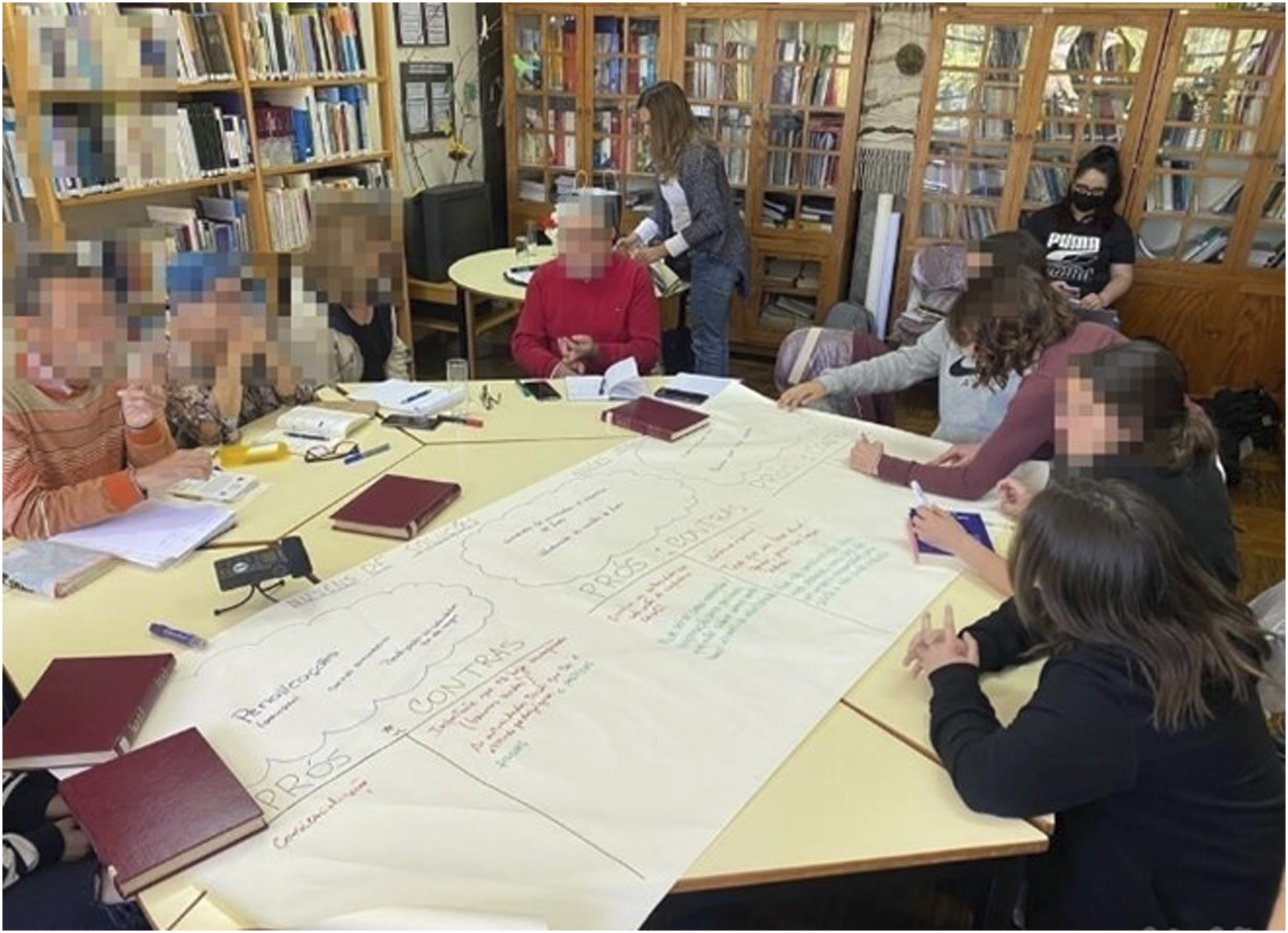
In sum, the Pros-and-Cons Circuit aimed at promoting open discussion and reflection among different community actors and scientists regarding proposed climate solutions while stimulating a preliminary informal and collaborative assessment of the community’s available resources to render a given solution actionable.
The Solutions Funnel exercise enabled the synthesis of the most viable solutions proposed in the Pros-and-Cons Circuit. The activity was titled “Cumulonimbus Solution” – named after a powerful, iconic cloud, distinctively capable of producing hail, thunder, and lightning. This idea sets the motto for the Solutions Funnel to evolve. The goal is to sum up the knowledge, experiences and resources of different community actors that most prevalently arose from the plurality of earlier conversations. The Solutions-Funnel entailed co-designing the Cumulonimbus Solution, which resulted either from the solution advocated by all participants or from a combination of different solutions forged in the debate. Different positionalities played out during the process, informed by what each actor considered most meaningful to the region. While middle grounds were negotiated, the researchers needed to ensure that young people’s interests and original solutions were always considered by the adults participating in the CiCli-Labs.
After a possible solution stabilised within the group – even if not the ideal, an approximation to it –, the next stage of the CiCli-Labs’ methodology could proceed. While the above-cited discussion around the ‘heat islands’ continued, oscillating between getting charging points for electric cars in the community and providing people information about the use of renewable energies, the Cumulonimbus Solution ended up being the creation of a ‘green benefit’ for people who would install solar panels in their houses and the formation of an office in the municipality to support applications for the installation of solar panels in public places. Solutions for other problems in other schools encompassed: strengthening information and awareness-raising on water saving among the community; investing in training local farmers to learn how to adapt to the changing soils’ conditions in viticulture; installing irrigation systems with sensors to monitor soil moisture to mitigate the effects of prolonged droughts, etc.
Stage 3: cross-inquiring and building a plan
The third and final stage of the CiCli-Labs’ methodology entailed turning the problem-solution nexus into a viable plan. To that end, we developed a Climate Speed Dating technique and implemented the Hands-on Earth and Eyes-on Clouds exercise.
The Climate Speed Dating technique shaped the development of the “Youth Match” activity (see Figure 4), with the goal to create conditions for young participants to own the role of claim-makers, requiring responsiveness and engagement from the actors in positions of power to make the climate solution possible. As indicated by the activity’s title, adults’ contributions should prove useful and, thus, match the youths’ visions of the solution. By engaging in such discussions, the young participants could understand how their ideas linked to the intricacies of society’s economic, political, scientific, and economic spheres. Speed dating has been used in the health field and has proven vital to fostering collaborative relationships between researchers and community stakeholders (Tucker et al., 2016). During Climate Speed Dating, the young people circulated across stations where each adult participant had 5 minutes to present, in a ‘pitch’ format, the kind of contributions their field could offer to bring the Cumulonimbus’ solution to life. Finally, the young students were invited to highlight the main contributions that emerged from the discussion. Climate speed dating.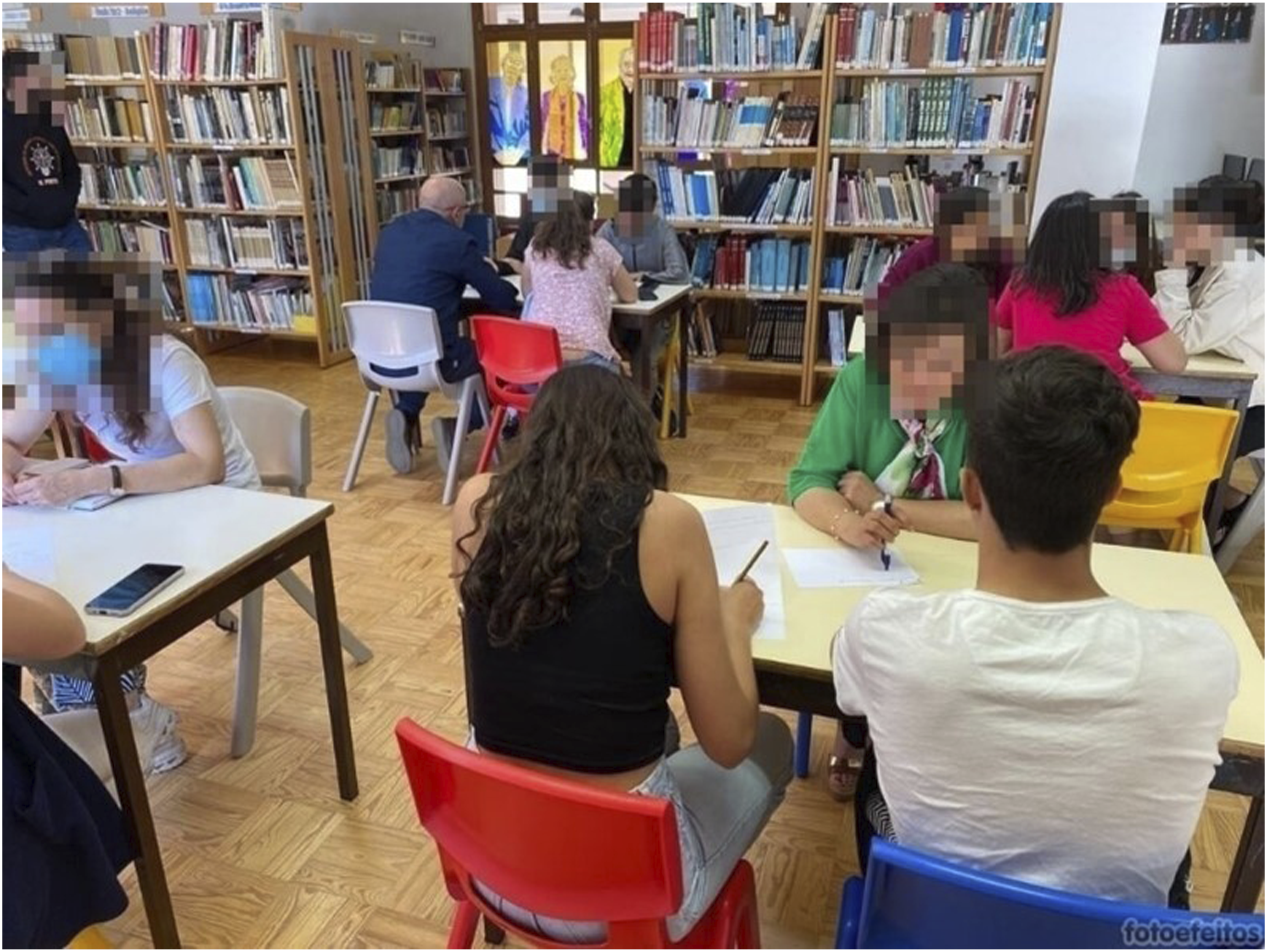
This technique enabled proximal and personalised contact between the local actors and the young people, while promoting a power-shift opportunity. The young people could directly question political, economic, activist and scientific representatives about their roles in (climate) community change. The knowledge-transfer process that ensued enabled an understanding of the contributions of each actor/sphere to the co-production of the community climate solution while entailing mapping the resources locally available for climate action.
Finally, the exercise Hands on Earth and Eyes on Clouds was promoted through an activity titled “Mission Possible”, with the main objective to lead all participants to co-create a concrete action plan for climate adaptation. Two things were projected side-by-side against the wall: the Cumulonimbus Solution and a will-to-be plan containing the following questions: What?; Where?; When?; Who?. This exercise was inspired by the UNICEF’s (2019) Youth Advocacy Toolkit, concerning tactics to discern which powerholders can be mobilised to implement an advocacy campaign. In the CiCli-Labs, the codesign of the climate adaptation plan intended to foster imagination on the collective fabrication of change, based on the roles of the participating community actors to operationalise the most appropriate climate solution, as unpacked throughout the Climate Speed Dating. The codesign of the climate adaptation plan aimed at raising the discussion on the challenges of future scenarios in accomplishing the “Mission Possible” ahead.
Diverse actions were identified by both young and adult participants throughout the codesign of the climate adaptation plan in order to make the solutions possible: for example, a petition together with activists for circulation by economic and social organisations to advance the ‘green benefit’ proposal; radio spots and didactic digital games made by and for young people with other local schools to inform and raise awareness for water saving; establishing partnerships between local farmers’ associations and the City Hall to plan the training courses on the viticulture changes; the provision of facilities by NGOs, etc. As made clear, the ‘what’ dimension in the ‘will to be plan’ drives the ‘where’, ‘when’ and ‘who’, covering the role each participant deems possible/viable to take on (e.g., elaboration, organisation, dissemination) and a draft timeline of when those contributions and actions will occur. Facing such an endeavour, many students of the participating schools led the division of tasks and the coordination of efforts: Raquel raises her hand and suggests the creation of a WhatsApp group to organise collective clean-ups to draw attention to the production of garbage and waste. She asks her classmates to share their contacts with her so that they can be added to the group and participate. (Observation note, May 2023)
To end the CiCli-Lab, the researchers summarised the methodological pathway undertaken, facilitated discussions on the overall perceptions of the process and addressed the possibility of conducting a new cycle of labs if deemed necessary by the young people involved.
Participants’ voices: educational and democratic reverberations of the methodological approach
So far in this article we have presented the CiCli-Labs methodology, intertwined with some in-situ observational accounts. We now listen to the participants’ voices about the process they shaped and engaged with. Drawing on illustrative excerpts of participants’ reflections, this final section offers snapshots of how democratic methodological principles – the logics of transformative, co-produced, and inclusive research (Edwards and Brannelly, 2017; Mertens, 2009) – reverberated in participants’ perceptions. For this, we use empirical data collected after the development of CiCli-Labs in two of the schools: 2 focus group discussions with 16 young people and 12 interviews with adult stakeholders (3 activists, 2 scientists, 3 politicians, 2 business owners, 2 intermunicipal actors).
When participants commented on CiCli-Labs’ methodological approach, the most prevalent features were the value of pluralism and of a youth-led dynamic. Bringing diverse points of view to the table, grounded in vastly different positions towards a cross-sectoral approach to climate challenges, was considered a strength. The following excerpts highlight the bridge between adult normative policy perspectives – those who decide – and young people’s experiences – those who live –, while signalling the unparalleled conditions for students to have their ideas accommodated in realistic bases of knowledge co-production. These opportunities are very interesting in themselves, as they bring different points of view to the same table. (…) the perspective of a political decision-maker, then the perspective of the student who lives (…). (Intermunicipal Representative, Interview, November 2022) Moderator: What did you all think of the interaction with the local actors? Luísa
5
: (…) They are older than us, there will always be points that we will disagree on. But they were patient. They tried to show us that it [the solution] wasn’t that easy. I thought it was important because it wasn’t something we would have access to otherwise. Melanie: There were specialists there, people who had expertise in those areas, who could give us concrete information that, perhaps, we would never have any notion that existed. Luísa: (…) And even with different opinions, we arrived at a solution or several solutions! (Students, Focus Group, October 2022)
Conceiving knowledge construction as a collectively shared experience rather than a one-way process requires “facilitating participatory and collaborative knowledge production alongside young people […] from a bottom-up perspective” (Malafaia and Fernandes-Jesus, 2024: 13). For adults in positions of power, that was an opportunity to ascribe new, practical meanings to their points of view, and for young people a way to learn from it and teach others: [listening to the students’ ideas] makes us return to reality, leave our distant bubble in our work, and enter their bubble, which is fantastic because we can (...) resignify our ideas from that base. (City Council Politician, Interview, December 2022) Melanie: Despite being in the same grade, it’s rare for us to work together, so it was a way to work together. Gabriel: It exceeded expectations. It was something that brought dynamism, that helped us to be better people, to learn new things. It was also a way of teaching us so that we could teach others. It’s very important, and I think we have to continue to do things like that (…) [because] to grab youth’s attention is not an easy thing to do. (Students, Focus Group, October 2022)
At stake is the challenging endeavour of forging grounds where all experiences are recognised as legitimate. This is vital in a process that takes young people’s knowledge and experience as catalysts. Unlike adults, young people do not hold recognisable symbolic credentials, such as qualifications: to put it bluntly, their voices are usually not at the centre of political discussions. Fostering young people’s ownership of the process necessarily presupposes being “aware of the layers of adultism that interfere with the overlapping realms of education and democracy as an intergenerational relationship” (Biswas, 2021: 9). Even though speaking more than listening seemed to be an ever-prevailing adult inclination, the leading role played by young people was praised by the adult participants as a somewhat innovative move, potentially fostering both youths’ sense of political efficacy and socially engaged science practices: People must convince themselves they are not there to teach the children lessons. We are there, too, to learn. And these moments… (…) [To be in a process driven by young people was] surprising. New. I’ve always worked with scientists (…). Contact with young people never happened, except through questionnaires, not direct contact. I had not had this experience before and found it an interesting challenge for knowledge production. (Scientist, Interview, November 2022) I found it very interesting! They [young people] don’t always have a stage to talk about their concerns or to present their work without us, adults, having the temptation to influence what they are doing. (...) At the same time, having diverse actors collaborating with them is not usual, and this allows them to understand that what they are doing will have an impact (Intermunicipal Representative, Interview, October 2022)
In turn, young people underlined the feeling of being heard and considered, in contrast to other school-related activities in which they usually participate: Duarte: We had all the work, but we couldn’t do it without them [stakeholders]. Francisco: When we were discussing the advantages and disadvantages (the Pros-and-Cons Circuit), we participated more, and also in the part of the map (Climate Social Cartography), to know which was the hottest and the coldest [part of the region]. Moderator: And was any moment particularly significant for you? Tomás: When we presented our ideas and people agreed. This showed they were attentive and they were thinking about what we discussed. Duarte: In school seminars, we are there to listen. Afonso: Yes, we do not interact. (Students, Focus Group, November 2022)
Methods such as the Climate Problem Tree and Climate Social Cartography were emphasised as stepping stones to collectively learn about climate problems. The Climate Speed Dating technique featured prominently in the participants’ comments for introducing actionability to the community solutions under discussion. As part of the final stage of the methodology, this technique draws on the trust relationships built between the young people and the adult actors throughout the previous stages. These aspects enabled the young participants to feel at ease with the kind of power shift that occurs when they directly questioned each adult representative about the intricacies and ramifications of the problems under discussion, while thinking critically about the responses they got: Tomás: I think that in the clouds’ activity [Pros-and-Cons Circuit], it was interesting to have the pros and cons of the problems we talked about. Jorge: The [Speed Climate Dating] was a way of going deeper into the topics we had more difficulty with. Beatriz: The tree [Climate Problem Tree] made us realise that it’s all interconnected. Pollution is linked to climate change, and climate change is linked to bird migration. We ended up diverting from the main topic, but at the same time, we did not disperse, we deepened it. (Students, Focus Group, November 2022) The [the Speed Climate Dating] (…) was very important because it was the moment when they [students], by structuring and asking questions, also allowed me to (…) know better what their interests were. And that part also forced us to respond and meet what they sought. (City Council Politician, Interview, December 2022) (…) in the map [Climate Social Cartography], they [students] questioned us because they were thinking and trying to find a solution. But in the discussion to solve the problem [in the Speed Climate Dating] they questioned even more. They didn’t take what we said as absolute truth. They sought to know and questioned, and I think those were... remarkable moments. (Activist, Interview, November 2022)
As argued by Menezes and colleagues (2019: 13), “There is no way to advocate for the role of the school as a context for democratic learning if we take the living component out of the equation, that is, unless we invite democracy and politics in”. The negotiation of different perspectives and meaning-makings carries with it the pedagogical potential of conflict when political, economic, and scientific actors are called on to communicate with young people about their experience-based expertise in ways that can echo everyday lives and concerns. Profoundly relational, the construction of citizenship is far from a mere rational-cognitive process; rather, it is nourished by the tenets of emotional engagement and orientation to action. Importantly, this requires permeability between different contexts and spheres, the availability of different actors to be questioned and share power, and conditions for young people to shape their present and future communities: [The CiCli-Labs experience] developed in students climate change awareness and active participation in their community. They were also with representatives of the community. So, they had the opportunity to actively participate in building that community. What has the City Hall done, or what can it do to solve this or that problem? What can the school do? What can we, as activists, do? I think this is essential because it makes us exercise our citizenship or be taught to be active in our role as citizens. (Activist, Interview, November 2022) It is not just providing knowledge about what they [students] can do for the changes they realise the territory needs, but also how. They had a group of people from different areas – ranging from the City Hall to supra-municipal structures, such as the metropolitan area – who can be privileged interlocutors to make change happen, to continue the action they thought of within the CiCli-Lab. (Intermunicipal Representative, Interview, December 2022)
When reflecting on the CiCli-Labs’ experience, all participants emphasised the centrality of action and pluralism, with young people stressing particularly the opportunities of being heard and considered in the processes of collective imagining of what their communities can be, even though ‘there will always be points that we will disagree on’, as referred by one of the students. Participants’ voices are helpful in connecting the reflection on the CiCli-Labs’ methodology to a theoretical problematization of the relationship between democracy and education. Arendt’s political conception of subjectivity is rooted in a notion of action as something that is only possible in concert – a mode of human togetherness that values the expression of differences and overcomes dichotomies between knowing and doing, thinking and acting (Arendt, 1995 [1950]). This view of action sustains her claims for participatory democracy, which opposes the bureaucratized, elitist, and representative forms of politics that characterize modernity. As discussed by Biesta (1994, 2020), the Arendtian conception of democracy as action-in-plurality brings implications for education, as it urges educators to move away from an understanding of education as a preparation of children and young people for life, for democracy, for future. Instead, and following Arendt, education is not about preparation, but rather about spaces and possibilities of action and, thus, of political existence – as well as what can be learned about the world from it (ibid).
Conclusion
The CiCli-Labs methodology has three key elements. The first is to circulate knowledge, recognising the validity of the knowledge produced by diverse actors precisely due to its plurality and power. The second is to balance the voice of different community actors, consciously favouring youth leadership – and countering adults’ professional, social, or political status. The third is to enable the collective co-creation of actionable local solutions to climate change affecting each community. These three interrelated elements sustain activities that open up possibilities for horizontality, dialogue, expression of disagreement, negotiation, creativity, and imagination.
The CiCli-Labs’ methodology intends to contribute to imagining novel approaches that can further democratise research with young people and communities, and provide a platform for school-based mediational encounters. In other words, the methodological strategy was built to generate a common ground that accommodates differing voices (Thévenot, 2015) and constitutes itself as a site of youth’s political appearance (Biswas, 2021) and subjectification (Biesta, 2020). This theoretical rationale is embedded in the very mechanics of the methodology, driving the encounter of the youths’ lived experiences with those of a plurality of actors – what the theory of democratic education would call ‘reality check’ (Biesta, 1994, 2020) or ‘reality test’ in pragmatist political sociology’s terms (Thévenot, 1990, 2015). While in our project the broad topic was climate change, other concerns can be used as an overarching frame in future implementation of the CiCli-Labs' methodology. The inflexible component of the methodology lies only in its backbone: led by young people, projected to action, animated by plurality and anchored in the community. Such seemingly basic elements are far from simple. Tools, methods and tactics were adapted and arranged to overcome some of the main problems reported by the literature on youth participation: for example, the inconsequential outcomes of participatory processes, the condescending nature of decision-making environments, the top-down and/or external definition of problems and solutions (Alminde and Warming, 2020; Malafaia et al., 2021; Thew et al., 2021).
The CiCli-Labs’ intention to bring the voices of young people to the centre of the debate by equalising youth-adult power dynamics, organising preparatory sessions or assigning non-participant roles to teachers in the Labs, aimed to instigate the youth’s leading role from the outset of the process. Even though this article’s main goal has been to present and flesh out the methodological procedure of CiCli-Labs, the observation notes hint at the practical challenges involved. Some teachers felt their hybrid role in a somewhat tensional manner and, as in the example described in the Climate Problem Tree activity, some could not avoid voicing their opinions, which were accepted by students without much debate, compared to the adult stakeholders. Although the young students became increasingly comfortable in questioning adults, this does not mean that old challenges evaporated: ranging from the adults’ tendency to talk more than listen to their inclination to introduce a technical tone into the conversation (see (Diógenes-Lima et al., in press), for an empirical analysis of the adult-youth power relationships within the CiCli-Labs’ sessions). Such problems are hardly unexpected, meaning that facilitators must invest effort in moderating talks’ time length, unpacking adults’ contributions, and reminding them of the CiCi Labs’ youth led principles. Future implementers may consider the organisation of a joint pre-session for all stakeholders to reinforce those tenets. Interestingly, the adults’ discourses presented in the previous section also show that their experiences in the CiCli-Labs were opportunities to unlearn essentialist assumptions regarding youth engagement, knowledge production and real-life echoes of their expertise. While adults emphasised the confrontations with students’ persistent questions as “remarkable moments”, the young students highly valued back-and-forth debates on what a problem is and what a solution could look like, which provided them with ample and grounded understandings of what social change implies.
The empirical illustrations on the Climate Social Cartography and the Climate Speed Dating shown the pedagogical potential of plural and dialogic processes that, although messy, can generate more complex ways of thinking about community problems. The ‘heat islands’ example provided a sense of the different understandings playing out in the face of the challenge of collectively discerning the ‘actionability’ of proposed solutions. As diverse notions of common-good necessarily emerged, we observed how young people progressively found their place in-between collectivized and individualistic approaches, as well as idealistic and realistic modes of doing politics. Against the backdrop of the consultative and symbolic nature of processes that purportedly seek to include youth voices while granting them no tangible expression, we sought to ground the dialogues on concrete proposals and actions. The activities developed preserved young people as catalysts for social action, whilst avoiding placing on them the onus of making community change. When the CiCli-Labs ended, all eight schools organised Community Forums to present the climate adaptation plans to a broader community audience. Encouraged by the project’s team, the young participants in the CiCli-Labs took those Forums into their own hands, supported by their teachers and the adult participants in the Labs, inviting other local actors and entities considered of interest in their regions to enhance the viability and visibility of the projected climate solutions. 6
The participants’ engagement with the process probably also results from contextual factors. The first is the focus on real problems, translating global climate change into everyday life. The second refers to the place of the school as a locus of belonging and trust for all the community actors involved. The implications for educational research are paramount. This research highlights the significance of ecological validity in research development and the need for research that values closeness to everyday life contexts where the action unfolds – the ground beneath its feet. Yet, opening up to participants’ voices means not only listening to what people have to say about the researchers proposed “representations of the problem” (Bacchi, 2021: 165) – it means that participants should have a say on “what’s the problem represented to be”, why and how it became a problem and why and how it can be confronted and dealt with, if at all. This requires taking democracy seriously in research: involving potential research participants more closely in defining what counts as research topics. If it is to enhance catalytic validity (Lather, 1986), if it is to favour a view of young people as beings with agency and power, then educational research must use methodologies that recognise and redistribute agency and power in the research process itself.
Footnotes
Declaration of conflicting interests
The author(s) declared no potential conflicts of interest with respect to the research, authorship, and/or publication of this article.
Funding
The author(s) disclosed receipt of the following financial support for the research, authorship, and/or publication of this article: This work was funded by the European Regional Development Fund (ERDF), through NORTE 2020 – Norte Regional Operational Programme, under the project “ClimActiC – Connecting Citizenship and Science for Climate Adaptation” [grant no. NORTE-01- 0145-FEDER-000071]. It was also supported also by national funds, through the Portuguese Foundation for Science and Technology, IP (FCT), under the multi-annual funding awarded to CIIE [grants no. UIDB/00167/2020 and UIDP/00167/2020]. C. Malafaia also acknowledges FCT funding for her contract, established under the Scientific Employment Stimulus Institutional Programme [grant no. CEECINST/00134/2021].
