




Abstract
Quality higher education involves making it accessible to students with special needs and disabilities. Therefore, the implementation of inclusive education is a certain indicator of quality among higher education institutions (HEIs). At the same time, faculty members play a fundamental role in promoting inclusive learning environments working with students with disabilities. The aim of research is to determine the readiness of faculty members to implement an inclusive education in Ukrainian HEIs, because their willingness to work defines the practical implementation of legislative and regulatory initiatives regarding the organization of inclusive education in the actual educational practice. For this, we conducted a survey among 186 faculty members with different age, teaching experience, and professional category. The results confirm that the faculty of HEI are primarily focused on working with students with normative development and almost do not take into account the characteristics of educational difficulties of students with disabilities. In addition, their level of knowledge about basic legal and regulatory documents, elements of an inclusive learning environment, and typical problems of implementing an inclusive approach in the educational process of HEI are not uniform. But faculty members showed their readiness to master the practices of implementing an inclusive learning environment in higher education institutions. The results obtained can be useful for the development of institutional policies for the implementation of inclusive education in HEIs.
Keywords
Introduction
Ukraine's higher education system is under global change. First of all, it concerns the definition of strategic guidelines in the implementation of relevant to today's challenges of quality higher education. Trends of change are manifesting themselves in the search for valid mechanisms that allow equal access to higher education (HE) for all categories of citizens, including applicants for higher education with disabilities. This problem is exacerbated in the context of the integration of the national education system into the European Higher Education Area, where inclusion is identified as one of the key priorities (Rome Ministerial Communiqué, 2020).
Accessibility for students with disabilities is an indicator of quality HE, therefore, European universities are becoming more favorable to the process of inclusive education (Salha and Albadawi, 2021). Furthermore, the implementation of inclusive education has been recognised as an indicator of quality among those higher education institutions (HEI) that aim to increase their reputation (Baltaru, 2020). For this, universities must guarantee that students with disabilities are included in the regular learning environments with the required adjustments (Shyman, 2015). However, there are many problems that need to be solved to align educational practices with the principles of inclusive education (Salha and Albadawi, 2021).
The Ukrainian higher education system requires comprehensive research on challenges related to inclusive education. Absence of a meticulously designed inclusive learning environment in HEIs could result in negative attitudes, deviant behavior, social issues, limited potential, reduced job competitiveness, and the infringement of education rights for disabled individuals, as guaranteed by Constitution of Ukraine (Leijen et al., 2021).
Despite the importance of this problem, there are only few researches in Ukraine that have focused on studying the readiness of HEI to implement inclusive education and understand its real situation (Bilavych et al. 2022; Kovtoniuk et al., 2022; Lutsan et al., 2020; Shevchuk, 2021). In this article, which is based on an analysis of the main ideas regarding the implementation of inclusive education in Ukrainian HEIs, we focus on human capital, namely the faculty members. Therefore, the objective of our study is to determine the readiness of faculty members to implement an inclusive education in Ukrainian HEIs. For this purpose, we focus on the following issues in the article: • What do faculty members know about inclusive education in HEIs? • What do faculty members know about the necessary support for students with disabilities in an inclusive learning environment of HEIs? • What difficulties do faculty members face most often? • Do they require specific training to implement inclusive education in HEIs?
In our opinion, this approach will enable us to make informed decisions regarding specific steps towards the successful implementation of inclusive education in Ukrainian HEIs.
Inclusion in higher education in Ukraine
As an independent country, Ukraine has ratified the main international documents in the field of human rights, such as the Universal Declaration of Human Rights (1948), the United Nations Convention on the Rights of Persons with Disabilities (2009), the United Nations Convention on the Rights of the Child (1989), and has obligations to observe universal human rights in order to ensure equal educational opportunities for all without discrimination or exclusion, and to promote a human rights-based approach to education. To achieve this, Ukraine has a responsibility to follow the principles of these values, support the Conventions at the legislative level and implement these rights, principles and values at all levels of education. In 2010, the Ministry of Education and Science of Ukraine, which oversees universities, approved the Concept of Inclusive Education Development. Since 2010-2011, inclusive education has been launched in some experimental secondary schools in the Zaporizhzhya region. In 2015-2016, approximately 4000 students with disabilities were enrolled in secondary schools, and at the beginning of 2018-2019, this number reached almost 12,000 pupils (Radio Svoboda, 2022). Currently, the first graduates of inclusive classes have entered HEI, and in 5 years we expect a large number of applicants with disabilities in HEI.
In Ukraine, the right to receive quality higher education is defined by the Constitution (Constitution of Ukraine, 2020, Article 53), the Law “On Education” (Law of Ukraine, 2014, Article 19), and “On Higher Education” (Law of Ukraine, 2014, Article 32, Article 62). According to the Ministry of Education and Science of Ukraine, inclusive education has been introduced in higher education institutions only since the 2019-2020 academic year. The implementation and dissemination of the practice of inclusive education in Ukraine (HEI) is regulated by the Resolution of the Cabinet of Ministers of Ukraine “On the procedure for organization of inclusive education in higher education institutions” as of July 10, 2019. Access to higher education for students with disabilities is considered an important quality indicator of Ukrainian HEI activity during the accreditation of educational programs. The Regulations on the Accreditation of Educational Programs for the Training of Students (2019) state that HEIs must create sufficient conditions for persons with disabilities to realize their right to education during training in educational programs. According to Ukrainian legal norms regarding the organization of inclusive education for students with disabilities, HEIs must ensure (Resolution of the Cabinet of Ministers of Ukraine, 2019): • The creation of an inclusive learning environment for HEIs. • The implementation of the principles of universal design in the educational process. • Compliance of HEI territory, buildings, structures, and premises with the requirements of state construction norms, standards, and rules. • Provision of students with disabilities with the special tools for psychophysical development in accordance with the standard list approved by the Ministry of Education of Ukraine. • Provision of necessary educational and methodological materials, information and communication technologies for the organization of the educational process. • Provision of reasonable accommodation if necessary. • Application in the educational process of the most acceptable methods of communication for students with disabilities, including Ukrainian sign language, relief dot font (Braille), with the involvement of relevant specialists and pedagogical staff. • Ensuring the availability of information in various formats (Braille font, enlarged font, electronic format, etc.).
According to the Ordinance of the Cabinet of Ministers of Ukraine “On the procedure for organizing inclusive education in HEI” (Resolution of the Cabinet of Ministers of Ukraine, 2019), the inclusive learning environment of HEIs should contain three components (Figure 1). Inclusive learning environment components of HEI in Ukraine.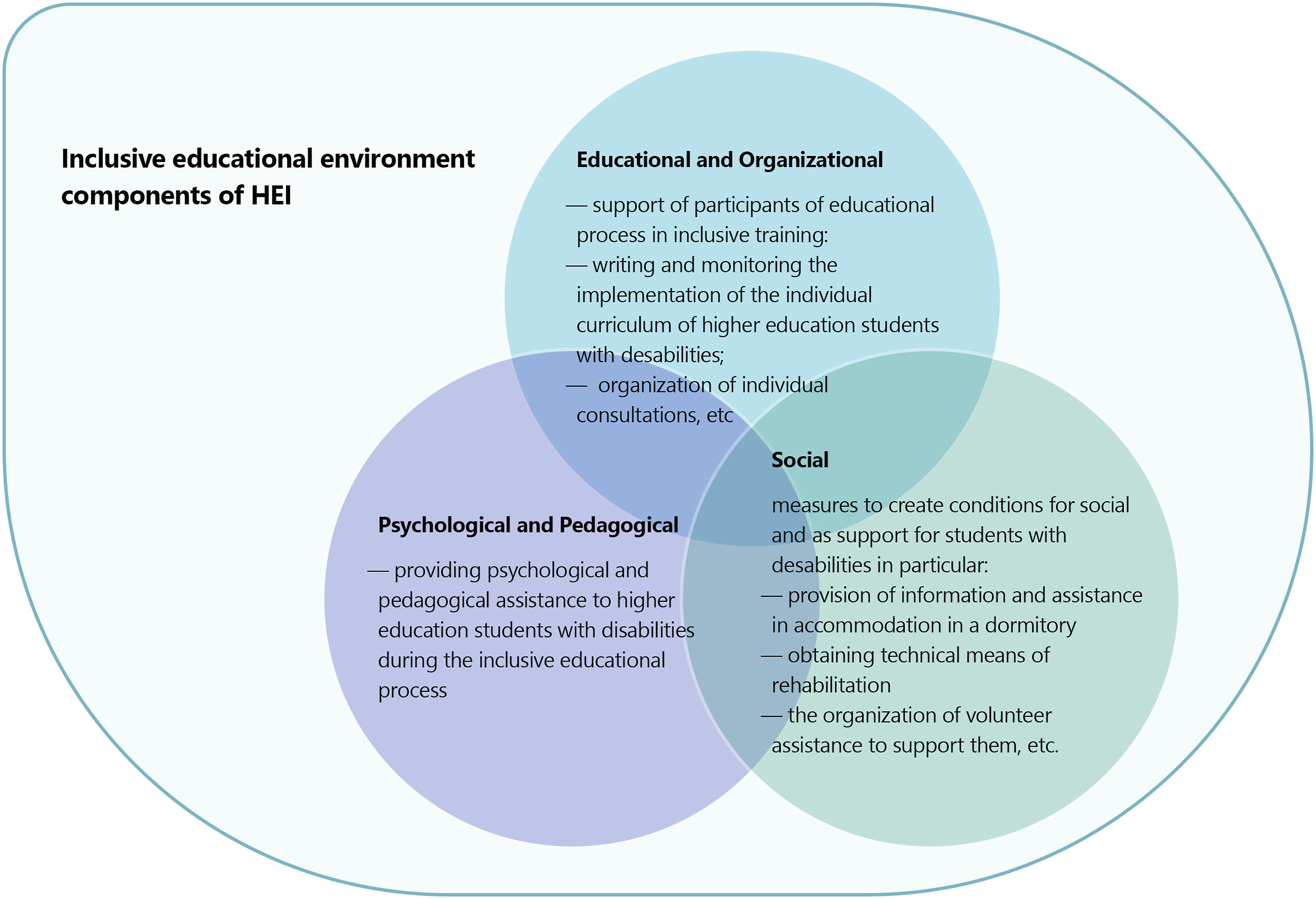
However, the practical implementation of legislative and regulatory initiatives for the organization of inclusive education in the actual educational practice of HEI is quite slow. The modern learning environment is focused on students with normative development and almost does not take into account the features of students with disabilities (Ministry of Education and Science of Ukraine Inclusive learning, 2022). In particular, as of January 1, 2020, 19,345 students with disabilities have studied in inclusive classes, which is 7 times more than 5 years ago.
The approach to inclusive education in HEI differs from that implemented in secondary schools, where inclusive education is quite successfully implemented in the educational process (Bielik et al., 2022; Kolupayeva et al., 2014; Lutsan et al., 2020). The differences between the implementation of inclusive education in secondary schools and higher education institutions can be explained by a certain set of factors (Bilavych et al., 2022; Kovtoniuk et al., 2022). In general, it can be represented as: • Time: The introduction of inclusive education in secondary schools began in 2010-2011, while in higher education institutions, this experience was only centrally implemented from 2019. • Legislative: Over 10 years of piloting and actual implementation of inclusive education in secondary schools, a legislative and regulatory framework has been developed. This framework is constantly updated and improved according to the needs of practice and analysis of the current situation. In the higher education system, there is only one “Order of Organization of Inclusive Learning in Higher Education Institutions,” which is very general and does not provide a clear mechanism for organizing the learning process. There are also no clear guidelines and forms for developing an Individual Learning Plan. Additionally, the legislation in the higher education system does not provide for separate staff units to support students with disabilities. However, the stage of education in higher education institutions is more responsible compared to schools. The result should be mastery of a profession and the ability to carry out professional activities, which requires more systematic work with students with disabilities. At the same time, the workload of faculty members does not include hours for this. • Organizational: According to Ukrainian legislation, a student has the right to choose any higher education institution, as opposed to secondary schools, where the main goal is the right to study in the place of residence. The education of a student from another city requires the organization of social and domestic support, which is also an additional resource and workload for higher education institutions compared to schools, where children study and live together with their parents. • Social responsibility: In the school education system, the learning outcomes may vary depending on the abilities of the student with disabilities. However, the higher education system must provide for the formation of a complex of program learning outcomes, which are the basis for awarding qualifications. Therefore, working with students with disabilities should be balanced not only with their individual characteristics but also with the requirements for awarding qualifications.
This situation is not only typical for the Ukrainian education system, as inclusive education was originally created for elementary school students in different countries. Gradually, a significant number of students with disabilities have shown a desire to continue their education, making it logical to implement and develop inclusive education in higher education institutions (Salha and Albadawi, 2021). In the 2019-2020 academic year, 1312 students with disabilities were learning in higher education institutions (Ministry of Education and Science of Ukraine Inclusive Learning, 2022). Therefore, it is possible to predict a rapid increase in the number of students with disabilities in higher education institutions over the next 5-10 years due to the introduction of inclusive education at all levels of education, particularly in the secondary school system. The situation may be complicated by an acquired disability resulting from the war with the Russian Federation, but this issue should be carefully studied in further research.
The development and implementation of inclusive education in HEI are primarily connected to the insufficient readiness of the participants of the educational process, management, and support staff. However, faculty members play a fundamental role in promoting inclusion in HEI (Márquez and Melero-Aguilar, 2022). We share the opinion that the practical implementation of the key ideas of inclusion largely depends on the faculty members. Through the use of best practices and the creation of a learning environment, they influence interactions not only at the level of “faculty member-student” but also in certain ways on the interactions between “student-students,” “student-management of HEI,” and “student-community.” Therefore, the willingness of faculty members to implement an inclusive approach is the main success factor in the formation of inclusive education (Alechina et al., 2011) and related practices in HEI (Gale et al., 2017; Márquez and Melero-Aguilar, 2022).
Definitely, the restructuring of the faculty members’ activities taking into account the principle of inclusive education requires some additional training, effort, and time from the faculty members themselves. To achieve this, faculty members must step out of their comfort zone for outright formation of their own inclusive competence (Khandelwal et al., 2022). On the other hand, faculty members themselves need support in this matter.
Universities can provide support through specific training for faculty members on the implementation of inclusive education, exchanging best practices, and jointly determining possible ways to solve existing problems. Specific training enables faculty to respond to the individual needs of their students with disabilities through pedagogical adjustments, flexible materials, and evaluation tools (Martins et al., 2018). This approach will give an opportunity to provide educational, organizational, psychological, and pedagogical support. In addition, the Ordinance of the Cabinet of Ministers of Ukraine “On the Procedure for Organization of Inclusive Education in HEI” (2019) states that teaching staff must also provide social support to students with disabilities (Resolution of the Cabinet of Ministers of Ukraine, 2019). This means that faculty members should be aware of general theoretical approaches to the implementation of inclusive education, as well as best practices in educational, organizational, psychological, pedagogical, and social support for students with disabilities.
According to the State Statistics Service of Ukraine, at the beginning of the 2020/2021 academic year, the faculty members of universities, academies, and institutes consisted of 135,216 people, including 111,065 scientific and pedagogical workers, 566 scientific workers, and 23,585 pedagogical workers. As of January 1, 2023, the Unified State Electronic Database on Education (EDBO) listed 736 higher education institutions with a total of 1,077,685 students enrolled in programs at the levels of “Junior Bachelor”, “Bachelor”, “Specialist”, “Master”, “Doctor of Philosophy”, and “Doctor of Arts” (State Statistics Service of Ukraine, 2019). According to the report on the Quality of Higher Education in Ukraine and its Alignment with the Objectives of Sustainable Innovative Development of Society in 2022, as of the beginning of 2023, there were 119,533 records of scientific and pedagogical workers (SPW) in the EDBO. The gender balance is shifted, with women representing the majority of SPWs (60%) (Annual Report of the National Agency for Quality Assurance in Higher Education for 2021, 2022). It should be noted that due to the ongoing war in Ukraine, which has been going on for more than a year, the data on the number of universities, students, and teachers is very changeable.
Methodology
Characteristics of the respondents.
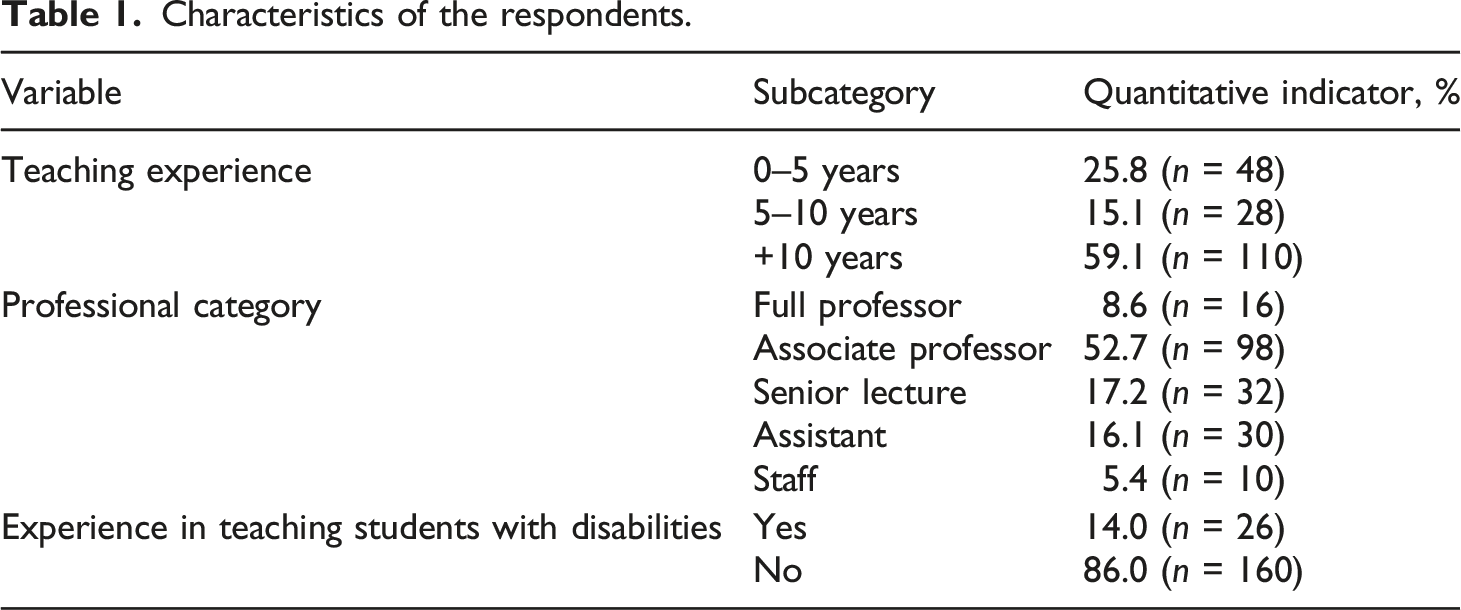
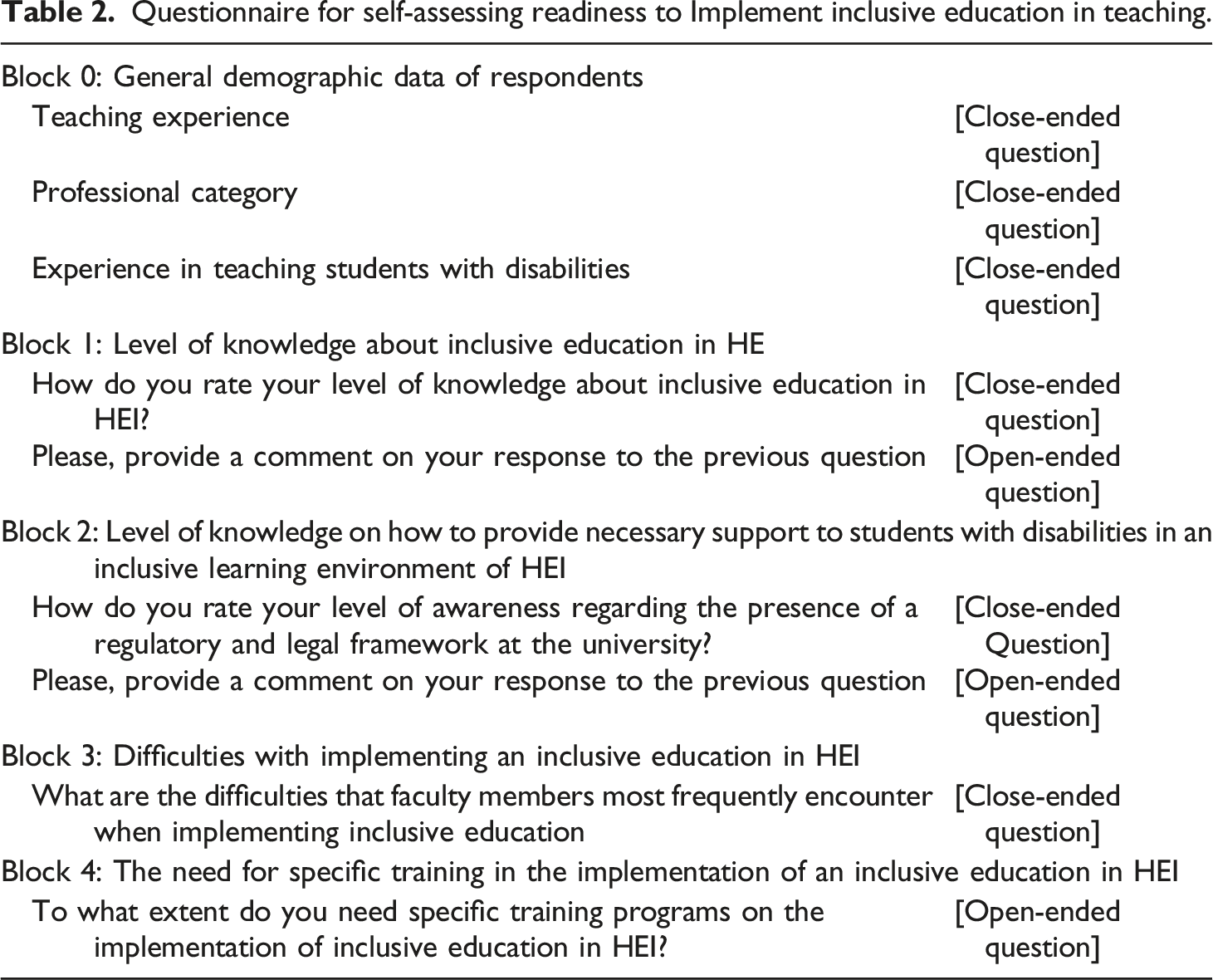
Based on the normative-legal framework of international and Ukrainian legislation on inclusive education in higher education institutions, as well as theoretical analysis of research on this issue, an author's questionnaire was developed. Its purpose was to identify the real level of faculty member awareness of inclusive education, the state and readiness of its implementation in HEI for students with disabilities. The questions were divided into four blocks: the level of knowledge about inclusive education in HE, the level of knowledge about how to provide necessary support to students in the system of inclusive education in HEI, difficulties with implementing inclusive education in HEI, and the need for special training in the implementation of inclusive education in HEI.
Questionnaire for self-assessing readiness to Implement inclusive education in teaching.
The questionnaires were administered online through Google Forms and distributed to the faculty staff's corporate email addresses by their management representatives. The research adhered to ethical standards and ensured anonymity for all participants. Participants were informed of the study’s objectives, duration, and data security, and were assured that there were no right or wrong answers. They were also informed that their personal information would remain confidential and would only be used in research or publication in an aggregated format through the release of general quantitative and statistical data. Participants provided informed consent for the results to be generalized.
Statistical methods were utilized, with the aid of the software package SPSS (Statistical Package for the Social Sciences), to interpret the research data. This interpretation has facilitated the development of relevant conclusions, which are currently being presented in the following section.
Results
The results present the level of preparedness of faculty members for the implementation of inclusive education for students with disabilities, which involves analyzing their knowledge of inclusive education, providing necessary support to students with disabilities in an inclusive learning environment of HEI, difficulties with implementing inclusive education in HEI, and the need for specific training in the implementation of inclusive education.
Level of knowledge about inclusive education in HE
The analysis of the survey results for this question involved clarifying the current level of knowledge of faculty members regarding inclusive education through their personal assessment and personalized comments. The results of the current level of knowledge were determined using quantitative methods and content analysis, and their correlation was established between the level of knowledge about inclusive education, teaching experience, experience of teaching students with disabilities, and professional category.
The results on the level of knowledge of faculty members about inclusive education are presented in Figure 2. The level of faculty members’ knowledge about inclusive education among survey respondents.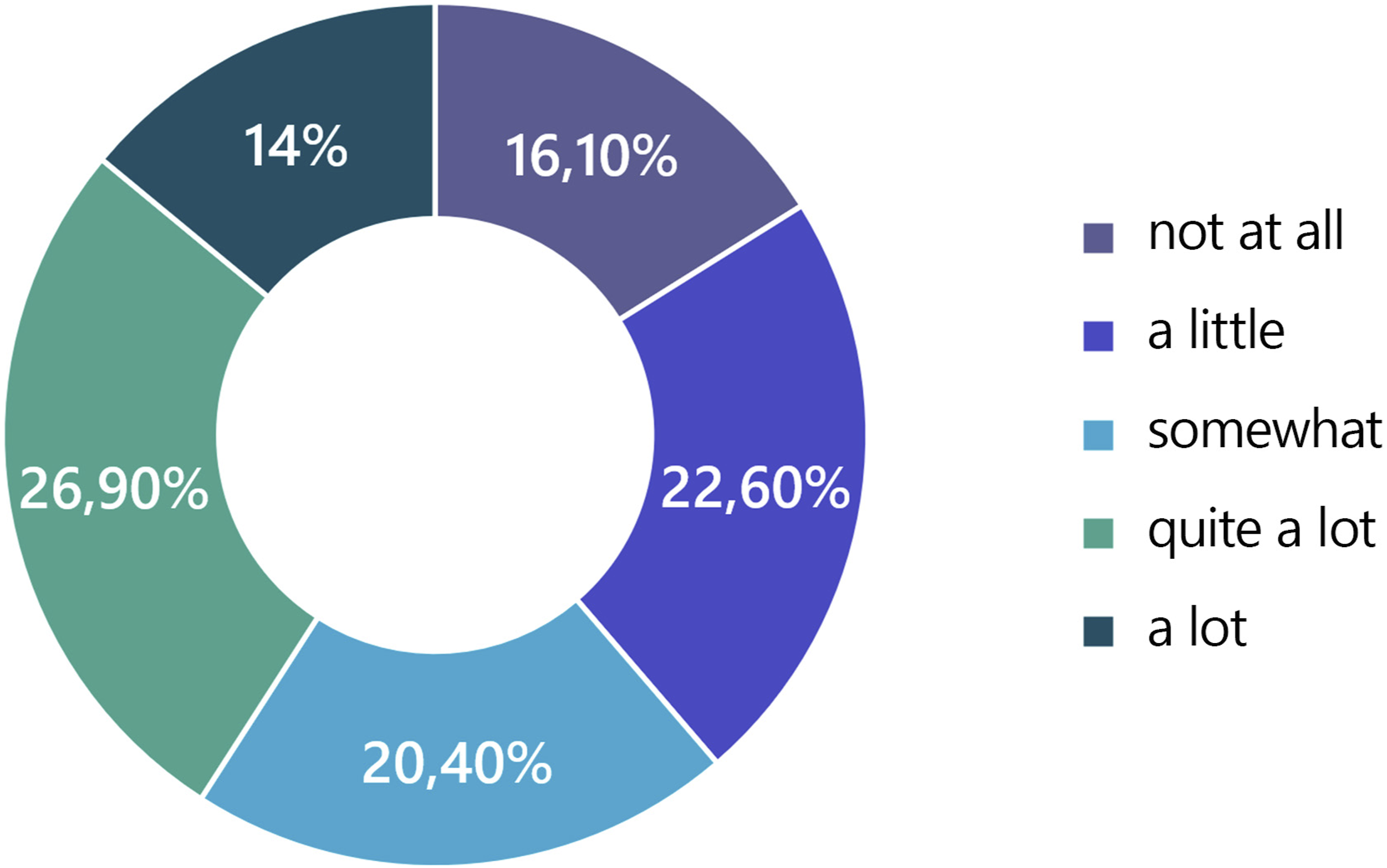
According to the results of the questionnaire, 22.6% (n = 32) of all survey respondents declared that they knew something about inclusive education. They indicated that the problem of inclusive education was not a subject of their academic and professional interests, but they read some literature on it in the context of an implementation of inclusive learning environment for elementary schools. Surprisingly, this result was also observed among faculty members who had experience in working with students with disabilities. The participants admitted that currently the issue of implementing inclusive education in HEI at the university level is not adequately covered, there are no corresponding clear instructions and methodical recommendations for the implementation of inclusive education in HEI.
According to the opinion of the survey respondents, independent searches for answers to numerous questions remain very often remain unanswered, leading to the absence of necessary reasonable changes in the educational process when working with students with disabilities. According to this group of respondents, Ukrainian HEIs are currently focused mainly on bringing the HEI territory, buildings, structures and premises into compliance with the requirements of state construction norms, standards, and rules that meet the various needs of students and potential applicants with disabilities. It is worth noting that such a result is characteristic both for faculty members with little work experience and for the basic level of professional qualifications, and for experienced ones, professors.
Of the entire sample, 20.4% (n = 38) stated that they knew little about inclusive education. In these cases, respondents explained that they read or heard about inclusive education in scientific articles. They considered their knowledge somewhat limited and focused mainly on understanding the philosophy of inclusion. They also noted that inclusion are fashionable terms in the field of education, but it is not always clear how exactly to organize an inclusive educational process in the HEI, how to provide support to students with disabilities. This result is typical for the basic level of professional qualification and has been shown mainly by faculty members with significant work experience.
A fairly significant percentage of the survey respondents (26.9% (n = 50) indicated that they know enough about inclusive education. Some of these respondents are very well versed in the theoretical foundations of inclusion, but have difficulties with inclusive practice in the educational process. They have added that not enough information is provided on effective inclusive practices in HEI, taking into account the Ukrainian legislative framework, as well as national opportunities and conditions of HEIs.
Another percentage of the participants 16.1% (n = 30) said that they knew nothing about inclusive education. This result was observed among faculty members with little teaching experience who did not focus their attention on the availability of students with disabilities in HEI, in particular, in the groups where they teach, there are no such students.
Finally, 14.0% (n = 26) of all survey respondents noted that they knew a lot about inclusive education. These respondents stated that they are well informed not only about the theoretical foundations of inclusive education, as they have participated in professional development programs on this issue, some have their own practical work experience with children with disabilities at a previous place of work in a school, or have their own child with similar problems. This allowed them to introduce some inclusive practices into the educational process of HEI based on their own experience.
The distribution of the responses of the faculty members based on various characteristics is presented in Figure 3. Claimed knowledge about inclusive education.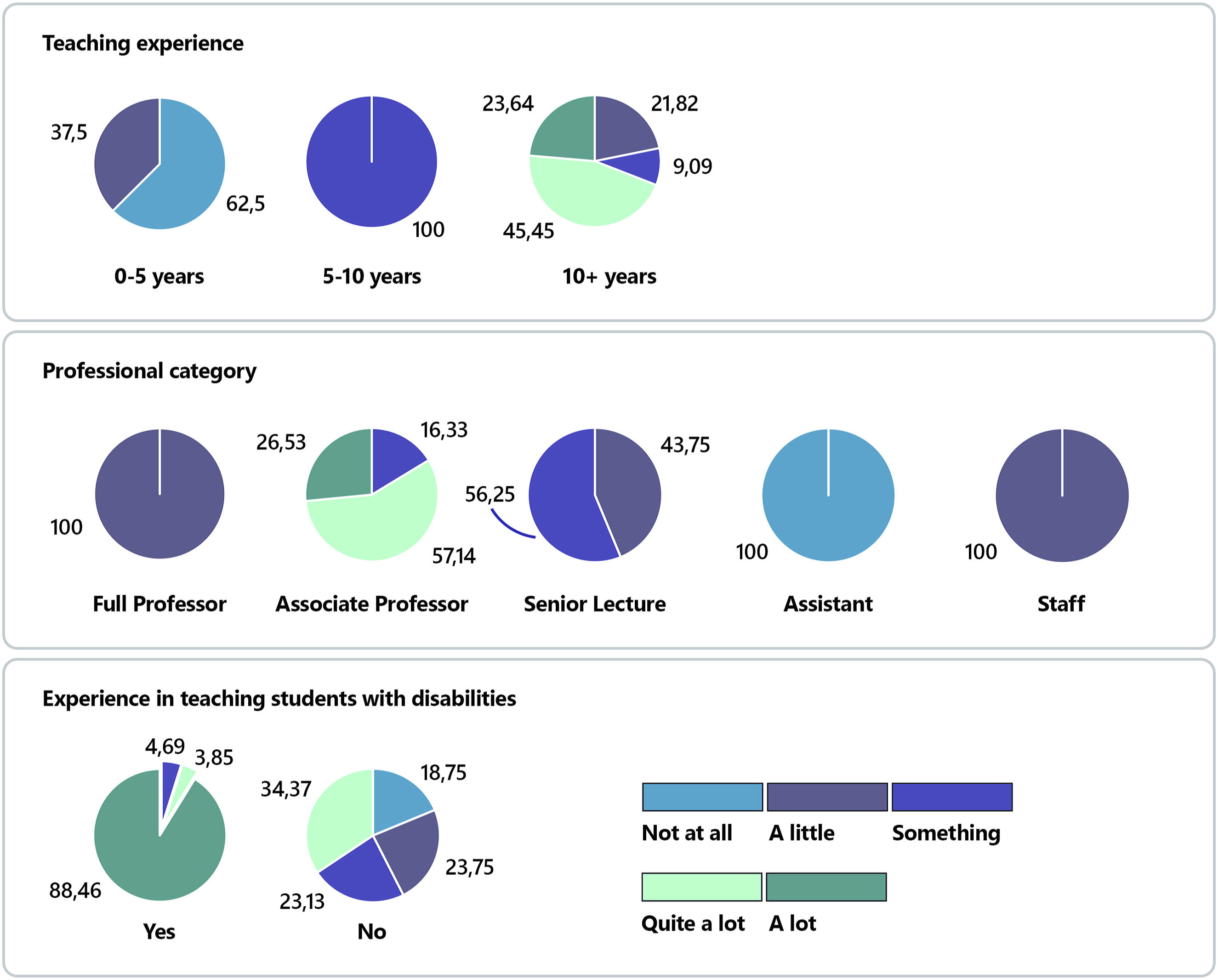
The distribution of the responses, categorized by different factors, reveals that the level of knowledge regarding the theoretical foundations and principles of implementing inclusive education in Higher Education Institutions (HEI) is dependent on two factors: • Teaching experience: the more teaching experience one has, the more knowledge they possess about inclusion; • Experience teaching students with disabilities.
However, the professional category of teaching staff does not have a significant impact on the level of inclusion awareness.
Level of knowledge on how to provide necessary support to students with disabilities in an inclusive learning environment of HEI
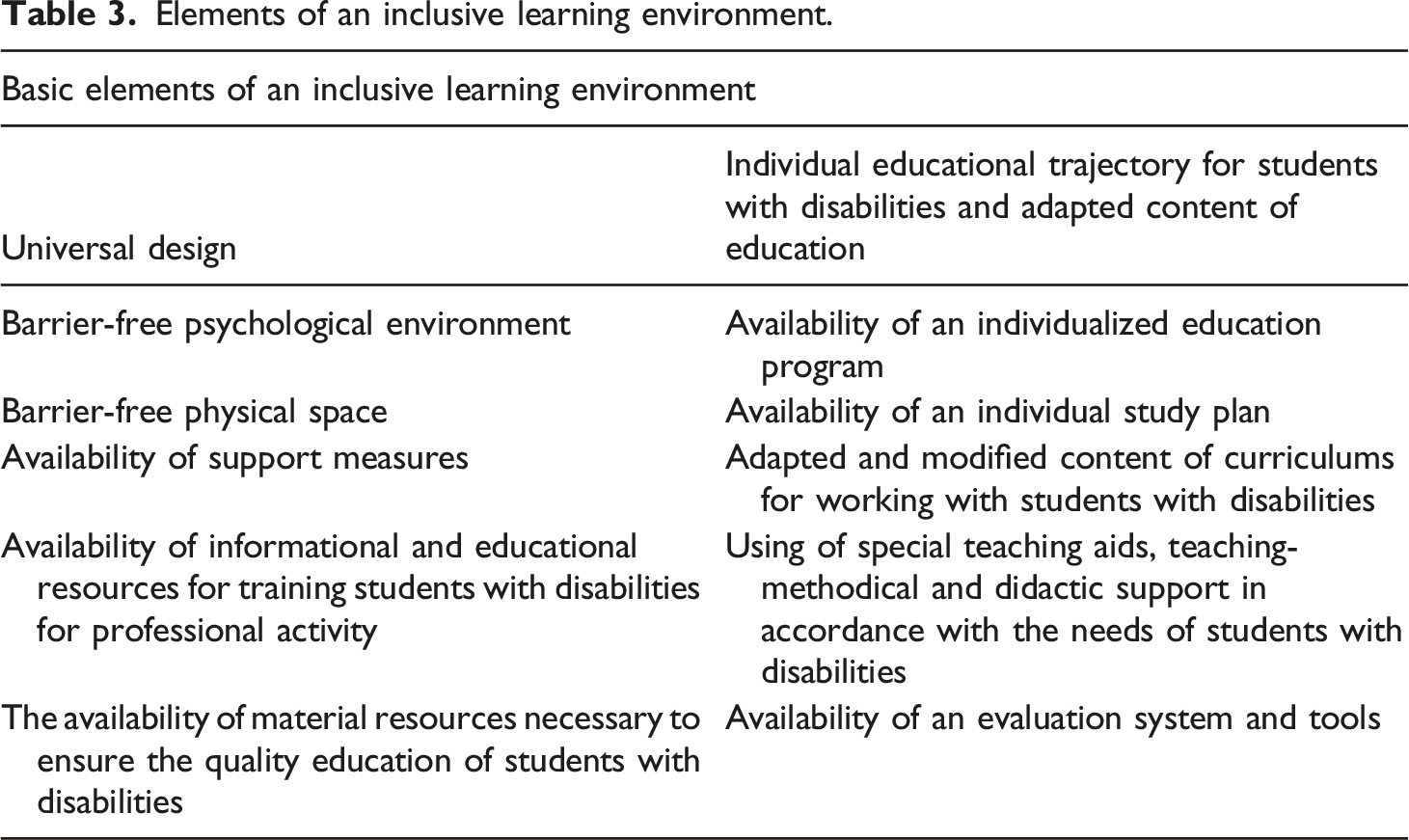
Elements of an inclusive learning environment.
The results among the respondents indicated that 8.1% (n = 15) knew nothing about the existence of HEI local documents that regulate the functioning of inclusive education in university. And 16.1% (n = 30) of the respondents noted that they do not know at all about the existence of special structures that support and monitor the process of organizing inclusive education in the HEI where they work. This result was obtained both from faculty members with little teaching experience and a basic level of professional qualifications, and from faculty members’ with significant teaching experience and higher professional qualifications who had no experience of interacting with students with disabilities. These respondents showed a low level of awareness on the issue of an inclusive learning environment of HEI.
The absolute percentage of the sample of 75.8% (n = 141) confirmed that they knew something about the normative documents that regulate inclusive education in HEI. The interviewed faculty members’ noted that the normative legal documents of the HEI have defined and implemented the following elements of an inclusive learning environment in the educational process: • The use of special educational tools • The use of educational, methodical, and didactic support that meets the needs of students with disabilities • Adaptation and modification of the curriculum's content.
However, they do not have their own experience in using educational, methodological, and didactic methods to respond to the needs of students with disabilities, particularly in adapting and modifying the curriculum's content.
Considering that 14.0% (n = 26) of the faculty confirmed the presence of students with disabilities, they knew little of university local documents which regulate the organization of an inclusive learning environment and the existence of structures to support and monitor the organization of inclusive education in HEI. In particular, they have noted that they are aware of the principles of universal design that should be implemented in HEI where students with disabilities study, but they have not been able to list these principles.
Difficulties with implementing an inclusive education in HEI
The third block of questions provided the determination of the difficulties faculty members most often face in implementing an inclusive education. The study involved evaluating and ranking the most typical problems that they currently face. This was done by selecting several of the most significant obstacles and problems in the implementation of inclusive education. The study has provided an overall picture of the typical problems (Figure 4). Difficulties with implementing an inclusive education in HEI.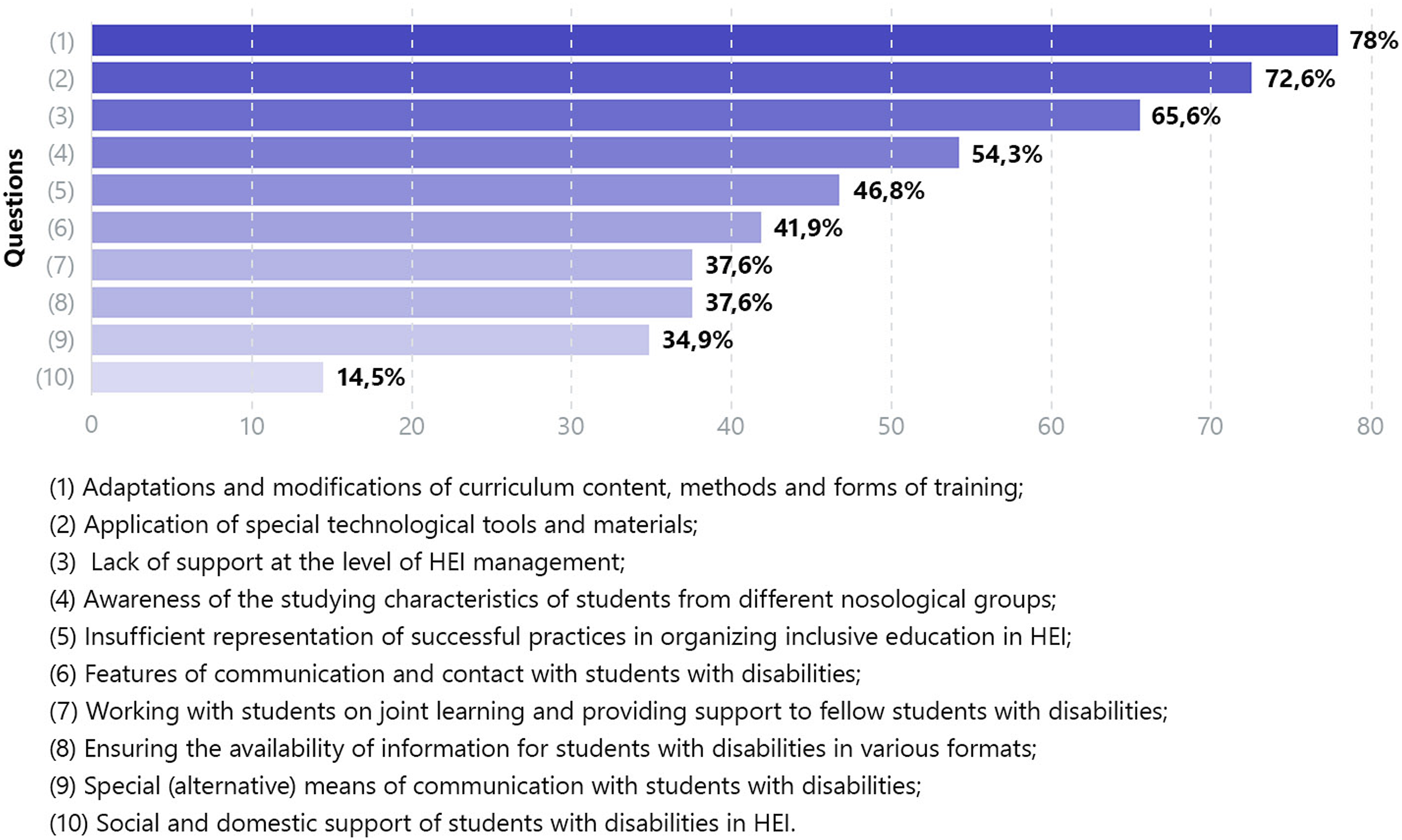
The analysis of the data obtained allows us to state that faculty members often encounter problems during the adaptation and modification of curriculum content, methods, and forms of learning to work in an inclusive learning environment. These problems arise due to the use of specific technological resources and tools, insufficient support at the management level of the Higher Education Institution (HEI), unclear institutional policies, and difficulties in understanding the educational needs of students from different nosological groups. These problems directly affect the faculty member's responsibility to provide equal access to quality learning support services.
Interestingly, the least important problems for faculty members in implementing inclusive education are ensuring the availability of information for students with disabilities in various formats, special (alternative) means of communication with students with disabilities, and social and domestic support of students with disabilities. This may be due to a less urgent need than the organization of the inclusive education process itself.
The need for specific training in the implementation of an inclusive education in HEI
This section involves studying the request for implementing special training programs aimed at enhancing qualifications related to establishing an inclusive educational environment in higher education institutions. It also involves analyzing current requests from faculty members regarding their educational needs, course content, and psychological readiness through statistical quantitative analysis and qualitative processing of comments on current requests.
In response to the final question of the questionnaire, “To what extent do you need specific training programs on the implementation of inclusive education in HEI?”, 88.2% (n = 164) of the surveyed respondents expressed their desire to increase their awareness of inclusive practices for equal access of persons with disabilities to HEI. They also sought support in entering HEI, completing studies, and practical training. The respondents noted their interest in mastering the agreed methods and practices of learning, teaching, and evaluating, taking into account the individual characteristics of students with disabilities (Figure 5). The need for specific professional development courses regarding the implementation of an inclusive education in HEI.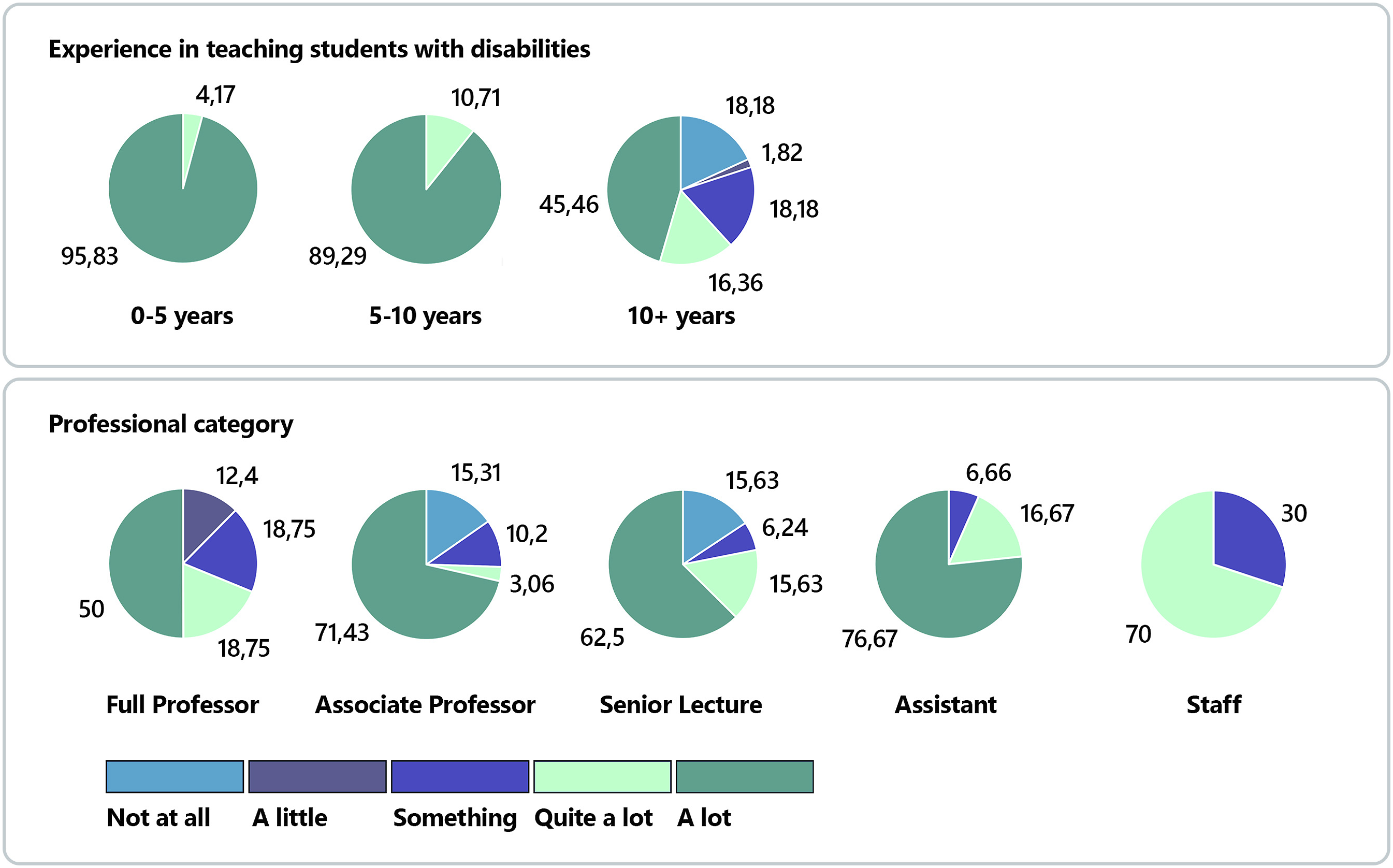
It is important to note that the responses from faculty members regarding professional development courses varied greatly in content. For instance, 25.8% (n = 48) of faculty members with limited work experience expressed a need for advanced training courses on implementing inclusive education in HEI. However, they also noted that they lacked the psychological readiness to work with students with disabilities. This highlights the necessity of covering organizational, educational, methodological, and technical support issues of inclusive education in HEI professional development courses.
Out of the total faculty members, 14% (n = 26) who had prior experience of interacting with people with disabilities emphasized the need for the following: • Inclusion of professional development courses in the program for faculty members that cover individual support for students with disabilities. • Features of adaptation/modification in learning materials. • Digital tools for involving students with disabilities in synchronous and asynchronous work. • Features of the application of special methods, taking into account students' disabilities, violations, and needs.
These categories of faculty members expressed interest in programs of professional development courses that focus on the implementation of inclusive education in HEI, despite their experience working with people with disabilities.
Another percentage of faculty members 36.6% (n = 68), who have significant teaching experience in HEI and higher professional qualifications, noted that they associate the inclusive learning environment of HEI primarily with buildings, libraries, and canteens that are adapted for people with disabilities, followed by administration, faculty members, and students.
The remaining 11.8% (n = 22) of faculty members with significant teaching experience in HEI and higher professional qualifications declared that they believe the issue of inclusive education should be resolved by special bodies in the organizational structure of HEI, and therefore do not consider it necessary to acquire additional competencies in the context of inclusive education.
The distribution of responses across different categories indicates the need for specific training for all faculty members, without excluding any category, on the implementation of inclusive education in HEI.
Discussion
This study contributes to understanding of the necessary steps for the further implementation of inclusive education in the Ukrainian HEI. Additionally, it highlights key issues that should be studied during continuous professional development through appropriate education programs for faculty members.
Our study also reveals a significant drawback in the implementation of inclusive education in Ukrainian HEIs - the vast majority of university faculty members lack sufficient knowledge about inclusive education and its practices in the educational process, regardless of age, gender, and professional qualifications. However, pedagogical knowledge, which is the basis of professionalism, is of great importance for the implementation of innovations (Révai and Guerriero, 2017). Therefore, although the Ukrainian HEI has adopted the basic principles of inclusion, a significant portion of its members is not fully prepared for its practical implementation. Currently, faculty members lack developed competencies to work with students with disabilities. And ‘Studying in a group of students with disabilities is a separate case and the faculty member should adapt to the individual needs of the student with disabilities’ (Kovtoniuk et al., 2022; McConkey et al., 2013; Raver, 2007; Shevchuk, 2021).
Although our study involved a small number of respondents (186), they were faculty members of varying ages and professional experience, working in higher education institutions located in different regions of Ukraine. The respondents' answers to the survey highlighted the continued importance and complexity of developing and improving inclusive education in higher education institutions.
The results obtained are consistent with data from other studies conducted outside of the Ukrainian context. They indicate that inclusive education is an unfamiliar term for a significant portion of faculty members and acquires different meanings among those who understand its essence (Díez et al., 2014; Stentiford and Koutsouris, 2021; Tingrui and Meng, 2019). Stentiford and Koutsouris (2021) noted that inconsistency and fragmentation in the perception of inclusive education significantly hinder the dissemination of inclusion in higher education institutions. The study focusing on the perception of inclusion in higher education by university administrative staff emphasizes that in Latvia, faculty members do not undergo training on how to work with student diversity (Nimante et al., 2021). In general, the preparation of teachers for implementing inclusive education is a widespread problem worldwide (Bunbury, 2020; Collins et al., 2018; Martins et al., 2018; Sanahuja et al., 2020). According to new research, inclusion in higher education is a philosophically controversial issue, but inconsistency and fragmentation in the perception of inclusive education significantly hinder the spread of inclusion in HEIs (Stentiford and Koutsouris, 2021).
Kikabhai provides a critical analysis of the complex issue of how educational systems respond to diversity, inclusion, and social justice and concludes that “modern higher education is transforming, shaping new territorial virtual spaces, increasingly subject to neoliberal market and consumer forces,” but notes that “higher education is part of the problem, a contradiction” (Kikabhai, 2022: p. 695). In a systematic review published in 2022, it is noted that the most common barriers for students with special needs are architectural barriers, lack of information, inaccessible technologies or rules that are not applied, as well as faculty members. In another study, educators are identified as the “main obstacle to inclusion” (Hewett et al., 2017), considering that their attitude towards people with disabilities plays a crucial role in facilitating students’ learning (Alesech and Nayar, 2019; Sharma et al., 2017). Other studies focus on the teacher profile, emphasizing personal competencies as fundamental values for working in an inclusive context (Fernández Batanero, 2020). Studies that gave voice to inclusive educators concluded that when facilitating the learning of students with disabilities, the diversity of active methodological strategies and participation strategies, which are more affective and emotional, are equally important (Aguirre et al., 2020).
Many studies focus on the lack of faculty members preparation to use methodology that promotes inclusion according to students' needs (Heiman et al., 2017; Nimante et al., 2021; Zubilllaga del Río et al., 2013). It is also reported that there is a general problem of providing services to meet the requests and needs of students with disabilities at the university level (Björnsdóttir, 2017; Yusof et al., 2019).
Researchers note that to address these issues, it is necessary to create a new organizational response. Drawing attention to diversity in the preparation of faculty members for inclusive education is crucial (Ocampo González, 2012; Valle-Flórez et al., 2021). Specifically, at universities, it is imperative to establish support services for students with disabilities (Nava-Caballero, 2011; Newman et al., 2021).
The implementation of inclusive education in higher education institutions (HEIs) poses a significant challenge for faculty members. The most pressing issues for them are those that directly impact the organization of an inclusive learning environment in the classroom. However, this can be achieved by creating an external environment that influences the organization of an inclusive educational environment. Additionally, the internal educational and methodological environment of higher education institutions should be adapted to cater to people with disabilities. The internal educational environment encompasses various aspects, including the design and implementation of diverse teaching and learning approaches that cater to the individual needs and learning styles of all students. This involves adopting flexible curriculum design and adaptation strategies to ensure that the curriculum is accessible and relevant to every learner, including those with disabilities. Moreover, the availability of inclusive learning resources, materials, and assistive technologies plays a crucial role in supporting students' diverse learning needs. Furthermore, the methodological environment pertains to the approaches used to assess and evaluate students' progress and learning outcomes. Inclusive assessment methods should consider individual differences and provide fair and unbiased evaluation, accommodating students with disabilities without compromising the rigor of the assessment process.
To foster a truly inclusive educational environment, faculty development and training are paramount. Faculty members need opportunities for professional development to equip them with the knowledge and skills to effectively support students with diverse learning needs. Moreover, creating a supportive and inclusive physical environment within classrooms and campuses is essential to ensure accessibility and participation for all students.
By addressing these internal educational and methodological aspects, higher education institutions can better support the academic and personal growth of all students, promoting equal access to education and fostering an inclusive learning experience. In our opinion, other problems depend, to a certain extent, on the management and support staff of the HEIs, and not only on the faculty members themselves. Therefore, it is important to investigate this issue separately, which will provide an opportunity to increase the readiness of HEIs as a whole system to implement inclusive education.
To some extent, our study highlights an actual challenge for the Ukrainian scientific community - the need to develop and pilot a scientifically based, accessible, and effective design of an inclusive learning environment of HEI adapted to Ukrainian requirements and opportunities, as well as a roadmap for the implementation of its educational, organizational, psychological, pedagogical, and social components.
At the same time, the results of our research are crucial for designing inclusive education in Higher Education Institutions (HEI). This is because it demonstrates that faculty members require support, and some organizational issues can only be resolved at the HEI management level for successful implementation of inclusive education. In this regard, we share Moriña and Carballo's opinion that the entire university community must be adequately prepared to provide quality education to students with disabilities (Moriña and Carballo, 2017). To achieve this, HEI management should remove barriers and facilitate necessary support for students, faculty members, and support staff (Márquez and Melero-Aguilar, 2022). Additionally, HEI should have clear policies on the implementation of inclusive education (Llorent et al., 2020) and enhance the professionalism of faculty members (Mezza, 2022). One essential element of the HEI policy for implementing inclusive education is the provision of specific training courses for faculty members. Such an approach will increase awareness of best practices, including: • Understanding students with disabilities, • Equal inclusion of students with disabilities in the educational process, • Using agreed methods and tools of learning, teaching, and evaluation while considering individual characteristics of students from inclusive groups.
Spratt and Florian (2015) proved in their research that the “inclusion in action” approach can solve the question of how to create an educational learning environment that provides opportunities to each student in different classrooms during faculty training. The research highlights the urgent need for specific training on this issue among Ukrainian faculty members (Spratt and Florian, 2015). The inadequate representation of these programs in Ukraine is a negative factor because training inclusion faculty generates a positive attitude towards inclusive education (Collins et al., 2018), promotes the implementation of inclusive environments in university groups (Lombardi et al., 2015; Moriña, 2016), significantly increases the effectiveness of supporting students with learning disabilities, and reduces the level of anxiety among faculty members themselves (Yan and Deng, 2019).
However, the level of knowledge about inclusive education declared by faculty members varies based on their work experience and interaction with persons with disabilities. We support research that suggests professional development courses for faculty members should not be standardized, but instead should be tailored to meet the specific needs of each individual faculty member (Collins et al., 2018; Gunersel and Etienne, 2014; Moriña, 2016). This approach will allow faculty members to create their own personalized trajectory for professional development in implementing inclusive education. For example, the creation of transitional programs to support neurodivergent students, providing better mental health support, and suggesting that universities create mechanisms to assist students (Dwyer et al., 2022).
Therefore, it is appropriate to offer faculty members various training programs on inclusive education, as the level of knowledge and needs may differ depending on their teaching experience, professional interests, and interaction experience with persons with disabilities. In a systematic review dedicated to the impact of technological training for university faculty members on educational inclusion and the quality of life of students with disabilities, it is emphasized that university faculty members must acquire new competencies, including digital ones (Fernández-Cerero et al., 2023). The need to develop digital competencies is also mentioned in other studies (Barbas and Matos, 2023; Brown, 2023). These issues are especially relevant today for Ukraine, where most universities operate online in a distance format (Lopatina et al., 2023; Marynchenko et al., 2022; Suchikova, 2023; Suchikova et al., 2023; Suchikova and Tsybuliak, 2023).
In anticipation of a growing demand for higher education among individuals with disabilities in the years to come, communities should also explore opportunities for broader education on inclusive practices. This will enable everyone, irrespective of their needs, to fully realize their potential and make meaningful contributions to society. In such conditions, approaches to implementing inclusive education are completely changing.
It should also be noted that the responses we obtained from the survey respondents can serve as guidelines for developing the content of special programmes for teachers to acquire practices to implement an inclusive educational environment in higher education.
Limitations and future research directions
The limitation of the study is that it solely focuses on faculty members of HEI and their readiness level for implementing inclusive education in HEIs. The study does not analyze the readiness level of management representatives and other structural units who may serve as support staff. Additionally, the study does not consider the impact of external factors such as the political situation in the country, economic constraints, the role of family and other social institutions, the material-technical base level of HEI, and their existing practices in this process. All of these aspects are important for a complete understanding of the problem of inclusive education in HEI and its effective implementation. Therefore, a coordinated approach to the development, training, and implementation of inclusive education practices across HEIs should be considered, which necessitates conducting separate research.
Future research that addresses these limitations can provide additional understanding of how a holistic and coordinated system of interaction between all participants in the educational process in HEIs can impact the implementation of inclusive education. As a result, it will allow for the development of the design of the HEI inclusive learning environment as well as a roadmap for its implementation.
Conclusions
The implementation of inclusive education in Ukraine is one of the important priorities for the development of higher education. The practical orientation of the implementation of inclusive education should strengthen the social mission of HEI, not only in terms of facilitating access to quality higher education for people with disabilities, but also in contributing to compliance with the rules of law and human development. This will allow achieving sustainable development goals for Ukraine and society as a whole towards quality higher education and reducing inequality.
For professional progress, the strategic tasks of the evaluation of higher education in the country are key directions for enhancing the opportunities of professional development, regardless of status, age, or position. This is recognized as very important because faculty members play a decisive role in the practical implementation of the main scientific achievements on the problem of inclusion. Currently, only a few students with disabilities are involved in the learning environment of HEI, and few faculty members have encountered this and have such work experience. They need a systematic and clear understanding of the content of inclusive education to expand their opportunities to organize the educational process in the most optimal and ecological way. However, it is important not to leave faculty members alone with the difficulties that arise in the process of implementing inclusive education in the HEI. One of the components of the successful implementation of inclusive education in HEI is the continuous training of faculty members and a clear HEI policy on this issue. This support for the development of the professionalism of faculty members will benefit not only the faculty members themselves but also all students, communities, and the higher education system as a whole.
Footnotes
Acknowledgements
The research teams thank the Armed Forces of Ukraine for ensuring the safety to do this research. This work was made possible only thanks to the perseverance and courage of the Ukrainian army.
Declaration of conflicting interests
The author(s) declared no potential conflicts of interest with respect to the research, authorship, and/or publication of this article.
Funding
The author(s) received no financial support for the research, authorship, and/or publication of this article.
