




Abstract
This paper systematically identifies, maps and evaluates specific types of provision for autistic students published on university websites at 120 institutions throughout the UK. Within these data we identify trends in relation to geographical region, university group, and the Teaching Excellence Framework rating. We employ Nancy Fraser’s theory of social justice to unpack the reasons that underlie the differentials in provision across UK higher education institutions. Findings identify eight categories of provision tailored specifically for autistic students from ‘supporting transition to university’ to ‘social groups’ and suggest that there are institutions across the UK with evidence of more developed provision. Our data show, however, that resources and provision are not distributed equitably, raising implications for autistic students’ parity of participation in higher education.
This paper systematically identifies, maps and evaluates specific types of provision for autistic students published on university websites at 120 institutions throughout the UK. Within these data we identify trends in relation to geographical region, university type, and the Teaching Excellence Framework (TEF) rating. We employ Nancy Fraser’s (1997, 2000, 2009, 2017) theory of social justice to unpack the reasons that underlie the differentials in provision across UK higher education institutions (HEIs).
Autism is a lifelong neurodevelopmental condition, which affects how individuals process information and perceive the world. Often autistic individuals can have difficulties in communicating, experience sensory sensitivities, and rely on routines, all of which can have implications for social functioning (American Psychiatric Association, 2013). At the same time autistic individuals often possess a variety of strengths and skills, including attention to detail, honesty, creativity, and the capacity to approach problems systematically (Russell et al., 2019). Many students in Higher Education (HE) may have diagnoses of Asperger’s Syndrome or High Functioning Autism, however, since 2013 the various diagnostic labels have been collapsed into one autism spectrum disorder diagnosis (American Psychiatric Association, 2013). Across the general population, the prevalence rate of autism in the UK is estimated at around 1 in 100 (Brugha et al., 2011) although other international studies suggest that rates could be as high as 1 in 59 (Baio et al., 2018). The numbers of students disclosing autism diagnoses to universities in the UK is increasing year on year with the Higher Education Statistical Agency (2018) reporting at least 12,000 student disclosures in the year 2017/18. This is a dramatic increase since 2003/4 where only 80 students disclosed in the UK (Martin et al., 2008). It is very likely, however, that the autistic university population is much larger than even these estimates suggest. This is due to the fact that many (particularly women) go undiagnosed well into adulthood (Hull and Mandy, 2017), others are in the process of receiving a diagnosis, and some choose not to disclose their diagnoses at all (Cox et al., 2017).
Systematic reviews of autistic students’ experience of university report social challenges including social isolation; and increased presentation of mental health conditions including stress, anxiety, and depression (Gelbar et al., 2014; Jansen et al., 2018). These findings are consistent with Vincent et al., (2017) participatory study and various other studies (Anderson et al., 2018; Hastwell et al., 2012; Gurbuz et al., 2019; Van Hees et al., 2015), which describe difficulties in relation to a perceived sense of difference, social interactions, managing change, and living independently. With the rise in autistic students attending university and a growing awareness of the challenges that might be encountered, there has also been a positive move to introduce specific provisions or accommodations to meet these needs. In the United States, Barnhill’s (2016) analysis of universities and colleges reports that providing an advisor or tutor and making modifications to testing procedures were the most commonly reported accommodations; and supervised social activities, social skills groups, and housing accommodations were the most frequently reported support services. More recently, Accardo et al.’s (2019) study investigated the accommodations and support services preferred by American college students to find that academic coaching, tutoring, and summer transition programmes were the most preferred support services, particularly where they connected students to a member of staff. Taking a similar approach in the UK context, Chown et al. (2018) collected data from 99 universities, largely via freedom of information requests, to find that the most common types of supports for autistic students were consistent accommodation arrangements (92%), face-to-face time (91%), and provision of academic supports (90%). Their study also reported other examples of provision including transitional support, staff training, and employment trends, although these data were not always quantified. The mixed picture is also identified in Williams et al.’s (2019) review of support for disabled students in England which collected data from 67 institutions. Their report highlighted that only 26% of HEIs in the sample had a specific policy for students with ASD compared to 79% who had policies for students with Specific Learning Difficulties and 69% for Mental Health.
UK higher education sector
Since 1992, the UK higher education sector has expanded rapidly but without further policy-driven differentiation between higher education institutions (Tight, 2009). Within this context universities began to promulgate specific sector identities and the development of a hierarchy of prestige reinforced by institutional and group branding (Filippakou and Tapper, 2015). The Russell Group was formed in 1994 with the aim of representing ‘research intensive’ universities and informing higher education policy direction at a UK government level. At the same time, a group of smaller research-intensive but teaching-focused universities formed the ‘1994 Group’, some of which were subsumed into the Russell Group when it dissolved in 2013. Alongside this are a smaller number of institutions which are unaffiliated with either the Russell Group or the ‘1994 Group’ but had university status pre-1992. Finally, the largest section of the sector is made up of post-1992 institutions which tend to be former polytechnics with a strong focus on teaching and an emphasis on ‘widening participation’ (Boliver, 2015). As Post-1992 is not a mission group identity, many of these institutions are members of the University Alliance, Million Plus, and/or Cathedral Group; however, for the purposes of this paper the broader post-1992 label will be applied.
The stratification of UK’s higher education sector is also represented in the distribution of resources and student profiles. Those research-intensive universities, including the Russell Group and former 1994 Group, receive the largest share (62.3%) of government funding for research with other institutions receiving significantly less (De Jager, 2011; Drayton and Waltman, 2020). Whereas, Post-1992 institutions attract much more diverse student populations and receive more than 70% of the (much smaller) widening participation funds provided by the government (O’Connell, 2015). This is borne out in the most recent HESA (2020) data, which suggests that in the 2017/18 academic period, only 6 of the 37 (16%) ‘research-intensive’ institutions either in the Russell Group or previously in the 1994 Group, have disabled student populations larger than the sector average of 14% and only one reported a population of 20%. By comparison 36 out of 67 (54%) HEIs with Post-1992 status had above average disabled student populations, with 7 reporting numbers above 20% and one as high as 28%.
Teaching excellence framework
The TEF, originally devised by the UK Department for Education in 2016 (Office for Students (OfS), 2018), was a central feature of the 2017 Higher Education and Research Act. Its reputed aim is to raise the quality and status of teaching in higher education institutions (Hubble and Bolton, 2018) through measurement of performance and financial accountability (Wood and Su, 2017). Excellence in the TEF is measured through a series of proxy metrics that include, student satisfaction, retention, employability and learning gain (Massie, 2018). Universities and colleges in all parts of the UK can participate in the TEF, and a total of 288 HEIs held a TEF award in 2019. Following the most recent assessment, 77 HE providers are rated gold, 136 are rated silver and 61 are rated bronze (OfS, 2020).
The TEF purports to situate ‘students at the centre’ of higher education, with an espoused emphasis on social mobility and ‘choice’ (Gillard, 2018; Gourlay and Stephenson, 2017) with gold awarded to those institutions where teaching ‘ensures all students are significantly challenged to achieve their full potential’ leading to ‘outstanding outcomes for students from all backgrounds’ (Department for Education, 2016: 3). Such a requirement for institutions to demonstrate their engagement with underrepresented and non-traditional groups (low income, Black, Asian and Minority Ethnic students, those with disabilities or adult learners returning to education) is welcomed. However, it signals the lack of parity experienced by minority groups, a point emphasised by the recently established Disabled Students Commission (DSC), which has been charged with identifying and promoting practice which impacts positively on disabled students’, including those who disclose an autism diagnosis (Advance HE, 2020).
Social justice as parity of participation
This paper draws on the work of Nancy Fraser (1997, 2000, 2009) to offer a theoretical frame for considering the outcomes across the higher education sector for autistic students. Like others (see for example, Keddie, 2012; Lynch and Lodge, 2002; Mills et al.,2016; Power, 2012), her three-part model of social justice as redistribution, recognition, and representation is identified as insightful for better understanding inequalities in education. Fraser (in Bozalek, 2012: 147) argues that, Social arrangements are just if, and only if, they … institutionalise the possibility for people to participate on a par with one another in all aspects of social life. This means that social arrangements are unjust if they entrench obstacles that prevent … people from the possibility of parity of participation.
Methodology
An instrumental case study approach was adopted, as it facilitated exploration of patterns (Stake, 1995 cited Hamilton et al., 2012) within the data associated with one aspect of the bounded case (the 120 HEIs). Data were derived from the institution websites, the purpose of which was to show what prospective autistic students or their parents/carers might be able to find should they be looking for an institution with such provision. Previous research into provision in HE for autistic students illuminated the sparsity of specially tailored provision but did not always suggest how many institutions offered specific types of provision (Chown et al., 2018). This research aimed to find, map and quantify available information on the provision that is currently available for autistic students at universities in the UK, thus leading to the following research questions:
Research questions
What provisions and supports are currently available to autistic students at UK universities (with Research Degree Awarding Powers) based on publicly available information? How are provisions and supports for autistic students distributed regionally? What impact does university type have with respect to distribution of provisions and supports for autistic students? What impact do TEF ratings have with respect to distribution of provisions and supports for autistic students? What could be considered good practice across each of the different categories of provision?
The data were gathered through web or data mining of 120 HEI websites (N = 120), which is a process used to extract targeted information (Johnson and Gupta, 2012) and one which has been used more recently by researchers to explore issues including: online learning (Tang et al., 2019); course management systems (Romero et al., 2008); academic performance of HE students (Alsuwaiket, 2018); and market segmentation in professional education (Davari et al., 2019). Data or web mining is part of both information retrieval and extraction systems, and it can draw upon other techniques including topic tracking, clustering and categorisation (Johnson and Gupta, 2012).
The research process followed was similar to that used in Injadat et al.’s (2016) study of data mining techniques in social media research. Firstly, a search protocol was created which involved identification of research questions (see below). Secondly, a search strategy and selection procedures were outlined, and quality assessment rules applied. The approach for data extraction and synthesis was similarly agreed.
Search strategy
A Boolean search strategy (Alderman, 2014) was used to collect data for this research. For each of the 120 institutions, the researchers entered the following into the search bar of the Google web browser:
Site:[institutions web address] “autism” OR “aspergers” OR “ASD” OR “ASC” AND “support” OR “provision”
This search strategy brought up all pages from the institutions website which contained these search words. The first five pages of results were then checked for information on provision for autistic students at that institution. Where there was evidence of a provision this was recorded in Microsoft Excel.
Data extraction and analysis strategy
From the data retrieved we identified 8 types of provision for autistic students (see below). It was further analysed by regional differences, type of university based on age and mission group and its relationship to the Teaching Excellence Framework (TEF).
The types of provision recorded were: Evidence of a specific section of the website for autistic students Evidence of transition to university provision Evidence of Transition to employment provision Evidence of peer mentoring Evidence of specialist tutoring Evidence of social groups for autistic students Evidence of self-advocacy or student-led societies Evidence of provision for acquisition of or support with daily living skills
Institutions whose websites showed that they offered three or more of the described types of provision were marked as potential examples of more developed provision. These institutions were then sorted by geographical region, TEF rating and university type: research-intensive (Russell Group and previous 1994-group), unaffiliated pre-1992, and post-1992.
Limitations
The aim was to use data that was freely available to the public, rather than information that required a specific enquiry of Freedom of Information request to the institutions. All data included in this study were found due to its publication on institutional websites. For this reason, where information on autism provision was not apparent in the searches, the researchers do not assume that this means the provision itself does not exist, only that information about that provision is not publicly available.
The methodology did not use an automated web content programme for analysis, and therefore was open to human error. Additionally, tags and other “meta” content on a page can camouflage some of the pages, so it is possible that some data was not captured. Finally, whilst specific search and data extraction strategies were used, content may have been missed as web page content is ‘so scattered’ (Gunasundari and Karthikeyan, 2012: 29).
Findings
Spread of provision
As previously mentioned, 8 categories of provision were identified across the whole data set (N = 120) (see Figure 1). These are outlined in detail below and include examples of institutional practice, provided both to illustrate but also to advance examples of good practice.
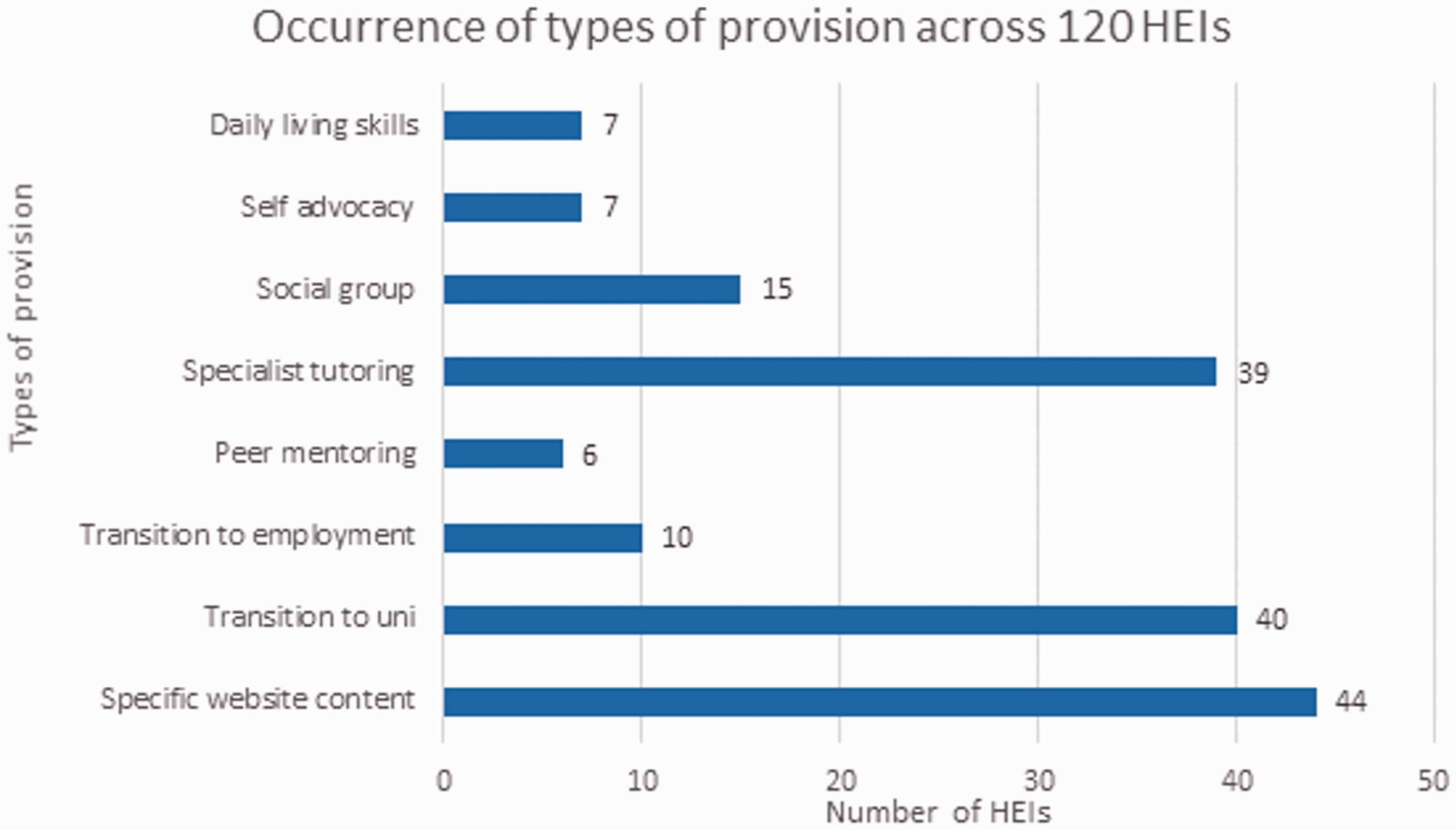
Occurrence of types of provision.
The most frequent provision recorded was having ‘specific website content for autistic students’, with 44 (n = 44;37%) institutions having this. Most of the time having a specific section on the website for autistic students was an indicator of further provision. Of the institutions (n = 21) which were identified as having three of more types of provision, 90% had a specific section for autistic students on their website. Results for ‘transition to university’ (n = 40) and ‘specialist tutoring’ (n = 39) were the next most common types of provision; however, they were still offered by fewer than half of the 120 institutions, representing 33% and 32% respectively.
HEIs with developed provision
Of the 120 HEI websites searched, n = 21 were identified as having three or more types of provision specifically for autistic students, thus indicating that overall provision was more developed. Regionally the South East (not including London) (n = 3) and South West (n = 3) had the highest number of institutions with ‘developed provision’ (see Figure 2). London had relatively low levels of developed provision compared to less densely populated locations such as Yorkshire and the Humber and the South West.
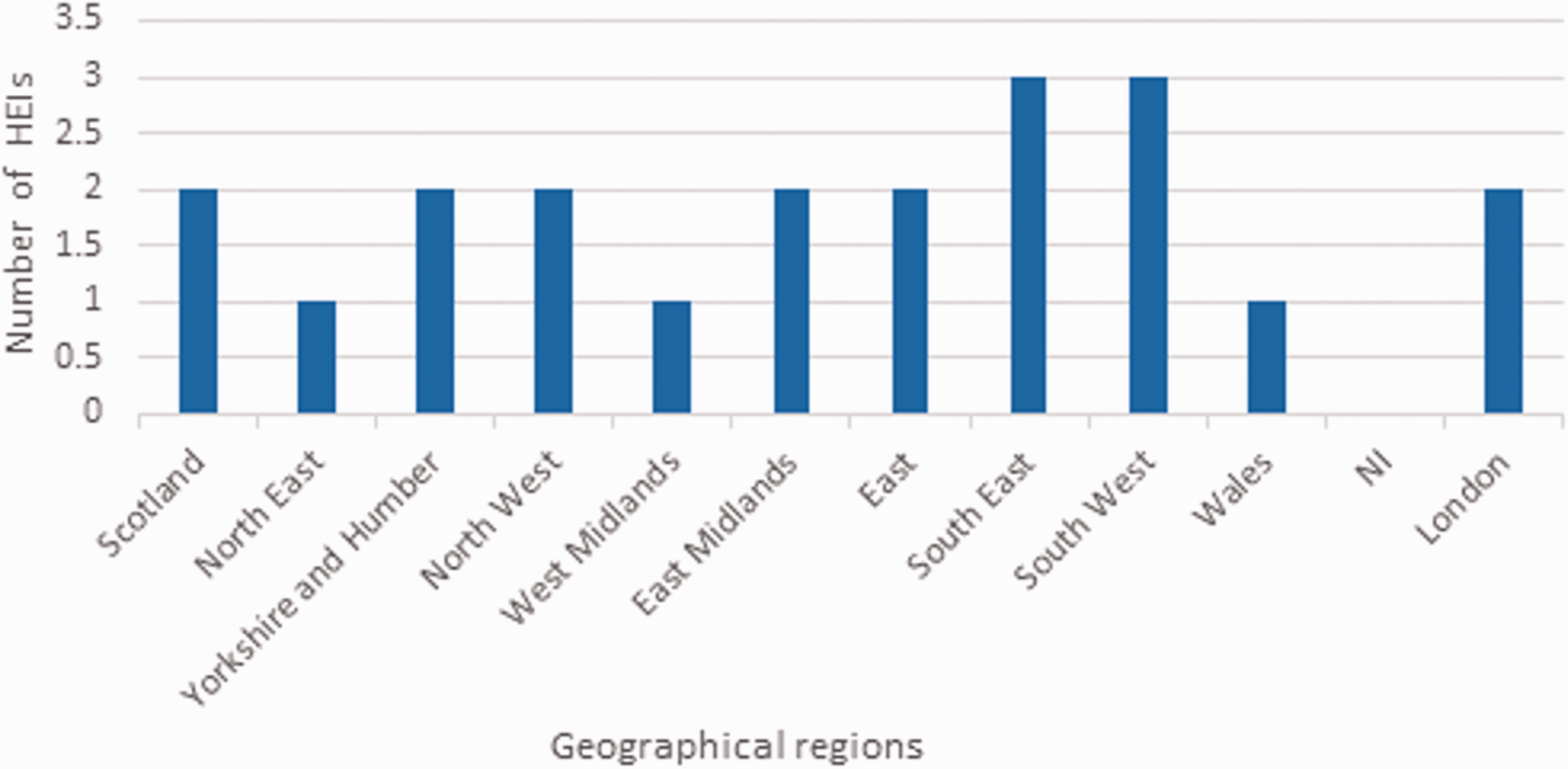
Geographical location of HEIs with developed provision.
When looking at how HEIs with developed provision are clustered by TEF rating it is clear that a large majority of institutions with multiple types of provision have a TEF rating of either Gold (n = 10) or Silver (n = 9), with only one HEI with bronze TEF and no TEF rating (Figure 3). Gold award HEIs represented only 33% of the sample (n = 40:N = 120) but 48% of those with developed provision (n = 10:N = 21).
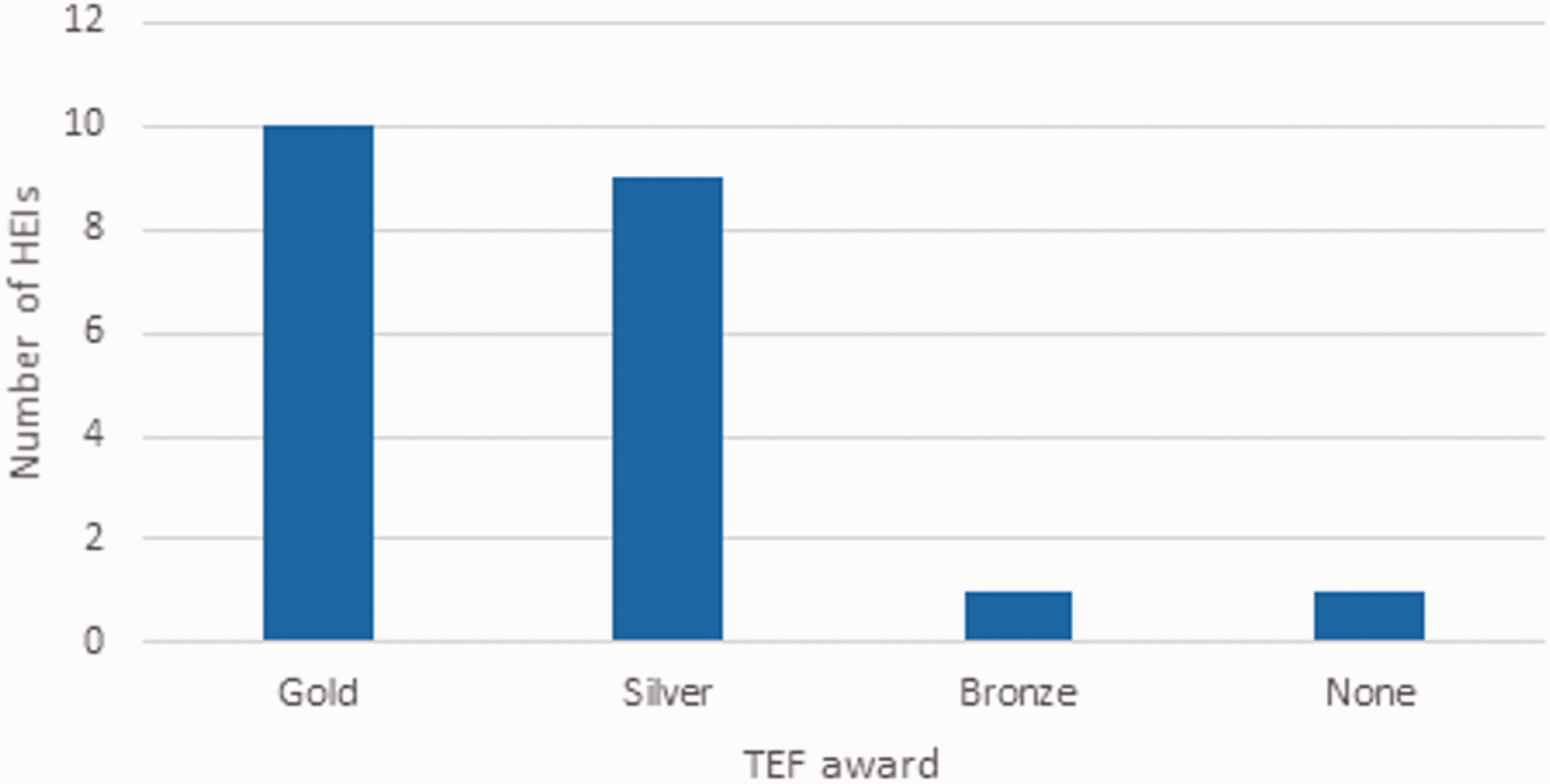
HEI providers with developed provision and their TEF rating.
The majority of HEIs marked as having developed provision were unaffiliated to any particular mission group (n = 11). These institutions have been classed as ‘Pre-1992 unaffiliated’ (n = 9), for those who received degree awarding powers before 1992 and Post-1992 (n = 2) for those who received degree awarding powers in 1992 or after. Of the university types represented, the Russell Group had the largest number of institutions with developed provision (n = 7 of N = 21), totalling 33%, even though these HEIs accounted for only 22% of the total sample (n = 26:N = 120).
Types of provision
Transition to university
Provision to facilitate the ‘transition to university’ was one of the most frequent types of provision offered in the sector (n = 40, N = 120). Examples of this provision were spread geographically but was most frequently found at institutions in the East Midlands (n = 5) and the South West (n = 5) regions. Of the institutions that offered some form of transition to university provision, the majority of HEIs that offered it had Gold (n = 18) or Silver (n = 19) TEF awards and were either Russell Group (n = 11) or Pre-1992 institutions, (n = 13 pre-1992 and n = 9 post-1992).
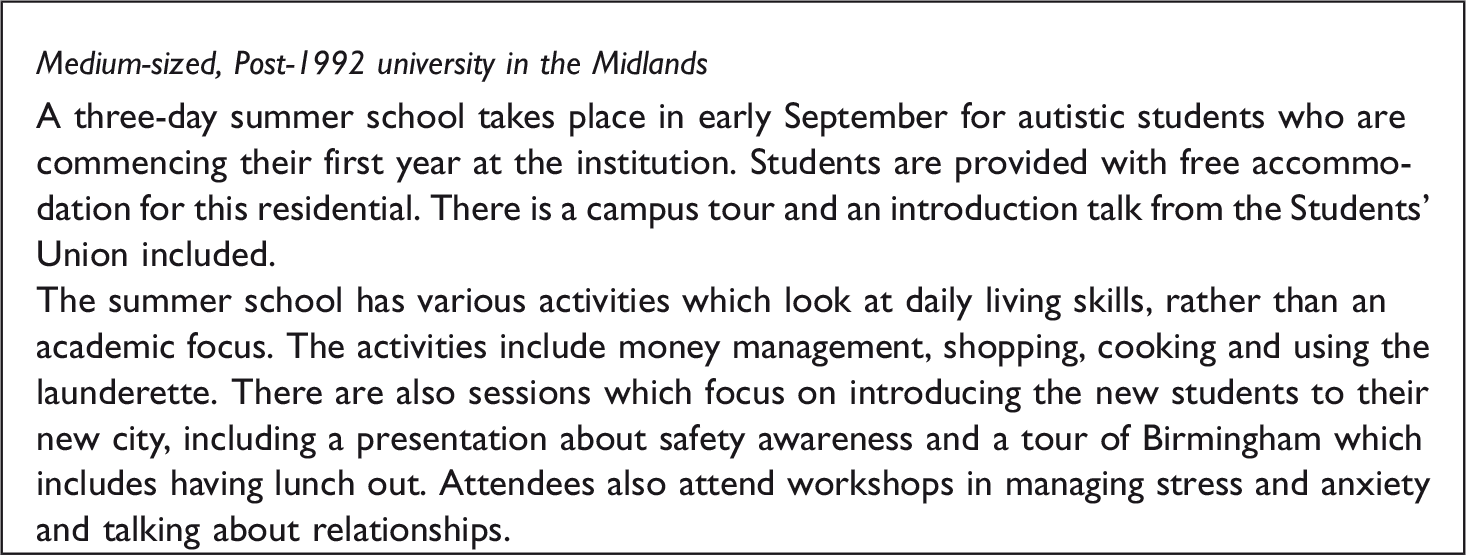
The majority of ‘transition to university’ provision consisted of one-off induction events between 1-3 days long (n = 25). Other transition support identified included information leaflets for autistic students, pre-meetings with a specialist autism advisor before starting university and guidance provided to academic staff receiving new autistic students into their classes.
Medium-sized, Post-1992 university in the Midlands
Specialist tutoring
Specialist tutoring was one of the most common types of provision. In total 39 HEIs (n = 39; N = 120) were found to have information about this support online. All regions of the UK had at least one HEI with specialist tutoring, with the highest number of institutions with autism-specific tutoring support in Yorkshire and the Humber (n = 6).
Of the HEIs that discussed specialist tutoring on their websites at the time of the research, 17 had gold (n = 17) TEF ratings, 19 Silver (n = 19) and 1 Bronze (n = 1). Two were Scottish institutions with no TEF rating. The majority of these institutions were either members of the Russell Group (n = 14) or were Pre-1992 (n = 13). It should be noted that it is not possible to gauge the quality of the tutoring, nor how easily it can be accessed, simply from the web search.
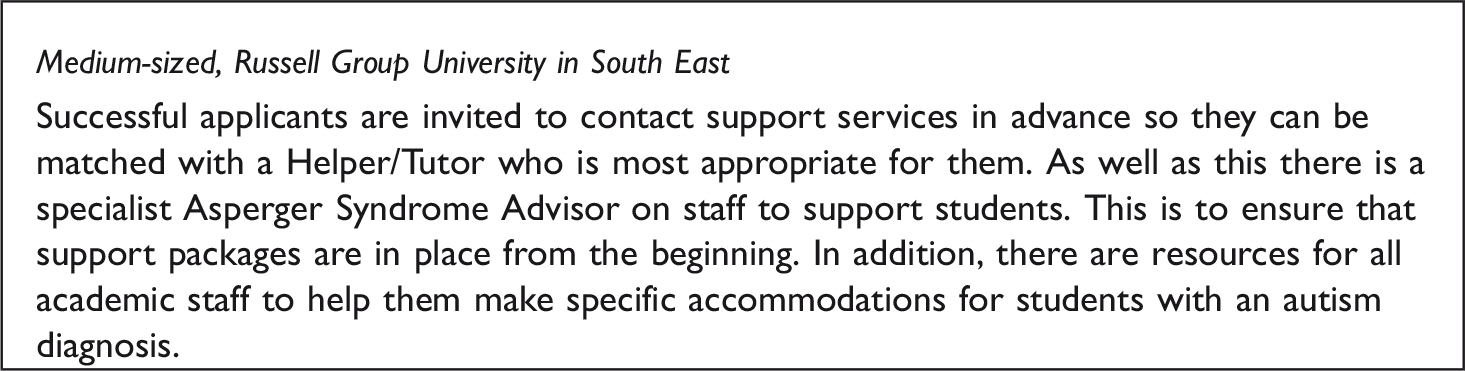
Medium-sized, Russell Group University in South East
Social group
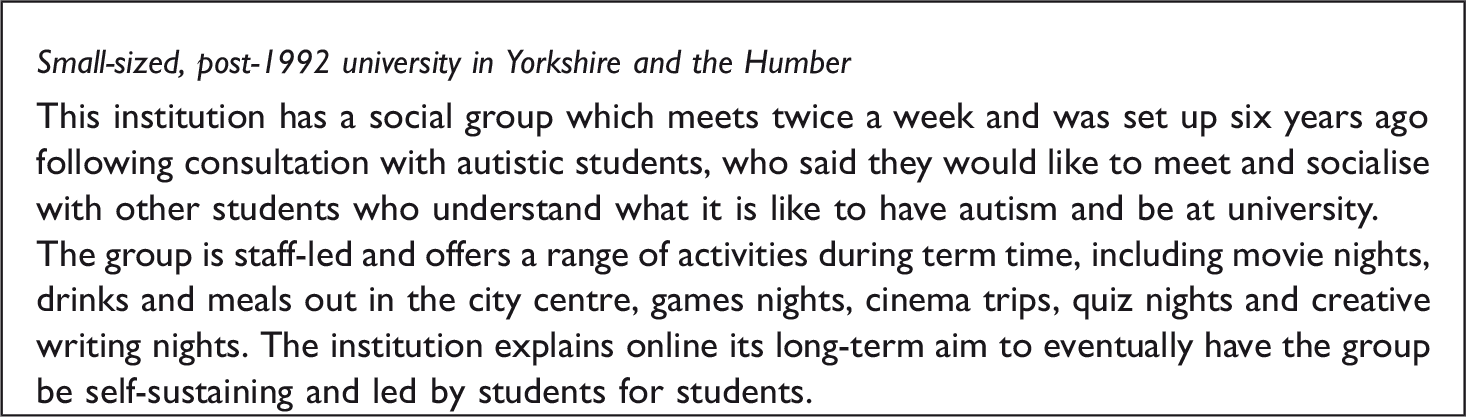
Social groups for autistic students were less frequently mentioned (n = 15; N = 120). Of the universities that had social groups 8 were Gold (n = 8) TEF rated, 6 were Silver (n = 6) and was 1 Bronze (n = 1). The Russell Group and other unaffiliated Pre-1992 institutions accounted for 12 out of the 15 universities who had social groups (n = 12). The information available in the web search varied, with some institutions making only passing reference to the existence of social groups or dated promotional materials which indicated the group’s existence. Other institutions had clear information about meeting times and types of activities offered for students who wished to attend. Most of these groups were run by the institutions, but there was some evidence of student led societies being run through the independent Students’ Unions.
Small-sized, post-1992 university in Yorkshire and the Humber
Transition to employment
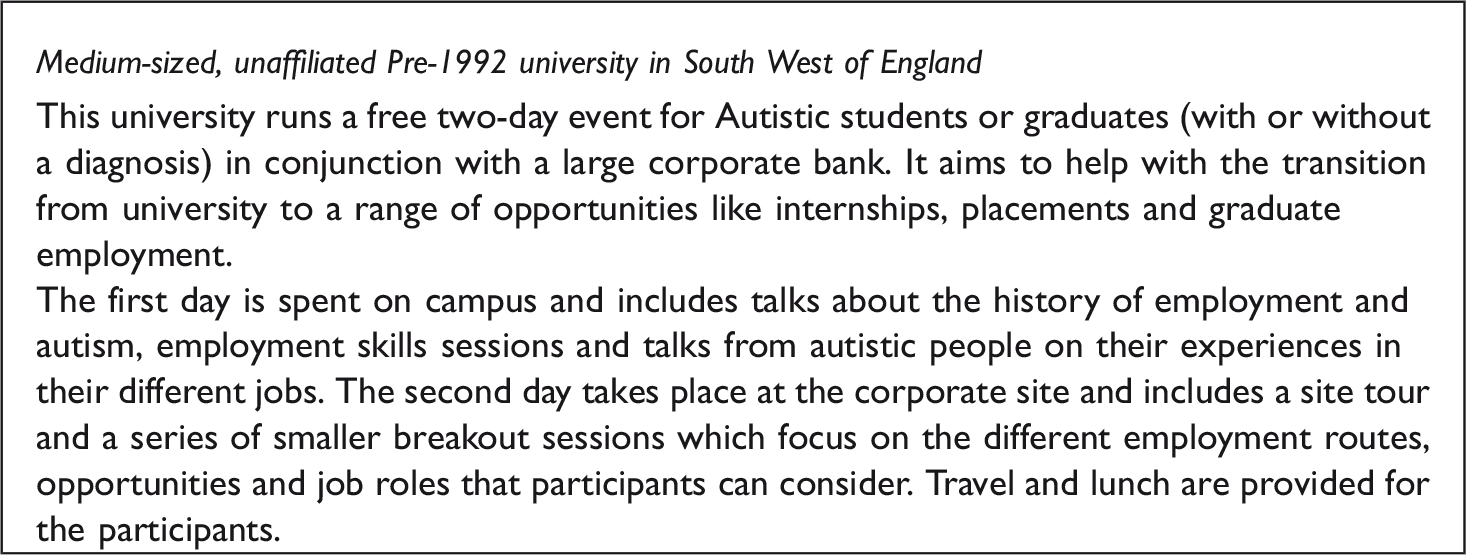
Provision to support autistic students to transition out of university and into employment was very sparse (n = 10; N = 120). The examples found were spread across the country, but half of all the provision was located in the North East (n = 2) and Yorkshire and Humber (n = 3). The majority of HEIs that offered transition to employment were Gold TEF rated (n = 7) and in the Russell Group (n = 7). Much of this type of provision was basic and involved either lists of autism-friendly employers or signposting to autism related organisation for more support. A few HEIs organised specialist employment events for autistic students to attend.
Medium-sized, unaffiliated Pre-1992 university in South West of England
Daily living skills
Only 7 HEIs had evidence of provision which addressed students’ daily living skills. All of these institutions were Gold (n = 3) and Silver (n = 3) TEF rated except for one Scottish university which does not have a TEF rating. The majority were Russell Group (n = 2) or Pre-1992 institutions (n = 3). Geographically, these institutions were spread across the UK, but over half were in the West Midlands (n = 2) and the South East (n = 2) combined.
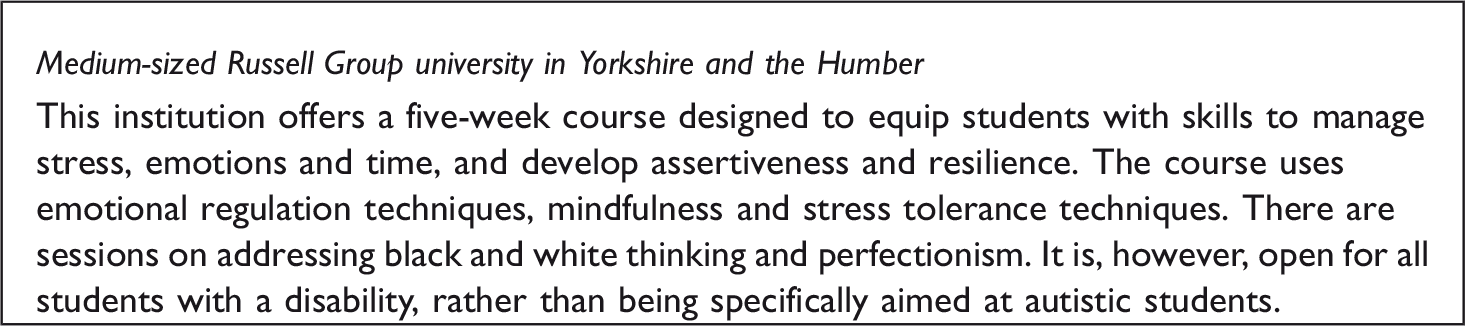
Medium-sized Russell Group university in Yorkshire and the Humber
Self-advocacy
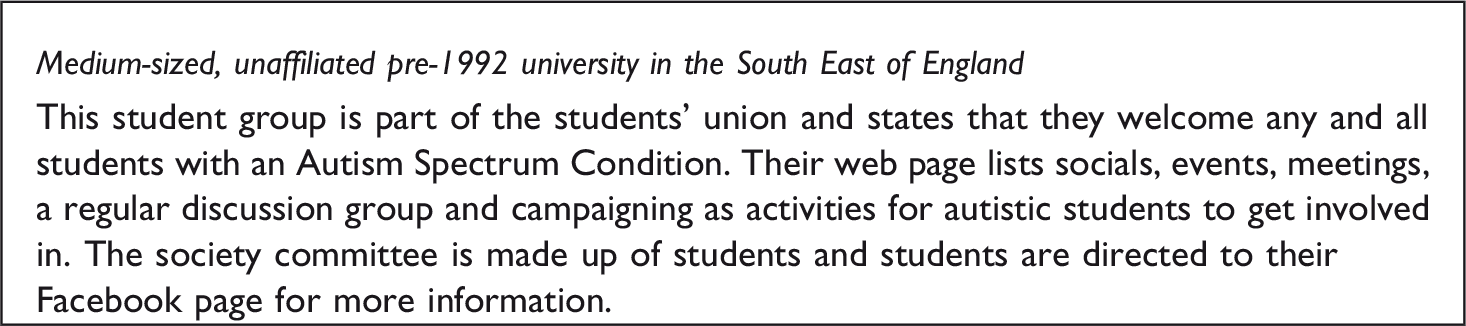
Only 7 HEIs had evidence of self-advocacy for autistic students and the data pointed towards one-off historical student-led campaigns or projects rather than any sustained provision. Of the institutions which did have evidence of this, all were Gold (n = 4) and Silver (n = 3) TEF rated. Five of the 7 universities were pre-1992 institutions and geographically widely spread.
Medium-sized, unaffiliated pre-1992 university in the South East of England
Peer mentoring
Provision for peer mentoring specifically for autistic students was sparse and spread out geographically. Of the 6 HEIs that offered it (n = 6: N = 120), all were Gold (n = 3) or Silver (n = 3) TEF rated, with three post-1992 and three pre-1992 HEIs. However, peer mentoring was usually only briefly mentioned, and tended to refer to generic peer mentoring schemes through the library/student services. There were no examples of an autism-specific peer support programme in the search results.
Discussion
These data highlight the existence of areas of good practice in relation to provision for autistic students across the UK. It identifies eight categories of provision tailored specifically for these young people, from ‘supporting transition to university’ to ‘social groups’. The categories of ‘transition to university’ and ‘specialist tutoring support’ were amongst the most common identified across these UK institutions, which accords with autistic students’ preferences identified by Accardo et al. (2019) in their US study. Additionally, the identification of ‘social groups’ for autistic students is positive, as this responds to one of the most prevalent challenges for autistic students identified across the international literature (Anderson et al., 2018; Gelbar et al., 2014; Gurbuz et al., 2019; Hastwell et al., 2012; Jansen et al., 2018; Van Hees et al., 2015). However, what it signals most is the increase in recognition across the sector regarding the needs of autistic students. Through transition activities and social groups, this group is enabled to develop networks of support and friendship leading to the development of their own cultural identity in the university space (Fraser, 2000). This is explicitly borne out in Riccio et al.’s (2020) international study which suggests that university provisions that focus on autistic strengths can contribute to ‘autistic pride’ and increases in self-esteem. Moreover, greater recognition of the autistic identity and the particular barriers faced by these students has precipitated, to some extent in UK institutions, the redistribution of resources and ultimately the potential for increased participation.
Our data suggest, however, that resources and provision are not distributed equally across the UK higher education sector. Two thirds of the institutions with levels of developed provision (three or more) were from Russell group or the former 1994 Group (Pre-1992). Such ‘research intensive’ institutions have the largest share of the UK’s £45 billion net assets (IFS, 2020; Furey et al., 2014) and enjoy what Taylor (2011) refers to as the ‘halo effect’ across the sector. However, these institutions educate fewer students with disabilities compared to Post-1992 providers; in fact, just over one third of these institutions have disabled student populations of 15% or more (HESA, 2020). One explanation for higher representation of developed provision among research intensive universities could be due to recent activities to meet widening participation targets, particularly among disabled and autistic populations (Blunkett et al., 2019; Graham, 2013). Another explanation might be that, as our data are based on activities reported on university webpages, differences are derived from disproportionate expenditure on marketing. Both the Augur Report (2019) and the UK Minister of State for Universities, Michelle Donelan (2020), are critical of institutions that invest their access budgets in their online web presence in order to attract potential students. Given that the distribution of economic and symbolic resources across the sector are weighted in favour of research-intensive universities (Olive, 2017), it is likely that those from Post-1992 have less to spend on marketing and potentially their autism provisions despite educating larger populations of disabled students. As an indirect consequence then, these institutions might be misrecognised as being less effective or supportive for autistic students, when it might rather be a matter of marketing expenditure.
Similarly, there is a clear correlation between institutions with developed provision for autistic students and their TEF award with 19 out of the 21 institutions in this category achieving Gold or Silver awards. The TEF does not use provision made by institutions for disabled or autistic students as one of its metrics for measuring quality, but as student experience is central, this over-representation of Gold and Silver TEF rated institutions is perhaps unsurprising. However, the TEF is not without its critics, Hayes and Cheng (2020) argue that such performative frameworks lack attention to epistemic equality and have been characterised to preference productivity, competition, and institutional self-interests in pursuit of financial incentives (Gourlay and Stevenson, 2017; Hayes, 2017; Neary, 2016; Wood and Su, 2017). Such ranking activities are, according to Pascarella (2001) based on institutional resources and reputational dimensions which do not always correlate to students’ experiences so much as institutions’ capacity to play the system. This is similar to what Fraser (2017: 2) calls ‘progressive neoliberalism’, where ‘truncated ideals of emancipation and lethal forms of financialization’ become merged to the extent that freedoms are modelled on the free market. For this reason, we might be wary of placing too much emphasis on the TEF and what this tells us about autistic students’ experiences of the support reported on their institutional webpages.
Finally, most examples of provision focused on facilitating the transition for students into university and supporting them academically once they are there. There was much less evidence of social and daily living skills support and support for students transitioning out of university and into employment. The apparent emphasis on getting students into university and focusing on academic support could be interpreted as a pragmatic choice. It suggests that institutions are being driven by the widening participation agenda but have put in place much less provision to enable their autistic students’ success on completion of their courses (Vincent, 2020). Only ten universities across the UK reported offering employment support, despite the fact that this group has the highest levels of unemployment of any disabled group following graduation (Coney and Allen, 2019). The danger, therefore, is that universities perpetuate what Berlant (2011) describes as ‘cruel optimism’ where much is promised as a result of university education but the result for autistic graduates is the actualisation of the inequalities they aim to resolve (Runswick-Cole and Goodley, 2015). Thus, without the redistribution of resources and a recognition of their specific skills and needs, autistic graduates will continue to experience significant and sustained disparity in their capacity to participate fully in society.
Conclusion
The publication of this paper coincides with the tenth anniversary of the United Kingdom’s Equality Act 2010, a piece of legislation centred on assuring equal participation for all in society, which is also a core concept in Fraser’s thesis (1997, 2000, 2009). Based on a systematic analysis of published material on websites at 120 institutions throughout the UK, our findings suggest that there is a need for the redistribution of resources designed to support autistic students engage more fully in higher education. It is clear that across the sector provision is skewed towards transition into university and academic support leaving gaps in relation to social opportunities and postgraduate employment success, both of which are identified as key areas of need by autistic students (Riccio et al., 2020; Author 1, 2020). Moreover, it appears that those universities with the highest levels of institutional recognition, most access to financial resources, and the greatest capacity to market themselves in line with national ‘quality’ assessments are able to offer the most to autistic students. Thus, whilst positive practice is welcomed wherever it is found, the sector must address more fully the maldistribution and misrecognition that currently exists between HEIs, such that all are able to offer the provision that is necessary to afford this group the same opportunities, experiences, and outcomes as the rest of the student body. Finally, universities more generally ought to explore means by which their autistic students can represent themselves in order to celebrate their own ‘cultural identity’ (Fraser, 2000: 109) and achieve parity of participation as equals.
Footnotes
Acknowledgements
The authors would like to thank the anonymous reviewers for their constructive comments and feedback.
Declaration of conflicting interests
The author(s) declared no potential conflicts of interest with respect to the research, authorship, and/or publication of this article.
Funding
The author(s) received no financial support for the research, authorship, and/or publication of this article.
