




Abstract
Although prior research has looked at clinical factors impacting employment among people with multiple sclerosis (MS); to our knowledge, there is no research looking at the role of character strengths in enhancing employment outcomes in this population. The purpose of the study is twofold: (a) examine the differences on character strengths profile between employed people with MS and those who were unemployed, and (b) explore whether higher scores on character strengths are associated with higher chance of being employed. Findings demonstrated that there were significant differences between the following character strengths between the employed group and the unemployed group, including judgment/critical thinking strength, perspective/wisdom strength, perseverance strength, zest strength, social intelligence strength, teamwork strength, leadership strength, self-regulation strength, and hope strength. There was also a significant difference in the total character strengths score between the employed and unemployed group. The final hierarchical logistic regression model explained 7% of the variance in employment. Higher levels of character strengths were associated with an increased probability of being employed. The study provided preliminary evidence on the character strengths profile employed and unemployed people with MS, and the association between character strengths and employment among people with MS. This suggested the potential utility of integrating character strengths interventions in promoting vocational outcomes.
Multiple sclerosis (MS) is a neurological disorder with complex symptom variability and unpredictability, impacting one’s cognitive, physical, and psychological functioning (Benito-Leon et al., 2002; Dorstyn et al., 2019; Silveira et al., 2019). While employment has been demonstrated to contribute to enhanced physical and mental well-being, the onset and disease course of MS can negatively interfere with individuals’ careers (Bishop & Rumrill, 2015). With the average MS onset of 33 years old, this could impact an individual’s occupational roles as this life stage could be the pinnacle of one’s career (Strober et al., 2018).
As factors related to employment are multifaceted, it is important to consider those factors from a biopsychosocial perspective, which previous research on disability studies has also highlighted the nature of biopsychosocial variables in impacting work participation and the vocational process (Ching et al., 2023; Laisné et al., 2013). A literature review suggested that people with MS expressed fatigue, mobility difficulties, and cognitive impairments as the main sources of work difficulties (Schiavolin et al., 2013). Specifically, research has shown that fatigue is one of the main drivers that people with MS need reduced hours or changes in roles, whereas mobility difficulties are common factors that people chose to leave the workforce (Moore et al., 2013).
Related to demographic variables, in a population study, it was found that people with MS who had a younger age onset, shorter disease duration, higher levels of education, less fatigue, and less disability had a higher likelihood of employment (Bøe Lunde et al., 2014). In addition, previous research discussed gender differences in employment rates and reduced work hours (Schriefer et al., 2020). Specifically, females (58.4%) had a lower employment rate compared with males (70.2%), and females (48.1%) had a higher percentage of reduced work hours compared with their male (10.5%) counterparts (Schriefer et al., 2020). Racial/ethnic differences in employment status were also observed where people who identified as “other” ethnic groups were less likely to be full-time employed than their Caucasian counterparts (Roessler et al., 2015).
Regarding MS-related variables, longer disease duration was found to affect work functioning in people with MS (Renner et al., 2020). In addition to physical challenges, depression and anxiety have been shown to influence work performance problems while depression has been shown to reduce work participation among people with MS (Ponzio et al., 2024). Furthermore, higher levels of stigma were found to be associated with higher levels of work difficulties in people with MS (Maurino et al., 2020). In terms of workplace support for individuals with MS, people with MS need to be supported with developing skills needed to support their self-efficacy so that they can effectively manage their work and develop coping strategies to handle workplace demands (Doogan & Playford, 2014). Related to work accommodation, prior research has examined various factors (e.g., understanding of their rights, positive experiences, a sense of control over the process) that can impact disability disclosure at work among workers with MS.
While studies have investigated clinical, psychological, and work environment factors impacting employment among people with MS, there is limited research looking at strength-based factors and their relationships with employment. To our knowledge, only one study has found that hope is associated with employment outcomes in people with MS (Lee et al., 2022). This suggested the need to identify strengths-based factors that can promote employment among those with MS.
Character Strengths
Peterson and Seligman (2004) developed the Values in Action (VIA) Classification of Strengths that describes the contribution of character strengths on optimal life outcomes (Park & Peterson, 2009). Character strengths are conceptualized as universally valued positive traits and psychological ingredients, whereas virtues are the core moral characteristics (Park, 2004; Park & Peterson, 2009). Previous research discussed that character strengths can be relatively consistent for as long as 3.5 years, and certain character strengths could be more amenable to changes such as zest and hope (Gander et al., 2020). In other words, when introducing targeted interventions focusing on specific character strengths, this could lead to positive changes in psychosocial outcomes (Gander et al., 2020). There are 24 character strengths that are classified into six virtues (Park & Peterson, 2009). Specifically, the wisdom and knowledge virtue is one’s perceived skills strengths and has the following components, including creativity, curiosity, open-mindedness, love of learning, and perspective. The courage virtue is described as one’s emotional strengths that encompasses the following character strengths, bravery, persistence, integrity, and vitality. The humanity virtue is characterized as one’s interpersonal strengths and includes the following strengths, love, kindness, and social intelligence. The justice virtue is conceptualized as one’s civic strengths that encompasses citizenship, fairness, and leadership. The temperance virtue is discussed as one’s protective strengths and is composed of forgiveness and mercy, humility and modesty, prudence, and self-regulation. Finally, the transcendence virtue entails one’s strengths in finding meaning and purpose and comprises the following character strengths, including appreciation of beauty and excellence, gratitude, hope, humor, and spirituality.
Following the VIA framework, this study utilized the Global Assessment of Character Strengths–24 (GACS-24), which measures the same 24 character strengths identified in the VIA Classification. The GACS-24 is a briefer and more streamlined measure with 24 items compared with the 240 items in the VIA Inventory of Strengths. The brevity of the GACS-24 offers a practical alternative while maintaining alignment with the VIA framework.
Previous literature examining character strengths in MS has demonstrated that zest, hope and gratitude were strongly associated with quality of life, and that character strengths were related to quality of life even when controlling for other variables such as depression and fatigue (Smedema, 2020; Smedema & Bhattarai, 2021). As character strengths have been examined in people with MS related to psychosocial outcomes, the study aimed to further examine its association on employment in this population.
Character Strengths and Employment
Character strengths were found to mediate the relationship between work-related stress and job satisfaction, suggesting that promoting character strengths could result in reduced work-related stress, positively impacting employee’s job satisfaction (Harzer & Ruch, 2015). When individuals can employ more character strengths, they are more likely to report higher positive work experiences (Harzer & Ruch, 2013). Furthermore, by using an individual’s strengths, employees are proactively experiencing positive affect and work engagement (Bakker et al., 2019). Research has also suggested fostering character strengths could enhance positive work outcomes such as work satisfaction and engagement (Gander et al., 2012). Employing character strengths is associated with employees’ self-efficacy, work engagement, and proactive behavior, suggesting that help facilitating employees’ strength use could be beneficial at the workplace (van Woerkom et al., 2016). Although prior research has suggested the contribution of character strengths to employment in the general population (Bakker et al., 2019; Harzer & Ruch, 2015), there is lack of research examining the role of character strengths in employment among people with disabilities. However, Jennings (2017) proposed a character strengths model to help individuals with disabilities obtain and sustain employment by helping job seekers understand the character strengths that they have, identify their strengths that they can contribute to the workplace, employ their strengths at work to improve job performance and increase self-efficacy, and explore their strengths during the career development. In recent research, Lee et al. (2024) found that individuals with disabilities (including intellectual disabilities, sensory disabilities, emotional disturbance, orthopedic impairment, other health impairment, specific learning disability, traumatic brain injury, and multiple disabilities) who had higher scores of character strengths were more likely to be employed compared with those with lower scores of character strengths. Specifically, regarding specific character strength trends, people with disabilities scored high on honesty, kindness, love of learning, appreciation of beauty and excellence, and humor.
Purpose of the Study
As previous research has suggested, recognizing and employing one’s character strengths were associated with enhanced employment-related outcomes (e.g., Harzer & Ruch, 2015; van Woerkom et al., 2016), including higher vocational satisfaction, enhanced well-being, and more meaningful work and life. In addition, since there is minimal research looking at character strengths and employment in people with disabilities, including those with MS, this preliminary study serves as an initial exploration of the relationship between character strengths and employment among individuals with MS. By identifying key character strengths that differentiate employed from unemployed individuals, this study aims to provide foundational insights that can inform future research and intervention development. Given the exploratory nature of this study, the findings will contribute to the growing body of literature on employment and disability while laying the groundwork for larger, more comprehensive studies with diverse and representative samples.
The research questions are as follows:
Method
Procedures
All research procedures were approved by the Institutional Review Board at the University of Wisconsin-Madison. The study utilized a convenience sampling method. Participants were recruited from the National Multiple Sclerosis Society (NMSS) with the aim of reaching participants from different states, including a study invitation on the NMSS website and emails to NMSS members. The study invitation included a brief description of the study and a link to participate in the study. Eligible participants were those who were at least 18 years of age and had an MS diagnosis. The first 250 participants received a $10 gift card for their participation. Participants completed an online questionnaire and were provided the option to indicate their names and emails to receive a $10 gift card on a separate link.
Participants
Although 446 participants began the survey, 73 of them did not complete the entire survey and provided incomplete data, resulting in a final sample size of 373 participants who completed the full survey. Participants who reported their employment status as retired, student, or other were removed from the current study. In this study, the sample comprised 257 participants who indicated full-time employed, part-time employed, unemployed, and looking for work for their employment. Subsequently, participants were grouped into either the employed or the unemployed group. While the employed group (n = 203) was characterized as participants who indicated they were full-time employed or part-time employed, the unemployed group (n = 54) was characterized as those who indicated they were unemployed or were looking for work. This study is a part of larger funded study (Lee, Tansey et al., 2022) where the study examined various psychosocial factors (e.g., positive psychological factors, stress, mental health) among individuals with MS.
Measures
Character Strengths
The GACS-24 is a 24-item scale that assesses 24 character strengths (McGrath, 2017). Each item is rated on a 7-point Likert-type scale, ranging from 1 (very strongly disagree) to 7 (very strongly agree). A sample item includes “It is natural and effortless for me to express my Curiosity strength.” The internal consistency for the GACS-24 was reported to be .78 (McGrath, 2017). The average correlation between the GACS-24 and the VIA Inventory of Strengths-R (VIA-IS-R) was reported to be .61, ranging from .43 (Judgment) to .75 (Spirituality) (McGrath, 2017). The GACS-24 has one item measuring each of the 24 character strengths whereas the VIA-IS-R has 192 items assessing 24 strengths and nine virtues using positively worded and negatively keyed items (McGrath, 2017). The GACS-24 was selected in this study as it is a psychometrically sound and brief measurement to assess the 24-character strengths. In the current sample, Cronbach’s alpha was computed to be .94.
Data Analysis
The data were managed and analyzed in SPSS version 26.0. Missing value analysis was computed and demonstrated only one item had one missing data, which suggests that the missing data were 0.4%. In this study, expectation maximization was used to impute missing values. Descriptive statistics were conducted to provide demographics and MS characteristics information. Independent-samples t tests as well as chi-square test for independence were carried out to examine demographic and MS characteristics differences between the unemployed and employed groups. Independent-samples t tests were carried out to examine differences between the employed and the unemployed group on total character strengths and each character strength scores. Levene’s test for equality of variance was used to test homogeneity of variance. In addition, due to unequal sample sizes, we also utilized Welch’s t test since Welch’s t test is more reliable when the two samples have unequal variances and/or unequal sample sizes (Kim, 2019). Effect sizes (Cohen’s d) were reported for the group differences.
A three-step hierarchical logistic regression was conducted to examine the extent to which the total character strengths score explains the variance in employment outcomes, while controlling for demographic factors and MS duration. In the first step, demographic variables—age, race/ethnicity (1 = Caucasian), and gender (1 = female)—were entered into the model. Multiple sclerosis duration was added in the second step to account for its potential influence on employment outcomes. Finally, the total character strengths score was included in the third step to assess its contribution to explaining employment outcomes after controlling for the aforementioned variables. The inclusion of hierarchical steps allows for the incremental assessment of the role of character strengths in predicting employment, with each step providing a clearer understanding of the variables’ contributions.
Results
Demographic Characteristics
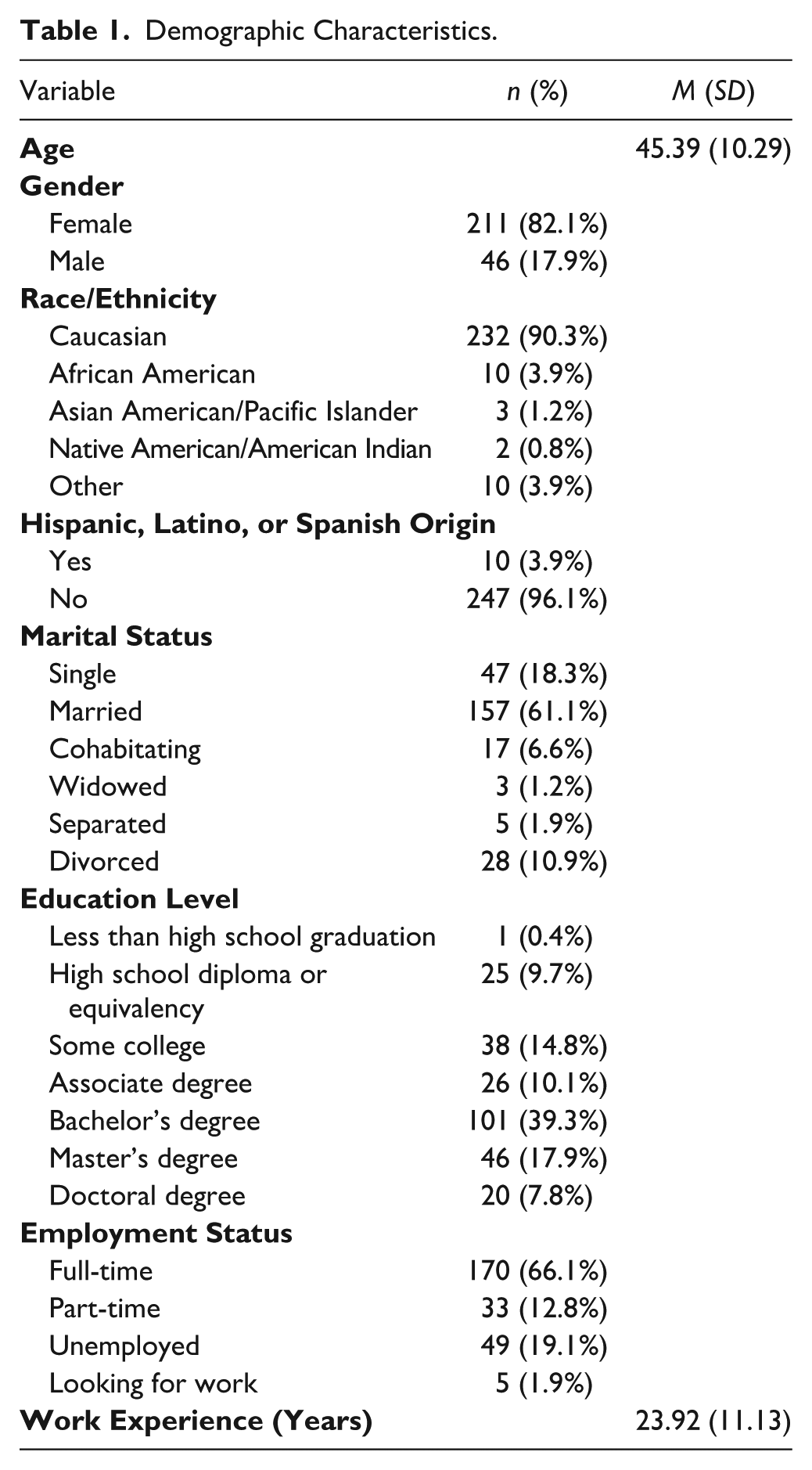
The mean age of participants (N = 257) was 45.39 (SD = 10.29), ranging from 23 to 77 years of age. Participants were predominantly female (82.1%), White (90.3%), and non-Hispanic (96.1%). Regarding marital status, 61.1% were married. For educational level, many participants indicated having a bachelor’s degree (39.3%), followed by master’s degree (17.9%), some college (14.8%), associate degree (10.1%), high school diploma or equivalency (9.7%), doctorate degree (7.8%), and less than high school graduation (0.4%). In terms of employment status, 66.1% indicated having full-time employment, followed by unemployment (19.1%), part-time employment (12.8%), and looking for work (1.9%). Participants’ average work experience was 23.92 years (SD = 11.13). Please see Table 1 for demographic characteristics.
Demographic Characteristics.
MS Characteristics
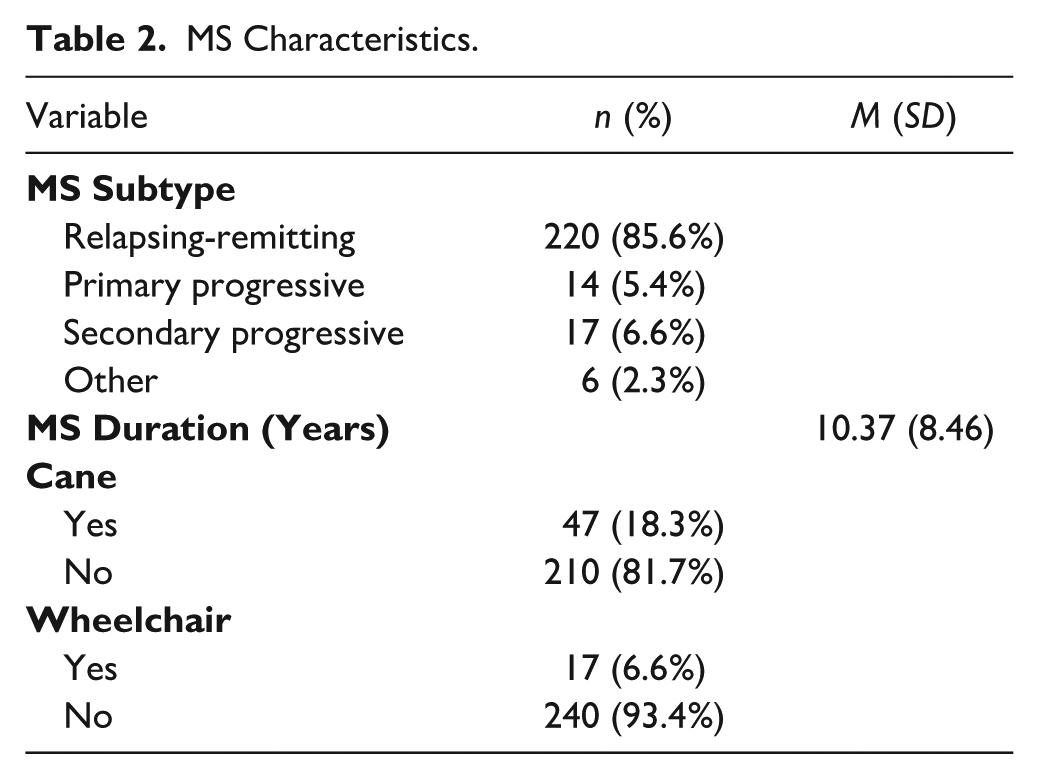
In terms of MS subtype, most participants indicated having relapsing-remitting (85.6%; disease course includes relapses of new symptoms and followed by partial/complete remissions), followed by secondary progressive (6.6%; symptoms decline overtime), primary progressive (5.4%; symptoms decline as soon as they appear with no relapses/remission), and other (2.3%) (National Multiple Sclerosis Society [NMSS], 2024). Regarding MS duration, the average was 10.37 years (SD = 8.46). The majority of participants indicated they did not use a cane (81.7%) or a wheelchair (93.4%). Please see Table 2 for MS characteristics.
MS Characteristics.
Group Differences
Demographic and MS Characteristics by Group
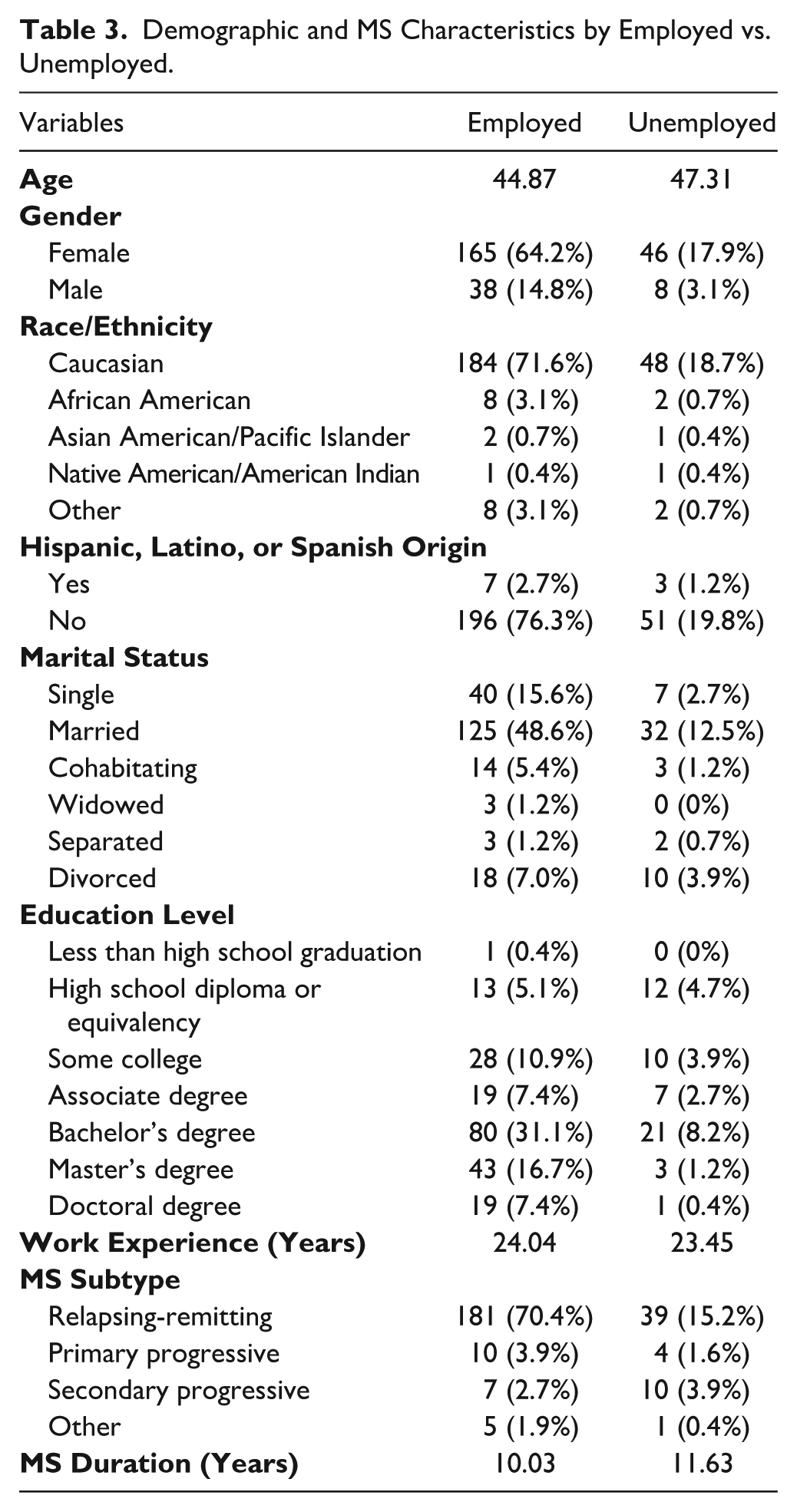
Please see Table 3 for demographic and MS characteristics differences by employed and unemployed groups. No differences were observed for age, gender, race/ethnicity, Hispanic/Latino/Spanish origin, marital status, years of work experiences, and MS duration between the employed and unemployed groups. There was a difference between the employed and unemployed groups on educational level: χ2(6, N = 257) = 21.34, p < .01 and MS subtype: χ2(3, N = 257) = 16.63, p < .001.
Demographic and MS Characteristics by Employed vs. Unemployed.
Character Strengths Differences by Group
Please see Table 4 for each of the character strength differences by employed and unemployed groups.
Character Strengths Differences by Employed Versus Unemployed.
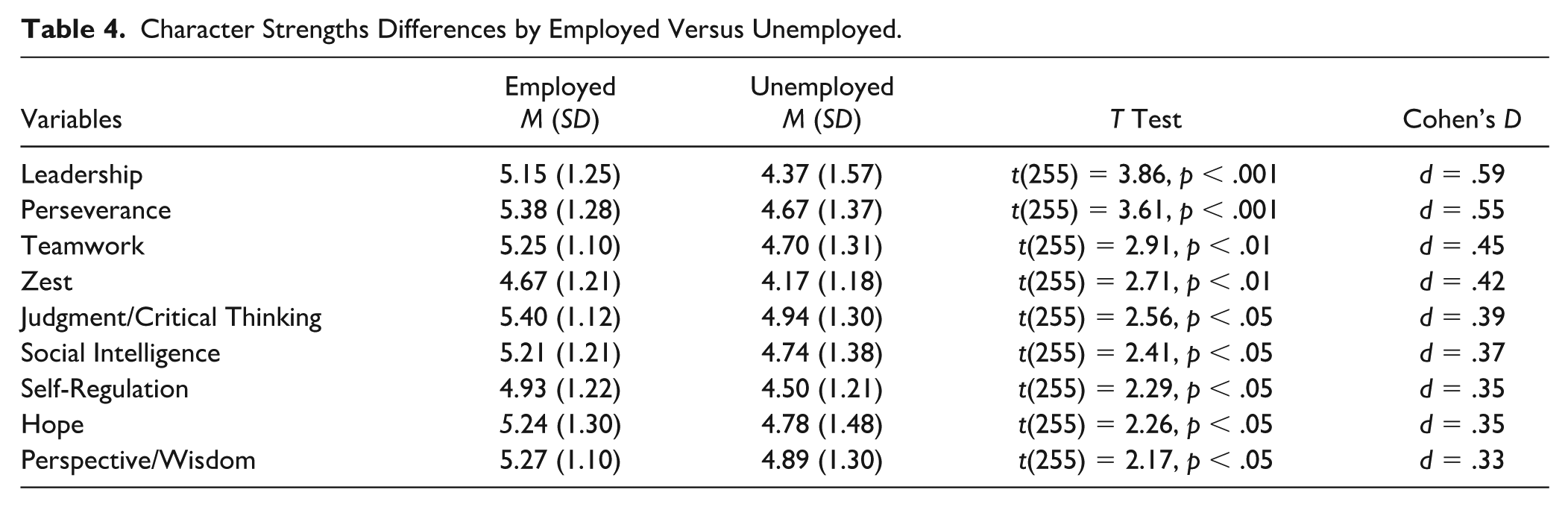
No differences were observed for the other 15-character strengths between the employed and unemployed group, including creativity strength, curiosity strength, love of learning strength, bravery/courage strength, honesty strength, love strength, kindness strength, fairness strength, forgiveness/mercy strength, humility/modesty strength, prudence strength, appreciate of beauty and excellence strength, gratitude strength, humor strength, and spirituality/sense of meaning strength.
Total Character Strengths
There was a significant difference in total character strengths between the employed group (M = 5.24, SD = .80) and the unemployed group (M = 4.94, SD = .81), t(255) = 2.39, p < .05; d = .37). A score of 5 indicates “agree,” while a score of 4 represents a neutral response.
Welch’s T Test
To avoid bias due to unequal sample sizes, we conducted Welch’s t test which is robust to unequal sample sizes between the unemployed and employed groups. Results from the Welch’s test indicated that there was a significant difference in judgment/critical thinking, perspective/wisdom, perseverance, social intelligence, teamwork, zest, leadership, self-regulation, and hope strengths between the employed group and unemployed group, p < .05. This consistency across tests reinforces the robustness of the observed group differences.
Hierarchical Logistic Regression Results
The outcome variable was employment status: employed versus unemployed. In Step 1, demographic variables (i.e., age, gender, race) were entered. The model was not significant in Step 1: χ2(df = 3, N = 255) = 3.61, p = .31. In addition, age, gender, and race/ethnicity were not found to be associated with employment status. In Step 2, MS duration was added, and the model was still not significant: χ2(df = 4, N = 255) = 3.85, p = .43.
In Step 3, character strengths were added, and the final model was significant: χ2(df = 5, N = 255) = 11.28, p < .05). Higher levels of character strengths were associated with an increased probability of being employed (odds ratio [OR] = 0.59; 95% confidence interval [CI] = [.40, .87]). The final model explained 7% of the variance in employment. This suggests that the model was able to distinguish people with MS who were employed versus those who were unemployed. Please see Table 5 for the hierarchical logistic regression results.
Hierarchical Logistic Regression Results.
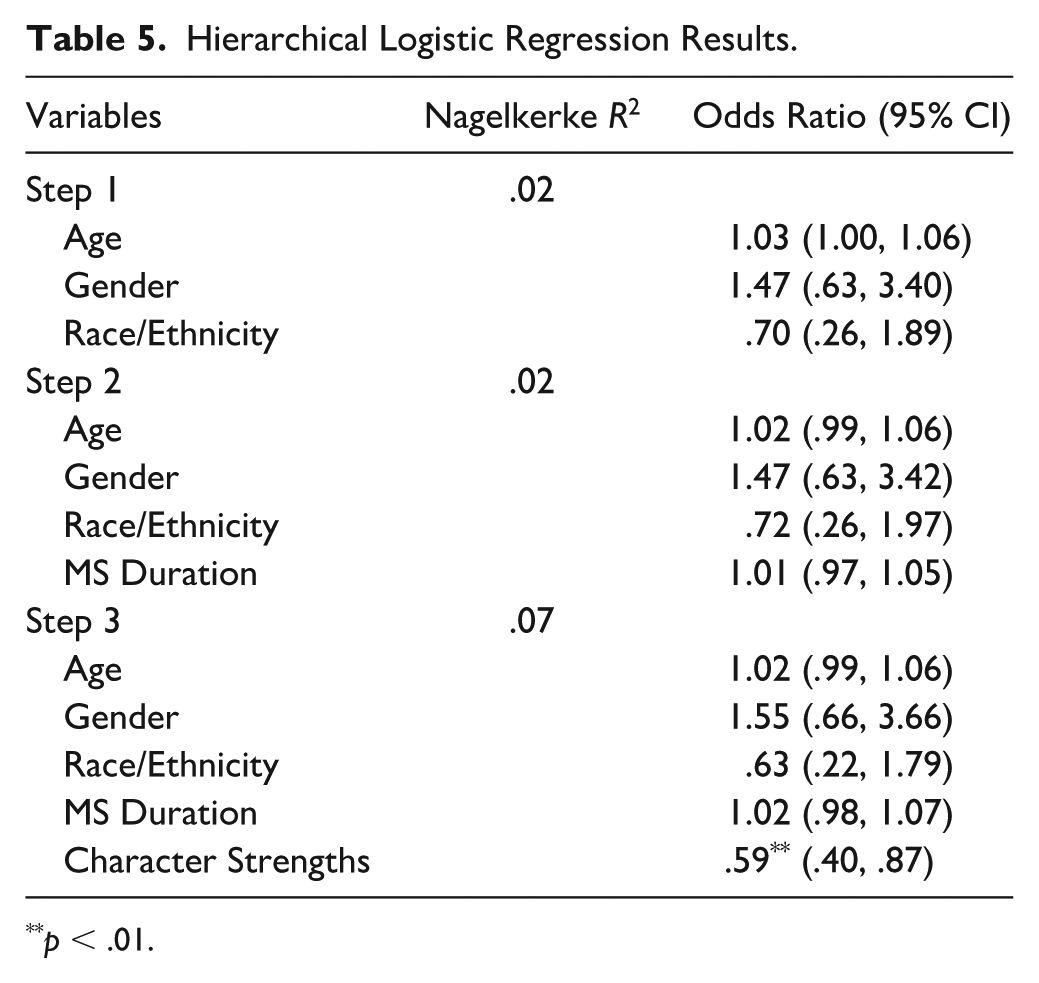
p < .01.
Discussion
Previous studies have examined character strengths in different types of disabilities on various outcomes. However, to our knowledge, there is limited research on the association between character strengths and employment among people with disabilities. Our study aimed to explore the differences in character strengths profile between employed individuals with MS and those who were unemployed. Our findings demonstrated that there were significant differences between the following character strengths between the employed group and the unemployed group, including judgment/critical thinking strength, perspective/wisdom strength, perseverance strength, zest strength, social intelligence strength, teamwork strength, leadership strength, self-regulation strength, hope, and total character strength.
The effect sizes across the character strengths vary from small (around 0.33) to large (around 0.59), with leadership and perseverance showing the largest differences between the employed and unemployed groups. These findings suggest that while character strengths are associated with employment status, their practical significance varies, and factors beyond these strengths likely contribute to employment outcomes. This echoes prior research suggesting the importance of self-efficacy in workplace support for people with MS as those individuals who have these skillsets such as leadership and perseverance to manage workplace demands (Doogan & Playford, 2014). Prior research has also demonstrated the link between work performance and perseverance and leadership (Littman-Ovadia & Lavy, 2016). Another research has also demonstrated that leadership was displayed more frequently in one’s work life as opposed to other life domains (e.g., leisure, romantic relationships) (Wagner et al., 2021).
Some strengths (such as judgment/critical thinking, teamwork, and zest) showed moderate differences between employed and unemployed groups. Previous research highlighted that zest was a strong predictor of life satisfaction among people with traumatic injuries (Hanks et al., 2014), and was strongly linked to quality of life in people with MS (Smedema, 2020). Regarding employment, zest has been shown to facilitate coping at the workplace (Gander et al., 2012). Furthermore, zest, judgment, and teamwork were associated with work performance (Littman-Ovadia & Lavy, 2016). In addition, teamwork was a prominent strength expressed in work contexts (Wagner et al., 2021).
Other character strengths like hope, self-regulation, and wisdom exhibited smaller, more modest effects. Research has identified hope as a strong predictor of life satisfaction among individuals with traumatic injuries (Hanks et al., 2014) and as strongly associated with quality of life in people with multiple sclerosis (Smedema, 2020). Previous research suggested that wisdom strength is linked to higher career ambition while hope strength facilitates coping at the workplace (Gander et al., 2012). Hope and self-regulation were found to be associated with work performance (Littman-Ovadia & Lavy, 2016). Moreover, judgment, teamwork, leadership, and self-regulation were endorsed more frequently in work settings (Wagner et al., 2021).
It is also important to note that there were no differences among the remaining character strengths between the unemployed and employed groups. In Lee et al.’s (2024) study, they identified honesty, kindness, love of learning, appreciation of beauty and excellence, and humor as key factors to positive work outcomes in people with various disability types. In contrast, our findings did not reveal significant differences in these specific strengths between the two groups in a sample of people with MS. This gap may suggest that certain character strengths may not be equally relevant across different disability groups. Furthermore, depending on their work tasks, creativity or courage may not be relevant for some people with MS if their work involves following existing protocols at their workplace.
The second objective of the study was to examine whether higher scores on character strengths are associated with a higher chance of being employed. Our findings suggested that higher levels of character strengths were associated with higher rates of employment when controlling for demographic and disability characteristics. This is consistent with prior research indicating that people who recognize their character strengths are linked to having meaningful work experience (Littman-Ovadia & Steger, 2010). In addition, positive affect and work engagement can be fostered when people utilize their strengths at work because they can optimize their strengths when performing work (Bakker et al., 2019). Our final model indicated 7% of the variance in employment, suggesting limited predictive power where character strengths alone are insufficient predictors of employment. As suggested by prior research (Ching et al., 2023; Laisné et al., 2013), factors related to employment are multidimensional and complex, it is important to examine biopsychosocial variables as they relate to employment. This may suggest that there are additional variables influencing the employment outcomes in this sample. For instance, cognitive functioning, mental health conditions, disease severity, socioeconomic factors, may be considered as potential co-factors.
Prior research on employment and MS has been focused on deficit-based characteristics. Our results demonstrated that between the employed and unemployed groups, there were differences in educational level and MS subtypes. This aligns with previous research suggesting the protective effect of education on employment outcomes in people with MS (Bøe Lunde et al., 2014; Conway et al., 2022; Krause et al., 2013). In addition, those with relapsing-remitting MS had higher employment rates compared with progressive subtypes, and the progressive subtypes could hamper employment success (Bøe Lunde et al., 2014; Gerhard et al., 2020). Poor mental health has been demonstrated to be associated with employment loss in individuals with MS (Marck et al., 2020). Higher number of comorbidities has demonstrated to be associated with work productivity loss and unemployment among working-age individuals with MS (Chen et al., 2020). In addition, higher perceived stigma was linked to work difficulties among people with MS (Maurino et al., 2020). Therefore, this study added to the MS employment literature from a strengths-based orientation. Our findings suggested the potential role of character strengths in employment among people with MS.
Implications for Practice
As character strengths are malleable through interventions (Höfer et al., 2020), identifying and fostering character strengths could potentially facilitate positive employment outcomes in people with MS. This preliminary study provided an initial step in understanding the role of character strengths in employment among people with MS. From the workplace environment perspective, a positive workplace can facilitate employee’s character strengths by allowing them to apply their character strengths, resulting in positive work experiences (Harzer & Ruch, 2012). Similarly, as Meyers et al. (2019) suggested, employers and organizations can encourage employees to identify their character strengths, foster employees’ use of strengths, and place emphasis on the values of applying character strengths. By using empirically validated character strengths tools, such as the Global Assessment of Character Strengths – 24 (McGrath, 2017), employees with MS can gain a better understanding of their character strengths that could be applied in their vocational settings. On the other hand, from the employee standpoint, employees who can utilize their strengths in an optimal way can lead to enhanced work engagement (Bakker et al., 2019). When employees utilize their strengths, they experience higher levels of motivation and dedication, resulting in optimal work performance (Bakker et al., 2019). Working individuals with MS who are able to apply their strengths may be more passionate and dedicated to performing job tasks.
The use of strengths-based career counseling has shown to be not only benefiting individuals to reinforce their existing strengths and utilize their strengths as their personal resources, but also helping people secure employment successfully with enhanced job search self-efficacy (Littman-Ovadia et al., 2014). For unemployed individuals with MS, integrating strengths-based career counseling into service delivery could help those individuals enhance their job search self-efficacy, resulting in more successful employment opportunities. Previous research has highlighted that when character strengths are consistent with job assignments, this can promote work motivation and fulfillment (Mayerson, 2015; Umucu et al., 2021). Character strengths assessment can be integrated into vocational rehabilitation evaluation as those strengths could improve work outcomes (Mills & Kreutzer, 2016). For instance, rehabilitation counselors could utilize the GACS-24 to help clients with MS explore their strengths. Clients with MS could have a better understanding of their strengths profiles which can aid them in achieving work-related tasks. Rehabilitation professionals can develop a treatment plan that is tailored to clients with MS’s character strengths, leading to enhanced employment outlook. Rehabilitation professionals could also integrate character strengths interventions when working with clients with MS. For instance, “using signature strengths in a new way” is an intervention asking people to utilize their top strengths in a novel and different approach daily for a week (Seligman et al., 2005). In other words, rehabilitation counselors can encourage clients with MS to use their identified character strengths in new ways at their workplace. Given that clients with MS may experience unique employment barriers impacted by their cognition (Bishop & Rumrill, 2015), rehabilitation counselors could help them focus on and implement their strengths in work settings that may accommodate their symptoms. For example, if a client’s identified strength is self-regulation, rehabilitation counselors can encourage them to apply self-regulation by setting clear work goals, maintaining focus and discipline in their job search or workplace performance, and managing emotional responses to external criticism without becoming discouraged.
Limitations
Several limitations should be addressed in this study. As previous research suggested education is associated with employment and work functioning among people with MS (Julian et al., 2008; Roessler et al., 2004). Most of our participants were highly educated and indicated having relapsing-remitting MS, so the findings may not be generalizable to those with relatively lower educational attainment and have other MS subtypes. In addition, as our sample is primarily White, highly educated, and has relapsing-remitting multiple sclerosis (RRMS) subtype, it is important to consider that the perceptions of character strengths could be impacted by racial, socioeconomic, and health-related factors. All of which could differentially impact employment outcomes among people with MS. Other ways of assessing character strengths more objectively may include evaluations from supervisors or co-workers. In addition, participants’ perceptions on different character strengths may vary. For instance, zest could be interpreted and defined differently depending on the individual.
Another limitation may be given there are differences in educational levels and MS subtypes between the employed and unemployed groups, future studies may examine how educational attainment and MS subtypes could interact with character strengths and employment outcomes. As this was an online survey study, this could have left out people who may not have access to technology or have limited skills to work on a survey on an online platform. The nature of a survey study could have introduced self-report bias where findings could be impacted by personal biases and perceptions. Participant incentives could also have impacted participation.
This cross-sectional study does not include any baseline and longitudinal assessment to monitor the long-term effect of character strengths on employment. Longitudinal studies on character strengths could provide empirical evidence on how they impact various outcomes and how their lasting effects are over a duration of time (Weziak-Bialowolska et al., 2021). In addition, this study has an unequal sample size through convenience sampling, which means that the findings may not be widely generalizable. It is also important to note small variance in employment outcomes, suggesting that character strengths alone may be insufficient predictors.
Finally, the small variance observed in logistic regression may suggest limited variability in the predictors related to employment among persons with MS; however, it is important to note that even modest predictive power can yield meaningful insights, especially in a complex and heterogeneous condition like MS, where employment outcomes are influenced by a multitude of factors.
Future Directions
This study served as an initial step in understanding the role of character strengths in employment among individuals with MS. Given the malleability of character strengths, future research should explore targeted interventions designed to enhance these strengths and improve employment outcomes. Our next goal is to develop and test interventions aimed at strengthening character strengths to support employment success in individuals with MS. In addition, other factors that could interact with character strengths may include, but are not limited to, mobility, cognition, and psychological conditions, as well as social determinants of health (e.g., socioeconomic status, health care access). Future studies should incorporate physical, cognitive, and psychological assessments and examine additional psychosocial variables to determine how they may influence the effects of character strengths on employment among those with MS. Future longitudinal studies would also be warranted to provide deeper insights into how character strengths evolve and shape employment outcomes over time.
Conclusion
Our findings revealed differences between the following character strengths between the employed group and the unemployed group, including judgment/critical thinking strength, perspective/wisdom strength, perseverance strength, zest strength, social intelligence strength, teamwork strength, leadership strength, self-regulation strength, hope, and total character strength. In addition, higher levels of character strengths were associated with higher rates of employment when controlling for demographic and disability characteristics.
Footnotes
Declaration of Conflicting Interests
The author declared no potential conflicts of interest with respect to the research, authorship, and/or publication of this article.
Funding
Support for this research was provided by the University of Wisconsin–Madison, Office of the Vice Chancellor for Research and Graduate Education with funding from the Wisconsin Alumni Research Foundation.
Ethical Approval
The study was reviewed and approved by the University of Wisconsin-Madison Education and Social/Behavioral Science Institutional Review Board as an exemption study.
Informed Consent
Informed consent was obtained from all individual participants included in the study.
