




Abstract
Teacher engagement is a critical factor in educational quality, yet the predictive role of recently introduced constructs like loving pedagogy remains underexplored. Grounded in self-determination theory, this study employs structural equation modeling to investigate the associations among English-as-a-foreign-language teachers’ work engagement, self-efficacy, and their dispositions toward loving pedagogy. Data were collected via electronic surveys from 289 Iranian English-as-a-foreign-language teachers. The findings demonstrated that both loving pedagogy and self-efficacy are significant determinants of teacher engagement. Notably, loving pedagogy was found to be a stronger predictor of engagement than self-efficacy. The results also revealed a significant positive relationship between teachers’ self-efficacy and their tendency toward loving pedagogy. This suggests that English-as-a-foreign-language teachers who adopt a pedagogy characterized by kindness, empathy, and acceptance, and who concurrently possess a strong belief in their teaching capabilities, are more likely to exhibit higher levels of cognitive, emotional, and social engagement. The study concludes with pedagogical implications for enhancing teacher engagement through professional development that fosters both self-efficacy and loving pedagogical practices.
Keywords
Introduction
Teaching is a demanding career, and English-as-a-foreign-language (EFL) teachers face significant profession-embedded challenges that necessitate a strong sense of commitment and work engagement (Derakhshan, 2022; Mercer, 2023). Work engagement, an intrinsic emotional state characterized by vigor, dedication, and absorption, is a critical determinant of occupational performance and satisfaction (Field and Buitendach, 2012). Engaged language teachers typically exhibit high energy, resilience, and a strong focus on their responsibilities (Greenier et al., 2021), leading to positive outcomes for both themselves and their students, including enhanced well-being and a reduced risk of burnout (Bermejo-Toro et al., 2016; Schaufeli, 2017).
The critical role of engagement necessitates a deeper investigation into its antecedents. A well-established factor is teachers’ self-efficacy, their belief in their capability to accomplish teaching goals and manage complex situations (Bandura et al., 1999). Teachers with strong self-efficacy demonstrate greater enthusiasm, and resilience and are better equipped to manage negative emotions, thereby exhibiting higher work engagement (Burić and Macuka, 2018; Zee and Koomen, 2016). More recently, the concept of “loving pedagogy” has emerged as another potential antecedent. Rooted in care and support, it involves attentiveness to students’ emotional and academic needs and encompasses core elements such as kindness, empathy, sacrifice, forgiveness, and community (Barcelos, 2020; Barcelos and Coelho, 2016; Wang et al., 2021). This approach is posited to foster positive learning environments and strengthen teacher-student relationships.
Despite the valuable insights from positive psychology on engagement predictors, a critical gap persists. Although self-efficacy and loving pedagogy are independently linked to positive outcomes, their interplay and relative importance in predicting EFL teachers’ engagement remain largely unexamined. Most existing studies have explored these variables in isolation or in pairwise correlations, failing to model their collective influence within a unified theoretical framework. This is a significant omission, as a more nuanced understanding requires knowing not just if both matter, but which is a more powerful driver and how they might influence each other. Self-determination theory (SDT) offers a powerful lens for such an investigation, positing that engagement is influenced by the satisfaction of basic psychological needs for competence and relatedness (Ryan and Deci, 2000). In this framework, self-efficacy can be observed as fulfilling the need for competence, while loving pedagogy directly addresses the need for relatedness. However, to the best of researchers’ knowledge, no study has yet employed SDT to model how these two distinct pathways jointly explain teacher engagement. Therefore, to address this theoretical and empirical gap, the current study employs structural equation modeling (SEM) to investigate an integrated model of the associations among EFL teachers’ work engagement, self-efficacy, and dispositions toward loving pedagogy, grounded in the principles of SDT. In particular, the study tests the following hypotheses:
H1. EFL teachers’ self-efficacy will be positively associated with their work engagement. H2. EFL teachers’ dispositions toward loving pedagogy will be positively associated with their work engagement. H3. EFL teachers’ self-efficacy will be positively associated with their dispositions toward loving pedagogy. H4. Loving pedagogy will be a stronger predictor of work engagement than self-efficacy.
By simultaneously examining these constructs, this paper intends to provide a more comprehensive understanding of the psychological mechanisms that underpin engagement in the EFL teaching profession.
Literature review
Theoretical framework
SDT, a seminal framework developed by Deci and Ryan (Deci et al., 1991), posits that individuals are motivated by three basic psychological needs: autonomy, competence, and relatedness. It distinguishes intrinsic motivation (acting for inherent interest), extrinsic motivation (acting for external outcomes), and amotivation (lack of intention to act). SDT has been widely applied to teacher and student motivation, showing that teachers under pressure tend to be more controlling and provide less self-determined instruction (Deci et al., 1982; Pelletier et al., 2002). The theory's robustness is supported cross-culturally, with studies in South Korea, which demonstrate that student autonomy boosts satisfaction (Jang et al., 2009), and in Japan, where intrinsic motivation enhances engagement (Oga-Baldwin et al., 2017). Furthermore, SDT has been used to categorize teachers’ motivation, revealing positive links between teacher motivation and learning outcomes (Gagné et al., 2010; Roth et al., 2007).
From the perspective of SDT (Ryan and Deci, 2000), motivation and engagement are driven by autonomy, competence, and relatedness. A competent individual who believes in their ability to perform a task gains higher motivation (Tschannen-Moran and Hoy, 2001), and autonomous individuals are more engaged (Ryan and Deci, 2000). Positive relationships also support commitment to work (Klassen et al., 2013). Applying this to EFL teaching, self-efficacy, the belief in one's ability to plan, instruct, and manage, fulfills the need for competence, while loving pedagogy, characterized by kindness, empathy, and community, addresses relatedness by fostering caring connections with students. When these needs are satisfied, higher quality motivation and engagement follow (Ryan and Deci, 2017). Thus, it is hypothesized that EFL teachers’ self-efficacy and loving pedagogy significantly contribute to their work engagement in line with SDT.
Although this literature review and discussion of findings regarding SDT and positive psychology are based on well-established theoretical frameworks, we also recognize that there are many other scholarly traditions that have been written about with respect to love and care in education. These include critical pedagogy, feminist ethics of care, and sociocultural theory, all of which provide alternative perspectives on the power dynamics, ethical responsibilities, and sociopolitical contexts of affective labor in education. The use of SDT as the primary focus of this research study allows us to investigate with precision the psychological needs (competence, relatedness) hypothesized to drive engagement in the classroom; SDT provides for an empirically testable, parsimonious model. Although a previous SEM study has examined similar constructs to those included in this current research effort, the integrated model tested in this research offers a distinctly novel contribution to the field of teacher psychology through the specific investigation of how loving pedagogy and self-efficacy predict EFL teacher engagement using the dual pathways of relatedness and competence (Wang et al., 2021).
Teacher engagement
The term work engagement refers to an efficacious emotional disposition that is distinguished through certain characteristics, including vigor, dedication, and absorption in one's professional role (Schaufeli, 2017). In their study, Klassen et al. (2013) identified four categories of work engagement among teachers. The first category, cognitive engagement, pertains to a sense of absorption and performance. The second category, emotional engagement, refers to an individual's affective commitment. The third category, social engagement with students, concerns the teacher's relationship with students. Finally, the fourth category, social engagement with colleagues, relates to the teacher's relationships and interactions with colleagues. It is believed that teachers’ engagement is a manifestation of their intrinsic motivation, in which they show motivation, energy, and effectiveness in their duties (Klassen et al., 2013). In the current study, the term teacher work engagement refers to how engaged EFL teachers are in their profession emotionally, cognitively, and socially (Klassen et al., 2013).
It is notable that highly engaged teachers are less vulnerable to burnout and attrition (Bakker and Demerouti, 2007), typically exhibiting vigor, dedication, and passion for teaching, as well as persistence during challenges (Greenier et al., 2021). Teacher work engagement correlates positively with numerous beneficial outcomes, including enhanced job satisfaction, student achievement, student engagement, and teacher well-being (Bakker and Bal, 2010; Skaalvik and Skaalvik, 2018). Furthermore, engagement is linked to compassion, which aids in coping with stress (Eldor and Shoshani, 2017), and is closely connected with self-efficacy, job satisfaction, creativity, and social support (Derakhshan et al., 2023; Lauermann and Ten Hagen, 2021;). This positive connection extends to psychological health, performance, and organizational satisfaction (Hakanen and Schaufeli, 2012). In EFL contexts, predictors of engagement include efficacy, immunity, emotion regulation, creativity, and optimism (Derakhshan et al., 2023). Despite this, the specific relationship between EFL teachers’ engagement and loving pedagogy remains underexplored.
Loving pedagogy
Loving pedagogy conceptualizes love within educational practice, establishing a positive learning environment attentive to students’ needs through caring behaviors (Loreman, 2011). It is characterized by nine core factors: kindness, empathy, intimacy, passion, sacrifice, forgiveness, bonding, community, and acceptance (Loreman, 2011; Wang et al., 2021). This multifaceted phenomenon profoundly influences key educational domains such as learning motivation, educational quality, and classroom interactions (Barcelos and Coelho, 2016; Loreman, 2011). An indispensable component of the teacher–student relationship, its presence is a prerequisite for a worthwhile learning process (Loreman, 2011). Loving pedagogy is crucial for facilitating student learning and fostering positive teacher–student relationships, allowing teachers to identify and address potential student challenges (Yin et al., 2019). This study specifically defines loving pedagogy as EFL teachers’ expressions of kindness, acceptance of diversity and classroom community, intimacy, sacrifice, bonding, forgiveness, and empathy (Yin et al., 2019). In this study, loving pedagogy is conceptualized and measured as a teacher's disposition toward caring educational practices. It focuses on helping students develop as unique individuals through learning, beyond mere character building (Wilkinson and Kaukko, 2020), and is characterized as a teacher's selfless love for students without expectation of reward (Johnson et al., 2019). Instruction based on loving pedagogy can positively influence students’ emotional status, motivation, academic achievement, and mental health (Barcelos, 2020; Ye et al., 2022), and its application is also linked to increased teacher self-efficacy (Pekrun, 2021).
Empirical research underscores the significant role of loving pedagogy in teacher psychology. Derakhshan et al. (2023), in a study of 773 EFL teachers, found that both creative teaching and dispositions toward loving pedagogy serve as predictors of workplace engagement. Similarly, Chen's (2023) research with 428 Chinese EFL teachers revealed that loving pedagogy dispositions influence teacher burnout, with teacher self-efficacy acting as a mediating variable in this relationship. This indicates that the implementation of loving pedagogy is associated with increased teacher self-efficacy, which in turn leads to a reduction in burnout symptoms, highlighting its protective and empowering function for educators. Conceptualized through the lens of SDT, loving pedagogy is a primary means through which teachers establish a sense of relatedness and connection with their students, creating the supportive relational environment necessary for deep professional engagement.
Teacher self-efficacy
Teacher self-efficacy, defined as educators’ belief in their capability to fulfill teaching responsibilities through effective planning and action (Tschannen-Moran and Hoy, 2001), is a well-established construct. In this study, it specifically refers to EFL teachers’ confidence in their classroom management, instructional methods, and student engagement (Azari Noughabi and Amirian, 2021). Teachers with high self-efficacy are typically diligent, committed, and enthusiastic, demonstrating resilience and a willingness to tackle challenges (Burić and Macuka, 2018; Huang et al., 2020; Zhang et al., 2025). This enables them to manage negative emotions, solve problems positively, and exhibit greater work engagement (Huang et al., 2020). Empirical evidence consistently links self-efficacy to determination and dedication (Burić and Macuka, 2018; Zhang et al., 2025). Theorized as a critical personal resource, self-efficacy predicts work engagement by fostering intrinsic motivation and goal achievement (Bakker and Demerouti, 2007). This is supported by longitudinal research confirming a positive relationship between self-efficacy and engagement (Simbula et al., 2011), and findings that it mediates the effect of professional community support on engagement (Cai and Tang, 2021). Accordingly, from an SDT perspective, self-efficacy is a critical resource that enables teachers to feel effective and competent in their professional roles, which is a foundational element for sustained engagement. In particular, Skaalvik and Skaalvik (2010, 2016) emphasize that teacher self-efficacy and emotional experience have a profound effect on teachers’ professional engagement, well-being, and persistence in the classroom. Their research shows that teachers with low self-efficacy, working under stressful conditions and without adequate relational support, may experience greater levels of burnout, emotional fatigue, and decreased job satisfaction. In contrast, teachers with strong self-efficacy coupled with belonging, emotional support, and professional autonomy tend to enjoy their work more, report better well-being, and are less likely to consider leaving the profession. These findings align with the principles of loving pedagogy, which emphasizes relational care, emotional awareness, and positive teacher–student and teacher–school relationships (Loreman, 2011).
In summary, although literature has separately identified theoretical links between EFL teachers’ work engagement, self-efficacy, and loving pedagogy, the causal relationships remain underexplored due to the novelty of loving pedagogy (Derakhshan et al., 2023). To the researchers’ knowledge, no prior SEM study in the EFL context has investigated the interplay among these three variables. Previous research on engagement and loving pedagogy has largely drawn from positive psychology (Derakhshan et al., 2023), and SDT-based studies have predominantly focused on student outcomes (Al-Hoorie et al., 2025). Therefore, grounded in SDT (Muñoz and Ramirez, 2015), this study aims to examine the potential role of EFL teachers’ self-efficacy and loving pedagogy in their engagement.
Method
Participants
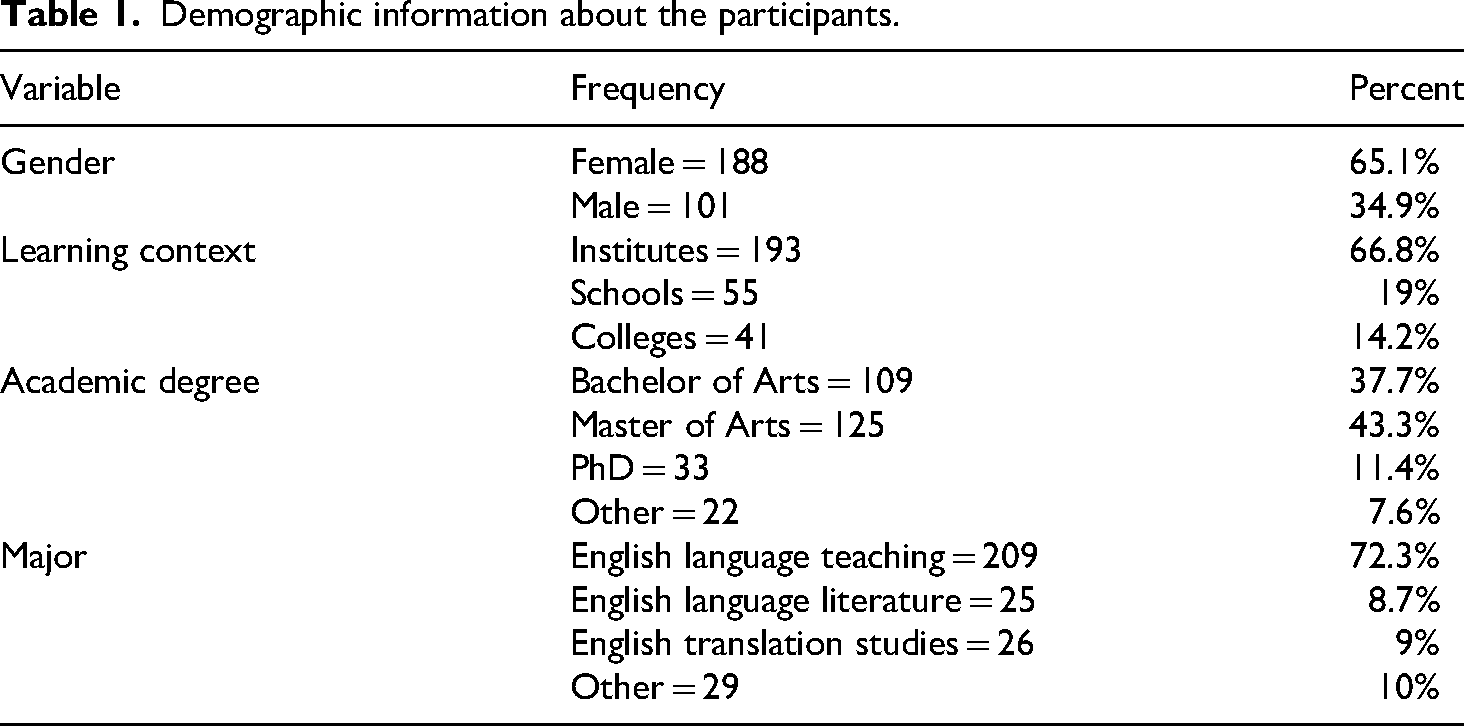
A total of 289 English teachers from diverse geographical areas of Iran participated in this study. Their age ranged from 18 to 58 years (M = 30.19, SD = 8.25). The participants had various years of teaching experience, from 1 to 35 (M = 7.77, SD = 6.60). They were mostly master's degree holders in the field of English-language teaching. The majority of the teachers had teaching experience in an institute (66.8%), and the others were teachers in schools and universities. Informed consent was obtained from all the participants.
Instruments
The engaged teacher scale
To measure the degree of teacher engagement, the Engaged Teacher Scale (ETS), designed by Klassen et al. (2013), was employed. Sixteen items are included in the scale, and each item is rated on a 7-point Likert scale, ranging from 1 (never) to 7 (always). The scale consists of four factors: cognitive engagement (e.g., “While teaching, I pay a lot of attention to my work”), emotional engagement (e.g., “I feel happy while teaching”), social engagement: students (e.g., “In class, I care about the problems of my students”), and social engagement: colleagues (e.g., “At school, I am committed to helping my colleagues”). Previous studies on language teachers’ engagement support the reliability and validity of this scale (Azari Noughabi et al., 2024; Wang et al., 2021).
Teacher self-efficacy scale
The self-efficacy of teachers was assessed by the Teacher Self-Efficacy Scale (TSES), developed by Tschannen-Moran and Hoy (2001). The TSES is considered a more effective tool for assessing teacher efficacy than earlier versions, as it aligns closely with self-efficacy theory (Tschannen-Morgan and Hoy, 2001). Researchers have examined both the short- and long-form versions of the TSES in various contexts and found that both the full scales and their three subscales—self-efficacy for classroom management, instructional strategies, and student engagement—demonstrate adequate reliability and validity. For example, Klassen et al. (2009) reported that the reliability coefficients of the TSES short-form subscales ranged between .71 and .94 across five countries and found significant correlations between the TSES subscales and job satisfaction in all contexts.
The scale used in the present study consists of 24 items rated on a 9-point Likert scale, measuring the factors: instructional strategies (e.g., “How well can you implement alternative strategies in your classroom?”), classroom management (e.g., “How well can you establish routines to keep activities running smoothly?”), and student engagement (e.g., “How much can you do to help your students think critically?”). This version was selected to maintain measurement quality while reducing respondent burden and minimizing survey fatigue, thereby enhancing completion rates. The TSES has been regarded as a reliable and valid measure of EFL teachers’ self-efficacy (Azari Noughabi and Amirian, 2021; Ghonsooly and Ghanizadeh, 2013).
Dispositions toward loving pedagogy scale
The Dispositions toward Loving Pedagogy Scale (DTLPS), developed by Yin et al. (2019), was used to assess language teachers’ loving pedagogy. The measure consists of 29 items, each assessed on a 5-point Likert scale ranging from 5 (strongly agree) to 1 (strongly disagree). The scale includes six factors: acceptance of diversity and classroom community (e.g., “All students, no matter what their individual differences are, are welcomed in my classroom”), intimacy (e.g., “It is important for me to feel a close emotional connection with students”), bonding and sacrifice (e.g., “I spend extended time with individuals or small groups of students to foster empathy among them”), empathy (e.g., “I try to get to know my students better”), forgiveness (e.g., “I am obliged to forgive students when they ask for it”), and kindness in the pedagogical context (e.g., “Being kind to students is important to me”). The DTLPS has been regarded as a reliable and valid measure of EFL teachers’ dispositions toward loving pedagogy (Yin et al., 2019).
Data collection
Data were collected via an electronic survey form created using Google Forms, which included the three scales measuring the main variables. The survey was in English, and participants’ language proficiency was sufficient to complete it effectively, taking approximately 15 min on average. The survey link was distributed to EFL teachers through social media applications (Telegram and WhatsApp) using snowball sampling. Clear instructions were provided within the survey to guide participants. The data collection period spanned three months, from September to November 2024. All participants signed a consent form, and they were assured of the confidentiality of their responses.
Data analysis
Initially, the data were screened for outliers and missing data. After that, the assumptions of running confirmatory factor analysis (CFA) and SEM were checked. Next, CFA was conducted via AMOS 24 to examine the factor structure of each scale. Then, SEM was employed to check the extent to which the hypothesized model of the study fitted the data. To consider the goodness of model fit, a series of indices, including chi-square divided by degree of freedom (χ2/df), comparative fit index (CFI), goodness-of-fit index (GFI), Tucker-Lewis coefficient (TLI), and the root mean square error of approximation (RMSEA), were taken into account (Hu and Bentler, 1999). As recommended by Hair et al. (2010), the benchmark for RMSEA is ≤.08, and the cutoff point for χ2/df is below 5. In addition, they suggested that acceptable CFI, GFI, and TLI should be higher than 90.
Results
Initially, the results of descriptive statistics (see Table 1) and correlation analysis were checked. As listed in Table 2, collected data were normally distributed as skewness and kurtosis values were in the acceptable range of ±2 (Kunnan, 1998). In addition, as presented in Table 2, the results of correlation analysis indicated significant relationships between the main variables (p < .001), and given that the estimated variance inflation factor (VIF) values (= 1.089) were below the threshold (<5), multicollinearity was not identified (Larson-Hall, 2015).
Demographic information about the participants.
Descriptive statistics and correlations between the main variables.
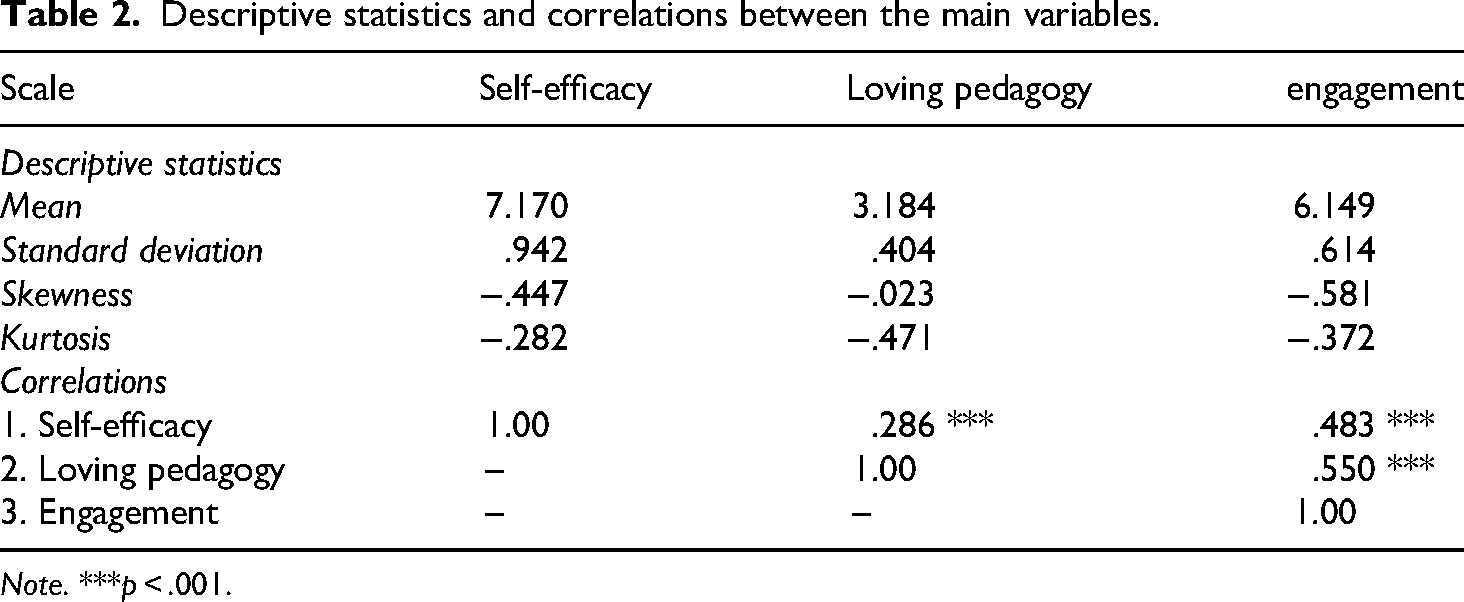
Note. ***p < .001.
CFA results
CFA was conducted to check whether the measurement models fit the data. The factor loadings of the items of each construct were higher than .50, which was suitable (Kline, 2023). The results of CFA, listed in Table 3, indicated good model fit for each measurement model, thereby verifying the factor structure of each scale. In addition, as indicated in Table 3, each scale enjoyed high internal consistency, as the calculated alphas were higher than the threshold (.70). In addition, the evaluated average variance extracted (AVE) indices were higher than .40 (Fornell and Larcker, 1981).
The Goodness-of-fit indices for the constructs.
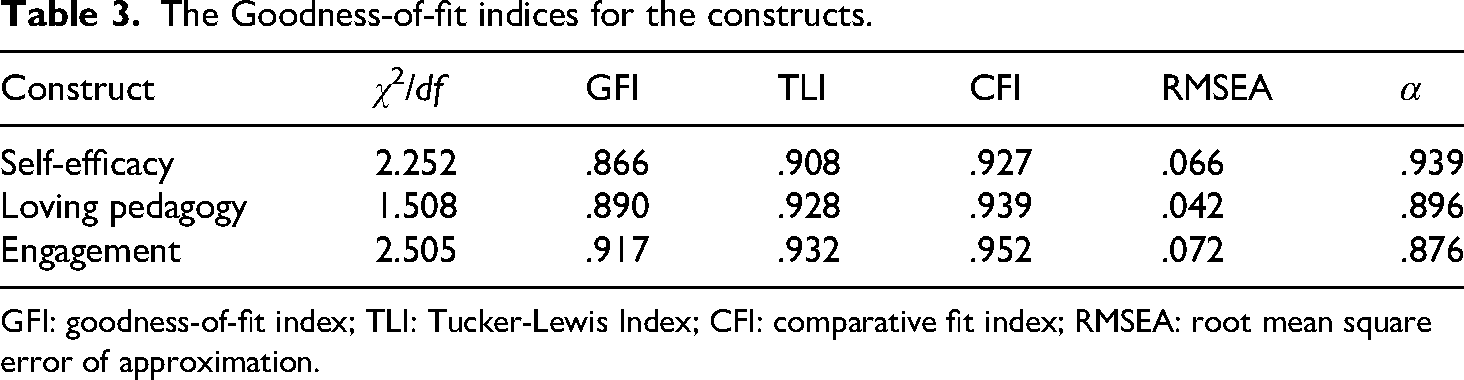
GFI: goodness-of-fit index; TLI: Tucker-Lewis Index; CFI: comparative fit index; RMSEA: root mean square error of approximation.
In fact, the square root of AVEs was lower than CRR, suggesting the discriminant validity of the scales (Hair et al., 2010). Figure 1 offers the proposed model for this study.
SEM results
To check whether the hypothesized model of the relationships between the main variables fitted the data, SEM was conducted via AMOS. As shown in Figure 2, the results of SEM analysis indicated that the hypothesized paths were statistically significant. Moreover, the model showed acceptable fit indices based on the criterion suggested by Hair et al. (2010): ꭓ2 = 175.468, df = 62, ꭓ2/df = 2.830, GFI = .913, TLI = .883, CFI = .907, RMSEA = .080, p < .001. As indicated in Figure 2, EFL teachers’ dispositions toward loving pedagogy and self-efficacy can contribute to their work engagement.
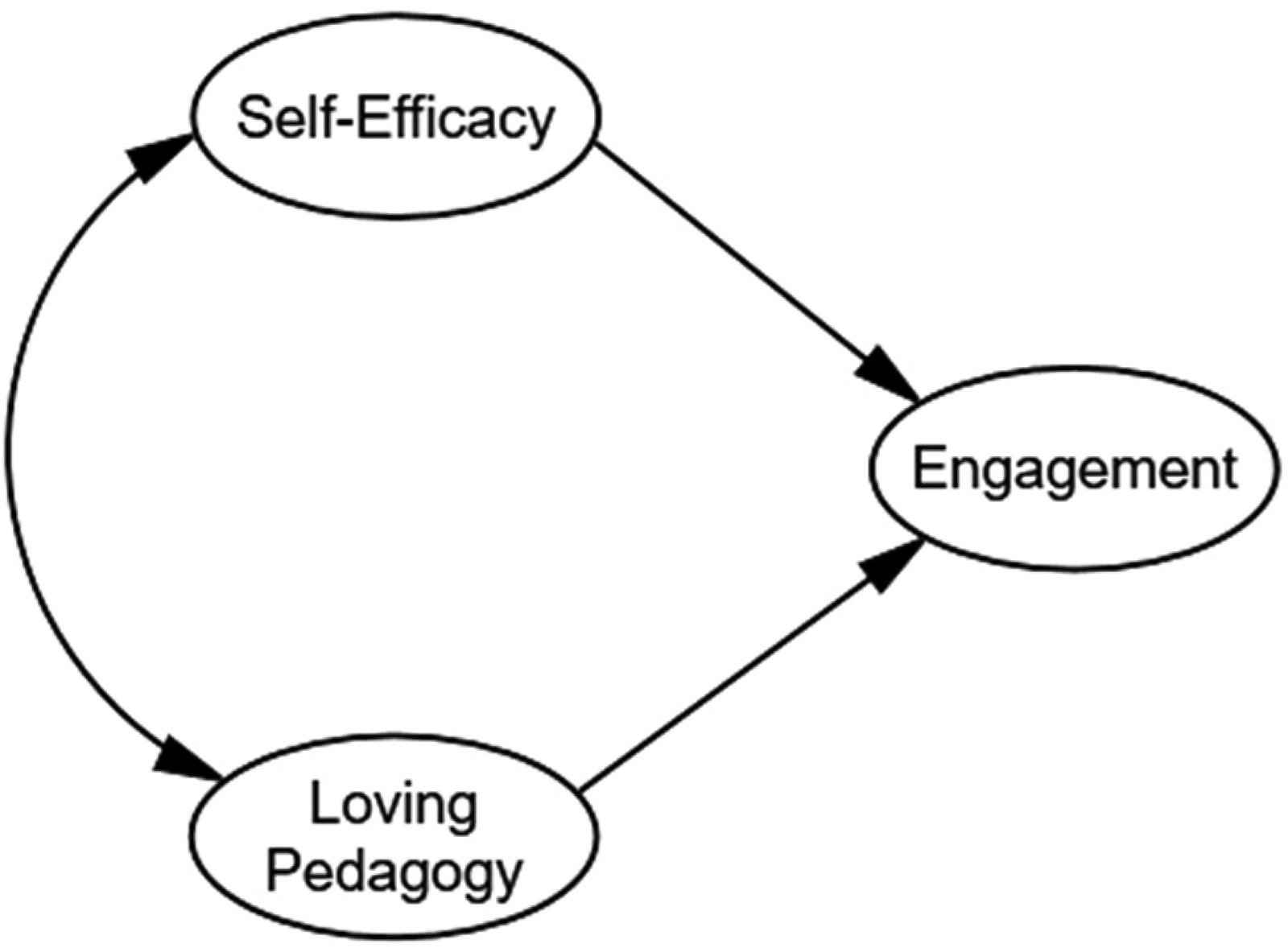
The hypothesized model of the relationships between EFL teachers’ self-efficacy, loving pedagogy, and engagement.
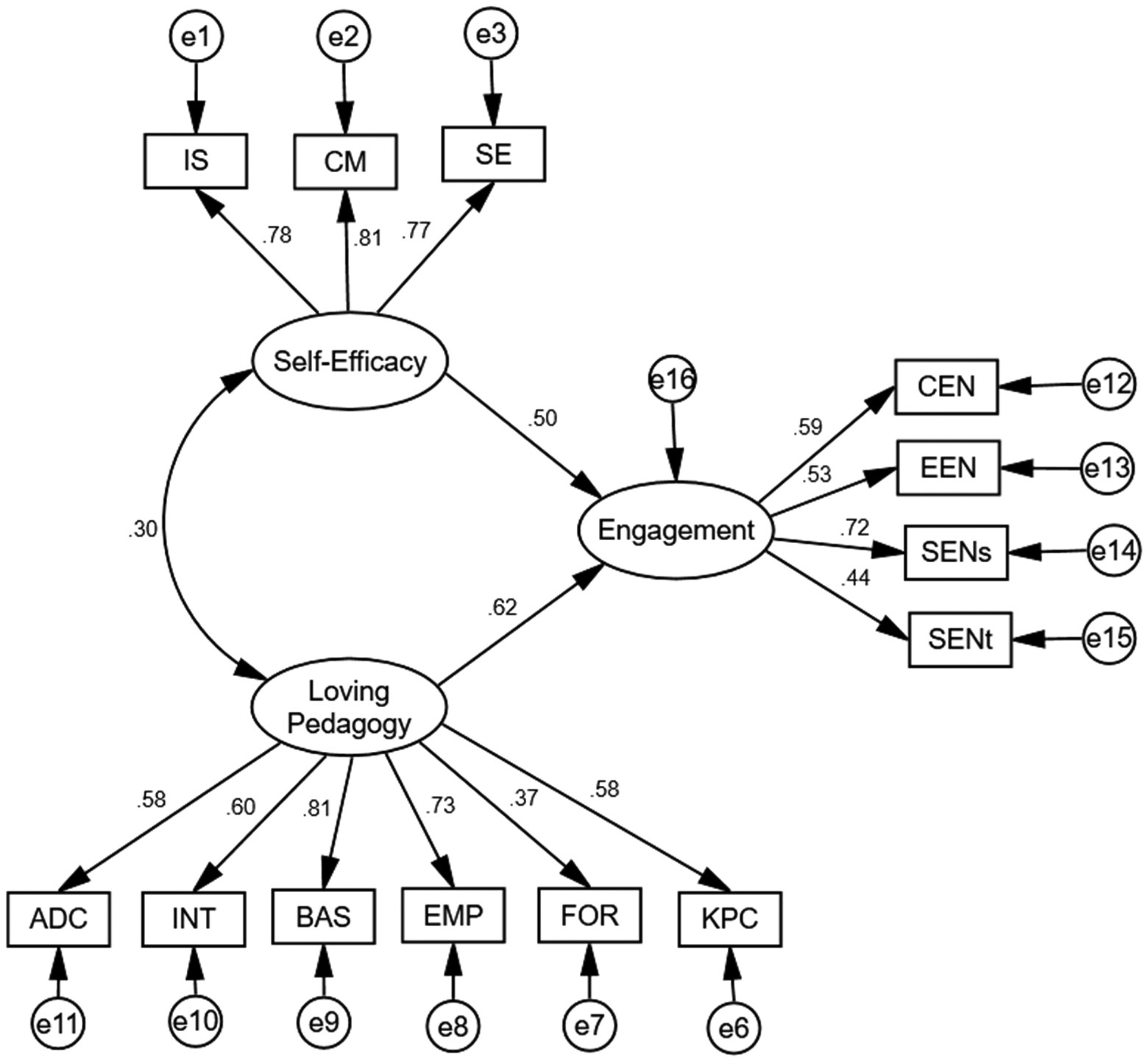
The structural equation modeling (SEM) model of english-as-a-foreign-language (EFL) teachers’ loving pedagogy, self-efficacy, and engagement.
As depicted in Figure 2, teachers’ dispositions toward loving pedagogy had a greater effect on L2 teachers’ engagement (β = .62, p < .001) than self-efficacy (β = .50, p < .001). In addition, a significantly positive relationship between EFL teachers’ self-efficacy and loving pedagogy was found (β = .30, p < .001). In sum, the results of SEM indicated that EFL teachers’ work engagement can be significantly influenced by their loving pedagogy and self-efficacy. Accordingly, EFL teachers who follow loving pedagogy and enjoy high levels of self-efficacy are more likely to have social, emotional, and cognitive engagement in the profession.
Discussion
This study examined the relationships among EFL teachers’ engagement, self-efficacy, and dispositions toward loving pedagogy. A key finding emerged: loving pedagogy was a stronger predictor of work engagement than self-efficacy. This indicates that for EFL teachers, fulfilling the psychological need for relatedness through caring student connections may be more critical for sustaining engagement than addressing the need for competence. Although both are essential, the relational dimension of teaching, embodied in loving pedagogy, appears to more profoundly influence the vigor, dedication, and absorption characterizing engaged teaching. Grounded in SDT, the structural equation model confirms both self-efficacy and loving pedagogy as significant positive correlates of engagement, supporting the hypothesis that satisfying needs for competence and relatedness fundamentally drives professional engagement (Ryan and Deci, 2017).
The significant relationship between self-efficacy and engagement substantiates a well-established body of literature (Burić and Macuka, 2018; Xiao et al., 2022; Zee and Koomen, 2016). Teachers with robust self-efficacy possess a firm belief in their capability to solve pedagogical problems and implement effective strategies, which directly fosters a sense of control and competence. This confidence equips them to proactively orchestrate instructional strategies, better regulate their emotions (Azari Noughabi and Amirian, 2021; Greenier et al., 2021), and navigate workplace stressors with resilience. Consequently, they derive greater enjoyment from their teaching duties (Zhang et al., 2025), which reinforces their commitment and builds resilient teaching practices, thereby providing a durable buffer against professional burnout (Azari Noughabi et al., 2024; Bermejo-Toro et al., 2016). These empowered behaviors directly translate into sustained cognitive and emotional investment in their work.
The greater predictive power of loving pedagogy, however, offers a more novel and critical contribution. This finding can be theorized by considering the inherently relational nature of the teaching profession, which may be particularly salient in collectivist cultural contexts like Iran. In such settings, where interdependence and relational harmony are highly valued, the need for relatedness may hold a special primacy. The core elements of loving pedagogy, kindness, empathy, sacrifice, and community are direct behavioral manifestations of the SDT need for relatedness. This aligns with the core proposition of SDT that relatedness, the desire to feel connected and caring toward others, is a fundamental psychological nutrient for high-quality motivation and well-being (Ryan and Deci, 2017). The fulfillment of this need through loving pedagogical practices can thus be seen as directly energizing and sustaining engagement. When teachers adopt this approach, they do not merely manage a classroom; they cultivate a supportive and interconnected learning environment. This environment not only boosts student engagement (Zhi and Wang, 2023) but also creates a powerful, positive feedback loop. The act of showing intimacy, accepting diversity, and forgiving students helps teachers themselves experience a safer, more meaningful working atmosphere. This heightened sense of connection and purpose subsequently stimulates their cognitive, emotional, and social engagement (Azari Noughabi et al., 2024). The profound alignment between the sub-factors of loving pedagogy, such as bonding and sacrifice, and the multifaceted nature of teacher engagement itself (Derakhshan et al., 2023; Zhi and Wang, 2023) provides a compelling explanation for its superior strength as a predictor. In essence, although self-efficacy provides the toolset, loving pedagogy provides the deeper emotional and relational meaning that makes the persistent use of those tools worthwhile.
Furthermore, the significant correlation between self-efficacy and loving pedagogy supports Chen's (2023) findings, revealing a synergistic relationship. This interplay suggests a virtuous cycle: self-efficacious teachers are better equipped to manage their classrooms and tailor instruction to diverse learner needs (Zhang et al., 2025), which are practical prerequisites for effectively implementing loving pedagogy. By confidently creating an inclusive environment, these teachers engage learners more effectively (Liu et al., 2023), a central tenet of a loving approach (Yin et al., 2019). This successful implementation, in turn, fosters a positive classroom climate, strengthens teacher–student rapport (Barcelos, 2020), and boosts student motivation (Barcelos and Coelho, 2016; Zhao and Li, 2021). The resulting successful classroom interactions enhance the teacher's own sense of accomplishment and competence, thereby further reinforcing their engagement (Derakhshan et al., 2023). This demonstrates a dynamic interplay where efficacy enables loving practices, and the positive outcomes of those practices further nourish the teacher's sense of efficacy and engagement.
The findings confirm the significant, beneficial impact of loving pedagogy on enhancing teacher engagement; however, it is essential to critically recognize its potential dual nature. The concept of loving pedagogy emphasizes care, empathy, and emotional connection, demonstrating how teachers’ emotional involvement enhances learning (Loreman, 2011). Nonetheless, language teachers who adopt this methodology engage in considerable emotional labor, regulating their emotional expressions while addressing the affective needs of students (Yin et al., 2019). This ongoing relational commitment, in the absence of sufficient support or self-regulation, may paradoxically heighten vulnerability to burnout, which is marked by emotional exhaustion and reduced self-efficacy (Maslach et al., 2001; Näring et al., 2006). So, even though loving pedagogy makes students more interested and helps them do better, it might not last long if there is not a good balance between relational commitment and self-care, as well as institutional support that keeps people from getting too emotionally drained (Skaalvik and Skaalvik, 2010). This distinction emphasizes that loving pedagogy is not only an emotional resource but also a practice that necessitates emotional regulation and conducive conditions to avert burnout and maintain teacher well-being.
Although this study underscores the significant predictive role of loving pedagogy in teacher engagement, we acknowledge that its contribution is more incremental than transformative. The theoretical advancement of the field would be strengthened by engaging more deeply with the inherent tensions in conceptualizing loving pedagogy, such as balancing care with professional boundaries, and its potential cultural specificity. Loving pedagogy is not a monolithic construct; its interpretation and applicability may vary across individualistic and collectivist cultures, and its normative assumptions about “good teaching” warrant critical examination. Future theoretical work should explore these nuances to avoid universalist prescriptions and to better understand how pedagogies of care can be sustainably and contextually integrated into diverse educational landscapes.
Limitations and suggestions for further study
Despite the insightful contributions, this study is not without limitations. Firstly, its reliance on self-report data introduces the potential for common method bias, where relationships between variables could be affected by participants’ perceptions. Although procedural precautions were taken (e.g., ensuring respondent anonymity, varying item formats), the exclusive use of self-report measures remains a constraint. Future research would benefit from incorporating multi-source data, such as observational measures or peer evaluations, to mitigate this concern. Secondly, the cross-sectional design provides a snapshot in time, failing to capture the dynamic, evolving nature of engagement, self-efficacy, and pedagogical dispositions throughout a teacher's career. Longitudinal studies are essential to unravel these developmental trajectories and establish causal inferences. Thirdly, the use of snowball sampling, although practical for accessing a diverse sample across Iran, limits the representativeness and generalizability of the findings, as the sample may not fully reflect the broader population of Iranian EFL teachers. Fourthly, the exclusive focus on Iranian EFL teachers constrains the cross-cultural applicability of the findings. The potent role of loving pedagogy may be particularly pronounced in collectivist cultures like Iran's, and its impact might differ significantly in individualistic contexts. Future studies could triangulate findings by incorporating observational data or peer reports to objectively measure teaching behaviors and engagement levels. To establish broader validity, it is critical to test and compare the proposed model across diverse cultural and institutional settings, employing more representative sampling strategies.
Conclusion and implications
This study investigated the interrelationships among EFL teachers’ work engagement, loving pedagogy, and self-efficacy. SEM analysis demonstrated that both loving pedagogy and self-efficacy were significant, positive predictors of teacher engagement. Notably, loving pedagogy emerged as the stronger determinant, suggesting that the psychological need for relatedness, fulfilled through caring student connections, may be more critical for sustaining engagement than the need for competence addressed by self-efficacy. The findings also revealed a significant positive correlation between teachers’ self-efficacy and their dispositions toward loving pedagogy. Grounded in SDT, these results indicate that EFL teachers’ work engagement is substantially enhanced when their sense of efficacy is strengthened alongside the adoption of a pedagogy characterized by kindness, empathy, and acceptance.
The findings offer significant practical implications for teacher development and educational leadership. Teacher education programs should systematically incorporate loving pedagogy into their curriculum, encouraging educators to welcome student diversity, demonstrate pedagogical kindness, and practice forgiveness. Concurrently, these programs should strengthen teachers’ self-efficacy through training in classroom management and instructional strategies. At the institutional level, school administrators should cultivate positive environments that emphasize developing teachers’ existing strengths and capabilities. They can further support engagement by encouraging teachers to build strong relational connections with students through meaningful interactions and attentive care for students’ educational needs. Additionally, leveraging experienced teachers as mentors to model warm, supportive teaching practices can effectively promote sustained engagement throughout the professional community.
Footnotes

Funding
The authors received no financial support for the research, authorship, and/or publication of this article.
Declaration of conflicting interests
The authors declared no potential conflicts of interest with respect to the research, authorship, and/or publication of this article.