



Abstract
This article reports on the findings from a technology-enhanced teacher learning project where the SETTVEO app (Self Evaluation of Teacher Talk through Video Enhanced Observation) was used to support teachers’ reflective practices and professional development. Participants in the project were a group of 40 student teachers (ST) from Hong Kong, who took part in a teaching practicum taught online owing to COVID-19 restrictions. They formed online professional learning communities (PLCs) with peers and tutors, shared their class recordings (tagged using the on SETTVEO app), and reflected on their teaching through weekly discussions. This study aims to characterize teacher learning mediated by video technology and dialogue, and to evaluate the impact of the app on STs’ reflective practices and emerging Classroom Interactional Competence (CIC, Walsh 2013). In this article, we focus on an individual ST's development over a period of eight weeks. Two sources of data are transcribed and analysed using an applied Conversation Analysis (CA) method: the first records the teacher's interactions while teaching, the second their dialogic reflections based on observations of these class recordings. Findings from the study enhance our understandings of the role of technology in influencing classroom practice and highlight its importance in promoting teacher noticing and professional development.
Keywords
Introduction
The process of dialogic reflection leads to more in-depth reflection (Ong et al., 2020) and has greater impact on learners in terms of their autonomy and ownership of professional development (Yuan et al., 2020). At the same time, video, an important tool for English Language Teacher Education (ELTE), has been successfully integrated into different professional development models (Mann et al., 2018; Seedhouse, 2022). However, there is a lack of evidence showing how supporting tools such as dialogue and video technology affect the quality of pre-service teachers’ reflective practice (Collin et al., 2013) and improve teachers’ or students’ performance (Akbari, 2007). This study presents evidence highlighting how STs, through a process of dialogic reflection, develop Classroom Interactional Competence (CIC). There are two broad aims: (a) to trace STs’ professional development regarding both CIC and reflective practice; and (b) to describe and analyse the process of dialogic reflection by examining how a combination of video technology and dialogue mediate the student's professional development.
Our focus here is on a single ST's emergent and developing CIC, defined as ‘teachers’ and learners’ ability to use interaction as a tool for mediating learning’ (Walsh, 2013: 164). Data shows how this ST manages ‘dispreferred responses’: learner responses which are rejected or dispreferred because there is a dispreferred action embodied in teachers’ feedback practice subsequent to the students’ answer – for example, direct repair, hesitation or delay, modification of the question. It is ‘dispreferred’ as it does not coincide with what a teacher is looking for. ‘Preferred responses’, on other hand, are responses which are accepted – and shown to be accepted – by the teacher through their own social actions. Dispreferred responses are quite common in classroom discourse, forcing teachers to make adjustments to deal with discrepant answers ‘in-flight’ (Morine-Dershimer, 1978) or ‘online’ (Walsh, 2011: 220). Online decision making has been shown to be one of the hallmarks of effective teaching and is particularly challenging in virtual learning environments (Moorhouse et al., 2022). It therefore warrants further study (Walsh, 2011).
Guided Reflection and Teacher Development
The concept of ‘Reflective Practice (RP)’ (Schön, 1983) was introduced to the field of second language teacher education in the 1990s. Since then, reflection has been regarded as a superior model of learning how to teach than ‘the craft model’ (imitating what an expert teacher does) and ‘the applied science model’ (applying empirical science to solve teaching problems) (Wallace, 1991: 8). Different from the other two models that prioritize received knowledge, reflective practice involves gaining knowledge and developing understandings through reflecting on one's own practice. Several scholars have influenced the development of reflection. Dewey (1933), often regarded as the ‘father of reflection’, was concerned with the relationship between experience, interaction and reflection – something which coincides with the position taken in this article. Schön (1983) made the important distinction between reflection-in-action (thinking on your feet) and reflection-on-action (reflection after the event). According to Zeichner and Liston (2013), by 1994 everyone had ‘jumped on the bandwagon’ (p. 10). Different positions on what reflection is and how it gets done have led to a multitude of definitions; for the purposes of this paper, we adopt the definition of Boud et al. (1985: 3), who claim that reflection is a generic term for those intellectual and affective activities in which individuals engage to explore their experiences in order to lead to new understandings and appreciation.
Our study adopts a sociocultural position on reflection and professional development, arguing that learning is a social, dynamic process where a teacher's potential is contingent upon the use of tools, support, or techniques that may promote development (Lantolf and Thorne, 2006; Johnson and Golombek, 2011). Without carefully planned mediation or guidance, reflective practice can only operate at a ‘knee-jerk’ or ‘surface’ level: teachers are only concerned with the effectiveness of teaching strategies rather than the underlying knowledge base, theories, or current beliefs (Larrivee, 2008).
This study answers the call for more empirical research on several RP issues or ‘puzzles’:
- How does reflection ‘get done’ in ELTE and how does it influence professional development (Walsh and Mann, 2019)? - How are reflective processes developed over a long period, rather than on a one-off basis (Mann and Walsh, 2017)? - What are the various stages of the reflective journey which highlight learning moments (Murphy, 2015)? - What are the different approaches to scaffolding reflection and how do they help teacher learning (Kang and van Es, 2019)?
SETTVEO as a Mediational Resource for Teacher Learning
In this study, the Self-evaluation of Teacher Talk (SETT) framework (Walsh, 2006, 2011, 2013) was combined with the VEO (Video Enhanced Observation) app to help STs reflect on their use of language and interaction in relation to specific pedagogical goals. The framework consists of 14 ‘interactures’ (interactional features), which provide focal points for reflection and create more dialogic and engaged learning environments. The VEO app (Miller, 2015) enables users to upload and tag video recordings of their teaching and share comments through an online PLC. The tagging function allows users to move quickly to specific interactures they have identified, thereby gaining an in-depth profile of their teaching. STs who participated in this research used VEO to upload video segments along with their lesson plans, tag their own video with selected interactures from the SETT framework (see Figure 1), write a reflective commentary on the VEO platform, and share their video along with the lesson plan, tags, and comments to engage others in their PLC (see reflective tasks setup in Figure 2). In a previous study (Walsh, 2019), the potential for SETTVEO to help teachers improve their CIC was confirmed, as was the need for more longitudinal studies – one of our aims in the present study.
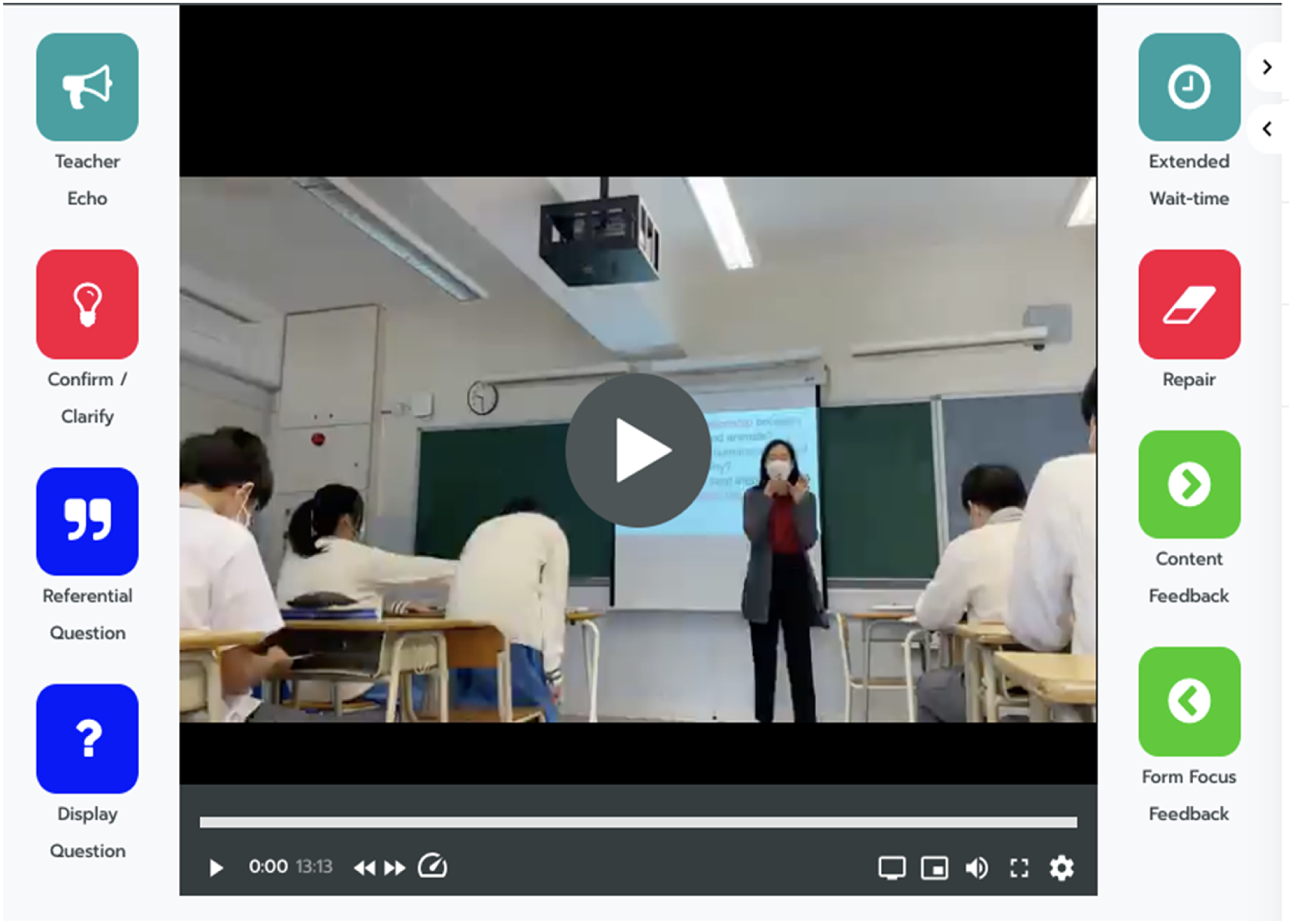
VEO interface with SETT tags.
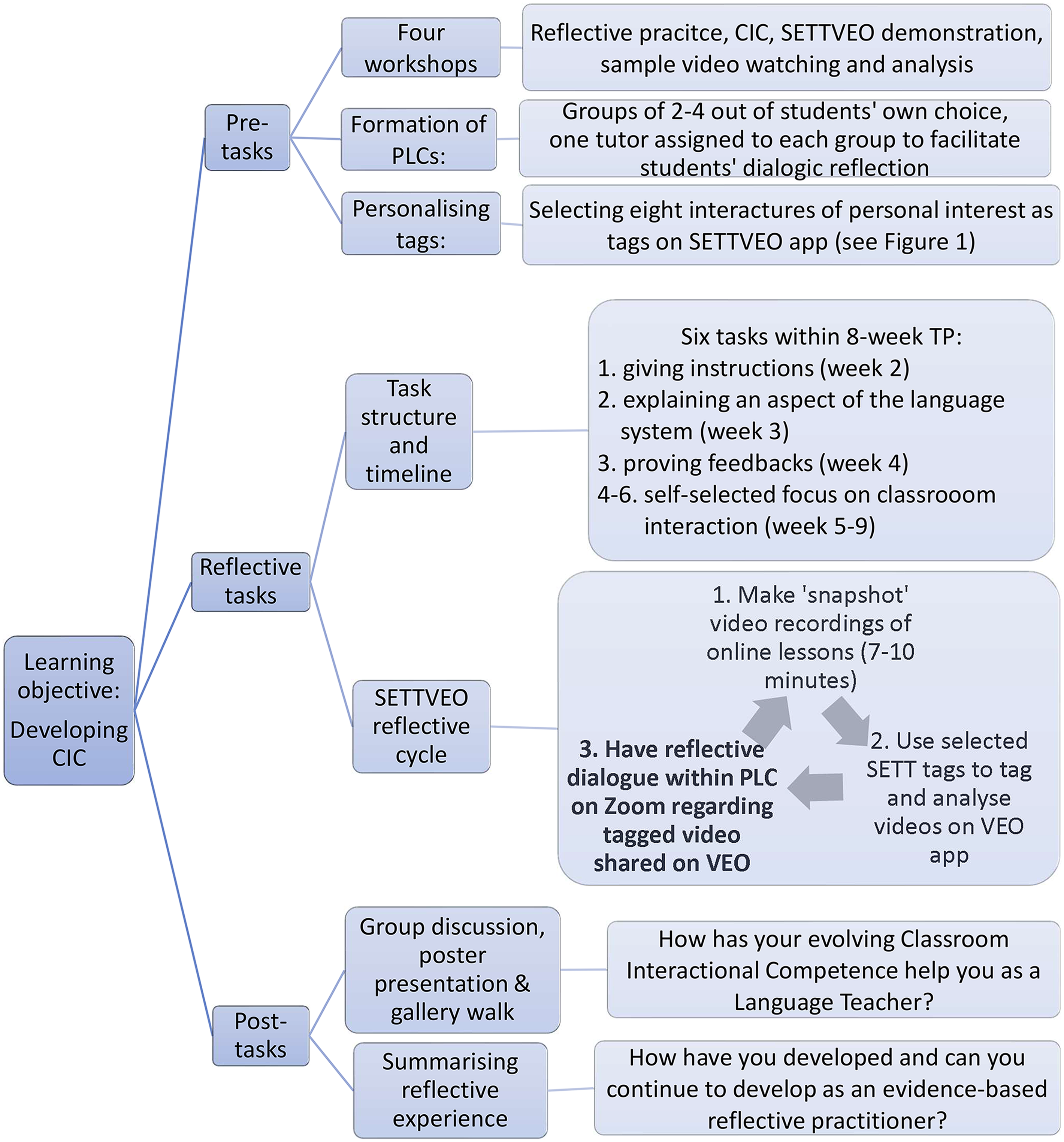
Reflective tasks setup.
This study addresses two research questions:
To what extent do STs develop CIC over time through technology-enhanced dialogic reflection? How do video and reflective dialogue mediate STs’ professional development?
Reflective Tasks Setup and Data Collection
The research context for this project is the Teaching Practicum (TP) which took place between January and April 2021 in a university in Hong Kong. Participants were 40 BABEd final-year English Language Education students and five tutors. During this period, STs taught around 12–14 periods of English language lessons per week, over eight weeks in different secondary schools. Due to the impact of the COVID-19 pandemic, they faced the challenge of conducting English language lessons online. As an essential part of the practicum, STs were required to create their own portfolios, in which they demonstrated evidence of reflection and professional development. The process of reflection during the eight-week practicum is detailed in Figure 2.
The current study looks at one PLC created by two STs, Jay and Ash, and their tutor Eve (pseudonyms), focusing only on Jay's teaching practice and professional development. This particular PLC was chosen because it is the only one which used the SETTVEO app to complete six reflective tasks throughout the eight-week practicum. Data presented in this article are taken from the third step of the reflective cycle, comprising six weekly reflective dialogue meetings. These meetings, centring on shared tagged video recordings of Jay's online lessons, were recorded on Zoom and further transcribed with Otter and CLAN software.
Method: Longitudinal CA Analysis
While many CA studies have described classroom interaction (see, for example, Seedhouse 2005), relatively few have attempted to trace changes in social interaction over time (see, however, Hosoda and Aline, 2010; Escobar Urmeneta, 2013; Sert, 2017; Yatağanbaba, 2020). There are three main reasons why CA is an appropriate means of studying development over time. First, CA builds collections of phenomena which can then be studied carefully. In the present study, examples of the ‘answer-feedback’ adjacency pair were collected, enabling close and careful analysis over the eight-week period. Adopting this procedure allowed us to ensure consistency. Second, although the selected extracts come from different classroom contexts, the research focus remains the same: the management of dispreferred learner responses. Again, this allows greater reliability in identifying patterns and making comparisons. Third, CA uncovers the detail of dialogic reflections by focusing on the language used to realize them and by studying the ways in which emergent understandings are portrayed through talk and a developing metalanguage. In sum, CA allows the complex relationship between language, interaction and learning to be studied and understood.
To trace Jay's development over the eight-week teaching practicum, two sources of data were selected and presented in the extracts (see Figure 3). Extracts in the left column are actual classroom interaction recordings played by Jay in the dialogic reflection meeting, while the right column portrays the dialogic reflection on that teaching moment (see extracts 2, 3a and 4a).
Apart from an interest in longitudinal development of teaching practice, the affordance of the SETTVEO app and reflective dialogue on such development is also analysed. The mediational role of video in this study is not examined through CA analysis, but thematic analysis of the ‘call-out’: calling out noteworthy events (Frederiksen, 1992) made by speakers after video viewing, and tags added to the video.
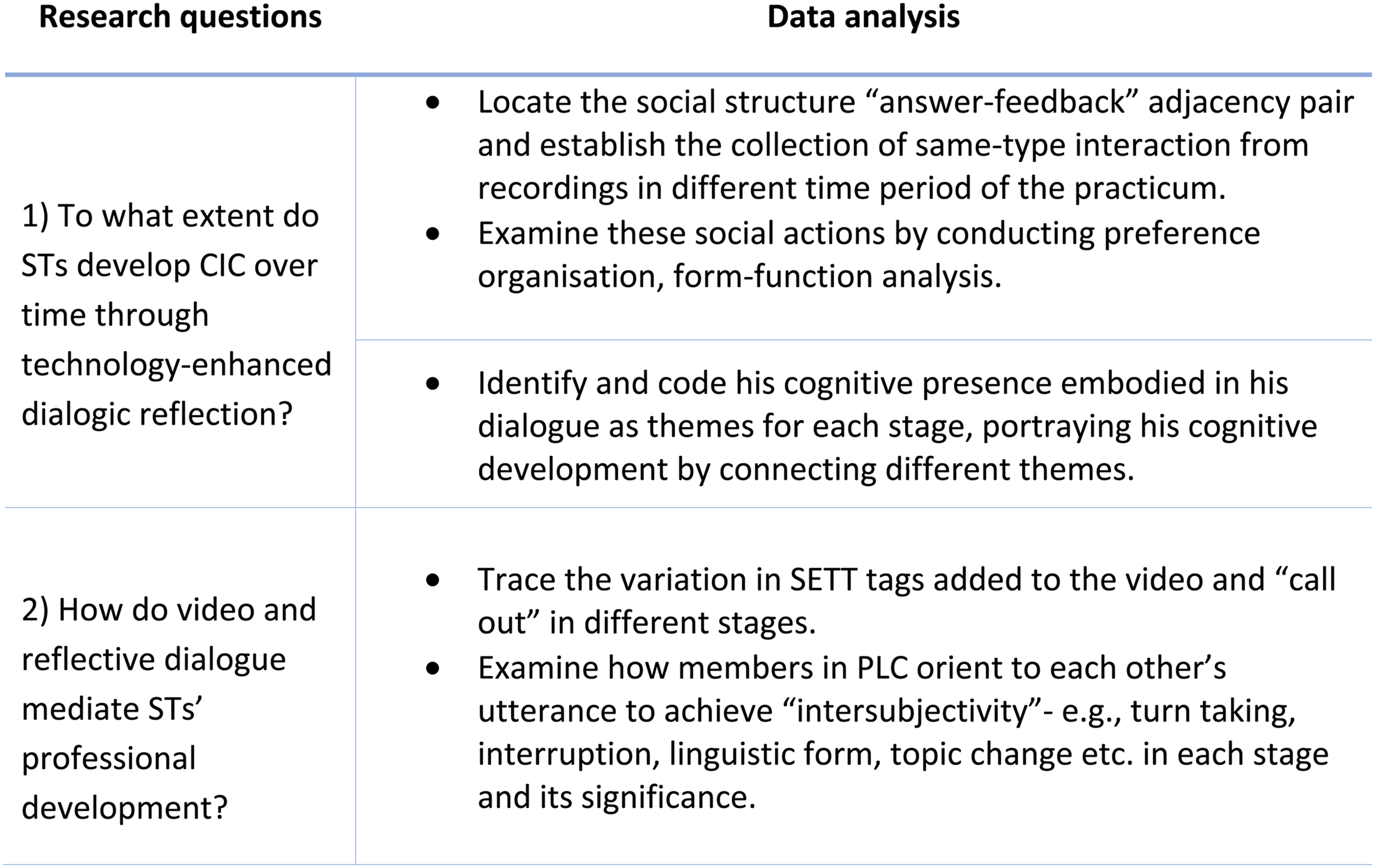
Data analyses procedure.
The following section describes four critical development stages (extracts 1–4) identified from Jay's dialogic reflection with Ash and Eve.
Findings
Stage 1 (Week 1): Clarifying Cognitive Dissonance
In the first week's teaching, Jay did not record anything, reflecting instead on students’ non-responses and Claims of Insufficient Knowledge (CIK, Sert & Walsh, 2013) in his lessons after watching and discussing Ash's video. In the following extract, Jay describes a specific encounter where he is challenged by students’ ‘I don’t know’ responses. At the beginning of a grammar lesson, he introduces the past participle through a game called Hangman and students are asked to shout out the letters of the past participle. Although some students respond by saying different letters, the students he nominated produced a CIK (I don’t know).
Extract 1: ‘that got me really frustrated’
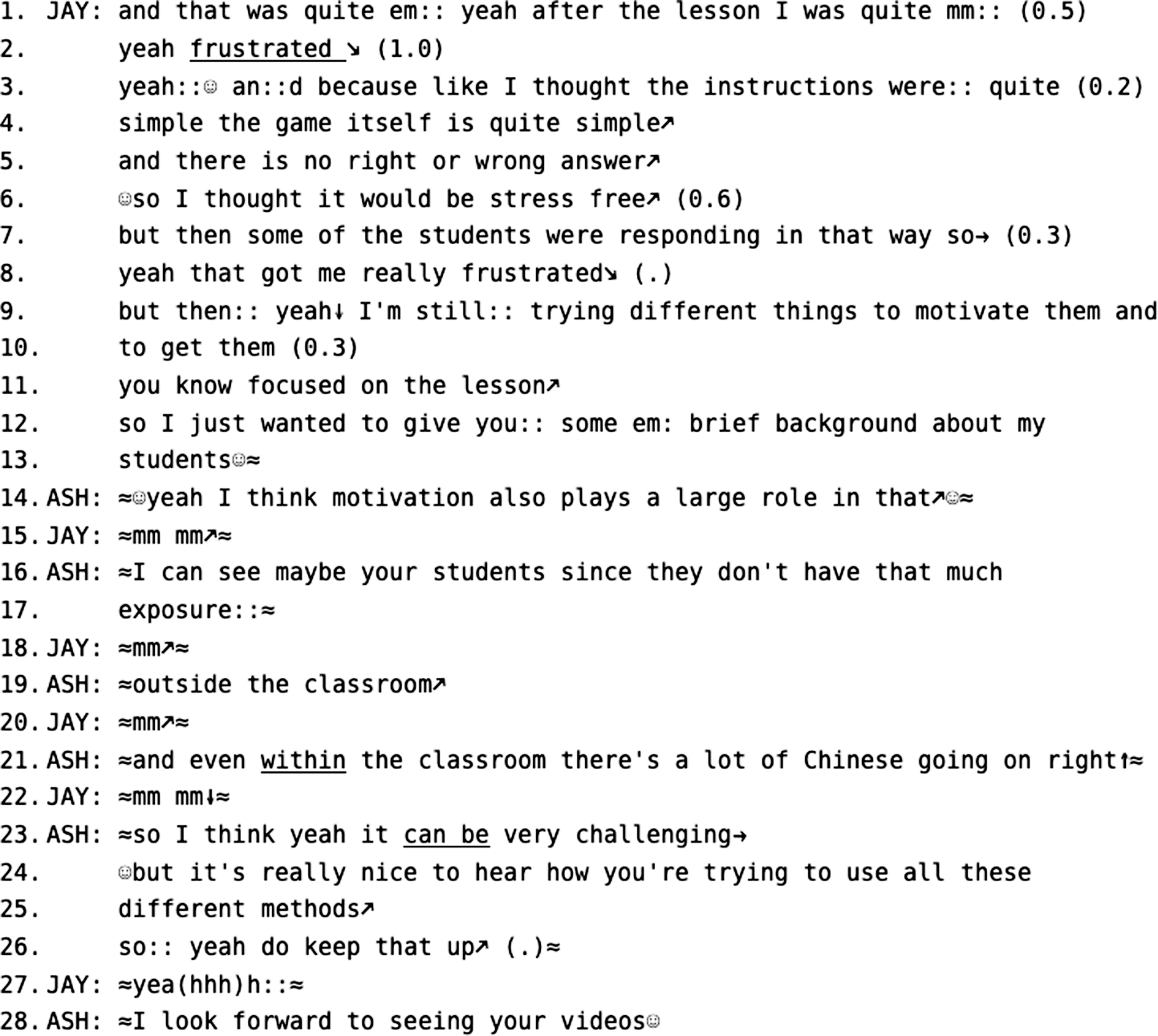
What is noteworthy from this extract is Jay's frustration (line 1), said with emphasis after a 0.5 s pause; he is also able to give a reason for his frustration: a contradiction or cognitive gap between what he envisions and the student's actual response. Teachers reflecting on their cognitive or emotional dissonance is significant in learning-to-teach since it provides a window into what they are thinking. Dialectics of emotion or cognition are seen as potential ‘growth points’ where instantiations of learning how to teach ‘come into being’ in specific teaching contexts when contradictions arise and are shaped by dialogue (Johnson and Golombek, 2016). The dissonance and instability caused by the kind of contradiction exemplified in extract 1 can mystify and debilitate teachers, who usually blame students and themselves (line 9).
Jay's turn is completed with the discourse marker you know, which prefaces his initiative of getting students focused on the lesson (line 11). The discourse marker you know signals the need for listeners to focus on a specific piece of information: in this case, on the meta-knowledge marked (Schiffrin, 1987), the shared goal of engaging students. Ash's response in line 14 demonstrates listenership (McCarthy 2003); he stays attuned to Jay's emergent needs, listens actively, acknowledges motivation as a trigger, emphasizes the challenges of getting students to use L2, and encourages Jay's further analysis with video.
Extract 1 marks the starting point of Jay's reflective journey, highlighting some of the issues associated with students’ nonresponses or unexpected answers such as ‘I don’t know’. His dialogic reflections with Ash provide him with guidance and support and enable him to rethink how to create a more engaging classroom atmosphere for students. His reflective journey continues in the next extract.
Stage 2 (Week 2): Noticing Information Processing
Extract 2 is selected from Jay's second reflective dialogue, where he shared his short class recordings through the share screen function on Zoom. Among all the interactional occasions in the second dialogue, this extract is chosen because it contrasts with Jay's reflections in extract 1 and exemplifies his cognitive development of understanding ‘dispreferred’ responses situated in classroom interaction.
The lesson recorded is an online grammar lesson with the objective of teaching students to differentiate between the simple past and present perfect tenses. After explaining these two grammatical forms with example sentences and their use with specific and unspecified time respectively, Jay goes on to check students’ understanding by inviting them to decide if the four sentences he presented on the screen are grammatically correct.
Extract 2: ‘I tend to miss lots of responses from students’

In the classroom interaction on the left, Jay initiates the interaction with a closed question (which had been tagged display question at line 9). He then seeks further clarification from S1, asking another display question at line 18. However, in the second-pair-part of the answer-feedback adjacency pair in line 25, Jay provides direct repair, correcting the student response in lines 26–29. In the reflective commentary on the right, Jay recognizes that he could have made better use of student responses in his feedback (lines 34–35). Through video and dialogic reflection with Ash and Eve, he comes to a much closer understanding of his corrective feedback practices and provides a detailed rationale for sometimes ‘missing’ what students say (lines 53–64). His developing CIC is mediated here through video, reflection and dialogue. As a result of video playback, reflection and talk, Jay comes to realize that student responses were unintentionally ignored and that this might be consequential to student learning.
The significant role of Ash and Eve in this dialogue is demonstrated by their collaboration with Jay and through the ways in which greater understandings are co-constructed through dialogue. After a few turns in the reflection, Eve focuses on Jay's feedback to S1 as a topic for further articulation (line 39–40), while Ash offers back a version of what Jay had just said (line 41). These strategies are identified as ‘focusing’ and ‘reflecting’ in a non-judgemental discourse framework for an understander to shape the speaker's own thoughts (Edge, 2006). Through a process of seeking clarification, checking understanding, offering support, and acknowledging Jay's online decision making (lines 39–51), there is a realization by Jay in lines 53–64 that he needed to pay closer attention to student responses rather than focus on his planned lesson. This extract illustrates very well the ‘struggle’ that teachers often face with what has been planned and the need for rapid online decision making to deal with the emergent discourse.
From stage 1 to stage 2, Jay started with reflecting on the emotional dissonance related to students’ non-response in general and moved on to attending to the specific interacture: display questions (see tags in this extract). This shows his professional development in noticing the discrepancy between teacher plan and classroom reality and becoming aware of his information processing when making interactive decisions. Jay's turning point in his development trajectory emerged in stage 3, where he goes beyond the cognitive development and finely tuned his interactive decisions to a student's unexpected response.
Stage 3 (Week 3): Justifying Alternative Questioning Strategy
Jay's first attempt at fine-tuning his interactive decisions to make them more student-focused are captured in extracts 3(a) and 3(b). In this week's class, students are preparing for their HKDSE (Hong Kong Diploma of Secondary Education) test, and this lesson was conducted to check answers for their reading comprehension. Jay's teaching objective in this class is to help students to be aware of the different reading strategies and skills used to find specific information effectively in texts. The classroom interaction in extract 3(a) evolves around the question: which of the following is the blogger's sequence of visit?
Extract 3(a): ‘the way I would guide them’

Jay's classroom practice in this extract marks a milestone in learning to deal with unexpected students’ answers. He repeats student S2's answer with the discourse marker ‘yeah’ in rising intonation and extends this learner's contribution with another referential question (lines 8–11). These acts indicate Jay's emergent practice of scaffolding a dispreferred student answer, a re-engagement of feedback practice. The subsequent exchange (lines 13–15) demonstrates the success of this practice.
In the dialogic reflection (lines 33–60), Jay is able to rationalize his decision making with Ash and Eve. After seeing how Jay dealt with the situation and hearing his purpose, Ash takes the floor and offers his way of guiding students to find the right answer, as evidenced in lines 32–44. When Ash shares his strategy, Jay acknowledges his understanding through the use of acknowledgement tokens right, mm. At line 45, a debate is initiated concerning the approach suggested by Ash; Jay's response in line 45 initially begins with the same agreement token ‘mm’ ‘yeah’ ‘right’, and is then downgraded through the use of ‘um’ and a pause to indicate uncertainty about the position taken by Ash. The discourse marker ‘but’ followed by ‘yes’ indicates a denial of some, though not all layers of meaning, suggesting a cancellation of the previous utterance in discourse (Bell, 1998) or a dispreferred action. This is confirmed by Jay's emphasis of his preference for eliciting students’ thinking rather than telling them how to find the right answer, as Ash suggested. Jay's refusal and elaboration cause the overlap in line 52, where Ash initiates a repair of his previous advice.
Ash's mediation in this exchange is signalled by advice-giving based on his own experience in the same situation. The contrasting opinions of what's best to be done as a teacher created a pressure to resolve the difference, which typically happens among peers’ collaborative learning. Such negotiation affords an opportunity for Jay to reassert his interactional strategy, thereby promoting a better understanding of the teaching context, his pedagogical goal of co-constructing meaning with students in teaching strategic reading. Collegiality in this extract is demonstrated through the exchange between Jay and Ash, with active listenership (McCarthy 2003), such as the use of acknowledgement tokens and continuers.
Jay's development in this extract is displayed through his reflection on the approach to teaching reading. His reflective commentary and rejection of Ash's suggestions indicate that his interactive decisions were student-centred and ‘of the moment’ – a clear and striking contrast to his approach in extract 2, where he followed the lesson plan. This highlights two aspects of Jay's development: (a) the fine-tuning of his interactive decision making in relation to student responses; (b) his awareness of the importance of teacher talk in maximizing students’ participation and learning.
As the dialogue proceeds, Jay's reflection moves away from a mere description of the interactive practice to evaluation and action planning in extract 3(b), an indication of deeper reflection.
Extract 3(b): ‘compared to last week’
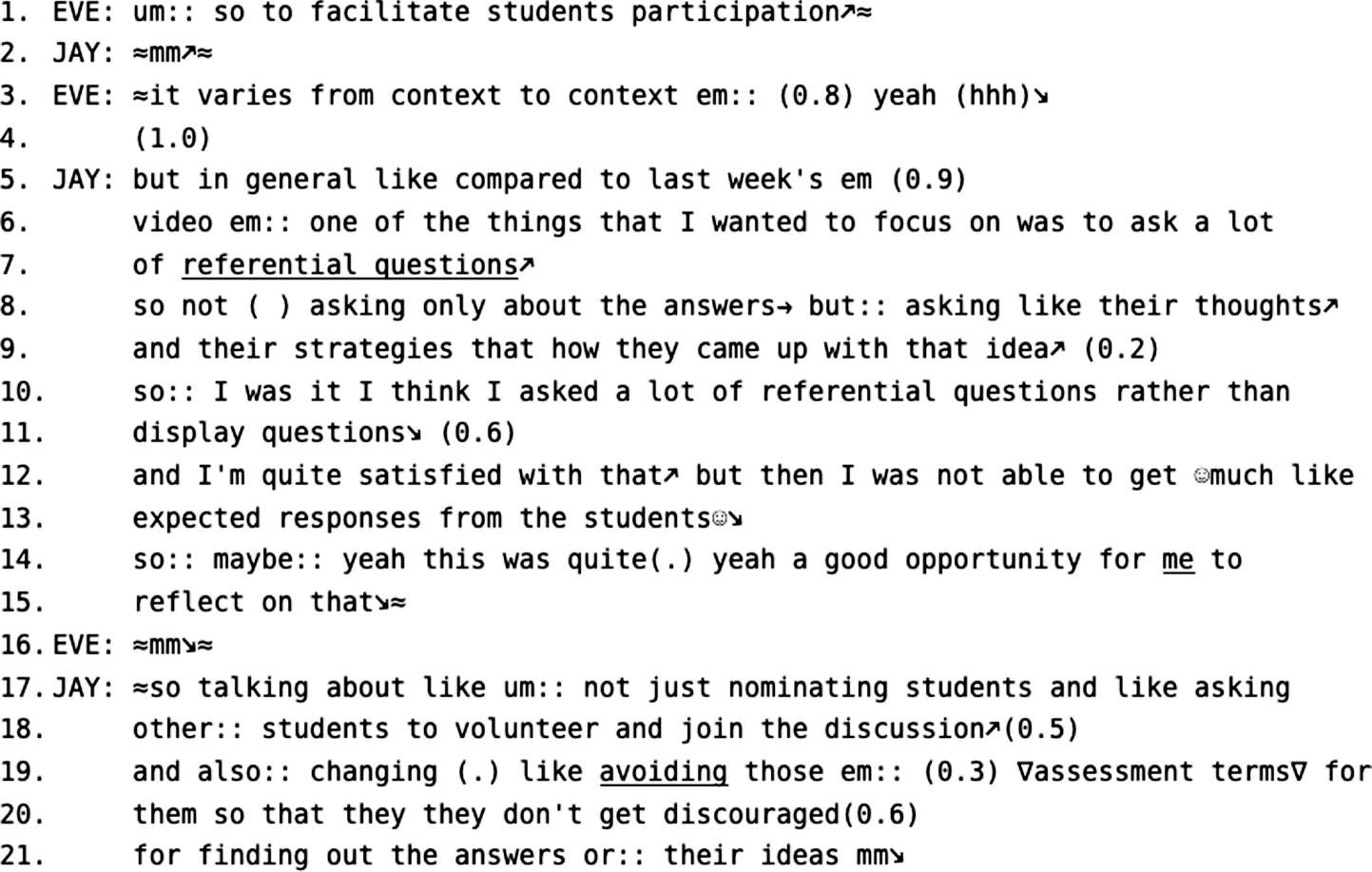
The discussion in extract 3(b) occurs at the end of the online reflective meeting. After the tutor, Eve, concluded the discussion about how to promote student participation in Jay's class, there is a topic change managed by Jay. He latches a turn with ‘but’ and changes the topic to his own focus of development: the use of referential questions to elicit students’ thinking process during reading. By refocusing the topic, Jay demonstrates greater ownership of his professional development; in lines 5 to 12, he reflects on a conscious decision to ask more referential questions, which is consistent with his movement away from relying on ‘display question’ (see highlighted tags in extract 2) to the use of ‘referential questions’ (see highlighted tags in extract 3(a)).
It is also salient in extract 3(b) that Jay compares different practices, articulates new strategies through the use of an appropriate metalanguage, pulls together suggestions from others and sets a goal for the next meeting – a sign of assuming more responsibility for reflective practice. The use of metalanguage ‘referential question’, ‘display question’ to make sense of his practice (lines 10–11) illustrates Jay's understanding of his pedagogical goals and the use of convergent teacher language.
Extracts 3(a) and 3(b) stand out as evidence of Jay's first attempt to re-engage with elicitation and feedback practices when dealing with unexpected student responses. His dialogue with Eve and Ash reveals his new understanding of teachers’ interactional competence in the specific context of a reading comprehension class. He was able to defend his approach by clarifying his online interactive decision making, illustrate through an appropriate metalanguage the steps he took to shape student responses, and summarize and evaluate the changes he had made to his practice with a plan for further action.
Stage 4 (Week 4): Evaluating the Result of Applying ‘Referential Question’
As Jay's reflective journey continues, he applies what he had learned in previous reflective meetings to his own teaching: using referential questions to scaffold students’ thinking and further evaluating its effectiveness. The context for this week's teaching remains the same as last time: a reading comprehension lesson. Extracts 4(a) and 4(b) focus on S3's responses to the reading comprehension question ‘what does “it” refer to’ in ‘It is a must-see destination and just an hour's flight time away’.
Extract 4(a): ‘it's quite difficult to answer that (referential) question as a student’

Attention needs to be given to the dispreferred second pair part ‘I guess it’ from S3 in line 12. Before this, S3 first employs hesitation devices, a four-second pause followed by stretching ‘er::’ (lines 8–9). Jay responds to the hesitation with encouragement signalled by the continuer ‘mm’ said with rising intonation. After another long silence, S3 produces a second pair part with laughter. This response, however, is perceived as dispreferred. Jay's dispreferred action is prefaced by an echo of S3's answer and the discourse marker ‘okay’ in rising intonation, a sign of mitigation to minimize the degree of disaffiliation and loss of face. In lines 15–20, Jay uses a second referential question to clarify how the student arrived at the answer (did you also look at the first sentence?); his request for clarification results in a preferred response at line 23.
Jay chooses to stop the video at the point of this turn exchange at line 24, attending to the referential question he had asked and negates its effectiveness (indicated by ‘I could have’ in line 27) in drawing out an answer he expected. This contradicts his assertion in stage 3, when he reiterates his argument for an interactive approach to teaching and the significance of referential questions in co-constructing meaning with students in reading comprehension exercise. His uncertainty about his own interactive strategy is displayed by inviting Ash to think together with him (line 31) if the question was pitched too high, showing strong affiliation or motivation of the person in dilemma who seeks help from peers. In his further unpacking, Jay specifies his expectation for students to articulate the strategy of referring to context, which has been instructed for many times (line 39–47) and indicates this expectation as being unrealistic (line 48–49).
Succeeding to the transition relevance place (TRP) in line 50, Ash responds to Jay's reflection on the hard-to-answer referential question and high expectation in extract 4(b).
Extract 4(b): ‘I was wrong to assume students would have the same thing in their mind’
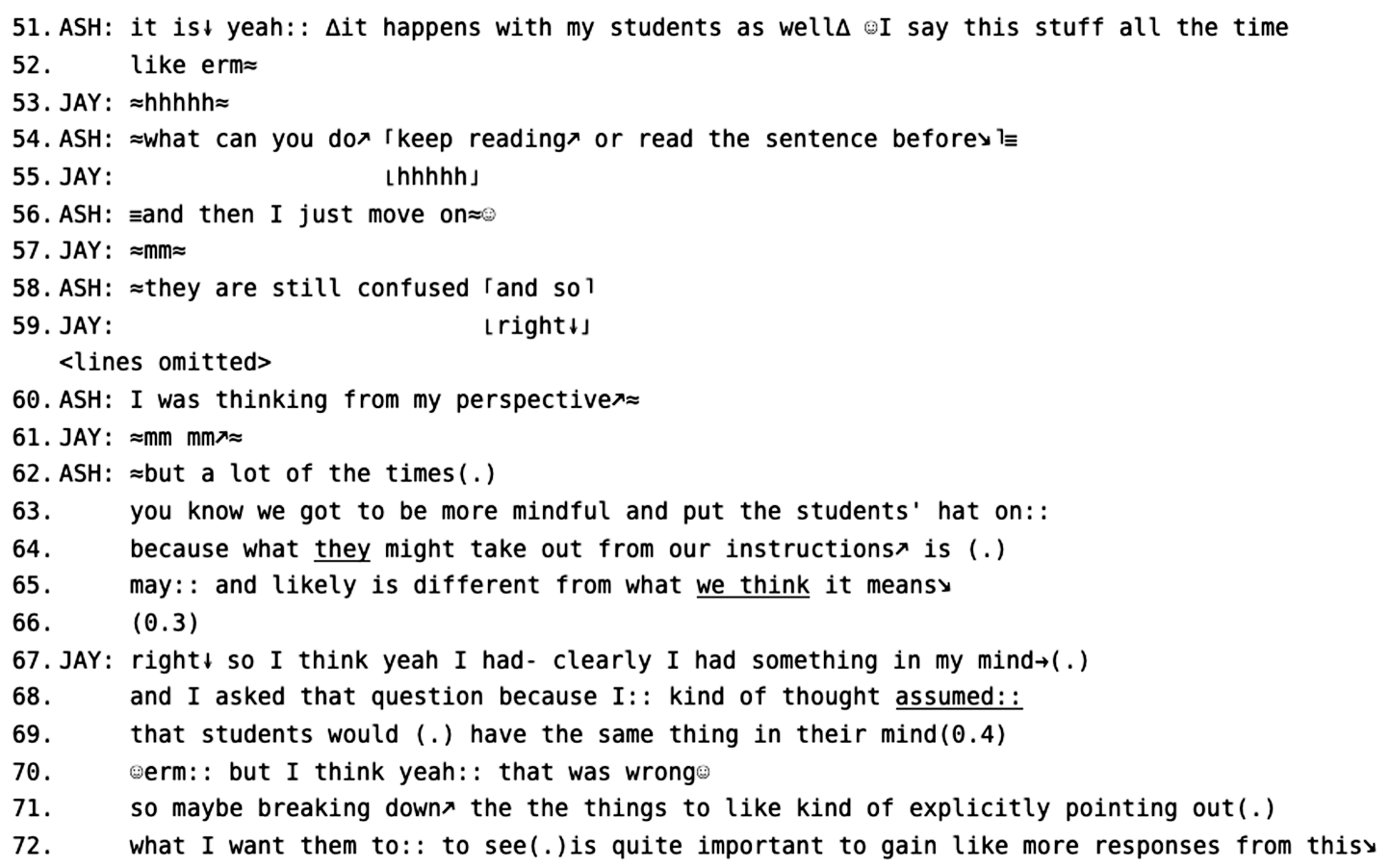
What's interesting in this extract is Ash's social action of relating Jay's case to his own, mentioning the existence of this issue in his classes and outlining his coping strategy: a reluctant proceeding of the lesson and unsatisfactory students’ uptake (line 51–58). By doing so, Ash orients to Jay's problem with eliciting a preferred response from students by acting as a ‘reference person’ for Jay (Janis, 1981). Jay's laughter as response in lines 53 and 55 and his acknowledgement token ‘right’ in line 59 demonstrates the accomplishment of strong affiliative ties and a supportive relationship.
After acknowledging his own experience when facing this issue, Ash reflects on his own interactive decisions. The frequent change of pronoun from ‘I’ (line 60) to ‘you’ (line 63) and then to ‘we’ (line 63) creates common ground where the advice of thinking from students’ perspective applies to both participants. It represents mutuality, inter-thinking and the sense of community created within the PLC; creating common ground both mediates Jay's evaluation of student learning and, at the same time, creates an opportunity for Ash to reflect and share a similar experience. As indicated in his final turn (lines 67–72), Jay recognizes the need for repeated and explicit modelling to bring about greater student participation.
Discussion
Developing CIC
This study analyses one ST's development in the SETTVEO project, with a focus on how he learned to cope with dispreferred responses through evidence-based dialogic reflection. The on-going analysis of his teaching practice and reflection highlight steady development, both at a cognitive level and in his approach to teaching.
As summarized in Figure 4, by stage 4 of his reflective journey, Jay was able to notice how he processed learner responses (stage 2), focus on his questioning strategies, explore alternative and justify his choice (stage 3), test the effectiveness of his solution (stage 4). This compares starkly with stage 1, where his understanding of the reasons for the dispreferred learner response was mainly related to external factors.
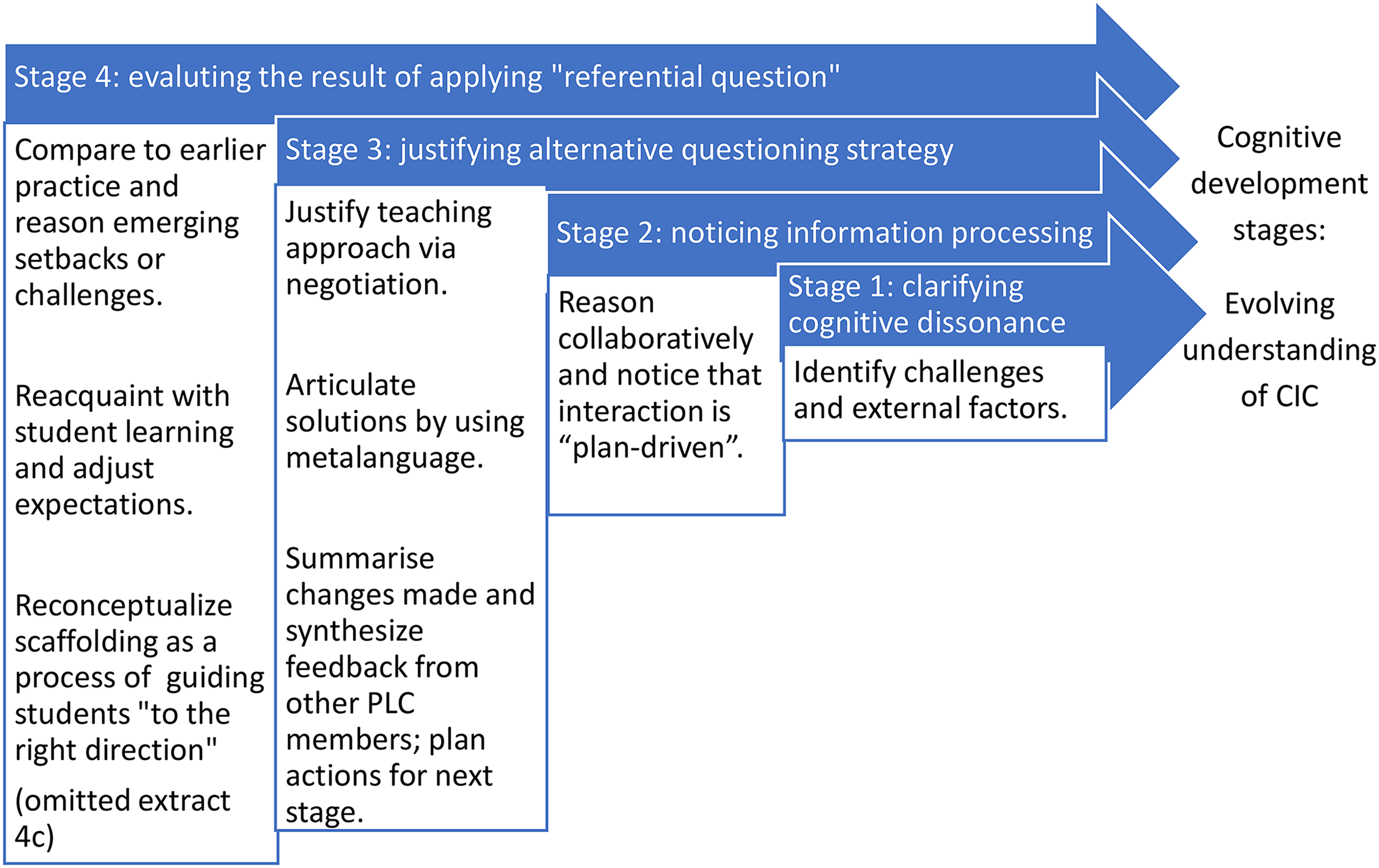
Practical inquiry stages in SETTVEO-facilitated dialogic reflection
Along with his evolving understanding of CIC at a cognitive level, this study also evidences Jay's development in his teaching practice, notably in his improvements in dealing with question/answer exchanges. This process is underpinned by the changes made to questioning strategies, specifically in his use of display and referential questions. Of note, is his shift from display questions (in stage 3) to referential questions (in stage 4), signifying development from a product-oriented to a process-oriented teaching approach, from controlling the space of learning to creating space for learning. The iterative process of practising, noticing, and adapting suggests that Jay has internalized a new way of engaging in feedback practices and is able to adapt and refine his scaffolding strategy to the needs of students.
The Mediational Role of Video and Dialogue
This study found that the use of video assists reflection and professional development in a number of ways. First, it facilitates teacher noticing, enabling teachers to really see what is going on in their classes and make changes to practice. Second, the way in which video is used varies according to experience; Jay was making more sophisticated use of video by stage 4, for example (see Figure 5). Third, the process of tagging and dialogue results in various issues being identified at a later stage.
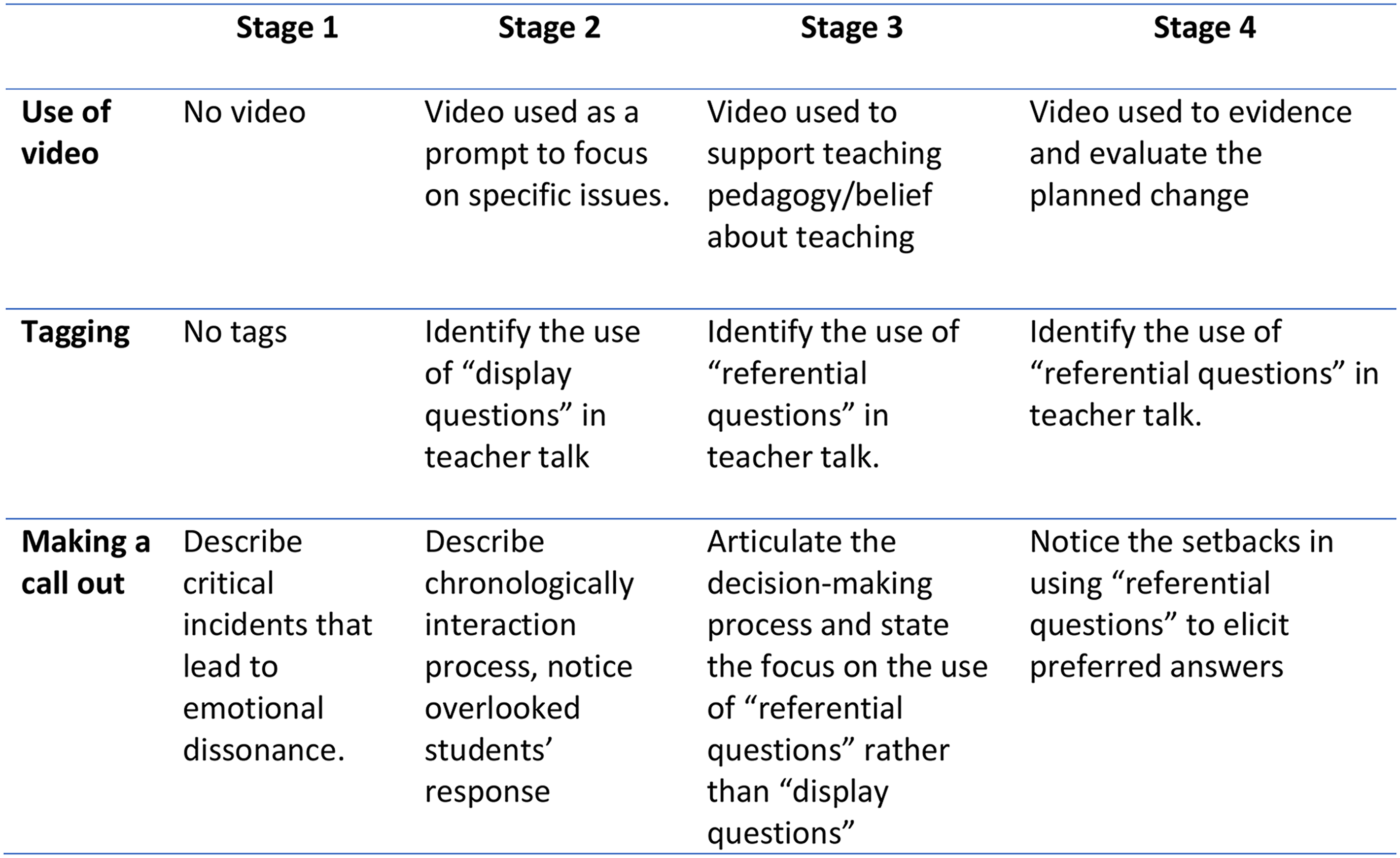
Learning to notice.
When no video was used, Jay's reflections are mainly a description of critical incidents and his emotional responses (stage 1). Although reflecting on critical incidents and emotions have their place, the use of video in stages 2–4 proved to be more effective in facilitating noticing the importance of online decision making and in enhancing CIC more broadly. At the outset of this reflective journey, video playback provided a prompt, allowing STs to simply describe what was happening. By stage 3, however, video playback was used to explain, provide reasons for certain practices and to compare alternative practices, such as the use of display or referential questions. This reflective process of describe, explain, and compare alternatives is considered ‘good practice’ in current teacher education programmes.
From identifying interactures (tagging), to making sense of these tags and connecting them with teaching pedagogy/beliefs, and by monitoring positive change and potential challenges/inconsistencies, STs attend to the complexity of teaching more selectively with the result that inquiry is more sustained. As evidenced in Van Es and Sherin's study (2002), teacher noticing promotes professional development by identifying what is noteworthy, connecting specific classroom situations to general teaching and learning principles, and by reasoning through knowledge of a specific context. Findings from this study support the work of Van Es and Sherin by specifying how video affords different opportunities in the process of developing CIC, and by enhancing understandings of the potential of technology to influence classroom practices.
The process of noticing and interpreting is shaped by the supporting relationship and reflective dialogue in the learning community. The interactional strategies Eve and Ash use to facilitate Jay's reflection in each stage is summarized in Figure 6.
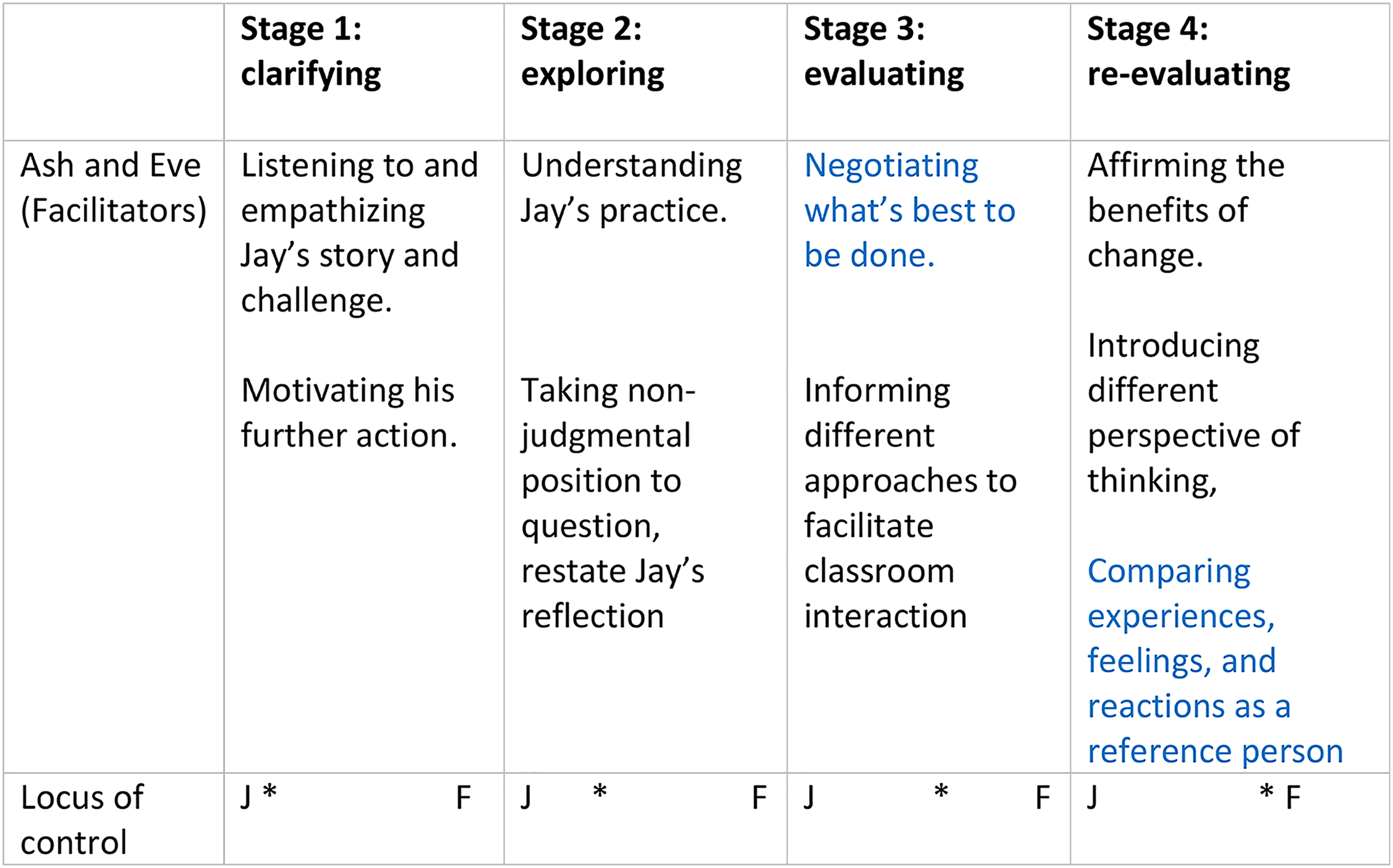
Process model for facilitating reflective dialogue. (Note: J-student teacher Jay; F-Facilitators Ash and Eve).
According to Kang and Van Es (2019), a facilitator's strategies for managing reflective dialogue differ according to the needs of STs, an observation which is confirmed in the present study. Reflective dialogue between facilitators (F) and Jay (J) is like passing a ball back and forth. Ideally, Jay would have the ball for most of the interaction, especially at the early stages of dialogic reflection when he has limited teaching experience and has just started to learn through video. The role of the facilitator at this stage is primarily as listener, reflecting their understanding back to Jay and suggesting reasons. As Jay takes on more responsibilities in both teaching and reflection, facilitators help to identify and maintain the focus, explore alternatives, and evaluate the changes made in a progressive way.
This process resembles the result of the structured counselling model suggested by Ali and Graham (2006), where a list of advising skills is proposed to help clients to clarify, explore, evaluate, and plan actions in making their personal decisions. More interdisciplinary research is needed here to draw on the advising skills in different stages of this counselling model with the aim of fostering empowering reflective dialogues and facilitating STs’ long-term development. Developing a process model for reflection is of great significance since a less structured approach may very likely lead to a cozy chat which ‘reinforces mistaken beliefs about the responsibility of self’ (Ali and Graham, 2006:44).
By working in a PLC, Jay's reflections extend beyond what is ‘right’ or ‘wrong’, ‘good’ or ‘bad’, to making sense of what happened and why, and exploring alternatives. Through the PLC, participants develop growing collegiality and a shared commitment to each other and to improving their practice. Peer learning has been shown to have a significant role in cooperative development (Edge 2006), a position which contrasts starkly with the more traditional view of SCT involving a novice and an expert. As we hope to have demonstrated in this study, learning and professional development occur not only through interaction between students and teachers, but also among peers. These two forms of interaction provide different types of opportunities for learning. SCT informs us how students learn through interaction and how collective understanding is created among individuals. As evidenced in this study, peer-to-peer interaction leads to negotiation, comparison (highlighted in Figure 6), and results in conceptual change.
Conclusion
This article goes some way in demonstrating how reflection changes over time and how dialogic reflection varies according to stage of professional development, experience of doing reflection and the extent to which technology is used to foster closer understandings of classroom practice. We have looked at the mediational role of video and dialogue in the reflective process, traced a ST's progress over an eight-week teaching practicum, and evidenced his development both as a reflective practitioner and teacher. Our research indicates that reflective practice develops incrementally over time, both in terms of teachers’ ability to notice and interpret, with support provided at different stages. Evidence-based dialogic reflection plays a significant role in teachers’ development in both cognition and practice.
Future research is needed, focusing, for example, on different contexts for both teacher education and other situations involving professional development. There is huge potential for the study of the use of video in teacher education programmes more broadly, looking, for example, at how to optimize the use of video at different stages of professional development: how video playback might vary from pre- to in-service teacher education. There is scope too for more empirical studies looking at digital learning and professional development in online contexts which have mushroomed in the post-pandemic digital age.
Footnotes
Funding
The author(s) received no financial support for the research, authorship, and/or publication of this article.
