




Abstract
Objectives:
Communication plays a pivotal role in addressing modern and complex public health challenges. Our study assessed the extent to which communication-related course outlines in Canadian master of public health (MPH) programs aligned with national and international public health competency frameworks in their coverage of communication competencies.
Methods:
We conducted an environmental scan and content analysis of MPH courses relevant to public health communication in 2022 and 2023. We used university and program websites and Google to conduct initial searches and obtain course outlines, supplementing these searches with a survey. We developed a codebook based on public health competencies and pedagogical best practices, capturing variables for communication competencies, audiences, channels, tools, and techniques. Two researchers independently coded course outlines. Descriptive statistics evaluated how these courses address communication-related public health competencies.
Results:
We obtained 11 course outlines offered from 2010 through 2023. The focus of the included courses varied, with health communication (n = 3), knowledge mobilization (n = 3), and risk and/or crisis communication (n = 2) being the most common. All courses broadly aligned with communication competencies related to communication with different audiences (n = 11), and mobilizing (n = 9), interpreting (n = 11), tailoring (n = 9), and facilitating (n = 9) communication. Using technology (n = 4) and media (n = 6), addressing mis/disinformation (n = 1), and communicating with diverse audiences (n = 3) had less alignment.
Conclusions:
Findings revealed gaps in the coverage of key competencies, particularly in addressing mis/disinformation, leveraging technology and media, communicating with diverse populations, health literacy, and crisis communication. Ongoing review of curriculum would ensure alignment with evolving competencies and public health demands.
Keywords
A strong public health system needs to address the multifaceted challenges stemming from the COVID-19 pandemic and interrelated public health problems. These challenges include climate change, health inequities, distrust, and the public health infodemic.1,2 The COVID-19 pandemic resulted in widespread calls for transformation of the public health workforce,1,3,4 driven by changes in policy, resource availability, climate change, chronic disease, 5 and worsening health and social inequities. 6 Amid calls for public health transformation, communication has emerged as a key domain requiring improvement to rebuild public trust, address misinformation and disinformation, ensure cultural safety, and encourage behavior change.4,5,7 Knowledge mobilization is also an important competency area for public health, 8 and it overlaps with communication. Knowledge mobilization includes tailoring knowledge to various audiences, being evidence-informed, focusing on impact, and promoting multidirectional knowledge transfer. 9
Competency-based education ensures high-quality training that is relevant and interdisciplinary and that draws from multiple sources of knowledge. 10 The Guidelines for MPH Programs in Canada 11 provide recommendations for all Canadian postsecondary institutions with master of public health (MPH) programs, and some institutions opt into accreditation provided by the Council on Education for Public Health (CEPH), both of which require a competency-based learning model.11-13 Core competencies provide a common understanding of the knowledge, values, skills, and behaviors that are essential for effective public health practice.14,15
Public health education is foundational to workforce transformation, and a current understanding of the training capacity of public health programs for public health communication is necessary. 16 A well-trained workforce is more likely than one inadequately trained to engage in evidence-informed practice and address diverse and evolving modern challenges, 17 including public health emergencies and climate change. Past research in Canada examined the degree to which MPH program courses align with the 8 domains of the core competencies, including communication, 18 as well as the extent to which professional development opportunities for public health practitioners support the communication-related core competencies. 19 We have not found similar research in other countries. Relevant data on public health education are an essential part of planning, developing, and strengthening the public health workforce in Canada. 16 The lack of detailed knowledge of alignment between MPH communication-related courses and competencies indicates a gap in our understanding.
The aim of our study was to describe the extent to which available communication course outlines in MPH programs in Canada align with communication core competencies. The objectives were to (1) conduct an environmental scan to obtain MPH course outlines relevant to public health communication and (2) conduct a content analysis to determine how well included course outlines align with relevant competency frameworks and pedagogical best practices for developing competencies among public health students.
Methodology
Ethics Approval
We obtained ethical approval for this study from the University of Guelph’s Research Ethics Board (no. 22-10-019). We obtained written informed consent from all participants who responded to the survey request for relevant course outlines for the collection and analysis of submitted course outlines.
Data Collection
We obtained course outlines related to communication and knowledge mobilization via online search and supplemented this approach with a survey. In previous related research, we determined there were 22 communication-related courses in Canadian MPH programs. 20 We used these course codes and course titles to search university and program websites to obtain course outlines. If course outlines could not be found on the websites, we used Google to search for course codes and titles in conjunction with the university name (eg, “health communication” AND “[name of university]”). We conducted searches in November 2022 and an update in November 2023.
We supplemented our online search with a survey. We sent emails in December 2022 to all 19 Canadian MPH program coordinators and directors and the corresponding administrative assistant or general inbox for the MPH program to ask if they would share course outlines related to communication via Qualtrics survey. The email asked for course outlines for the communication courses identified in the previous research as well as other relevant courses. We sent reminder emails in early January 2023, and the survey remained open for 4 weeks. The survey consisted of informed consent and a file upload option for course outlines.
Content Analysis
We developed a codebook describing key variables from the communication-related competencies in the Public Health Agency of Canada (PHAC) Core Competencies for Public Health in Canada, 14 Pan-Canadian Health Promoter Competencies, 21 and the 2021 US Core Competencies for Public Health Professionals 15 (eTable in the Supplement). The codebook also captured information on subvariables for each competency; these subvariables reflect named audiences, channels, tools, and techniques within the included competencies.
Additionally, we used information for the development of the codebook on pedagogical best practices identified in a recent scoping review of the literature on developing competencies among public health students and practitioners, 22 including experiential learning, class activities, guest lectures, assignments, reflexive practice, and competency-based education. We also captured data on relevant pedagogical best practices for competency-based education aligned with the Guidelines for MPH Programs in Canada, 11 including inclusion of synthesis research, applied research, case study development, major written paper, and written or oral examinations.
We coded for variables and subvariables when the course outline mentioned the overall competency or variable, with or without specific mention of the audiences, channels, tools, and techniques (ie, the subvariables). For each competency, we coded “not applicable” when the course outline did not mention the competency and “not identified” when the course outline had a general mention of something related to the competency but no specific information on subvariables (eg, effective communication with various audiences). The research team collaboratively developed the codebook and refined the variable definitions after testing the codebook on a sample of course outlines (n = 5). Two independent researchers (M.M., D.M.) coded the full dataset (n = 11 course outlines) and collaboratively resolved any coding conflicts.
Statistical Analysis
Our analysis focused on the full dataset (n = 11). We also examined 8 course outlines from the past 5 years only (2019-2023) for reference. We used Excel (Microsoft Corp) to calculate descriptive statistics and assess how each course outline supports communication-related public health competencies.
Results
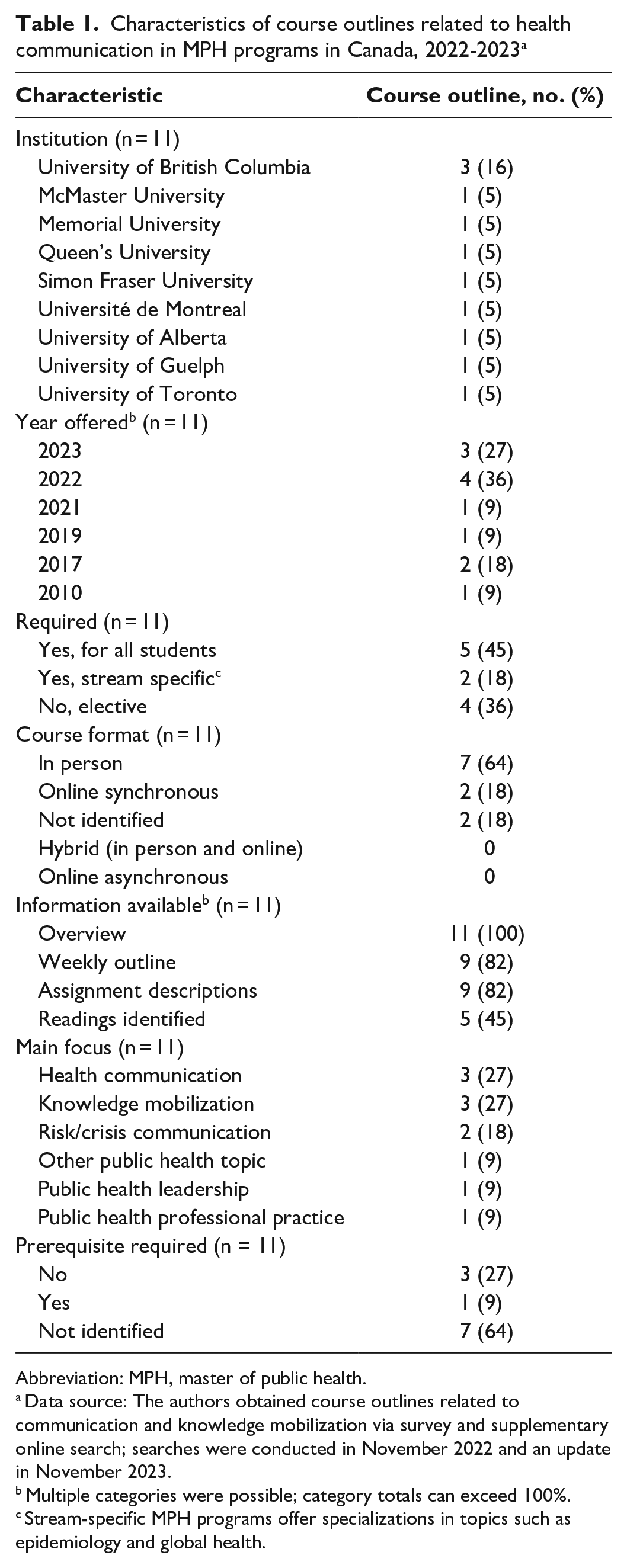
Overall, we obtained 11 course outlines of the 22 identified courses related to communication and knowledge mobilization via the online search (n = 6) and survey (n = 5), for which the response rate was 23% (Table 1). We obtained the most recent course outlines, representing courses offered in 2021 (n = 1), 2022 (n = 4), and 2023 (n = 3), via survey, except for 1 course offered in 2022, which we obtained online. We obtained all course outlines for courses offered from 2010 through 2019 (n = 4) online.
Characteristics of course outlines related to health communication in MPH programs in Canada, 2022-2023 a
Abbreviation: MPH, master of public health.
Data source: The authors obtained course outlines related to communication and knowledge mobilization via survey and supplementary online search; searches were conducted in November 2022 and an update in November 2023.
Multiple categories were possible; category totals can exceed 100%.
Stream-specific MPH programs offer specializations in topics such as epidemiology and global health.
Most course outlines included an overview (n = 11), weekly outline (n = 9), and assignment descriptions (n = 11). Most courses were offered in person (n = 7) and did not indicate whether a course prerequisite was required (n = 7). The focus of the course outlines varied, with health communication (n = 3), knowledge mobilization (n = 3), and risk and/or crisis communication (n = 2) the most common. Most courses were required for all MPH students (n = 5) or students in stream-specific MPH programs (programs that offer specializations such as epidemiology and global health) (n = 2).
PHAC Communication-Related Core Competencies
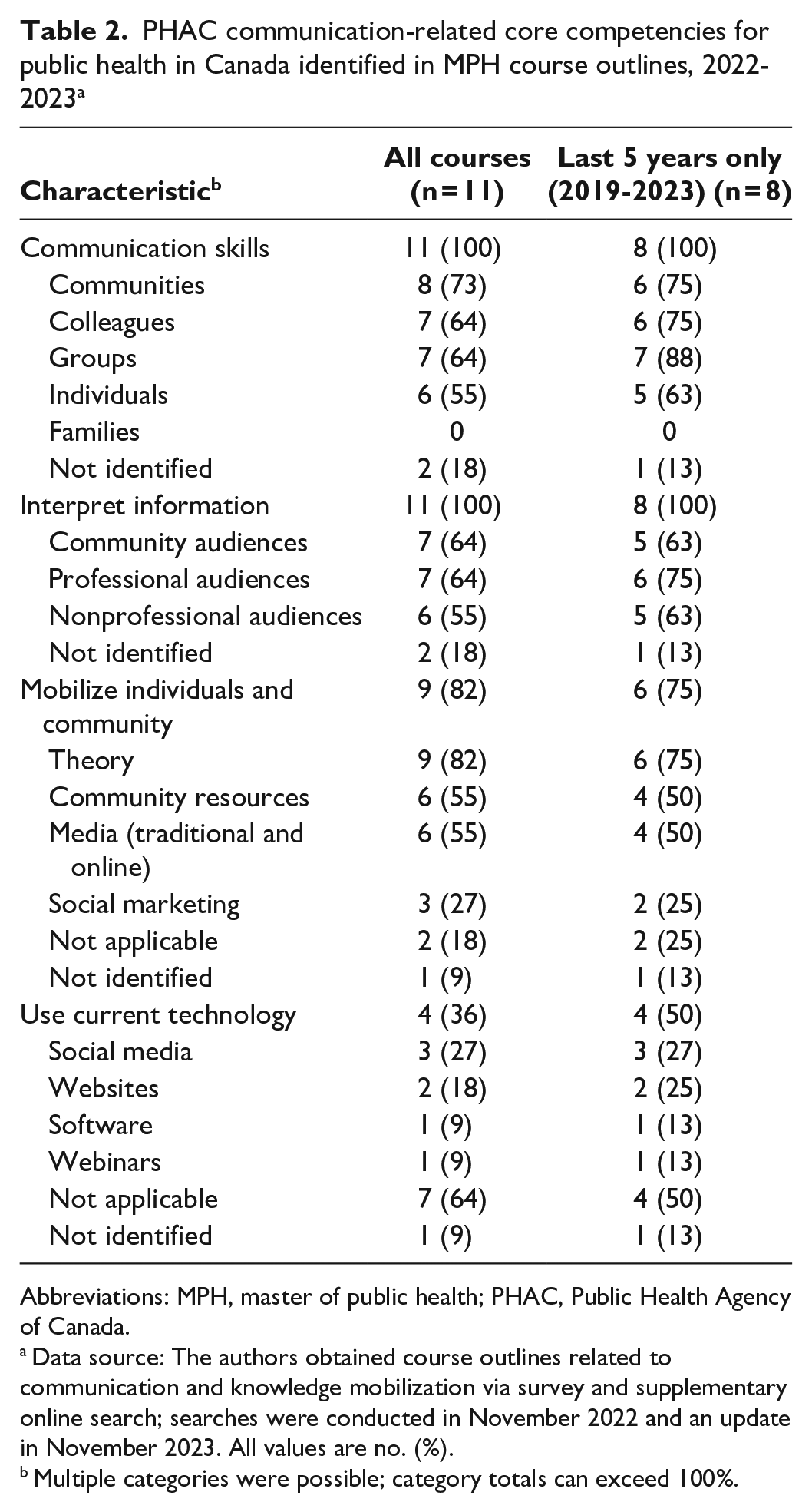
In our examination of the 4 PHAC communication-related core competencies and the 11 course outlines, we found that communicating effectively (communication skills) with various audiences was broadly covered by all course outlines (Table 2). Communities (n = 8), colleagues (n = 7), and groups (n = 7) were covered by many courses, although families were never explicitly mentioned (n = 0). Interpreting information for community audiences (n = 7), professional audiences (n = 7), and nonprofessional audiences (n = 6) was also broadly covered, with 2 course outlines mentioning interpretation for various audiences but not mentioning the specific audience. Mobilizing individuals and communities through using theory (n = 9), community resources (n = 6), and media (n = 6) was mentioned in most course outlines, while social marketing (n = 3) was not well-covered. Finally, while technology was sometimes mentioned in course outlines (n = 4), specific technologies were not explicitly mentioned in many course outlines (n = 7). Social media (n = 3), websites (n = 2), software (n = 1), and webinars (n = 1) were infrequently mentioned.
PHAC communication-related core competencies for public health in Canada identified in MPH course outlines, 2022-2023 a
Abbreviations: MPH, master of public health; PHAC, Public Health Agency of Canada.
Data source: The authors obtained course outlines related to communication and knowledge mobilization via survey and supplementary online search; searches were conducted in November 2022 and an update in November 2023. All values are no. (%).
Multiple categories were possible; category totals can exceed 100%.
Pan-Canadian Health Promoter Competencies
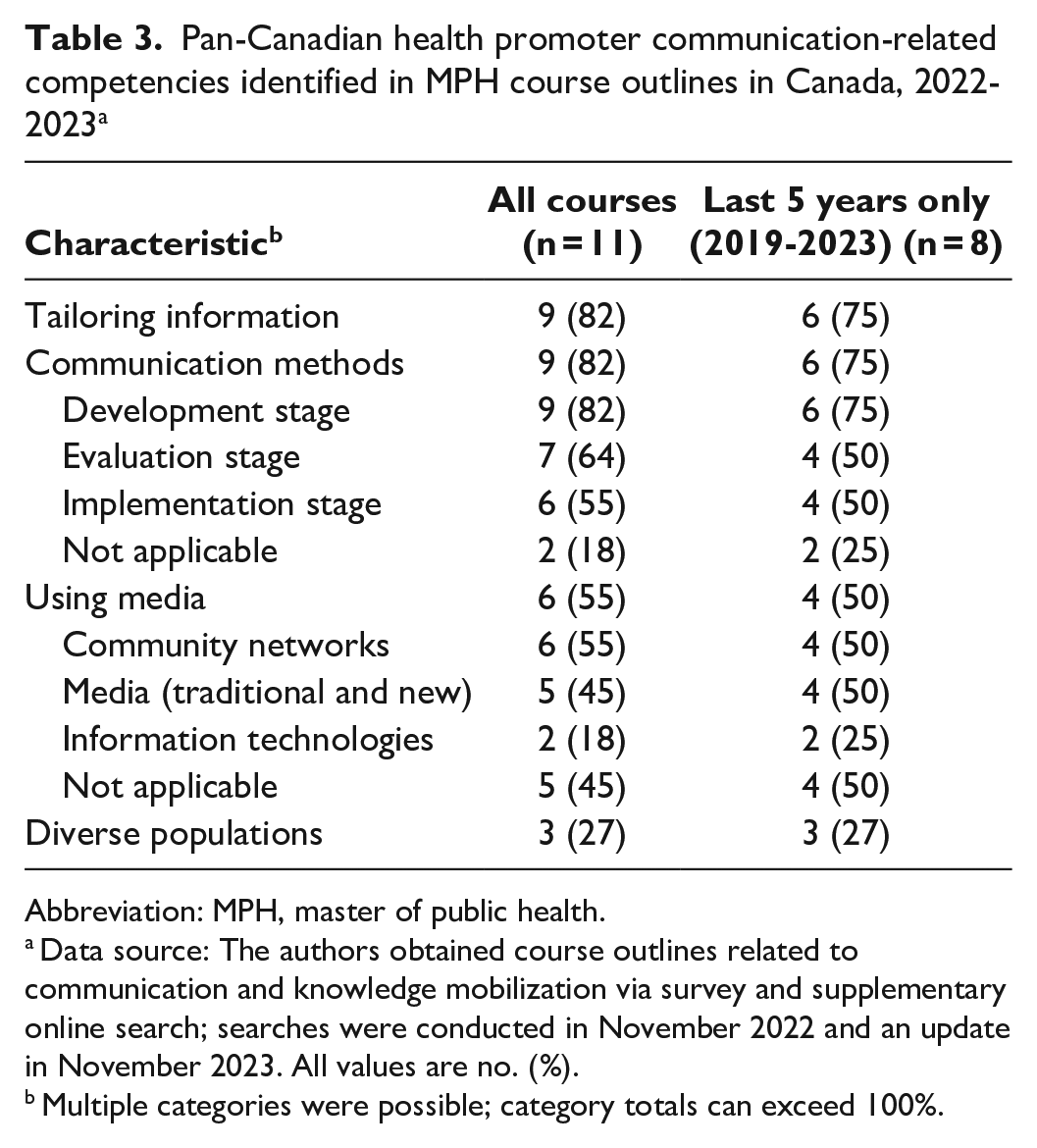
In our examination of Pan-Canadian Health Promoter Competencies and the course outlines, tailoring information for specific audiences was mentioned in many course outlines (n = 9). Applying communication methods to the development (n = 9), evaluation (n = 7), and implementation (n = 6) of health promotion actions was mentioned in most outlines (Table 3). Using community networks was mentioned by slightly more than half of the course outlines (n = 6), while media (n = 5) and information technologies (n = 2) were mentioned less often. Finally, communicating with diverse populations in a culturally appropriate manner was mentioned in few (n = 3) course outlines.
Pan-Canadian health promoter communication-related competencies identified in MPH course outlines in Canada, 2022-2023 a
Abbreviation: MPH, master of public health.
Data source: The authors obtained course outlines related to communication and knowledge mobilization via survey and supplementary online search; searches were conducted in November 2022 and an update in November 2023. All values are no. (%).
Multiple categories were possible; category totals can exceed 100%.
US Core Competencies for Public Health Professionals
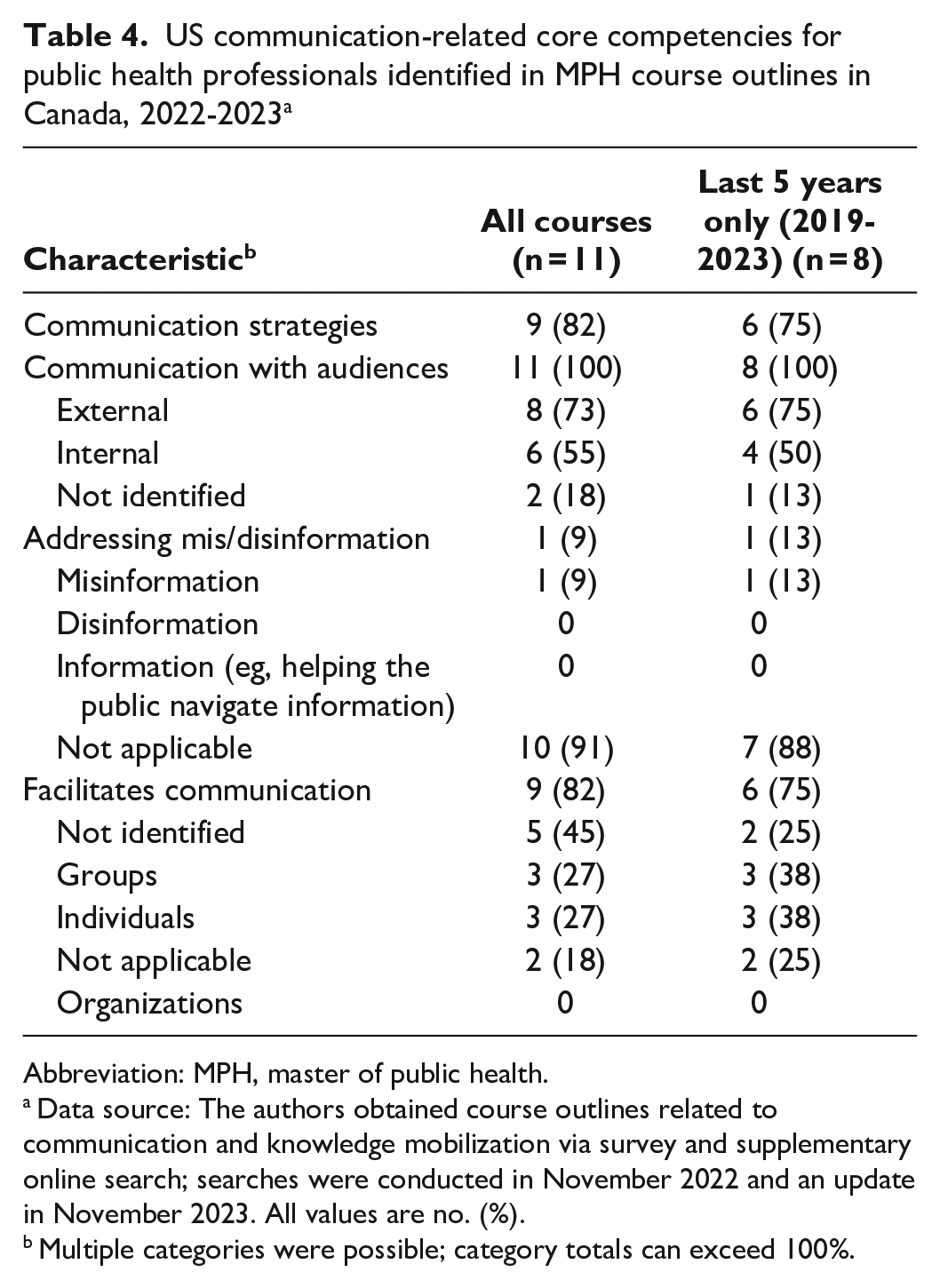
In our examination of US Core Competencies for Public Health Professionals and course outlines, determining communication strategies (n = 9) and communicating with external (n = 8) and internal (n = 6) audiences were mentioned in most course outlines (Table 4). Addressing misinformation and disinformation was not mentioned in most (n = 10) course outlines, with 1 outline mentioning misinformation and none addressing disinformation. Facilitation of communication was sometimes (n = 5) alluded to but not explicitly mentioned in course outlines, with groups (n = 3) and individuals (n = 3) mentioned in some course outlines and organizations mentioned in none.
US communication-related core competencies for public health professionals identified in MPH course outlines in Canada, 2022-2023 a
Abbreviation: MPH, master of public health.
Data source: The authors obtained course outlines related to communication and knowledge mobilization via survey and supplementary online search; searches were conducted in November 2022 and an update in November 2023. All values are no. (%).
Multiple categories were possible; category totals can exceed 100%.
Guidelines for MPH Programs in Canada
Finally, in our examination of pedagogical best practices for developing competencies in public health and Guidelines for MPH Programs in Canada relevant to course outlines (Table 5), assignments (n = 11) and class activities (n = 11) were incorporated in all course outlines. Explicit mention of relevant public health competencies and competency-based education (n = 4) and guest lectures (n = 3) were mentioned in few course outlines. Case study development or assignments (n = 8) were most often mentioned, whereas written or oral examinations were only included in 1 course outline.
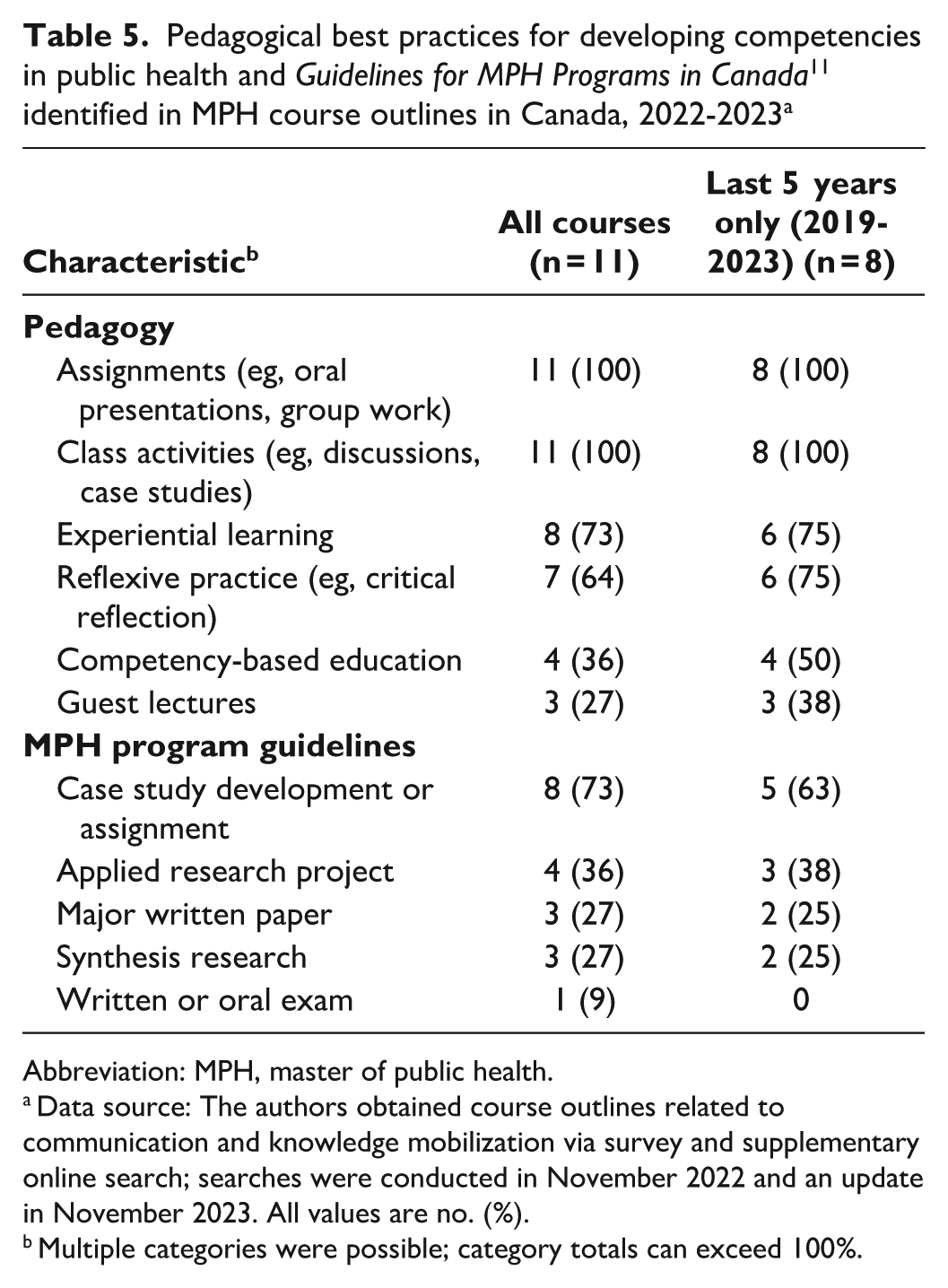
Abbreviation: MPH, master of public health.
Data source: The authors obtained course outlines related to communication and knowledge mobilization via survey and supplementary online search; searches were conducted in November 2022 and an update in November 2023. All values are no. (%).
Multiple categories were possible; category totals can exceed 100%.
Discussion
Our study explored how MPH courses related to communication align with public health communication competencies. To our knowledge, it provides the first snapshot of communication-related competency-based education in Canadian MPH programs. Communication is a vital competency included in national public health competency frameworks worldwide12,23,24 and programs accredited by CEPH. 13 Our results emphasize the importance of aligning public health education and training with the changing requirements of the field to enhance the resilience, responsiveness, and effectiveness of the public health workforce, especially regarding communication.
Low Direct Focus on Health Communication in MPH Programs
The courses examined in our study were distributed across Canadian provinces, with 5 in British Columbia, 4 in Ontario, and 1 each in Newfoundland and Labrador, Quebec, and Alberta. Admission to MPH programs in Canada is highly competitive, with a success rate of less than 10% in some schools. 25 MPH class sizes in the included programs ranged from 25 to 30 to >100 per cohort. The focus of included courses varied, with health communication (27%), knowledge mobilization (27%), and risk communication (18%) being the most common.
Previous related research shows only 9 (47%) of the 19 MPH programs offered health communication courses and 7 programs each offered 1 knowledge mobilization course. 20 These findings are consistent with earlier research that found that only 25% of Canadian graduate programs in health promotion had courses related to health communication. 26 Substantial communication gaps became evident during the COVID-19 pandemic, resulting in negative health outcomes. 27 Distrust and the exacerbation of health inequities were two harms resulting from ineffective communication during the COVID-19 pandemic that have both short- and long-term effects. 4 Public health faces problems that require a workforce that possesses modern communication competencies.
Variation in Coverage of Communication-Related Core Competencies
Examining the included course outlines revealed varied coverage of communication-related competencies in the PHAC Core Competencies, Pan-Canadian Health Promoter Competencies, and US Core Competencies for Public Health Professionals. Courses broadly covered competencies in communication with different audiences, although alignment with specific audiences varied. Mobilizing, interpreting, tailoring, and facilitating communication were well-covered by most courses (82%-100%). Using technology and media had significantly less alignment (36% and 55%, respectively). Addressing misinformation and disinformation (9%) and communicating with diverse populations (27%) had low coverage in the included courses.
Effectively leveraging current technology through safe and inclusive communication representing audience values and needs is lacking in current Canadian MPH education. Using technology, especially social media, and addressing misinformation and disinformation are best practices for effectively communicating and promoting protective behaviors during public health emergencies. 2 Infodemics—the phenomenon of a torrent of widely circulating misinformation and disinformation—negatively affects health behaviors, causes distrust, and undermines public health initiatives. 28 Misinformation and disinformation are pervasive, especially on social media: they plant seeds of doubt against accurate information and are more likely than accurate information to go viral due to sensationalized and simplified messaging.29,30
Communication with diverse populations is also an essential skill for public health practitioners to reduce health inequities, including during public health emergencies, 31 but this topic was not well-covered in course outlines. Intercultural competence is an increasingly important aspect of effective public health practice because of the increasing diversity in Canada. 32 Incorporating intercultural competence into public health curricula enhances engagement with diverse populations, reducing health inequities. 32 Participatory, collaborative processes are necessary to align public health recommendations with diverse communication needs to reduce inequities. 33 Courses should ensure a focus on participatory public health action (eg, codesign, coproduction) in related communication competencies to highlight how public health can work reciprocally with communities to foster trust, inclusion, equity, and social cohesion. 34
Important Gaps in Specific Audiences, Channels, Tools, and Techniques Within Competencies
Although our study found broad coverage of communication competencies (with some exceptions) in course outlines, it identified additional important gaps in named audiences, channels, tools, and techniques. 35 Among the tools and techniques, leveraging community networks, media use, and social marketing had lower coverage than other competencies. Our ability to use current technology and address misinformation and disinformation had low coverage overall. In related research, these gaps were also found in health communication professional development opportunities in Canada. 19 A recent survey of US health communicators and educators found that using media and technology is highly relevant to communication practice.36,37 Addressing infodemics requires a combination of many competencies, including effective use of social media, program planning, tailoring information, and understanding community information ecosystems, 38 which are essential for maintaining trust and influencing risk perception and health behaviors. 39
Range of Pedagogical Best Practices in Included Courses
Public health education in Canada and the United States is competency-based. A recent scoping review found a number of pedagogical best practices that build competencies in public health students and practitioners, including experiential learning, reflexive practice, and a competency-based curriculum. 22 These practices are also aligned with the Guidelines for MPH Programs in Canada. 11 We found many pedagogical practices in the included courses, with assignments, in-class activities, and experiential learning well-represented. Coursework that includes case-based learning developed from challenging real-world problems and reflexive practice, coupled with experiential learning, provides a strong basis for mastery of competencies. 40 Evidence-based public health education should include ongoing assessment of pedagogical practices, curricula, and teaching practices to ensure education is building competencies that can meet complex and modern public health challenges. 41
Recommendations for Improved Communication Competency-Based Public Health Education
Our study’s insights offer guidance for MPH program directors and accrediting agencies in shaping effective public health education. The Core Competencies for Public Health in Canada include essential communication skills that should be incorporated into the curriculum at a minimum. Specialty public health communication competency frameworks can provide additional guidance for curriculum to develop more advanced skills in this area. Both the Guidelines for MPH Programs in Canada and CEPH accreditation standards require that these programs align with foundational public health competencies. Program directors should prioritize refining curricula to address identified gaps, particularly by intensifying the focus on health communication. Courses should also be aligned with established competency frameworks, especially as updated frameworks are released. Additional focus on integrating technology, navigating infodemics, and fostering communication with diverse audiences should be explored. Strategies to enhance public trust should also be incorporated. Accrediting agencies should also consider revising accreditation criteria to ensure alignment with emerging challenges, emphasizing technology, communication with diverse audiences, and the challenge of public health infodemics.
Limitations
Our study had several limitations. First, course outlines for half of the identified courses were not provided through the survey or available online, reducing the comprehensiveness and generalizability of the findings. Second, our search strategy may have missed courses that build competence in health communication and knowledge mobilization if our keywords did not identify the course and requested information was not provided via the survey. Third, this snapshot does not represent all potential for communication competence development in MPH programs. Course outlines provide summary materials and may not represent all content provided in a course (eg, specific audiences, tools). Other courses and experiences within MPH programs also contribute to communication competency development. Fourth, the age of a few course outlines found online may indicate that we did not analyze the most current version of the course, and our results may not reflect current content. We verified that all included courses were offered as of March 2024 and that titles and course descriptions were the same, but some details (eg, course content, assignments) may have changed.
Conclusion
We found gaps and variations in alignment between communication-related competencies and communication-related MPH courses. While some competencies were covered well, we found a notable lack of focus on areas such as using technology, addressing misinformation and disinformation, and communicating with diverse populations. These deficiencies are particularly concerning given the changing communication demands and the increased reliance on technology, especially during public health emergencies, as well as the overall lack of communication-related training opportunities for public health students and professionals.19,20 While pedagogical best practices appear to be well incorporated in course outlines, ongoing assessment and improvement are essential to the continual evolution of public health education. Our findings underscore the need for a concerted effort to align public health education and training with the evolving demands of the field, ultimately contributing to a more resilient, responsive, and effective public health workforce. Future research should replicate our work when the new PHAC Core Competencies for Public Health in Canada are released. Such an analysis would provide an understanding of how communication courses in MPH programs align with modern competencies.
Supplemental Material
sj-docx-1-phr-10.1177_00333549241308524 – Supplemental material for Assessing Communication Competencies in Canadian MPH Program Curriculum: A Content Analysis of Communication Courses
Supplemental material, sj-docx-1-phr-10.1177_00333549241308524 for Assessing Communication Competencies in Canadian MPH Program Curriculum: A Content Analysis of Communication Courses by Melissa MacKay, Devon McAlpine, Lauren E. Grant, Andrew Papadopoulos and Jennifer E. McWhirter in Public Health Reports®
Footnotes
Declaration of Conflicting Interests
The authors declared no potential conflicts of interest with respect to the research, authorship, and/or publication of this article.
Funding
The authors disclosed receipt of the following financial support for the research, authorship, and/or publication of this article: Funding for this research was provided by the Canadian Institutes of Health Research (CIHR) in the form of a CIHR Catalyst Grant (FRN 184647) to J.E. McWhirter.

Supplemental Material
Supplemental material for this article is available online. The authors have provided these supplemental materials to give readers additional information about their work. These materials have not been edited or formatted by Public Health Reports’s scientific editors and, thus, may not conform to the guidelines of the AMA Manual of Style, 11th Edition.
References
Supplementary Material
Please find the following supplemental material available below.
For Open Access articles published under a Creative Commons License, all supplemental material carries the same license as the article it is associated with.
For non-Open Access articles published, all supplemental material carries a non-exclusive license, and permission requests for re-use of supplemental material or any part of supplemental material shall be sent directly to the copyright owner as specified in the copyright notice associated with the article.
